
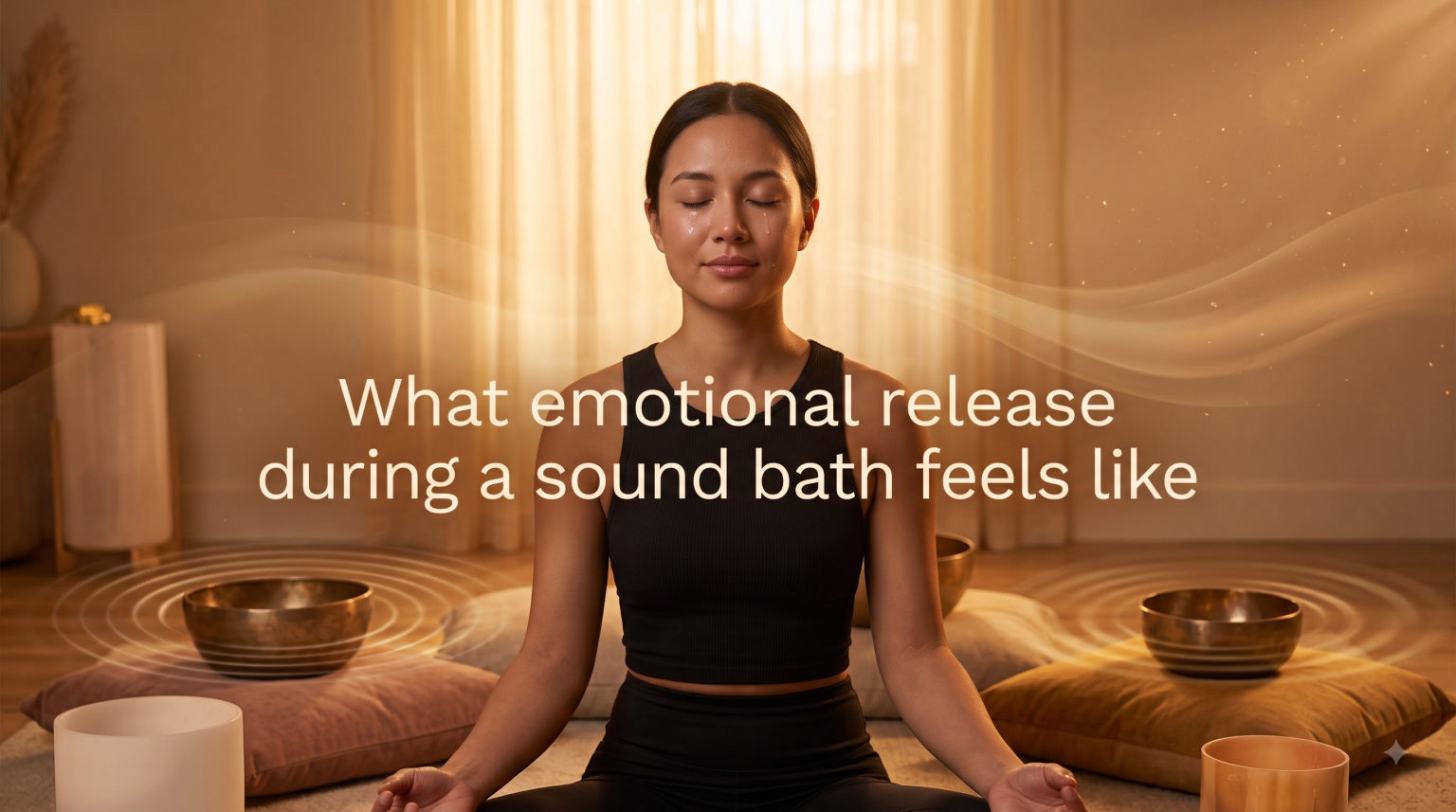
I have sat through more sound baths than I can count, and I still remember the first time tears rolled down my face with no warning. Nothing sad had happened that day. Nothing sad had happened that week, really. Yet the tears came, and they came hard, and they came for fifteen straight minutes while the gongs played.
That moment sent me down a long road of research and practice. I talked to facilitators, neuroscientists, trauma therapists, and dozens of people who had been through the same thing. What I learned changed how I sit in sound baths, how I teach them, and how I support friends who go to their first session.
If you came here wondering what emotional release during a sound bath feels like, I want to give you the clearest picture I can. We will cover the science of why it happens, what the actual sensations feel like in your body, the emotions that surface, and what to do when it gets intense.
Table of Contents
The science: How sound triggers emotional release in your body?
Sound bath emotional release happens because specific frequencies shift your nervous system into a state your body reads as safe. Once your body feels safe, it begins to let go of feelings it has been holding for years.
Three things happen during a sound bath that drive this process. The vagus nerve gets stimulated by low-frequency vibrations, especially from gongs and Tibetan bowls. Brainwave activity shifts from busy beta waves into slower alpha and theta waves. Your parasympathetic nervous system takes over from the sympathetic fight-or-flight branch.
I want to explain each one briefly, because once you understand the mechanism, the experience makes far more sense.
The vagus nerve and parasympathetic activation
The vagus nerve runs from your brainstem all the way down to your gut. It is the main highway of your parasympathetic nervous system, which controls rest, digestion, and repair. When sound vibrations reach your chest and abdomen, this nerve fires.
Activation of the vagus nerve slows your heart rate, drops cortisol, and signals to your brainstem that the body is no longer under threat. I have watched heart-rate monitors during sessions, and I have seen resting rates drop by 15 to 20 beats per minute within minutes of the bowls starting.
Brainwave entrainment into alpha and theta states
Your brain synchronizes with rhythmic stimuli. Drums, gongs, chimes, and bowls all create predictable patterns. Within ten to twenty minutes of listening, EEG studies show most people drift from alert beta waves into alpha waves (the state right before sleep) and then theta waves (the dreamlike state).
Theta is where the body’s emotional memory stores live. Suppressed feelings, early-life imprints, and stored tensions sit in theta and delta territory. When your brain enters these slower states, that material becomes accessible. This is why a sound bath can unlock feelings you forgot were there.
What emotional release during a sound bath actually feels like?
Emotional release during a sound bath feels like a slow squeeze of a sponge that has been sitting in a corner for years. Stuff comes out. Sometimes it is tears. Sometimes it is laughter. Sometimes it is a wave of heat that rolls from your chest into your face and hands.
One facilitator I work with uses this exact metaphor. Imagine your body is a sponge that has been soaking up emotions since childhood. Sound healing gives that sponge a firm, steady squeeze. The stored-up feelings pour out in whatever form they take.
Let me walk you through what people describe most often.
Sensory shifts in the first ten minutes
The body softens first. Your jaw unclenches. Your shoulders drop. Your breathing deepens without you trying. Many people notice a subtle buzzing or vibration in the chest cavity, especially when the practitioner plays a large gong.
Some people feel cold at first, then warm. Some feel a slight pressure behind the eyes or in the sinuses. A few feel nothing at all in the first ten minutes and only later get hit with emotion. All of these are normal.
The moment emotion surfaces
When emotion begins to move, it usually starts as a small physical signal. A lump in the throat. A sudden warmth behind the sternum. Pressure in the chest. Then the feeling itself rises, sometimes before you can name it.
I have seen people cry with their eyes closed and a soft smile on their face. I have seen people laugh out loud during a deep gong note. I have seen people freeze mid-breath, eyes wide, while a memory they had not thought about in twenty years floated into view.
Common emotional experiences: tears, joy, grief, and anxiety
The most common emotional release during a sound bath is tears, followed closely by laughter, unexpected joy, grief, and anxiety. Each one is a normal response to a body finally feeling safe enough to let go.
If you have ever finished a sound bath and felt every feeling in the span of an hour, you are not alone. Here is what each one tends to look like.
Tears and crying without warning
Crying during a sound bath happens because the parasympathetic shift unlocks stored tears your body has been holding. Many people cry without knowing why, and that is okay. Your nervous system knows things your conscious mind has not looked at in years.
I asked one woman I sat beside at a session what came up for her. She said, “Nothing. I have a great life. I just started crying and could not stop.” Three months later she told me it had cracked open a memory about her grandmother that she had not grieved properly. The tears were real, even when the cause was not yet visible.
Laughter and unexpected joy
Sound bath joy often arrives as a bubbling, almost childlike lightness. People laugh in the middle of a deep note for no reason. Sometimes they grin and tear up at the same time. Joy release is just as legitimate as grief release.
Grief, sadness, and loss resurfacing
Grief that has been held in the body for years can rise to the surface during a sound bath. People going through a divorce, a death in the family, or any major loss often report amplified emotions during sessions.
If you are in an active grief window, sound baths can be powerful but intense. I usually recommend a small group or one-on-one setting over a large public event.
Anxiety and fear surfacing
Anxiety during a sound bath is less common but very real. Some people feel a sudden flutter of panic, a tightness in the chest, or racing thoughts, even as the room is quiet. This happens because relaxation can briefly destabilize a nervous system that is used to running hot.
If you already live with anxiety, sound baths can stir the pot before they settle it. We will cover how to handle that shortly.
Physical sensations that accompany emotional release
Physical sensations during a sound bath emotional release include tingling, warmth, shaking, pressure waves, and sudden cold. These sensations are the body’s way of processing what the mind is releasing.
The most frequently reported sensations are:
Tingling in the hands, feet, or face
Heat waves moving from the chest outward
Trembling or shaking, especially in the legs
A sudden release of pressure in the chest or abdomen
Cold hands or feet followed by warmth
A feeling of floating or weightlessness
Yawning, sighing, or deep spontaneous breaths
Shaking is worth its own note. Involuntary shaking during a sound bath is a sign the nervous system is discharging stored survival energy. It looks dramatic from the outside but feels like a giant internal exhale.
Why some people feel fear or negative emotions during a sound bath
Fear during a sound bath usually appears because the relaxation state activates stored fight-or-flight material that your body has been keeping on standby. Once your system feels safe, those survival memories surface for processing.
This sounds counter-intuitive. Why would you feel fear when you are lying still on a mat in a dim room? The short answer is that fear is often stored as a body memory, not a thought. Your nervous system keeps a vigilance pattern even when your mind has nothing to be afraid of.
Pre-existing anxiety amplifies the response
If you already live with anxiety, the sudden drop in control that relaxation brings can feel threatening. The mind interprets the loss of vigilance as danger. Some people describe it as a wave of dread or doom that comes and goes.
In my own experience, the first three sound baths I attended brought up low-level panic that I had no words for. By the fifth session, the panic faded and softer feelings arrived.
Suppressed memories and stored trauma
Stored trauma can also rise during sessions. This is not a sign something is wrong with you. It is a sign your body finally has enough safety to look at material it has been shelving.
We will address trauma more carefully in a moment, since it deserves its own gentle explanation.
What to do when emotions become overwhelming during a sound bath?
When emotions during a sound bath become overwhelming, give yourself permission to pause, place a hand on your heart, breathe slowly, and signal the facilitator if you need support. There is no rule that says you must lie still until the session ends.
Here is the sequence I teach my students.
Step 1: Place one hand on your heart
This small gesture activates the parasympathetic system further and gives your body a tactile anchor. You do not need to draw attention to yourself. Most facilitators know what this means.
Step 2: Lengthen your exhale
Breathe in for a count of four and out for a count of six or eight. The longer exhale tells the vagus nerve the coast is clear. Repeat three or four cycles.
Step 3: Wiggle your fingers and toes
Movement brings you back into your body in a gentle way. It also signals to your nervous system that you are not in danger.
Step 4: Open your eyes or sit up if needed
You are allowed to leave the room. You are allowed to sit up. You are allowed to step into the hallway. There is no spiritual prize for white-knuckling your way through an overwhelming session.
Step 5: Tell the facilitator afterward
A good facilitator wants to know what came up for you. A short message after class helps them support you next time and helps you integrate what surfaced.
Sound baths and trauma: can sound healing release stored trauma?
Sound baths can release stored trauma material, which is why caution matters for anyone with active PTSD or recent trauma history. Gentle sessions with a trauma-informed facilitator are often safer than large public events.
Trauma lives in the body, not just in the story. Sound frequencies can reach that somatic layer in ways talk therapy sometimes cannot. For many people, that is welcome relief.
If you have a trauma history, ask the facilitator about their training, request a quieter corner of the room, and bring a small grounding object you can hold. You might also tell a friend to sit beside you.
Aftercare: integrating emotional release after the session
After a sound bath with emotional release, the most important aftercare steps are hydration, quiet time, gentle movement, and giving yourself permission to feel whatever continues to surface in the hours and days that follow.
Most people feel soft and a little raw after an intense release. Here is what I recommend.
The first hour after
Drink a full glass of water. Sit quietly for ten minutes before driving. Avoid jumping straight into loud music, scrolling, or stressful conversations. Your nervous system is still in a soft, open state.
The rest of the day
Take a slow walk. Eat something warm and grounding. Journal for five minutes if words want to come. If emotions continue to surface over the next few days, that is normal and a sign your system is integrating.
Long-term integration
One thing I wish more articles covered is the long tail of integration. A single sound bath can stir material that takes days or weeks to fully surface. You might have vivid dreams, unexpected memories, or mood swings. None of this means anything is wrong. It means your system is moving.
If you are processing something heavy, consider booking a session with a trauma-informed therapist alongside your sound bath practice. Sound opens doors. A good therapist helps you walk through them.
Who should use caution with sound baths?
People who should use caution with sound baths include those with active PTSD, recent trauma, epilepsy, sound sensitivities, or first-trimester pregnancy. Sound baths are gentle for most people, but a few groups benefit from a slower approach.
If any of the following apply to you, talk to a healthcare provider before booking and choose a trauma-informed facilitator:
Active PTSD or recent trauma history
Sound sensitivities, hyperacusis, or tinnitus
Epilepsy or seizure history
First-trimester pregnancy
Severe anxiety that does not respond to relaxation
None of these mean you can never attend a sound bath. They mean you should choose your setting and facilitator with care.
Frequently asked questions about emotional release during sound baths
Why did I cry during a sound bath?
You likely cried during a sound bath because the vibrations shifted your nervous system into a parasympathetic state, which unlocked stored tears your body had been holding. The vagus nerve activation and brainwave shift to alpha and theta waves signal safety, and your system responds by releasing what it no longer needs to carry.
Can a sound bath make you emotional?
Yes, a sound bath can make you emotional. The combination of vagus nerve stimulation, brainwave entrainment, and parasympathetic activation lowers your internal defenses and allows suppressed feelings to rise. Most facilitators expect some attendees to cry, laugh, or shake during a session.
Can a sound bath release trauma?
A sound bath can release stored trauma material because trauma lives in the body as well as the mind. Sound frequencies reach the somatic layer in ways that can unlock old survival responses. People with active PTSD should choose a trauma-informed facilitator and a quieter setting to reduce overwhelm.
How should you feel during a sound bath?
You should feel soft, warm, and slower during a sound bath, though any emotional or physical response is normal. Common sensations include tingling, deep breathing, gentle tears, laughter, warmth in the chest, and a sense of floating. There is no single right way to feel, and every session is different.
Final thoughts on emotional release during a sound bath
Emotional release during a sound bath feels like your body finally exhaling something it has been holding. It is not a sign that anything is broken. It is a sign your system has found a moment of safety and is using it.
If you are heading into your first session or your fiftieth, give yourself permission to feel whatever comes. Drink water afterward. Take a slow walk. Let the day stay quiet. And if anything heavy keeps surfacing in the weeks that follow, bring it to someone trained to walk with you through it.
The waves will keep moving. You do not have to chase them. You only have to let them pass through.