
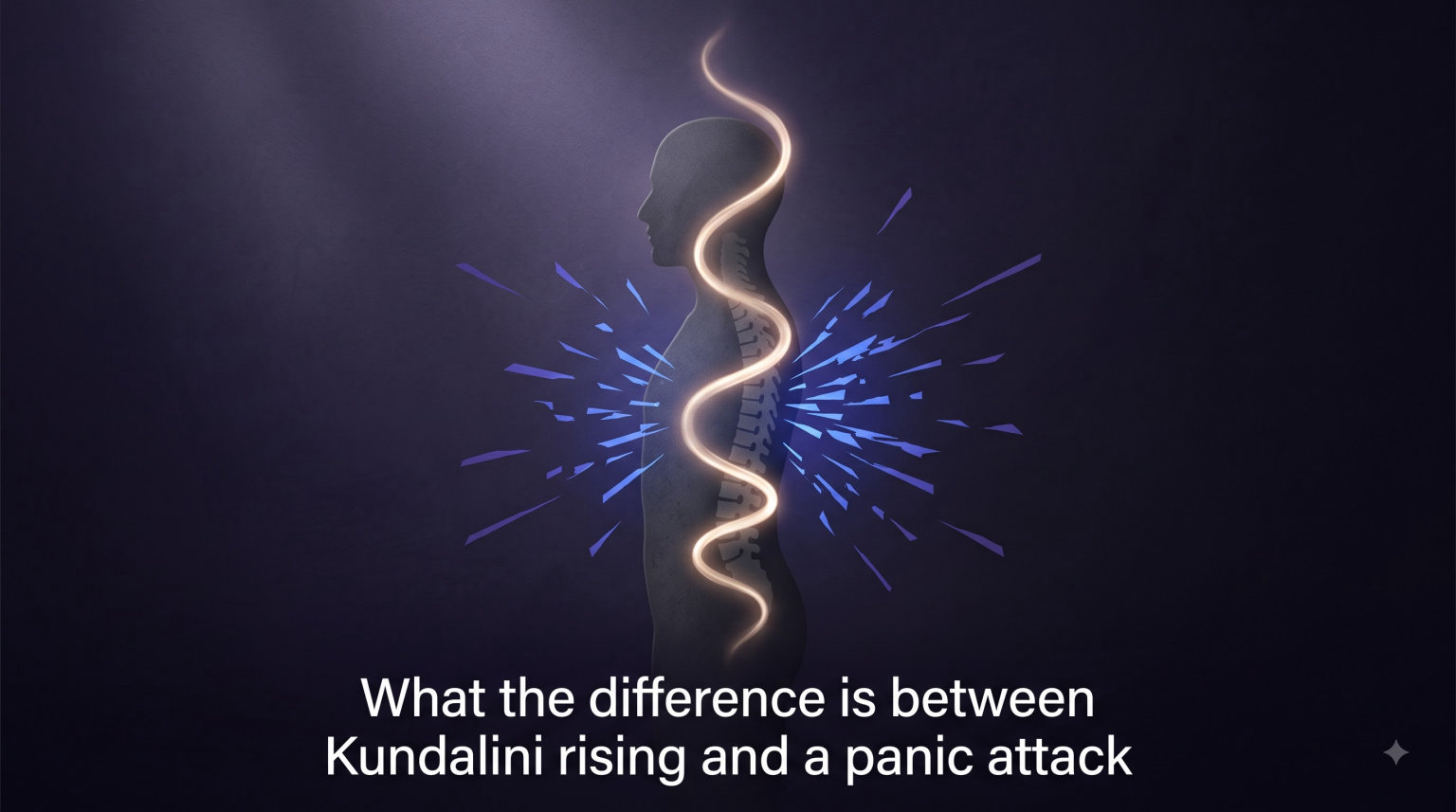
I remember the first time it hit me. I was sitting in meditation, breath steady, and suddenly my heart started pounding. My chest tightened. My hands trembled. Heat shot up my spine.
Was this kundalini rising? Or was I having a panic attack? That single question sent me down a research path that lasted years.
If you are wondering about the difference between kundalini rising and a panic attack, you are not alone. Thousands of meditators, yogis, and spiritual seekers have asked the same question.
Both experiences share startlingly similar symptoms. Rapid heartbeat. Chest tightness. Trembling. Dissociation. A sense that something profound is happening to your body and mind.
But the origins are different. The trajectories are different. And the responses you should take are different.
In this guide, I will walk you through what each experience actually is, how they overlap, and how to tell which one you are having. I will also cover the nervous system science behind why they feel so similar.
By the end, you will have a clear framework for distinguishing between spiritual awakening and clinical anxiety. Let us begin.
Table of Contents
What Is Kundalini Rising?
Kundalini rising is the activation of dormant spiritual energy that rests at the base of the spine, according to yogic and tantric traditions.
This energy, often described as a coiled serpent, moves upward through the central channel of the spine. As it rises, it activates each of the seven major chakras along the way.
The word “kundalini” comes from Sanskrit, meaning “coiled.” Ancient texts describe this energy as being awakened through specific practices like meditation, pranayama, and certain yoga postures.
When kundalini activates, practitioners report intense physical sensations. Heat at the spine. Vibrations throughout the body. Spontaneous shaking or movement. Heightened awareness. Waves of bliss or emotion.
These experiences can last minutes, hours, or extend across days. Some practitioners describe a sustained shift in consciousness that lasts weeks or months.
Kundalini is not a medical condition. It is a spiritual concept rooted in thousands of years of Eastern philosophy. However, the physical sensations it produces are real and measurable by the person experiencing them.
The Three Classic Signs of Authentic Kundalini Activation
Traditional yogic texts identify three signature signs of true kundalini awakening.
First, there is the physical sensation of heat or energy moving up the spine. This feels different from ordinary body heat. Many describe it as a warm current or electrical tingling traveling from the base of the spine toward the crown of the head.
Second, there is spontaneous involuntary movement or breath. The body may shake, rock, or breathe in unusual patterns without conscious control. This is distinct from panic-related trembling because it follows a rhythmic, wave-like pattern.
Third, there is a shift in consciousness or perception. Many report moments of profound clarity, unity, or expanded awareness. Colors may appear brighter. Sounds may feel more textured. Time may seem to slow or disappear.
What Is a Panic Attack?
A panic attack is a sudden episode of intense fear that triggers severe physical reactions without any real danger or apparent cause.
During a panic attack, your body activates its fight-or-flight response as if you were facing a life-threatening situation. Your heart races. Your breathing quickens. Your muscles tense.
The DSM-5, the standard psychiatric diagnostic manual, defines a panic attack as a discrete period of intense fear or discomfort that peaks within minutes. Symptoms include heart palpitations, sweating, trembling, shortness of breath, chest pain, nausea, dizziness, and fear of losing control.
Panic attacks are a clinical symptom. They can occur as part of panic disorder, but they also appear in other anxiety disorders, PTSD, and even some medical conditions.
Most panic attacks last between 5 and 20 minutes. Some resolve quickly. Others can extend up to an hour, especially when the person becomes anxious about the attack itself.
Unlike kundalini, panic attacks are not voluntary. They are not initiated by spiritual practice. They typically come with a sense that something is wrong or dangerous, even when no threat exists.
Common Triggers of Panic Attacks
Panic attacks often have identifiable triggers, though some appear without warning. Common triggers include:
Stressful life events or major transitions
Phobias or specific feared situations
Certain medications or substances, including caffeine
Medical conditions affecting breathing or heart function
History of trauma or unresolved emotional conflict
High-pressure social or performance situations
Understanding your triggers helps distinguish panic from kundalini. Spiritual energy activation rarely has external triggers. It tends to arise during stillness, meditation, or after sustained practice.
Shared Symptoms: Why the Confusion
Kundalini rising and panic attacks share so many symptoms that even experienced practitioners can be confused.
Here is where the overlap is significant. Both experiences can include rapid heartbeat, chest tightness, trembling, shortness of breath, dizziness, nausea, heat or cold sensations, and feelings of dissociation.
The reason for this overlap lies in the nervous system. Both phenomena activate the autonomic nervous system. Both produce surges of adrenaline and cortisol. Both create a subjective sense of intensity and overwhelm.
I have spoken with meditators who spent months convinced they had an anxiety disorder. I have also spoken with people who dismissed genuine panic attacks as spiritual growth. Both interpretations can be wrong.
The confusion is not a sign of failure or lack of awareness. It is a natural consequence of how the human body responds to intense states.
The Symptom Overlap in Detail
Let us look at each shared symptom more carefully to understand the underlying mechanics.
Rapid heartbeat occurs in both because adrenaline release affects the cardiovascular system. In kundalini, this is associated with energy rising through the heart chakra. In panic, it is the body’s fight-or-flight alarm.
Chest tightness appears in both because the muscles around the ribcage contract. In kundalini practice, this is sometimes called the “heart opening” experience. In panic, it is the body’s preparation for physical action.
Trembling and shaking happen because the nervous system releases tension. Kundalini shakings often have a rhythmic, wave-like quality. Panic trembling tends to be more erratic and localized.
Dissociation and depersonalization occur in both because intense states can cause the mind to detach from ordinary perception. This is one of the most confusing symptoms because it can feel both terrifying and transcendent.
Key Differences Between Kundalini Rising and a Panic Attack
Now we come to the heart of the matter. How do you actually tell these two experiences apart? Here is a clear comparison.
The differences fall into several categories: trigger, duration, sensation quality, direction of energy, and aftermath.
Here is a side-by-side comparison to help you identify what you are experiencing:
| Characteristic | Kundalini Rising | Panic Attack |
|---|---|---|
| Typical Trigger | Meditation, breathwork, spiritual practice, spontaneous awakening | Stress, trauma, phobias, caffeine, or no clear cause |
| Duration | Minutes to days; often has waves | 5-30 minutes typically; peaks then subsides |
| Energy Direction | Upward along the spine | Stays in chest and head |
| Quality of Sensation | Warm current, vibration, electric tingling | Sharp, painful, constrictive |
| Heartbeat Pattern | Strong, steady, rhythmic | Racing, irregular, frantic |
| Thought Pattern | Calm clarity or expansive awareness | Racing, catastrophic, fearful thoughts |
| Breath Pattern | Deep, slow, sometimes spontaneous | Shallow, rapid, hyperventilation |
| Aftermath | Peace, integration, expanded awareness | Exhaustion, fear of recurrence, shame |
| Body Movement | Rhythmic shaking, spontaneous yoga postures | Tense, frozen, or pacing |
| Emotional Tone | Blissful undercurrent despite intensity | Pure terror or dread |
The most reliable distinguishing factor is the aftermath. After kundalini activation, most people report a sense of peace, clarity, or emotional release. After a panic attack, people typically feel exhausted, embarrassed, and afraid of another attack.
Another key difference is the direction of energy. Kundalini practitioners consistently describe movement upward along the spine. Panic feels centered in the chest and head, with no clear directional flow.
The Blissful Undercurrent
This is the most reliable distinguishing factor I have found in my own practice and in conversations with dozens of practitioners.
Even during intense kundalini experiences, there is often a subtle undercurrent of bliss, peace, or wellbeing. The experience may be intense, even overwhelming, but it does not feel like a threat. It feels like transformation.
Panic attacks do not have this quality. They feel like danger. The body screams that something is wrong. The mind generates catastrophic stories about what is happening.
If you are in the middle of an experience and you notice a strange sense of okayness beneath the intensity, that is a strong signal that kundalini is at work.
The Chakra Connection to Panic
Many spiritual practitioners ask which chakra is responsible for panic attacks. The answer depends on your framework.
In yogic anatomy, the heart chakra (anahata) and the solar plexus chakra (manipura) are most commonly associated with panic-like symptoms. The heart chakra governs emotional balance, while the solar plexus governs personal power and fear.
When kundalini energy reaches these chakras during its upward path, it can activate stored emotional material. This sometimes produces panic-like sensations as the energy clears blockages.
Some traditions also identify the root chakra (muladhara) as significant. Fear related to survival, safety, and grounding lives here. Activation of this chakra during kundalini rising can feel like panic.
From the spiritual perspective, panic-like symptoms during kundalini awakening are not signs of illness. They are signs of purification. The energy is moving through stored fear and releasing it.
However, this does not mean you should ignore symptoms. The nervous system is real. The body is real. Both deserve care.
The Nervous System Perspective
Here is where modern science offers powerful insight. Both kundalini and panic attacks involve the autonomic nervous system, but they activate it differently.
Panic attacks involve the sympathetic nervous system in overdrive. This is the fight-or-flight branch. Heart rate increases. Breathing quickens. Muscles tense. Digestion slows. Blood flows to the limbs.
Kundalini activation also engages the sympathetic nervous system, but it does so in a more controlled, sustained way. Many practitioners describe a state that neuroscientists call “autonomic flexibility,” the ability to activate and deactivate the stress response with awareness.
Research on long-term meditators shows they develop greater parasympathetic tone. This is the rest-and-digest branch. It allows them to hold heightened energy without tipping into panic.
This explains why experienced meditators can have intense kundalini experiences without distress. Their nervous systems have been trained to hold intensity without activating the full fear response.
Beginners, however, often lack this training. When kundalini energy surges, their nervous system interprets it as danger. They experience panic-like symptoms even though the underlying cause is spiritual.
Vagal Tone and Spiritual Practice
The vagus nerve plays a central role in both phenomena. Higher vagal tone is associated with emotional regulation, resilience, and the ability to navigate intense states.
Meditation and yoga both increase vagal tone over time. This is one reason why sustained practice helps practitioners handle kundalini energy gracefully. The nervous system becomes more flexible and resilient.
Panic attacks, by contrast, often occur when the vagal tone is low. The body’s brake system is weak. The stress response accelerates without checking.
If you experience kundalini-like symptoms and your nervous system is unregulated, the experience may feel like panic regardless of its spiritual origin. This is why so many beginners confuse the two.
How to Tell Them Apart in the Moment?
When you are in the middle of an experience, you need a quick way to assess what is happening. Here is a practical decision tree.
Step 1: Check the trigger. Were you meditating, doing breathwork, or in a calm state? Kundalini is more likely. Were you stressed, anxious, or facing a feared situation? Panic is more likely.
Step 2: Notice the energy direction. Do you feel warmth or tingling moving up your spine? That is kundalini. Does the sensation stay in your chest and head? That is more like panic.
Step 3: Examine the emotional tone. Is there a subtle sense of peace or okayness beneath the intensity? Kundalini. Is there pure terror with no relief? Panic.
Step 4: Observe the breath. Is your breath deepening naturally, or even pausing? Kundalini. Is your breath rapid and shallow? Panic.
Step 5: Look at the thoughts. Are your thoughts expanding, clarifying, or quieting? Kundalini. Are they racing with catastrophic content? Panic.
Step 6: Wait and observe the aftermath. If you feel peaceful after the intensity passes, it was likely kundalini. If you feel exhausted and fearful, it was likely panic.
I have used this framework myself many times. It is not perfect, but it gives you a starting point for responding appropriately.
A Quick Self-Assessment
If you are still uncertain, ask yourself these three questions in the moment:
Question one: Does this experience feel like transformation, or does it feel like danger?
Question two: Is there a sense of energy moving, or just discomfort?
Question three: Can I find a place of witness observation, or am I completely identified with the fear?
If you can find witness consciousness even briefly, the experience is more likely spiritual. If you are totally consumed by fear with no observer, it is more likely panic.
Grounding Techniques for Each Experience
Different techniques work for different experiences. Using the wrong approach can make things worse.
For kundalini, gentle engagement is usually best. The energy needs to move, not be suppressed. Try slow breathing, gentle movement, and allowing the sensations to flow.
For panic attacks, grounding and stabilization are key. The goal is to remind the nervous system that you are safe.
Here are techniques that work for each:
Techniques for Kundalini Rising
Allow the sensations to move without resistance
Use slow, deep breathing to support the energy
Stay present with witness awareness
Gently move the body if shaking arises
Mantra or sound can help channel the energy
Rest after the experience to integrate
Stay hydrated and eat grounding foods afterward
Techniques for Panic Attacks
Ground through the five senses: identify 5 things you see, 4 you hear, 3 you touch
Slow exhales with extended breath ratios (4 counts in, 7 counts out)
Cold water on the face or back of the neck to activate the dive reflex
Reassure yourself out loud: “This is a panic attack. It will pass. I am safe.”
Stand or sit with strong posture to signal safety to the nervous system
Use grounding objects like a stone or textured surface
Reach out to a trusted person for connection
Notice that the approaches differ. Kundalini benefits from allowing. Panic benefits from grounding. Confusing the two can prolong your distress.
When to Seek Professional Help?
Some experiences require professional attention, regardless of whether they are spiritual or medical.
Seek help if you experience thoughts of self-harm, feel disconnected from reality for extended periods, or find yourself unable to function in daily life. These are signs that require qualified support.
It is also wise to rule out medical causes first. Heart conditions, thyroid disorders, blood sugar imbalances, and certain medications can produce panic-like symptoms. A medical checkup gives you baseline information.
Spiritual experience and mental health are not opposites. Many traditions now recognize “spiritual emergency,” a term coined by psychiatrist Stanislav Grof. This describes intense spiritual experiences that can mimic psychiatric conditions.
Working with a therapist who understands both spiritual practice and clinical anxiety gives you the best of both worlds. They can help you distinguish between awakening and disorder, and they can support you through both.
Do not let spiritual ideals prevent you from getting help. The greatest teachers throughout history have emphasized that the body, mind, and spirit are interconnected. Care for all three.
Working with Both Realms
Many people find that working with both a spiritual teacher and a mental health professional offers the most complete support.
The spiritual teacher can guide you through the energy work, mindfulness, and integration. The therapist can help you navigate trauma, anxiety patterns, and nervous system regulation.
Neither replaces the other. Together, they provide comprehensive care for the whole person.
If you are reading this and feeling overwhelmed, please reach out to a qualified professional. You do not have to navigate this alone.
FAQs
Which chakra is responsible for panic attacks?
The heart chakra (anahata) and solar plexus chakra (manipura) are most commonly linked to panic-like symptoms in yogic anatomy. The root chakra (muladhara) is also involved when fear relates to survival and safety. During kundalini rising, activation of these chakras can release stored emotional material, producing sensations that feel like panic but are actually purification.
How do you know if your Kundalini is rising?
Classic signs include heat or energy moving up the spine, spontaneous involuntary shaking or breath changes, and shifts in consciousness or perception. Many practitioners also report tingling, waves of emotion, vivid dreams, and heightened sensory awareness. The most reliable indicator is a subtle undercurrent of peace or bliss even during intense physical sensations.
What is the spiritual root of panic attacks?
From a spiritual perspective, panic attacks can represent stored fear being released as kundalini energy clears blockages in the chakras. They may also signal unresolved trauma, karmic patterns, or a mismatch between the soul’s growth and the ego’s comfort zone. Many traditions view intense anxiety as an invitation to deepen spiritual practice and self-inquiry.
Can spiritual awakening cause panic attacks?
Yes, spiritual awakening can trigger panic-like episodes, especially in beginners. As kundalini energy rises, it activates the nervous system and releases stored emotional material. Practitioners without strong nervous system regulation may experience this activation as panic rather than transformation. The experiences are real, but the underlying cause is spiritual rather than clinical.
Conclusion
The difference between kundalini rising and a panic attack is real, and learning to tell them apart is a valuable skill for any spiritual practitioner.
Kundalini rising is a spiritual process of energy activation that typically produces warmth moving up the spine, altered consciousness, and a peaceful undercurrent. Panic attacks are clinical episodes of acute fear that produce sharp physical symptoms, catastrophic thinking, and exhaustion afterward.
Both experiences activate the nervous system. Both can feel overwhelming. Both deserve respect and care.
If you are unsure what you are experiencing, use the framework in this guide. Check the trigger, notice the energy direction, examine the emotional tone, and observe the aftermath. When in doubt, seek professional support.
Your path of understanding the difference between kundalini rising and a panic attack is itself part of the awakening. Trust the process, care for your body, and keep asking questions.
In 2026, more practitioners than ever are working through both spiritual and psychological territory. You are part of a growing conversation that bridges ancient wisdom and modern science. Welcome to it.