
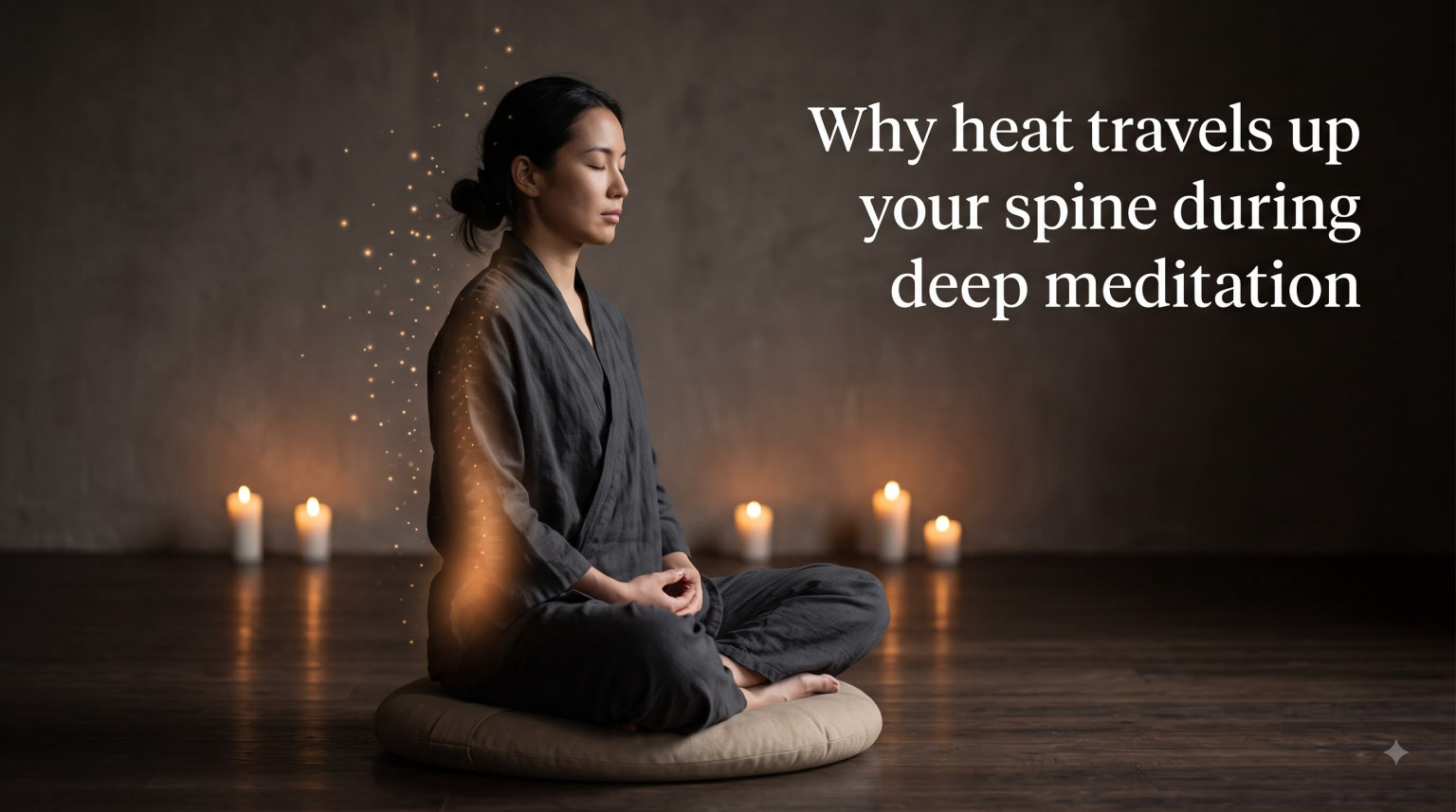
You settle into your seat, close your eyes, and within minutes a wave of warmth starts at the base of your back. It climbs vertebra by vertebra until your whole spine feels lit from the inside. I have heard this story from hundreds of meditators over the years, and the first thing I want you to know is that you are not imagining it, and you are not alone.
This guide explains why heat travels up your spine during deep meditation, drawing on both the spiritual traditions that have mapped this phenomenon for centuries and the modern physiology that helps us understand what the body is doing. By the end, you will know what is happening, what it means, and how to work with it when the sensation gets strong.
Whether you practice Kundalini yoga, Vedic meditation, Vipassana, or simply sit quietly each morning, what follows applies to you. We will look at the energy channels, the role of stress release, and the practical steps that seasoned practitioners use when the heat turns up.
Table of Contents
What Is Happening When Heat Travels Up Your Spine During Meditation?
The heat that rises along your spine during meditation is the feeling of life-force energy, known as prana or kundalini, moving through the central energy channel that runs from the base of your spine to the crown of your head. As this energy flows upward, it produces a literal warming sensation that many meditators describe as liquid fire, sunlight, or a slow wave of warmth traveling between the shoulder blades.
The experience is surprisingly common. Long-term meditators on forums like r/Mindfulness and r/kundalini describe the same pattern: heat starting at the perineum or lower spine, climbing upward through the lumbar and thoracic regions, sometimes reaching the neck and head. Some feel it as a gentle glow. Others describe it as intense enough to make them peel off blankets mid-session.
From a purely descriptive standpoint, this is a real, repeatable, and well-documented phenomenon. The question is what causes it, and that is where the spiritual and physiological perspectives begin.
The Kundalini Awakening and the Spiritual Meaning of Spine Heat
In the yogic tradition, the warmth you feel is the signature of kundalini energy awakening at the base of the spine and beginning its upward journey. Kundalini is described as a coiled serpent resting at the root chakra, and when meditation quiets the mind deeply enough, that serpent begins to unfurl.
As it rises, kundalini purifies each of the seven main chakras it passes through. Heat is the byproduct of that purification. Yogananda and the Ananda lineage teach that this warmth is a sign the kundalini is being properly awakened through a legitimate practice, not a sign that something has gone wrong.
The spiritual meaning attached to this heat varies between traditions. Some see it as the presence of the divine, others as the body’s own intelligence releasing stored trauma. Either way, every serious teacher I have studied with treats it as a marker of deepening practice rather than a symptom to fear.
Why Kundalini Creates Heat Specifically
Kundalini heat is not random. It is the friction of consciousness meeting dormant energy. When awareness descends into stillness, it eventually reaches the densest part of the body, the root, where the coiled energy lives. The meeting of pure awareness with raw life-force generates heat, and as that energy ascends through the nervous system, the warmth follows.
Thom Knoles of the Vedic Meditation tradition explains that this heat corresponds to the release of ama, the Ayurvedic term for metabolic and emotional residue. The warmth is the body’s way of burning through that residue so the energy can move freely.
The Sushumna Channel: Your Body’s Energy Highway
The pathway along which heat travels is called the sushumna, the central energy channel that runs from the base of the spine to the crown of the head. It sits between the ida and pingala channels, which spiral around it on the left and right sides.
Under normal conditions, prana flows mostly through ida and pingala. These side channels govern the alternating cooling and heating sensations most people associate with the breath. Sushumna is usually dormant. When meditation deepens enough, prana switches from the side channels into sushumna, and that switch is what produces the rising heat.
The experience often has a directional quality. Meditators report that the warmth moves in a straight line up the centerline of the back, distinct from the more diffuse heat that comes from muscular effort or external warmth. This linear, ascending pattern is a hallmark of energy flowing through sushumna.
What Happens at Each Chakra
As the heat rises, it interacts with each chakra in turn. At the root, it stokes a sense of grounding. At the sacral, it can produce emotional waves. At the solar plexus, it often brings courage or shaking. At the heart, many meditators feel sudden tenderness or tears. By the time it reaches the throat, third eye, and crown, the sensation typically becomes cooler and lighter, more luminous than warm.
Knowing this map helps you stay grounded when the heat is strong. You can remind yourself that what you are feeling is the energy moving through a known pathway, not a random surge.
The Physiological Side: Why Your Body Heats Up During Deep Meditation
The body has its own reasons for producing heat during meditation, and they line up surprisingly well with the spiritual explanations. Deep meditation lowers sympathetic nervous system activity, which allows blood vessels to dilate and core temperature to shift slightly upward.
At the same time, meditation triggers the release of stored muscular tension. When chronic contraction along the paraspinal muscles releases, blood flow returns to areas that were partly ischemic. The sudden warmth in the spine is partly the warmth of fresh blood reaching tissues that had been deprived of it.
There is also a hormonal component. Meditation is known to lower cortisol and raise melatonin and serotonin. This shift changes how the body regulates temperature, and many meditators notice they feel warmer in the second half of a session, even in cool rooms.
Headspace’s teachers point out that meditation often surfaces emotions we have been suppressing. The heat can be the body’s physical signature of emotional release. If you feel heat along with tears, shaking, or sudden vivid memories, that combination is a normal part of the process.
Why Deep Meditation Triggers the Heat More Than Light Practice?
You do not usually feel strong spine heat during a casual five-minute sit. The phenomenon tends to appear once a session crosses a depth threshold, often 20 to 40 minutes in, when the breath slows, the thoughts quiet, and the body’s resting energy begins to circulate.
Daily practice deepens that threshold over time. I have noticed in my own sessions that the heat arrives earlier and moves more freely the longer I sit consistently. Practitioners who meditate daily for months often report the heat becoming a reliable companion rather than a rare event.
Stress is another factor. When the body is carrying unresolved tension, energy cannot flow through sushumna efficiently. As meditation melts that stress, energy finds the central channel and the warming accelerates. This is why beginners sometimes experience sudden heat during a particularly quiet or emotional sit.
How This Compares to Tummo and Other Heat-Generating Practices
Tummo, the Tibetan Buddhist practice of inner heat generation, deliberately produces this same warmth through specific breathing and visualization techniques. Yogis trained in tummo can dry wet sheets wrapped around their bodies in freezing temperatures.
The heat you feel during ordinary meditation is the same phenomenon arriving through a different door. Tummo practitioners intentionally stoke the fire, while meditators like us let the fire come to us. The mechanism, prana moving through sushumna, is shared.
What to Do When Heat Becomes Uncomfortable During Meditation?
If the heat is gentle, the best response is usually to do nothing. Stay with the breath, soften the shoulders, and let the energy move. Resisting or analyzing it too hard tends to amplify the sensation.
If the heat becomes intense, try these steps:
Loosen any blankets or layers so heat can dissipate.
Lengthen your exhale. A longer exhale activates the parasympathetic nervous system and cools the body.
Place the palms face-down on the thighs to ground excess energy into the earth.
Briefly shift attention to the feet or the hands to draw energy out of the spine.
If needed, end the session slowly, splash cool water on the wrists, and walk a few minutes before resuming normal activity.
Most importantly, do not panic. The body is doing what it has learned to do through your practice. If you experience fever, persistent headache, or disorientation that lasts hours, see a qualified medical practitioner, since meditation can stir up symptoms that benefit from professional support.
FAQs
Why does my body heat up during meditation?
Your body heats up during meditation because deep relaxation releases stored muscular tension, lowers cortisol, and allows prana or kundalini energy to flow through the central sushumna channel along your spine. The combination of increased circulation, hormonal shifts, and rising energy produces a real warming sensation that most long-term meditators experience at some point in their practice.
What does it mean when you feel heat on your back spiritual meaning?
Spiritually, heat on your back during meditation means kundalini energy is awakening at the base of the spine and rising through the sushumna channel. Many traditions interpret this as the presence of divine energy, the release of stored karma or trauma, or a sign that your practice is deepening. It is generally regarded as a positive marker of spiritual progress rather than a warning.
Should the spine be kept straight during meditation?
Yes, keeping the spine straight during meditation is widely recommended because it allows energy and breath to move freely through the central channel. A straight but not rigid posture keeps the sushumna open so prana can rise without obstruction. A slumped spine tends to restrict that flow and reduce both the clarity of meditation and the experience of rising warmth.
How do you feel when your pineal gland is activated?
When the pineal gland becomes more active during deep meditation, people commonly report a sense of inner light, vivid colors behind closed eyes, intuitive insights, emotional calm, and a feeling of pressure or warmth between the eyebrows at the third eye point. Some also notice heightened dream vividness outside of meditation and a quieter, more present mind during daily life.
Is it normal to feel hot during meditation?
Yes, feeling hot during meditation is normal and very common. Headspace and other major meditation platforms confirm that overheating is one of the most frequently reported physical sensations during seated practice. As long as the heat is not accompanied by fever, severe headache, or dizziness, it is usually a sign of healthy energy flow and deepening relaxation.
Final Thoughts on Heat Rising in the Spine During Meditation
Heat traveling up your spine during deep meditation is one of the clearest signals that your practice is reaching the level where energy begins to move on its own. Across spiritual traditions and modern physiology, the verdict is the same: this warmth is a healthy response to deep stillness, not a problem to solve.
Keep sitting. Keep your spine upright and your breath soft. When the heat arrives, treat it as a guest rather than a disturbance. Over time, you will find that the warmth becomes less of an event and more of a quiet companion, telling you that the body, the breath, and the deeper current within are working together. If this exploration of meditation and energy has been useful, you may also enjoy our broader articles on meditation practices and the inner geometry of consciousness.