
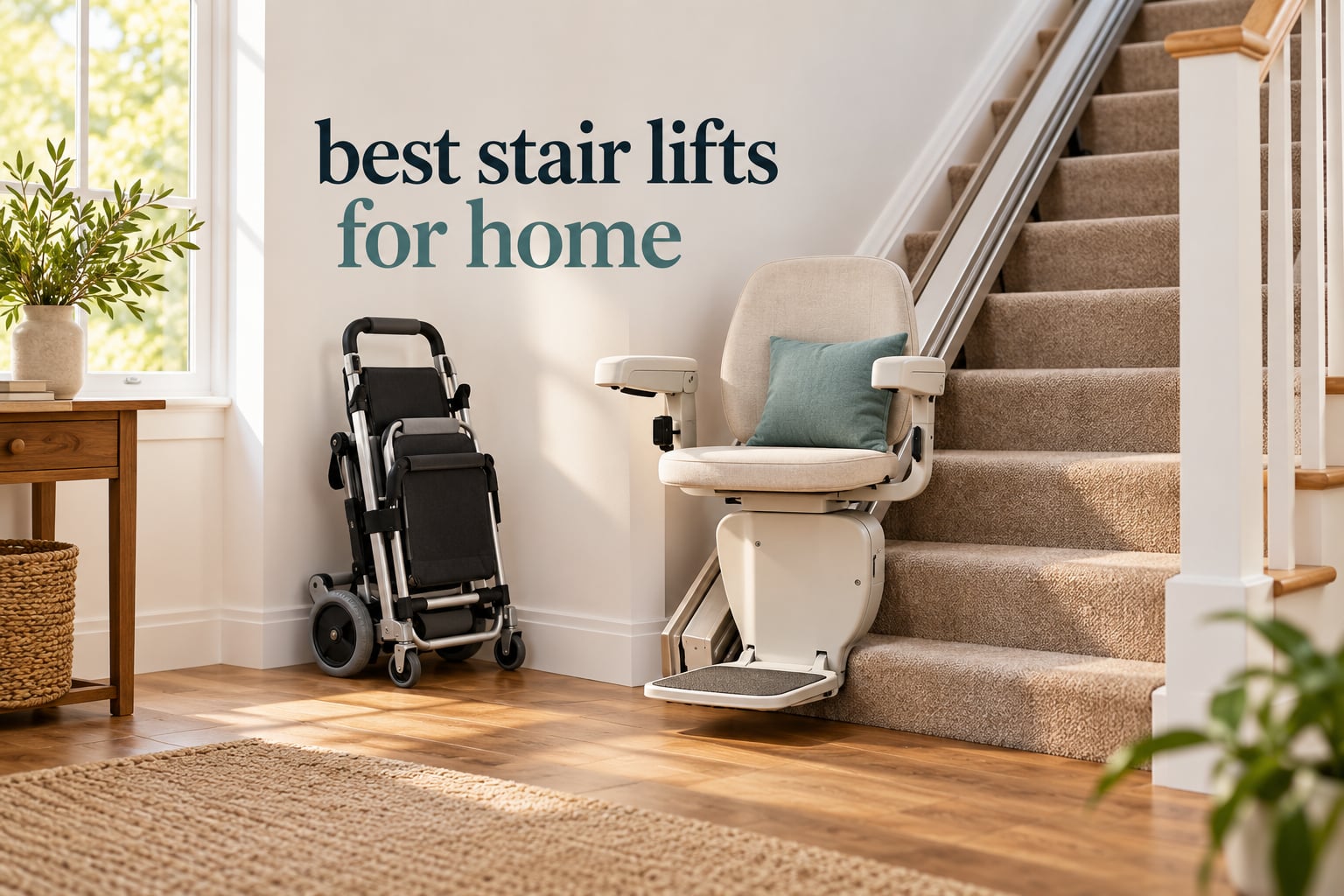
A stair lift is a motorised seat that carries a person up and down a residential staircase, so they can keep using every floor of a multi-story home instead of facing a climb that has become unsafe. It is the single most effective home accessibility upgrade for anyone who cannot manage stairs comfortably, and it is the reason thousands of households have stayed put rather than moving. The catch is that stair lifts come in two very different families, and they are not interchangeable.
The first family is the rail-mounted stairlift: a seat bolted to a track that runs up the staircase, powered by a motor and a gear rack, with obstruction sensors, a retractable seat belt, a swivel-and-lock seat and battery backup for outages. This is what most people picture when they hear the phrase stair lift for home, and it is the right answer for anyone planning to use a lift daily for years. Rail-mounted units are almost always installed and sold by a local dealer rather than shipped in a box, which is why they are harder to compare online.
The second family is the portable stair-climbing chair: a tracked or tracked-wheel mobility device that rides up conventional stairs and then rolls along a hallway, requiring no rail, no drilling and no renovation. It suits renters, people recovering from surgery, and anyone whose need is temporary. Capacity runs higher, portability is higher, and comfort over a long climb is lower than a fixed rail seat.
Before you go further, measure the clear width of your staircase wall to wall. Most rail-mounted lifts need a 28 to 30 inch minimum clear width once the wall, baseboard and handrail are accounted for, and a slim folding rail is the feature that rescues an otherwise tight run. If your stairs are narrower than that, say so before you fall in love with any model, because fit is decided by geometry rather than by brand.
We compared the six stair lifts for home that you can actually evaluate with published specifications, warranty terms and owner feedback, then wrote up what works and what does not for each one. We are not a dealer and we do not install anything. We did not ride these units on a staircase, so treat our fit observations as specification-driven rather than hands-on, and treat every price a dealer gives you as a quote rather than a fact. What follows is what the data supports.
Table of Contents
Top 3 Best Stair Lifts for Home Right Now

AmeriGlide Rave 2
- 350 lb capacity
- Self-installable with 15 ft of track
- Battery powered
- Wireless call stations
MS3C Track Lift Chair
- Rechargeable
- 200+ flights per charge
- 4-point harness
- Folds to 10.6 in
The three above are the strongest overall mix of specification depth and real owner feedback. Below them, the portable stair-climbing chairs fill the temporary-need, high-capacity and lightweight-travel roles that a fixed rail cannot.
All 6 Stair Lifts for Home Compared in 2026
| Product | Specifications | Action |
|---|---|---|
| AmeriGlide Rave 2 Stair Lift |
|
Check Latest Price |
| Universal Stair Lift 350lb |
|
Check Latest Price |
| MS3C Track Lift Chair |
|
Check Latest Price |
 Yawhew Electric Stair Climbing Wheelchair Yawhew Electric Stair Climbing Wheelchair |
|
Check Latest Price |
 DOFORU 480lb Stair Climbing Wheelchair DOFORU 480lb Stair Climbing Wheelchair |
|
Check Latest Price |
 VERSHY 480lb Folding Stair Chair VERSHY 480lb Folding Stair Chair |
|
Check Latest Price |
1. AmeriGlide Rave 2 – Best Overall Rail-Mounted Stair Lift
“AmeriGlide Rave 2 Stair Lift for Seniors – DIY Self-Install Straight Stair Lift – Fits Most Straight Staircases – 350 lb Capacity – Battery Powered – Made in USA”
350 lb capacity
Battery powered, no wiring
15 ft of track included
Self-installable in hours
Pros
- Largest owner feedback base of the six
- Real self-install capability
- Quiet and smooth ride
- Folding seat and armrests plus footrest sensor
Cons
- Written instructions are unclear
- Video guides do more work than the manual
- Rail splices can be uneven and cause a jerky ride
- One screw ships tight and blocks operation until adjusted
The Rave 2 is the unit we keep coming back to, and the reason is straightforward: it is the only rail-mounted stair lift in this roundup with a large enough body of owner feedback to be worth trusting, at 137 reviews and a 4.3 average. That is meaningful evidence in a category where most straight-rail listings have fewer than ten reviews. Owners describe solid materials, quiet travel and a folding swivel seat, and the pattern of complaints is narrow enough to plan around.
What stands apart is that this is a genuine self-install kit. Fifteen feet of track comes in the box, the drive is battery powered so there is no wiring to run, and owners report completing installation in roughly two and a half to six hours with two people. For a household that has been quoted several thousand dollars by a dealer for an equivalent installed rail unit, that is a meaningful gap. It is not the smoothest experience on the way in, though, because the paper instructions are weak.
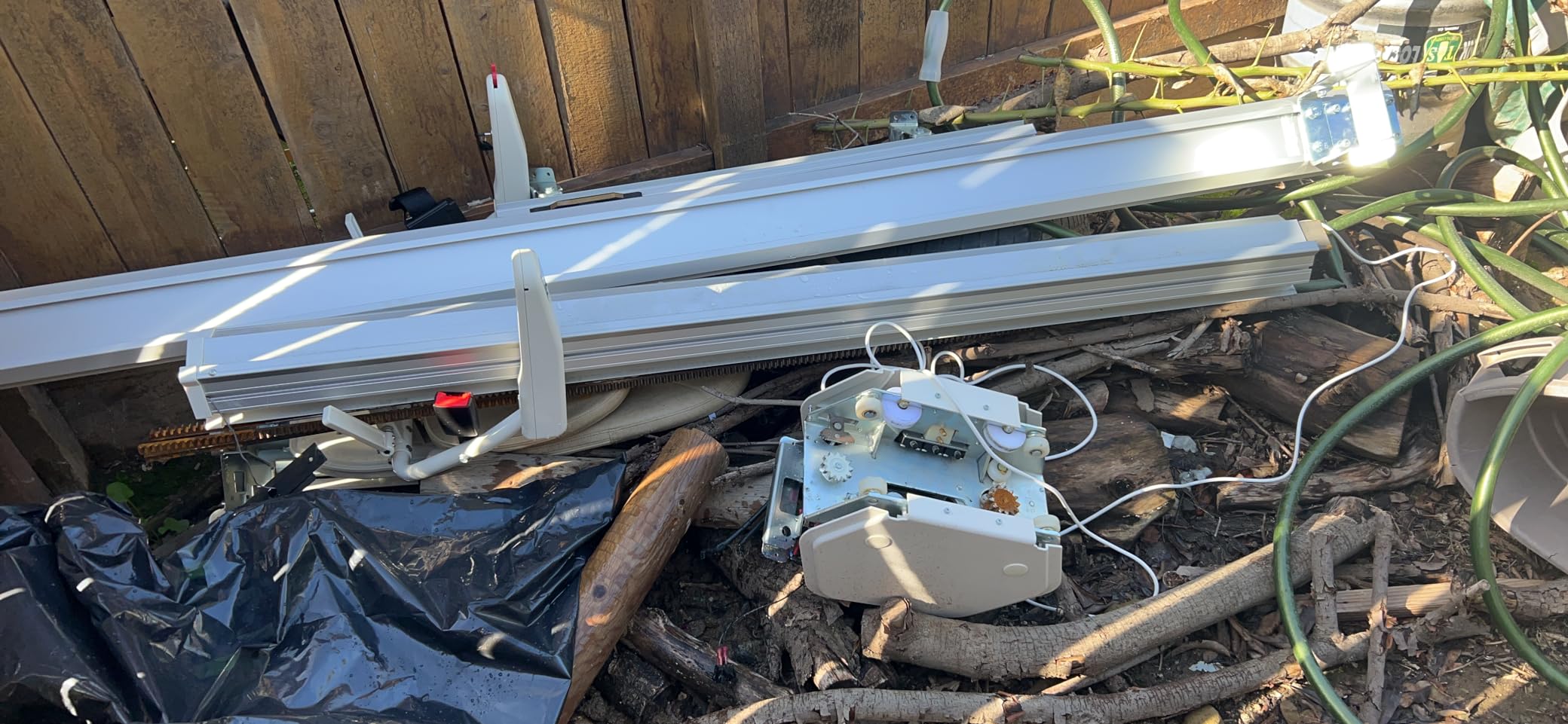
The technical case is a 350 lb maximum weight capacity, a swivel seat with flip-up seat and armrests, and a footrest safety sensor. Wireless call stations at both the top and bottom of the stairs let the chair be summoned from either end without a remote in hand. Dimensions are listed at 96 by 96 by 12 inches and the unit weighs 55 pounds, which is light for a rail-mounted lift and reflects how much of the mass sits in the track rather than the chair.
One installation detail deserves a full warning, because it stops the lift dead and confuses first-time owners: the swivel seat sensor screw ships fully tightened and has to be backed out by roughly an eighth of an inch before the chair will run at all. Owners flag it repeatedly. It is a two-minute fix once someone tells you, but it looks like a dead unit if you do not know.
A second recurring theme is rail quality. With 15 feet of track included, most straight runs need one or two splices, and reviewers report that rail sections are difficult to slide together and that a junction can sit uneven, producing a noticeably jerky ride. It is a workmanship issue rather than a design flaw, and it is the main reason we would not hand this to someone who cannot tolerate a slightly uneven transition.
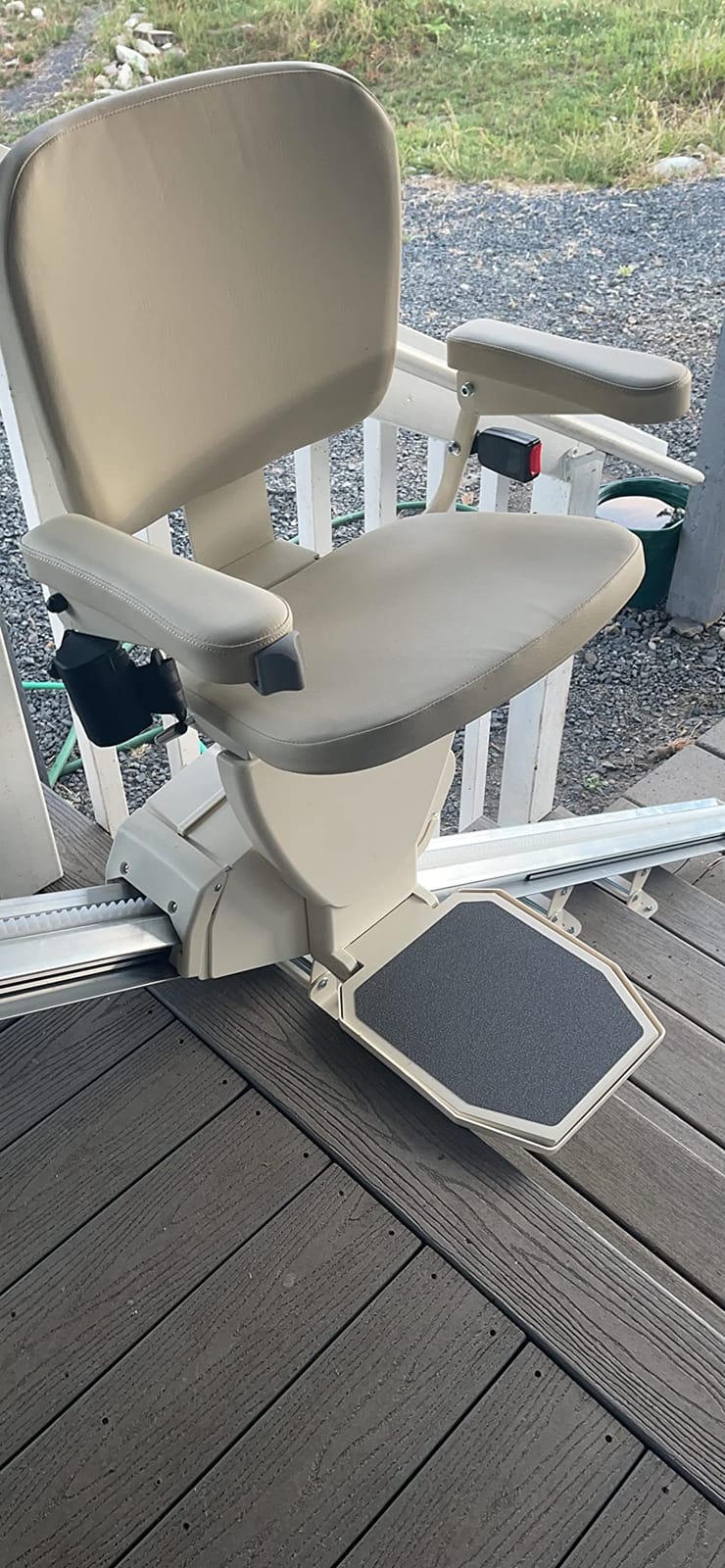
Who the Rave 2 suits well
This fits a straight-run staircase in a home where the family is reasonably handy and wants to avoid a dealer install. It suits a user who weighs under 350 lb, who can transfer into a seat unaided or with minimal help, and who wants wireless call stations rather than having to remember a remote. It also suits a household that wants the staircase to stay partly walkable, since the flip-up seat and armrests release more of the stair width than a fixed chair would.
It is also the sensible pick for anyone who wants to know exactly what the total outlay will be before committing, because the box contains the chair, the track and the power source. There is no separate installer negotiation to unpick later.
Where the Rave 2 disappoints
It disappoints anyone unwilling to spend a weekend wrestling with rail sections and troubleshooting a sensor screw. The absence of dealer installation means no one is on the hook when a splice runs rough, and the unclear documentation means the build is partly self-taught. It is not suited to curved stairs, landings or L-shaped runs, because 15 feet of straight track does not follow a turn.
It also carries no smart-home or Wi-Fi integration, so if your household expects to control the lift from a phone app, this is the wrong product. Budget for replacement track if your run exceeds the included 15 feet.
2. Universal Lifts 350lb – Best Value Straight-Rail Lift
Universal Stair Lift – 350lb Capacity – Folds Flat to Wall – Includes Warranty
350 lb capacity
Folds flat to the wall
15 ft of track included
Internal battery backup
Pros
- Folding design keeps the staircase walkable
- Plugs straight into a standard outlet
- Rechargeable battery backup for outages
- Support has replaced parts at no charge
Cons
- Only the seat and footrest fold
- armrests stay out
- Heavy 200 lb unit needing two strong installers
- Thin plastic upper limit switch can break
This is the pick for anyone whose narrowest moment is the staircase itself. The lift folds flat to the wall after use, which means the stairway stays walkable and a second person can still carry a laundry basket up. Owners on narrow-staircase homes describe the lift as a life saver, and that single design decision is the reason this unit earns its place despite a middling 3.8 average across 89 reviews.
The battery story is the other reason to look here. An internal rechargeable battery runs the lift 20 or more times during an outage, which directly answers the fear that strands a person halfway down the stairs. The power cord plugs into a standard AC outlet, so no electrician and no hard-wiring are involved. Wireless remote control is included, and 15 feet of track covers a typical one-floor run.
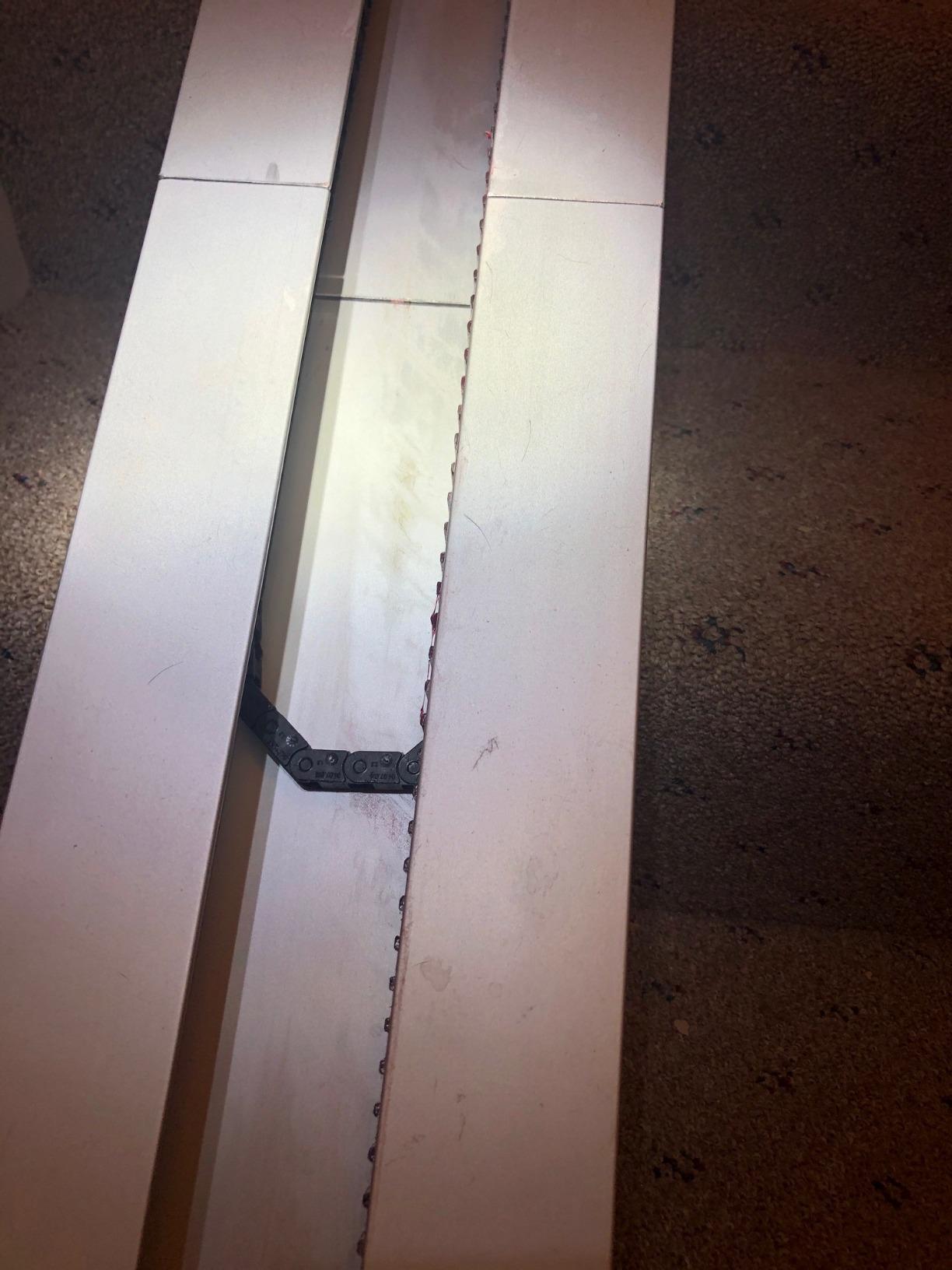
Build-wise, it is made in America with three safety mechanisms, and the dimensions are listed at 180 by 30 by 40 inches. The listed weight is 200 pounds, and that number is the most practical warning in this review. It is a genuinely heavy unit, and owners say two strong people are needed to install and position it. That is a different install experience from the Rave 2 and worth weighing before you buy.
The 3.8 average is explained by the complaints, not the machine. Owners report that written instructions are poorly written and lack clear photos, that the chair can feel wobbly in use, and that the upper limit switch is thin plastic that can break. Several buyers also received missing or damaged parts on arrival, including bent track and a broken gear rack, which points at packaging and quality control rather than at the design.
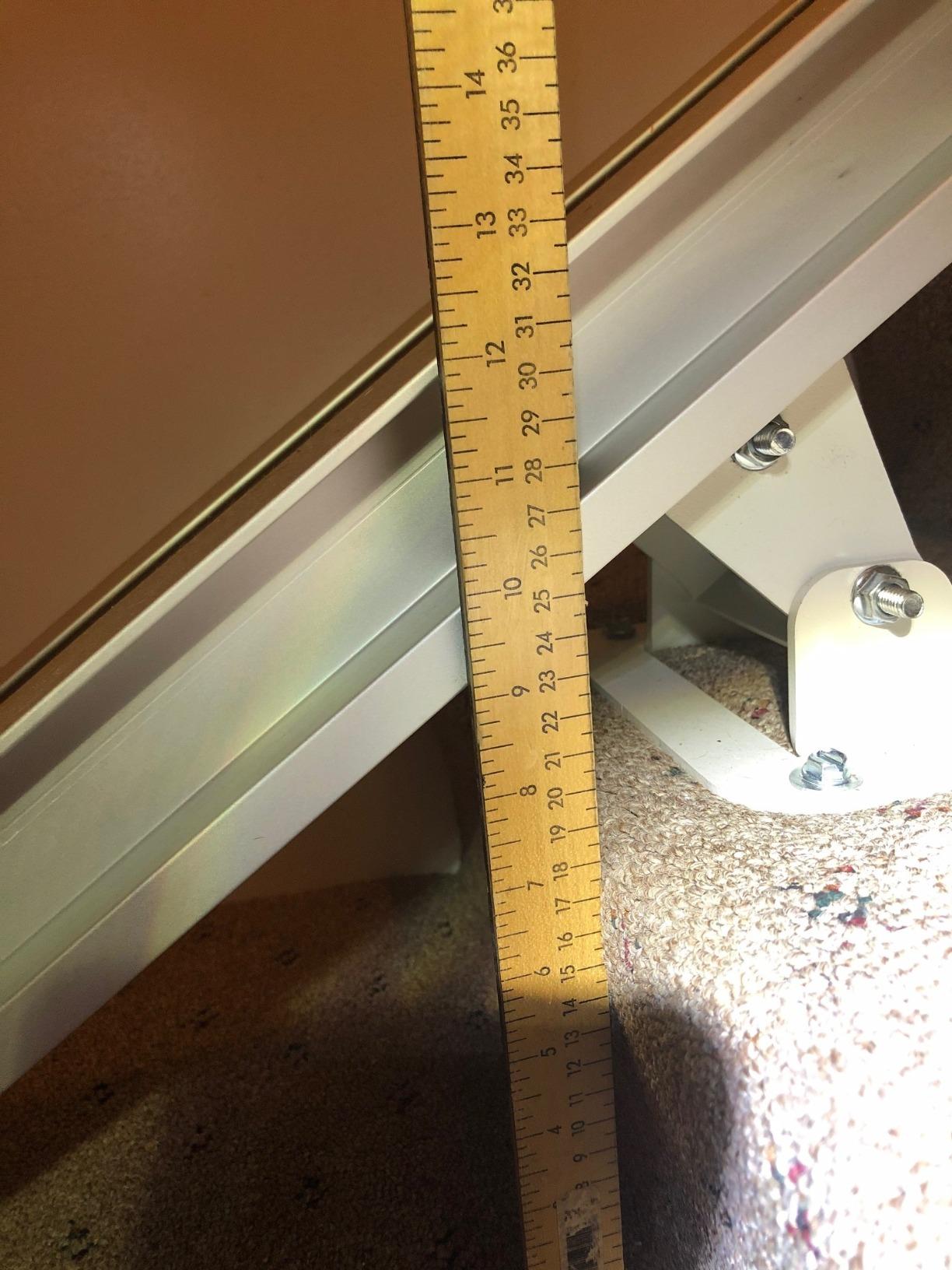
Who the Universal Lifts model suits well
It suits a home where the staircase must remain usable by other people after the lift has been ridden, which is common in multi-generational households and in homes with a second bedroom downstairs. It suits anyone who wants genuine outage capability without having an electrician involved, and anyone whose rail run fits inside 15 feet.
It also fits buyers who want a recognized, simple approach with a warranty attached and a support line that has demonstrably replaced faulty parts such as the motherboard at no charge. That kind of after-sales behaviour is worth more than a spec sheet when something goes wrong.
Where the Universal Lifts model disappoints
It disappoints anyone who expected the whole chair to fold away, because only the seat and footrest fold flat. The armrests do not fold, so they remain an obstacle on the stairs, and buyers should understand the product before assuming the staircase clears completely. It also disappoints anyone hoping for a light two-person install at 200 pounds, or anyone without spare parts access, because no parts list is supplied and components are hard to source later.
Its care record is not clean either. A 15 percent one-star share is a real signal, and most of that traces to documentation, installation difficulty and the armrest detail rather than to the drive.
3. MS3C Track Lift Chair – Best for Caregiver-Assisted Climbing
MS3C Track Lift Chair, Foldable and Rechargeable Chair, Max Support 400 Lbs, for Home Use, Product Net Weight 64 Lbs
Rechargeable, 200+ flights per charge
Lands at 42 in square minimum
Folds to 10.6 in tall
4-point harness included
Pros
- Rechargeable battery with 1.5 to 2 hour runtime
- Light 66 lb net weight folds for storage
- Easy-clean and grease-free surfaces
- Responsive support by email and phone
Cons
- Demanding staircase and landing clearance requirements
- Only two reviews available
- Handled tracks and a person
- not a fixed in-home rail
This is a tracked evacuation and mobility chair rather than a fixed stairlift, and it solves a different problem: getting a person who cannot walk downstairs at all, safely, while a caregiver manages the track. The rechargeable battery delivers 1.5 to 2 hours of runtime, described as equivalent to more than 200 flights of stairs, so the concern about a flat battery partway down does not really apply to normal use.
Construction details are unusually good for the class. The frame is powder-coated aluminium, the controls are color coded with a night light so they can be read in a dark stairwell, and there are curved telescoping lift handles with molded grips and locking guide handles. Four swiveling front castors, dual locking rear wheels with sealed bearings, a retractable solid footrest and a removable head support round out the handling package.
Both reviews we have describe the build as excellent and the customer support as responding within minutes by email and phone, which is worth knowing if you are buying this as a caregiving tool rather than for yourself. The same two reviews raise the most important caveat in this section, which is fit.
Fit is not casual. The manufacturer recommends a minimum staircase landing of 42 by 42 inches, the folded size is 45 inches long by 19.5 wide by 10.6 tall, and the net weight is 66 pounds with a 99 pound shipping weight. One buyer reports the chair was simply not a fit for their stairs. If your landing is tight, check these numbers before anything else.
Who the MS3C track chair suits well
It suits a household supporting someone who cannot climb stairs with a walker or on their own, where a caregiver is physically able to manage a 66 pound chair with telescoping handles. It suits anyone who cannot modify their home, since nothing is drilled and nothing is permanently installed. The color coded night-lit controls and the locking guide handles are genuinely thoughtful for nighttime or low-light use.
It is also the right tool for a hospital, assisted living corridor or a home where the same chair must move between a stairwell and a hallway, since it doubles as a transport chair on flat floors.
Where the MS3C track chair disappoints
It disappoints anyone who wants an in-home stair lift rather than a carried chair, because this is not installed and not available to a passenger independently. It disappoints buyers who want evidence of long-term reliability, because the entire review base is two reviews and both focus on service and build quality rather than years of daily use.
It is also unsuited to tight or non-standard stairs. A 42 by 42 inch landing requirement and a 45 inch folded length will rule out many older houses, and the one buyer who found it a poor fit had exactly that problem.
4. Yawhew Electric Stair Climbing Wheelchair – Best Budget Portable Chair
Electric Stair Climbing Wheelchair Foldable Stair Lifts for Seniors 450lbs Load Capacity Motorized Stair Chair Stairlift with Seat Belts Comfortable Cushion Powered Wheelchair (NXN20-205, NXN20-205M)
450 lb load capacity
Attendant controlled
Safety belt and lockable rear wheels
Folds for car transport
Pros
- Cuts caregiver strain on short stair runs
- Folds for vehicle transport
- Works indoors and outdoors
- Manufacturer replaced a failed battery chair
Cons
- Straight runs only
- an L-shaped flight forces a return
- Some chairs arrived with a dead battery
- Rated 4.0 with a 10 percent one-star share
This is the chair to consider when the person being moved cannot lift their own feet or tolerate being physically lifted, which is where manual carrying methods fail and caregiver anxiety peaks. The 450 lb load capacity is stable for riders around 250 lb, and an attendant works the controls rather than the passenger, so no balance is required during the climb.
It is genuinely portable. The chair folds for storage and fits better in a car trunk, requires no installation or renovation, and is listed for indoor and outdoor stairs, entries and multi-level homes. Dimensions are 30.3 by 20 by 67 inches and the weight is 116 pounds, so plan who is doing the lifting and the loading.
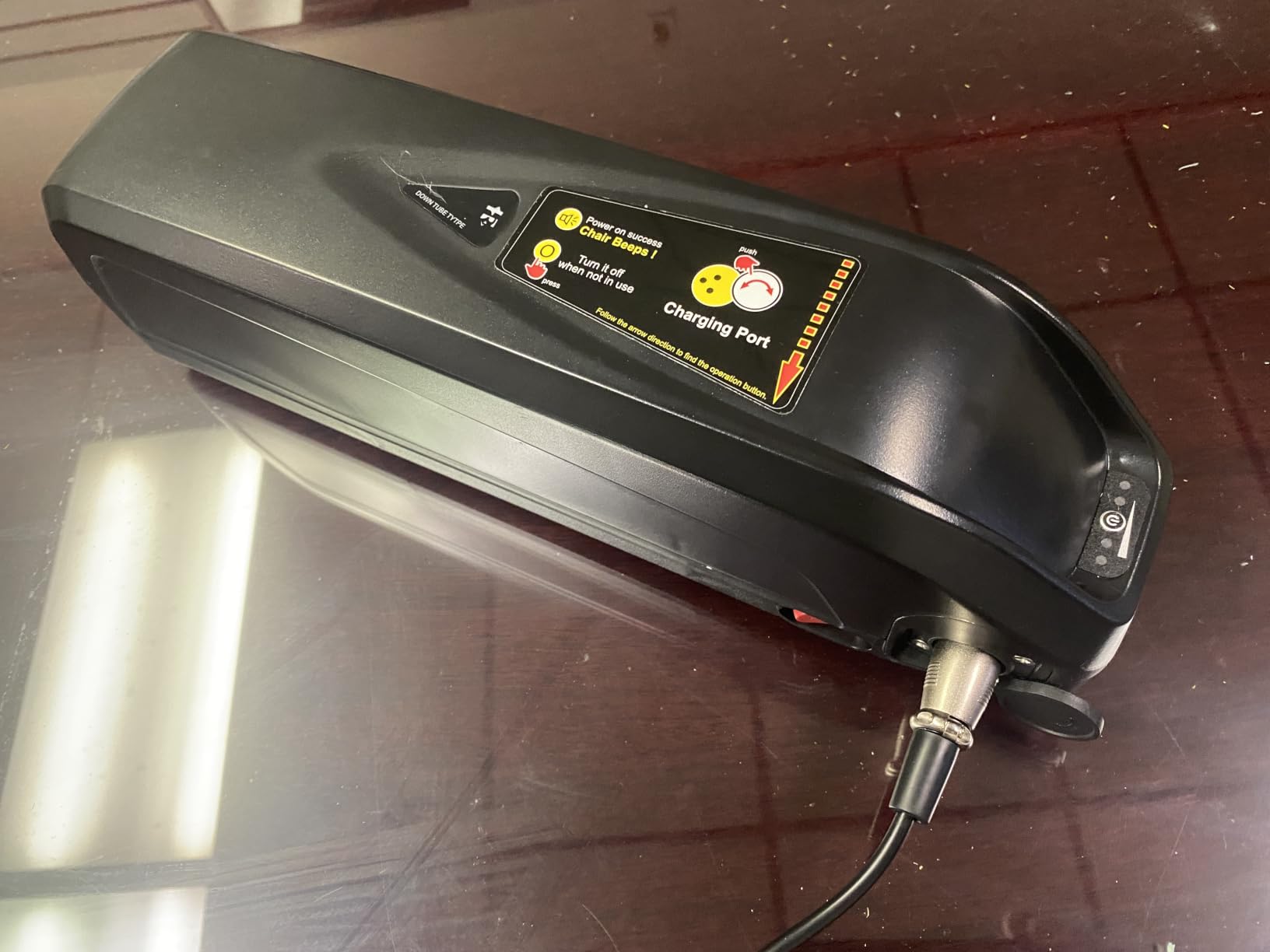
Owners with straight staircases at family homes report that it climbs reliably and removes the strain of manually carrying a loved one. The vendor support team replaced a dead-battery chair and expedited a new one, and reviewers describe the construction as solid. Those are the strongest positives in a thin review base.
The limitation is geometry, and it is decisive. This chair is suited to straight runs, and one buyer returned it because it could not handle an L-shaped staircase. Some chairs also arrived with a dead battery, so charge it fully and test it on the first flight before anyone depends on it. A 4.0 average with a 10 percent one-star share reflects exactly that split: excellent on the right staircase, useless on the wrong one.
Who the Yawhew chair suits well
It suits a family with a straight run of steps, a caregiver situation where manual handling is no longer realistic, and a household that cannot or will not modify the property. It suits anyone who wants the chair to double as transport between levels and to fold into a vehicle for appointments or outings.
It also suits buyers who want higher capacity than most portable chairs offer, because 450 lb is meaningfully above the 350 lb class that fixed rail lifts usually cover.
Where the Yawhew chair disappoints
It disappoints anyone with a turn, a landing or an L-shaped flight, because returning the chair is the only outcome. It disappoints solo caregivers, because an attendant-controlled chair needs an attendant and 116 pounds is not a one-person carry. It also disappoints buyers who want long-term evidence, since 13 reviews with three stars at 18 percent and one star at 10 percent is a mixed signal rather than a settled reputation.
5. DOFORU 480lb Stair Climber – Best for Higher Weight Capacity
Powered Wheelchair, Stair Climbing Wheelchair Load Capacity 480lbs, Electric Mobile Stair Lifts Chair for Seniors, Foldable Stair Chair
480 lb load capacity
70 lb unit weight
Aluminum alloy frame
Indoor and outdoor use
Pros
- Highest capacity in this roundup at 480 lb
- Slow button-controlled climb feels deliberate
- Works on flat ground and uneven terrain too
- Folds for storage and transport
Cons
- Straight stairways only
- not suitable for spiral stairs
- Only 8 reviews for long-term evidence
- Not an independent in-home passenger seat
Capacity is the headline here. At 480 lb this is the heaviest-rated unit we reviewed, which matters because standard straight stair lifts commonly top out at 350 lb, and a person near that limit needs more than a bigger motor. Seat ergonomics, seat width and the strength of the frame all have to scale, and this chair is built at a weight class that most rail units in this category are not.
The other advantage is versatility. The rugged aluminum alloy frame with reinforced nylon seating is described as corrosion resistant for indoor and outdoor use, and the chair doubles as a mobility solution on flat surfaces and uneven terrain, so it works in a home, a hospital corridor or a public space. Movement is button-activated and climbs at a slow, controlled pace, which is the right characteristic when the passenger is anxious.

Owners report a sturdy build, a smooth deliberate climb on straight stairs, and a chair that folds for storage and travel. Ratings are strong at 4.5 across 8 reviews, with 73 percent five-star. The unit weighs 70 pounds and measures 39.5 by 15.8 by 41.5 inches.
The constraint is stated plainly in the product data and worth repeating: conventional straight stairways only, and not suitable for spiral stairs. Like the other portable chairs here, it is a mobility device that is carried or driven, not a rail-mounted seat with a swing arm, so the passenger still needs a transfer.
Who the DOFORU climber suits well
It suits riders near or above the 350 lb threshold who have been told by other brands that they do not qualify, and it suits anyone who needs one device to handle stairs, hallways and rough ground. It also suits buyers who want the slowest, most controlled climb available, because the button-activated pace is deliberately unhurried.
It is a good fit for a multi-generational home where the chair will be shared between a parent on stairs and a family member moving around the house on flat floors.
Where the DOFORU climber disappoints
It disappoints anyone with spiral stairs or a curved flight, which is an outright exclusion rather than a limitation. It disappoints buyers who want a permanent in-home lift, because nothing is installed and the chair has to be positioned at the foot of the stairs each time. It also disappoints people researching longevity, since eight reviews is a thin basis for a multi-year durability claim.
6. VERSHY 480lb Stair Chair – Best Lightweight Travel Option
Power Wheelchairs 480 lbs Load-Bearing,Product Weight 66 lbs,Climbing Wheelchair, Mobile Stair Lifts for Seniors, Electric-Wheelchairs-for-Adults,Foldable
480 lb capacity at 66 lb product weight
Folds in seconds
No assembly required
Indoor and outdoor
Pros
- Lighter than the other 480 lb chair at 66 lb
- Ready to use with no assembly
- Folds in seconds for car transport
- Reported as quiet through heavy daily use
Cons
- Straight stairways only
- not suitable for spiral stairs
- Only one review available
- No independent evidence of long-term reliability
The case for this chair is arithmetic. It carries the same 480 lb class as the DOFORU model but weighs 66 pounds rather than 70, and more importantly it arrives ready to use with no assembly at all. Charge it and go. For a caregiver who is already managing a lot, removing the build step is a bigger practical gain than the four-pound difference.
It folds in seconds, which is the feature that separates it from a chair you can merely tolerate storing. It is built on a rugged aluminum alloy frame with reinforced nylon seating, described as corrosion resistant for indoor and outdoor use, and it doubles as a mobility solution on flat surfaces and uneven terrain. Dimensions are 39.4 by 15.7 by 41.3 inches.
We need to be direct about the evidence. This product carries a single review, so the 5.0 average describes one enthusiastic owner rather than a broad sample. That owner described a solid, quiet chair with no flex that a solo caregiver found reliable for daily use in a two-story home, and the product was available without assembly. We report that and nothing more, and we would not want you to read a 5.0 as proof of reliability.
The same limit applies as to the other portable chairs here: conventional straight stairways only, and not suitable for spiral stairs. The button-activated climb runs at a slow, controlled pace for indoor and outdoor steps.
Who the VERSHY stair chair suits well
It suits a solo caregiver or a single-occupier household that wants high capacity without a heavy machine, and anyone who needs the chair in a car several times a week. It suits a household that wants a device delivered ready to ride, with no assembly tools, no rail and no renovation. The quiet operation matters in a shared home where a lift running several times a day would be noticed.
It also suits buyers who want one device for steps and flat ground, since it doubles as a mobility solution on uneven terrain.
Where the VERSHY stair chair disappoints
It disappoints anyone with spiral stairs or a curved flight, and anyone who wants a fixed in-home stairlift. It disappoints careful buyers, honestly, because one review is not evidence. Treat the specification sheet as the reason to shortlist it and wait for a hands-on check before committing.
Straight Rail vs Curved Rail: What Changes Your Quote
Straight rail and curved rail are different products, not different finishes, and the difference is the single largest factor in what a stair lift costs and how long it takes to arrive. A straight rail runs in a straight line from the bottom step to the top and is the configuration every rail-mounted lift in this roundup supports. A curved rail is custom fabricated to follow a turn, a landing or a spiral, and it is the reason a quote for a curved home can run several times the figure for a straight one.
Four practical differences follow from that. First, lead time: a straight rail is generally built from stock components and installed in a day or less, while a custom curved rail is fabricated to your staircase and the schedule is set by the fabricator. Second, structural modification: a curved rail must follow geometry that often needs a landing or wall anchoring that a straight run does not, and some staircases cannot accept one at all. Third, resale: a straight rail with a common brand has a recognisable second-hand market, while a custom curved rail is close to unsellable and its removal means patching the wall. Fourth, appearance: a straight rail hugs one wall and disappears when folded, whereas a curved rail is a prominent piece of hardware visible from the room below.
Before any quote, three questions decide almost everything. Is your staircase straight, curved, or straight with a landing at the bottom? What is the clear width from wall to wall at the narrowest point, including the handrail? And what is the user’s actual weight, which determines both capacity and the ergonomics of the seat?
Measure the width at the bottom, the middle and the top, and measure the floor run. A 15 foot track covers most straight single-floor runs, so if your measurement is near that boundary, plan on a longer rail kit rather than assuming the included track will reach.
How to Fit, Power and Vet a Stair Lift Installer
Fit is decided by geometry, and a lift that does not fit is discovered late, expensively. Confirm the clear staircase width against the manufacturer’s minimum before you fall for a model, and remember that baseboards, handrails and trim all eat into the figure. If your run is narrow, ask specifically about a folding rail, which is the feature that recovers several inches by folding away when not in use, and ask about seat and footrest folding separately from armrest folding, because they are often different answers.
Safety documentation is the next gate. Residential stair lifts are built to the ASME A18.1 standard, which covers load-bearing requirements, electrical safety and obstruction detection. Do not accept an installation for which the dealer cannot produce documentation of compliance, and confirm that obstruction sensors, a retractable or extendable seat belt, a swivel-and-lock seat, an emergency stop and a diagnostic display with error codes are all present and demonstrated.
Battery backup is not optional in this category, and the reason is fear rather than engineering. Nobody wants to be stopped halfway down a staircase when the power fails. Ask for the number of backup rides quoted on a full charge, note that the Universal Lifts model above is described as 20 or more, and ask what happens when the backup is exhausted. A chair that can be manually wound down is a meaningful reassurance; one that cannot is worth weighing against the alternative.
Finally, vet the installer rather than the brand. The most common complaint in owner communities is that reliability is determined by the local installer, not the name on the unit. Ask how many service calls the dealer handles, who answers the phone after a fault, what the warranty covers in labour as well as parts, whether a service plan is included or optional, and what happens to the warranty if you move. Ask for the same questions from two dealers, and be suspicious of a quote that arrives by phone without a visit.
How to Pay for a Stair Lift When Medicare Says No
Medicare generally does not cover residential stair lifts. They are treated as a home modification rather than durable medical equipment, and a supplier who tells you otherwise is either mistaken or misleading. We say this plainly because it is the most common payment question in this category and the answer is genuinely disappointing.
That does not mean there is no help. Medicaid home and community based services waivers can fund accessibility modifications in participating states, and eligibility usually depends on an assessment of the applicant’s care needs rather than income alone. Veterans may have access to Specially Adapted Housing grants and to the Home Improvements and Structural Assistance for a Disabled Veteran program, which is aimed at accessibility. Aging-in-place grants from your Area Agency on Aging, and state or local home modification programs for older adults, are a further avenue that many families never ask about.
Two more routes are worth checking. Long-term care insurance varies widely by policy, so read yours for a home modification benefit rather than assuming you are excluded. And a stair lift that a physician documents as medically necessary can sometimes be claimed as a medical expense on your tax return, which only helps if you itemise deductions. Ask your local Area Agency on Aging first, because they handle these questions routinely and at no cost.
Who Should Not Buy a Stair Lift
Some people should rule this out entirely, and telling you who saves money on both sides. If you rent, a rail-mounted lift is usually wrong: the drilling and wall fixing are invasive, and your lease may prohibit it. If your need is temporary, a rental program or a portable stair-climbing chair is the sensible route, and buying a fixed rail for a recovery is how people end up with an expensive asset they no longer want.
If your staircase is narrower than the slim-rail minimum, verify that a folding rail model genuinely fits before committing, because fit problems surface after a quote visit and it is hard to walk away once a dealer has your staircase measured. And if your weight exceeds the capacity of the models available to you, do not buy a lift at your limit with the plan to manage; capacity margins exist for a reason.
On resale, the honest answer is that an installed lift is usually seen as a benefit by a buyer who needs one and a cost to a buyer who does not. A straight rail with a widely recognised brand has some second-hand value. A custom curved rail has very little, and removal means patching the wall. Neither is a reason to refuse the lift, but both are reasons to think about who else might want this house.
Frequently Asked Questions
Which is the most reliable stairlift?
Reliability is decided by two things, not one. The drive system and build quality matter, but the most repeated owner complaint is that the local installer determines the experience far more than the brand. Among rail-mounted units we reviewed, the AmeriGlide Rave 2 had by far the largest body of owner feedback at 137 reviews. Whatever you choose, insist on ASME A18.1 documentation, a quoted number of battery backup rides, and a written labour warranty.
Which brand of stair lift is the most reliable?
Bruno and Acorn are the two names most often recommended by owners for reliability, with Harmar, Handicare and Stannah close behind and AmeriGlide prominent in the value tier. None of those brands appears among the six units we reviewed, because Amazon carries very few dealer-installed rail lifts. The reliable shortlist from our own data is the AmeriGlide Rave 2, which has the deepest owner feedback, and the Universal Lifts model for its battery backup and support record.
Will Medicare pay for a chairlift for stairs?
Generally no. Medicare treats a residential stair lift as a home modification rather than durable medical equipment, so it is not covered. Some costs can still be offset through Medicaid home and community based services waivers, VA Specially Adapted Housing and disabled veteran home improvement grants, Area Agency on Aging programs, long-term care insurance policies that include a home modification benefit, or a medical expense deduction if a physician documents the lift as medically necessary.
What is the average cost of a residential stair lift?
A straight-rail indoor installation typically lands in the low thousands, while a custom curved rail runs several times that figure and carries a longer lead time. Online unit prices are lower than dealer quotes because most listings exclude installation, which is the single most common source of surprise. Always ask whether a written quote includes the rail, the chair, installation, warranty, commissioning and a first service visit, and compare two written quotes rather than one phone figure.
What are the best stair lifts according to Consumer Reports?
Consumer Reports does not publish an ongoing ranked list of residential stair lifts, so any site claiming a Consumer Reports stair lift ranking is paraphrasing a source you cannot check. We use our own published criteria instead: fit and staircase geometry, capacity and seat ergonomics, safety certification to ASME A18.1, battery backup rides, warranty terms, and the size of the real owner review base. ASME A18.1 is the verifiable standard in this category.
What are the top 5 stairlift companies?
The five names that appear most often in this category are Bruno, Harmar, Handicare, Stannah and Acorn, with AmeriGlide covering the value and self-install tier. Bruno and Acorn are the two most frequently recommended by owners for reliability. AmeriGlide is the only rail brand we could evaluate with meaningful published owner feedback, and the portable stair-climbing chairs we reviewed come from separate suppliers rather than these five.
Which is better, Acorn or Bruno stair lift?
Both are long-established names and both are recommended by owners for reliability, so the choice comes down to your staircase and your dealer. Bruno is widely available through a large national dealer network, which matters most if you live far from a metro area. Acorn is frequently praised for build quality and for a slim rail footprint on narrow stairs. Neither brand appears in our roundup because neither is sold with published specifications through the channel we could evaluate.
Are stair lifts worth the money?
For most buyers, yes, because the realistic alternative is moving, converting a ground-floor room, or accepting a fall risk on a staircase. Falls on stairs are a leading cause of serious injury in older adults, and an installed lift removes that exposure while keeping the whole house usable. The counter-case is real though. Renters, people with a short-term recovery, and anyone whose stairs are too narrow for a slim-rail model should use a rental or a portable chair instead.
Does a stairlift devalue a house?
It depends on the rail. A straight rail with a widely recognised brand has some second-hand value, and a buyer who needs a lift may see an installed unit as an advantage rather than a cost. A custom curved rail is close to unsellable, because it was fabricated for one staircase, and removal means patching the wall and paying for it. Neither outcome is severe, but a curved rail is worth thinking about before the household’s needs change.
Do stair lifts need to be installed by a professional?
It depends entirely on the product. Rail-mounted units are almost always installed and sold by a local dealer, and dealer installation usually carries a workmanship warranty. Some rail kits, including the AmeriGlide Rave 2 we reviewed, are designed for self-installation and include the track in the box, which owners report completing in a few hours with two people. Portable stair-climbing chairs need no installation at all, but they are carried and driven rather than ridden independently.
The Best Stair Lifts for Home: Our Final Verdict
The best stair lifts for home are not one product but two different answers to two different questions. If you have a straight staircase, plan to use the lift daily for years, and want to avoid a dealer-installed rail, the AmeriGlide Rave 2 is our pick: it has by far the deepest owner feedback in this roundup, a 350 lb capacity, and a real self-install path. If the staircase must stay walkable for other people or you want the strongest outage behaviour, the Universal Lifts model is the value choice, with a fold-flat design and 20-plus backup rides.
If the need is temporary, you rent, or the person cannot transfer into a fixed seat at all, the portable chairs take over. The MS3C track chair is the strongest of those on build detail and battery runtime, the DOFORU and VERSHY units cover the 480 lb class, and the Yawhew chair is the budget option for straight runs. Measure your clear stair width before you choose any of them, ask two dealers for written quotes, and treat every price you are given as a quote rather than a fact.
We update this roundup as specifications and owner feedback change, and we are not a dealer. If you want our shortlist narrowed to your staircase, our guides to the best ellipticals for home and the best home security systems follow the same published criteria.