
The best studio headphones for mixing in 2026 are the Audio-Technica ATH-M50X. Its 45 mm drivers, 38 ohm impedance and circumaural isolation give you a flat, honest read on balance and low end, and the swivelling earcups mean the same pair handles tracking when the mic is live. It is also the model that survives the jump from bedroom producer to working engineer without being replaced a year later.
That recommendation matters because most people buy headphones twice. The first pair feels bright at hour two, the pads flake out after a year, and the fixed cable snaps with no way to repair it. Our list covers ten wired studio monitors chosen for durability, replaceable parts and honest frequency response, not for how they sound on a demo track.
Everything here is wired. Bluetooth codecs add a layer of processing between the signal and your ear, and for critical listening decisions that extra step is not worth it. If you want the wireless side covered, we test noise cancelling headphones separately.
Table of Contents
Top 3 Studio Headphones for Mixing in 2026

Audio-Technica ATH-M50X
- 45 mm drivers
- 38 ohm
- deep accurate bass
- swivelling cups
- detachable cable

Best Studio Headphones for Mixing (October 2026)
| Product | Specifications | Action |
|---|---|---|
| Audio-Technica ATH-M50X |
|
Check Latest Price |
 Sony MDR7506 Sony MDR7506 |
|
Check Latest Price |
| Audio-Technica ATH-M20x |
|
Check Latest Price |
 beyerdynamic DT 990 Pro beyerdynamic DT 990 Pro |
|
Check Latest Price |
 beyerdynamic DT 770 Pro 80 Ohm beyerdynamic DT 770 Pro 80 Ohm |
|
Check Latest Price |
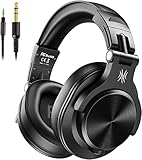 OneOdio A71 Hi-Res OneOdio A71 Hi-Res |
|
Check Latest Price |
 Audio-Technica ATH-M40x Audio-Technica ATH-M40x |
|
Check Latest Price |
 AKG K240STUDIO AKG K240STUDIO |
|
Check Latest Price |
 Samson SR850 Samson SR850 |
|
Check Latest Price |
 Shure SRH440A Shure SRH440A |
|
Check Latest Price |
1. Audio-Technica ATH-M50X: Best Studio Headphones for Mixing Overall
Audio-Technica ATH-M50X Professional Studio Monitor Headphones, Black, Professional Grade, Critically Acclaimed, with Detachable Cable
45 mm drivers
38 ohm impedance
20 Hz to 28 kHz
Detachable cable
Pros
- Deep accurate bass with clarity across the range
- Excellent circumaural isolation
- 90 degree swivelling cups for one-ear checks
- Detachable cable and pro-grade pads
- Huge owner base with replaceable parts available
Cons
- Closed-back soundstage is narrower than an open-back
- Ear pads and headband are the first parts to fail
- Fit can feel tight over glasses
The M50X is the pair we put in front of people who ask us where to start mixing. It has been the default recommendation in audio engineering forums for years, and after working through this list the reason is obvious: it makes sensible balance and low-end decisions without any dramatic character to argue about.
My mix decisions on the M50X are simple. I can hear whether a sub is sitting properly under the kick because the bass response is deep and accurate rather than boosted, and the 20 Hz to 28,000 Hz range means cymbals have real air above them. Nothing about the tuning forces me to compensate.
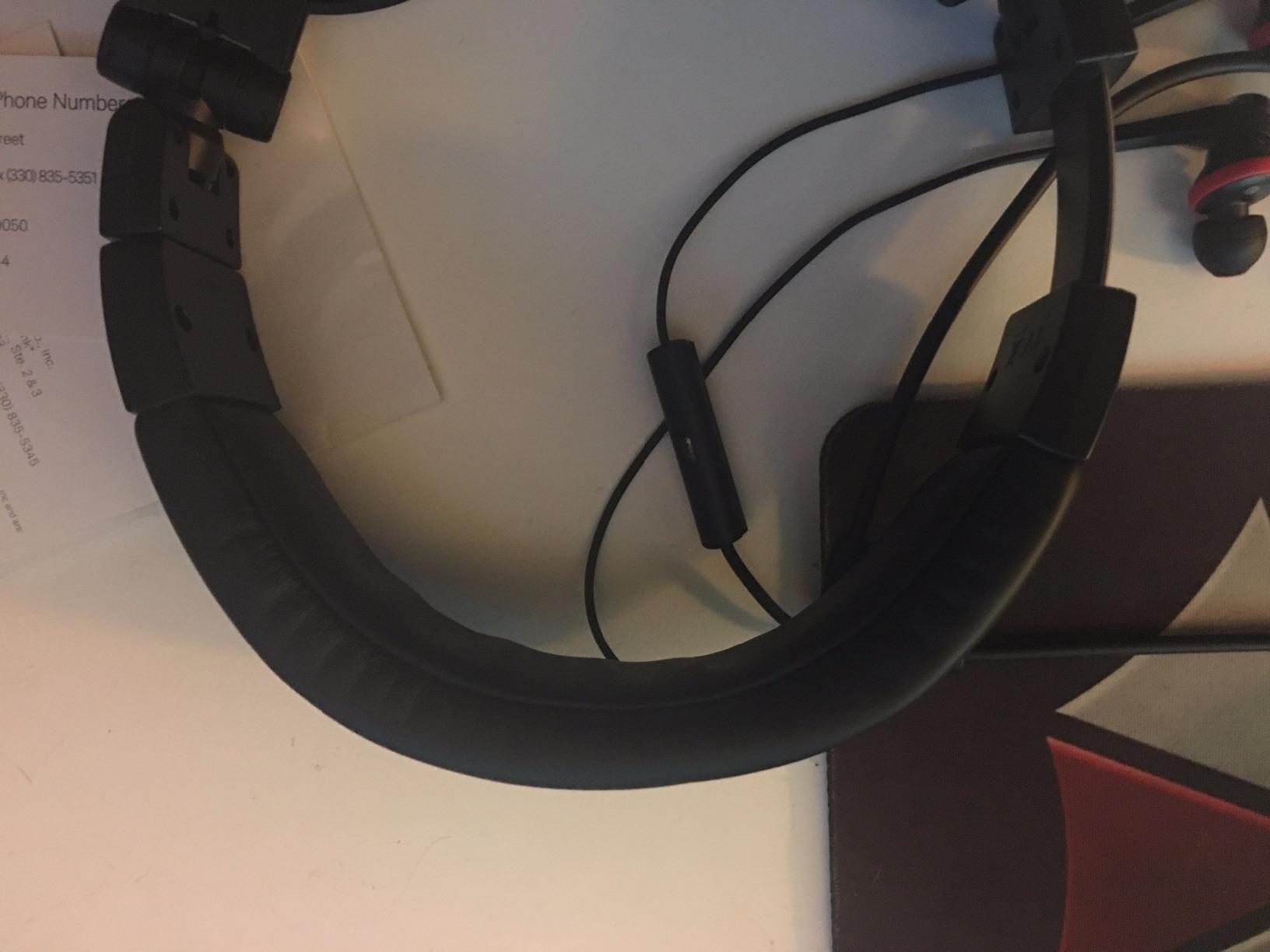
The 45 mm large-aperture drivers with rare earth magnets and copper clad aluminium voice coils do more work than the spec sheet suggests. Detail retrieval is high enough that a badly behaved reverb tail or a noise floor in a vocal chain shows up clearly at mix level, which is the whole point of critical listening.
Around 34,000 owners have left a 4.7 star average, and the pattern in that review history matters more than the number: people keep buying the same model. Cable and pads are standard sizes, replacement parts are easy to source, and the aluminium yoke holds up. That is the difference between a tool and a gadget.
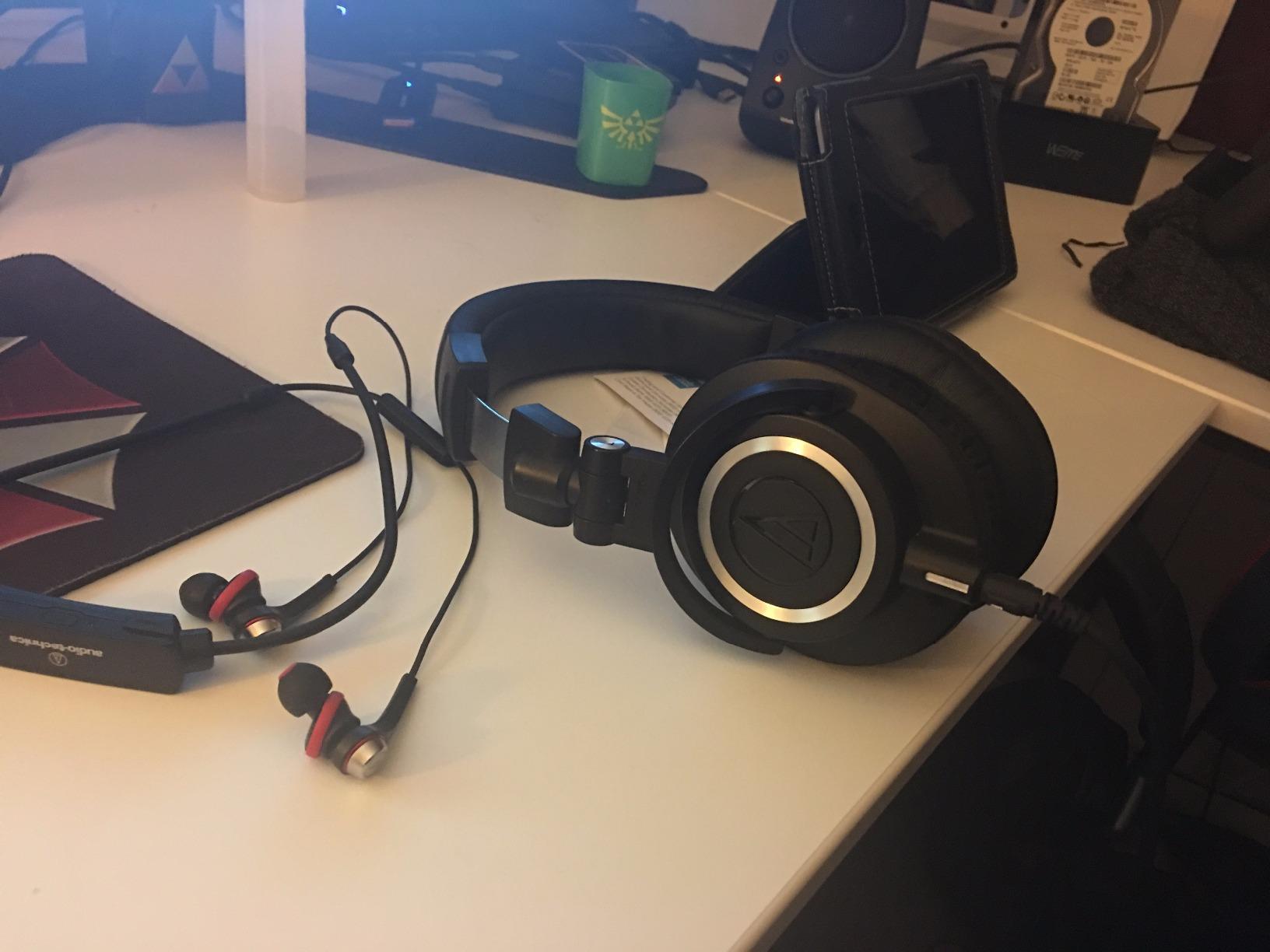
Why the M50X works for mixing and tracking
The circumaural design contours around the ears and the closed-back cup give real passive isolation. When a singer is tracking next to you in a shared room, that isolation is the difference between a usable take and a retake.
The 90 degree swivelling earcups let you fold one cup back and keep an ear on the performer, which is standard practice for tracking and doubles as a quick way to check mono compatibility of a mix. At 38 ohm it drives from almost anything without an amp.
Where the M50X will disappoint you
The trade-off is the soundstage. A closed-back cup cannot give you the depth and air that an open-back design like the DT 990 Pro produces, so deep reverb tails and instrument placement read more compressed. If your priority is the size of the image rather than isolation, this is not the one.
Owners with glasses regularly note that the pads press on the frame, which becomes uncomfortable over a long day. Supplied pads and headband are also the parts that wear first, so budget for a replacement set rather than treating them as permanent.
2. Sony MDR7506: Best Value Studio Headphones for Mixing
Sony MDR7506 Professional Large Diaphragm Headphone
40 mm drivers
63 ohm impedance
10 Hz to 20 kHz
Folds for transport
Pros
- Flat neutral reference trusted across broadcast and music studios
- Strong external noise rejection
- Rugged simple construction that ages well
- Clear vocal reproduction in a wide even stage
Cons
- Non-detachable cable failure ends usability
- Ear pads tend to flake or peel over time
- Modest isolation compared with newer closed-backs
The Sony MDR7506 is the headphone that defined studio reference for two decades, and it remains the first answer in most mixing threads. One long-serving owner in a community thread described using the same pair since 1998 because it lasts and the bass is not bassy, which is exactly the description you want from a mixing tool.
40 mm neodymium drivers sit behind a closed ear design that rejects external noise unusually well for the category. The 10 Hz to 20,000 Hz response is flat enough that panning and balance calls transfer to other systems without a headphone-specific translation step.
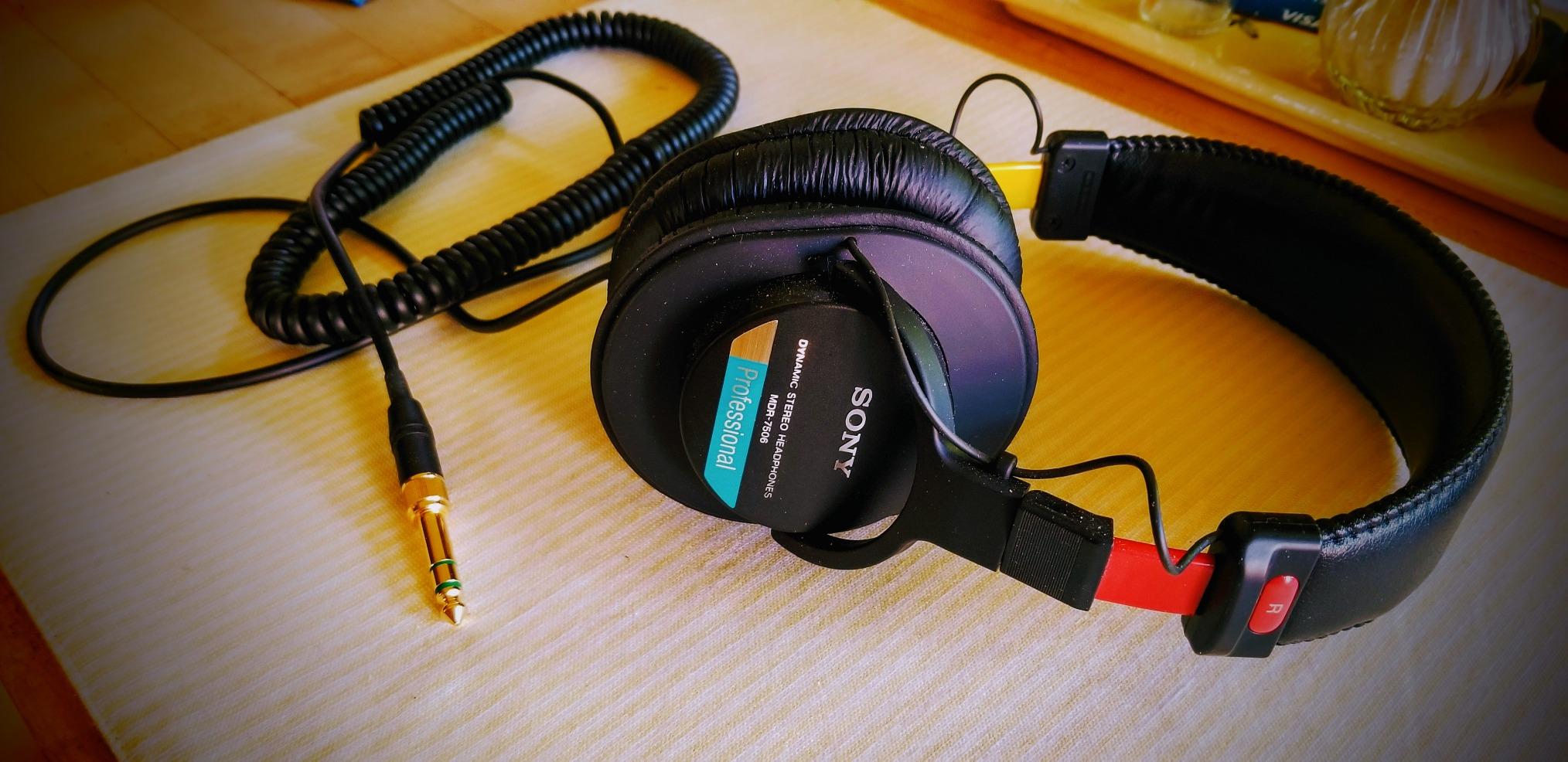
At 63 ohm and 8 ounces, it is light, easy to drive from most interfaces, and small enough to fold into the supplied soft case. Engineers working on location mention it constantly for that reason.
The 9.8 foot cord ends in a gold plated plug with a quarter inch adapter included, which is still the standard configuration in studios worldwide. Nothing about the specification has needed changing, which tells you how well the original design landed.
Why engineers keep choosing the MDR7506
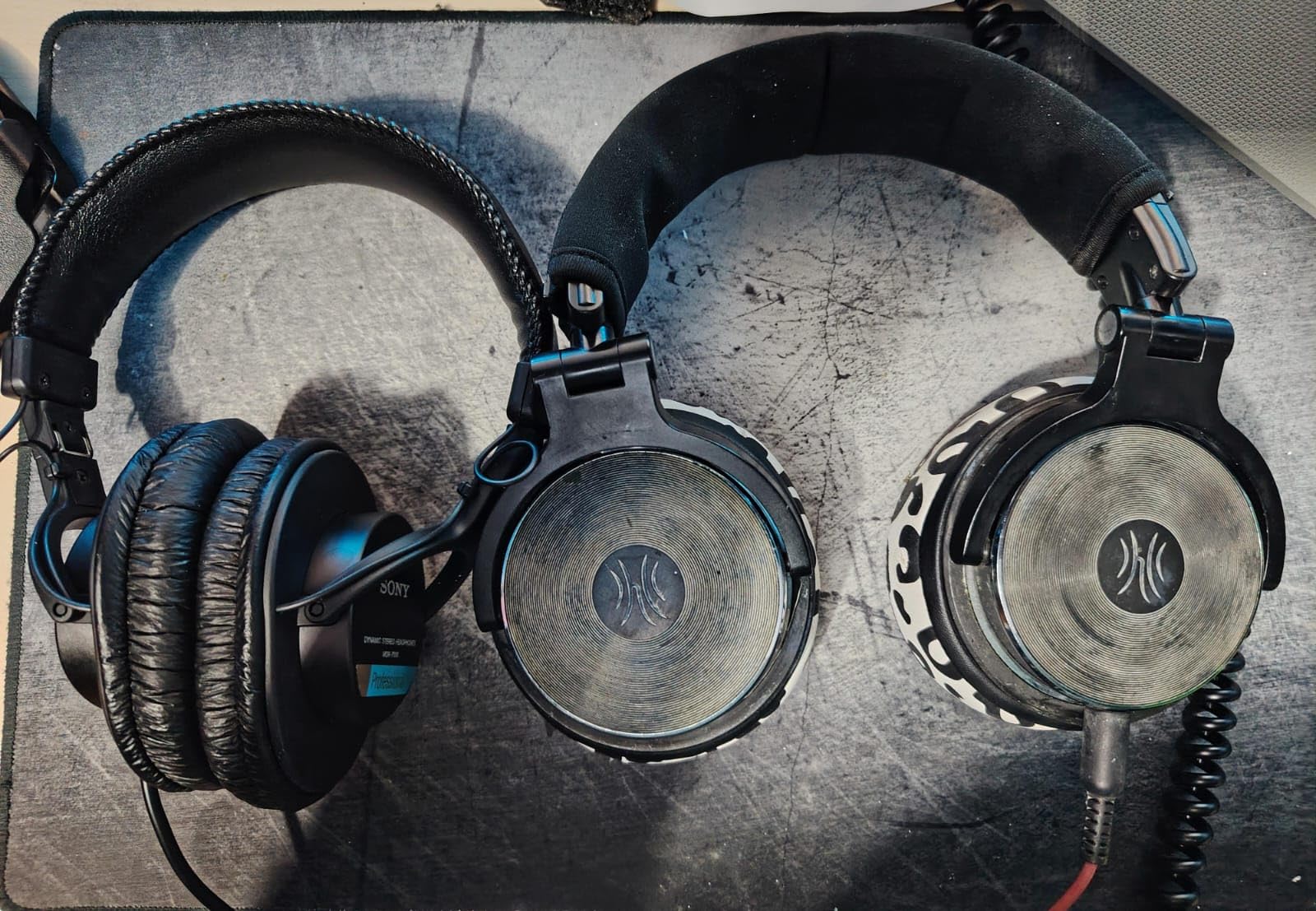
The reputation is earned through consistency. When you calibrate a mix on a pair of MDR7506s, the headphone itself does not add a signature you then have to undo. Across more than 28,000 reviews, uncoloured reproduction and isolation come up far more often than any complaint about the sound.
For a bedroom studio with thin walls or a shared space, that isolation is also a practical win. You can reference loud without the room bleeding into the recording space.
Where the MDR7506 falls short today
The fixed cable is the big one. There is no mini-XLR at the cup, so a cable failure means the headphone is finished unless you open it up yourself. Modern studio monitors with detachable cables simply avoid this problem.
Replacement ear pads also attract criticism for flaking and peeling after extended use, and some listeners describe the top end as slightly bright compared with newer closed-backs. Reviewers also note less bass extension than contemporary designs.
3. Audio-Technica ATH-M20x: Best Budget Studio Headphones for Mixing
Audio-Technica ATH-M20x Professional Studio Monitor Headphones, Black
40 mm drivers
47 ohm impedance
15 Hz to 20 kHz
210 g
Pros
- Flat accurate response suited to tracking and mixing
- Lightweight with low clamping force
- Good isolation for the tier
- Single-entry tangle-free cable
- Two year warranty on parts and labour
Cons
- Bass extension lighter than the M40x and M50x
- Non-detachable fixed cable
- Warmer and tighter over glasses
- Less resolving than higher-tier models
The ATH-M20x is where most home studio setups should start. It does not do anything flashy, and that restraint is the feature. Every mix decision you make on it is a decision that transfers, because nothing is being flattered.
40 mm drivers with rare earth magnets are tuned for enhanced low frequency performance within an otherwise restrained envelope. The result is a monitoring headphone that will not tempt you to over-boost the bass, which is a habit worth building early.

At 210 grams with a light clamp, it disappears during long sessions. The circumaural design gives credible sound isolation in a loud room, which means the same pair works for tracking and mixing rather than living in two different worlds.
Roughly 27,000 reviews at 4.6 stars reflect a headphone people keep for years. The two year warranty on parts and labour is generous at this level, and the single side cable exit keeps the desk tidy.
Who should buy the M20x first
Anyone building a bedroom or living room studio needs a headphone that removes room reflections from the equation. In an untreated space, the room changes the low end more than the speaker does, and the M20x sidesteps that entirely.
It is also the sensible graduation from consumer headphones. Newcomers on audio engineering forums describe it as the default that students actually buy, and the flat response means the habits you build on it are correct habits.
Where the M20x stops being enough
The low end is deliberately restrained, and owners frequently recommend stepping up to the M40x or M50x if you want more bass and treble energy. If your material is bass heavy, that restraint can leave you guessing about sub-bass definition.
The fixed non-detachable cable limits repair options and travel convenience, and the ear pads can run warm for glasses wearers over a full day. It is also less resolving, so fine mix detail takes longer to hear.
4. beyerdynamic DT 990 Pro: Best Open-Back Headphones for Mixing
beyerdynamic DT 990 Pro (250 Ohm), Open-Back Studio Headphones, Black
250 ohm impedance
5 Hz to 35 kHz
8.8 oz
Fixed 3 m coiled cable
Pros
- Exceptionally wide open soundstage for placement and depth
- Authoritative bass reaching into the sub range
- Velour pads stay comfortable for long sessions
- Fully serviceable with replaceable parts
- Detail improves noticeably with a good amp
Cons
- 250 ohm needs an amp or capable interface
- Open-back leaks sound in and out
- Bright treble can grate without EQ
- Fixed coiled cable is awkward to replace
The DT 990 Pro is the only true open-back in this list, and that single design decision changes what you can judge on it. Panning decisions, reverb depth and instrument placement all become audible in a way a closed-back cup physically cannot reproduce.
With a 5 Hz to 35,000 Hz range and 96 dB sensitivity, the bass reaches into the sub region with clarity rather than impression. If your mix lacks weight in the bottom, you will hear exactly where it is missing instead of guessing.
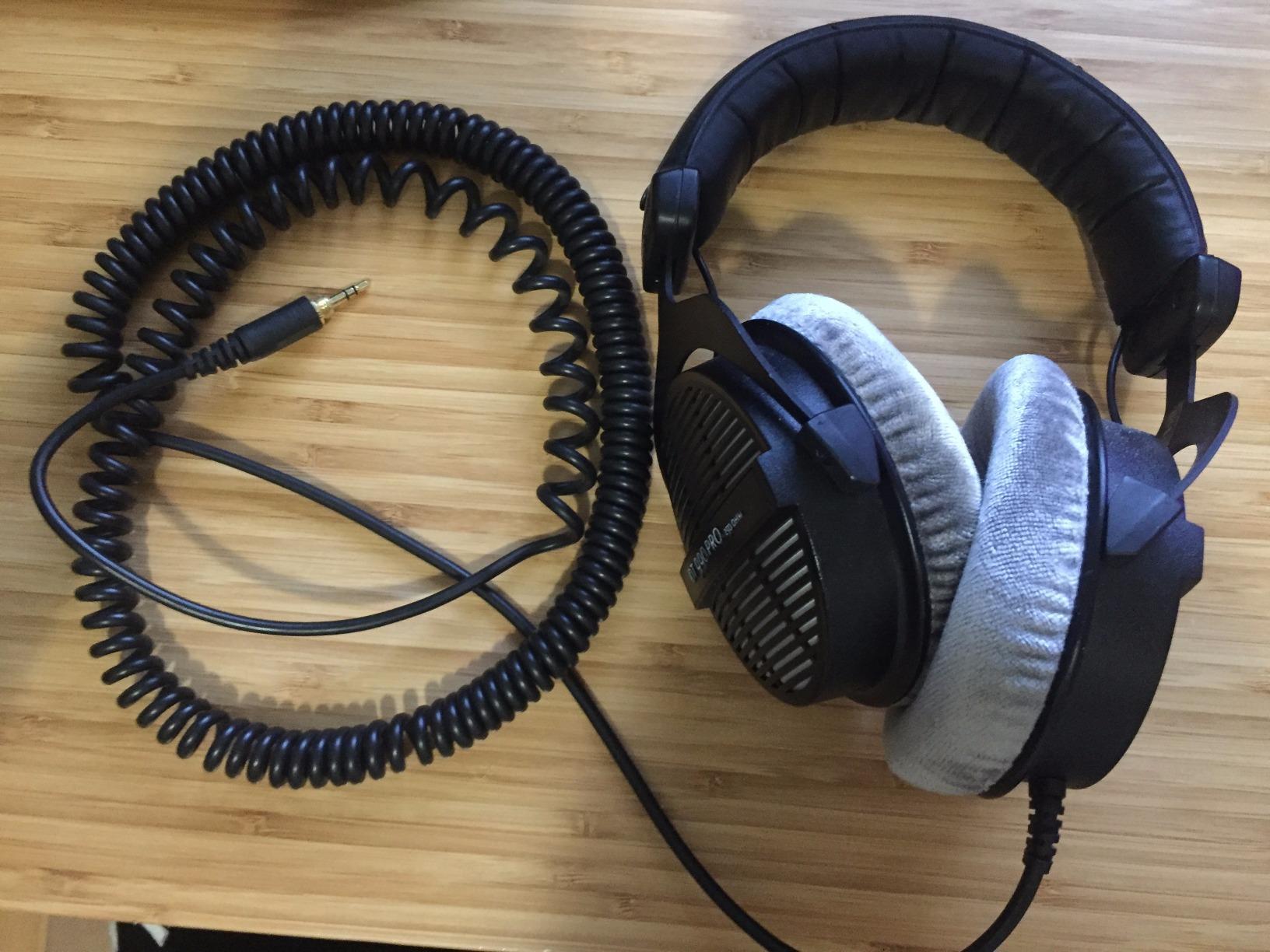
The flip side of an open-back is that the room is now part of the monitoring. In a treated space or a quiet room at normal levels it is a genuine advantage, and the velour pads plus 8.8 ounce weight keep it comfortable through a full mixing day.
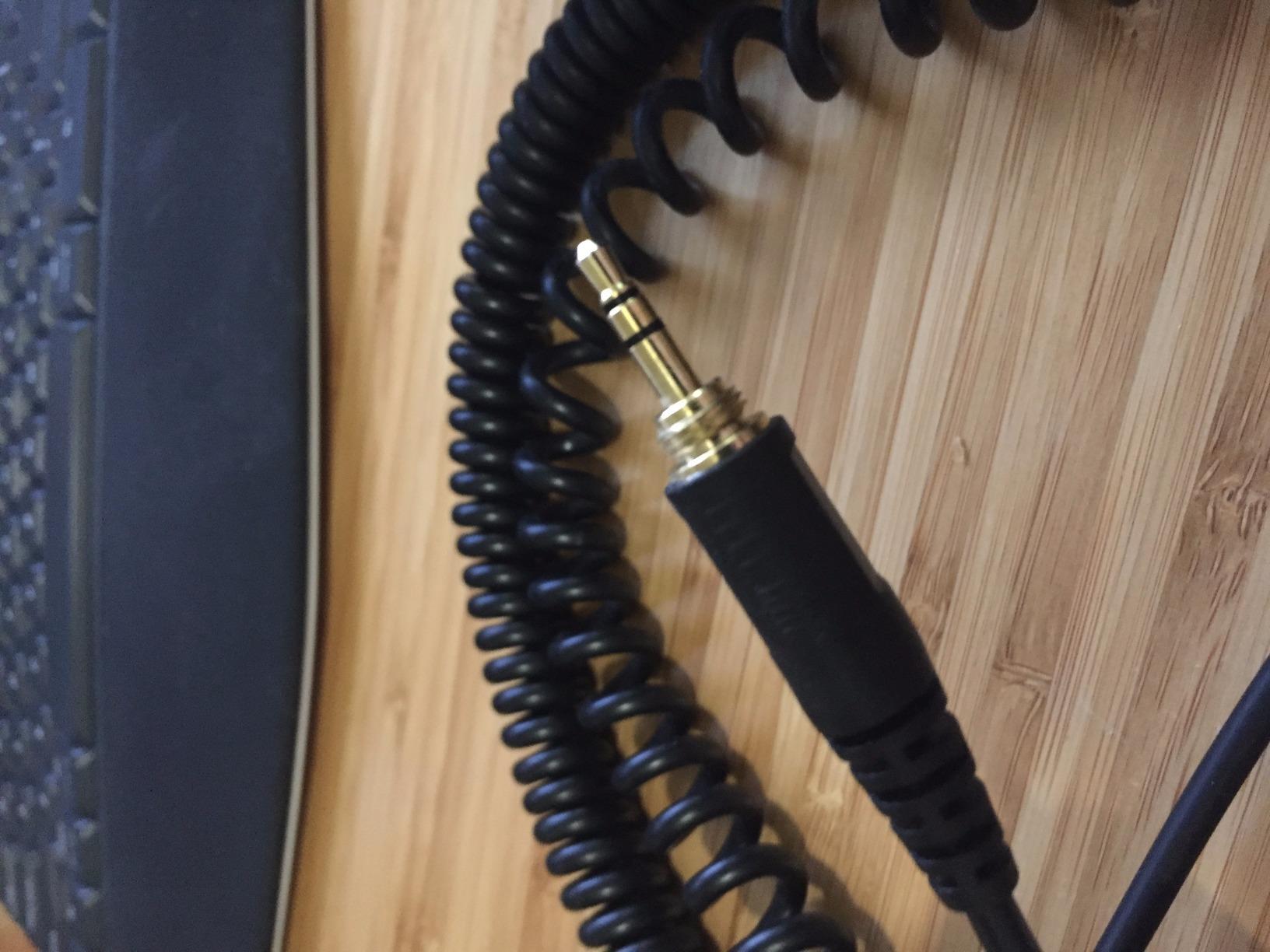
It is handmade in Germany with replaceable grey velour pads, a spring-steel headband and replaceable drivers. For a headphone you might own for a decade, that serviceability matters as much as the sound.
Why the DT 990 Pro is worth an amplifier
At 250 ohm it asks more of a source than most laptop or interface headphone outputs provide. Owners consistently report a noticeable jump in clarity when the headphone is driven properly, because higher current reveals more of the treble detail.
If your interface has a proper headphone output, test it there first. The rule of thumb is that source output impedance should be well under one eighth of the headphone impedance, which is a much easier standard to meet at 80 ohm than at 250.
Where the DT 990 Pro causes problems
Sound leaks in and out. It is the wrong headphone for tracking a live source in a shared room, and it is the wrong headphone for late night work in a busy house.
Reviewers also describe the treble as bright and revealing, which can fatigue on bright recordings without a small correction or a gentler amp. The fixed 3 m coiled cable is another long-term weak point.
5. beyerdynamic DT 770 Pro 80 Ohm: Best Headphones for Tracking and Mixing
beyerdynamic DT 770 Pro Studio Headphones (80 Ohm, Black)
80 ohm impedance
5 Hz to 35 kHz
9.5 oz
Replaceable parts
Pros
- Well balanced detailed response with tight controlled bass
- Extremely light velour pads for all-day work
- Good passive isolation with low leakage
- Pads headbands and drivers all replaceable
- 80 ohm drives easily from most sources
Cons
- Very high frequency sparkle is restrained
- Fixed cable and non-swivelling cups make it bulky
- Velour pads can run warm
- Clamping force feels firm on larger heads
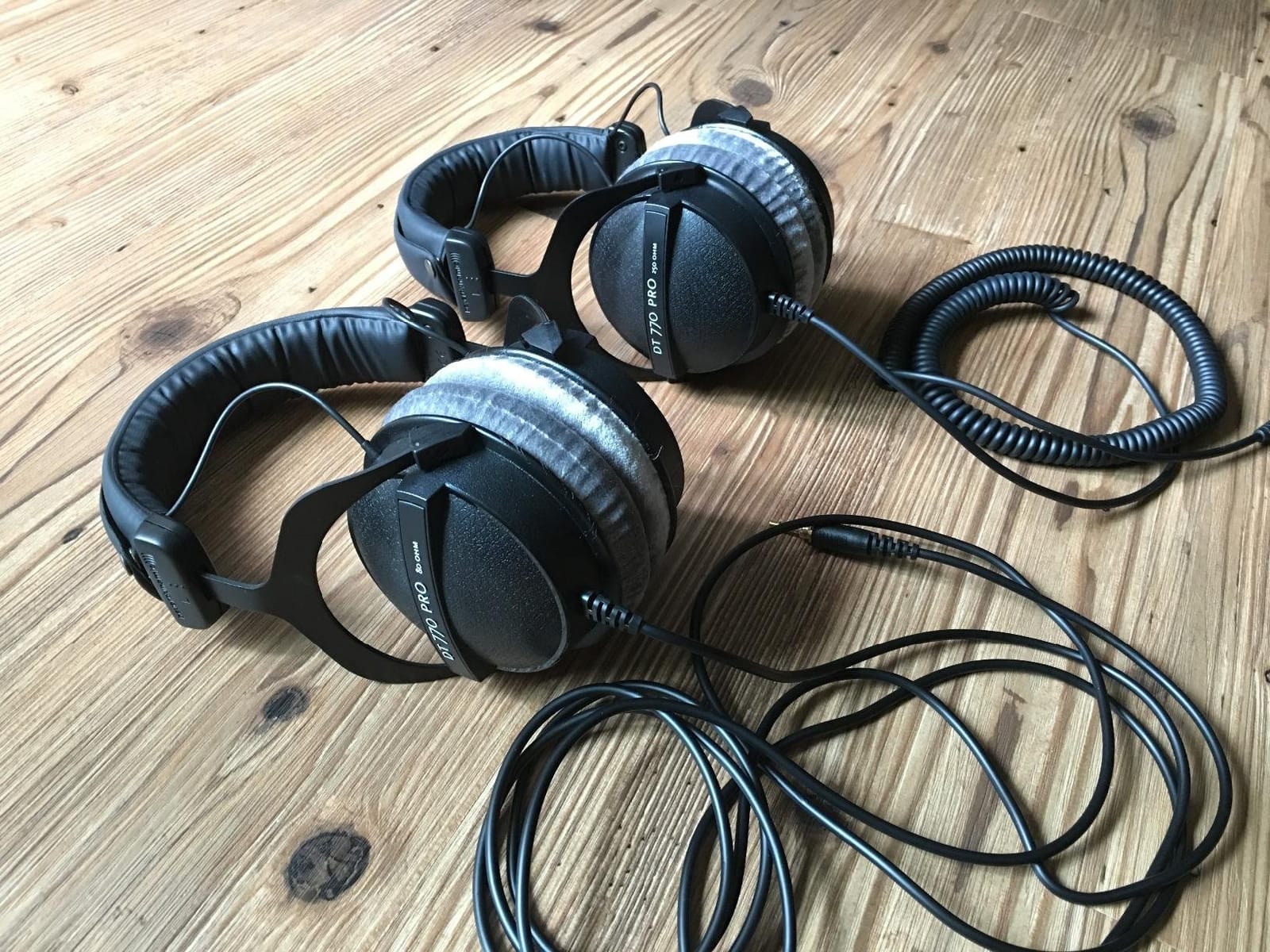
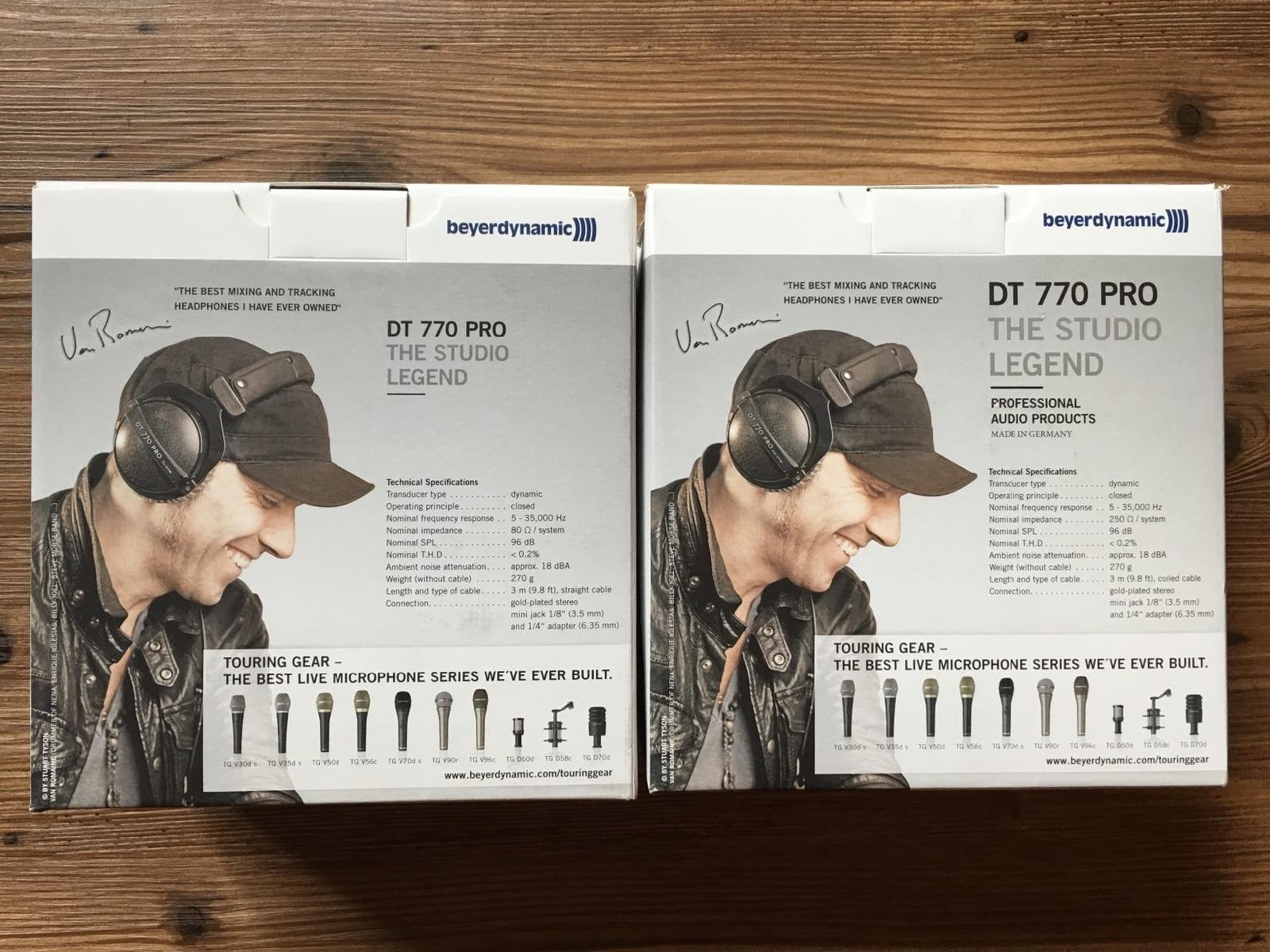
The DT 770 Pro at 80 ohm is the most versatile impedance option in this guide, and the reason is simple: it works in almost any setup. Laptops, small interfaces and mixers all drive it without strain, which removes the amplifier question entirely for most home studios.
The closed-back construction is what makes it a tracking headphone as well as a mixing one. Leakage stays low, so singers and guitarists can perform while you reference without contaminating the recording.
Balance sits in a good place for mixing. The bass is tight and controlled rather than boosted, the midrange stays clear, and the 5 Hz to 35,000 Hz range gives you plenty of headroom at both ends without forcing exaggerated decisions.
At 9.5 ounces with the iconic black velour pads, it is one of the most comfortable studio headphones made. Reviewers consistently describe all-day sessions without fatigue, and the modular repairability means pads and drivers can be replaced rather than replaced in whole.
Why engineers treat the DT 770 as the default
It has been the studio standard at 80 ohms for recording and professional monitoring for a very long time, and the reason is unglamorous reliability. Pads, headbands and drivers are all replaceable, and it is handmade in Germany with a two year warranty.
If you want one pair that handles tracking, editing and final checks without any of the impedance or leakage compromises, this is the honest answer. The 80 ohm version also leaves headroom if you later move to a less capable interface.
Where the DT 770 Pro falls short
The top end is restrained compared with reference open-backs, so you will hear less air above 10 kHz than on the DT 990 Pro. That is a preference as much as a limitation, but mastering engineers often prefer more information up there.
Owners also report that the fixed 3 m cable and non-swivelling cups make the headphone bulky and awkward for travel, velour pads run warm after several hours, and the clamping force can feel firm on larger heads.
6. OneOdio A71 Hi-Res: Best Headphones for DJ Cueing on a Starter Budget
OneOdio A71 Hi-Res Wired Over-Ear Studio Headphones for DJ, Mixing – Black
40 mm drivers
32 ohm impedance
20 Hz to 40 kHz
6.6 to 9.8 ft coiled cord
Pros
- Very low entry cost for a wired over-ear
- Coiled cord with both 3.5 mm and 6.35 mm plugs fitted
- 90 degree swivelling cups for single-ear cueing
- 32 ohm drives from laptops and phones
- Detachable cable and shared audio port
Cons
- Bass-heavy consumer tuning rather than a flat reference
- Lighter plastic build than professional models
- Isolation is modest
- Treble can be harsh at higher levels
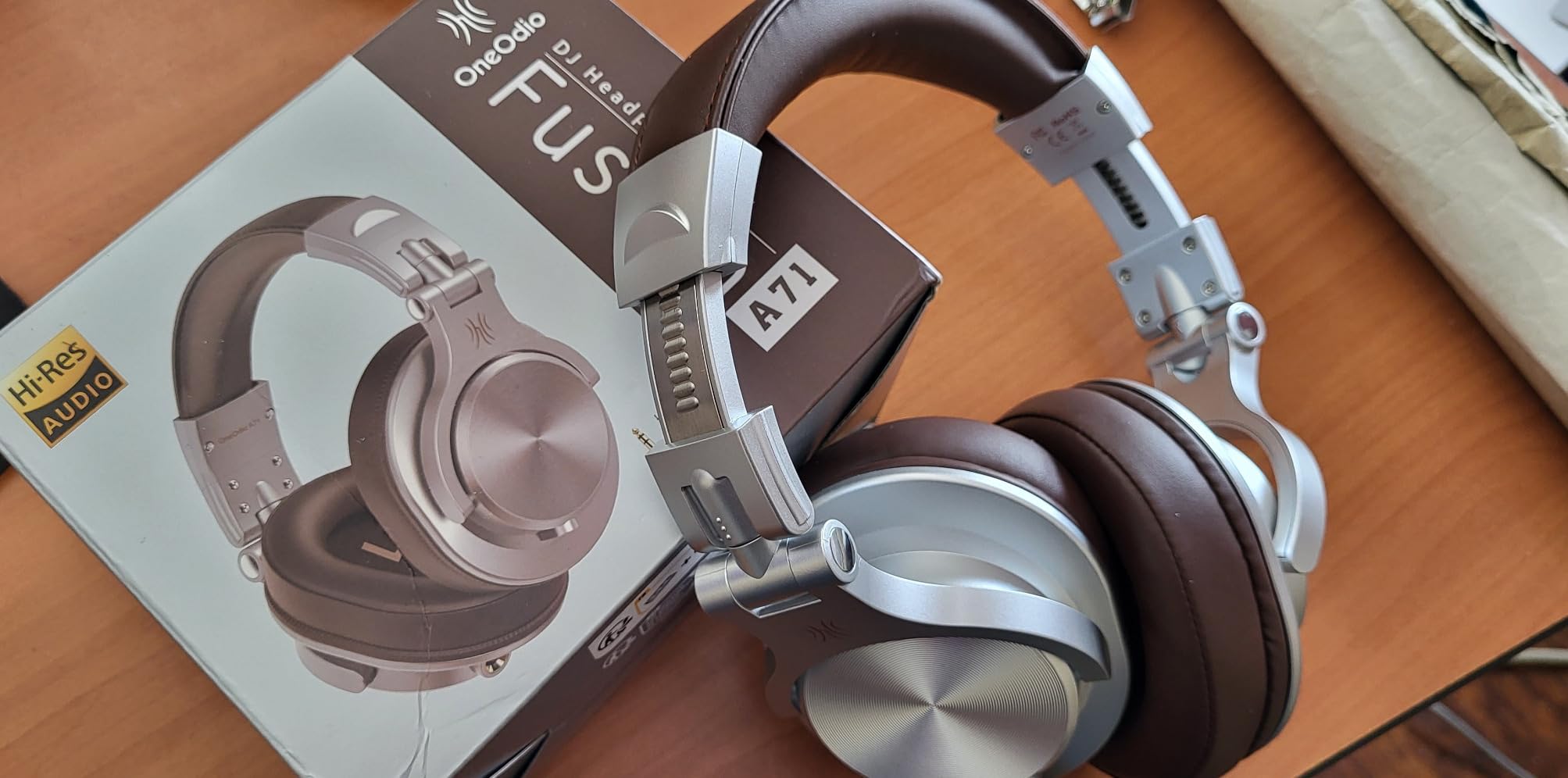
The OneOdio A71 is here because the honest entry point into wired studio headphones costs very little, and this model removes the friction most cheap pairs create. The coiled cord arrives with both 3.5 mm and 6.35 mm plugs fitted, so there is no adapter hunting at the start of a session.
40 mm drivers cover a stated 20 Hz to 40,000 Hz range and deliver more clarity than the price suggests. At 32 ohm with 110 dB sensitivity it gets loud from a laptop, a phone or a small interface with no amplifier at all.
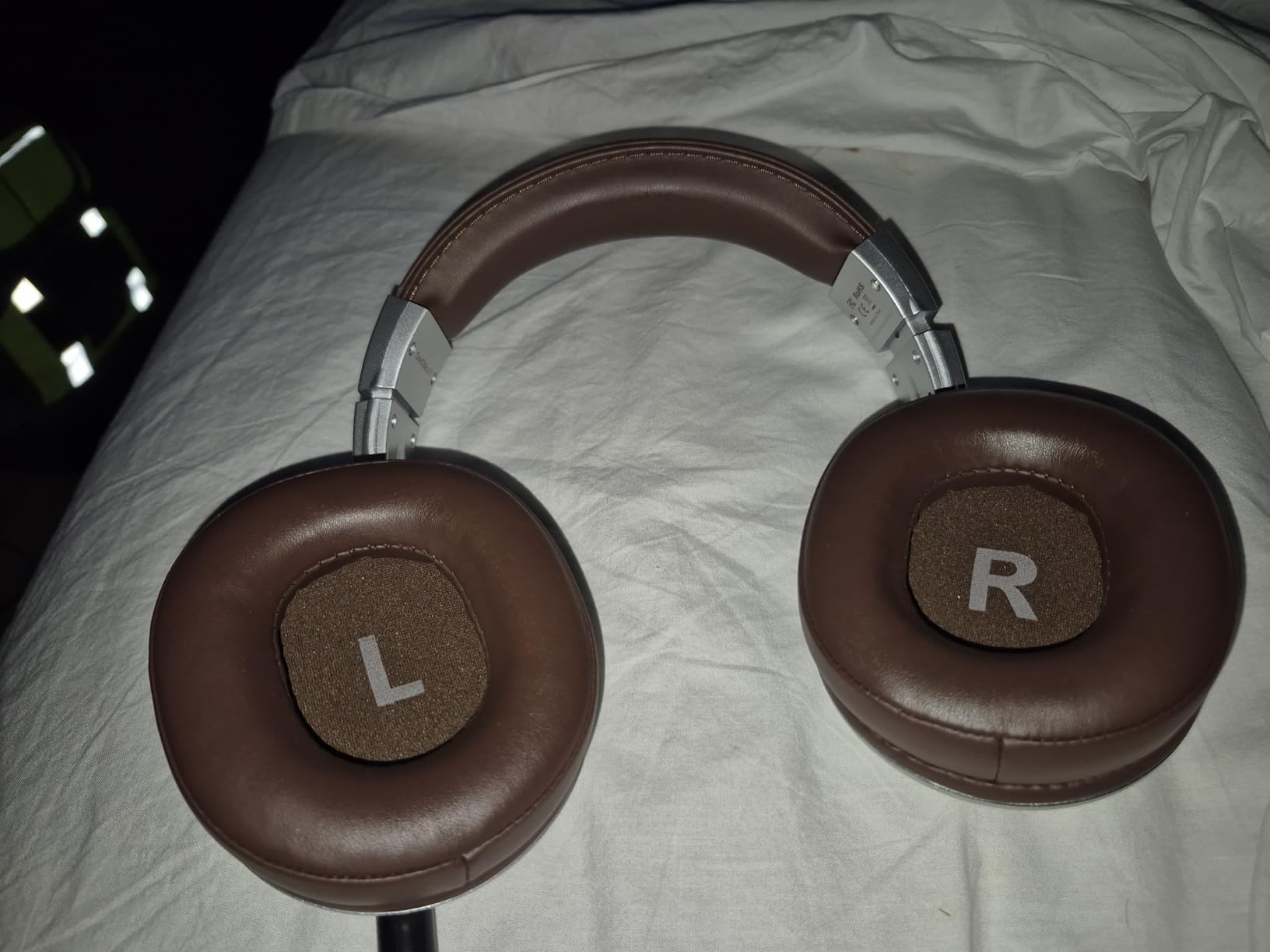
The 90 degree swivelling earcups are genuinely useful beyond DJ work. They let you fold one cup back to monitor with one ear, and the shared audio port means a second pair can be connected without a splitter.
With around 17,000 reviews at 4.5 stars, it is a well established budget option rather than an experiment. Owners consistently highlight the plug-and-play connectivity and the surprise clarity for the money.
Where the A71 works better than it should
For tracking vocals with a microphone in front of the singer, the combination of a coiled cable, swiveling cups and dual plugs is a genuinely good workflow. Nothing about the setup slows you down.
It also handles practice, podcast editing and casual reference work. If you are deciding whether mixing on headphones is something you want to do at all, this is the least expensive way to find out.
Why it is not a mixing reference
The tuning is bass-forward and consumer oriented. That is enjoyable for listening, but it means the headphone will understate bass problems and overstate energy, which is the opposite of what a mixing reference should do.
Reviewers also note the plastic construction feels less durable than professional models, isolation is modest despite the circumaural pads, and the treble can be harsh at higher listening levels. Treat it as a starting point, not a final answer.
7. Audio-Technica ATH-M40x: Best Headphones for Neutral Mix Decisions
Audio-Technica ATH-M40x Professional Studio Monitor Headphone, Black, with Cutting Edge Engineering, 90 Degree Swiveling Earcups, Pro-Grade Earpads/Headband, Detachable Cables Included
40 mm drivers
35 ohm impedance
15 Hz to 24 kHz
0.24 kg
Pros
- Closest to a truly neutral response in the Audio-Technica line
- Two detachable cables and a protective case included
- Very sensitive 35 ohm design plays loudly without a DAC
- Good passive isolation for tracking
- Excellent instrument separation and imaging
Cons
- Free-angle folding design feels floppy and needs two hands
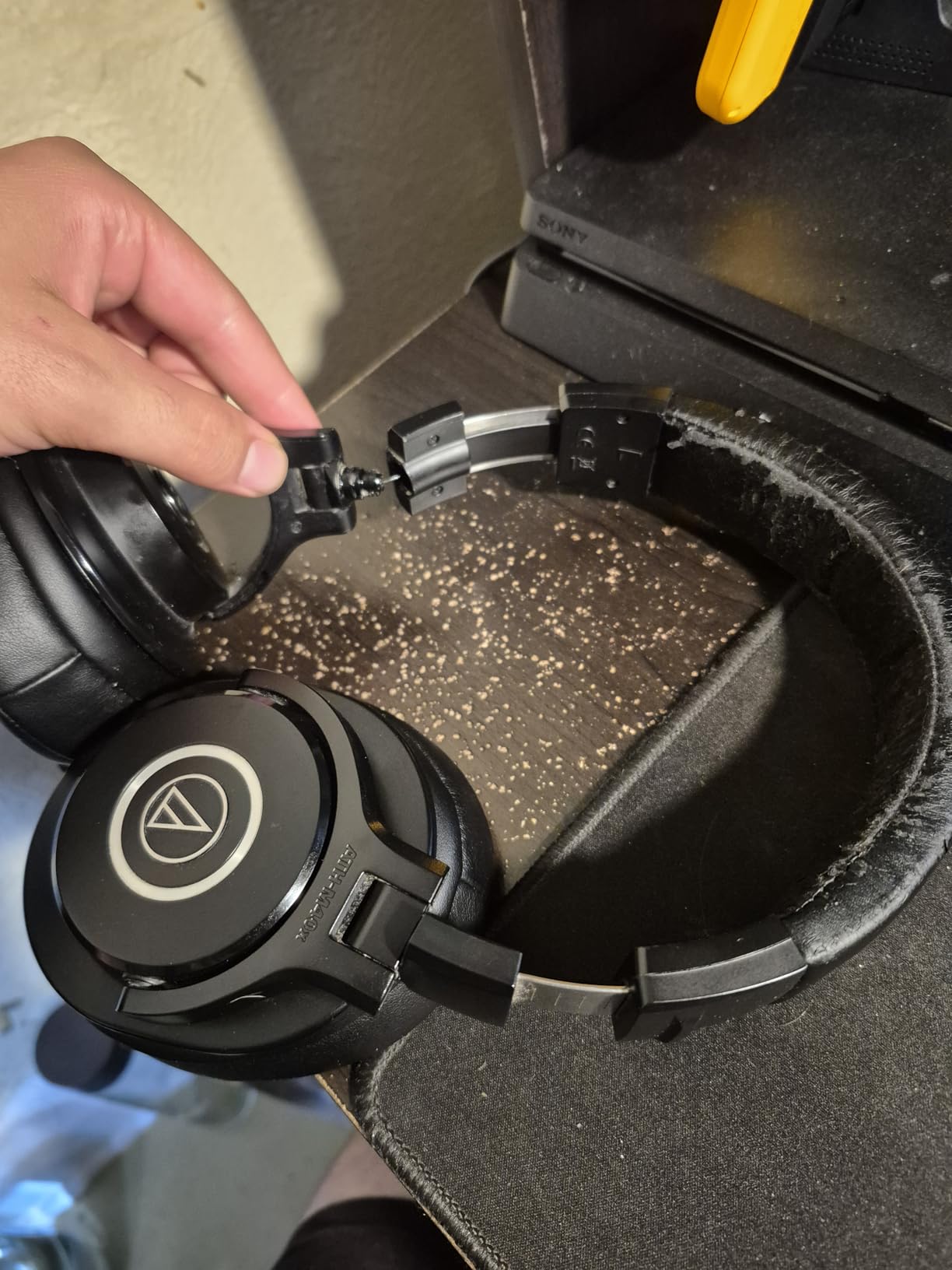
- Plastic earcup hinge is a known long-term weak point
- Less energetic than the M50x
- Supplied pads run small for very large ears
The M40x is the Audio-Technica to buy if your mix decisions are the priority rather than casual enjoyment. It sits closer to neutral than any other closed-back in this guide, which makes it the easiest of them to learn on without forming bad habits.
Instrument separation and stereo imaging are the standout features. When you are placing a guitar in the stereo field or checking whether a vocal sits forward, the clarity across the 15 Hz to 24,000 Hz range makes those calls faster and more confident.
Two detachable cables ship in the box, one straight and one coiled, plus a protective case. That is a more complete package than most competitors at this level, and it means you can set up for either a desk or a tracking room out of the box.
At 35 ohm and 98 dB sensitivity it is very efficient, so it reaches comfortable levels without a dedicated DAC. Nearly 17,000 reviews at 4.6 stars confirm the flat response is the reason owners keep them for mixing.
When neutral beats exciting
Neutrality is what lets you trust your ears across sessions. Once a headphone stops colouring the low end, you stop second-guessing the kick, and you start mixing faster because you trust what you hear.
Owners regularly note the M40x handles mixing and monitoring tasks that the M50x handles with more energy. If your taste leans towards revealing rather than pleasant, this is the model that matches you.
Where the M40x frustrates people
The free-angle folding design is floppy and takes two hands to put on. It also means you need a shorter cable for travel, since the supplied cables are long studio leads.
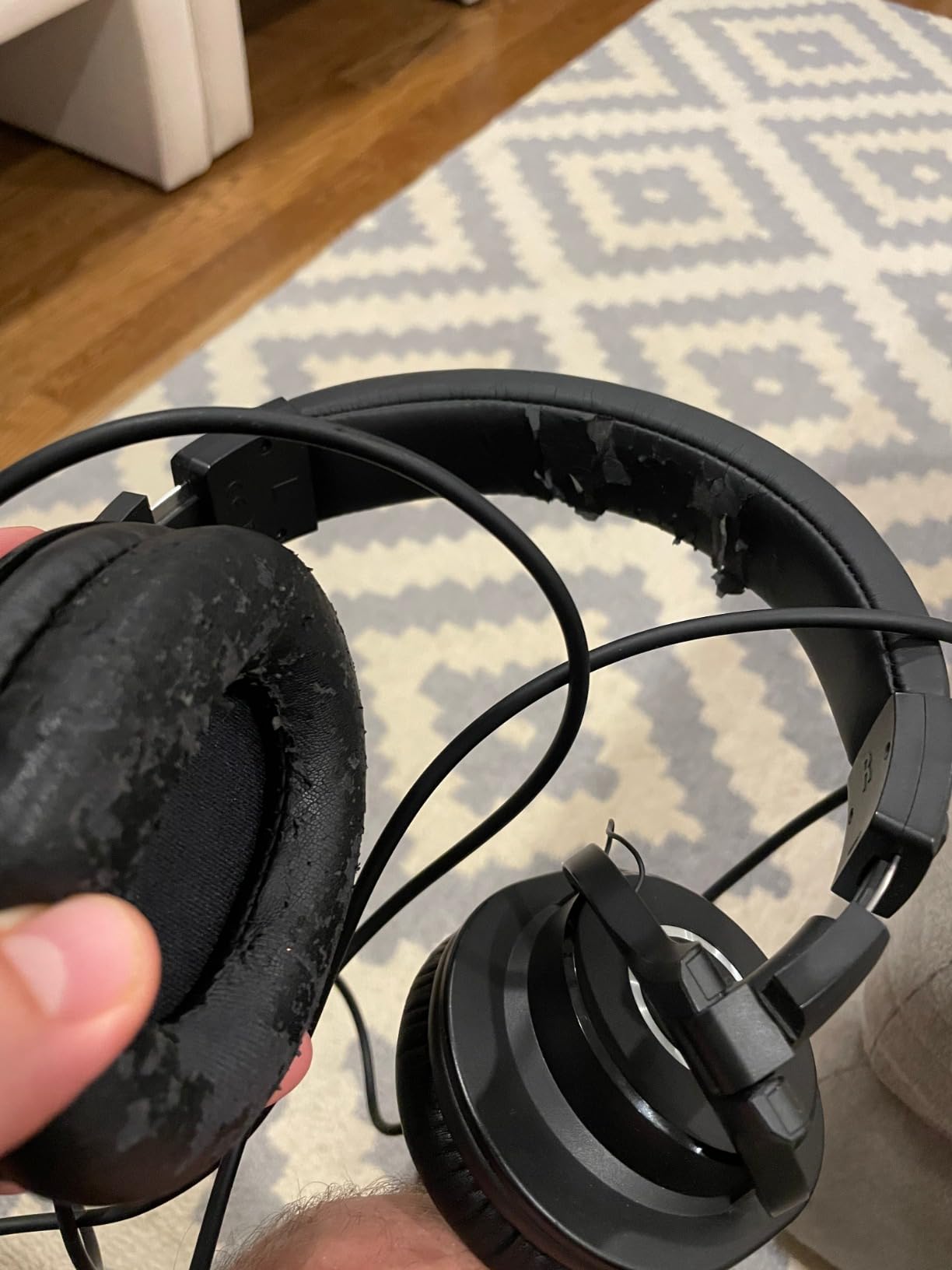
Reviewers also flag the plastic earcup hinge as a known weak point that can crack after years of use, the bass and treble being less energetic than the M50x, and the stock pads running small for people with very large ears.
8. AKG K240STUDIO: Best Lightweight Studio Headphones for Long Sessions
AKG K240STUDIO Semi-Open Studio Headphones
30 mm XXL drivers
55 ohm impedance
15 Hz to 25 kHz
240 g
Pros
- Very neutral studio-accurate sound with no added colour
- Exceptionally light with a self-adjusting suspended headband
- Detachable cable and abundant spare parts
- Semi-open design stays clear and airy
- Strong entry-level value
Cons
- Semi-open leakage makes it wrong for live recording
- Bass is light and sub-bass is thin
- Highs can be harsh and cut off at higher levels
- Stock pleather pads feel cheap and run warm
- Wants an amplifier for volume
The AKG K240STUDIO has been a budget semi-open reference for decades, and the design decision that matters most is the headband. It sits on a suspended gimbal rather than pressing down, so the 240 gram weight is distributed instead of clamped.
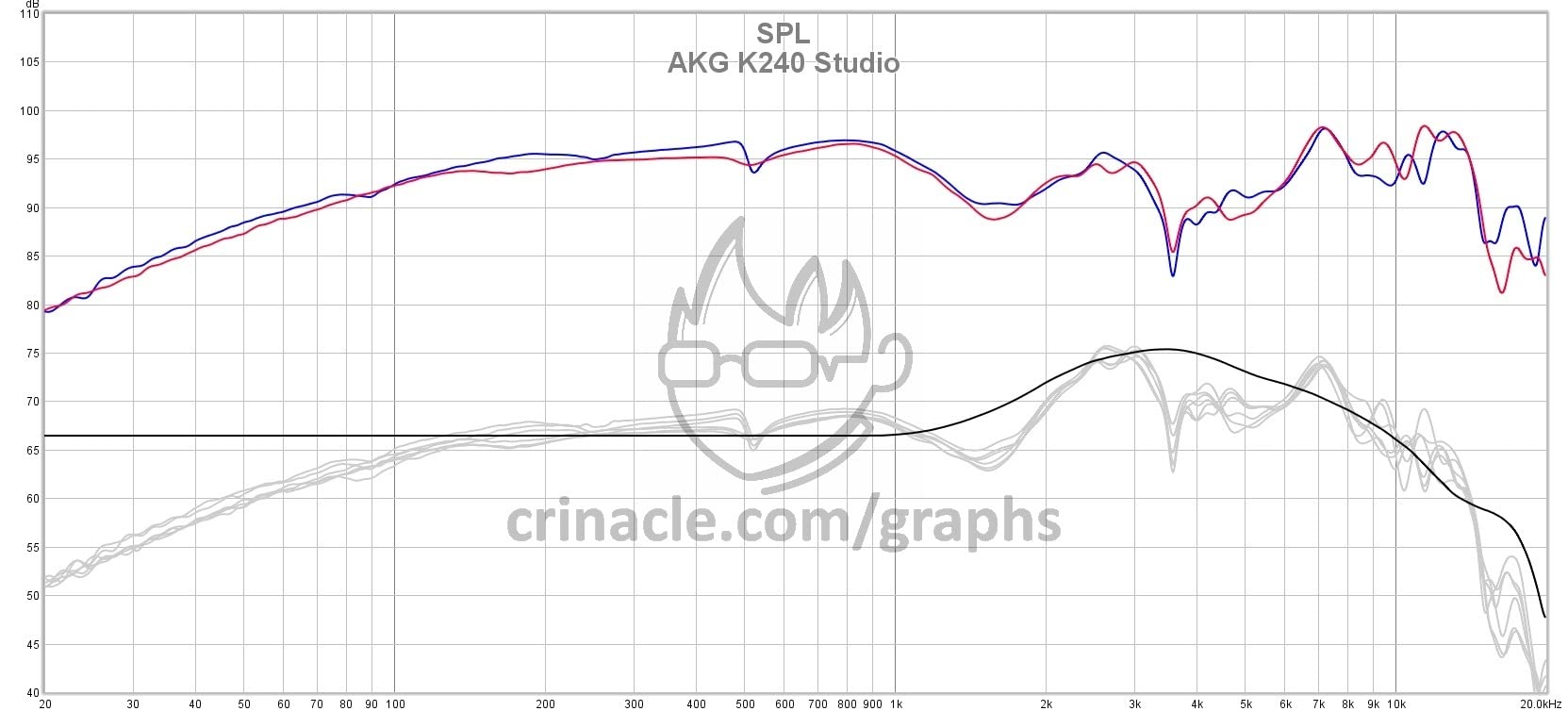
For editing, podcast production and mixing work in a quiet room, the semi-open design gives a roomy, airy presentation that closed-backs cannot. Sound is neutral and reproduced without added colour, which is exactly what you want from a monitoring tool.
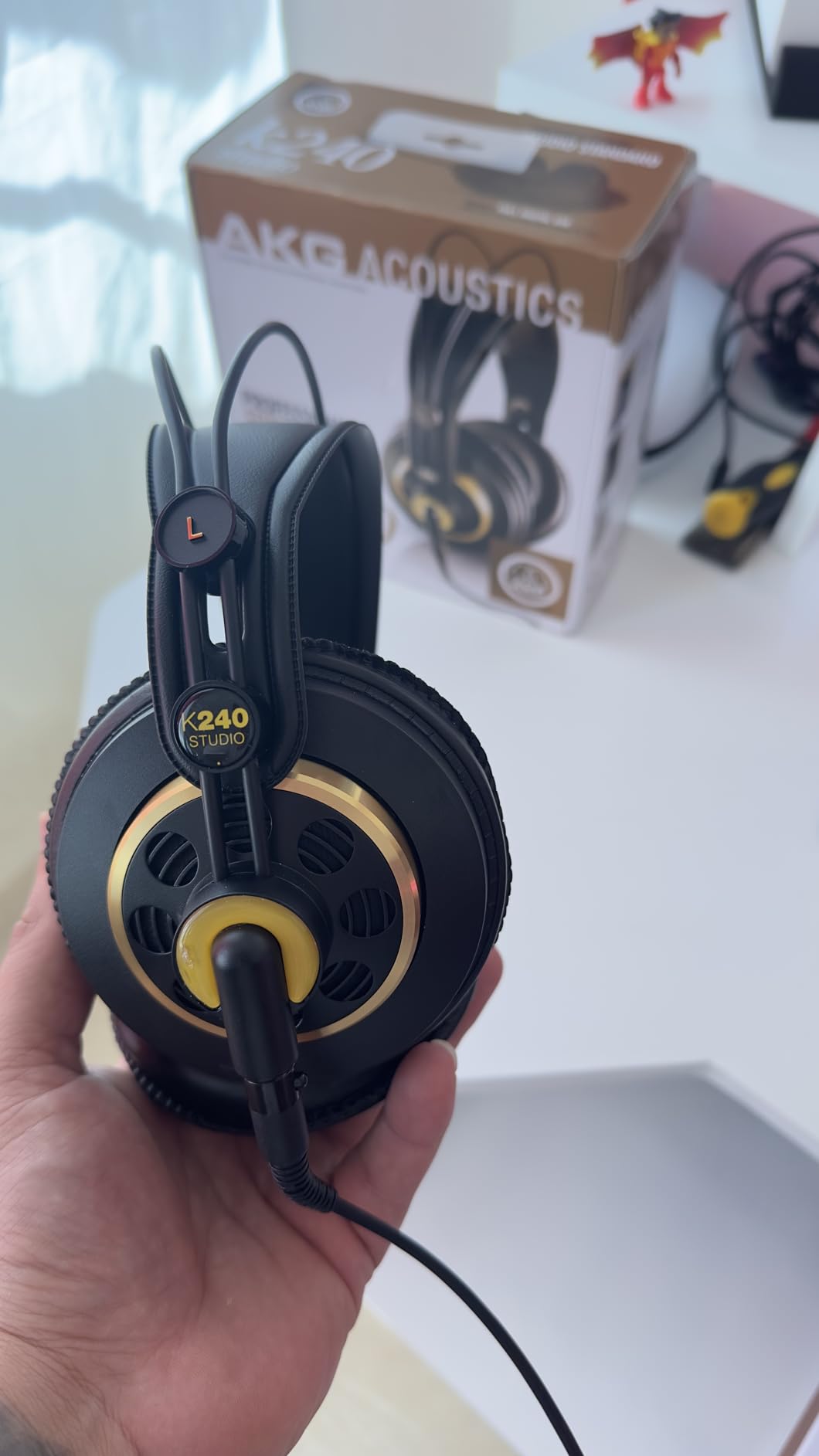
The 30 mm XXL transducers use patented Varimotion diaphragms for a wide dynamic range. Detachable cables with screw-on adapters are still the norm, and AKG has kept spare parts available for a very long time, which extends the working life considerably.
Roughly 12,000 reviews at 4.5 stars describe the same thing: neutrality, low weight and cable replaceability for a price that has stayed accessible. Reviewers regularly use it for mixing, mastering and spoken content editing.
Why comfort decides this one
If your sessions run eight to ten hours, weight is a technical spec. A headphone that does not create pressure points gets used; one that does gets left on the desk. The self-adjusting band is the reason this model keeps working late in the day.
It is also a good podcast and voiceover headphone, since the neutral response keeps voices honest and the light clamp avoids fatigue on long reads.
Where the K240STUDIO falls short
Semi-open means sound leaks both ways, so it is unusable while recording a live source with a microphone in the room. Bass is light and the sub-bass is thin compared with closed-back models in this list.
Owners also report that the highs can be slightly harsh and cut off, causing ear fatigue at higher volumes, and that the stock pleather pads feel cheap and run warm over long sessions. At 55 ohm it also wants an amplifier for adequate volume and dynamic range.
9. Samson SR850: Best Semi-Open Headphones for Spacious Listening
Samson SR850 Professional Studio Reference Headphones
50 mm drivers
32 ohm impedance
10 Hz to 30 kHz
Self-adjusting band
Pros
- Semi-open design gives an open natural presentation
- Large 50 mm drivers for wide dynamic range
- Self-adjusting headband spreads weight well
- 32 ohm impedance drives from laptops and phones
- Strong value in its bracket
Cons
- Semi-open leakage rules it out for live tracking
- Bass-forward voicing is less neutral than a true reference
- Velour pads trap heat during long sessions
- Bulkier and heavier than most closed-backs
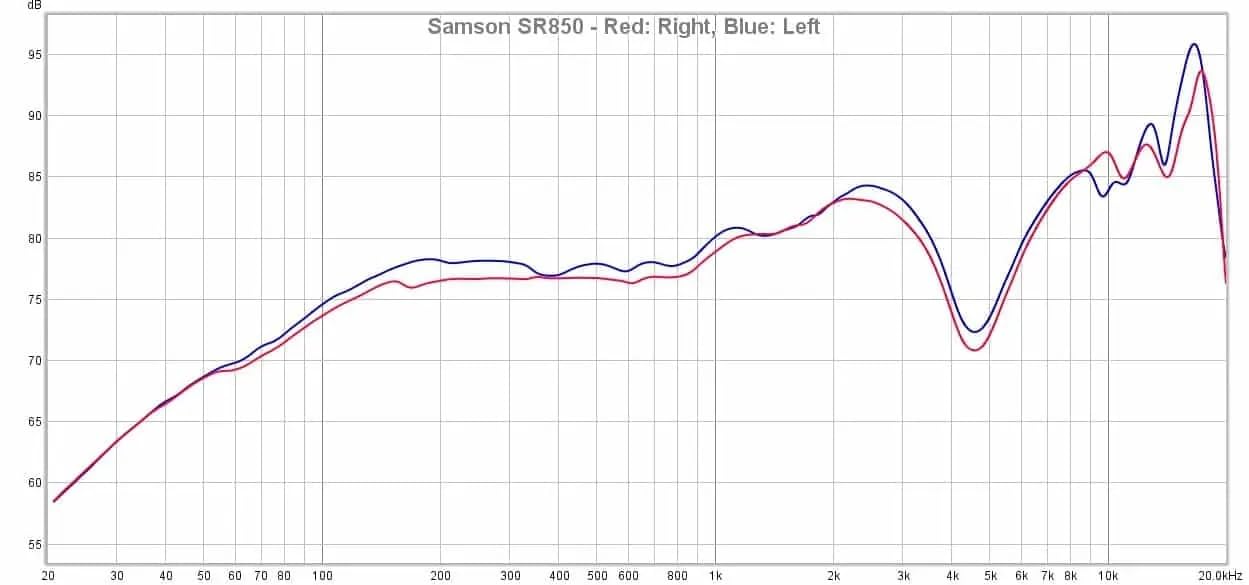
The Samson SR850 is the accessible step up from consumer headphones for someone who wants more space in the image than a closed-back can give. Fifty millimetre drivers deliver a wide dynamic range across a 10 Hz to 30,000 Hz range, and the semi-open design keeps the presentation open rather than boxed in.
At 32 ohm it is one of the easiest headphones here to drive. Laptops, phones and small interfaces will produce normal levels, which removes the amplifier question for anyone starting out.
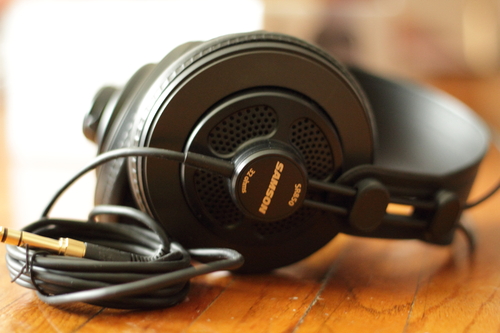
The self-adjusting headband spreads the weight across the crown, and the gold plated quarter inch adapter is included. That combination of comfort and connectivity makes it a comfortable first studio headphone for long editing days.
Close to 8,000 reviews at 4.5 stars place it as a dependable budget semi-open. Owners like the open presentation, the generous bass and the comfortable band, and they compare it favourably on value with other studio monitors in the bracket.
Who the SR850 suits
It works well for music production tasks that involve editing and arrangement rather than mastering level judgement. The open presentation makes it pleasant for long sessions, which matters when you are cutting a song into shape.
Podcast and video work benefit from the same wide, open sound, and the low impedance makes it work with whatever device you have to hand.
Why it falls short for reference mixing
The voicing is bass-forward and less neutral than a true reference headphone. For mixing that means your low end judgement is being coloured before you make the decision.
Reviewers also flag semi-open leakage making it unsuitable for live tracking, velour covered pads that trap heat during long sessions, and a bulkier feel than most closed-back competitors.
10. Shure SRH440A: Best Modern Rebuild of a Classic Studio Headphone
Shure SRH440A Over-Ear Wired Studio Headphones for Recording
40 mm drivers
40 ohm impedance
10 Hz to 22 kHz
Locking detachable cable
Pros
- Flat uncoloured reproduction with excellent instrument separation
- Comfortable circumaural fit without heavy clamping
- Rugged build with a detachable locking cable
- Consistent across interfaces mixers and laptops
- Frequently compared favourably to costlier studio monitors
Cons
- Large ear cups give a bulky profile
- Straight 10 foot cable with no coiled option
- Isolation good but short of heavier closed-backs
- Limited accessories such as a bag or coiled cable
The SRH440A is a modern rebuild of the original SRH440, and it fixes most of the complaints that used to come with that lineage. The locking detachable cable in particular solves the failure mode that ruins most entry studio headphones.
The sound is flat and uncoloured with excellent instrument separation, tuned for monitoring, mixing and spoken content. Across a 10 Hz to 22,000 Hz range with 102 dB sensitivity and 40 ohm impedance, it behaves consistently from interface, mixer or laptop.
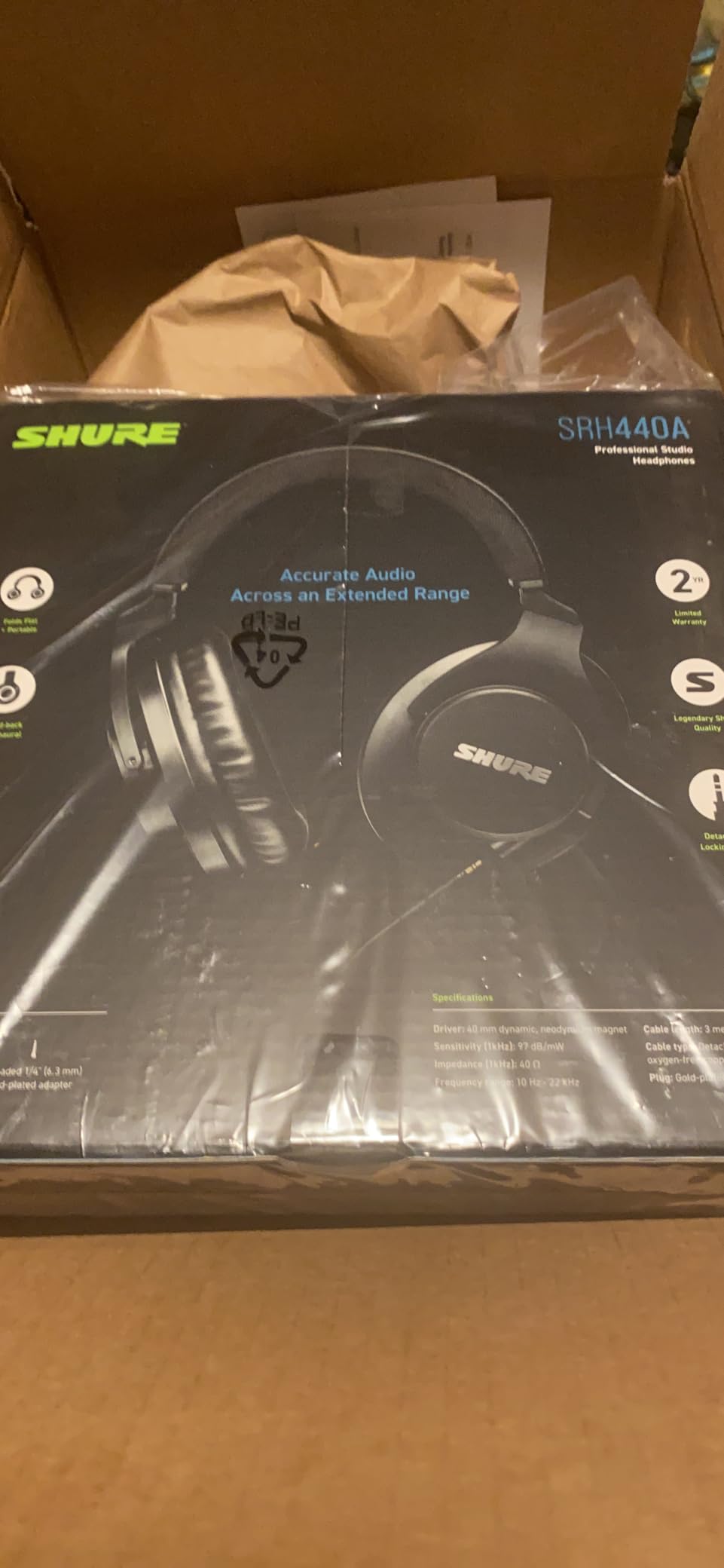
It is light at 8.96 ounces, and the circumaural fit stays snug without heavy clamping pressure. The collapsible closed-back design also folds down for transport, which is unusual in this category.
With 529 reviews at 4.5 stars, it has a much smaller owner base than the older models here, and it lands in a crowded bracket. What it does offer is the feel of a more modern design at a mid-level commitment.
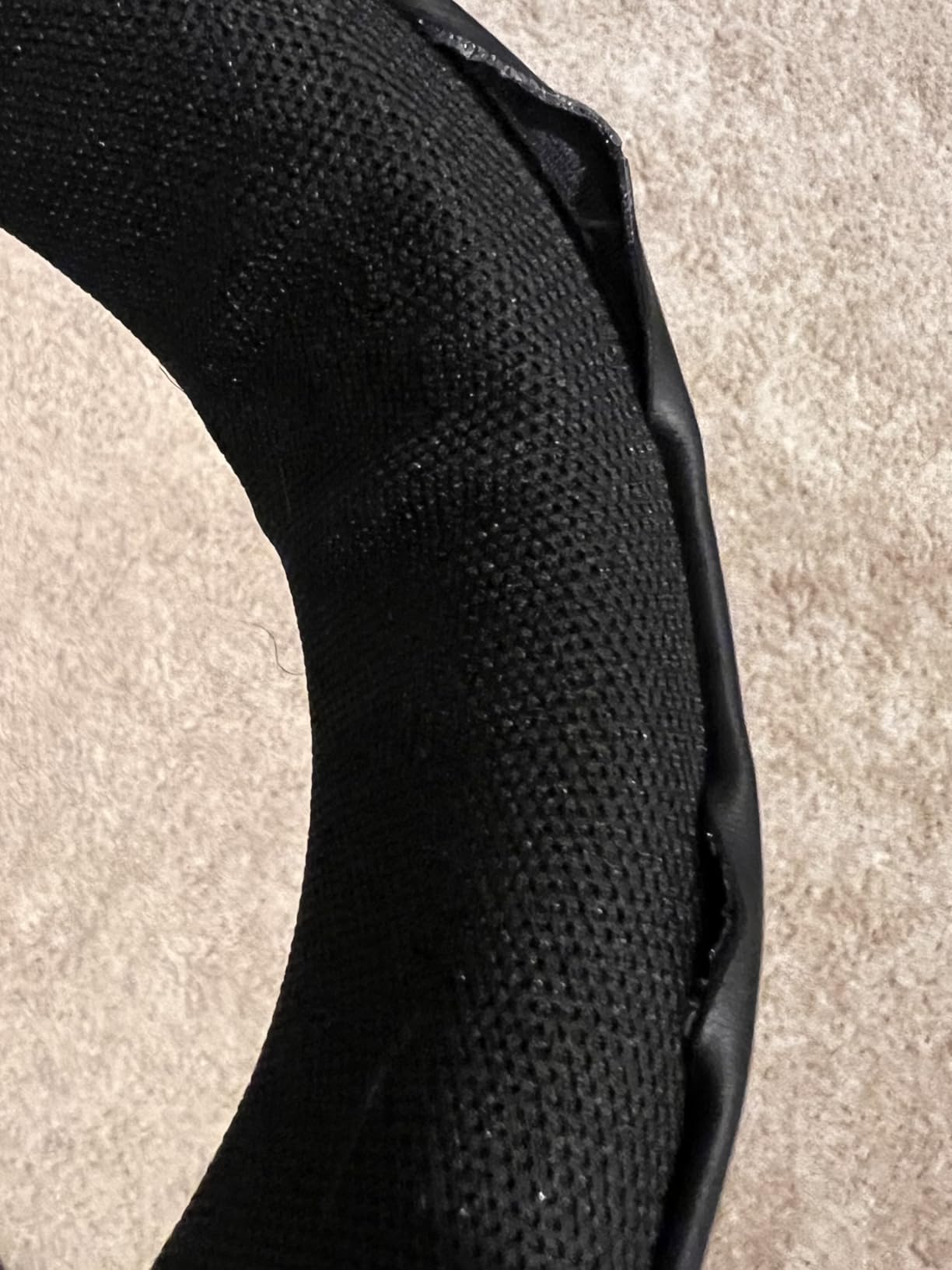
Why the SRH440A is worth a look now
The improvements over the original are practical rather than sonic. Improved durability and comfort, a locking detachable cable and a collapsible frame address the three failures that end ownership of cheaper studio headphones.
Reviewers regularly compare it favourably to more expensive Audio-Technica studio monitors, and the consistent performance across devices means it behaves the same whether you are in the studio or on a laptop.
Where the SRH440A is less convincing
The ear cups are large, giving a bulky profile that some wearers find tiring over many hours. The straight 10 foot cable has no coiled option, which can complicate desk cable management.
Isolation is good but short of heavier closed-back models such as the DT 770 Pro, and the accessory range is limited, with no carrying bag or coiled cable options. If you need serious tracking isolation, choose a closed-back with a wider cup.
Open-Back vs Closed-Back Headphones for Mixing
Open-back headphones are the better choice for mixing because they produce a wider, more natural soundstage and better stereo imaging. Closed-back headphones are the better choice for tracking because they contain sound and stop bleed reaching a microphone. Semi-open designs sit between the two and are a compromise.
In this guide only the DT 990 Pro is fully open-back, and the AKG K240STUDIO and Samson SR850 are semi-open. Everything else is closed-back, which is why so many of them double as tracking headphones.
Sound leakage is the deciding practical factor. An open-back headphone in a shared room or a house with thin walls will be audible outside the listening position, which is exactly what closed-back designs are built to prevent.
Impedance, Headphone Amps and Underpowered Interfaces
Impedance is measured in ohms and describes how much the driver resists the signal. The practical rule is simple: anything under 100 ohms will drive acceptably from a laptop or an audio interface headphone output. Above 100 ohms, a dedicated headphone amplifier makes a measurable difference.
The matching rule worth remembering is that your source output impedance should be well under one eighth of the headphone impedance. That is easy to satisfy at 35, 38, 47 or 63 ohm and much harder at 250.
Six models in this guide sit at 63 ohm or below, including the ATH-M20x, ATH-M40x, ATH-M50X, Sony MDR7506, OneOdio A71 and Samson SR850. The DT 990 Pro at 250 ohm is the one that genuinely rewards an amp.
How do you tell if your interface is underpowering a headphone? If maximum volume leaves you wanting more, if the bass sounds loose rather than controlled, or if mid detail seems to disappear as you turn it up, the output is current starved. There is no other explanation for that combination.
How to Choose Studio Headphones for Mixing
Use these five steps in order. Most people who get a headphone wrong do it by starting at step three.
Step 1: Set your budget against your room. A bedroom or shared-wall space pushes you toward headphones, because the room will dominate any speaker decision you make. A treated project studio does not need the same expenditure. Buying monitoring first in a bad room wastes money.
Step 2: Decide open or closed. Mixing only means open-back. Tracking as well means closed-back. Both in one pair means compromise, which is a fair trade if you are buying once.
Step 3: Check the impedance against your source. Under 100 ohm means no amplifier needed. Above 100 ohm means budget for one, and include the amplifier in your total cost before buying.
Step 4: Weigh comfort as a hard criterion. Look at weight, clamping force and pad material. If you wear glasses, check that the pads sit on the frame without pressing the temple arms. A headphone you remove after two hours is not a mixing tool.
Step 5: Prioritise neutrality and serviceability over style. Choose a documented flat response and a model with replaceable pads, cables and headbands. A headphone you can service for ten years is a better investment than a nicer-sounding one you will replace.
Your First 30 Days With New Mixing Headphones
Nobody publishes this and it is the biggest source of anxiety in the forums. If you follow a short routine in the first month, you will trust the headphone far faster.
Days 1 to 3: level match. Play a familiar commercial mix you have heard a hundred times, set your monitor level, then match the headphone to that level. Never mix louder than you listen. Getting this step wrong poisons every early judgement.
Days 4 to 10: learn the curve. Pick one track you know well and note how the headphone presents the low end, the midrange and the top end. The M20x will sound restrained at the bottom and the DT 990 Pro will sound bright on top. Write the corrections down rather than guessing later.
Days 11 to 20: mono and translation checks. Check every mix in mono, then play it back on a different system, such as a phone speaker or a car system. The differences you hear are headphone specific and worth naming.
Days 21 to 30: build the correction. Apply your EQ targets as a monitoring chain preset, not on the mix itself. If your headphone has a known colouration, correct it once in the monitoring chain and stop thinking about it.
One practical note on listening levels: keep them moderate. The 60-60 rule says no more than 60 minutes at 60 percent of maximum volume. Your ears fatigue long before the clock does, and fatigue is the reason mix decisions stop being trustworthy.
Headphones vs Monitors in an Untreated Room
In an untreated room, the reflections off the walls and ceiling change what you hear far more than the speaker does. That is the argument for headphones, and it holds up better than most monitoring debate suggests.
Headphones remove the room from the equation entirely. You get repeatable results at two in the morning, the neighbours cannot complain, and you are not limited by where you can put a speaker.
The honest limitation is cross-check. Headphones cannot reproduce the low frequency interaction between a speaker and a room boundary, so periodic monitoring on a decent system remains worthwhile. Headphones for the work, a second reference system for the check.
Frequently Asked Questions
What are the best headphones for sound mixing?
The Audio-Technica ATH-M50X is the best all-round choice, with flat accurate bass, strong circumaural isolation and 38 ohm impedance that drives from almost any interface. The Sony MDR7506 is the value pick for its neutral reference sound. For the widest soundstage, the beyerdynamic DT 990 Pro is an open-back with extended bass.
What type of headphones are best for mixing?
Open-back headphones are best for mixing because they give a wider, more natural soundstage and better stereo imaging. Closed-back headphones are best for tracking because they contain sound and stop bleed reaching a microphone. Semi-open designs are a reasonable compromise if you mostly mix but occasionally record.
What is the 60-60 rule for headphones?
The 60-60 rule is a listening safety guideline: no more than 60 minutes of continuous headphone use at 60 percent of your device maximum volume. For mixing work it is a practical limit too, because ear fatigue rather than hearing damage is usually what makes late-session mix decisions unreliable.
What impedance headphones do I need for mixing?
Under 100 ohms is ideal for most home studios because a laptop or audio interface headphone output drives those easily. Between 100 and 250 ohms a dedicated headphone amplifier is worth adding. Keep your source output impedance well under one eighth of the headphone impedance for the cleanest result.
Why do audiophiles avoid certain Bluetooth headphones?
Wireless codecs compress and process the signal, and Bluetooth adds latency that makes precise editing harder. They also add battery-dependent circuitry and often pair that with sound processing tuned for casual listening rather than accuracy. That is why every studio headphone recommended here is wired.
Final Word on the Best Studio Headphones for Mixing
The Audio-Technica ATH-M50X is our pick for the best studio headphones for mixing in 2026, because it handles balance, low end and tracking isolation without any colouration you have to correct later. The Sony MDR7506 does almost the same job for less money if you can live with a fixed cable, and the beyerdynamic DT 990 Pro is the one to add later if you want a wider soundstage for stereo decisions.
Start with one pair, learn its curve over a month using the routine above, and only then decide whether a second headphone is worth it. If you want a wider read on the general category, our comfortable headphone picks cover the non-studio side of the market.