
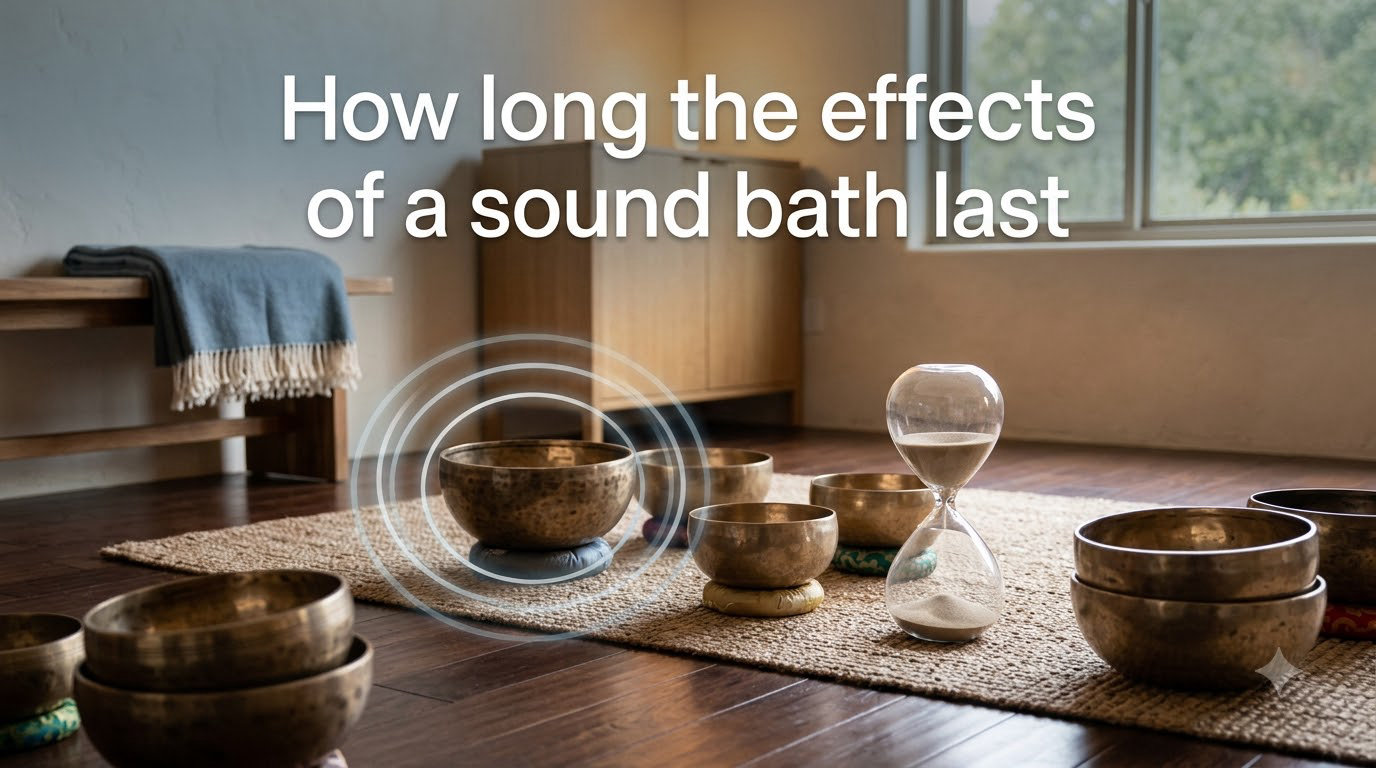
The effects of a sound bath typically last anywhere from one to three days in the short term, with residual benefits sometimes lingering for up to two weeks. Regular practitioners who attend sessions consistently often notice long-term shifts in their stress baseline, sleep quality, and emotional resilience that build over months of practice.
If you are wondering how long the effects of a sound bath last, the honest answer is that it depends on several factors, including session length, your stress levels going in, and what you do afterward. A single session can leave you feeling deeply calm for days, but the real magic happens when sound healing becomes part of your wellness routine.
Our team has researched practitioner insights, clinical perspectives, and real user experiences to break down exactly what to expect at each stage. Here is a clear timeline of sound bath effects and how to make them last.
Table of Contents
Immediate Effects: What Happens Right After Your Sound Bath?
The first effects you notice happen within minutes of a session ending, and they are usually the most intense. Most people describe a state of deep calm that feels somewhere between meditation and a refreshing nap.
Your body has just spent 45 to 90 minutes in a parasympathetic nervous system state, which is the rest-and-digest mode that counteracts daily stress. This means your cortisol levels drop, your heart rate slows, and your brainwaves shift into slower patterns associated with deep relaxation.
Common immediate effects include a floating or lightweight sensation, mental quiet, muscle relaxation, and sometimes a sense of emotional openness. Many people walk out of a session feeling like they are moving in slow motion, in the best way possible.
Some practitioners describe this window as a nervous system reset. Your body has essentially been given permission to let go of tension it may have been holding for weeks or months.
Why Some People Feel Weird Afterward?
Not everyone feels pure bliss right away, and that is completely normal. Sound baths can stir up emotions that were sitting beneath the surface.
Reddit users in communities like r/Meditation and r/yoga frequently report feeling unexpected sadness, loneliness, or even mild anxiety after their first few sessions. This happens because the deep relaxation lowers your mental defenses, allowing buried feelings to surface.
Physical sensations can also catch you off guard. Some people experience tingling skin, restless legs, or a sense of disorientation during the first 30 to 60 minutes after a session. These sensations usually pass quickly as your nervous system recalibrates.
If you feel weird after a sound bath, it is not a sign that something went wrong. It is often a sign that the session reached layers of tension or emotion that your body is now processing.
Short-Term Effects: The First 1 to 3 Days
For most people, the short-term effects of a sound bath last between one and three days after the session. This is the window where you will notice the most obvious carryover benefits.
Better sleep is one of the most commonly reported short-term effects. Many people find they fall asleep faster and sleep more deeply the night of and the night after a session. This happens because the parasympathetic activation from the sound bath carries over, keeping your nervous system in a calmer state.
Reduced anxiety is another benefit that tends to stick around for a day or two. The cortisol reduction and brainwave shifts from the session create a buffer against daily stressors, making irritations feel more manageable.
You might also notice improved mental clarity during this window. Tasks that normally feel overwhelming can seem more approachable, and decision-making often feels less clouded by emotional noise.
Some people experience an emotional processing window during these first few days. Feelings or realizations that surfaced during the session continue to integrate, which can mean anything from quiet moments of insight to a few unexpected tears. This is a healthy part of the process.
Medium-Term Effects: 1 to 2 Weeks After
Medium-term effects can linger for up to two weeks, though they are usually subtler than the short-term benefits. Think of this as a gentle undercurrent of calm rather than an obvious shift.
During this window, many people notice ongoing emotional integration. The session may have unlocked something, and your mind continues to process it in the background. You might find yourself responding to stress with more patience or feeling less reactive overall.
Sustained anxiety reduction is common for people who entered the session with elevated stress levels. The nervous system reset can create a new, slightly lower baseline that holds for a week or more before daily stress starts to creep back up.
Some practitioners report that medium-term effects depend heavily on how you care for yourself after the session. People who journal, rest, and avoid overstimulation tend to experience a longer medium-term window than those who jump straight back into a high-stress routine.
If you had a particularly deep session, you might notice that your meditation practice or mindfulness feels easier for the following week. The sound bath essentially primed your nervous system for calm, and that priming does not disappear overnight.
Long-Term Effects: Building a Regular Practice
Long-term effects emerge when sound baths become a consistent practice rather than a one-time experience. Most practitioners recommend weekly or biweekly sessions to build cumulative benefits.
Regular sound bath attendance can lead to a permanently lower stress baseline. Your nervous system becomes more efficient at entering and maintaining parasympathetic states, meaning you recover from stress faster and feel calmer day to day.
Many long-term practitioners report improved sleep patterns that persist between sessions. The brainwave training from repeated sound exposure appears to help the brain access deep sleep states more easily on its own.
Emotional resilience is another compounding benefit. Over months of practice, people often find they handle difficult situations with more equanimity and recover from emotional dips more quickly.
The research on sound bath science is still developing, but early studies on sound healing and meditation practices suggest that consistent exposure to therapeutic sound and vibrational frequency may support long-term nervous system regulation in meaningful ways.
Factors That Affect How Long the Effects Last
Not everyone experiences the same duration of benefits. Several key factors influence how long sound bath effects last for you personally.
1. Session Length
Longer sessions generally produce longer-lasting effects. A 60-minute session with 35 to 45 minutes of actual playing time is considered the practical standard for most people. Shorter sessions of 20 to 30 minutes can still be effective but tend to produce more temporary results.
2. Practitioner Skill
The experience level of your practitioner matters enormously. Skilled practitioners understand how to pace a session, build intensity gradually, and create a container that supports deep nervous system shifts. A session led by someone you trust tends to produce more lasting effects than one with an unfamiliar or less experienced facilitator.
3. Instrument Quality
High-quality crystal singing bowls, gongs, and other instruments produce cleaner, more resonant frequencies. Lower-quality instruments may still create a pleasant experience, but the therapeutic depth and lasting impact can be noticeably different.
4. Your Stress Baseline
If you walk into a session running on weeks of accumulated stress, the effects may feel dramatic but fade faster as old stress patterns reassert themselves. If your baseline stress is already manageable, the effects may be subtler but hold longer.
5. Your Receptivity
Your mental state going into the session plays a role. People who arrive with an open mind and a willingness to relax tend to experience deeper and longer-lasting effects than those who are skeptical or resistant.
6. What You Do Afterward
Your post-session behavior is one of the biggest factors. Rushing back into a chaotic environment, skipping meals, or doomscrolling for hours can cut the effects short. Gentle, intentional aftercare extends the benefits significantly.
How to Make Sound Bath Effects Last Longer?
You can actively extend and amplify the benefits of your sound bath session with a few intentional practices. Here is what works based on practitioner recommendations and real user experiences.
Hydrate Immediately After
Drink plenty of water right after your session and throughout the next 24 hours. Sound therapy stimulates your body at a cellular level, and staying hydrated helps your system process and integrate the shifts more smoothly.
Rest Before Reentering the World
Give yourself at least 15 to 30 minutes of quiet time before driving, working, or socializing. Your nervous system is in a sensitive, open state, and slamming back into stimulation can short-circuit the benefits. Sit quietly, breathe, and let the experience settle.
Journal What Came Up
If emotions, images, or insights surfaced during the session, write them down within the first few hours. Journaling helps your conscious mind process what your subconscious released, supporting emotional integration that can extend the medium-term effects.
Move Gently
Light stretching, a slow walk, or gentle yoga can help distribute the relaxed energy through your body. Avoid intense workouts for at least a few hours after a session, as heavy exertion can pull you out of the parasympathetic state.
Avoid Overstimulation
This is a big one. Limit screen time, loud environments, and emotionally charged conversations for the rest of the day if possible. Your nervous system is primed for calm, and flooding it with input can erase that advantage quickly.
Build a Consistent Practice
The single most effective way to extend sound bath effects is to make it a regular practice. Weekly or biweekly sessions create a compounding effect where each session builds on the last, gradually raising your baseline for calm and resilience.
What NOT to Do After a Sound Bath
Avoid heavy meals immediately after, as digestion requires energy that pulls you out of the restorative state. Skip alcohol and caffeine for at least a few hours. Do not force yourself to analyze the experience too intensely right away, as some effects unfold over days rather than minutes.
If you experienced an unexpected emotional release, do not suppress it. Let the feelings move through you, and consider talking to a trusted friend or therapist if something heavy came up.
FAQs
How long do sound baths usually last?
Most sound bath sessions last between 45 and 60 minutes, though some can run 90 minutes or longer. A standard 60-minute session typically includes 35 to 45 minutes of actual sound playing time, with the rest devoted to settling in and closing out. Shorter sessions of 20 to 30 minutes can still be effective for quick relaxation.
How often should you do a sound bath?
For lasting benefits, most practitioners recommend attending a sound bath once a week or once every two weeks. This frequency allows your nervous system to build on each session without overdoing it. Some people benefit from monthly sessions as maintenance once they have established a calmer baseline.
What not to do after a sound bath?
After a sound bath, avoid heavy meals, alcohol, caffeine, intense workouts, and overstimulating environments for at least a few hours. Do not rush back into stressful tasks immediately, and avoid suppressing any emotions that surfaced during the session. Give yourself quiet time to integrate the experience.
Can you overdo sound baths?
Yes, it is possible to overdo sound baths. Sessions that are too frequent or too intense can leave you feeling emotionally overwhelmed, fatigued, or disoriented. If you notice these signs, scale back to every two to four weeks and give your nervous system time to integrate each session before the next one.
Why do I feel weird after a sound bath?
Feeling weird after a sound bath is normal and usually temporary. Deep relaxation can lower your mental defenses, allowing buried emotions or physical tension to surface. You might experience sadness, disorientation, tingling, or restlessness. These sensations typically pass within a few hours as your nervous system recalibrates.
Do sound baths release trauma?
Sound baths can support emotional release, which may include surfacing feelings connected to past difficult experiences. However, sound baths are not a substitute for professional trauma therapy. If you have a trauma history, look for practitioners experienced in trauma-informed care, and consider working alongside a licensed therapist for deeper processing.
Wrapping Up: Making the Most of Your Sound Bath Experience
When people ask how long the effects of a sound bath last, the most accurate answer is that a single session gives you one to three days of noticeable benefits, with subtle effects potentially stretching to two weeks. Regular practice transforms those temporary shifts into lasting changes in how you handle stress, sleep, and emotion.
The key is treating each session as part of an ongoing practice rather than a one-time event. Hydrate, rest, journal, and give yourself space to integrate. Then book your next session before the effects fully fade, and let the benefits compound.
Your nervous system will thank you for it.