

Most medical students buy a microscope for one reason: the scope in the histology lab is shared, and it is never free when you need it at 11pm the night before a practical exam. Picking the best microscopes for medical students is less about raw magnification and more about whether the machine can hold a blood smear steady, whether the 100x oil objective actually resolves bacteria, and whether you can photograph a field for your lab report.
We spent weeks comparing twelve compound microscopes that show up in student labs across the country, reading every set of buyer reviews we could find and comparing objective sets, stage travel, head type and camera options side by side. The short version: a binocular compound scope with a mechanical stage, an Abbe condenser, a spring-loaded 100x oil objective and dimmable LED light covers almost everything a first through fourth year medical student will do.
What separates a school microscope from a medical school one is rarely the marketing number on the box. It is the NA1.25 condenser, the plan versus achromatic objective, whether the 40x is spring-loaded, and whether you can add a camera later without buying a new scope. This guide covers all twelve picks, what each one is actually good for, and the honest limits reviewers report.
Table of Contents
Top 3 Microscope Picks for Medical Students in 2026
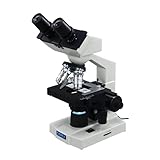
OMAX M82ES 2000X Binocular
- Achromatic DIN 4X-100X oil objectives
- Double layer X-Y mechanical stage with stage lock
- NA1.25 Abbe condenser with iris diaphragm
- 5 year warranty

Swift SW380T Trinocular
- Rotatable 30 degree Siedentopf trinocular head
- C-mount camera port for lab report images
- Ultra-precise coaxial coarse and fine focus

Swift SW350B Binocular
- Highest average rating in the lineup
- Rotating 30 degree Siedentopf binocular head
- Double layer mechanical stage with slide holder
All 12 Best Microscopes for Medical Students (October 2026)
| Product | Specifications | Action |
|---|---|---|
| OMAX M82ES 2000X LED Binocular |
|
Check Latest Price |
 PalliPartners Compound Microscope PalliPartners Compound Microscope |
|
Check Latest Price |
 AmScope B120C-E1 40X-2500X AmScope B120C-E1 40X-2500X |
|
Check Latest Price |
| Swift SW380T Trinocular |
|
Check Latest Price |
| Swift SW350B Binocular |
|
Check Latest Price |
 OMAX MD82ES10 Digital OMAX MD82ES10 Digital |
|
Check Latest Price |
 Herwicm 40X-2500X Binocular Herwicm 40X-2500X Binocular |
|
Check Latest Price |
 Woehrsh 40X-5000X Trinocular Woehrsh 40X-5000X Trinocular |
|
Check Latest Price |
 AmScope T490B Trinocular AmScope T490B Trinocular |
|
Check Latest Price |
 PalliPartners Trinocular 2000X PalliPartners Trinocular 2000X |
|
Check Latest Price |
 OMAX M83EZ-C50S Digital Trinocular OMAX M83EZ-C50S Digital Trinocular |
|
Check Latest Price |
 Poothoh Binocular 2000X Poothoh Binocular 2000X |
|
Check Latest Price |
1. OMAX M82ES 2000X LED Binocular – Best Overall for Medical Students
Awarded Best Compound Microscope 2016 – OMAX 40X-2000X Lab LED Binocular Microscope with Double Layer Mechanical Stage w Blank Slides Covers and Lens Cleaning Paper
40X-2000X
Achromatic DIN 4X-100X oil
NA1.25 Abbe condenser
Double layer mechanical stage
Pros
- Achromatic DIN objectives covering 40X-2000X with 100X oil immersion
- Double layer mechanical stage with X-Y scales and a stage lock
- NA1.25 Abbe condenser with iris diaphragm and adjustable LED intensity
- Coarse and fine focus knobs on both sides
- Includes 100 slides 100 cover slips and lens paper
Cons
- Swiveling binocular head only with no photo or video port
- Corded power supply needs an outlet within reach
My editor’s choice comes down to a single number: 2112 reviews averaging 4.4 stars makes this the most thoroughly tested microscope in the group. Owners consistently point at the achromatic DIN objective set including the 100x oil immersion lens, the double layer mechanical stage with X-Y scales, and the smooth coaxial focus as the reasons it holds up year after year.
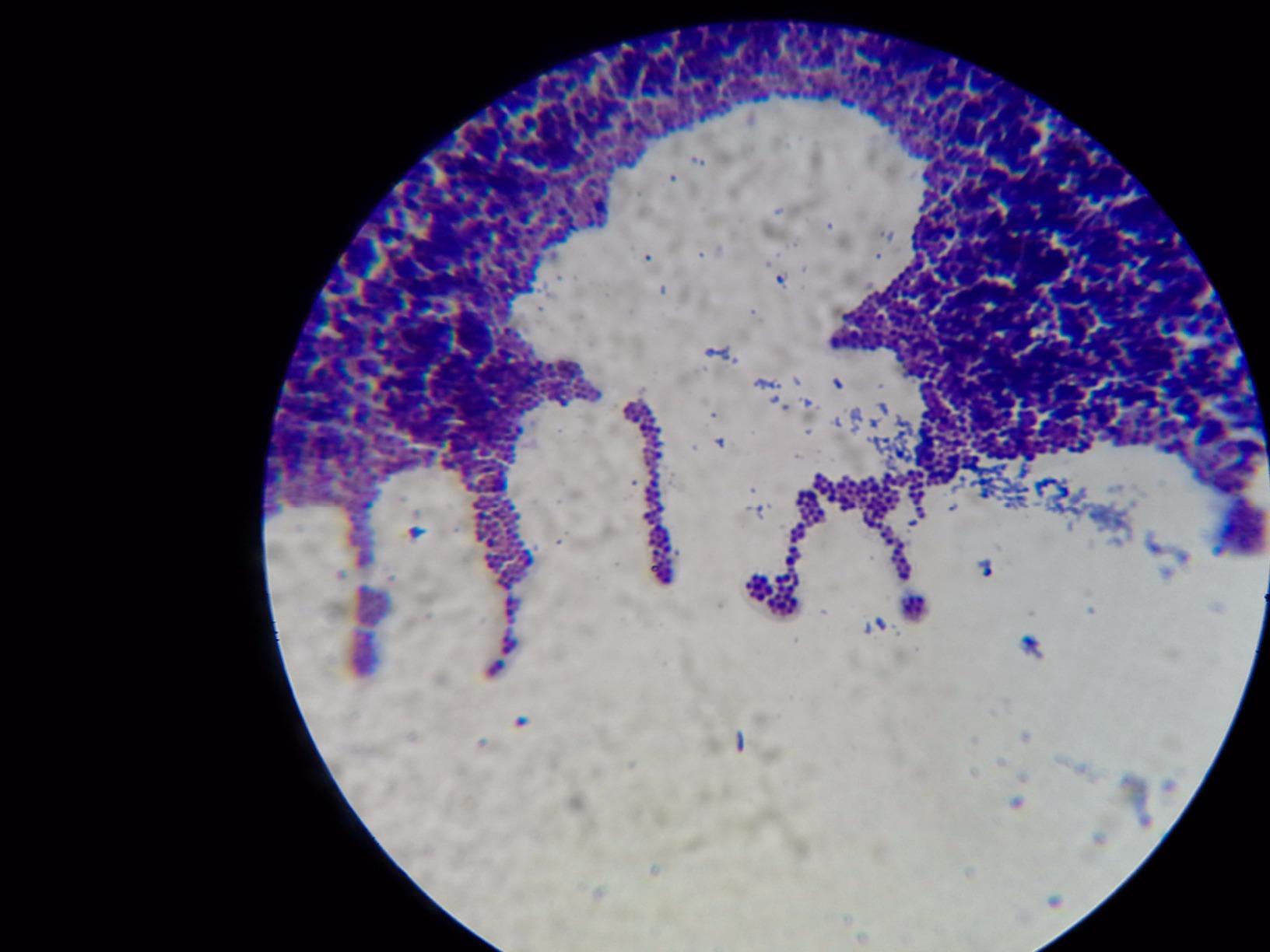
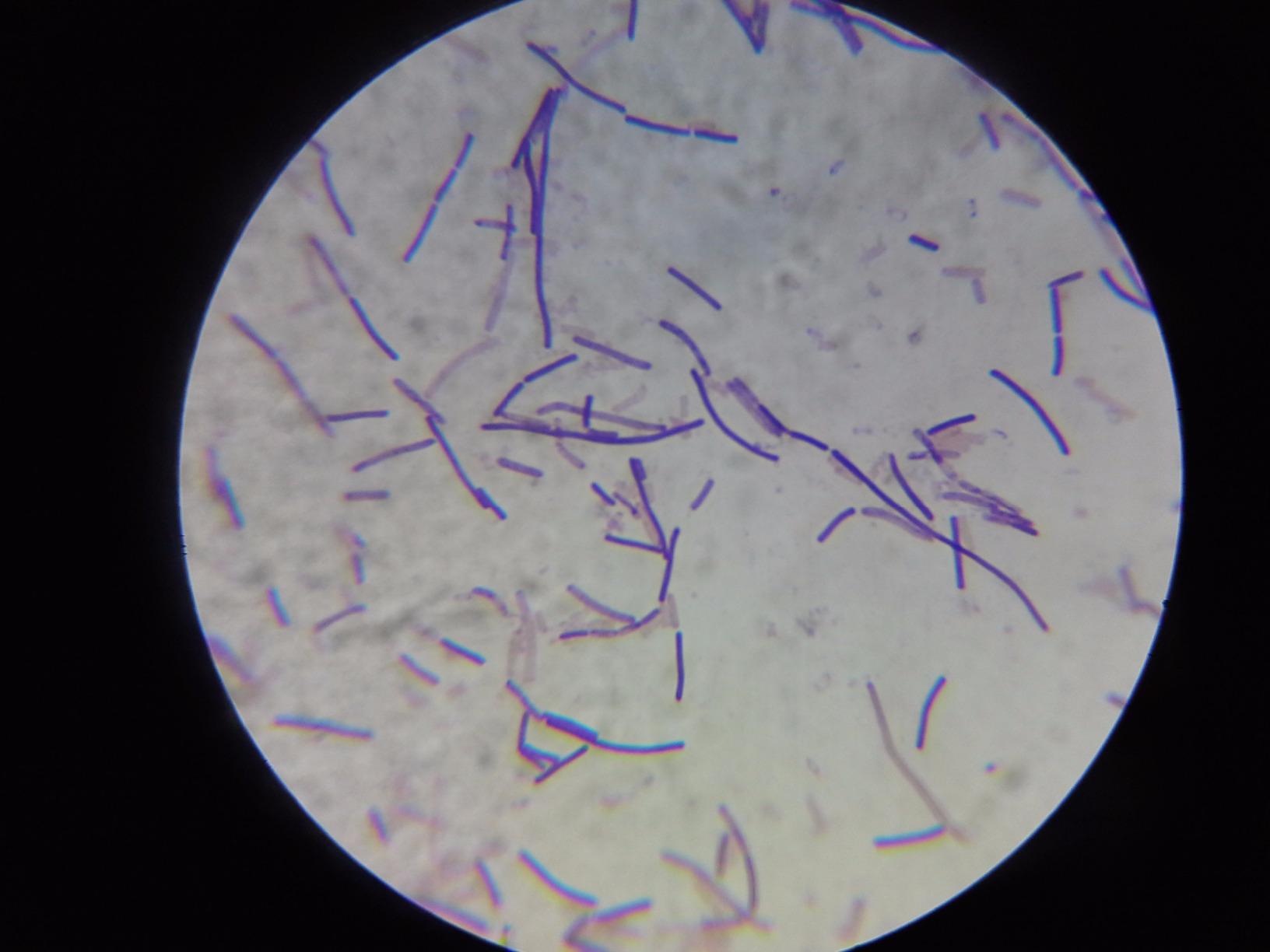
For medical school work that combination is exactly right. The NA1.25 Abbe condenser with iris diaphragm gives you the resolution headroom for bacteria on a Gram stain, and the stage lock keeps a slide from drifting while you hunt for a platelet at 1000x. It is also the scope most reviewers describe as the step up from a plastic school scope, which is exactly the transition most first years are making.
One detail that matters more than spec sheets suggest: the box includes 100 blank glass slides, 100 cover slips and a 50 sheet pack of lens cleaning paper. When you are grinding through urinalysis sediment or blood smears, you will go through cover slips fast, and the solid metal frame with stain resistant enamel finish survives the chemical cleaners used in histology labs.
The honest limitation is the head. This is a binocular only model, so there is no photo or video port and you cannot document a field without a separate eyepiece camera. The 45 degree inclined head swivels 360 degrees, and interpupillary distance slides between 55 and 75mm with diopter adjustment on both tubes, which is comfortable for long evenings.
Why this works for M1 and M2 lab work
First year anatomy and histology slides are forgiving. Second year microbiology and hematology are not, and that is where the spring-loaded 100x oil objective earns its place. Oil immersion is the difference between seeing bacterial morphology and seeing a bright blur, and reviewers of budget plastic scopes repeatedly report that useful magnification stops well short of the advertised figure.
The 9.6 pound weight and 9.06 by 7.13 by 13 inch footprint also make this practical in a dorm room. It is heavy enough not to walk across a desk when you lean on the stage, and small enough to clear off a shared apartment table in a minute.
Where you will feel the limits
If your required lab reports require photographs, this is the wrong tool. You would be adding an eyepiece camera or a separate adapter and working around a head that was not designed for it. Students heading into pathology rotations who expect to photograph slides every week should look at a trinocular model instead.
There is also no case or dust cover in the box, and a corded electric supply means no battery option for field placements. The five year manufacturer warranty is the strongest in this lineup, which matters when the scope will live in a small room with a lot of traffic.
2. PalliPartners Compound Microscope – Lowest Cost Way to Learn the Ropes
PalliPartners Compound Microscope for Adults & Students, White
100X-2000X advertised
4X, 10X and 40X objectives
WF25X eyepiece
Dual top and bottom LED
Pros
- Lowest entry cost in the roundup with 10 prepared and 18 blank slides included
- Bright even LED illumination from top and bottom
- Compact footprint suits a small room or shared bench
- Phone clip adapter and Bluetooth remote shutter included
- SGS certified for non-toxic materials and electrical safety
Cons
- Useful magnification is far closer to 400X than the advertised 2000X
- Lenses can wobble in the housing if handled roughly
- Fixed stage makes finding a specimen harder
I want to be straight about this one. With 1189 reviews at 4.3 stars, it is one of the most reviewed items here, and the reviews themselves are unusually honest about what you get. Experienced microscope users say the useful magnification lands much closer to 400X than the 2000X on the box, and that the stage and focus controls are basic.
That makes it a teaching tool, not a pathology tool. The 4x, 10x and 40x objectives plus a WF25X eyepiece and 2X lens are enough to learn how light passes through a specimen, how to focus a condenser, and how to stage a slide properly, which is where most first year lab skills actually go wrong.
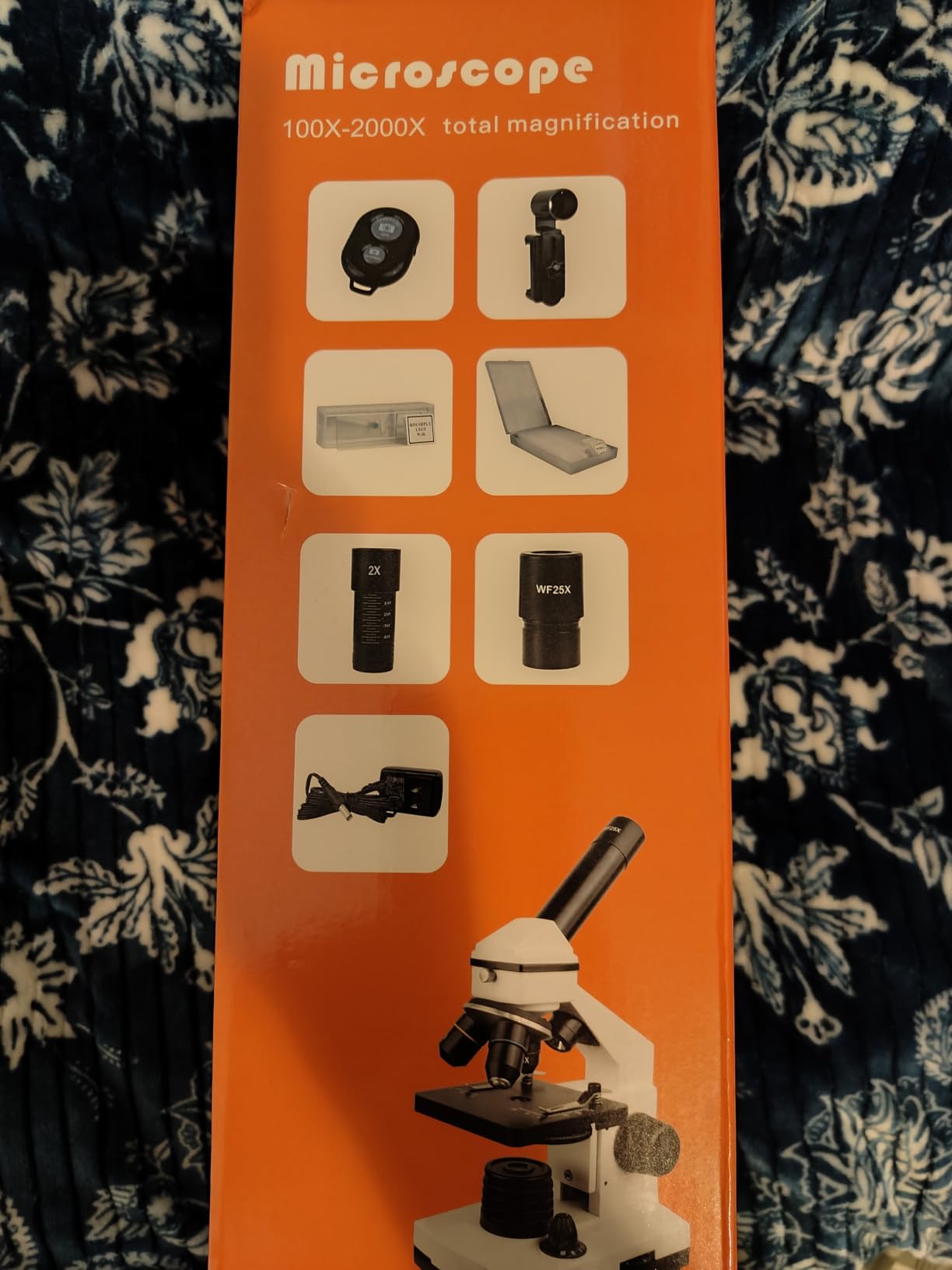
The included kit is genuinely useful. Ten pre-prepared specimen slides, 18 blank slides, a universal phone clip adapter, a Bluetooth remote camera shutter and a power adapter mean you can photograph a slide through a phone without buying anything else. The listing states it is aimed at ages 8 to 18, and that framing is accurate.
At 1.65 kg and 5.71 by 3.94 by 9.84 inches it is the most portable scope here, which makes it the practical choice if you move between an apartment and a study space every week. It is also battery powered, the only model in the group with that feature.
Why it works for orientation and demo labs
Some programs let first year students handle a specimen only under supervision. For that, and for rehearsing oil immersion technique before you touch a real Gram stain, this scope does the job. The dual top and bottom LED illumination handles both translucent prepared slides and opaque objects like feathers or fabric, which a single-light scope cannot do.
Students who share a microscope with a study group will find the Bluetooth shutter and phone clip more valuable than most buyers expect. It is the least expensive way to build a habit of documenting what you see while the specimen is in front of you.
Where it stops being enough
There is no 100x oil objective listed here, so bacteria on a clinical smear will not resolve. Experienced reviewers also note that lenses can wobble in the housing if the scope is handled roughly, and the fixed stage makes locating a specific cell tedious. A reported one unit where the stage made finding specimens hard is a common complaint.
Documentation is thin and some international power supplies are not compatible, so check what came in the box before you rely on it for a graded assignment. If you are past the first semester, put the money toward a real compound scope with a mechanical stage instead.
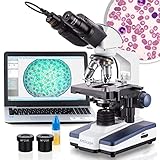
3. AmScope B120C-E1 40X-2500X – Best for Study Groups and Lab Reports
AmScope B120C-E1 LED Binocular Compound Microscope, 40X-2500X
40X-2500X
Siedentopf binocular head
Includes 1.0 MP USB camera
Fly-eye LED with Abbe condenser
Pros
- Substantial frame with a smooth mechanical stage
- Abbe condenser with a pivot-out blue filter and dimmable LED
- Bundled USB camera and Windows software add capture at no extra cost
- Five year warranty with responsive parts support
- Rotatable head works for shared viewing and instruction
Cons
- 1.0 MP camera is weak and shows empty magnification above 400X
- No calibration slide included for measuring specimens
- Coarse and fine focus are linked so both knobs move together
With 803 reviews at 4.4 stars, the B120C-E1 is the most-reviewed binocular scope in this group and the one buyers most often call a student-to-college transition scope. Reviewers consistently describe the mechanics and optics as solid for the money, and single out the included camera as a freebie that would otherwise cost extra.
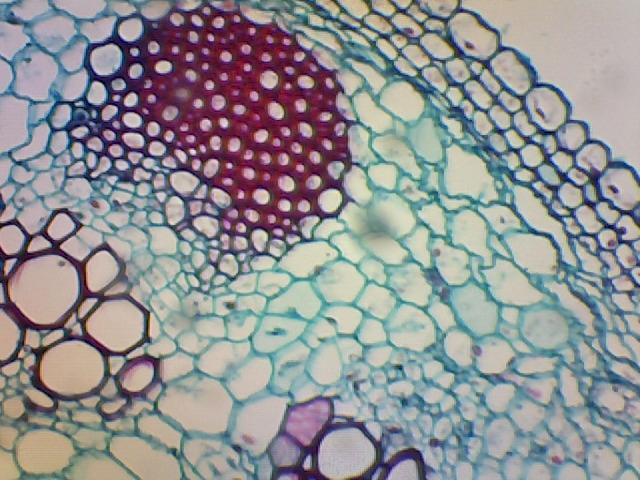
The fly-eye lens LED produces bright, daylight balanced light, which matters when you are trying to read stain colour differences in a histology section rather than just finding the tissue. The Siedentopf binocular head rotates so a study group of two can pass the scope around without anyone twisting awkwardly.
Technically it covers 40X to 2500X across the 4x, 10x, 40x and 100x objectives with achromatic lenses and an Abbe condenser with an optional blue lens. My honest note is that the 2500X figure comes from stacking the 25x eyepiece on the 100x objective, which is exactly the empty magnification reviewers warn about.
Stage behaviour is the part that surprised me least and impressed me most. Reviewers mention a smooth mechanical stage, a dimmable intensity control and smooth dual precision focus, and the 11.81 by 9.06 by 16.54 inch frame is substantial rather than flimsy. It is a scope that stays put when you lean across the table.
Why this suits group study and a budget
A bundled 1.0 MP USB camera with Windows microscopy software is unusual at this level. It means you can capture a field for a lab report on day one without researching adapters. Just set expectations: at that resolution, images above 400X are larger without adding detail, and the photo is there for documentation, not for printing.
The rotatable Siedentopf head is a quiet win for study groups and for parents helping a student at home. Two people can look at the same slide in sequence without anyone craning, which is exactly the complaint students on forums raise about fixed-head school scopes.
What you have to work around
The linked coarse and fine focus means both knobs move together, so fine adjustments are not as isolated as on a coaxial precision focus. There is no calibration slide in the box, which matters if your course requires you to measure cell or specimen size rather than just count and identify.
Printed documentation is sparse and support has to supply the manual, and there is no holder or case for the second eyepiece set. If your program grades image quality, treat the included camera as a stopgap and plan to add a proper C-mount camera later.
4. Swift SW380T Trinocular – Best for Long Evening Sessions
Swift SW380T 40X-2500X Magnification, Siedentopf Head, Research-Grade Trinocular Microscope Compound Lab with Wide-Field 10X/25X Eyepieces, Mechanical Stage, Ultra-Precise Focusing, Camera-Compatible
40X-2500X
30 degree rotatable trinocular head
4 DIN achromatic objectives
C-mount camera port
Pros
- 30 degree Siedentopf head reduces neck and back strain in long sessions
- Trinocular port takes a C-mount camera while eyepieces stay in focus
- Objects measured against a stage micrometer stay sharp across most of the field
- Rotatable head supports shared viewing and side-by-side instruction
Cons
- Transmitted-only illumination struggles with thick or opaque samples above 100X
- Built-in LED is dim at high magnification with the diaphragm wide open
- Included dust cover is thin plastic and undersized
This was the highest rated microscope we reviewed, at 4.5 stars across 719 reviews with 76 percent five star ratings, and a pathologist and an independent researcher both describe it as meeting professional needs. Those are exactly the two perspectives a medical student cares about.
The 30 degree Siedentopf inclination is the feature buyers mention first. A 45 degree head puts your neck at an angle that gets painful during a three hour session of reading slides, and the 30 degree tube lets you sit upright. Interchangeable WF10X and WF25X eyepieces let you scan quickly at low power and then drop to 1000x for detail.

The trinocular port accepts C-mount cameras and eyepiece camera attachments, and it is not included, so budget for that separately if you want lab report photos. What matters is that the port is a proper C-mount, and reviewers note you can keep working through the eyepieces while an image is running, which is a real advantage over a scope that has to be disassembled.
Focusing is described as ultra-precise coaxial coarse and fine, and the mechanical stage with stage and focus controls on the right hand side behaves predictably. At 4.3 kg and 13.39 by 9.45 by 17.72 inches it is the largest footprint in the group, which is a trade for a base that does not flex.
Why the geometry matters more than the specs
For a student who reads slides for hours, ergonomics is not a luxury. The rotatable head also means you can point the eyepieces away from you when a study partner leans in, and side-by-side instruction works without passing a single rigid instrument back and forth across a bench.
The four DIN achromatic objectives on a revolving turret give 40X, 100X, 250X, 400X, 1000X and 2500X. Measured against a stage micrometer, objects stay sharp across most of the field, which is a stronger optical claim than most scopes in this price bracket can support and it is the reason this one holds up in pathology work.
Where you will feel it
Illumination is transmitted only, so thick or opaque samples are hard to view above 100X. If your coursework includes opaque specimens you will want reflected or top illumination, which none of the compound scopes here provide except the two that list top and bottom LED.
Reviewers also note the built-in LED runs a bit dim at high magnification with the diaphragm wide open, and the condenser diaphragm can intrude into the field at 4X when closed down. The bundled dust cover is thin, undersized plastic, so buy a proper case.
5. Swift SW350B Binocular – Highest Rated Scope in the Lineup
SWIFT SW350B 40X-2500X Magnification, Siedentopf Binocular Head, Research-Grade Compound Lab Microscope with Wide-Field 10X and 25X Eyepieces, Mechanical Stage, Abbe Condenser
40X-2500X
Rotating 30 degree Siedentopf head
Manually adjustable Abbe condenser
Integrated carrying handle
Pros
- Highest average rating in the roundup at 4.6 stars
- 360 degree rotating Siedentopf head with both 10X and 25X eyepieces
- Manually adjustable Abbe condenser with brightness control
- Double layer mechanical stage holds slides securely
- Integrated carrying handle for transport
Cons
- Aperture adjustment for the light is flimsy with a limited range
- No instruction manual or starter slides included
At 4.6 stars across 405 reviews this is the highest average rating of anything we reviewed, with 75 percent five star ratings. Buyers highlight sharp images for the price, the rotating head, and getting two eyepiece pairs in the box rather than one. The Abbe condenser is manually adjustable, which is rare at this level.
Mechanically it does the medical school essentials well. Four DIN achromatic objectives on a revolving turret give the same 40X to 2500X ladder as the SW380T, and the double layer mechanical stage with a secure slide holder keeps a smear from drifting while you count cells.
What makes it convenient is the integrated carrying handle. When a scope has to move between a lecture room, a study space in a shared house and a rotation site, a handle that is part of the frame rather than a plastic case you lose is a real advantage. The rotatable 360 degree Siedentopf head is at the same comfortable 30 degree inclination.
It runs on an AC adapter with a wide input voltage and adjustable LED brightness, so it will work on 110 and 240 volt circuits. At 10.7 pounds and 13.39 by 10.24 by 17.32 inches, it is a substantial instrument without being unmanageable for one person to move.
Why it is the safe recommendation
When you are advising a classmate, the two things you want to know are whether the reviews hold up and whether the parts are standard. Both are true here. The DIN standard means objectives and eyepieces are interchangeable across brands, so you are not locked into one ecosystem when you later buy a 25x eyepiece or a camera adapter.
Getting both WF10X and WF25X eyepieces matters for histology. Scanning a slide at 25X to locate the structure, then dropping to 10X for the working view, is faster and less eye strain inducing than climbing the objective turret every time.
What reviewers flag
The most common complaints are the iris aperture control, which buyers describe as flimsy with a limited range, and the absence of a printed manual. There is also no starter slide set or cover slips in the box, and a small number of reports about early light failure that the company resolved by replacement.
It is binocular only, so like the OMAX M82ES it has no camera port. If your plan involves photographing slides for graded reports, the SW380T or the AmScope T490B is the more direct route.
6. OMAX MD82ES10 Digital – Best Built-in Camera Setup
OMAX MD82ES10 2000X Digital LED Compound Microscope with Built-in 1.3MP
40X-2000X
Built-in 1.3 MP CMOS camera with USB 2.0
Double layer mechanical stage
Dimmable LED lamp
Pros
- Achromatic optics that resolve clearly at 1000X with the 100X oil objective
- Built-in 1.3 MP camera streams live images to a computer
- Heavy solid build with smooth machined focus and stage rings
- Two-axis stage movement without touching the slide
- Cheaper than most scopes that handle oil immersion reliably
Cons
- 1.3 MP camera shows visible pixelation at higher magnifications
- Bundled software can be outdated or missing drivers on current operating systems
- No slides or cover slips included
This is the microscope to buy if your program expects images in lab submissions. The built-in 1.3 megapixel CMOS camera connects over USB 2.0 and streams live views to a computer, and the light source is dimmable, so you can bring exposure down when the field is too bright rather than blowing out the stain colour.
Bacteriology and microbiology users on the review side specifically praise the oil immersion clarity with the 100x objective and the live computer feed for teaching or demonstration. The specification sheet itself calls oil immersion at 1000X the standout capability versus cheaper scopes, and the reviews back that up.
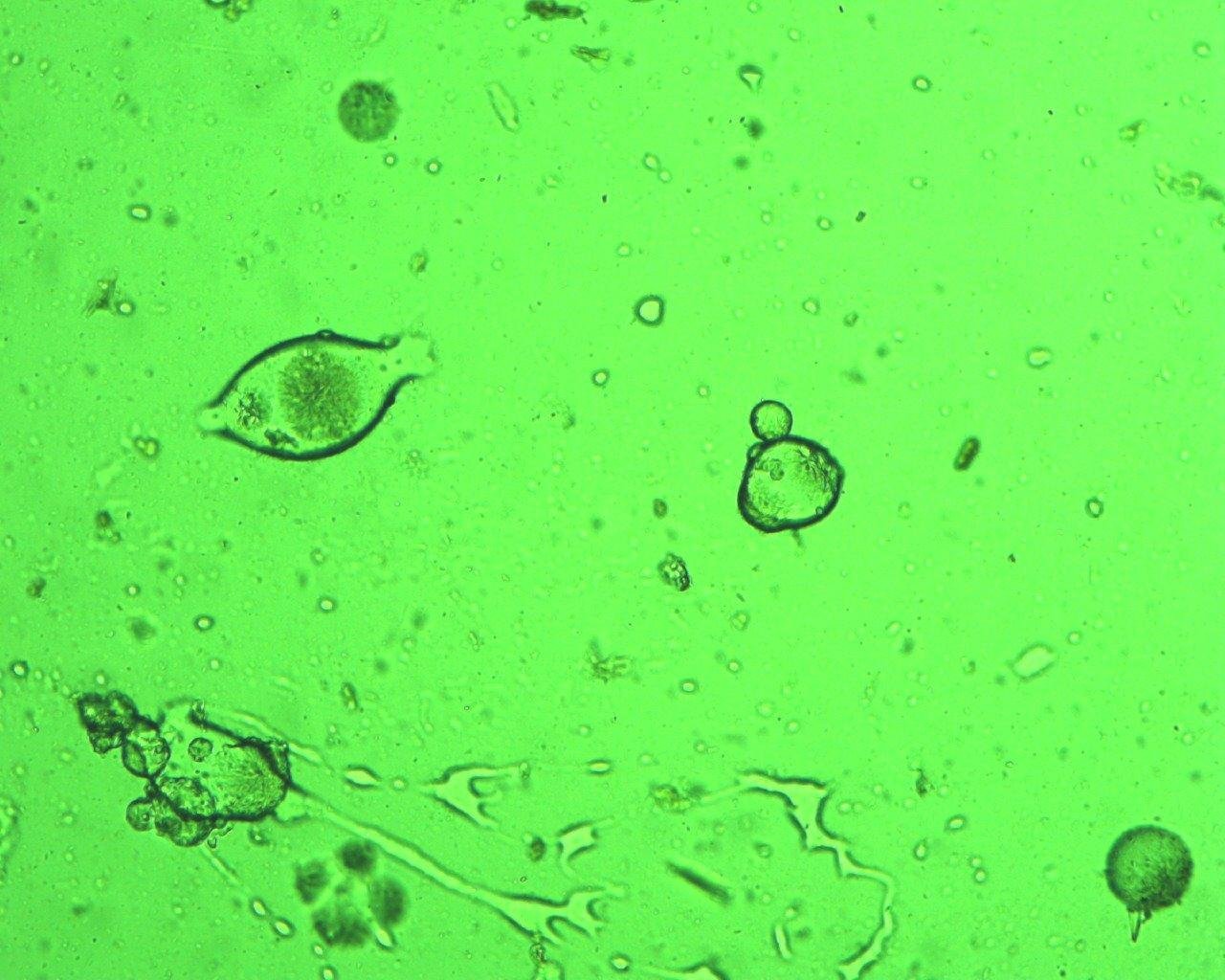
Construction is solid for the money. Reviewers describe a heavy, solid build with smooth machined focus and stage rings, and the double layer mechanical stage lets you move a slide on two axes without touching the glass, which keeps your smear intact and your fingers clean of immersion oil.
Be realistic about the image quality though. 1.3 megapixels is more than enough to caption a diagram in a write up, and far less than enough for a photomicrograph you would be proud of. If you want presentation grade images, this is a working tool for drafts, not a final one.
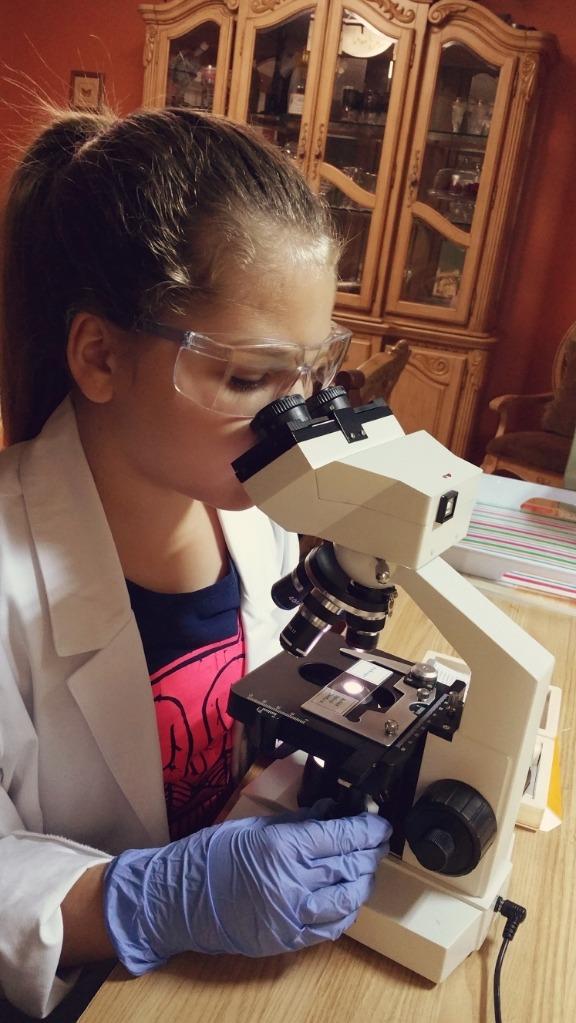
Why a built-in camera beats an adapter
The reason digital heads cost more is that they route light through a beam splitter so the camera and the eyepieces see the same field. With an eyepiece camera or a cheap adapter, the two views drift apart, which makes demonstrating to a study group frustrating. Here the camera image and what you see stay aligned.
Five year warranty coverage and a dimmable LED under the stage are both good signs for a device that will be plugged in and moved around for four years. The double layer stage also has a lower profile, so it works with the thicker prepared slides used in tissue sections.
What you should know before buying
The recurring negatives are the low camera resolution, software setup friction and a small number of early hardware failures with the camera or the lamp. The bundled viewing software and drivers come on a disc, so check that they install on your operating system before you are mid assignment.
No slides or cover slips are included, and there are reports of a small number of scopes where the 100X oil objective did not function. Test the 100x with a drop of oil as soon as it arrives rather than the week before a lab practical.
7. Herwicm 40X-2500X Binocular – Best Wide-Field Eyepieces for Eye Comfort
Compound Microscope,40X-2500X ,WF10x and WF25x eyepieces, Dual LED Lighting and Two-Layer Mechanical Stage,Microscope for Adults…
WF10X and WF25X wide-angle eyepieces
Top and bottom LED lighting
Coaxial focus on both sides
Telescopic objective lens
Pros
- Wide-angle eyepieces reduce eye fatigue over long sessions
- Dual top and bottom LED handles opaque and translucent samples
- Coaxial coarse and fine focus on both sides is easy to find by touch
- Two layer mechanical stage with a spiral scale for positioning
Cons
- No trinocular port or bundled camera for digital capture
- Objective set limited to 4X 10X and 40X with no 100X oil option listed
- Spec sheet lists 40x maximum which conflicts with the 2500X marketing
With 256 reviews at 4.3 stars and 70 percent five star ratings, this scope is bought for one specific reason: the eyepieces. Buyers highlight the ultra wide angle all optical binocular eyepieces, the flexible dual LED lighting, and how smooth the coaxial focus feels for classroom and hobby work.
A wider field of view means you find your specimen faster and scan a tissue section with fewer head movements. For a student spending hours looking through a microscope, that reduces eye strain more than any other single feature, and it is the specification most often ignored in cheaper scopes.
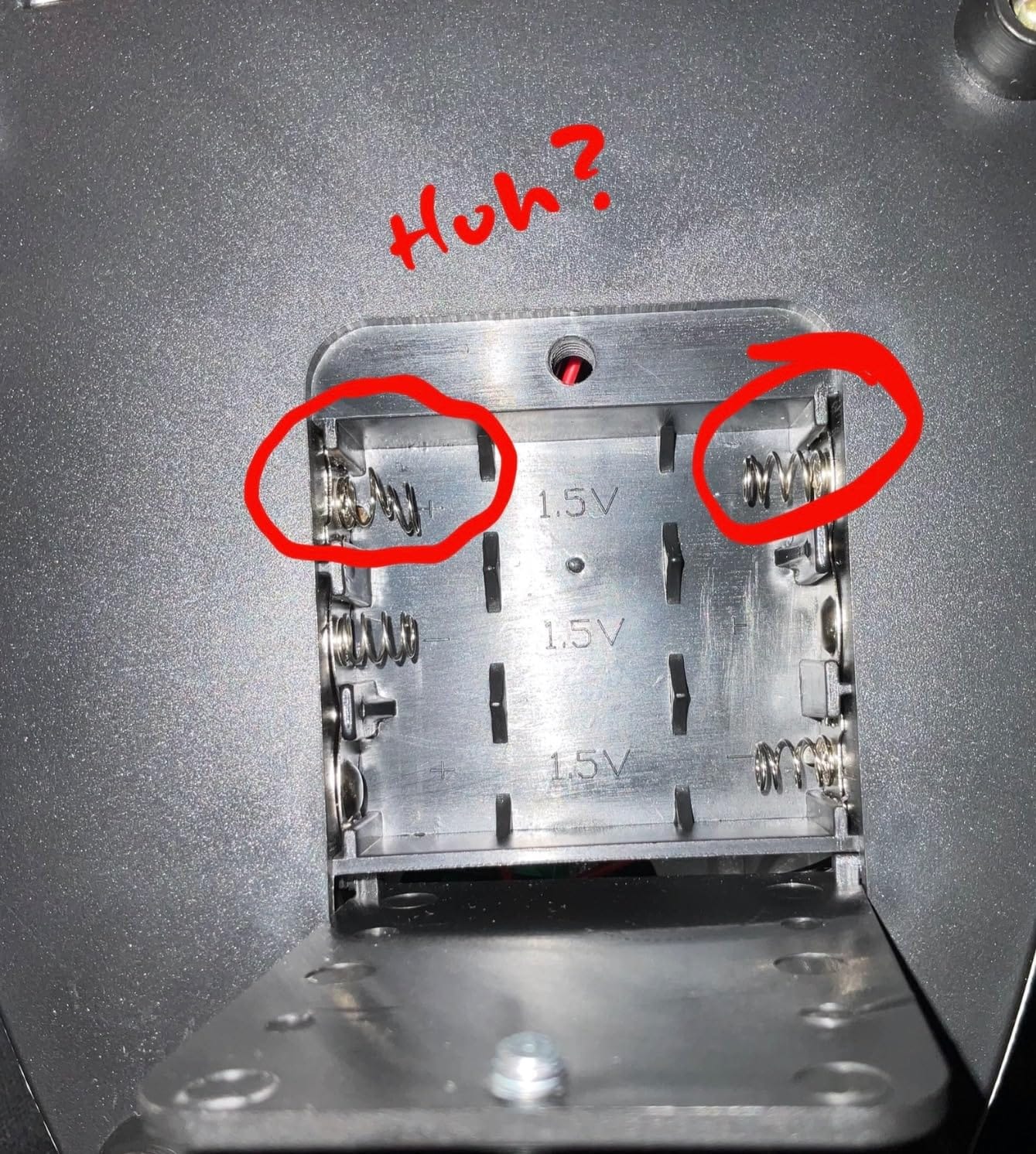
The telescopic, self retracting objective lens is a nice safeguard. If you crank the coarse focus with a slide on the stage, the objective tube retracts instead of driving a lens into your specimen, which saves a slide and saves you the cost of replacing a prepared smear.
Coaxial coarse and fine focus knobs sit on both sides of the base, so whichever hand you use, the controls are there. That matters more than it sounds when you are repositioning a scope in a shared lab and want to find the focus knobs by feel without looking away from the eyepiece.
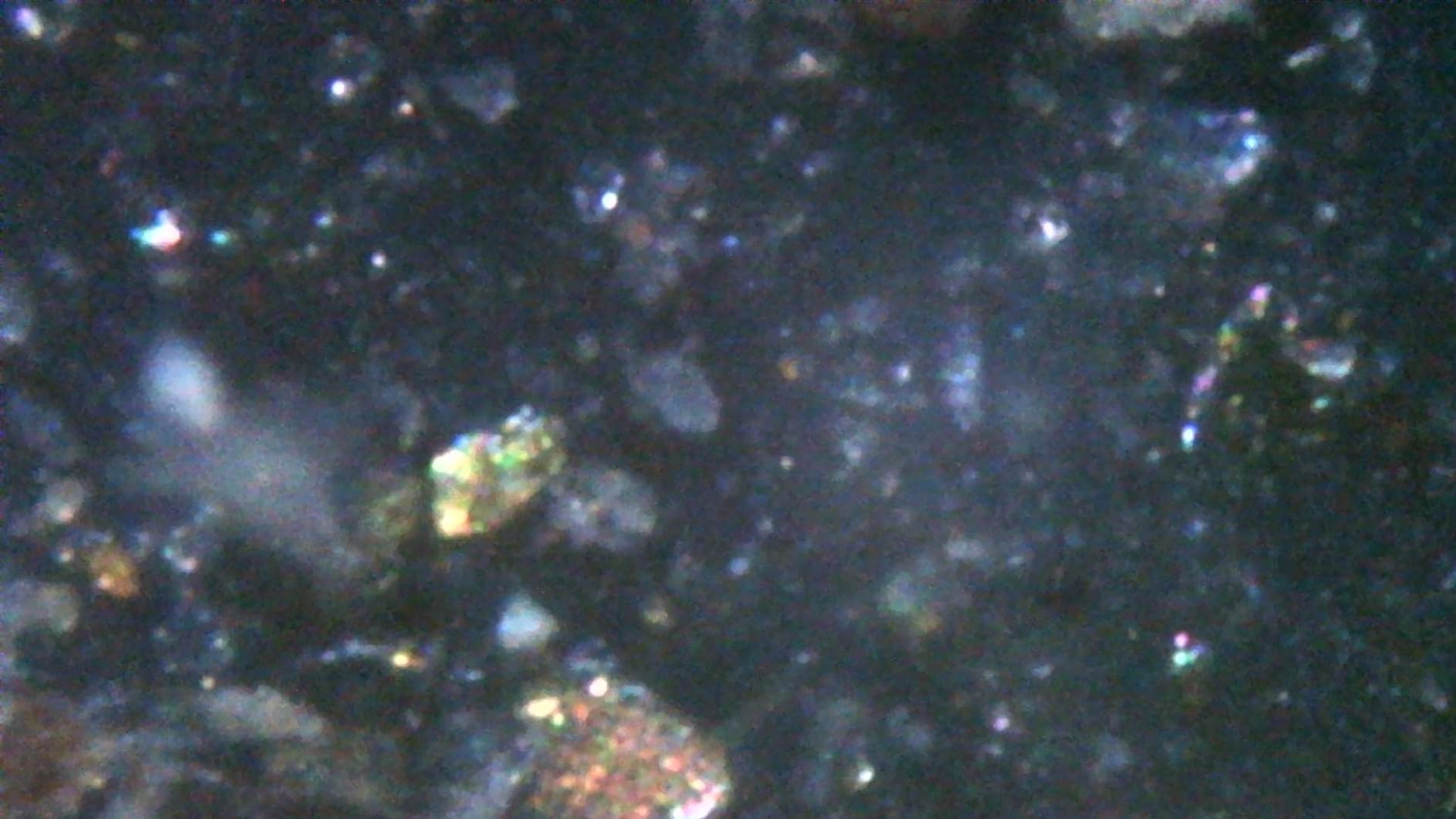
When a wider field genuinely changes the work
Locating a parasite egg in a stool sediment sample, or the edge of a tumour in a low power tissue scan, is a search problem before it is a resolution problem. A wide field turns a two minute hunt into a few seconds, and that is the practical difference you feel most in parasitology and gross pathology prep.
The dual top and bottom LED lighting also means the same scope handles opaque objects, not just mounted slides. Students comparing prepared slides against whole small specimens in the same session will not need a second instrument.
The magnification claim is the catch
The listing advertises 40X to 2500X but the objective set is limited to 4X, 10X and 40X with no 100X oil option listed, and the spec sheet itself lists a maximum magnification of 40x. Experienced reviewers treat the marketing figure as inflated. If bacteria or blood cell morphology is the point, this is not the scope.
There is no trinocular port or bundled camera, and some listing details are vague about which slides and accessories actually ship. It is aimed at children, students and beginner adults, which is an honest read of what it is built for.
8. Woehrsh 40X-5000X Trinocular – Best Accessory Bundle in the Box
Woehrsh Trinocular Microscope 40X-5000X Magnification Laboratory Grade with Dual Mechanical Stage and HD USB Camera Microscopes for Adults(Adult Trinocular Microscope with Electronic Eyepiece)
Trinocular head with WF10X and WF25X eyepieces
Infinity optical system with coated lenses
306 degree swivel head
Double layer mechanical stage
Pros
- Trinocular port supports simultaneous viewing and camera capture
- 306 degree swivel head positions the scope away from the user
- Very large accessory pack covering most consumable needs
- Includes 2x magnifying lenses and high pixel electronic eyepieces
Cons
- Lowest rated in the group at 4.2 stars with 9 percent one star reviews
- Objective and infinity system claims are heavy marketing language
- 5000X figure relies on eyepiece stacking rather than added resolution
This is the model to look at if you want the most in the box. The gift pack includes slides, cover slips, tissue sections, petri dishes, tweezers, a phone holder and a dust cover, and the trinocular head supports simultaneous viewing and camera capture. That combination of consumables and a photo port saves a first year student a lot of initial setup.
With 216 reviews at 4.2 stars and 66 percent five star ratings, it is the lowest rated scope here, and I would rather say that plainly than dress it up. Users like the trinocular head, the swivelling body and the volume of included accessories, but a steady share of reviews treat the extreme magnification figures as marketing rather than usable resolution.
The optical design is described as infinity based with coated lenses and adjustable refractive index, and the head swivels 306 degrees with dual coaxial coarse and fine focus. The eyepiece package is unusually generous: two WF10x, two WF25x, plus 2x magnifying lenses and high pixel electronic eyepieces.
That swivelling range is genuinely useful in a teaching lab. It lets the head point away from you so a partner or an instructor can look down the same eyepieces from another position, which is the simplest form of collaborative viewing you can get without a dedicated teaching head.
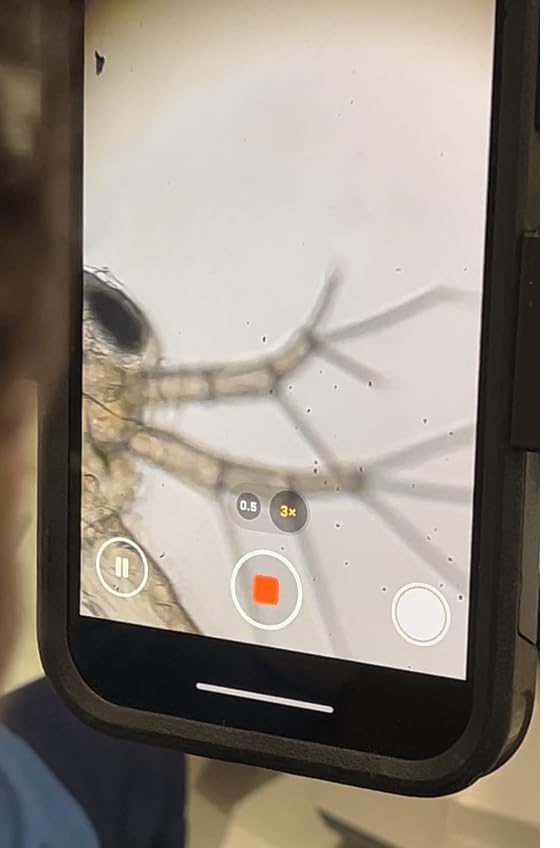
Why the bundle appeals to first years
Petri dishes, tweezers and prepared sections are exactly the consumables you burn through in the first two semesters, and buying them bundled removes the first trip to a supplier. The double layer mechanical stage with an adjustable focusing lens handles both blood smears and thicker tissue sections without modification.
If you are also considering a research elective later, a trinocular head means the camera is a future accessory rather than a future replacement. That is the argument for spending on this over a comparable binocular model.
Read the magnification claims carefully
The 5000X top figure relies on eyepiece stacking rather than added resolution, which means the image is larger but not more detailed. Achromatic objective and infinity system claims here are heavy marketing language, and with the highest share of one star reviews in the group, quality control is the variable to watch.
There are no clear documentation details in the listing, and the listed voltage is 240 volts. Verify what ships and what the power supply supports before you commit, and test the 1000X performance on a real smear rather than the included samples.
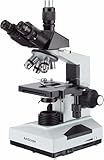
9. AmScope T490B Trinocular – Best for Pathology Rotations
AmScope T490B Compound Trinocular Microscope, 2000X Magnification
40X-2000X
Simul-focal trinocular head
23mm photo port with C-mount adapter
3D two-layer mechanical stage
Pros
- Simul-focal head keeps eyepieces and camera in focus at the same time
- 23mm photo port with C-mount adapter for photo and video capture
- Three dimensional two layer stage with low position control for thick specimens
- Built-in condenser and achromatic objectives
- Five year manufacturer warranty
Cons
- Halogen lamp runs warm and ages faster than LED
- Listed at 220V which limits out of the box use on 110V circuits
- No camera included despite the photo port
The simul-focal trinocular head is the reason to pay attention here. With 212 reviews at 4.4 stars, owners highlight it and the 23mm photo port with the included C-mount adapter as the deciding features for documentation work. Simul-focal means the camera image and the eyepiece view are focused together, so you are not constantly reaching down to refocus after moving between them.
That is a pathology workflow feature. During a rotation you are looking through the eyepieces to find the lesion, then dropping to the camera to record it, and the back and forth is repeated hundreds of times a session. A non simul-focal head turns that into a constant refocusing chore.
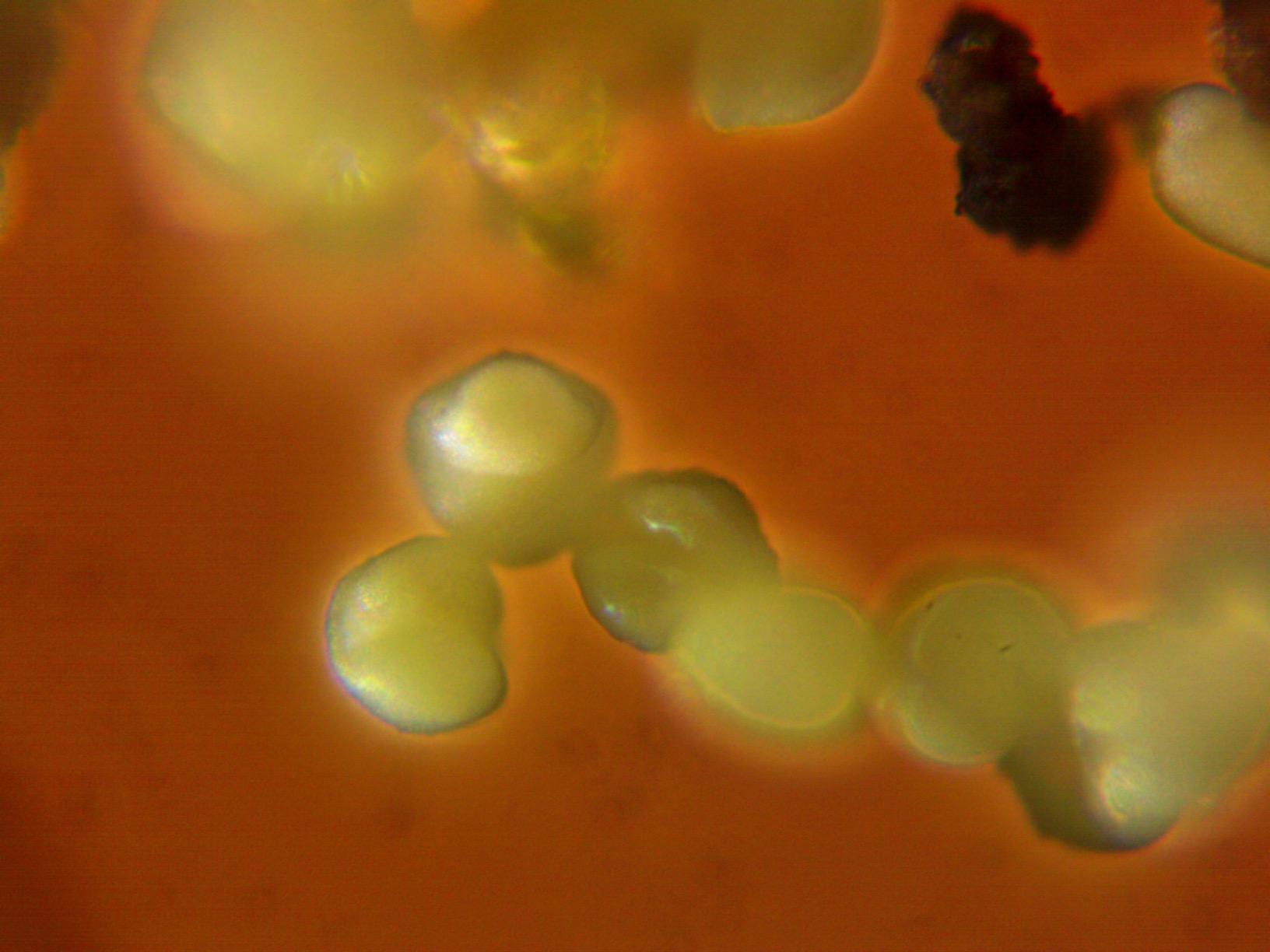
It covers 40X to 2000X across eight widefield magnification settings, with a built-in condenser and achromatic objectives. The three dimensional two layer mechanical stage with low position control is the detail that matters for thick specimens, since it lets you bring a dense tissue section into focus without crushing the slide.
At 20 by 17 by 10.5 inches it has the largest footprint of anything we reviewed, and that bulk is a fair trade for a rigid stage on a scope intended for long sessions and heavy slides. Weight is not stated in the listing, so plan where it will live before it arrives.
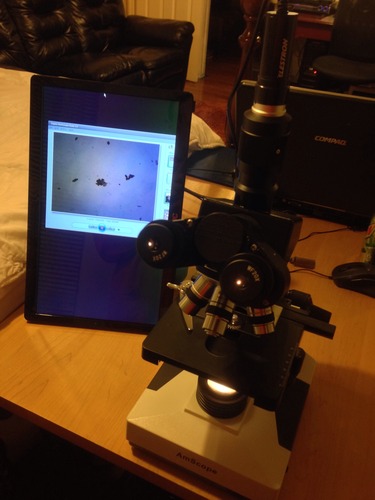
Why it fits a rotation block
The photo port is 23mm and the C-mount adapter is included, so the accessory you need is the one that ships. You can start with a C-mount camera and upgrade the sensor later without touching the scope, which makes this a reasonable platform for a student who expects a research elective or an application to competitive programmes.
The widefield settings also mean you are not swapping objectives constantly. During a structured read, moving through eight magnification steps is more efficient than rotating a four position turret back and forth.
The lighting is the honest drawback
This scope uses halogen rather than LED, which reviewers note runs warm and ages faster. Halogen bulbs also have a colour temperature that shifts as they age, so a stain that looks right this term can look different next term, and a bulb failure mid study block is a real risk.
The listed specification of 220 volts limits out of the box use on 110 volt North American circuits, and no camera is included despite the photo port. Check the power supply with the seller before ordering and plan to add a camera separately.
10. PalliPartners Trinocular 2000X – Best Metal-Built Entry Trinocular
PalliPartners 40x-2000x Biological Compound Trinocular Microscope
40X-2000X
Trinocular head with camera connection
Double layer mechanical stage
Top and bottom LED illumination
Pros
- Trinocular head lets you connect a camera and view on a computer while working
- Sharp clear optics across the magnification range
- Simple setup with accessories included in the box
- Double layer stage holds slides without shifting
- Sturdy metal construction
Cons
- Lightweight frame shakes slightly when the table is leaned on
- Up and down wheel can slip during adjustment
- Only a one year manufacturer warranty
The draw here is straightforward: a trinocular head in a metal body, at a price point that usually buys a binocular plastic scope. With 120 reviews at 4.3 stars and 70 percent five star ratings, recent buyers describe the optics as sharp and the trinocular head as the feature that makes lab and classroom work easier.
A trinocular port means you can attach a camera and keep working through the eyepieces, so this covers the documentation question without the step up to a more expensive platform. For a first year who is not sure whether they will still be using a microscope in three years, that flexibility is worth more than a longer warranty.
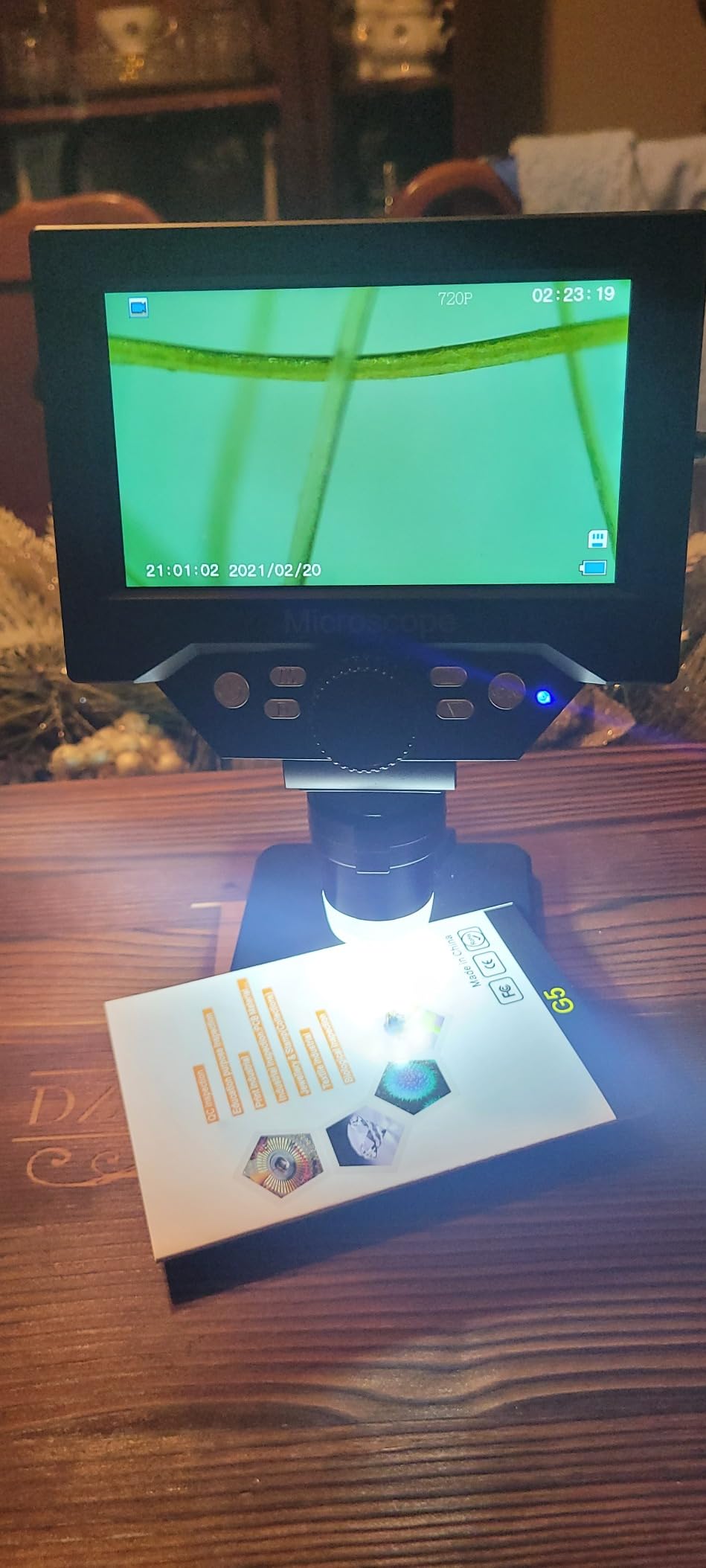
Coverage is 40X to 2000X, the double layer stage holds slides without shifting, and separate coarse and fine focus knobs give you more control than linked knobs. Top and bottom LED illumination handles both transparent prepared slides and opaque objects, which is the same flexibility that makes the Herwicm useful in a first year lab.
Metal construction is the quiet advantage over the plastic-bodied budget scopes. It resists the chemical cleaning agents used around histology and microbiology benches, and it is less likely to crack if the scope is moved while a slide is still on the stage.
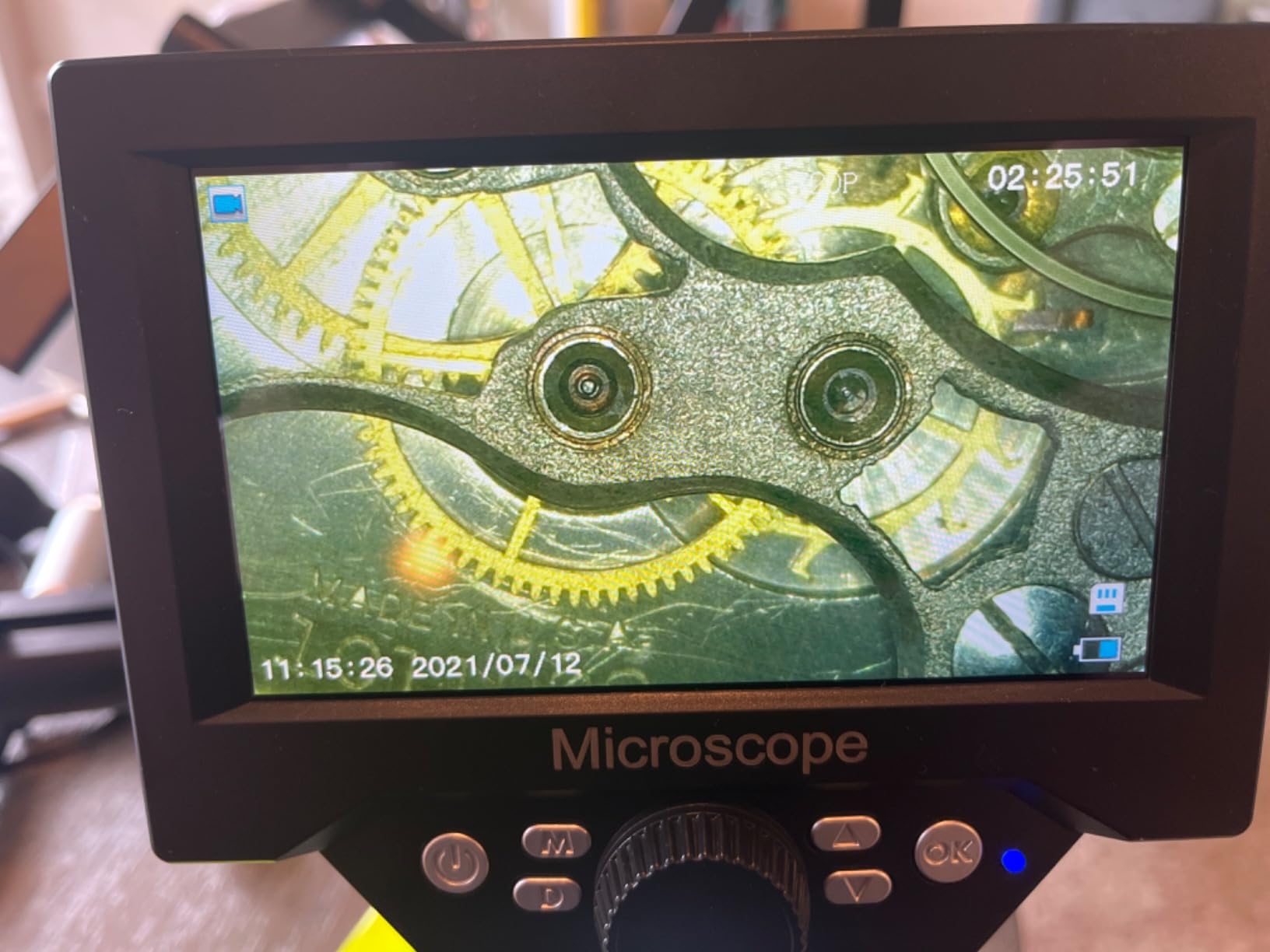
Why this suits a first year buyer
Simple setup with accessories included means less time before your first slide. When a practical exam is two weeks away, not having to troubleshoot a partially assembled instrument is a genuine advantage, and the metal frame gives a sense of solidity that encourages you to keep it rather than trade it in.
Being able to connect a camera while viewing means you can start producing lab report images now, on whatever camera you already own, instead of deferring documentation until you can justify a bigger purchase.
The three complaints to know about
Reviewers point to a lightweight frame that shakes slightly when the table is leaned on, and an up and down wheel that can slip during adjustment. Both are real if you are someone who rests a hand on the bench while reading, and both are reasons to set the scope down gently rather than treat it as portable kit.
The warranty is one year against five years on the OMAX and AmScope models, and bundled camera software has been reported to drop computer connections and corrupt recordings. If you rely on the camera, test a full recording session before the first deadline.
11. OMAX M83EZ-C50S Digital Trinocular – Best 5MP Image Capture
OMAX M83EZ-C50S 2500X LED Digital Trinocular Lab Compound Microscope
40X-2500X
5MP color digital camera for Windows
NA1.25 Abbe condenser with filters
Variable intensity LED
Pros
- 5MP camera is a clear step up from 1.3 MP models and captures usable detail
- Trinocular head with simul focus for camera and eyepiece viewing
- NA1.25 Abbe condenser with iris diaphragm and filters
- Coaxial fine focus on both sides plus a double layer mechanical stage
- Variable intensity LED transmitted illumination and five year warranty
Cons
- Lowest rated OMAX option here at 4.2 stars with 7 percent one star reviews
- Windows only camera software
If image quality is the deciding factor, 5 megapixels changes what you can do with a photomicrograph. With 157 reviews at 4.2 stars and 65 percent five star ratings, this is the OMAX digital step up, and it is the pick when a computer connected image record matters more than the lowest possible cost.
The optical side is properly specified for medical school work: achromatic objectives from 40X to 2500X, an NA1.25 Abbe condenser with iris diaphragm and filters, and variable intensity LED transmitted illumination. The NA1.25 figure is the one to look for if you plan to look at bacteria, because it is the condenser that supports resolution at 1000x.
The trinocular viewing head has a sliding adjustable interpupillary distance and simul focus between the camera and the eyepieces, which is the same workflow advantage as the T490B. Coaxial coarse and fine focus knobs are on both sides, and the double layer mechanical stage gives you two axis movement without touching the slide.
At 8 pounds and 9.06 by 7.09 by 14.17 inches, this is a compact instrument that still takes up real desk space. That makes it a more practical long term purchase than a large body, especially if you will move rooms between second and third year.
Where 5 megapixels pays off
At 1.3 megapixels, a 1000x field is mostly pixelation. At 5 megapixels you can crop a region of interest from a tissue section and still have an image worth dropping into a presentation. For pathology oriented students who present cases, that difference is visible immediately in a slide deck.
The filters on the condenser are useful for improving contrast on unstained or faintly stained material, and the variable intensity LED lets you avoid saturating a dark field. Both are small adjustments that add up over a long evening of reading.
What the rating tells you
At 4.2 stars with 7 percent one star reviews, this is the lowest rated OMAX option here, so expect some variance. The software is Windows only, which matters if you use a different computer for your lab reports, and the bundled viewing software and drivers come on disc.
There was no review text available at enrichment time to characterise owner experience in detail, so treat the spec sheet as the guide here. If image quality is your priority, confirm the camera software installs on your operating system before you commit.
12. Poothoh Binocular 2000X – Best Five-Colour Filter Bar
Binocular Compound Microscope 40X-2000X, Research Grade Professional Microscope with Dual Mechanical Stages and Coaxial Coarse/Fine Focus Knobs, Built-in Electronic Eyepieces, Adult Microscope
40X-2000X with 4X 10X and 40X objectives
Dual top and bottom LED lighting
Five-colour filter bar
Coaxial coarse and fine focus
Pros
- Dual top and bottom LED lighting with adjustable brightness
- Five-colour filter bar is a genuinely useful feature at this price
- Coaxial coarse and fine focus is well tuned and responsive
- Sharp clear imaging for classroom and lab work
- Multi-stage spring anti-pressure process protects slides
Cons
- PC camera software is not included and the download site draws antivirus warnings
- Top illumination toggle reported as non-functional on some units
- Manual is tiny with broken English and no battery information
The five-colour filter bar is what separates this one. With 169 reviews at 4.2 stars and 69 percent five star ratings, recent buyers call it well tuned and good value, and the filter bar is the detail that comes up most often as a genuine feature rather than filler.
Filters help you increase contrast on a low contrast specimen without changing the optics. A green filter for a pale unstained smear, or a blue filter for a heavily stained section, can be the difference between seeing a boundary and guessing at it. Adjustable brightness plus five colours gives you real control over a transmitted light image.
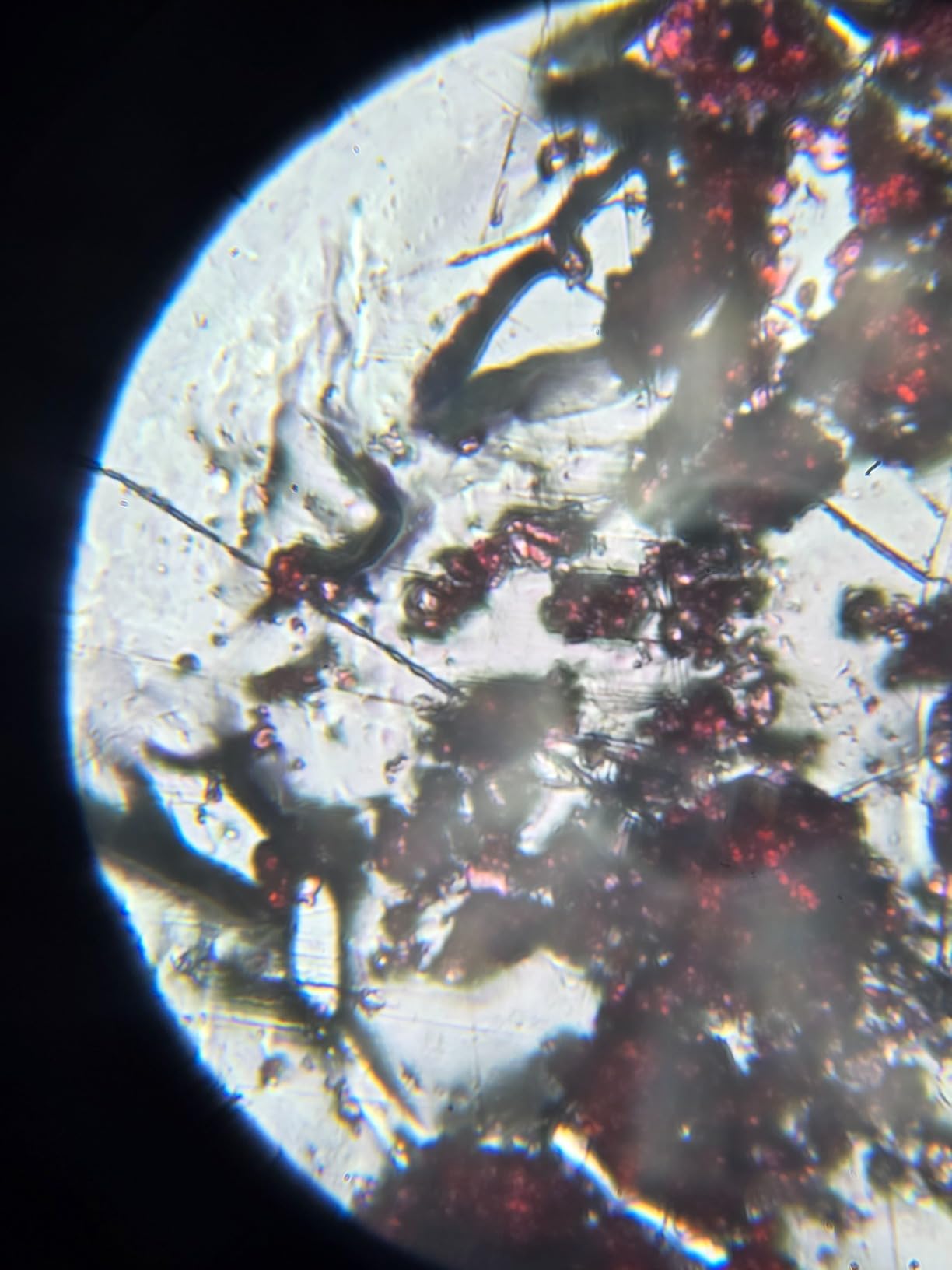
Mechanically it has coaxial coarse and fine focus handwheels and dual mechanical stages, and the multi-stage spring anti-pressure process is meant to protect slides from being crushed if you over-focus. Reviewers report the coaxial focus is well tuned and responsive, which is a good sign in a scope at this level.
It is compound binocular with 4X, 10X and 40X achromatic objectives up to 2000X, and the listing lists 110 volts. Note there is no 100x oil objective in that set, so this is a teaching and low power scope rather than a bacteriology or hematology instrument.
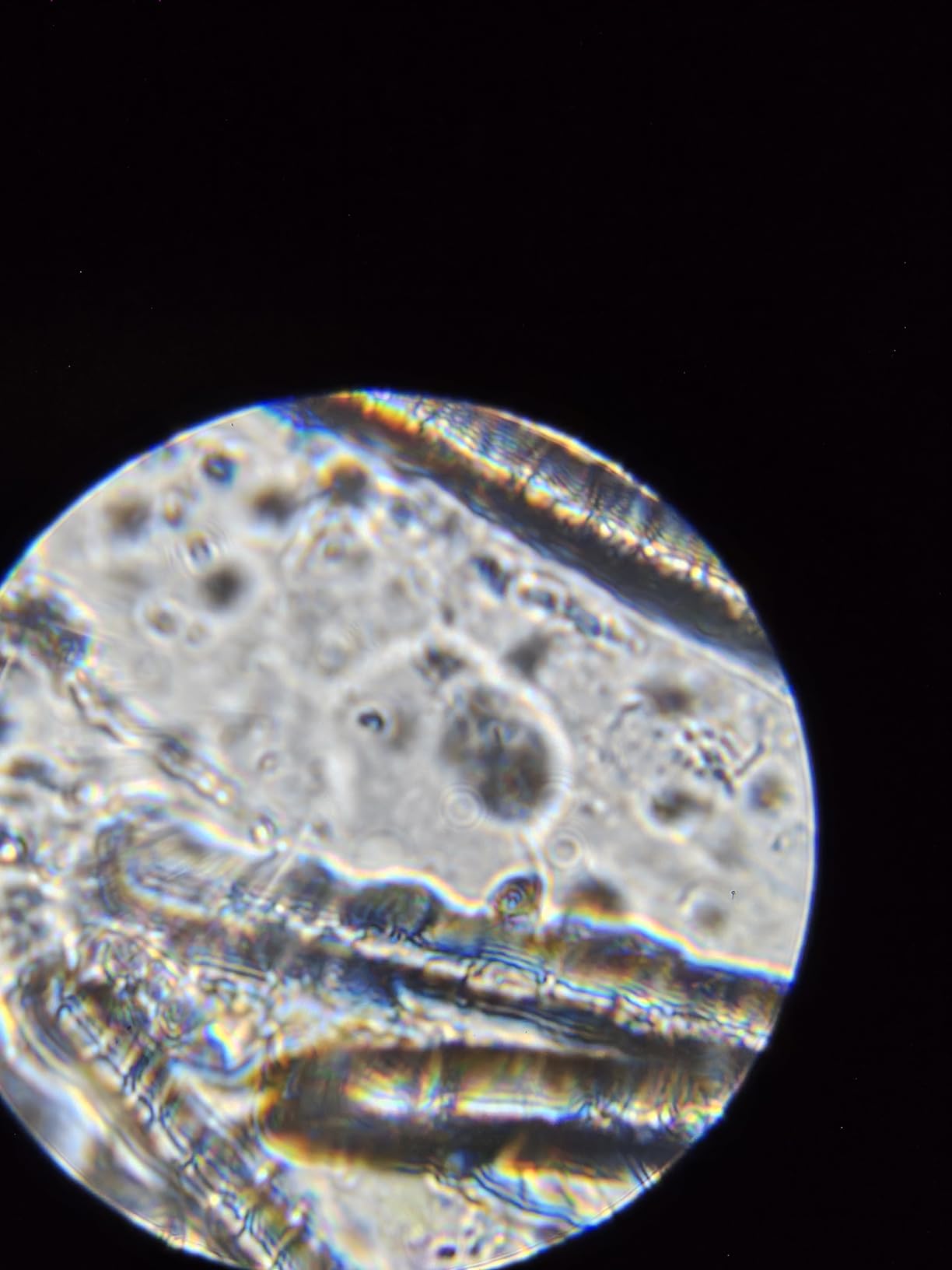
Why filters matter for stained material
Contrast, not magnification, is what limits you on a stained slide. A filter bar lets you block the wavelengths your stain absorbs hardest, which sharpens the boundary between stained and unstained regions. For counting cells in a blood smear or reading a Gram stain, that improves accuracy more than stepping up an objective.
The dual LED lighting supports opaque and translucent specimens in the same session, and the multi-stage spring process reduces the chance of a ruined slide. For a student who is still deciding how much microscopy they will do, that combination of control and forgiveness is worth considering.
The camera claim and the documentation are the weak points
Built-in electronic eyepieces are listed for computer viewing, but the PC camera software is not included and the download site draws antivirus warnings. Reviewers also report the top illumination toggle as non-functional on some units, which matters given that top light is one of the two light sources.
Build quality and clarity fall well short of what the research grade wording implies, the manual is tiny with broken English and no battery information, and a listing photo shows three eyepiece sets when two are supplied. Check what actually ships before you rely on it for assessed work.
How to Choose a Microscope for Medical School
Compound or stereo: which one med school actually needs
A compound microscope is what you want. Light passes up through a thin mounted section, so you see a flat, high detail image of a cell, a tissue slice or a stained smear. A stereo microscope is a low power tool for looking at something solid in three dimensions, which is useful for dissection and gross anatomy but cannot resolve a blood cell.
Almost every practical in the first two years happens on a compound scope, so do not spend your budget on a stereo model. If a course lists a dissection station, the school supplies the instrument, and your money is better spent on resolution and a usable stage.
Magnification: what 1000X really resolves
Total magnification is eyepiece times objective, so a 10x eyepiece on a 100x objective gives 1000x. Useful resolution, however, is limited by numerical aperture and by whether the light was properly focused through the condenser. A scope advertising 2500x or 5000x is usually stacking eyepieces, and reviewers repeatedly describe that as empty magnification.
For medical school, 1000x with a real 100x oil immersion objective is the practical ceiling. That is the magnification where bacterial morphology on a Gram stain and platelet detail on a blood smear become readable. Anything above that is a number on a box rather than information in your field of view.
Head type: monocular, binocular or trinocular
A monocular head has one eyepiece. It is cheaper and lighter, and it forces you to close one eye, which tires you quickly. A binocular head has two eyepieces and an interpupillary adjustment, and it is the sensible default for long sessions.
A trinocular head adds a third port for a camera, so you can photograph a field without taking the eyepieces off. Forum discussions about med school microscopes centre on this exact choice: if your lab reports need images, buy trinocular from the start, because converting later is awkward. If you never need photographs, binocular saves money and weight.
DIN versus infinity-corrected optics
DIN is a standard for objective lens thread and sizing, which means objectives and eyepieces are interchangeable between manufacturers. That matters for a student who may buy one extra eyepiece or a camera adapter years later, and it is why most of the DIN scopes here are a safer long term bet.
Infinity-corrected systems route light through a tube lens and claim better correction and colour, and they are the direction professional clinical instruments have moved. At student level the difference is hard to see, and the marketing language around infinity systems is frequently inflated, so treat the objective specification rather than the system name as the real signal.
The stage and condenser decide how usable it feels
A mechanical stage moves the slide in X and Y with knobs, and it is the single most important feature after magnification. Without one, you hunt for cells by dragging the slide with your hands, which is slow and ruins the slide. Every microscope recommended for pathology in this guide has one.
An Abbe condenser focuses light onto the specimen. Look for NA1.25, because that is the condenser that supports oil immersion resolution, and a manual iris diaphragm so you can cut down the light cone at high magnification. Several of the budget models here have no adjustable condenser, and that is where image quality quietly stops improving.
LED versus halogen illumination
LED runs cool, does not age visibly, and needs no replacement bulb, which removes a failure point during a study block. Colour temperature is stable, so stain colours look the same in week one and week twelve. Halogen is brighter and slightly more neutral at the source, but it runs hot, ages faster, and a bulb can fail at the worst moment.
Two models in this lineup offer top and bottom LED illumination, which lets you look at opaque specimens as well as mounted slides. That versatility is worth something if your lab includes whole mounts, otherwise dimmable transmitted LED is the feature that matters.
What to check about a used or refurbished microscope
Used hospital scopes from Olympus, Leica, Zeiss and Nikon are genuinely capable instruments, and a serviced example can outperform a new budget scope optically. What matters is the service history, not the badge on the arm. Ask whether the objectives have been cleaned, whether the stage cables are original, and whether the light source has been replaced.
Check that the mechanical stage moves smoothly in both axes with no wobble, that the coarse focus does not slip under load, and that the parfocal holds when you switch objectives. A DIN thread standard means you can replace any damaged objective later. The common mistake is buying a scope full of accessories with a stiff focus and a scratched condenser, so test focus before you test anything else.
Frequently Asked Questions
Do medical students need to buy their own microscope?
Most do, at least from the second year onward. School histology and microbiology labs are shared, so the scope is often unavailable when you need to review a blood smear or a tissue section outside class hours. A personal scope removes that conflict and lets you build the oil immersion and low light technique your grades depend on.
Which microscope is the best choice for medical students?
A binocular compound scope with 40X to 1000X magnification, achromatic DIN objectives including a spring-loaded 100x oil lens, a mechanical stage, an NA1.25 Abbe condenser and dimmable LED illumination covers essentially all med school work. Add a trinocular head instead of binocular if your lab reports require photographs.
Is 1000X magnification enough for medical school?
Yes. 1000X with a genuine 100x oil immersion objective is the practical ceiling for medical school. That is where bacterial morphology on a Gram stain and platelet detail on a blood smear become readable. Magnification figures above 1000X usually come from stacking eyepieces and produce a larger image without more detail.
Can you see bacteria with a 1000X microscope?
You can, provided the scope has a real 100x oil immersion objective, an NA1.25 Abbe condenser, and you use immersion oil properly. Bacteria sit close to the resolution limit of a light microscope, so a scope that only offers 40X as its highest objective will not separate bacterial forms regardless of the magnification printed on the box.
What type of microscope do doctors use?
Doctors in clinical roles use binocular or trinocular compound brightfield microscopes with 40X to 1000X, achromatic or plan objectives, an Abbe condenser and a mechanical stage. Laboratory medicine and pathology add automated digital systems, phase contrast for semen analysis, and epi-fluorescence for immunofluorescence work on biopsy tissue.
What is the best microscope for a beginner student?
A simple binocular compound scope with a mechanical stage, 4X, 10X and 40X objectives and LED illumination is the right starting point. It covers orientation, tissue identification and stained specimen work without the cost of a camera or infinity optics. Upgrade to a 100x oil objective and a trinocular head once you reach second year microbiology and hematology.
Final Recommendation for Medical Students in 2026
The best microscopes for medical students are the ones that resolve a real specimen, not the ones with the biggest number on the box. The OMAX M82ES 2000X is our pick for most students: achromatic DIN objectives with 100x oil, a double layer mechanical stage, an NA1.25 Abbe condenser and a five year warranty across more than 2,000 reviews.
Pick the Swift SW380T if your lab reports need photographs and you sit through long sessions, and the Swift SW350B if you want the highest rated instrument with a rotating head and both eyepiece pairs included. For a first semester on a tight budget, a simple binocular compound scope with a mechanical stage is enough until microbiology starts.
Whatever you choose, set it up on a solid surface, learn the oil immersion technique in the first month, and keep lens paper within reach. A scope maintained that way will still be working when you start residency.