
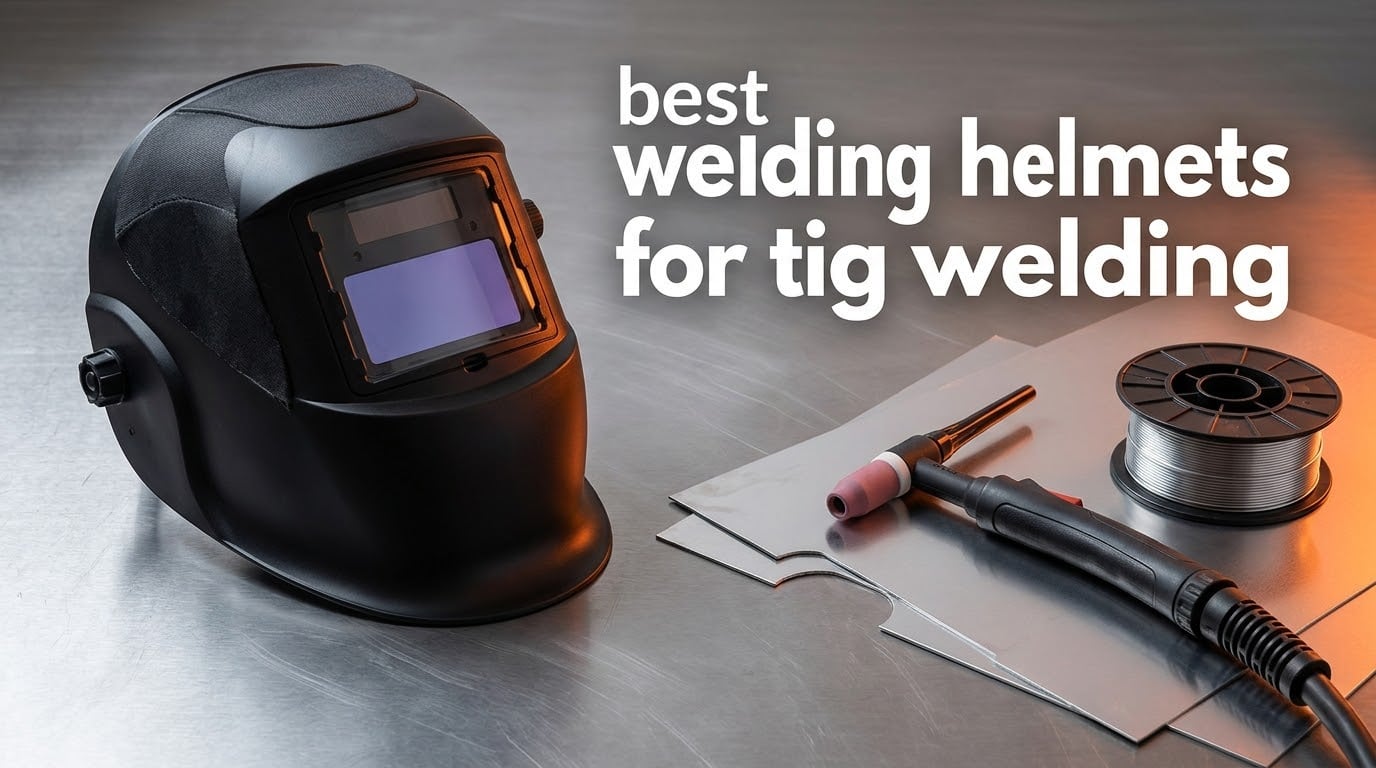
Most auto-darkening helmets are engineered around a MIG arc. TIG puts out a dimmer arc at the same amperage, starts and stops constantly during fit-up, and gets held close to the work so you can read the puddle. A TIG welding helmet has to trigger on that faint light, darken in under a fraction of a second, and then get out of your way again between tacks.
That is the whole argument for spending more on a TIG hood. Below are the eight best welding helmets for TIG welding we would put in front of a fabricator, compared on the specs that actually decide whether a lens will pick up a low-amperage DC arc without flickering or flashing you at arc start.
We read every listing line, weighed the published viewing areas, and sorted the list by what matters when the torch is two inches from a bead of molten metal. Last tested for 2026; sensor firmware and cover lens clarity change over time, so treat this as a working document rather than a static ranking.
Table of Contents
Top 3 Picks for TIG Welding in 2026

Lincoln Electric VIKING 3350
- 4C lens technology with 1/1/1/1 clarity
- 12.5 square inch viewing area
- X6 headgear for long sessions
- 5 year warranty

YESWELDER LYG-L600A
- 1/1/1/1 true color lens
- 2 arc sensors at 1/30000s
- Shade 3/7-13 for TIG MIG and grind
- Solar plus CR2450 battery
Hobart 770890
- 4 independent arc sensors
- PureColor optics with 9.3 inch view
- Single knob analog shade sensitivity and delay
- Auto on auto off at arc strike
All 8 Best Welding Helmets for TIG Welding in 2026
The table below is the short version. Every helmet listed here triggers on a TIG arc, but they spread across a wide range of viewing areas, sensor counts and power options. Read the minimum detectable amperage note further down before buying, because most manufacturers never publish that number.
| Product | Specifications | Action |
|---|---|---|
| Lincoln Electric VIKING 3350 |
|
Check Latest Price |
| YESWELDER LYG-L600A |
|
Check Latest Price |
| Hobart 770890 |
|
Check Latest Price |
 Miller Classic ClearLight Miller Classic ClearLight |
|
Check Latest Price |
 Jackson Safety Insight Jackson Safety Insight |
|
Check Latest Price |
 ARCCAPTAIN HSH-S800 ARCCAPTAIN HSH-S800 |
|
Check Latest Price |
 YESWELDER BW-10MAXTRI YESWELDER BW-10MAXTRI |
|
Check Latest Price |
 TOOLIOM TL-31800H TOOLIOM TL-31800H |
|
Check Latest Price |
1. Lincoln Electric VIKING 3350 – The Best Overall Pick for TIG
Lincoln Electric K3034-4 VIKING 3350 Auto Darkening Welding Helmet with 4C Lens Technology, Matte Black, extra large
4C lens technology
1/1/1/1 clarity
12.5 square inch view
1.4 pounds
Pros
- 4C optics stay clear right to the edge of the lens
- Extra large viewing area helps with torch angle and filler rod control
- X6 headgear spreads weight across a full shift
- Standard inexpensive cover lenses with spares in the box
- 5 year manufacturer warranty
Cons
- Can be slow to react on the very first arc strike with sensitivity set high
- Headgear adjustment is more involved than simpler pivot models
I keep coming back to the Viking 3350 because the lens, not the shell, is the reason to buy it. The 4C filter delivers the 1/1/1/1 clarity rating, and owners consistently report steady arc detection on low-amp work where cheaper lenses flicker. That is exactly the failure mode you are trying to avoid.
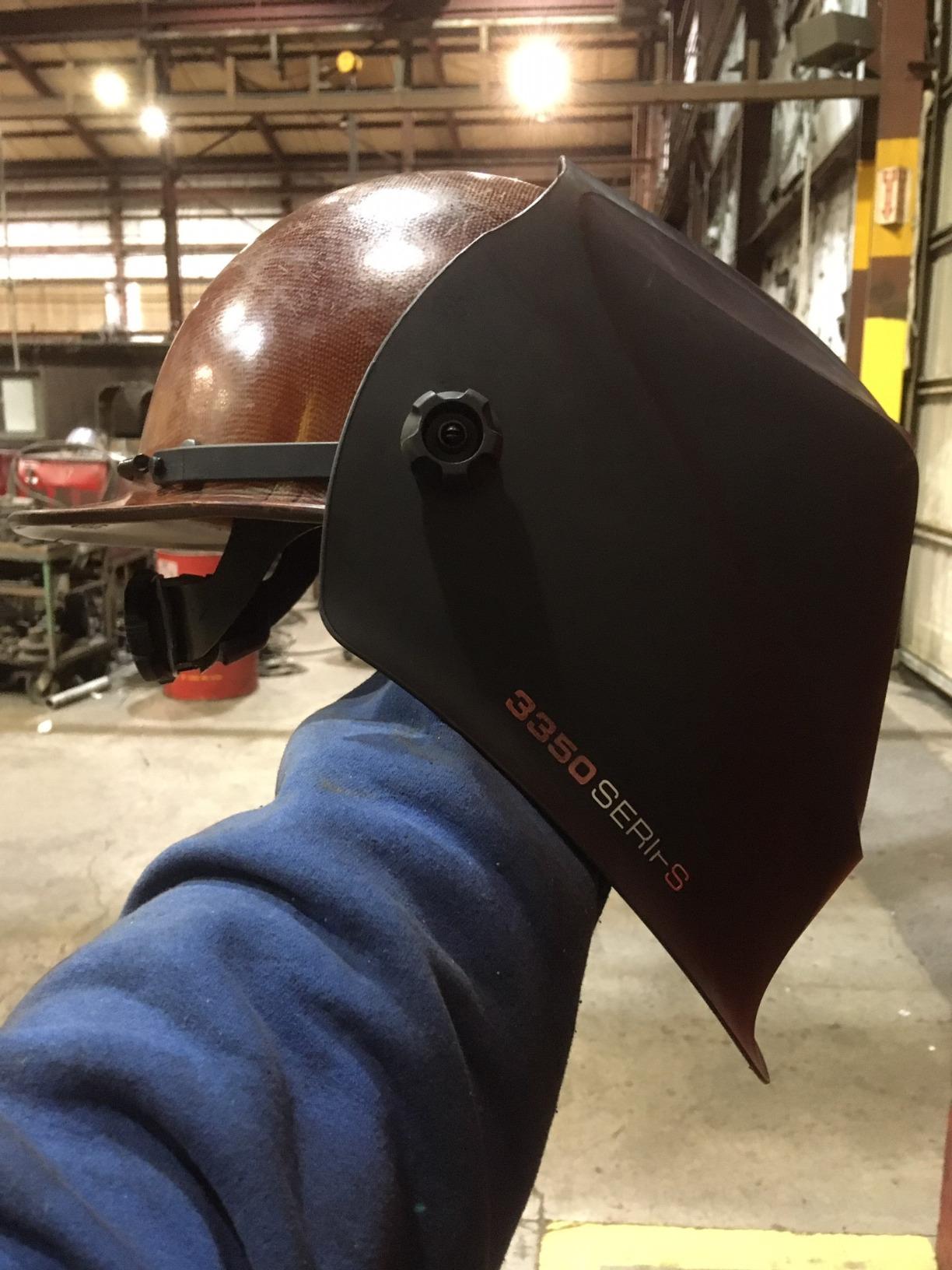
The 12.5 square inch viewing area is the other half of the argument. A larger window means you can watch both the puddle and the joint ahead of it without turning your head, which changes how you hold the torch and the filler rod. It is a real ergonomic gain on long runs, not a number on a spec sheet.
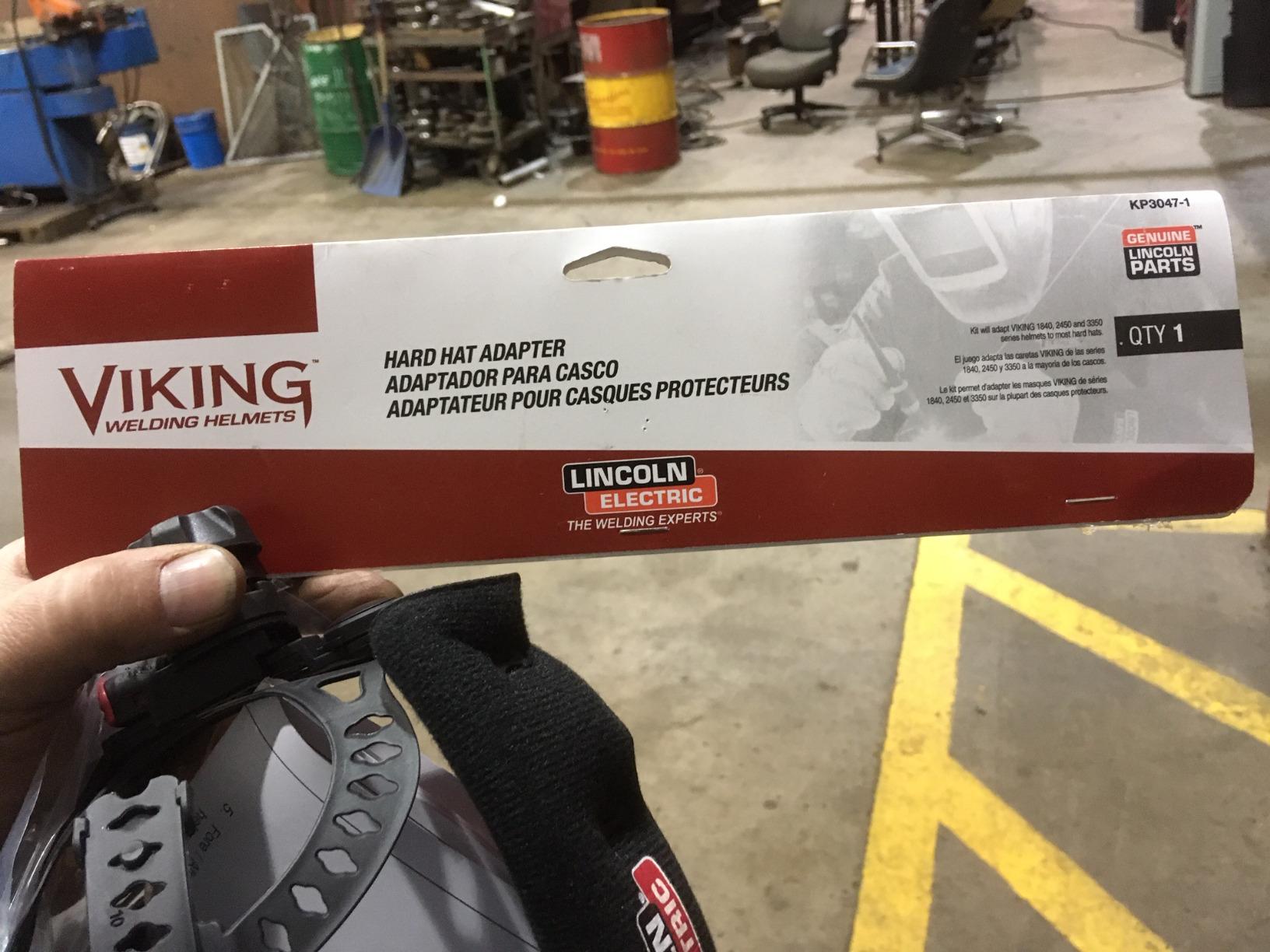
One caveat worth flagging honestly: at maximum sensitivity, some owners report a slower first response after the arc is struck. Dial sensitivity back one notch before a long TIG session and that complaint largely disappears. The X6 headgear also takes longer to adjust than a simple ratchet or pivot band, though it stays comfortable once set.
What decides it for you
If you spend most of your day under a hood and you are reading puddle edges to control heat input, this is the one. The combination of edge-to-edge clarity and a genuinely large viewing area is the thing you notice after an hour, not on the bench.
It also takes standard cover lenses, and the box includes five outer and two inner spares. For a shop doing daily work, cheap consumables are a genuine running cost saving over a helmet with proprietary lenses.
When it is the wrong call
If TIG is a once-a-month hobby and your budget is tight, this is far more machine than the job needs. The same logic applies if your head shape fights a ratcheted multi-point headgear after a long day.
Welders moving from a cheap hood to this one rarely go back, and the 5 year warranty is a meaningful part of why. The gap in price between it and the budget tier buys you optics and headgear you notice every single day.
2. YESWELDER LYG-L600A – Budget Pick for TIG
YESWELDER Auto Darkening Welding Helmet 1/1/1/1 True Color, LYG-L600A
1/1/1/1 true color
1/30000s response
2 arc sensors
16 ounces
Pros
- True color view of the puddle at a fraction of premium helmet cost
- Very fast 1/30000s darkening with adjustable sensitivity and delay
- Shade 3/7-13 covers TIG MIG stick and grind
- Magnifying lens accommodation
- Spare lenses and a spare CR2450 battery in the box
Cons
- Small 3.64 by 1.67 inch viewing area
- Light duty shell and headgear for heavy daily shop use
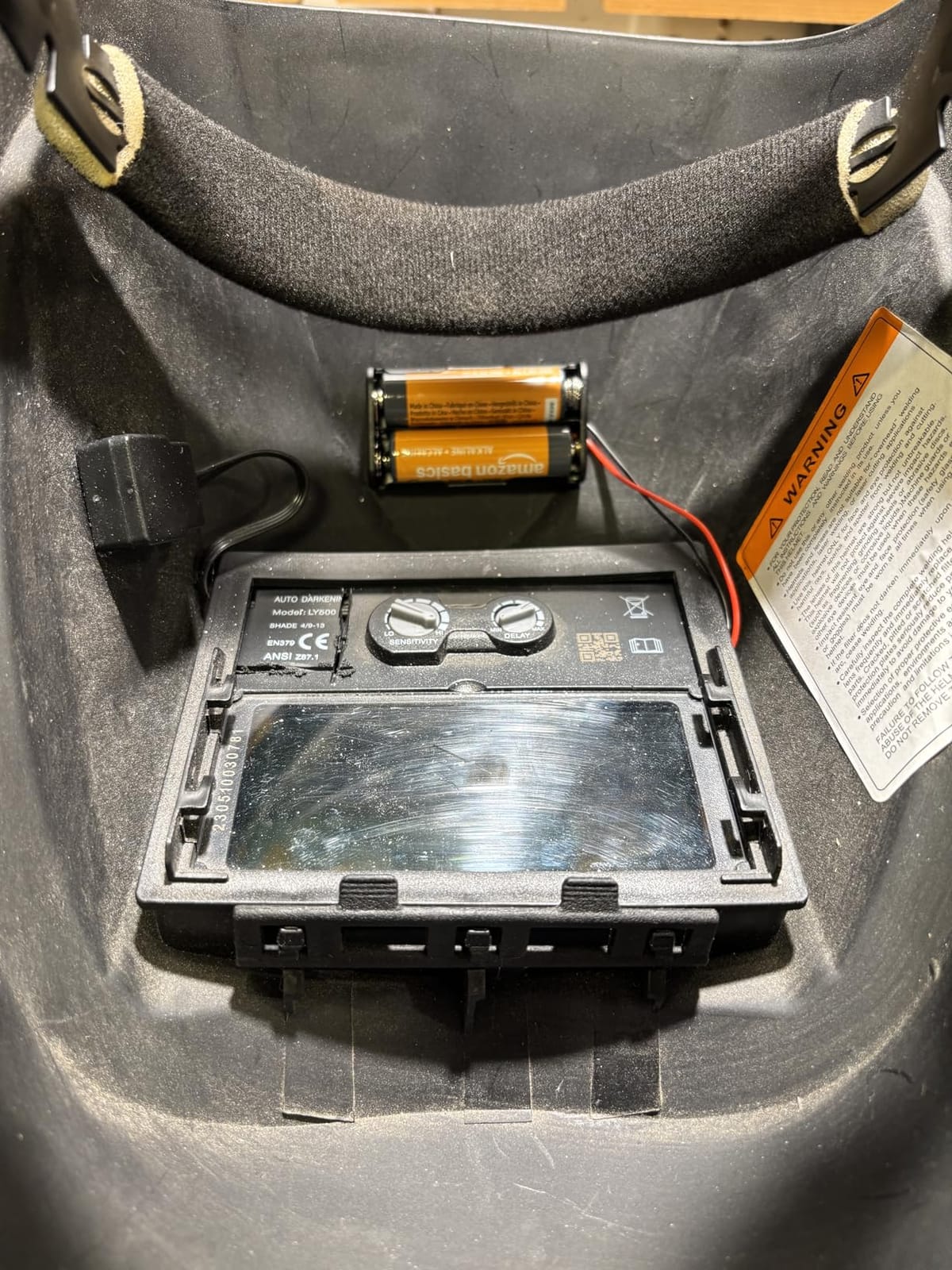
- Included coin battery arrived dead or misinstalled on a minority of units
This is the helmet we tell most hobbyists to buy first. The 1/1/1/1 true color lens at a 1/30000 second response time is genuinely competitive on paper, and owner reviews describe a natural, clear view of the puddle for TIG, MIG and stick alike. At 16 ounces it is also one of the lighter shells in the group.
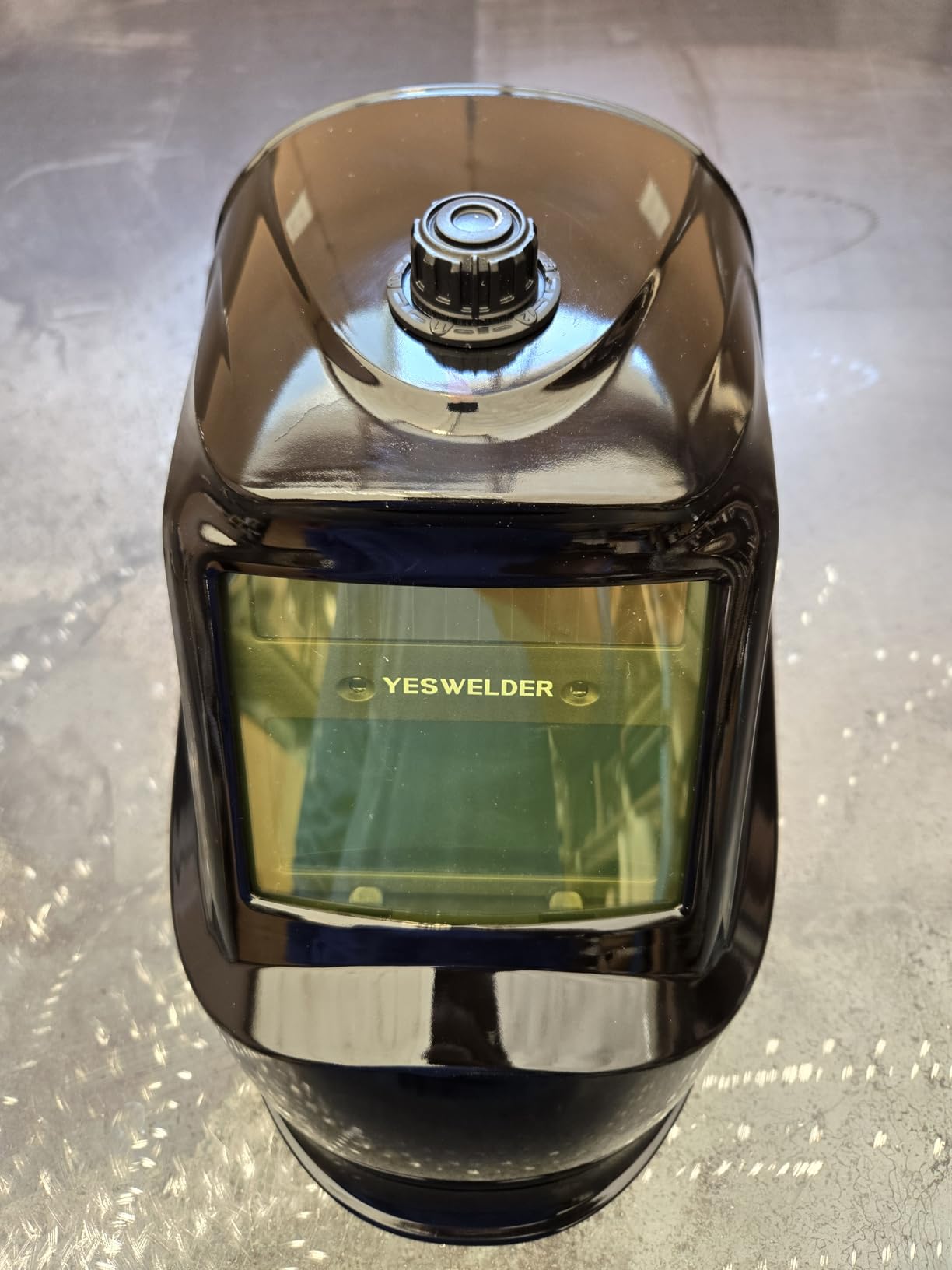
The catch is sensor count. Two arc sensors is below what we consider the floor for reliable low-amp TIG, and it is the one specification that would stop us recommending it for thin material or a lot of tacking. For structural work in the 60 to 150 amp range, it holds up fine.
Reviewers do mention the occasional coin battery arriving dead or misinstalled, so check the compartment before your first arc. The shell and headgear also read as light duty, which is exactly what you would expect at this tier and worth factoring in if you grind a lot.
What decides it for you
Choose it if you TIG occasionally, you are on thin or clean material, and you want true color optics without a large invoice. The solar panel plus replaceable CR2450 battery also means the lens is not dead the first time you weld somewhere dark.
It ships with two outer replacement lenses, an inner lens, a spare battery and a bag, so the consumables question is handled for the first year.
When it is the wrong call
Two sensors is the wrong number if your work lives below about 20 amps or involves heavy fit-up with constant arc restarts. The small 3.64 by 1.67 inch window also makes torch angle and filler rod work feel cramped once you are used to a larger lens.
For a fabricator welding eight hours a day, the light duty shell is the deciding factor. Buy the next tier up for something that survives being dropped off a scaffold.
3. Hobart 770890 – Best for Frequent Weld to Grind Switching
Hobart 770890 Auto-Darkening Welding Helmet, Large, Black
4 arc sensors
PureColor optics
9.3 inch widescreen view
1.25 pounds
Pros
- Four independent arc sensors give dependable low current detection
- PureColor lens renders the puddle with accurate color
- One knob analog control of shade sensitivity and delay
- Seamless weld to grind mode change in the same helmet
- Auto on auto off at arc strike for continuous UV and IR protection
Cons
- Analog controls are less precise than a digital interface
- Limited 2 year manufacturer warranty
- 1.25 pounds is heavier than the lightest shells here
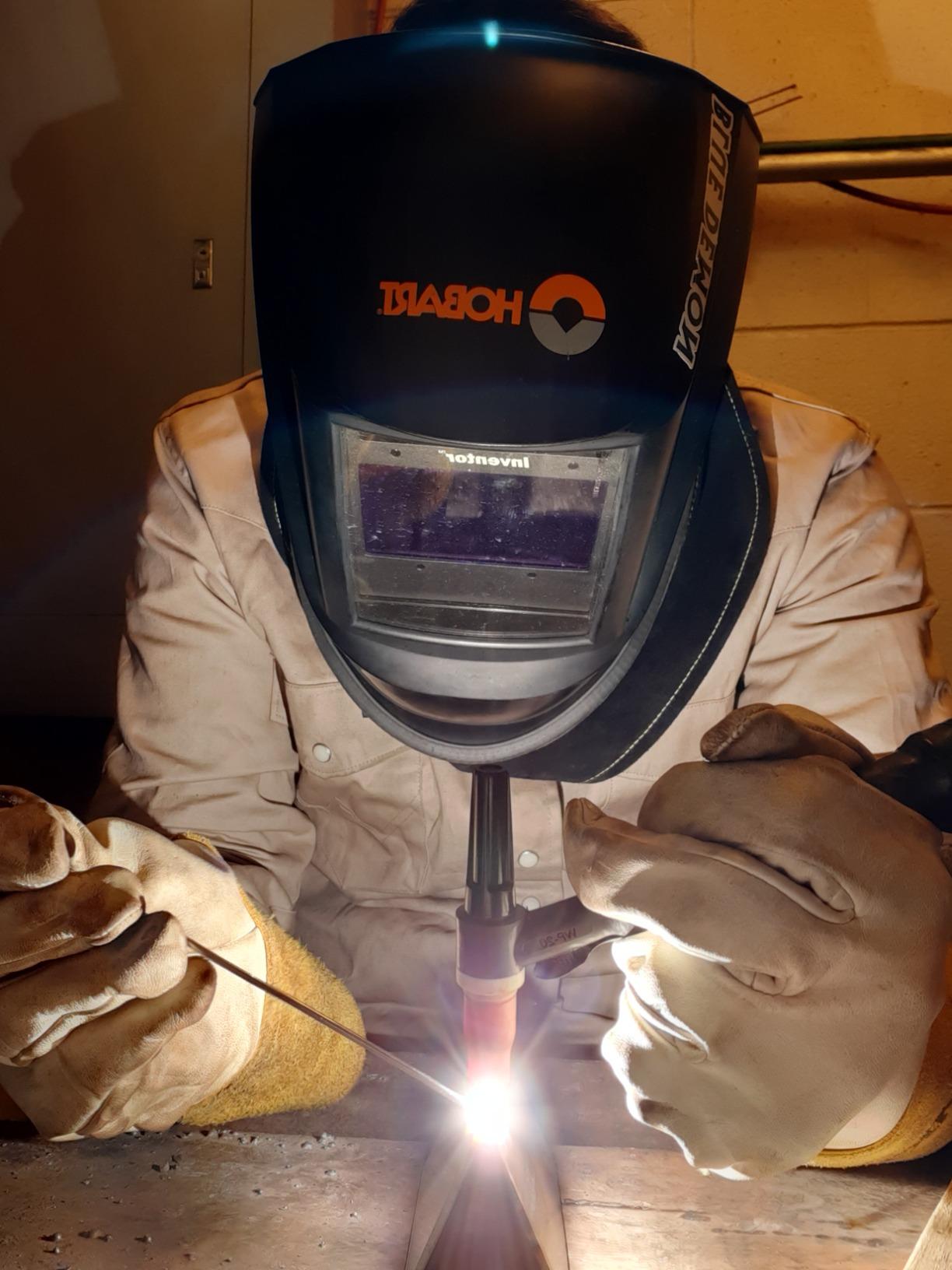
Four independent arc sensors is the number we look for on a TIG hood, and the Hobart 770890 has it alongside a 9.3 inch widescreen view. Owner reviews single out dependable arc detection and a color-accurate view of the puddle, which is exactly the pairing you want when reading a weld on stainless or aluminum.
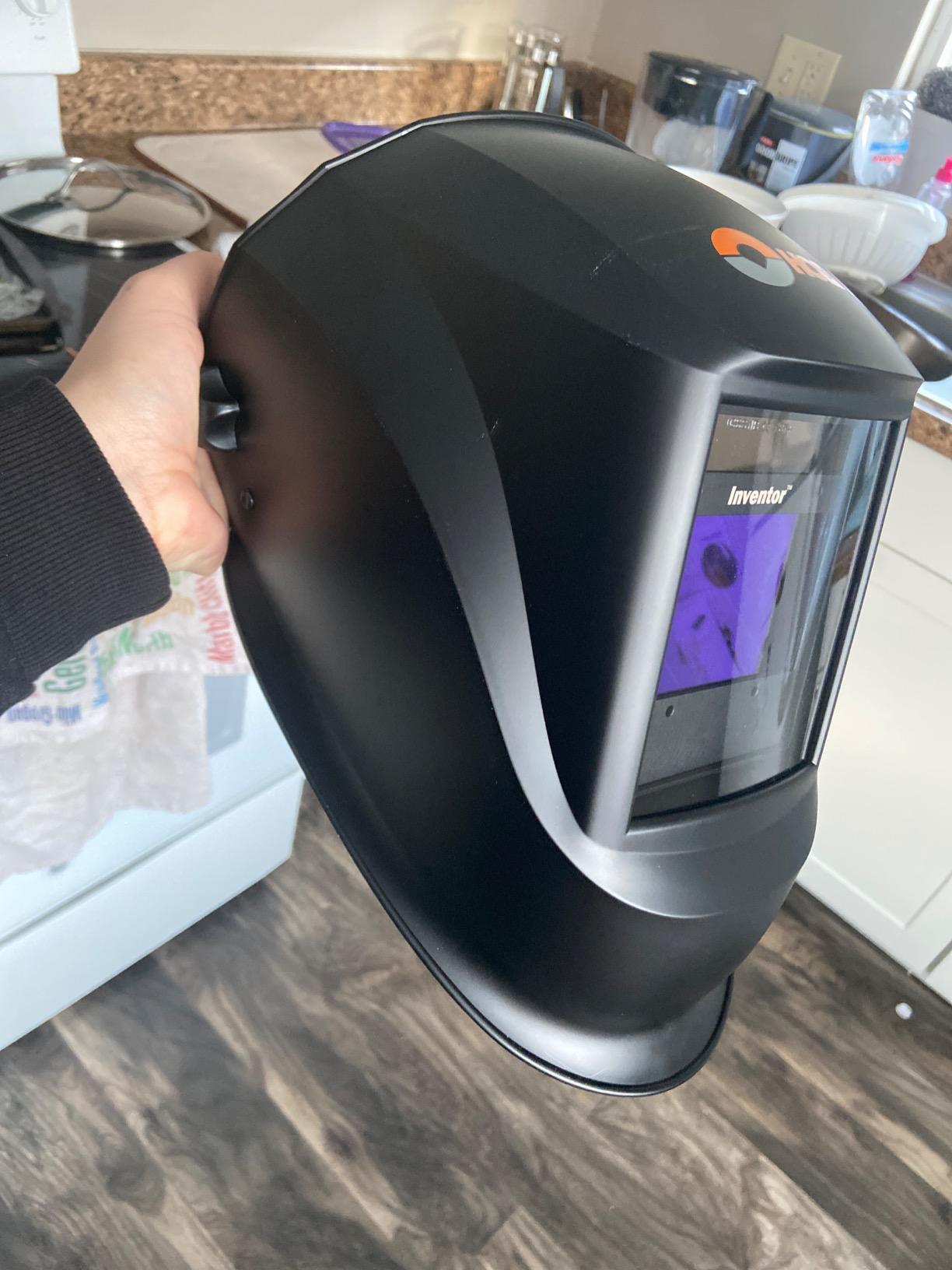
The single knob analog control is genuinely simpler than a digital interface. You turn it to shade, you turn it again for sensitivity, once more for delay, and there is no menu to learn. For a welder who does not want to fiddle, that is a feature rather than a compromise.
Auto on auto off power control means the filter activates at arc strike, so the lens is protecting you before the arc reaches full intensity. The catch is a 2 year warranty, which is thin next to the 5 year term on the Lincoln, plus analog controls that will never give you the fine shade steps a touchscreen can.
What decides it for you
Four sensors plus a genuinely wide view makes this the pick for anyone who alternates between welding and grinding without changing hoods. The weld to grind mode switch is seamless, and the protective lens kit is included in the box.
It is also a reasonable first shop-standard helmet. The auto on behavior and the continuous UV and IR filtering remove a class of mistakes beginners make.
When it is the wrong call
If you need precise control of shade in small increments, analog will frustrate you, especially for thin aluminum where you are stepping between shades constantly. There is no memory preset here either, so repeat jobs mean repeat setup.
Long-term buyers should weigh the 2 year warranty against the field. A polyamide nylon shell is durable but it is not going to absorb drops the way a heavier professional housing does.
4. Miller Classic ClearLight – Best for Stainless and Cut Work
Miller Classic Series Welding Helmet, ClearLight™, Shade 8-13, Black
ClearLight optics
Shades 8-13 plus cut 5-8
1/23000s switching
6 square inch view
Pros
- ClearLight lens technology with high definition optics
- Variable shade 8-13 with cut shades 5-8 and grind shade 3
- Digital shade delay and sensitivity controls
- 3.0 light state for hood down work between welds
- Meets ANSI Z87.1+ CSA and CE with a 3 year warranty
Cons
- Only 2 arc sensors so low amp TIG is less reliable
- 6 square inch viewing area is small for detailed layout work
- Light state cannot go below shade 8 which limits very low amperage work
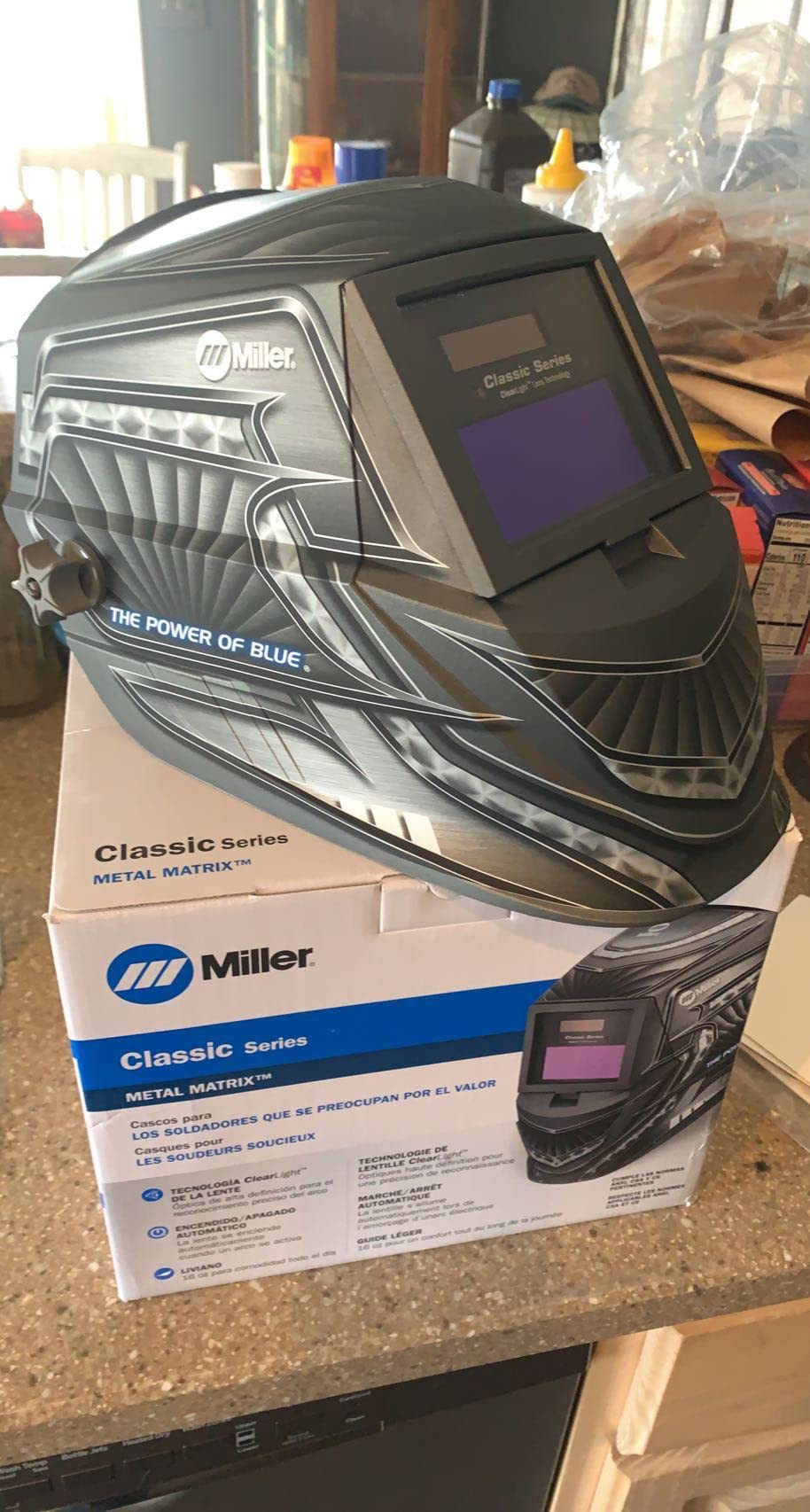
ClearLight optics are the reason to like this hood. Reviews describe crisp, high definition views of the arc and the puddle, and that clarity shows up most on stainless where you are watching the heat tint change color as you work back.
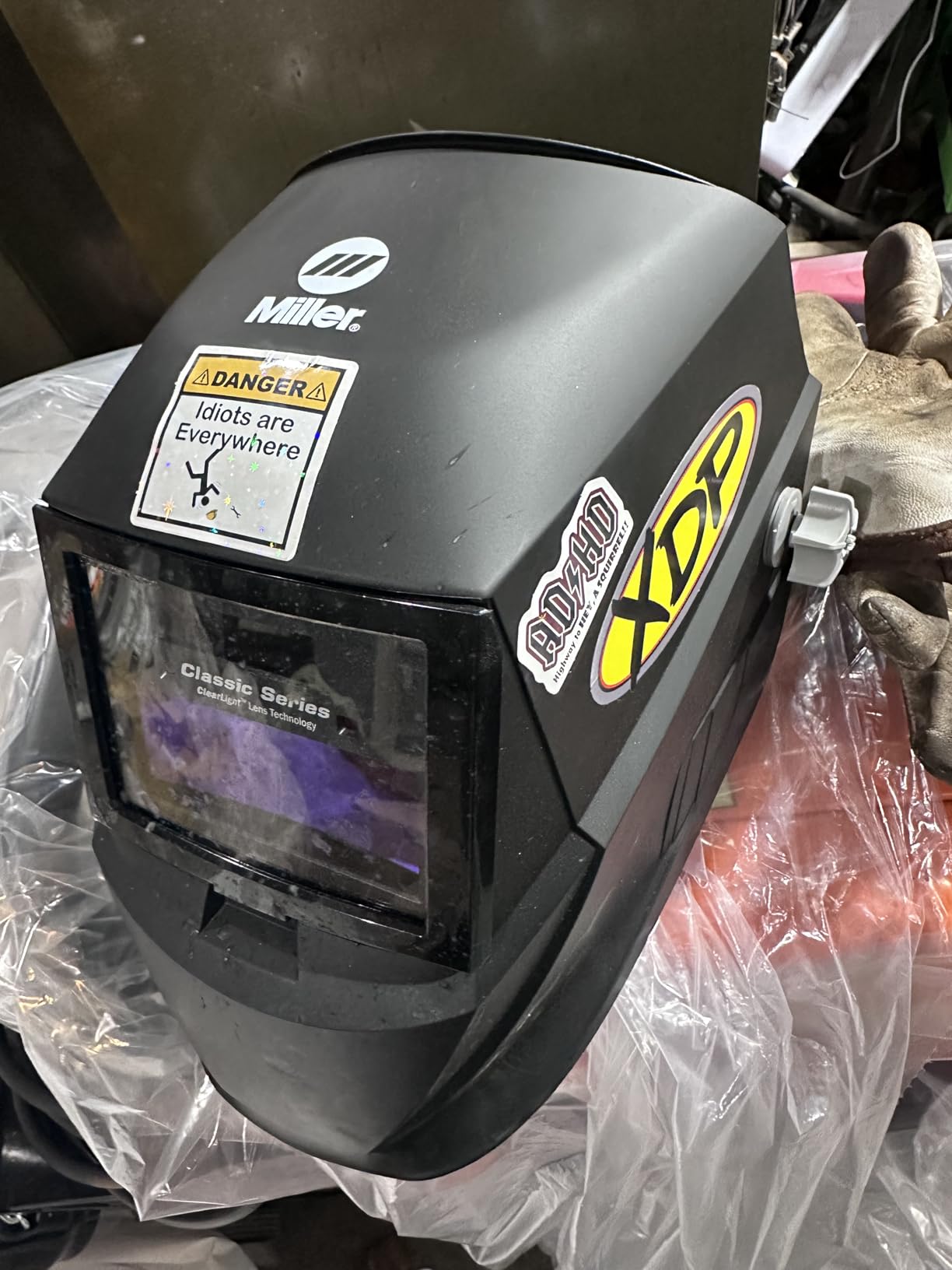
The shade range is unusually useful beyond welding alone. Shade 8-13 for welding, cut shades 5-8, and a dedicated grind shade 3 mean one hood covers a lot of shop tasks without swapping to a separate cutting mask.
Two arc sensors is the drawback, and owners say so directly. With the sensitivity turned up it will still catch a low current TIG arc, but a helmet with four sensors is more predictable when the arc is faint and your head is not square to it. The light state cannot drop below shade 8, which makes precision work below about 15 amps harder to see.
What decides it for you
Pick it if stainless TIG is your main process, you cut and grind as often as you weld, and you want digital shade control without a premium tier price. Ratchet headgear is straightforward to set once and stays put.
ANSI Z87.1+, CSA and CE certification with a 3 year warranty is a solid baseline for a mixed shop.
When it is the wrong call
Do not choose it for delicate thin material TIG. Two sensors plus a shade 8 floor is the wrong combination when you are chasing a puddle at 5 amps and trying to see whether it is about to blow through.
The 6 square inch viewing area is also the most compact here, so if you are used to a large lens it will feel restrictive for layout work or for holding two pieces in alignment.
5. Jackson Safety Insight – Best for Long TIG Sessions
Jackson Safety Insight Auto Darkening Welding Helmet, ADF Hood – ANSI Z87.1
6 ounce HLX shell
4 arc sensors
True color shades 9-13
3.94 by 2.36 inch view
Pros
- Six ounce HLX shell noticeably reduces neck fatigue
- Four arc sensors for reliable detection
- True color optics at 1/1/1/1 clarity
- Digital sensitivity and delay with weld torch and grind modes
- Patented 370 Speed Dial ratcheting headgear
- Uses standard 4 1/2 by 5 1/4 clear cover lenses
Cons
- Light state is dimmer than ideal in a brightly lit shop
- Sensitivity can be over-reactive around highly reflective metal
- Modest 3.94 by 2.36 inch viewing area for layout work
Six ounces is the headline number here, and it is the reason this hood earns a place in a TIG list. Neck strain accumulates quietly across a shift, and the lightest shell we reviewed is the one that lets you finish the day without thinking about your neck. The 370 Speed Dial ratcheting headgear and Qwik-Fit rear band spread what little weight there is.
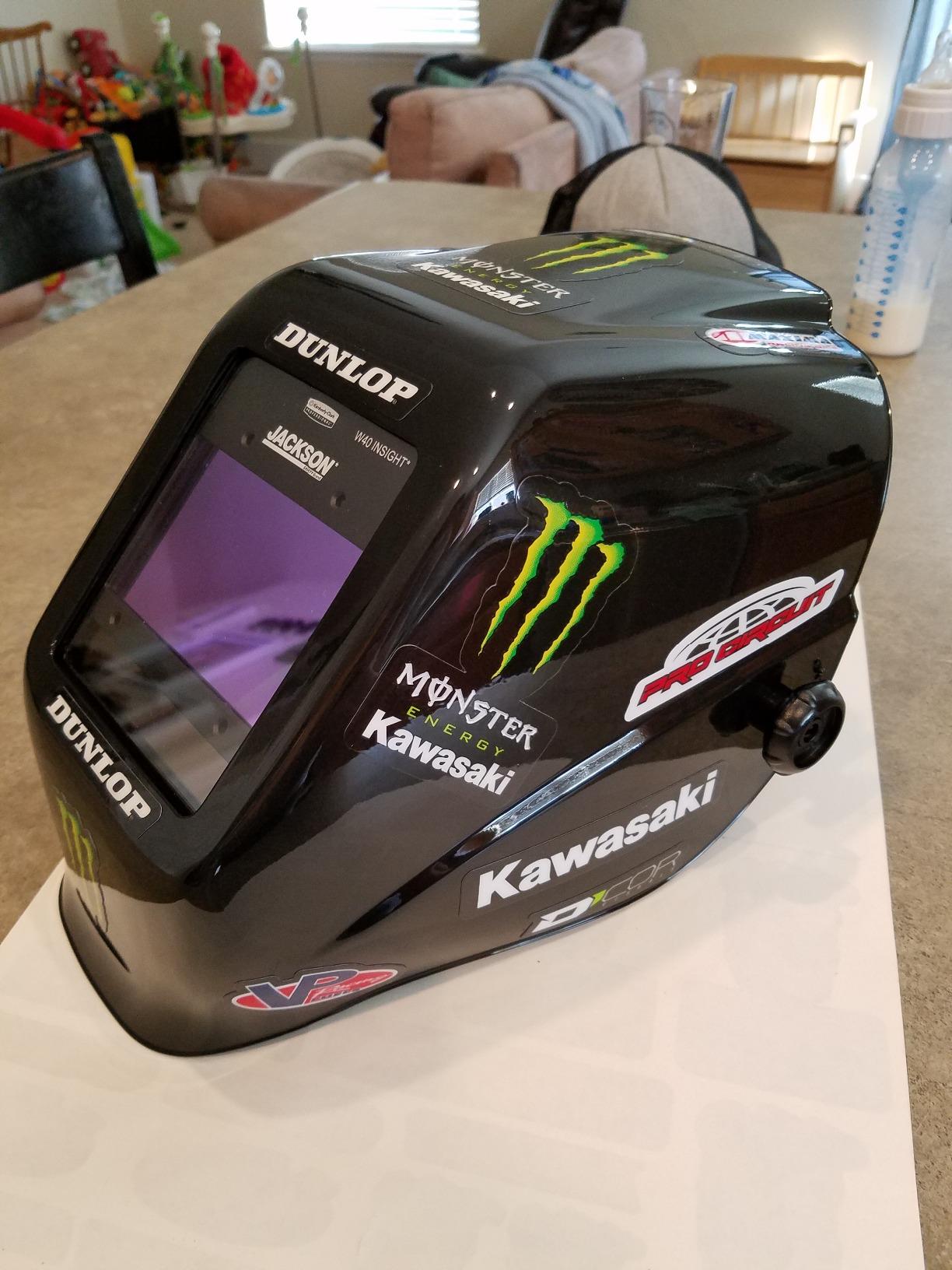
Optically you get 1/1/1/1 true color clarity across a 3.94 by 2.36 inch window, with variable shades 9 to 13 and separate weld, torch and grind modes. Four arc sensors give you the low-amp headroom we look for, and reviewers often mention durability over several years of service.
Two things come up repeatedly in reviews. The light state is dim in a brightly lit shop, which means a lot of neck-craning between welds, and the sensitivity control can be over-reactive when you are near highly reflective metal, causing a false darkening.
What decides it for you
Choose it if you are welding long shifts, doing a lot of overhead or structural work, and you already have a sensitivity dial you know how to set. Standard cover lens sizing means consumables are cheap and easy to find anywhere.
It also suits anyone who welds in a bright shop, since a dim light state is much less of a problem outdoors or near an open door.
When it is the wrong call
If your work is mostly fine layout and puddle inspection in a well-lit indoor shop, the dim light state will tire your eyes faster than a heavier hood would. The viewing area is modest too, so it is not the choice for a fabricator who spends time setting up joint geometry.
You will also want to spend a few minutes on sensitivity rather than leaving it at the default, given how often reviewers report false triggers around polished stock.
6. ARCCAPTAIN HSH-S800 – Best Value for First-Time TIG
ARCCAPTAIN Welding Helmet Auto Darkening, 1/25000s Response, Shade 4/9-13
1/25000s switching
4 arc sensors
1/1/1/1 true color
1 lb shell
Pros
- Four arc sensors at 1/25000 second response is a rare spec for the price
- 1/1/1/1 clarity with true color technology
- Padded adjustable headband stays comfortable
- Replaceable CR2450 battery plus solar
- Cheater and magnifying lens compatible
- Certified to ANSI Z87.1 EN 379 and CSA Z94.3
Cons
- A minority of helmets report slow response and an initial arc flash
- Some stopped working correctly after a few months
- Only a 180 day warranty
Four arc sensors and a 1/25000 second switching speed in a helmet at the entry price band is the surprise of this list. On paper that specification set is exactly what we told you to look for for TIG, and the 1/1/1/1 true color claim means puddle color reads naturally rather than as flat grey.
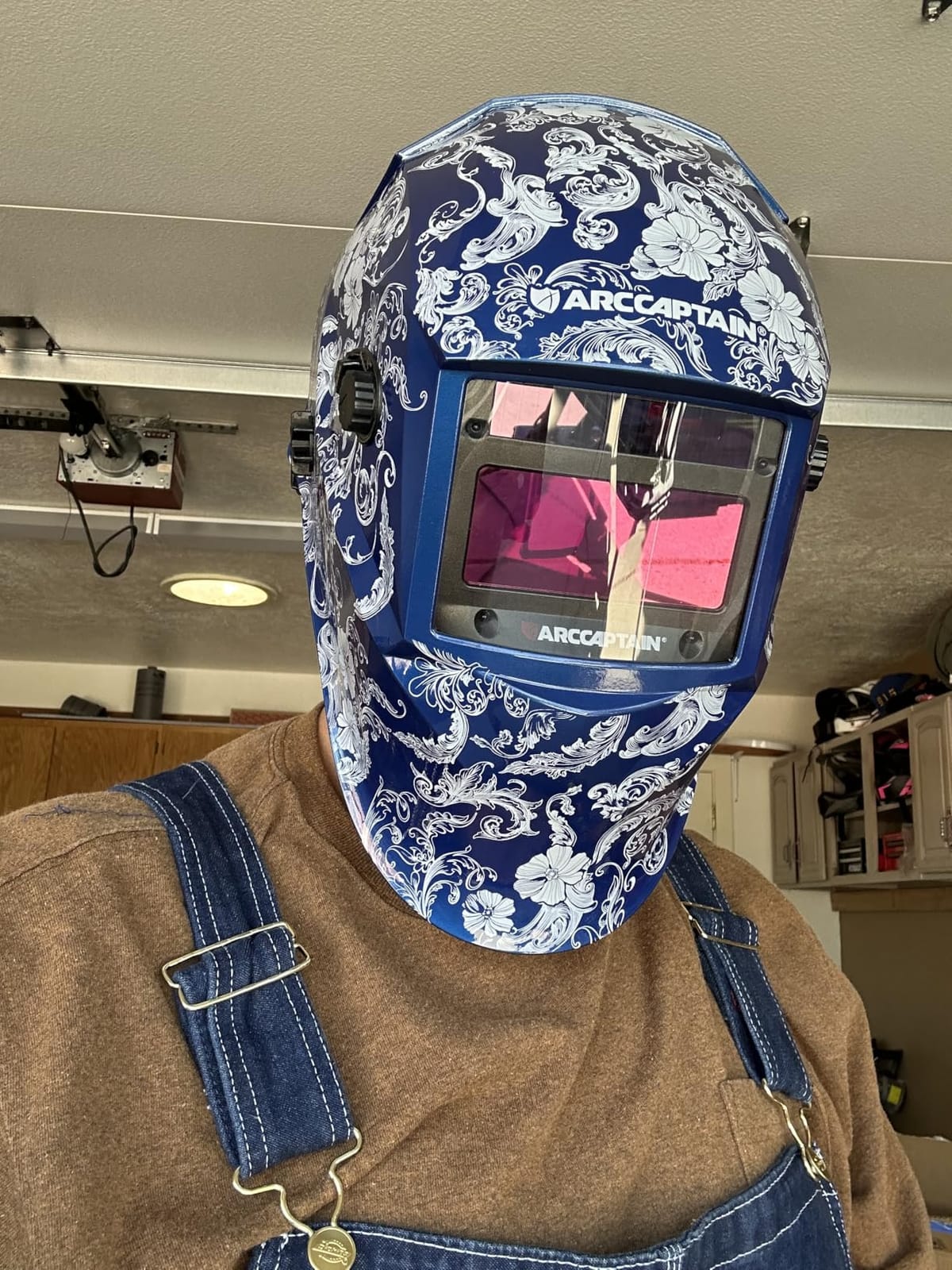
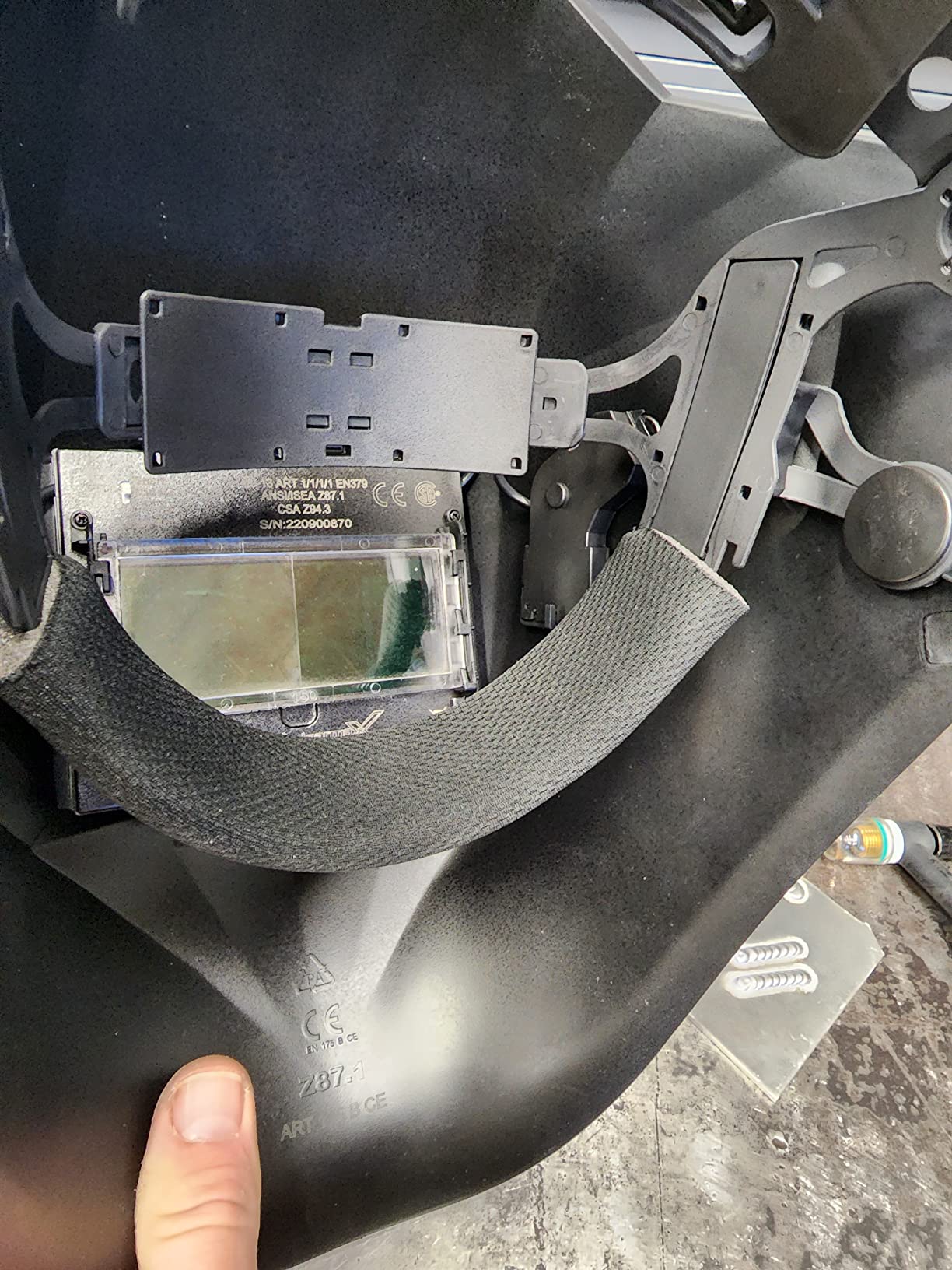
The dark state is shade 4/9-13 with a 12-in-1 smart filter rated to DIN 16 for UV and IR, and the shell is a 1 lb PA body with a breathable padded headband. Three replacement lenses come in the box, which is generous at this level.
The reliability story is the concern. A minority of owners report slow response and a visible flash at arc start, and some report the helmet stopping working correctly after a few months of use. The 180 day warranty is short enough that a failure in month four is a real possibility.
What decides it for you
Pick it if you are buying a first helmet, welding intermittently, and you want four sensors and true color optics without a large outlay. Certification to ANSI Z87.1, EN 379 and CSA Z94.3 means it is a legitimate piece of protective equipment.
Magnifying lens compatibility also makes it a decent partner for a welder who already owns prescription inserts for close work.
When it is the wrong call
Skip it for a professional shop. Durability complaints and a half-year warranty are the wrong combination when the helmet is on your head eight hours a day, and reported early failures are the reason we rank it below the similarly priced alternatives on this list.
If your work is mostly low amperage, the reported initial arc flash is the specific problem you were trying to avoid by reading this page. The four-sensor spec is good; the consistency is not guaranteed.
7. YESWELDER BW-10MAXTRI – Most Versatile for Panoramic View
YESWELDER Auto-Shade Welding Helmet, Internal Digital Control, 180° View
5 arc sensors
180 degree 8.89 by 3.23 inch view
Internal digital display
1/30000s
Pros
- Five arc sensors with 1/30000s auto darkening
- 180 degree panoramic view with 1/1/1/1 true color
- Internal digital display for precise shade sensitivity and delay
- Auto adjustment tunes settings to arc brightness
- Gradient control smooths the transition between light and dark
Cons
- Shell quality is basic for the price
- Headband can arrive misshapen with average comfort
- Some color distortion reported in the light state
- Replacement inner cover lenses not sold separately
The widest lens in this roundup belongs to the BW-10MAXTRI, at 8.89 by 3.23 inches covering roughly 180 degrees. Five arc sensors and 1/30000 second darkening put the electronics firmly in the top tier, and the 1/1/1/1 true color rating is backed by reviews that describe the puddle as unusually easy to read.
What makes it interesting for TIG specifically is the internal digital display. You set shade, sensitivity and delay from inside the shell with a replaceable lithium battery, which means you can change settings without taking the helmet off and losing your arc reference. The intelligent auto-adjustment also tunes the settings to arc brightness, which helps when you move between tacking and full bead.
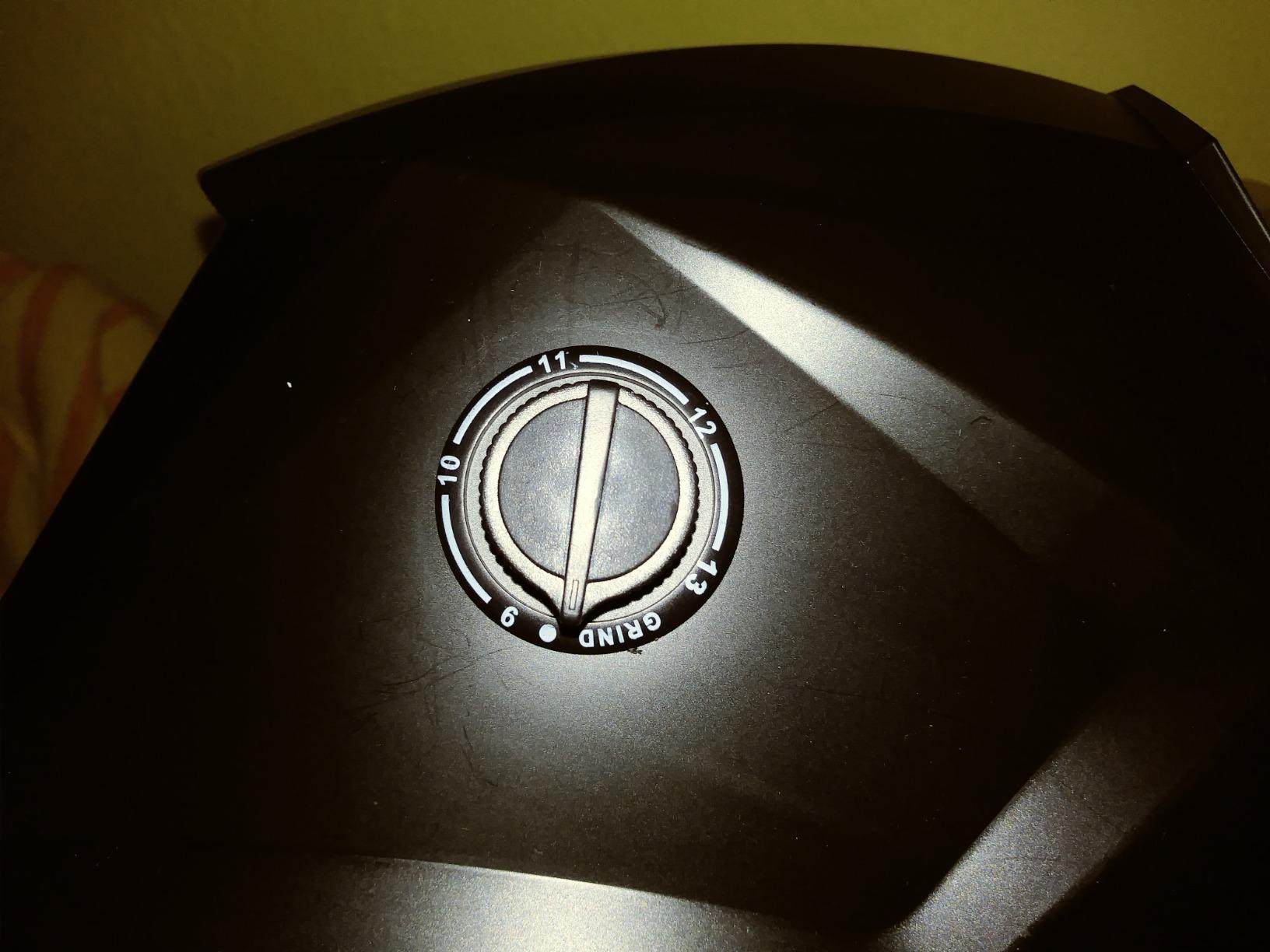
The shade range runs 3/4-8/9-14 with separate modes for MIG, TIG, stick, tack, grind and cut. Including a dedicated tack mode is a nice touch for fit-up work, and gradient control smooths the transition out of light state so the view does not snap.
What decides it for you
This is the one to pick if your TIG work is pipe work, walk the cup passes, or anything where you need to see around the torch without moving your head. Five sensors and a 1/30000 second response give you the best low-amp headroom in the group.
It also makes a strong backup hood or a loaner for an apprentice, because the internal controls are easier to reset than most menu-driven interfaces.
When it is the wrong call
Weight and build are the issue. At close to 2.8 pounds it is the heaviest helmet here, and reviewers describe the shell as basic plus the headband as average, which is a poor pairing for an eight hour shift. If neck comfort is your main criterion, the Jackson at six ounces wins outright.
Some owners also report a green tint in the light state, and the manufacturer does not sell replacement inner cover lenses on their own, so a scratched insert means a service visit.
8. TOOLIOM TL-31800H – Best for Multi-Mode Shop Work
TOOLIOM Auto-Darkening True Color Welding Helmet with 3.94 x 3.66 View
14.4 square inch view
4 arc sensors
1/30000s response
DIN 3 light state
Pros
- Largest viewing area on the list at 3.94 by 3.66 inches
- 1/1/1/1 optical class with a true color filter
- DIN 3 light state gives a bright hood down view
- 1/30000 second auto darkening with weld cut and grind modes
- Replaceable lithium battery plus dual solar power
- Breathable sweat absorbing headgear with multiple adjustment joints
Cons
- Plastic shell is light duty next to professional metal shell helmets
- Heavier at roughly 2.3 pounds than most compact models
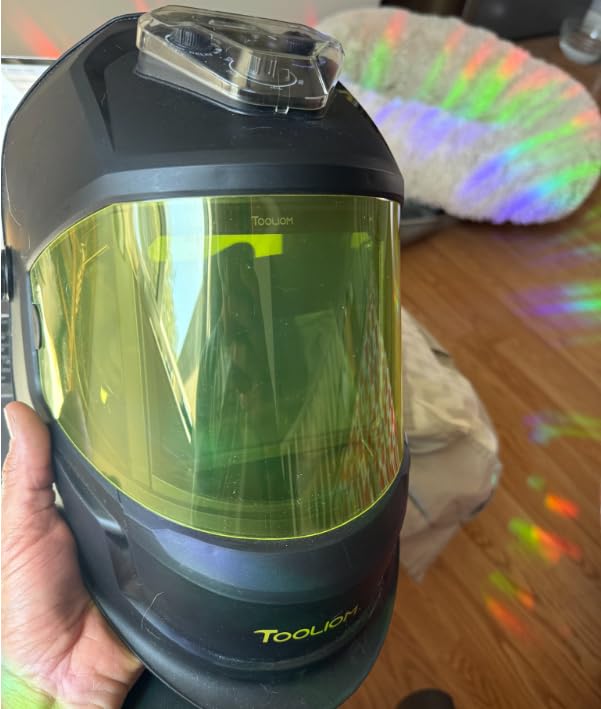
The 3.94 by 3.66 inch window works out to 14.4 square inches, which is the largest viewing area in this roundup, and four arc sensors feed a 1/30000 second auto-darkening response. The DIN 3 light state is the detail TIG welders will appreciate most, because it lets you see the joint clearly between tacks instead of lifting the hood.
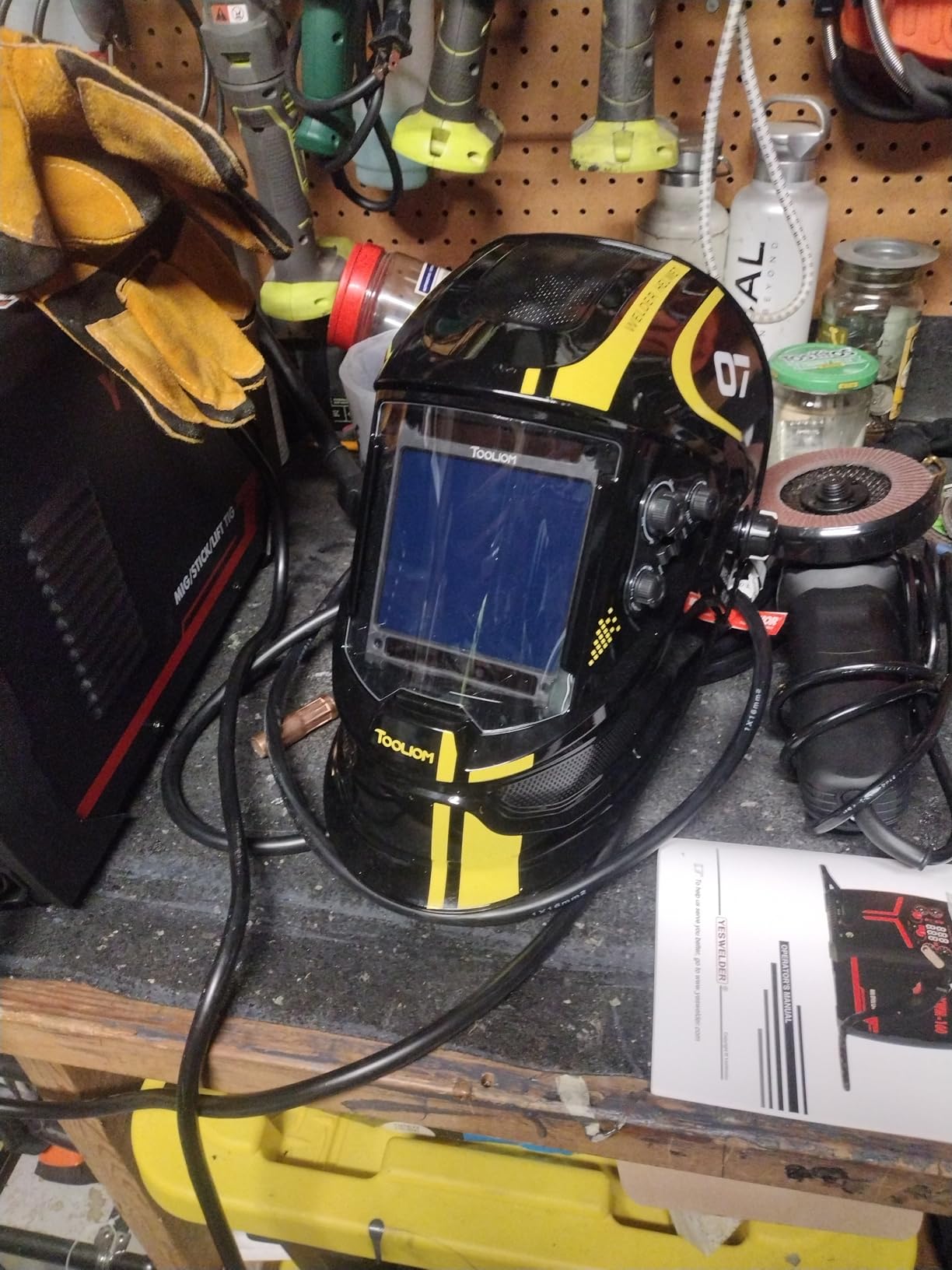
Dark state runs 5-9 and 9-13 with a true color filter at 1/1/1/1 optical class, and there are separate weld, cut and grind modes. Power is dual, with a replaceable lithium battery plus solar, which is the setup we prefer for a shop that sometimes runs dim.
The headgear takes multiple adjustment points and is described as breathable and sweat absorbing, which matters given the weight. The trade is construction: this is a plastic shell, and reviewers compare it unfavourably to professional metal shell helmets on durability alone.
What decides it for you
Choose it if seeing more of the workpiece matters more to you than shell longevity. A 14.4 square inch view with a bright DIN 3 light state is genuinely useful for layout, fit-up and any TIG bead where you want to see the joint without moving the helmet.
It is also a strong first shop hood, since the box includes two outer protective lenses, an inner lens, a spare battery and the manual.
When it is the wrong call
At roughly 2.3 pounds this is one of the heavier shells in the group, and combined with a plastic housing it is not the right helmet for a fabricator who drops tools. The weight sits on your neck from the first hour.
If your second process is heavy cutting or grinding all day, the lighter shells will serve you better over a full rotation.
Setting Up Your Helmet for TIG
Most low-amp TIG complaints are setup problems rather than hardware problems. Work through this sequence before you decide a helmet is faulty.
1. Set sensitivity to maximum
Start at the highest sensitivity setting and back it off only if the lens darkens on nothing. On a Jackson or Hobart that means almost maximum, and it is why those two tolerate faint arcs better. The tradeoff is false darkening near reflective metal, so a slow adjustment in a real welding position beats a binary guess.
2. Work down the shade ladder by amperage
Thin material TIG generally wants shade 8 or 9, mid range work on steel sits around shade 10 to 11, and stainless or aluminum above 150 amps pushes toward shade 12 to 13. Aluminum reflects more light and throws more glare, so bias one shade darker than the chart suggests until the puddle reads clearly.
3. Shorten the delay
Delay controls how long the lens stays dark after the arc stops. A long delay means you finish one pass and lift to a black lens, which wrecks fit-up work and makes tacking miserable. Pull the delay down toward its minimum for TIG and only extend it for cutting or grinding where you want the extra protection during repositioning.
4. Keep the cover lens clean
A scratched or hazed outer cover lens does more than look bad. It scatters light, reduces effective contrast, and makes a small arc harder for the sensors to read. Wipe it with a dry cloth at the start of a shift and replace it when it clouds rather than waiting for it to fail.
The Passive Fixed-Shade Alternative
Yes, you can TIG in a fixed-shade 10 passive hood, and plenty of production shops do it every day without problems. The trade is real though. You are committed to one shade regardless of the arc, so you either under-protect on thin work or over-darken on thick plate, and you have no way to see before the arc strikes.
The sensible use is repetitive TIG on one material and one thickness, where a good welder learns the arc without visual feedback. For fit-up, tacking, thin material or anything where you need to check the joint, an auto-darkening helmet is the safer and far more productive choice. A shade 10 passive hood also makes a cheap shop backup for grinding and fitting.
How to Choose a Welding Helmet for TIG
Match the helmet to your amperage range
The most important question is what the lowest amperage you regularly run is. Below about 20 amps you need four sensors, a light state below shade 8 and as fine a switching speed as you can get. Between 60 and 150 amps, two sensors is usually survivable and you can spend your budget on optics and headgear instead.
Decide the second process before you buy
If you also run stick at 30 amps or plasma cutting, prioritise a wide dark state and cut shades over a small viewing area. A hood with weld shades 8-13 and cut shades 5-8 covers far more than one optimised purely for TIG, and most people switch processes far more often than they change helmets.
Do not over-weight sensor count
Five sensors are not automatically better than four. What matters more is whether the manufacturer publishes a minimum amperage, and whether the sensitivity control gives you a usable range. Almost nobody publishes the number, which is why reading owner reports about flicker at low current is the most honest test available.
Think about hour seven, not hour one
A helmet that feels great in the shop can be a problem by late afternoon. Weight, headgear adjustment range and whether the headband digs in are all things you cannot evaluate in a five minute try-on. The lightest shell we reviewed is six ounces, and the heaviest is nearly three pounds, which is a very different day at the end of a shift.
Check the consumables before the helmet
Look at what inner and outer cover lenses the model takes and whether the manufacturer sells them separately. A proprietary insert turns a fifty cent part into a service visit, and over a few years that is a real running cost that most spec sheets never mention.
Frequently Asked Questions
What is the best helmet setting for TIG welding?
Set sensitivity near maximum, drop delay to its shortest setting, and start at shade 8 to 9 for thin material, shade 10 to 11 for mid range steel work, and shade 12 to 13 for stainless or aluminum above 150 amps. Use a dedicated tack mode during fit-up so the lens does not stay dark between arc starts.
What switching speed do I need for TIG welding?
At least 1/20,000 second, and faster is better. Below 1/10,000 second the lens feels laggy on arc start, which matters most at low amperage where the arc ramps up slowly. Among the eight helmets here, published switching speeds run from 1/23,000 second to 1/30,000 second.
How many arc sensors do I need for TIG?
Four independent sensors is the sensible minimum for TIG, and five is better still. Two sensors can still catch a mid range arc but is less reliable on thin material and heavy tacking. Sensor count alone is not decisive, so check the sensitivity range and owner reports about low amperage flicker.
Can I use a passive fixed shade helmet for TIG?
Yes, for repetitive work on a single material and thickness where a good welder can weld without visual feedback. It is a poor choice for fit-up, tacking, thin material or aluminum, because you cannot check the joint between arcs and you have no protection until the arc strikes. It also makes a cheap backup for grinding.
What shade should I use for TIG welding?
Shade 8 to 9 for thin material and low amperage, shade 10 to 11 for general steel work in the 60 to 150 amp range, and shade 12 to 13 for stainless or aluminum at higher amperage. Aluminum reflects more light, so bias one shade darker than the chart suggests until the puddle reads clearly.
Are solar powered welding helmets reliable in a dark shop?
The solar cell charges from the arc itself, so a helmet used regularly will stay powered. In a dim shop or for occasional work, keep the replaceable battery as a backup, which is why models with both solar and a user-replaceable cell are safer choices than sealed units.
Does a larger viewing area make a welding helmet heavier?
Not always, but usually a little. The shell, battery and headgear drive most of the weight, and a bigger lens adds some of it. In this roundup the lightest shell is six ounces and the heaviest is close to three pounds, so comfort over a long shift depends far more on the helmet design than on the window size.
What amperage should a TIG welding helmet handle?
For hobby and light fabrication work, 5 amps is a realistic floor. Heavy tacking and thin material work should start at 20 amps, while structural and pipe work commonly runs 60 to 150 amps. Very few manufacturers publish a minimum detectable amperage, so look for four sensors and owner reports about low current flicker instead.
Conclusion
The Lincoln Electric VIKING 3350 is the best welding helmet for TIG welding overall, because 4C optics, a 12.5 square inch viewing area and reliable low-amp detection add up to the least amount of guesswork in a full day of work. For anyone buying a first helmet on a tight budget, the YESWELDER LYG-L600A gives you true color optics and a fast lens for very little, with two sensors as the compromise to accept.
Go with the Hobart 770890 if you alternate between welding and grinding constantly, the Jackson Safety Insight if neck comfort decides your day, and the YESWELDER BW-10MAXTRI if pipe work and seeing around the torch matter more than shell weight.
Whichever one you pick, spend twenty minutes on the setup before you judge it. Sensitivity to maximum, a short delay and a clean cover lens will do more for your TIG work than any spec on the sheet. Re-check the list in 2026 if you are still comparing, and weigh the helmet at the end of a long day rather than at the counter.