
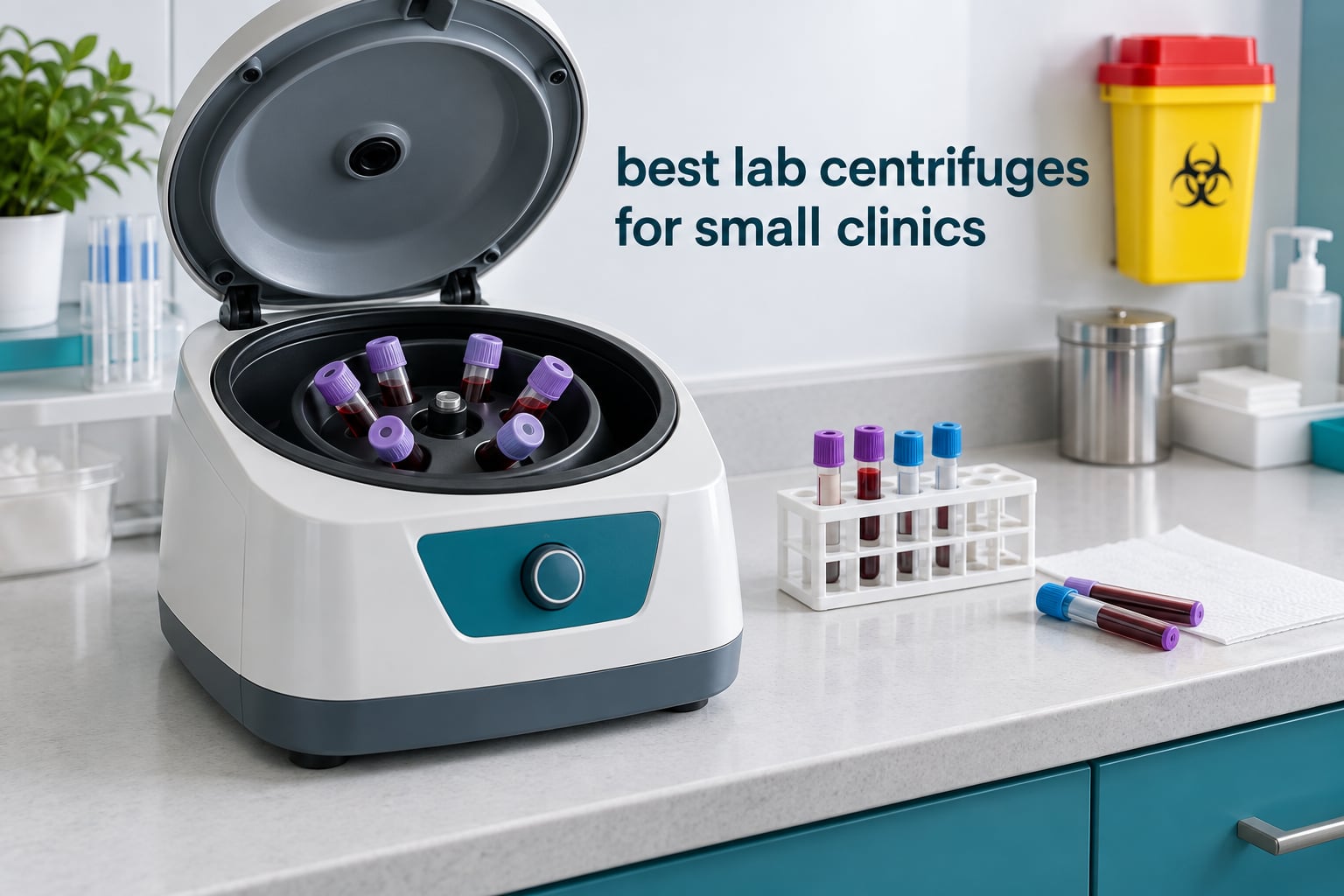
A clinic centrifuge does one job well: it spins blood collection tubes at a controlled force so cells drop to the bottom and plasma or serum stays on top, separated cleanly enough that your result does not depend on who loaded the rotor that morning. The single number that matters is RCF, relative centrifugal force, expressed in times gravity (x g) — not RPM, which tells you nothing without knowing the rotor radius. Every pick below is judged on RCF, rotor type, tube fit, bench footprint, noise, control simplicity and what it will cost you to own for five to ten years. This is our 2026 guide to the best lab centrifuges for small clinics, written for practices running roughly 5 to 50 patient draws a day.
Before the picks, a note on scope. If you send every specimen to a reference lab, you may not need a centrifuge at all. But if you run point-of-care hematocrit, coagulation, PRP preparation, urine sediment, or any in-house chemistry, having a machine on the bench is what makes those results reproducible rather than dependent on hand-spinning technique. Everything here is a benchtop clinical centrifuge, not a research microcentrifuge, except where a microtube unit is called out as a deliberate second-machine choice.
Always follow your facility SOP and the manufacturer instructions for use. Spin time and target force for any specific assay belong to your validated protocol and the instructions for the tubes you are using, not to us.
Table of Contents
Top 3 Picks for Small Clinic Centrifuges in 2026
ONiLAB 6x15ml PRP Centrifuge
- Quiet at 56 dB or below
- Shows speed in RPM and g-force
- Two stored programs
- 6 x 15/10/7/1.5-5 mL via adaptors

SUPER DEAL 4000 RPM Centrifuge
- Proven over 1370 reviews
- 6 x 20 mL capacity
- 0-60 minute timer
- Compact 11.8 inch footprint

Microyn MT-Spinplus-6
- Highest RCF here at 3074xg
- 6 x 15 or 10 mL tubes
- Short-spin button
- Lid-lock interlock
The ONiLAB 6x15ml takes the top slot because quiet operation, a dual RPM and g-force readout, and a cast-iron base matter more in a small clinic than raw speed. The SUPER DEAL 4000 RPM unit is the most proven machine in the set with 1370 reviews behind it, and the Microyn MT-Spinplus-6 wins on force at 3074xg, which is what you want if your protocol is PRP-heavy.
All 10 Best Lab Centrifuges for Small Clinics in 2026
| Product | Specifications | Action |
|---|---|---|
| ONiLAB PRP Centrifuge 6x15ml |
|
Check Latest Price |
| SUPER DEAL Electric Lab Centrifuge 4000 RPM |
|
Check Latest Price |
| Microyn MT-Spinplus-6 Digital Benchtop |
|
Check Latest Price |
 ONiLAB PRP Centrifuge 8x15ml ONiLAB PRP Centrifuge 8x15ml |
|
Check Latest Price |
 JIAWANSHUN 8x20mL PRP Centrifuge JIAWANSHUN 8x20mL PRP Centrifuge |
|
Check Latest Price |
 LAB FISH LC-400 PRP Centrifuge LAB FISH LC-400 PRP Centrifuge |
|
Check Latest Price |
 Mxmoonant 900-1 Lab Benchtop Mxmoonant 900-1 Lab Benchtop |
|
Check Latest Price |
 ONiLAB Mini Centrifuge D1008 ONiLAB Mini Centrifuge D1008 |
|
Check Latest Price |
 CGOLDENWALL 80-2 Desktop Centrifuge CGOLDENWALL 80-2 Desktop Centrifuge |
|
Check Latest Price |
 NEWTRY 800D Electric Centrifuge NEWTRY 800D Electric Centrifuge |
|
Check Latest Price |
1. ONiLAB PRP Centrifuge 6x15ml – The Quiet Clinic All-Rounder
ONiLAB Lab PRP Centrifuge, 6X15ml/10ml/7ml/1.5-5ml, 300-5000RPM, Max 2600×g
Max 2600xg
6 x 15/10/7/1.5-5 mL via adaptors
RPM and g-force display
Noise 56 dB or below
Pros
- Quiet enough to sit near a phlebotomy chair
- Shows both RPM and g-force for protocol matching
- Cast-iron base and suction feet keep vibration low
- Two stored programs cut setup time
- Responsive support on faulty adapters
Cons
- Fixed-angle rotor with no swing-out option
- Only two stored programs
- Packaging foam was found inside the chamber on one machine
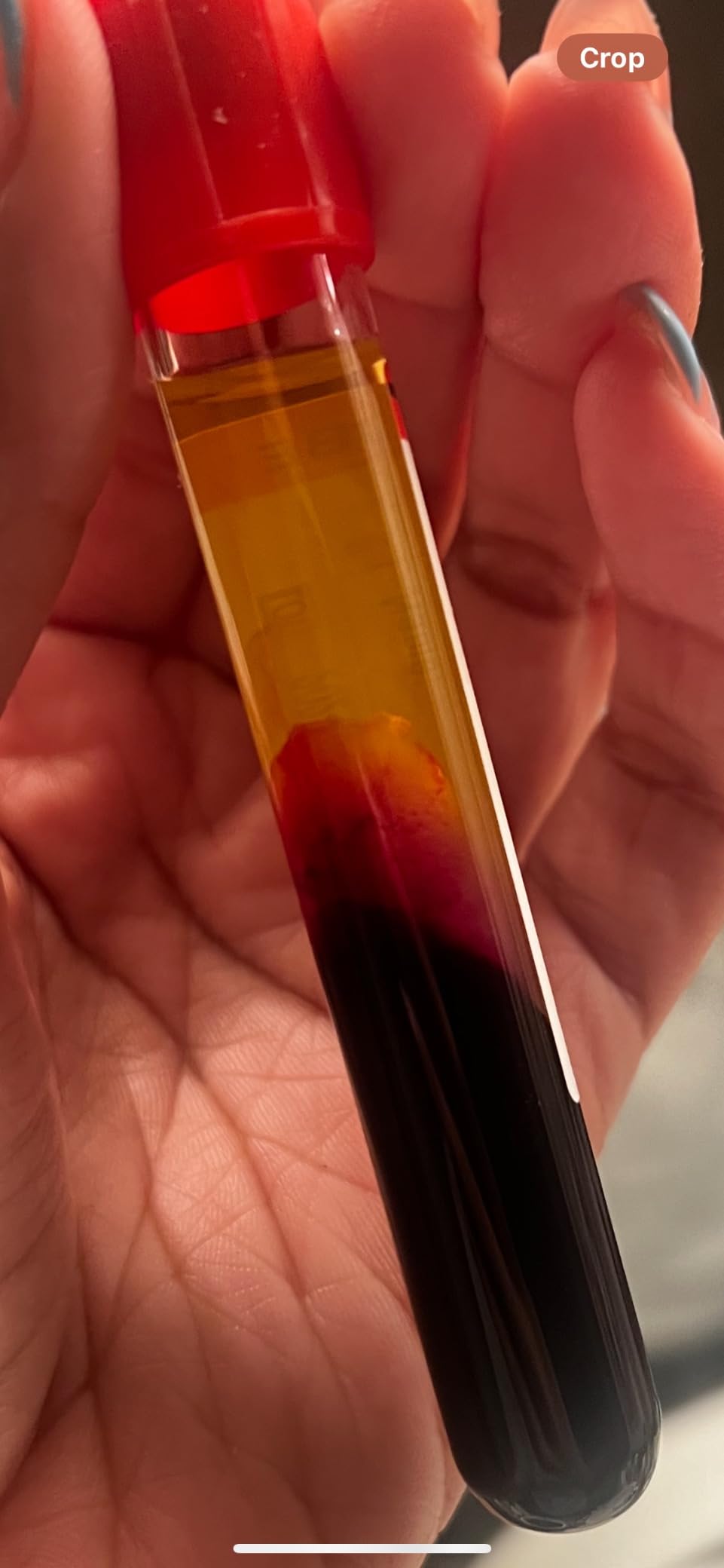
This is the unit we would put on a small clinic bench first. At 4.7 stars across 147 reviews it carries the highest average rating in the set, and the reason owners rate it so highly is straightforward: it is quiet. Rated at 56 dB or below, it is the kind of machine you can place in a room where a patient is being drawn without raising your voice over the spin cycle.
The speed readout is the detail that separates it from cheaper knobs-and-timers. It shows speed in both RPM and g-force, and it peaks at 2600xg. For a clinic that runs a PRP or PRF protocol, seeing the g-force number on screen means your operator is matching the protocol rather than guessing from a dial.
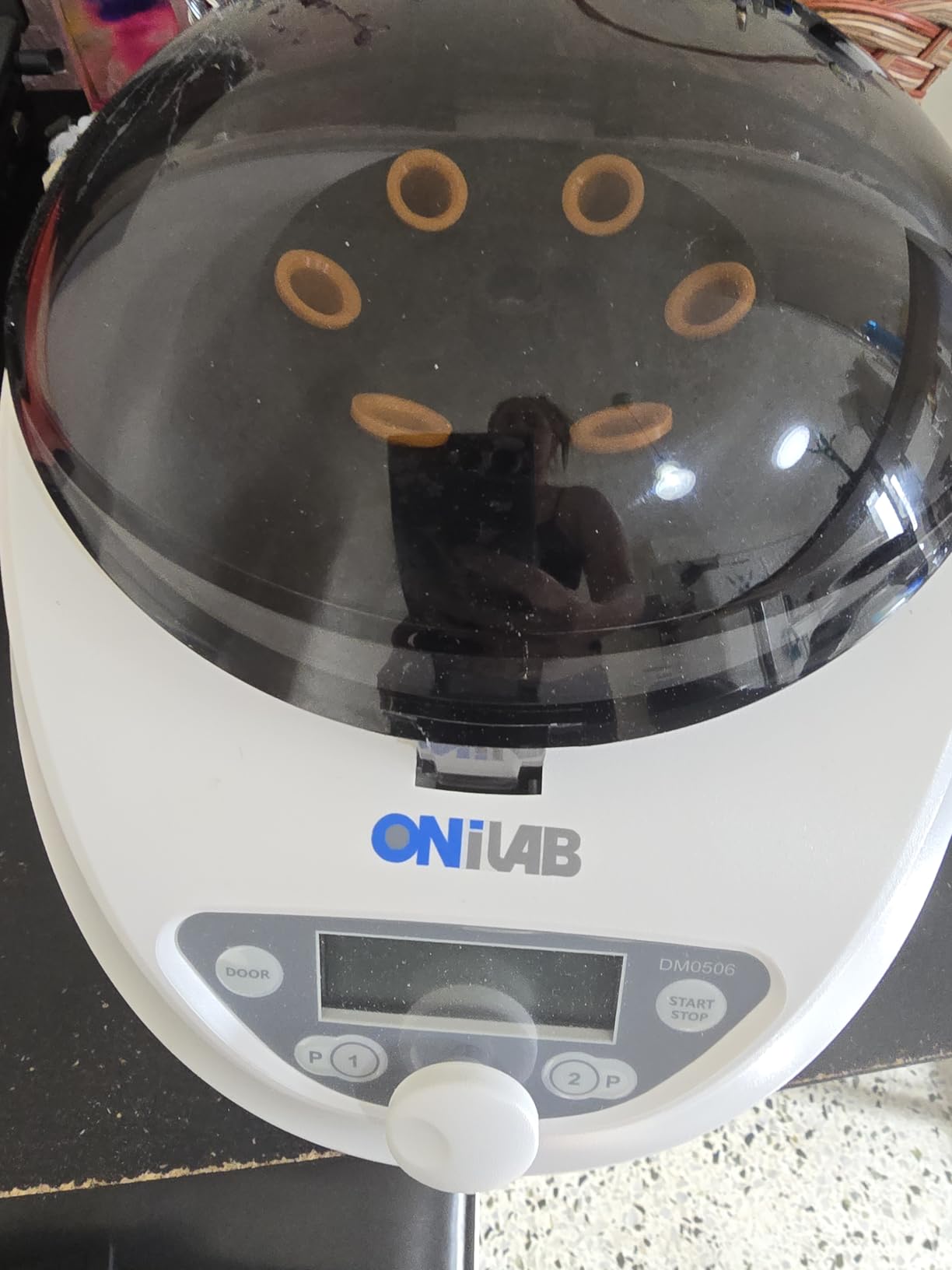
Two stored programs, labelled P1 and P2, are recalled on power-on. For a practice that runs the same two protocols all day, that removes the decision from every spin. The lid interlock, overspeed detector and startup self-test are all present, and the rotor releases automatically at the end of the run.
What you give up is the rotor type. This is a fixed-angle rotor, so samples pellet at an angle rather than settling in a flat layer. If your validated protocol calls for swing-out geometry — which matters for certain serum separation gel work and for buffy-coat style layering — this is the wrong tool.
How it handles a normal clinic day
Six tubes per run suits a solo practice or a small two-provider office comfortably. You would run a batch, pull the separated plasma, and start again. The 11.8 by 9.5 by 7.1 inch footprint leaves bench space for a tube rack and a sharps container.
The 11.4 pound weight means it is portable enough to move when you need the bench for something else, but heavy enough that it does not walk while spinning. That matters more than it sounds on a shared clinic counter.
Where it is the wrong choice
If you routinely draw more than about fifteen samples in a single sitting, six places means multiple runs, and multiple runs mean more operator time at the bench. Move up to an eight-place unit rather than repeating yourself.
It is also the wrong pick if you need swing-out separation or if you need a wide bank of stored programs for a multi-protocol site. Two programs is genuinely limiting for a lab running more than two distinct methods.
2. SUPER DEAL Electric Lab Centrifuge 4000 RPM – The Proven Budget Separator
SUPER DEAL Electric Lab Centrifuge Machine, 4000 RPM, 20 ml x 6 Capacity, Precise Timer and Speed Control, 110V – Ideal for Medical and Laboratory Use
Max 4000 RPM
6 x 20 mL capacity
Timer 0-60 min or continuous
7.6 lb, 110V
Pros
- Best-proven unit here with 1370 reviews
- Compact and light at 7.6 lb
- Repeatable across staff
- Long record of units still in daily service
Cons
- Very sensitive to tube balance
- No RCF readout
- Included 20 mL tubes can leak at higher speeds
- Some knob failures reported
Review volume is the most useful signal on a capital purchase, and this unit has more of it than anything else in the guide at 1370 reviews and a 4.5 average. It has been on the market for well over a decade, and owners report units still doing daily clinic work. That track record matters when you are buying a machine with no full-time lab tech to troubleshoot it.
It does six 20 mL tubes at up to 4000 RPM on a 0 to 60 minute timer or a continuous run. At 7.6 pounds and roughly 11.8 inches square, it is one of the lightest full-size units here to carry from the draw room to a mobile screening day.
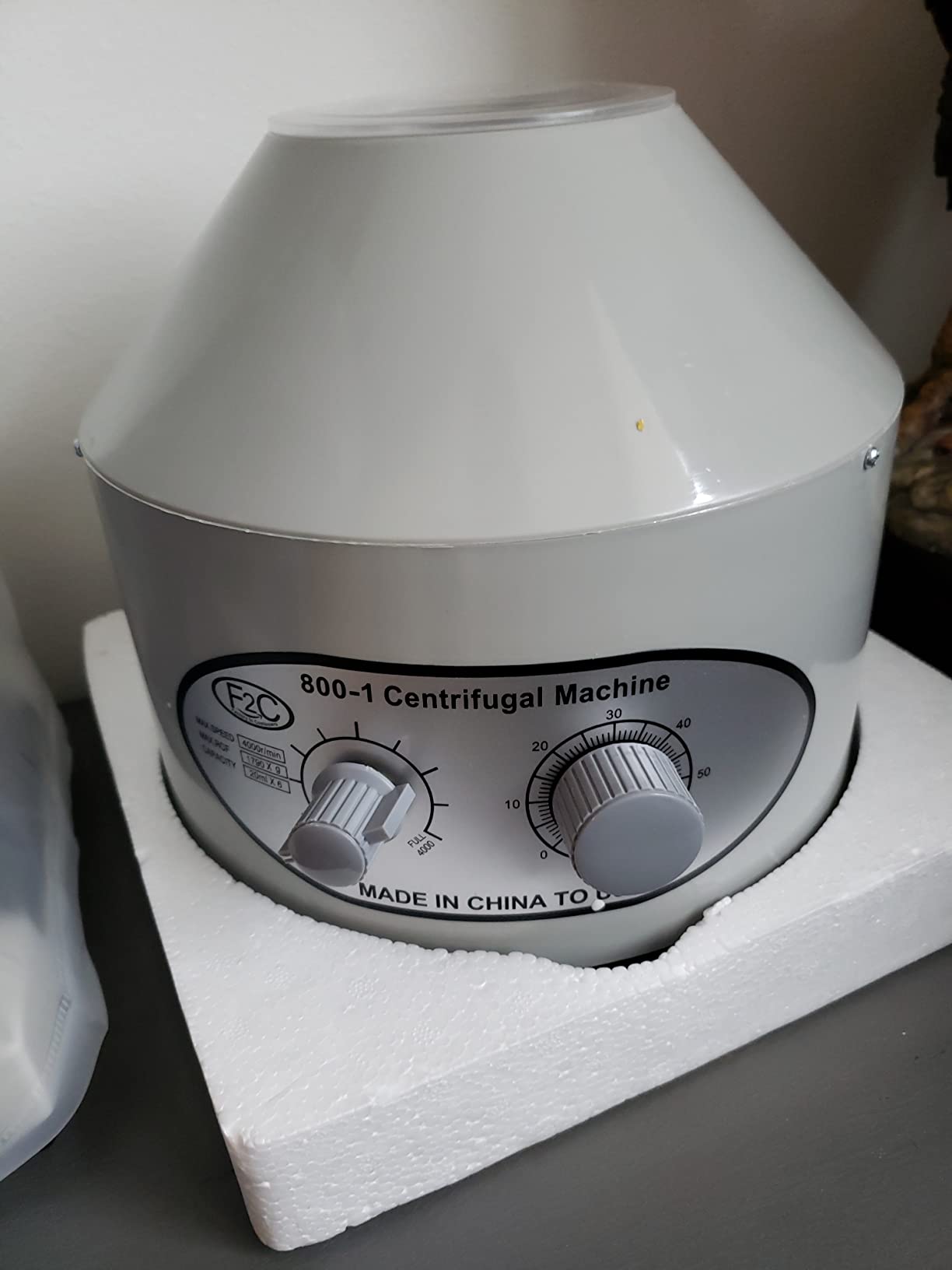
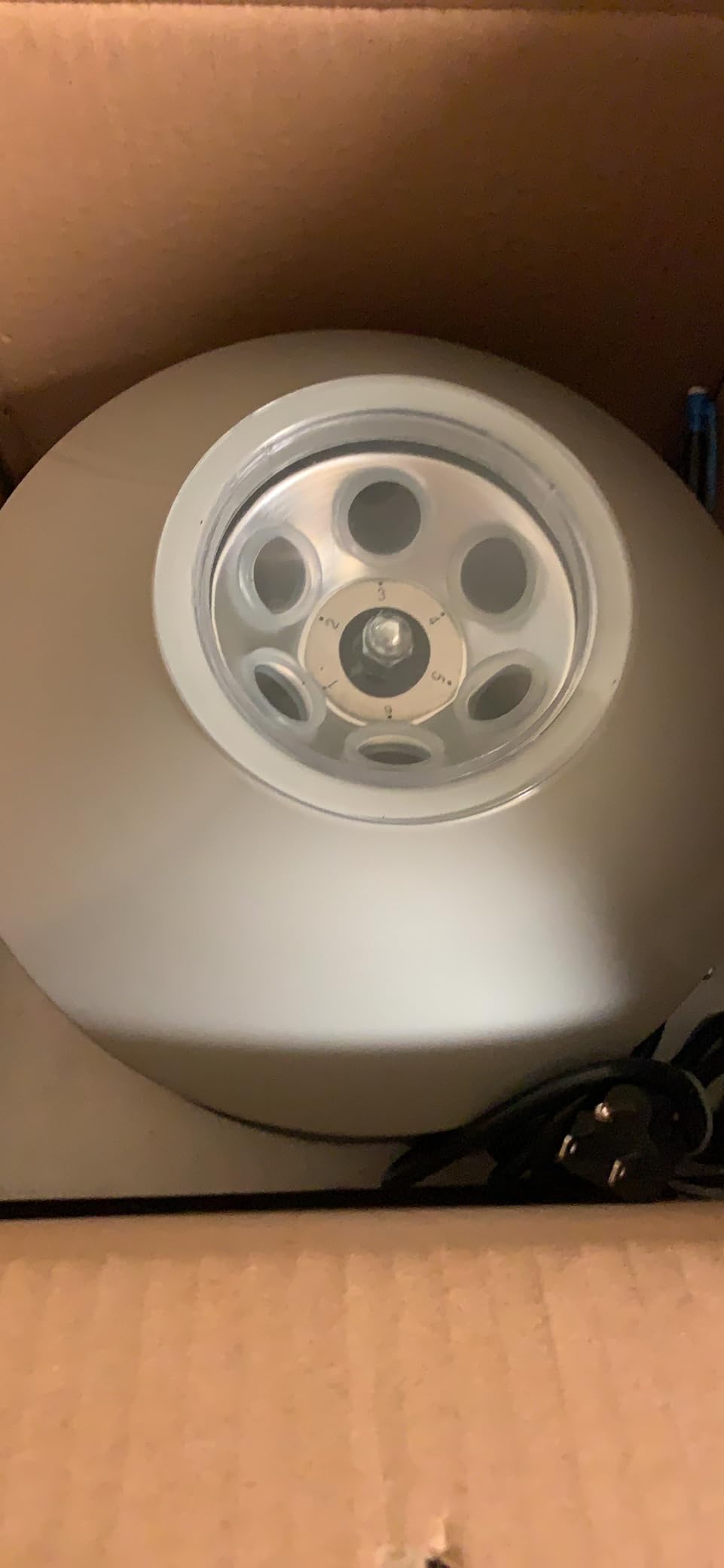
The trade-off is honest. There is no RCF readout, only RPM, so if your protocol is written in g-force your operator is doing a conversion or relying on the IFU chart. And owners are consistent on one point: balance the rotor. Unweighted or uneven loads produce heavy vibration on this machine more than on the units with better isolation.
The included 20 mL tubes are also a known weak point, with reports of leaking at higher speeds. Using your own validated tube type rather than the supplied ones is the better clinical habit regardless.
When this is the right call
Choose this if you want a dependable separator with a long service history, you run a small number of draws per day, and your team would rather set two knobs than navigate a menu. Repeatability is genuinely good, which matters when several people use the machine.
It suits a solo GP, a dental office running occasional draws, or a wellness clinic doing morning-only phlebotomy. The carry weight also makes it a good fit for a clinician who packs up and moves between rooms.
When to buy something else
If your protocol specifies RCF, the missing readout is a real friction point every single day. If you work with delicate cells where a slightly higher separation force matters, a unit with a documented g-force ceiling is a better match.
It is also the least forgiving of imbalance in this group. Practices where staff turnover is high should train carefully on loading, or pick a machine with automatic cut-off on excess vibration.
3. Microyn MT-Spinplus-6 – The Highest RCF in the Group
Microyn Digital Bench-top Centrifuge, 100-5000rpm (Max. 3074xg), 6x10ml/15ml
Max 3074xg
6 x 15 or 10 mL tubes
Digital LCD with short-spin button
Lid-lock interlock
Pros
- Highest maximum RCF in the guide at 3074xg
- Heavy build runs smooth and quiet
- Digital LCD shows time and speed
- Short-spin button speeds up workflow
- One-year warranty with US support
Cons
- Bulkiest footprint here at 16 x 14 inches and 16.4 lb
- Displayed speed must be multiplied by ten
- Lid latch can pop unless closed correctly
3074xg is the highest maximum force in this guide, and if your protocol is written around a specific g-force figure, this is the unit that can reach it. It runs 100 to 5000 RPM across six 15 mL or six 10 mL positions, with a 20 second to 99 minute timer.
The heavy, solid build is the second selling point. Owners describe it as a workhorse that has run for years without trouble, and several mention how much smoother and quieter it feels than lighter machines in the same class. At 4.5 stars over 105 reviews, the feedback is consistent rather than scattered.
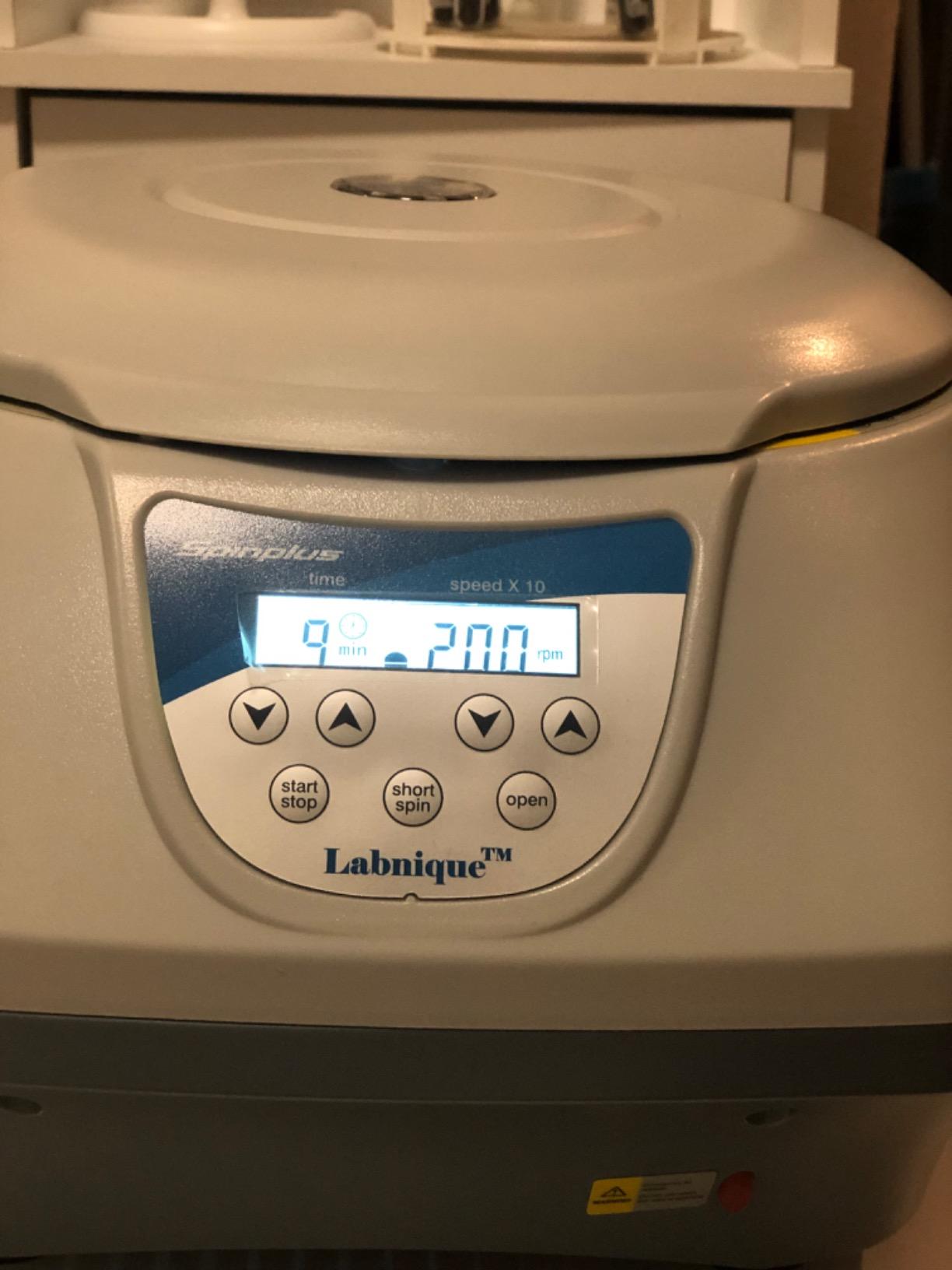
Two workflow details are worth planning around. The short-spin button gives you a one-touch quick run for those moments when a single sample needs settling and the full protocol is overkill. And the lid lock will not release until the rotor has genuinely stopped, with automatic release once it has.
One quirk catches people out: the displayed speed has to be multiplied by ten to get the real RPM. Write it on a card taped to the bench. The lid latch also wants closing in a specific way, and a latch that only half-seated can pop open mid-cycle.
How it fits a PRP-heavy practice
This is the pick for a clinic doing PRP, PRF, or any protocol where the force target sits high. The digital LCD showing time and speed together makes it easy for an operator to confirm a run matched the protocol.
Because it is a six-place unit, batch your draws rather than spinning one at a time. The short-spin button covers the odd single sample without wasting a full cycle.
Where the size becomes a problem
At 16 by 14 by 11 inches and 16.4 pounds, this is the largest footprint in the guide. In a small clinic with a single shared counter, that footprint competes with wherever your sharps container, tube racks, and phlebotomy supplies live.
It is also the heaviest unit here, so plan the bench for a permanent home rather than a spot you clear and rebuild each morning. If bench space is genuinely tight, the six-place 2600xg unit is the more compact alternative.
4. ONiLAB PRP Centrifuge 8x15ml – For Busier Draw Lists
ONiLAB PRP Centrifuge, 8X15ml/10ml/7ml/1.5-5ml, 300-4000RPM, Max 1860×g
Max 1860xg
8 x 15/10/7 mL tubes
Speed shown in RPM or g-force
Noise 55 dB or below
Pros
- Eight-tube capacity reduces the number of repeat runs
- Quiet steady operation for clinic or mobile use
- Vacuum suction feet keep it planted
- Knob programming stores settings across power cycles
- Reliable for PRP and PRF work
Cons
- Fixed-angle rotor caps force at 1860xg
- Packaging foam was found inside the chamber on at least one machine
- Heavy 15.17 lb package weight
This is the same design language as our top pick, scaled up to eight places. If your clinic runs more than about fifteen draws in a sitting, the extra two positions stop being a luxury and start being the difference between one run and two.
It holds up to eight 15 mL, 10 mL, or 7 mL tubes on a fixed-angle rotor, and speed can be displayed in either RPM or g-force. Stored programs persist across power cycles, which matters in a clinic where the machine gets switched off overnight.
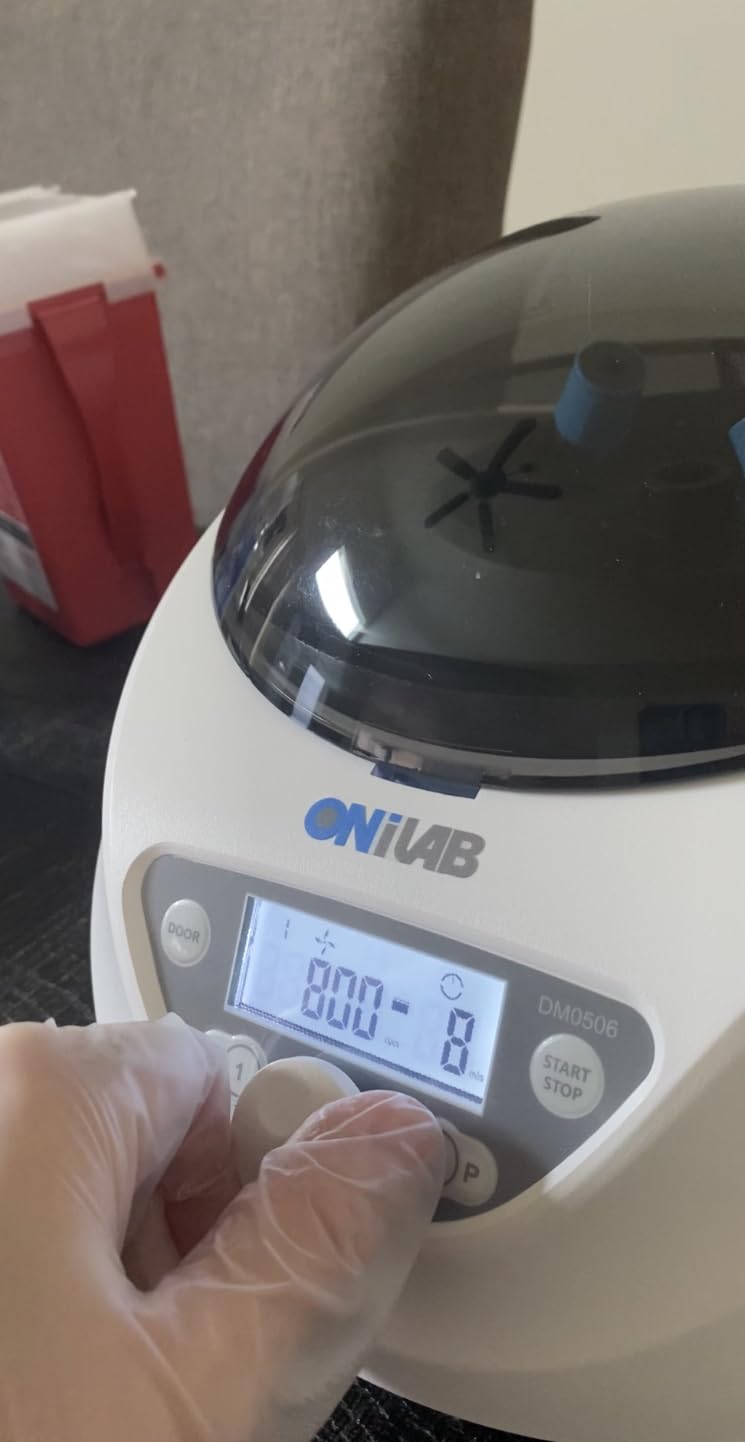
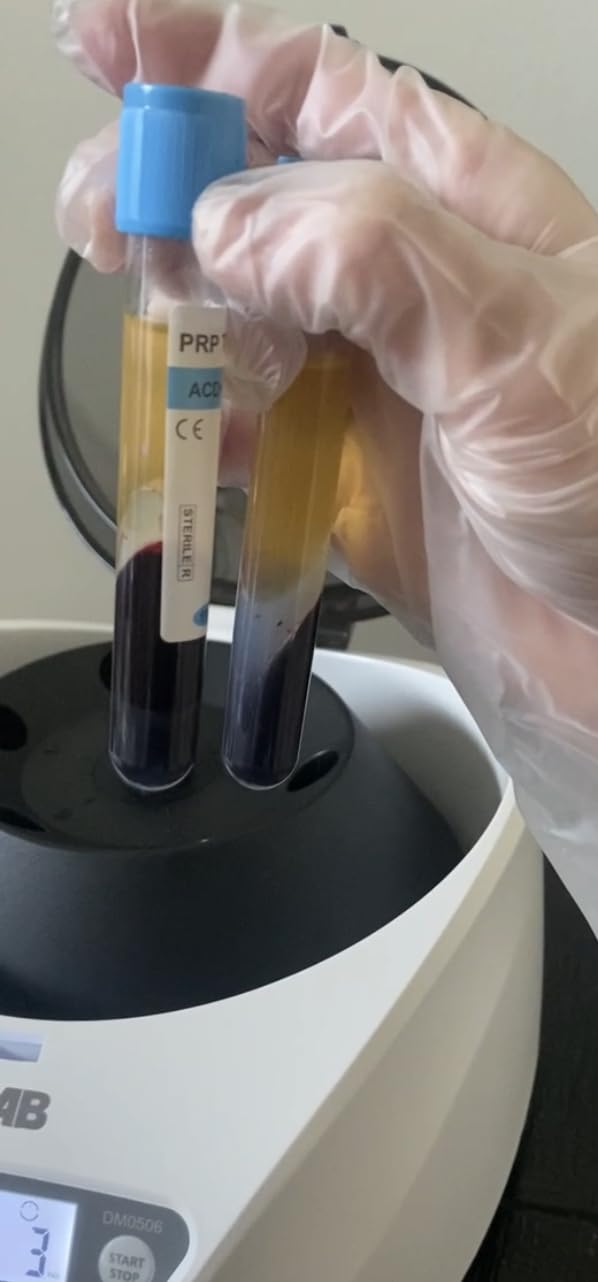
Owners in small clinics and mobile veterinary practice single out the quiet, steady running and the vacuum suction feet that stop it drifting on the bench. At 4.6 stars across 50 reviews, the ratings are strong and the complaints are narrow.
The one real limitation is the ceiling. At 1860xg maximum, this cannot match the 2600xg or 3074xg units for separation force. If your protocol needs a specific high g-force, this is not the machine. If it needs consistent moderate separation across a bigger batch, it is very well suited.
Who should choose the eight-place version
Multi-provider primary care and urgent care sites doing 20 to 50 draws on a busy morning are the obvious audience. Fewer runs means less walk-up traffic, less chance of an operator being interrupted mid-batch, and a smoother queue at the draw station.
The stored-program feature also earns its keep here. When a site runs two or three different methods, having the settings survive a power cycle removes a class of daily error.
Where it falls short
The 1860xg ceiling is the honest limitation. Sites doing PRP with a high-force protocol should look at the six-place 2600xg unit instead and accept two runs per batch.
At roughly 15 pounds, it is not a machine you shuttle between rooms. Treat the bench it sits on as its permanent home, and check the chamber for packing material before the first run.
5. JIAWANSHUN 8x20mL PRP Centrifuge – The Largest Tube Capacity
JIAWANSHUN Lab Benchtop PRP Centrifuge, 8x20mL 4000RPM LCD Display 110V
1920xg RCF
8 x 20 mL capacity
Timer up to 999 minutes
LCD with live speed and time
Pros
- Eight 20 mL places
- the largest capacity here
- Live speed
- preset speed and remaining time on one LCD
- Knob-based RPM entry needs no programming
- Repeat buyers report years of service
Cons
- Long tubes such as 130 mm ACD gel tubes do not fit
- Some machines showed flickering and short-circuit behaviour
- Fixed-angle rotor geometry
Twenty-millilitre tubes are the practical reason to look at this one. If your facility draws larger volumes or works with 20 mL conical tubes, the eight-place 20 mL configuration carries the most generous per-tube volume in the guide.
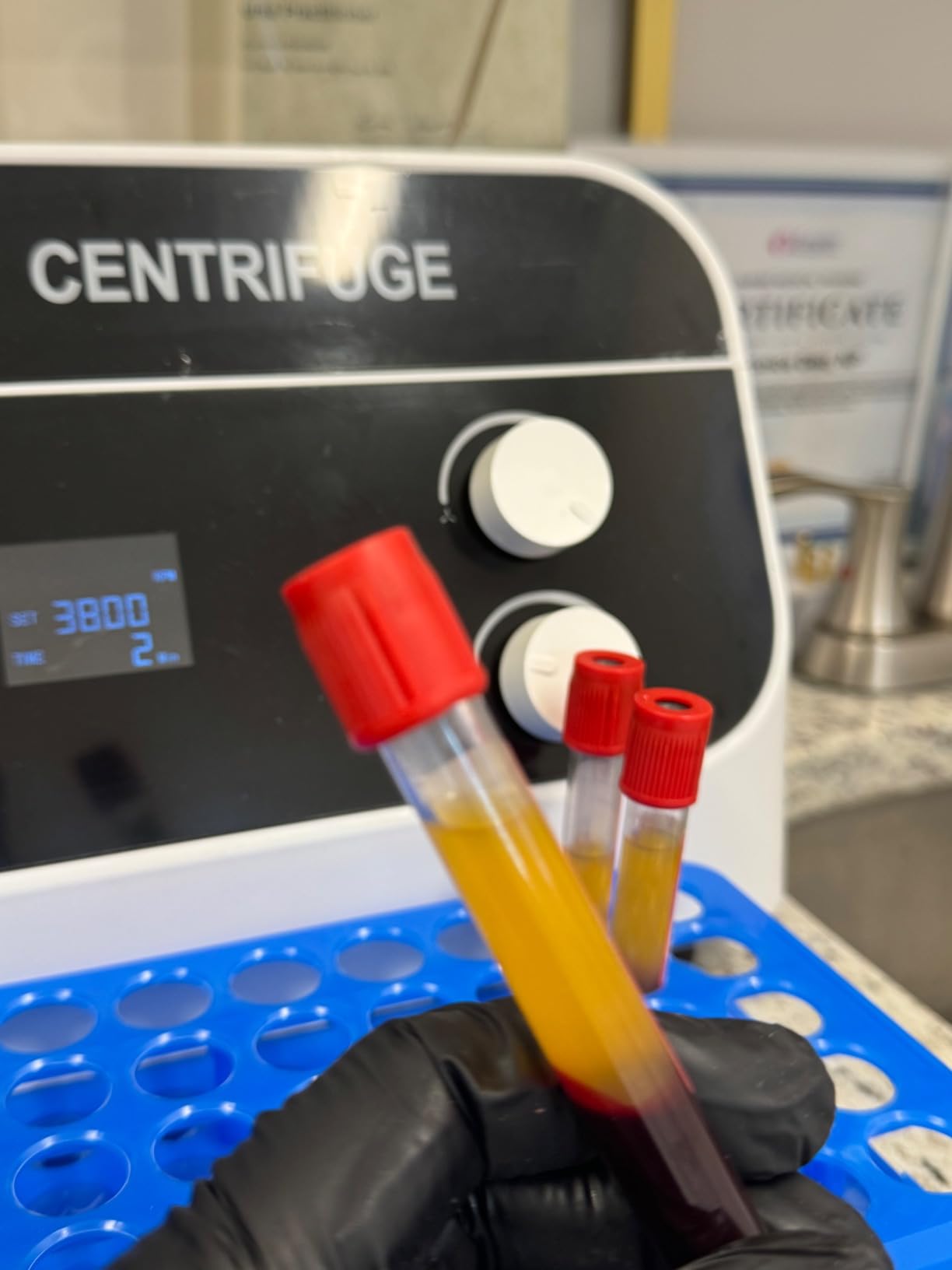
The display is unusually informative for this class. It shows live speed, the preset speed, and the remaining time simultaneously, so an operator walking past the bench can tell at a glance whether the run is on track. Speed runs 0 to 4000 RPM for 1920xg, and the timer goes up to 999 minutes for extended protocols.
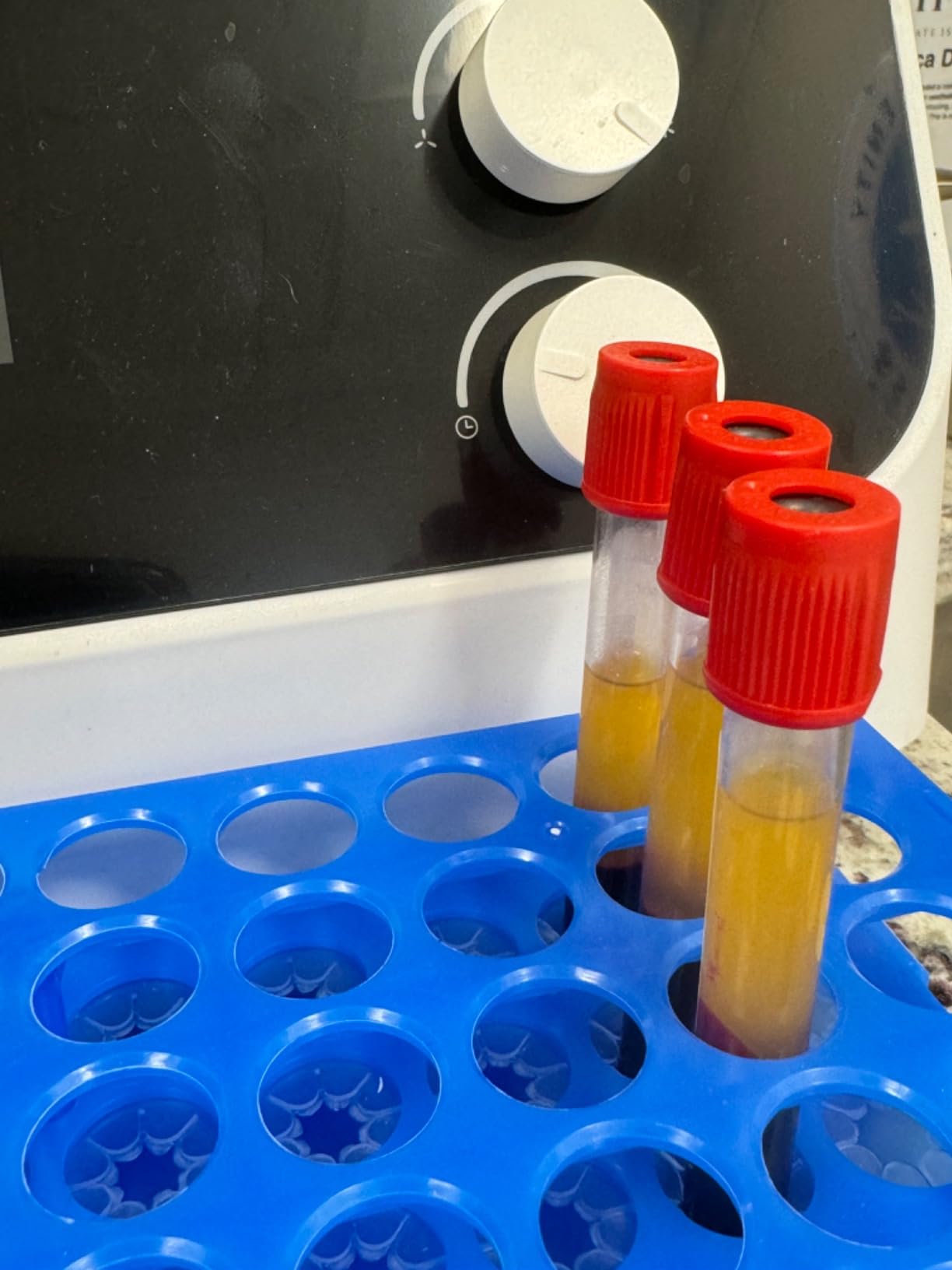
Several owners report buying a second unit after years of use, which is one of the better durability signals available in review data. The knob-based RPM entry keeps the interface simple enough that a new hire can run it without training.
Be aware of the tube length limit, though. Owners report that longer tubes such as 130 mm ACD gel tubes do not fit, so check the physical length of the tubes in your supply drawer before committing to an eight-place 20 mL layout.
Where the 20 mL layout pays off
Clinics that work with larger blood collection volumes, or that run a mix of tube sizes during a busy session, get the most from an eight-place 20 mL rotor. One run covers a bigger share of the day’s draws than a six-place smaller-capacity unit.
The 999 minute timer is a niche feature. It matters for longer protocols such as certain cell wash steps, where a 60 minute timer ceiling would be limiting.
Where to look elsewhere
One owner reported abnormal blood-work results from the fixed-angle rotor compared with a swing-out unit. If you need swing-out geometry, this is not the machine — and you should check any result concerns against your own validated protocol rather than a single review.
Some machines also showed flickering and short-circuit behaviour after delivery. Inspect the machine on arrival, and keep the packaging until you have confirmed it runs correctly through several cycles.
6. LAB FISH LC-400 – Mixed Tube Sizes in One Rotor
LAB FISH LC-400 PRP Centrifuge, 8×2/5/10ml & 4x15ml Tubes
1717xg max RCF
4 x 15/10 mL or 8 x 2/5/10 mL
Vibration power cut-off
Electronic lid lock
Pros
- Insert sleeves accept several tube sizes in one rotor
- Automatic cut-off if vibration exceeds the safe range
- Quiet and smooth when the rotor is balanced
- Digital speed control across a wide range
- Repeat purchases reported
Cons
- Fixed-angle rotor only
- Build feels light beside costlier models
- Small lid inspection window
The defining feature is the sleeve system. The built-in fixed-angle rotor takes either four 15 or 10 mL tubes, or eight 2, 5, or 10 mL tubes, using plastic insert sleeves to adapt. For a clinic that draws several tube types in one session, avoiding a second machine for small-volume work is a real saving on bench space.
Speed runs 500 to 4000 RPM for a maximum of 1717xg, with a timer from 30 seconds to 59 minutes and 50 seconds. That short end of the timer range is genuinely useful for quick settling runs.
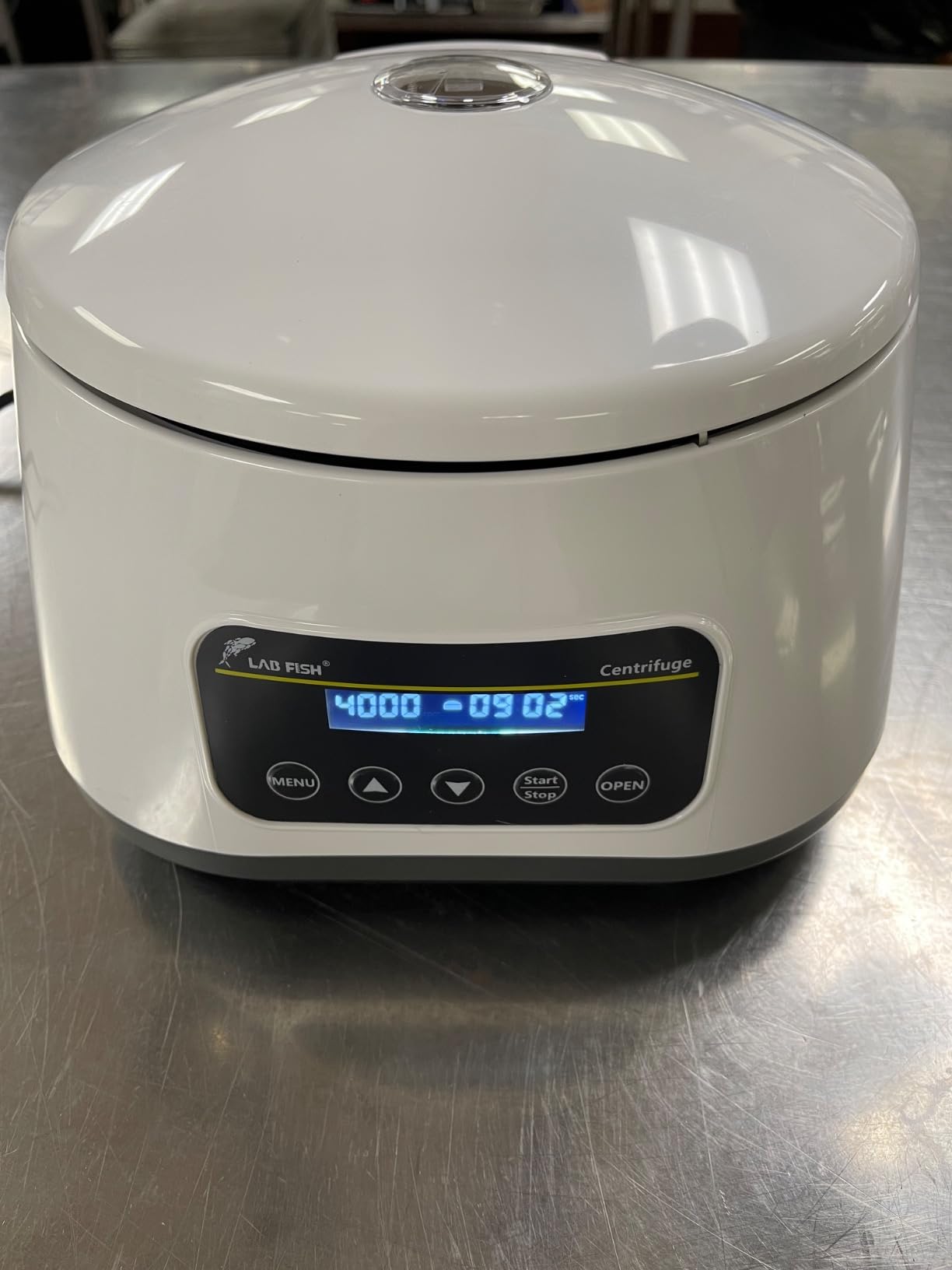
The safety behaviour is the detail we like most for a clinic setting. It cuts power automatically if vibration exceeds the safe range, and the electronic lid lock releases on its own at the end of the cycle. Owners describe good vibration isolation and smooth running when the rotor is balanced.
At 4.6 stars across 35 reviews, the ratings are high, though the review base is small. Several buyers report coming back for a second unit from the same brand, which suggests repeat satisfaction.
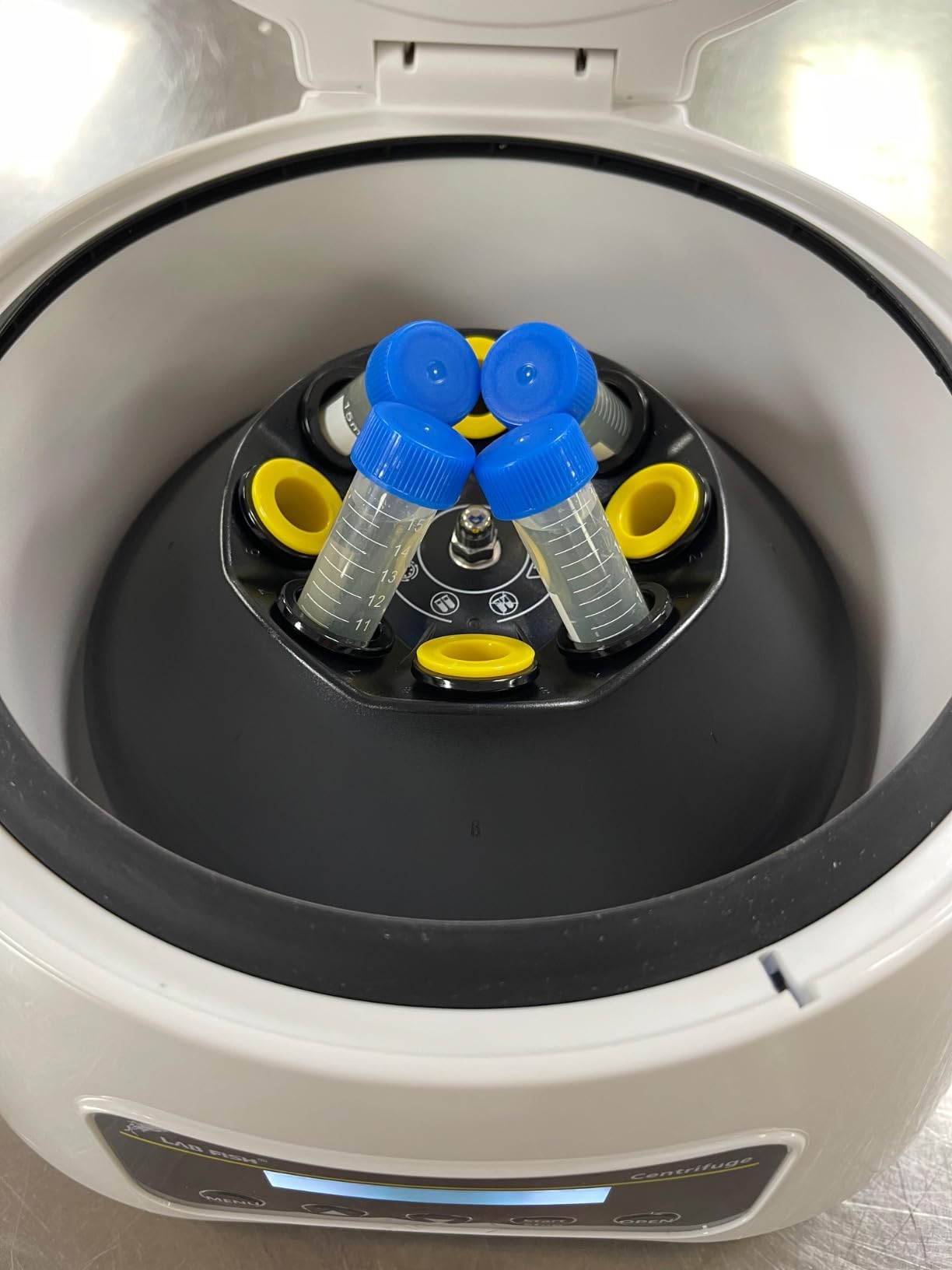
When the sleeve system earns its place
If your draw list mixes large evacuated tubes with smaller ones, being able to load both into the same rotor without hunting for a second machine is the reason to choose this. The eight-place 2, 5, and 10 mL configuration also covers micro-adjacent work without a dedicated microcentrifuge.
The automatic vibration cut-off is a genuine safeguard for a practice where staff turnover means someone will eventually load it unevenly.
Where the compromises bite
Build quality is the main complaint, with owners describing it as feeling light next to costlier models. Handle it carefully rather than expecting the durability of a cast-frame machine.
The lid inspection window is small, so it is harder to confirm a balanced load before you commit the rotor. That combines awkwardly with the fact that this is a fixed-angle rotor with no swing-out option.
7. Mxmoonant 900-1 – Compact Plasma Separation
Mxmoonant Centrifuge Machine, 4000RPM Lab Benchtop PRP Centrifuges
1685xg max RCF
6 x 10 mL capacity
0-60 minute timer
Noise 50 dB or below
Pros
- High-contrast LCD shows speed
- time and status live
- Compact and light at just over 5 lb
- Reliable plasma separation over years of use
- Simple knob plus timer setup
Cons
- Only six 10 mL positions limits batch size
- Symmetric loading needs a water-filled counterbalance for single samples
- Occasional machines reported dead on arrival
At just over 5 pounds and roughly 11 by 10.5 by 8 inches, this is one of the easiest units here to place on a cramped counter or carry between rooms. It spins six 10 mL tubes at up to 4000 RPM for 1685xg, on a 0 to 60 minute timer.
The high-contrast LCD is the practical strength. It shows speed, time, and run status in real time, so a new operator can see what the machine is doing without a manual. Owners report years of consistent plasma separation, which is the specific job most clinics buy a unit for.
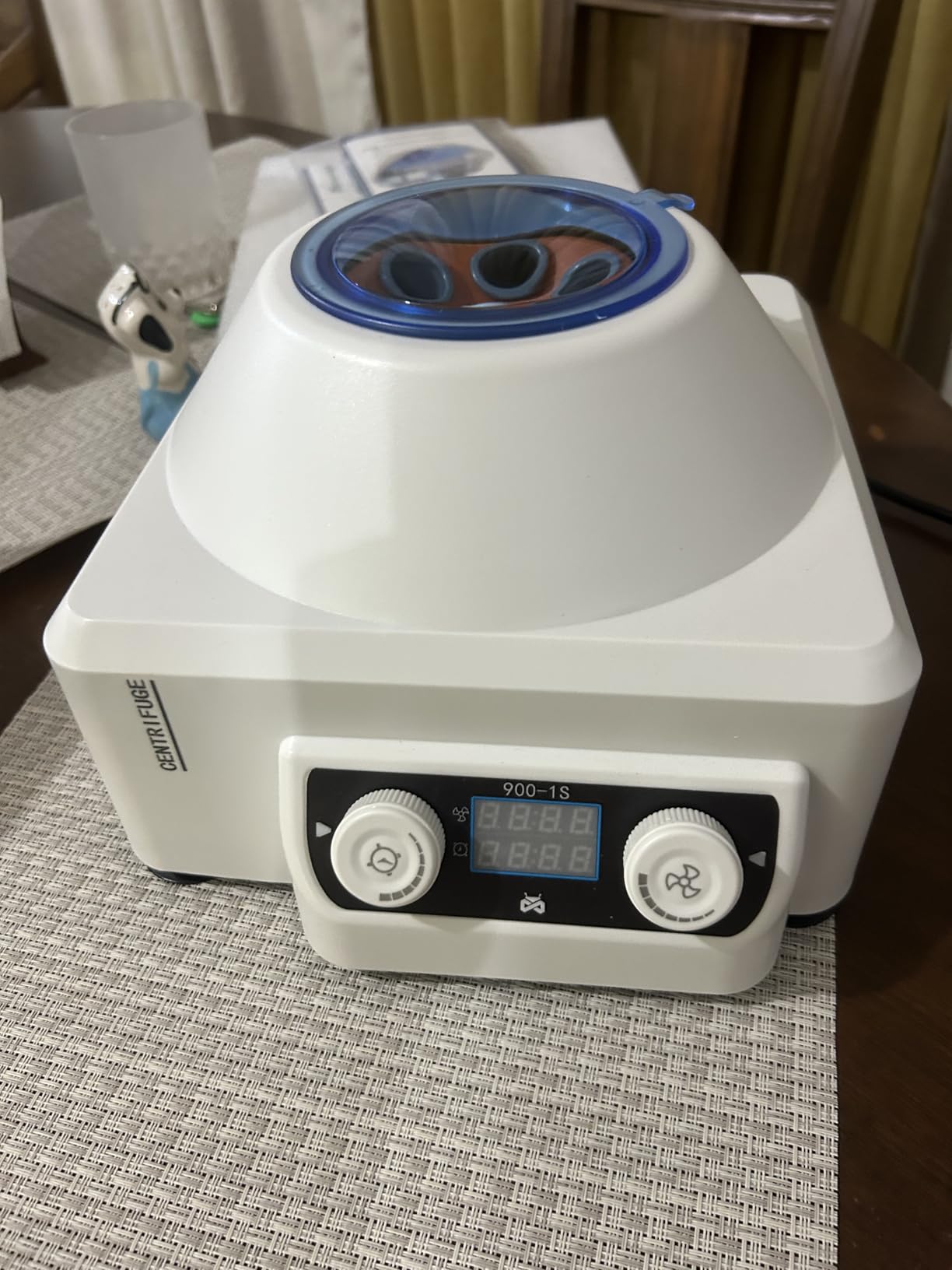
At 50 dB or below, it is among the quieter units in the guide, which makes it a reasonable choice for a room where a patient is being drawn at the same time. The 60 watt, 110 V motor keeps power draw modest.
The loading rules are the thing to train on. This machine needs symmetric loading, and for a single sample you need a counterbalance tube filled with water to the same level. Owners are clear about this, and it is worth putting on the bench as a reminder.
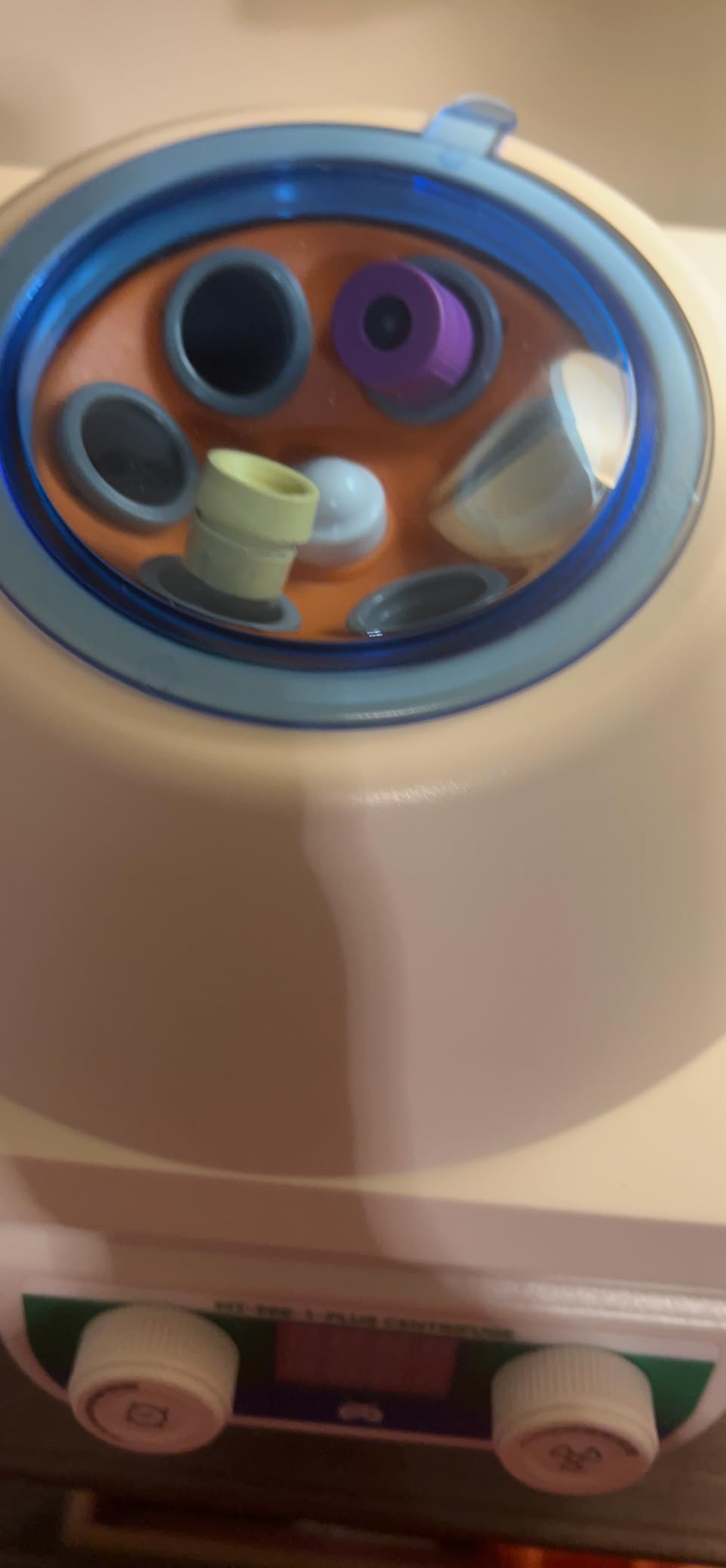
Where it fits a small practice
Solo providers and small primary care offices doing routine plasma separation are the natural fit. The light weight means one person can move it, which matters if your lab bench doubles as a supply shelf.
If you run PRP, the force ceiling of 1685xg may be lower than your protocol needs. For routine plasma work it is entirely adequate, and owners’ long-run reports suggest it stays that way.
Where it falls short
Six 10 mL positions is the tightest batch capacity in the guide. A busy morning with more than six samples means repeat runs, and each run adds handling time to your workflow.
Occasional machines reportedly arrived dead, so test the centrifuge through a full cycle before you commit the clinic to it. If it runs clean, the long-term owner reports are among the better in this set.
8. ONiLAB Mini Centrifuge D1008 – Microtubes and PCR Strips
ONiLAB Scientific Mini Centrifuge 7000RPM,2680 x g RCF, Lab Benchtop Centrifuge with 2 Rotors for 8 x 0.2/0.5/1.5/2.0ml and 0.2mL×32 PCR Strips, Low Noise≤45dB, 100-240V,Green lid(ONLY for MICROTUBES)
2680xg at 7000 rpm
8 microtubes or 32 PCR tubes
Tool-free rotor swap
Noise 45 dB or below
Pros
- Quietest unit in the guide at 45 dB or below
- Smallest and lightest body at just over 1 lb
- Tool-free click-on rotor change
- Handles four strips of eight PCR tubes
- Universal 100-240V input
Cons
- Microtubes only so blood collection tubes will not fit
- Fixed single speed with no adjustment
- No suction cups so it can walk while spinning
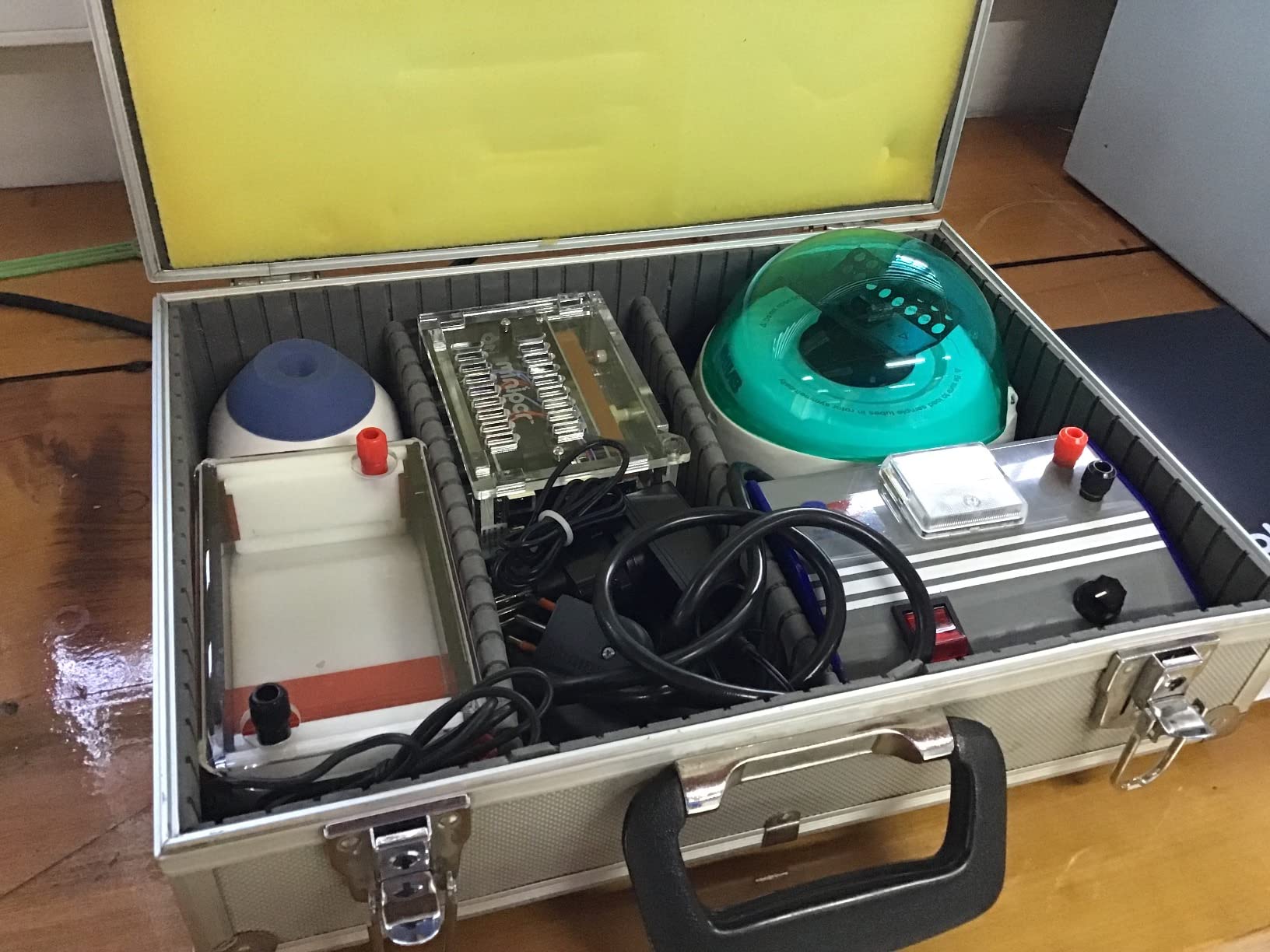
This one is deliberately not a clinical centrifuge, and we include it because a surprising number of small clinics end up wanting one. If you do point-of-care molecular work, strip preparation, or any microtube pelleting on the same bench as your blood work, this is the second machine that makes sense rather than a replacement for one.
It reaches 7000 RPM for 2680xg, and takes either eight 0.2 to 2.0 mL microtubes or up to 32 PCR tubes on the second rotor. At 45 dB or below it is the quietest unit in the guide, and at just over 1 pound it is the most portable.
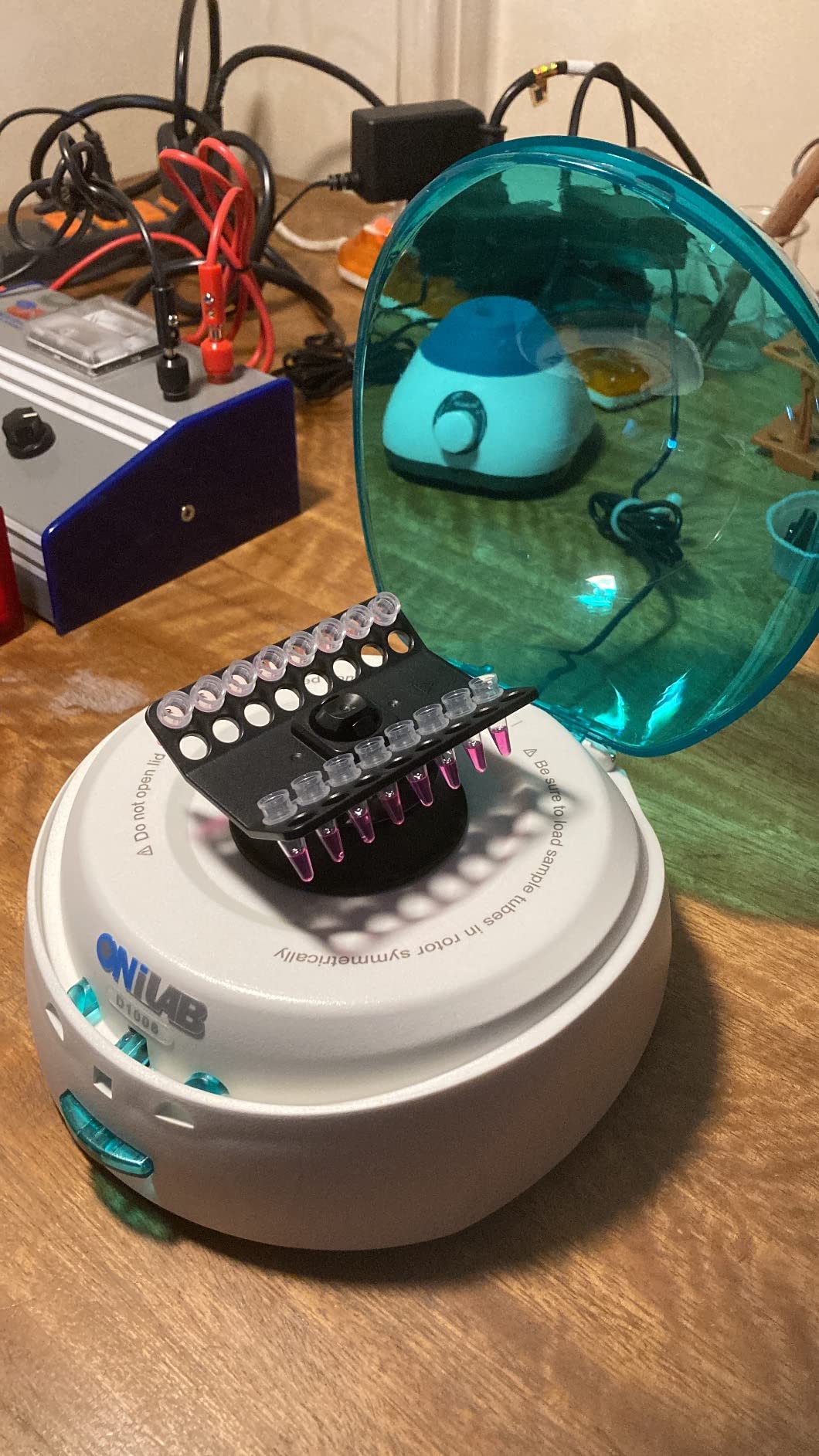
The tool-free click-on rotor change is the feature owners mention most. Swapping between the microtube rotor and the PCR strip rotor takes seconds with no tools, so you are not hunting for a hex key between protocols. International power adapters are included, which makes it usable on mobile screening trips.
Auto-braking on door opening and a fast stop on power-off make short runs quick. Clamp-locking rotor construction adds durability at a price point where you would not expect it.
Why a clinic would add this alongside a blood centrifuge
Microcentrifuges and clinical centrifuges are different instruments, and owning one does not replace the other. A clinical unit spins blood collection tubes at low force for clean layer separation; this one pellets microtubes at much higher force for a different purpose.
Buying the small one alongside a six-place clinical unit is a sensible pairing for a site that does both PCR-adjacent preparation and routine phlebotomy, especially given the tiny footprint.
When it will not do the job
Blood collection tubes will not fit, full stop. If you are trying to run haematocrit or serum separation on this machine, stop: it is the wrong instrument and the result will not be defensible.
It also has a fixed single speed with no speed or timer adjustment, so any protocol requiring a specific duration is not achievable. And with no suction cups, it can walk across the bench while spinning, so set it on a flat, clear surface every time.
9. CGOLDENWALL 80-2 – Twelve-Place Capacity
CGOLDENWALL 80-2 Electric Lab Centrifuge 4000RPM 12x20mL/15mL/10mL/7mL Desktop Centrifuge Machine Timer 0-120min Medical Laboratory Practice Low Speed Centrifugal Force 2325xg Voltage 110V
2325xg max RCF
12 x 20 mL capacity
0-120 minute timer
Noise up to 70 dB
Pros
- Twelve places in a compact frame
- Accepts 5-10 mL evacuated and 10-15 mL centrifuge tubes
- Long 0-120 minute timer window
- Clear panel speed readout
Cons
- Loud during spin at up to 70 dB
- Reported turbulence affecting separation quality
- Chamber runs warm on longer cycles
- Some machines arrived with loose lid screws or missing parts
If your bottleneck is batch size, this is the unit in the guide that solves it. Twelve 20 mL places is the largest rotor capacity here, and the 0 to 120 minute timer window is generous, covering extended protocols that a 60 minute ceiling would cut short.
It accepts 5 to 10 mL evacuated blood collection tubes and 10 to 15 mL centrifuge tubes, reaches 4000 RPM for 2325xg, and has a clear panel speed display that is straightforward to read across the bench.
Owners consistently praise the tube compatibility and the capacity for the money, and customer service is repeatedly mentioned as responsive when defective units arrive. The 4.2 average across 178 reviews reflects real enthusiasm offset by real criticisms.
The noise question is not a detail here
This is the loudest unit in the guide at up to 70 dB during the spin. In a single-room clinic where a patient is being drawn fifteen feet away, that is a conversation with your staff and your patients, not a specification you can ignore.
Owners also report the machine running turbulent enough to affect separation quality, and the chamber heating noticeably during longer cycles. If your protocol is sensitive to sample temperature, that is a second concern on top of the noise.
Where twelve places pays for itself
Urgent care sites and high-volume primary care offices that batch an entire morning’s draws into a single run get the most from this configuration. Fewer runs per day is a genuine throughput gain when you are short-staffed on lab support.
If you work somewhere quieter, or you can site the machine in a back room away from patient areas, the capacity advantage may outweigh the noise. Just know what you are buying.
10. NEWTRY 800D – The Simple Entry-Level Separator
NEWTRY Electric Centrifuge Machine Desktop Lab Benchtop Centrifuges
Max 4000 RPM
Knob speed and timer control
Damped base to limit vibration
Round head with noise cover
Pros
- Good value for routine serum and PRP spins
- Round head and damping column keep noise comparatively low
- Knob operation with no learning curve
- Rock steady when loads are balanced
Cons
- Analog timer is not accurate for short cycles
- Chamber heats noticeably during runs
- Unattached lid can lift and rotor can wobble if loads are uneven
- No digital RPM or RCF readout
The 800D is the straightforward choice for a clinic that wants a separator without a digital interface. Pure copper coil winding, a damping column between motor and base plate, and a round centrifugal head with a top cover are all aimed at stability and noise rather than features.
At 4.2 stars across 159 reviews, buyers rate the tube handling and low-noise layout positively, while flagging the timer accuracy, lid fit, and chamber heat as the real limits for clinical use.
The timer is the practical problem
The analog timer is not accurate for short cycles, which means keeping a separate timer beside the machine if your protocol has a short spin in it. That is an easy habit to build and a real risk to forget on a busy morning.
The chamber also heats noticeably during runs, which can warm blood samples. For temperature-sensitive work, plan around it or choose a unit that runs cooler.
Who should start here
A clinic that does routine serum separation and can live with a knob interface gets a working machine from this. The round head with a top cover genuinely does reduce noise relative to many open-frame designs, and the unit runs steady when loads are balanced.
Treat it as a starter unit. Practices that outgrow it usually move to a digital model with a proper lid interlock and an RCF readout, and that upgrade is straightforward because the tube formats overlap.
Before you commit
Owners report the unattached lid can lift during a run, and the rotor can wobble with uneven loads. Both are load-related rather than fault-related, but they demand a careful loading habit and a stable bench.
Confirm the lid seats fully every time and check for wobble during the first few runs. If you want a machine that protects itself against a mistake, pick a model with a vibration cut-off instead.
Swing-Out vs Fixed-Angle Rotors: Which One Does Your Clinic Need?
A swing-out rotor holds tubes vertical at rest and swings them to horizontal during the spin, which produces a flat, well-defined pellet and cleaner layer separation. A fixed-angle rotor holds tubes at a set angle throughout, driving material to the tube wall. Most clinic blood work is fine on a fixed-angle rotor; certain serum separation gel applications and buffy-coat style layering are happier on a swing-out.
There are three main centrifuge types to know: fixed-angle clinical rotors, swing-out (horizontal or swing-bucket) rotors, and microcentrifuges for small tubes at high force. Every unit in this guide except the micro model is fixed-angle, which is why we flag the trade-off per pick rather than treating it as a dealbreaker.
The practical rule for a small clinic: buy a fixed-angle unit for routine plasma and PRP work, and confirm with your SOP or the tube manufacturer’s IFU if you specifically need swing-out geometry. Do not assume a rotor swap is possible later — most of these machines ship with a single rotor type and the chamber is not designed for interchange.
RPM vs RCF: The Spec That Actually Matters
RCF is the force acting on a sample at a given rotor radius, and it is the number your protocol and the tube manufacturer’s IFU will specify. RPM is only meaningful once you know the rotor radius, which differs between every machine on this page. Two centrifuges at the same RPM can apply completely different forces.
The conversion is RCF = 1.118 x 10^-5 x r (cm) x RPM squared, where r is the rotor radius in centimetres. The caveat matters as much as the formula: r changes by rotor, and a swing-out rotor has a different effective radius than a fixed-angle rotor on the same machine. Treat the conversion as an estimate, not a substitute for the rotor documentation.
Where the two diverge on this list is instructive. The 4000 RPM figure on the budget units corresponds to 2325xg on the twelve-place model and 1685xg on the six-place 10 mL unit. Same headline speed, very different force. Only the micro unit, at 7000 RPM, is genuinely in a different speed class, and it is doing a different job with microtubes rather than blood tubes.
Practically: buy on RCF, run on your SOP, and check the actual g-force your protocol requires before you choose a machine. If you need a specific ceiling reached, note that the microtube unit and the high-RCF clinical unit are the only two here that go past 2600xg.
Fixed-Speed vs Variable-Speed: Do You Need Both?
A fixed-speed centrifuge runs at one speed and a fixed duration. A variable-speed unit lets you set both, and that flexibility is what lets you match different tube types and different methods. Most clinics running a single validated protocol honestly do not need the variable end of the range — which is why several of the cheapest units here are not a compromise.
The case for variable speed is diversity. If you run plasma separation, PRP, and urine sediment on the same machine, or if you anticipate adding a method later, being able to change the setpoint without owning a second instrument is worth paying for. The case against is simplicity: fewer controls means fewer things for a rotating staff member to set incorrectly.
Our read is that the practical minimum for a clinic is a settable speed and a settable timer, not a full program library. The two stored programs on our top pick, and the persistent stored settings on the eight-place model, are the sweet spot for most sites. A bank of twenty programs on a benchtop unit is rarely the reason a result came out right.
Refrigerated vs Non-Refrigerated for Common Clinic Assays
None of the ten units in this guide is refrigerated. That is a deliberate scoping decision, not an oversight: for routine plasma separation, hematocrit, and coagulation work in a temperature-controlled clinic, a cooling chamber is rarely the deciding factor, and it adds cost, size, and a maintenance burden a small practice does not need.
A refrigerated centrifuge earns its place when your method specifies a controlled sample temperature, when you are separating samples that degrade at room temperature, or when your ambient room runs warm and you cannot control it. If your SOP names a temperature, that SOP decides the question before any spec sheet does.
For a practice that does not have a temperature requirement, spend the budget on rotor capacity, a higher RCF ceiling, or a quieter motor instead. Those are the features that change day-to-day work in a clinic; a cooling chamber usually changes nothing until the day you need it.
One practical note on non-refrigerated units: several units in this guide run warm during longer cycles, and owners mention chamber heating as a recurring theme. If you are running extended protocols on any of them, check your sample temperature against your SOP rather than assuming a cool start means a cool finish.
How to Size a Centrifuge for Your Daily Tube Count
Size from your peak-hour batch, not your average day. A clinic that does five draws a day but occasionally collects twenty-five at once has the same peak-hour problem as a busy site, and it is the peak hour that decides how many rotor places you need.
Count the largest number of samples you expect to spin before you can process the first one, add a couple of spare positions for repeats and controls, and that is your rotor capacity. Under about eight, a six-place unit is comfortable. Between eight and sixteen, an eight- or twelve-place rotor saves you a second run. Above that, you are likely outgrowing a benchtop clinic unit and should look at a higher-capacity clinical centrifuge.
Then check the next constraint: the tube size you actually use. A twelve-place 20 mL rotor is generous only if your draws are 20 mL. A six-place 10 mL rotor that is too small for your tubes is a paper solution. Measure the tube length and diameter against the rotor specification before you order anything.
Finally, sanity-check against your bench. Every unit on this page is between about 6.7 and 16 inches on its longest dimension, which sounds small until you add the tube rack, sharps container, and a clean area for decapping. Pick the smallest capacity that covers your peak batch, not the largest that fits.
Buying Guide: 8 Criteria for a Clinic Centrifuge
1. Maximum RCF, not maximum RPM. Only RCF transfers between machines. Check it against the force your protocol requires, and treat a spec expressed only in RPM as incomplete information.
2. Rotor geometry. Fixed-angle works for most routine clinic work. Confirm with your SOP or the tube IFU before buying a unit for applications that need swing-out separation.
3. Tube fit and capacity together. The number of places matters only if your tubes fit. Check capacity, diameter, and length against the rotor spec, especially for longer evacuated tubes.
4. RCF or RPM readout. A display showing g-force removes a conversion step from every run. On a unit with only RPM, expect your operator to work from a conversion chart.
5. Timer resolution and range. You need short spins down to around 30 seconds for quick settling, and a long ceiling for extended protocols. A coarse analog timer forces you to keep a separate clock.
6. Safety interlocks. A lid lock that will not release until the rotor stops, plus automatic cut-off on excessive vibration, is worth more in a clinic with rotating staff than any menu of programs.
7. Noise and footprint. Noise figures in this guide run from 45 dB to 70 dB, and that difference is the difference between a machine near a phlebotomy chair and one in a back room. Measure the bench before you commit.
8. Continuous duty and warranty terms. Ask whether the unit is rated for continuous duty rather than occasional use, and get the warranty length and support terms in writing. On a benchtop instrument expected to last five to ten years, service reach matters as much as the purchase itself.
Using Your Centrifuge Safely: Balance, Lid Lock, and Rotor Seating
Why does an unbalanced rotor matter? Because imbalance is the direct cause of excessive vibration, rotor damage, and premature bearing failure, and vibration-induced damage is cumulative and invisible until it is expensive. Balancing is not a formality, it is the single most important thing an operator does.
Balance by weight, by opposing position, and using a counterbalance tube filled with water to match the sample tube’s level when you are spinning a single specimen. Several units in this guide are explicitly documented as needing a water-filled counterbalance for odd-numbered loads.
Seat the rotor fully before closing the lid. A rotor that sits high will wobble under load. Never open the lid while the rotor is moving, and never reach into a chamber that is still spinning down — the lid lock exists for a reason, and bypassing it defeats the protection entirely.
Pair tubes by volume and fill level rather than just by count. Two half-full tubes opposite each other balance far better than one full and one half, and mixed states are the most common cause of a load that feels wrong.
Maintenance, Calibration, and Rotor Replacement
The most common centrifuge problems in clinic use are all preventable: rotor imbalance and vibration, lid lock failure, motor or bearing wear, chamber contamination, and a rotor that has reached the end of its rated life. None of them start with a dramatic failure, which is exactly why the schedule below matters.
After every run: remove tubes, wipe the chamber and rotor with an appropriate disinfectant, and let the chamber dry. Check the rotor for cracks, and confirm the lid gasket is seated and free of debris.
Weekly: inspect rotor adapters and sleeves for wear or cracking, confirm the rotor seats fully by hand, and check the chamber for residue that has escaped the wipe-down.
Monthly or per your SOP: verify the displayed RCF or RPM against a calibrated reference, following your facility’s verification procedure. Record what you checked, when, and the result, because that record is what an assessor asks for.
Annually: have the unit serviced or verified per the manufacturer schedule, and review the rotor’s cycle count against the replacement interval in the IFU. Rotors are wear items with a rated life, and a rotor past that life is a safety problem regardless of how well the machine looks.
If you need guidance on a specific assay, follow your facility SOP and the instructions for use supplied with both the machine and the tubes. Those documents govern; this guide does not.
Where to Buy: Authorized Distributors, Warranties, and Red Flags
For a capital purchase like this, where you buy matters almost as much as what you buy. An authorized distributor gives you the manufacturer’s warranty intact, a service path when something fails, and a point of accountability if a unit arrives defective. A marketplace reseller may offer a unit outside that channel, and the warranty you assumed you had may not apply.
Before you pay, confirm four things: the warranty length and whether parts and labour are both covered, whether service is performed by the manufacturer or a third party, what the return window is for a defective unit, and whether replacement rotors and tubes are available from the same source.
Red flags are straightforward. A listing that will not confirm warranty coverage, a unit with no serial number or model number, a seller who cannot name the manufacturer, or a listing marked down so far below what the model normally sells for that it reads as clearance inventory rather than a normal sale. Any of those is worth walking away from.
On used and refurbished units, the market exists and can be sensible for a practice with a tight capital budget, but only with documentation. You want the rotor life, the service history, and a verified RCF check. A used machine with an unverified rotor is a false economy, because the rotor is the wear item that ends the machine’s safe life.
Frequently Asked Questions
What is the best centrifuge machine for a laboratory?
It depends on the segment. A research lab spinning microtubes at high force wants a microcentrifuge. A hospital core lab wants a high-capacity, refrigerated clinical unit with continuous duty rating. A small clinic wants a quiet benchtop fixed-angle unit sized to its peak-hour batch, with a g-force readout. For 5 to 50 draws a day, the six-place units in this guide cover most practices.
What are the three main types of centrifuges?
Fixed-angle rotors, which hold tubes at a set angle and pellet material against the tube wall. Swing-out rotors, where tubes start vertical and swing horizontal during the run for flatter pellets and cleaner layer separation. And microcentrifuges, which spin small microtubes and PCR strips at much higher force. Most small clinics run a fixed-angle clinical unit, sometimes paired with a micro unit.
How much does a lab centrifuge cost?
Costs break into three broad tiers. Entry units with analog controls and a six-place rotor sit at the bottom. The mid tier covers digital units with g-force readouts, lid interlocks, and eight- or twelve-place rotors, which is where most small clinics should look. The top tier is high-capacity or refrigerated clinical equipment for hospital labs. Check current pricing directly, since it moves often.
Why is RCF better than RPM?
RCF is the actual force applied to a sample, and it depends on rotor radius as well as speed. RPM alone cannot be compared between machines, because two rotors at the same RPM can apply very different forces. Your protocol and the tube instructions for use specify RCF, so that is the number to buy against and to run to. The conversion is RCF = 1.118 x 10^-5 x r (cm) x RPM squared.
What is the purpose of a swing-out rotor in a centrifuge?
A swing-out rotor starts with tubes vertical and swings them to horizontal during the run. That geometry produces a flat, well-defined pellet and cleaner separation of layers, which is why it is preferred for certain blood collection tube work, serum separation gel applications, and buffy-coat style layering. Fixed-angle rotors are cheaper and fine for routine plasma and PRP separation in most small clinics.
What is the recommended centrifuge RPM for blood?
RPM is the wrong number to look up for blood, because the answer depends on the rotor. Look for the RCF your validated protocol and the tube manufacturer’s instructions for use specify, and run the centrifuge to that g-force at the stated time. Units in this guide range from 1685xg to 3074xg, with one microtube model reaching 2680xg at 7000 rpm. Always confirm against your own SOP.
What is the best centrifuge machine for blood tests?
For routine blood work in a small clinic, the priority is a fixed-angle rotor sized to your peak batch, a g-force readout, and a lid lock that will not release until the rotor stops. Our top pick is the ONiLAB 6x15ml unit at 2600xg, quiet enough to sit near a phlebotomy chair. For higher force protocols the Microyn MT-Spinplus-6 reaches 3074xg. Verify against your SOP.
Why do you need to place a second tube into the centrifuge?
A second tube balances the rotor. An unbalanced load creates heavy vibration, which damages the rotor, stresses the bearings, and can shorten the life of the machine considerably. For a single specimen, use a counterbalance tube filled with water to the same level as the sample, placed opposite it. Balance by weight and by opposing position, not just by counting tubes.
What are five uses of a centrifuge in a clinic?
One, separating blood cells from plasma or serum for chemistry testing. Two, hematocrit and packed cell volume determination. Three, PRP and PRF preparation for regenerative and dental procedures. Four, urine sediment analysis. Five, pelleting micro samples and preparing point-of-care test cartridges. Coagulation studies use the same separation principle as the first of these.
What are the common problems with centrifuges?
The usual culprits in clinic use are rotor imbalance and the vibration it causes, lid lock failure, motor or bearing wear, chamber contamination that has not been cleaned out, and a rotor that has passed its rated cycle life. Most are preventable with a load-and-clean routine after every run, a weekly rotor inspection, and periodic verification of the displayed force against a calibrated reference.
Bottom Line
For most small clinics, the ONiLAB 6x15ml is the first machine to look at because it combines a 2600xg ceiling, a dual RPM and g-force display, and operation quiet enough for a bench near a phlebotomy chair. If your protocol needs more force, step up to the Microyn MT-Spinplus-6 at 3074xg; if your bottleneck is batch size, the CGOLDENWALL 80-2 handles twelve tubes at once.
Whichever you choose, size it from your peak-hour batch, buy on RCF rather than RPM, and check the tube fit before you pay. Our picks of the best lab centrifuges for small clinics for 2026 hold up on published specs and owner feedback, but your facility SOP and the manufacturer instructions for use remain the authority on how to run any of them.