
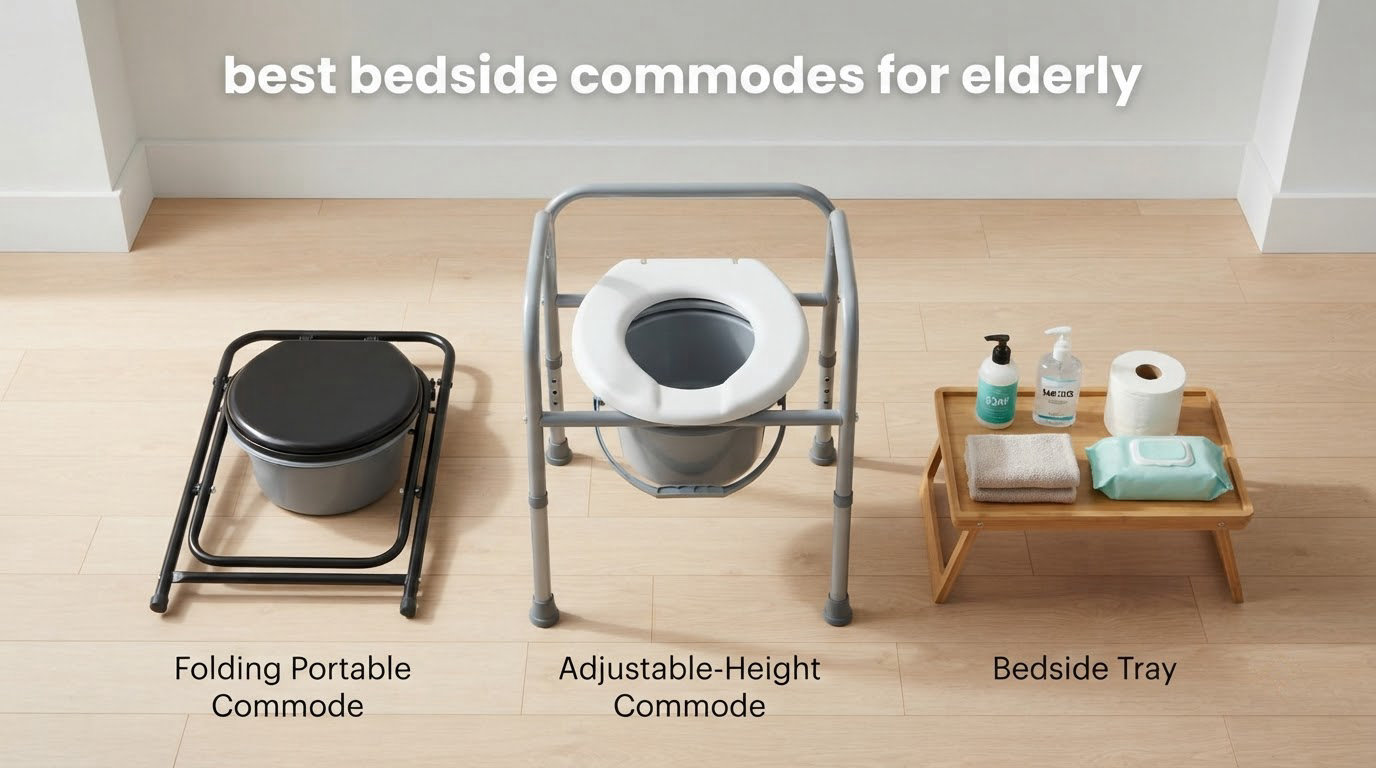
Most falls involving older adults happen on the way to the bathroom or inside it, and the worst of them happen after dark. A bedside commode for elderly users removes that trip entirely: it is a freestanding toilet chair with a removable bucket, armrests for leverage, and telescoping legs that put the seat at a height the user can actually reach from the bed. Families buy one for two reasons that rarely get stated out loud, and both matter for this roundup. The first is fall prevention. The second is caregiver injury, because transferring a parent two or three times a night into a walker and then lifting them in a bathroom is how caregivers hurt their own backs.
We evaluated twelve commode chairs for this guide, weighing published weight capacity, seat height range, arm configuration, frame material, bucket sealing, and the volume of real caregiver feedback behind each one. What follows is an honest product-by-product evaluation with the specific compromises of each model, because a commode that is wrong for a wheelchair user is wrong even if it is well made. We also cover the measurements that decide a purchase, the safe-use sequence, the cleaning protocol, and the Medicare rules that can cut your out-of-pocket cost substantially.
A bedside commode is also called a commode chair, toilet chair, or portable toilet. It has an open seat over a removable bucket or pail, adjustable legs, and usually two armrests. Most models convert to a raised toilet seat, and 3-in-1 versions also work as a toilet safety frame or shower chair. If the word “potty chair” makes an adult resistant, that reaction is common and worth addressing directly rather than avoiding.
Table of Contents
Top 3 Bedside Commode Picks (October 2026)

Drive Medical Folding Commode
- 350 lb steel frame
- Tool-free snap-on seat
- Folds flat
- 7.5 qt bucket
Carex 3-in-1 Folding Commode
- True 3-in-1 design
- 17 to 23.5 inch height
- 8.5 lb frame
- Includes liners

Medline Drop Arm Padded Commode
- Drop-down padded arms
- Foam padded seat and back
- 18 to 22 inch height
- 350 lb steel
Between them these three cover the three decisions families actually face. The Drive Medical is the dependable default for a person who can still stand and pivot. The Carex earns its place when the same chair has to travel or double as a raised toilet seat. The Medline is the one to buy when a wheelchair is involved, because the padded drop-down arms turn a standing transfer into a slide.
All 12 Best Bedside Commodes for Elderly (2026)
| Product | Specifications | Action |
|---|---|---|
| Drive Medical Folding Bedside Commode |
|
Check Latest Price |
| Carex 3-in-1 Folding Commode |
|
Check Latest Price |
| Medline Drop Arm Commode with Padded Seat |
|
Check Latest Price |
 McKesson Folding Commode Chair McKesson Folding Commode Chair |
|
Check Latest Price |
 DMI Drop Arm Extra-Wide Commode DMI Drop Arm Extra-Wide Commode |
|
Check Latest Price |
 HOMLAND 3-in-1 Dual-Crossbar Commode HOMLAND 3-in-1 Dual-Crossbar Commode |
|
Check Latest Price |
 HOMLAND Padded Seat Commode HOMLAND Padded Seat Commode |
|
Check Latest Price |
 Dr. Dunley 3-in-1 Elongated Seat Dr. Dunley 3-in-1 Elongated Seat |
|
Check Latest Price |
 HOLYHEAL M73 Drop Arm Commode HOLYHEAL M73 Drop Arm Commode |
|
Check Latest Price |
 Homecraft Bariatric Drop Arm Commode Homecraft Bariatric Drop Arm Commode |
|
Check Latest Price |
 AKIMRABY 900 lb Safety Commode AKIMRABY 900 lb Safety Commode |
|
Check Latest Price |
 Fasjloctavty 4-in-1 Folding Commode Fasjloctavty 4-in-1 Folding Commode |
|
Check Latest Price |
1. Drive Medical Folding Bedside Commode – Best Overall Pick for Most Families
Drive Medical Folding Bedside Commode, Adjustable Height, Supports 350 lb
Powder-coated steel
350 lb capacity
7.5 qt bucket
Folds flat
Pros
- Tool-free snap-on assembly
- Folds flat for storage
- Push-pin height adjustment
- 350 lb steel frame
- Very large review base
Cons
- Unpadded plastic seat
- Splash guard and bucket are basic
The Drive Medical folding commode is the one we recommend first for a parent who can still stand and pivot out of bed. It does the fundamentals without friction: a powder-coated steel frame rated to 350 lb, push-pin height adjustment, a 7.5-quart bucket, and legs that fold flat. Setup is genuinely tool-free, with a snap-on seat and lid that click into place in under a minute.
It has been on the market since December 2008 and carries close to 37k ratings averaging 4.6, with 79% of those at five stars. That volume matters more than it sounds. When a bucket bracket starts to loosen or a locking pin wears, the answer exists somewhere in those thousands of reports, and this is one of the few commodes where it does.
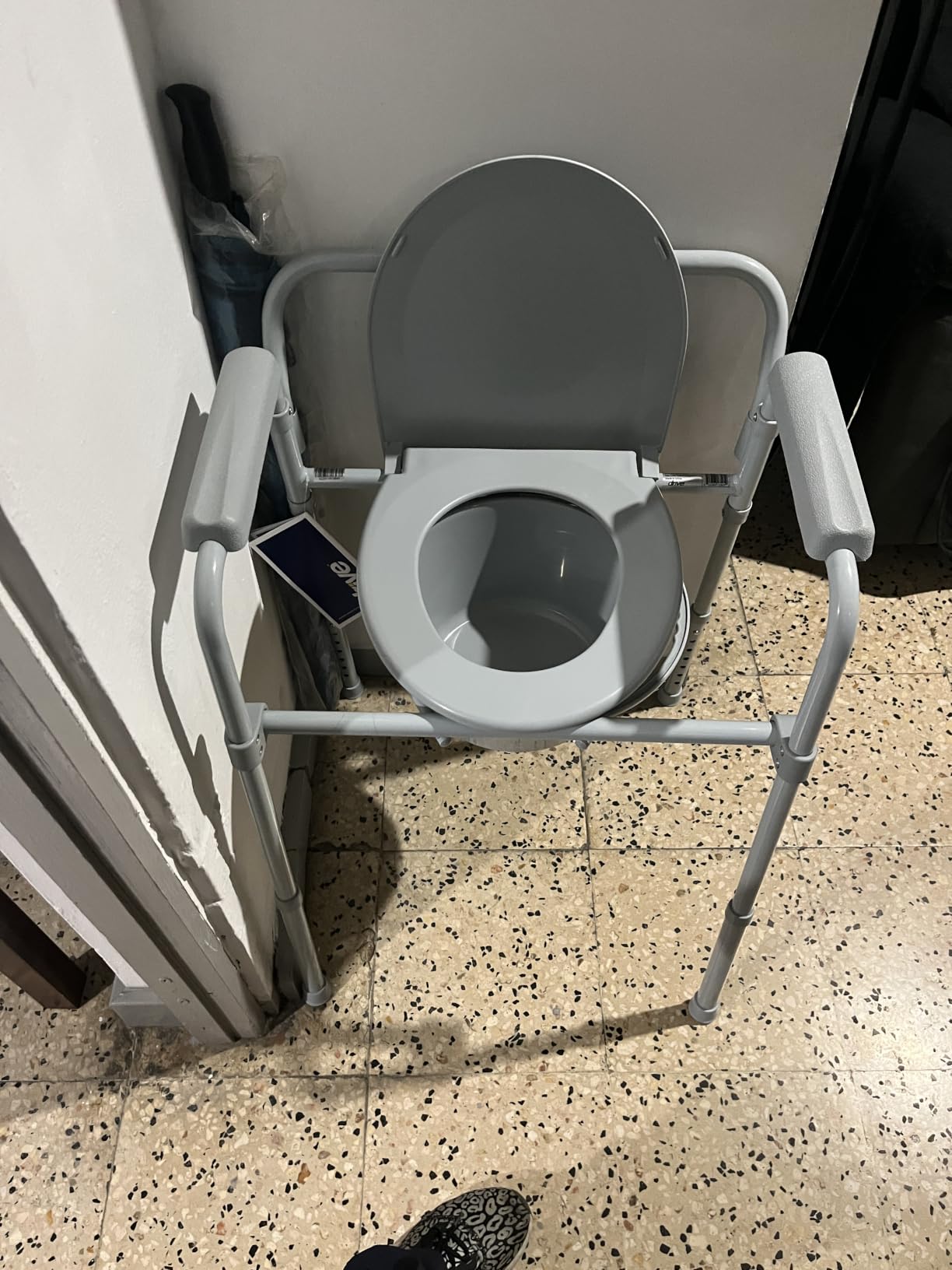
The frame is the reason to trust it. The steel is powder-coated rather than painted, so it resists the damp bathroom environment better than most, and the armrests are wide enough to push down on with both hands during a transfer. Because the whole unit folds, one person can move it between the bedroom and the bathroom for a family that is still trying to keep normal routines.
The compromise is comfort during long sits. The seat is unpadded plastic with a standard round opening, and reviewers note it becomes uncomfortable if someone is sitting on it for more than an hour. For overnight toileting and quick daytime use, that is not a problem. For someone who is bedbound and sits on it for hours, look at a padded model instead.
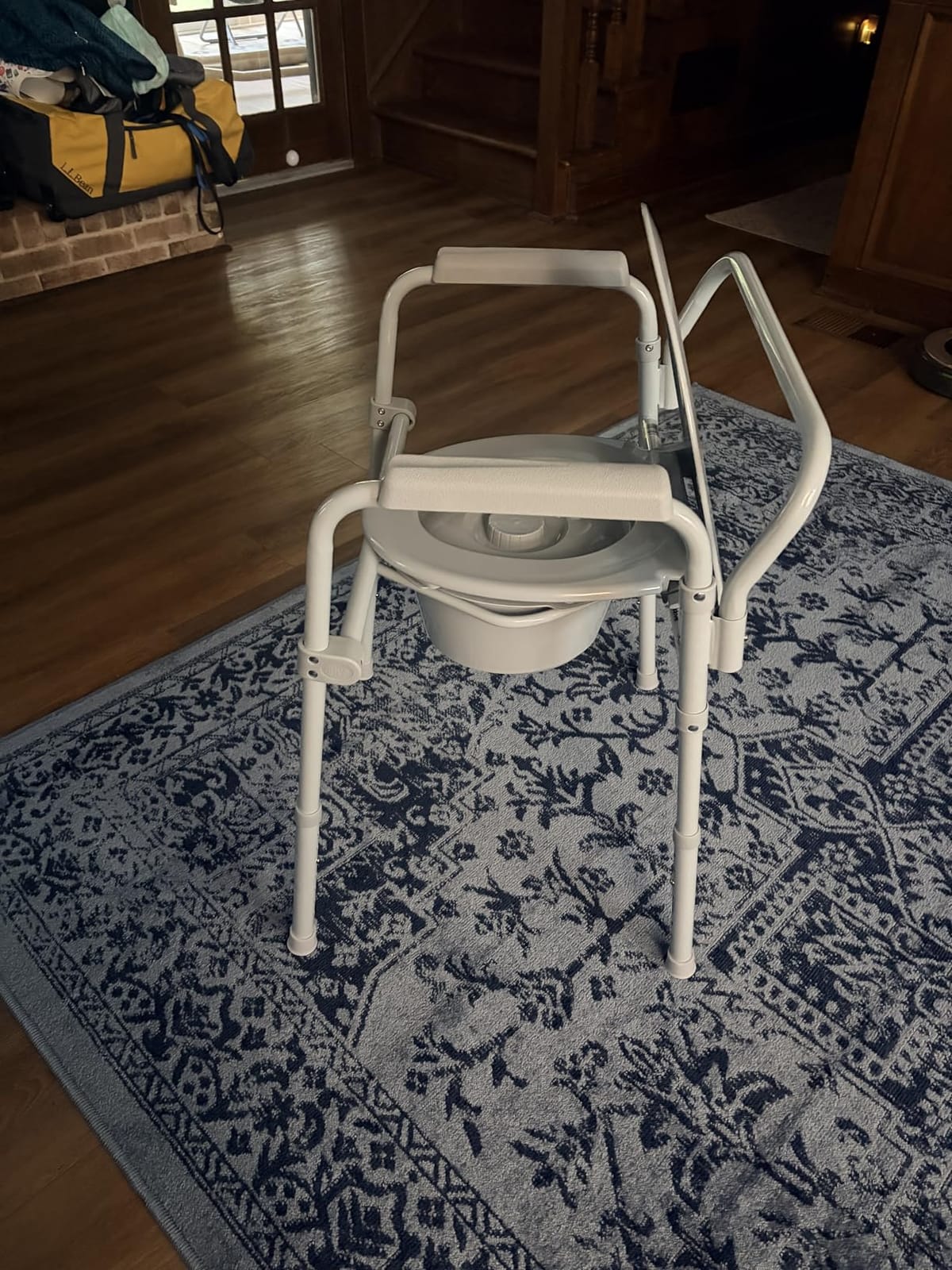
Check the seat height before you commit
Measure the top of the mattress and the top of the knee. The ideal commode height leaves the user’s feet flat or nearly flat on the floor with the knees at or slightly below the hips, because that is what lets them stand up without pushing through their arms.
This model adjusts with push pins in several positions, which is enough for most standard beds. If the user sleeps on a tall hospital-style frame, or if the legs are shorter than about five feet, check whether a model with a wider height range closes the gap better.
Who should pick a different commode
If the user transfers from a wheelchair, skip it. The armrests are fixed and there is no way to slide in from the side, so the transfer becomes a standing pivot, which is the exact movement a wheelchair user may not be able to make safely.
If you need a padded seat, a bariatric capacity, or a warranty, this model does not offer any of those. It is a straightforward steel folding frame, and it earns its position by doing that one job well rather than by adding features.
2. Carex 3-in-1 Folding Commode – Best Value for Three Uses
Carex 3-in-1 Folding Bedside Commode and Raised Toilet Seat, Portable Toilet Supports Up to 300lbs, Bedside Commodes for Seniors, Adult Potty Chair with Bucket, Lid, and Splash Guard
17 to 23.5 in height
300 lb capacity
8.5 lb weight
Folds to 22 by 18.5 by 16 in
Pros
- True 3-in-1 versatility
- Lightweight at 8.5 lb
- Includes liners and splash guard
- Compacts for travel
Cons
- 300 lb is the lowest capacity here
- Splash guard is basic
The Carex 3-in-1 is the model we recommend when one chair has to do three different jobs. Remove the bucket and it becomes a raised toilet seat over the existing toilet. Strap the sides down and it becomes a toilet safety frame. Leave the bucket in place and it is a commode. For a household managing a new hip replacement, that flexibility removes the need to buy two separate pieces of equipment.
At 8.5 lb it is the lightest frame in this roundup by a wide margin, and it folds down to roughly 22 by 18.5 by 16 inches. One caregiver can carry it down a hall, load it in a car trunk, or store it in a closet between uses without asking for help.
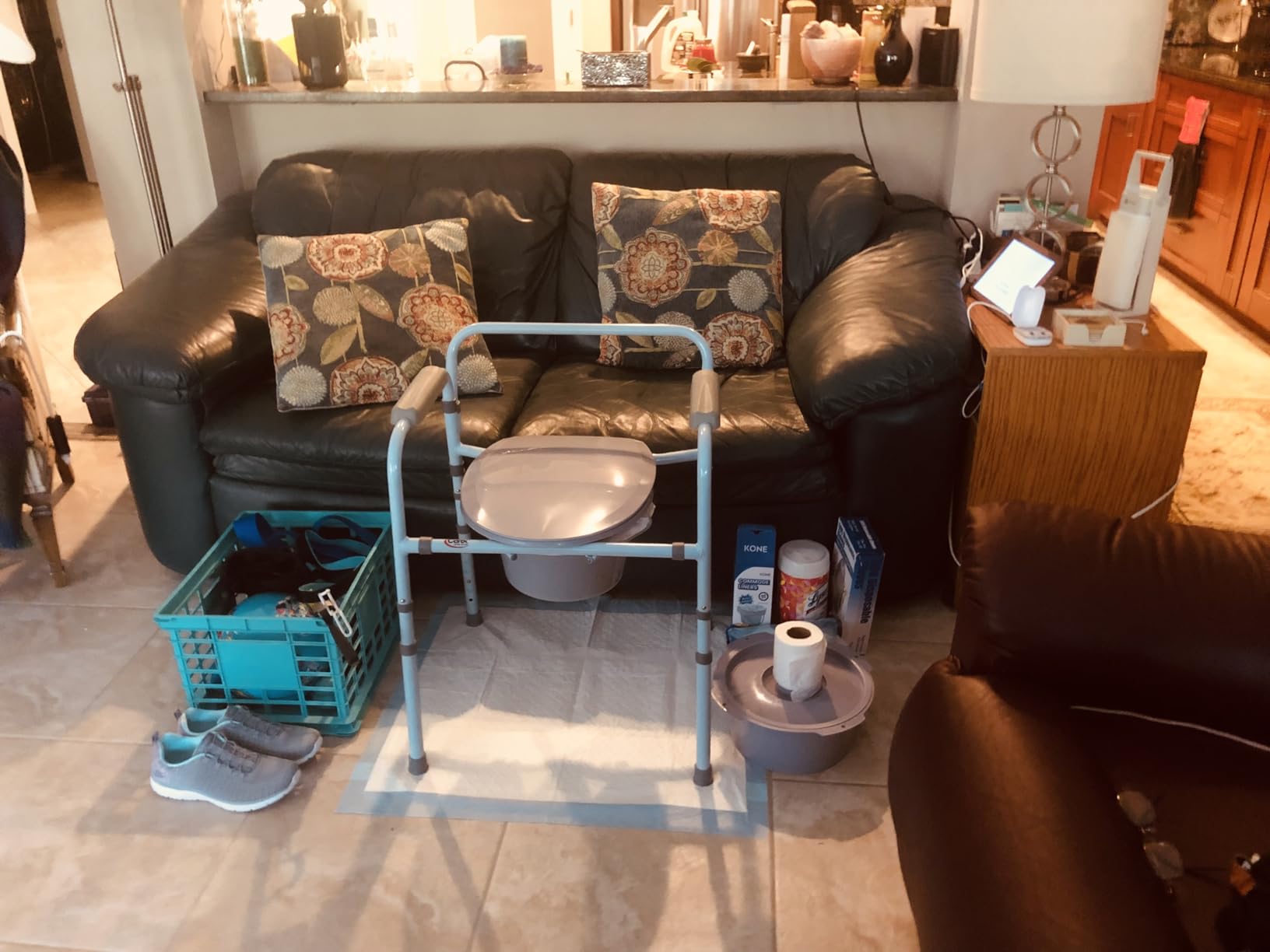
Height adjustment runs from 17 to 23.5 inches, a useful six-and-a-half-inch range that covers most standard beds and most toilets. The bucket is a standard 7.5-quart pail, and the package includes a lid, a splash guard, and a trial pack of disposable commode liners, which are the single most helpful accessory for anyone who will be emptying this regularly.
The limit here is weight. Three hundred pounds is the lowest rated capacity among the twelve models we evaluated, and it is the single most common caveat in the reviews. A user above that number should not use this frame regardless of how comfortable the seat looks, because the limit exists for a reason.
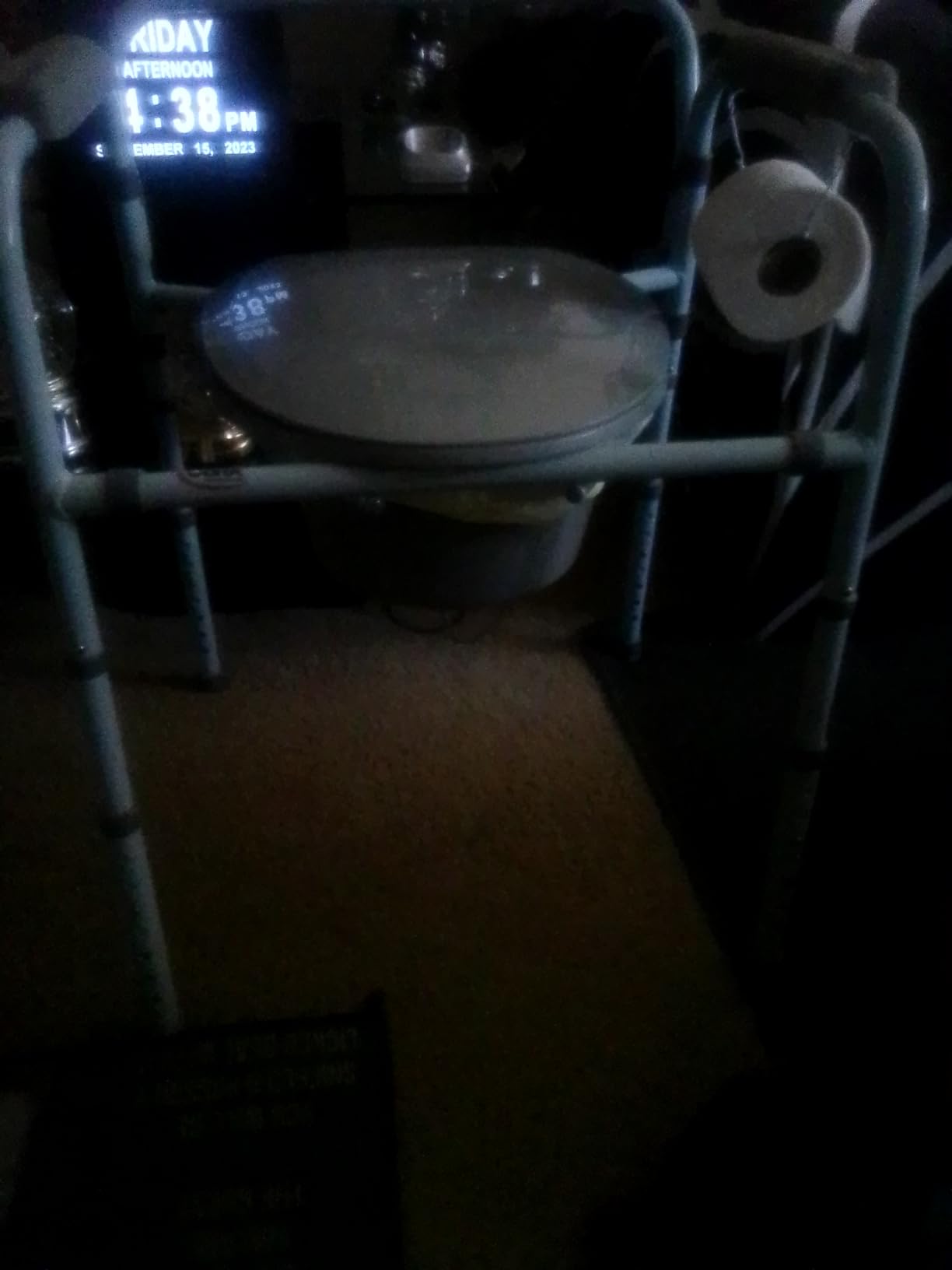
Why the 3-in-1 configuration earns its keep
Post-surgical recovery is the clearest case. Someone recovering from a hip or knee replacement usually needs a raised toilet seat for the first several weeks, then a commode for overnight use, then a safety frame if balance is still poor. A 3-in-1 chair covers all three phases with one purchase and one piece to clean.
The liners matter more than most buyers expect. Fitting a disposable liner into the bucket means you strip it by inverting it over the toilet, which cuts contact with waste to nearly nothing. For a household with an immunocompromised parent, or one where a spouse is pregnant or immunosuppressed, that difference is meaningful.
Where it falls short
The armrests are fixed, so this is not a lateral transfer chair. A wheelchair user will have to stand and pivot, and if standing is not safe, this is the wrong tool even though the price looks attractive.
It also does not fold away completely flat against a wall the way some do, and the splash guard is thin molded plastic. Both are acceptable trade-offs for the versatility, but worth knowing if your bathroom space is genuinely tight.
3. Medline Drop Arm Commode with Padded Seat – Best for Wheelchair Transfers
Medline Drop Arm Commode with Padded Seat and Backrest, Durable Toilet Chair for Adults and Seniors, Removable Pail, Splash Guard, Drop Down Arms for Easy Transfer, 350 lb. Weight Capacity, Tan
Drop-down padded arms
350 lb capacity
18 to 22 in height
Foam seat and backrest
Pros
- Drop arms ease lateral transfers
- Padded seat and backrest
- Converts to raised toilet seat
- Push-button height adjustment
Cons
- Heavier and bulkier than folding models
- Lowest average rating in this set
The Medline drop-arm commode is built around a single idea: let the wheelchair come to the commode instead of making the person stand. Both armrests drop down with padded rests, so a caregiver can slide the user sideways off the wheelchair and into the seat without anyone bearing full weight. Caregivers describe this as the difference between a two-person transfer and a one-person transfer.
Comfort is the other half of the case for this model. The seat is thick foam with a removable padded backrest, and the armrests are padded too, which matters during a slow transfer where the user is holding the armrest for a long time. Height adjusts by push button from 18 to 22 inches on a steel frame rated to 350 lb.
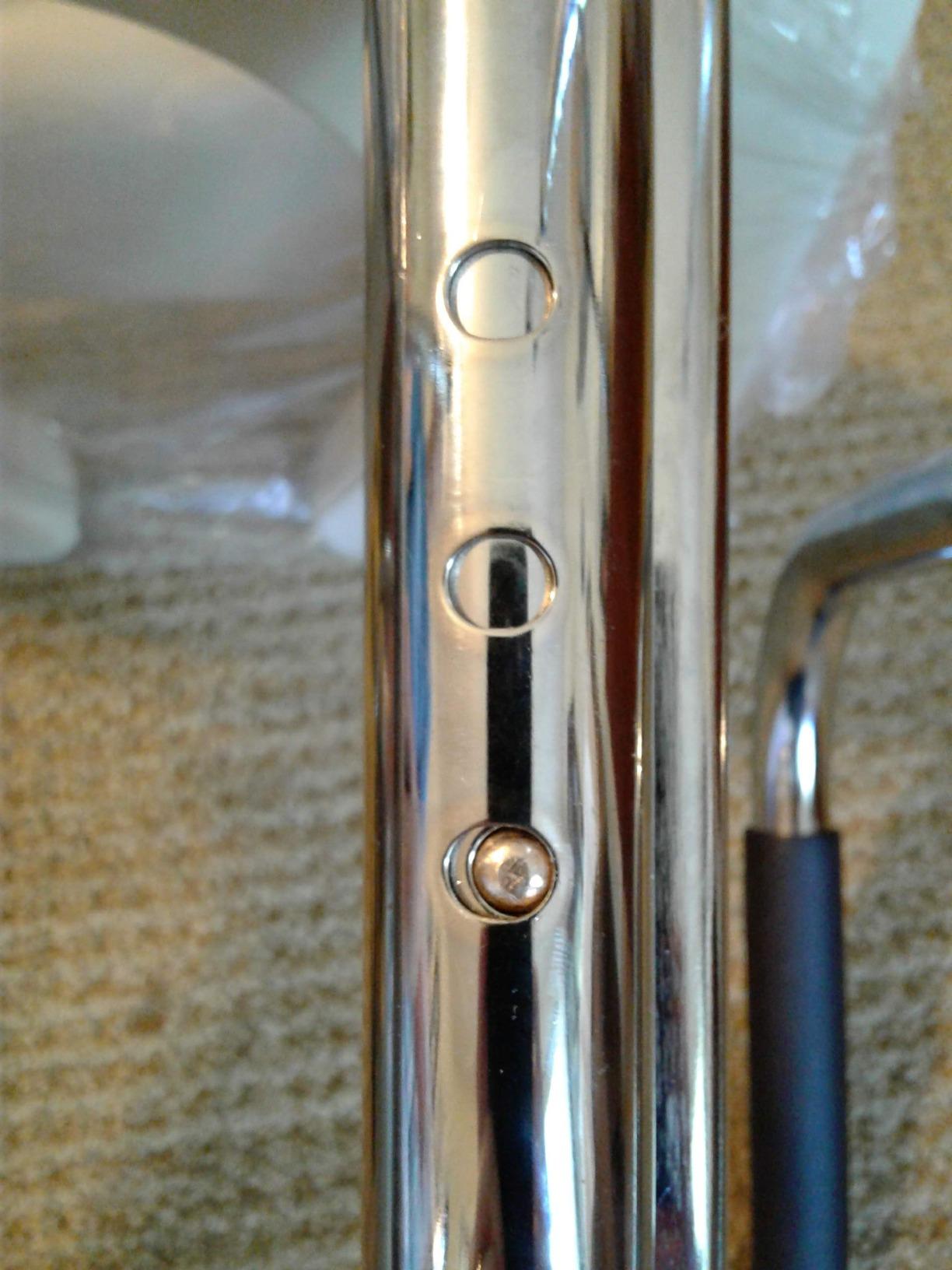
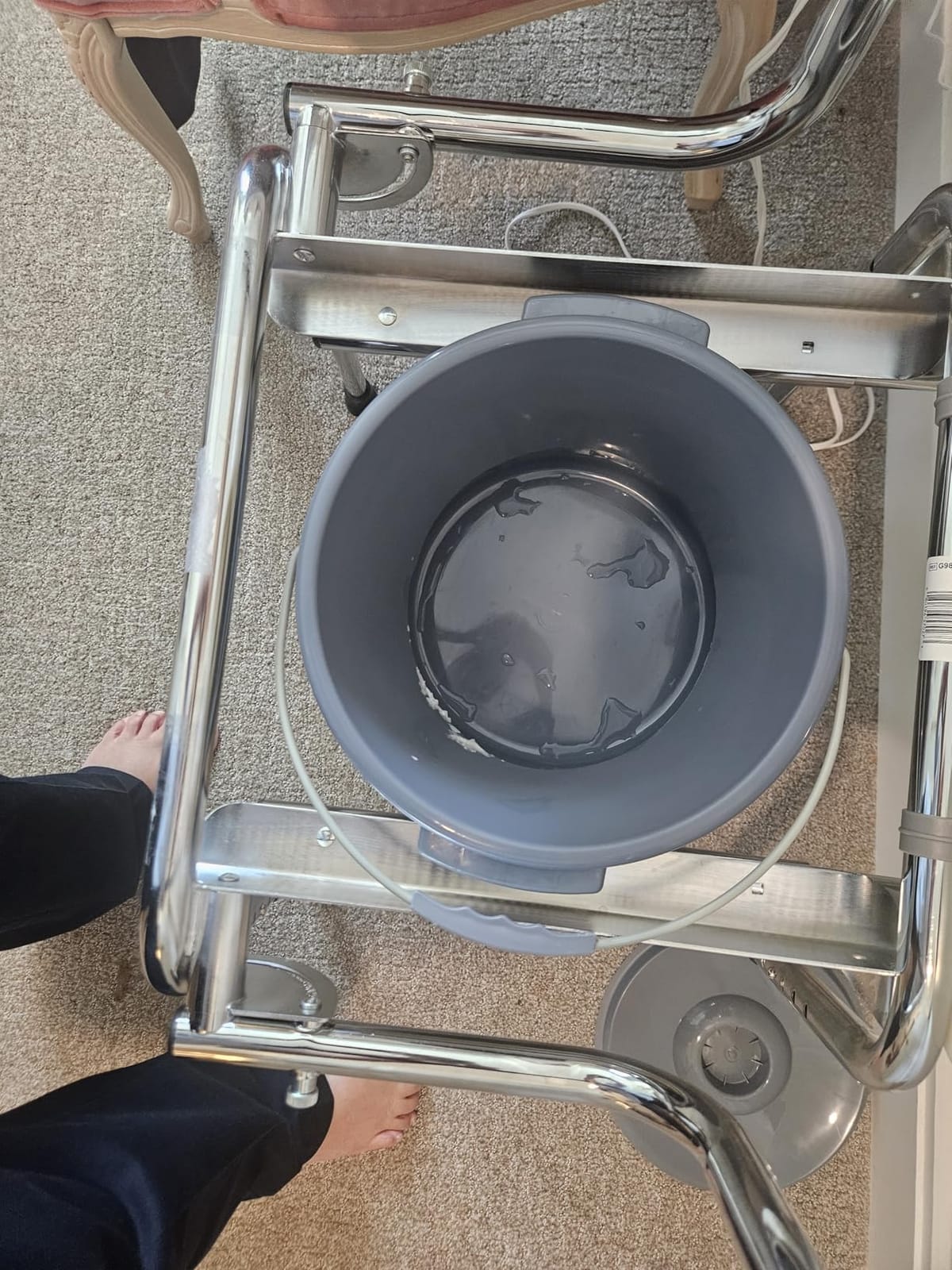
Remove the bucket and the backrest and the remaining clip-on seat converts into a raised toilet seat, so the same unit covers the two most common post-surgery needs. The 7.5-quart bucket lifts out with a lid and splash guard, and the seat unclips entirely for rinsing rather than needing to be wiped in place.
This is a long-standing clinical-grade model, first listed in 2004, and it holds a 4.4 average across more than 3300 ratings. That rating is the lowest among the twelve here, and the one-star share is the highest at 7%. Most of those complaints concern bulk rather than function, which is the honest cost of a rigid frame with padded arms.
Check that the drop arms move smoothly
Before you commit, sit on the bed, unlock an armrest, and drop it fully while the user is in position. The arm has to clear the wheelchair wheel and the user’s hip completely, and it has to stay where you put it without the user leaning on it.
Also measure the gap between the bed and the commode. This frame does not fold, so the positioning is fixed once you set it. A few inches of misalignment is fine. A foot of misalignment means the user is reaching sideways for the armrest instead of pushing straight down.
Who this suits and who it does not
This is the right choice for a wheelchair user, a person with very weak upper body strength, or anyone recovering from surgery where a standing pivot is restricted. It is also comfortable enough for someone who genuinely needs to sit on the chair for extended periods.
It is the wrong choice for travel, for small rooms where the footprint matters, and for a caregiver who needs to move the chair between rooms by themselves. A non-folding padded steel frame is one of the heavier setups to reposition, and bedrooms that double as treatment rooms often have narrow clearances.
4. McKesson Folding Commode Chair – Best for Post-Surgery Recovery
McKesson Folding Commode Chair with 7.5 qt Bucket, 13 1/2 in, 1 ct
Alloy steel frame
350 lb capacity
16.6 to 22.5 in height
Folds flat
Pros
- Tool-free setup
- Lightweight foldable frame
- Includes carry handle and cover
- Well reviewed by post-surgery users
Cons
- Fixed arms block lateral transfers
- Standard seat runs small
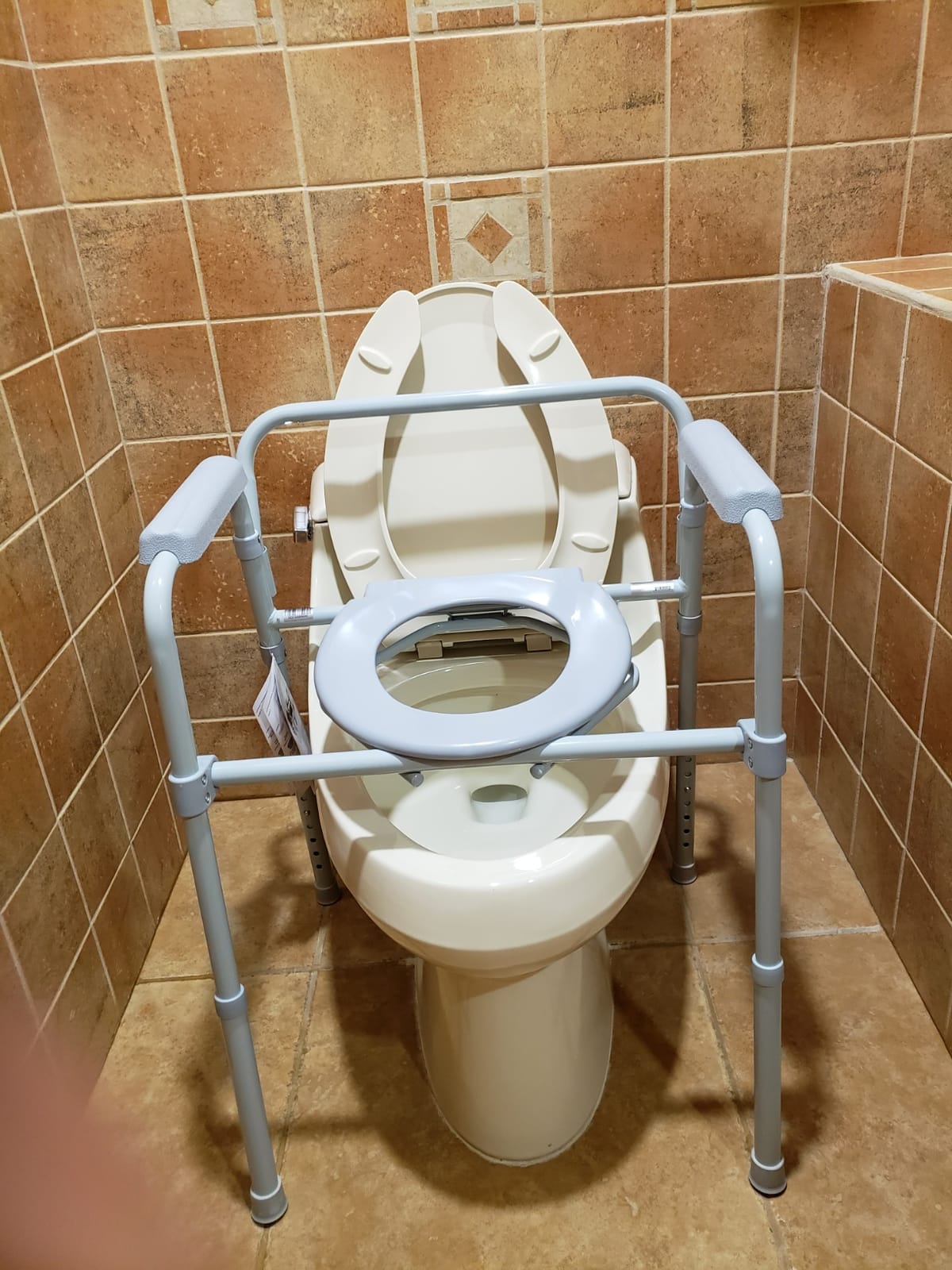
The McKesson folding commode is the one we point families toward when someone is recovering from leg, knee, or hip surgery and the goal is a temporary, portable setup. It is a powder-coated alloy steel frame rated to 350 lb, tool-free to assemble, and it folds flat for storage between uses.
It is also a genuine 3-in-1, working as a commode, a raised toilet seat, or a toilet safety frame. Height adjusts by push button from about 16.6 to 22.5 inches, which is a wider range than most frames in this category and covers a lower setting for shorter users.
The included kit is unusually complete for a healthcare-supply workhorse: a 7.5-quart bucket with a splash shield, a carry handle, and a fitted cover. The carry handle on the bucket matters more than it sounds, because it lets a caregiver lift the full pail with two hands and a straight back rather than tipping it against a leg.
Post-surgery reviewers consistently single out the easy assembly and low weight. In the first weeks after a joint replacement, a family is often moving equipment around a small apartment while managing pain medication and restricted weight bearing, and a chair one person can relocate is a genuine advantage.
Test the seat size with the user seated
The recurring complaint in reviews is that the standard seat feels small, and the listing notes a 13.5-inch backrest width. For a user with wider hips or who needs to feel fully supported rather than perched, sit them on it before the accessory basket is closed.
A related point is transfer direction. With fixed arms, the user has to come in from the front, meaning they stand or step up and then lower. That is workable for a knee replacement in early recovery. For a hip replacement with strict weight-bearing restrictions, a drop-arm model is safer.
Watch the frame at higher weights
Some users report the frame feeling light for its 350 lb rating, particularly when a caregiver is also pushing down on the armrests during a transfer. If the user is above about 250 lb, a model with lock nuts and a heavier frame gives more margin.
Our advice is to test the wobble before the first night use. Sit on the front edge, push the armrests down hard, and check whether the legs shift. A frame that moves under load will feel unstable to a nervous user and will be the reason they refuse to use it.
5. DMI Drop Arm Extra-Wide Commode – Best for Larger Users
DMI Drop Arm Portable Toilet Commode, Extra-Wide Seat, 500 Pound Weight Capacity, Bucket with Lid Included, Adjustable Legs, Elderly Assistance Products, Grey
500 lb capacity
23.25 in wide seat
20 to 24 in height
5 liter bucket
Pros
- Highest capacity in the mid-range
- Extra-wide seat
- Drop arms from either side
- Lock nuts on the legs
Cons
- Does not fold for storage
- Heaviest unit to reposition
The DMI drop-arm extra-wide commode is rated to 500 lb, which makes it the strongest frame in this roundup for anyone who does not need a full bariatric rating but has outgrown standard 300 lb frames. The seat measures 23.25 inches wide by 18.5 inches deep, and the overall footprint is 29.5 by 20.5 by 29.25 inches.
Both armrests drop using a release button, so a user can slide in from whichever side the wheelchair or bed is positioned. That flexibility, combined with a flat seat platform rather than a contoured bowl, makes standing back up noticeably easier. Reviewers report this is often the first commode that has felt genuinely stable to a larger user.
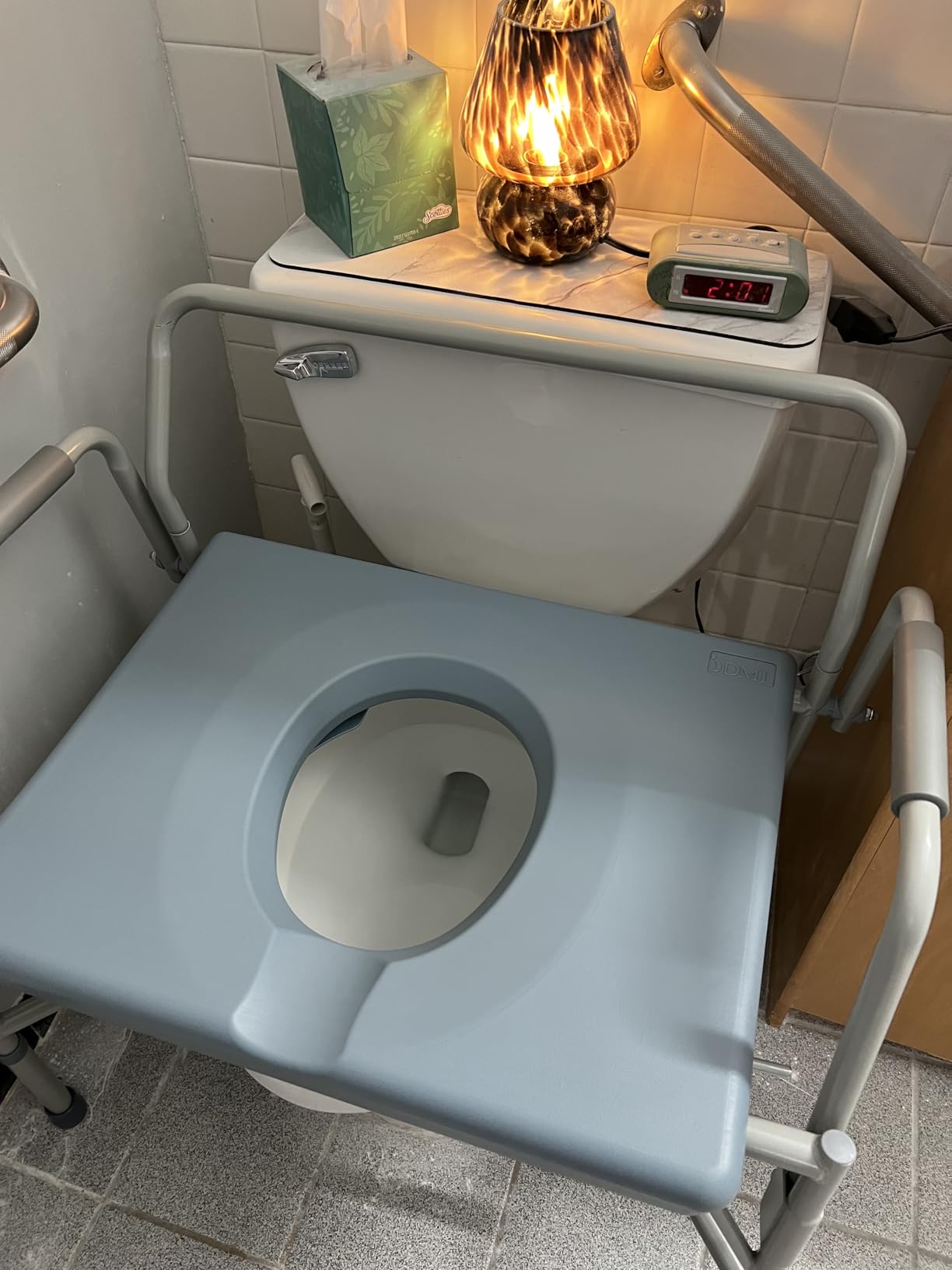
Height adjusts from 20 to 24 inches, which is a higher floor than most models here. That is good for taller users and for elevating a user who has difficulty lowering into a low seat, but it can be wrong for someone under about five feet three inches, who may find their feet do not reach the floor.
The bucket is a 5-liter pail with a snap-on lid and carry handle, and reviewers describe the bucket and splash guard as solid rather than flimsy, with lock nuts on the legs adding stability during heavy transfers. The package weight is listed at 22.93 lb, which is a real consideration for a single caregiver.
Foot reach is the deciding measurement
For any commode, the user’s feet need to reach the floor. Put the chair at its lowest setting, sit the user on the edge of a bed at the same height, and check that their feet are flat or on a footstool. Dangling feet make standing far harder and increase the chance of a slip.
This model has a 20-inch lowest setting, so anyone shorter than roughly five feet should verify reach before ordering. A lower-range model may serve them better even if it is rated lower.
Space and weight are the real costs
This frame does not fold, so once it is positioned it stays there. Measure the bedside clearance and make sure a caregiver can still walk past it, because a commode that blocks the route to the window or the closet will get moved and never moved back correctly.
At roughly 23 lb it is the hardest unit here to move between rooms, and a bariatric model rated to 1000 lb is heavier still. If you need the capacity but not the bulk, a folding 350 lb model with drop arms is a better compromise than a heavy stationary frame.
6. HOMLAND 3-in-1 Dual-Crossbar Commode – Best for Seven Height Settings
HOMLAND 3-in-1 Bedside Commode Toilet with Sturdy Dual-Crossbar, 350lb
7 height settings
350 lb capacity
13.9 lb weight
7.5 qt bucket
Pros
- Dual-crossbar frame resists flex
- Seven height positions
- 3-in-1 versatility
- Wide seat with armrests
Cons
- Unpadded seat and no backrest
- Small review base
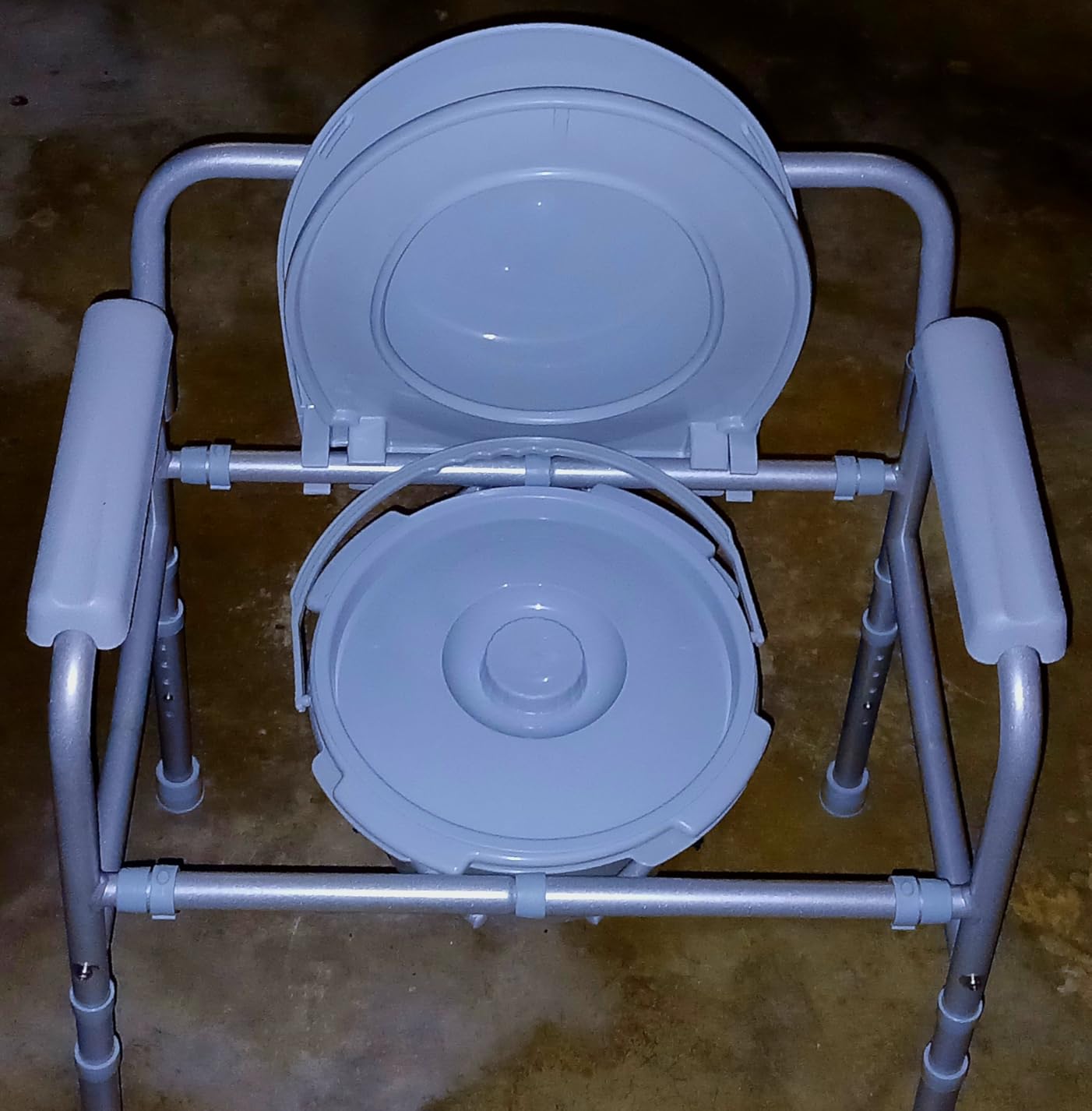
The HOMLAND 3-in-1 uses a dual-crossbar frame, which is the structural difference that matters here. Most budget commodes brace with a single crossbar under the seat; a second bar removes the front-to-back flex that makes a cheap frame feel like it might rock under an adult who shifts their weight.
It carries seven height adjustment settings, the joint-largest range in this roundup, and works as a standalone commode, a raised toilet seat, or a toilet safety frame. The wide seat and supportive armrests are shaped for a user who pushes down on the arms to stand, which is the motion most of these chairs depend on.
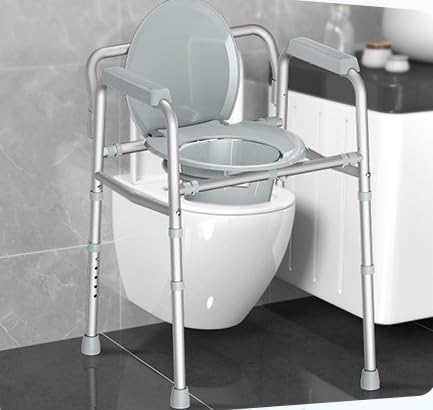
At 13.9 lb it is heavier than the Carex and McKesson but far lighter than the bariatric units, and it folds for storage. The 7.5-quart bucket comes with a lid, handle, and splash guard, which is the standard complete kit across this category.
The honest limitation is the review base. With 566 ratings it holds a Best Sellers Rank of number two in Bedside Commodes and a 4.5 average with 76% five stars, but that is a much thinner history than the category leaders. A newer listing may be perfectly made, but it has been in fewer hands for fewer seasons.
Why frame rigidity matters more than features
Frame flex is felt through the seat during a lateral shift and through the armrests during a push-to-stand. Users describe a wobbly commode as feeling unsafe even when it is technically within its rating, and that perception is what makes them stop using it after a few weeks.
Reinforcement at the crossbar is the cheapest durability improvement a manufacturer can make, and this model has two. If a parent is heavy-handed during transfers, or two caregivers assist from either side, a rigid frame reduces the chance of an alarming creak on night two.
Comfort is the trade you make here
This variant has no padding on the seat or the backrest, so it sits well below the comfort ceiling of the padded models in this list. For overnight toileting and daytime transfers, that is a reasonable trade for rigidity and height range.
If the user will be sitting on the chair for more than an hour at a stretch, or if they have pain conditions that make hard surfaces difficult, choose padding instead of crossbars. You rarely need both in the same frame, and a padded model with fewer height positions is the more useful combination for a bedbound user.
7. HOMLAND Padded Seat Commode – Best for Long Sitting Comfort
HOMLAND Bedside Commode Toilet, Padded Seat & Backrest, Enhanced Crossbar
42 mm padded seat
24 in wide frame
18 to 23 in height
6.8 qt sealed bucket
Pros
- Thickest cushion in this roundup
- Padded backrest
- 24 in frame with 21 in armrest space
- Tight-seal bucket reduces odor
Cons
- Heaviest padded option
- Backrest removes for toilet-seat use
The HOMLAND padded model is the one we recommend when a person will be sitting on the commode for long stretches, which is common with bedbound users, hospice comfort care, and anyone with limited mobility who has been told to limit how long they stand. The cushion is 42 mm thick, paired with a foam-padded backrest, and reviewers consistently call it the most comfortable setup in this group.
The frame is a 24-inch wide rust-resistant aluminum alloy with a V-shaped dual side crossbar and non-slip feet, rated to 350 lb. The width is not cosmetic: it provides 21 inches of space between widened non-slip armrests, which is what allows a caregiver to reposition a person who has slid sideways without fighting the frame.
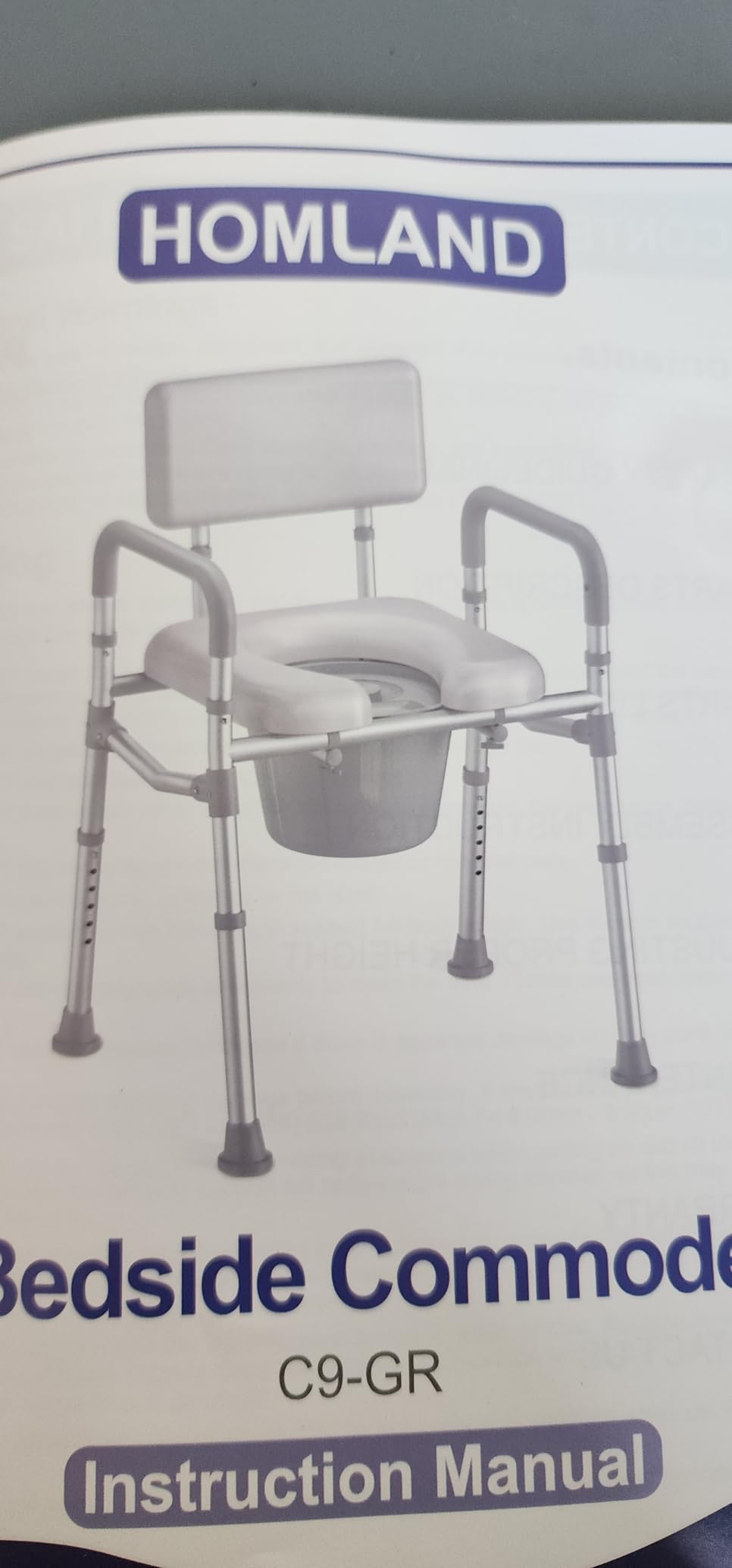
Height adjusts by push button from 18 to 23 inches with no tools, and the bucket is a 6.8-quart tight-seal design with a lid and splash guard. Seal quality matters in a bedroom rather than a bathroom, and the tight fit is the reason reviewers report less odor than on open pails. The package also includes an organizer pouch and a toilet paper holder, which are small touches that matter at three in the morning.
It is also one of two models here that are FSA and HSA eligible, which can be worth checking if your plan allows reimbursement. Listed weight is 11.9 lb, the heaviest of the padded options but still manageable for one caregiver to reposition.
When a padded seat changes the outcome
Hard plastic seats cause two problems. They create pressure points over the tailbone during long sits, and they make a user reluctant to slow down and lower themselves carefully. Cushioning removes the first problem and quietly helps with the second, because the user is more willing to take their time.
This matters most for anyone with existing skin fragility or a history of pressure sores, where prolonged pressure over a hard edge is exactly the risk to avoid. The wide frame also helps here, since a user can shift position without being stopped by an armrest.
Understand the conversion limits
To use this as a raised toilet seat over an existing toilet, the backrest has to come off. It is not a one-piece flip-over design, so switching between modes takes an extra step compared with models built as a single unit.
The other consideration is weight. Padded frames are heavier than bare steel, and a padded commode that a single caregiver cannot move tends to get left in one spot. Decide where it lives, position it, and treat it as a fixed piece of bedroom furniture.
8. Dr. Dunley 3-in-1 Elongated Seat Commode – Highest Rated in the Set
Dr. Dunley 3-in-1 Bedside Commode Chair with Elongated Seat – Steel Folding Frame, 7.5 QT Bucket, 350 lb Weight Capacity, Clip-On Toilet Seat, Bathroom Safety Aid for Seniors, Tool-Free Assembly
4.7 average rating
350 lb capacity
Elongated seat
Compact footprint
Pros
- Highest rated at 4.7
- Elongated seat improves comfort
- Stable steel frame
- Compact enough for small rooms
Cons
- No padding on seat or backrest
The Dr. Dunley 3-in-1 carries the highest average rating in this roundup at 4.7, with 86% of its ratings at five stars and only 1% at one star. That distribution is unusually clean, and the reasons are consistent across the reviews: a stable frame, an elongated seat, and a footprint small enough for a tight bedroom.
The elongated seat is the real differentiator. Standard commode openings are round and cut into a short plastic seat, which spreads the user’s weight onto the frame edges. An elongated opening follows the body’s natural shape and removes the pressure ring that makes a hard commode seat sore after an hour.
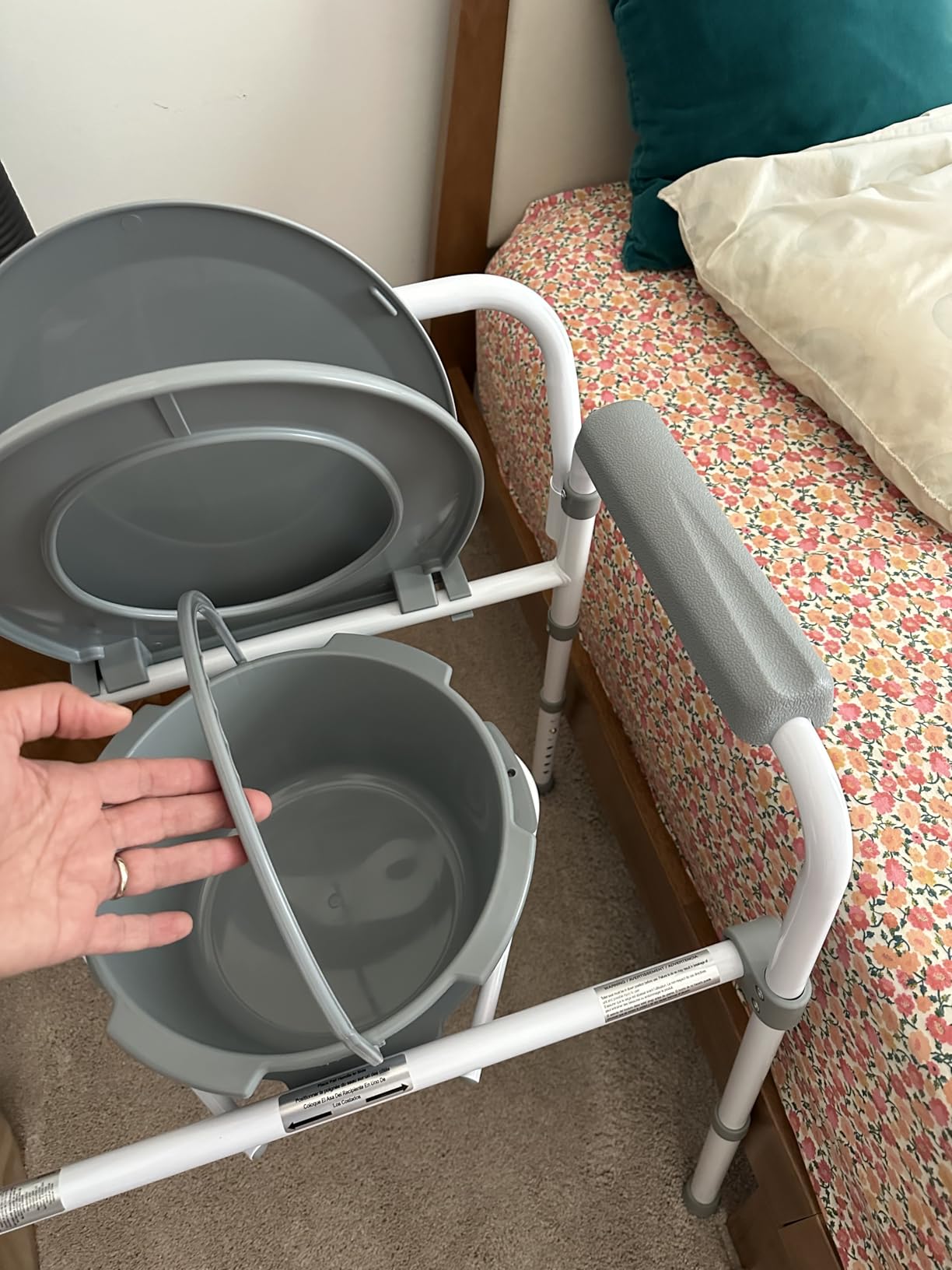
It works as a commode, a toilet safety frame, or an over-the-toilet support on a powder-coated steel frame rated to 350 lb. The 7.5-quart bucket has a lid and splash guard, and the seat is a clip-on unit that lifts off entirely for rinsing, which reviewers pair with disposable liner bags for cleanup.
What it does not offer is padding. There is no cushioned seat and no backrest, so it is a comfort upgrade through seat shape rather than through foam. It also carries a 4.7 on 356 ratings, so its feedback base is thinner than the leaders, and it holds a Best Sellers Rank of number 18 in Bedside Commodes.
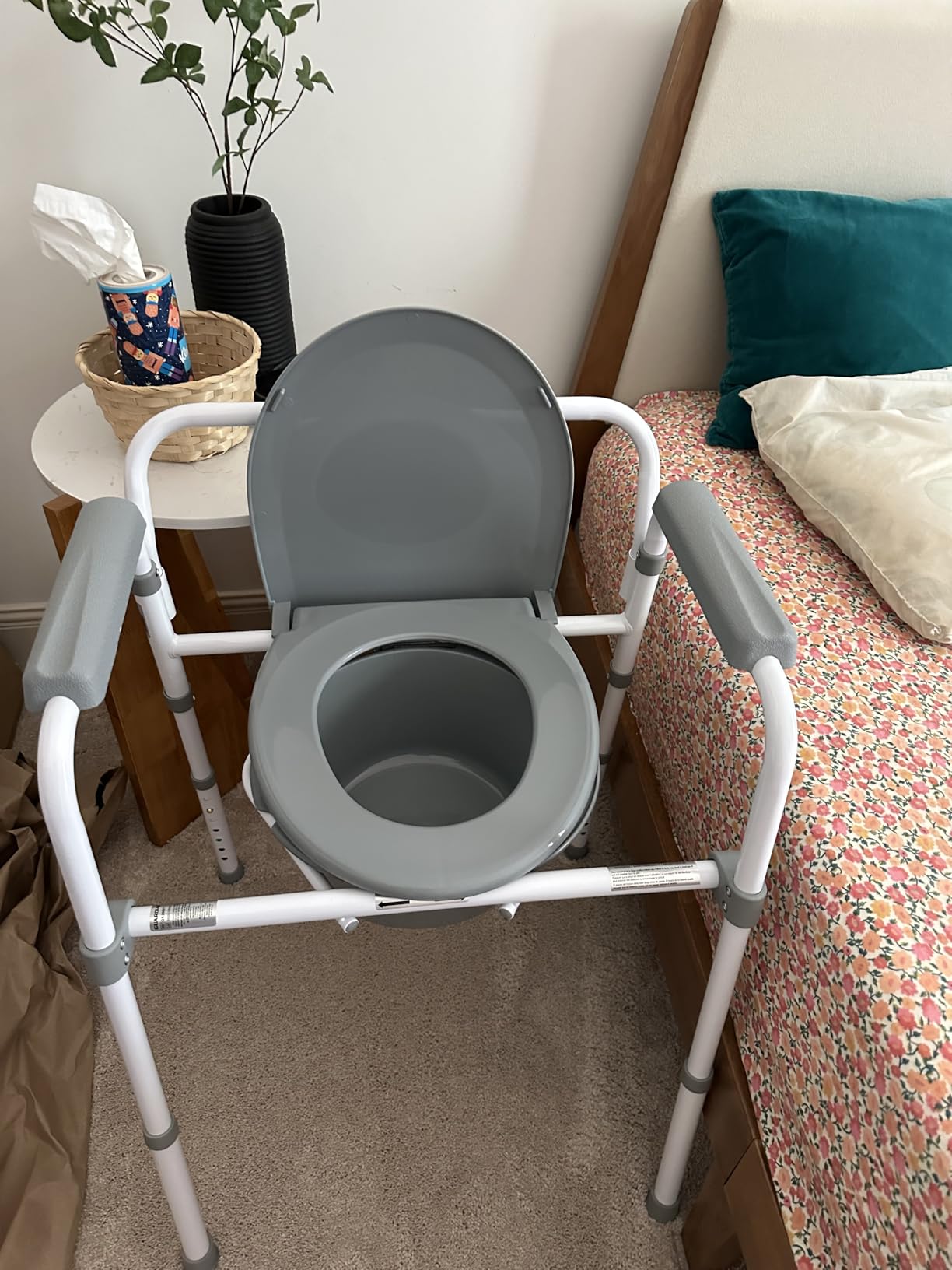
Elongated versus round openings
A round opening is fine for a few minutes of use but concentrates pressure on a narrow area for anyone sitting longer. The elongated opening spreads contact across the sitter’s weight, which is why reviewers recovering from knee replacement surgery describe it as noticeably more comfortable than a standard commode.
The trade is depth. An elongated seat needs more room front to back, so measure the space between the bed and any furniture before ordering if your bedroom is tight. The listing does not publish exact product dimensions, so measure the seat and frame yourself once it arrives and confirm it fits the spot.
Best used as a temporary recovery tool
This is an excellent second chair. Many families keep one commode by the bed for overnight use and a second setup in the bathroom for daytime, and this is a reasonable choice for the second position because it is compact and converts to a raised toilet seat.
It is less suitable as the only chair for a fully bedbound person who sits for hours, because there is no padding and no back support. For a user who toots, stands, and gets on with the day, the elongated shape and stable frame are the more important qualities.
9. HOLYHEAL M73 Drop Arm Commode – Best for Warranty Cover
HolyHeal M73 Drop Arm Bedside Commodes for Seniors, Potty Chair for Adults
400 lb capacity
40 mm padded seat
19 to 25 in height
2 year warranty
Pros
- Only 2 year warranty in this set
- 400 lb frame with drop-down arms
- Water-resistant wipe-clean padding
- Tallest adjustment range
Cons
- Highest price in the set
- Smallest review base
- 39 in frame suits taller users
The HOLYHEAL M73 is the only model here with a two-year manufacturer warranty, and that is the reason to look at it when a commode will be in daily use for a long recovery or ongoing home care. A one-year failure on a welded joint or an arm mechanism is a real cost when the alternative is reordering and waiting.
Everything else about it is aimed at the same user. The frame is reinforced to 400 lb, both armrests drop with a press-and-hold release button, and the seat and backrest are 40 mm padded with water-resistant surfaces that wipe clean. Height runs through six gear settings from 19 to 25 inches, which is the tallest adjustment range in this roundup.
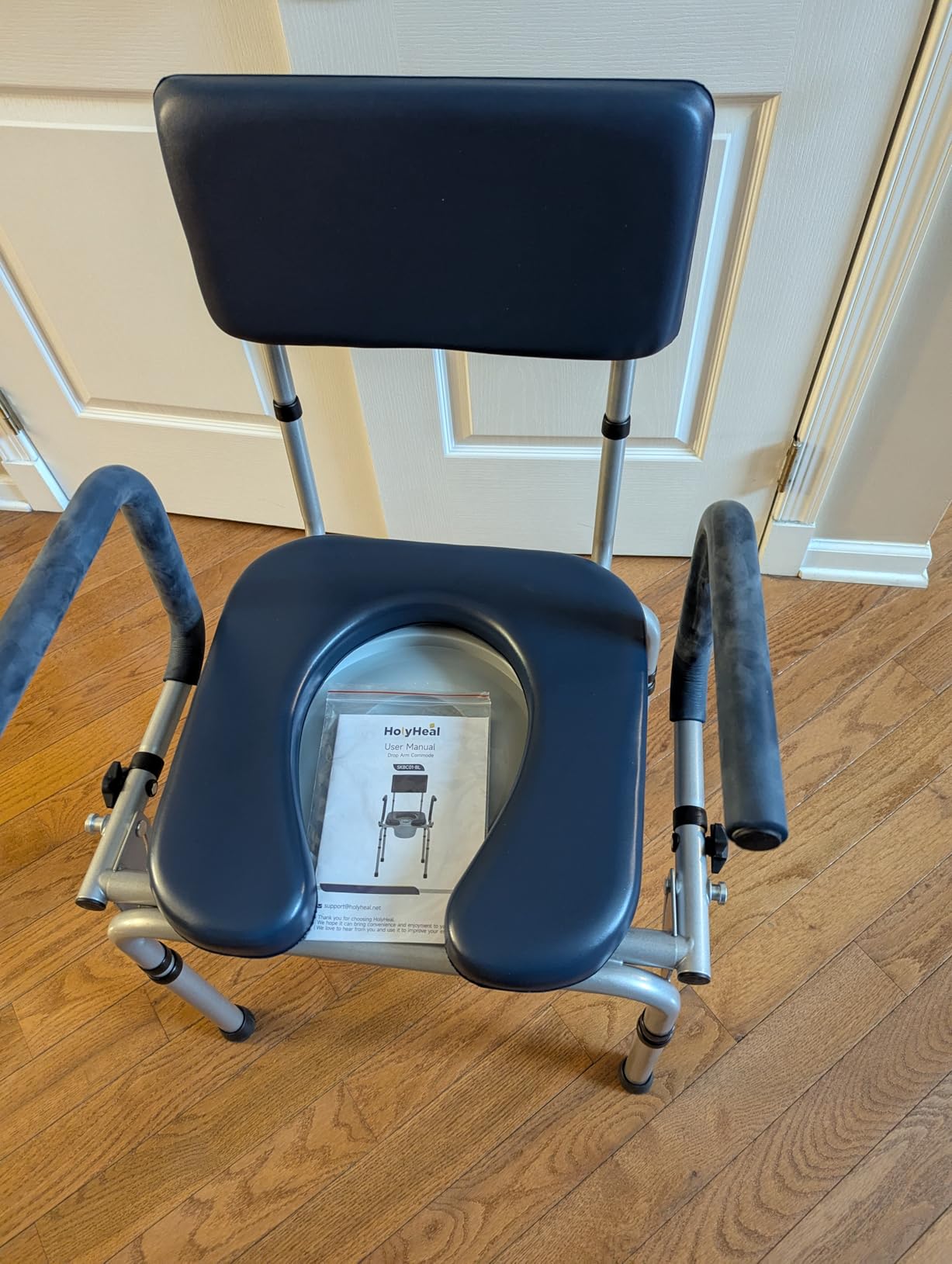
The bucket is a 6.3-quart removable pail with a lid and splash guard, and the seat clips on so it lifts off for rinsing. Like the HOMLAND padded model, it is FSA and HSA eligible, which is worth checking against your plan before paying out of pocket.
The overall frame is 20.47 inches deep by 22.05 inches wide by 39 inches tall, and that height is the catch. A taller frame suits a tall user and a high bed, but for anyone around five feet four inches or shorter, 19 inches may still leave their feet reaching.
Warranty as the deciding factor
A warranty is only worth what the parts are. Before choosing this over a cheaper model, look at what the two-year cover includes: the frame, the arm mechanism, and the height adjustment hardware are the components that fail, and those are the components worth having covered.
Two years also matters for a specific scenario. A post-surgical commode is often a six-month purchase, but a commode for a parent with progressive decline may be in use for years. Longer cover is more useful in the second situation than in the first.
The field history is short
With 189 ratings this is the smallest review base in the roundup, and it carries the highest price of the twelve. That is an unusual combination, and it is worth naming plainly: you are paying more for a warranty and a spec sheet than for a long record of owners who have used it.
Our view is that it is a defensible buy for a family that wants a padded drop-arm setup with the widest height range and the best coverage. For a family buying one commode to get through a recovery, one of the more heavily reviewed models is the safer value.
10. Homecraft Deluxe Bariatric Commode – Best for 1000 lb Capacity
Homecraft Deluxe Bariatric Drop Arm Commode, 1000 lb Weight Capacity, Extra Wide Seat with Adjustable Height, Bedside or Over Toilet Use, Drop Arms for Easy Transfers, Includes Splash Guard & Bucket
1000 lb capacity
23 in wide seat
17.5 to 22 in height
12 quart bucket
Pros
- Very high weight capacity
- Extra wide 23 in seat
- Drop arms for side transfers
- Rubber-tipped non-slip legs
Cons
- Heavy at 23.3 lb
- Bulky 29.7 by 20.5 in footprint
The Homecraft deluxe bariatric commode is rated to 1000 lb, the highest capacity of any model in this roundup, and it is the only one here that can honestly be called a bariatric commode rather than an extra-wide one. The steel frame is reinforced for that rating, and the seat measures 23 inches wide by 18.5 inches deep.
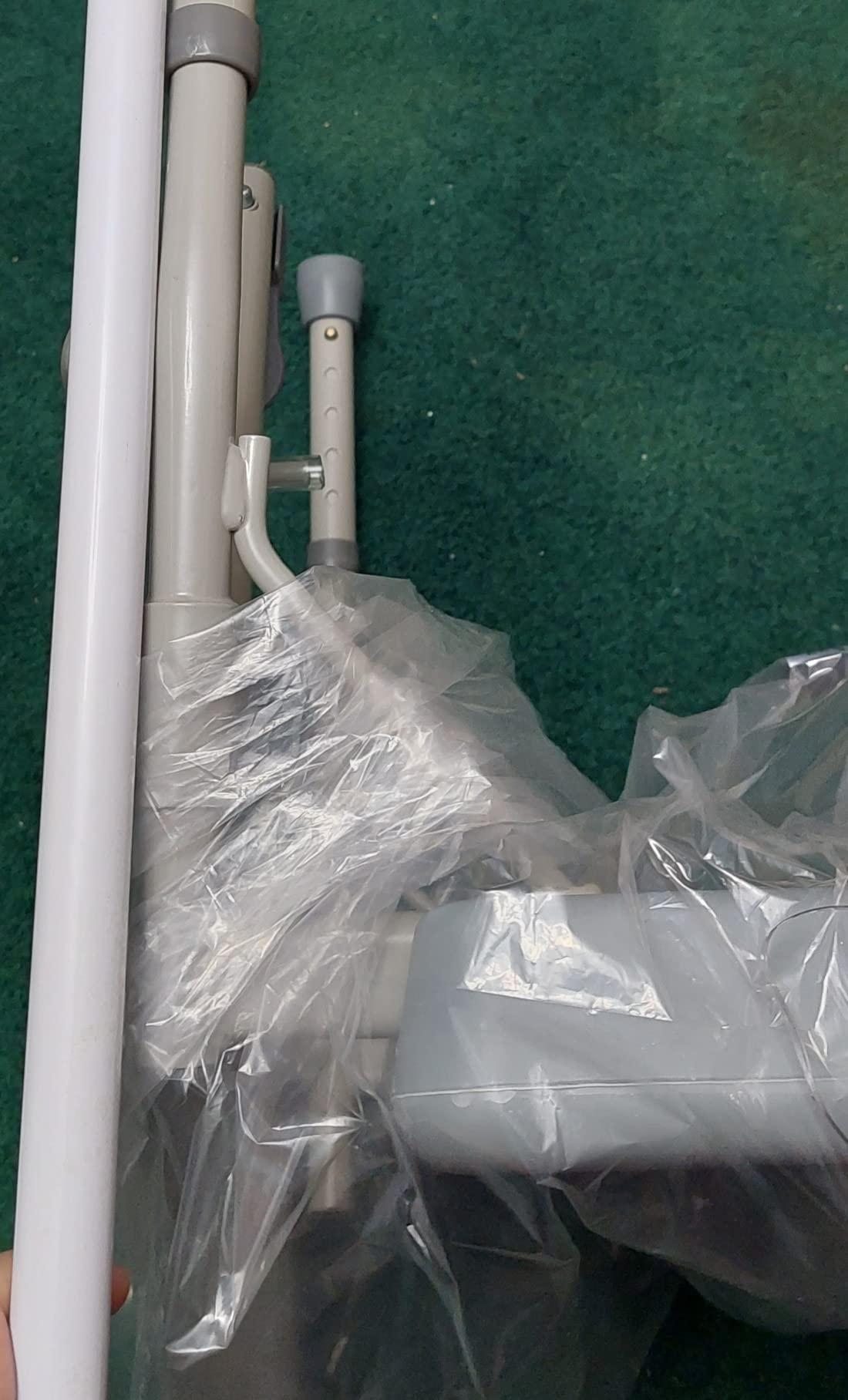
For a caregiver doing the physical transfer, the drop-down textured armrests are the important detail. A user can slide sideways off a bed or wheelchair rather than being lifted, and a textured surface gives hands purchase during a push-to-stand. Rubber-tipped non-slip legs are reported to grip tile and vinyl without sliding, which matters on a wet bathroom floor.
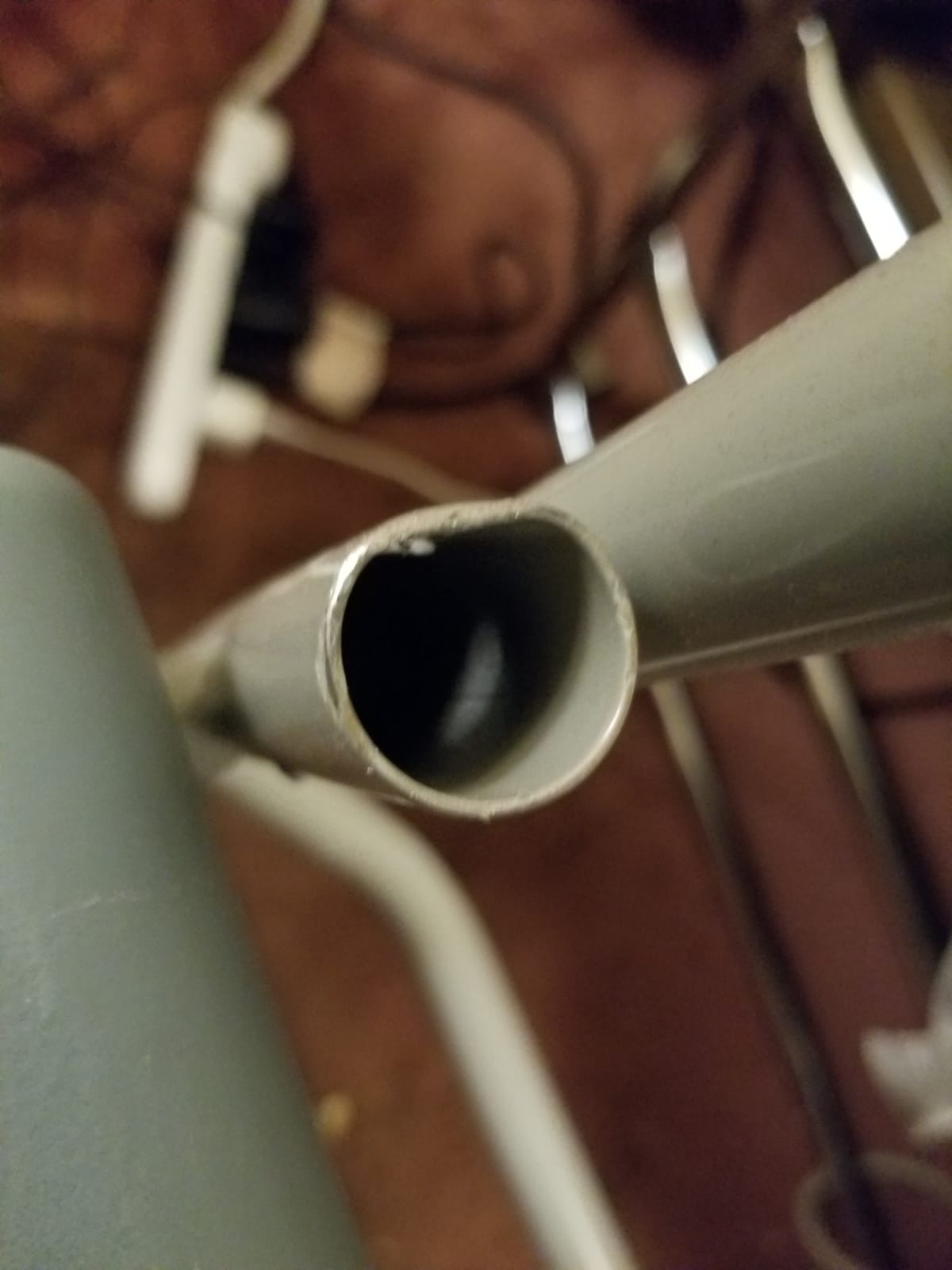
Height adjusts from 17.5 to 22 inches, the lowest range in this roundup, which is good for shorter users and a low bed. The bucket is a 12-quart removable pail with a lid and splash guard, and it is the largest bowl here, which means fewer emptying trips for a user with limited fluid intake or longer intervals between care visits.
Its 4.2 average across 629 ratings is the lowest of the twelve, with 68% five stars and 12% four stars. The feedback still centres on the right things: real capacity, the wide seat, the armrests, and simple cleaning. The rating reflects the sheer physicality of a 23.3 lb steel frame in a small home.
Match the caregiver to the rating
A 1000 lb rating is a frame specification, not a care plan. The person assisting a user at that weight faces a very different physical demand than someone assisting a 200 lb user, and a two-person transfer with a gait belt is the realistic expectation rather than a solo lift.
Ask your discharge planner or occupational therapist what assist level the user requires before committing to any heavy-duty frame. If the answer is one person, an extra-wide 500 lb model with drop arms will be far more practical in a bedroom than a 1000 lb unit.
Plan around the footprint
At roughly 29.7 by 20.5 inches, this is the largest frame in the roundup and it does not fold. In a small bedroom it can genuinely block the route between the bed and the door, and a commode that has to be moved every time it is used will be used incorrectly.
Position it once, permanently, on a hard floor surface rather than carpet, and confirm that a caregiver can still pass. If the space will not allow it, a 500 lb extra-wide model delivers most of the stability benefit at a much lower weight.
11. AKIMRABY 900 lb Safety Commode – Best for Converting to a Sofa Chair
AKIMRABY Bedside Commode, Upgraded Safety Commode Toilet for Elderly Disabled, Potty Chair for Adult with Enlarged Arms, Height Adjustable, 900lbs Heavy Duty Bedside Commodes for Seniors
900 lb capacity
17 in wide seat
3 height options
Detachable armrests
Pros
- Very high rated capacity
- Detachable arms for scooting transfers
- Converts into a sofa chair
- Easy to assemble and sanitize
Cons
- Tallest setting is only 17.7 in
- Foot screws tricky to fit
- Not sized for very large users
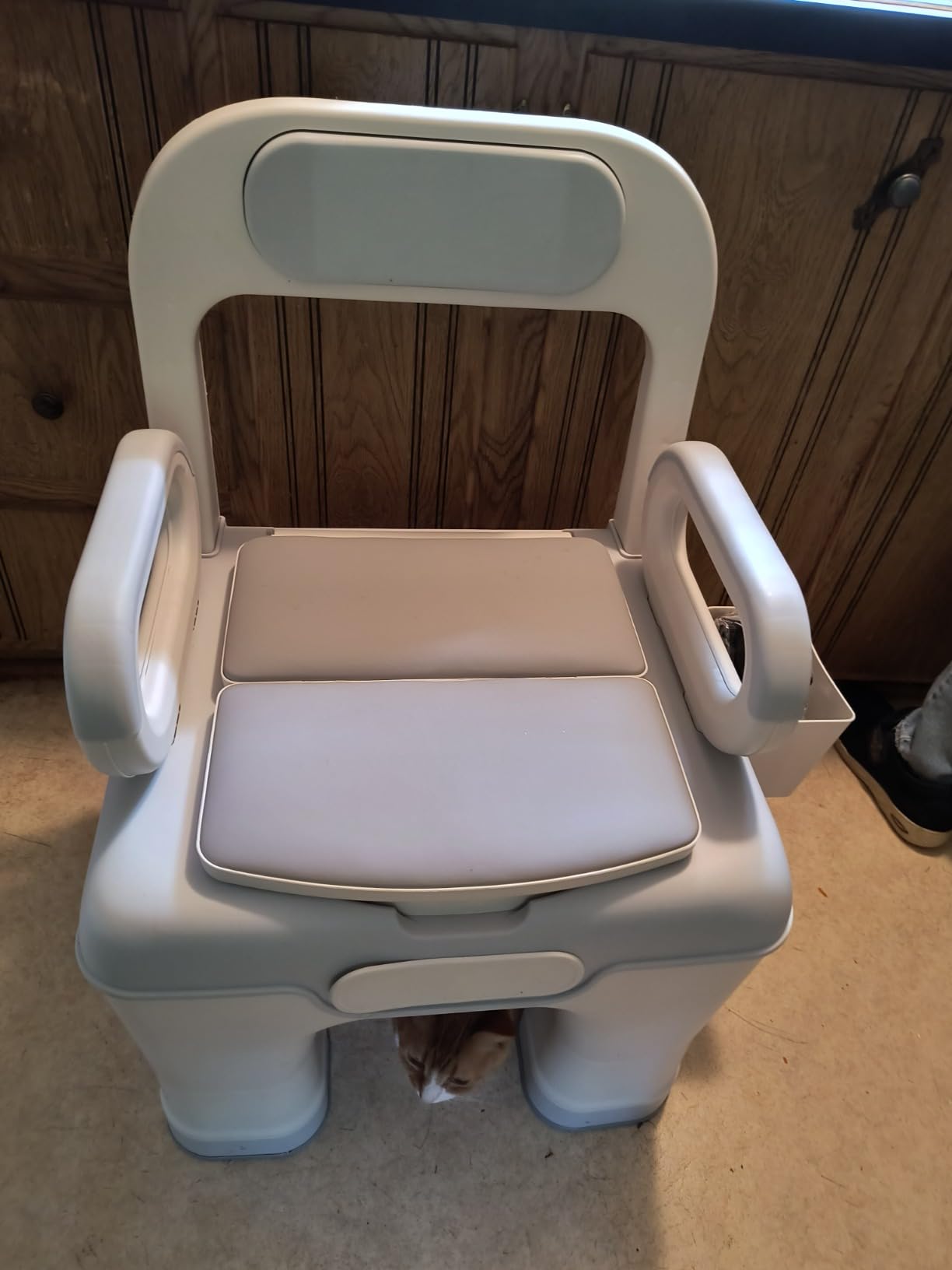
The AKIMRABY safety commode is rated to 900 lb on four reinforced legs with anti-slip strips, and its most distinctive feature is that the armrests detach entirely. A user who cannot stand can scoot sideways on the seat instead, which is a lower-demand transfer than a standing pivot and works with lower body strength than most frames allow.
It also converts between a bedside commode and a sofa chair. For someone who needs the commode occasionally but is self-conscious about a medical frame sitting in the bedroom, having it read as ordinary furniture changes how willing they are to use it. That is a real factor in whether a commode gets used at all.
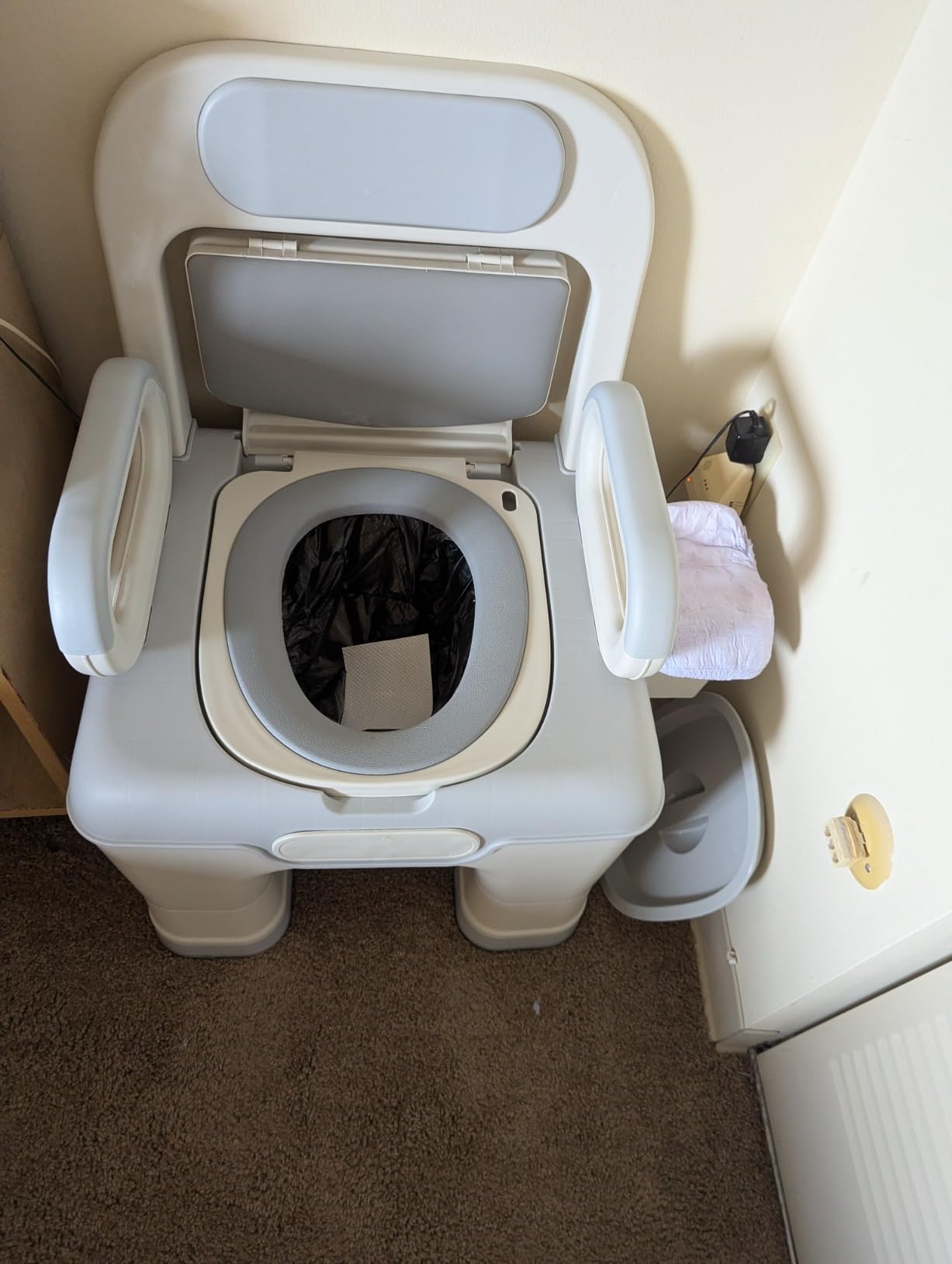
The seat is 17 inches wide, the bucket is a spacious 3.6-gallon inner pail supplied with thick disposable bags, and assembly is straightforward. Caregivers describe it as easy to assemble, sanitize, and store, and several reviewers use it for users around 235 lb and for post-stroke recovery.
Height is the real limitation. Three extension settings give 11.5, 15.7, and 17.7 inches, and multiple reviewers report that even the tallest setting sits lower than their bed. If your mattress top sits at 20 inches or more, this model will not meet you at the bed even at maximum extension.
Detachable arms change the transfer method
Removing an armrest opens the full side of the chair, which lets a caregiver slide a person across from a bed or a wheelchair with far less leverage needed. The trade is that the user has no push-to-stand support at the moment they want to rise, so this works best for a scoot transfer rather than a stand.
Keep the arms attached for daytime standing transfers and remove them for lateral slides. Practice both with the user before it is three in the morning, and never remove an armrest with the user already seated.
Read the height limit before ordering
Measure the top of the mattress first. If the tallest setting of 17.7 inches is below your bed height, this frame cannot be used as a true bedside commode and you should look at a model with a 20-inch-plus top setting instead.
Reviewers also mention difficulty attaching the foot screws during assembly and one report that the unit is not built for users larger than a women’s size 26, despite the 900 lb frame rating. The frame rating describes the structure, not the ergonomics of a very large body in a 17-inch seat.
12. Fasjloctavty 4-in-1 Folding Commode – Best for Travel and Closet Storage
4 in 1 Folding Bedside Commode Chair for Elderly, Padded Seat & Backrest
Folds flat
5 height levels
350 lb capacity
Padded seat and back
Pros
- Folds flat for car trunk or closet
- Five height levels
- Padded seat and backrest
- Home-chair appearance
Cons
- 350 lb limit versus heavy-duty models
- 14.95 lb package weight
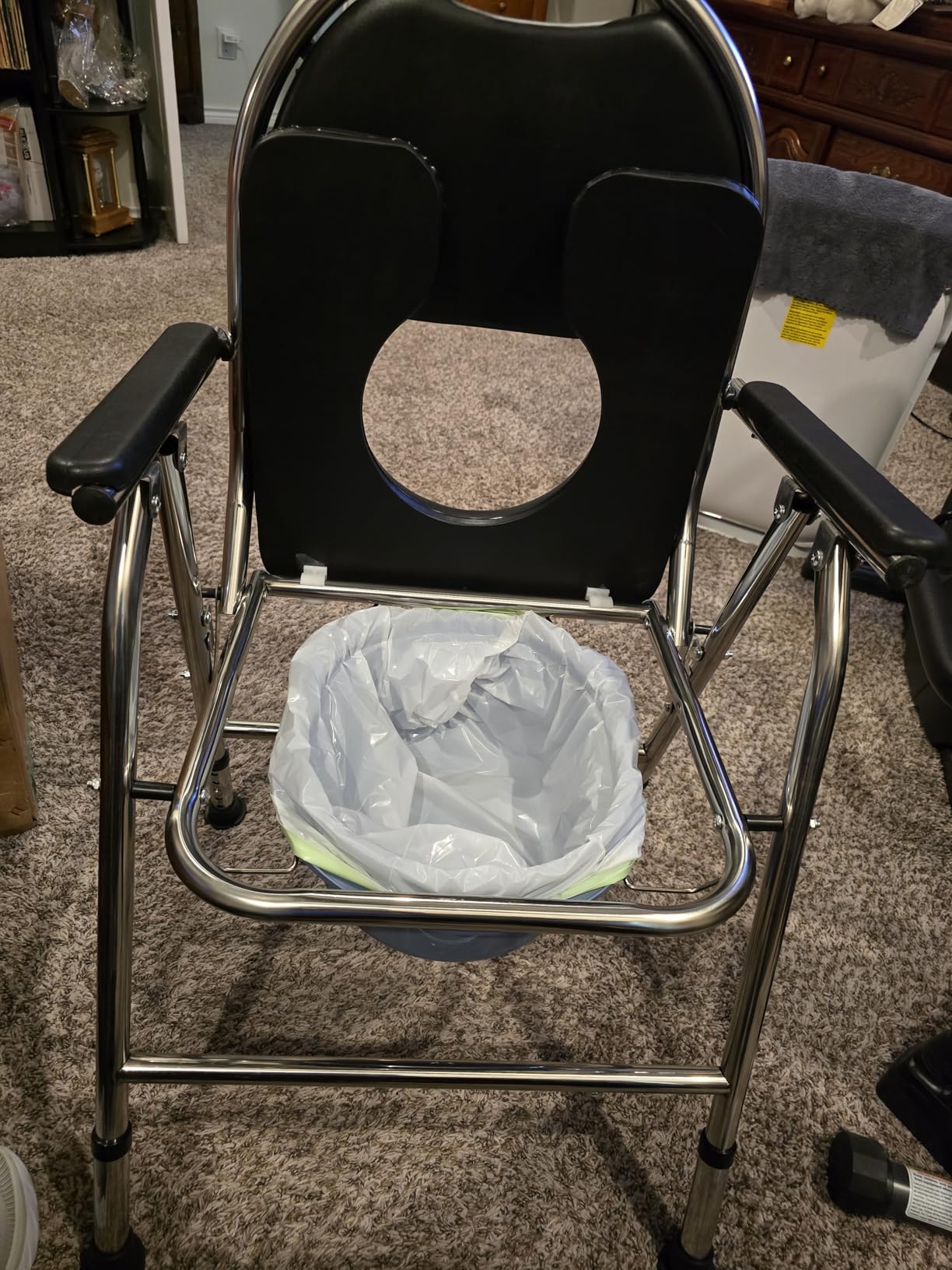
The Fasjloctavty 4-in-1 is the pick when the commode has to disappear between uses. It folds flat for a closet, a car trunk, or the back of a vehicle, and the removable front bucket slides out rather than requiring the frame to be tipped. For anyone travelling with a hospital stay, moving between homes, or sharing a bathroom with a family, that storage capability is the feature that matters.
It is also the rare folding model with a padded seat and backrest. Stainless steel construction is rated to 350 lb, and five height levels give more adjustment granularity than the typical three or four positions found on budget frames.
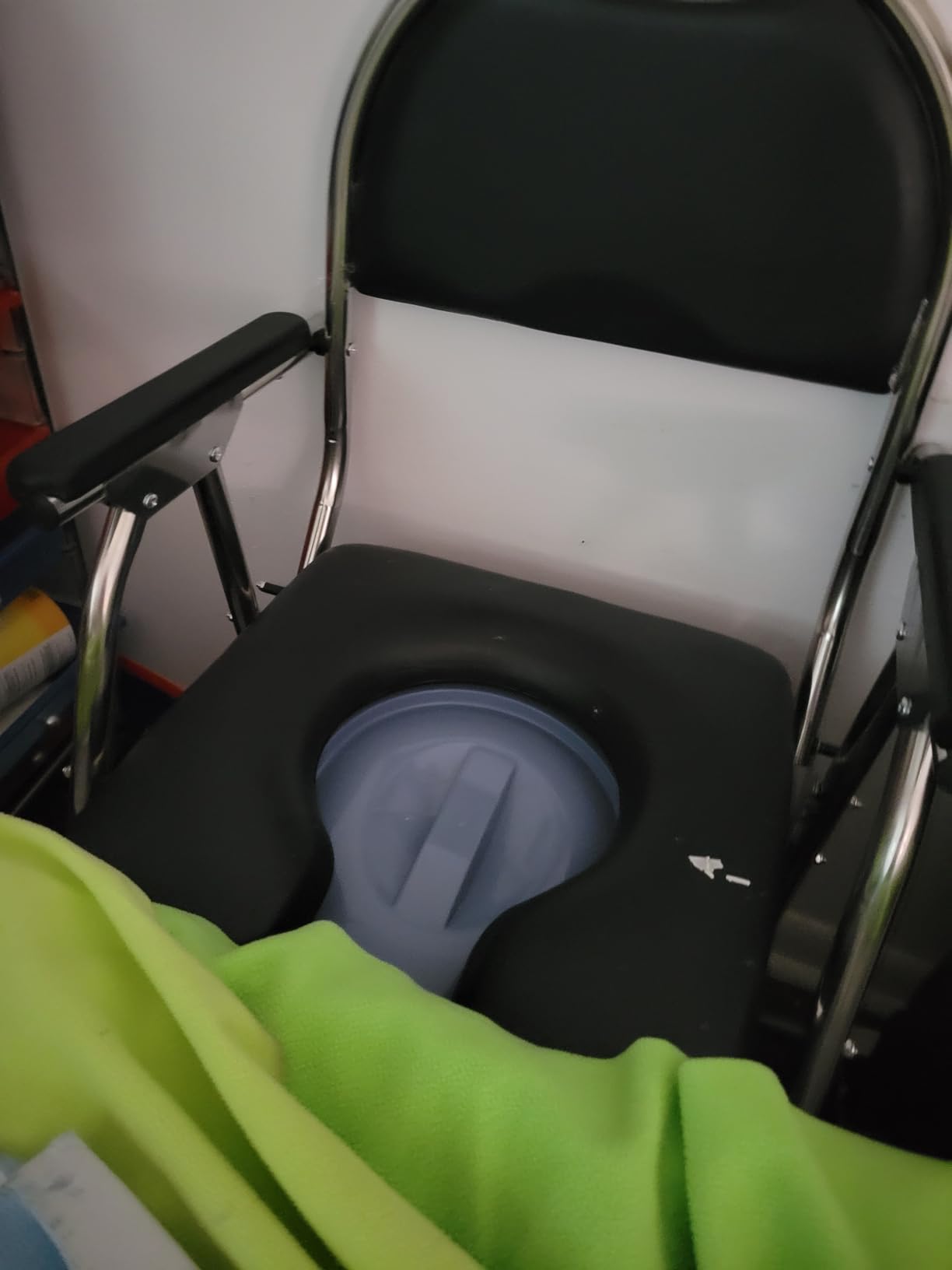
The 4-in-1 design works as a shower chair, a toilet safety frame, a bedside commode, or a resting chair, which gives it a role in a post-surgical household beyond toileting alone. The overall frame runs 21 inches long by 25 inches wide with a height range of 36 to 39 inches, and the seat is 17 inches deep by 17 inches wide.
Reviewers like the home-chair appearance, which matters more than it sounds for a parent who resists medical-looking equipment. The 4.3 average across 195 ratings reflects a good product with a modest history, and its 350 lb rating is well below the 900 and 1000 lb frames in this roundup.
Use it as a shower chair without regret
A folding commode that also works as a shower chair saves an entire piece of equipment in a small bathroom, and a padded seat is far more comfortable for a ten-minute shower than bare plastic. Confirm that the frame material is corrosion resistant before assuming it belongs in a wet stall, and rinse the frame after each use.
Because it folds flat, it can be kept in a linen cupboard and brought out only when needed. That is a meaningful advantage in a bathroom where a permanent fixture would take up floor space a wheelchair user needs.
Know the weight ceiling
At 350 lb, this is a standard capacity frame with folding convenience. If the user is above that, folding convenience is not worth the safety risk, and a heavy-duty stationary frame is the correct choice regardless of the added weight and bulk.
The listed package weight is 14.95 lb, which is manageable but not light. Plan for two people to move it if the user is a heavy caregiver or if the folded unit has to travel up stairs, and test the fold before you need it at short notice.
How to Choose a Bedside Commode by Need Rather Than Brand
Start with the transfer method, not the features
The single question that decides your purchase is how the user will get into the chair. A person who can stand and pivot needs a stable frame with armrests to push down on. A wheelchair user needs arms that drop or detach. A person who cannot bear weight at all needs arms that release, and possibly a scoop-style transfer that a second caregiver can assist.
Caregivers on r/AgingParents describe the drop-arm or pivot-arm commode as the feature that makes caring for a bedbound parent feasible, because it turns a lifting problem into a sliding one. In r/dementia the same pivot transfer comes up repeatedly as the difference between a manageable night and an unsafe one.
Measure height, width, and clearance
Measure the top of the mattress and note it. Most commodes in this roundup adjust between roughly 16.5 and 25 inches, and a wider range gives you more room to match the bed. The target is a seat height where the user’s feet sit flat on the floor and the knees are level with or slightly below the hips.
Measure the width of the user at the hips while seated, not the standing shoulder width. A narrow standard seat around 13.5 inches is tight for anyone above about 200 lb or with wider hips. Extra-wide and bariatric frames run 23 inches and up, and they take up noticeably more floor space.
Then measure the bedside clearance. A folding frame in an open bedroom position is often the difference between a commode that stays put correctly and one that gets shoved into a corner where the armrests cannot be used.
Match capacity above the user’s actual weight
Standard frames here are rated 300 to 350 lb, heavy-duty frames 400 to 500 lb, and bariatric frames 900 to 1000 lb. Choose one step above the user’s weight rather than exactly at it, because a caregiver pushing down on the armrests during a transfer adds load the rating does not account for.
Seat depth matters too for anyone over six feet, and for users who slide forward in a chair. A shallow seat puts more load on the front rail, and a long user may find a standard depth uncomfortable no matter how stable the frame is.
Consider frame material against where it lives
Stainless steel resists staining and rust and handles weight best, but it is the heaviest option. Aluminum is light enough for one caregiver to reposition, which matters more than weight in a bedroom. Powder-coated steel is the standard compromise and is what most of the folding models use.
Where the commode lives is the deciding factor. In a private bedroom, aluminum or folding steel that one person can move beats a heavier rigid frame. In a care facility or a hospice room where it never moves, the heaviest frame that fits the user’s needs is the right answer.
Plan the caregiving load, not just the user’s
Caregiver back injury is the most repeated complaint in eldercare discussions, and it is a preventable one. A commode reduces lifting because it shortens the distance and lets the user use a chair to lower themselves rather than being carried.
Ask what assist level the user needs. One-person assists call for a frame with arms that work under load and a bucket with a carry handle. Two-person assists can handle a heavier frame. Lifting a person with a mechanical lift means the commode has to fit beneath the sling, which is a specific clearance to measure.
Check the return policy before you order
Commode chairs and buckets are frequently classified as hygiene or personal care items, which means they may be non-returnable once opened. Verify the return policy before ordering, and if a model is uncertain, ask the supplier in writing rather than assuming.
Measure twice. The most common purchase mistake in this category is a commode that is the wrong height or does not fit the bedside space, and a non-returnable hygiene policy removes your chance to fix it after the box is open.
Think about dignity in the room where it sits
Where a commode lives affects whether it gets used. A discreet chair-style model, a home-chair finish, or even a simple privacy screen between the bed and the commode goes a long way for a parent who finds the device embarrassing. Several products in this roundup convert into a sofa or rest chair for exactly this reason.
Small gestures help more than they should. A door that closes. A bag of liners kept next to the chair. A toilet paper holder attached to the frame so nothing has to be carried across the room at three in the morning. These are details of comfort, not of engineering, and they are the ones families remember.
How to Use a Bedside Commode Safely
Most commode injuries happen during the transfer, not during use. The sequence below reduces the risk of both falls and caregiver strain, and it takes the same eight steps whether the user is at home, in assisted living, or in a hospice room.
Clear the area. Move rugs, cords, and low furniture away from the bed and the commode, and confirm there is a clear path in non-slip footwear. Nighttime lighting matters as much as daytime lighting.
Position the commode. Put it on a hard floor surface beside the bed with the drop arm on the side the user transfers from, and set the height so the feet are flat on the floor.
Check the hardware. Before every use, confirm the legs are fully inserted and the locking pins are engaged, and push down on the armrests to check for wobble.
Lower clothing. Pull trousers and underwear down to the ankles or knees before the transfer, not during it. Fumbling at clothing while standing is a common cause of falls.
Back up to the commode. The user backs up until they feel the seat against the back of their legs, then reaches back and grips the armrests.
Sit slowly. The user lowers themselves using the armrests rather than dropping, and a caregiver guides at the hips rather than pulling under the arms.
Give privacy and time. Close the door, leave if the user is able to signal, and allow unhurried time. Rushing is the most common cause of an unfinished transfer.
Clean and return. Wipe the user, remove the bucket, empty it, and return the user to the bed in the reverse order before replacing the pail.
For a woman, wiping front to back is a basic infection-control step. For a user with dementia, keep the sequence identical every time rather than adapting it, because routine is what reduces resistance. In an isolation situation, use appropriate personal protective equipment and treat the commode as contaminated surfaces between uses.
How to Empty and Clean a Bedside Commode
Put a small amount of water in the empty bucket before use. This reduces splash during use and makes residue easier to rinse away afterwards. Wear gloves, and treat the bucket the same way you would treat a bedpan.
Put on disposable gloves and, if the user is incontinent, add a disposable liner bag to the bucket before use.
Remove the bucket by the handle and carry it level to the toilet, avoiding stairs and tight turns where possible.
Empty the contents into the toilet, then flush, then rinse the bucket with the toilet brush if residue remains.
Wash the bucket with hot water and a mild detergent, paying attention to the rim, the handle mounts, and the underside.
Disinfect the seat, armrests, lid, and splash guard with a household disinfectant, and leave the surfaces to dry.
Empty the cleaning water outside, since commode waste should not go into a sink or a shower drain.
Refit the bucket and lid, check that the frame is dry, and replace the liner bag if you are using one.
Avoid putting toilet bowl cleaner into the plastic bucket or seat. Those products are formulated for vitreous china and can degrade plastics and vinyl over time, which is why the guidance is to use a mild detergent on the plastic parts and reserve bowl cleaner for the toilet itself.
Disposable commode liners are the single biggest reduction in contact with waste, and most households find them worth buying in bulk. In a shared room, a home hospice situation, or any household with an immunocompromised person, liners change cleanup from a scrubbing job into a stripping job.
Frequently Asked Questions
Does Medicare cover bedside commodes for seniors?
Yes. A bedside commode is classified as durable medical equipment and is covered under Medicare Part B when a doctor documents a medical need such as limited mobility or an inability to reach a toilet. You pay the Part B deductible and then 20 percent coinsurance of the Medicare-approved amount. The supplier must be enrolled in Medicare for the claim to process correctly, so confirm enrolment before you order rather than after the bill arrives.
What is the best bedside commode for elderly people?
The best bedside commode for elderly people has drop-down or pivoting arms, a height range that matches the mattress, a 300 lb or higher steel frame, and a lidded bucket with a splash guard. Our top pick for most families is the Drive Medical folding commode, with the Carex 3-in-1 as the value option and the Medline padded drop-arm model for wheelchair transfers.
What can I use instead of a commode?
A raised toilet seat is the most common alternative and works well if the user can still walk to the bathroom. A bedpan or urinal works when the user is fully bedbound and cannot be seated upright. A bedside urinal is often the easiest option for a man who only needs to urinate at night. If the bathroom cannot be reached safely, none of those alternatives removes the risk that the commode addresses.
Do you put water in a bedside commode?
Yes, a small amount of water in the empty bucket before use helps reduce splashing and makes residue easier to rinse out afterwards. Do not fill the bucket, and do not add cleaning chemicals before use. Empty and wash the bucket after every use with hot water and mild detergent.
How do I clean a bedside commode?
Remove the bucket and empty it into the toilet rather than a sink, then rinse and wash the bucket with hot water and mild detergent. Disinfect the seat, armrests, lid, and splash guard with a household disinfectant, paying attention to the rim and handle mounts. Avoid toilet bowl cleaner on plastic or vinyl parts, which can degrade the material over time.
What weight capacity commode do I need?
Standard frames are rated between 300 and 350 lb, heavy-duty frames between 400 and 500 lb, and bariatric frames between 900 and 1000 lb. Choose one step above the user’s actual weight rather than exactly at it, since a caregiver pushing on the armrests during a transfer adds load the rating does not include. If the user is above a frame’s rating, that frame is not safe regardless of comfort.
Conclusion
The best bedside commode for elderly users is the one that matches the transfer, not the one with the longest feature list. For most families standing at a bedside trying to decide, the Drive Medical folding commode is the safe first purchase: a 350 lb steel frame, tool-free setup, and close to 37k ratings behind it. If a wheelchair is involved, the Medline padded drop-arm model turns a standing transfer into a slide, and that is the feature that changes everything.
Measure before you order, check the return policy, and put the chair in the same spot every night. A commode used consistently removes the trip to the bathroom, and it protects the caregiver as much as the person being cared for. If you are furnishing the room as well, our [guide to touch-control bedside lamps](https://www.drunvalo.net/best-touch-control-bedside-lamps/) covers lighting for the same overnight routine. Updated for 2026, and every measurement in this guide comes from published manufacturer specifications and aggregated owner feedback rather than marketing copy.