
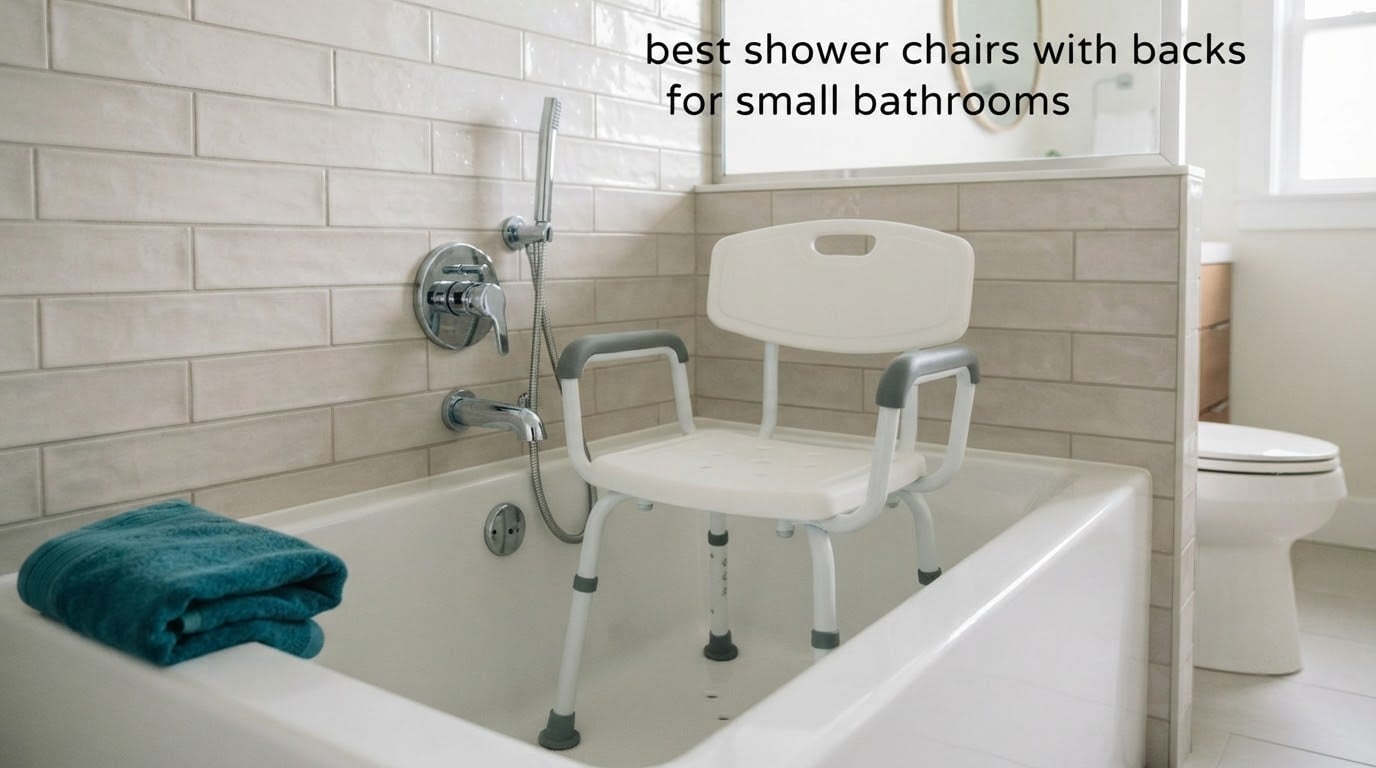
A shower chair with a back earns its footprint. A backless stool is cheaper and narrower, but it gives you nothing to push against when you sit down and nothing to stop you tipping backwards when you stand up, and people who need a bathing chair usually need both. The backrest and armrests are the reason the chair is stable rather than merely present.
The catch in a small bathroom is width. Listings almost always publish seat width, which is the one number that does not decide whether anything fits. What decides it is the overall frame width across the outermost armrests, and the depth from the front of the seat to the back of the backrest. Get that wrong and you have a chair that lives in the hallway.
So we built this list around measurements instead of marketing copy. We pulled overall width, seat width, height range, armrest type, foot type and rated capacity for all 10 shower chairs with backs below, and we ranked them on how well they serve a genuinely tight bathroom. Our [teak shower bench guide](https://www.drunvalo.net/best-teak-shower-benches-for-bathrooms/) covers the wood option for anyone who wants the seat to disappear visually.
Table of Contents
Top 3 Best Shower Chairs With Backs for Small Bathrooms
Medline Padded Armrests and Back
- 350 lb capacity
- 16.3 inch wide frame
- Six height positions
- Padded armrests and contoured back
Dr. Kay’s Chair with Backrest
- Narrowest frame at 15.5 inch
- Adjusts 12.5 to 18.5 inch
- Lightweight aluminum
- No-tools assembly
Drive Medical Back and Arms Chair
- 350 lb capacity
- Half-inch height increments
- Suction leg tips
- Limited lifetime warranty
Quick Overview: All 10 Picks Compared (October 2026)
Every chair in this list has a backrest and armrests. The rows below are ordered by how well each one handles a narrow space, not by price or by capacity alone.
| Product | Specifications | Action |
|---|---|---|
| Medline Shower Chair with Padded Armrests and Back |
|
Check Latest Price |
| Dr. Kay’s Shower Chair with Backrest |
|
Check Latest Price |
| Drive Medical Shower Chair with Back and Arms |
|
Check Latest Price |
 Vaunn Tool-Free Shower Chair with Removable Back Vaunn Tool-Free Shower Chair with Removable Back |
|
Check Latest Price |
 HOMLAND Shower Chair with Removable Back HOMLAND Shower Chair with Removable Back |
|
Check Latest Price |
 HOMLAND Padded Armrests and Back Chair HOMLAND Padded Armrests and Back Chair |
|
Check Latest Price |
 Vive Shower Chair with Arms and Back Vive Shower Chair with Arms and Back |
|
Check Latest Price |
 VFAUOSIT Shower Chair, 550 lb Frame VFAUOSIT Shower Chair, 550 lb Frame |
|
Check Latest Price |
 BRITULIF Shower Chair with Arms and Back BRITULIF Shower Chair with Arms and Back |
|
Check Latest Price |
 PELEGON Shower Chair with Padded Arms and Back PELEGON Shower Chair with Padded Arms and Back |
|
Check Latest Price |
Measure First: The 3 Numbers That Decide If It Fits
Measure these three things before you look at a single product listing, because two of them are not published anywhere and the third is published under a different label than most shoppers expect.
1. The alcove width at its narrowest point
Measure the inside of the tub or shower stall at the narrowest point, which is usually where the walls curve or where the tub meets a return. Measure at the height the chair will actually sit at, not at the lip, because tub walls often taper. Write the number down and subtract nothing yet.
Then subtract the overall width of the chair, not the seat width. A listing that says a 16.3 inch wide seat is describing the panel you sit on. The armrest tubes sit outboard of that panel, and the backrest frame sits behind it, and neither figure is reliably printed. We were not able to confirm a published arm-to-arm dimension for any of the 10 chairs in this roundup, so the honest approach is to measure the product yourself after it arrives, or to call the manufacturer.
2. Tub length and depth to the wall
Measure from the tub wall to the far edge, then subtract the seat depth. The seat depths in this list run from 12 inch on the Vaunn to 16 inch on the HOMLAND SHC10, and the full chair depth adds the backrest and any tilt. If your tub is a standard alcove tub you will have around 28 to 30 inch of usable length before you subtract anything, which means most standard chairs fit lengthwise and the width is where the real contest happens.
3. The user’s own standing seat height
Sit on the edge of a counter or bed and measure from the floor to the top of that surface. That is the target seat height. Height ranges in this roundup run from a low of 12.5 inch on the Dr. Kay’s to a high of 21 inch on the Medline and PELEGON, and a chair whose range tops out below the user’s target is as unusable as one that bottoms out too low, because the user cannot generate the leverage to stand up.
One more thing worth checking while the tape is out: whether your shower has a glass door that swings inward, and whether the tub has a low threshold lip that a wide front leg pair might catch on. A [wall mounted space heater](https://www.drunvalo.net/best-wall-mounted-space-heaters-for-bathrooms/) is a different problem, but the same instinct applies here. If the frame will not clear the opening, the chair cannot be moved in and out, and a chair you cannot remove is a permanent change to the room.
1. Medline Shower Chair with Padded Armrests and Back – Best Overall
Medline Shower Chair Seat with Padded Armrests and Back | Heavy Duty Shower Chair for Bathtub | Slip Resistant Shower Seat with Adjustable Height | Shower Chair for Inside Shower with 350 lb Capacity
Aluminum frame
350 lb capacity
Six height positions
Seat 16.3 inch wide
Pros
- Padded armrests and contoured back for real push-up support
- Tool-free assembly finished in under 10 minutes for most buyers
- Non-slip rubber feet grip wet tile and fiberglass
- Lightweight enough to reposition between baths
Cons
- Seat is hard plastic with no cushioning out of the box
- Assembly instructions can be unclear on the leg fittings
- Occasional reports of missing rubber feet in the box
The Medline MDS89745RAH is the one I would put in a small bathroom without hesitating, and it is the strongest combination of rating and review volume anywhere in this group. It holds a 4.7 average across more than 35k reviews, which is a volume of long-term owner feedback that most of the chairs here simply do not have.
Physically it is a sensible size for a tight space. The seat panel is 16.3 inch wide with a 13.5 inch depth, and the contoured backrest is 16 inch across, so the back does not sprawl past the seat the way some wider frames do. The listed assembled size is 13.4 inch deep by 16.3 inch wide by 33.7 inch tall, and the chair weighs 7.1 pounds, which matters if the user is a wheelchair user lifting themselves in and out on a regular basis.
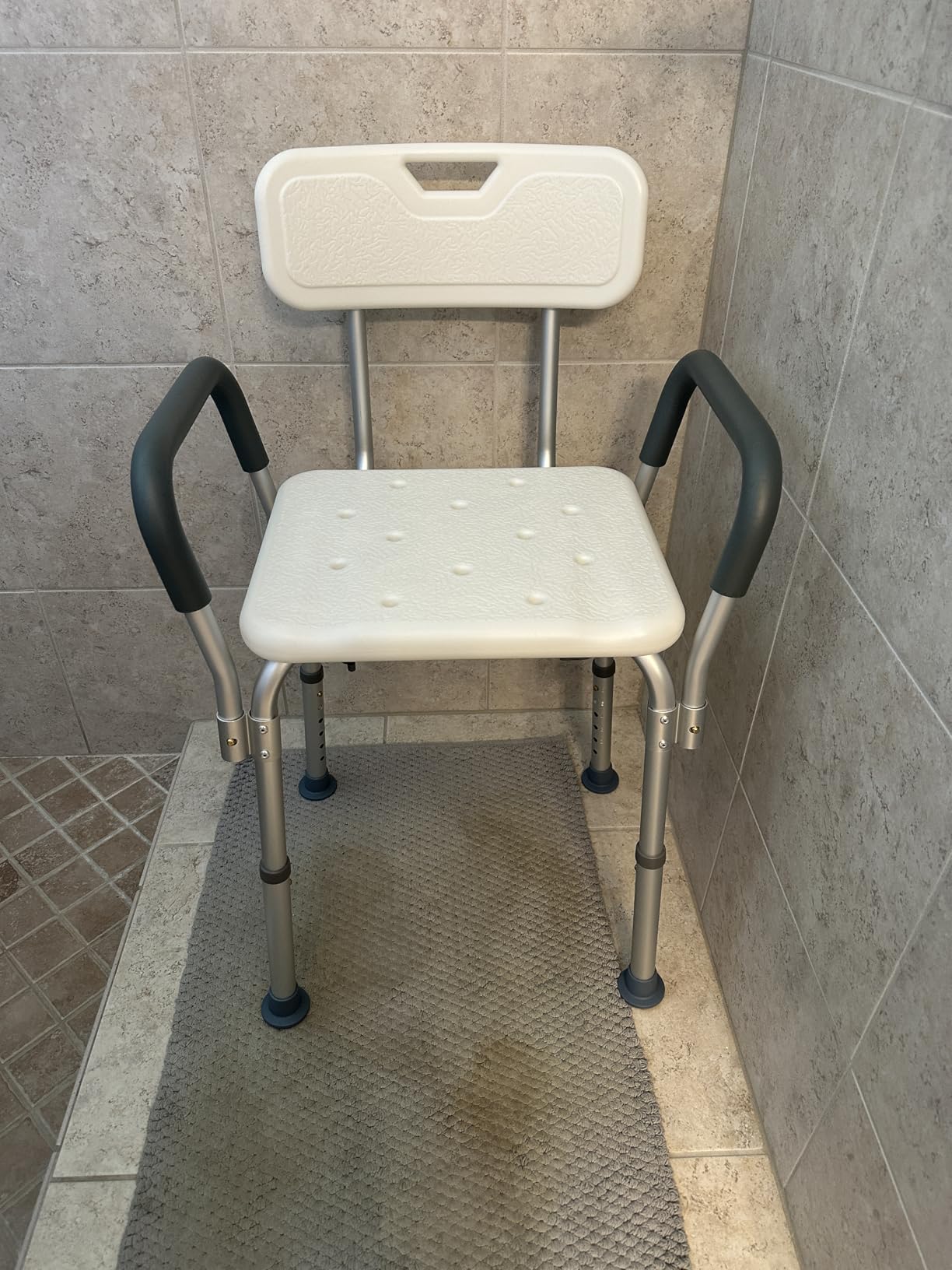
Height adjustment is the other reason this one keeps winning. There are six positions in 1 inch increments, and the listed seat height is 21 inch, which is the tallest figure in the roundup. That solves a specific problem: a user who is tall, or who has a high bathroom floor, otherwise ends up pushing up from a low seat with folded legs. The tradeoff is that a 21 inch seat can feel high for a shorter user, and there is no way to know which you are until you are sitting in it.
Frame material is aluminum with foam-padded armrests and a contoured back, and the listed capacity is 350 pounds. A one-year limited warranty is included. On a metal frame that lives in a wet room, warranty length is a fair proxy for how confident the manufacturer is about corrosion, so that detail is worth noticing here.
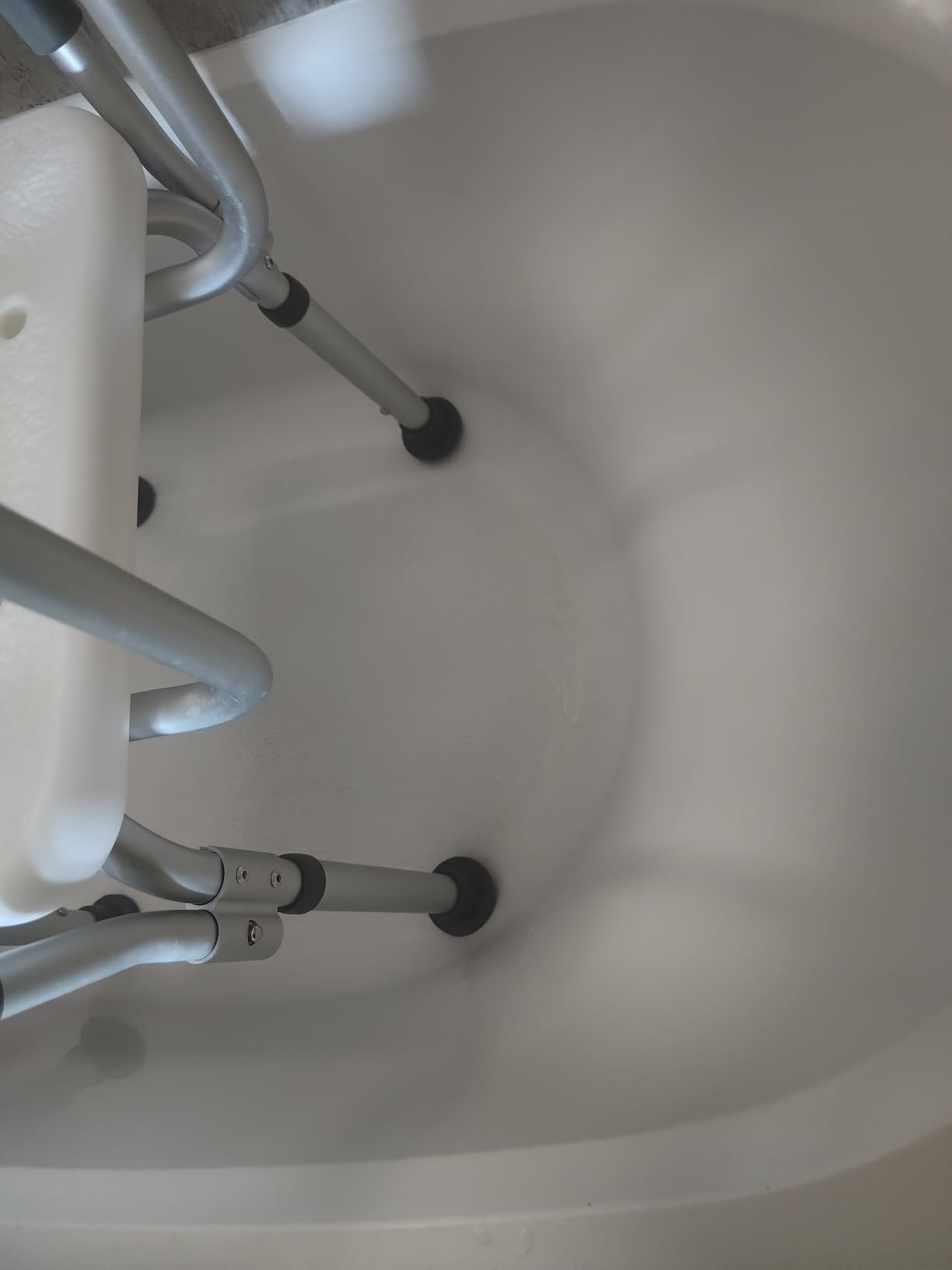
Why padded armrests change a sit-to-stand transfer
Most shower chairs with backs at this size ship bare plastic armrests. The padding on this one is a real functional upgrade rather than a cosmetic one, because a sit-to-stand transfer puts the user’s palms directly on the armrest surface and a hard edge in a wet hand is a slip risk. Multiple owners single out the padded arms and contoured back as the reason they upgraded from a plain stool, and several note it fits tighter enclosures better than the chairs they replaced.
Who should look elsewhere
Skip this if a bare plastic seat is going to be a problem, because there is no cushioning in the box and the pad is the reason many people buy a second chair instead. It is also a six-height-position design with a listed seat height of 21 inch, so a very short user may find the top of the range more than they need. A few buyers report missing extension pieces or rubber feet in the box, which is a packing issue rather than a design flaw but is worth checking the moment it arrives.
2. Dr. Kay’s Shower Chair with Backrest – Best Value and Narrowest Frame
Dr Kay’s Shower Chair for Inside Shower Shower Stool with Backrest
15.5 inch wide frame
Adjusts 12.5 to 18.5 inch
350 lb capacity in reviews
2.97 kg listed weight
Pros
- Narrowest frame in the roundup at 15.5 inch wide
- Adjusts higher than most comparable chairs
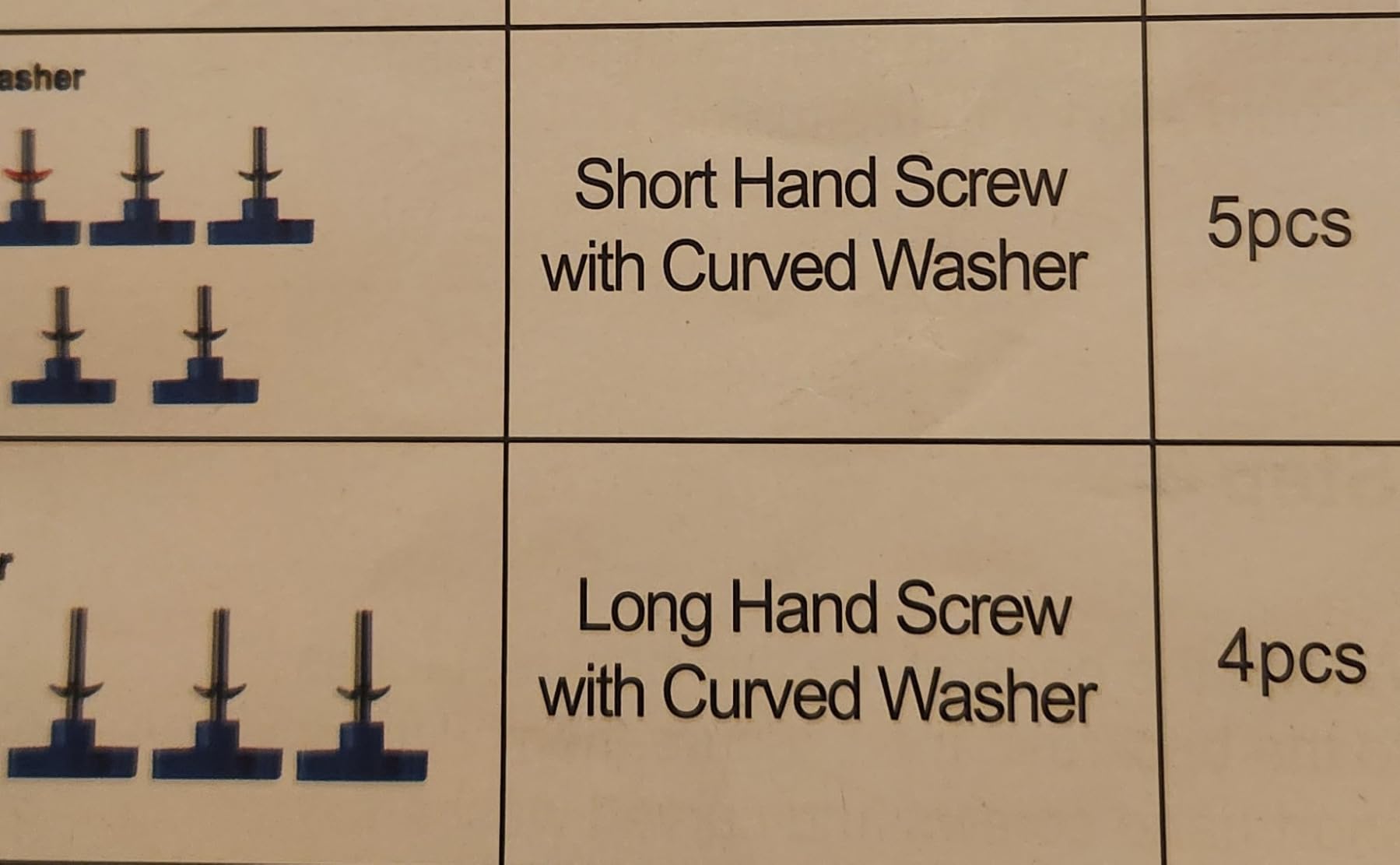
- Hand-screw wing-tipped assembly needs no tools
- Built-in side handles make it easy to lift
Cons
- Seat can feel small for larger users
- One reviewer returned it after it would not fit their shower opening
- Backrest is a set-on style addition
If your alcove is genuinely tight, this is the chair to measure first. At 15.5 inch across and 14.5 inch deep, it has the smallest listed footprint of the ten chairs we compared, and it pairs that with a 4.7 rating from more than 13k reviews.
The height range is its quiet advantage. It adjusts from 12.5 inch to 18.5 inch, and the manufacturer states that the top of that range is 2 inches taller than comparable models. For a shorter user in a tall bathroom that matters, because most chairs in this category top out around 16 to 17 inch and leave shorter people folded up at the knee.
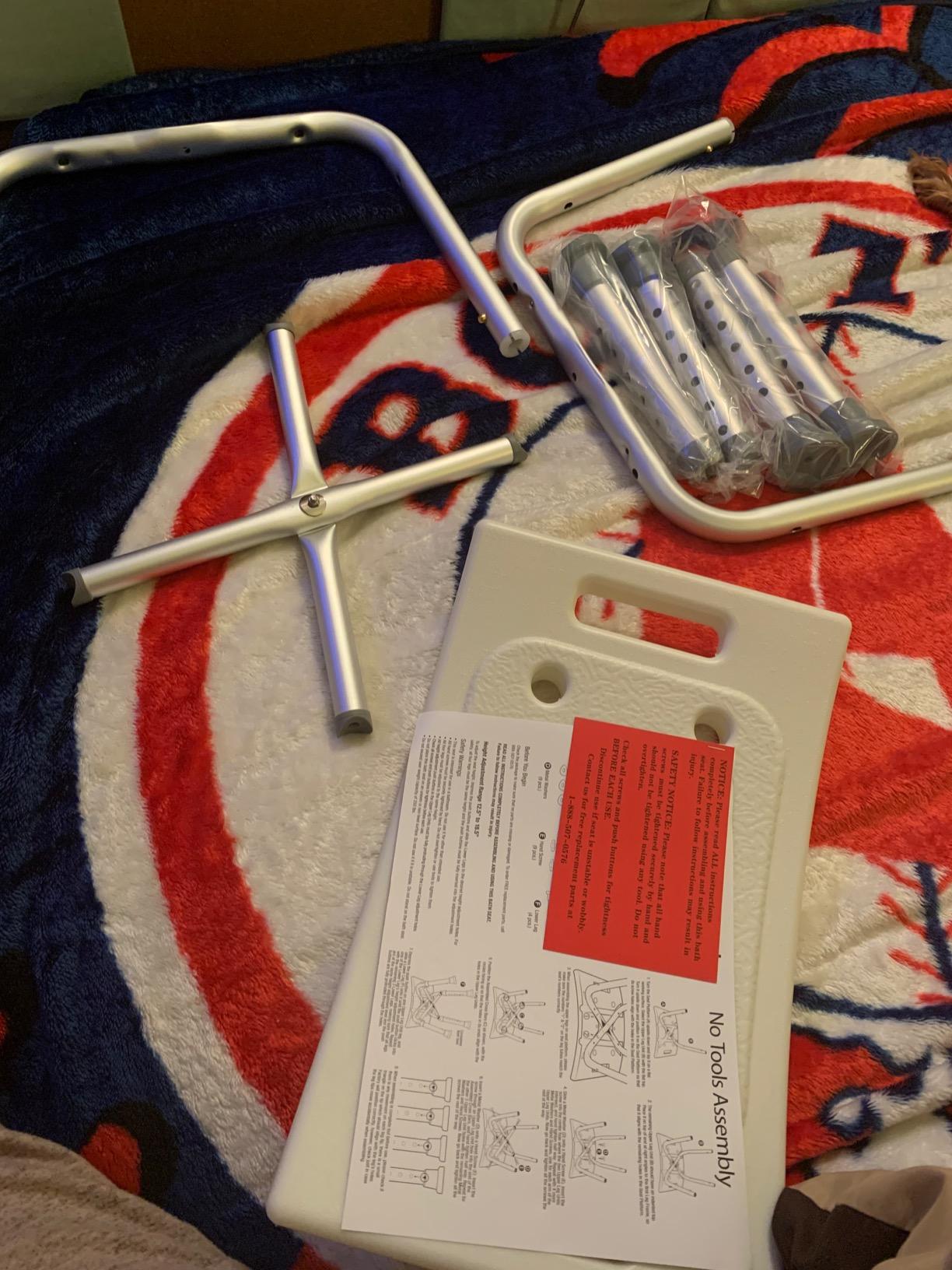
Owners repeatedly describe the same three strengths: it assembles in minutes with hand-screwed wing-tipped fasteners and no tools, the rubber feet do not let it shift, and it is light enough to lift into and out of the tub. One caregiver writing on a caregiver forum described a similar setup for a newly diagnosed sibling: done in 24 hours and useful, and it made showers much safer and more efficient. That is the realistic timeline for a chair of this type, not a marketing one.
Note that the product details list a recommended maximum of 250 pounds while owner reviews describe a 350 pound capacity. We are reporting both because the discrepancy is in the source material, and because it is exactly the kind of gap you should resolve with the manufacturer before ordering if your weight is anywhere near the number. Buyers also flag that the seat can feel narrow for larger frames, and that the backrest is a set-on piece rather than an integrated frame.
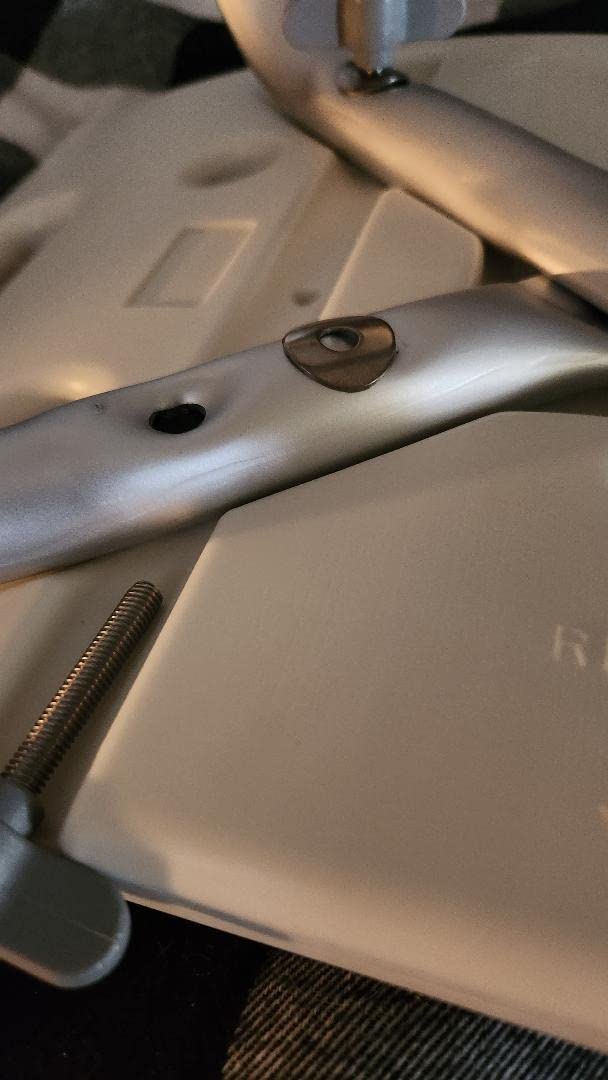
Why the narrow width actually changes the decision
A narrow frame buys you two things in a small bathroom. It gives you clearance to reach the taps and the handheld showerhead without twisting, and it means an able-bodied person can step into the same tub without swinging their legs over a wide frame. That second point comes up constantly in caregiver discussions and is underweighted in most roundups, because a bathroom that serves two people is a different design problem from a bathroom that serves one.
Who should skip it
Skip it if you are a larger-framed user, since the small seat is the most consistent complaint in the reviews. Skip it if you need the highest seat height available, because even this chair’s 18.5 inch maximum is below the Medline’s listed 21 inch. And if your shower has a glass door that swings in, check the opening width against the 15.5 inch frame before you commit, because one owner returned this chair for exactly that reason.
3. Drive Medical Shower Chair with Back and Arms – Best for Precise Height Matching
Drive Medical Shower Chair with Back and Arms, White, 350 Lb Capacity
Plastic construction
350 lb capacity
Legs adjust in 0.5 inch steps
21.75 inch wide
Pros
- Half-inch height increments are the finest adjustment in the roundup
- Built-in arms and back for safer transfers
- Suction leg tips hold on wet surfaces
- Drainage holes reduce pooled water
Cons
- Heaviest chair here at about 10 lb and harder to move
- Wider 21.75 inch frame crowds a small alcove
- Plain plastic seat with no padding
The RTL12505 is the chair reviewers recommend most often for a user whose exact seat height matters more than footprint, and they give two reasons: it carries a limited lifetime warranty rather than a one-year one, and it holds a 4.6 average across more than 13k reviews. It is not the smallest chair here, and in a genuinely narrow bathroom that will matter, but the fine adjustment makes it the one I would trust in that situation.
That is the half-inch increments. Every other adjustable chair in this list moves in 1 inch steps. If your measured target height falls between two inch marks, this is the only chair in the group that can hit it, and a chair set 6 inches too high or too low is one the user cannot safely use no matter how well it is built.
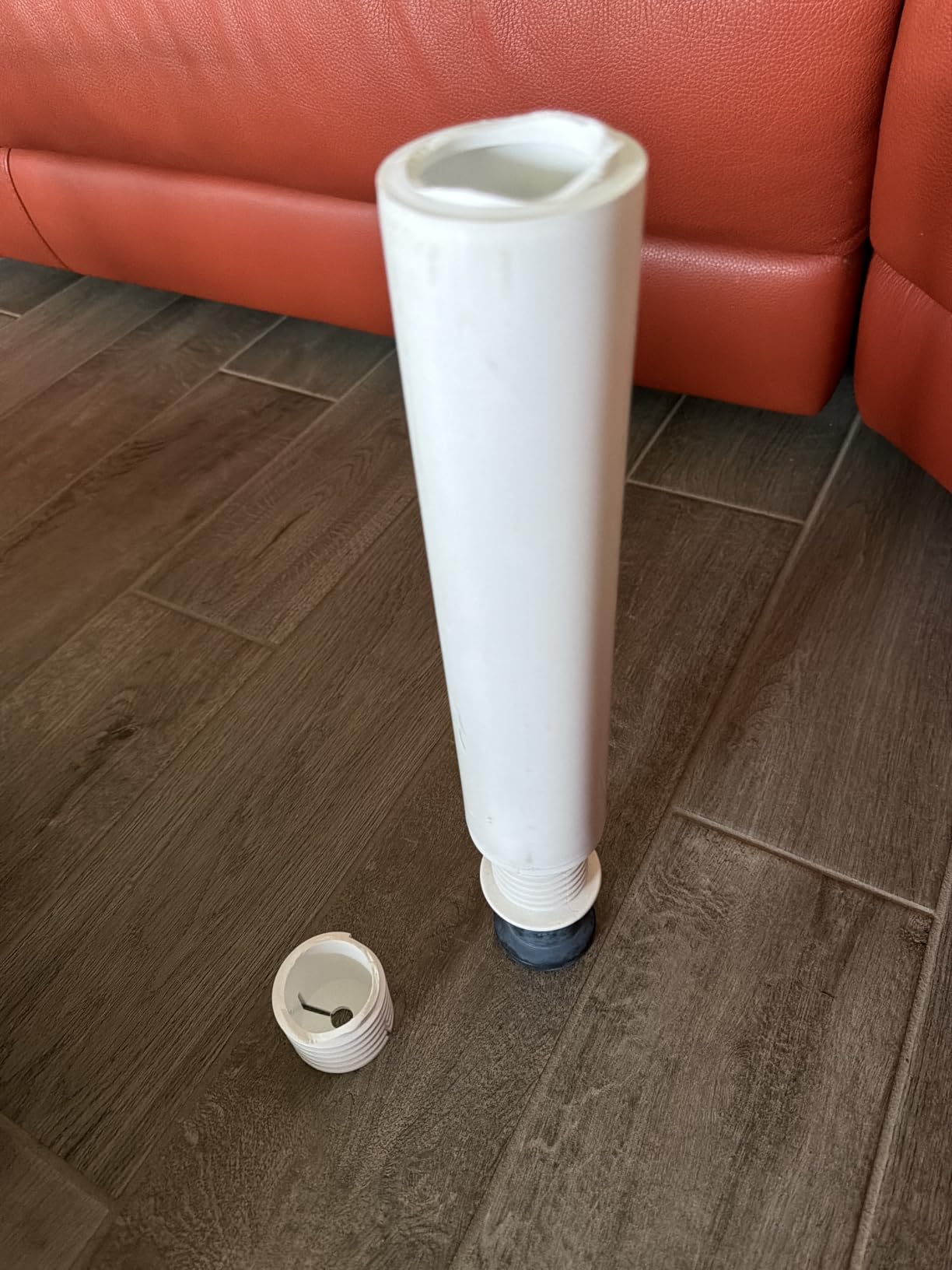
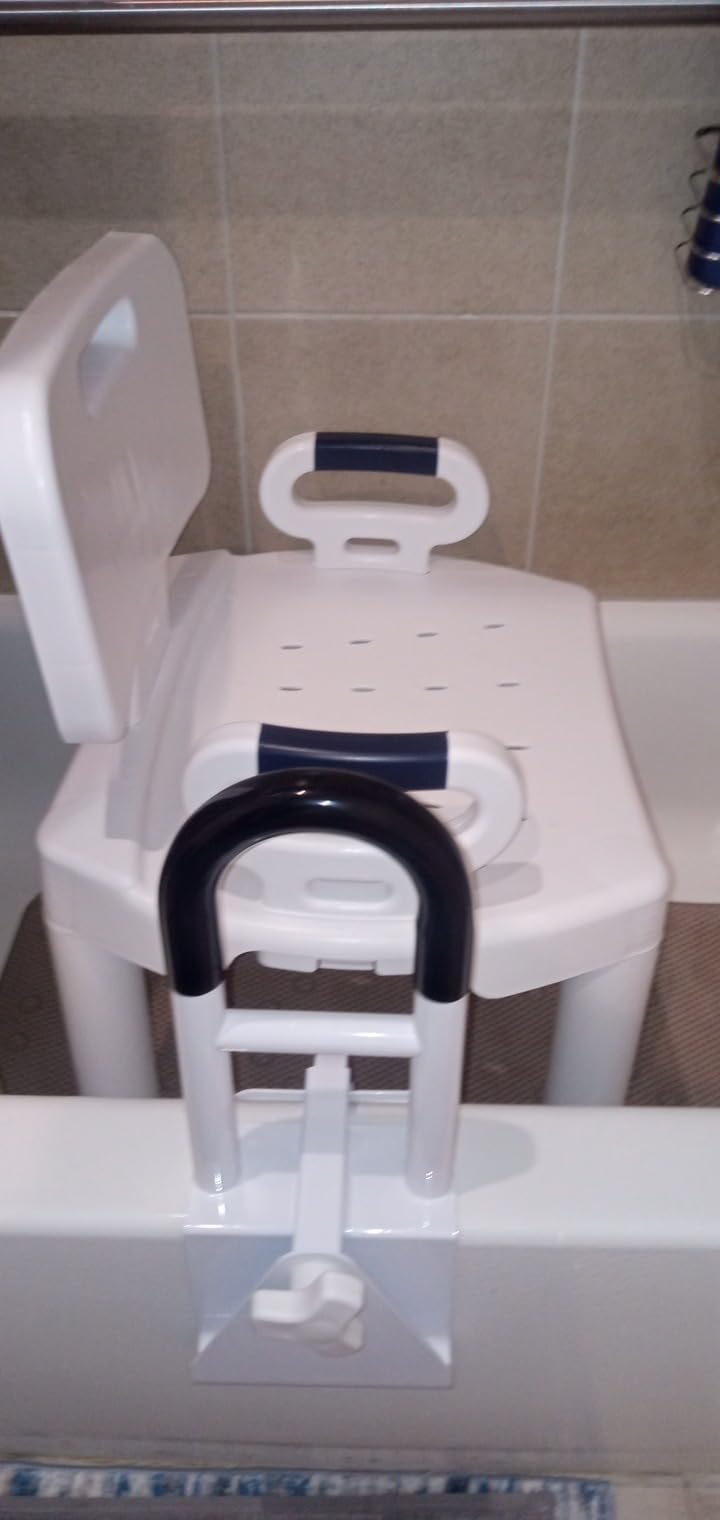
Stability is handled two ways. The legs carry suction-style tips intended to resist slipping on a wet surface, and the seat has built-in drainage holes so water does not pool and turn the sitting surface into a slip hazard. Plastic construction across the frame and seat also means it tolerates abrasive bathroom cleaners, which matters in a shared or rental situation where nobody controls what gets sprayed on it.
The width is the honest drawback. At 21.75 inch across with a 15.5 inch seat depth, this is one of the wider frames in the group, and the assembled height of 17.9 inch is on the low side. At 10 pounds it is also the heaviest chair here, which makes lifting it over a tub lip a two-person job for some users.
When suction tips are the right call
Suction-style tips grip a smooth, wet acrylic or porcelain surface better than plain rubber pads, and reviewers report that they hold firm. They are less reliable on a textured tub floor, on a textured non-slip base, or on a shower pan with a drain grate, because suction needs a continuous smooth seal. If your tub has a textured anti-slip base, a chair with wide angled rubber feet is the more dependable choice, and several chairs in this list use exactly that.
Who should look elsewhere
This is not the chair for a very small alcove. If your measured width is under about 24 inch, the arm-to-arm dimension on this frame will crowd the tub walls and leave you no room to reach the taps. It is also unpadded, which is a long shower problem, and at 10 pounds it is the least convenient unit here to remove and reinstall for a shared bathroom.
4. Vaunn Tool-Free Shower Chair with Removable Back – Best Wide Seat
Vaunn Tool-Free Assembly Adjustable Shower Chair Spa Bathtub Seat Bench with Removable Back, Aluminum, White
Aluminum and HDPE
300 lb capacity
19.5 inch wide seat
Removable back support
Pros
- Genuinely tool-free build in about 10 minutes
- Very wide 19.5 inch seat for the price
- Angled legs and large rubber feet stay put in a tub
- Back removes to reclaim floor space
Cons
- Several owners report it will not fit a narrow bathtub
- 300 lb capacity is the lowest rated in the group
- Flat bench seat rather than a contoured comfort seat
The Vaunn M725N-AAWH-CHVM solves the core tension of this article better than anything else on the list: the back comes off. The chair is 19.5 inch wide with the back attached, which is not a small-bathroom width, but removing the back converts it into a much lower-profile unit you can use while cleaning the tub or while an able-bodied person needs the space.
It also has the widest seat panel of the non-bariatric chairs here at 19.5 inch, against a listed seat depth of 12 inch. That width is a genuine comfort gain for anyone who feels cramped on a 15 inch seat, and it is why the chair rates 4.6 across more than 10k reviews.
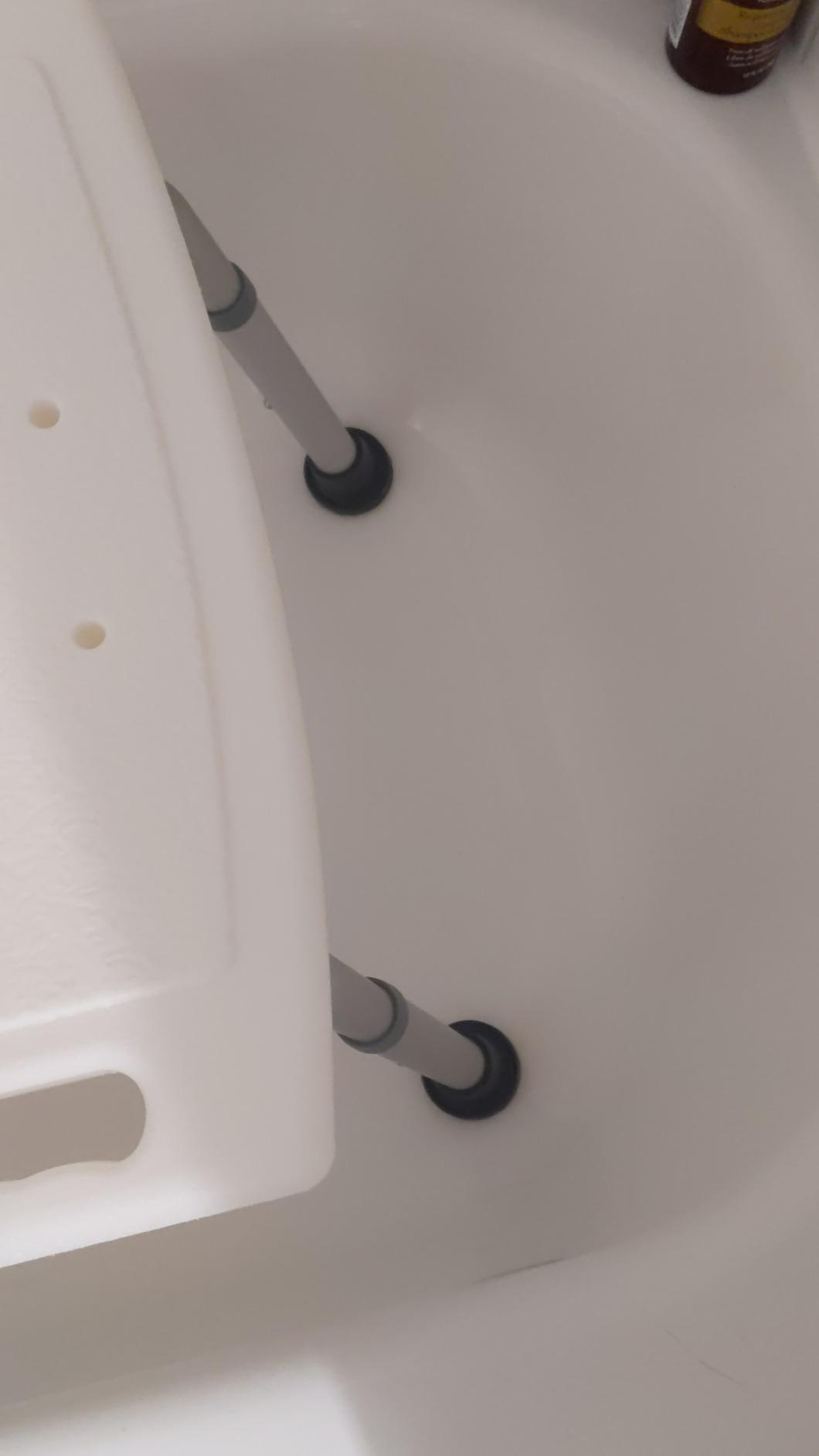
The construction is straightforward: an anodized aluminum frame, a contoured HDPE seat with small drainage holes, height-adjustable legs with angled non-skid rubber feet, and built-in side handles. The listed weight is 4 pounds without the back and 6 pounds with it, which is light enough to lift into a tub unaided. Capacity is 300 pounds with a one-year limited warranty.
The warning that shows up most often in the reviews is fit. Multiple buyers explicitly advise measuring your tub first, because a 19.5 inch width is more than a narrow bathtub will take. That is not a defect; it is the trade you are making for a wide, comfortable seat.
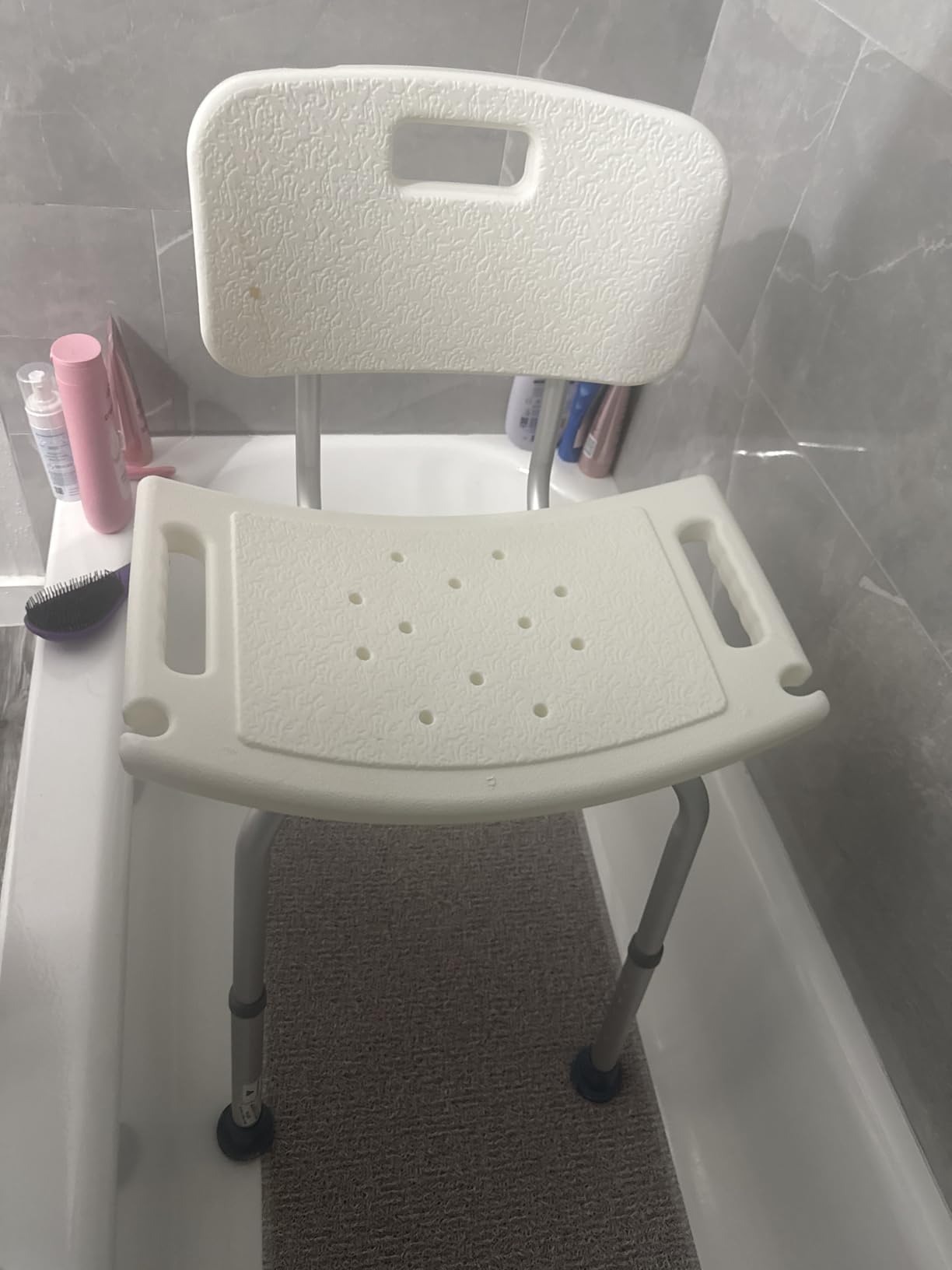
The removable back is the feature to pay attention to
Detachable backrests are rare in the editorial roundups on this topic, and in a small bathroom they are the most useful compromise available. A user who needs back support some days can have it, and a user sharing the tub with family can take the back off and store the chair out of the way. Several of the chairs later in this list extend the same idea to the armrests as well, giving you four configurations instead of two.
Who should skip it
Skip it if your tub is narrow. The 19.5 inch seat is the widest non-bariatric panel in the roundup, so this is a comfort-first chair, not a space-first chair. It is also the lowest capacity in the group at 300 pounds, and the flat bench-style seat will not suit anyone who needs a contoured profile for long showers.
5. HOMLAND Shower Chair with Removable Backrest – Best for Compact Stalls
HOMLAND Shower Chair for Inside Shower with Removable Back, Aluminum Frame
16.3 inch wide
Seat height 14 to 19 inch
300 lb recommended
5.1 lb listed weight
Pros
- Compact footprint several owners confirm fits a small shower stall
- Light at about 5 lb and easy to move between uses
- Tool-free build and easy disassembly for storage
- Built-in showerhead holder
Cons
- Seat runs smaller than expected for larger-framed users
- Water pools slightly despite the drainage holes
- Some reports of wobble on uneven shower floors
The HOMLAND SHC10-V11 is one of the two chairs here where the manufacturer publishes a frame reinforcement figure, and that is unusual in this category. The frame is a reinforced aluminum alloy tested to 400 pounds, with a recommended user weight of 310 pounds. Cross-brace reinforcement is the specific thing owners of heavier chairs complain about missing, so a stated test figure is worth something.
Size is the headline. The assembled dimensions are 16 inch deep by 16.3 inch wide by 29.5 inch tall, at a listed 5.1 pounds, and multiple reviewers specifically confirm it fits a compact shower stall. The backrest is removable, which means the chair can drop into backless mode when the room needs it.
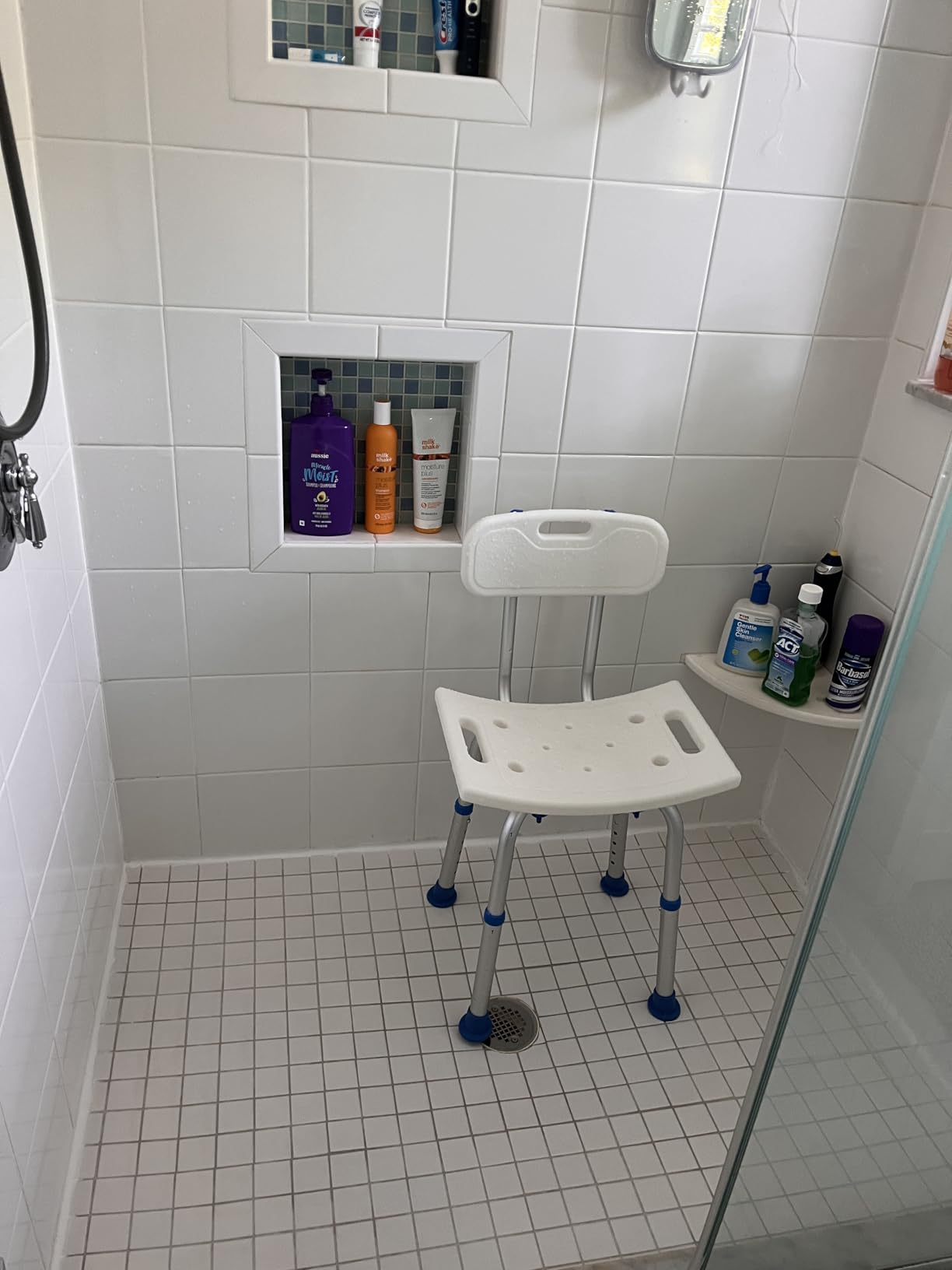
The height range is 14 to 19 inch in 1 inch increments, which covers a wide band of users. The feet are wide non-slip pads reinforced with stainless steel washers for rust resistance, and there is a built-in clip holder for a showerhead, a small feature that stops you wrestling with a wall-mounted head while seated. Assembly is tool-free with a step-by-step manual, and there is a one-year manufacturer warranty.
The drawbacks are consistent across the reviews. The seat is snug for larger-framed users, there is some slight water pooling despite the drainage holes, and a few owners report movement on uneven shower floors. The height adjustment also requires partial disassembly, which is a real inconvenience if you are moving the chair between the tub and a second bathroom.
Why compactness beats capacity for most small bathrooms
For most people in a small bathroom, a chair that sits comfortably inside the space and does not rock is worth more than another 100 pounds of rated capacity. This one strikes that balance better than most, and the removable back means you are not locked into a full-footprint configuration. A user on a wheelchair forum thread noted that lifting a chair out for cleaning matters, and at 5.1 pounds this is one of the easier units to remove.
Who should skip it
Skip it if you are a larger-framed user, because the snug seat is the most common complaint. Skip it if you need fine-grained height control, since adjustment requires taking the chair apart. And if your shower floor slopes or is uneven tile, ask about a leveling foot or add a thin non-slip mat, because the movement reports cluster around exactly that situation.
6. HOMLAND Shower Chair with Padded Armrests and Back – Best for Longer Showers
HOMLAND Shower Chair for Inside Shower with Padded Armrests and Back
Aluminum alloy and HDPE/EVA
400 lb recommended user weight
Removable arms and back
27 inch tall
Pros
- Padded arms and backrest for long
- comfortable showers
- Four configurations from removable arms and back
- Push-and-click tool-free build in about 15 minutes
- About 8 inches of height range
Cons
- 22.7 inch wide frame is wide for a small alcove
- Push-click connectors need some finger strength
- Backrest is still required once arms are removed
This is the comfort answer in the roundup. The SHC20 pairs an aluminum alloy frame with an HDPE and EVA pad, giving you padding on the armrests and the back rather than a bare plastic contact surface. If showers run long, or if the user has limited skin integrity, that difference is the whole point of the chair.
It is also the most configurable. Both the arms and the back detach, producing four setups, which is a step beyond the two configurations on the Vaunn. For a small bathroom that is a real advantage: a user who needs full support for a sit-to-stand transfer can have arms and back, and a user who is stable on their feet and only needs somewhere to sit can strip it down.
The frame is rated to 500 pounds with a 400 pound recommended user weight, and the height adjustment runs in 1 inch increments across about 8 inches of range. The feet are stainless steel washer-reinforced and rust-resistant. Owners report roughly 15 minutes of tool-free assembly, and one confirms it fits a 3 by 5 foot walk-in shower. It carries a one-year warranty plus a one-year extension.
Where the trade-off sits
The listed dimensions are 18 by 22.7 by 27 inches, which makes this one of the wider frames in the group. On a narrow tub that width is the whole problem, and no amount of configurability fixes it. If your alcove is generous and the shower is long, the padding wins. If your alcove is tight, the HOMLAND SHC10 above is the version of this idea built for your space.
Who should skip it
Skip it in a small alcove. The 22.7 inch frame will crowd the walls and the listed 7.05 pound weight makes it more work to move than the lighter compact models. One buyer also received instructions for an entirely different product, which is a packing and support issue rather than a build flaw, and a few users note the push-click connectors require real grip strength to snap together.
7. Vive Shower Chair with Arms and Back – Best Textured Grip
Vive Shower Chair with Arms & Back – Small, Narrow, Medical, Universal Bath
Corrosion-resistant aluminum
300 lb capacity
17.5 inch wide
Height 14 to 19.5 inch
Pros
- Designed narrow for small bathrooms and tighter tubs
- Lightly textured non-slip seat and backrest
- Tool-free assembly and full tool-free disassembly
- Will not corrode
Cons
- Backrest removes but the armrests are fixed
- 300 lb capacity is modest beside 450 and 550 lb frames
- Textured composite seat rather than a cushioned one
The Vive bath seat is the one in this list that names small bathrooms in its own product positioning, and the dimensions back that up. At 17.5 inch wide and 17 inch deep, with a 16 inch seat width and a 14 inch seat length, it sits comfortably in the middle of the roundup on footprint while still carrying a back and armrests.
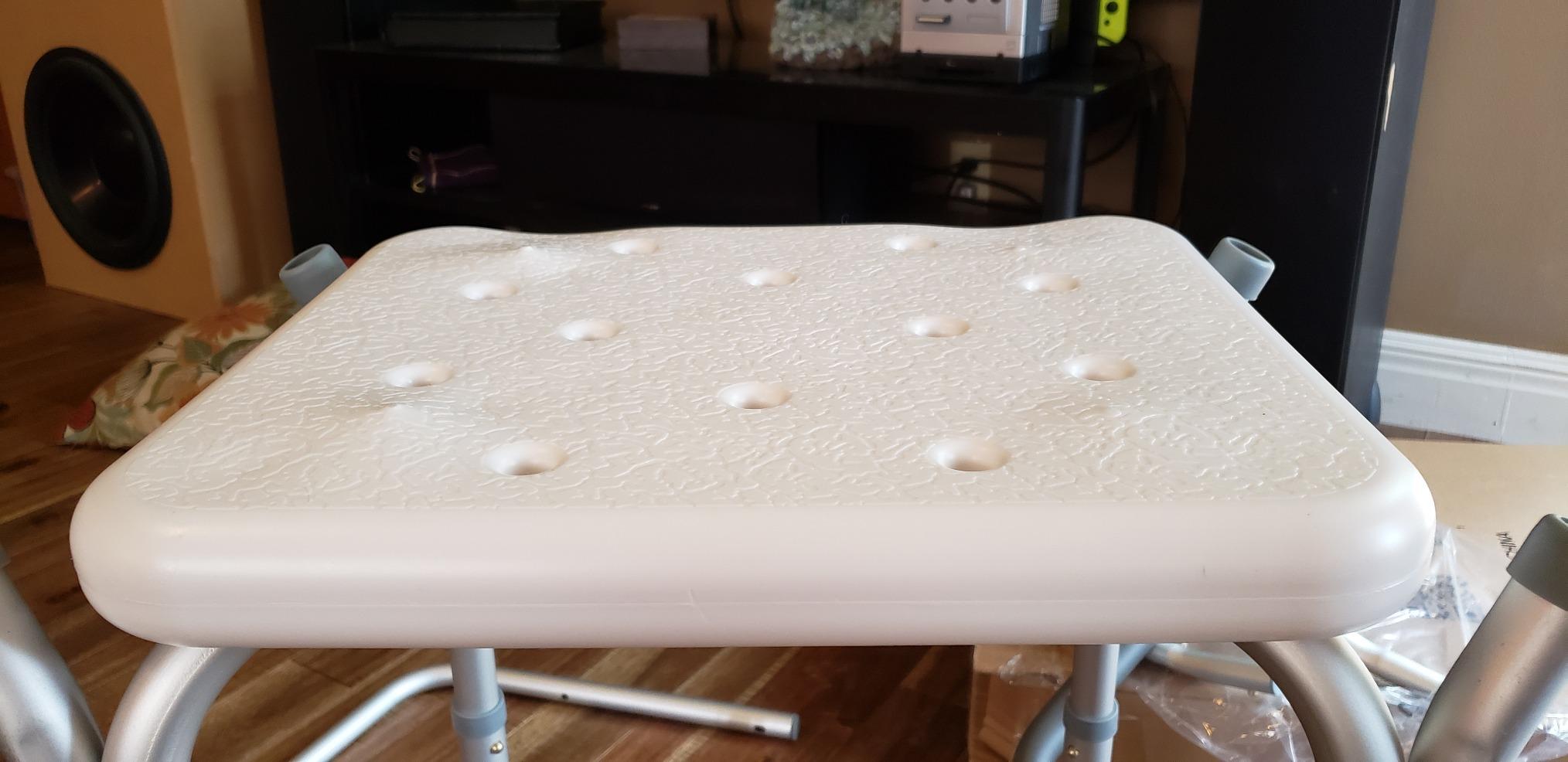
Its distinguishing feature is the seat surface. The seat and backrest are a lightly textured composite rather than smooth plastic, and they carry drainage holes to reduce the risk of slipping on pooled water. For a user who is nervous about sitting on a wet smooth surface, a texture you can feel under your fingers is worth a great deal, and buyers consistently cite the grippy surface as the reason they chose it.
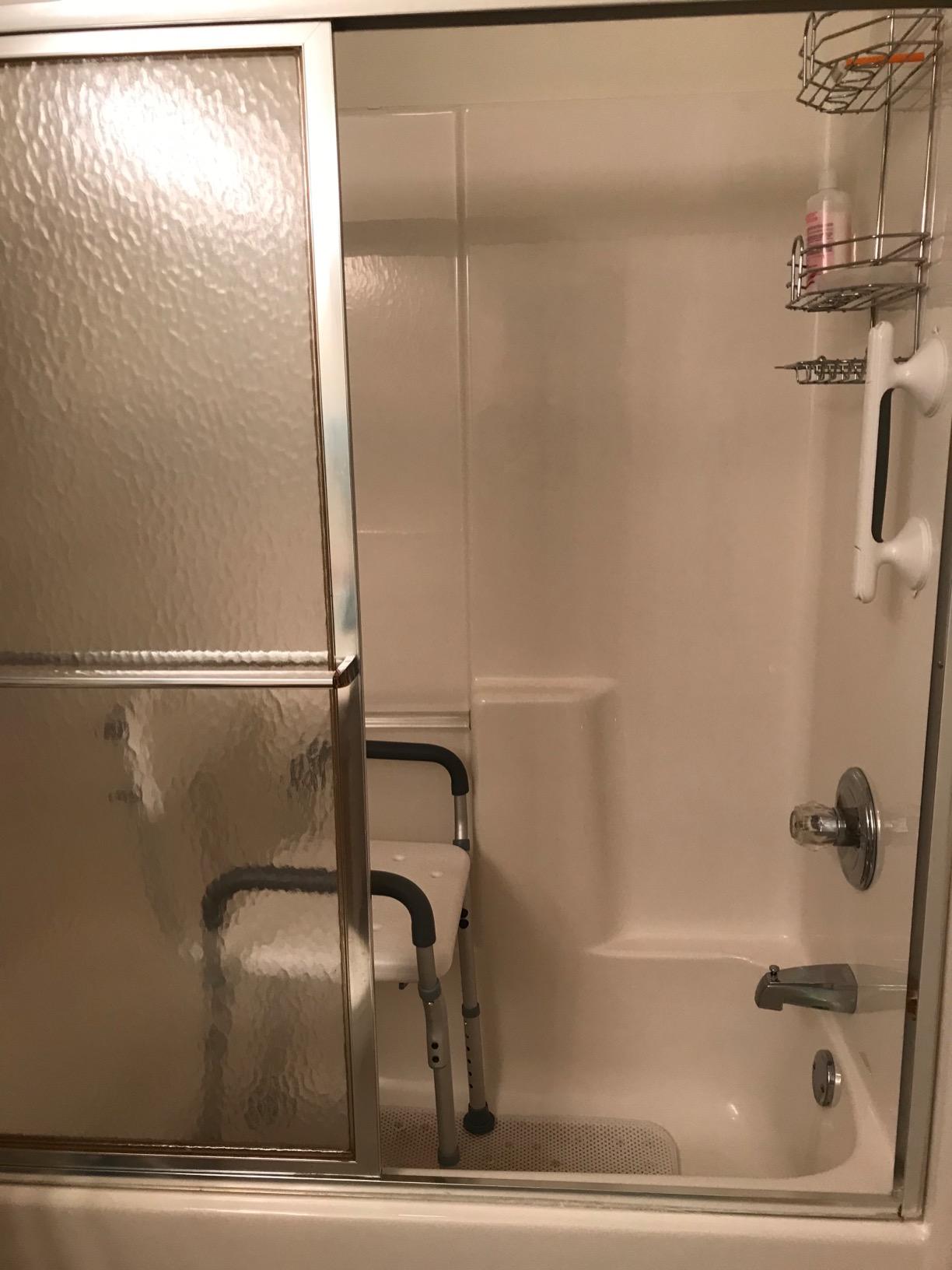
The handles are padded for a secure grip during transfers, and the leg tips are rubber anti-skid rather than suction, which makes this a better choice on a textured tub floor. Height adjusts from 14 to 19.5 inch, the backrest removes, and the whole chair comes apart tool-free for storage or travel, including removal of the legs, armrests and backrest. Corrosion-resistant aluminum will not rust, and there is a 60-day unconditional guarantee.
The rated capacity is 300 pounds, which is the honest limitation here. If you need more than that, this is not the chair, and the 450 and 550 pound models later in the list exist for exactly that reason. It also sits at the higher end of the cost range in this roundup, which is a fair trade for build quality and the guarantee but not a trade for a tight budget.
Tool-free disassembly solves the shared bathroom problem
The ability to strip this chair down with no tools is more useful than it sounds. In a bathroom shared with able-bodied family, a chair that can be dismantled in a couple of minutes and stored in a closet removes most of the friction that makes people resist installing one. Several users on caregiver forums describe exactly this negotiation, and the ability to put it away is often what makes the difference between a chair being accepted and a chair being resented.
Who should skip it
Skip it if you are over 300 pounds, or if you want a cushioned seat for long showers, because the composite surface is textured rather than padded. It also sits at the higher end of what this category costs, and the compact HOMLAND models deliver a narrower footprint for less.
8. VFAUOSIT Shower Chair with Removable Arms and Back – Best for Heavier Users
VFAUOSIT Shower Chair with Removable Arms and Back, 550 lb Adjustable Seat
Anodized aluminum
550 lb rated frame
22 inch wide seat
Height 15 to 20 inch
Pros
- Crossbar-reinforced frame lab-tested to 550 lb
- Six height positions fitting users from 5 ft 3 in to 6 ft 5 in
- EVA cushion with padded armrests
- Tool-free assembly in under 10 minutes
Cons
- 22 inch width suits walk-in showers more than narrow tubs
- No plugs included to cap holes if arms are removed
- Assembly needs two people or real patience
If the binding constraint is weight rather than width, this is the strongest frame in the roundup. The VSC1001 uses a reinforced anodized aluminum frame with crossbar support, lab-tested to 550 pounds, and the height range spans 6 positions from a 15 inch floor-to-seat measurement to 20 inch. The manufacturer states that range fits users from 5 foot 3 to 6 foot 5.
A stated lab test figure on a 550 pound frame is not common in this category, and it is the number to look for if you are buying above 400 pounds. Many listings publish a maximum without describing any reinforcement at all, and owners of heavier chairs regularly report frames that flex. One reviewer describes using this chair as a 6 foot 4, 340 pound user with no wobble, which is a more useful data point than a rating alone.
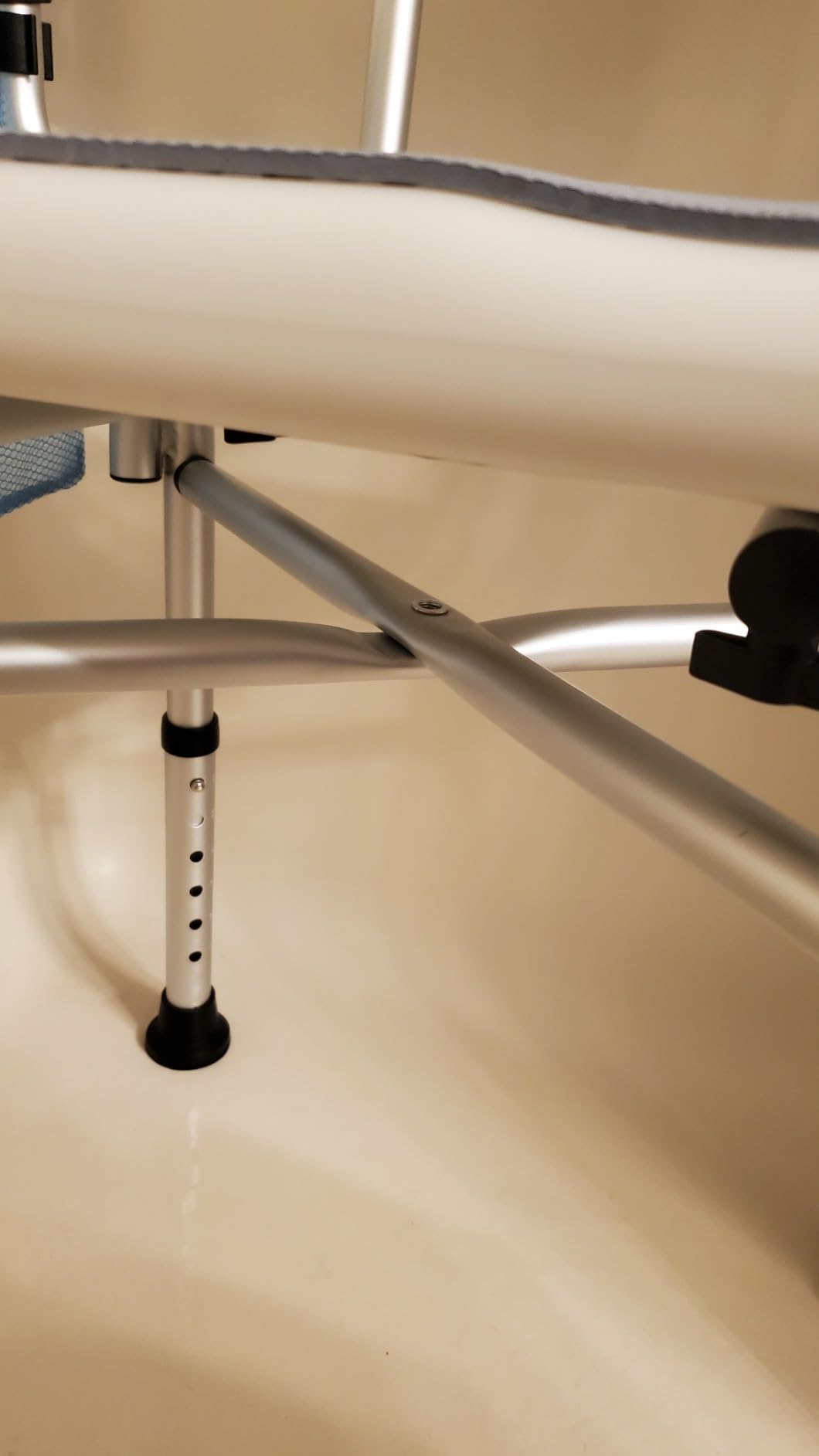
You also get an EVA cushion and padded armrests, 12 quick-drain holes, a removable back and arms for four configurations, and an included showerhead holder. Assembly is tool-free in under 10 minutes, though several owners describe it as a two-person job. There is a one-year warranty with a free one-year extension, and the chair is FSA and HSA eligible, which makes it accessible to anyone using a health savings account.
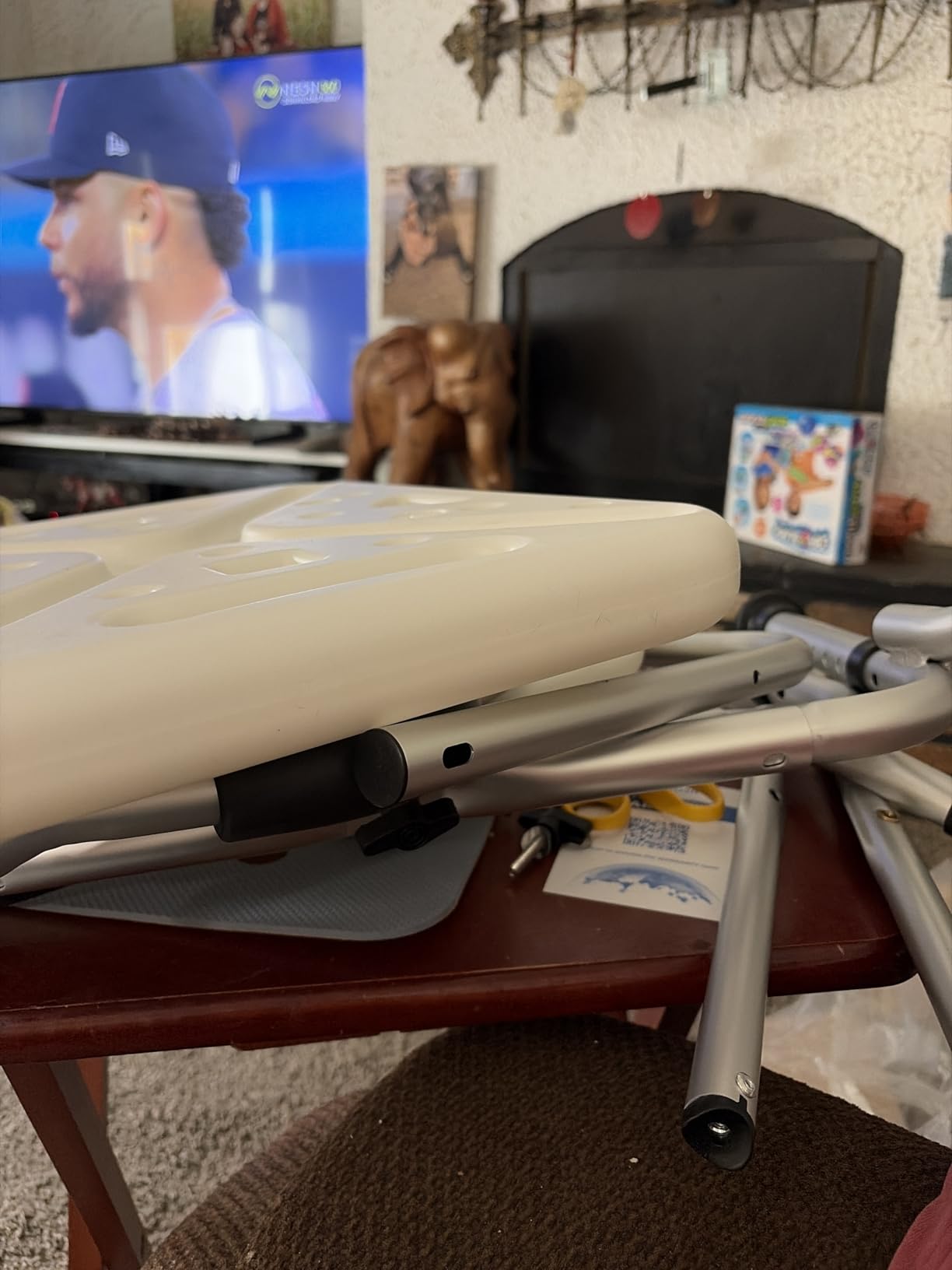
The size is the issue in a small bathroom. At 22 inch wide and 16.7 inch deep, this is a walk-in shower chair in practice, and several reviewers say so directly. One buyer found the showerhead holder missing from the box, and no plugs are included to cap the drainage holes if you remove the arms, which leaves open holes in the seat surface.
When a bariatric frame is the right answer anyway
A 550 pound frame is wider than a 300 pound frame by design, because the reinforcement takes room. If you need that capacity, a narrower frame is not a better option; it is a frame that may fail. The honest move in that case is to change the room rather than the chair: a wall-mounted bench on a solid wall, or a wider walk-in conversion, both of which free the floor entirely. That is the same answer a user in a compact Scandinavian apartment gives when they say the chair will make an already small bathroom feel smaller.
Who should skip it
Skip it in a narrow tub or a small stall, where 22 inch is simply too much. It is also the heavier unit in the group at 8.6 pounds, which complicates removing it for a shared bathroom. And if you are removing the arms, plan to source your own hole plugs, because they are not in the box.
9. BRITULIF Shower Chair with Arms and Back – Best Cushioned Comfort
BRITULIF Shower Chair with Arms and Back for Inside Shower, 550 lb Capacity
X-brace aluminum frame
550 lb rated, 400 lb recommended
23.6 inch wide
EVA cushions included
Pros
- Full cushioning package covering seat
- backrest and arm pads
- X-brace frame holds heavier users without flex
- Waterproof EVA with 12 rapid-drainage holes
- Tool-free four-step assembly in about 15 minutes
Cons
- Widest frame in the roundup at 23.6 inch
- Most expensive chair analyzed
- Newer listing with fewer reviews on long-term durability
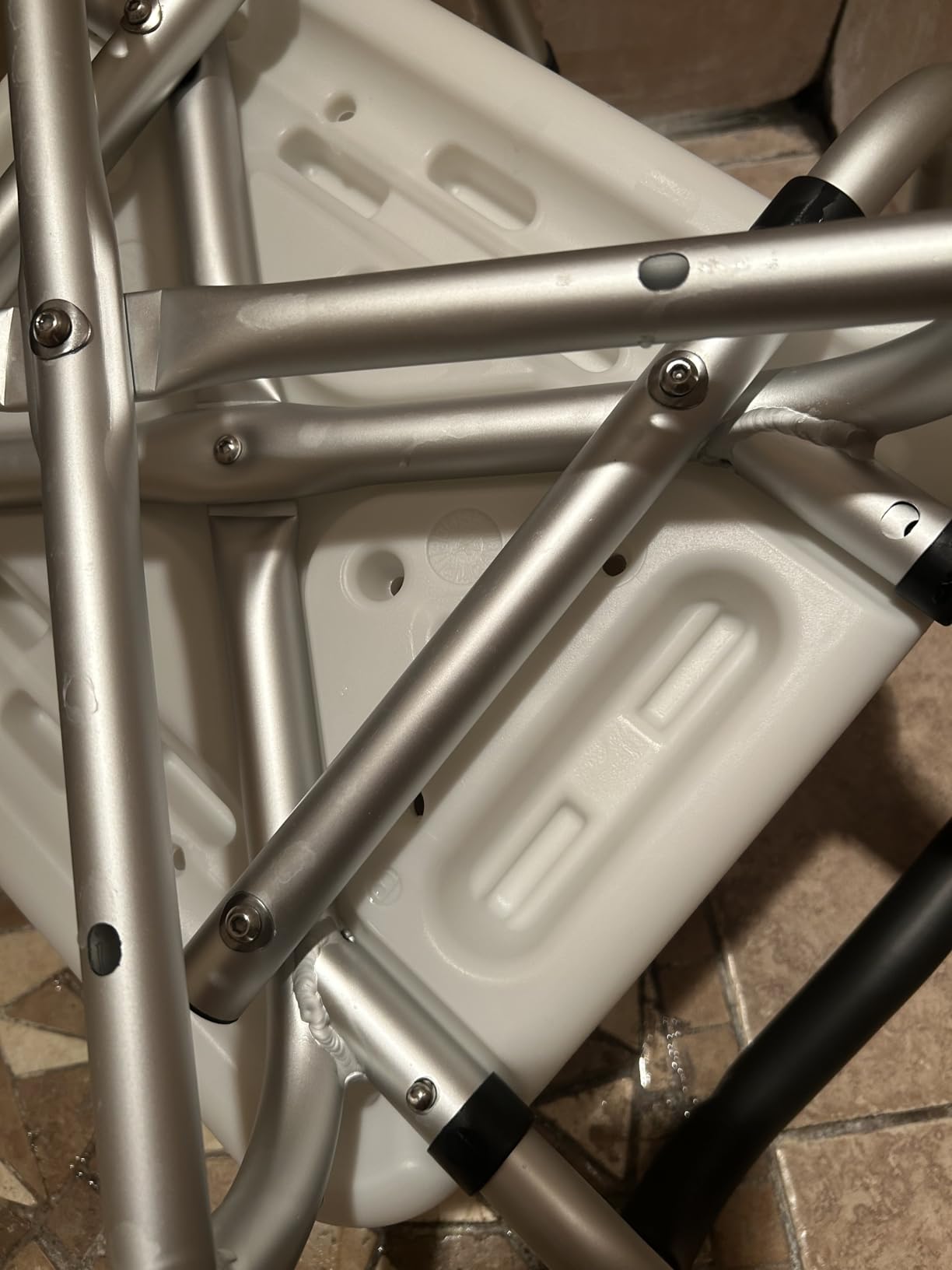
The BUSY01 is the most fully padded chair in this roundup. The seat cushion, the backrest cushion and the armrest pads are all waterproof EVA, which means every surface a user touches during a transfer or a long sit is cushioned rather than hard. For anyone at risk of pressure soreness, or anyone whose shower routine is not a quick in-and-out, that is the differentiator.
Structurally it is a serious chair. The frame is reinforced aluminum with X-brace support, lab-tested to 550 pounds with 400 pounds recommended, and it carries M-shaped handles shaped for an ergonomic grip. There are 12 rapid-drainage holes, low-noise scratch-free rubber feet, an included showerhead holder, and five height positions stated to fit users from 5 foot 3 to 6 foot 5.
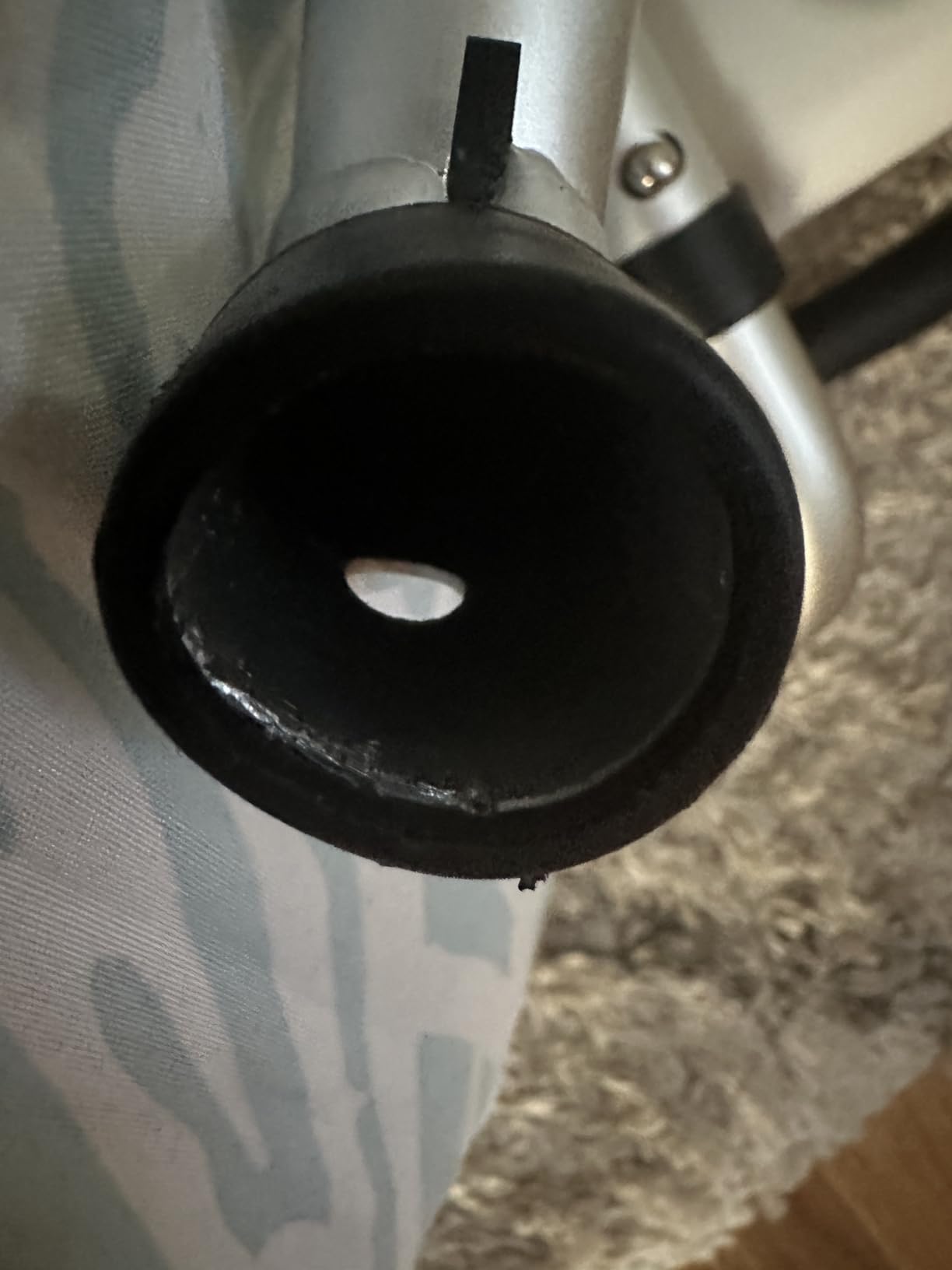
Assembly is a tool-free four-step push-click build taking roughly 15 minutes, and the arms and back both remove for four configurations. A one-year warranty plus a free one-year extension is included, and it is FSA and HSA eligible. The listed weight is 7.74 pounds.
What holds it back is a combination of size and maturity. At 23.6 inch wide it is the widest frame we analyzed, which makes it the least suited to a small bathroom of anything on this list. And with under 1k reviews it has the thinnest long-term durability record in the group, which matters when you are choosing a chair someone will depend on for years rather than weeks.
Padded versus hard: how to decide
Padding is worth paying for when showers run long, when the user cannot shift position easily, or when there is any history of skin breakdown. A hard polyethylene or composite seat drains water faster, wipes clean more easily, and costs less, and for a short assisted shower it is entirely adequate. The MEDLINE and Vive designs in this roundup use hard surfaces and both rate 4.7, so the cushioning is not a quality signal. It is a comfort and skin-integrity decision.
Who should skip it
Skip it in a small bathroom. A 23.6 inch frame is a walk-in shower footprint, and if your alcove is under about 30 inch it will not seat properly against the walls. It is also the most expensive chair in the roundup and the least proven over time, so if you want a cushioned chair on a smaller frame, the HOMLAND SHC20 gives you padding at 22.7 inch with a similar test rating.
10. PELEGON Shower Chair with Padded Arms and Back – Best Mid-Size Seat
PELEGON Shower Chair for Elderly and Disabled (450lb) with Padded Armrests and Back, Adjustable Height Shower Seat, Heavy Duty Shower Chairs for Inside Shower, Handicap – Blue
Aluminum with crossbar
450 lb capacity
18 inch wide seat
Height 17 to 21 inch
Pros
- Padded ergonomic armrests and backrest for secure transfers
- Crossbar brace adds stability in a wet room
- 18 inch width splits the difference for small bathrooms
- Three color options reduce the clinical look
Cons
- Fixed arms and back cannot be removed for a very tight tub
- 450 lb rating sits below the 550 lb heavy-duty models
- Lower review volume than the leading picks
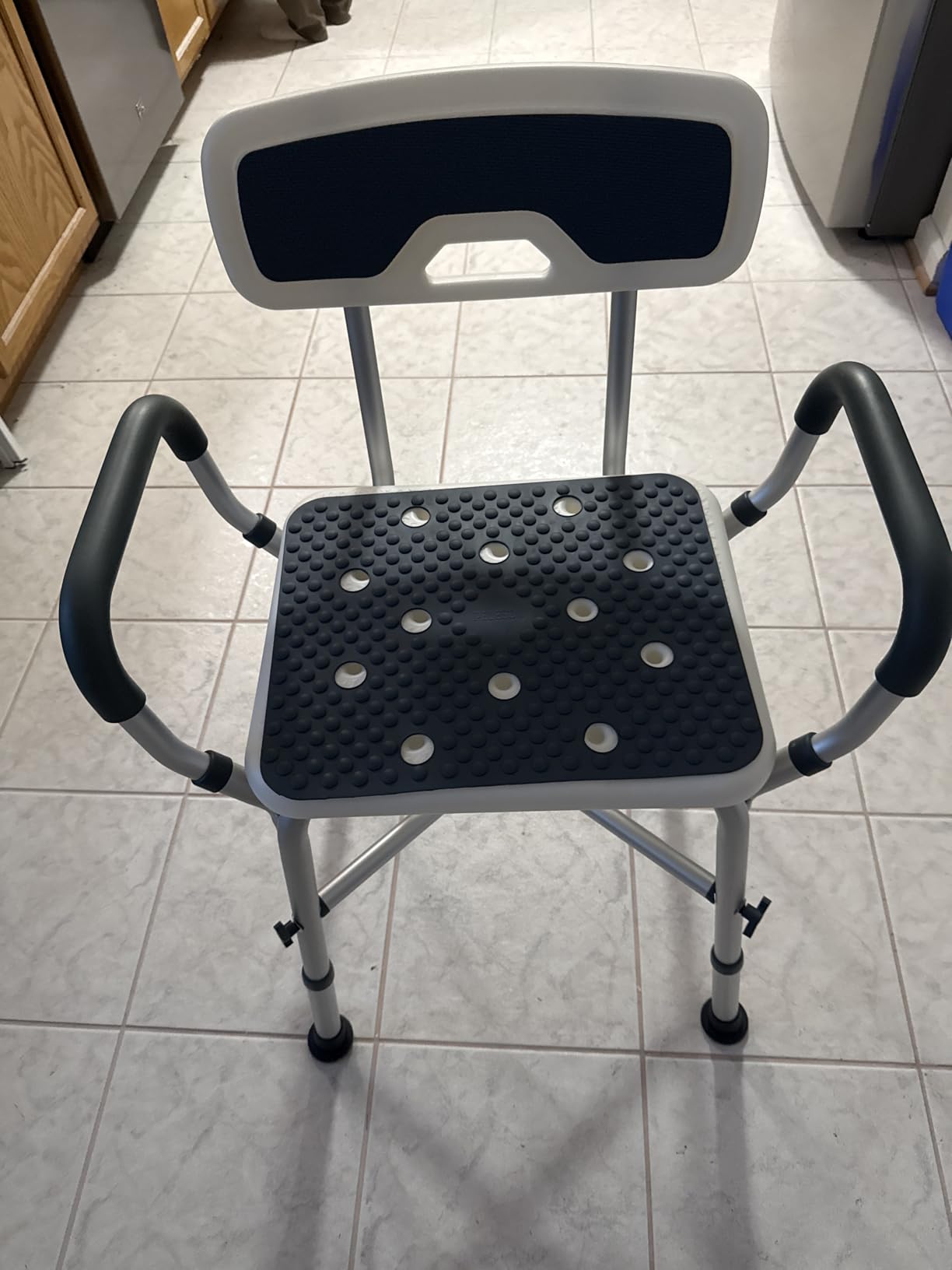
The PELEGON SCH1 is the compromise pick. At 18 inch across the seat it is wider than the compact models and narrower than the heavy-duty frames, and buyers regularly describe that width as a sensible middle ground in a small bathroom. It carries a 4.7 rating from just under 1k reviews.
Two things make it more than a middle-of-the-road chair. The first is the crossbar brace, which adds real lateral stability in a wet environment, the specific construction detail that separates a chair that feels solid from one that does not. The second is the padding on the ergonomic arms and backrest, which gives secure grip surfaces for sitting down and standing back up.
Height adjustment runs from 17 to 21 inch, which makes it one of the two taller chairs in the roundup alongside the Medline. That suits a tall user or a raised bathroom floor, and suits a shorter user less well. Assembly is tool-free, and it is available in grey, teal and dark blue, which matters more than it sounds: users on disability forums object to depressing hospital-grey equipment, and a chair in a color the household chose is a chair the household does not resent.
When a mid-size frame is exactly right
The failure mode in small bathrooms is not buying too small. It is buying a 15 inch seat that a larger user cannot sit on comfortably, and then adding a cushion that shifts under them. An 18 inch seat with a crossbar and padded arms is the size at which most adults sit comfortably without an add-on, and the 450 pound rating gives a real margin over a standard adult user. For an alcove of roughly 24 inch or more, this is the frame that stops compromising.
Who should skip it
Skip it if you need more than 450 pounds, because the 550 pound frames exist for that. Skip it if your tub is very narrow, since the arms and back are fixed and cannot be removed to reclaim space, which is the one feature this roundup would most want on an 18 inch frame. And weigh the fact that with under 1k reviews there is less long-term feedback than the Medline, Dr. Kay’s and Drive Medical chairs above.
Buying Guide: What Actually Matters in a Tight Bathroom
These are the criteria that decide whether a shower chair with a back works in a small bathroom, in roughly the order they should matter.
Overall width, not seat width
This is the number that returns chairs, and it is the number listings hide. Seat width describes the panel you sit on. The armrests sit outboard of that panel, and the backrest frame sits behind it. None of the 10 chairs we analyzed publish a reliable arm-to-arm measurement, so treat any seat width below about 17 inch as a signal that the full frame will be wider than the number suggests, and treat anything above 19 inch as a warning to measure the tub twice.
Weight capacity against your actual body weight
Rated capacity in this roundup runs from 300 pounds to 550 pounds. The Medline, Drive Medical and Dr. Kay’s chairs sit at 350 pounds, the Vaunn, Vive and HOMLAND SHC10 at 300 pounds recommended, the PELEGON at 450 pounds, and the VFAUOSIT and BRITULIF at 550 pounds tested with 400 pounds recommended.
Two cautions. First, distinguish a rated maximum from a recommended user weight, because they are not the same number and the 500 and 550 pound frames list a lower recommended figure than their tested maximum. Second, a stated lab test figure on the frame is more meaningful than a bare number, because it tells you the reinforcement exists rather than that a number was printed on a box. If you need more than 300 pounds, look for the crossbrace or X-brace models rather than the plain tubular frames.
Armrests and the type of transfer
A sit-to-stand transfer, where the user lowers themselves backwards onto the seat and pushes up on the armrests, needs a tall back and arms set at a height the user can actually reach with their hands while seated. A side transfer from a wheelchair needs a chair low enough to sit down beside and an arm that swings or removes, because a fixed arm on the transfer side is a barrier. The removable-arm designs in this roundup, the HOMLAND SHC20, VFAUOSIT and BRITULIF, serve both patterns and are worth the extra assembly step if you are not certain which one you need.
Rubber anti-slip feet versus suction cups
Suction cups grip a smooth, wet acrylic or porcelain surface very well and fail on textured tub floors, textured non-slip bases, drain grates, and any surface with a seam or a slight curve, because a suction needs a continuous seal. Wide angled rubber feet are less dramatic on smooth surfaces but far more forgiving on textured ones, and they will not let go because a little soap got under the edge.
Our rule: suction tips for smooth tubs, rubber feet for textured bases, and if you are unsure, non-slip matting under the feet. A chair that slides is the single most common complaint in this category, and it is also the most preventable.
Height range matched to the user, not the room
A seat that is too high cannot be used by someone with limited leg strength, because they cannot generate the downward push to stand up. A seat that is too low folds the user’s knees up and destabilises them. The ranges here span 12.5 to 18.5 inch on the Dr. Kay’s, 14 to 19 inch on the HOMLAND SHC10, 14 to 19.5 inch on the Vive, 15 to 20 inch on the VFAUOSIT, 16 to 20.5 inch on the Drive Medical, and 17 to 21 inch on the PELEGON and Medline. Measure the user’s natural seat height and pick a chair whose range contains it, then set it there and check that both feet reach the floor flat.
Removable backrests, padding, and cleaning
A detachable back converts a full-footprint chair into a lower-profile one, which is the closest thing this category has to a fold-flat design. Nearly all folding shower chairs are backless, so if you want back support and portability together, a removable back is the only realistic answer, and four chairs on this list offer it in some form.
For cleaning between users, hard polyethylene and composite seats wipe down and disinfect with ordinary bathroom cleaner, which is why they dominate clinical and rental settings. EVA and PU foam pads feel better over a long shower but need to be dried fully and are harder to disinfect between users, so if the chair is shared, hard surfaces are the more practical choice. Clean the feet as well as the seat, since that is where soap residue collects and where a slipping chair starts.
A note on safety: this article is product information, not medical advice. If you are choosing a bathing chair for an injury, a diagnosis, a recovery period or a change in mobility, involve the person’s care team or occupational therapist before you buy. They can tell you whether the user needs arms, a specific seat height, or a transfer method this roundup does not cover, and in some cases they will tell you that a chair is the wrong answer entirely.
What to Skip in a Small Bathroom
Three categories get recommended to almost everyone and are wrong for most of the bathrooms this article is about.
Sliding and swivel transfer benches. These run on a track along the length of the tub and exist to move a person who cannot step over the tub wall at all. That is a legitimate and important need, and if it is your need, this advice does not apply. But the track consumes most of the tub’s length permanently, the seat does not fold, and the unit is not moved again without tools. Buying one for a bathroom where the user could do a sit-to-stand transfer trades a permanent footprint for a convenience the user does not need.
Backless stools and round suction-foot stools when back support is the reason for the chair. They are narrower, which is why they keep getting recommended for small bathrooms. Users on disability forums are consistent about the problem: the chair is physically there but does not feel safe without a back, and a person who does not feel safe does not bathe. A removable back, as on the Vaunn or the HOMLAND SHC10, resolves the conflict properly.
Oversized bariatric frames in a narrow alcove. Anything above 22 inch overall width needs roughly a 30 inch shower or a walk-in. If you need 450 pounds of capacity, the answer is a frame of that strength that fits, or a change to the room, not a compromise on both at once.
And one option that is not on any roundup: in the very smallest showers, a wall-mounted bench is the only choice that returns the floor to you. It needs a solid wall and some installation work, so it is worth a handyman or a family member rather than a DIY afternoon if you are not confident with a stud finder and a drill. For everyone else, a freestanding chair is faster and cheaper, and a caregiver forum post describing a shower chair and toilet bars installed in a single day is a realistic timeline.
Frequently Asked Questions
What is the best shower chair for small spaces?
The best shower chair for a small space is one whose overall width across the armrests is narrower than your tub alcove at its narrowest point. On our list, the Dr. Kay’s chair at 15.5 inch and the HOMLAND SHC10 at 16.3 inch are the two most compact options with a backrest and armrests. Measure the alcove before ordering, because listings usually publish seat width rather than the frame width that actually decides fit.
What is the best shower chair for a narrow bathtub?
For a narrow bathtub, prioritise the narrowest frame you can find and pick one with a removable backrest so you can reclaim the space when it is not in use. The Dr. Kay’s chair at 15.5 inch wide and the HOMLAND SHC10 at 16.3 inch wide are built for tight enclosures, while the Medline at 16.3 inch adds padded armrests. Avoid any frame above about 19 inch unless your tub is a wide alcove model.
How do I measure my tub for a shower chair?
Measure three numbers. First, the inside width of the tub or stall at its narrowest point, measured at seat height rather than at the lip. Second, the length from the tub wall to the far edge. Third, your own seat height by sitting on a counter edge and measuring floor to seat. Compare those against the chair’s overall width including armrests, its total depth, and its height adjustment range.
What is the maximum weight a shower chair can hold?
On this list, maximum rated capacity ranges from 300 pounds on the Vaunn, Vive and HOMLAND SHC10 up to 550 pounds on the VFAUOSIT and BRITULIF frames. The 550 pound models list 400 pounds as the recommended user weight, so treat recommended weight as the working figure. For anything above 300 pounds, choose a model with a stated crossbrace or X-brace test rating rather than a bare tubular frame.
What shower chair is suitable for a 300-pound person?
Several chairs here clear 300 pounds with margin. The Medline and Drive Medical chairs are rated to 350 pounds, the PELEGON to 450 pounds, and the HOMLAND SHC20 carries a 400 pound recommended user weight. For a 300 pound user in a small bathroom, the Medline is the strongest all-round choice because it combines a 16.3 inch frame with a 350 pound rating and six height positions.
What are the best shower chairs for elderly according to consumer reports?
No formal Consumer Reports testing of shower chairs appeared in the research for this article, so we ranked on owner review volume and construction instead. The most heavily reviewed chairs here are the Medline at more than 35k reviews, Dr. Kay’s at more than 13k, and Drive Medical at more than 13k. For elderly users, prioritise armrests, a contoured back, a frame with crossbrace reinforcement, and a seat height range that matches the user’s own.
What to use instead of a shower chair?
A tub transfer board works if the user has upper body strength but cannot stand in the tub. A wall-mounted bench returns the entire floor if you have a solid wall and can have it installed. A handheld showerhead with a simple stool serves users who can stand but not for long. For a more permanent solution, a walk-in tub conversion or a recessed custom bench fits the very smallest showers. Ask a care team which applies to your situation.
Do shower chairs with suction cups work in a bathtub?
They work very well on a smooth, wet acrylic or porcelain surface and grip better than plain rubber pads. They fail on textured tub floors, textured non-slip bases, drain grates, and any surface with a seam, because a suction cup needs a continuous seal. If your tub is textured, choose a chair with wide angled non-slip rubber feet instead, such as the Vaunn, HOMLAND or BRITULIF models on this list.
Conclusion
The Medline shower chair with padded armrests and back is the best shower chair with a back for a small bathroom, because it pairs the highest rating in the group with the largest body of long-term owner feedback, a 16.3 inch frame, six height positions and a listed seat height of 21 inch for taller users. If your alcove is genuinely tight, the Dr. Kay’s chair at 15.5 inch wide is the narrowest option here, and the HOMLAND SHC10 at 16.3 inch is the compact pick with a removable backrest.
Before any of them, take three measurements: your alcove width at its narrowest point, the tub length to the wall, and the user’s own natural seat height. Compare those against overall frame width rather than the seat width every listing leads with, and check whether the feet are rubber or suction, because a chair that slides is the one failure nobody plans for. Our [aromatherapy shower steam guide](https://www.drunvalo.net/best-aromatherapy-shower-steamers/) pairs well with a safer, more comfortable setup, and an [aromatherapy shower spray routine](https://www.drunvalo.net/best-aromatherapy-shower-sprays/) is an easy addition to the rest of the bathroom planning.