
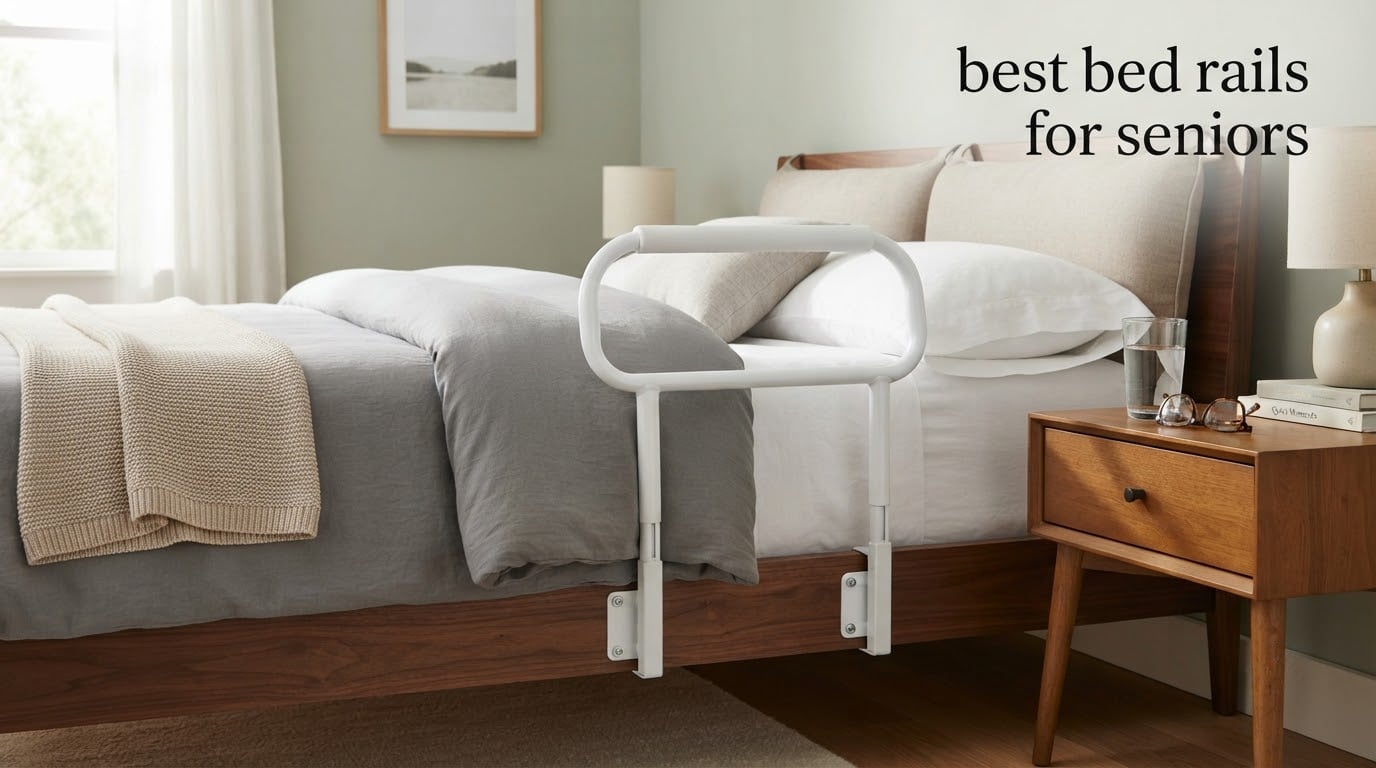
If you want the short version, the best bed rails for seniors in 2026 are the Medline Bed Assist Bar for everyday transfer help, the Vaunn Medical Adjustable Bed Rail for certified strength and fit, and the Lunderg Bed Rail with a motion-activated light for night-time use. All three hold a 300 lb load test, all three install without tools, and all three were chosen for how quickly a caregiver can reach the person sleeping.
We spent weeks reading the customer feedback on ten of the highest-rated bed rails for seniors, checking weight ratings, mattress thickness ranges, floor clearance needs and bed-frame exclusions, then matching each one to the job it actually does well. Some are built for getting in and out of bed. Some are built to stop someone rolling onto the floor at 3am. A few do both, and the difference matters more than any price gap.
Before the picks, the safety rules that decide whether a rail helps or hurts:
Check the current mandatory standard. Anything manufactured after August 21, 2023 in the United States must meet 16 CFR Part 1270, which is built on ASTM F3186-17.
Match the rail to the mattress thickness range on the listing. A rail that sinks below the mattress surface creates a gap you can trap a limb in.
Tighten the anchor strap to the bed frame every time, and re-check it on a schedule. Loose fittings are the most common cause of a rail moving during a fall.
Measure the largest gap after installation. Anything wider than 4.75 inches between bars is a hazard, and so is the channel between the rail and the mattress.
Skip the rail entirely if the person has dementia and climbs. A rail designed as a barrier becomes a step to climb in a confused state, which is how most entrapment injuries happen.
One more note before we start, because the framing changes how you read every review below. In a caregiving forum thread on bed rail use, nurses described rails as good for bed mobility, defining the perimeter of the bed and helping with balance during transfers, rather than as fall containment devices. That is a narrower and more honest claim than most product pages make, and it is the claim we tested each pick against.
Table of Contents
Top 3 Best Bed Rails for Seniors in 2026

Medline Bed Assist Bar
- Folds flat for storage and travel
- Multiple grip positions with foam handles
- Deep nylon pouch
- Highest review count in the set

Vaunn Medical Bed Rail
- ASTM F3186-17 certified
- 300 lb powder-coated steel
- Fits 7-11 inch mattresses
- Foam-padded handle
Lunderg Bed Rail with Light
- Motion-activated rechargeable light
- Load tested to 300 lb
- Weighs 2 lb
- Fits 7-13 inch mattresses
At a Glance: All 10 Bed Rails Compared in 2026
| Product | Specifications | Action |
|---|---|---|
| Medline Bed Assist Bar |
|
Check Latest Price |
| Vaunn Medical Bed Rail |
|
Check Latest Price |
| Lunderg Bed Rail with Light |
|
Check Latest Price |
 Stander EZ Adjust Bed Rail Stander EZ Adjust Bed Rail |
|
Check Latest Price |
 KingPavonini Bed Rail KingPavonini Bed Rail |
|
Check Latest Price |
 step2bed Deluxe Bed Rail and Step step2bed Deluxe Bed Rail and Step |
|
Check Latest Price |
 Able Life Extend-A-Rail Able Life Extend-A-Rail |
|
Check Latest Price |
 Stander BedCane Stander BedCane |
|
Check Latest Price |
 Medical King Bed Rail Medical King Bed Rail |
|
Check Latest Price |
 WeHwupe Bed Rail WeHwupe Bed Rail |
|
Check Latest Price |
Reading a table like this quickly shows two things. The weight ratings cluster tightly, with six of the ten at 300 lb or above, so capacity rarely decides the purchase. Bed frame exclusions decide it instead, because five of these list adjustable beds as a no-go and one needs 13 inches of floor clearance under the frame.
1. Medline Bed Assist Bar for Seniors with Nylon Bag for Storage
Medline Bed Assist Bar for Seniors with Nylon Bag for Storage
Folds flat
6.4 lb
27.5 x 14 x 43.75 in
Fits queen and king
Nylon pouch
Pros
- Deepest owner history in the category with 15534 ratings
- Multiple gripping surfaces for a firm hold from any position
- Folds flat for transport and storage between home hospital and rehab
- Flat tubing that is not felt through the mattress on slat or spring bases
Cons
- Included safety strap is not removable and can bunch under the mattress
- Residual wobble that some owners fix with extra fasteners
- Fit on a platform bed is uncertain
We picked this one as the top overall pick because of the depth of the owner record rather than any single spec. At 15534 ratings it is the most-reviewed bed rail we analysed, and the pattern in the feedback is unusually consistent: people bought it for a parent after a hip, spine or mastectomy procedure, and it did the job of getting them in and out of bed independently.
The build is a straightforward steel assist bar with foam-covered handles at several points along the frame, so a user can grab high or low depending on how they are sitting. The deep nylon pouch is not a gimmick. It is where the phone, glasses and evening medication go, and it is the single feature caregivers on r/AgingParents single out as worth paying for when they compare rails.
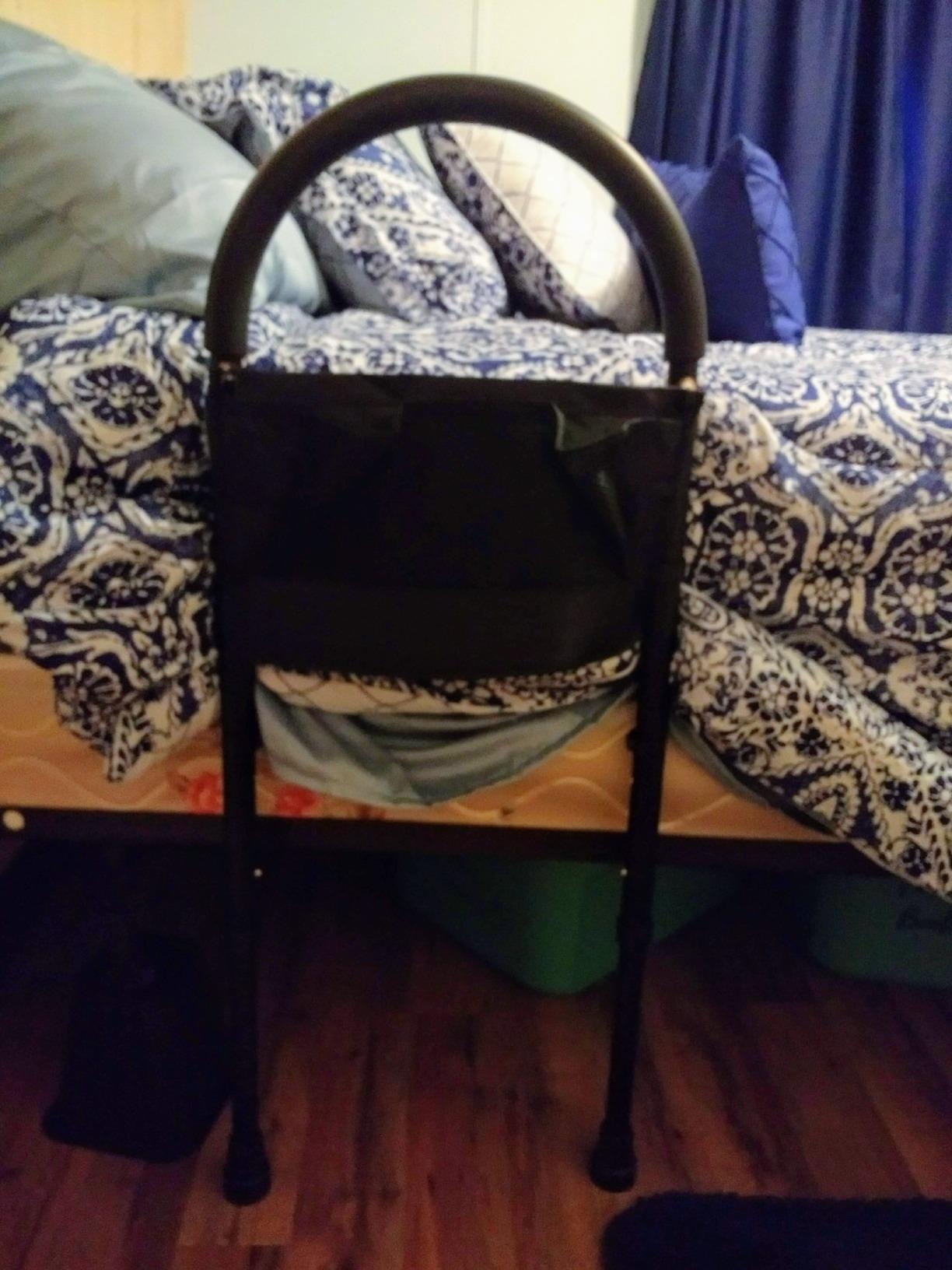
What stands out on testing is how unremarkable the setup is. Tool-free assembly means someone can fit it in a few minutes between the evening meal and bedtime, and the flat tubing does not create a ridge the sleeper feels through a thin mattress. Owners recovering from hip surgery specifically mention that they could slide in without twisting, which is the sit-to-stand problem this product exists to solve.
Caregiver access is good rather than excellent. The bar is fixed, not hinged, so a night-time check means reaching over it. It is low enough that it does not block a person sitting on the edge of the bed with their feet on the floor, which matters more for a bed exit alarm placed under the mattress.
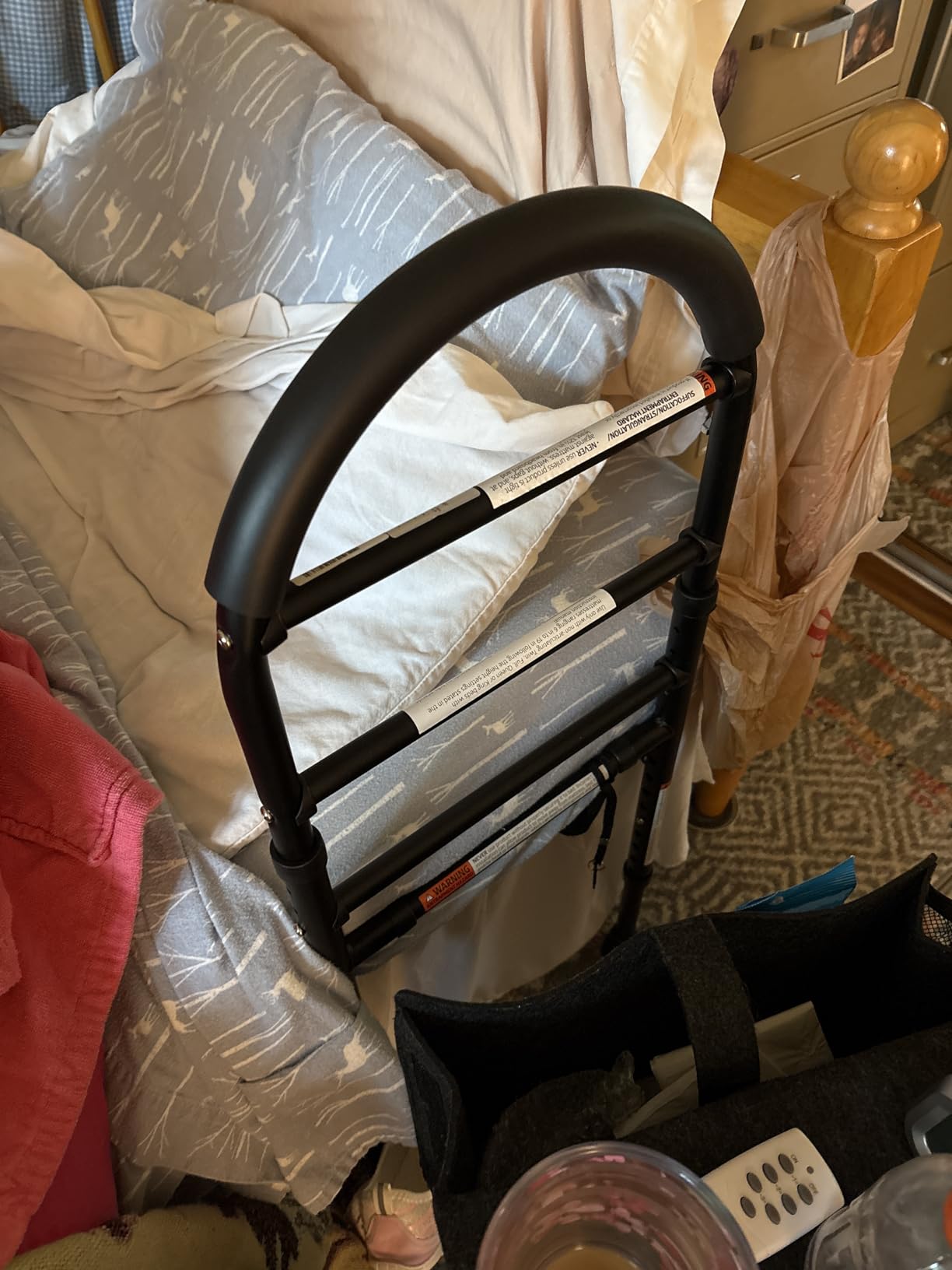
Why it works for a hospital or rehab stay
This is the one rail in the set that folds flat. Owners moving between a home bedroom, a hospital room and a rehab gym describe packing it into a car and putting it back up in under five minutes. That portability is why it makes our list twice, once as the general pick and once as the travel answer.
It also suits a rental or a spare room, where permanently modifying the bed frame is not an option. The strap is the only thing touching the bed, so the rail leaves no marks and no hardware holes.
Where it falls short
The non-removable safety strap is the most repeated complaint, because it cannot be repositioned and it can bunch under a thick mattress. Several owners also report a slight wobble that they resolved with heavy-duty fasteners at the bed board, which is a modification worth checking against the bed frame warranty.
It is also a transfer aid, not a containment rail. It does not stop a restless sleeper from rolling out, so if that is your actual goal, step up to a longer guard rail in this list. Platform bed fit is described as uncertain, so measure your frame before you commit.
2. Vaunn Medical Adjustable Bed Rail with Foam-Padded Handle
Vaunn Medical Bed Rail for Elderly Adults Safety, ASTM F3186-17 Certified, Adjustable Bed Assist Handle and Grab Bar for Seniors, 300 lb, Tool-Free Assembly
20 inch wide rail
ASTM F3186-17
300 lb steel
8 lb
Needs 13 in floor clearance
Pros
- One of the few rails in the set certified to the ASTM F3186-17 standard
- Adjusts in height and width to fit twin through California king
- Works with 7-11 inch mattresses
- Horizontal stabilizer bars add rigidity for transfers
Cons
- Not compatible with motorized adjustable or Sleep Number style beds
- Requires 13 inches of floor clearance under the frame
- Single rail rather than a full guard across the bed side
This is the pick when certification and fit range matter most. The listing names ASTM F3186-17 directly, which places it in the small group of rails where you can point to a written standard rather than a marketing claim, and the 300 lb powder-coated steel frame is one of the more substantial frames in the set.
The adjustability is the real story. Height and width both move, so one rail covers a twin through a California king and mattresses from 7 to 11 inches thick. For a household that moves between bed sizes, or a caregiver who has to fit rails to two different residents, that range removes most of the guesswork.
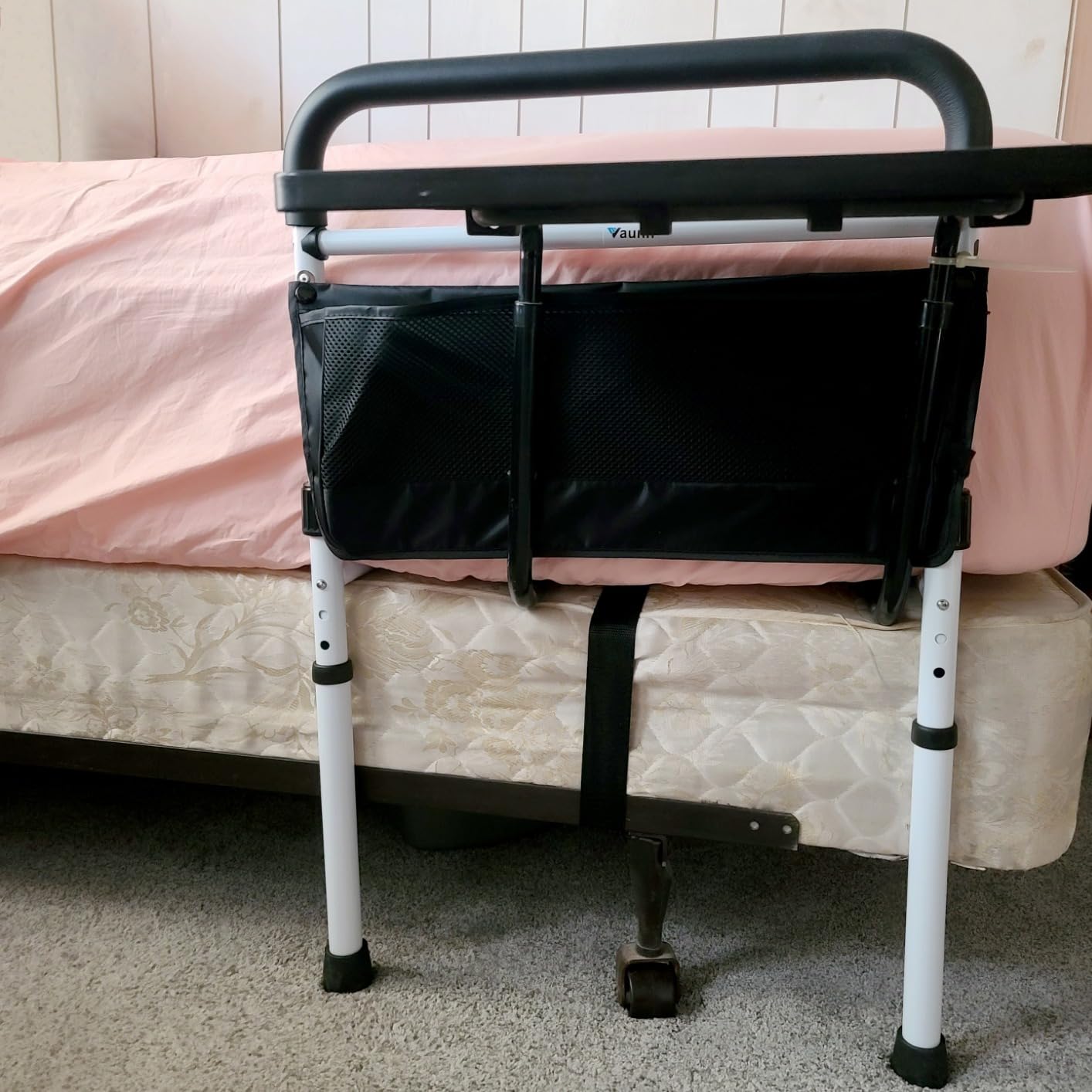
Owners consistently describe the horizontal stabilizer bars as the reason the frame does not twist when someone pushes sideways on it during a transfer, which is the exact moment an unpadded rail gets dropped and the person goes with it. The foam-padded handle is credited with staying comfortable through a long sit-to-stand session, and 77 percent of ratings are five star.
Caregiver access is the best in the set. The single-rail footprint means there is a clear path from the side of the bed to the occupant, so a night-time check does not involve reaching over a barrier.
How to check it fits your frame
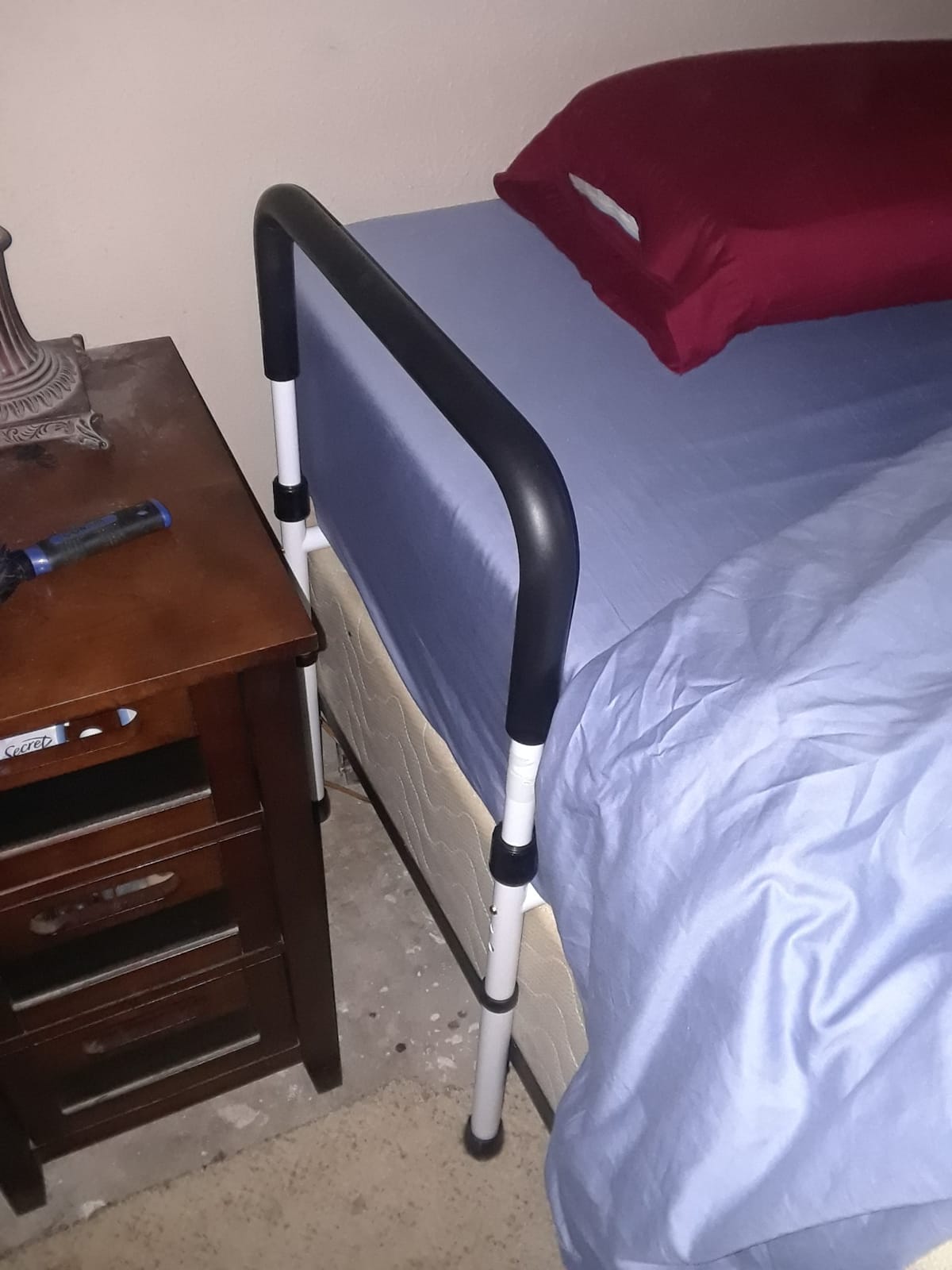
Measure the clearance under your bed frame before you order. This rail needs 13 inches beneath the frame to install, which is fine for a traditional frame with legs and a problem for a low platform base or a box spring sitting close to the floor. That single measurement eliminates most returns.
Then confirm the mattress thickness lands in the 7 to 11 inch range. A thicker mattress is the safer configuration here because it closes the gap between the rail and the sleeping surface.
Where it falls short
Adjustable beds are explicitly excluded, along with most Sleep Number style air mattresses. If your bed raises and lowers, cross this one off the list rather than trying to adapt it, because the frame geometry changes with every adjustment and the anchor point moves.
It is also a single rail, not a full-length guard. It defines one section of the bed perimeter and gives a solid handhold, but it will not contain a sleeper who moves the length of the mattress during the night.
3. Lunderg Bed Assist Rail with Motion Light and Non-Slip Grab Bar
Lunderg Bed Assist Rail for Seniors with Motion Light & Non-Slip Grab Bar
Motion-activated light
2 lb
300 lb load test
Fits 7-13 in mattresses
Pros
- Highest average rating in the set with 83 percent five star reviews
- Motion-activated rechargeable light on a 60 second trigger
- Arrives partly assembled for a genuine tool-free setup
- Weighs 2 lb so it moves between rooms easily
Cons
- Light battery duration is limited and it does not run all night
- Reaching the far side of the frame to anchor the cord takes two people
- Not suitable for adjustable beds
The motion light is the reason this rail is different, and it earns its place on caregiver grounds. When someone sits up or gets out of bed, the rail lights the mattress edge and the floor for about a minute, which is enough to find the slippers and the path to the bathroom without switching on a hard light that wakes the whole house.
Several owners with a dementia patient describe using the light as a quiet alert that a person has risen from the bed. It is not a substitute for a bed-exit alarm, but paired with one it adds a visual cue at the rail itself, which is a genuinely useful complement.
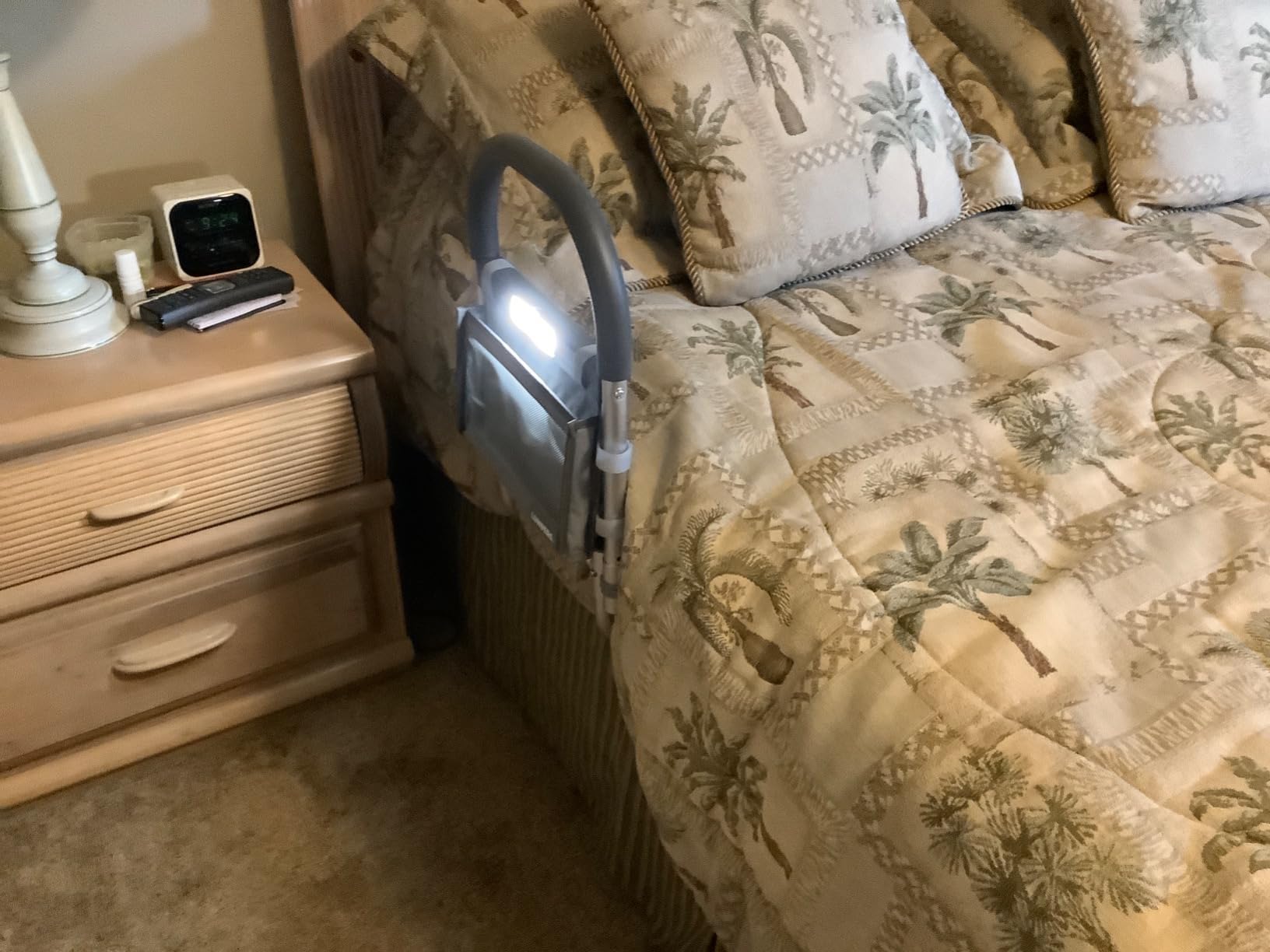
Sturdiness is the other argument. The carbon steel frame carries a 300 lb load test across four horizontal stabilising bars, and the feedback rarely mentions wobble, which is the most common complaint on lighter rails. The non-slip handle also stays grippy with damp hands, a detail that matters more than it sounds at 2am.
Setup is close to genuinely tool-free. It arrives partly assembled with pushpin connectors, so most people finish in about five minutes, and at 2 lb you can carry it to another room or take it with you rather than storing it in a closet.
Why caregivers rate it so highly
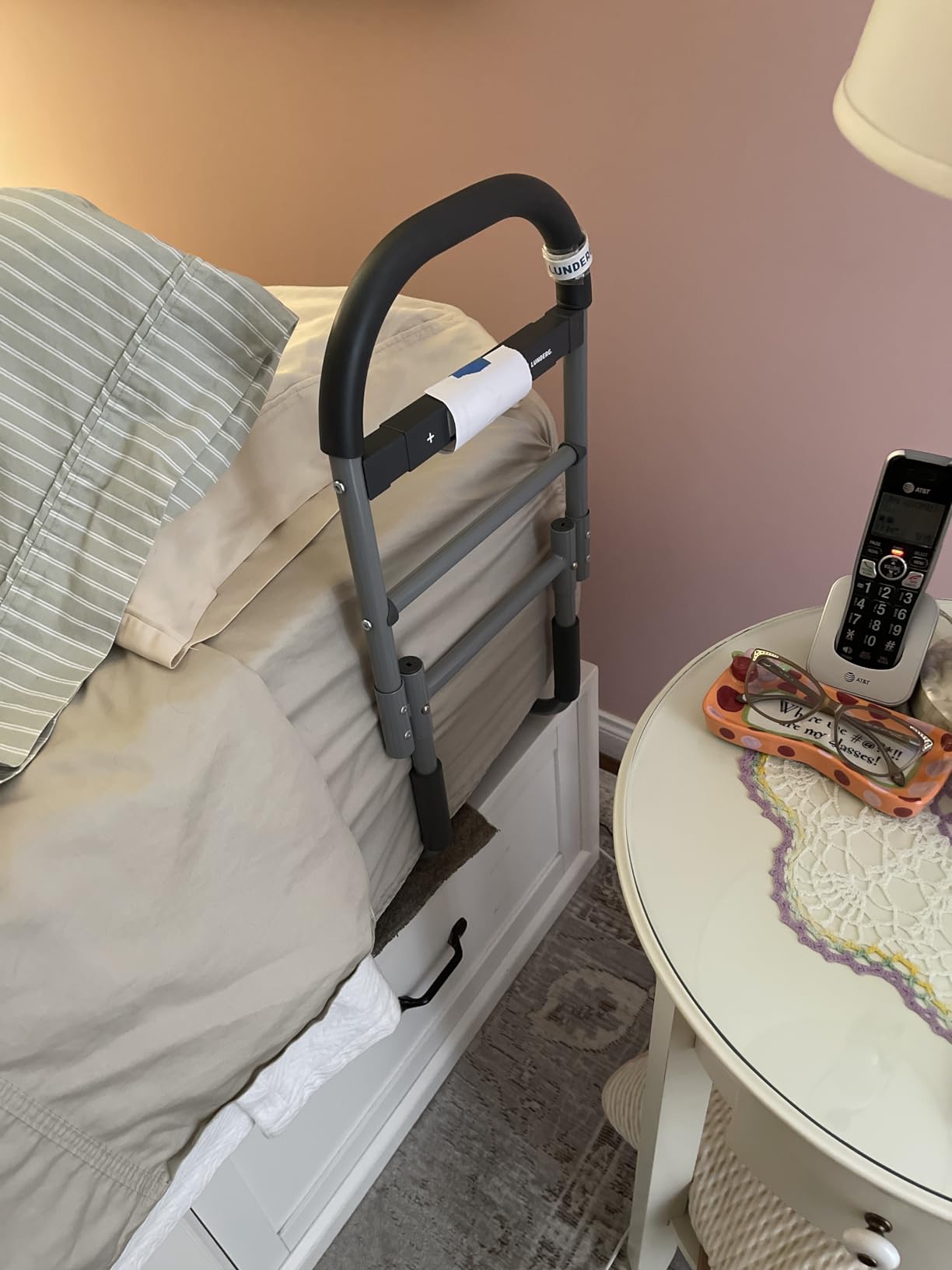
The 13 inch profile is low enough to swing legs over while still supporting a stand, which is the geometry a transfer aid needs. It fits twin through king and 7 to 13 inch mattresses on box spring, slat or platform frames, which makes it the most bed-agnostic rail in the roundup.
It also does not obstruct the side of the bed, so an overnight caregiver can get in, check and reposition without folding anything first. For a family managing night-time care, that is worth more than an extra inch of rail height.
Where it falls short
The light is the main trade. It runs on a rechargeable battery and does not stay on through the night, so it works for a single sit-up and a bathroom trip, not for a resident who is up repeatedly. There is no shade over the beam either, so on a reflective floor it can point straight into someone’s eyes.
Adjustable beds are excluded, and securing the cord to the far side of the frame is genuinely a two-person job. If you live alone and cannot get a second pair of hands, budget for that help or pick a rail that anchors from one side only.
4. Stander EZ Adjust Bed Rail with Organizer Pouch
Stander EZ Adjust Bed Rail, Adjustable Senior Bedrail and Safety Assist Railing for Elderly Adults with Organizer Pouch, ASTM Safety Approved Guard-Rail, Black
ASTM F3186-17
20-30 in extension
300 lb
10 lb
Fits 10-14 in mattresses
Pros
- Independently tested to the ASTM F3186-17 standard
- Extends 20 to 30 inches to cover a longer section of the bed
- Pivots down and out of the way for making the bed
- Large multi-pocket organizer keeps essentials within reach
Cons
- Under-mattress section makes paired rails awkward on a narrow bed
- Strap clips are difficult to unclip when repositioning
- Installing on a heavy king mattress usually takes two people
This is the roll-out pick, and it is the only rail here designed primarily to stop a person leaving the bed rather than to help them get into it. The rail extends from 20 to 30 inches, so it covers a meaningfully longer section of the mattress than a cane profile, and it passes the same ASTM F3186-17 standard as the Vaunn rail.
Owners who bought it for a parent who throws themselves out of bed during disturbed REM sleep describe it as the first product that actually held. The occupant’s own body weight adds to the anchoring effect when they press against it, which is the reason a longer rail feels firm where a short one flexes.

The pivot is the feature families notice first. It folds down and out of the way, so making the bed and changing a sheet does not mean removing the rail, and that single function removes a genuine daily friction point. The multi-pocket pouch holds a phone, glasses, a remote and a dose of medication, which is the caregiving benefit r/AgingParents repeatedly points to.
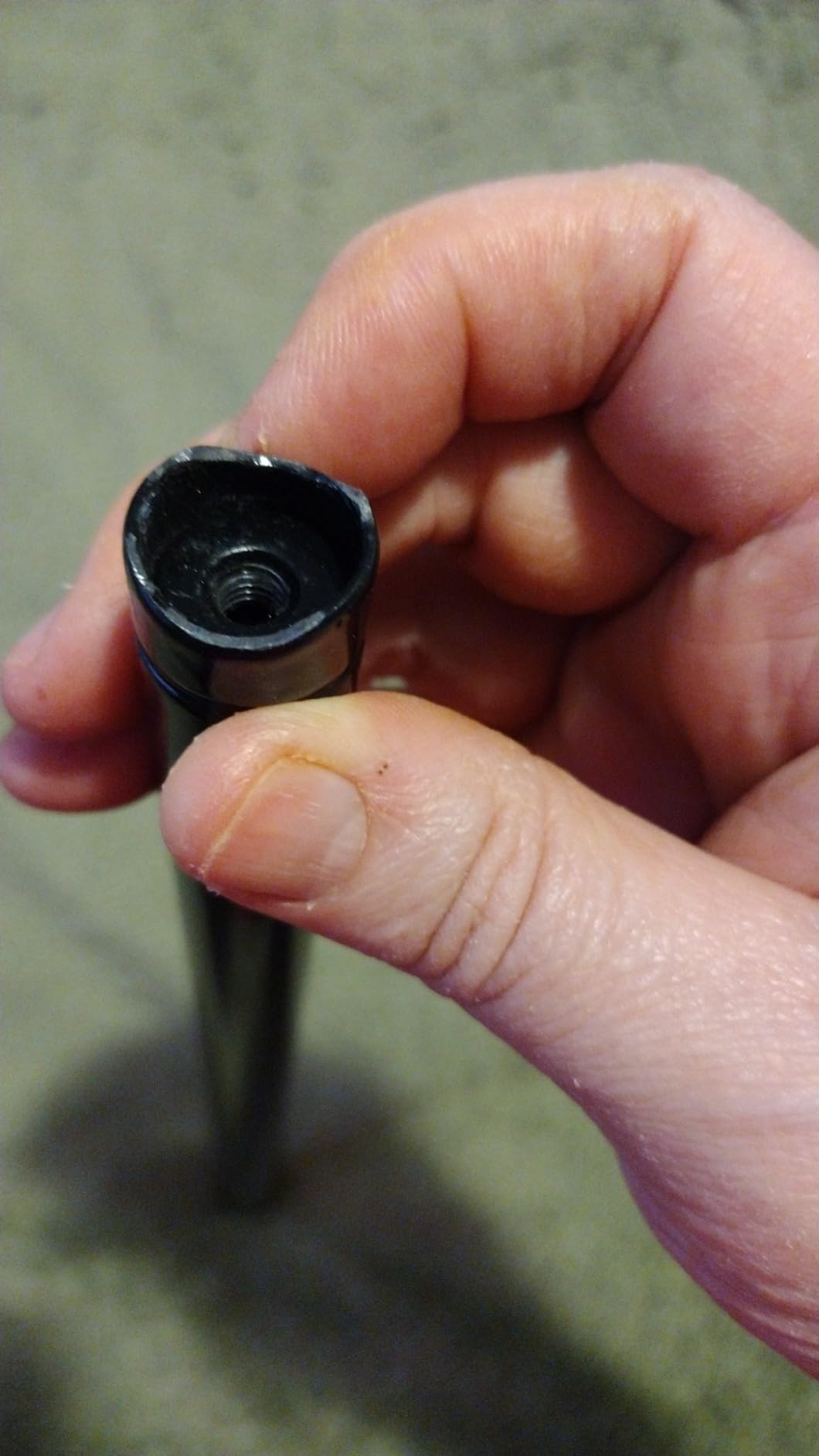
Expect a real installation effort on a heavy king mattress. Owners generally describe needing a second person, and the strap clips are widely reported as hard to unclip, so plan the position before you tighten rather than after.
How it handles caregiver access
Because the rail pivots, a night-time caregiver can fold it clear in a few seconds, check the person and fold it back. That is the fastest access in this roundup among the containment rails, and it is the main reason caregivers keep this one rather than returning it.
Fold the rail down whenever it is not actively needed. A rail that stays up overnight blocks a person who wants to get out to the bathroom, which is the single most common reason a family takes a containment rail back off the list.
Where it falls short
The under-mattress section is the practical problem. It extends far enough that fitting two rails on opposite sides of a single-size bed is awkward, and on a narrow bed only one may be reachable. On a king it is not an issue, but on a twin it is.
Users with limited dexterity find the folding lock hard to operate, which is a real conflict for the frailty this product targets. It is also explicitly not intended for adjustable beds or hospital beds.
5. KingPavonini Bed Rail Rated to 380 LB
KingPavonini Bed Rails for Elderly Adults Safety, 380 LBS, Model BM03-1
380 lb load rating
17.6-20.9 in tall
28.6-34.7 in long
Fits 3-12 in mattresses
Pros
- Highest load rating among the fixed-frame rails in the set
- Longest extension range at 28.6 to 34.7 inches
- Long under-mattress base feels solid without frame strapping
- Fits 3-12 inch mattresses which covers very thin and very thick
Cons
- Not for adjustable beds
- On a king only one of two rails is reachable at a time
- Some assisted living facilities do not permit this rail design
Weight capacity is the headline number here. The frame is reinforced to hold 380 lb, which is the highest static rating among the fixed-frame rails we analysed and the reason we recommend it when a user is heavier or when a caregiver will lean on the rail to assist a stand rather than only pulling on it.
The second advantage is the extension range. At up to 34.7 inches long and 20.9 inches tall, it covers more of a wide king mattress than most competitors, and the height adjustment from 17.6 to 20.9 inches helps it sit right against the sleeping surface on a thick mattress where a fixed rail would open a gap.
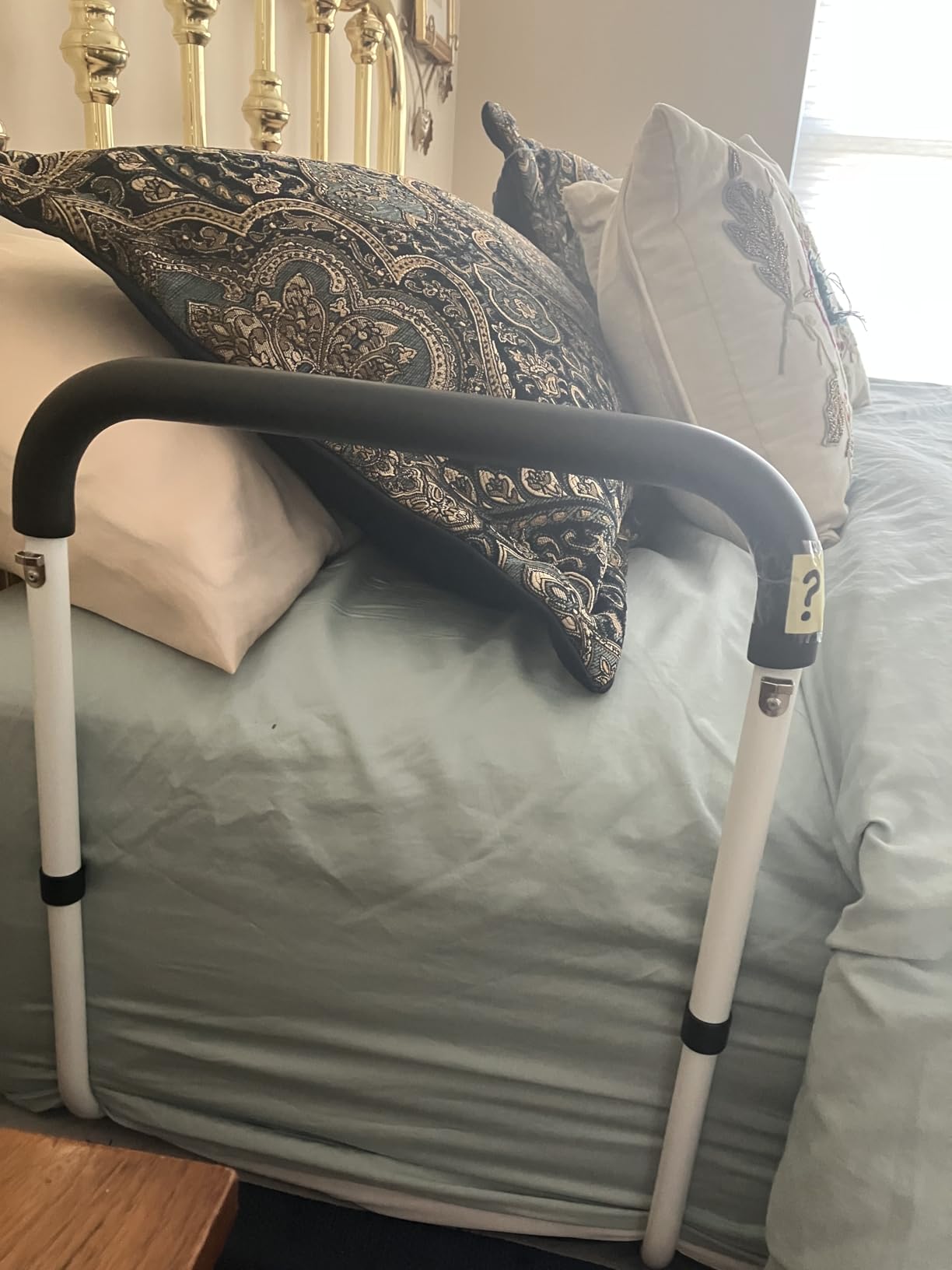
Owners also like that the long under-mattress base holds firm on a heavy king without extra fastening, which removes a step and a potential rattle. Buyers cite it for post-surgical recovery, back pain and general turning in bed, and 81 percent of ratings are five star.
Caregiver access is moderate. The padded curved handle is comfortable for a sit-to-stand, but on a king the reach across the mattress means only one rail is usable at a time, so a pair is worth considering if both sides need support.
Why the 3 to 12 inch mattress range matters
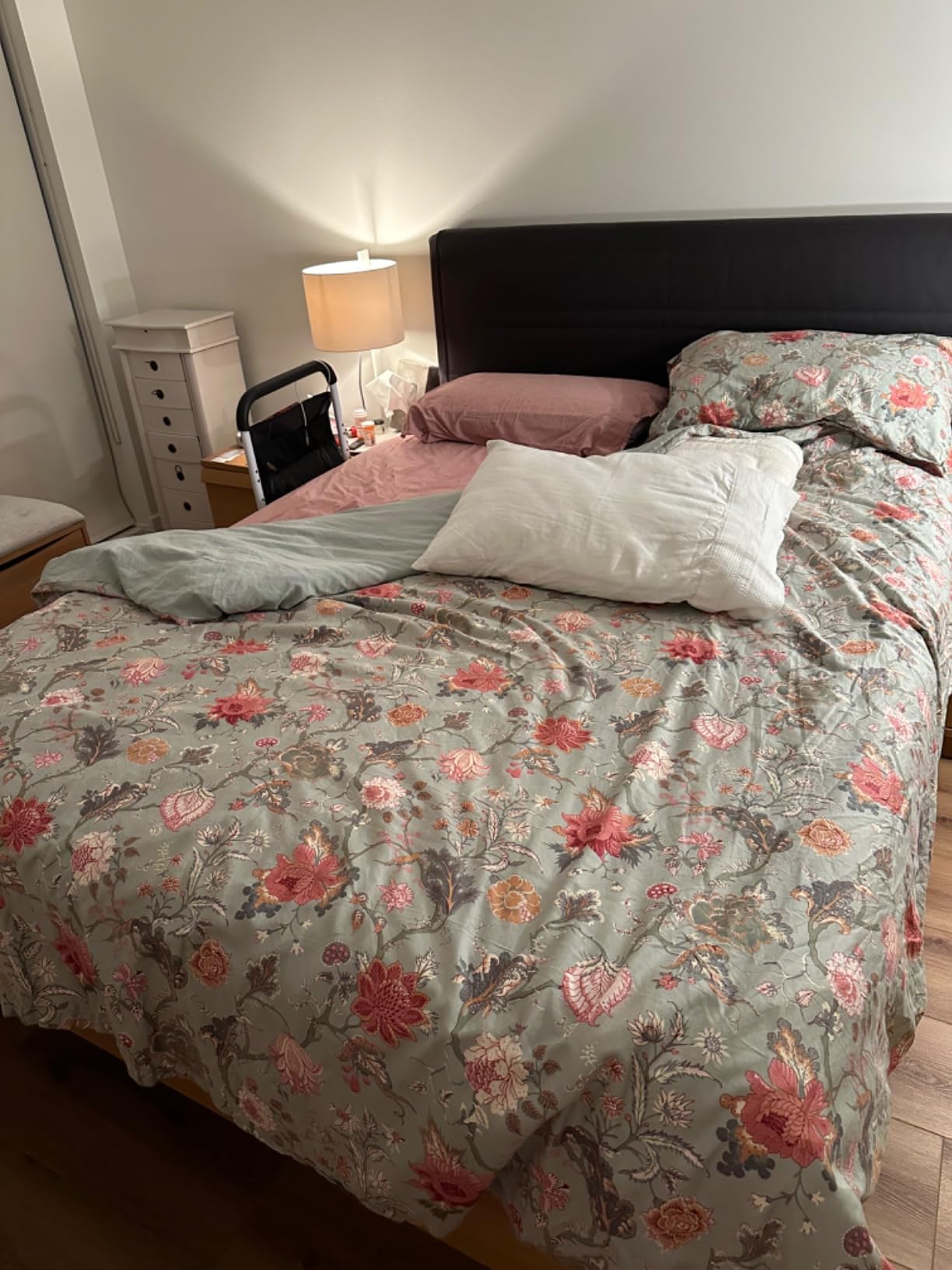
Almost every competing rail starts its range at 7 or 8 inches. Starting at 3 inches makes this one usable on a thinner, older innerspring mattress, which is common in a spare room or an inherited bed, without a mattress upgrade first.
On a thick memory foam mattress, run the depression test before fitting it. The 3 to 12 inch range covers the thickness, but a foam mattress that compresses 2 inches or more at the edge will not hold the frame tight regardless of what the listing says.
Where it falls short
The width works against you on a large bed. A pair on a king is really a pair where one is out of reach, so treat it as a single-rail solution unless the person only ever gets up on one side.
Adjustable beds are excluded, and some assisted living settings will not accept a portable rail design on a resident bed. If the rail is going into a care facility, check the facility policy first, because they are the ones who will remove it.
6. step2bed Deluxe Bed Rail and Step with LED Lights
step2bed Deluxe Bed Rails for Elderly Adults – Adjustable Height Bed Safety Rail for Seniors with Cane Holder, LED Light, Mesh Bag, Handicap Grab Bars and More – Premium Bed Side Step Assist Device
Bed step design
400 lb assisting rails
24 lb
Motion LED lights
30-day warranty
Pros
- Stepped platform lets a user climb up without being lifted
- Two grab rail heights for one-handed or two-handed support
- Motion-activated LED lights light the platform and floor
- Assisting rails rated to 400 lb with non-slip step surface
Cons
- Assembly takes an hour or more and needs tools
- Velcro straps do not grip adjustable beds and let the platform drift
- Height changes require removing legs and bolts
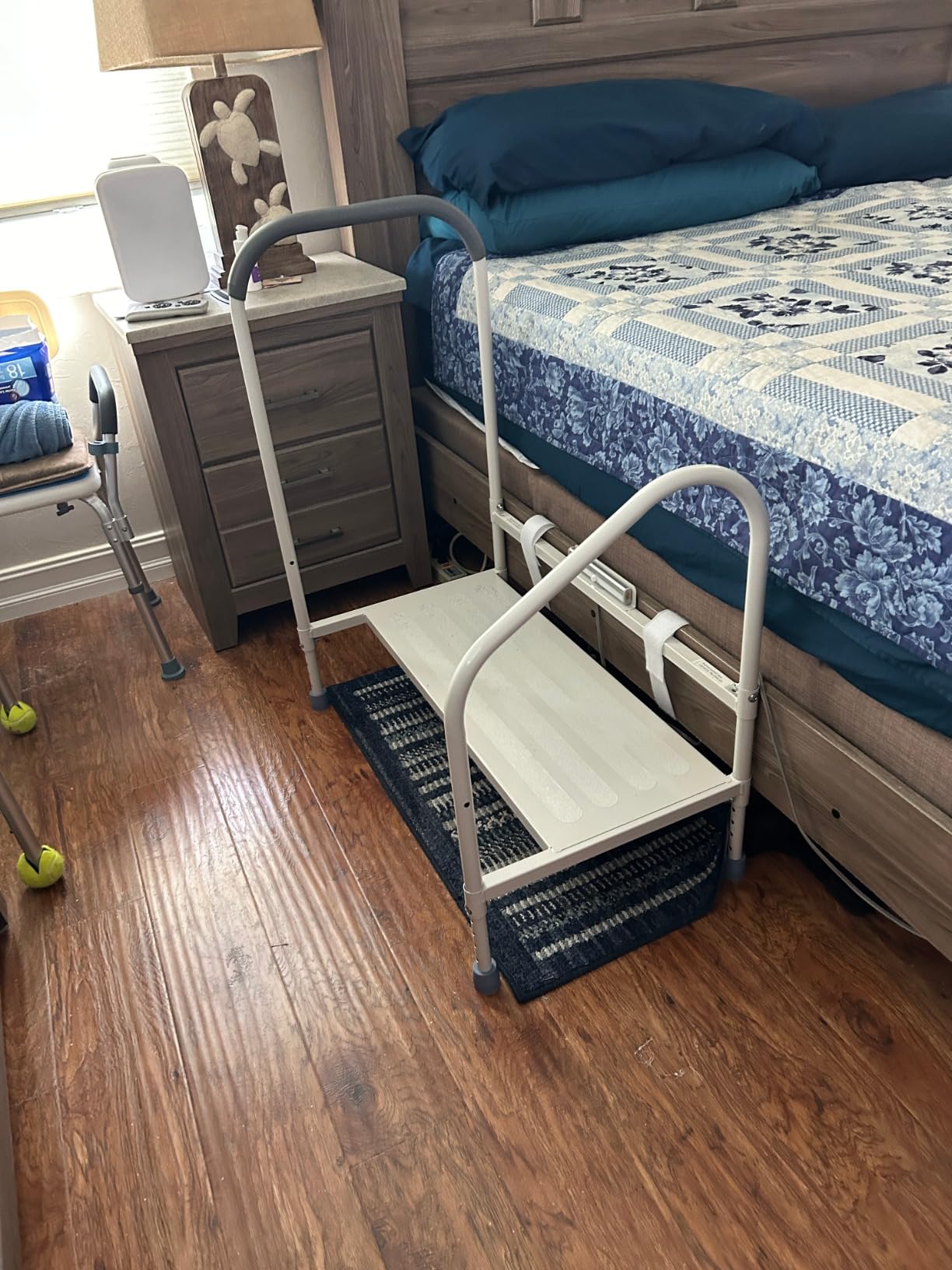
This is the odd one out in the roundup and the reason we included it. It is not a rail that sits in the bed at all. It is a stepped platform beside the bed with grab rails, built for the case where the bed itself is too high and a person cannot get up into it, which is a very common problem after a hospital stay.
Reviewers largely credit it with letting a post-surgical or elderly user get into a high bed independently, which removes the need for a caregiver to lift. That matters because caregiver lifting injuries are their own serious problem, and a device that removes the lift removes the injury.
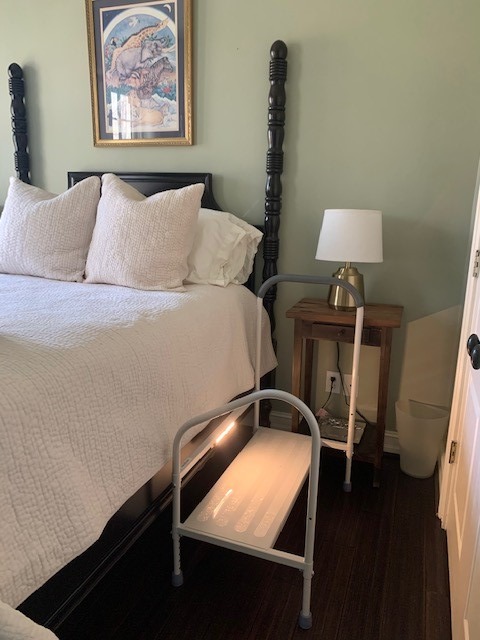
The Deluxe kit adds a cane holder clip, a foam pad, a mesh pouch and glow-in-the-dark leg tips, and the two stainless grab rails at different heights let the user choose a one-handed or two-handed hold as their strength changes day to day. The motion-activated lights are frequently singled out as the feature that makes the middle of the night safer.
Caregiver access is the best of any pick here, because the step sits outside the bed entirely. Nothing has to be folded or moved to get in.
When a step beats a rail
If the core problem is getting up into a high bed, a rail in the bed solves the wrong half of it. This platform addresses the height directly, works on either side of the bed, and the non-slip extra-wide step surface gives a stable place to stand before sitting down.
It also travels well within a house. A bedroom that is too tall for a hospital discharge bed can become usable with a step at the side, which is cheaper than replacing the frame and easier to justify to an occupational therapist.
Where it falls short
Assembly is the honest drawback. Owners report an hour or more with a Phillips screwdriver and a 13 mm wrench, and some needed a second person. Changing the height later means removing legs and bolts, so pick the height carefully the first time.
Adjustable beds are a real problem, since the Velcro straps do not grip them and the platform drifts over time. The motion light needs AA batteries and has no shade, and the cane holder clip is too small for many standard canes.
7. Able Life Bedside Extend-A-Rail for Seniors
Able Life Bedside Extend-A-Rail, Adjustable Senior Bed Safety Railing and Stand Assist Grab Bar, Extendable Guardrail for Seniors and Elderly Adults, ASTM Safety Approved Bedrail
ASTM F3186-17
20-30 in extension
300 lb handle
7.15 lb
8-15 in mattresses
Pros
- One of the few rails certified to the ASTM F3186-17 standard
- Extends from 20 to 30 inches at the push of a button
- Stand-assist handle built to hold 300 lb
- Fits twin through California king home-style beds
Cons
- Not intended for adjustable beds or very soft mattresses
- 8 to 15 inch mattress range is narrower than some competing rails
The button extension is a small design decision that makes this rail fit more people than most. Instead of pulling and re-securing a telescoping section, the user extends the rail with one push, which matters for someone whose hands are arthritic or whose grip is weak at 2am.
It carries the same ASTM F3186-17 certification as the Vaunn, Stander and BedCane picks, and a handle rated to 300 lb. Owners describe it as a dependable assist bar rather than a barrier, and the 73 percent five star share reflects that narrower, honest claim.
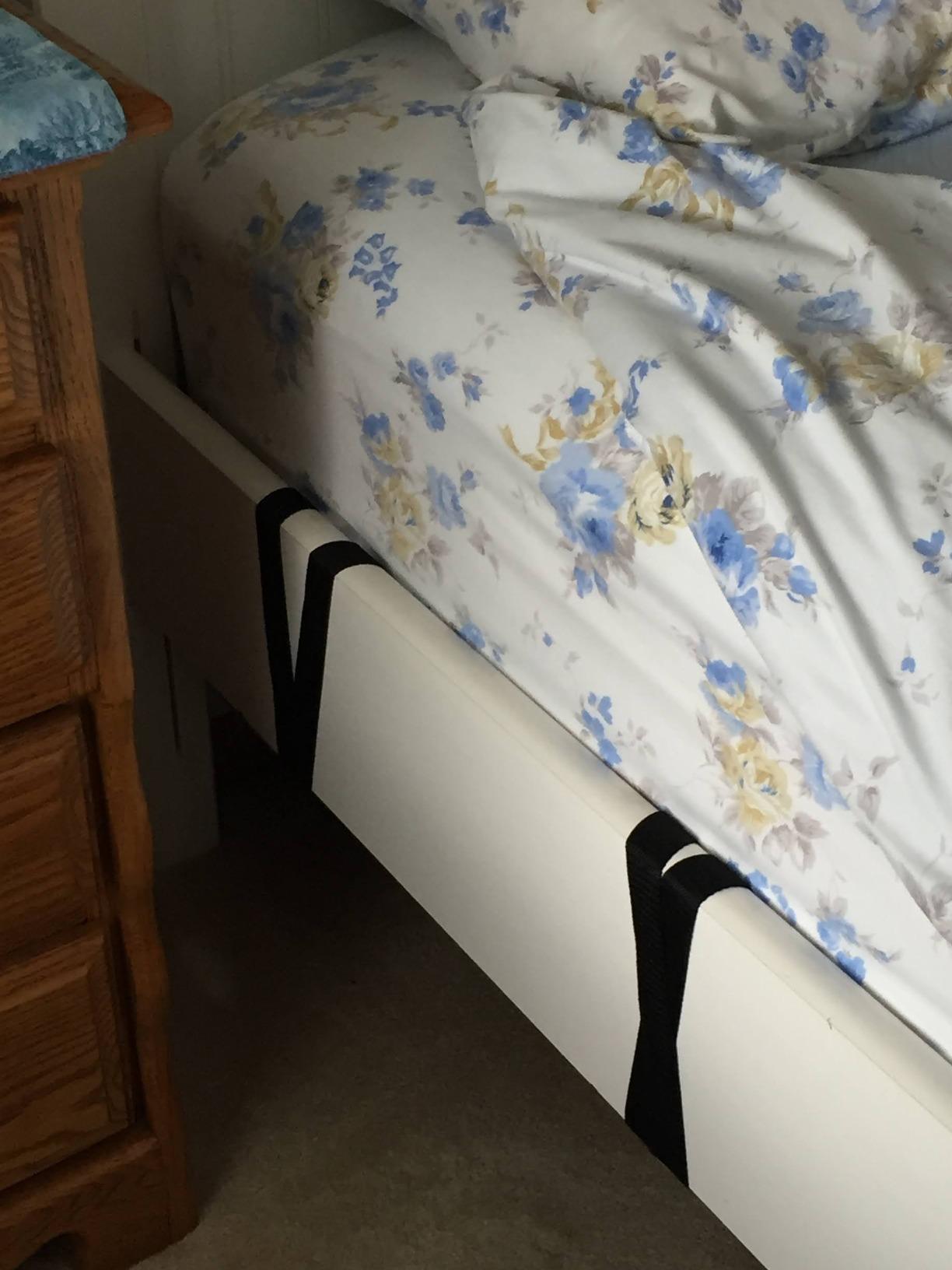
Because it adjusts between residents or bed sizes without tools, it is a practical choice for a shared household or a home where the bed is changed occasionally. The 8 to 15 inch mattress range covers most home-style beds, including a thicker pillow-top that a 7 inch minimum would reject.
Caregiver access is good. At 7.15 lb it is light to reposition, and the extension means it can be shortened during the day and lengthened at night if a longer barrier is wanted then.
When a shorter mattress rules it out
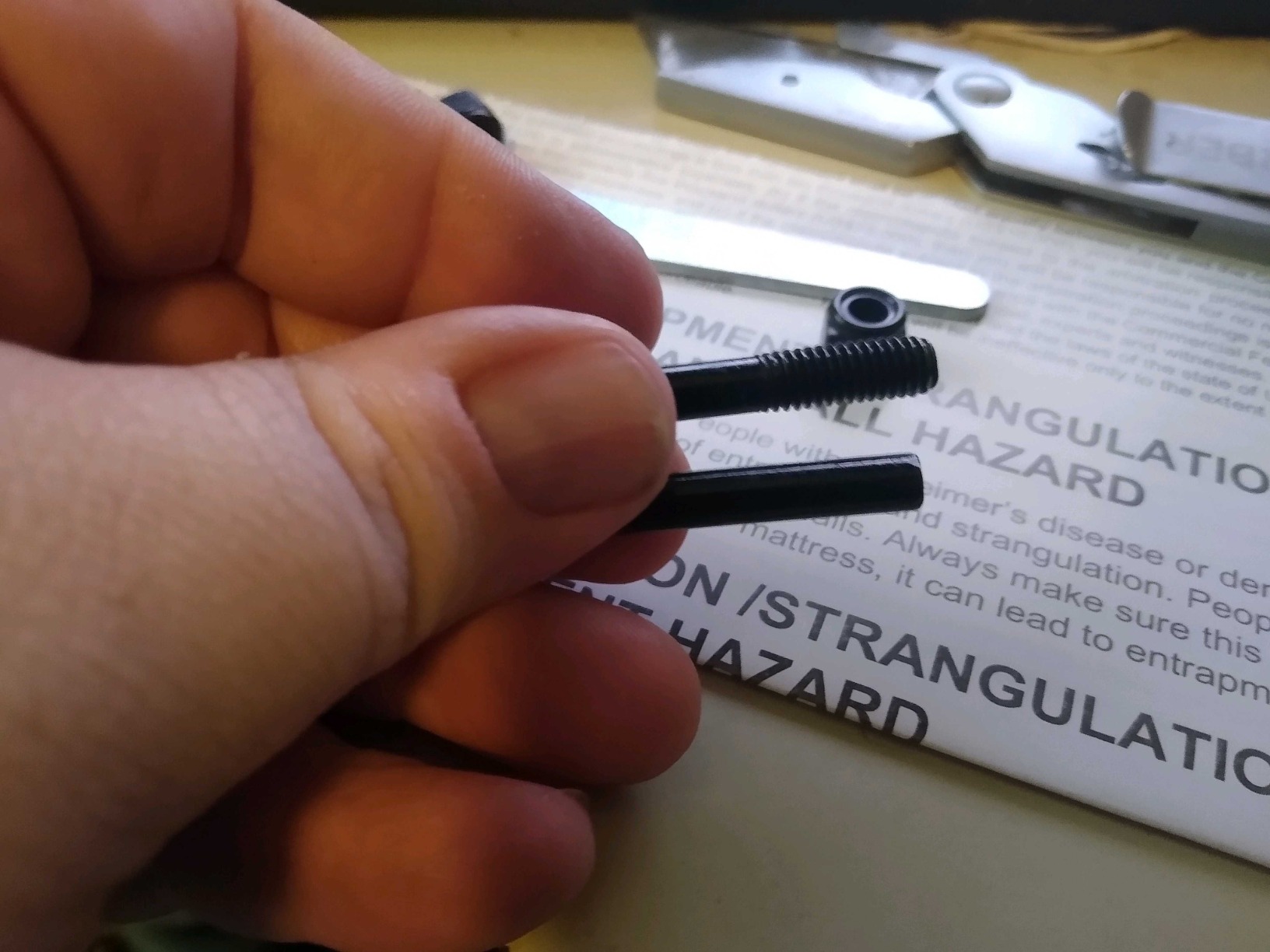
The 8 inch minimum is the deciding limitation. A thinner older mattress, or a platform bed with a low-profile mattress, falls outside the range entirely, and forcing it creates the gap the standard is written to prevent.
Measure mattress thickness at the head end before ordering, and check the frame type at the same time. Adjustable beds and very soft mattresses are both explicitly excluded, so if either applies, look at the Stander BedCane or the Medline bar instead.
Where it falls short
It is a transfer aid first. A 30 inch rail is not long enough to stop someone travelling the length of a queen, so if roll-out prevention is the real problem, this is the wrong category of product.
It is also the lowest rated pick in the set at 4.5 stars, with the feedback concentrating on bed-type exclusions rather than on build quality. Check the exclusion list before you fall for the extension mechanism.
8. Stander BedCane Adult Bed Rail and Support Handle
Stander BedCane, Adult Bed Rail and Support Handle, Bedside Safety Elderly Stand Assist with Organizer Pouch, ASTM Safety Approved Bedrail
ASTM F3186-17
300 lb handle
Fits 6-14 in mattresses
10 lb
Cane profile
Pros
- One of the few rails certified to the ASTM F3186-17 standard
- Fits 6 to 14 inch mattresses which is thinner than most competitors allow
- Compact cane footprint sits beside the bed rather than across it
- Storage pouch and safety strap included
Cons
- Not intended for adjustable beds or extra soft mattresses
- Cane profile offers far less guard coverage than a full-length rail
The BedCane is the low-entrapment option in this roundup, and that is a deliberate design trade rather than a compromise. A cane profile that stands beside the mattress has no long span, so there is no series of bars to trap a head between and no extended channel between rail and mattress for a limb to wedge into.
Where it wins outright is fit. The 6 inch minimum is the thinnest mattress range here by some distance, so it works on older innerspring and platform mattresses that most rails refuse. It still carries ASTM F3186-17 certification and a handle rated to 300 lb.
We were not able to find matching customer photographs for this model in our research, so the visual evidence here is thinner than for the other picks. The written feedback is still consistent: buyers value it as a compact certified standing-assist handle that does not obstruct the bed, and 76 percent of ratings are five star.
Why the shape reduces entrapment risk
Shorter rails mean fewer gaps. A cane occupies a small section of the bed side, so there is less surface area where a knee, hip or shoulder could catch during a restless movement, and the rail can be positioned exactly where the user needs leverage to stand.
For a resident who is cognitively clear and simply needs help with a sit-to-stand, this is often the correct product. It solves the transfer problem without introducing a barrier that has to be climbed or swung over.
Where it falls short
It will not stop a roll-out. There is no lateral coverage, so if the person moves far in the night, the cane does nothing for that. Treat it as a handle, never as a guard rail, and pair it with a low floor guard or a bed-exit alarm if falls are the concern.
Adjustable beds and extra soft mattresses are excluded, and the same 2 inch depression test applies. At 10 lb it is also the heaviest assist handle here, so it moves between rooms less easily than the Lunderg rail.
9. Medical King Bed Rail with Floor Support
Bed Rails For Elderly Adults Safety Bed Assist Rails For Seniors
Floor support legs
6 lb
Adjustable height
Security strap
Storage pouch
Pros
- Floor support legs add stability that strap-only rails lack
- Works on king queen and twin and installs on either side
- Tool-free slide-under-mattress install with no hardware
- Removable storage pouch for glasses remotes and books
Cons
- Included safety strap is reported too short to wrap a queen box spring
- Instructions mention packing washers that are not present
- Some first-time assembly confusion reported
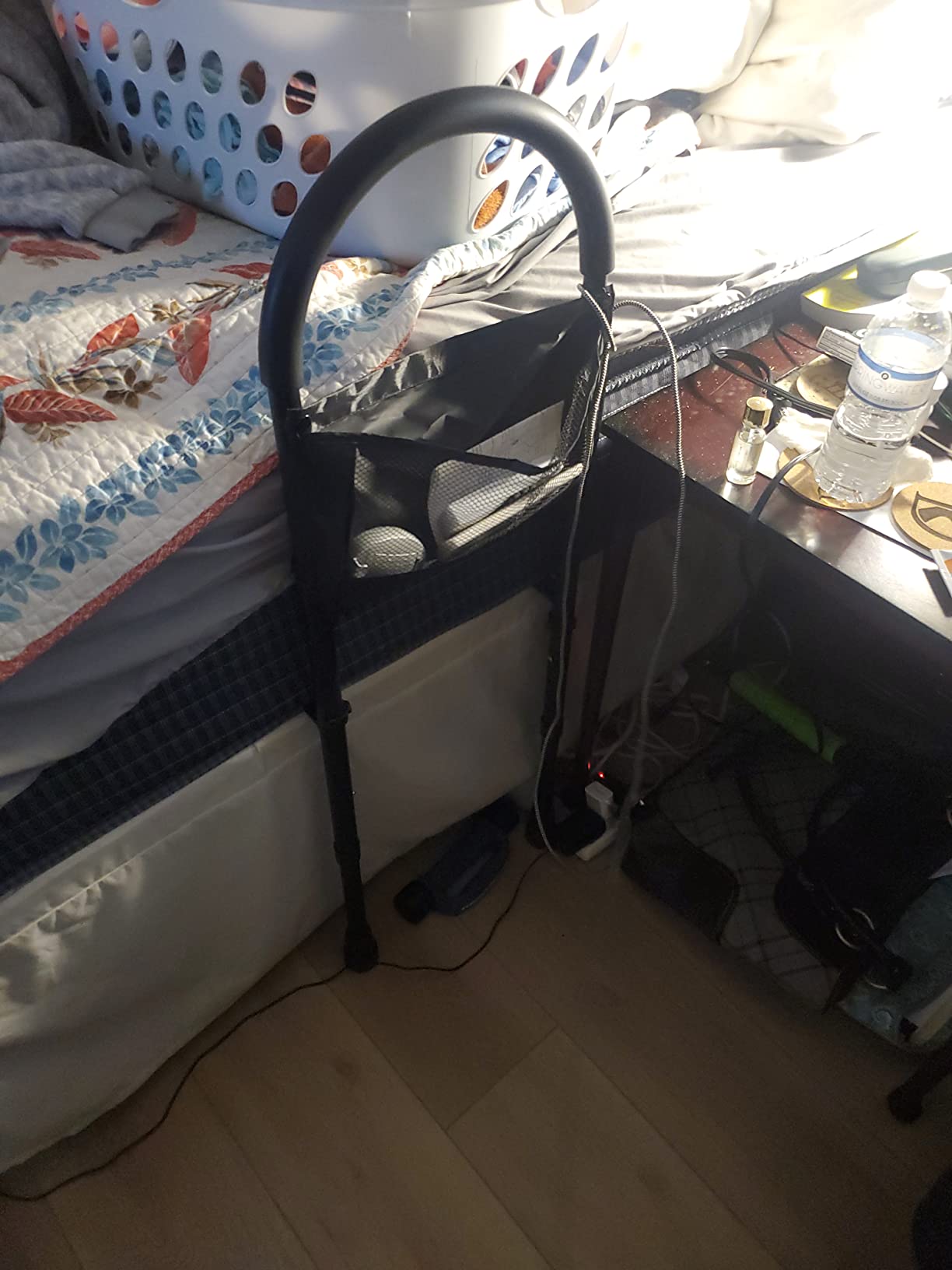
Floor support legs are the idea worth borrowing from this rail. Instead of relying entirely on a strap wrapped around the mattress, the frame lands on the floor at the base of the bed, so the load path goes into the floor rather than into the mattress edge. On a heavy or soft mattress that is a meaningful difference in how firmly the rail holds.
It also fits king, queen and twin at any mattress thickness, and can be installed on either side, so a household with two residents can order two and put them on opposite sides. Its 9549 ratings give it one of the deepest owner records in the set, and 72 percent are five star.
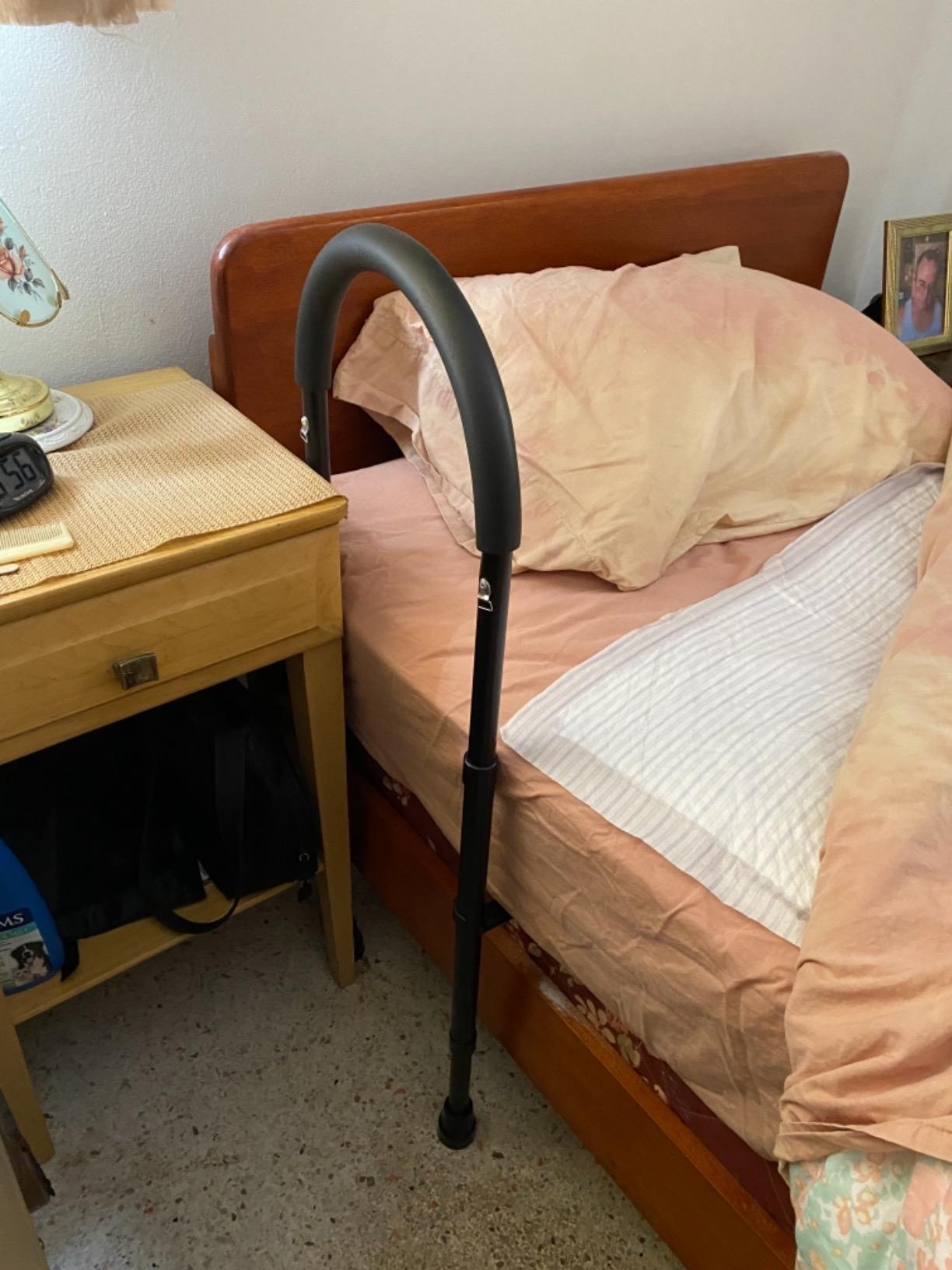
Owners report it is sturdy enough for heavier users and genuinely helps with sit-to-stand transfers, and several mention buying a second unit for the opposite side of the bed. The removable pouch is a real convenience, unlike pouches that are permanently sewn in.
Caregiver access is good because the rail is a low assist handle rather than a tall guard, and nothing has to be folded to reach the person. The non-slip hand bar gives a firm grip for a standing assist.
Why floor support beats a strap alone
A strap that wraps only the mattress can ride up under load, and a soft mattress edge lets the frame tilt. Floor legs take that force straight into the floorboards, so the rail stays planted during the exact moment it is being pushed against. If your mattress is on the soft side, this is the feature to prioritise.
Check the floor is clear and the legs sit flat, since uneven carpet or a rug edge can tilt the base. The floor legs also add height, so measure the space beside the bed before installing.
Where it falls short
The most repeated complaint is the included safety strap being too short to wrap a queen box spring, which means securing the rail to the frame may need an additional strap. The instructions also refer to packing washers that are not in the box, which adds confusion to an otherwise tool-free setup.
At 4.4 stars it is the lowest rated pick here, and the rating spread is wider than the certified models. If a written safety standard matters to your decision, this listing says only that it is marketed as meeting US safety requirements, so ask for the documentation.
10. WeHwupe Bed Rail with Bedside Storage Pocket
WeHwupe Bed Rails for Elderly Adults Safety with Bedside Storage Pocket
350 lb rated
4.5 lb
Foam padded handrail
12.3 in wide
Mesh pocket
Pros
- Bolstered alloy steel frame rated to 350 lb with ASTM safety testing
- Soft non-slip foam padding on the handrail for a secure grip
- Compact 12.3 inch cane profile suits king queen full and twin
- Tool-free assembly with tie-down straps included
Cons
- Not suitable for adjustable or automatic lift beds
- Narrow cane width gives less rollover coverage than a full-length guard
This is the compact cane rail in the set, and at 350 lb it is one of the stronger load ratings among the cane-style designs. The bolstered alloy steel frame is reported as tested to ASTM safety standards, and the frame is height adjustable so it can be raised to close the gap on a thicker mattress.
The foam-padded handrail is the part owners mention most. It is soft enough to hold for a long sit-to-stand and grippy enough with dry hands, and the mesh pocket holds glasses and a remote within reach at the rail rather than across the room.
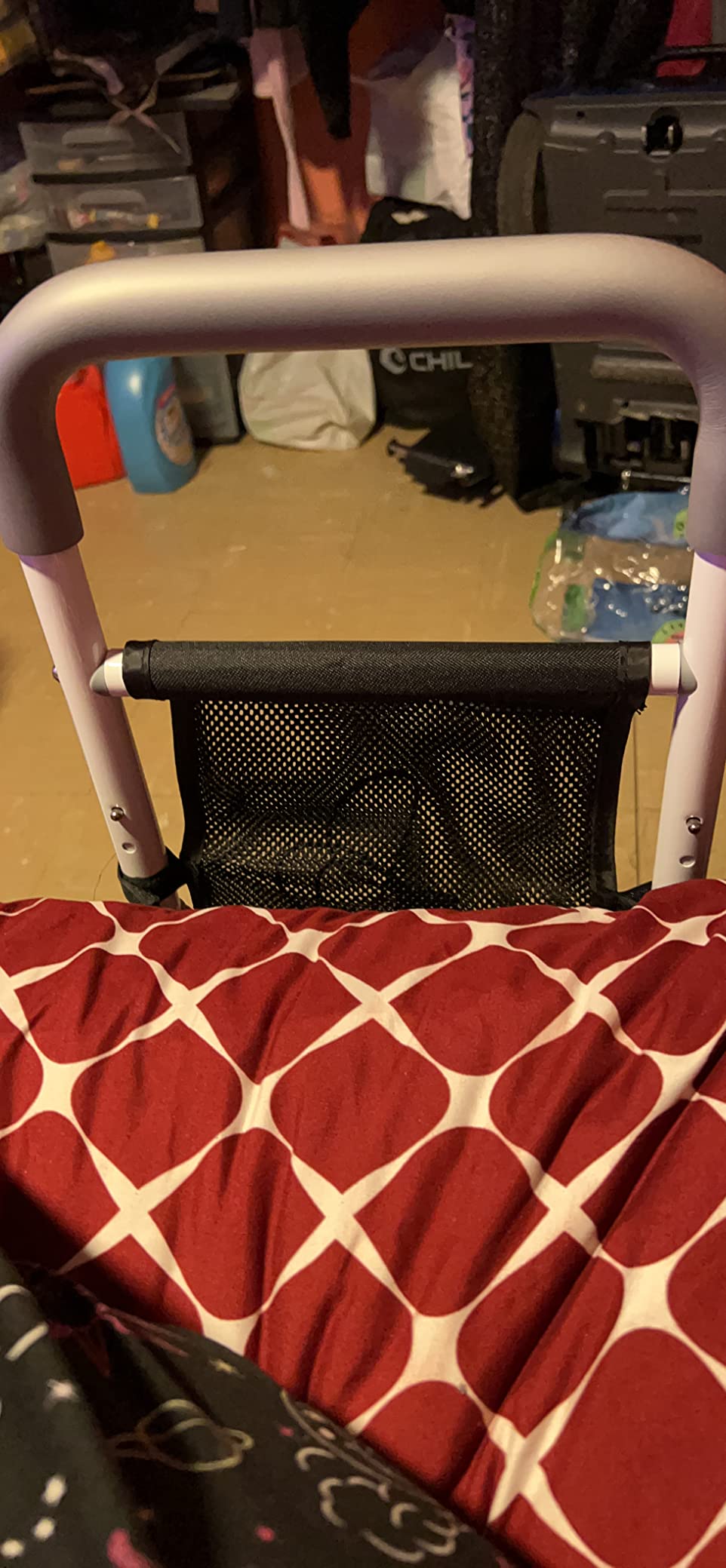
It is also light at 4.5 lb, so a caregiver can move it between the bedroom and a sitting room, and the tool-free assembly with included tie-down straps means no hardware hunt at installation time. With 1156 ratings this is the least reviewed pick, so treat the specification as the deciding factor rather than the volume of feedback.
Caregiver access is good for a handle of this size. Nothing overhangs the bed, and a person can sit on the edge with the rail at their side without it blocking their view of the floor.

Who a compact cane rail suits
A cane profile is the right shape for someone with good cognitive control who needs leverage rather than containment. It takes up almost no space, does not interfere with swinging legs into bed, and adds the least new obstruction to the bedroom of any rail here.
It also suits a bed against a wall, where a wider rail would be hard to open from the outside for making the bed or for a caregiver to get in from the far side.
Where it falls short
It is a handle, not a guard. The 12.3 inch width gives far less rollover coverage than a full-length rail, so anyone who moves significantly in the night needs something else, or a floor guard as a backstop.
Adjustable and automatic lift beds are excluded, which rules it out for a large share of modern bedrooms. If you are shopping for a person who is confused at night, do not assume a narrower rail solves the climbing problem; it does not.
The Four Types of Bed Rails Explained
Most buying confusion comes from mixing up four different products that share a name. Here is the whole category in one list.
1. Bed assist handle. A compact bar or cane that gives leverage for a sit-to-stand and a grip while repositioning. Lowest entrapment risk because there is little barrier surface. Examples here: the Medline bar, the Stander BedCane, the WeHwupe rail and the KingPavonini.
2. Half-length guard rail. A rail that extends roughly 20 to 30 inches along one side, giving partial roll-out protection plus a transfer handle. Moderate entrapment risk that rises with the length of the covered span. Examples: the Stander EZ Adjust and the Able Life Extend-A-Rail.
3. Full-length safety rail. A rail running most of the length of the bed side, usually fixed to a hospital-style frame. Highest entrapment risk of the portable category and normally only appropriate on equipment designed for it. None of our ten picks are in this class, and that is deliberate.
4. Bed step with grab rails. Not a rail at all, but a platform beside the bed for a bed that is too high. It addresses the height problem rather than the in-bed problem. Example: the step2bed Deluxe.
There is also a fifth category that appears in shopping results and should be treated with care: bed rail protectors and bumpers. Those are padded mesh covers that fit over an existing rail to soften contact, and they are a comfort accessory, not a safety device. They do not fix a gap.
How to Choose a Bed Rail: A Seven-Step Decision Path
Step 1: Name the job. Transfer help and roll-out prevention are different purchases. If the goal is getting in and out of bed, choose a handle or a short assist bar. If the goal is stopping someone reaching the floor at night, choose a half-length guard rail and accept a higher entrapment profile. Buying a containment rail for a transfer problem is the most common and most expensive mistake in this category.
Step 2: Check the cognitive status honestly. A clear, cooperative user can be taught how a rail works. Someone with dementia who climbs, or a person who tries to get out over a rail, needs a different tool. If you are unsure, ask the clinician who knows their behaviour rather than inferring it from a diagnosis.
Step 3: Measure the mattress thickness. Measure at the head end and at the foot. Anything outside the rail’s stated range is a hard no. Then press the edge with about 12 lb of pressure, and if it compresses roughly 2 inches or more, that mattress is too soft for a portable rail.
Step 4: Check the bed frame. Five of the ten picks exclude adjustable beds outright, and one needs 13 inches of floor clearance. Platform, slat and box spring frames are usually fine, but measure the space beside and under the bed before you order.
Step 5: Verify the standard. Look for ASTM F3186-17 or 16 CFR Part 1270 in the technical details or the brand documentation. If the listing only says the product is marketed as meeting safety requirements, ask the manufacturer for the test report before buying.
Step 6: Plan the anchor. Strap to the bed frame or base wherever possible, not only to the mattress. On a soft mattress, prefer a rail with floor support legs. Re-check the strap on a schedule, because straps loosen with movement and a loose strap is the common failure mode.
Step 7: Test caregiver access before night one. Sit where you would sit and check you can reach the person, adjust their position and get out without moving the rail. If you cannot, you need a fold-down or pivoting design, or a handle rather than a guard. This step is the one families most often skip and most often regret.
Once the rail is fitted, run the same checks weekly for the first month, then monthly. Measure the largest gap, push the rail firmly to confirm the frame does not lift off the mattress, and confirm nothing can be threaded through the bars.
Alternatives to Bed Rails, and What to Pair With One
Some of the best bed rails for seniors situations are solved without a rail. If the person is not a roll-out risk but has weak legs, the answer is a different height of bed or a different way to get up.
A bed-exit alarm is the most useful complement to a rail and a reasonable alternative when the person is cognitively clear and simply wanders. It gives you notice rather than a physical barrier, and it works on beds where no rail will fit.
A floor sensor pad or pressure mat gives a similar alert at a lower cost and places no hardware on the bed at all. It is a good pairing with a transfer handle.
A low-profile floor guard or a bed bumper reduces the injury from a slow roll when a full rail is not appropriate, and it is the standard answer for a resident who keeps climbing over one.
A trapeze bar or an over-bed ladder handles a high bed more directly than a rail, and pairs well with the step platform in this roundup for anyone who cannot get up to mattress height.
A concave or centre-of-the-bed mattress keeps a restless sleeper in the middle of the mattress without any hardware on the bed frame, which is often the answer for a person who rolls but is not a fall risk.
A floor guard frame with grab bars is worth a look where the bed sits low, since a rail that sits below mattress height offers little leverage anyway.
For anyone shopping for a wider safety setup rather than a single rail, our guides to adjustable bed frames and bed frames tested here cover the frame side of the decision, and our picks for platform bed frames matter specifically because a platform frame limits which rails fit. Monitoring options are covered in our smartwatch picks for seniors, where fall detection is the relevant feature, and a rail plus an alert is a stronger combination than either alone.
Frequently Asked Questions
Are bed rails safe for elderly adults?
Yes, when the rail matches the mattress thickness, is anchored to the bed frame and is fitted with no gap wider than 4.75 inches. Choose a model that meets the mandatory 16 CFR Part 1270 standard built on ASTM F3186-17. A rail is not safe for someone who is confused and climbs, because the barrier becomes a step.
Are bed rails considered a restraint in a nursing home?
A bed rail used to help a resident reposition or transfer is a mobility aid, not a restraint. It becomes a restraint when it is used to stop a person from getting out of bed against their will. Care facilities are required to document the reason for any rail, so ask the facility which rails are approved for that specific bed.
What is the alternative to bed rails?
A bed-exit alarm or under-bed pressure sensor mat gives notice without a physical barrier. For a high bed, a step platform with grab rails or a trapeze bar solves the height problem directly. A floor guard or bed bumper softens a slow roll, and a centre-of-the-bed mattress helps a restless sleeper stay in the middle of the bed.
Will bed rails work with my adjustable bed?
Most portable bed rails do not. Five of the ten rails in this roundup list adjustable or power-lift beds as excluded, because the frame geometry and the anchor point move every time the bed is raised or lowered. Check the exclusion list before buying, and expect to use the bed manufacturer’s own rail hardware instead.
What size bed rail do I need for a memory foam mattress?
Match the mattress thickness to the rail’s stated range, then test firmness by pressing the edge with roughly 12 lb of pressure. If the mattress compresses about 2 inches or more, it is too soft for a portable rail because the frame will not stay tight against the body. Most rails cover 7 to 15 inches, and the widest range in this roundup is 3 to 12 inches.
Are bed rails for seniors covered by Medicare?
A rail bought on its own is not covered. Medicare Part B durable medical equipment coverage generally applies only when the rail is supplied as part of a prescribed hospital bed, and then at 80 percent of the Medicare-approved amount after your deductible. Ask your supplier whether the rail is being supplied under a prescription before you buy it directly.
How do I stop my elderly parent falling out of bed?
Start with a half-length guard rail that meets 16 CFR Part 1270, fitted to a mattress inside its thickness range, and keep the largest gap under 4.75 inches. Add a bed-exit alarm so you know when it happens, keep the path to the bathroom clear, and fold the rail down during the day if the person climbs it. If they are cognitively impaired and climb, a rail is the wrong tool and an alarm plus a floor guard is safer.
What are the best-rated bed rails for seniors?
By owner rating, the Lunderg Bed Assist Rail with motion light leads this roundup at 4.7 stars. By volume of owner feedback, the Medline Bed Assist Bar is the most reviewed at more than 15,000 ratings at 4.6 stars. For certified construction, the Vaunn Medical Adjustable Bed Rail, the Stander EZ Adjust and the Stander BedCane all pass ASTM F3186-17.
The Verdict: Which Bed Rail to Buy in 2026
For most households in 2026, the Medline Bed Assist Bar is the right starting point, because it has the deepest owner record, a comfortable multi-position grip and the only genuinely portable frame in the roundup. Buy the Vaunn Medical Adjustable Bed Rail instead if you want written ASTM F3186-17 certification, a 300 lb powder-coated frame and the widest fit range across bed sizes. Buy the Lunderg rail if the middle of the night is the hard part, since the motion light is a real caregiver aid.
Move up to the Stander EZ Adjust or the Able Life Extend-A-Rail when roll-out prevention is the actual goal, and pick the KingPavonini when a higher weight rating matters. For a bed that is simply too high, the step2bed Deluxe solves the problem no in-bed rail can. Skip the whole category if the person climbs or is severely confused, and use an alarm plus a floor guard instead.
Whatever you choose, measure the mattress, check the frame exclusions, verify the gap after fitting and re-check the strap every month. Those four minutes of checking are what separate a helpful bed rail from a hazard.