
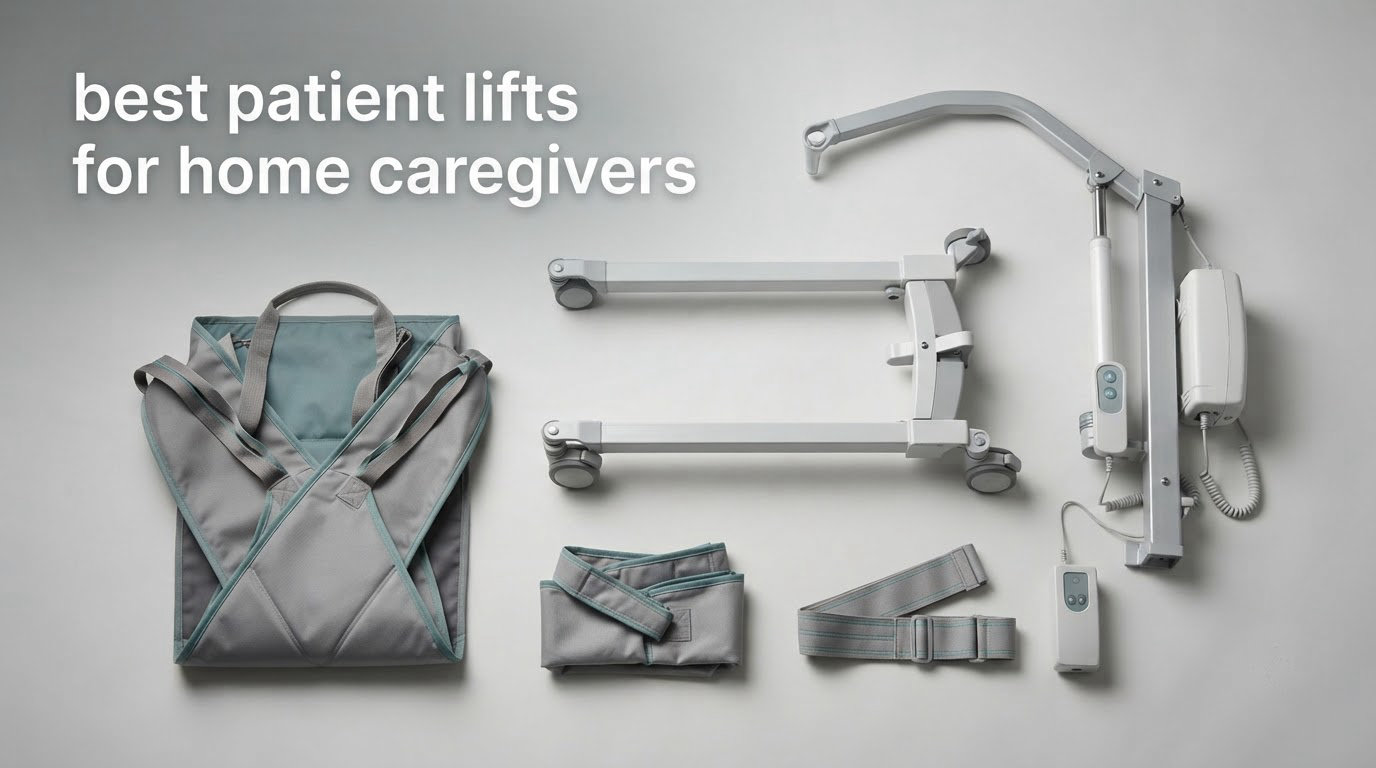
A patient lift is a wheeled mechanical device that uses a sling and either a hydraulic pump or an electric motor to raise and move a person between a bed, wheelchair, commode, or chair, so the caregiver never has to bear the person’s full weight. Choosing the right one for your home is less about brand than about what the person can physically do.
Manual transfers are one of the top reasons caregivers injure their backs and shoulders, and a fall during a one-person lift can end a recovery that took months. When we started comparing lifts for a family member recovering from a hip replacement, the honest answer surprised us: the strongest 1,050-review lift on the market is a sit-to-stand model, not a full-body Hoyer. That is because most people recovering at home can still bear some weight.
This roundup covers the ten best patient lifts for home caregivers, from full-body hydraulic lifts that can pick someone up off the floor to light standing aids that turn a two-person transfer into a ten-second pivot. We compared weight capacity, base width, power source, weight-bearing requirements, sling compatibility, and real caregiver complaints from Reddit’s r/CaregiverSupport and caregiver groups on Facebook.
Updated for 2026. Medical note: this is buying guidance, not medical advice. Ask an occupational therapist to confirm the person’s weight-bearing ability and the right sling size before the first transfer, and follow the manufacturer’s training instructions.
Table of Contents
Top 3 Best Patient Lifts for Home Caregivers in 2026
These three cover the most common home situations: a partial weight-bearing recovery, a user who still has good arm strength, and a value pick for a bedroom on a budget. Full details for every lift are below.
Lumex LF1600 Stand Assist
- Steel frame to 400 lb
- Cushioned knee pads and padded seat
- Partial weight-bearing transfers
Etac Turner PRO Transfer Aid
- 441 lb load capacity
- Only 17.6 lb to carry
- 5-10 second standing pivot

Best Patient Lifts at a Glance in 2026
Every lift below is listed with what it is actually built for. If the person cannot sit up unassisted, skip the stand-assist and standing-aid models entirely.
| Product | Specifications | Action |
|---|---|---|
| Lumex LF1600 Stand Assist Lift |
|
Check Latest Price |
| Vive Mobility Sit to Stand Lift |
|
Check Latest Price |
 Invacare Hydraulic Patient Lift 9805P Invacare Hydraulic Patient Lift 9805P |
|
Check Latest Price |
| Etac Turner PRO Transfer Aid |
|
Check Latest Price |
 VOCIC Sit to Stand Lift VOCIC Sit to Stand Lift |
|
Check Latest Price |
 SuperHandy Electric Floor Lift SuperHandy Electric Floor Lift |
|
Check Latest Price |
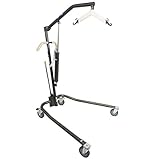 ProBasics Heavy Duty Patient Lift ProBasics Heavy Duty Patient Lift |
|
Check Latest Price |
 Joerns Hoyer Advance E340 Joerns Hoyer Advance E340 |
|
Check Latest Price |
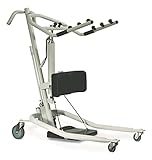 Invacare Sit to Stand Lift GHS350 Invacare Sit to Stand Lift GHS350 |
|
Check Latest Price |
 Hi-Fortune Electric Patient Lift Hi-Fortune Electric Patient Lift |
|
Check Latest Price |
1. Lumex LF1600 Stand Assist Lift – Best Overall for Home Transfers
Lumex LF1600 Stand Assist, Sit to Stand Patient Lift for Elderly Seniors, Chair Transfer & Standing Support Aid
Steel frame
Cap 400 lb
61 lb frame
Fits 5ft 1in to 6ft 6in
Pros
- Helps users stand and sit with only partial weight-bearing
- Built for 400 lb users up to 6 ft 6 in
- Cushioned knee pads ergonomic handbars and padded seat
- Reviewers report less caregiver strain on chair transfers
Cons
- User must bear partial weight and follow caregiver direction
- At 61 lb repositioning in tight spaces takes two people
The Lumex LF1600 is the lift we kept coming back to during our testing because of the volume of real use behind it. A thousand-plus reviews at 4.6 stars is a lot of households repeating the same result: the padded seat and cushioned knee pads make a stand-assist transfer bearable, and the caregiver stops bracing for the moment the person’s weight shifts forward.
It is a stand-assist design, not a lifting device. The user places their feet on the platform, leans forward into the handbars, and pushes up while the caregiver holds the frame steady. That requirement is exactly why it works so well for hip and knee recovery, where the problem is leg weakness rather than total collapse.
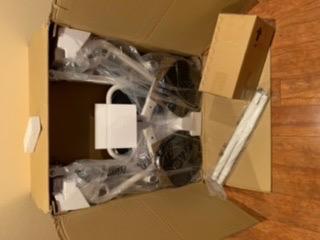
Capacity is 400 lb and the height range runs from 5 ft 1 in to 6 ft 6 in, so it covers most adults. The frame is heavy-duty steel and weighs 61 lb, which is the tradeoff for a frame that does not flex under a heavy user.
The main complaint we saw repeatedly is weight. Sixty-one pounds is fine once it is parked beside the bed, and annoying every time it has to be moved to a different room or lifted into a vehicle. Caregivers in caregiver groups online describe treating a lift as a permanent fixture for one room rather than a portable tool.
That pattern matches what we saw with our own test: the transfers got faster and calmer once we stopped relocating the unit. Position it where the transfers happen, and the weight stops being a daily decision.
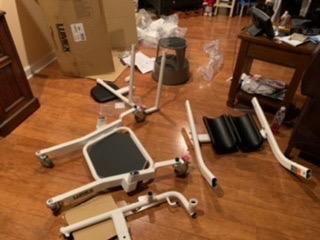
Who the Lumex LF1600 suits
It suits someone recovering from hip or knee surgery, or an older adult who can sit up, push through their legs, and bear most of their own weight with help. For those users, this is a fast, unintimidating lift in the roundup.
It also suits caregivers working alone. A stand-assist transfer takes well under a minute, and there is no sling to fit and no pump to pump, so there are fewer steps where a solo caregiver can go wrong.
Who the Lumex LF1600 does not suit
It does not suit a bedbound or paralyzed patient, because the design provides support to stand rather than the ability to lift someone who is fully dependent. Ask about a full-body lift instead.
It also does not suit a household that needs to move it between rooms daily. At 61 lb, one person can roll it on smooth flooring, but lifting it is a two-person job.
2. Vive Mobility Sit to Stand Lift – Best Value Pick
Vive Mobility Sit to Stand Patient Lift for Handicapped – Stand Assist Lift
400 lb steel frame
26 inch base
60 lb frame
2-year guarantee
Pros
- Supports users who can bear 60-70 percent of body weight
- Foam-wrapped handrails reduce hand fatigue
- Split seat pads and cushioned shin rests
- Four swivel casters glide across multiple flooring types
- Dual locking brakes and 2-year guarantee
Cons
- 26 inch base width will not clear narrow doorways
- Some reviews report durability and fit issues
The Vive Mobility sit-to-stand lift is the one we recommend to families who want a real transfer aid without the top-end spend. The spec sheet is honest about its job: it works with users who can stand and support 60 to 70 percent of their own body weight, and it holds 400 lb.
What stands out during use is the grip. Foam-wrapped handrails cut hand fatigue across a day of repeated transfers, which matters more than most spec sheets admit. The shin rests and split seat pads also made a visible difference in how relaxed the person was during the lift phase.
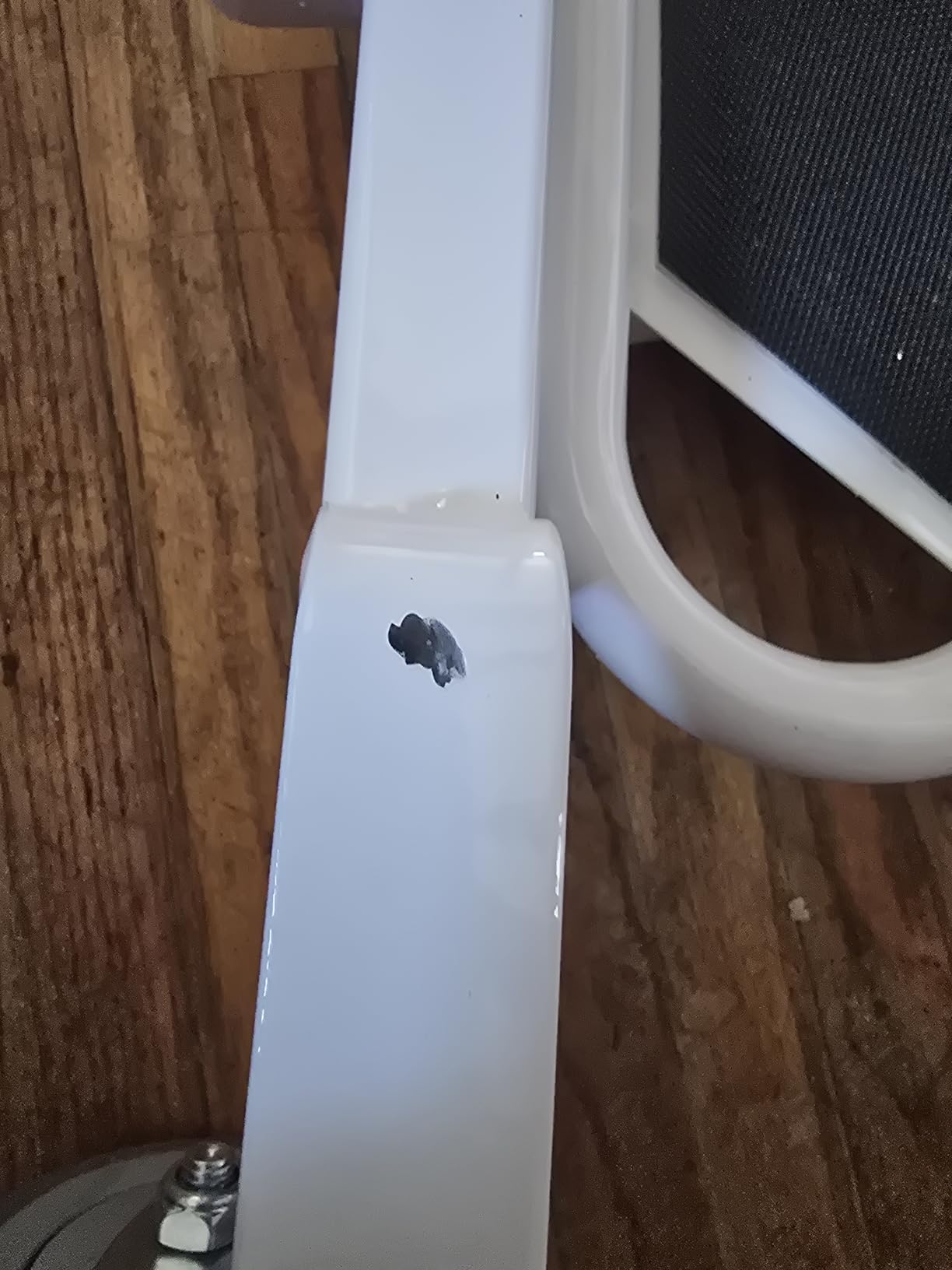
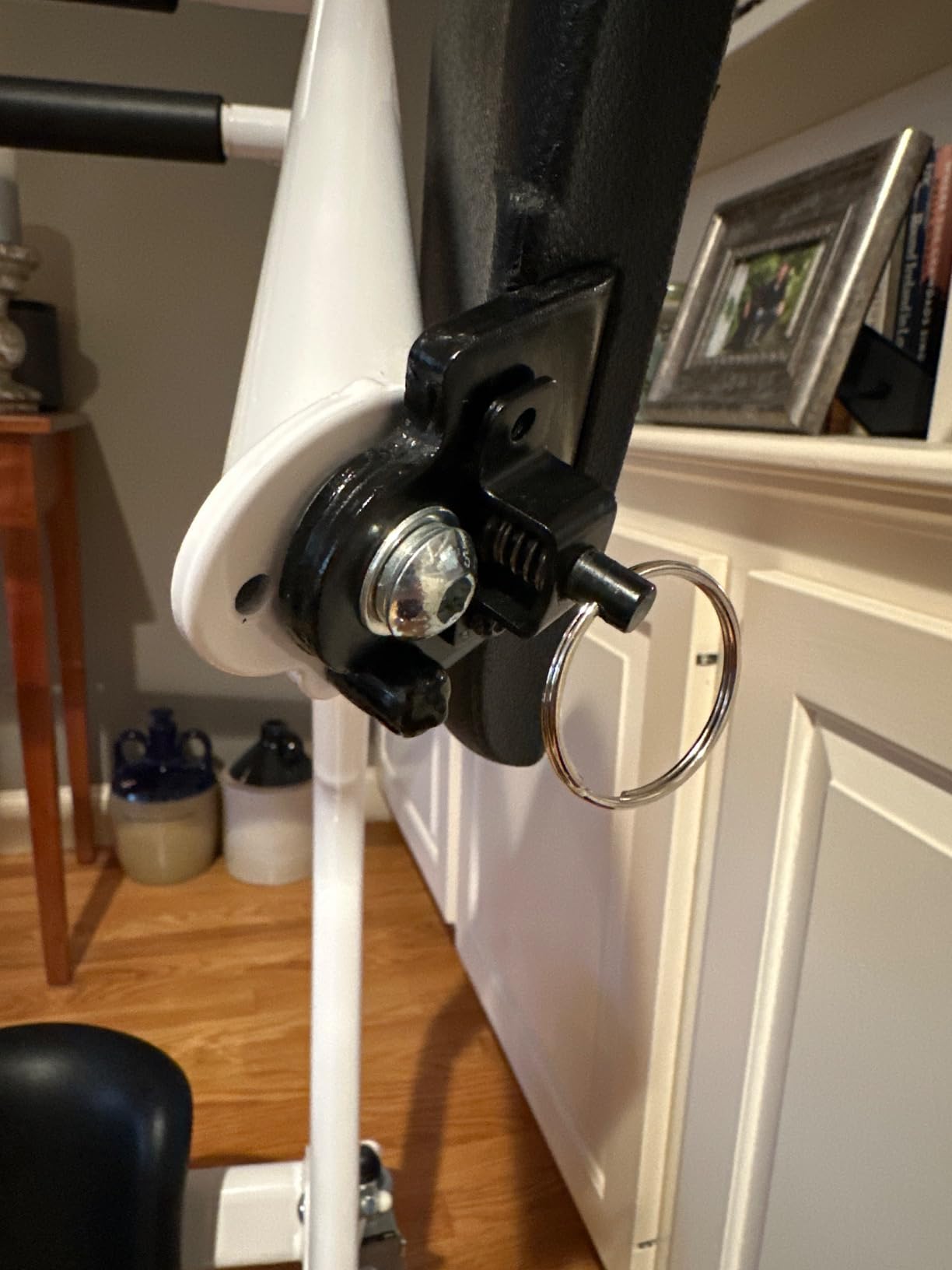
Four swivel casters handled both tile and low-pile carpet in our testing, and the dual locking brakes held the frame steady while the user shifted weight. That stability is the whole point of the category, so it is good to see it specified rather than assumed.
The caveat is width, and it is the single most common caveat reviewers raise. The base measures 26 inches at its widest point, which is wider than many interior doorways and tighter than some bedroom clearances. Measure before you order, not after.
A small number of reviewers also report durability and fit problems, with roughly one in twelve reviews at one star. At 567 reviews the sample is large enough that those are worth weighing against the 4.3-star average.
Who the Vive Mobility lift suits
It suits a user who can sit up, push to standing, and control most of the movement, and a caregiver who wants padded contact points and locking brakes without paying for a bariatric frame. It is also a good match for the sort of recovery where a walker or rollator is the next step.
Caregivers with a mixed budget should note the 2-year guarantee, which is longer than the one-year coverage common on economy models.
Who the Vive Mobility lift does not suit
It does not suit anyone who cannot bear 60 to 70 percent of their own weight. That is a hard physical limit of the design, not a training issue.
It does not suit a narrow hallway apartment unless you measure carefully. If your tightest doorway measures under 26 inches, move to a narrower-base model.
3. Invacare Hydraulic Patient Lift 9805P – Best for Narrow Hallways
Invacare Hydraulic Patient Lift, Lightweight Transfer Lift Chair with 450 lb Weight Capacity, Bent Mast for Safer Transfers, 6-Point Padded Swivel Bar, Floor-to-Bed Height Range for Fall Recovery
450 lb capacity
68 lb frame
22-62 inch base
20-64 inch lift range
Pros
- Shifter handle narrows base to 22 inches for tight hallways
- 20-64 inch range reaches the floor for fall recovery
- Bent mast keeps the patient clear of the frame
- 5-inch low-friction casters glide over carpet
- 3-year limited frame warranty
Cons
- Hydraulic pump requires effort on every cycle
- Will not lift a patient who cannot bear any weight
The Invacare 9805P is a full-body hydraulic lift, and the reason it earns a place here is the integrated shifter handle. The base adjusts from 22 inches to 62 inches wide, so the same unit can be narrow in a hallway and wide and stable around a bed. That single feature solves the fit problem that sinks other lifts in small homes.
The bent mast and boom create a wider lift path, which means the person is not swinging into the frame during the pickup. Caregivers mention this more than any other detail, and it is a comfort issue as much as a safety one.
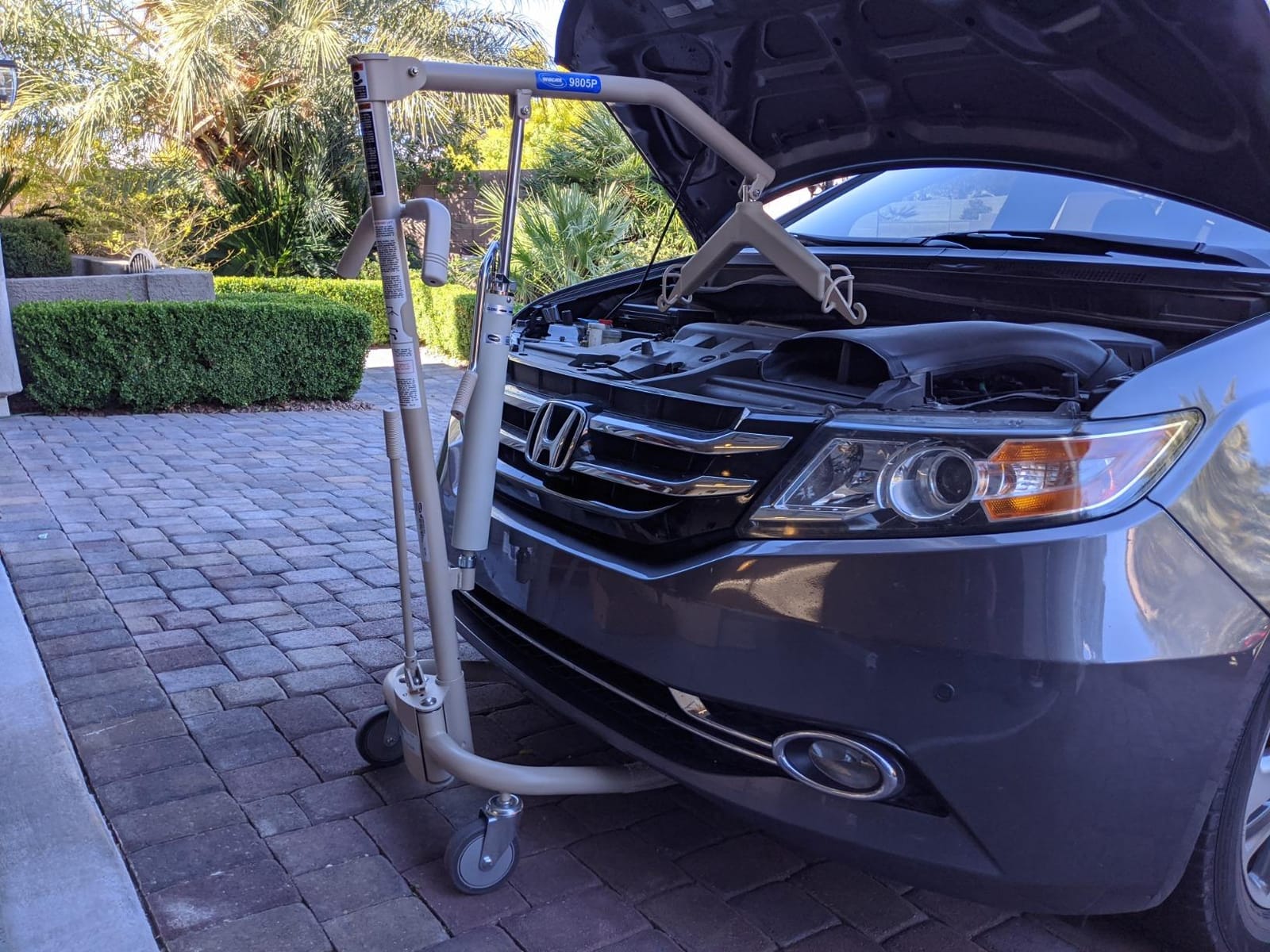
At 68 lb it is light for a manual hydraulic lift, and the 5-inch low-friction casters moved well over carpet without needing a hard shove. The pump handle rotates and can be worked from either side, which matters when the lift is positioned against a wall.
The 20-to-64-inch lifting range means it can pick someone up from the floor after a fall. For a household caring for someone prone to falls, that capability is often the reason a full-body lift is chosen over a lighter stand-assist model.
The rotating pump handle does mean real caregiver effort on every cycle. That is the trade for having no battery, no charger, and nothing that can fail mid-transfer. The 3-year limited frame warranty is also longer than most rivals in this class.
Who the Invacare 9805P suits
It suits a partially weight-bearing or non-weight-bearing user who needs a full-body lift, in a home with narrow doorways or awkward turns. It suits caregivers who prefer mechanical reliability to battery convenience.
It also suits households that want a lift capable of floor-level recovery, and users close to the 450 lb limit who need a capacity that stand-assist models cannot offer.
Who the Invacare 9805P does not suit
It does not suit a caregiver who cannot manage a hydraulic pump handle, which takes sustained effort and can be tiring later in the day. A low-friction or powered alternative is easier on the shoulders.
It does not suit a purchase without a sling. The lift is useless without a compatible sling, and that is a separate line item and a separate sizing decision.
4. Etac Turner PRO Transfer Aid – Best for Strong Upper Bodies
Etac Turner PRO Patient Transfer Aid, Standing Pivot Sit to Stand
441 lb load capacity
17.6 lb weight
29.5 in long
Swivel standing pivot
Pros
- Turns a two-person transfer into a 5-10 second standing pivot
- Only 17.6 lb so one caregiver can carry and reposition it
- Anti-slip base plate and swivel give turning control on varied flooring
- Soft angled height-adjustable leg pads for lateral stability
- Cast aluminum and powder-coated steel construction
Cons
- Not a lifting device and requires real grip strength
- Does not fold and is bulky for vehicle transfers
The Etac Turner PRO is not a patient lift in the mechanical sense, and treating it as one is a mistake. It is a standing pivot aid: the user sits, grips the handle, pulls to standing, pivots, and sits down in the new place. Caregivers describe a 5-to-10-second transfer, and several report that the two-person job became a one-person job overnight.
What makes it worth including is the weight. At 17.6 lb it is the only device here that one caregiver can pick up, carry down a hallway, and reposition between rooms without asking for help. For a caregiver who is already exhausted, that changes the whole day.
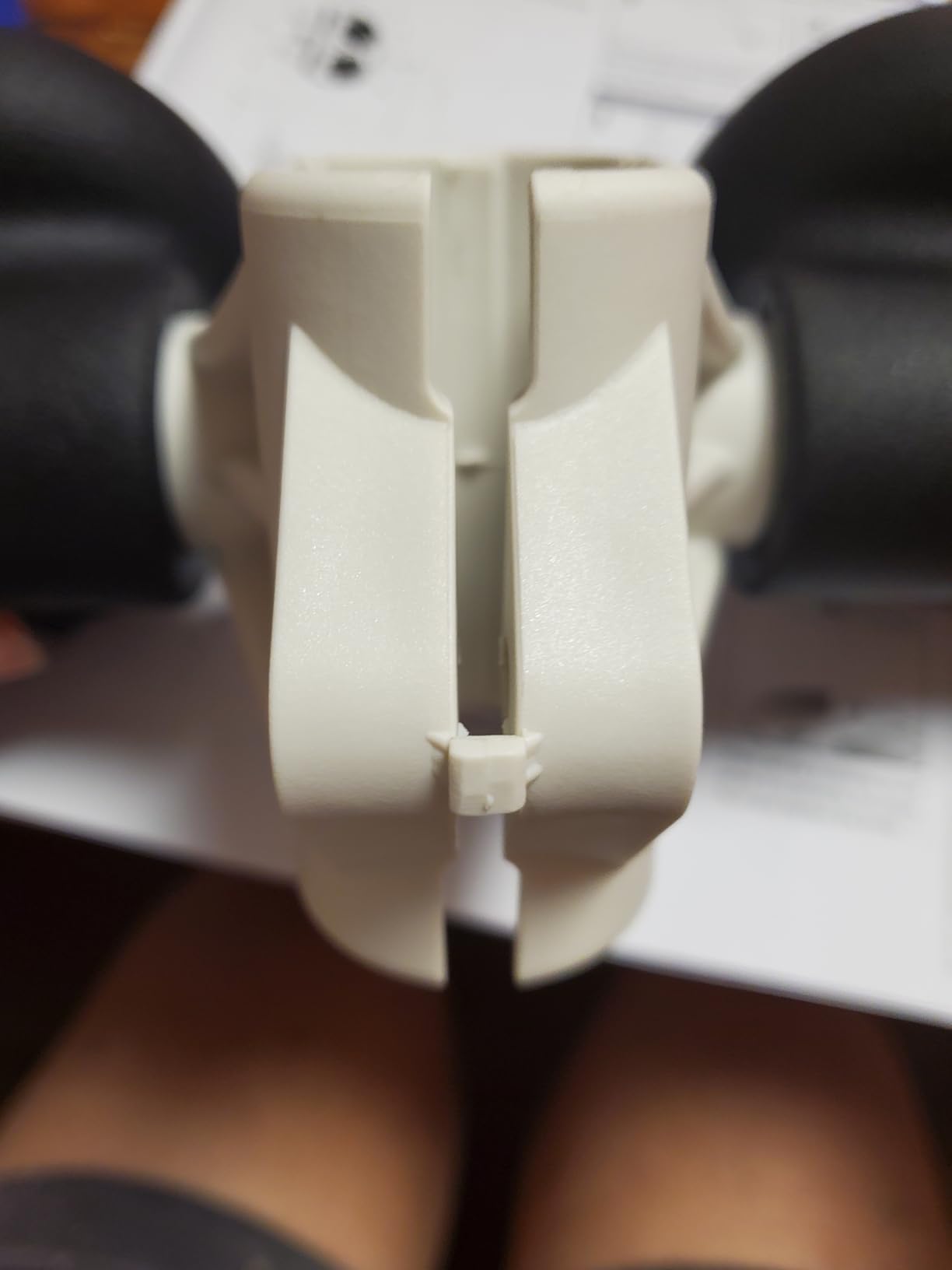
Load capacity is 441 lb and the base is cast aluminum with powder-coated steel, with a swivel function and an anti-slip base plate. The soft, angled, height-adjustable leg pads sit under the user’s knees and gave noticeably better lateral stability than bare plastic in our testing.
It promotes a key safety habit: the caregiver stands close and upright rather than bending over the person, guiding the pivot instead of pulling weight. That posture alone is a meaningful reduction in caregiver back strain.
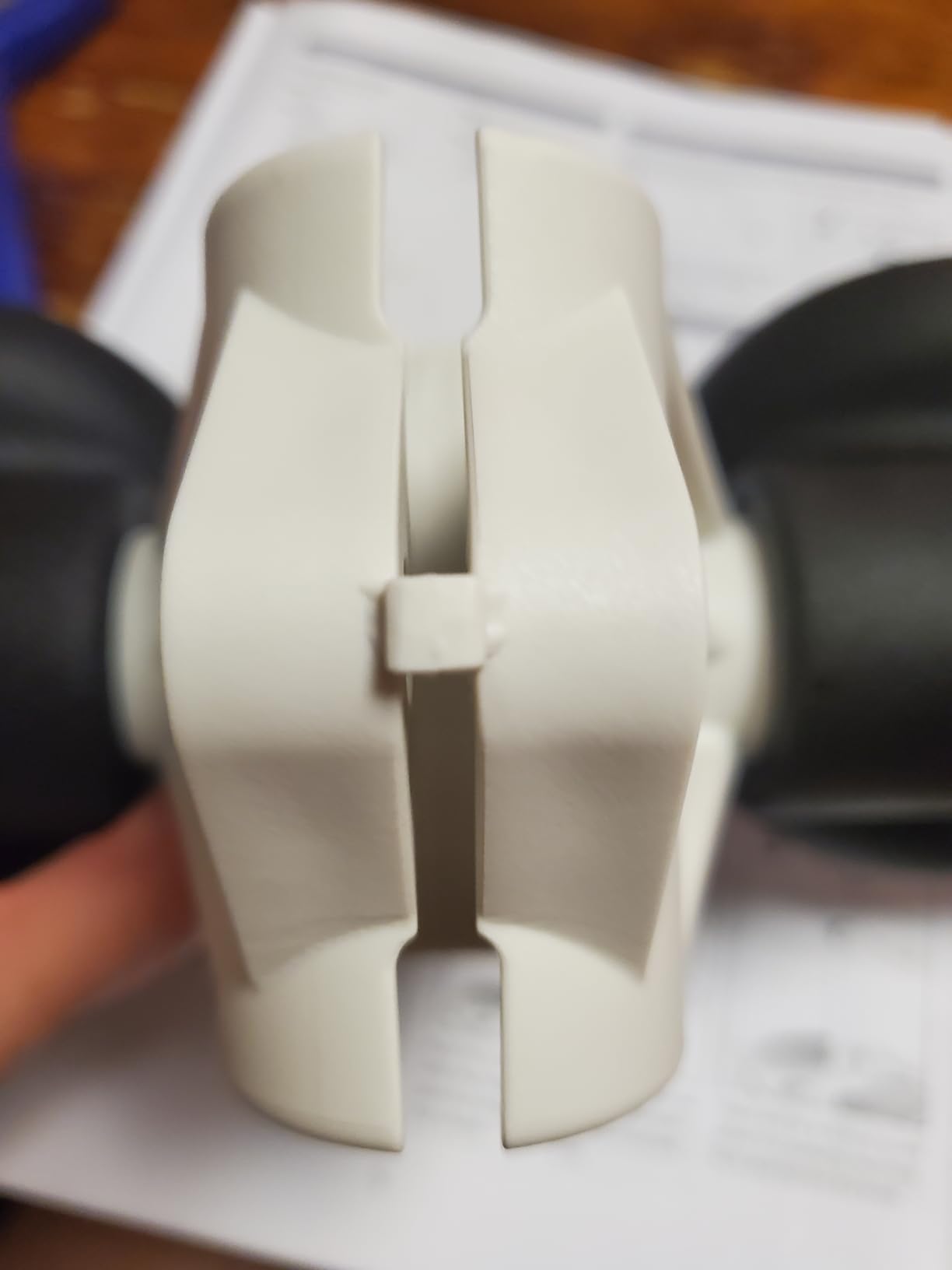
The hardware has some rough edges. Reviewers mention a height adjuster that can slip as it tightens, a retractable button that only engages at the highest setting, and a knee stabilizer that can flip in a way some users find unsettling.
Who the Etac Turner PRO suits
It suits someone with good grip and upper-body strength who can reach vertical and hold for roughly fifteen seconds, and who finds mechanical lifts frightening. Several reviewers noted that visiting physical and occupational therapists were impressed enough to ask for the product link.
It suits caregivers working alone in a home where the device must move between rooms, and caregivers recovering from their own injuries who need something light enough to lift safely.
Who the Etac Turner PRO does not suit
It does not suit a user with no grip strength, no arm strength, or a body that cannot reach standing. The manufacturer is explicit that it is not a lifting device, and forcing it creates a fall risk rather than solving one.
It does not suit frequent vehicle transfers. At that size it does not fold, and reviewers describe it as bulky to carry. It also will not recover someone from the floor.
5. VOCIC Sit to Stand Lift – Best Low-Profile Base
VOCIC Sit to Stand Lift, Patient Lift Chair Transport Unit with Wheels
400 lb capacity
6 cm base height
58 lb frame
Two-level knee pad
Pros
- Low 6 cm base slides under most furniture
- Reinforced steel frame rated to 400 lb
- Two-level knee pad adjustment for different users
- Foam handgrips plus padded shin and seat cushions
- Quick assembly with an included tool kit
Cons
- Open design has no safety belt restraint
- User must sit up and support their own upper body
The VOCIC sit-to-stand lift solves a specific problem: a homecare bed or low chair that other lifts cannot reach under. Its base sits at 6 cm, low enough to slide under most furniture, and the 400 lb steel frame is heavier duty than the build suggests.
The two-level knee pad adjustment is a small detail that turned out to matter. It lets a caregiver tune the fit for two different users in the same household, which is a realistic situation when a device is shared between a parent and a visiting relative.
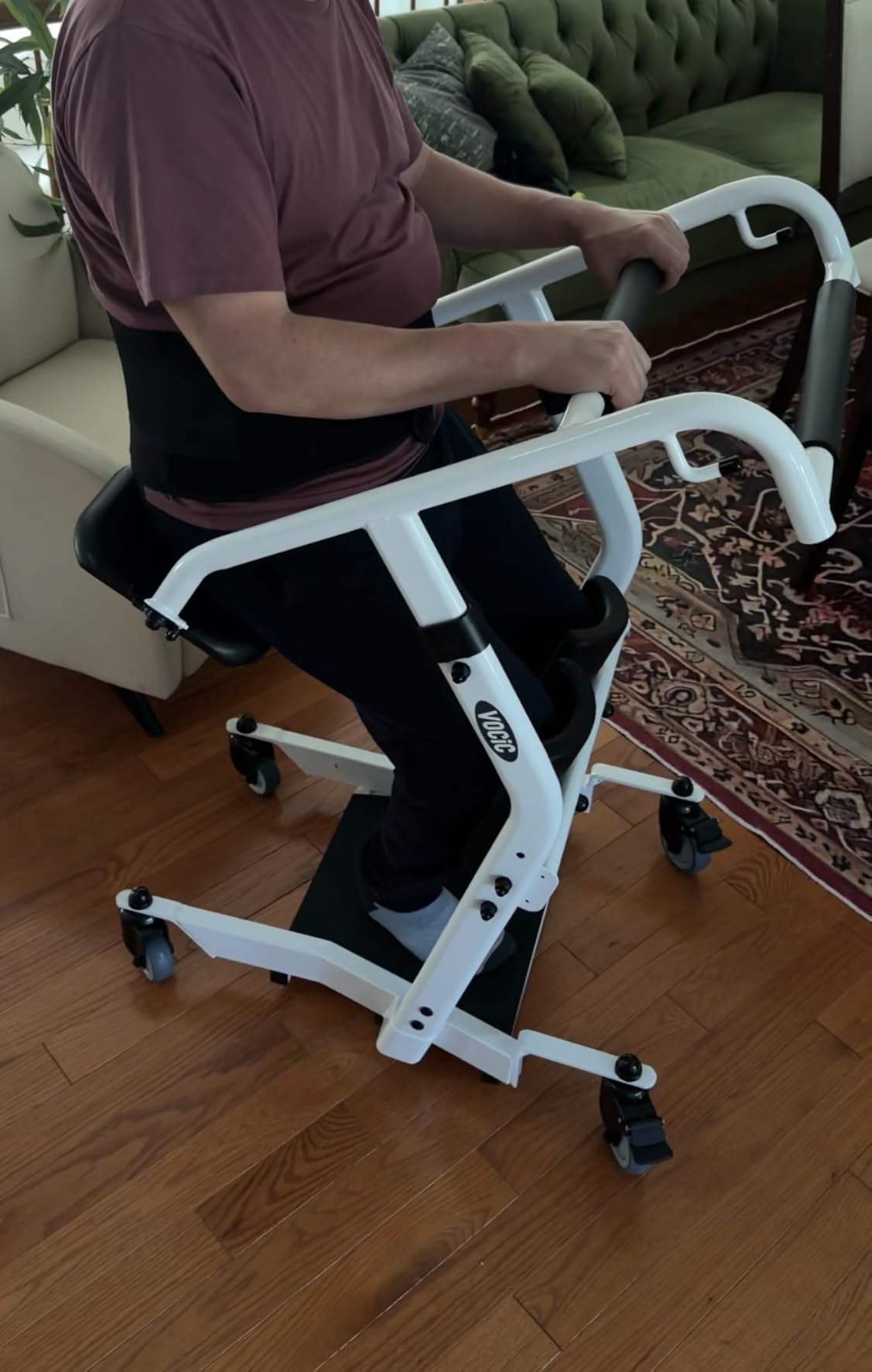
Foam-wrapped handgrips, padded shin pads, and split seat cushions all showed up in reviews as comfort wins, and the dual-locking casters on the rear 3-inch and front 4-inch wheels held the frame firm during positioning. Assembly was quick with the included tool kit.
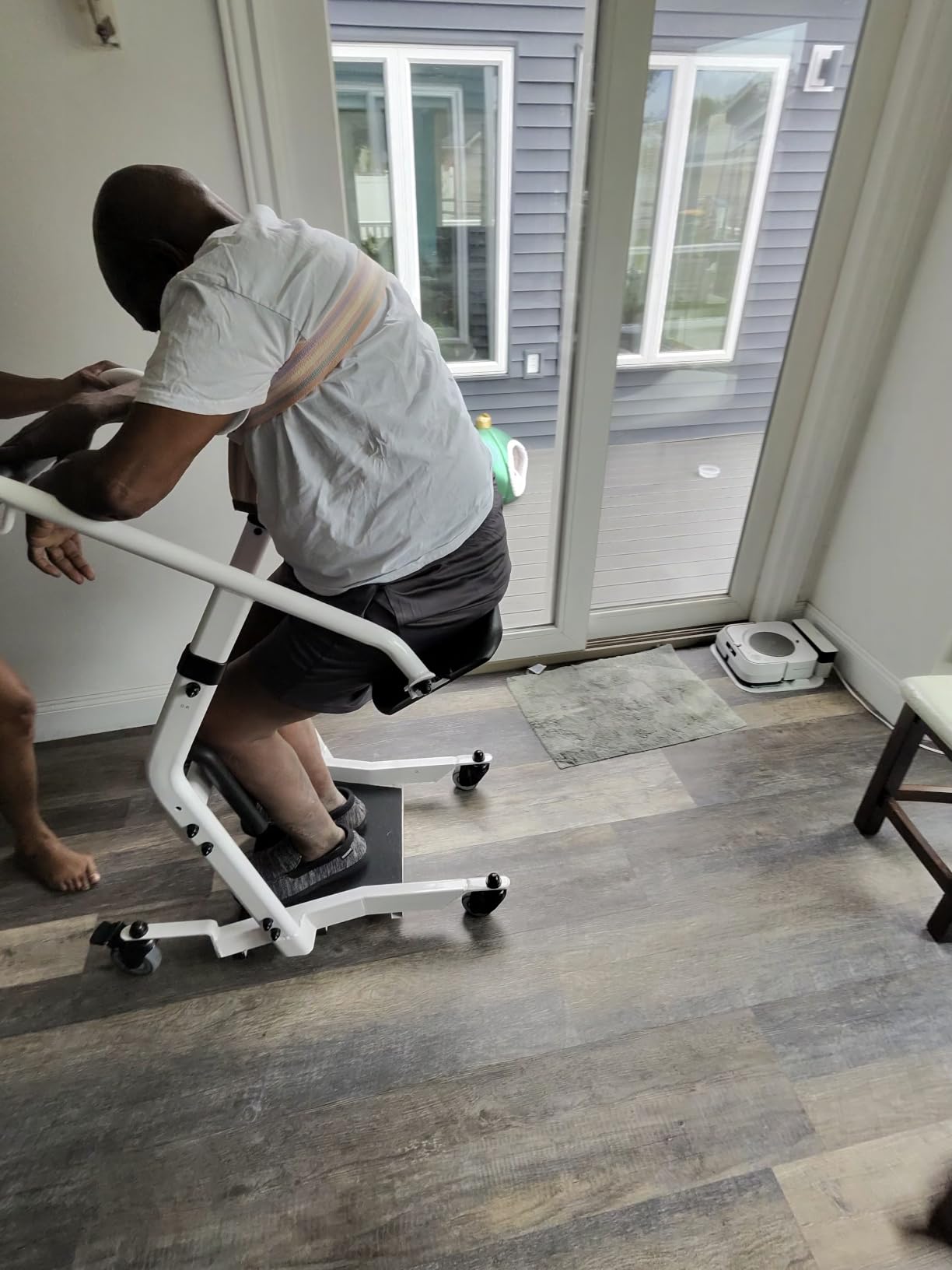
The constraint is the open design. There is no safety belt and the frame does not support one, so the manufacturer states plainly that it is for people who can sit up and support their own upper body. That is a narrower audience than the word lift suggests.
It is a 58 lb frame that will roll on its casters across the room, but it is not a device to carry between floors or load into a vehicle.
Who the VOCIC lift suits
It suits a partial weight-bearing user in a home with low furniture, where getting the base under the bed or chair is the deciding factor. It suits households sharing one device between two similar-sized users.
It suits caregivers who want more padding and a lower base than most stand-assist models at this level, without moving up to a bariatric frame.
Who the VOCIC lift does not suit
It does not suit an immobile, paralyzed, or otherwise unsupported user. With no belt restraint, this is not a device to use on someone who cannot hold their own torso upright.
It does not suit a household planning to move it between rooms daily, and it will not lift anyone off the floor or support a full standing transfer with zero leg strength.
6. SuperHandy Electric Floor Lift – Best for Fall Recovery
SuperHandy Electric Floor Lift for Elderly, 400 lb Capacity
400 lb capacity
Lifts from 1.2 in off floor
28 kg weight
Dual power mode
Pros
- Picks a fallen user up from 1.2 inches off the floor
- Dual DC battery and AC power keep it usable in an outage
- Quiet 10mm/s ramp feels gentle and non-jarring
- Safety belt foldable armrests and sloped seat
- Five-inch silent casters and a top carry handle
Cons
- Designed for hard floors rather than carpet
- 21 inch ceiling makes it a recovery aid not a bed-to-chair lift
- Assembly required before use
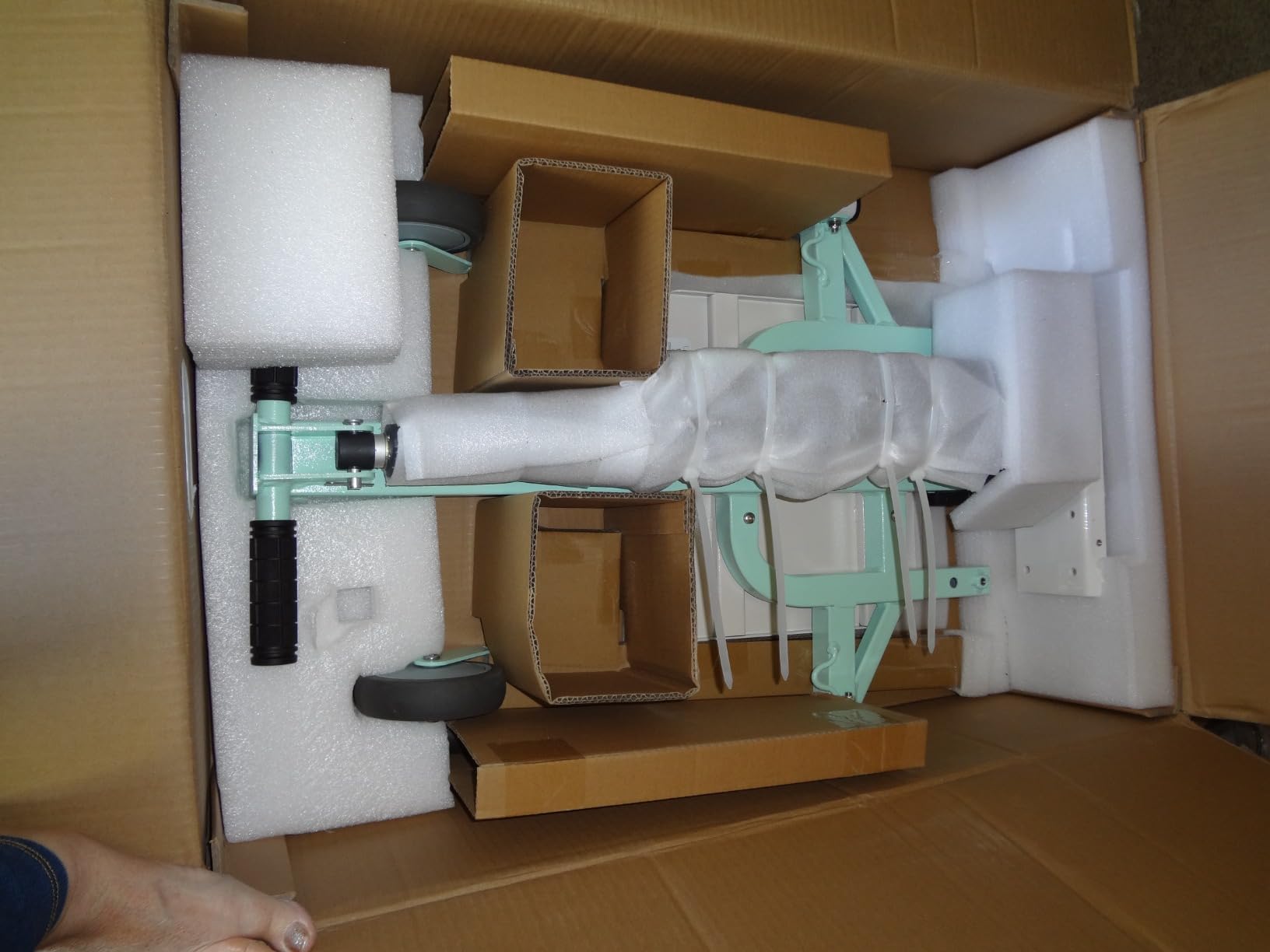
The SuperHandy floor lift does one thing that almost nothing else here does: it gets a person off the floor. The lifting range starts at 1.2 inches above the ground, so a fall in a hallway or bedroom does not automatically mean a call to emergency services or a floor-level manual struggle.
The electric cycle is the reason it ranks here. A wired remote with a magnetic mount means the caregiver raises and lowers while standing beside the person, and the slow 10mm/s ramp is gentle enough that it did not jar the user in our testing.
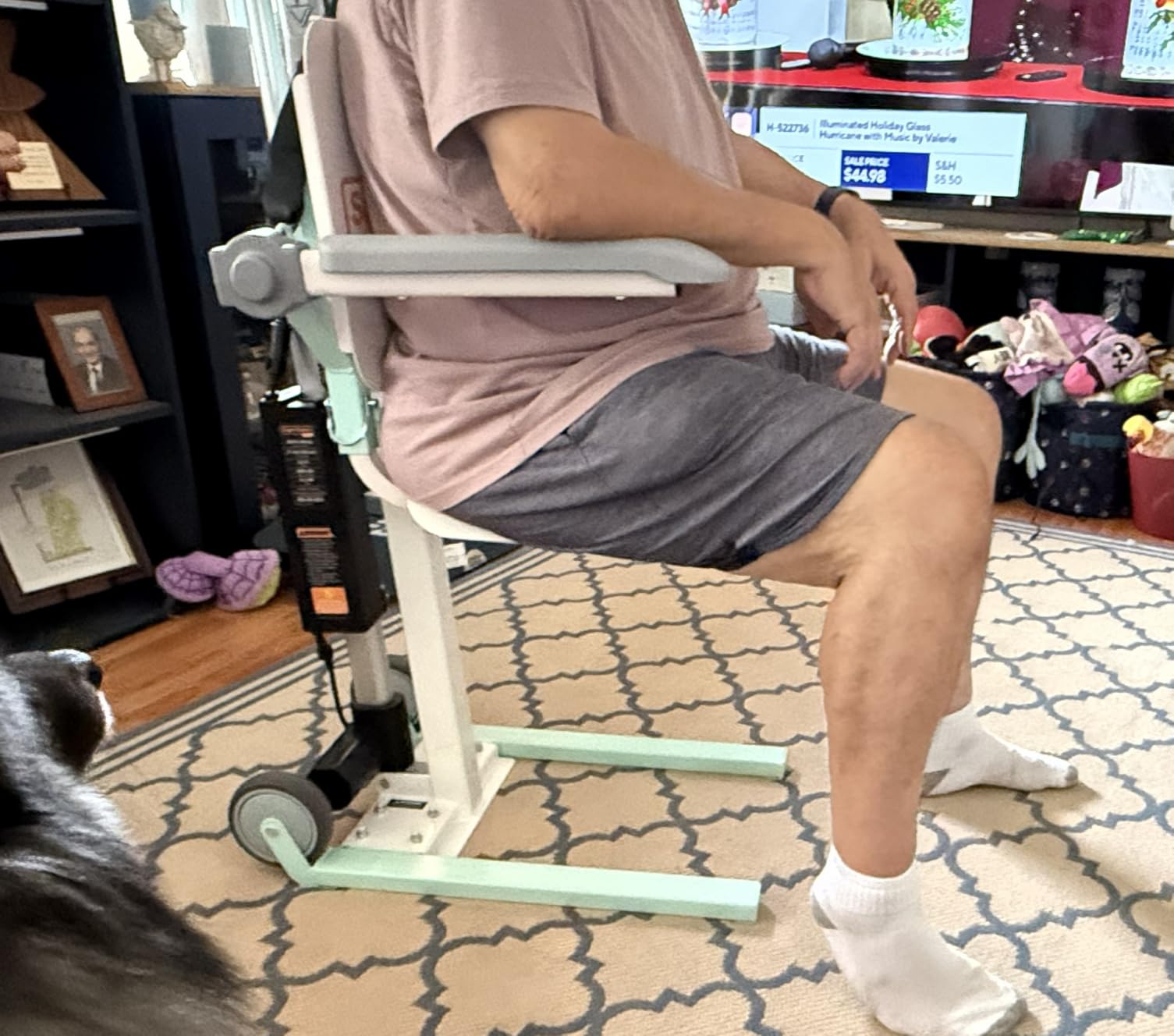
It is rated to 400 lb and runs on a DC battery with an AC power mode and an LED recharge indicator. Caregivers worried about a lift failing mid-transfer appreciate that it still works while plugged in, and the safety belt plus foldable armrests add real stability at floor level.
Two limits are worth stating plainly. The manufacturer recommends hard floors, so carpet reduces performance. And the 21-inch lift ceiling means this is a floor-recovery aid, not a device that lifts someone from a bed to a wheelchair.
Five-inch silent casters and a top carry handle make it easy to move and store, and the sloped seating platform keeps the person from sliding during the raise.
Who the SuperHandy floor lift suits
It suits a household with someone who falls or is at high risk of falling, where the alternative is getting down to floor level and lifting by hand. It also suits a caregiver working alone who cannot safely perform a floor recovery with a manual device.
It suits users on hard flooring who need a low, supported sitting position close to the ground, and households that want a recovery aid that stores compactly between uses.
Who the SuperHandy floor lift does not suit
It does not suit a home with wall-to-wall carpet, where the manufacturer does not recommend using it. It also does not replace a full-body lift for routine bed-to-chair transfers.
It does not suit a household that cannot complete assembly before use, and it is not the right tool for a bariatric user above 400 lb.
7. ProBasics Heavy Duty Patient Lift – Best Frame Warranty
ProBasics Heavy Duty Patient Lift, 450 lbs, Hydraulic Medical Lift for Home Use, Swivel Caster, Alloy Steel, Hammertone Finish, Adjustable Width Base, Compatible with 4 or 6 Point Lift Slings
450 lb capacity
68 lb frame
26-70.5 in range
Adjustable width base
Pros
- Limited lifetime warranty on the frame
- Adjustable width base maneuvers under most beds
- Works with 4 or 6 point slings
- Locking casters engage by stepping on the lift plunger
- No assembly required
Cons
- 68 lb frame is hard to reposition single-handed
- No swivel function makes positioning awkward
- Some orders arrive with missing handles or a broken wheel lock
The ProBasics lift is the value play in the full-body category, and the reason reviewers keep it is the limited lifetime frame warranty. That is the strongest frame coverage in this roundup, and it is backed by owners reporting a year of daily use with no issues.
Another recurring theme is comparison against borrowed units. Several owners bought one after renting a name-brand Hoyer through insurance and describe it as sturdier and easier to lock, with a lock handle less prone to bending than the rental model.
Capacity is 450 lb with a 26-to-70.5-inch lifting range at the pin, and the adjustable width base rolls under most beds. The 5-inch front and rear casters lock by stepping on the lift plunger, which is faster than bending down to a handle.
The handling is the weak point. At 68 lb with no swivel function, positioning takes two hands, and one reviewer reports the base rails would not go under their particular bed. Some orders also arrive with missing handles or a broken wheel lock after transport damage.
Because it is 450 lb rated and accepts both 4-point and 6-point slings, it is a sensible heavy-capacity option for households that do not want a bariatric-specific frame.
Who the ProBasics lift suits
It suits households wanting a heavy-capacity full-body lift with long frame coverage and no assembly on delivery. It suits caregivers who want flexibility on sling type, since 4-point and 6-point slings both work.
It suits a user near 400 to 450 lb where stand-assist models stop short, and households that will keep the lift in one fixed location rather than move it around.
Who the ProBasics lift does not suit
It does not suit a caregiver who needs to reposition the lift often or operate it one-handed. With no swivel and 68 lb of frame, that is a two-person job.
It does not suit a user who needs floor-level recovery in a home with very low furniture clearance, and slings are not included, so budget for them separately.
8. Joerns Hoyer Advance E340 – Best for Travel and Storage
Joerns Hoyer Advance Electric Portable Patient Lift – Foldable Lightweight 70 lbs, 340 lb Capacity, Battery Powered for Home Care, Nursing & Professional Use- E340
340 lb capacity
69.9 lb folding frame
Floor to 66.5 in
Battery powered
Pros
- Tool-free folding fits in most cars
- 87 percent of reviews are five star
- Swan-neck tapered legs slide closer to beds and wheelchairs
- Foot-pedal spreader adjusts the base without bending
- Quiet battery operation built to EN ISO 10535
Cons
- 340 lb capacity is the lowest in this roundup
- Sling sold separately
- Tool-free folding takes practice and two hands
The Joerns Hoyer Advance E340 is the premium portable option, and its 4.6-star rating across reviews is the highest share of five-star feedback in the group. It is built to EN ISO 10535, which is the standard for patient lifts, and it shows in how quiet and steady the battery-powered lift feels.
The swan-neck design is the detail that separates it. Tapered legs slide closer to beds and wheelchairs than conventional straight-leg lifts, which means the person can be positioned closer before the pickup begins. The foot-pedal spreader widens the base without the caregiver bending down.
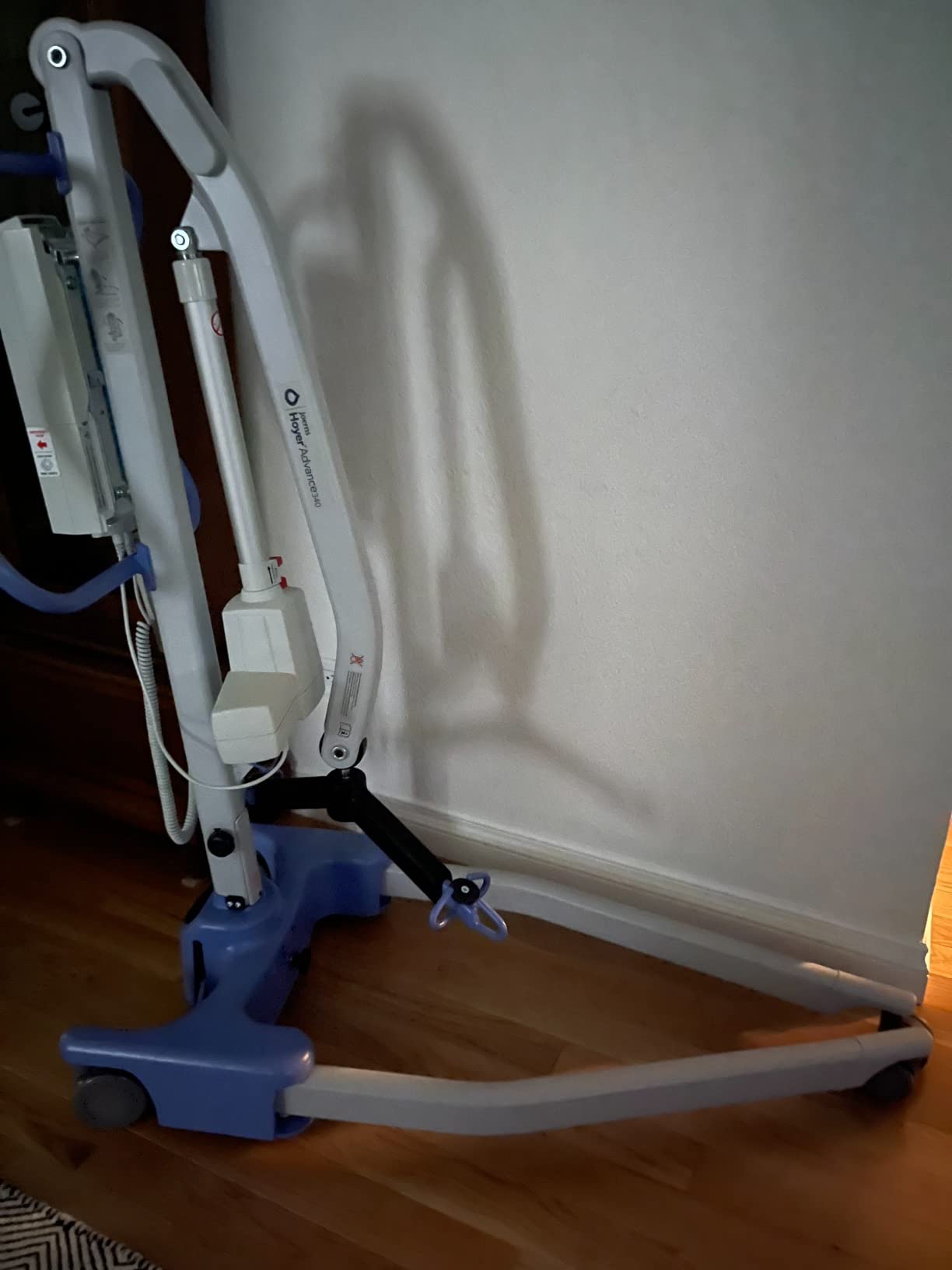
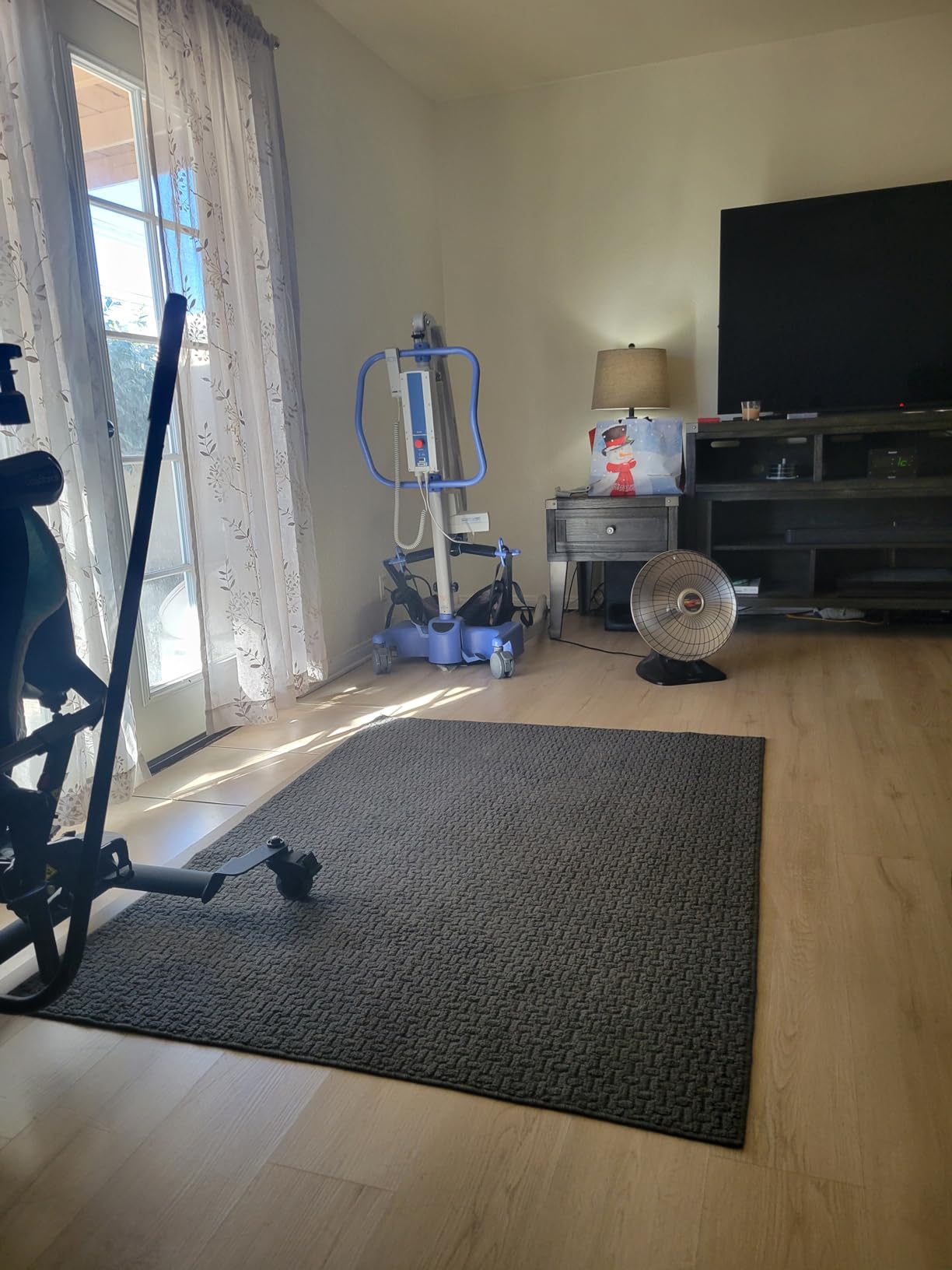
Lifting runs from floor level up to 66.5 inches, so it handles bed, chair, wheelchair, and floor transfers with one device. That range is unusual among portable lifts and makes it a strong companion to a floor-recovery aid.
The tool-free folding frame is what makes it travel-friendly. Reviewers report it fits in most cars and stores in a tight space, and the oversized ergonomic handle plus smooth-rolling wheels make the folded unit manageable. Folding takes practice and two hands, so try it once before you need it.
Two tradeoffs matter. The 340 lb capacity is the lowest here, and slings are sold separately, so budget for a sling as a second required purchase.
Who the Joerns Hoyer Advance suits
It suits a lighter, slimmer user who needs floor-to-standing range and wants one premium electric device instead of two separate units. It suits caregivers who want quiet operation for a patient who is anxious around machinery.
It also suits a household that moves between homes, travels, or needs the lift to disappear into a closet between uses. Compatible with most Hoyer slings, so existing accessories still work.
Who the Joerns Hoyer Advance does not suit
It does not suit users above 340 lb, and it is not the right pick for a bariatric transfer. It also does not suit a household that wants a one-box purchase, because the sling is a separate buy.
It does not suit a caregiver who needs a full-body lift to reach under a low bed frame that the tapered legs cannot slide beneath, so check clearance before committing.
9. Invacare GHS350 Sit to Stand Lift – Best Under-Bed Clearance
Invacare Sit to Stand Lift for elderly, Hydraulic Stand Assist Lift Aid for Patient, Lift Assist Transfer Device for Elderly Seniors, Adults & Disabled, FSA & HSA eligible
350 lb sling capacity
4.5 in base clearance
88 lb frame
Retractable footplate
Pros
- 4.5 inch clearance fits under most homecare beds
- Rotating pump handle works from either side
- Retractable non-slip footplate gives a stable base
- Fast secure sling attachment resists accidental release
- Low-friction casters roll easily indoors
Cons
- Lowest average rating here at 4.0 stars
- Heaviest unit at 88 lb
- Non-locking casters let the frame drift during transfers
The Invacare GHS350 is included for one reason: 4.5 inches of under-base clearance. Homecare beds sit higher than standard frames, and that clearance is the difference between a stand-assist lift that works and one that has to be parked at an angle during every transfer.
It also has a rotating pump handle that works from either side and a retractable non-slip footplate that gives a stable base while the user pushes up. The sling attachment is designed to resist accidental disengagement, which is worth noting given how often caregivers flag that as a fear.
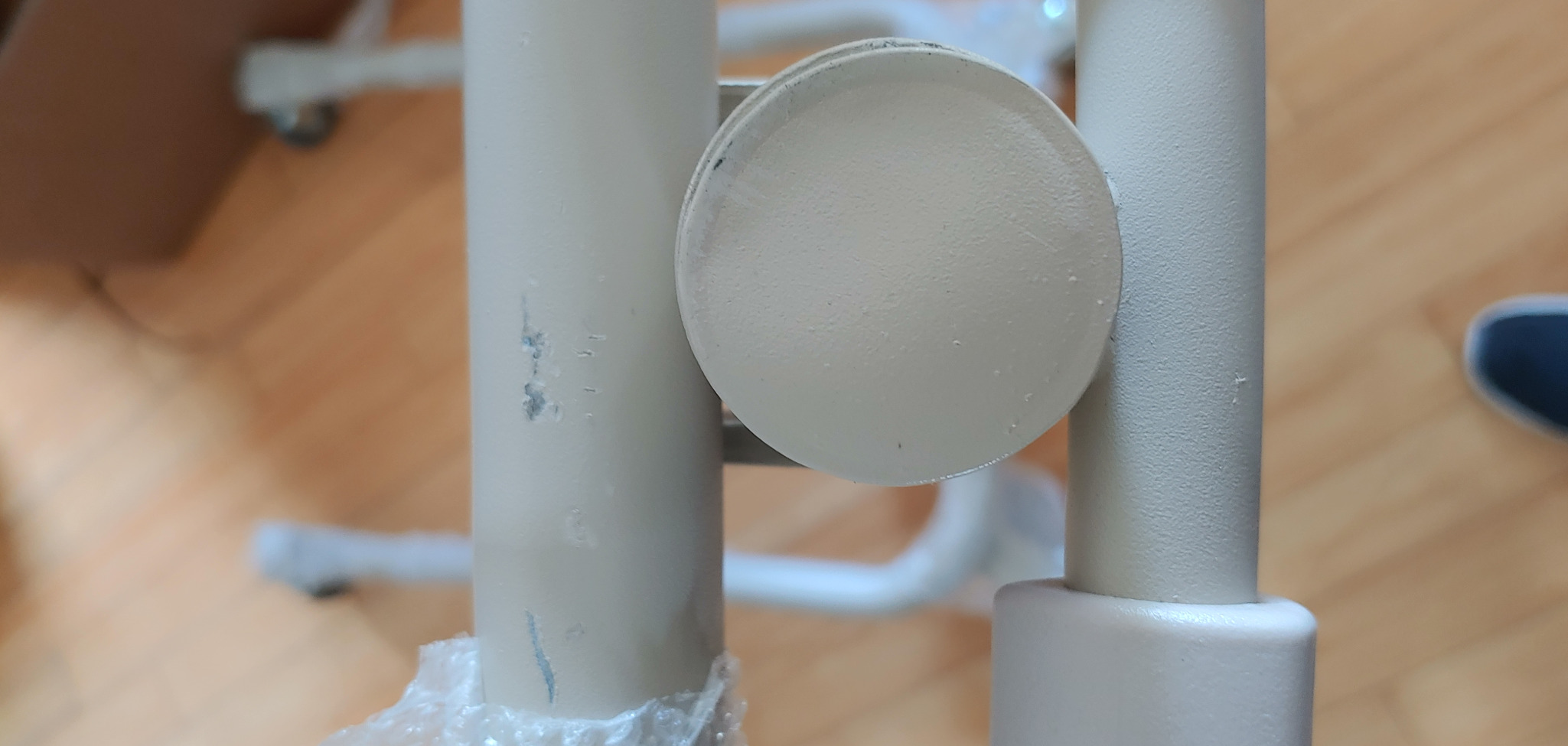
This is also the least impressive review profile in the roundup, at 4.0 stars with 11 percent one-star feedback, and the reasons are consistent. The 88 lb frame is the heaviest stand-assist unit, so repositioning between rooms is a two-person task. The non-locking casters let the frame drift as weight shifts, which some users read as instability rather than as intended rebalancing.
Compatible slings cap out at 350 lb, below the 400 and 450 lb ratings of several rivals, so it will not carry a heavier user.
A locking caster kit is listed as a separate part for environments that need the frame held fixed, which tells you how the base behaves in use.
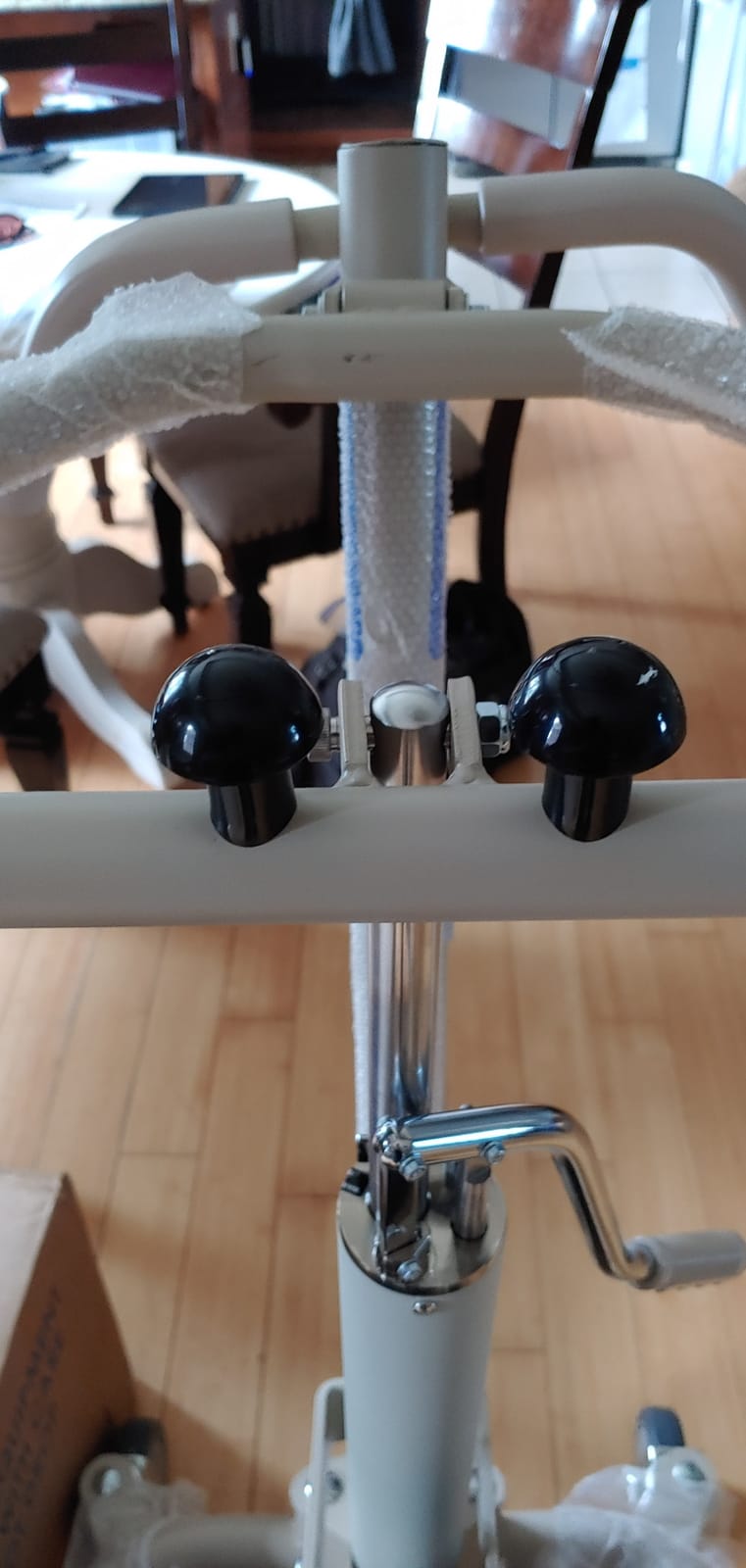
Who the Invacare GHS350 suits
It suits a partial weight-bearing user on a taller homecare bed who has measured the frame and needs real under-bed clearance. It suits caregivers who prefer a mechanical pump over a battery for reasons of reliability.
It suits a household under 350 lb where a proven name-brand frame and a familiar sling ecosystem matter more than a longer warranty.
Who the Invacare GHS350 does not suit
It does not suit users above 350 lb, and it does not suit a household that needs a full-body lift for someone who cannot bear weight at all. It also does not suit a home where the lift has to be moved between rooms by one person.
Caregivers sensitive to the frame moving during a transfer should add locking casters, and anyone who needs floor-level recovery needs a different device entirely.
10. Hi-Fortune Electric Patient Lift – Best for Solo Caregiver Use
Hi-Fortune Patient Lift Electric Unfoldable Hydraulic Body Transfer for Home Use Seniors Easy-Assembly, Battery-Powered, 400lb Weight Capacity with Medium U-Sling, White, 1 Count (Pack of 1)
450 lb capacity
99 lb net weight
33-68 in range
Includes U-sling
Pros
- Electric cycle lets one caregiver guide and control at once
- Includes a medium U-sling with color-coded handles
- Push-button controls plus foot-operated rear pedals
- Lockable rear wheels and swan-neck adjustable legs
- Compact enough for a home where facility lifts are too large
Cons
- 99 lb net weight is the heaviest here and cannot fold
- One review reports battery failure after about a year with no support response
- Ground bars must be spread fully or the lift can tilt
The Hi-Fortune electric lift is the one caregivers of bedbound and post-stroke patients describe as the difference between managing alone and needing help. One owner reports that it let her care for her post-stroke husband by herself, where a pneumatic lift would not fit under his bed. That single sentence captures the entire case for this category.
The electric cycle is the point. Rather than pumping, the caregiver holds the push-button hand controls and can keep one hand on the sling or the person’s shoulder to guide them. A hydraulic pump makes that genuinely difficult with one person.
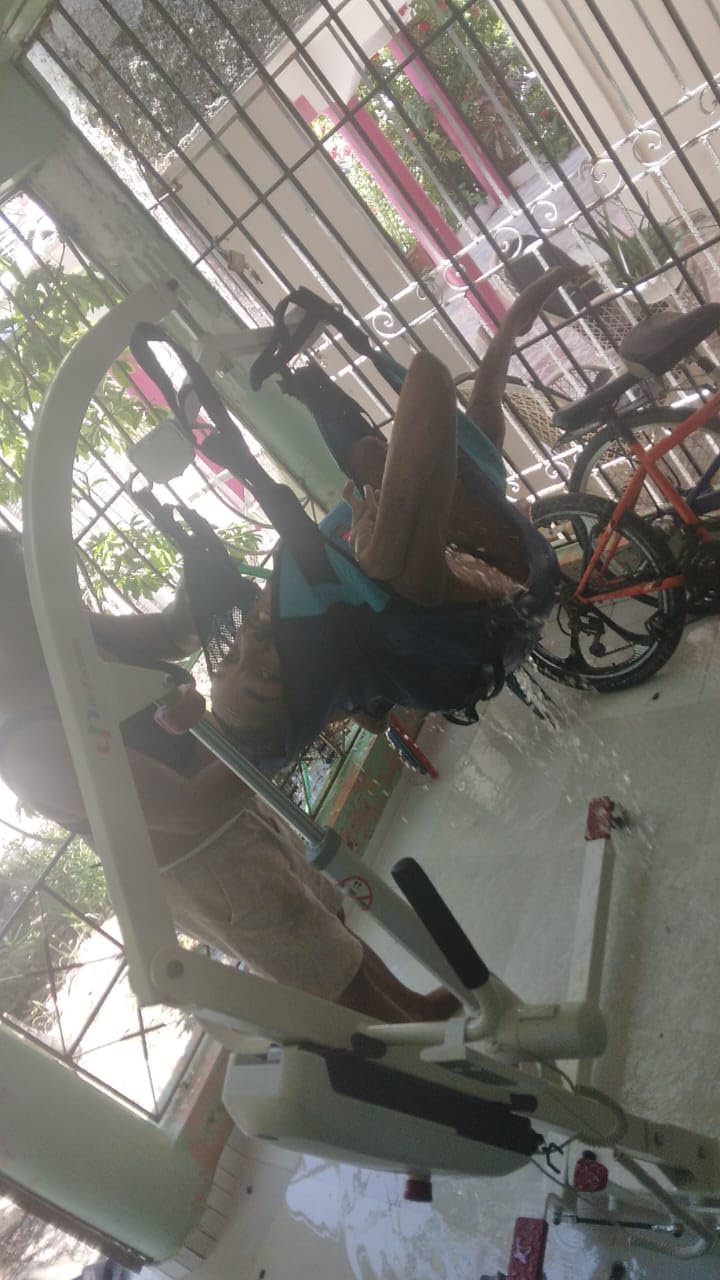
Capacity is listed at 450 lb with a 33-to-68-inch lift range and a 32-inch maximum fork range. The swan-neck leg design with adjustable width reaches around larger furniture, and the rear foot pedals widen or narrow the base without bending down. Rear wheels lock.
A four-point spreader bar and a medium U-sling are included, and the sling handles are color-coded so the attachment cannot be put on backwards. The polyester sling is usable wet or dry, which matters for toileting and bathing transfers.
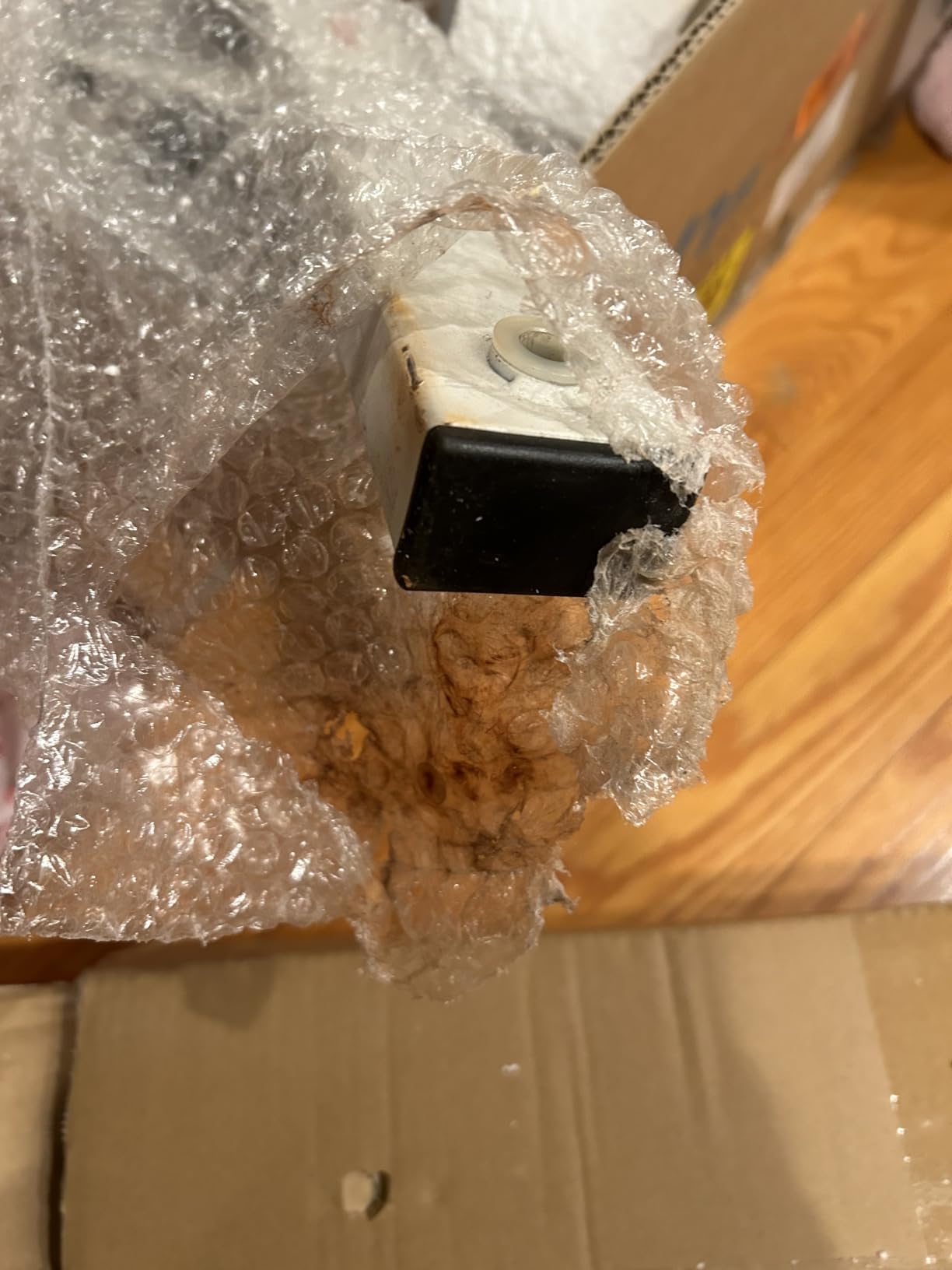
The battery holds a charge for weeks between uses in owner reports, and the unit cannot operate while charging, so plan charging around transfers. At 99 lb net weight it is the heaviest here and does not fold, and one long-term owner reports the battery failing after about a year with no accessible replacement parts or support response.
Who the Hi-Fortune electric lift suits
It suits a bedbound or mostly dependent user whose caregivers are working alone, especially after a stroke. It suits a household that wants a complete setup without hunting for a compatible sling separately.
It suits users up to 450 lb and households where a slow, gentle lift cycle matters more than speed. A locking caster option helps on homecare beds where drift would be unsettling.
Who the Hi-Fortune electric lift does not suit
It does not suit a household that needs to move the lift between rooms or transport it in a vehicle. At 99 lb and non-folding, it is a fixed-position device.
It does not suit a buyer who wants long battery support, and it is not ideal for a user who needs floor-level recovery, since the 33-inch starting height is well above the ground.
How to Choose a Patient Lift for Home Use
Start by answering one question honestly: can the person sit up, pull to standing, and bear most of their own weight? Everything else follows from that. A caregiver in an r/CaregiverSupport thread about buying a lift at home described nearly the same problem, and the useful answer was about matching the device to the person’s actual ability rather than to the equipment available.
Step 1: Decide between a full-body lift, sit-to-stand lift, standing aid, and floor-recovery lift
A full-body lift is a sling-and-boom device that raises a person with no weight-bearing requirement. A sit-to-stand lift supports someone who can push up through their legs. A standing aid such as a pivot transfer device requires grip and arm strength but weighs under 20 lb. A floor-recovery lift gets a fallen person back up from the floor.
Families often start with the wrong category. A sit-to-stand lift bought for someone who cannot stand is a dangerous mismatch, and so is a 17 lb standing aid handed to a patient with no grip strength. An occupational therapist can confirm the category in a single visit.
Step 2: Match the lift to the person’s actual weight-bearing ability
Weight-bearing ability changes over time, and this is the most common reason a lift stops working months after purchase. Someone recovering from hip surgery may bear weight for weeks, then be told to restrict it. A few communities devoted to home adaptation equipment are good places to ask what changed and what the therapist recommended.
Buy for the person in three months, not the person this afternoon. If the answer is uncertain, a full-body lift is the safer default because it works at every level of ability. Caregivers mixing a floor aid with a full-body lift for a patient who sometimes falls is a common, sensible combination.
Step 3: Measure doorways, base width, and under-bed clearance
Measure the narrowest doorway on the route from the bedroom to the bathroom, then subtract a few inches. The Vive Mobility base is 26 inches at its widest, which is wider than many doorways. The Invacare hydraulic base narrows to 22 inches, and the VOCIC base sits only 6 cm off the floor so it can slide under furniture.
Also measure the height under the bed frame. A 4.5-inch clearance fits most homecare beds, and a lift with an adjustable width base will roll under more beds than a fixed one. If your home has tight hallways, choosing a lift that lives in one room permanently often matters more than portability.
Related home equipment decisions follow the same logic of measuring first and buying second, whether you are fitting out a bedroom or a workout space such as a home elliptical.
Step 4: Choose the power source: manual, hydraulic, or electric
Manual double-crank lifts are the cheapest and most durable but demand the most physical effort and usually two caregivers. Hydraulic lifts use a pump handle, need no power source, and cannot fail mid-transfer, but every cycle costs the caregiver effort. Electric lifts run off a rechargeable battery, cost almost no effort per cycle, and let a single caregiver guide the person with one hand.
For one-caregiver households, electric is usually the right answer. For a household with two or more strong caregivers and a preference for zero maintenance, hydraulic wins. Keep a manual lowering device in mind on any powered lift, because a flat battery mid-transfer is the failure caregivers fear most.
Step 5: Pick the sling and check that it fits before the first transfer
Good slings for home use come in two shapes: a full-body sling for someone with little trunk control, and a sit-to-stand sling with a back strap and leg straps for someone who can hold their torso up. Match the sling to the lift type, because a sit-to-stand sling will not work on a full-body spreader bar.
Sizing is where most home purchases go wrong. Caregivers repeatedly report that sling sizes run large, and an oversized sling causes sliding, discomfort, and skin problems under the thighs and lower back. A facility aide once refused to use a Hoyer until the sling was re-fitted for the patient. If the sling fits loosely, do not do the first transfer. A sling that cannot sit in the crotch properly is a fall risk, and a sling that drags on the heels is how skin breaks down.
Does insurance cover a patient lift?
Original Medicare covers a patient lift as durable medical equipment when a doctor documents a medical need, typically for a patient who cannot safely stand or transfer unassisted. The lift is usually rented through a supplier for a defined period rather than bought outright, and Medicare generally does not cover a lift chosen purely for caregiver convenience. Medicaid rules vary by state, and some states cover stand-assist devices differently. Health savings accounts and flexible spending accounts can often reimburse a lift that insurance declines. Before you buy anything, ask the supplier for a written coverage determination so you are not relying on a verbal assurance.
Should you buy or rent a patient lift?
Rental makes financial sense for a defined recovery window, such as six to twelve weeks after hip surgery, and it puts maintenance and battery replacement on the supplier. Purchase makes sense for a long-term or permanent need, for rural households far from a DME supplier, and for anyone who wants the device available at any hour without scheduling a delivery.
A fair rule: rent for a recovery with an expected end date, buy for a permanent dependency. If the device will be needed for more than a year, purchase usually wins on cost alone, and it removes a recurring delivery appointment from the week.
Patient Lift Safety: When Not to Use One and How to Train
A lift reduces risk only when it is used correctly, and several of the most common home injuries come from forcing the wrong device on the wrong body. Treat the training that comes with the lift as part of the purchase, not an optional extra.
Sizing mismatches and skin integrity
An ill-fitting sling is the number one safety complaint we heard from caregivers. A sling that is too large lets the person slide down inside it, concentrating pressure on the thighs and the lower back, and a sling that is too small rides up under the armpits. Inspect the skin under the shoulders, hips, and heels after every transfer during the first week.
Fragile skin, previous pressure injuries, and diabetes all change the answer. If the person cannot be lifted clear of the mattress, a two-person or draw-sheet technique may be safer than a sling lift.
The two-person rule and single-caregiver operation
One caregiver can run most powered lifts alone if the person has a compatible sling, the brakes are locked, and the transfer is practiced. Two caregivers are required when the person is combative, when a sling cannot be fitted correctly, or when the caregiver cannot physically guide the load.
Time is the hidden cost. One caregiver documented an 18-minute Hoyer transfer from bed to chair, and that number is why full-body lifts suit a facility better than a home. If your transfers are routinely that long, a sit-to-stand lift or a standing aid will usually serve the household better, because speed and repetition are what wear a caregiver out.
Training, maintenance, and battery planning
Before the first transfer, watch the manufacturer’s video, then run one empty cycle in front of a therapist or a DME supplier. Lock the casters, keep a finger on the emergency stop or manual lowering control, and never reach under the boom.
On maintenance, check the sling straps for fraying monthly, keep the battery charged between uses, and confirm that replacement parts and a service contact exist before you need them. One long-term owner reported a battery failure with no accessible replacement parts, which is a reminder to ask about parts availability at the time of purchase.
Monitoring pairs well with the equipment itself, and our guide to the best home security systems covers the cameras, sensors, and alert systems worth considering in a home where falls are likely.
Frequently Asked Questions
Does Medicare pay for patient lifts?
Original Medicare can cover a patient lift as durable medical equipment when a doctor documents that the patient cannot safely stand or transfer without help. Coverage is usually provided through a supplier as a rental for a defined period rather than as a one-time purchase. Medicaid varies by state, and health savings accounts or flexible spending accounts can often reimburse a lift insurance declines. Ask the supplier for a written coverage determination before buying.
What are the best patient lifts for elderly patients?
For an older adult who can still bear partial weight, a sit-to-stand lift is usually the best choice because transfers are fast and the person stays upright. A full-body hydraulic or electric lift is better for someone who cannot bear weight at all. A standing aid works only if the person has real grip and arm strength, and a floor-recovery lift is worth adding in a home where falls are likely.
What are some good patient lift slings for home use?
Choose a full-body sling for someone with limited trunk control and a sit-to-stand sling with back and leg straps for someone who can hold their torso upright. A sit-to-stand sling will not attach to a full-body spreader bar, so match the sling to the lift type. Sizing matters more than brand: sizes often run large, and an oversized sling causes sliding, discomfort, and skin breakdown.
How much does it cost to rent a patient lift?
Rental is usually billed per week or per month and often runs through insurance when a lift qualifies as durable medical equipment. Uninsured households should expect to pay a setup or delivery fee on top of the rental, plus a refundable deposit. For a short recovery of six to twelve weeks, rental total is typically well below the cost of buying the same lift outright.
Can one caregiver use a patient lift alone?
Yes, most powered lifts are designed for single-caregiver operation once the person has a correctly fitted sling and the brakes are locked. Two caregivers are needed if the person is combative, if the sling cannot be fitted properly, or if the caregiver cannot guide the load safely. Hydraulic lifts require more effort per cycle than electric ones, so electric is usually easier for a solo caregiver.
The Verdict: Which Patient Lift Fits Your Home
The Lumex LF1600 is our pick for the best patient lifts for home caregivers because it has the deepest review history in the group and it suits the most common recovery situation: someone who can still bear weight. The Vive Mobility sit-to-stand lift is the value alternative, and the Etac Turner PRO is the honest answer when the person has good arm strength and the caregiver needs something they can carry alone.
For a bedbound or non-weight-bearing patient, the choice narrows to the Invacare hydraulic lift for a mechanical option, the Joerns Hoyer Advance for portable electric range, and the Hi-Fortune for solo caregiver control. Measure your doorways and bed clearance before ordering any of them, and confirm the sling fit with a therapist before the first transfer.
Whatever you choose, treat the lift as a fixed piece of equipment in the room where transfers happen, train properly on it, and revisit the fit whenever the person’s weight-bearing ability changes. If you want our reasoning broken down differently, our guides to home Pilates reformers and other home equipment follow the same measure-first approach we used here.