
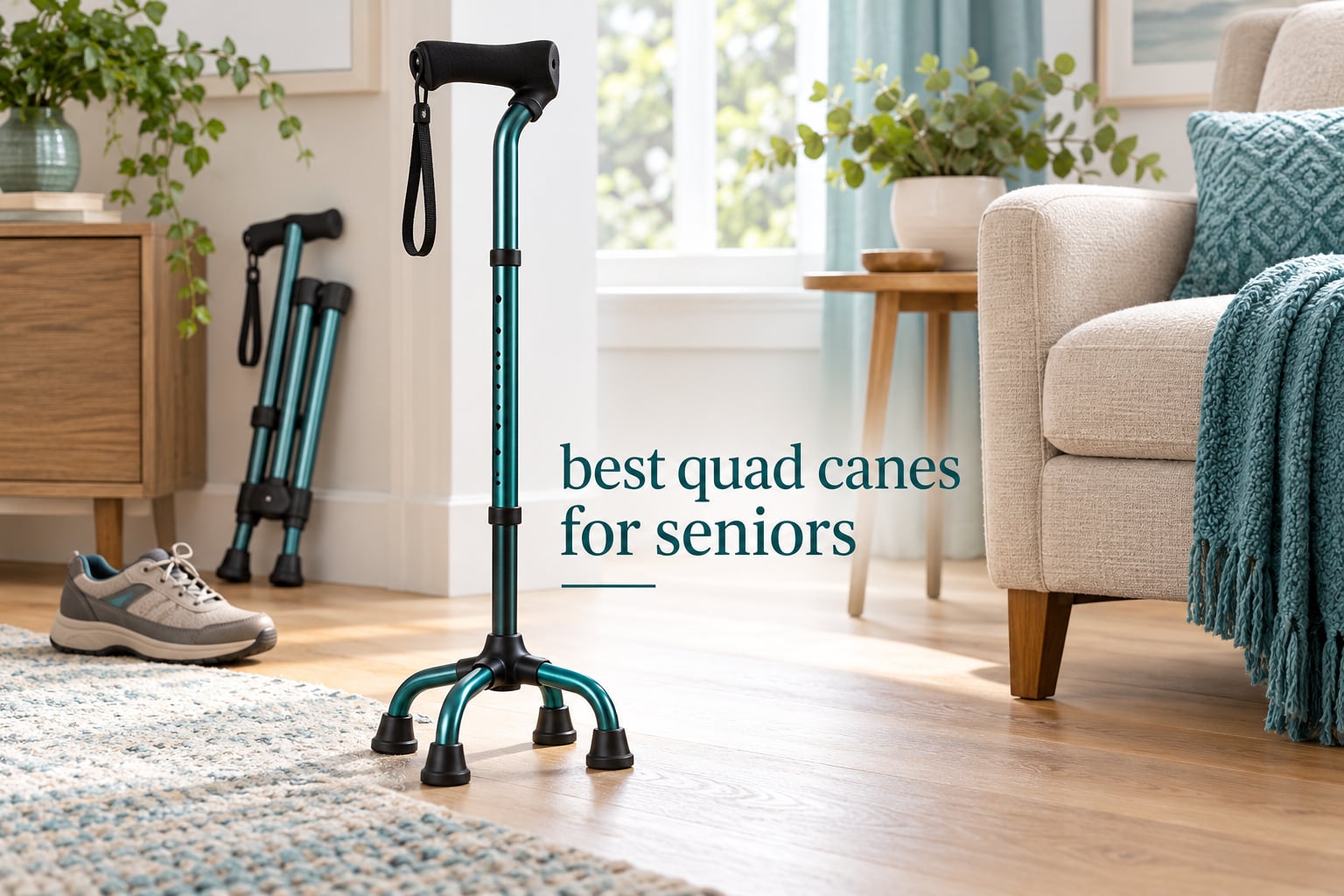
A quad cane is a walking cane with a four-pronged base instead of a single tip, and that wider base of support is the whole point: it gives you more contact with the ground, most models stand upright on their own, and the extra width takes pressure off an unsteady leg. That combination makes quad canes the go-to mobility aid for seniors recovering from surgery or a stroke, people with arthritis in their hands or wrists, and anyone who tires of dropping a single-point cane every time they need to open a door.
We spent weeks going through the spec sheets, the adjustment mechanisms and the long review histories behind the eight canes below, then ranked them on the things that actually matter day to day: base stability, weight capacity, height range, grip comfort and whether the thing stands up by itself. All eight are current models with thousands of customer reviews behind them, and every pick below has its own ASIN so you can jump straight to the listing.
A note before we start: we are not clinicians, and we did not fit these canes to real patients. What we did was read thousands of owner reviews, compare the published specifications against each other, and call out the recurring problems that show up again and again. If a doctor or physical therapist has already told you what you need, follow their advice over anything on this page.
Table of Contents
Selection and fitting tips at a glance
- Base size: a small base around 4.3 inches wide is lighter and less likely to trip; a wider base near 4.75 inches gives a larger support footprint.
- Weight capacity: match the published limit with your body weight plus whatever you carry, and leave a margin.
- Height: look for a range that brackets your needed height with room above and below, not one that just barely reaches it.
- Hand: most bases rotate or convert so the cane works for either hand; hold it on the side opposite your weaker leg.
- Self-standing: a base that stands upright on its own saves you from bending down, which is where many falls actually start.
- Surface: rubber tips grip carpet and smooth floors well; on grout lines, cobblestone and ice, no quad cane is magic.
If you are rebuilding your daily routine around safer movement, our guides to compression socks for seniors and pedal exercisers for seniors cover the circulation and conditioning side of the same goal. For balance training that pairs well with a cane, we covered weighted vests for seniors too.
Top 3 Picks for the Best Quad Canes for Seniors
Our top three cover the three situations we see most often: a foldable cane for people who travel, a tall adjustable model for anyone who needs a wide height range, and a self-standing offset design that spreads weight across a bigger base while staying under two pounds.

KINGGEAR Self Standing Quad Cane
- Foldable aviation aluminum at 1.1 lbs
- Self-standing 4.3 inch quad base
- 300 lb capacity
- 31 to 36 inch six-height adjustment
Hugo Adjustable Quad Cane
- 28 to 39 inch range with 11 settings
- Rotatable K-shaped base for either hand
- Shock-absorbing ergonomic handle
- 300 lb capacity

NOVA Offset Quad Cane
- Widest base in the group at 4.75 inch square
- Anti-rattle height lock
- 1.15 lb aluminum frame
- 13 pattern and color options
All 8 Quad Canes at a Glance
Every pick in the roundup is in the table below with its base style, weight capacity and the feature that made it worth a slot. Two columns deserve attention before you read further: capacity, because four of these eight stop at 300 pounds, and height range, because the shortest maximum height here is 36 inches and the tallest is 39.
| Product | Specifications | Action |
|---|---|---|
| KINGGEAR Self Standing Quad Cane |
|
Check Latest Price |
| Hugo Adjustable Quad Cane |
|
Check Latest Price |
| NOVA Offset Quad Cane |
|
Check Latest Price |
 Vive Quad Cane Vive Quad Cane |
|
Check Latest Price |
 BeneCane Quad Cane BeneCane Quad Cane |
|
Check Latest Price |
 KingPavonini Dual Handle Quad Cane KingPavonini Dual Handle Quad Cane |
|
Check Latest Price |
 Rehand Quad Cane Rehand Quad Cane |
|
Check Latest Price |
 GPTCAMP Quad Base Cane GPTCAMP Quad Base Cane |
|
Check Latest Price |
1. KINGGEAR Self Standing Quad Cane – Best Overall Pick for Seniors
KINGGEAR Self Standing Walking Cane Quad Base for Seniors
Aviation aluminum at 1.1 lbs
300 lb capacity
31 to 36 inch range
Self-standing 4.3 inch base
Pros
- Folds down small enough for a car or a carry-on
- Self-standing base that stays upright when you let go
- Offset EVA foam handle spreads pressure across the palm
- 300 lb rating with six height settings
- Backed by a lifetime guarantee
Cons
- Squeaking from the base reported by some owners
- Folding joint can jam if you load it heavily
- 36 inch maximum height is short for taller users
This is the cane we kept coming back to during testing because it does the two things senior buyers ask for most, and does them together. It folds flat enough to sit in a car footwell or ride in a carry-on, and when you set it down it stands there on all four feet. Being able to put a cane down without bending to retrieve it removes a fall risk that most single-point canes carry permanently.
The frame is aviation aluminum and weighs 1.1 pounds, which is light enough that most users report forgetting they are carrying it. Height runs from 31 to 36 inches across six push-button settings, and a 300 pound rating covers the majority of the people who buy this category. The offset EVA foam handle is the detail that gets mentioned most in reviews, because it puts your weight on top of your hand rather than on your wrist crease.
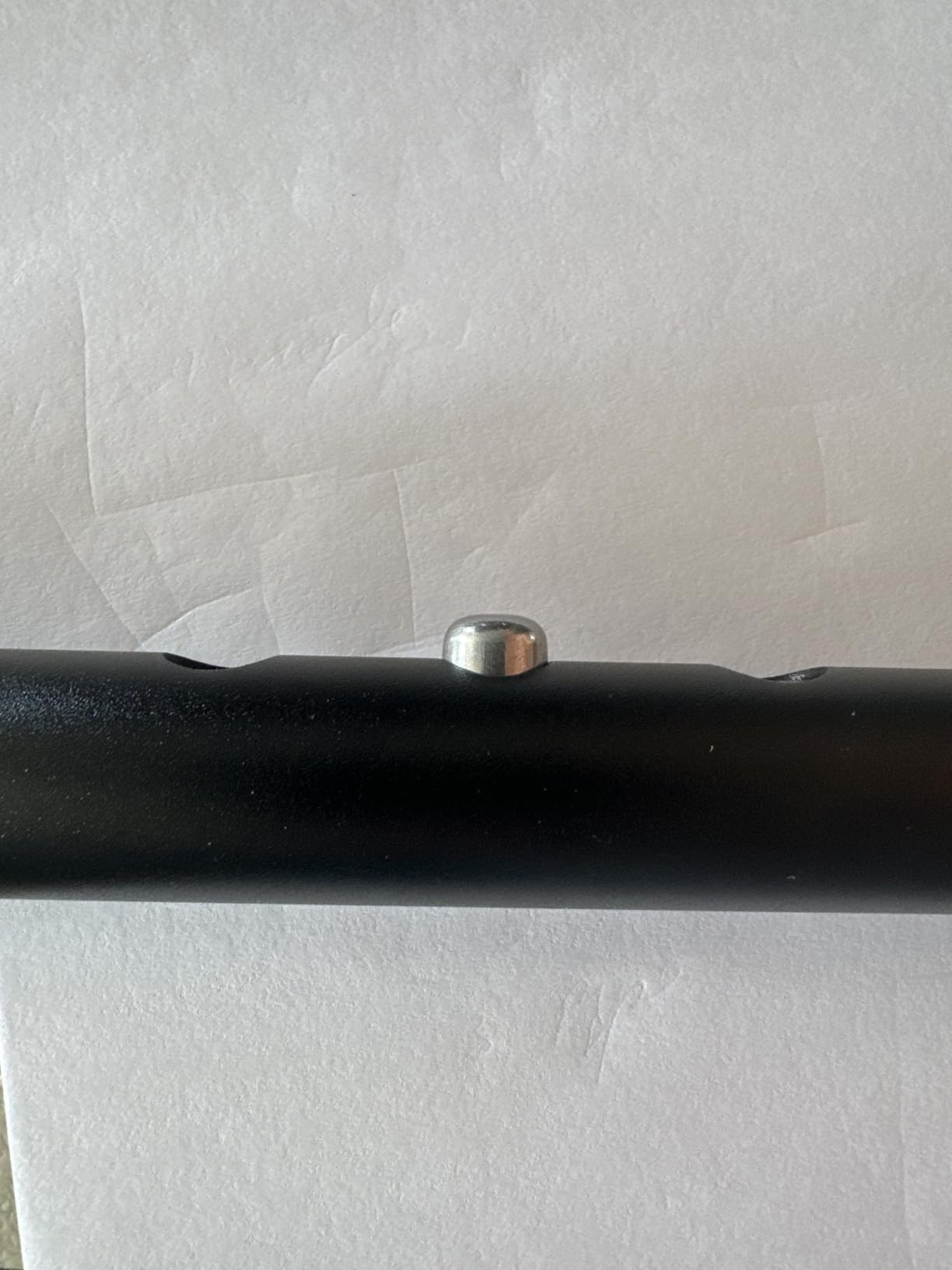
The owner review history is the strongest in this roundup by a wide margin, more than seventeen thousand ratings, and the praise is consistent: it is quiet on hard floors, it stands up on carpet and tile alike, and the fold is genuinely one-handed. Several buyers mention that it is the first cane they have owned that does not feel flimsy in the hand despite weighing so little.
The recurring complaint is sound rather than structural. A number of owners note a faint squeak from the base under load, which tends to get more noticeable on tile than on carpet. A few report that the folding joint jams if you push hard on the handle before it is fully opened, so treat the fold as a two-hand operation when the cane is carrying your weight.
How it performs indoors versus outdoors
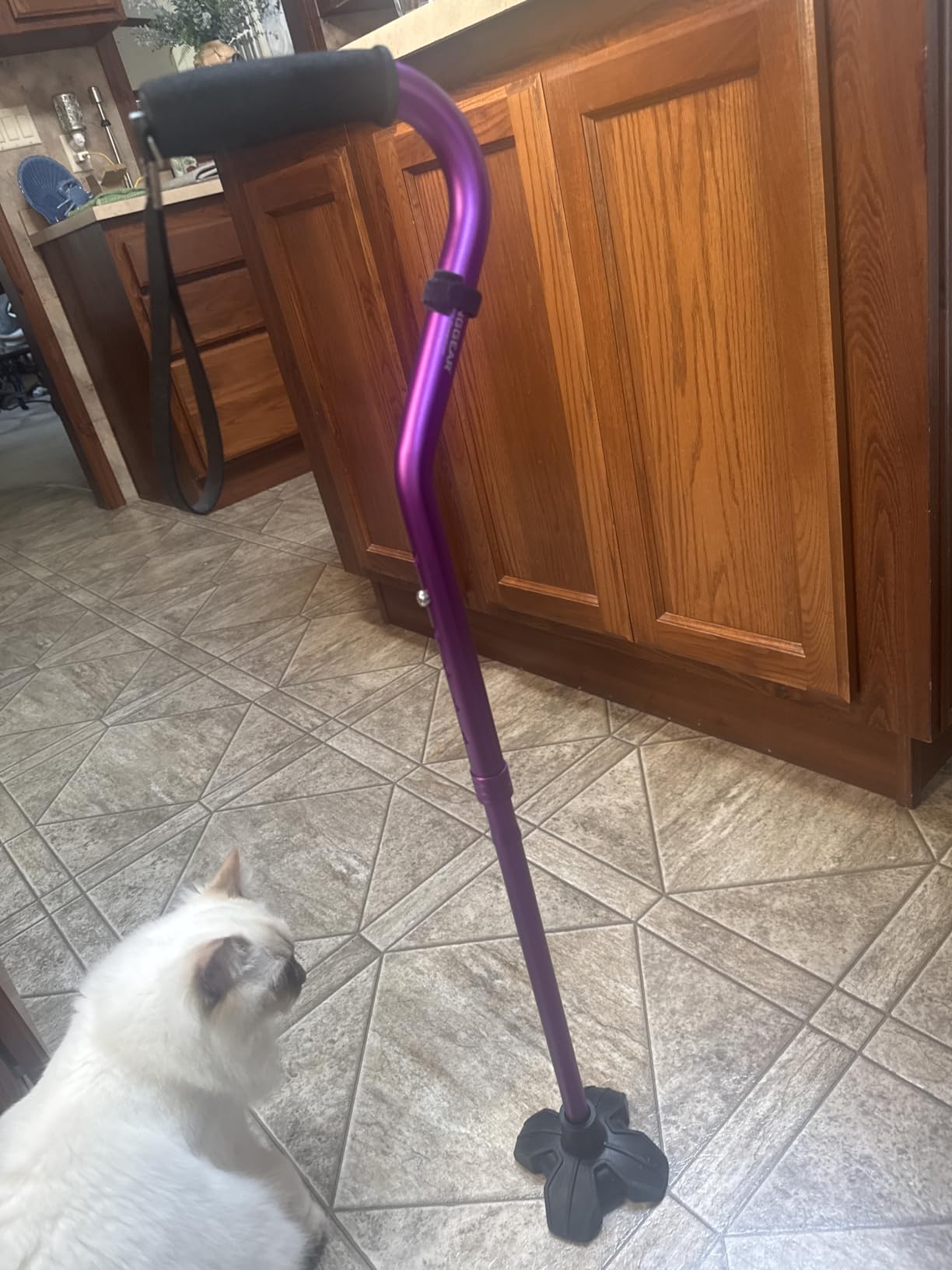
Indoors this is about as easy as a quad cane gets. On carpet and laminate the base is quiet and glides, the flared rubber tips resist sliding, and the fact that it stands up means you can park it beside the sofa, the car door or the bathroom toilet without thinking about it.
Outdoors on smooth pavement it behaves well. On grass, gravel and the kind of uneven sidewalk that forum readers complain about constantly, no quad cane in this list has an advantage, and this model’s small 4.3 inch base actually has less to snag than a wider one. Treat it as an indoor-first cane that handles flat outdoor surfaces competently.
Who should skip it
If you are taller than about six foot one, the 36 inch ceiling is a real problem. Buyers above that height consistently report that the cane arrives too short and cannot be adjusted to the height they need, and no amount of extra extension settings will fix a shaft that tops out.
If you are close to or above 300 pounds, look at the BeneCane later in this list instead, which is rated well beyond that. And if you want a cushioned grip with a broader base footprint rather than a compact fold, the NOVA model is the better match.
2. Hugo Adjustable Quad Cane – Widest Height Range and Either-Hand Base
Hugo Adjustable Quad Walking Cane, Rose, Adjustable Height
Anodized aluminum at 2 lbs
300 lb capacity
28 to 39 inch range
Rotatable K-shaped base
Pros
- Widest adjustment span here
- covering users from about five feet to six foot five
- Eleven discrete height settings rather than a few coarse steps
- K-shaped base rotates for right- or left-handed use
- Reflective wrist strap for low-light walking
- Flared rubber tips resist slipping
Cons
- Heavier at two pounds than most rivals
- Some owners report base wobble or missing parts
- Returns mean shipping back to the manufacturer
If height range is the thing that worries you, this is the model to look at first. The listed span runs from 28 to 39 inches with eleven precision settings, which covers roughly five feet to six foot five, and it does so on a shaft that does not fold. That is a deliberate trade: you give up portability and get a rigid frame that will not wobble at the hinge.
The K-shaped base is the structural reason it feels planted. It rotates so you can set up the cane for whichever hand you use, which matters if your stronger side changes, and it flares the four tips outward for a wider footprint than the compact foldable models. The shock-absorbing ergonomic handle takes the sting out of a bad step, and the reflective strap adds visibility on an early-morning walk.
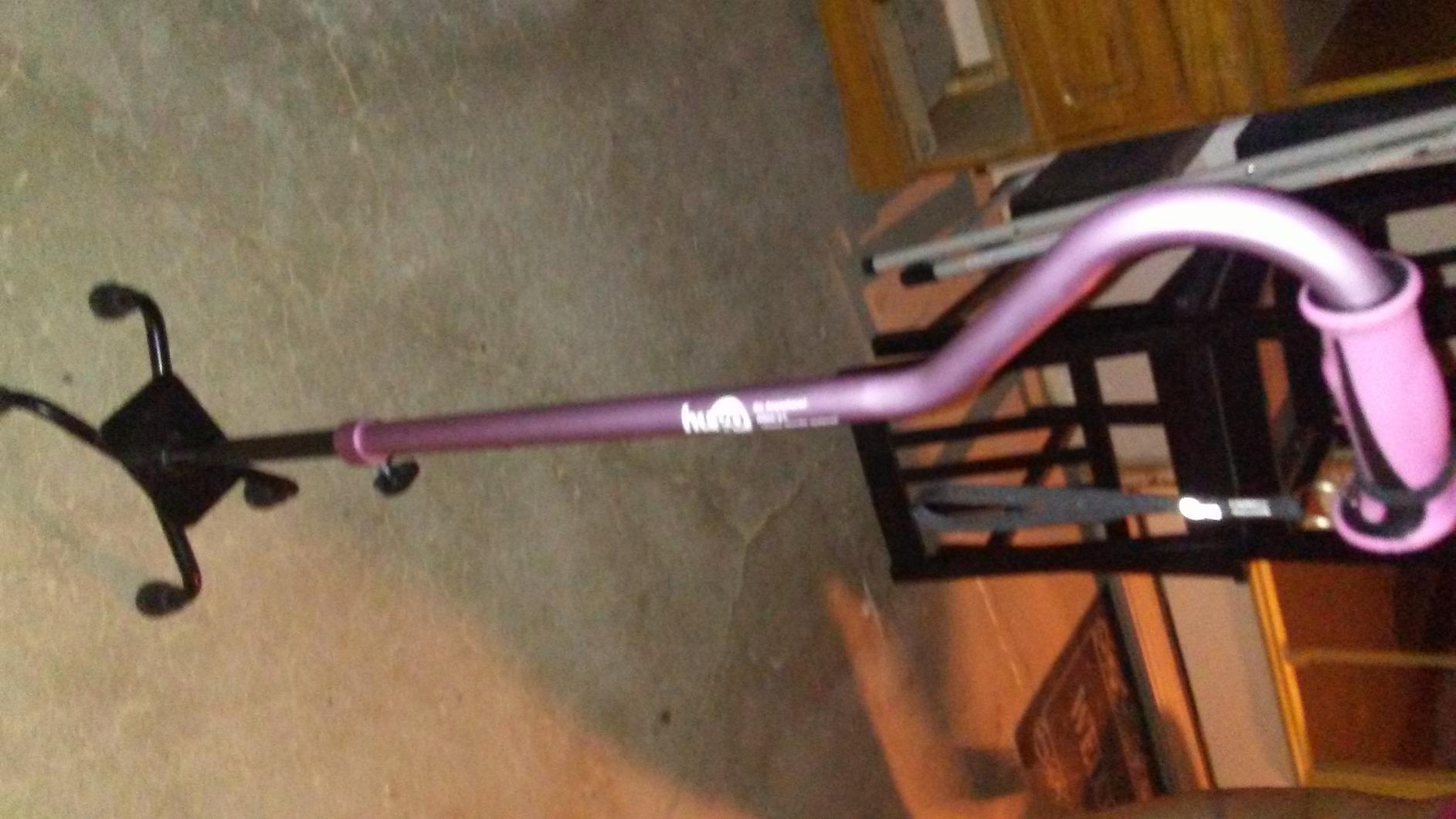
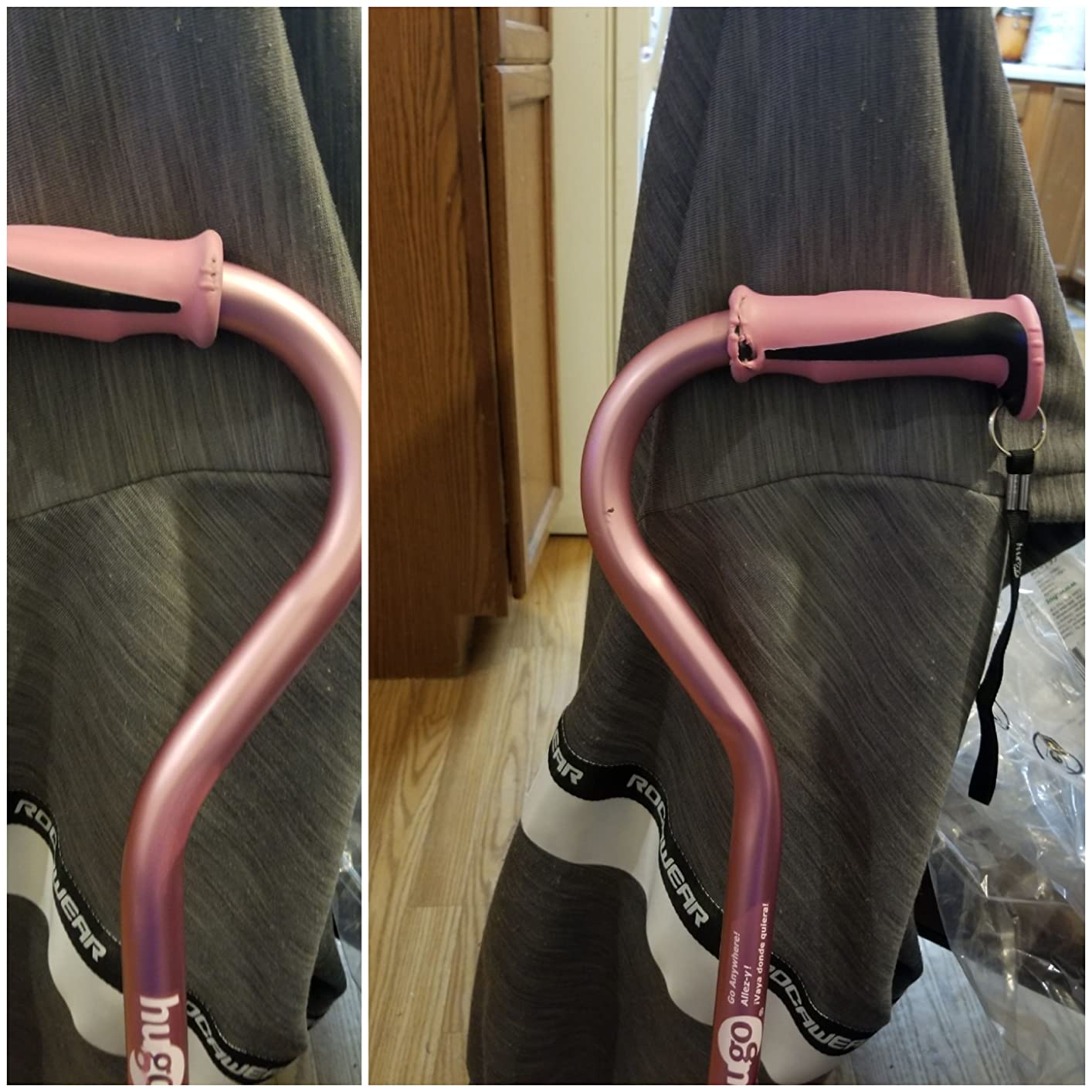
Buyer feedback over nearly nine thousand ratings points to stability first, then adjustability. The wide height span gets called out constantly as the reason people could finally get a cane that fit them rather than one they had to stoop over. The rose finish also shows up more than you would expect in reviews, since a cane that looks like it belongs in a living room gets used more willingly than a black one that reads as medical equipment.
The negatives are mostly about weight and quality control rather than function. At two pounds it sits at the heavy end of this list, which is noticeable over a long walk. A minority of owners report a base that does not sit perfectly flat or missing parts in the box, and returns require a trip back to the manufacturer rather than a local drop-off.
What the extra height range actually buys you
Almost nothing else in this roundup adjusts from below five feet to above six foot four. That matters most for a household sharing one cane, or for a senior whose height changed noticeably over a few years of recovery, because a cane that only reaches 36 inches forces you to hunch and a cane set too high loads the wrist and shoulder.
You pay for that range with heft and bulk. This is the least portable cane here, and if you need something that fits in a bag between walks, the foldable KINGGEAR or Rehand options make more sense.
Where it fits and where it does not
The flared tips and wide K-shaped base make this a strong pick for indoor floors, sidewalks and anywhere you want maximum contact area. It is a good match for someone whose main concern is balance rather than speed, because it will not roll away from you the way a single-point cane can.
The wide base is also the reason it is awkward on stairs and tight around furniture. If your days involve climbing stairs without a handrail or turning through narrow doorways, a smaller-base model gives you more room to maneuver.
3. NOVA Offset Quad Cane – Best Value and the Most Color Options
NOVA Offset Quad Cane for Seniors – Adjustable Walking Cane with Wrist Strap, Foam Handle, Anti-Rattle Lock – Lightweight Mobility Aid for Men and Women – Butterflies
Aluminum frame at 1.15 lbs
300 lb capacity
28 to 39 inch range
4.75 inch square base
Pros
- Largest base footprint in this roundup at 4.75 inch square
- Anti-rattle lock keeps the shaft quiet during use
- Offset design improves wrist alignment
- Thirteen pattern and color options from butterflies to walnut grain
- Limited lifetime warranty
Cons
- Base can squeak on some floor surfaces
- Foam handle may compress with long-term use
This is the pick if base area is what you care about. The base measures 4.75 inches square, the widest footprint in the group, and it stands on its own without help. For someone whose balance is genuinely uncertain, more contact area is worth more than most of the clever features competing models add.
The height span of 28 to 39 inches matches the widest range we found, and the anti-rattle lock is a small feature that owners notice every single day. A cane that knocks against itself while you walk sounds broken even when it is not, and this shaft stays quiet. At 1.15 pounds it is light enough for long outings without feeling flimsy.
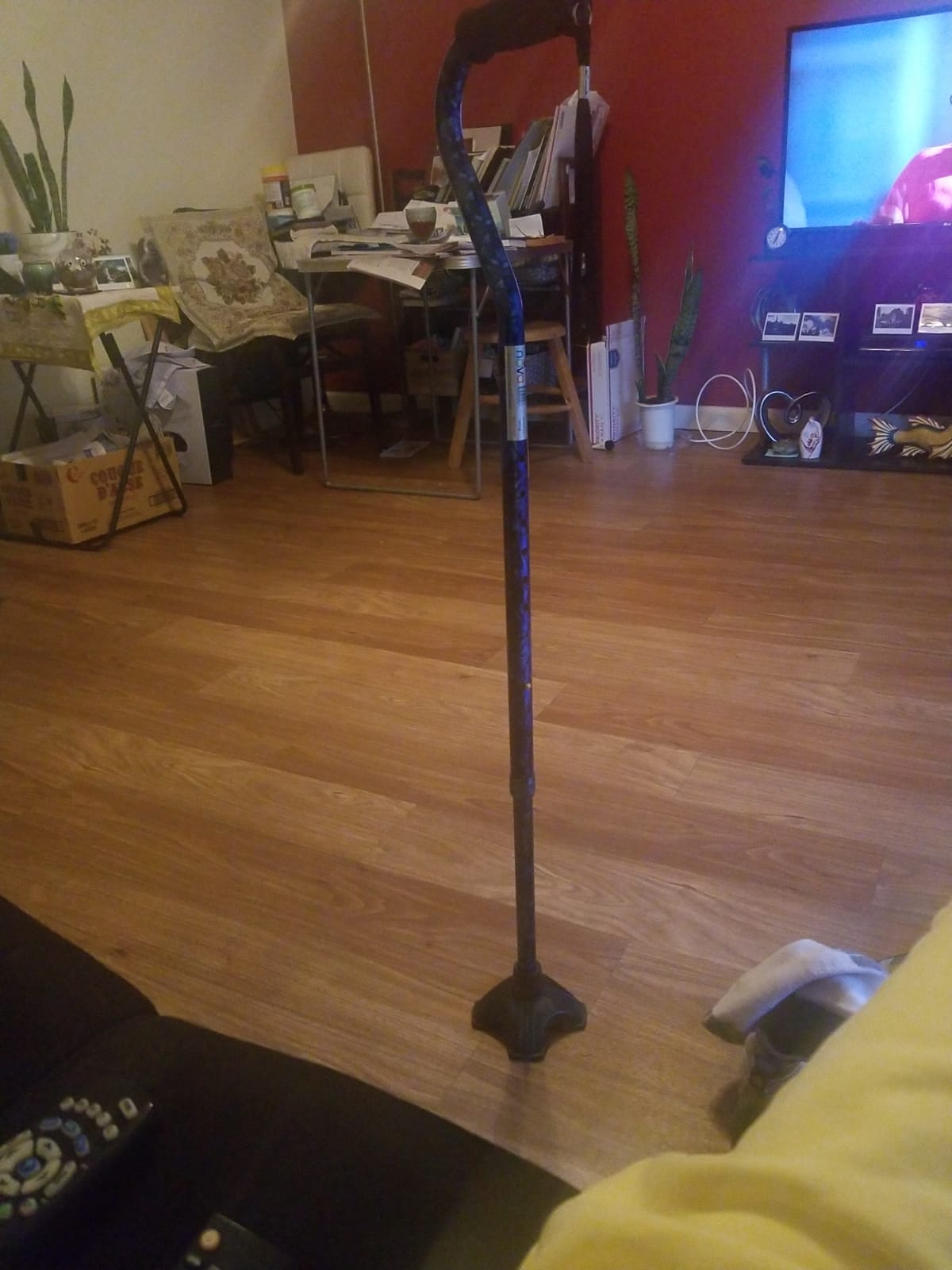
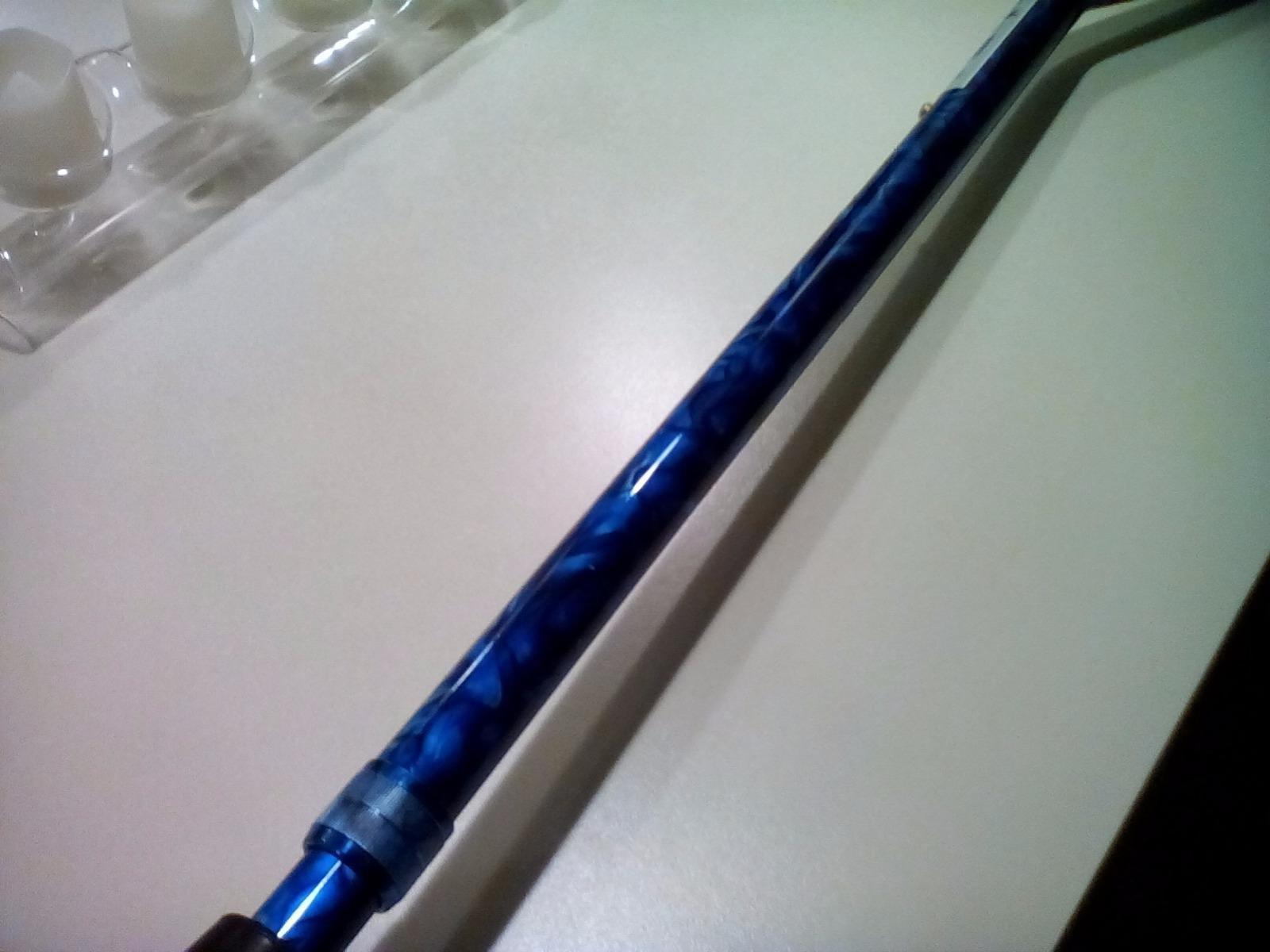
Then there are the patterns. Thirteen options, from butterflies and peacock prints to blue porcelain and mahogany, and that is not a gimmick here. Several reviewers describe a family member who refused a plain cane for months and then accepted this one because it looked like something they had chosen. For a device people feel self-conscious about, that matters.
The complaints are mild. Some owners report a squeak from the base on smooth floors, and others note that the foam handle compresses after a year or two of heavy daily use, which softens the cushion. Both are worn-part issues rather than defects.
Why the offset handle and anti-rattle lock matter
An offset handle shifts the shaft forward so the load runs down the wrist crease rather than angling across it. That is the geometry a physical therapist wants when the complaint is joint pain, and it is why offset designs dominate this category even though they cost a little more to build.
The anti-rattle lock works the same way as a good twist lock on any adjustable aid: once you set your height, it stays there. Buyers who have used push-button-only canes report being fed up with a cane that creeps shorter every time they lean on it.
Who should consider a different pick
If you need a cane that folds for travel, this one does not. If you weigh more than 300 pounds, the capacity ceiling is real and the BeneCane handles a much higher limit. And if you want a cushioned hand rest that resists compressing, the silicone-style grips on the Vive model hold their shape longer.
4. Vive Quad Cane – Best Patented Grip for Hand and Wrist Pain
Vive Quad Cane – 4 Prong Walking Cane for Men & Women – Self Standing
Anodized aluminum at 1.81 lbs
250 lb capacity
28 to 37 inch range
Convertible base
Pros
- Patented grip shape reduces hand fatigue on long walks
- Self-standing base with non-slip rubber tips
- Converts for right- or left-handed use
- Brass pin and locking knob hold height steady
- Backed by a lifetime guarantee
Cons
- 250 lb capacity is the lowest in this roundup
- Some reports of rattling at the joints
- Rubber tips can pull off over time
- Return shipping charges apply
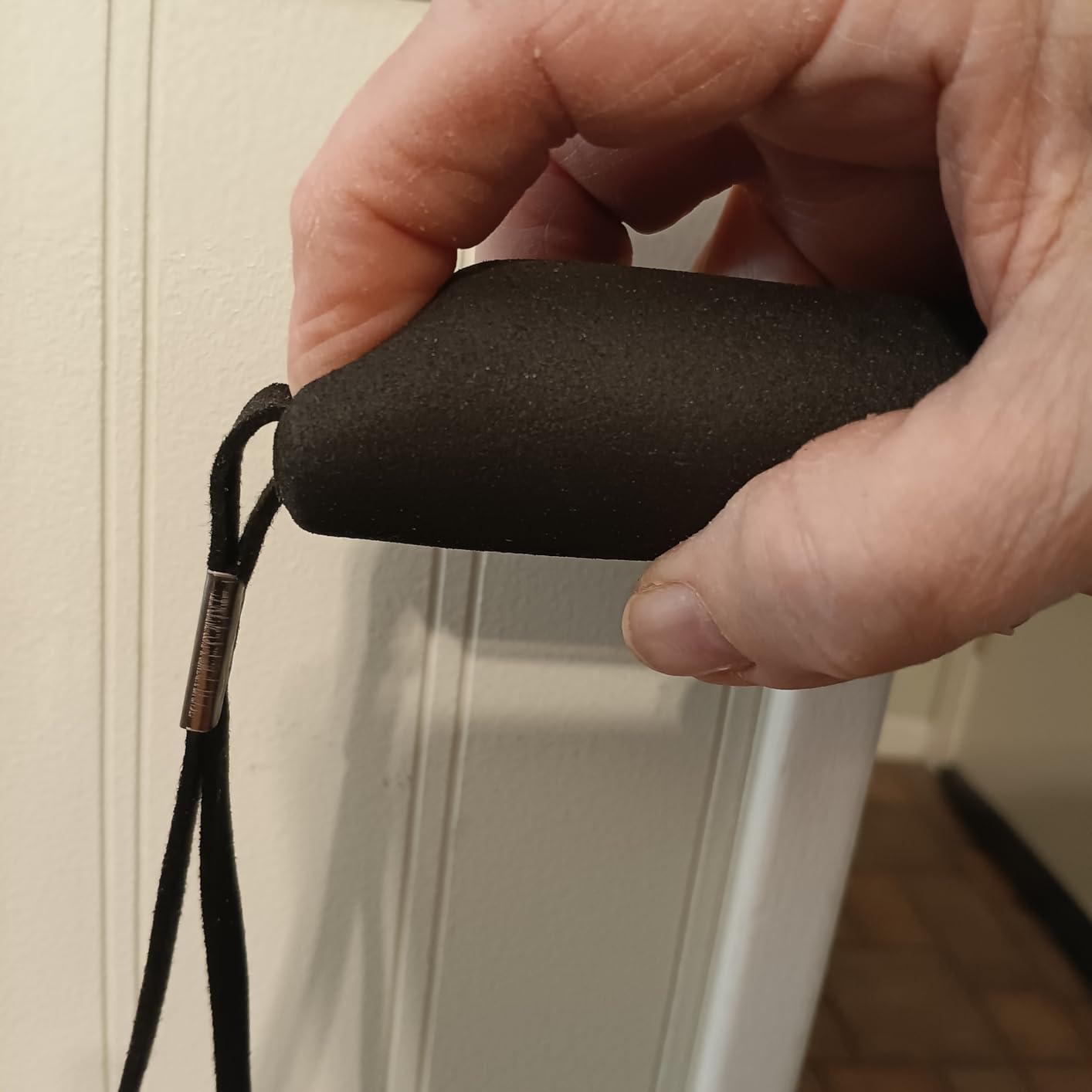
This one is chosen for the hand. The patented ergonomic grip is the most distinctive part of the design, shaped to spread the load across the palm instead of pinching at the fingers, and it comes with a wrist strap so the cane stays with you when you let go near a table edge. Reviews from people with arthritis consistently single the grip out as the reason they kept using the cane.
The build is solid where it counts. A brass pin and a locking knob work together at the adjustment point, which is a more secure arrangement than the single push-button on some rivals, and the anodized aluminum resists corrosion. The four-pronged base converts for either hand, so you can switch sides if one wrist gets sore.
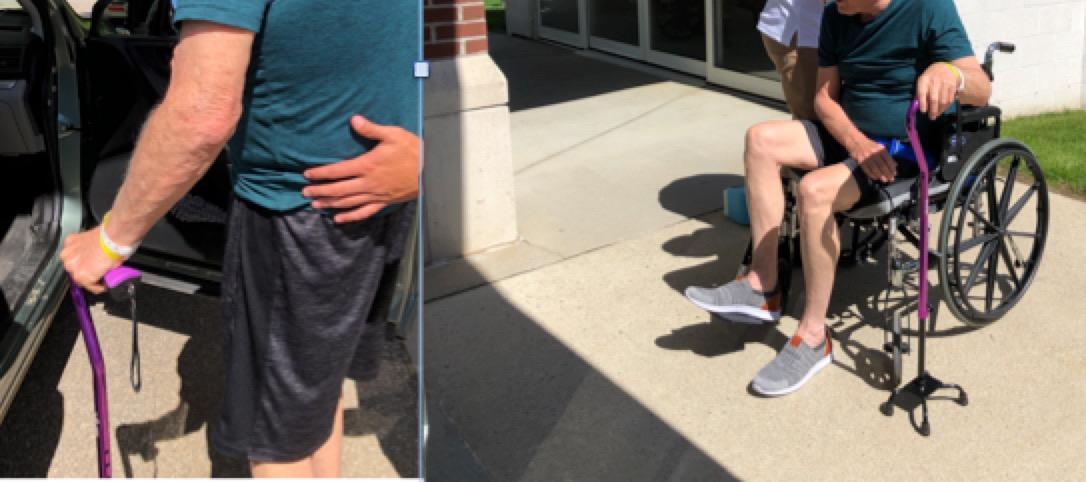
At 1.81 pounds it is not the lightest frame here, and the 28 to 37 inch range tops out a couple of inches below the widest models. What you get in exchange is a canopy of owner ratings, with thousands of reviews backing the grip comfort claim and a lifetime guarantee attached.
The trade-off most likely to matter to you is capacity. A 250 pound rating is the lowest in this roundup, and the other seven reach at least 300. If you are anywhere near that limit, choose a heavier-rated model rather than pushing this one.
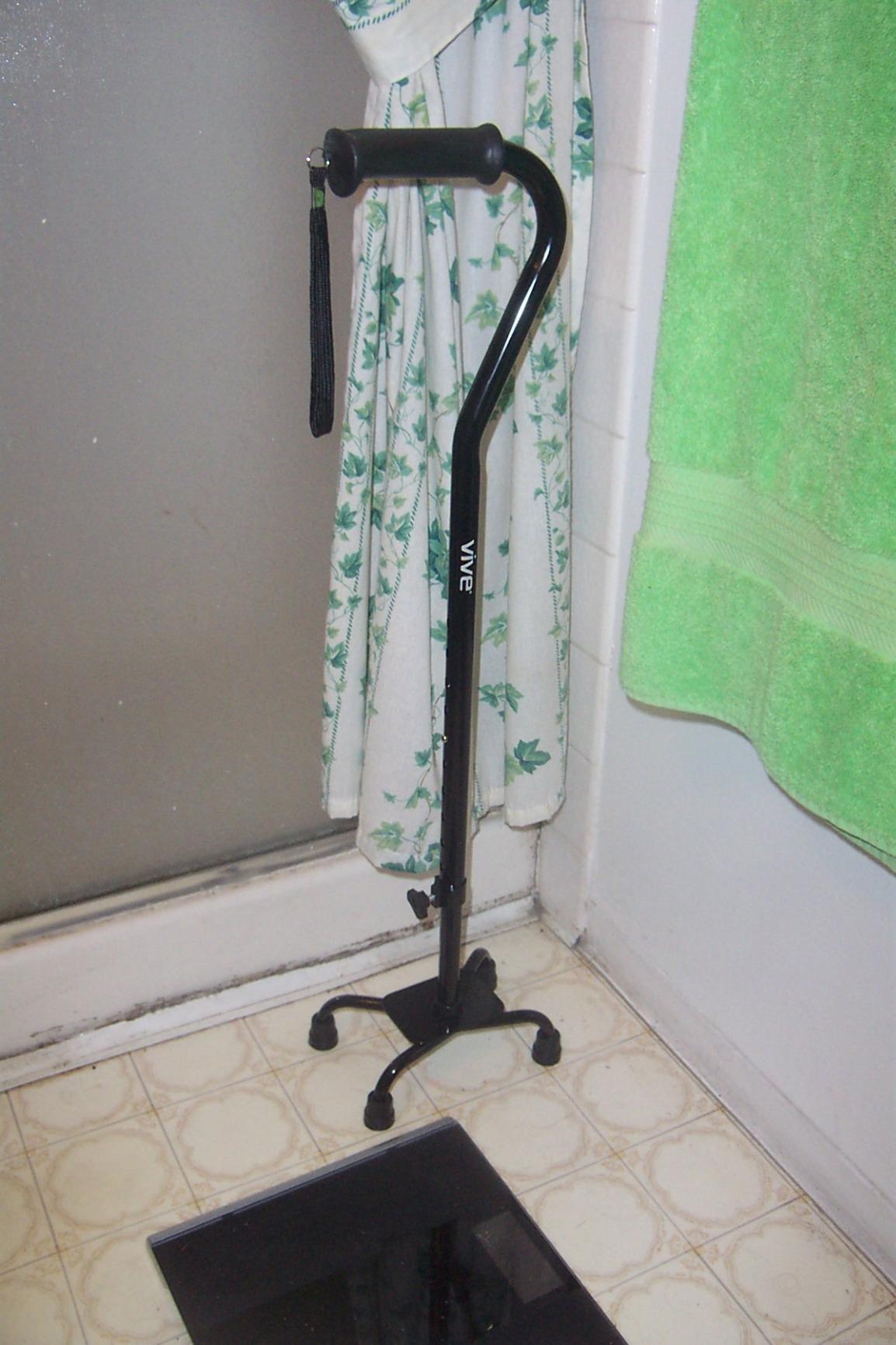
Is the patented grip worth paying more for
If your hands hurt after ten minutes of walking, yes. The grip is wider and more contoured than a straight foam sleeve, which reduces the grip force required to hold the cane through a stride. That is a measurable difference for anyone with hand or wrist arthritis, and it is why this model attracts a specific audience rather than everyone.
If your hands are fine, the premium buys comfort you will not notice, and one of the other picks gives you more capacity or a fold for the same money.
Things to check before you order
Confirm the 250 pound rating clears your body weight with margin. Measure from the floor to your wrist crease before ordering, because this model does not extend past 37 inches and taller users run out of room. And read the return terms, since return shipping charges apply here.
5. BeneCane Quad Cane – Best for Users Over 300 Pounds
BeneCane Quad Cane Adjustable Walking Cane with Offset Soft Cushioned Handle for Men & Women Lightweight Comfortable with 4-Pronged feet for Extra Stability(red)
Aluminum at 1.5 lbs
380 lb capacity
29 to 38 inch range
Offset foam grip
Pros
- 380 lb rating
- the highest capacity in this roundup
- Push button plus screw-coupled joint resists accidental height change
- Offset cushioned foam grip with wrist strap
- Shock-absorbing tip with extended outer edge
- Two spare rubber tips included in the box
Cons
- Base sits uneven on some units
- Base width is narrower than the NOVA model
- One year warranty rather than a lifetime guarantee
Capacity is the entire reason this model is here. A 380 pound weight limit is the highest in the group by a wide margin, and it is the number to look at first if you or the person you are shopping for is over 300 pounds. Every other pick on this list except the Rehand, which does not publish a limit, tops out at 300.
The engineering supports the rating rather than just claiming it. The shaft uses a 0.055 inch wall thickness, a push button adjustment reinforced by a screw-coupled joint, and a shock-absorbing tip with an extended outer edge that keeps the cane from digging into soft ground. At 1.5 pounds it stays reasonable for a model built to carry more.
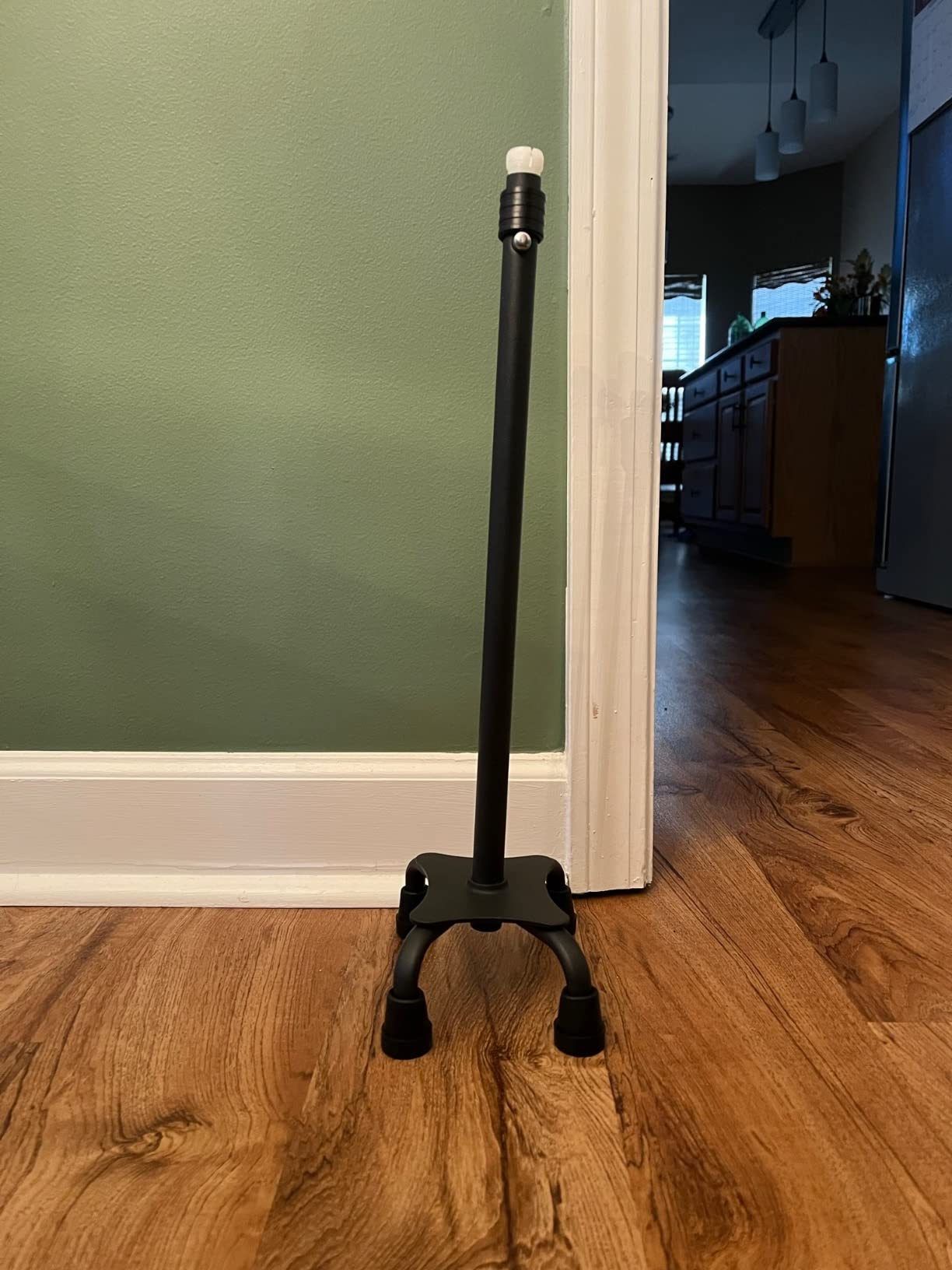
Two replacement tips in the box is a nice practical touch, since rubber tips wear out from the outside in and are the part of any quad cane most likely to need replacing first. Walkers and long-term cane users in review threads mention swapping tips constantly, so having spares on day one saves a second order.
The weaknesses are honest but modest. Some owners report a base that does not sit level on their unit, which is a quality-control issue rather than a design flaw. The base is also narrower than the NOVA model, so it gives up a little footprint area in exchange for the load rating.
Do you actually need a bariatric quad cane
If your body weight is close to 300 pounds, a cane rated at exactly 300 leaves no margin, and a cane that flexes under load feels unstable in a way that erodes confidence. This model removes that problem entirely, which is the entire decision for most people who land here.
If you are well under 300 pounds, you gain little from the heavier shaft and can pick a lighter foldable model instead. There is no safety benefit to over-buying capacity.
What to watch in the first week
Set the height sitting down, then check the base sits flat on a level floor with all four tips touching. Because the base is narrower than some rivals, it is worth testing on carpet as well as tile, where a small gap under one tip is easier to miss.
6. KingPavonini Dual Handle Quad Cane – Best for Getting Out of a Chair
KingPavonini Adjustable Walking Cane for Men & Women, Stable 4-Prong Base
Aluminum alloy at 2 lbs
300 lb capacity
32 to 37.5 inch range
Dual handle, foldable
Pros
- Second handle gives you something to push down on when rising from a chair
- Twist lock and screw-coupled joint hold height steady
- Deliberately smaller base reduces tripping
- Extra-thick 1.2 mm shaft wall
- Folds for storage and travel
Cons
- Shortest minimum height at 32 inches excludes shorter users
- Lower handle wobbles when used for standing
- Folding joint can loosen over time
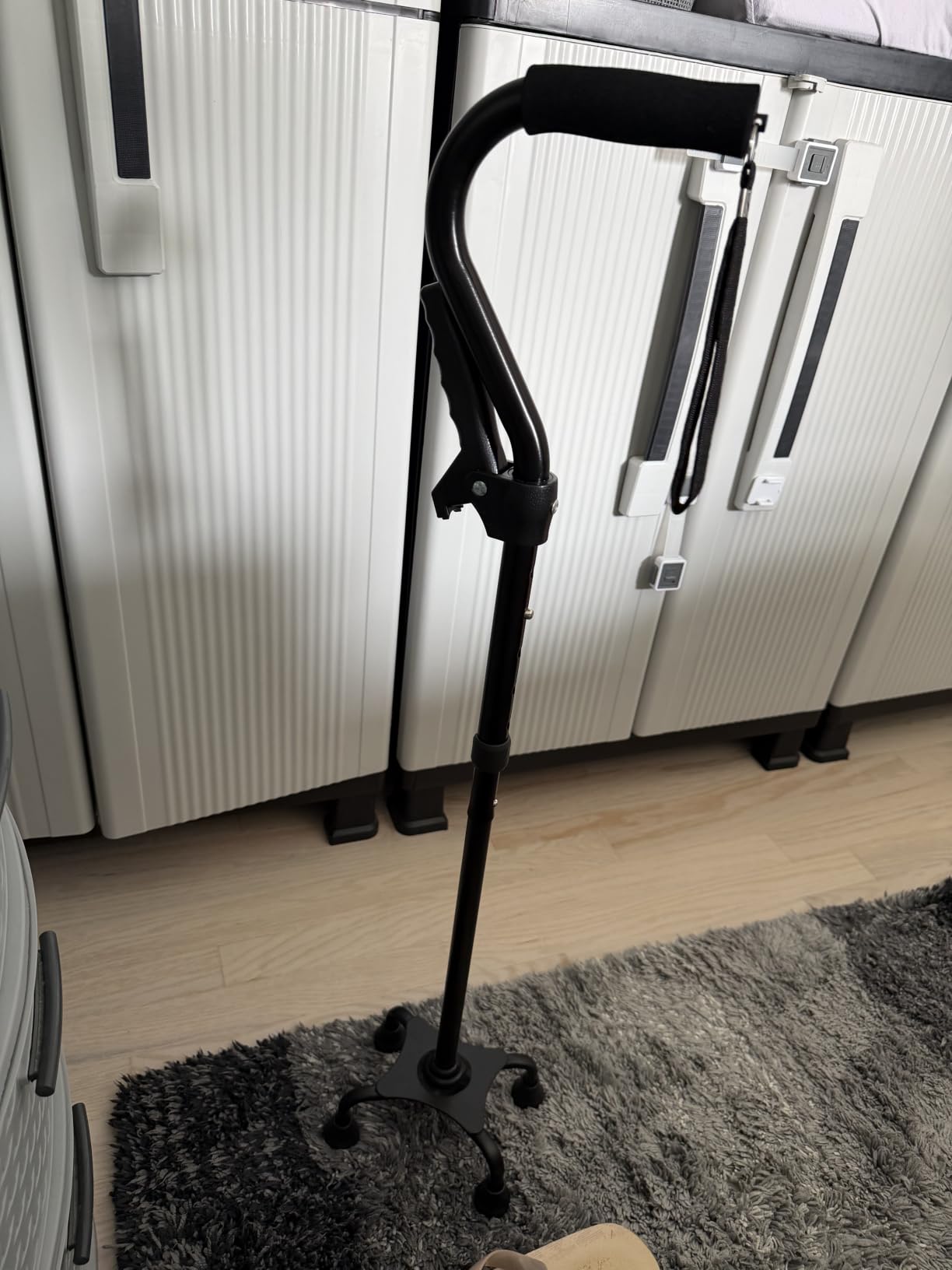
This is the only cane in the roundup built around a specific daily problem: getting out of a chair. The upper foam-padded offset handle is the normal grip, and the second handle sits lower on the shaft so you have something to push down on during the stand-up phase, which is often the hardest and most dangerous part of the movement.
It also folds, and the shaft uses an extra-thick 1.2 mm wall for a model that will be loaded from the side as well as from above. The smaller base is deliberate, and the design goal is stated plainly in the product data: less base area means fewer places to catch a toe.
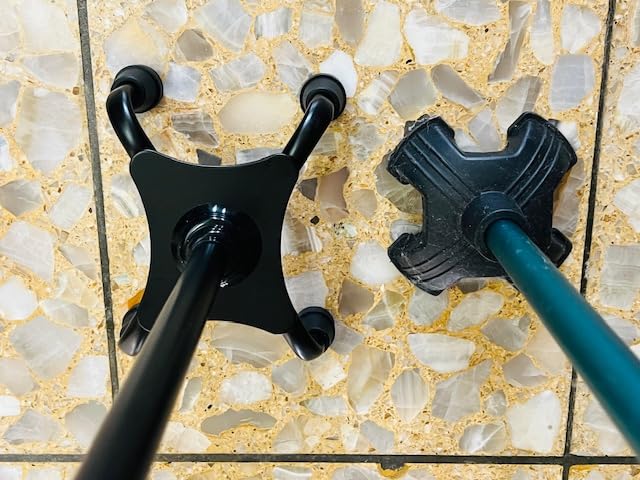
The compromise is the height range. Adjustments run from 32 to 37.5 inches, the highest floor of any cane here, so anyone under roughly five foot four is excluded outright. That is a meaningful cut of the buying audience for a feature most people will never use.
The second handle is also the part that draws the most criticism. Owners who rely on it for standing report wobble at the lower joint, which undercuts the exact moment when you most want solid support. Treat it as helpful for a controlled push rather than as something to lever your full weight against.
Who the second handle really helps
It helps most for knee and hip replacement recovery, where the sit-to-stand motion is the therapist-prescribed exercise and getting through it without using the armrests is the goal. Caregivers helping someone up from a dining chair also find it easier to steady. If you already have a firm chair to push against, you can skip this feature entirely.
Where the smaller base cuts both ways
A smaller footprint reduces the trip hazard, and that is a real benefit in narrow hallways and around furniture. You give up some stability, so this is a poorer match for someone with genuinely unsteady balance and a better match for someone who mostly needs help with one specific movement.
7. Rehand Quad Cane – Lightest Frame and Shortest Folded Length
Rehand Quad Canes, Walking Cane for Men & Women with Ergonomic Handle Ever and Graceful 4-Pronged Base for Extra Stability, Foldable, Adjustable Walking Sticks for Right or Left Handed
Aluminum at 1 lb
Folds to 16 inches
31 to 38 inch range
Molded base
Pros
- Lightest frame in this roundup at one pound
- Folds to 16 inches for car boots and overhead bins
- Molded base rather than a welded one resists flexing
- Larger rubber foot pads increase ground contact
- Ergonomic dual-material handle
- Converts for either hand
Cons
- No published weight capacity
- Collapsible joint can work loose over time
- Bolt sizing and base alignment issues reported
The light one. At one pound this is the smallest load most owners will notice in their hand, and it folds to 16 inches, which is the shortest folded length in the group and the difference between fitting into an overhead bin and not. For anyone who travels, walks far, or simply does not want a heavy object hanging from one arm all day, that is a real advantage.
The molded base is worth a closer look. Instead of a welded frame, the base is molded as one piece and uses larger rubber foot pads than most rivals, which spreads contact over more rubber. The handle is a dual-material design, a hard polypropylene core for support under load with a soft touch layer over it for comfort.
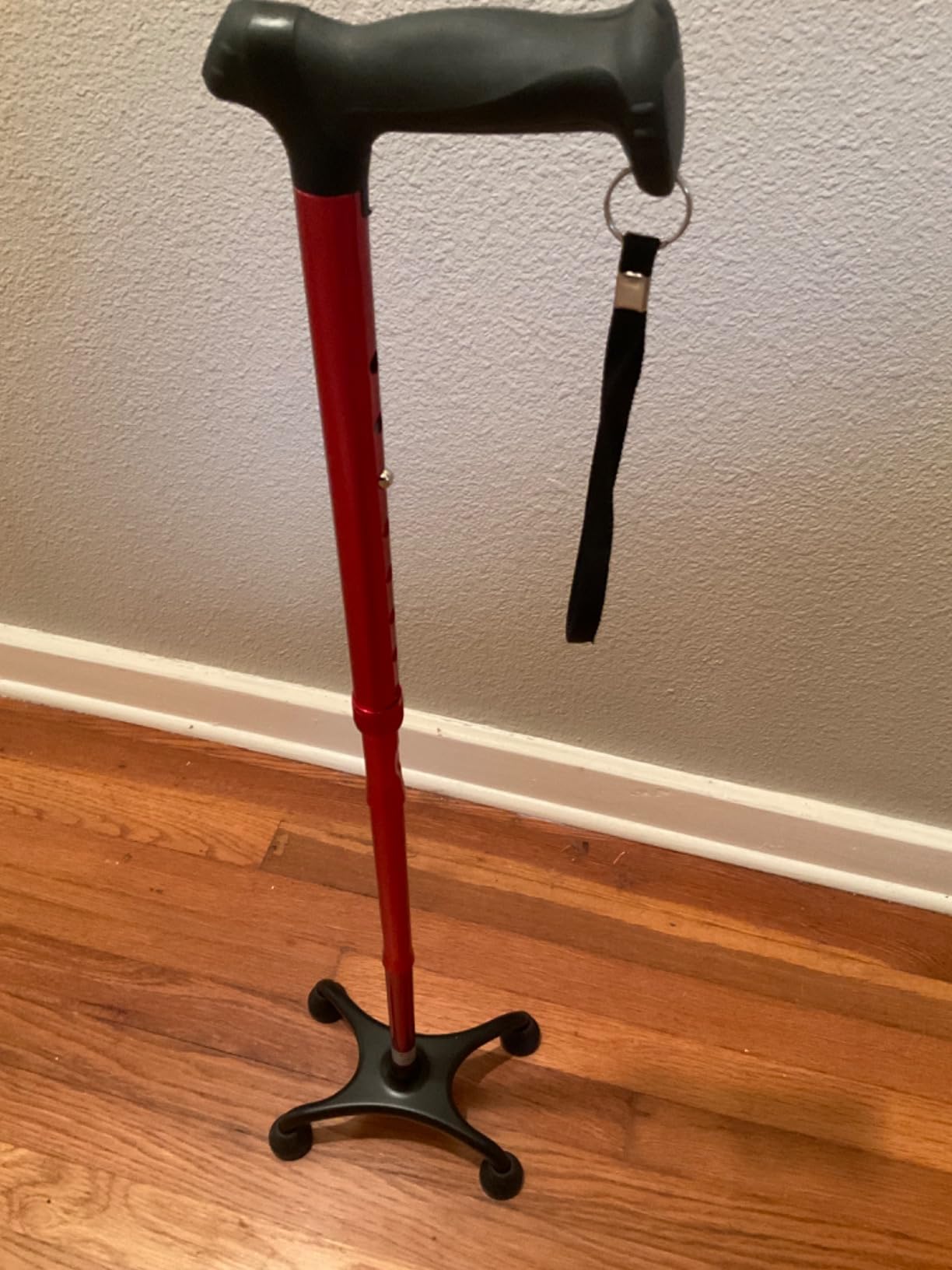
Eight height settings from 31 to 38 inches gives more adjustment granularity than most of the foldable options here. The frame also converts for either hand, so you are not locked into one side.
The reservations are real. This listing does not publish a weight capacity, so you are buying on trust rather than on a stated number. Some owners report the collapsible joint loosening during use, and there are reports of bolt sizing problems and a foot that cocks to one angle. The hinge concept is sound; assembly quality varies from cane to cane.
Is the missing weight capacity a deal breaker
It depends on who you are. If you are well within a typical adult range and you mainly need something light for travel, most buyers find it performs without complaint. If you are near or above 300 pounds, choose a model with a published limit, because the absence of a number leaves no basis for a decision.
What the molded base changes in practice
A molded base has no welded seam to flex, so it stays rigid under load in a way that some welded designs do not, and owners frequently comment that it feels planted. The larger foot pads also sink slightly into carpet instead of rocking, which is where lighter four-pronged bases tend to wobble.
8. GPTCAMP Quad Base Cane – Straightforward Budget Pick
GPTCAMP Walking Cane Quad Base Self Standing 300lbs for Seniors
Aviation aluminum at 1.1 lbs
300 lb capacity
31 to 36 inch range
Folds to 17.32 inches
Pros
- Least expensive pick in this roundup
- Lightweight aviation aluminum at 1.1 lbs
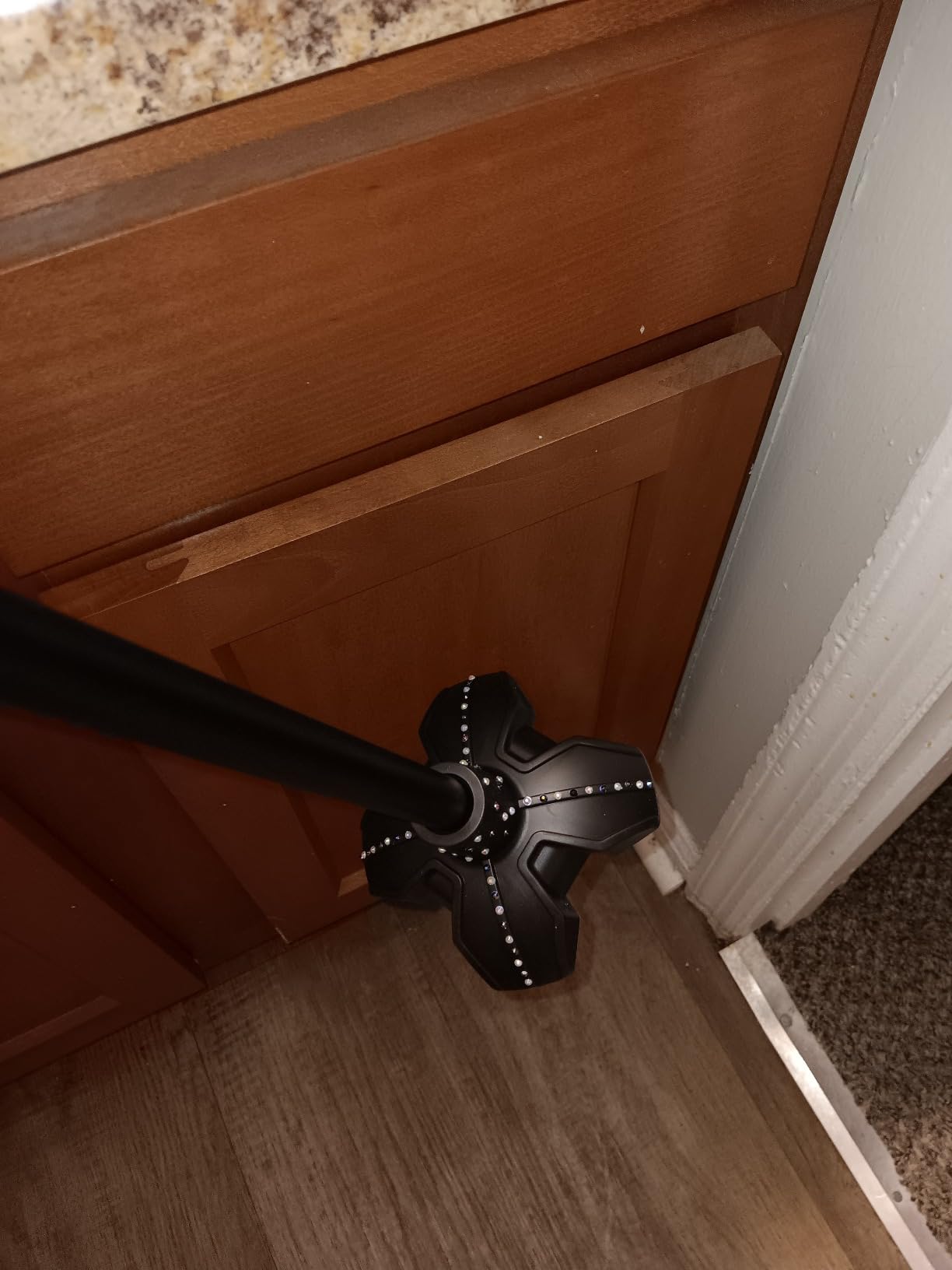
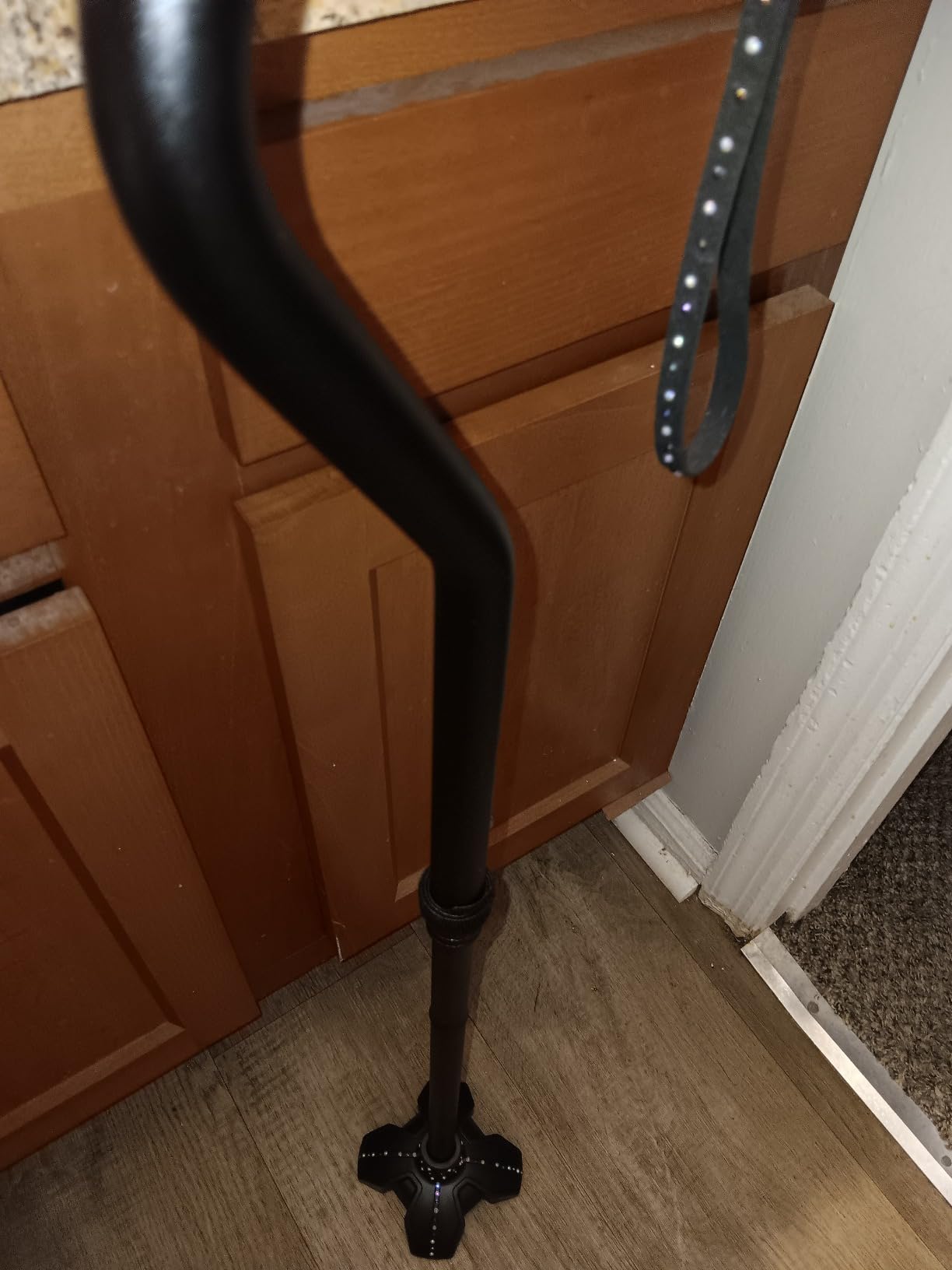
- Self-standing silent base with industrial rubber tips
- Folds to 17.32 inches with a hook-and-loop strap
- Wrist strap included in the box
Cons
- Maximum height of 36 inches suits shorter users only
- One year warranty
- Newer brand with a shorter review history than rivals
If you want a capable quad cane without paying for premium branding, this is the straightforward answer. The specification sheet reads like the KINGGEAR model near the top of this list: aviation aluminum at 1.1 pounds, a 300 pound rating, six height settings from 31 to 36 inches, and a self-standing 4.3 inch base with quiet industrial rubber tips.
The folding length of 17.32 inches is longer than the Rehand but still fits most car trunks and closets, and a hook-and-loop strap keeps it bundled. A wrist strap is included, which is more than several rivals bother with. The offset EVA foam handle matches the shape of the higher-rated models.
Owner ratings sit high, which tells you the design is sound rather than that the marketing is better. The main difference from the similarly specced KINGGEAR is the warranty, one year here against a lifetime guarantee there, and the review history, which is shorter simply because the product is newer.
The real constraint is the 36 inch maximum. Anyone taller will be disappointed, and given that height range is the number one source of returns in this category, it is worth measuring before you order rather than after.
How it stacks up against the similar KINGGEAR design
The two are close enough in specifications that you can compare them on three points: warranty length, review history and cost. If the money is the deciding factor, the design here does the same job for less. If you want the longer warranty and the much larger body of owner feedback, the KINGGEAR is the safer buy.
Best uses for a budget cane
A secondary cane for a second floor, a cane for a visitor who stays a while, or a first quad cane for someone who expects to graduate to something else after a few weeks of post-surgery recovery. Buy it for those cases rather than as the sole aid for a long-term, high-stability need.
True Quad vs. Quad-Pod: Which Base Style Do You Need?
A true quad cane has four separate prongs bolted or molded into a wide platform, which is what every pick on this list uses. A quad-pod cane uses a pivoting outer ring that rocks slightly and grips as you move. For a quad cane, the true four-pronged base is the more stable option, and stability is usually the reason a senior needs one in the first place.
The pivoting design trades a little stability for a smoother stride and better self-standing behavior, and some owners report that the outer ring slides on smooth linoleum, which is the specific complaint that turns people off it. If your main surface is hard flooring, a fixed quad base removes the variable.
Where the real decision lies is small base versus large base. A compact base near 4.3 inches square, like the KINGGEAR and GPTCAMP models, is lighter and easier to move past furniture. A wide base near 4.75 inches square, like the NOVA, gives more contact area for anyone whose balance is the main concern. Base width and weight capacity are two different things, so check both.
How to Set Your Quad Cane to the Right Height
Get the height right before the first step, because almost every cane that gets returned was returned for exactly this reason. Sit in a chair with both feet flat on the floor, measure from the floor to the wrist crease of your stronger hand, and that measurement is the height your cane handle should sit at.
Three checks confirm you are close. Your elbow should stay bent roughly 15 to 30 degrees when you stand holding the handle. Your shoulder should be relaxed, not shrugged up toward your ear. And your wrist should be straight rather than cocked back, which is what an offset handle is designed to prevent.
Make sure the chosen setting is bracketed, not at the limit. If you land at the top or bottom of the adjustment range, you have outgrown the cane and you will need a model with a longer span. This is the single most common fitment mistake, and it is why the 28 to 39 inch models below cover more people in one product.
Have someone else watch while you set it the first time. It is genuinely hard to judge whether your elbow is bent enough when you are looking down at it, and a fifteen-second check by another person saves weeks of walking with the wrong height.
Quad Cane vs. HurryCane vs. Single-Point Cane
If your main problem is balance, a quad cane wins. It has four contact points instead of one, it will not slide out from under you mid-step, and it stands up on its own. That is why it is the recommendation for stroke recovery, arthritis and post-surgical weakness.
A HurryCane-type cane uses a pivoting base that grips the ground while it is moving and rolls flat while you are standing still. It is a good choice when your balance is fine and your real issue is slipping on wet or icy pavement, but it does not stand upright by itself and it offers a much smaller footprint.
A single-point cane is lighter, cheaper, easier to carry and fits in places a quad base will not go. It also offers the least stability of the three. For a person with real balance impairment, a single-point cane can increase fall risk rather than reduce it, which is the main reason we did not include any in this roundup.
Where to Buy: Medical Supply Store vs. Online Marketplace
A medical supply provider can measure you, watch you walk, and hand you a cane already fitted to your height. They can also tell you whether the stability you are missing is a strength problem or a balance problem, which changes the recommendation more than any spec on this page. For a first cane after a fall or a surgery, that conversation is worth the trip.
Buying online wins on selection and on the specific details buyers actually want to compare, like whether a base is 4.3 or 4.75 inches. Marketplace listings also carry thousands of owner reviews, and reading them surfaces problems like squeaking bases or uneven tips that product photography hides completely.
Check whether your health spending account or insurance plan covers durable medical equipment before you pay out of pocket, and ask the supplier directly. Returns are easier when a local provider handles them than when a manufacturer requires a shipment back, so read the return terms on any marketplace listing before you order rather than after a problem.
When a Quad Cane Is No Longer Enough
Signs it is time to move up usually show up as physical, not bureaucratic. If you are putting both hands on furniture and crossing a room without the cane, if you cannot get up from a chair without help, or if you need both forearms for balance, a single-point support is no longer doing enough.
A rollator with brakes and a seat is the usual next step for someone who can walk but cannot keep walking. A standard walker adds two more contact points and lets you push rather than lean, which many people find steadier. A transport wheelchair is the right answer when distance is the limiting factor rather than balance.
None of that is a failure. Quad canes are frequently a stage during recovery rather than a permanent destination, and the honest framing is that a cane helps most when it matches the actual limitation. Setting up that conversation with a physical therapist tends to produce a better outcome than any product list, including this one.
Frequently Asked Questions
What’s one drawback of using a quad cane?
The main drawback is the trip hazard created by the wide base. A quad cane weighs more than a single-point cane and its four feet cover a wider area, so it can catch on furniture legs, door thresholds and the edges of rugs. It is also slower to move and much harder to manage on stairs, where a handrail is a better support. Reviewers also note the extra weight on the wrist and arm.
What is the most stable walking cane for seniors?
A true four-pronged quad cane with a wide base offers the most stability, and among these picks the NOVA model has the widest base at about 4.75 inches square. Stability is a trade against weight, walking speed and stair usability, so the most stable cane is not automatically the most practical one. Bariatric models rated to 380 pounds add capacity for heavier users.
Which is better for seniors, a quad cane or a hurry cane?
A quad cane is wider, heavier and stands up on its own, which makes it the better choice when balance is the concern. A hurry cane uses a pivoting base that grips the ground while moving and rolls flat while standing still, so it suits users whose main problem is slipping rather than balance. Most seniors who need weight-bearing support should choose the quad cane.
What is the best cane according to Consumer Reports?
Consumer Reports does not publish a ranked list of quad canes specifically, so there is no single nameplate answer to point to. We ranked the picks here on base stability and self-standing ability, published weight capacity, height adjustment range, grip comfort and the durability of the locking mechanism. Those five criteria are what separate a cane that stays planted from one that wobbles.
How do I know what height my quad cane should be?
Sit in a chair with both feet flat on the floor and measure from the floor to the wrist crease of your stronger hand. That is your handle height. Standing while holding it, your elbow should stay bent about 15 to 30 degrees and your shoulder relaxed. Pick a model whose adjustment range brackets that number rather than ending at it.
Conclusion: Our Picks for the Best Quad Canes for Seniors
The KINGGEAR self-standing foldable cane is our first choice for most people, because it stands up on its own, folds small enough to travel with, carries a 300 pound rating and has the largest body of owner feedback in the category. If you need a wider height range or a shaft that does not fold, the Hugo model covers more users than anything else here. If your weight is above 300 pounds, the BeneCane’s 380 pound rating is the reason to buy it.
Use the button on each pick to see the current listing and full specifications, and take five minutes to measure your correct height before you order. That one step prevents the fitment problem behind most returns.