

Quick answer: quad canes and multi-tip canes are the best canes for balance, because their wide, multi-prong base widens your base of support and lets the cane stand on its own. A single-point cane gives you one contact point; a quad gives you four.
That is the whole decision in one sentence, and the rest of this roundup is the detail behind it. We spent weeks comparing ten canes built for people who feel unsteady: folding single-point designs, self-standing quad bases, an offset quad with a wider height range, a compact quadpod, and a forearm-cradle cane built for heavier users.
What we kept coming back to is that balance is not one problem. It is a wobble on wet pavement, a slow fade of feeling in the feet, a week of dizziness after a hospital stay, or a hip that has just been replaced. Those four situations want four different canes, and most roundups flatten them into a single list ordered by how many stars a product has.
So this guide is built around the balance problem first and the product second. We list the cane types ranked by stability, explain how to set the height so you are not loading your wrist, and are honest about the drawbacks of quad canes, because that is the question buyers ask us most and almost nobody answers it properly.
A note before you read on: we are not clinicians. If you have fallen recently, feel dizzy at rest, or have been diagnosed with Parkinson’s, dysautonomia or neuropathy, talk to a doctor or physical therapist before buying any walking aid. A cane is a support tool, not a diagnosis. For readers who want to work on the underlying stability rather than borrow it, our guides to balance trainers and balance cushions cover the strength side of the equation.
Table of Contents
Top 3 Best Canes for Balance Right Now (October 2026)

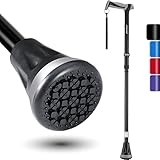
HurryCane Freedom Edition
- WhisperFlex pivoting three-point base
- Folds to 13.7 inches
- 30.5-37.5 inch height range

KINGGEAR Self Standing Quad
- 4.3 inch self-standing quad base
- 31-36 inch range
- 300 lb capacity
Best Canes for Balance in 2026 at a Glance
Every cane below is in the order we would hand them out. The first is the one we reach for most often; the last is the lightest thing in the group and still a legitimate balance aid.
| Product | Specifications | Action |
|---|---|---|
| HurryCane Freedom Edition Folding Cane |
|
Check Latest Price |
| KINGGEAR Self Standing Quad Cane |
|
Check Latest Price |
| REHAND Foldable All Terrain Cane |
|
Check Latest Price |
 Nova Joy Designer Offset Quad Cane Nova Joy Designer Offset Quad Cane |
|
Check Latest Price |
 Hugo Mobility Adjustable Quadpod Cane Hugo Mobility Adjustable Quadpod Cane |
|
Check Latest Price |
 StrongArm Comfort Cane StrongArm Comfort Cane |
|
Check Latest Price |
 Medline Aluminum Quad Cane Small Base Medline Aluminum Quad Cane Small Base |
|
Check Latest Price |
 GPTCAMP Quad Base Self Standing Cane GPTCAMP Quad Base Self Standing Cane |
|
Check Latest Price |
 KingPavonini Foldable Pivoting Quad Cane KingPavonini Foldable Pivoting Quad Cane |
|
Check Latest Price |
 BeneCane Adjustable Offset Cane BeneCane Adjustable Offset Cane |
|
Check Latest Price |
1. HurryCane Freedom Edition Folding Cane – Best Overall for Balance
HurryCane Freedom Edition Foldable Walking Cane with T Handle, Red
Aluminum shaft
30.5-37.5 inch range
Folds to 13.7 inches
16 oz
Pivoting three-point base
Pros
- WhisperFlex pivoting base gives three-point contact
- Fits heights from 30.5 to 37.5 inches
- Collapses to 13.7 inches and stands unaided
- 16 oz aluminum with a cushioned rubber handle
- Limited lifetime warranty
Cons
- T-handle gives less wrist support than an offset grip
- Single-point base has less lateral stability than a quad
- Lower height limit of 30.5 inches excludes shorter users
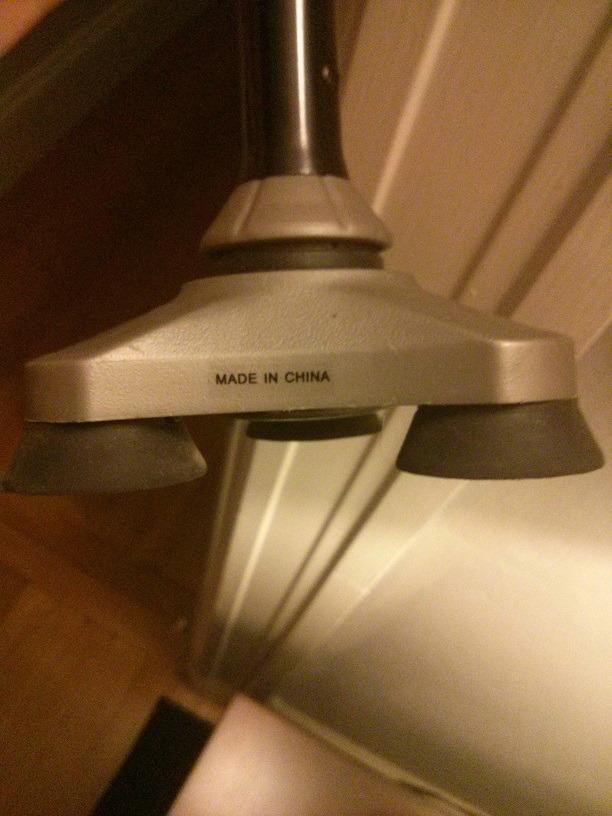
This is the cane we kept reaching for, and the reason is the base rather than the shaft. Most folding canes collapse to a single rubber tip that pivots loosely. The HurryCane uses a patented SteadiGrip base with a pivoting design that keeps three points in contact with the ground, which on a tiled floor felt noticeably more settled than a plain tip.
It also does the one thing a single-point cane should do well: pack down. At 13.7 inches folded and 16 ounces overall, it went into a carry bag without a second thought and stood on its own next to a chair, which means both hands are free when you need them.
The height range is the compromise. Thirty and a half inches at the low end suits a person around five foot one, and it tops out at 37.5 inches. If you are shorter than that or taller, one of the quad canes further down covers a wider span.
Warranty is a limited lifetime one, which is unusual in this category and worth something when a cane takes daily abuse. The SteadiGrip base is a compact 3.5 inch footprint, so it will not stand where a quad base stands, but it does not tip over every time you brush past it either.
Who this cane suits
This suits anyone who travels, commutes, or needs a cane that lives in a car door pocket. It also suits people whose balance problem is situational rather than constant, because the pivoting base handles uneven ground better than a rigid single tip without the bulk of four feet.
Reviewers with nerve or neuropathy conditions frequently single this model out as the one that survived a year of use, and the review volume reflects that. If you only need light touch support on good surfaces, this is more than enough.
Where it falls short
The T-handle is the weak point. It is a straight bar perpendicular to the shaft, so your wrist takes the load in a way an offset or forearm-style grip does not. On long walks that difference shows up, and it is the single most common complaint in the reviews.
It is also still a single-point cane. If your concern is a hard wobble on uneven ground rather than mild instability, jump to the quad section below.
2. KINGGEAR Self Standing Quad Cane – Best Value Balance Cane
KINGGEAR Self Standing Walking Cane Quad Base for Seniors
Aviation aluminum
31-36 inch range
Six height settings
4.3 inch quad base
300 lb capacity
Pros
- Quad base stands unaided and frees both hands
- Six height settings in one-inch increments
- Offset EVA foam grip eases wrist pressure
- Silent non-marking rubber base
- 1.1 lb aviation aluminum with lifetime guarantee
Cons
- Swapping the tip for the quad base is hard with arthritic hands
- Rubber foot can squeak on some surfaces
- Tallest setting may cause stooping above roughly five foot ten
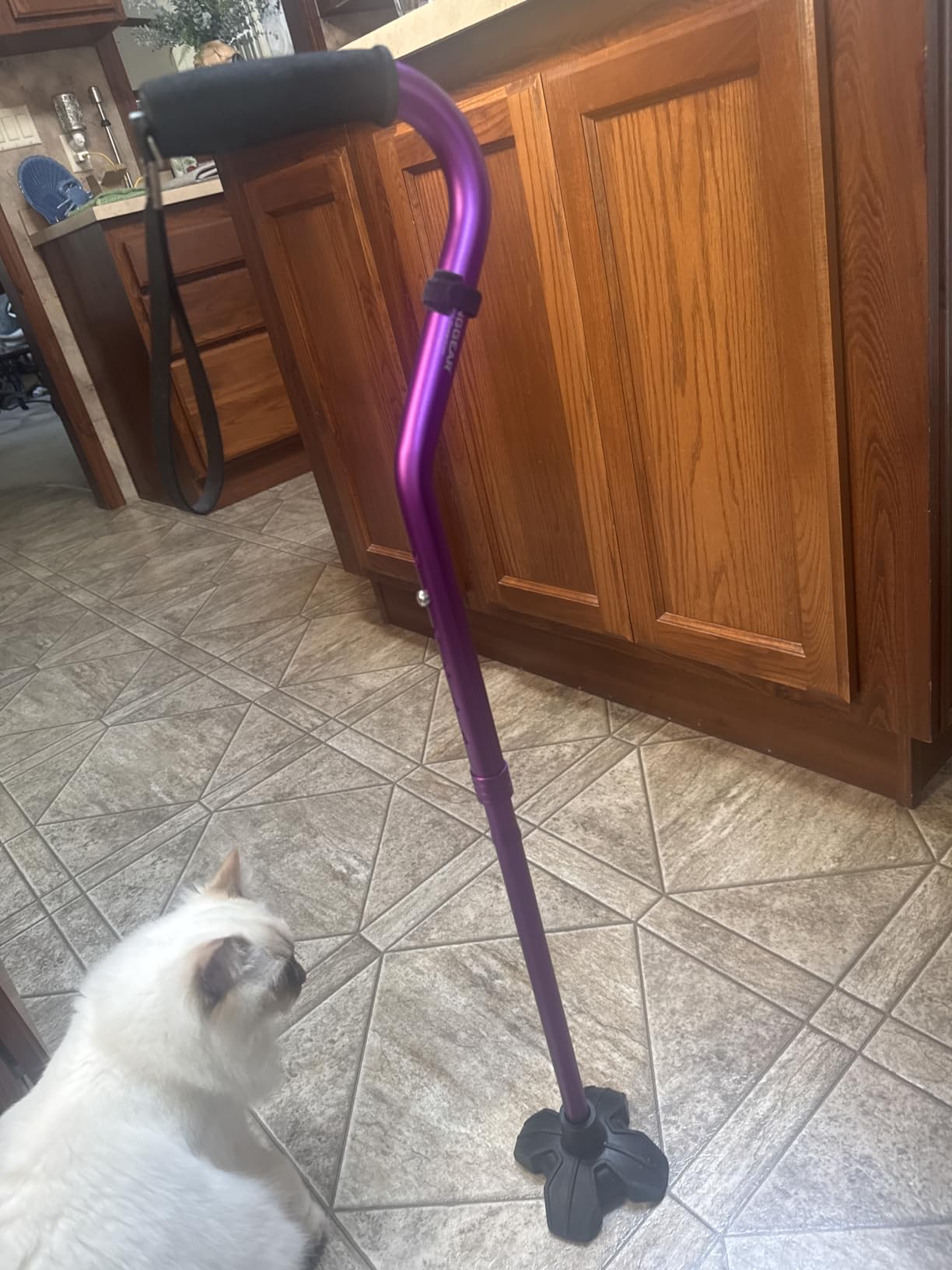
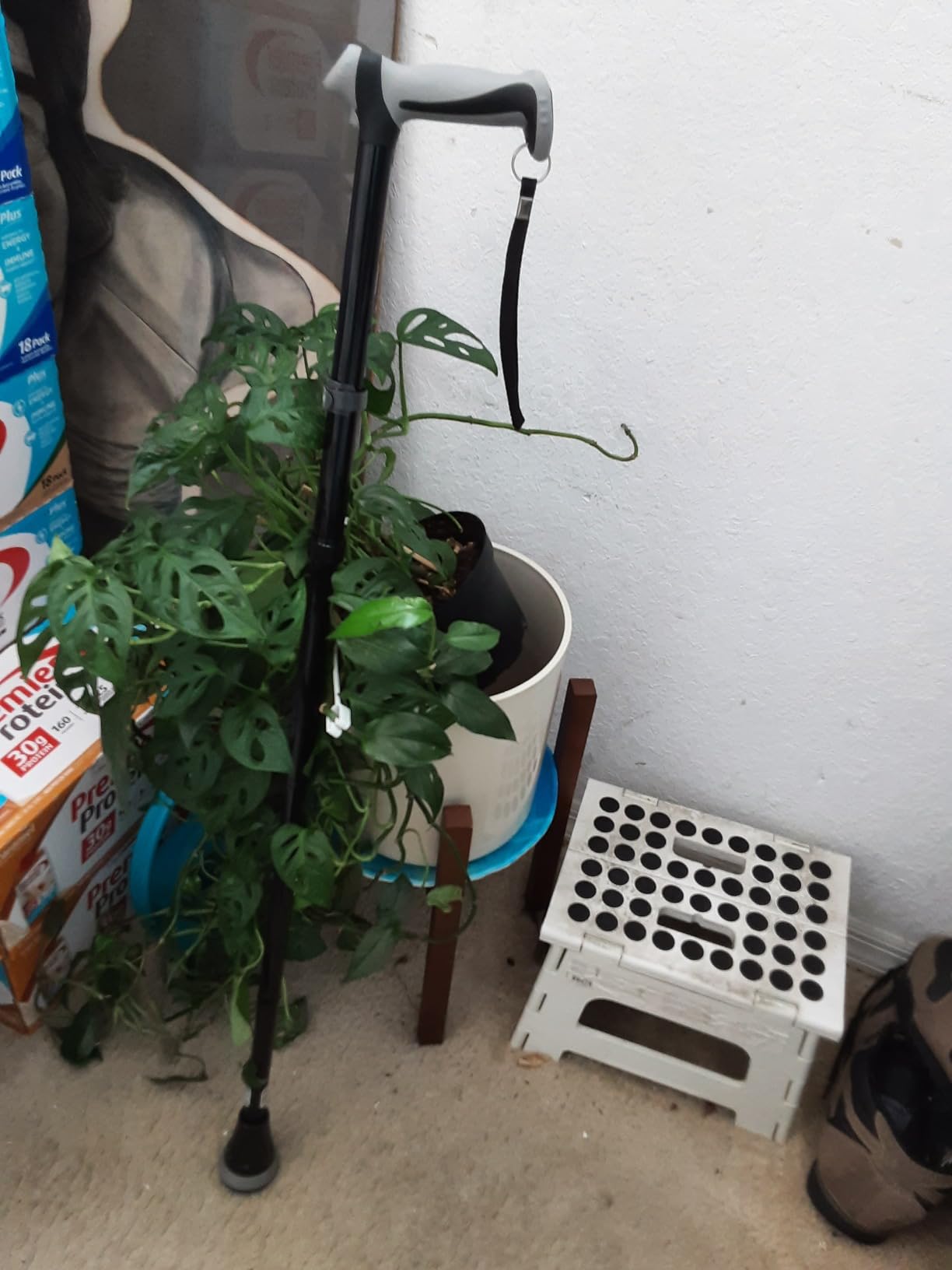
This is the cane we recommend most often as a first purchase, and the reasoning is simple: it does the two things balance canes need to do, at a weight most people can actually manage. The 4.3 inch quad base stands unaided, and at 1.1 pounds it is light enough that your arm does not fatigue just from carrying it between rooms.
The grip is a curved offset design with EVA foam, and the bend is what makes it work. Your hand sits slightly forward of the shaft rather than directly on top of it, which spreads pressure and reduces the wrist ache that flat T-handles cause.
It folds in seconds for transit and comes with a hook-and-loop strap, which matters more than it sounds. A cane that folds is a cane you will actually bring, and a cane left at home is a cane that does not help you at the supermarket.
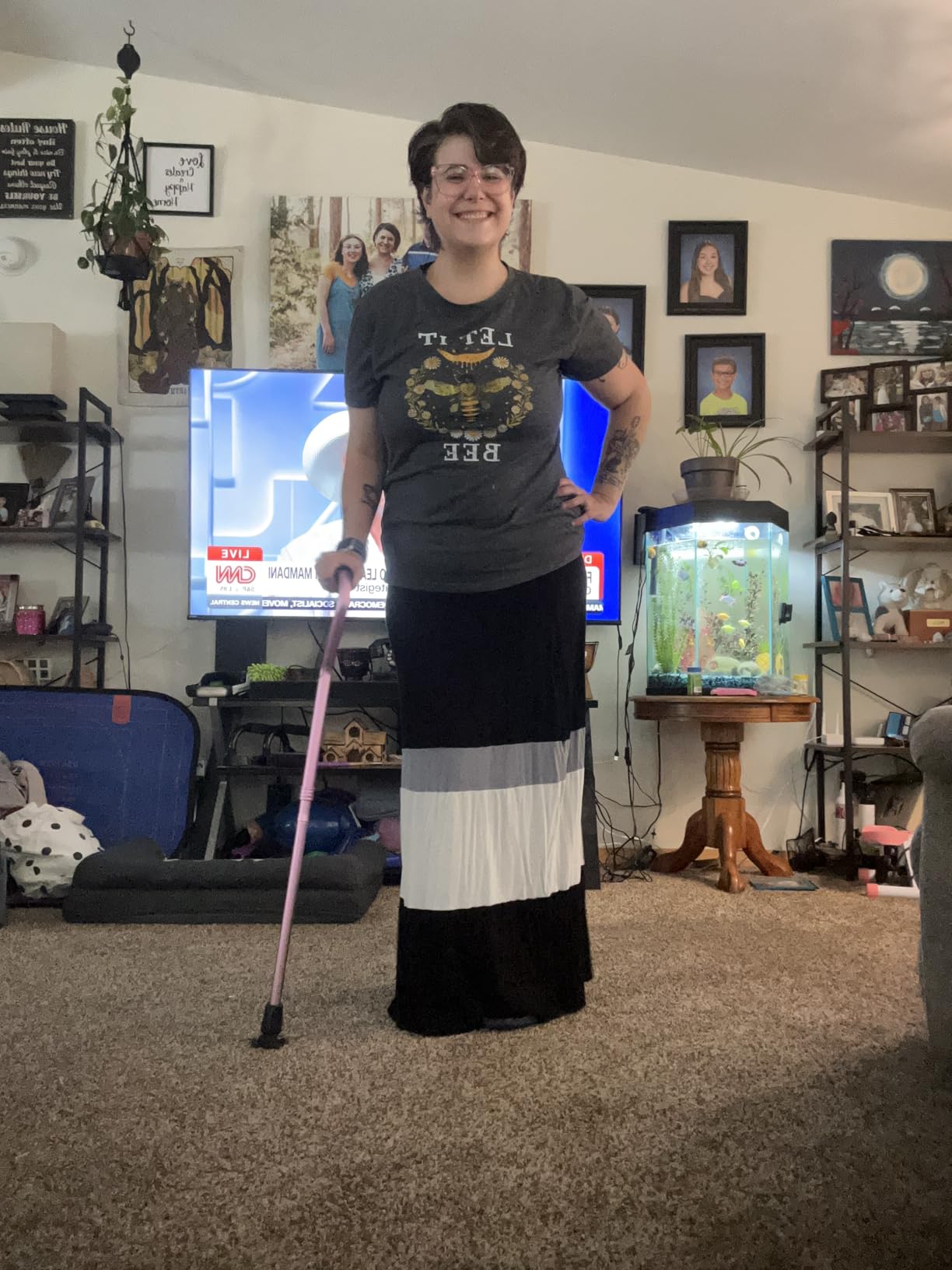
Reviewers often mention buying more than one so there is a cane by the bed, one in the car and one by the front door. The colour range is wide enough that this does not feel like a medical device, which matters for anyone who has avoided using one out of self-consciousness.
Who this cane suits
This is the pick for a senior who is unsteady on stairs, tile or carpet transitions and wants the base to stay put while they open a door or pick something up. Six height settings in one-inch increments cover users from about four foot nine to six foot one.
It also works well for anyone recovering from hip or knee surgery who wants a load-bearing aid rather than a token one. The 300 lb capacity and aviation aluminum shaft give real support rather than a feeling of support.
Where it falls short
Assembly is the annoyance. Swapping the single tip for the quad base takes a bit of hand strength, and users with arthritic hands report this is the part they struggle with most. If that describes you, buy the quad version already assembled and skip the swap.
It also folds in half only, so the folded length is not especially compact, and the foot can squeak on some hard surfaces. Neither is serious; both are mentioned often enough that you should not be surprised.
3. REHAND Folding All Terrain Cane – Best for Travel and Nerve Conditions
REHAND Walking Cane – Foldable, Adjustable, Collapsible Walking Canes for Men & Women, Heavy Duty All Terrain Tip, with Travel Bag | Walking Sticks for Seniors & Adults (Natural Black)
Aluminum shaft
34-38 inch range
Shock-absorbing base
Folds to 14 inches
Travel bag included
Pros
- Multi-layer rubber base absorbs joint impact
- Long wide handle spreads pressure across the palm
- Eight height settings in one-inch increments
- Folds to 14 inches with a travel bag included
- Runs quietly compared with metal-tipped canes
Cons
- Tri-fold joint can pull apart if the cane snags
- Grip is less sure on wet hardwood
- Single tip gives less lateral stability than a quad base
The headline feature here is the base, and it is different from everything else on this list. Instead of a single hard tip, REHAND uses a multi-layer rubber structure that compresses on contact to absorb shock before it reaches your knee and hip. Walking on concrete with it, the difference was clear.
The handle is longer and wider than a standard cane handle, with a hard polypropylene core under soft TPR. That combination gives a firm centre and soft edges, and the wider contact area is why reviewers describe it as spreading pressure across the palm rather than digging into one spot.
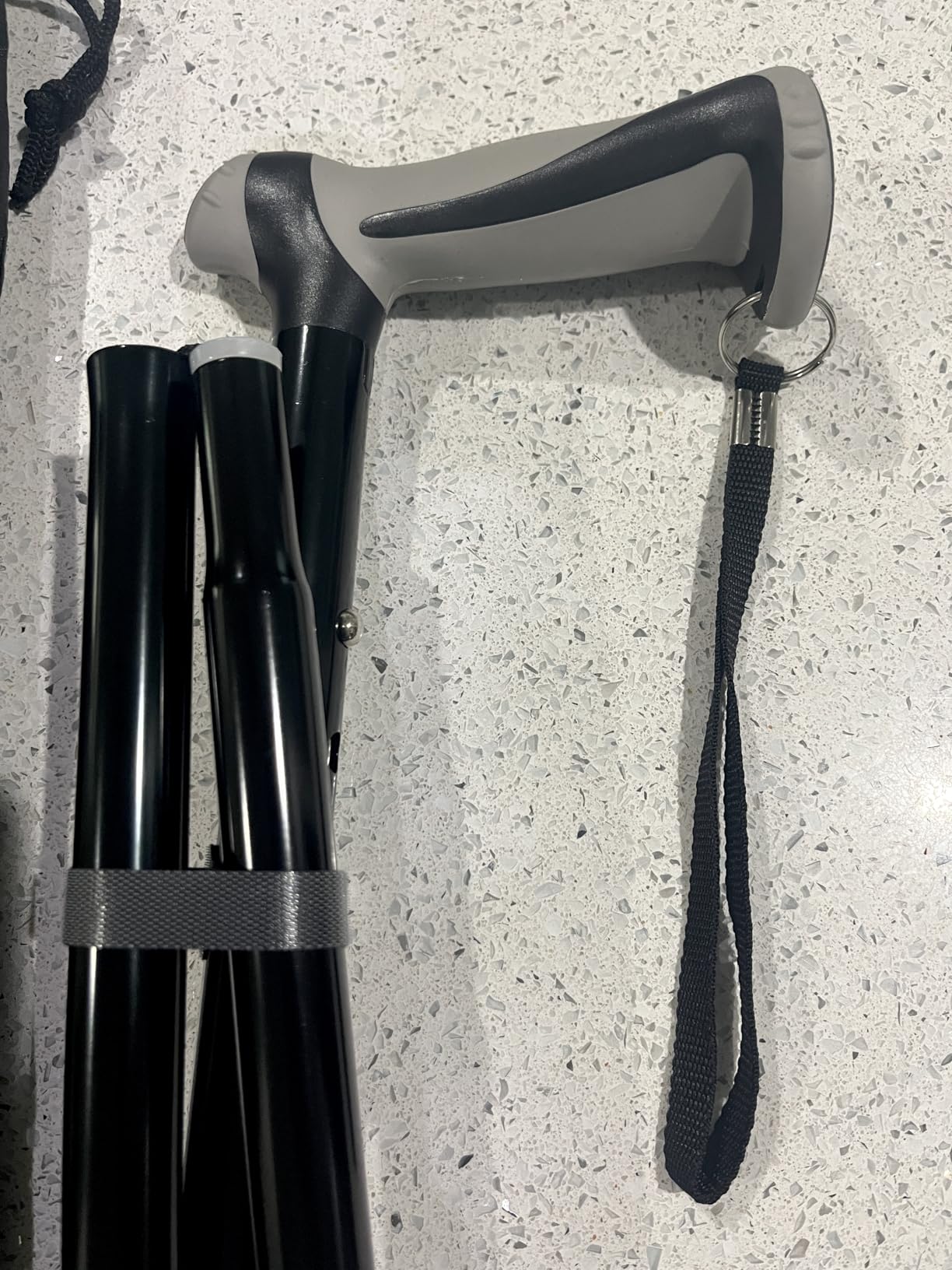
Travel is the second story. At 14 inches folded, it fits a briefcase or a purse, and the travel bag has a hook-and-loop strap to keep it bundled. Eight height settings run from 34 to 38 inches in one-inch increments, covering users from about five foot to six foot five.
It carries a two year warranty, which is longer than several quad canes in this group. The colour options run from natural black to a set that includes ocean blue, passion red and romance purple.
Who this cane suits
This is the one to pick if you have neuropathy, a nerve condition, or a recovering head injury, because the shock-absorbing base is doing genuine work on every step. Reviewers with Charcot-Marie-Tooth in particular describe it as the first cane that did not make their feet hurt.
It is also the right pick for anyone who wants a light cane with a soft hand feel and no quad bulk. If your balance issue is tired legs or joint load rather than a hard wobble, this addresses the actual problem.
Where it falls short
The tri-fold joint is a design compromise that has a failure mode. If the cane snags on a door frame or a bag strap, the joint can pull apart. That is rare, but it is the complaint that recurs, and it is worth knowing before you rely on it outdoors.
It is also a single-point cane, so the lateral stability on gravel or a wet slope is limited. And reviewers note the grip can feel less sure on hardwood immediately after rain or snow, which is exactly the surface you want help on.
4. Nova Joy Designer Offset Quad Cane – Best Quad for Style and Tall Users
Nova Joy Designer Offset Quad Cane for Seniors – Unisex Adjustable Lightweight Walking Aid with Foam Handle, Wrist Strap and Anti-Rattle Lock – Essential Mobility Support – Proud Peacock
28-39 inch range
4.75 inch offset quad base
300 lb capacity
16 oz
Foam handle with wrist strap
Pros
- Stands on its own and feels steadier than a single tip
- 28 to 39 inch range fits 4 foot 11 to 6 foot 4
- Foam handle and wrist strap reduce hand fatigue
- Designer prints and colours draw compliments
- Stays rigid without wobble over months
Cons
- Rubber base wears down and needs replacing every few months
- Push-button lock is hard for frail or arthritic hands
- Not foldable so it is bulkier to carry
Stigma is an underrated factor in whether someone uses a cane at all, and this is the quad that best addresses it. The prints run from butterfly and peacock designs to walnut grain and camouflage, and reviewers repeatedly mention compliments rather than pity.
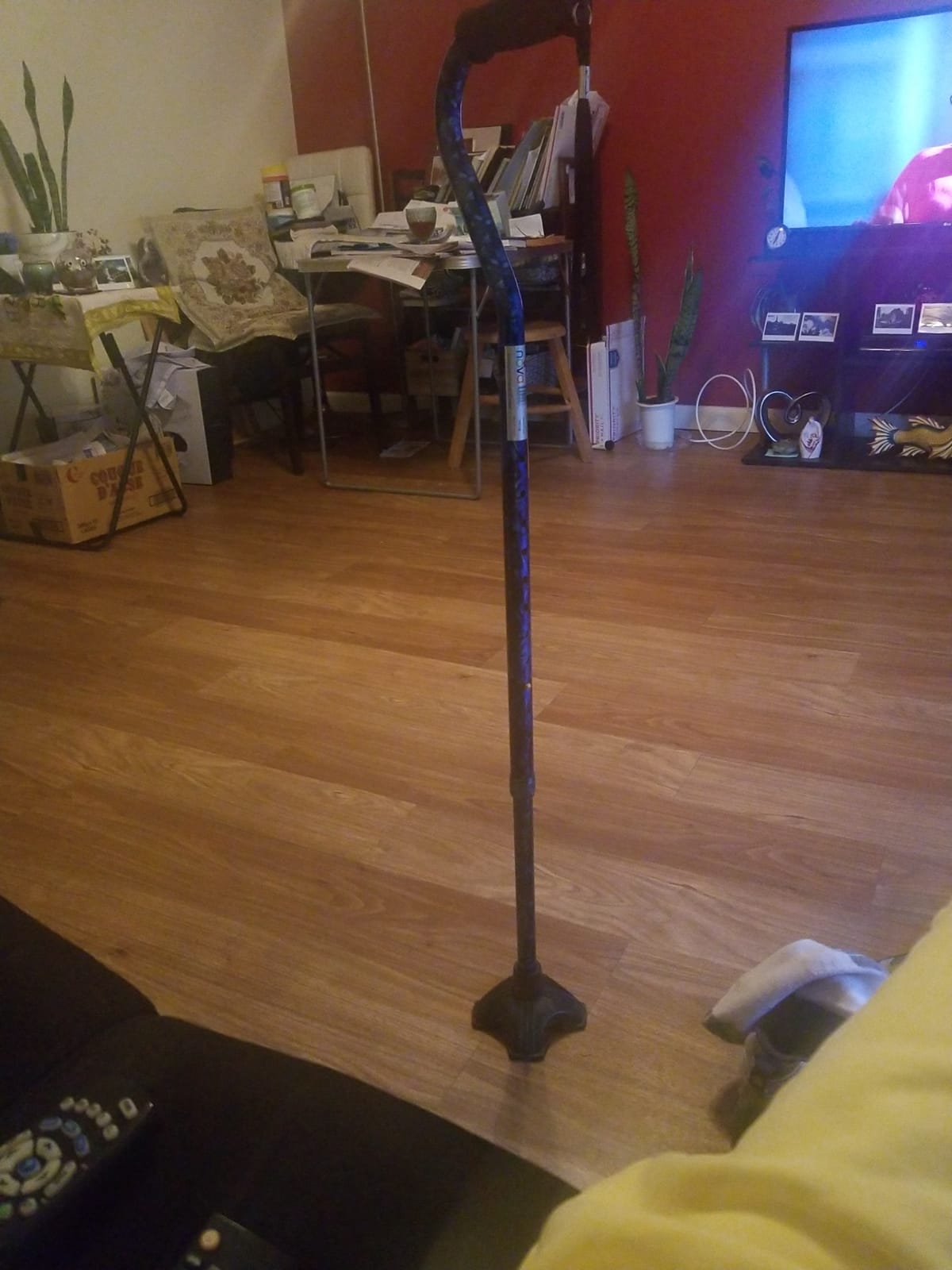
Underneath the styling it is a properly engineered offset quad. The base is 4.75 inches square, which is a genuinely wide footprint, and the shaft is offset so the handle sits over the base rather than beside it. That alignment is what gives you a stable platform when you shift weight onto it.
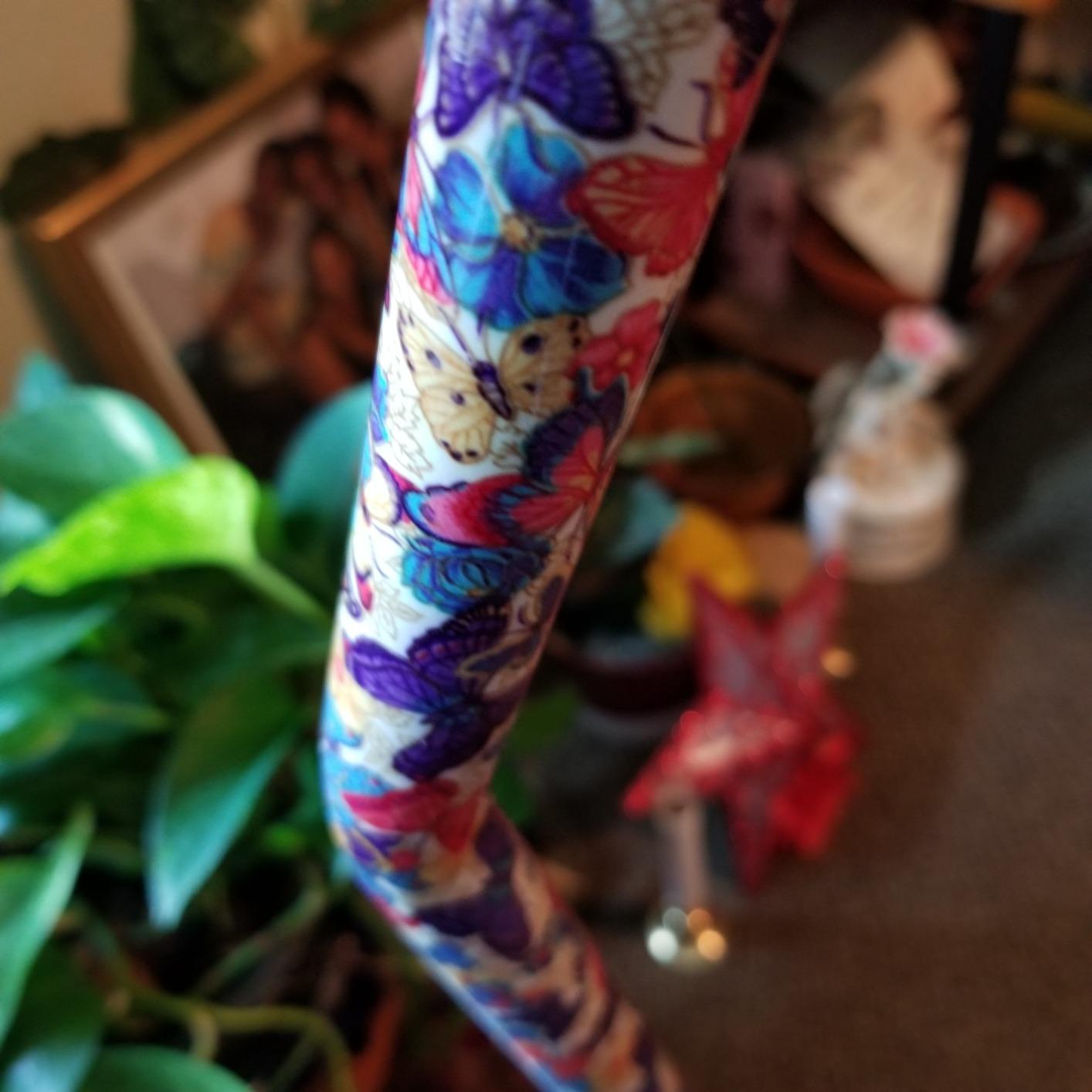
The height range is the widest in the roundup at 28 to 39 inches, covering users from about four foot eleven to six foot four. A foam handle and a built-in wrist strap handle fatigue and keep the cane close at hand when you sit down.
It arrives assembled and stays rigid. There is an anti-rattle lock on the height adjustment, and reviewers note the frame keeps its shape over months of daily use without developing wobble.
Who this cane suits
This suits anyone who has put off getting a cane because a black aluminium stick felt like a declaration of old age. It also suits taller users, since the 39 inch maximum is the highest here, and post-knee-surgery recovery where a stable platform matters more than low weight.
If you want the footprint of a large quad cane but the confidence to carry it into a restaurant, this is the one. The 300 lb capacity is standard for the category.
Where it falls short
The replaceable rubber base wears down and needs swapping roughly every few months, and the replacement base costs extra. If you notice the base feeling slick or feathered, that is the signal, not the whole cane.
The push-button height lock needs real finger pressure, which is a problem for frail or arthritic hands, and some units rattle slightly after readjustment despite the lock. It is also not foldable, so this is a cane that lives in one place rather than one that travels.
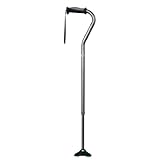
5. Hugo Mobility Adjustable Quadpod Cane – Best Compact Stability
Hugo Mobility Adjustable Offset Quadpod Cane with Stable Tip, Smoke
28-39 inch range
Self-centering quadpod tip
300 lb capacity
1.32 lb
Reflective strap
Pros
- Self-centering tip steadies without a wide sprawling base
- 54 percent lighter than a large-base quad cane
- 80 percent more compact than a large-base quad
- Shock-absorbing ergonomic handle
- Reflective strap improves low-light visibility
Cons
- Narrower footprint covers less uneven ground than a wide base
- Costs more than budget self-standing models
- Handle height range is shorter at the low end
This cane solves a specific problem that most quad canes create. A wide base is stable but awkward in tight spaces, and a narrow base is nimble but twitchy. The Hugo uses a self-centering quadpod tip that re-centres itself under load, giving you three or four points of contact without the sprawl.
Manufacturer figures put it at 54 percent lighter and 80 percent more compact than a large base quad cane, and at 1.32 pounds it sits between the ultralight single-point canes and the heavier self-standing models. For someone who travels in and out of a small flat, that difference is the whole purchase.
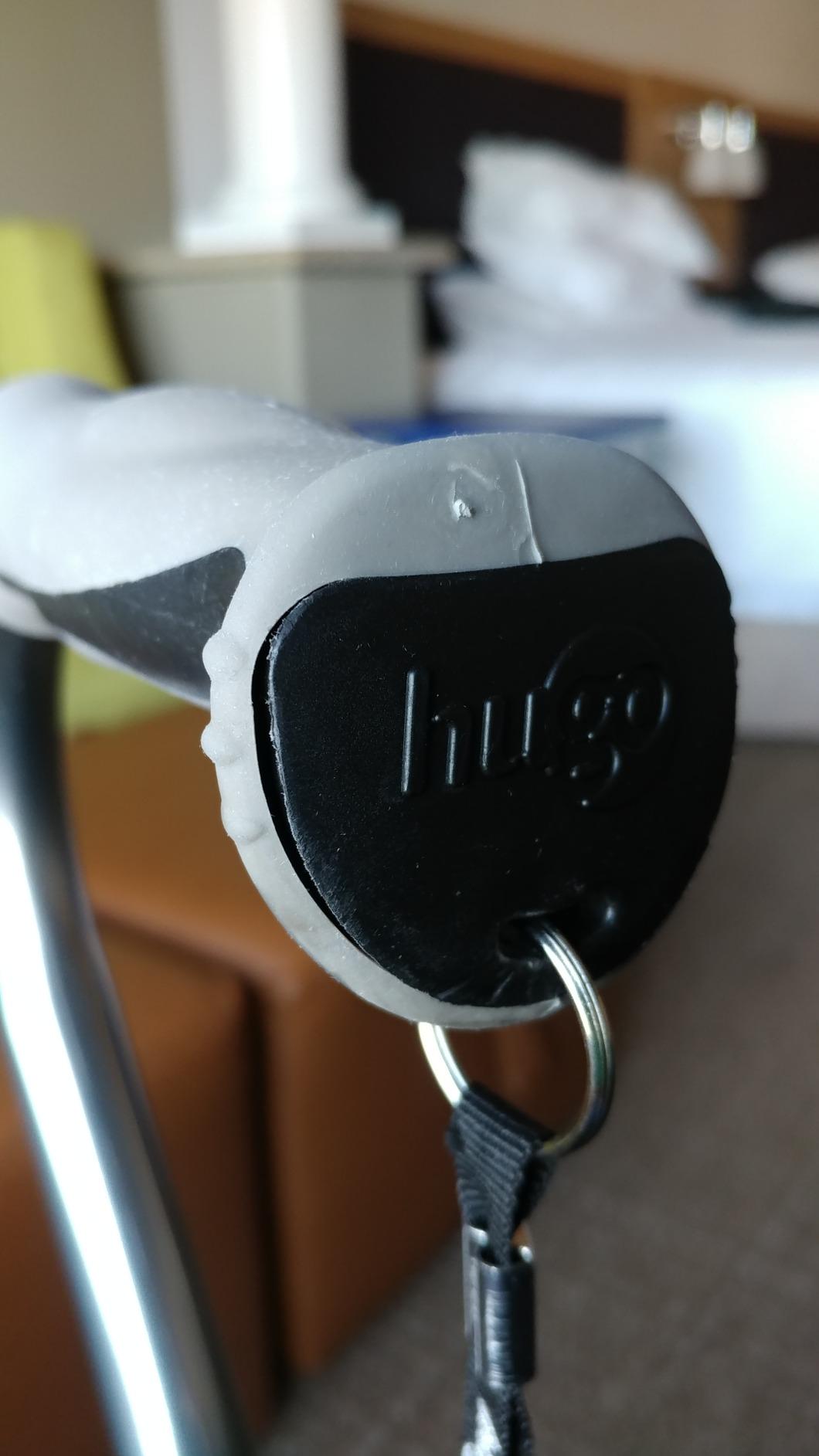
The handle is shock-absorbing and ergonomic, and there is a reflective strap for low light, which is genuinely useful if you are out at dusk walking an unlit path. Twelve precision height settings run from 28 to 39 inches.
Weight capacity is 300 lbs, the same as most of the group, so this is not the model for a heavier user. That is what the forearm-cradle cane further down is for.
Who this cane suits
This suits people who need a multi-point base for genuine stability but live somewhere with stairs, narrow doorways and busy surfaces. It is a good transition aid, too, for someone stepping down from a walker who finds a wide-base quad too clumsy to manoeuvre.
The reflective strap and the foldable-free but compact design also make it a decent choice for evening walks, though it is not a folding cane so it still needs a car boot or a hallway.
Where it falls short
It costs more than the budget self-standing models, and you give up some surface coverage. On genuinely uneven ground a 4.75 inch wide-base quad covers more area than a compact quadpod, and the reviews reflect that in the lower average rating than the wider models.
The low end of the handle range is also shorter than several rivals, so very short users may find the minimum setting still too high.
6. StrongArm Comfort Cane – Best for Heavier Users and Wrist Pain
StrongArm Comfort Cane + Self Standing Lightweight Adjustable Walking Cane + Stabilizes Wrist & Provides Extra Support & Stability + Ergonomic Forearm Grip + Canes for Men & Women
500 lb capacity
Forearm cradle grip
12 height settings
Self-standing base
1.8 lb
Pros
- Forearm cradle moves load off the wrist
- Offset bend centres the grip over the floor tip
- Self-standing base frees both hands
- 500 lb capacity suits heavier users
- Works for either hand or as a pair
Cons
- Forearm cradle adds bulk and takes practice to position
- Not foldable so it is awkward to travel with
- Weighs 1.8 lb so it is no lightweight travel cane
This is the only cane in the roundup rated for 500 lbs, and that alone puts it in its own category. If you are over the 300 lb limit that covers everything else here, this is the one that will not be the weak link.
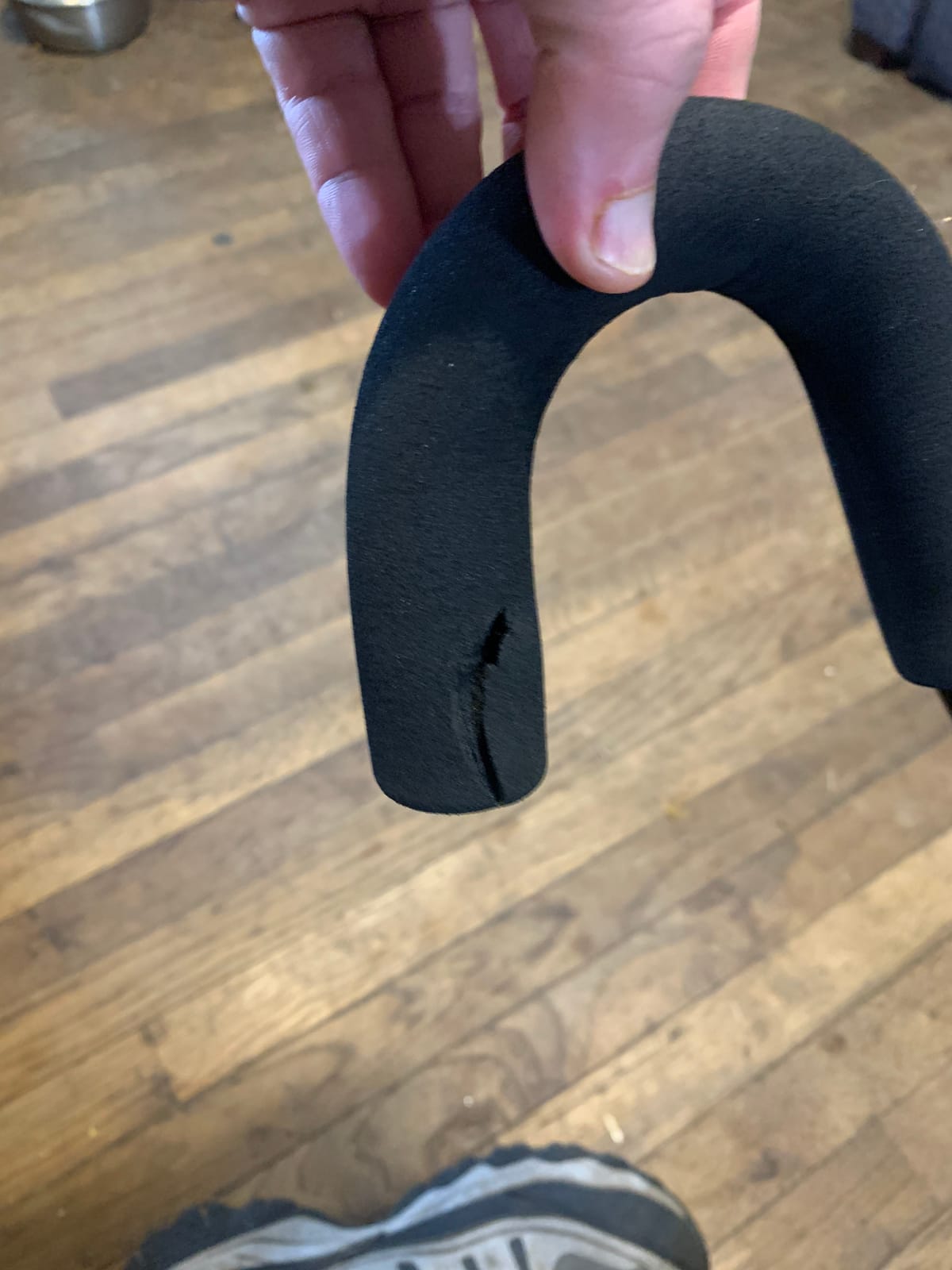
The forearm cradle is the more interesting part. Instead of a handle you grip from above, you rest your forearm in a cushioned sleeve, which transfers load from the wrist to the forearm. Users recovering from wrist fractures or surgery describe this as the difference between being able to walk and not. One quad user put it simply: the offset handle means their wrist stops complaining after every walk.
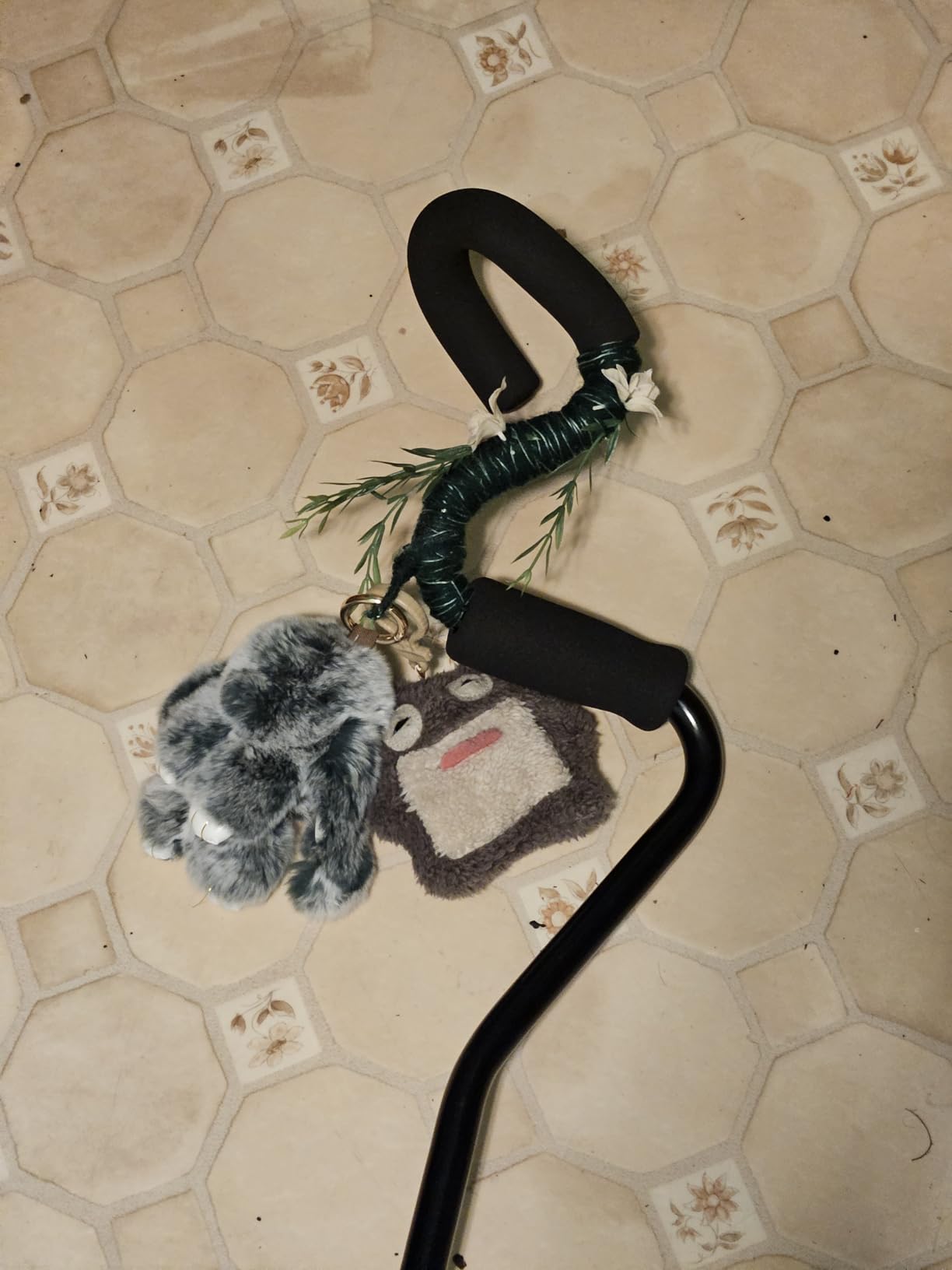
The offset bend centres the handgrip directly over the floor tip, which is a mechanical alignment most canes get wrong, and the self-standing base means you can free both hands at a door. Twelve height settings and a hexagonal traction tip round out the package.
It is FDA registered, works for either hand, and can be bought as a pair if you want support on both sides. That pair option is unusual and worth knowing about.
Who this cane suits
This suits heavier users, and anyone whose balance problem comes with wrist pain, arthritis or a healing wrist injury. It also suits people who find that a normal cane leaves their hand tired after twenty minutes, because the cradle removes the hand from the equation almost entirely.
It bridges the gap between a cane and a crutch, which makes it a sensible step down from a walker. It is the most substantial aid in this roundup and it says so, without pretending to be a lightweight travel cane.
Where it falls short
At 1.8 pounds it sits at the heavy end of this group, and the forearm cradle adds bulk that takes practice to position correctly. Expect a week of adjusting before it feels natural.
It is also the most expensive option in the group and it does not fold, so it stays at home. If you need one aid for travel and one for daily support, this is the daily support purchase.
7. Medline Aluminum Quad Cane with Small Base – Best for Post-Surgery Recovery
Medline Aluminum Quad Cane with Small Base, 300 lb Capacity, for Balance, Knee Injuries, Leg Surgery Recovery & Mobility, Portable, Sturdy Walking Aid for Seniors & Adults
29-38 inch adjustment
Small four-foot base
300 lb capacity
2 lb
Foam handle with rubber pad
Pros
- Small quad base stands unaided without feeling bulky
- Aluminum frame still feels dependable under full weight
- 29 to 38 inch range allows a close custom fit
- Rubber pad on the base improves grip on slippery surfaces
- Compact enough to keep beside a bed
Cons
- Quad base takes a moment to settle after placement
- Less nimble than a single-point or three-pronged cane
- Heaviest in the group at 2 lb
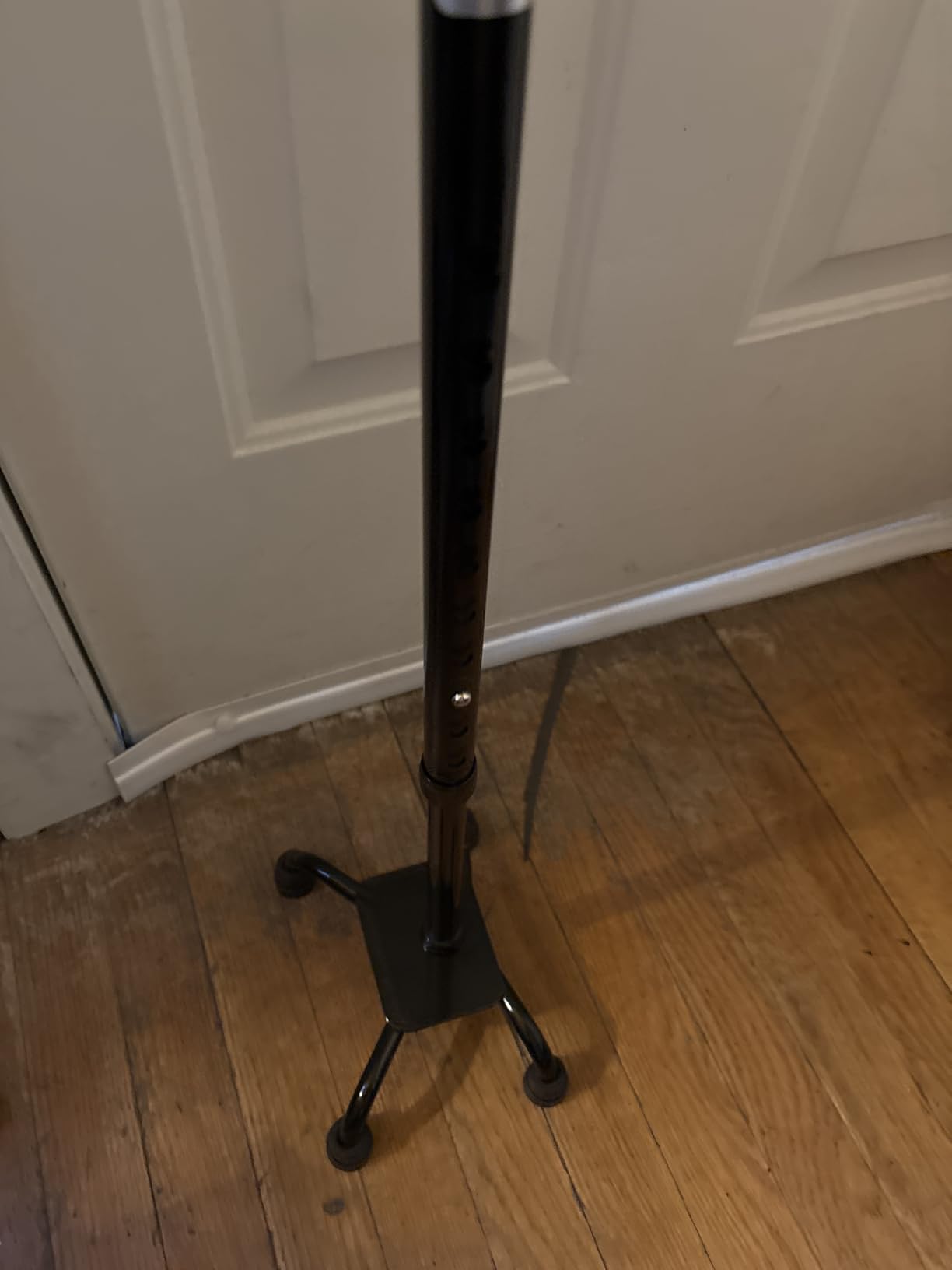
Most quad canes are large-base, and large-base means large. The Medline is built the other way around: four feet in a deliberately small footprint. The result stands unaided but does not sprawl across the walkway, which is why it comes up so often in reviews from people recovering from surgery.
The other recurring use is bedside. At 29 inches in its folded configuration it is compact enough to keep next to the bed for the trip to the bathroom at night, which is where a lot of falls actually happen. A walker by the bed takes up too much room for that job.
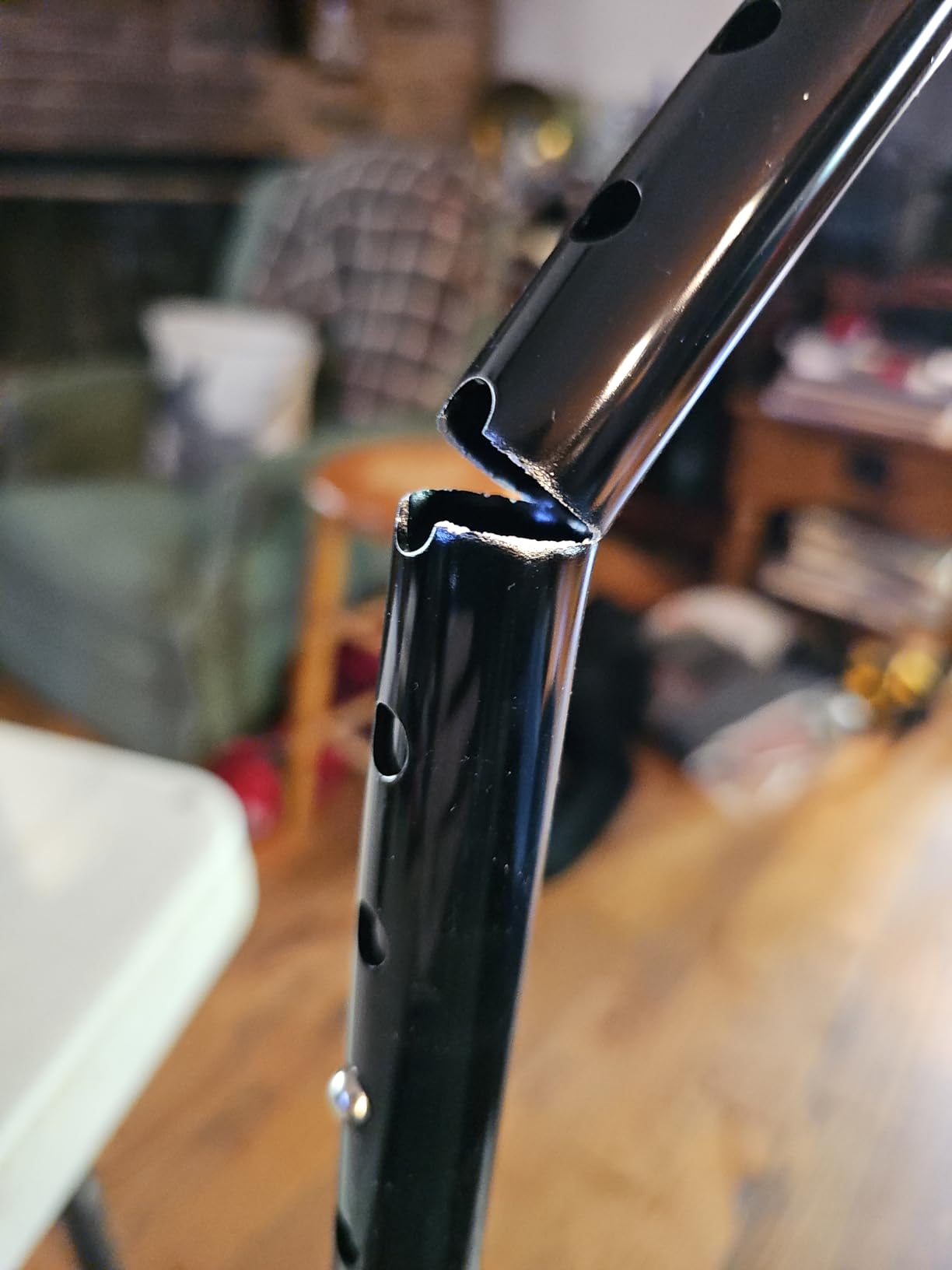
Height adjustment runs 29 to 38 inches, and the foam handle is comfortable for extended use. The rubber pad on the bottom of the base is a practical addition for slippery floors, which is the surface that worries people most.
It carries a 300 lb capacity and an aluminum frame that reviewers describe as feeling genuinely solid under full weight-bearing, which is what you want from a recovery aid rather than a fashion one.
Who this cane suits
This suits anyone in the first weeks after knee or hip surgery who needs to put real weight through their arm but does not yet want a walker. Reviewers recovering from hip replacement specifically recommend it, and describe the pain relief of taking load off the joint.
It is also the pick for anyone who has fallen and is frightened of the dark space between the bed and the bathroom. Small footprint, stands on its own, no walker to manoeuvre in a narrow hallway.
Where it falls short
At 2 pounds it is the heaviest cane in this roundup, and you feel that in the wrist over a long walk. That is the trade for a four-foot base in a small footprint.
The base also needs a second to settle after you put it down, so it can feel momentarily unsteady at the moment you are transferring weight. And it is slower and less nimble than a standard cane, which makes it better for deliberate walking than for constant use all day.
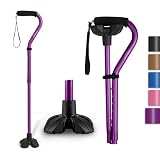
8. GPTCAMP Quad Base Self Standing Cane – Best Budget Balance Cane
GPTCAMP Walking Cane Quad Base Self Standing 300lbs for Seniors
31-36 inch range
Six height settings
4.3 inch quad base
300 lb capacity
1.1 lb
Pros
- Self-standing 4.3 inch base holds full weight unaided
- Only 1.1 lb for a four-foot base
- Folds quickly with a hook-and-loop strap included
- Offset EVA foam grip reduces wrist pressure
- Silent non-marking rubber works indoors and out
Cons
- Height range tops out at 36 inches so it does not suit very tall users
- Narrower 4.3 inch base is less stable on rough terrain than wide bases
- Basic foam grip offers less contouring than premium ergonomic handles
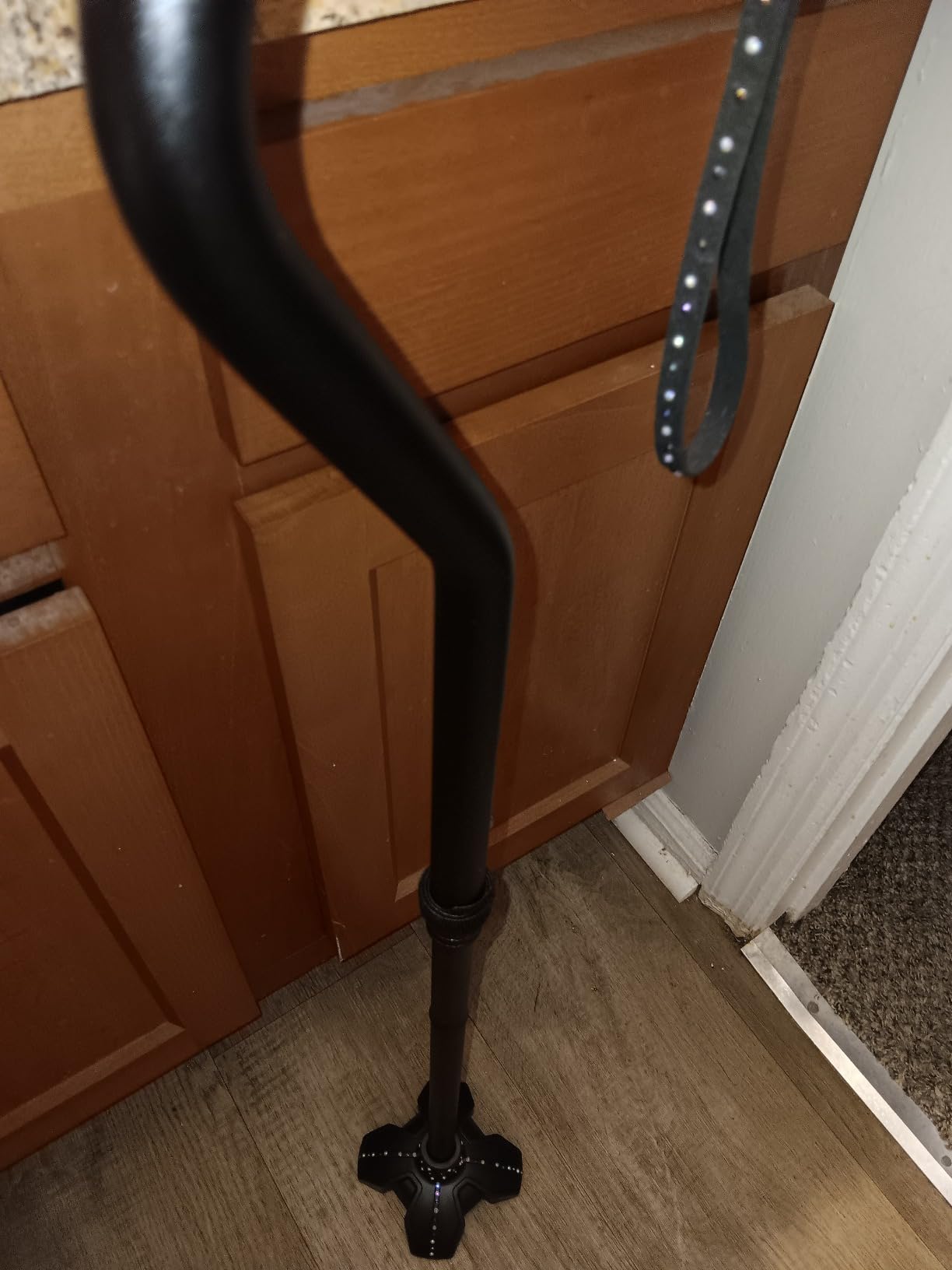
This is the cheapest way to get a genuine self-standing quad cane, and the arithmetic is impressive. A four-foot base, a 300 lb capacity and a weight of 1.1 pounds, for less than most single-point folding canes.
The 4.3 inch quad base is silent and non-marking, so it will not mark a wooden floor and it will not wake the house. The EVA foam grip is offset, so the hand sits forward of the shaft and the wrist takes less of the load than a flat T-handle would.
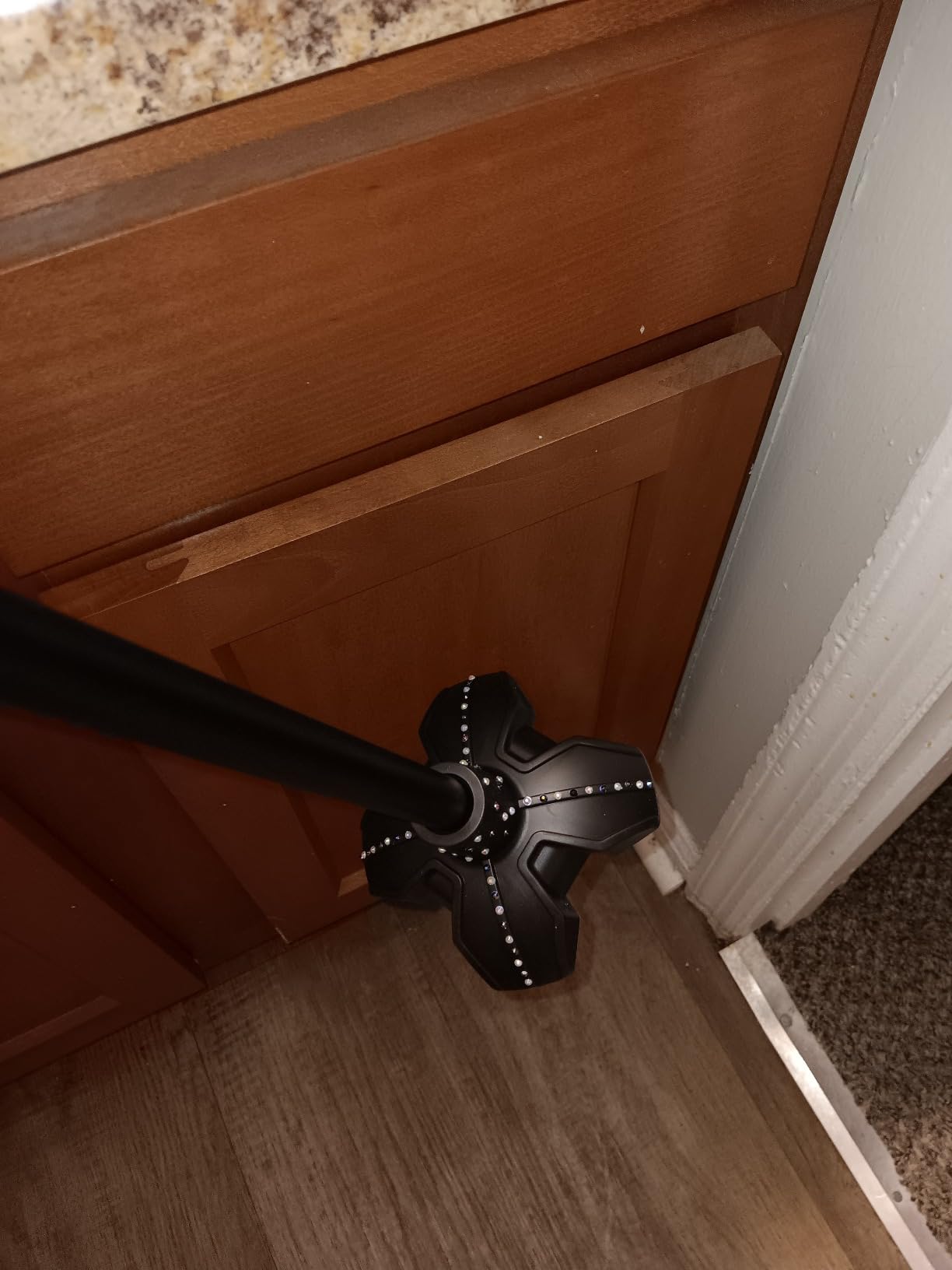
Six height settings from 31 to 36 inches in one-inch increments cover users from about four foot nine to six foot one. It folds down to 17.32 inches with a hook-and-loop strap included, so it fits under a car seat or in a day bag.
The architecture is essentially the same design as the KINGGEAR above, which is a compliment rather than a criticism. You are buying a known layout at a lower cost.
Who this cane suits
This suits anyone who wants self-standing stability without spending much, and it works well as a second cane in a different room. Buyers frequently report buying two or three of the same model for exactly that reason.
If you are on a tight budget but your balance is genuinely going, this is the responsible purchase. The base stands, the capacity is adequate for most adults, and the grip is offset.
Where it falls short
The 36 inch maximum is the first limit, and it rules out anyone taller than roughly six foot one. The second is the 4.3 inch base, which is narrower than the wide-base models and less stable on rough or gravel ground.
The grip is basic foam with less hand contouring than a premium ergonomic handle, and the listed warranty is one year. None of these is a dealbreaker, but they are the reasons to step up if your terrain is rough or you are tall.
9. KingPavonini Foldable Pivoting Quad Cane – Best for Taller Users Under 350 lbs
KingPavonini Walking Cane for Men Women Stability, Self Standing, Black
31-38 inch range
Eight height settings
4.5 inch rotating base
350 lb capacity
1.08 lb
Pros
- Extra wide 4.5 inch base with 360 degree flex head
- 350 lb capacity among foldable self-standing canes
- ABS core with soft TPR grip reduces palm fatigue
- Folds into the travel pouch without losing the height setting
- Multi-layer rubber tips grip and protect floors
Cons
- Can be knocked over when left standing
- Some reports of the handle breaking after about a year
- ABS handle is less padded than foam or EVA grips
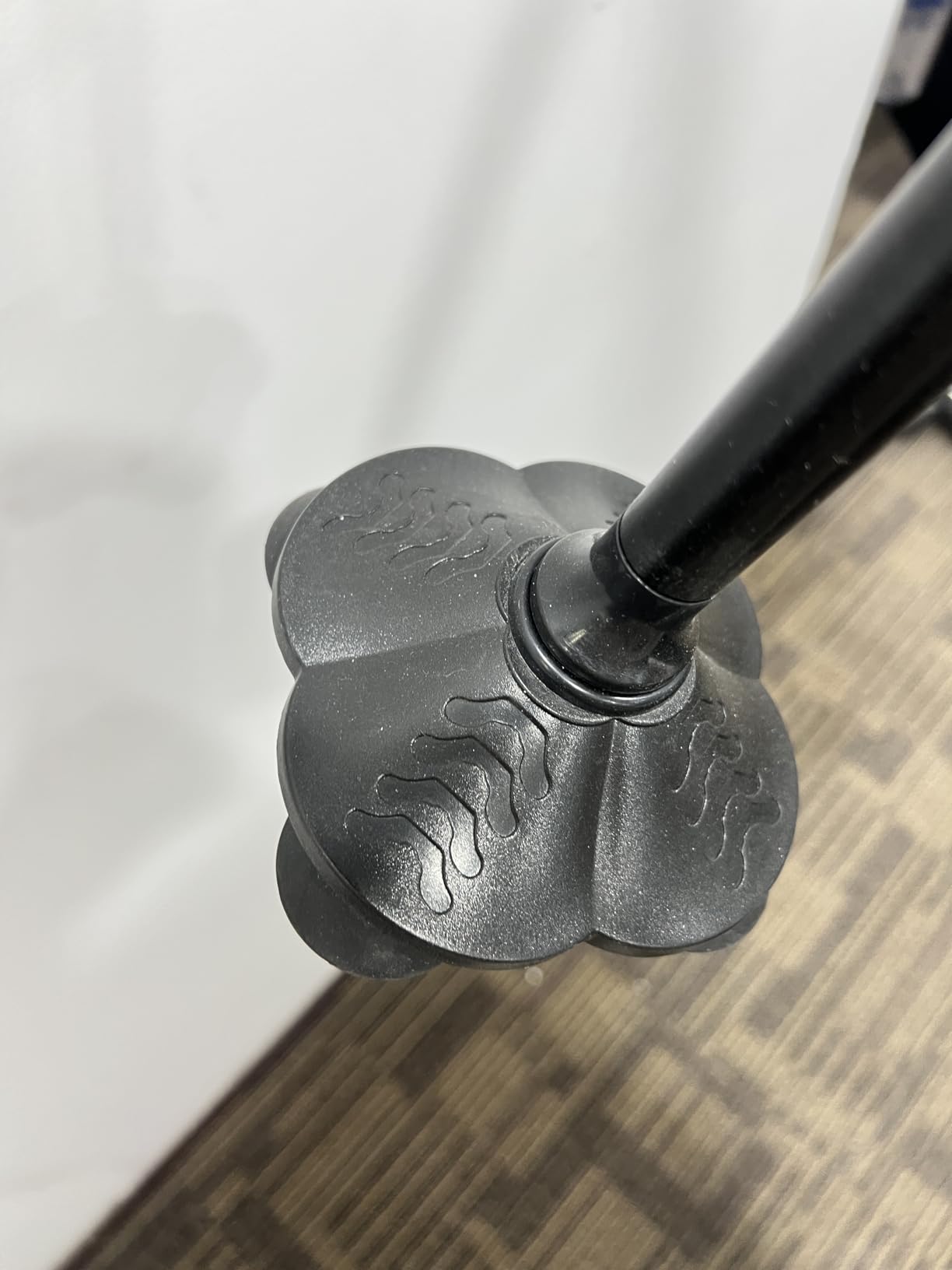
The widest base in this roundup belongs to the KingPavonini, at 4.5 inches, and it is paired with a 360 degree rotating flex head that follows your movement rather than resisting it. When you plant the cane and shift weight, the head rotates under you instead of tipping.
It also carries a 350 lb load rating, the highest of the self-standing folding canes here, and the tallest range in the group, running 31 to 38 inches across eight height settings for users from about four foot eight to six foot five. If you are tall and want four points of contact, this is the pick.
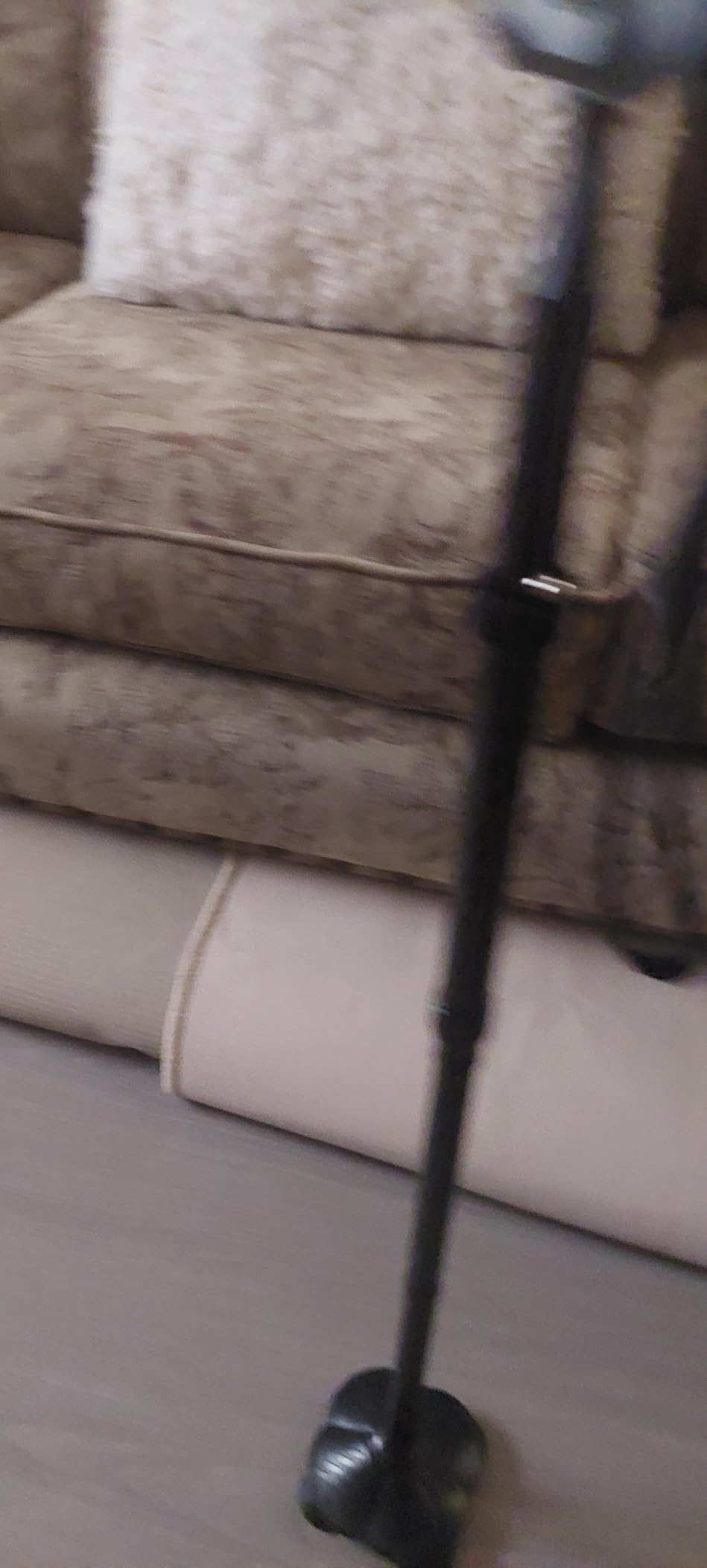
At 1.08 pounds it is the lightest self-standing quad in the roundup. The handle is an ABS core with a soft flexible TPR outer layer, which gives a secure grip and less palm fatigue over a full day than bare plastic.
It folds into the included travel pouch without losing the height setting, which is a small detail that matters when you fold and unfold the same cane a dozen times a week.
Who this cane suits
This suits anyone above six foot one who still wants a self-standing base, and it is rated for people up to 350 lb. Reviewers recovering from knee replacement or managing hip pain recommend it often, and the extra capacity is the reason.
The wide base plus the rotating head also makes it a sensible outdoor pick for even surfaces, and the multi-layer rubber tips protect interior flooring from scuffing.
Where it falls short
It has the lowest average rating in this roundup, and two recurring issues pull it down. The first is that it can be knocked over when left standing, and reviewers say it sometimes will not stand unaided on its own, which defeats the main reason to buy a self-standing base.
The second is a smaller number of reports of the handle breaking after about a year of use. The ABS grip is also less padded than the foam or EVA options elsewhere. If your hand is arthritic, test the grip before committing.
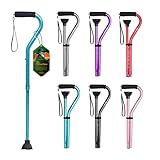
10. BeneCane Adjustable Offset Cane – Best Lightweight Cane for Daily Carry
BeneCane Walking Cane for Men & Women Adjustable Cane with Offset Soft Cushioned Handle -Portable Lightweight Sturdy Mobility Walker Aid for Elderly, Seniors Collapsible Cane Blue
31-36 inch range
Push-button adjustment
Offset foam grip
12.8 oz
300 lb rating
Pros
- Offset cushioned handle places the hand over the shaft
- Lightest cane in the group at 12.8 oz
- Folds to 17 inches and fits a bag or the car
- Quick push-button height adjustment
- Screw-coupled mid joint keeps the cane rigid
Cons
- Standard rubber tip is not durable and gives little cushioning
- Height caps at 36 inches for taller users
- Single tip means it cannot stand on its own
At 12.8 ounces this is the lightest cane we tested, and for anyone with a genuine grip-strength problem that weight is not a footnote. A cane you cannot lift is a cane that stays in the closet, and closet canes prevent no falls.
The handle is a cushioned foam offset design, and the offset is what earns it a place on a balance list. Your hand sits directly over the shaft instead of being pushed forward of it, which keeps the wrist in a more neutral line and reduces strain over a long walk.
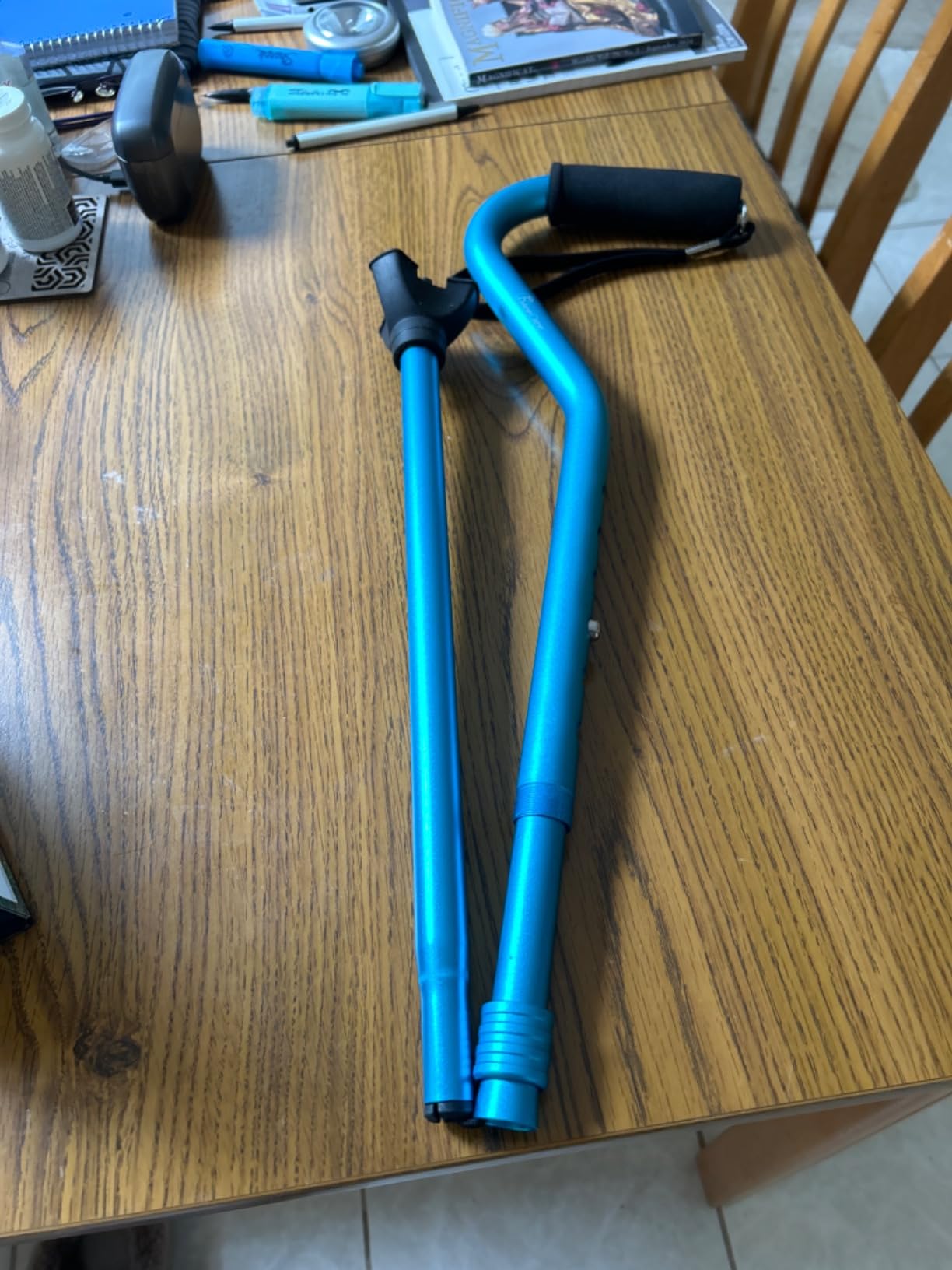
Adjustment is a push button, 31 to 36 inches, covering users from about five foot one to five foot eight. There is a screw-coupled joint in the middle of the shaft that tightens the cane and stops it readjusting itself mid-stride, which is a genuine problem on cheaper folding canes.
It folds to 17 inches, works for either hand, and comes in a wide colour range. It is a 300 lb rated cane built from a larger diameter aluminium tube, which is why it feels rigid despite the low weight.
Who this cane suits
This suits post-hip and post-knee recovery patients who want something light enough to carry up a single step or hold while opening a door with the other hand. Reviewers consistently recommend it for exactly that phase of recovery.
It is also the right choice for anyone who needs light touch support rather than a load-bearing aid, and for people who carry a cane in a handbag or a work bag. A lighter cane is a cane you keep using.
Where it falls short
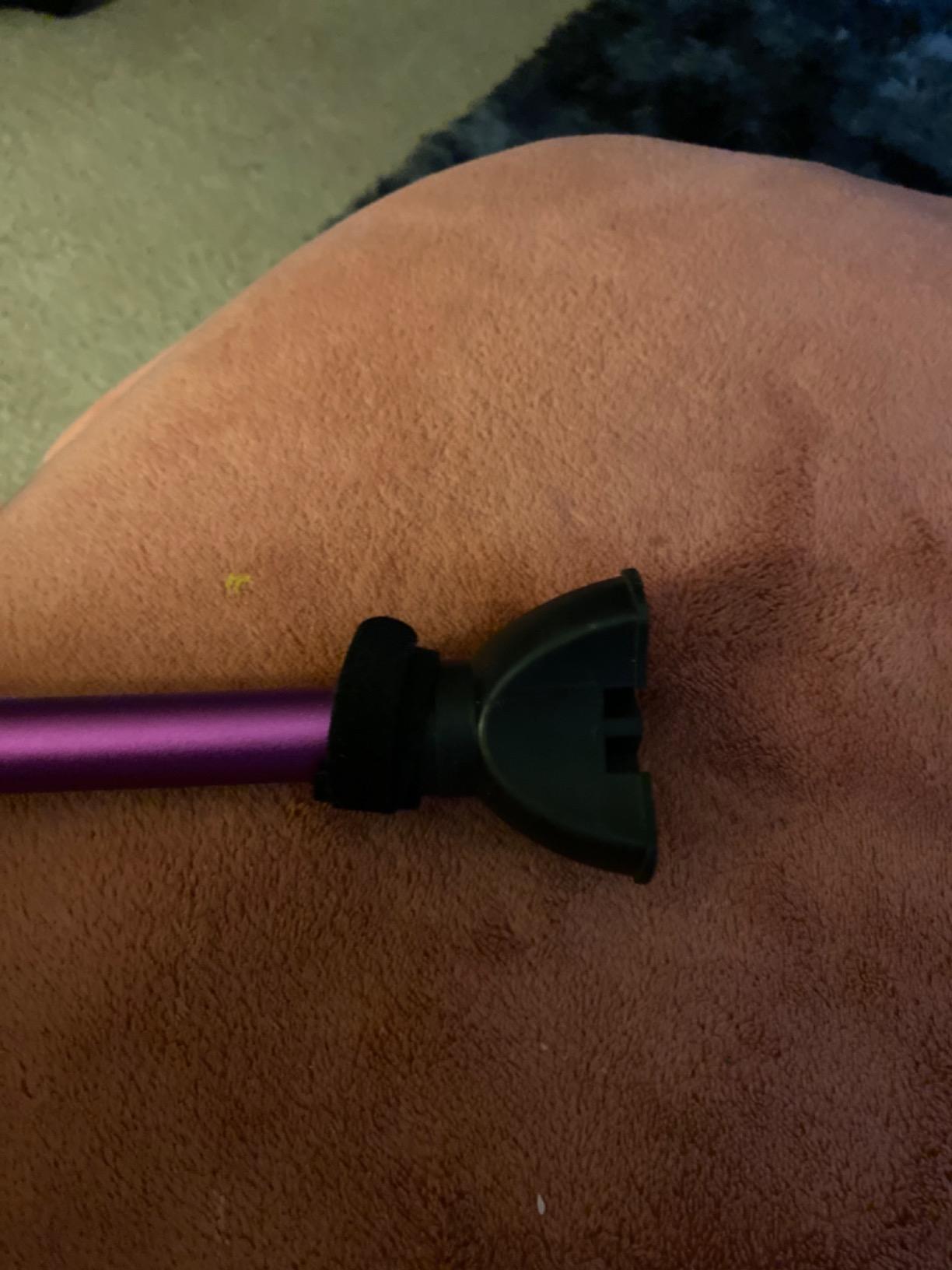
The rubber tip that comes with it is the weak link. Several reviewers say it is not very durable and gives little cushioning, and recommend fitting a heavy-duty replacement tip straight away. Budget for that as your first upgrade.
It also caps at 36 inches, so it will not suit taller users, and as a single-point cane it cannot stand on its own. You will lean it against something, and it can slide on a smooth floor if you do.
Which Cane Base Type Is Most Stable?
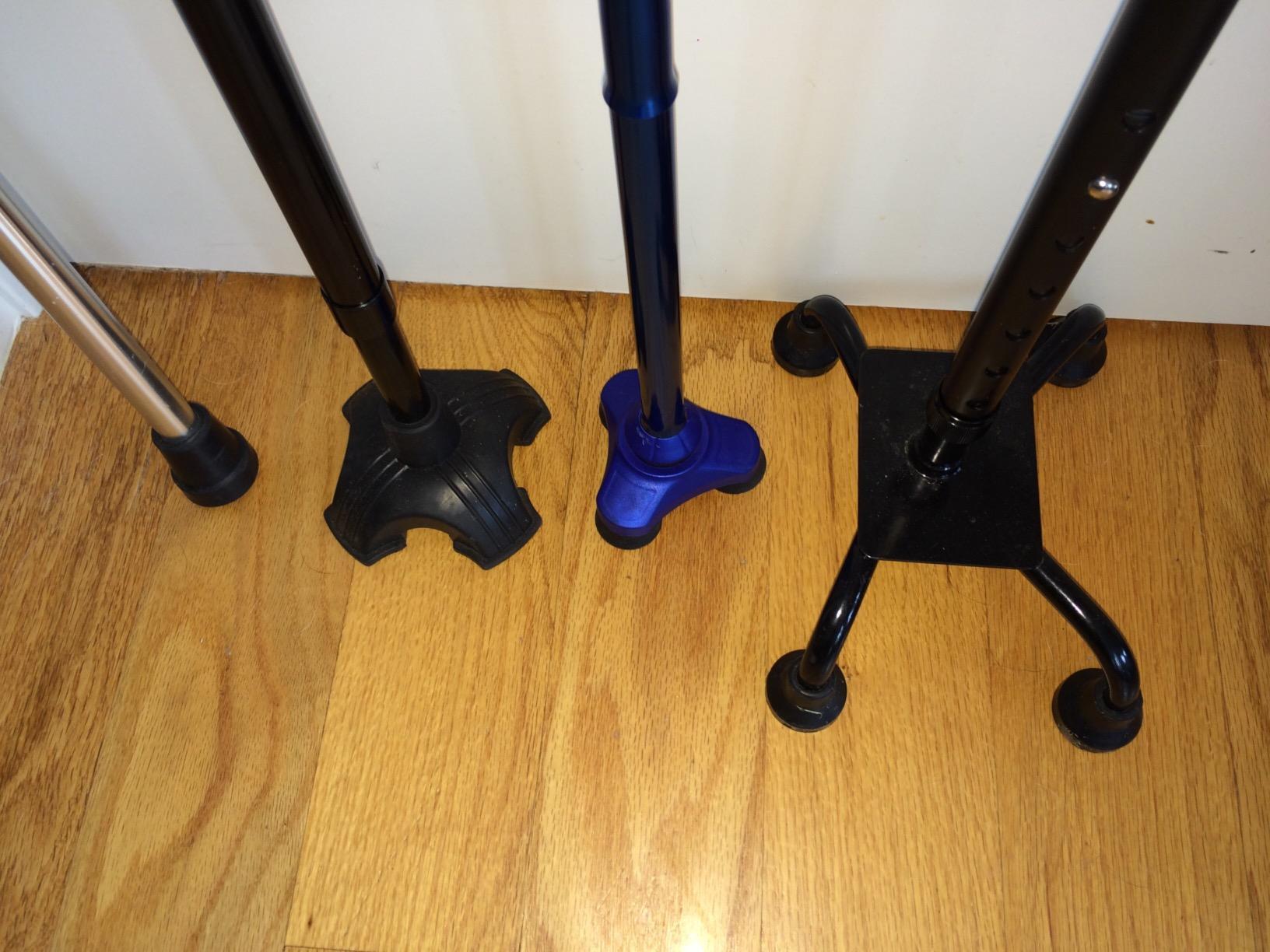
The most stable base is the large four-foot quad cane, and the ranking below is ordered by how much ground they cover at once. The further down the list, the fewer contact points you have and the more your own balance does the work.
Large-base quad cane: four points of contact across a wide footprint, usually 4.5 inches or more. Stands unaided and takes the most weight of any cane base. The trade is bulk, and it is noticeable in tight spaces.
Small-base quad cane: the same four points of contact in a tighter footprint. Excellent stability for indoor use, less coverage on uneven ground, and it can feel momentarily unsettled right after you set it down.
Self-centering quadpod or tripod: three or four points that re-centre under load. The most compact multi-point option and the least intrusive, with slightly less surface coverage than a wide quad.
Pivoting multi-tip cane: a rubber foot with several layers or prongs that flex and absorb on contact. Excellent on hard pavement and good for protecting joints, with less lateral stability than a rigid four-foot base.
Single-point cane: one tip, one contact point. Lightest, cheapest, folds smallest, and entirely adequate for mild instability or for recovery situations where the main goal is offloading a healing joint.
The drawbacks of quad canes nobody mentions
A quad cane is not automatically better. It slows you down, and for some people that is a real problem rather than a detail.
The base catches on door thresholds, elevator lips and stairs, and a caught base mid-stride is a fall. Users consistently describe the walk as clunky and slower, and the foot spacing needs a week of getting used to before your hand stops over-correcting.
They are also heavier than single-point canes, which loads the wrist more over a long distance unless the handle is offset. And a very wide base is a wide base, which is why the small-base and quadpod designs exist at all.
Finally, a self-standing cane is only self-standing until someone brushes past it. Wide-base models topple far more often than people expect.
Matching the base to your floors
Your flooring matters more than most buyers think. On smooth tile and polished wood, a hard single tip is at its worst, so a multi-layer or pivoting foot with good grip is the safer choice.
On carpet, the tip can sink and catch. A wide quad base rides on top of the pile better than a single tip digging into it. On thresholds and stairs, less base is safer, because a wide base snags.
Outdoors, wet pavement and gravel reward a wide footprint and a treaded tip. If you walk on uneven ground regularly, spend your budget on base width before you spend it on a designer finish.
How to Set Cane Height and Use It Correctly
Correct height is the single biggest factor in whether a cane helps or hurts, and most people set theirs too tall. The standard rule, repeated by physical therapists and health authorities, is simple.
1. Stand up straight in the shoes you walk in. Measure from the floor to the crease of your wrist.
2. Set the handle to that height. The top of the cane should sit level with your wrist crease. Most of these canes adjust in one-inch increments, so get as close as you can.
3. Check your elbow angle. Holding the cane, your elbow should be bent roughly 15 to 30 degrees, not locked straight. A straight elbow pushes all of your weight down the shaft and into the wrist.
4. Recheck after a week. New canes feel wrong for a few days. If your wrist or shoulder aches at the end of a walk, the height is the first thing to adjust.
If you feel you are leaning into the cane, it is too tall. If you are crouching slightly and pushing the handle up, it is too short.
Which side to hold it on, and how to walk
Hold the cane on the stronger side. This feels backwards at first, but the logic is sound: holding it opposite the weak leg means that when you plant the cane, your weight shifts toward the strong leg, and the weak leg is lifted and advanced rather than dragged.
Hold it with the handle in your palm, not your fingers wrapped around a bar. The grip should rest in the crease of your palm so your wrist stays straight.
To walk, move the cane and the weaker leg forward together, then step forward with the stronger leg. Take the same size step as you would without a cane. Turning is where the base catches, so pivot in small steps rather than swinging the cane around.
Going up stairs, lead with the unaffected leg and keep the cane behind you or on the lower step. Coming down, lead with the cane and the affected leg, and use the handrail if there is one.
Which Cane Matches Your Balance Concern?
Match the cane to the symptom, not to the age. These are the pairings that come up most often in the reviews and the community threads.
Dizziness or vertigo: you need something that stands unaided and does not require a tight grip at the exact moment you lose your footing. A self-standing quad with an offset foam grip is the safer pick, because a self-standing cane can be set down mid-episode rather than dropped.
POTS or dysautonomia: the same logic applies, plus weight. A heavier cane that you do not have to fight is easier to keep steady than an ultralight one. A forearm-cradle design removes the grip problem entirely, which is the complaint this group raises most often.
Peripheral neuropathy or nerve conditions: you lose feedback from the ground, so cushioning matters more than base width. A multi-layer shock-absorbing foot and a wide hand contact area are what you are buying.
Parkinson’s disease: the priority is a base that resists rotation and a handle you cannot accidentally release. A wide quad with a wide offset grip, or a forearm cradle, fits that better than a narrow single-point cane.
Post-operative knee or hip recovery: the aim is to offload the healing joint while walking normally. A small-base quad keeps the load in your arm and out of your knee without the bulk of a large base, and it stands beside the bed at night.
General weakness and fatigue: a heavier user needs a higher load rating than the standard 300 lb, which points to the 500 lb forearm-cradle design. A lighter cane is fine only if your balance issue is touch support rather than weight-bearing.
When a Cane Is Not the Right Aid
Sometimes a cane is the wrong answer, and hearing that early saves a fall. In a stroke survivor community, the most-upvoted answer on this topic is blunt: a cane is good if you have no balance problems, but with real balance problems a walker is the better choice.
Move up to a walker if you need both hands free for support, if you cannot safely lift a cane, if you have fallen twice or more in the last month, or if a therapist has told you your balance is not yet at cane level.
A hemi-walker is the step between: three or four legs with a horizontal handgrip, giving you a much wider and higher support surface than any cane. It is heavier and slower, and it will not fit where a cane does.
A rollator adds two wheels and a brake, and a seat if you need rest stops. It is the right call for someone who tires after a few minutes and wants to keep walking anyway.
Trekking poles are not a balance aid. They are excellent for hiking and for confidence on a trail, and they are worse than a cane for the purpose of this guide because the load is shared across two moving poles and your gait is not slowed. For a person with vertigo, that is a problem.
Once your balance is back to a stable baseline, training beats support. Our guides to wobble boards and balance boards cover the at-home work that keeps the gains, and a physical therapist can tell you when you are ready to step down from the cane to that.
One honest warning: a cane loads one side. Users with existing asymmetric hip or knee pain report that holding a cane made the pain worse on the opposite side, and some recommend a walking stick or crutches on hilly ground for that reason. If your pain is asymmetric, ask a physical therapist which side and which aid before you commit.
Cane Care and When to Replace a Part
A cane is cheap to maintain and most failures are wear items rather than structural ones. Check the tip first, because it is the part that touches the ground and the part that fails quietly.
A tip that is worn flat, split or slick means the cane is no longer gripping. This is the most common safety upgrade and several reviewers recommend replacing a new cane’s tip before anything else, particularly on hardwood or wet surfaces.
Quad bases wear faster than single tips because all the load passes through them. A rubber quad base on the Nova Joy model is expected to need replacing every few months at regular daily use, and replacements cost extra. A cane whose base has gone hard or shiny is the most common reason people stop trusting it.
On locking mechanisms, test the height adjustment every few weeks. A cane that drifts shorter as you walk is putting more load into your elbow than intended, and most push-button and flip locks tighten with a small adjustment rather than a replacement.
Retire the whole cane if the shaft is bent, the frame has developed a wobble at the base joint, or the lock will not hold at a height you can comfortably use. A cane is a load-bearing aid, and unlike a pair of glasses it is holding your weight every step.
Frequently Asked Questions
Can walking canes help with balance issues?
Yes. A cane widens your base of support beyond your feet, so when your centre of mass drifts toward a wobble there is still support underneath it. For mild to moderate balance concerns a correctly fitted cane is one of the simplest and most effective ways to reduce fall risk. Anyone with major balance loss should use a walker or rollator under clinical guidance instead.
What type of cane is most stable?
A large-base quad cane, with four points of contact across the widest footprint, is the most stable. Below that come small-base quad canes, self-centering quads and tripods, pivoting multi-tip canes, and finally single-point canes. More contact points and a wider footprint means more stability and more bulk.
What’s one drawback of using a quad cane?
It is bulkier and slower than a single-point cane. The wide base catches on door thresholds and stairs, the foot spacing takes practice, and the extra weight loads the wrist more over distance. A caught base mid-stride can itself cause a fall, which is why many users prefer a small-base or self-centering quad indoors.
How to walk with a cane when balance is bad?
Hold the cane on your stronger side, with the handle resting in your palm crease so the wrist stays straight. Move the cane and your weaker leg forward together, then step forward with the stronger leg, keeping steps the same size as normal without a cane. Set your height so the handle meets your wrist crease with a 15 to 30 degree bend in the elbow.
What is the best walking aid for poor balance?
For mild to moderate problems, a quad cane with an offset grip. For both-hand support, poor grip strength, or a history of repeated falls, a hemi-walker or a rollator is the better aid. A cane is a one-handed support that frees one hand but cannot widen your support surface as far as a walker can.
Which is better for seniors, a quad cane or a hurry cane?
A quad cane is better for real balance problems because four contact points stay planted and the cane stands on its own. A HurryCane-style folding cane is lighter, folds small, and is better for travel, mild instability and tiring legs, but it gives you only one contact point and needs a firm grip. Many people end up owning both.
How heavy a person should a cane support?
Most aluminum canes in this roundup are rated for 300 lb, with one foldable quad rated to 350 lb and one forearm-cradle cane rated to 500 lb. If you are above 300 lb, do not rely on a standard cane: check the listed load rating, or ask a physical therapist about a heavy-duty base.
The Bottom Line on the Best Canes for Balance
For most people who feel unsteady, the best canes for balance are the self-standing quad canes, because four contact points beat one every time and a cane that stands up is a cane you can let go of. Our top pick is the HurryCane at number one, whose pivoting three-point base settles on hard floors where a plain single tip does not. If you want four feet of contact in a package we would hand to almost anyone, the KINGGEAR at number two is the most complete option, and the GPTCAMP at number eight does the same job for less if your height suits its 36 inch maximum.
Travel and mild instability call for something that folds, which is where the REHAND at number three and the BeneCane at number ten fit. Heavier users and anyone whose wrists hurt should look past the whole group to the 500 lb forearm-cradle design, and anyone post-surgery should try the small-base quad before they commit to a walker.
Whatever you choose, get the height right first. A badly fitted cane transfers load to your wrist and shoulder, which is how a mobility aid ends up causing the pain it was meant to prevent. Updated for 2026, and if you have fallen recently, start with a conversation with a physical therapist rather than a shopping cart.