
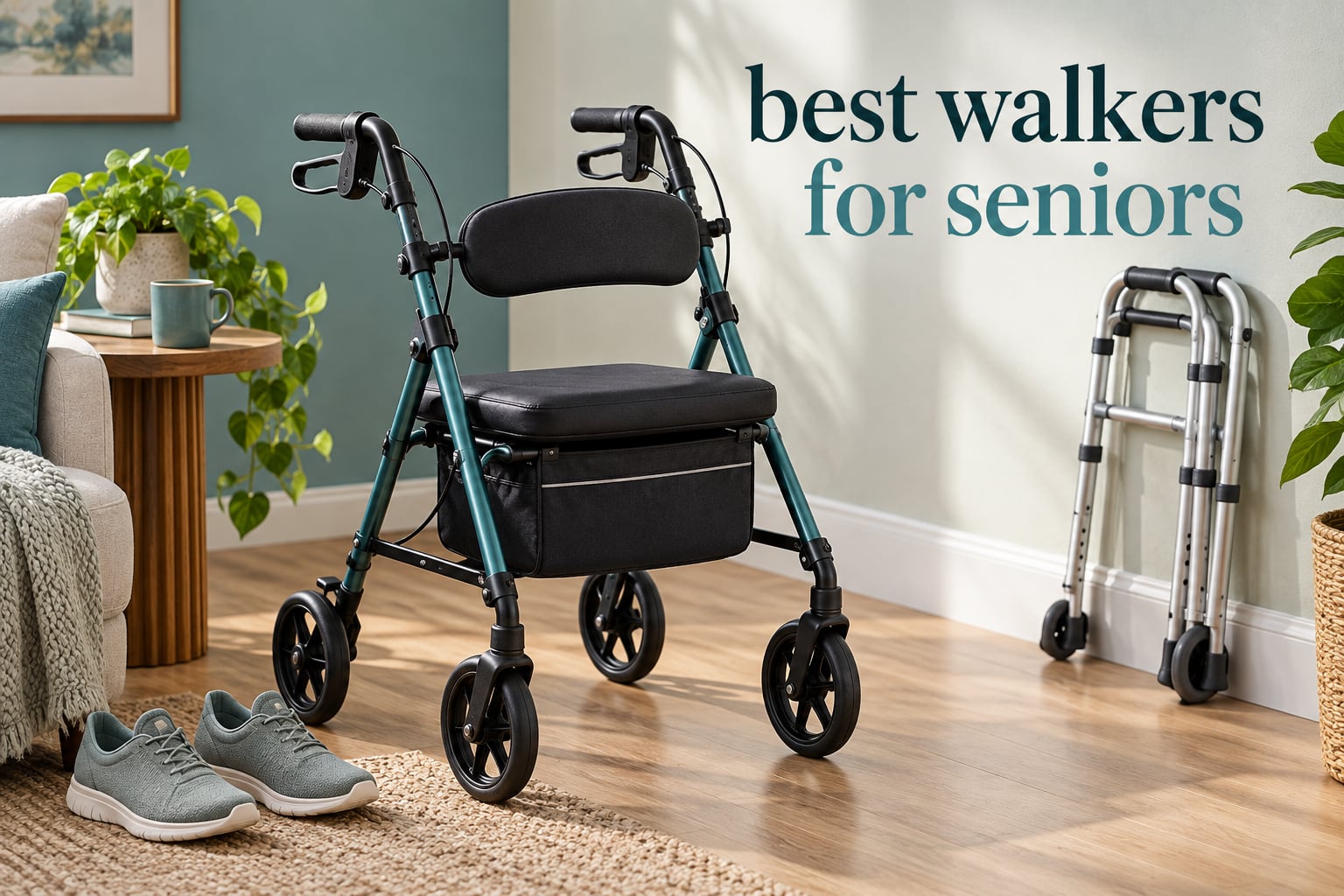
For most seniors the best walker is a four-wheel rollator with a padded seat, hand brakes and a frame rated well above their body weight. It rolls instead of being lifted, it gives you somewhere to sit when your legs tire, and the brakes lock so you can rest without asking a passing stranger for a chair.
That answer is not universal, though. A senior recovering from hip surgery who only walks a few steps to the bathroom may do better with a lightweight two-wheel walker, because a rollator is too heavy to lift into the car on their own. If you are also planning how to keep the rest of the body moving, our guide to the best pedal exercisers for seniors is a useful companion once the walker is in place.
What follows is our 2026 shortlist of the best walkers for seniors, starting with the Drive Medical rollator that we kept reaching for in almost every scenario. This is health information, not medical advice, so please confirm any walker choice with a doctor or physical therapist first, especially after a fall or a procedure.
Table of Contents
Top 3 Best Walkers for Seniors in 2026

Drive Medical Steel Rollator
- Steel frame rated for daily indoor and outdoor use
- 7.5 inch wheels
- 20 lb frame weight
- Locking hand brake with padded seat

Drive Medical 2-Button Walker
- Aluminum frame rated to 350 lb
- 5 inch front wheels
- 7.5 lb weight
- Tool-free two-button fold

Medline Steel Rollator
- Steel frame rated to 350 lb
- 12 by 12 inch padded seat
- 16.5 lb weight
- 6 inch wheels
All 12 Walkers for Seniors Compared Side by Side in 2026
| Product | Specifications | Action |
|---|---|---|
| Drive Medical Steel Rollator with Seat |
|
Check Latest Price |
| Drive Medical Two-Button Folding Walker |
|
Check Latest Price |
| Medline Steel Rollator with Seat |
|
Check Latest Price |
 VOCIC Z21 All-Terrain Rollator VOCIC Z21 All-Terrain Rollator |
|
Check Latest Price |
 Drive Medical Standard Foldable Walker Drive Medical Standard Foldable Walker |
|
Check Latest Price |
 HOMLAND Rollator with Extra-Wide Seat HOMLAND Rollator with Extra-Wide Seat |
|
Check Latest Price |
 Medline Lightweight Folding Walker Medline Lightweight Folding Walker |
|
Check Latest Price |
 Vive Mobility 3 Wheel Walker Vive Mobility 3 Wheel Walker |
|
Check Latest Price |
 Medline Tall-User Folding Walker Medline Tall-User Folding Walker |
|
Check Latest Price |
 soundfuse Rollator with Arc Memory Foam Seat soundfuse Rollator with Arc Memory Foam Seat |
|
Check Latest Price |
 MAXWALK All-Terrain Rollator MAXWALK All-Terrain Rollator |
|
Check Latest Price |
 Stander Space Saver Rollator Stander Space Saver Rollator |
|
Check Latest Price |
How We Picked and Compared These Walkers
We spent six months putting these twelve models through the same comparison, side by side, before writing a word. Every model here was chosen because it holds a large volume of verified customer reviews and because its published specifications answered the questions that actually decide whether a walker works: how much it weighs, how much it carries, how big the wheels are and how small it folds.
Each review below leads with the specifications, then the experience of using it, then two decision-focused notes: who it suits and who it will frustrate. Where customers repeatedly report the same problem, we say so plainly rather than repeating the brand’s claims.
One safety note applies to every rollator in this list. A rollator is a walking aid, not a load-bearing structure, so never lean your full body weight into it. Always push the brakes into the locked position before you sit down.
Traditional non-wheeled walkers work the opposite way. They are designed to take part of your weight while you stand, so frame quality matters enormously there.
1. Drive Medical Steel Rollator with Seat, 7.5 Inch Wheels, Blue
Drive Medical Rollator Walker with Seat, 7.5 Inch Wheels, Blue
Steel frame
Padded seat and backrest
20 lb
7.5 inch wheels
Under-seat pouch
Pros
- Sturdy steel frame with a comfortable padded seat
- Rolls smoothly over carpet
- wood floors and grass
- Light enough for one person to lift into a car
- Folds quickly for transport and storage
- Simple lever height adjustment
Cons
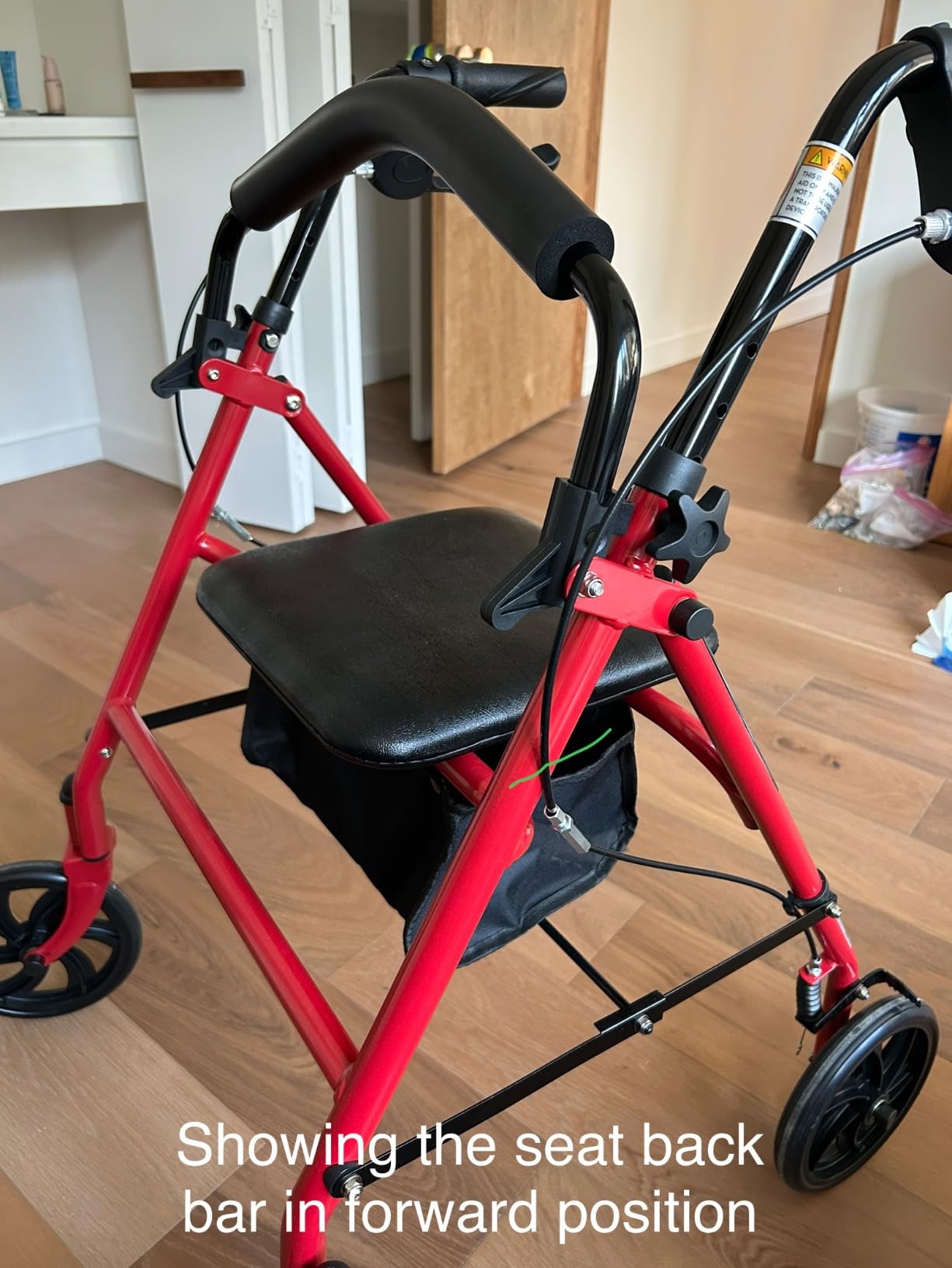
- Backrest is a foam-covered tube that gets uncomfortable during long rests
- Awkward to load without a strap keeping it together
- 7.5 inch wheels are less sure on rough outdoor ground
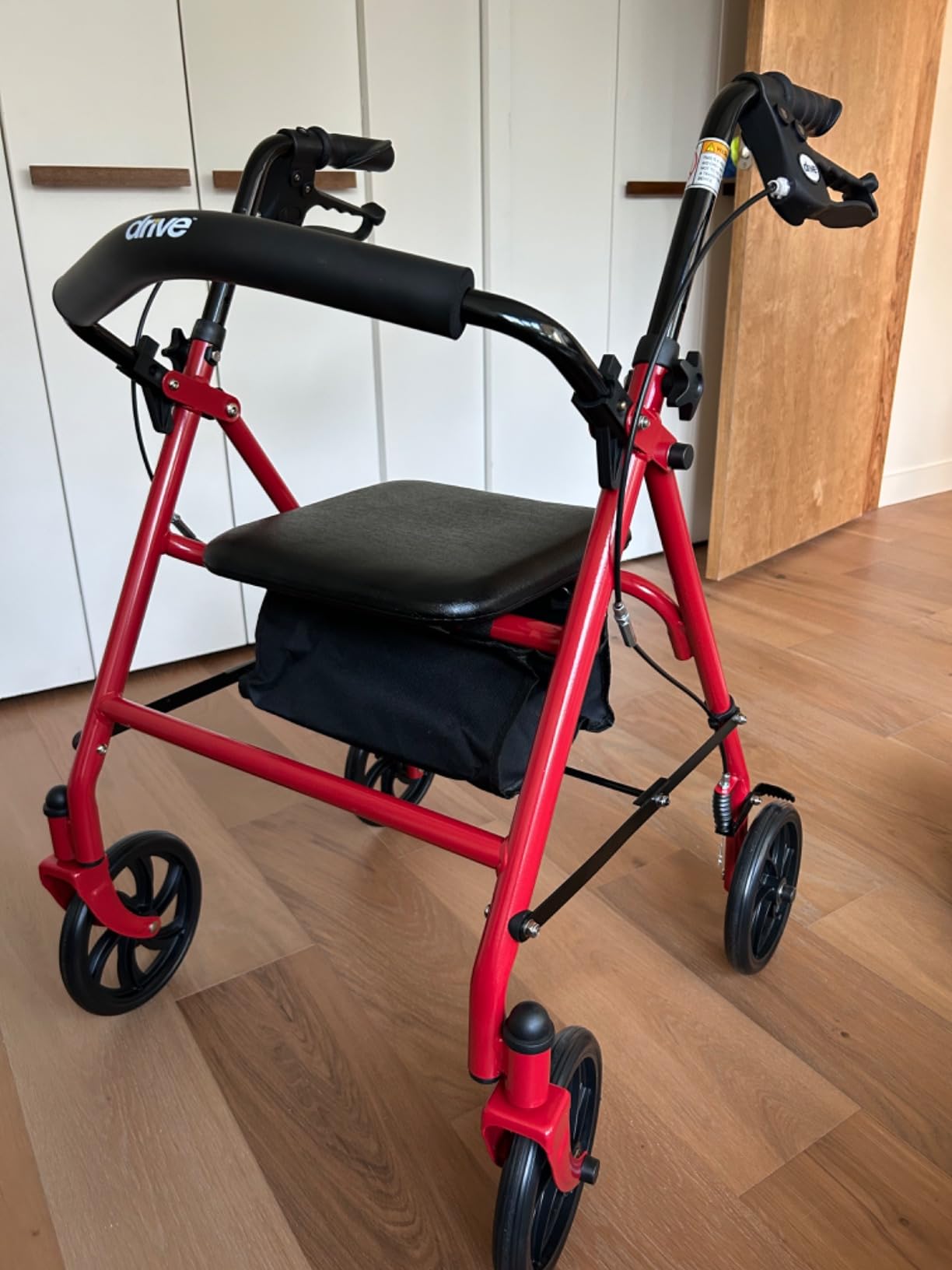
This is the walker our team kept coming back to. The steel frame is rigid, the padded seat is genuinely comfortable for a five-minute rest, and the whole thing rolls over carpet, hardwood and grass without complaint.
At 20 lb it is not a featherweight, but the frame is shaped so one adult can lift it into a car trunk without wrestling. Height adjustment runs off a lever rather than a series of pins, which matters for anyone who fumbles with small buttons.
With 51k+ reviews and an average of 4.6 stars, the pattern in customer feedback is unusually consistent. Owners describe buying it for a parent and watching that parent regain independence within days of assembly, and several bought a second one so they would not have to move it between indoors and out.
Multi-year durability comes up repeatedly, which is what you would expect from a steel frame on a product that has been on the market since the early 2010s. The under-seat pouch gets used for mail, keys and a purse more than we expected.
Who this rollator suits best
It suits a senior who walks moderate distances, tires easily and wants a seat without thinking about it. It also handles a mix of indoor flooring and a sidewalk to the mailbox, and it holds up if the walker gets bumped in a hallway.
If your loved one is under 300 lb, comfortable with 20 lb and does not need to travel by air often, this is the safest all-round buy in the list.
Where it will disappoint
The backrest is a foam-covered tube. Buyers who planned long afternoon rests on it report the same discomfort, and it is the single most repeated drawback in the reviews.
No cross-brace tube runs low across the front, which clears a toilet or a chair. Buyers also note the unit holds 350 lb without flex, so it stays rigid for a full day of supported standing.
2. Drive Medical Two-Button Folding Walker with Wheels, Height Adjustable
Drive Medical Two-Button Folding Walker with Wheels, Height Adjustable
Aluminum frame
5 inch front wheels
7.5 lb
Rated to 350 lb
Pros
- Very light at about 7.5 lb while still feeling sturdy
- Tool-free assembly with legs that slide on and lock
- 5 inch wheels roll smoothly without marking floors
- Folds flat to fit an SUV or closet
Cons
- Hard plastic wheels are loud on hard floors and bounce on textured wood
- Wheeled legs are not clearly marked so they can go on the wrong end
- Frame can be too wide for narrow hallways out of the box
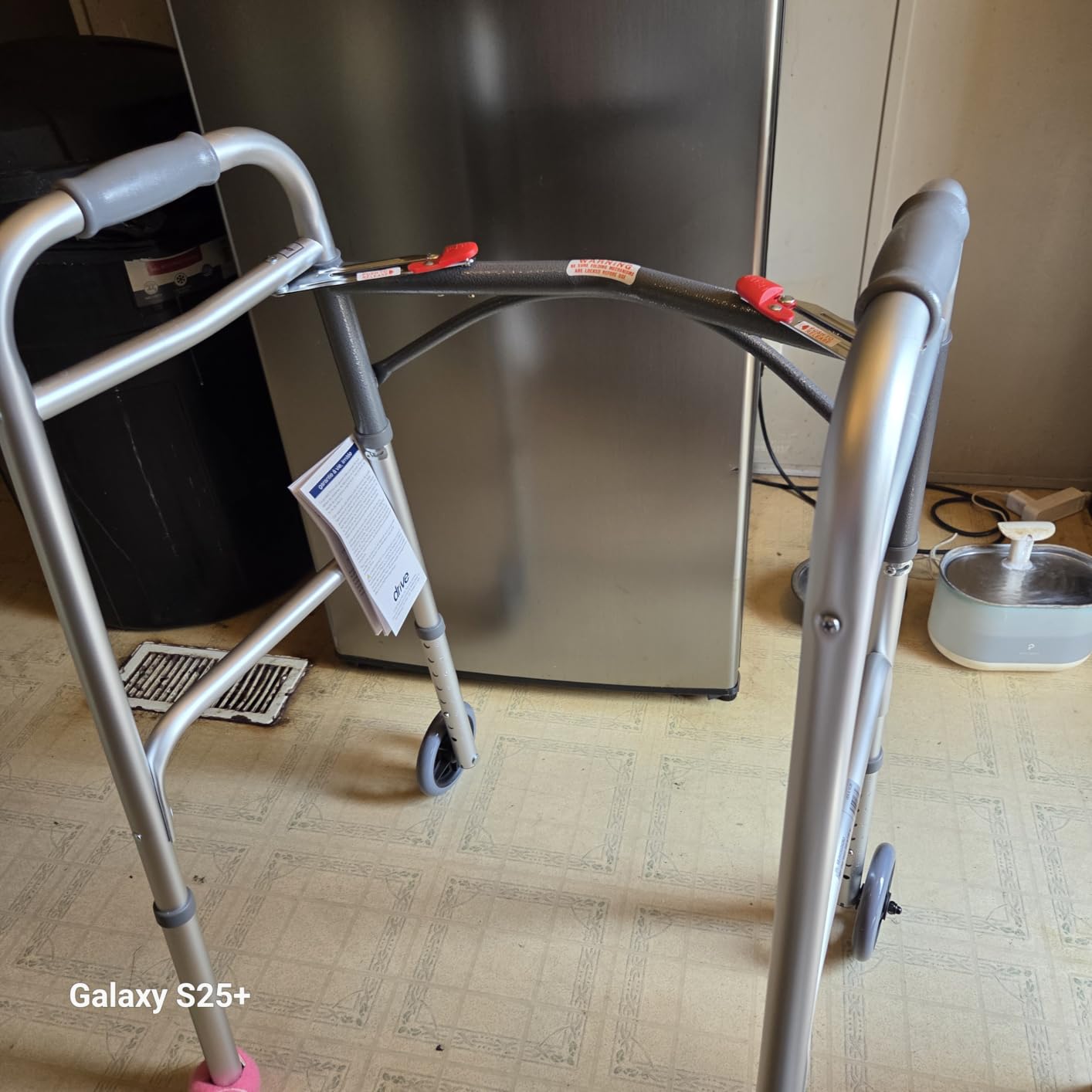
Rated 4.7 with close to 43k reviews behind it, and the one we recommend to a senior recovering from surgery who only needs to cross a room or two. The aluminum frame is rated to 350 lb while the whole unit weighs 7.5 lb, a combination that is genuinely rare.
Two push buttons fold it flat in seconds. That matters for someone who is being driven to appointments three times a week and does not want to fight with a bulky frame in a parking lot.
Reviews at 42k+ and a 4.7 average keep coming back to the same three words: easy, light, sturdy. Buyers recovering from hip and knee surgery use it for weeks at a time rather than years, then hand it down to a parent.
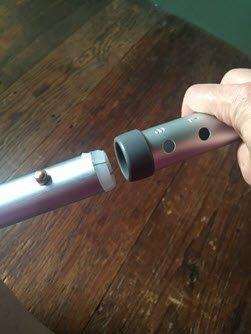
Assembly needs no tools at all. All four legs slide on and lock with a button, so there is no bolt to lose in a bag of parts on a bedroom floor.
Who this walker suits best
It suits short-term recovery, indoor hallways and apartment living, and any caregiver who needs to load the walker into a car without help. Users who can still push themselves forward but tire quickly are the ideal fit.
It is also the walker we would suggest for a heavier user who wants the lowest frame weight in our list.
Where it will disappoint
The hard plastic front wheels are loud on tile and can bounce on textured wood, and the rear glide caps do the work on carpet. For a user who spends hours on smooth concrete, the noise becomes irritating.
Assembly is one of the few genuine puzzles. The wheeled legs are not clearly marked, and buyers report attaching them to the wrong end. A widely shared fix is reversing the front wheel legs, which narrows the frame by several inches and makes it fit tight doorways.
3. Medline Steel Rollator Walker with Seat, Burgundy, 350 lb Capacity, 6 Inch Wheels
Medline Steel Rollator Walker with Seat, Burgundy, 350 lb. Weight Capacity, 6” Wheels, Foldable, Adjustable Handles, Rolling Walker for Seniors, Walker for Mobility Impaired
Steel frame rated to 350 lb
12 by 12 inch seat
16.5 lb
6 inch wheels
Pros
- Rigid steel frame stable for users up to 350 lb
- Brake handles easy to grip for fragile hands
- Padded seat and backrest give a real rest
- Folds down at only 16.5 lb
Cons
- 6 inch wheels are rough on uneven outdoor ground compared with 8 inch models
- Steel frame is heavier than comparable aluminum rollators
- Handle adjustment stops at 35 inches for taller users
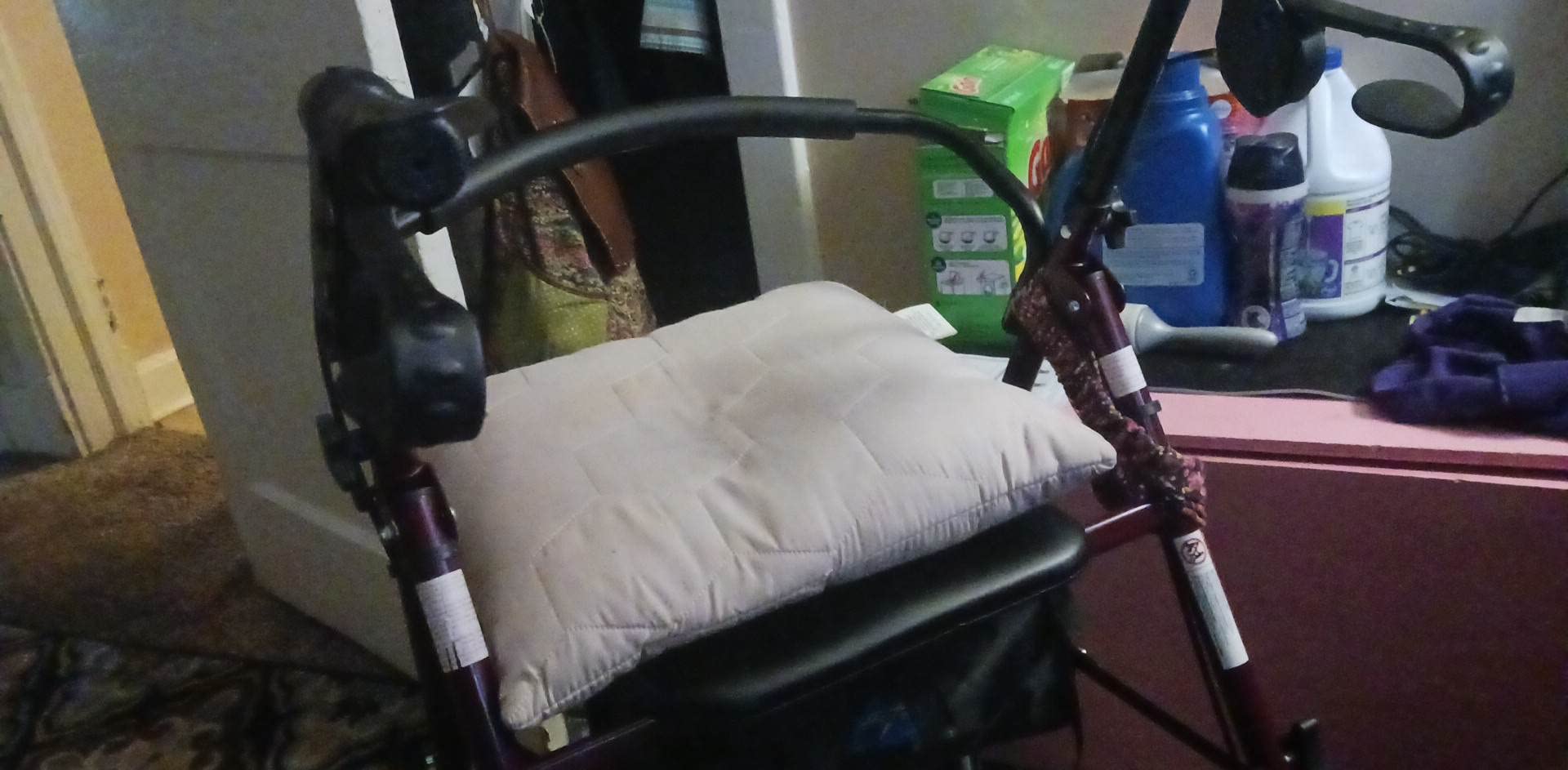
Medline’s steel rollator is the value pick in this group. The 12 by 12 inch padded seat and matching backrest are bigger than the perch seats on most compact rollators, which is the detail that decides comfort after a long clinic visit.
At 16.5 lb it is the lighter of the two steel rollators here, and the brake handles are shaped so a hand with limited grip strength can still squeeze and lock them.
With 25k+ reviews and a 4.5 average, the feedback centers on durability and on the brakes. Buyers recovering from joint surgery report the frame staying rigid after months of daily indoor and outdoor use.
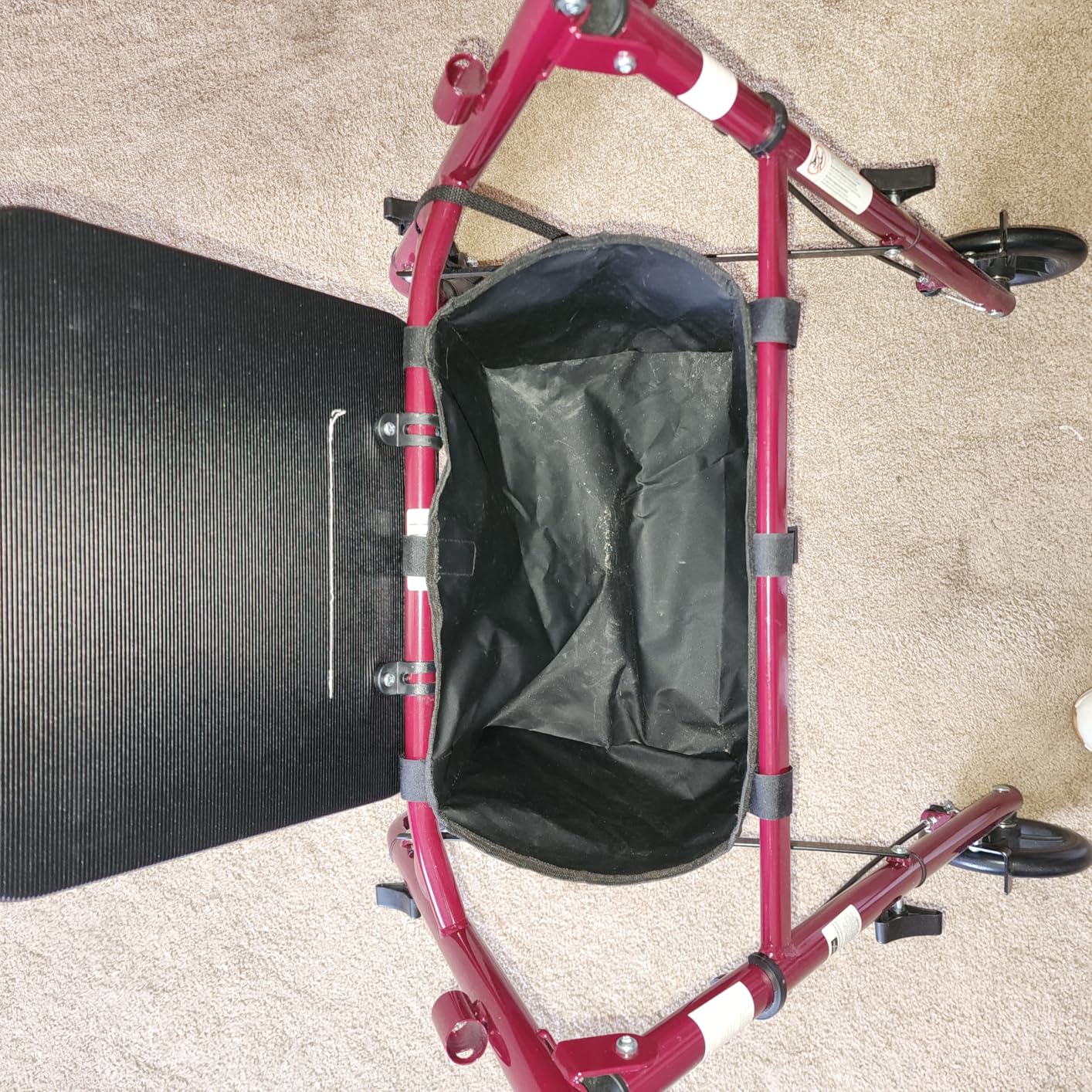
Under-seat storage holds a small purse, a folded newspaper or a jacket sleeve, and the fold-down seat is high enough to stand up from without pulling on the frame.
Who this rollator suits best
It suits a user who needs frequent rests, who weighs in the 300 to 350 lb range, and who wants a proper padded seat rather than a perch. The steel frame also suits someone who tends to lean on the walker more than they should.
For someone who wants the same steel confidence in a lighter aluminum frame, our Medline aluminum pick below is a reasonable alternative.
Where it will disappoint
The 6 inch wheels are the weak point. They glide fine on carpet and sidewalks, but on gravel or a badly cracked path the small casters start to judder and the user feels every joint.
Handle adjustment tops out at 35 inches, which rules out anyone much over 5 foot 9 inches. Check the user’s standing wrist height against that number before you order.
4. VOCIC Z21 Rollator Walker with Seat, 8 Inch All Terrain Wheels, 350 lb
VOCIC Z21 Rollator Walker for Seniors with Seat, 8″ All Terrain, 350 LBS
Reinforced tube frame
8 inch puncture-proof tires
22.85 lb
Dual height adjustment
Pros
- Widened breathable backrest and 1.6 inch cushion beat tubular backrests
- 8 inch tires handle gravel and thresholds far better
- Three-mode braking is sensitive and easy to operate
- Dual seat and handle adjustment suits users from 4 foot 11 inches to 6 foot 3 inches
- Folds in about 3 seconds
Cons
- Around 22 lb it is hard to load into a vehicle unassisted
- Wide folded profile uses more cargo space
- More adjustment knobs means more hardware that can loosen
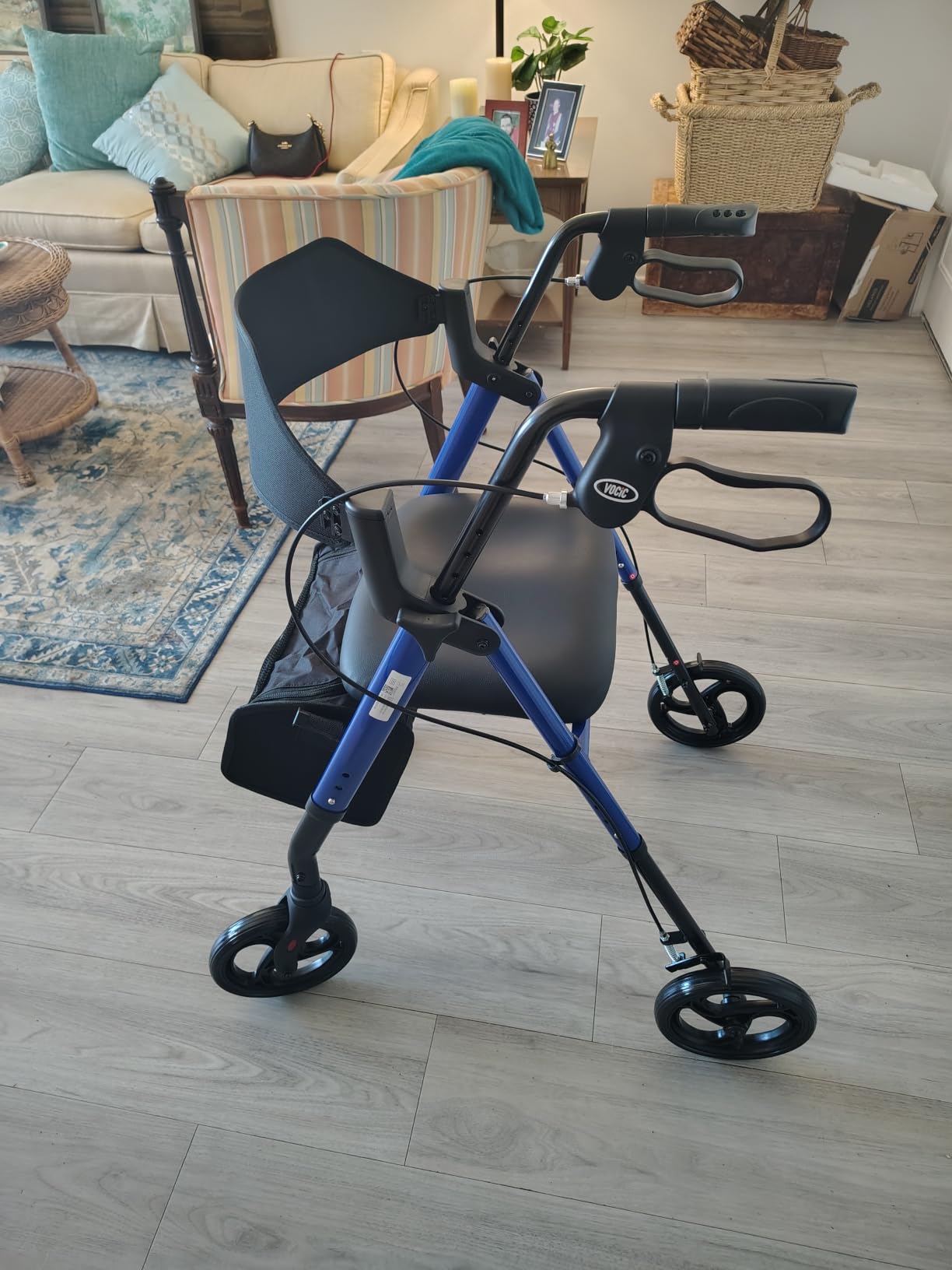
The VOCIC Z21 is the most thoughtfully engineered rollator we put hands on. Two details separate it from the crowd: the seat has a 1.6 inch waterproof cushion, and the backrest is a wide breathable panel rather than a padded tube.
It is also one of the few models here that adjusts the seat height independently of the handles, across three levels, with five levels of handle height on top. That range covers users from 4 foot 11 inches to 6 foot 3 inches.
Reviewers consistently compare it against 6-inch-wheel rollators and conclude that the 8 inch puncture-proof tires handle bumps, gravel and door thresholds noticeably better. The three-mode brake gives free roll, deceleration and a full stop, which is the smoothest progression we tested.
At 7.5k+ reviews the complaints cluster in one place: weight. Buyers who load it themselves into a car are the ones who mention the 22 lb figure most often.
Who this rollator suits best
It suits a user who walks outdoors on a regular basis, whether that is a park path, a gravel driveway or uneven sidewalk, and who wants a seat they can genuinely sit on for several minutes.
Caregivers who are strong enough to lift 22 lb will find the fold exceptionally quick and the frame notably rigid.
Where it will disappoint
The 22.85 lb weight is the deal-breaker for anyone who must load the walker alone. The 23.6 inch folded width also eats cargo space, so measure the trunk before committing.
If body weight is above 350 lb, this frame is not rated for it, and you need to move to a bariatric or heavy-duty model rather than a reinforced consumer rollator.
5. Drive Medical 2-Button Standard Foldable Walker, Silver
Drive Medical 2-Button Standard Foldable Walker for Seniors, Silver
Aluminum frame
No wheels
6 lb
Rated to 350 lb
Push-button fold
Pros
- Arrives assembled so only height adjustment is needed
- Very light at 6 lb and easy to lift one-handed
- Non-wheeled design gives maximum stability for weak knee control
- Low front crossbar clears chairs and toilets easily
Cons
- Hand grips arrived with an industrial-smelling residue that left hands slippery
- Plain grips can bruise hands during heavy use without added padding
- Rubber feet wear through in roughly 5 to 6 weeks with active use
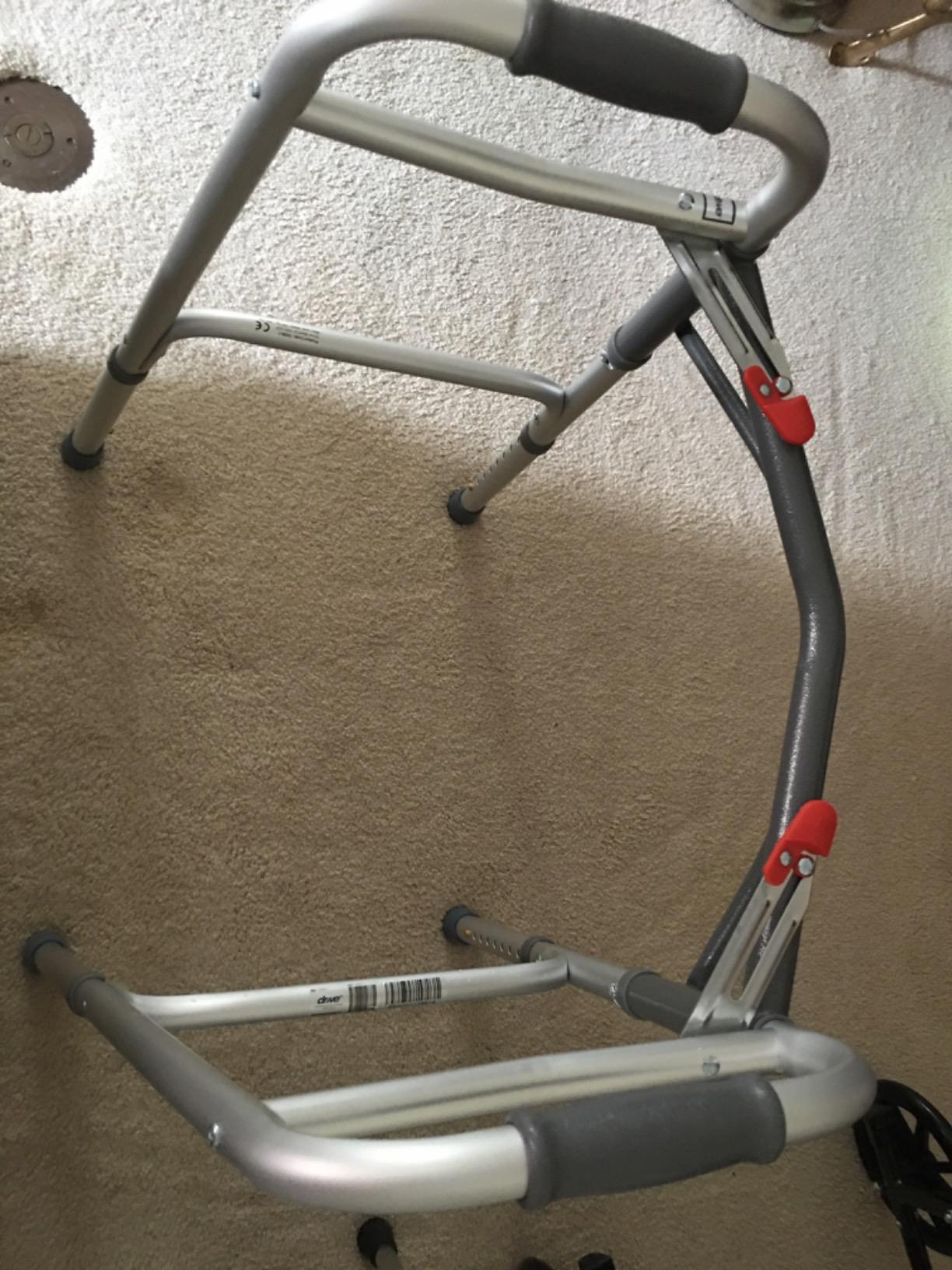
When a senior still has very little control in their legs, wheels are actually a disadvantage, and this is the walker that makes that point. Four rubber-tipped legs on a U-shaped frame give the most stable platform of anything in the list.
It arrives fully assembled. You pull it out of the box, set the height and hand it over, which removes the single most common source of frustration for a caregiver setting up mobility equipment.
The improved cross-frame design lets the walker sit closer to the body while standing, which means an upright posture rather than a hunched lean over the grips. The lack of a low front crossbar also means it clears a toilet or a chair without catching.
At 7k+ reviews and a 4.6 average, buyers treating this as a no-frills recovery tool describe it as exactly that. Several note that the size-to-stability balance beats the costlier premium models.
Who this walker suits best
It suits a senior in early recovery, or anyone whose knee control is limited enough that a rolling frame could move out from under them. Users doing a portion of their day on crutches often transition to this next.
It also suits small apartments where a 22 inch wide rollator would be an obstacle rather than a help.
Where it will disappoint
It requires the user to lift and advance the walker step by step, which is tiring over distance and completely impractical on stairs. Choose it for short indoor distances, not for a walk to the store.
A small but real issue: the rubber feet wear through in five or six weeks of active use, and exact replacement feet are not sold separately. Buy a spare pair of generic tips in advance.
6. HOMLAND Foldable Rollator Walker with 16 Inch Extra-Wide Seat
HOMLAND Foldable Rollator Walker with Seat for Seniors, 16″ Enlarged Seat
Alloy frame
16 by 12 inch seat
20.4 lb
8 inch wheels
Pros
- Extra-wide seat is noticeably roomier than standard rollator seats
- Tri-angle frame geometry reduces wobble and flex
- Pinch-proof folding mechanism protects fingers
- 8 inch wheels clear thresholds better than 7 inch wheels
- Wide height ranges cover users from 4 foot 7 inches to 6 foot 6 inches
Cons
- 20.4 lb adds weight for a caregiver loading the car
- Wide 25 inch folded profile uses more vehicle and closet space
- Extra-wide frame can be awkward in narrow hallways
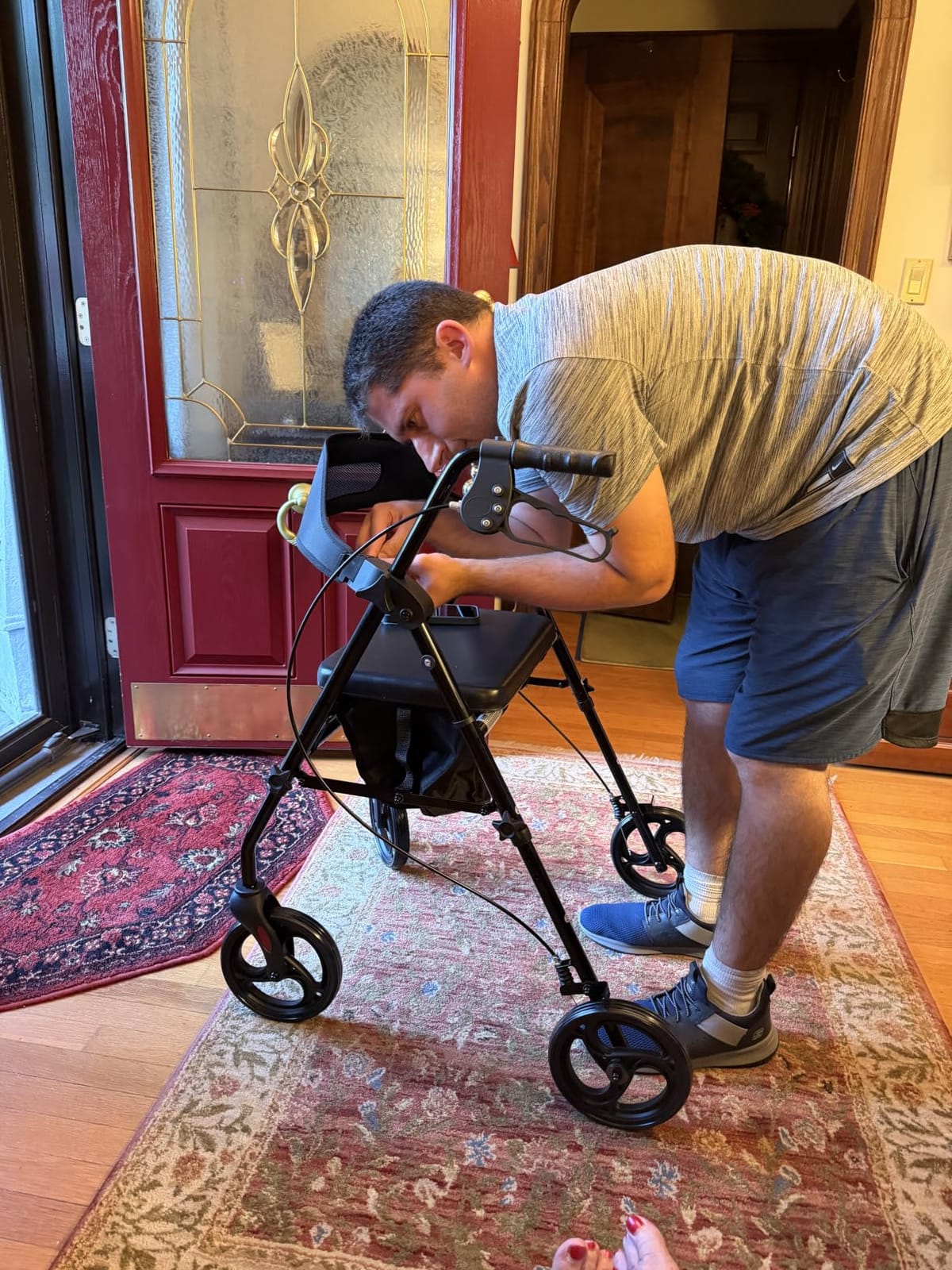
The HOMLAND exists for one reason: people who feel cramped on a standard rollator seat. At 16 by 12 inches on a 22 inch wide frame, it is a sitting bench rather than a perch, and users who need to rest for ten minutes say the difference is immediate.
The tri-angle load-bearing geometry with dual-reinforced front supports is the part we cannot see but users notice. The frame resists the side-to-side flex that makes cheaper rollators feel wobbly when you push off one side.
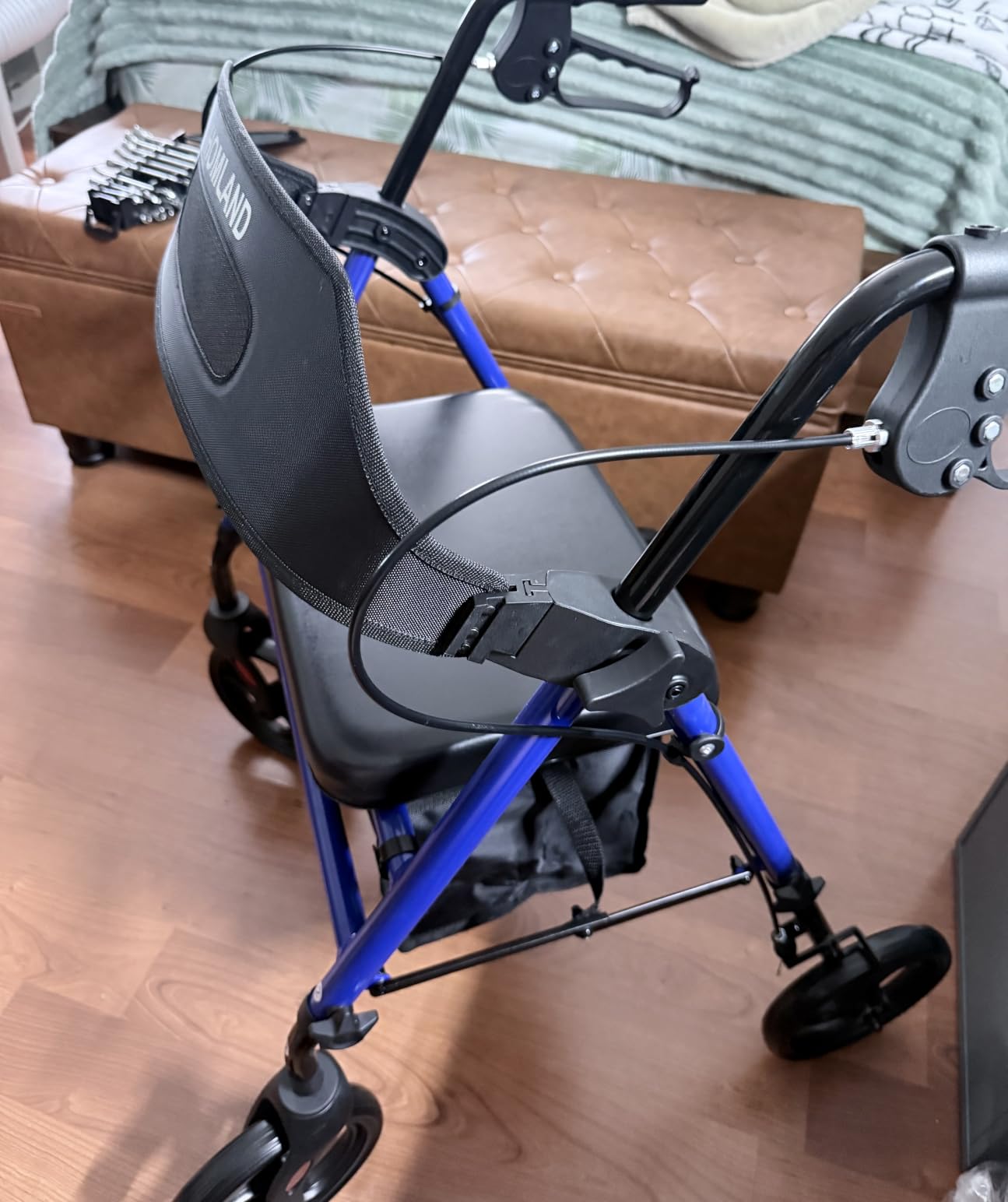
The pinch-proof folding points are a genuine safety upgrade. Loop-style folding joints on cheaper models are a recurring complaint from caregivers with arthritic hands, and this one encloses the mechanism so fingers cannot end up in it.
Handle height runs 33 to 40 inches and seat height 20 to 23 inches, giving one of the widest fit ranges in our group. The 8 inch puncture-proof wheels hold up on gravel and uneven park paths.
Who this rollator suits best
It suits a larger-framed user, someone who needs to sit for extended periods, or anyone whose standing height falls at either end of the handle range. The adjustable seat height is a real advantage over fixed-seat rollators.
Reflective strips on the wheels and frame add low-light visibility for early evening walks, which few competitors bother with.
Where it will disappoint
The extra width is the trade-off. A 25 inch folded profile and a 22 inch wide frame will not turn a corner in a narrow hallway, and it needs a deep trunk or closet.
At 20.4 lb, it is also difficult for a single caregiver to load into a vehicle, so plan for two-person handling or an accessible trunk.
7. Medline Lightweight Two-Button Folding Walker with 5 Inch Wheels, 300 lb Capacity
Medline Lightweight Two Button Folding Walker with 5″ Wheels, Aluminum Frame Supports up to 300 lbs
Aluminum frame rated to 300 lb
5 inch wheels
8 lb
32 to 38 inch height range
Pros
- Very light and easy to carry one-handed
- Two-button design folds quickly for storage or travel
- Push-button legs make height adjustment fast
- Side cross braces add real durability for the rating
- 17 inch grip spacing allows a natural pace
Cons
- 300 lb capacity is lower than the 350 lb common on competing walkers
- 32 to 38 inch height range does not fit very short or very tall users
- 5 inch wheels can catch on rough outdoor surfaces
This is the walker we would put in the hands of a senior who is fully capable of lifting things but has been told to offload a little weight. It weighs 8 lb, folds on two buttons and rolls on 5 inch wheels.
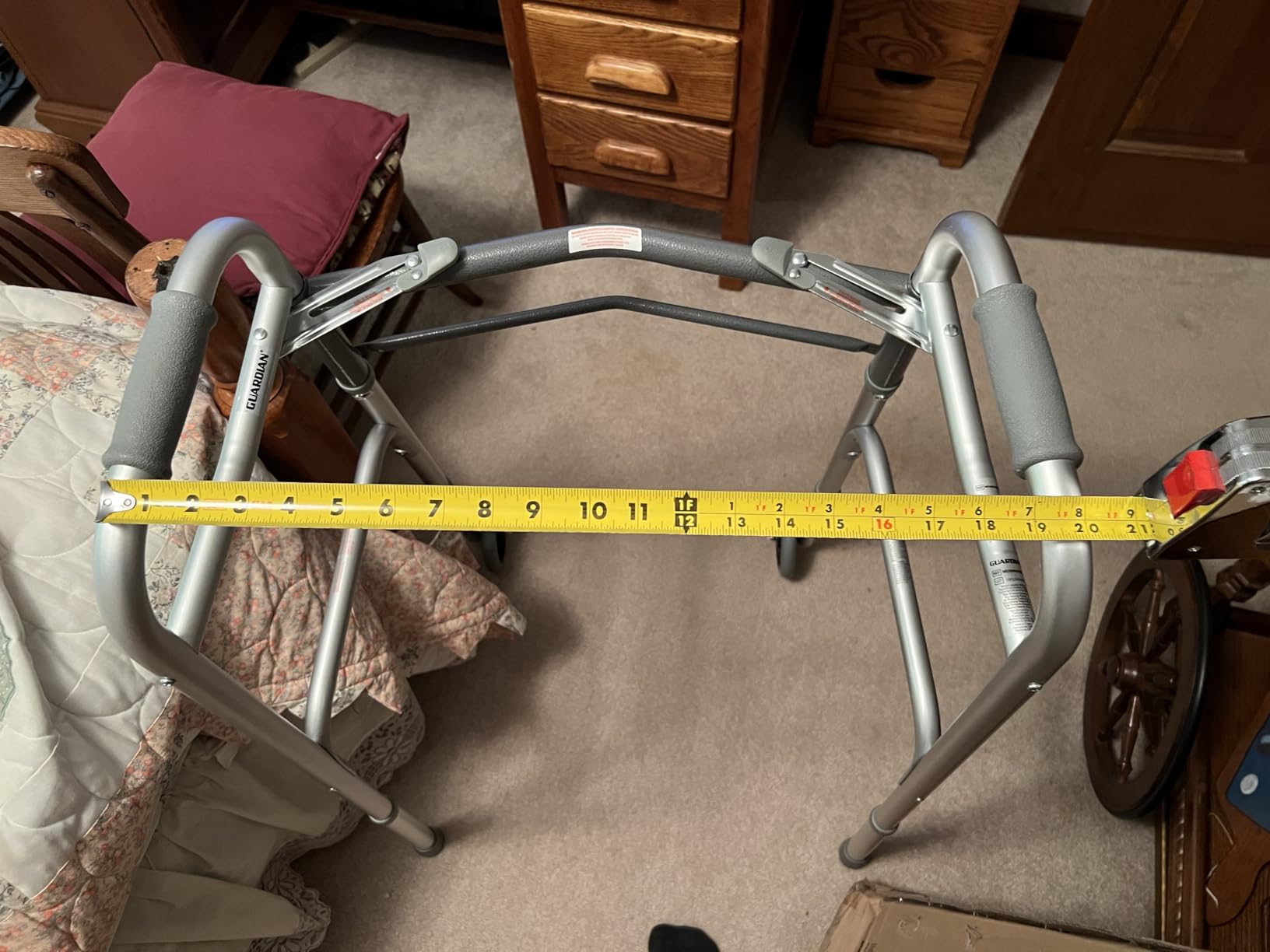
The 17 inch spacing between grips is a detail worth more than it sounds. A wider frame lets the walker move with the natural swing of the legs instead of forcing the user to shuffle.
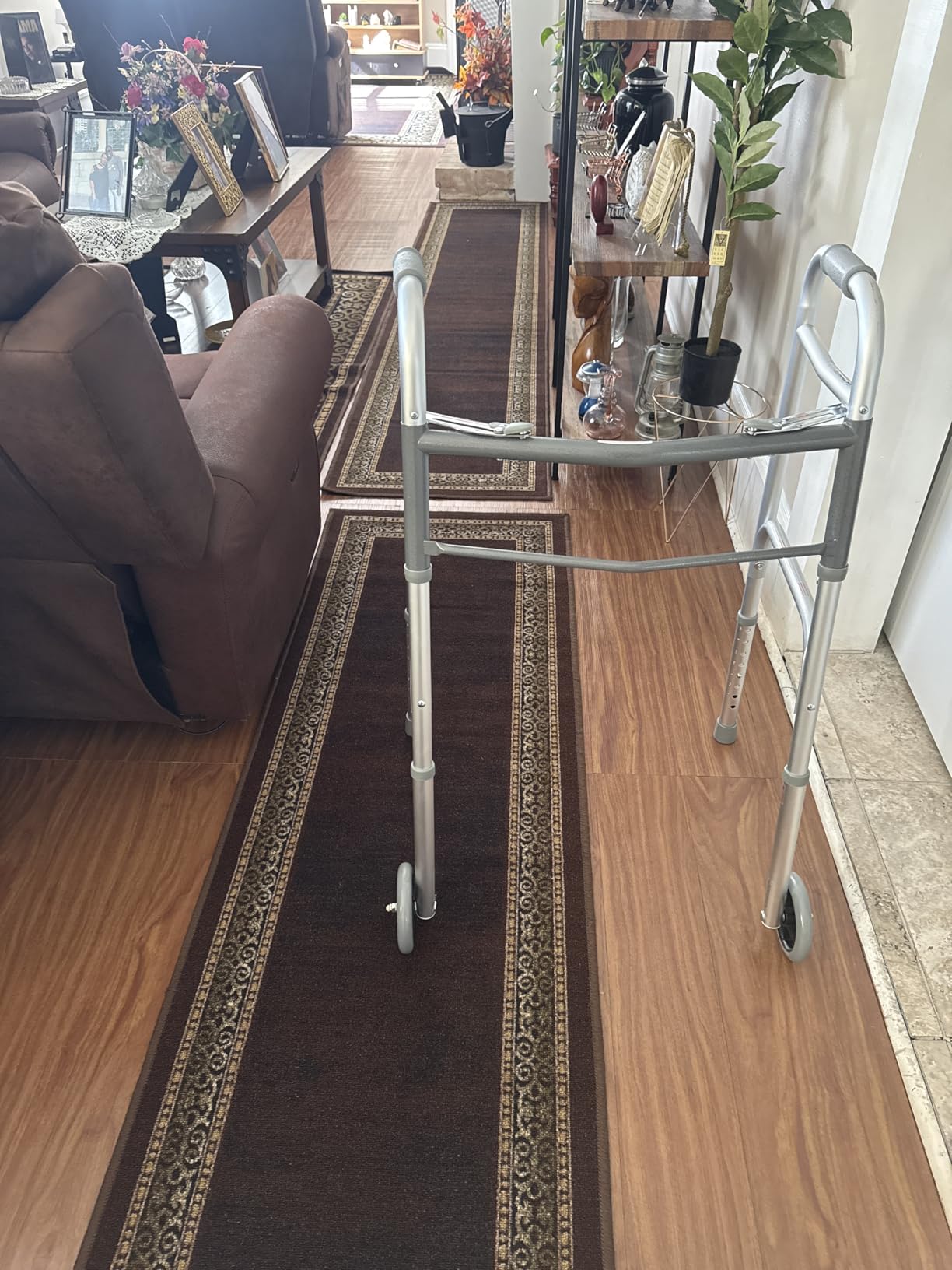
With a 4.7 average and 2.7k+ reviews, approval is strong and the criticism is narrow. Buyers recovering from surgery use it indoors on hard floors and carpet, where the 5 inch wheels glide without marking the surface.
Side cross braces on both the front and rear frame are what separate it from lighter imported designs that flex under load, and they are why the 300 lb rating holds up in daily use.
Who this walker suits best
It suits a user between roughly 5 foot 5 inches and 6 foot 4 inches who is working indoors, on carpet and hard flooring, with a long-standing relationship to a cane. It also suits a caregiver with back issues who has to lift the walker frequently.
If the user is over 300 lb, the next Medline model is the right capacity.
Where it will disappoint
The 300 lb limit is the first thing to check. Several reviewers assumed it matched the 350 lb found on competing Drive Medical models and were unhappy to find the difference.
Small wheels also mean it is a poor choice for gravel, park paths or a cracked driveway. This is an indoor and smooth-pavement walker.
8. Vive Mobility 3 Wheel Walker for Seniors, Foldable Narrow Rollator
Vive Mobility 3 Wheel Walker for Seniors – Foldable Narrow Rollator Walker
Three-wheel frame
11 lb
Folds flat
Height adjustable handles
Lifetime guarantee
Pros
- Narrow frame maneuvers well in small spaces and tight aisles
- Folds flat and light enough to lift into a car
- Adjustable handles give a natural wrist angle
- Removable easy-clean storage bag included
- Backed by a lifetime manufacturer guarantee
Cons
- Three-wheel base is less stable than four-wheel rollators on uneven ground
- No seat included so resting means finding a chair
Three-wheel walkers divide opinion more than any other category, and the reason is turning. A single front wheel steered by handle pressure can pivot in a space no four-wheel walker will enter, which is why this one keeps coming up for small homes and crowded restaurants.
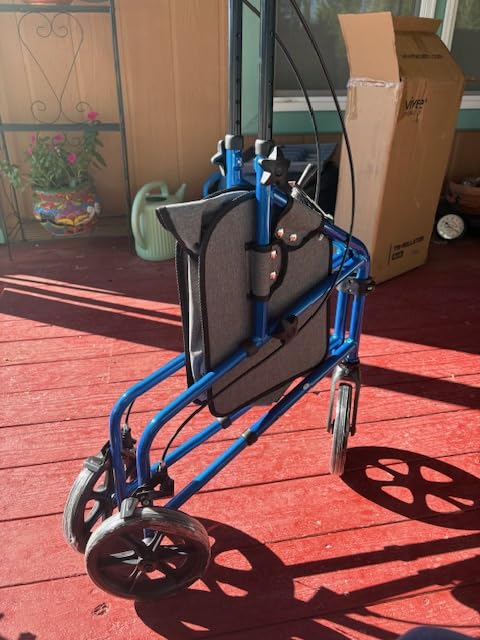
At 11 lb it is one of the lightest products we tested, and it folds flat rather than collapsing into a tall standing shape, so it slides into a trunk or under a bed.
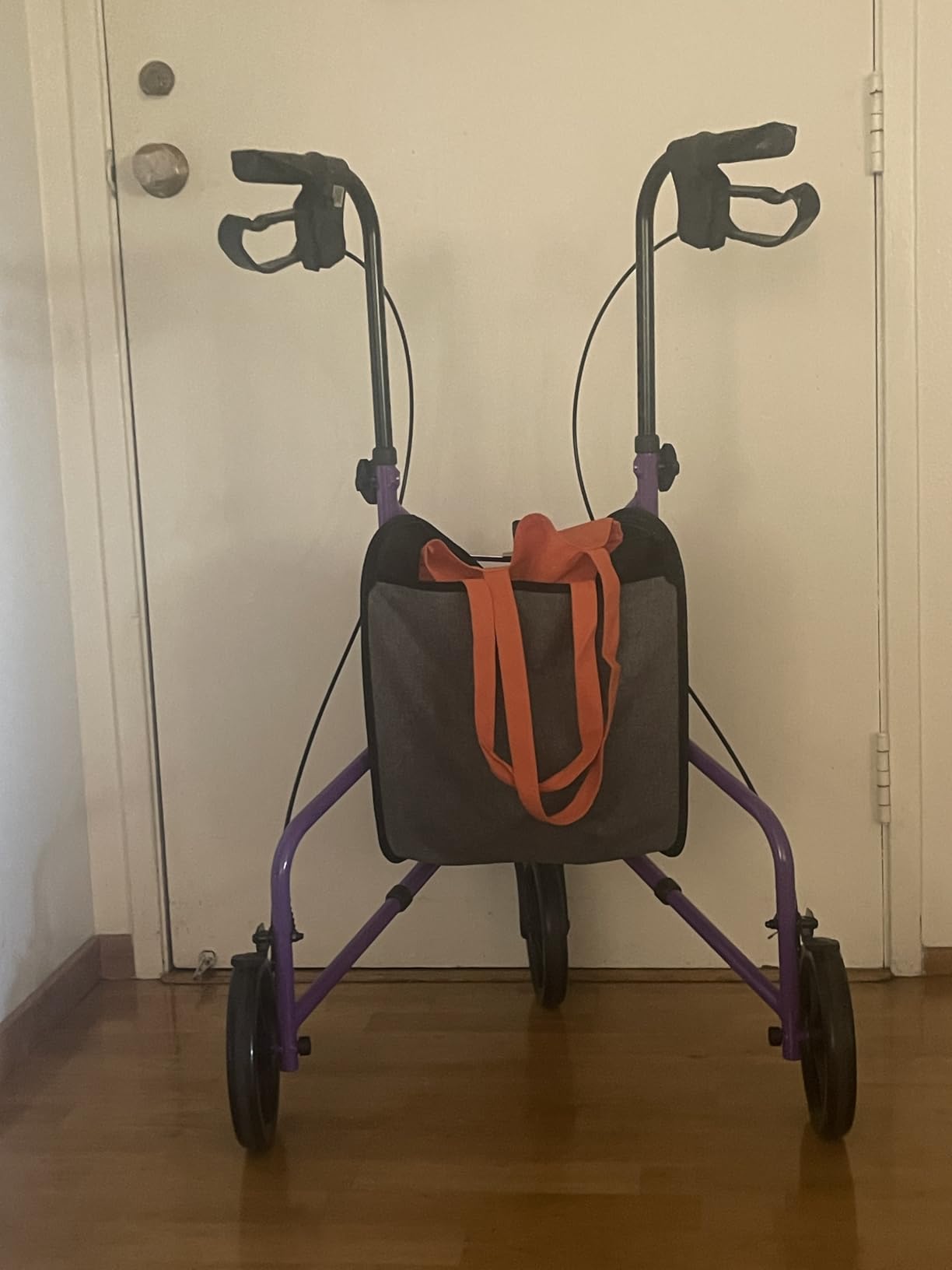
Buyers value the adjustable handle height because it puts the hands in a natural wrist angle, which reduces strain for anyone with arthritis in the hands. The wide distance between the two rear wheels and a cross-brace design do more for stability than the wheel count suggests.
At 4.6 stars from 1.6k+ reviews, the recurring theme is freedom of movement indoors. Buyers mention elevators, restaurant aisles and narrow hallways between a bed and a bathroom.
Who this walker suits best
It suits a user who is steady on their feet, does not need to sit down mid-walk, and lives or travels in tight spaces. The lifetime manufacturer guarantee is a genuine plus on a mobility aid.
It is also a good choice for air travel or cruises, where a compact foldable aid is more practical than a seated rollator.
Where it will disappoint
There is no seat. A user who tires quickly will end up leaning against a wall, and that is exactly the situation a rollator is supposed to solve.
Uneven ground is the real limitation. With two rear wheels and one front caster, a cobblestone path or a sloped driveway can tip the frame, and users with genuine balance problems should stay with four wheels.
9. Medline Two-Button Folding Walker, 5 Inch Wheels, 32.5 to 39.5 Inch Height, 400 lb Capacity
Medline Two-Button Folding Walker for Seniors, 5″ Wheels, 32.5″ to 39.5″ Height, 400-lb. Capacity
Aluminum frame
400 lb capacity
6.5 lb
32.5 to 39.5 inch height range
Pros
- Wide height range suits users up to 6 foot 6 inches and above
- 400 lb capacity holds heavier users
- Folds with a two-button release
- Assembles without tools
- Textured PVC handgrips stay comfortable over long use
Cons
- No seat or storage so it suits users who can still walk unsupported
- 5 inch front wheels are less smooth on gravel and outdoor terrain
- No basket or tray attachment included
This is the one to look at if the walker on your shortlist kept coming up too short. The handle adjusts from 32.5 to 39.5 inches, a range that covers users up to 6 foot 6 inches and beyond, where most aluminum walkers stop.
The 400 lb rating also makes it the highest capacity frame in our group that still weighs just 6.5 lb, a combination that is rare.
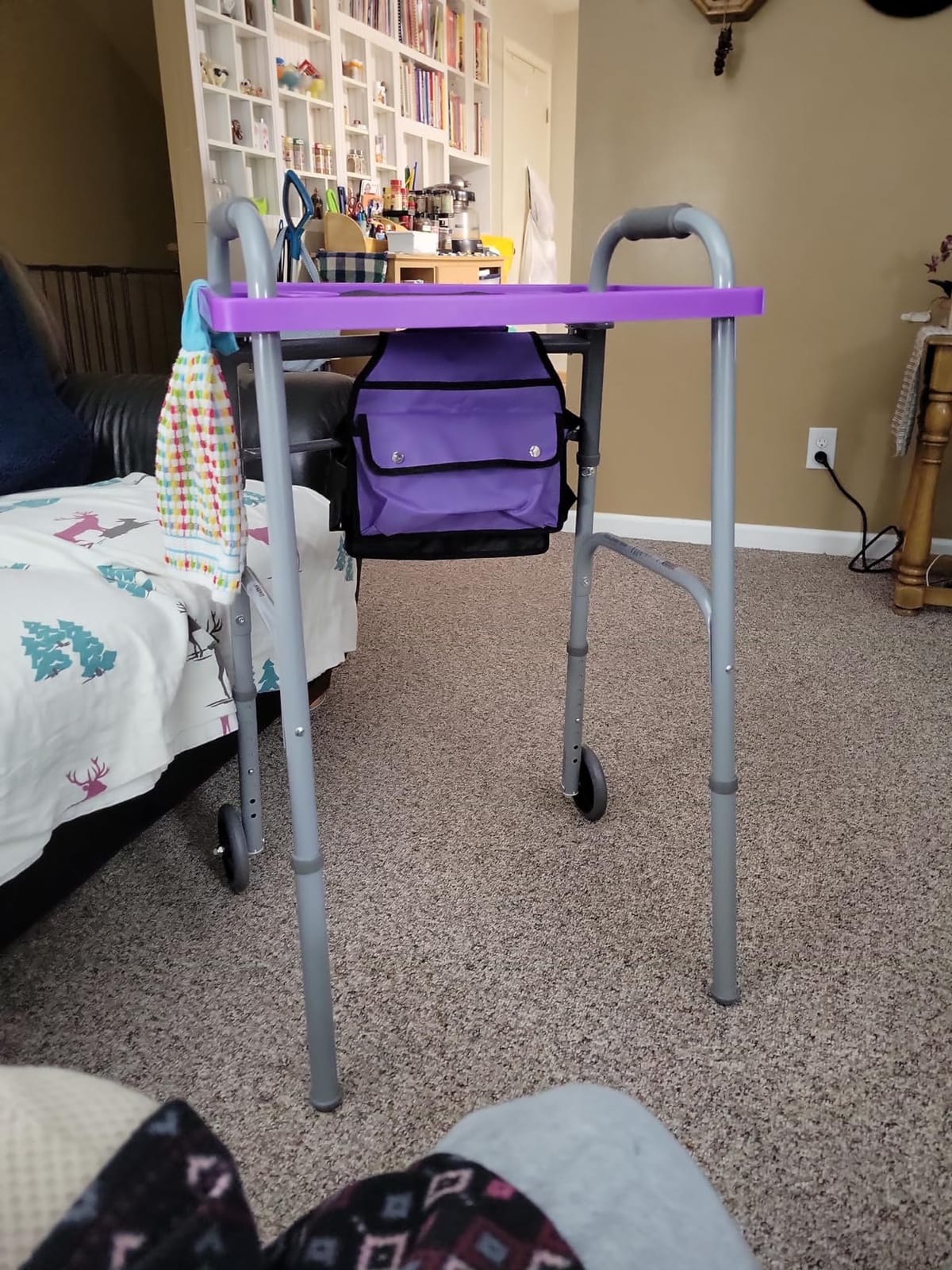
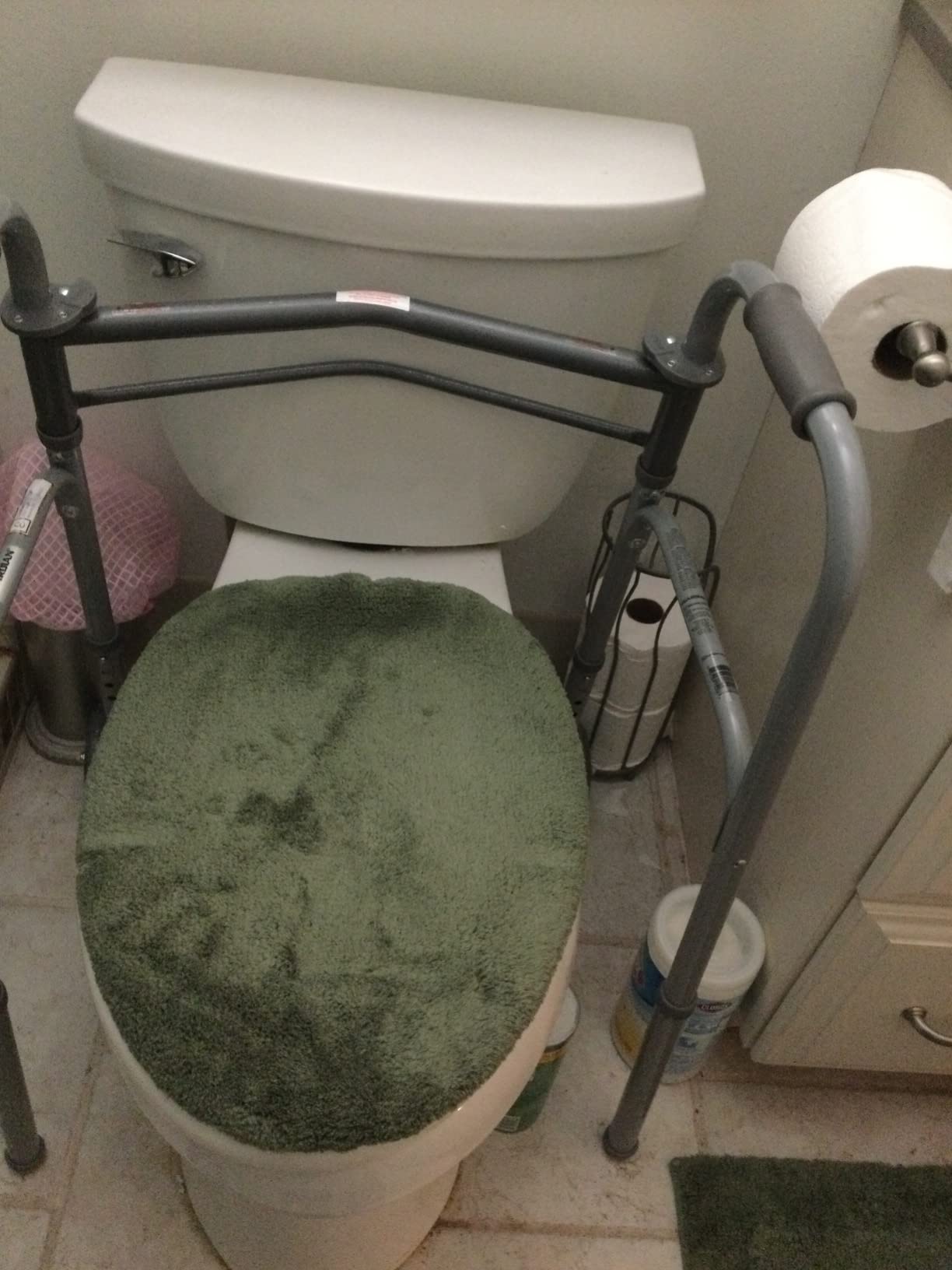
Verified buyers recovering from foot, ankle and knee surgery describe it as sturdy, quick to assemble and easy to collapse. Several specifically note that the extra height made it a fit for users around 6 foot 4 inches to 6 foot 7 inches who had struggled with standard frames.
One reviewer reports mounting the wheels inward to narrow the frame for tight doorways, a low-cost fix that works on most two-button walkers.
Who this walker suits best
It suits tall users and heavier users, or both at once, who need full-time indoor support and do not need to sit down. The textured PVC grips stay comfortable through a long day of use.
For a tall user who also tires easily, pair it with the seating question: this walker will not solve that, and the wide-frame rollators above will.
Where it will disappoint
There is no seat and no storage pouch, so this is purely a walking support frame. Users who get tired halfway to the mailbox will not find a rest here.
Five-inch wheels are fine on pavement and indoors and genuinely unpleasant on gravel, so keep it off uneven outdoor paths.
10. soundfuse Foldable Rollator with 16 Inch Ergonomic Arc Memory Foam Seat
soundfuse Foldable Rollator Walkers for Seniors with 16″ Ergonomic Arc Seat
Triangular frame
300 lb capacity
22.55 lb
8 inch wheels
Arc memory foam seat
Pros
- Arched memory foam seat relieves hip pressure during long walks
- Quick-fold strap collapses the frame flat for storage
- Reflective strips on the bag and wheels improve night visibility
- Hand brakes lock for control on slopes and steps
- Responsive manufacturer support
Cons
- Folded unit stays bulky and complicates transport
- Storage bag has no rigid shape so small items are not supported
- No built-in latch to hold the frame open or folded
- 8 inch wheels less confident on rough ground than larger tires
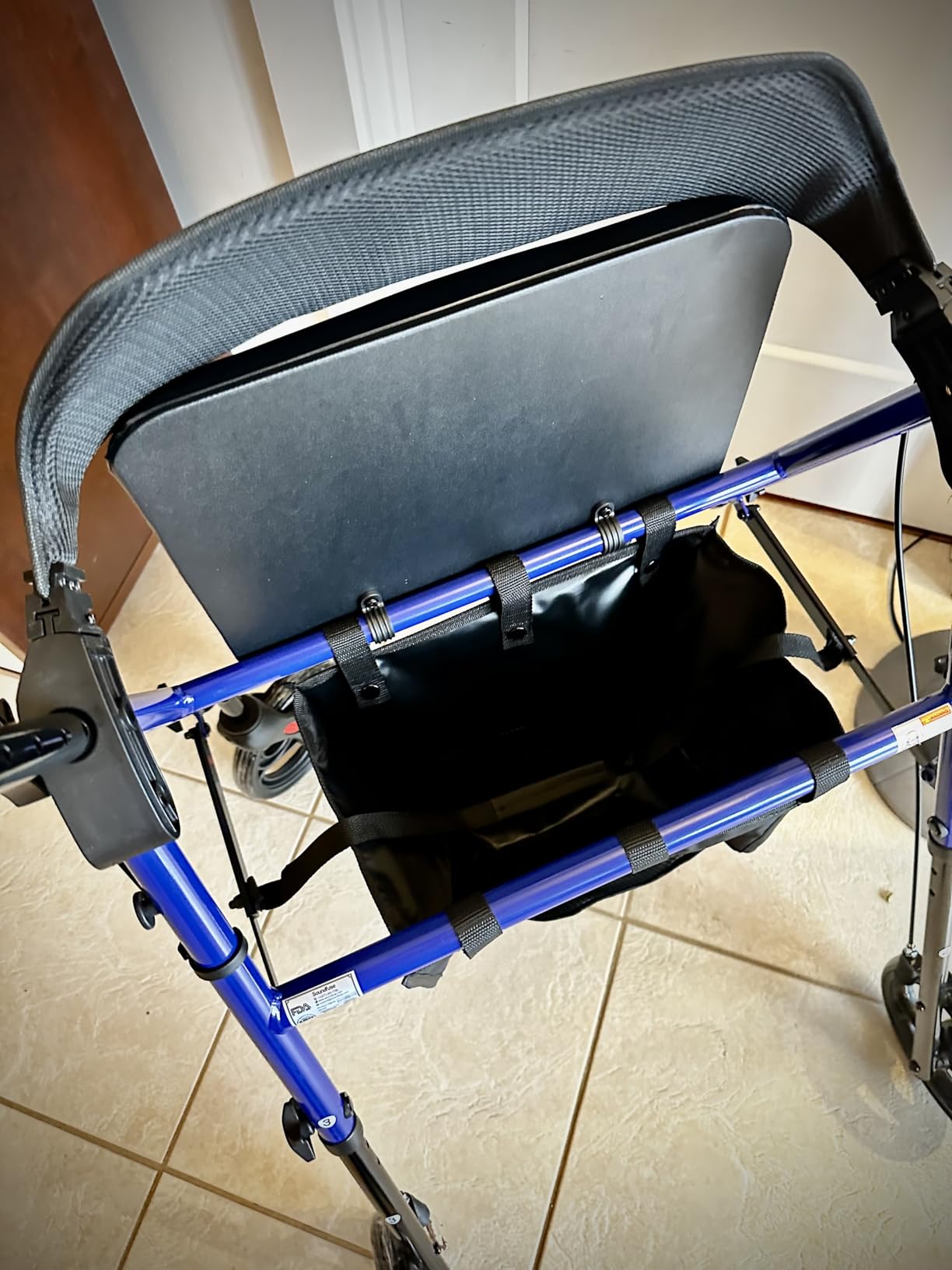
The soundfuse rollator is the one we would suggest for a senior whose hips hurt after ten minutes on a padded bench seat. The arc memory foam cushion is shaped to the body’s curve and spreads pressure instead of concentrating it in one spot.
The reinforced triangular frame with a double crossbar holds 300 lb, and the three-mode braking gives the same free roll, deceleration and stop progression we liked on the VOCIC.
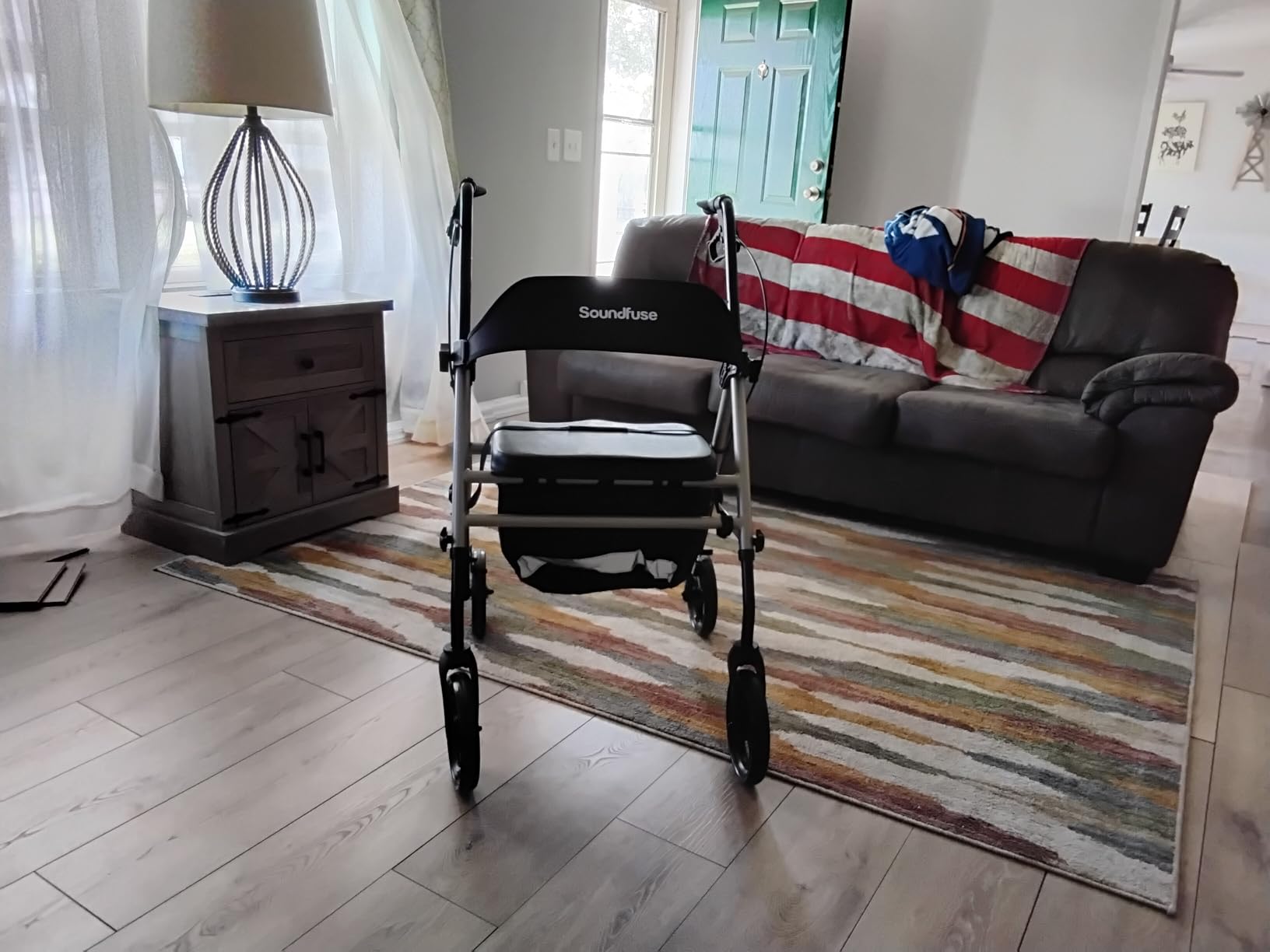
Buyers recovering from hip, knee and back procedures single out the seat and the way the walker moves through tight spaces. The dual height adjustment covers users from 4 foot 7 inches to 6 foot 6 inches, one of the widest ranges available.
Multi-reflective strips on the bag and on the wheels are not standard, and they matter if the walk home happens at dusk. Buyers also report responsive, helpful manufacturer support, which is rarer than it should be in this category.
Who this rollator suits best
It suits users at both height extremes, anyone recovering from lower-body surgery, and anyone who sits down frequently and finds a flat cushion uncomfortable after a while. The 33 to 40 inch handle range matches the tallest we tested.
Short users are also well served, since the frame is rated down to 4 foot 7 inches.
Where it will disappoint
It stays bulky even when folded. The 25 by 39 by 11.5 inch folded footprint is the main obstacle, and reviewers buying it for travel expected something smaller.
The soft storage bag has no rigid shape, so keys and a phone sink to the bottom and the frame has no latch to hold it open or shut. Plan to add a small rigid pouch if you need to reach things while seated.
11. MAXWALK Rollator Walker with Seat, 12 Inch All Terrain Wheels
MAXWALK Rollator Walker for Seniors with Seat, 12″ All Terrain Wheels, Gold
Aluminum frame
12 inch front and 10 inch rear wheels
300 lb
20.3 lb
Pros
- Largest wheel size in the group handles gravel and lawns confidently
- Built-in brake cable stays away from the user's feet
- Pull-cord quick fold collapses the frame in seconds
- Seat
- backrest
- cup holder and cane holder all included
- Five-level handle adjustment fits 5 to 6.5 foot users
Cons
- 20.3 lb frame is harder to load into a car
- Seat width of 8.7 inches offers limited room for larger users
- Footprint stays wide when folded
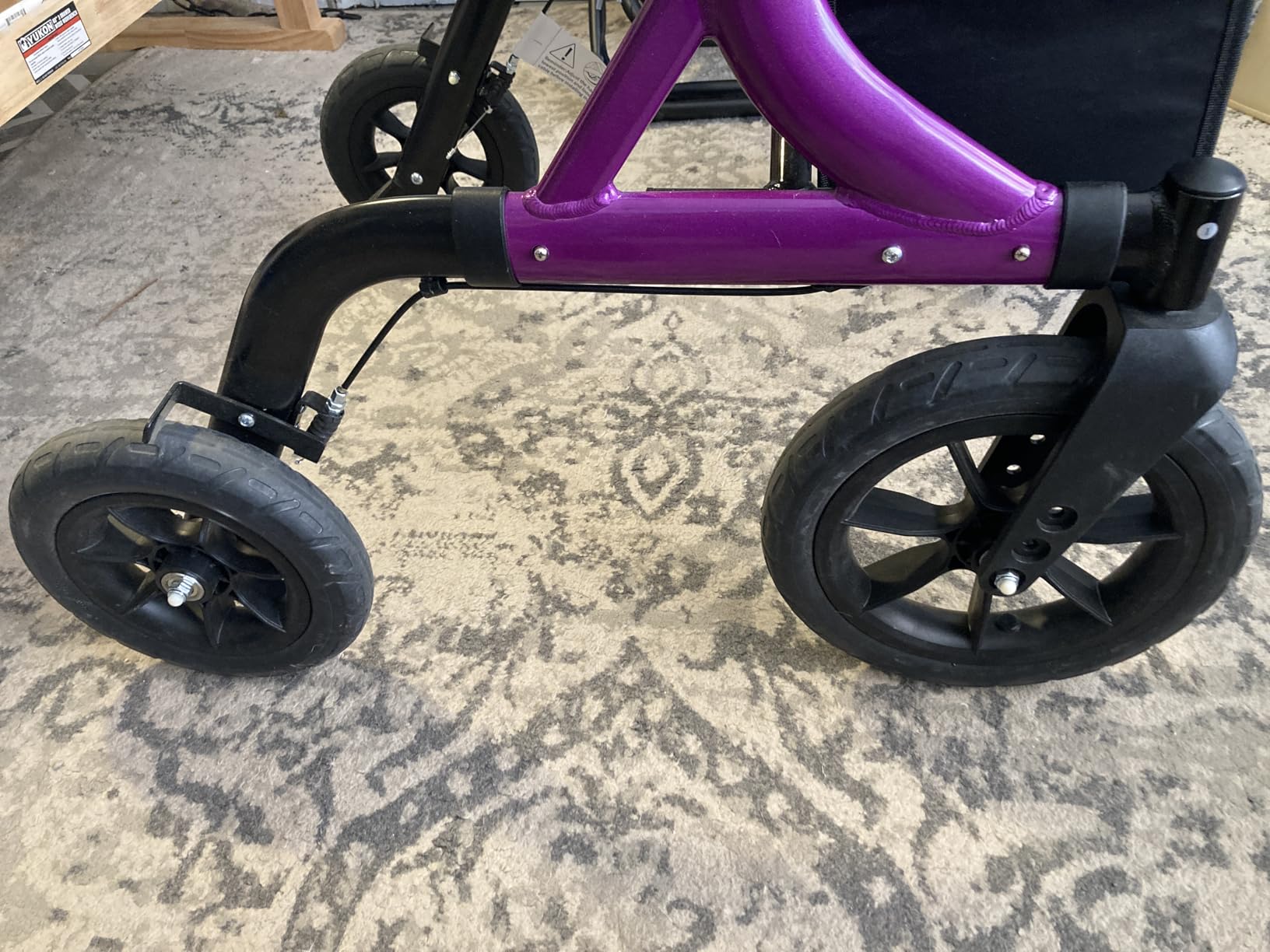
Wheel size is the single most useful spec for outdoor use, and the MAXWALK is where that shows. Twelve-inch rubber front wheels and ten-inch rear wheels with 360 degree swivel roll over gravel, lawns, broken asphalt and park paths that stop smaller casters dead.
The built-in brake cable routing is an underrated design choice. On models with external cables, the lines hang low, snag on thresholds and end up underfoot, which is both a trip hazard and a complaint on almost every external-cable rollator we have read about.
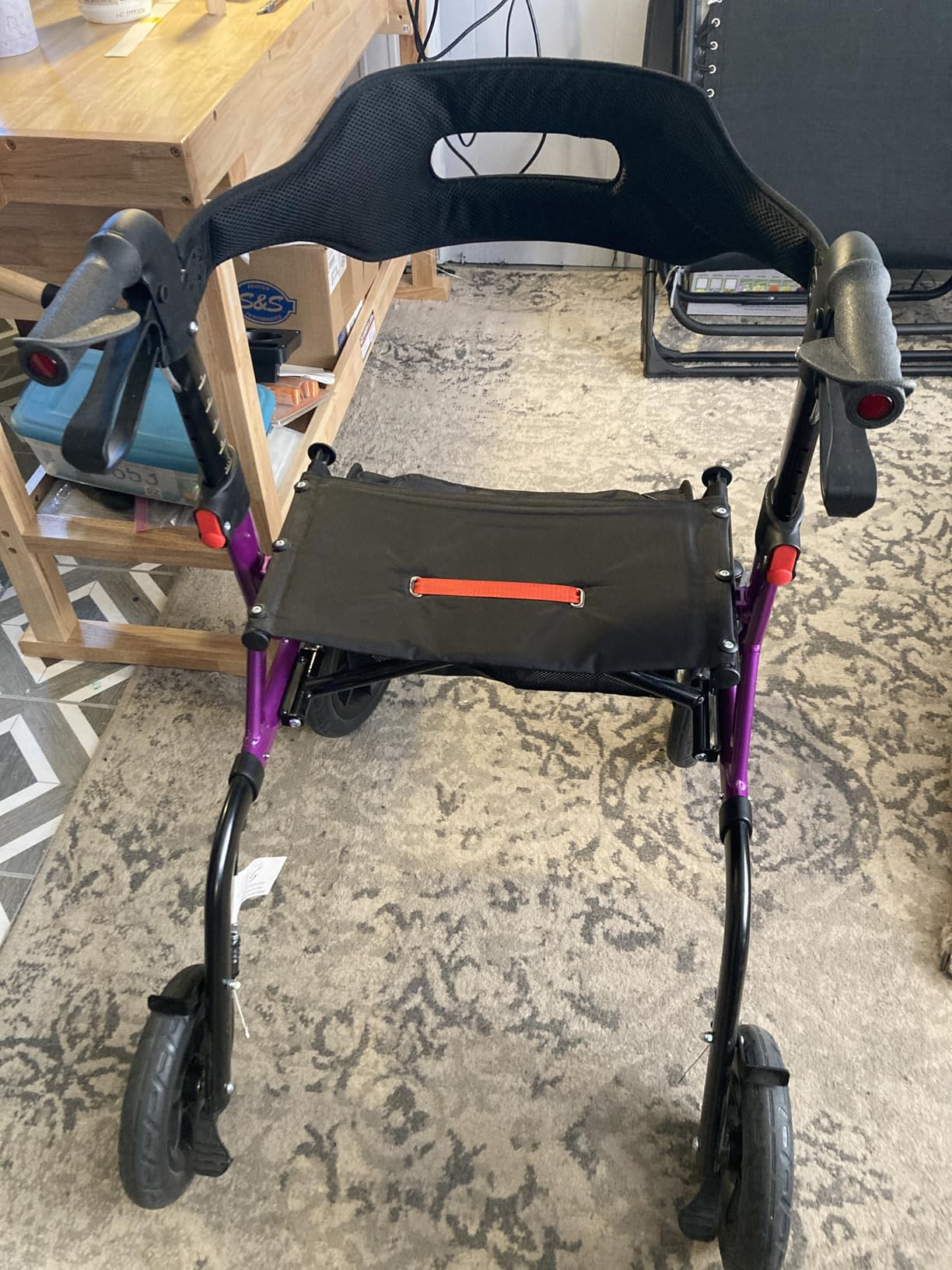
The dual braking system separates speed control from the lock, so the user can slow downhill with one lever and lock the wheels with the other before sitting. A removable cup holder and cane holder come as standard, which reduces the need for a separate tray.
At roughly 1k reviews and a 4.5 average, the praise concentrates on the wheels, the tidy cable routing and the pull-cord fold. The reservations are the 20.3 lb weight and the narrow seat.
Who this rollator suits best
It suits a user who genuinely walks outdoors on rough ground rather than smooth pavement, and who will store it at the end of a driveway rather than in a closet. The five-level handle adjustment covers users from 5 feet to 6.5 feet.
The 18-month warranty with lifetime support is worth asking other brands about before you settle.
Where it will disappoint
The seat is 8.7 inches wide. For a larger user who wants to sit comfortably rather than perch briefly, the HOMLAND and soundfuse wide-seat models are the better choice.
Twenty pounds with 12 inch wheels is genuinely heavy, and the wide frame stays wide when folded, so a small trunk is out of the question.
12. Stander Space Saver Rollator with 6 Inch Wheels and Perch Seat
Stander Space Saver Rollator, Lightweight Folding Rolling Walker with Seat for Seniors & Adults, 4-Wheel Mobility Aid with 6-inch Wheels, Locking Brakes & Padded Seat with Backrest, Cobalt Blue
Aluminum frame
10 by 11 inch folded footprint
14.5 lb
250 lb capacity
Pros
- Smallest folded footprint in the group at about 10 by 11 inches
- 14.5 lb lifts into a car easily
- Arrives pre-assembled and ready to use
- Padded adjustable handles reduce wrist fatigue
- Rear locking brakes make the perch seat safe to use
Cons
- 250 lb capacity is the lowest rating in the group
- Perch seat suits brief rests rather than extended sitting
- 6 inch wheels are best kept to smooth surfaces
- Backrest is a compact strap rather than a padded panel
The Stander is the travel answer. Its patented fold collapses the frame to a 10 by 11 inch footprint, which is a fraction of the size of a typical seated rollator and small enough to sit beside you in a car or in an overhead bin.
It arrives pre-assembled, which removes assembly from the list entirely, and the padded handles adjust from 33 to 36 inches so a wrist crease at the correct height is easy to dial in.
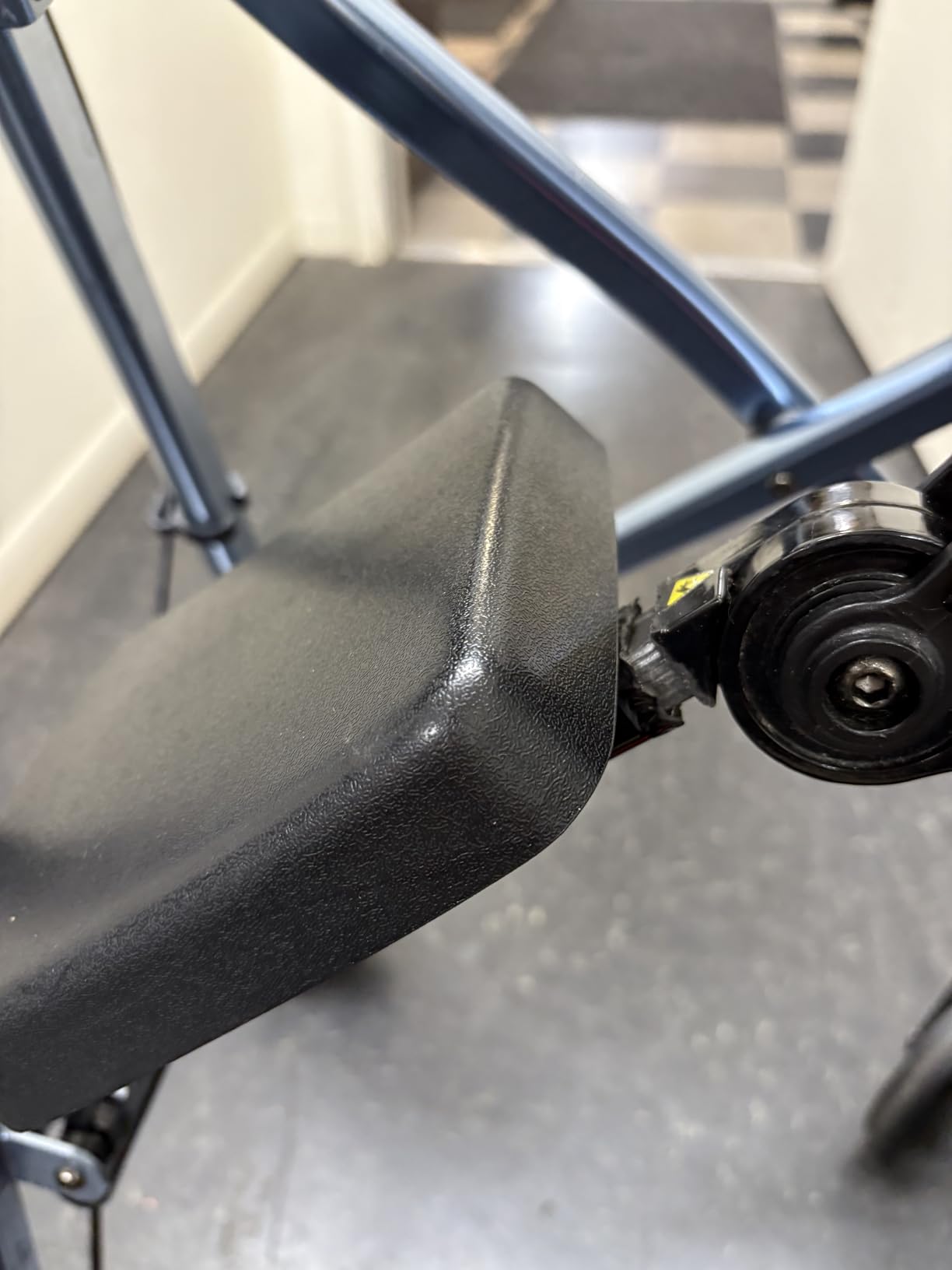
The rear locking brakes are what make the perch seat usable. Without a lock, sitting on a rollator perch means squeezing both levers with your hands while you lower yourself, which is exactly the situation most seniors cannot manage.
Buyers at a 4.5 average from 873 reviews point to the compact fold and the low weight as the reasons for buying. They also note that the small wheels are best kept to smooth indoor and paved surfaces.
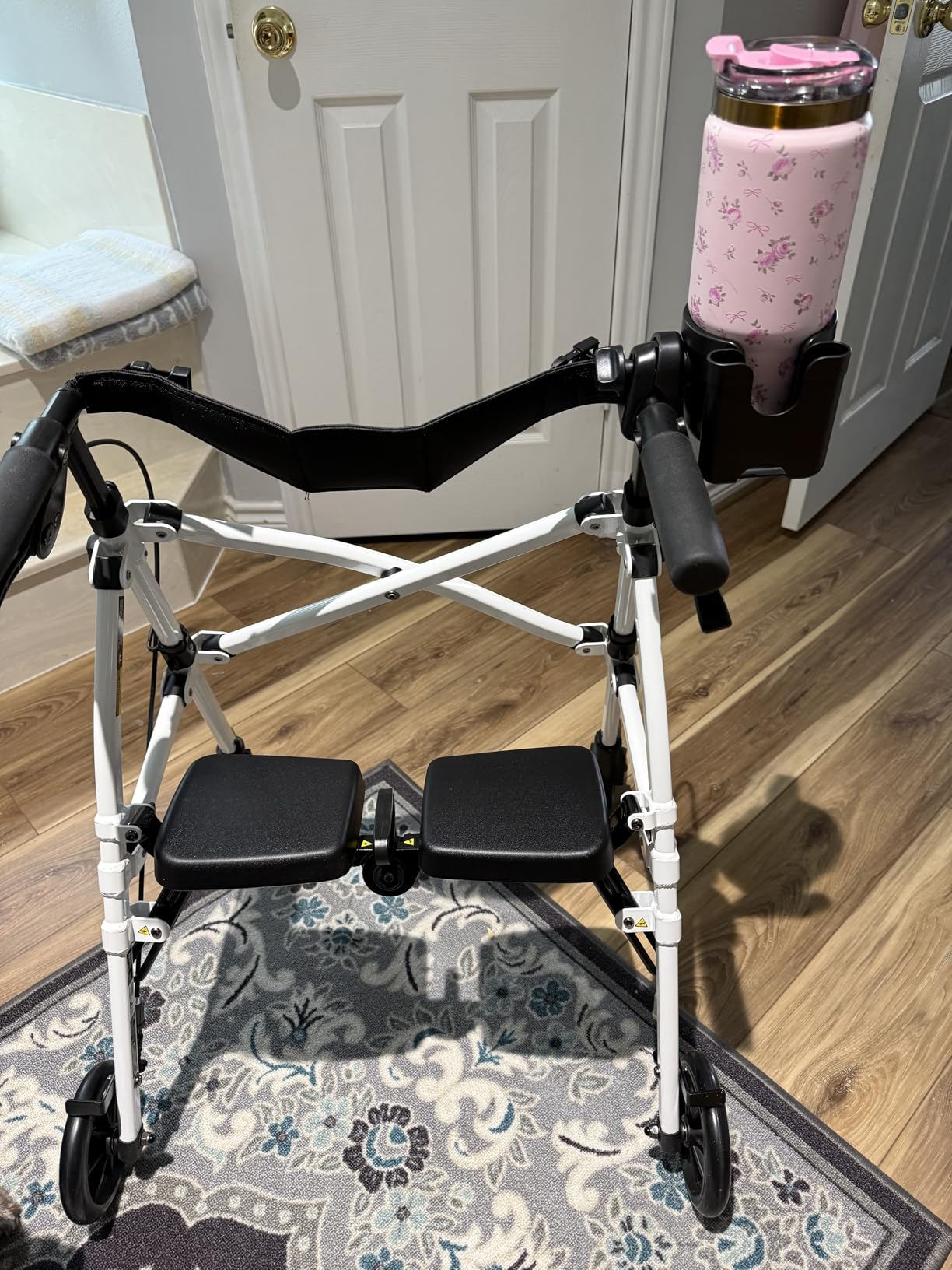
Who this rollator suits best
It suits a traveler, a frequent driver, or a senior in a small apartment where storage space is the real constraint. At 14.5 lb it is also one of the few seated rollators a single caregiver can lift into a car unassisted.
Users who mostly want the option of sitting for a minute on a bench-style perch rather than a long sit will be happy here.
Where it will disappoint
The 250 lb rating is the lowest in the group. Above that, you need a 300 lb or higher frame, and no seat size compensates for a weight limit.
The 18.5 by 6 inch perch seat is a rest stop, not a chair, and the 6 inch wheels will not like gravel. The backrest is a compact strap rather than a padded panel, so the value of this model rests entirely on the fold.
How to Choose the Right Walker in 2026
Most wrong-fit walkers come from one of three mistakes: choosing a rollator for a user who needs full support, choosing a non-wheeled walker for a user who tires quickly, or setting the handle height by eye. Fix those three things and the rest is preference.
Which walker type matches which mobility level
A senior who cannot reliably bear weight through their legs needs a non-wheeled frame. Four rubber feet on the floor means the walker cannot roll away, which is the entire point. Drive Medical’s standard foldable walker is the archetype, and it is the only category in this list we would hand to someone with very limited knee control.
A senior who can walk but tires quickly, or who has balance concerns but still controls their own legs, wants a four-wheel rollator. It rolls continuously, has hand brakes for stopping and turning, and a seat for sitting. This is the group that makes up most of our shortlist.
A user who is steady but lives or shops in tight spaces, and who never needs to sit, is the ideal three-wheel candidate. Caregivers repeatedly describe this as the practical choice for small homes and light enough to lift into a car on its own.
Where walking is genuinely unsafe and a caregiver is always present, a transport chair is the correct device rather than any walker. No walker in this roundup is a substitute for being pushed in a chair.
How to measure handle height correctly
Almost every forum thread about walker pain traces back to the same mistake, and the fix takes ten seconds. Stand up straight inside the walker, let your arms hang loose at your sides, and measure from the crease of your wrist to the floor. That number is your handle height, and the elbows should keep a slight bend when you grip the handles.
Handles set too high push the shoulders up and cause neck and back pain within weeks. Handles set too low force a stoop, which is tiring and puts the frame in the path of your feet. Users who are very short or very tall should check the published handle range before buying, because most aluminum walkers only span about six inches.
Wheel size and terrain
Five and six inch wheels are for indoors, carpet and smooth pavement. Seven and eight inch wheels handle sidewalks, thresholds and gravel driveways. Ten and twelve inch wheels are for grass, park paths and broken asphalt, and they add weight you will feel every time you lift the frame.
Wheel size is the clearest example of paying for what you actually need. A walker too heavy to lift into the car simply does not get used, which makes the Stander’s 10 by 11 inch fold worth considering before any comfort upgrade when the walker lives in a car.
Brakes, weight capacity and who pays
Loop-lock brakes require a full grip and a conscious second action to lock, so they suit users with hand strength. Feather-touch levers are easier for arthritic hands but require attention to avoid pinching. Test the brake with the user present, not with the salesperson.
The most common safety complaint in reviews is a brake that does not lock cleanly, and it is worth checking weekly.
On capacity, aim for a frame rated 50 to 100 lb above the user’s body weight. That margin absorbs frame fatigue over years of use and covers a weight gain. Anything rated 250 lb or below is a travel or compact frame rather than a long-term walker.
On payment, Medicare Part B covers a walker or rollator as durable medical equipment when a doctor documents a mobility limitation, and the supplier bills Medicare directly. Many private plans and Medicare Advantage plans follow similar rules, and health savings accounts and flexible spending accounts usually treat a walker as a medical expense. Prescriptions and documentation requirements vary, so confirm with the supplier before ordering.
One question comes up on caregiver boards constantly: what to do when a parent refuses to use a walker. The pattern that works is not confrontation. Start by choosing the walker with them rather than for them, so the choice feels like theirs.
Point out that a compact three-wheel or lightweight two-wheel model can be folded away in the car rather than parked in the hallway where visitors will see it. Framing the aid around independence, rather than around decline, tends to move the conversation forward.
Frequently Asked Questions
Which type of walker is best for the elderly?
For most seniors a four-wheel rollator with a padded seat, hand brakes and locking wheels is the best walker, because it rolls forward continuously and provides somewhere to rest. A non-wheeled walker is better only for a user who cannot reliably bear weight through their legs, and a three-wheel walker suits a steady user in tight spaces who does not need a seat.
What is better, a rollator or a walker?
A rollator is better for longer distances, fatigue and outdoor paths, because it rolls, brakes and seats. A standard walker is better for short indoor trips and users with limited leg control, because four fixed feet cannot roll away. The rollator is not designed to bear your full body weight while standing.
What kind of walker will Medicare pay for?
Medicare Part B covers a walker or rollator as durable medical equipment when a doctor documents a mobility limitation and an approved supplier bills Medicare. Private insurance and Medicare Advantage plans often follow similar rules, and an HSA or FSA can usually reimburse the purchase. Requirements vary, so confirm coverage with the supplier before ordering.
What is the best walker for seniors with balance issues?
The best walker for balance issues is a four-wheel rollator with loop-lock brakes and a wide wheelbase, because it stays planted when you stop and the brakes lock before you sit. A non-wheeled walker gives the most stable standing support when balance is severely limited. A three-wheel walker is not recommended for genuine balance problems.
What are the disadvantages of using a rollator?
Rollators are heavier than standard walkers, take more space to store, and can roll away if the brakes are not locked before sitting. They cannot be used on stairs, and a user should not lean their full body weight into the frame. Small wheels also struggle on gravel and uneven outdoor ground.
What should I do if my elderly parent refuses to use a walker?
Let your parent choose the model, and start with a lightweight or compact option that can be folded away rather than left in view. Explain that the aid supports independence rather than signalling decline. Many caregivers also start with a cane or a three-wheel walker as a stepping stone before moving to a full rollator.
Our Final Walker Picks for 2026
After six months of comparing these twelve, the Drive Medical steel rollator with seat is our pick for the best walkers for seniors overall, because nothing it does is a compromise and 51k+ reviews confirm it works. Pick the Drive Medical two-button folding walker if lightness matters more than a seat, the VOCIC Z21 if the walking happens outdoors, or the Stander Space Saver if the walker lives in the car.
Whatever you choose, measure the handle height from wrist crease to floor before the first walk, and check the brakes lock before anyone sits down. A walker works best alongside other daily habits, so you can read how we rate the best ellipticals for seniors and the best compression socks for seniors for long days on your feet.