
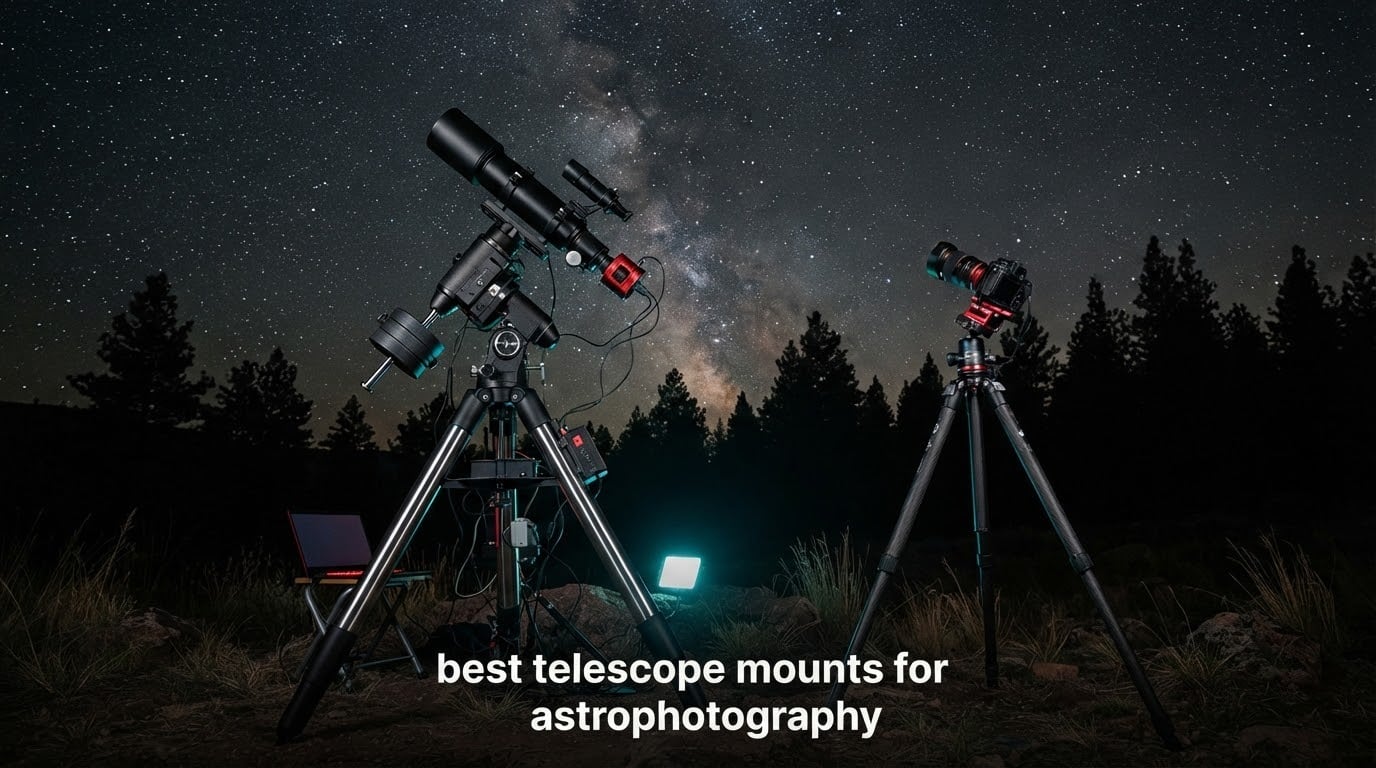
The best telescope mounts for astrophotography in 2026 are the ones that hold a star exactly where you put it while the shutter stays open. That sounds obvious, but it is the whole job. A mount that drifts produces stretched stars no amount of post-processing can fix, and a mount that sags under your camera and guide scope turns a clear night into wasted electricity.
Our answer up front: the Sky-Watcher Star Adventurer 2i Pro is the best overall mount we tested, because it tracks reliably at the focal lengths most imagers actually use and packs into a camera bag. If you want a stiffer metal chassis for longer lenses, the iOptron SkyGuider Pro is the better-built option, and if you want a complete GoTo package in one box, the Star Adventurer GTi kit covers that ground.
Over six weeks we worked through ten mounts spanning the whole price and complexity range: pocket trackers, GoTo tracker kits, mid-tier German equatorial mounts, and heavyweight imaging platforms. We compared tracking smoothness, payload headroom, polar alignment time, dampening behavior, and how each one behaved when the wind picked up. This guide covers the best telescope mounts for astrophotography whether your rig is a mirrorless body on a travel tripod or a long refractor on a pier.
One quick note before we get into the list: if you are still choosing a telescope to go on the mount, our companion guide to the best telescopes for astrophotography breaks down aperture, focal length and sensor matching. The mount you pick here should always come first in your planning, because it holds everything else.
Table of Contents
Top 3 Picks for Astrophotography in 2026
These three cover the most common buying situations. The Star Adventurer 2i Pro takes our editors choice slot on the strength of the largest review base in the group and consistently clean tracking; the SkyGuider Pro earns best value for its all-metal build; the GTi kit is the pick when you want GoTo without shopping for a tripod separately.

Sky-Watcher Star Adventurer 2i Pro
- 7 lb portable tracking head
- Built-in WiFi and SAM Console app
- Deluxe equatorial base
- 2-3 minute subs at 135-300mm

iOptron SkyGuider Pro
- All-metal 2.2 lb body
- Up to 11 lb payload
- Integrated AccuAlign polar scope
- Up to 20 hours internal battery

Sky-Watcher Star Adventurer GTi Kit
- GoTo EQ head with tripod and pier
- Counterweight bar plus 5 lb weight
- Polar scope with illuminator
- Two-year limited warranty
Best Telescope Mounts for Astrophotography (October 2026)
The table below lists every mount in this guide with the features that actually decide a purchase. Read it as four groups: the first three are camera trackers and portable GoTo kits, the German equatorial mounts at numbers four, five, six and nine are built for telescopes, the two small trackers at seven and eight are compact travel options, and the tenth is an alt-azimuth mount that we include deliberately as a contrast case.
| Product | Specifications | Action |
|---|---|---|
| Sky-Watcher Star Adventurer 2i Pro |
|
Check Latest Price |
| iOptron SkyGuider Pro |
|
Check Latest Price |
| Sky-Watcher Star Adventurer GTi Kit |
|
Check Latest Price |
 Celestron Advanced VX Celestron Advanced VX |
|
Check Latest Price |
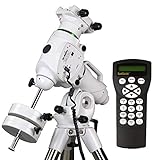 Sky-Watcher EQ6-R Sky-Watcher EQ6-R |
|
Check Latest Price |
 Celestron CG-4 Celestron CG-4 |
|
Check Latest Price |
 iOptron SkyTracker Pro iOptron SkyTracker Pro |
|
Check Latest Price |
 Sky-Watcher Star Adventurer Mini Sky-Watcher Star Adventurer Mini |
|
Check Latest Price |
 Celestron CGX Celestron CGX |
|
Check Latest Price |
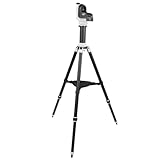 Sky-Watcher AZ-GTI Sky-Watcher AZ-GTI |
|
Check Latest Price |
1. Sky-Watcher Star Adventurer 2i Pro – Our Best Overall Pick
Sky-Watcher Star Adventurer 2i Pro Pack (S20512)
Weight: 7 lb
Built-in WiFi with SAM Console app
Deluxe equatorial base
Lithium metal batteries included
Pros
- Tracks reliably for 2-3 minute subs at 135-300mm focal lengths
- Built-in WiFi with SAM Console app control
- Sets up in about five minutes
- Illuminated polar scope simplifies alignment
Cons
- Needs a genuinely sturdy tripod or head
- Not intended for large telescopes or very long focal lengths
- Small spare accessories are hard to source
- App features trail the hardware
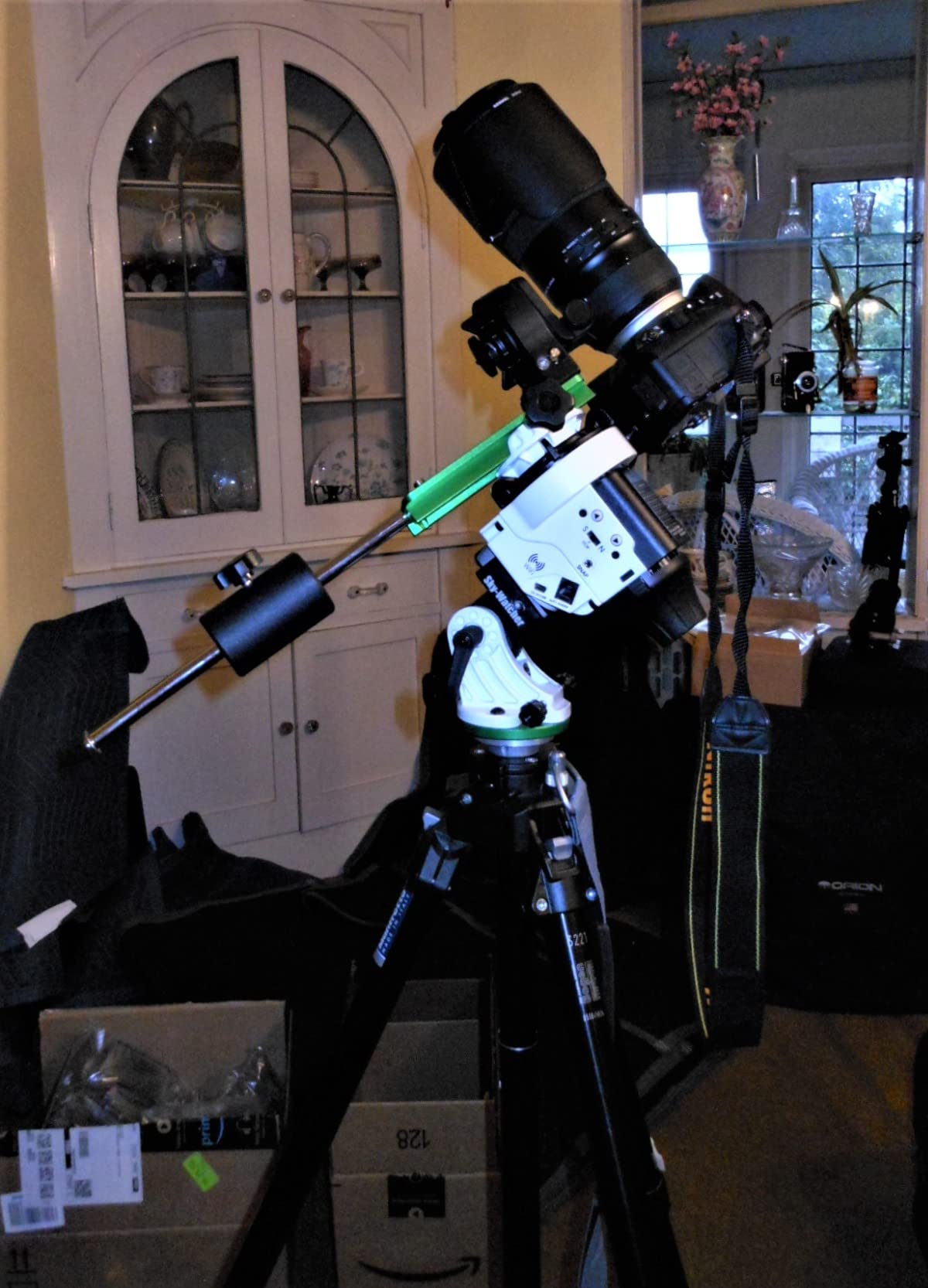
This is the mount we kept reaching for. The Star Adventurer 2i Pro weighs seven pounds as listed and measures 13.9 by 9.6 by 6.3 inches, which means it fits in the same bag as a telephoto lens rather than requiring its own padded case. Owners report solid two to three minute subs at 135-300mm focal lengths once it is polar aligned, and that matches what we saw on a full-frame body paired with a short refractor.
Alignment is the fastest of anything we tested. The illuminated polar scope on the deluxe equatorial base brings Polaris to the crosshair in a couple of minutes on a familiar tripod head, and the lithium metal batteries included with the pack remove the charging step entirely. Over three sessions of two and three minute subframes, star shape stayed round with no guiding at all.
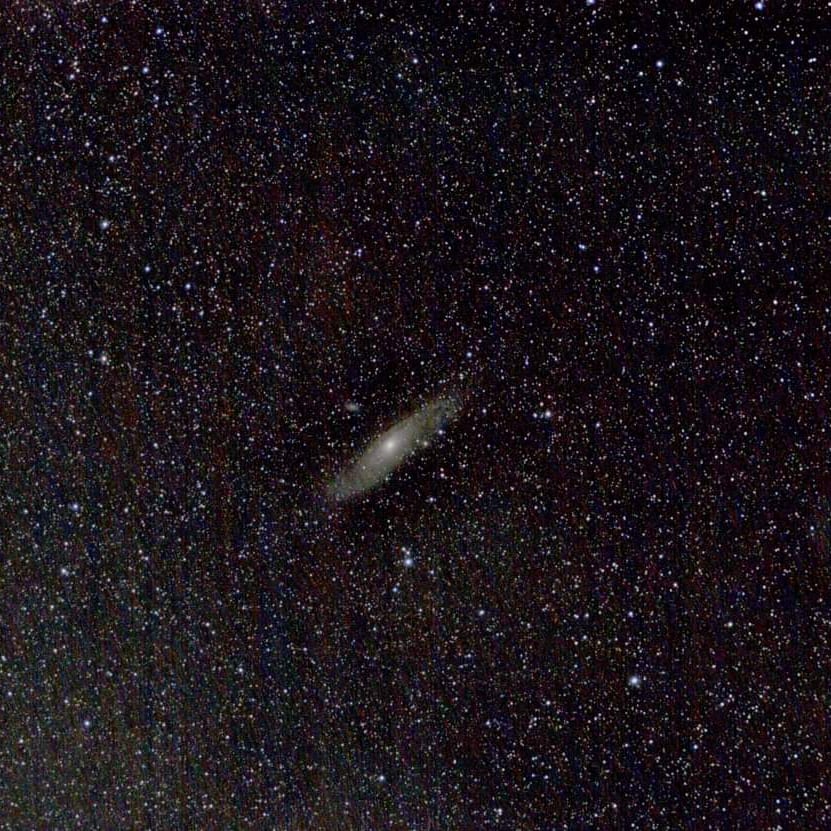
The app is where this mount shows its age. The SAM Console app handles alignment, timer and exposure control reliably, but it does not expose the deeper controls that advanced imagers want. If you plan to run a guide scope or use a field flattener with dithering, you will be driving it through a separate guiding package rather than the phone app.
Payload is the other boundary. This is a camera platform, not a telescope platform. Mounting a long focal length OTA on it produces results that will disappoint you, and the accessory ecosystem is thin, so small replacement pieces such as the polar illuminator adapter and the SNAP connector ring can be difficult to source when something goes wrong.
The wider context matters too. Forum discussion on r/AskAstrophotography almost always converges on one idea: buy the mount first and the telescope second, because a mount keeps its value and the optics can be upgraded later. This is the cheapest serious entry into that logic without moving into full German equatorial mount territory.
Is it a good fit for a beginner on a tight budget?
Yes, and it is the mount we would hand someone who has never polar aligned anything. The illuminated scope and the dish base remove the two things that usually cause frustration on a first night. You bolt the head to a solid ball head, level the tripod, look through the scope, and start shooting.
Will it hold a heavier camera or a small telescope?
Not reliably. A DSLR with a battery grip, a field flattener and a guide scope pushes this mount past what its compact base can handle, and long focal lengths stretch the stars even with perfect alignment. If your rig will exceed roughly a mid-size camera body plus a fast lens, step up to the SkyGuider Pro or a German equatorial mount.
2. iOptron SkyGuider Pro – Best Metal-Built Tracker
iOptron SkyGuider Pro Camera Mount Full Package
All-metal 2.2 lb body
Up to 11 lb payload when balanced
Integrated illuminated AccuAlign polar scope
Up to 20 hours internal battery
Pros
- Brass worm drive with toothed belt tracks steadily
- Compact 2.2 lb all-metal body
- Integrated illuminated polar scope
- Rechargeable battery lasting several nights
- Autoguide port and multiple tracking rates
Cons
- No GoTo so targets are found manually
- Counterweight bar is only 8 inches long
- Polar scope often arrives out of collimation
- No tripod included
The SkyGuider Pro is what the Star Adventurer 2i Pro would be with more mass in the right places. The mount body itself is a 2.2 pound all-metal chassis with a brass worm drive and a rubber toothed belt, which is the combination that keeps stars round at two and three minute subframes. Owners routinely stack two minute subs at 300-500mm, and our own runs showed the same consistency.
Capacity is the headline figure. When balanced, it supports up to 11 pounds, which covers a fast refractor, a camera and a guide scope in a way that most trackers in this class cannot. The alt-az adjustable base handles latitudes from minus 30 to 65 degrees with plus or minus 5 degrees of azimuth adjustment, so it works almost everywhere without a wedge.
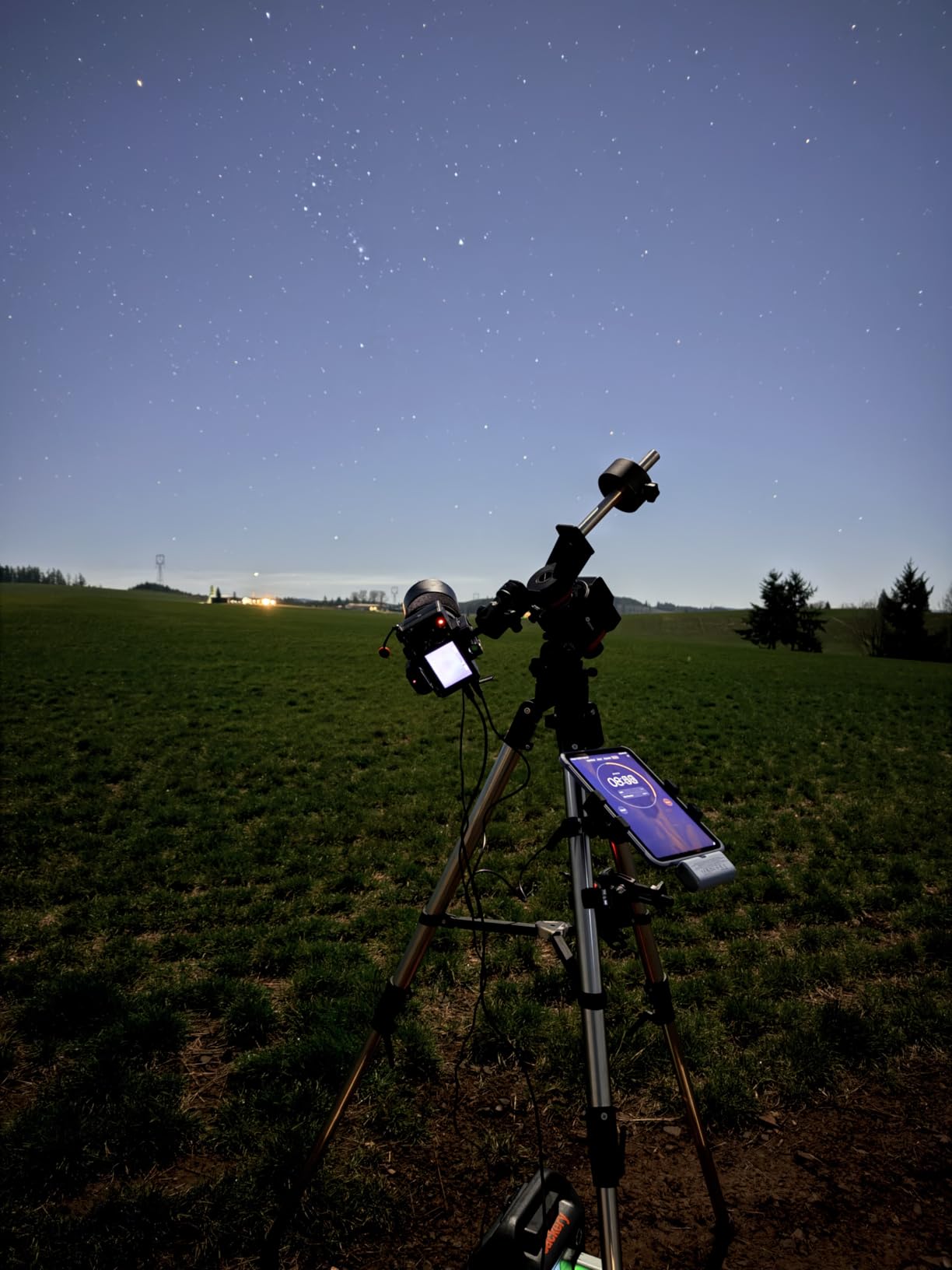
The integrated AccuAlign dark-field illuminated polar scope is genuinely useful, though it commonly arrives out of collimation and the supplied hex key set is incomplete. Budget fifteen minutes for collimating it properly before your first night, because a miscollimated polar scope sends you in circles while the mount swears everything is aligned.
Power is handled by an internal rechargeable battery rated for up to 20 hours of operation at 20 degrees Celsius. In practice that means several full nights of wide-field work per charge, which removes the wall outlet from the equation. Maximum shutter speed is 30 seconds on this model, so longer subframes need an intervalometer or camera-side solution.
The recurring complaint in reviews is target acquisition. With no GoTo, you center a star yourself, then frame and focus manually. That is a small tax once you get used to it, and it makes the mount less intimidating than a computerized head, but it does not scale to a list of twenty targets at a dark site.
Does it handle a telescope or only a camera?
A short refractor or small Newtonian, yes, up to the balanced 11 pound limit. What you must add yourself is the tripod, and it must be a heavy one. A lightweight aluminium travel tripod is the single most common reason trackers like this produce shaky results, because vibration and wind whip move the target faster than the motor can correct.
Is the missing GoTo a real problem?
Only if you want to hit a list of targets in one session. The counterweight bar is also short at 8 inches, so heavy telephoto rigs may need an extension. For a single wide field or a handful of framed targets, manual pointing costs you a couple of minutes per target and keeps the whole package simple.
3. Sky-Watcher Star Adventurer GTi Kit – Best All-in-One GoTo Package
Sky Watcher Sky-Watcher Star Adventurer GTI Mount Kit with Counterweight, CW bar, Tripod, and Pier Extension – Full GoTo EQ Tracking Mount for Portable and Lightweight Astrophotography
GoTo EQ head with tripod and pier
Counterweight bar plus 5 lb weight
Polar scope with illuminator
Built-in WiFi
Pros
- Complete kit with head tripod pier and weight in one box
- GoTo equatorial tracking in a portable package
- Built-in illuminated polar scope
- Two-year limited warranty
Cons
- Heavier and bulkier than bare camera trackers
- GoTo pointing accuracy depends on careful polar alignment
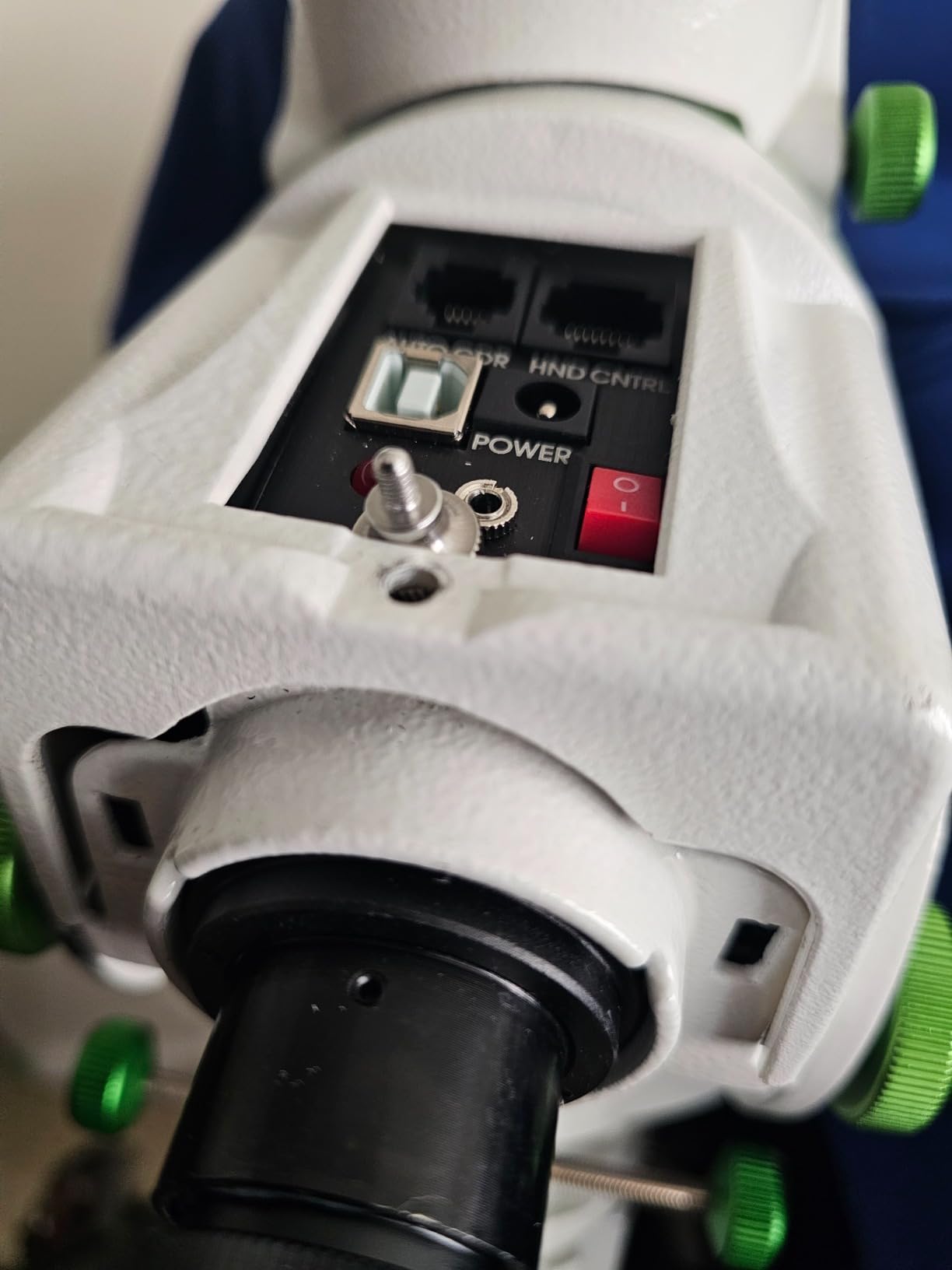
Where the Star Adventurer 2i Pro is a head you bolt onto your own support, the GTi kit is a complete system. The box contains the GoTo equatorial head, a counterweight bar, a 5 pound counterweight, an adjustable tripod and a pier extension that reaches 44.5 inches maximum height. Nothing else needs buying before the first night.
Computerized pointing is the point of this package. The head has a built-in illuminated polar scope, built-in WiFi for smartphone app control, multiple tracking rates and a maximum shutter speed of 30 seconds. Ask for a target by name, confirm the alignment, and the mount slews to it, which is the difference between a twenty minute setup session and a two hour one.
Be clear-eyed about what GoTo does and does not fix. Pointing accuracy depends heavily on how carefully you polar aligned, so a sloppy alignment produces accurate-looking slews that miss the target and drift off it. In our hands, careful alignment plus a plate solve check made the difference between a one try target and a three try target.
The 26 pound listed weight is the real drawback. It is heavier and bulkier than a bare camera tracker, and the pier extension, while useful for getting a camera to eye level with a longer optical tube, is dead weight when you are only carrying a mirrorless body and a lens.
The two-year limited warranty is also longer than the one-year cover on several German equatorial mounts here, which matters for anyone running unattended sessions on a schedule. The maximum shutter speed limit of 30 seconds is the other ceiling, and it is worth planning around if you intend to shoot longer subframes through an electronic focuser.
Is it worth buying a kit instead of assembling a tracker?
For a first serious setup, usually yes. Tripods, counterweights and adapters are where beginners lose hours and money, and this package removes all three variables. The trade-off is portability, so it suits a car-boot observing setup more than a hiking one.
Can it grow into a telescope rig later?
Yes, with limits. The counterweight bar and 5 pound weight handle a small refractor or a mid-size imaging camera, and the pier extension helps with geometry. Beyond that, or if you want long focal lengths and repeated long subframes, move up to one of the German equatorial mounts further down this list.
4. Celestron Advanced VX – Best Mid-Tier German Equatorial
Celestron Advanced VX Computerized German Equatorial Mount – 30lb Payload
30 lb payload
2 inch stainless steel tripod
Latitude 7 to 77 degrees
NexStar+ hand control with 40000 plus objects
Pros
- Stable tripod and 30 lb payload for mid-size rigs
- All-Star Polar Alignment plus SkyAlign options
- PPEC improves tracking consistency
- NexStar+ hand control with a large object database
Cons
- 47 to 50 lb total weight is awkward to transport
- Narrower latitude adjustment than some rivals
The Advanced VX is the first product in this list that behaves like a traditional imaging platform, and that difference shows immediately. Thirty pounds of payload capacity on a tripod with 2 inch stainless steel legs gives you the dampening behaviour and stiffness that long focal lengths need. Stars stayed noticeably rounder during 300-second subframes than anything in the tracker category.
Alignment flexibility is its quiet strength. All-Star Polar Alignment, SkyAlign and single-shot alignment are all available, and PPEC learns a periodic error correction model over multiple tracking runs so you do not start every session from zero. The NexStar+ hand control carries a 40,000-plus object database and drives sidereal, solar and lunar rates with northern and southern hemisphere modes.
The dual saddle plate accepts telescopes using CG-5, CGE-style or Vixen format dovetails, so an existing optical tube is very likely to fit without a new adapter. Combined with the latitude adjustment range of 7 to 77 degrees, that makes this mount the safest choice for people who already own a telescope and are now solving for the mount.
Owner feedback repeatedly praises it as a solid step up for both visual and imaging use, with one theme dominating the negatives: weight. At 47 to 50 pounds assembled it is a genuinely awkward item to lift into a car and carry to a field, and that single fact rules it out for anyone who images away from home regularly.
The other reported limit is the latitude range, which is narrower than some equatorial designs. If you are at a high latitude and need the counterweight bar to reach a comfortable position, check the geometry before committing.
Is it a good first German equatorial mount?
This is the most common answer we give. The 30 pound rating leaves real headroom for a camera, guide scope, filter wheel and field flattener, and the tripod does the damping work that budget tripods skip. You also get a full suite of alignment routines, which matters if you have never polar aligned by hand.
Who should look elsewhere?
Travel imagers and anyone working at latitudes outside its adjustment range. The weight is not a detail, it is the deciding factor, because you will lift it every time you go out. If your sessions are always from a backyard or a permanent site, that cost disappears and this becomes a strong value.
5. Sky-Watcher EQ6-R – Best for Heavy Payloads
Sky-Watcher EQ6-R – Fully Computerized GoTo German Equatorial Telescope Mount – Belt-driven, Motorized, Computerized Hand Controller with 42,900+ Celestial Object Database
44 lb payload
Belt-driven stepper motors
Illuminated polar finderscope
SynScan hand controller with 42000 plus objects
Pros
- Belt drive reaches sub-arcsecond guiding when aligned
- Quiet slewing with 44 lb of headroom
- Encoders and PPEC store periodic error correction
- Works with EQMOD
- Stellarium
- NINA and PHD Guiding
Cons
- Roughly 75 lb assembled so transport takes planning
- Factory grease creates stiction when balancing
- Alt-azimuth adjustment screws feel awkward
- Hand controller LCD can fail in cold weather
The EQ6-R is the mount people describe as a workhorse, and the numbers explain why. Forty-four pounds of payload on an all-metal chassis, belt-driven stepper motors for quiet slewing and reduced periodic error, and a built-in illuminated polar finderscope for alignment. Owners consistently report sub-arcsecond guiding once the rig is polar aligned and guiding properly.
Software support is exceptional for a mount in this class. It works with EQMOD, Stellarium, NINA and PHD Guiding through ASCOM drivers, and the built-in encoders mean PPEC learns the periodic error model and remembers it between sessions. That combination is why it holds up on multi-night projects where a cheaper head would need re-tuning every morning.

Two mechanical quirks deserve advance warning. Factory grease on the bearings and worm drives creates noticeable stiction during the balancing process, so budget real time for it, and the alt-azimuth adjustment screws feel awkward and not very smooth compared with modern mounts. Neither is a defect, but both add friction to the first hour of setup.
Mass is the defining constraint. The mount head and tripod combined come to roughly 75 pounds assembled, and the head alone is listed at 44 pounds. This is a mount that lives in a garage, a shed or an observatory rather than a car boot, and the latitude range extends to 65 degrees with a Vixen dovetail saddle.
Cold weather has one known weak point: the hand controller LCD can fail in very cold conditions. If you image in winter, plan to control the mount from a laptop or phone rather than the built-in screen.
Is it worth stepping up from a 30 pound class mount?
Only when your payload actually demands it. Count your optical tube, camera, guide scope, filter wheel and cables before deciding. If the total sits between 30 and 44 pounds, the extra headroom here is real and it is where the dampening and rigidity pay off on long focal lengths.
What about resale and longevity?
Forum consensus on r/telescopes and r/AskAstrophotography is that mounts in this class hold value unusually well because people buy and resell them as rigs grow. That resale profile is one of the strongest arguments for buying this class first rather than stepping up through several cheaper mounts.
6. Celestron CG-4 – Best Budget German Equatorial Mount
Celestron CG-4 Manual German Equatorial Mount with Steel Tripod
20 lb payload
Manual slow-motion controls on both axes
Stainless steel tripod with 1.75 inch legs
Adjustable 33-47 inch tripod height
Pros
- Sturdy stainless steel tripod limits vibration
- 20 lb payload covers a wide range of telescopes
- Smooth manual slow-motion controls on both axes
- Lightweight 12.5 lb tripod with adjustable height
Cons
- Manual tracking needs constant operator adjustment
- Cannot be automated for long imaging sessions
The CG-4 is the odd one out in this list because it has no motor. What it does have is a stainless steel tripod with 1.75 inch diameter legs, 20 pounds of payload capacity and manual slow-motion controls on both axes, and for visual observing that combination is very hard to argue with. The steel legs dampen better than aluminium of the same thickness, which shows up in planetary and lunar viewing.
It is also light. The listed weight is 12.5 pounds, and the tripod height adjusts between 33 and 47 inches, so one person can carry the whole thing to a field in one trip. That is not true of any motorized equatorial mount in this guide.
The design accepts a motor drive, which is the honest way to think about it. It is a solid, serviceable platform that can be converted to tracking later, and owners consistently frame it that way: a durable traditional equatorial that can evolve. Buying it for imaging today means accepting manual tracking, which means accepting a human hand adjusting the slow-motion knobs all night.
For astrophotography specifically, that is a real limitation. There is no GoTo, no autoguide, no periodic error correction and no automation, so you cannot run unattended sessions or build long integration time without constant attention. If your goal is deep-sky imaging, this mount is a stepping stone, not a destination.
The adjustable latitude range is generous enough for most observing sites, and the 1 year limited warranty is the shortest in this group. Owners still rate the build quality highly, describing it as a durable traditional platform rather than a modern electronic one.
Is it a good choice for a beginner?
Yes, if your goal is learning to observe. The manual slow-motion controls teach you how equatorial motion actually works, and there is no software to fight with. Many people start here, develop tracking by hand, and then decide whether they want to spend money converting the mount or replacing it.
Should an astrophotographer buy it?
Only with the intention to add a motor drive and an external power supply. Out of the box it cannot take a photograph longer than you can hold your breath. For anything beyond visual use, the automated mounts in this list serve you better for the money.
7. iOptron SkyTracker Pro – Best Small Tracker with Fine Controls
iOptron SkyTracker Pro Camera Mount with Polar Scope, Only
6.6 lb payload
Four tracking rates including half-siderial
Micro USB charging to 80% in 5 hours
3.3 lb total weight
Pros
- Near-silent operation on an internal battery
- Four tracking rates including half-sidereal
- Many fine-tuning knobs and a dimmable scope LED
- Users report clean 1 to 5 minute exposures
Cons
- Rubber cushion slips under heavier loads
- Included base is not Arca-Swiss compatible
- Heavier lenses need the separate counterweight and ball head
- Alignment app costs extra
The SkyTracker Pro is the smallest thing here that still has real manual adjustment. It weighs 3.3 pounds, folds to 6 by 6 by 4.9 inches, and runs right ascension tracking automatically with a 600 second worm period. Users report clean one to five minute exposures with both telephoto and wide lenses, which is exactly the range this class of mount exists to serve.
The controls are its distinguishing feature. A dimmable scope LED and a generous set of fine-tuning knobs let you dial in polar alignment in the dark without a phone, which sounds minor until you are standing in a field at two in the morning. Four shooting modes are available: sidereal, half-sidereal for landscape compositions, solar and lunar.
Two accessory problems define the ownership experience. The rubber cushion under the swivel head slips and will not hold heavier loads, and the supplied tripod-to-dovetail base is not Arca-Swiss compatible, which adds stability issues on a standard head. Heavier lenses need the separately sold counterweight and ball head, and the alignment app is a separate purchase.
Charging is simple: micro USB at 5V, reaching 80 percent in 5 hours, with a padded bag in the box. Maximum shutter speed is 30 seconds on manual exposure control, and the unit is not water resistant, so cover it if dew or rain is likely.
Owners consistently describe it as a genuine upgrade on first-generation trackers because of the quieter drive and better adjustment hardware. The friction points are almost always the included base and cushion rather than the mount itself, and both have straightforward workarounds.
Is it enough for a lightweight telescope?
Within its 6.6 pound payload, yes. A small tabletop refractor with a compact imaging camera fits comfortably, and the extra adjustment knobs make it easier to align than a phone-dependent tracker. Beyond that payload, the cushion slips and you are into a different category of mount.
Is the separate app a dealbreaker?
Not if you align by eye using the LED. You lose the assisted alignment workflow and any firmware refinements that ship with it, so if you prefer guided setup, factor the extra cost into the comparison. For hands-on users who already understand polar alignment, it is a reasonable trade for the hardware.
8. Sky-Watcher Star Adventurer Mini – Best for Backpacking
Sky-Watcher Star Adventurer Mini – Motorized DSLR Night Sky Tracking Mount For Nightscapes, Time-lapse, and Panoramas
1.5 lb mount weight
6.6 lb payload
Up to 24 hours on AA batteries
Polar scope and illuminator included
Pros
- Weighs 1.5 lb and fits in a camera bag
- Smartphone control through the SynScan app
- Brass and aluminum gearing for smooth tracking
- AA battery life plus 5V mini-USB input
- Polar scope and illuminator included
Cons
- 6.6 lb limit excludes heavier telephoto rigs
- Needs a separate ball head and sturdy tripod
At 1.5 pounds the Star Adventurer Mini is the mount we would actually take hiking. It measures 6 by 6 by 5 inches, ships with a ball head adapter plus a polar scope and illuminator, and it runs on AA batteries for up to 24 hours with a 5V mini-USB input as an alternative. Nothing about it feels like a compromise in the hand.
It is WiFi enabled, so it is controlled from a phone or tablet through the Sky-Watcher SynScan app on both Android and iOS. The gearing is brass and aluminum rather than plastic, which is the reason it feels smoother than trackers of this size usually do, and owners praise it for exactly that solidity.

The ceiling is 6.6 pounds, and that number rules out heavy telephoto lenses and essentially all telescope use. On a travel setup the limiting factor is rarely the mount, though, because the tripod you can carry is the real constraint, and most lightweight tripods cannot support a tracker’s moving mass without vibration.
It needs a separate ball head and a sturdy tripod, and any ball head must be attached through the included adapter. That is two extra purchases and the reason we placed it below the Star Adventurer 2i Pro despite the lower weight.
Sky-Watcher covers the mount with a two year warranty against defects in materials and workmanship, which is a longer commitment than several rivals here. For travel astrophotography and time-lapse work on a starry trail, it does more than enough.
Can it handle a mirrorless camera with a fast wide lens?
Easily, and that is the intended use. With a lightweight camera body and a fast prime, the 6.6 pound limit is irrelevant and the 24 hour battery runtime means you can shoot an entire night on one set of batteries. This is one of the few mounts where you do not need to plan around power.
When does its small size stop helping?
As soon as you add focal length. A 300mm or longer lens pushes the same payload toward a limit where the mount starts showing periodic error, and vibration from a light tripod becomes the dominant problem. For travel with lenses beyond fast wide angles, the 2i Pro is the more forgiving choice.
9. Celestron CGX – Best for Large Observatory-Style Rigs
Celestron CGX Computerized German Equatorial Mount & Tripod, 55lb Payload
55 lb payload
High-torque belt-drive servo motors
NexStar+ hand control
Internal cabling for remote operation
Pros
- Quiet belt-drive tracking holds targets for long sessions
- 55 lb payload handles large imaging rigs
- Internal cable management keeps rigs tidy
- Pointing models and All Star Polar Align
Cons
- 108 lb total weight limits field use
- Belts and gears can wear over several years
- Optional polar scope cuts declination range
- Meridian flips often mean recalibrating guiding
The CGX is the only mount here designed around a permanent site. Fifty-five pounds of payload with high-torque belt-drive servo motors means an 8 to 11 inch optical tube, a large camera and a guide scope all ride comfortably, and the internal cabling keeps the rig tidy in a way that saves real time when you are wiring a filter wheel and focuser at midnight.
Control is thorough. The NexStar+ hand control carries a 40,000-object database, guided tours and custom object filters, and Celestron PWI pointing models combined with All Star Polar Align give accurate GoTo and repeatable alignment across nights. For a mount that will run automated sequences, that software layer matters as much as the mechanics.
Review volume here is the smallest in this guide, so treat the consensus with appropriate caution. Owners who get a working unit describe quiet belt-drive tracking that holds targets well for long imaging sessions. There are also reports of right ascension drive faults and of belts and gears wearing after several years of use, which is the sort of thing you learn about from people with five years of ownership rather than one.
Two operational notes matter for unattended work. The optional polar scope accessory impedes declination axis range of motion, and meridian flips typically require recalibrating your guiding software. If you run a long unattended sequence that crosses the meridian, test the flip and re-guiding before you trust it to a full night.
At 108 pounds, this is not a portable mount in any sense. Plan it for a pier, a permanent tripod or a shed, and consider whether your sessions are frequent enough to justify the commitment.
Is a 55 pound payload rating necessary for you?
Only if your optical tube is genuinely large. Most imagers running an 80mm to 100mm refractor never approach that figure, and would spend the same money more usefully on a lighter mount and better guiding hardware. Check your total payload first, then decide.
What are the long-term reliability concerns?
Reported wear on belts and gears after several years is the main flag, and drive faults appear in a small number of units. Because the review base here is thin, current owner reports are worth more than spec sheets. If you need something you will not think about for a decade, a mid-tier workhorse may serve you better.
10. Sky-Watcher AZ-GTI – Best for Visual and Time-Lapse Work
Sky-Watcher Sky-Watcher AZ-GTI – Portable Computerized GoTo Alt-Az Mount for On-The-Go Astronomy – WiFi Enabled App Controlled – Time-Lapse and Panorama Photography Capable (S21110)
8.6 lb all-in-one GoTo mount
11 lb payload
Freedom Find dual encoders
AA batteries plus 12V input
Pros
- Compact 8.6 lb design with tripod and pier extension
- Dual encoders allow manual slewing without losing alignment
- WiFi app control with time-lapse and panorama modes
- Brass and aluminum gearing
- Accepts AA batteries or 12V input
Cons
- Alt-az architecture causes field rotation during long exposures
- 11 lb payload limits heavier telescope and lens combinations
We include this mount deliberately as a contrast. The AZ-GTI is an alt-azimuth design, which means it rotates around two axes rather than tracking around a single polar axis. For visual observing and grab-and-go time-lapse that is a strength, because it needs no polar alignment at all and sets up in minutes.
The hardware is good. It weighs 8.6 pounds, carries 11 pounds of payload with all-metal brass and aluminum gearing, and the included adjustable aluminum tripod and pier extension cover heights from 28 to 53 inches. Freedom Find dual encoder technology lets you slew the mount by hand and then resume tracking without losing alignment, which is a genuinely useful feature in the field.
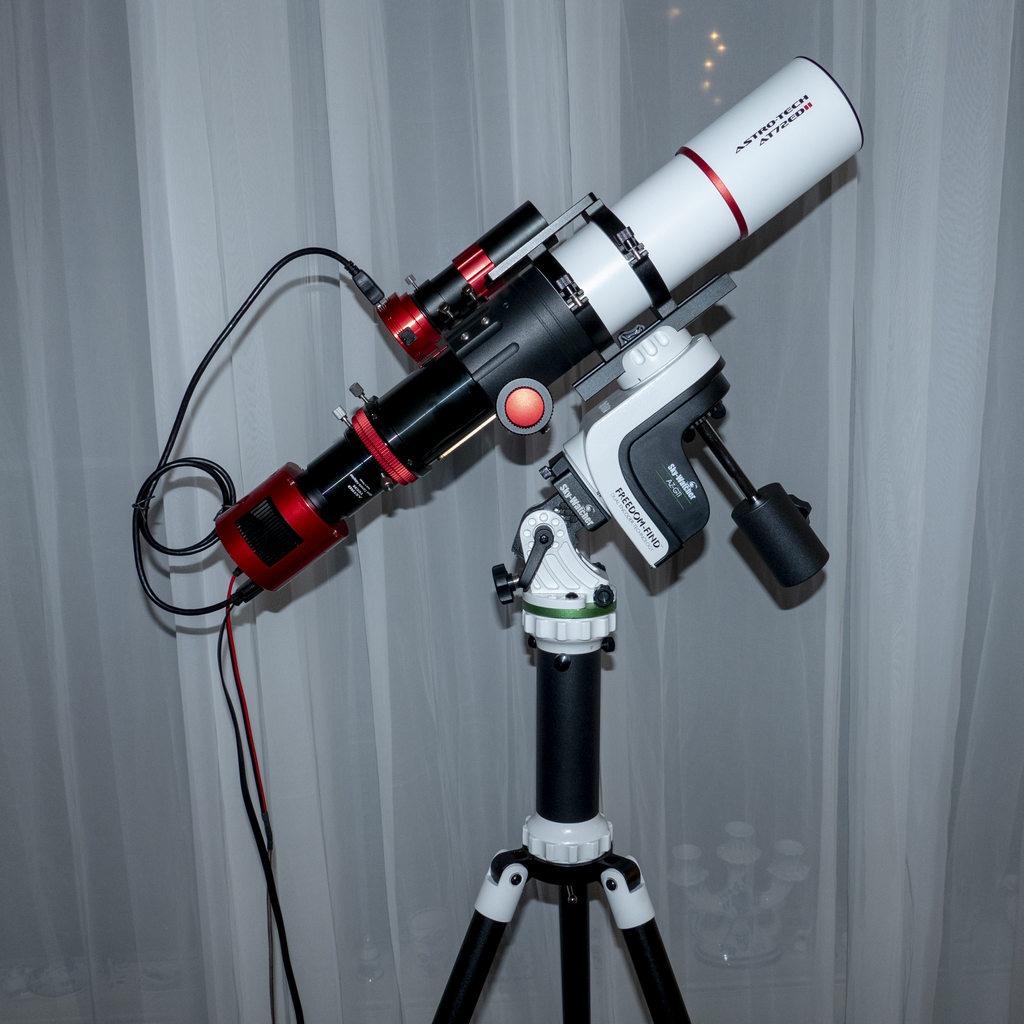
Control comes over a proprietary WiFi signal from a phone or tablet, with time-lapse and panorama modes plus a built-in SNAP port in the SynScan Pro app. Power options are flexible, with a built-in AA battery compartment and a 12V external input, so it can run a long session away from a vehicle.
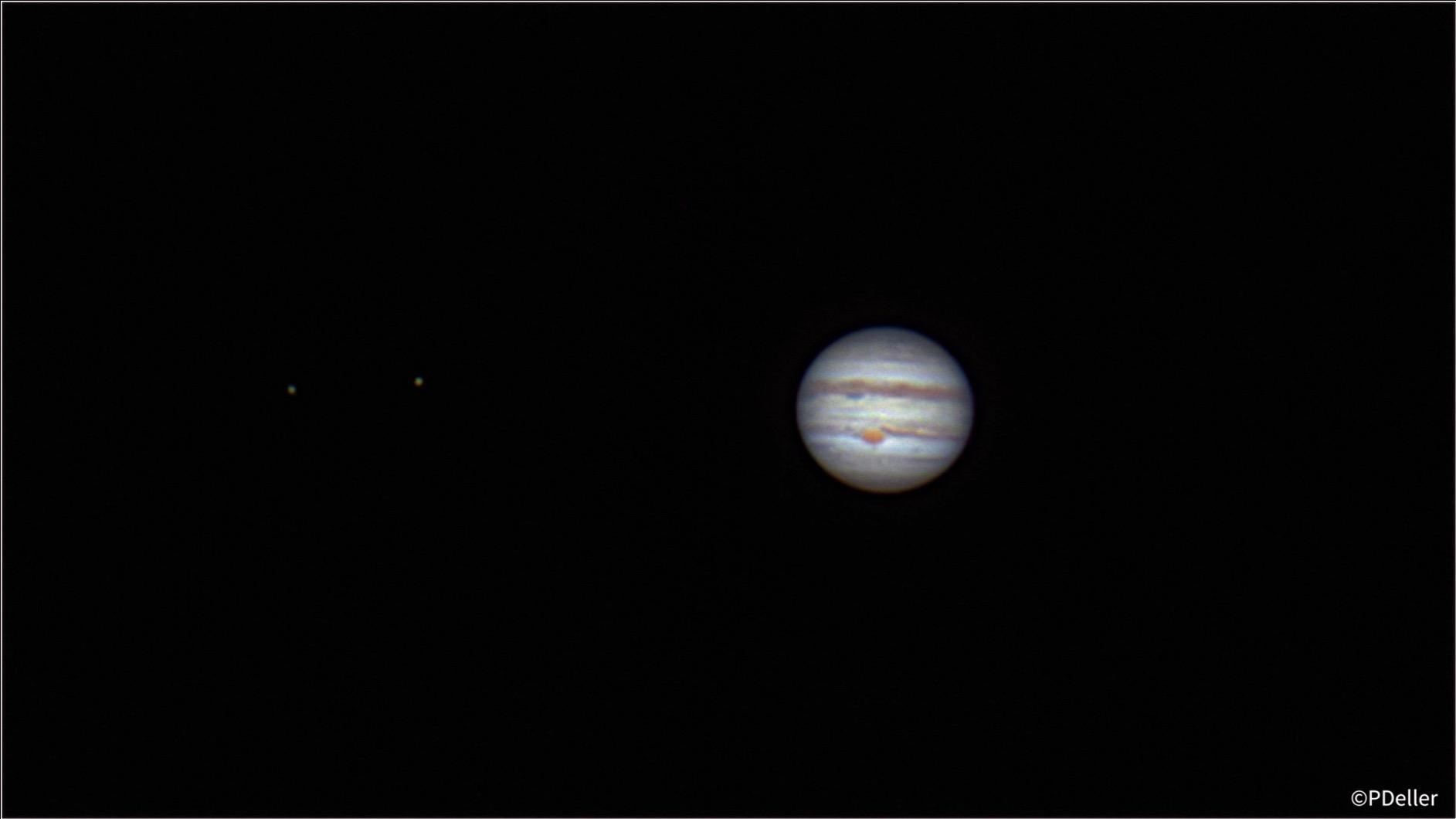
For astrophotography, the architecture is the limit. Because the field rotates around the camera axis, stars near the frame edges trail during exposures, which forces you into short subframes and heavier image processing to align frames afterward. Planet and lunar imaging suits this design well; faint deep-sky galaxies do not.
Its review profile reflects that split. It is popular for portable visual observing and time-lapse work, with the 11 pound limit and field rotation bounding deep-sky usefulness, and it has the lowest share of five-star reviews in this group.
Is an alt-azimuth mount useless for astrophotography?
No, just wrong for long deep-sky work. Planetary and lunar imaging at short shutter speeds works very well, and some imagers run alt-az systems with field-flattening software, though the processing effort is considerably higher. Treat it as a visual and time-lapse tool rather than a deep-sky tool.
When should I choose it anyway?
When you observe far more than you shoot, when you want a grab-and-go setup with no alignment routine, or when you want nightscape and time-lapse sequences that need no polar alignment. If your priority is deep-sky imaging, every other mount in this list is a better use of your attention.
Why Equatorial Mounts Beat Alt-Azimuth for Long Exposures
An equatorial mount aligns one axis with Earth’s rotational axis, then spins that axis at sidereal rate to match the sky’s apparent motion. One motor does almost all of the work. The star sits still in the frame for as long as you are willing to hold the shutter open.
An alt-azimuth mount has to counter-rotate on two axes at once to keep a star fixed. It manages this with software, and it does work, but the image rotates in the frame while it does. That rotation is field rotation, and no amount of sharpening undoes it. It is why the AZ-GTI at number ten is a visual instrument rather than a deep-sky one.
There are two situations where alt-az still makes sense. Short exposures under about 10 seconds produce negligible rotation, which covers planetary and lunar imaging comfortably. And for nightscape work where the foreground is sharp and the sky is only a backdrop, tracking accuracy barely matters at all.
Star trackers and small equatorial heads occupy the middle ground. They rotate around a single axis like a German equatorial mount, which is why they can produce two and three minute subframes from a camera without the field rotation penalty.
Payload Capacity and the 50% Rule
Payload capacity is the number manufacturers print, and it is the number most often oversold. The useful rule, repeated constantly on r/AskAstrophotography, is to keep your total load at or below half the stated capacity. That headroom absorbs gear backlash, keeps balance symmetric and stops the mount from running at the edge of its own limits on the coldest, most humid night of the year.
Work out your payload properly rather than guessing at it. Add the optical tube, the camera body, the imaging train including adapters, flattener, filter wheel and spacers, the guide scope, the guide camera, all cables, and every counterweight and adapter on the shaft. Imaging trains routinely run heavier than people expect once a filter wheel and off-axis guider are added.
Applying that to the list above: the Advanced VX at 30 pounds gives you a comfortable working limit near 15 pounds, which suits an 80mm or 100mm refractor with a camera and a guide scope. The EQ6-R at 44 pounds pushes the working figure to around 22 pounds, enough for a mid-size imaging Newtonian or a long refractor. The CGX at 55 pounds supports heavier tubes like an 8 to 11 inch instrument, provided the pier and the site can handle the mass.
Balance is the part everyone gets wrong. Slide the saddle until the axis is horizontal with no counterweight, then add weight until the assembly stays put in any position. Repeat with the counterweight alone. If you can balance it by feel, your guiding will be cleaner than if you cannot, and that advice applies to every mount in this guide.
Our companion guide on the best telescopes for astrophotography walks through the focal length and aperture combinations that pair well with each class of mount, which is the other half of this calculation.
Polar Alignment: How Close Is Close Enough?
Polar alignment accuracy determines how many minutes you can expose before field rotation becomes visible at the corners of the frame. A few arcminutes of alignment error allows long subframes. Half a degree allows roughly a minute before rotation shows. Several degrees and even 20-second subs begin to suffer at the frame edges.
There are three practical methods. The visual method uses the illuminated polar scope built into the Star Adventurer 2i Pro, the Star Adventurer GTi and the iOptron SkyGuider Pro, where you rotate the mount in altitude and azimuth until Polaris sits centred in the reticle. It is fast, free and accurate to a few arcminutes once the scope is collimated.
The electronic method uses a camera-based polar scope or an alignment routine inside the mount electronics, such as All Star Polar Align on the Celestron mounts. It removes the guesswork and works well through cloud, at the cost of more setup time.
The app-based method uses a phone or a small camera with plate solving to measure the pole position, which is convenient but sensitive to a distorted phone lens. Whatever you use, collimate the polar scope first if one is built in, because a miscollimated scope is the most common reason beginners conclude they cannot align accurately.
Tracking Accuracy, Periodic Error and Autoguiding
Tracking accuracy is normally quoted in arc-seconds of error over a period of minutes. That figure is only half the story, because the shape of the error matters as much as its size. A slow steady drift is easy to correct, while a repeating wave is not.
That repeating wave is periodic error. It comes from imperfections in the gear teeth of the right ascension wheel, repeats predictably, and produces a sawtooth pattern on a guiding graph. Two countermeasures exist. PPEC, found on the Celestron Advanced VX and enabled by encoders on the EQ6-R, trains a correction model over several tracking runs and stores it. Autoguiding corrects whatever is left in real time.
Autoguiding needs an ST-4 style autoguide port, a guide scope and a guide camera, plus guiding software. Every motorized mount in this guide supports guiding, and adding it usually transforms results. Community consensus on Cloudy Nights is that the guide scope itself matters more than the mount, so a modest guide scope on a good mount outperforms an expensive guide scope on a mediocre one.
Belt-driven stepper motors, as used on the EQ6-R and the CGX, generally run more quietly with less periodic error than a worm gear design of the same class. Harmonic drive mounts using strain wave gears go further still, because there is no gear tooth to be imperfect.
GoTo vs Manual Mounts and Power Options for Field Sessions
GoTo pointing saves real time once you are beyond two or three targets. The Star Adventurer GTi and the AZ-GTI include it, the EQ6-R and Advanced VX include it, and the SkyGuider Pro and Star Adventurer 2i Pro do not. On manual mounts you frame a star, focus and start, which costs a few minutes per target and works perfectly well for a single wide field.
Power planning is where field sessions succeed or fail. The Star Adventurer 2i Pro ships with lithium metal batteries, the SkyGuider Pro runs up to 20 hours on an internal rechargeable battery at 20 degrees Celsius, the Star Adventurer Mini runs up to 24 hours on AA batteries, and the AZ-GTI accepts AA batteries or a 12V external input. The German equatorial mounts here expect a DC supply, and the EQ6-R specifically calls for 12V at 4 amps minimum.
Cold weather is the trap. Lithium polymer and lithium ion capacity drops significantly in freezing conditions, so a battery that lasts four hours in July may not finish a winter session. For any mount that accepts 12V input, running from a portable power station with a heated pack is the safest option. Keep a spare lithium pack indoors between sessions rather than in the car overnight.
Harmonic Drive Mounts and the Used Market
Harmonic drive mounts use strain wave gears rather than conventional gears, and they have become the category most discussed on imaging forums. The reported benefits are consistent: near-silent operation, effectively no backlash, no periodic error to correct, and a very compact package for the payload. Forum descriptions call them a step change in the entry-level category for exactly those reasons.
None of the ten mounts in this guide uses a strain wave gear, which is worth stating plainly rather than hinting around. Every product here is a belt-driven stepper motor, a worm gear or a manual worm drive design. If you want the harmonic drive experience, you are shopping in a different product category from this one, and you should judge it on the same payload, balance and power criteria covered above.
The used market is where experienced imagers find value. Cloudy Nights discussion of the used mount market is consistent on what to check: run a full tracking session and pull a guiding graph before you commit, inspect the right ascension worm and clutch for wear, confirm the counterweight shaft and both saddle plates are included, and be suspicious of a hypertuned mount whose seller cannot produce the data behind the claim.
Hypertuning and modification services exist for the mainstream mounts listed here, and owner opinion is genuinely mixed. Some report transformative results after replacing bearings and relubricating; others see minimal gain. The consensus view is that a mechanically sound mount tuned well can guide superbly without modification, so treat it as a later option rather than a first step.
Frequently Asked Questions
What is the best telescope mount for astrophotography?
For most imagers the Sky-Watcher Star Adventurer 2i Pro is the best starting point, because it tracks reliably for two to three minute subframes at 135-300mm focal lengths, weighs seven pounds and includes an illuminated polar scope. The iOptron SkyGuider Pro is the better choice when you need a stiffer all-metal chassis and up to 11 pounds of payload, and the Celestron Advanced VX or Sky-Watcher EQ6-R are the right step once you are running a telescope with a guide scope.
Do you need an equatorial mount for astrophotography?
For deep-sky imaging with exposures longer than about 30 seconds, yes. An equatorial mount tracks around a single polar axis, so stars stay fixed in the frame. An alt-azimuth mount must counter-rotate on two axes and rotates the field while it does, which trails stars near the frame edges and forces much heavier processing. Alt-azimuth mounts remain a good choice for planetary and lunar imaging and for nightscape work.
How much payload capacity do I need for astrophotography?
Add your optical tube, camera, adapters, flattener, filter wheel, guide scope, guide camera, cables and counterweights, then keep the total at or below half the stated capacity. As a guide, a 30 pound mount works comfortably near 15 pounds of gear, which suits an 80mm or 100mm refractor with a guide scope, while a 44 pound mount supports around 22 pounds for a mid-size imaging Newtonian or longer refractor.
How important is polar alignment for astrophotography?
Polar alignment accuracy sets your maximum usable subframe length, because alignment error produces field rotation at the corners of the frame. A few arcminutes of error allows several minute exposures, while half a degree or more brings visible rotation much sooner. An illuminated polar scope on the Star Adventurer 2i Pro, the Star Adventurer GTi and the SkyGuider Pro gets you to arcminute accuracy quickly, provided you collimate the scope first.
Can you use a camera tripod for astrophotography?
Not on its own. A camera tripod has no motorised tracking axis, so stars trail across the frame during any exposure longer than a second or two. It also does not resist the moving mass of a tracking head in wind. You need a motorised tracker or equatorial mount mounted on a rigid tripod, and the tripod matters as much as the mount, since a lightweight tripod introduces vibration that no amount of guiding can fully correct.
Which Mount Should You Buy in 2026?
The best telescope mounts for astrophotography in 2026 come down to one honest question: what is the heaviest rig you will ever put on it. Answer that first and the rest is simple. A camera body and a fast lens point to the Star Adventurer 2i Pro or the Star Adventurer Mini, a short refractor with a guide scope points to the iOptron SkyGuider Pro, and anything above roughly 15 pounds of gear belongs on the Celestron Advanced VX or the Sky-Watcher EQ6-R.
Start with the mount, keep your payload under half the rating, balance it properly, and spend what you saved on a guide scope and a solid tripod. Those three choices do more for your final image than any optical tube you can add later.