
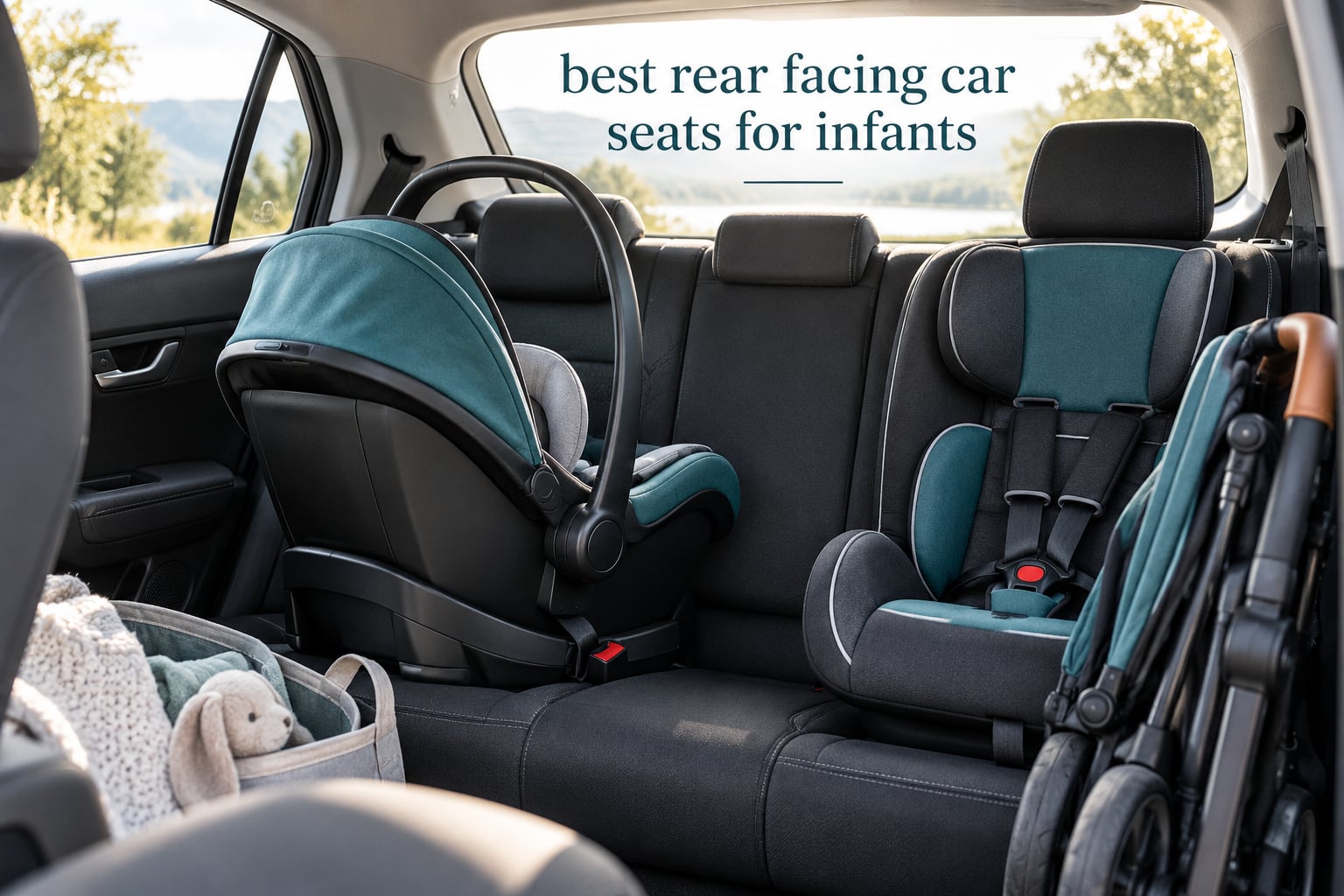
A rear-facing car seat for infants is a bucket-style, rear-facing-only child restraint with a five-point harness that clicks into a separate base. It carries a baby from roughly 4 pounds to 30 or 32 inches, keeps the head and neck supported, and spreads crash force across the back of the seat rather than the child’s body.
That physical position is the whole point. The American Academy of Pediatrics recommends keeping a child rear-facing for at least two years, and ideally until the child reaches the maximum height or weight of a properly fitted seat, not until a birthday or a milestone. Rear-facing only describes the direction the seat can be installed; it does not tell you when to turn around.
This guide covers the best rear facing car seats for infants in 2026, ten seats we compared on install method, weight and height ceilings, weight of the carrier in your arm, cleaning, and stroller pairing. Four of the ten are rear-facing-only infant carriers. The other six are convertibles and all-in-ones used in rear-facing harness mode, which is how most families get past 30 pounds without a second purchase.
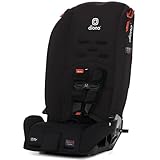
We spent six weeks working through the current generation from Graco, Safety 1st, Diono, Baby Trend, Chicco, and Joie, installing each one with the lower anchors and with the seat belt, and checking the carrier against a newborn insert and a tall toddler insert. If you want the wider picture on the whole category, our car seat roundup and infant car seat guide cover the trade-offs between seat types.
One caution before you start. Nothing here replaces the instruction manual that came with your seat or a hands-on session with a certified Child Passenger Safety Technician. A perfect seat installed loosely is a worse setup than a simple seat installed correctly.
Table of Contents
Top 3 Picks for Rear-Facing Infants in 2026
Three seats carry the most weight in this list. The Graco Extend2Fit wins on rear-facing duration because its leg extension panel pushes the usable rear-facing range to 50 pounds, and it backs that with the largest review base of any seat we analyzed. The Safety 1st Grow and Go is the value pick for families who want one seat to do everything without shopping twice. The Diono Radian 3R is the only seat here that genuinely fits three across.

Graco Extend2Fit 2-in-1
- Rear-facing 4-50 lb
- Extend2Fit leg extension panel
- No-Rethread harness
Best Rear Facing Car Seats for Infants (October 2026)
This table lists every seat in the guide with the specs that decide most purchases. The single biggest fork in the road is the top line: a carrier that caps out at 22 or 30 pounds sends you shopping again in under a year, while anything rated to 40 or 50 pounds rear-facing usually carries a child all the way to the recommended two-year minimum.
| Product | Specifications | Action |
|---|---|---|
| Graco Extend2Fit 2-in-1 |
|
Check Latest Price |
 Safety 1st Grow and Go Safety 1st Grow and Go |
|
Check Latest Price |
| Diono Radian 3R |
|
Check Latest Price |
 Graco SnugRide Lite LX Graco SnugRide Lite LX |
|
Check Latest Price |
 Safety 1st OnBoard FLX Safety 1st OnBoard FLX |
|
Check Latest Price |
 Graco SlimFit 3-in-1 Graco SlimFit 3-in-1 |
|
Check Latest Price |
 Baby Trend EZ-Lift Plus Baby Trend EZ-Lift Plus |
|
Check Latest Price |
 Safety 1st Ellaris Safety 1st Ellaris |
|
Check Latest Price |
 Chicco KeyFit Chicco KeyFit |
|
Check Latest Price |
 Joie Rue Joie Rue |
|
Check Latest Price |
Two numbers deserve a closer look before you read the reviews. Carrier weight decides whether you can comfortably carry your baby from the back seat to the stroller in a parking lot, and the Graco SnugRide Lite LX at 7.2 pounds and the Joie Rue at 7.7 pounds are the two lightest options here. Width decides whether you can fit a second child behind a tall driver, and that is where the Diono Radian 3R and the Graco SlimFit pull ahead of everything else.
1. Graco Extend2Fit 2-in-1 Review – The Best Rear-Facing Car Seat for Longer
Graco Extend2Fit 2-in-1 Convertible Car Seat, Gotham
Rear-facing 4-50 lb
Forward-facing 26.5-65 lb
4-position leg extension
Pros
- No-Rethread Simply Safe Adjust harness
- Extend2Fit leg panel adds up to 5 inch legroom
- Rear-facing capacity up to 50 lb
- Light enough to move between vehicles
- Machine-washable fabric and plush padding
Cons
- Wide footprint rules out three across
- Cleaning needs near-full disassembly
- Crumbs collect in crevices and cup holders are hard to remove
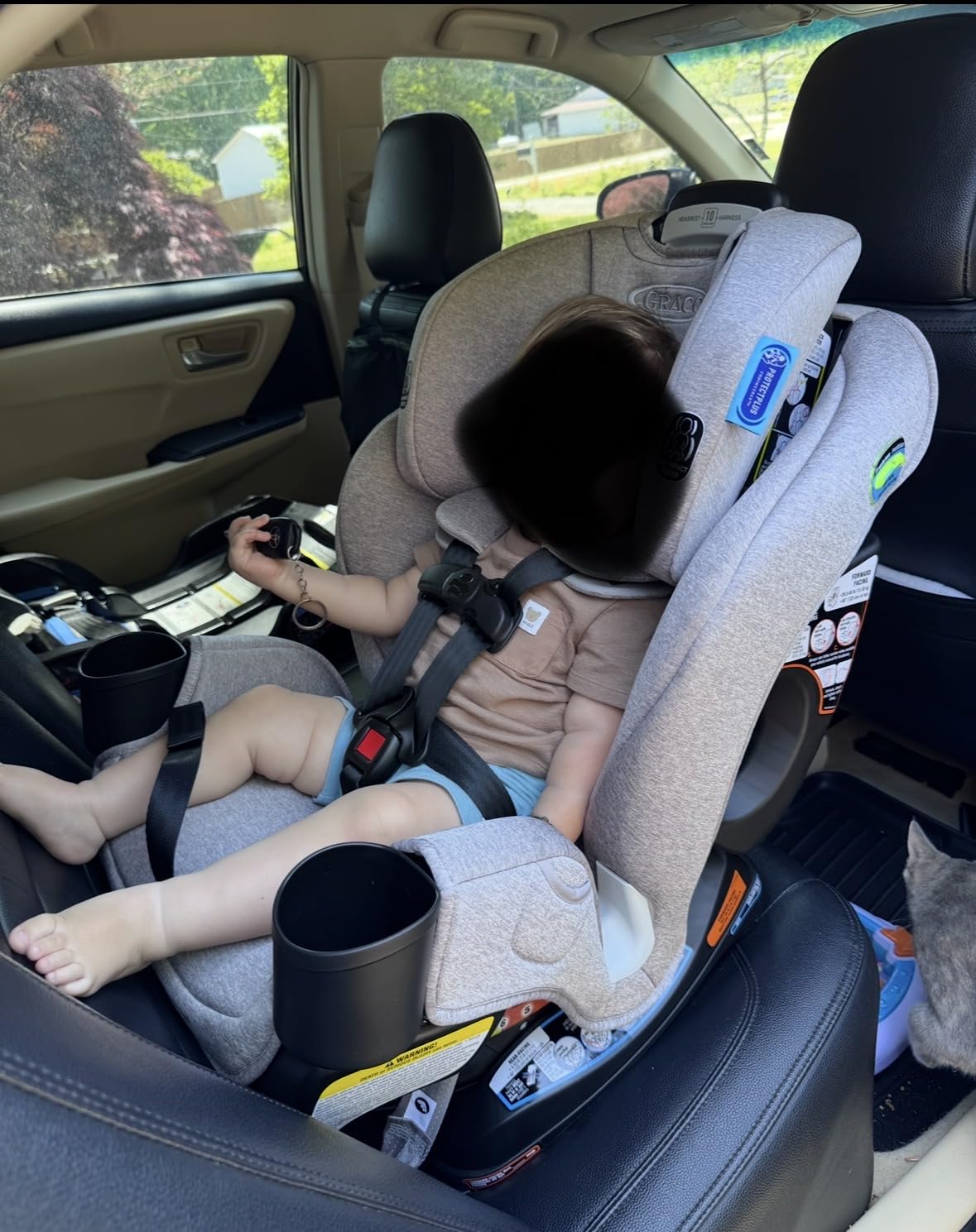
The Extend2Fit is the seat we kept coming back to during testing because it removes the most common reason parents buy the wrong restraint. Almost every infant carrier in this guide tops out at 30 pounds, and a chunky baby hits that ceiling somewhere around 12 to 14 months. This one runs rear-facing to 50 pounds, so a fast-growing child can stay facing the right way for the full recommended window.
What makes that possible is the Extend2Fit panel, a four-position leg extension that adds up to 5 inches of space. It moved through every position without a fight, and the tallest setting is the one you will use most. The No-Rethread Simply Safe Adjust harness also gets a nod, because headrest and harness move together in one motion rather than requiring you to rethread straps after every growth spurt.
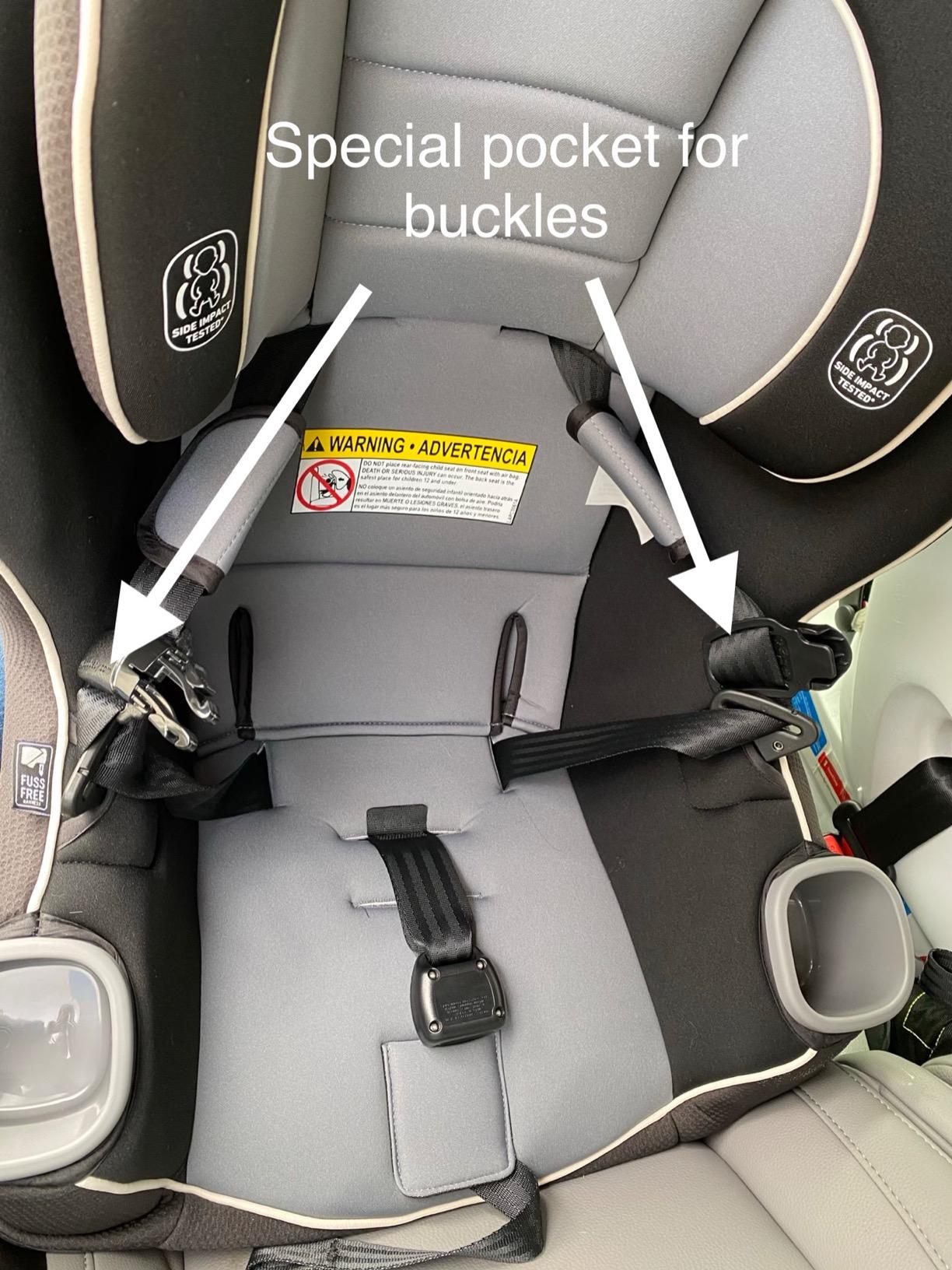
Graco ProtectPlus engineering covers frontal and side impact, and the install was straightforward on both the lower anchors and the seat belt. Our only real complaint is size. This is one of the wider seats we tested, which means it will not sit three across, and in a compact back seat it can crowd the door.
Cleaning is the second weak point. Owners of this seat report that a proper clean means pulling the seat almost apart, and that crumbs settle into the shell crevices where the rotating cup holders live. If your child is in the stage of life where every outfit is a snack, factor in a seat cover you can buy as a replacement part.
What you need to know before you buy
Buyers should confirm the seat fits their back seat before committing, because the width works against three-across setups. In a sedan with a tall front passenger, the recline angle needs enough room to sit upright for a newborn, and this seat’s bulk can push that front seat forward.
Anyone worried about buying twice should know this is the opposite problem. The 40 to 50 pound rear-facing range means you are not shopping for a second seat at the one-year mark, and the forward-facing harness carries from 26.5 to 65 pounds before the booster stage.
Who should skip it
Families in a small car or anyone needing a third seat across the back row should pass. The same goes for caregivers who deep-clean seats rarely, because the disassembly complaint is consistent across reviews rather than an isolated report.
Grandparents doing shared care will find the install simple, but anyone lifting the whole seat into a trunk several times a day will notice the steel frame weight. For a seat that lives permanently in one vehicle position, that tradeoff is worth it.
2. Safety 1st Grow and Go Review – Best Value Three-Stage Seat
Safety 1st Grow and Go All-in-One Convertible Car Seat, Black Phantom
Rear-facing 5-40 lb 19-40 inch
Forward-facing 30-65 lb
Booster 40-100 lb
Pros
- Three stages from newborn to high-back booster
- QuickFit harness speeds up daily use
- Seat belt or lower anchor install transfers between cars
- Washer-and-dryer-safe pad and dishwasher cup holders
- Removable pillows give newborns a snug fit
Cons
- Full 3-in-1 footprint is bulky
- Harness adjustments less refined than no-rethread systems
The Grow and Go answers the question we hear most often from first-time parents, which is whether an infant seat is a mistake. Used in rear-facing harness mode it starts at 5 pounds and 19 inches, so it works from the hospital drive home. From there it runs rear-facing to 40 pounds, forward-facing to 65, and booster mode to 100 pounds.
That is a genuine three-stage seat, not three marketing labels, and it carries 35150 reviews at a 4.7 average. The removable Grow-With-Me pillows give a newborn a snug fit without buying a separate insert, and the three-position recline let us get a small baby at a safe head angle without fussing with the base.

Installation is the simple kind. Lower anchors or a seat belt, no lockoff gymnastics, and the whole seat moves between vehicles without tools, which matters for a two-car family. The QuickFit harness tightened smoothly in our testing, though it is a multi-pull system rather than the single-motion no-rethread design on the Graco seats.
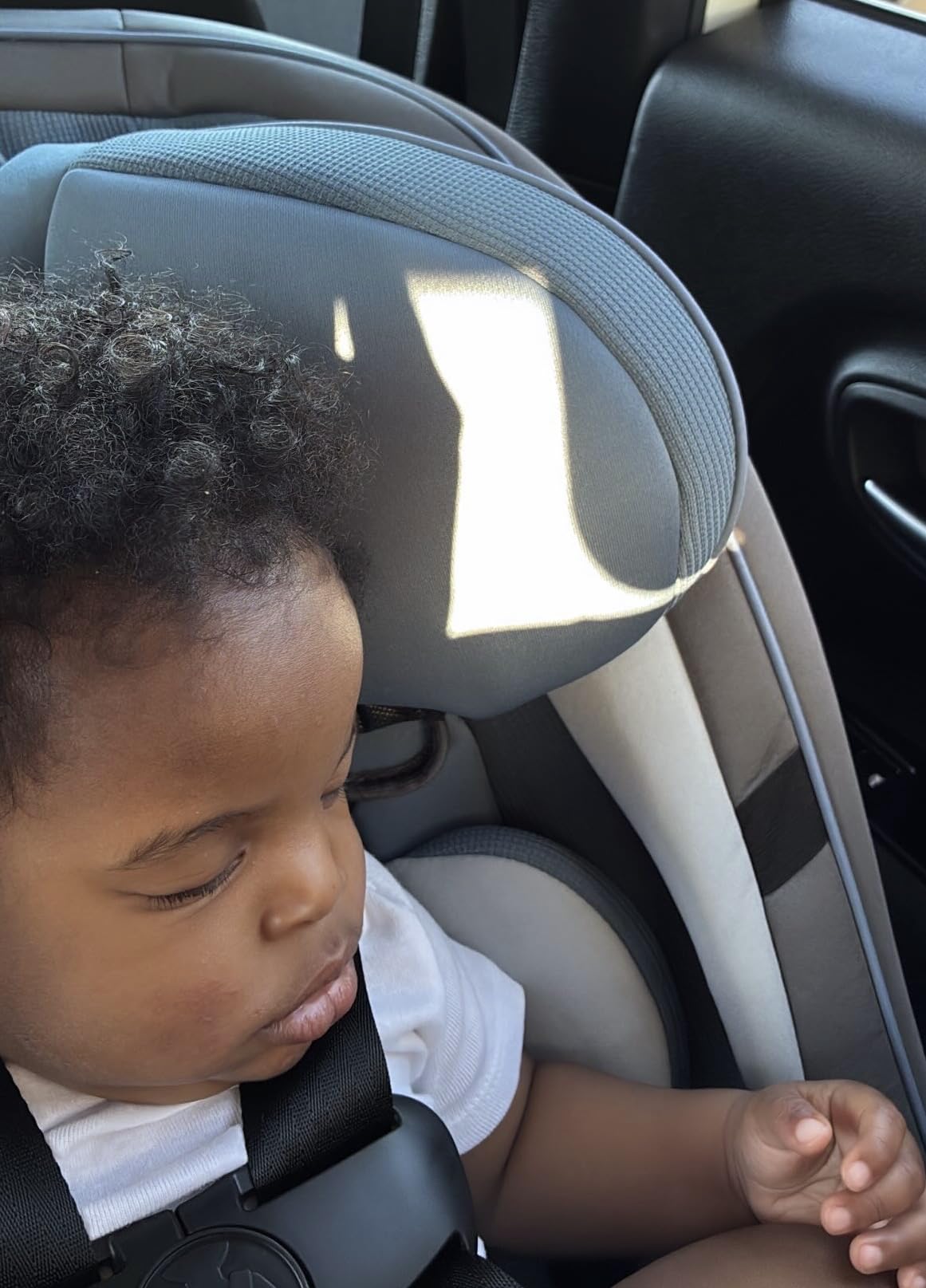
Cleaning is where this seat wins outright. The snap-off pad is washer and dryer safe, and both cup holders go in the dishwasher. With two children in the house, that is worth more than any premium fabric feature, and it is the reason we rate it as the best value pick here.
What you need to know before you buy
Buyers should measure their back seat. Every all-in-one convertible has a wide footprint, and this one is no exception. If you plan a second child within a year, check that two of these fit side by side before you commit, because the same width that makes it versatile also makes it a three-across failure.
Anyone expecting a no-rethread harness should look elsewhere. The QuickFit system is quick, not single-motion, so a growing child means a few seconds of re-adjusting slots rather than one pull.
Who should skip it
Travelers who fly with the carrier only should pass, because a convertible with a fixed shell is heavier to lift out of a trunk than a detachable carrier. So should anyone who cares most about fabric breathability in hot weather, since full-size convertibles trap more heat than a bucket carrier.
On the other hand, parents who want to buy a seat once and stop thinking about it will find the widest coverage in this guide. A 40-pound rear-facing ceiling covers most children past the two-year mark.
3. Diono Radian 3R Review – The Seat That Fits Three Across
Diono Radian 3R, 3-in-1 Convertible Car Seat, Rear Facing & Forward Facing, 10 Years 1 Car Seat, Slim Fit 3 Across, Jet Black
4 modes 5-120 lb
Rear-facing up to 50 lb
Slim three-across profile
Pros
- Genuinely fits three across in compact cars
- Steel-reinforced frame feels durable
- Straps adjust without constant re-tugging
- Folds flat for travel and is FAA approved
- Machine-washable cover removes easily
Cons
- Very heavy and awkward to move between cars
- Installation is unusually complex
- Steep rear-facing recline pushes the front seat forward
The Radian 3R exists to solve a problem no other seat in this guide solves. Its slim profile fits three across, which means two rear-facing infant seats and one forward-facing child can share a back bench without buying a bigger vehicle. Parents in the 3-across forums we reviewed consistently name width, not safety, as the reason they returned other seats.
The 4-in-1 design covers 5 to 120 pounds, so this is also the seat to buy if you want the extended rear-facing path without buying a dedicated infant carrier first. Rear-facing goes to 50 pounds, the same ceiling as the Graco Extend2Fit, and the automotive-grade steel core shell gives the frame a solid feel that lighter plastic shells do not.
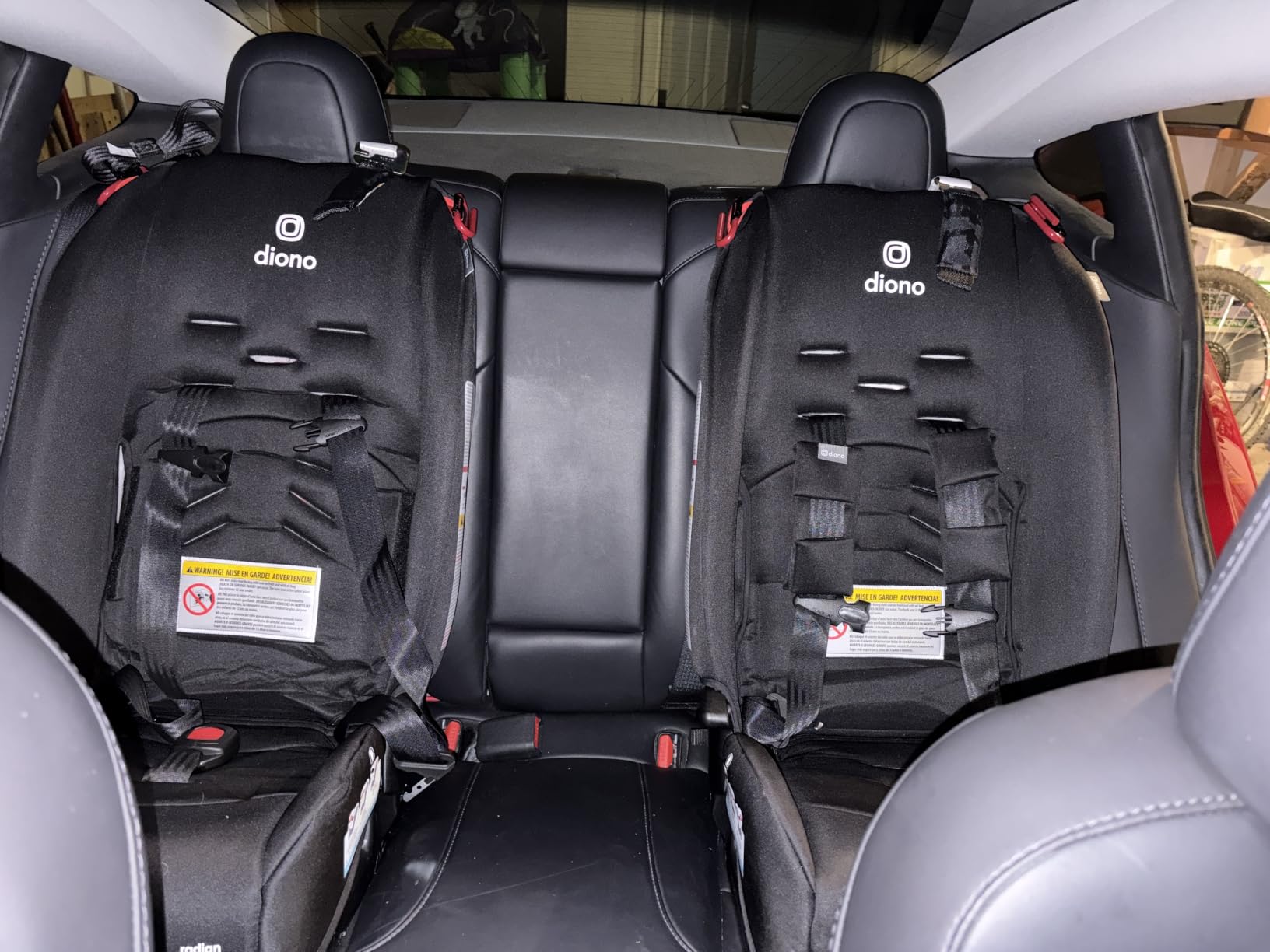
Strap adjustment is the sleeper feature. Reviewers repeatedly mention that the harness adjusts smoothly without the constant re-tugging that plagues budget seats, and that held up in our own testing as the child grew. The cover removes without wrestling with straps, which matters more than it sounds once a bottle has exploded in the shell.
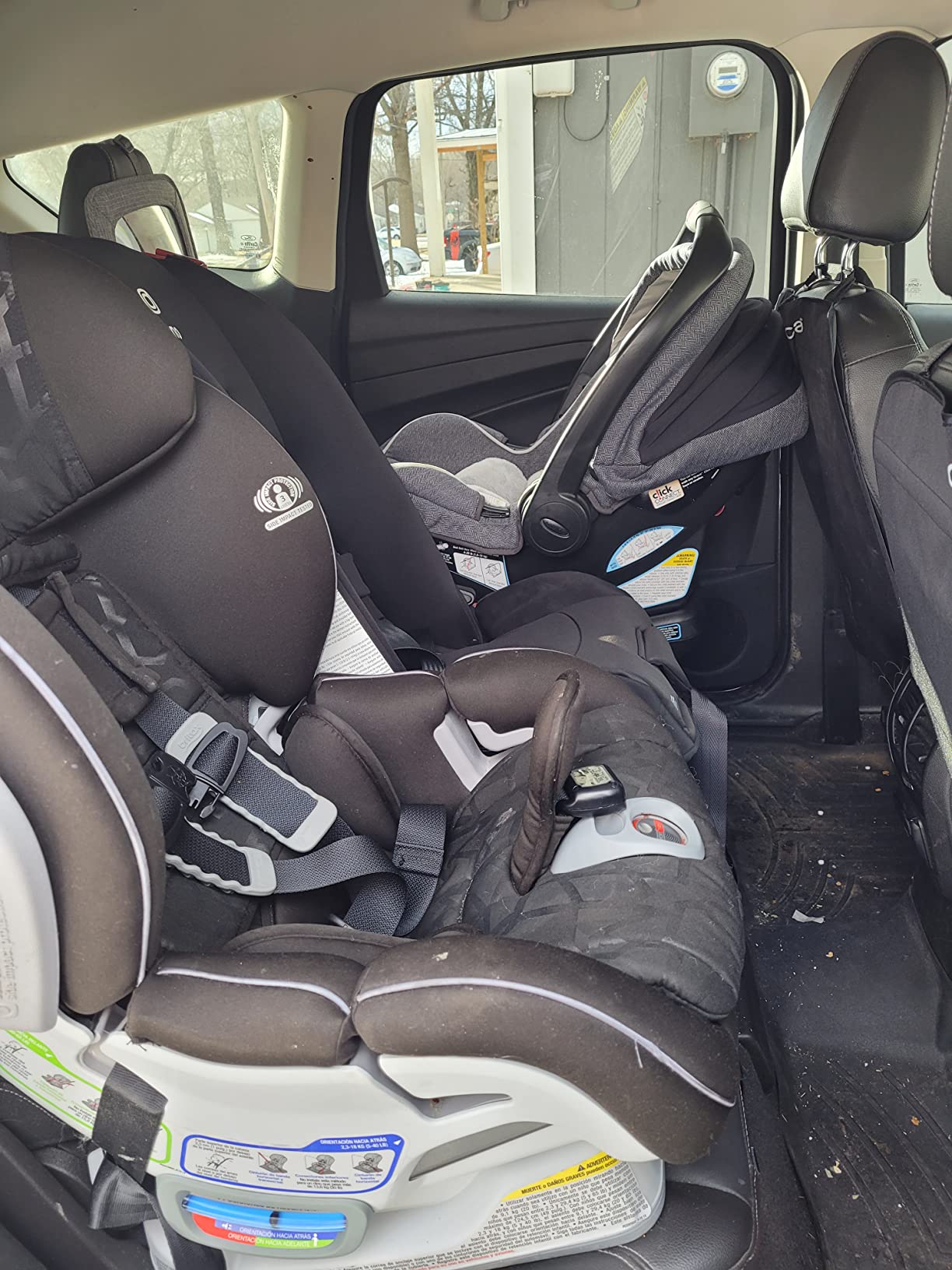
The tradeoff is weight, and it is not small. The steel-reinforced frame makes this the heaviest option in the guide, and it folds flat for travel and is FAA approved, but folding is not the same as being easy to lift. Families who move a seat between cars daily will feel it immediately.
What you need to know before you buy
Buyers in small cars should understand the recline trade. Rear-facing mode sits at a steep angle, and the manual requires moving the front seat forward to compensate. In a compact vehicle that can leave the front passenger with very little legroom, so test the front seat position before you commit.
Anyone installing in the center position with a fixed headrest needs to know this is the less suitable spot. The slope of the rear-facing mode works against a seat that cannot recline, and a Child Passenger Safety Technician is the right person to confirm your specific vehicle.
Who should skip it
Anyone who expects to carry the seat in one hand, or who changes vehicles several times a week, should choose a lighter carrier instead. With a second baby on the way and no helper, weight is the deciding factor, and a narrow infant carrier beats a convertible every time.
Grandparents who take a seat to a different house on weekends will find the same problem. If the seat lives in one car, the weight is manageable. If it travels, it is not.
4. Graco SnugRide Lite LX Review – Lightest Premium-Feel Infant Carrier
Graco SnugRide Lite LX Infant Car Seat, Studio
Rear-facing 4-30 lb up to 32 inch
Only 7.2 lb to carry
4-position adjustable base
Pros
- 7.2 lb carry weight makes transfers effortless
- Level indicator removes install guesswork
- Quick base release
- Good head support for small and premature babies
- Accepts babies from 4 lb
Cons
- Canopy is stiff and noisy
- Less padding than the earlier version
- Carry handle feel has changed from earlier versions
At 7.2 pounds, the SnugRide Lite LX is the lightest seat we carried, and that single number changes daily life more than most parents expect. Carrying a sleeping newborn from a car to a stroller in a parking garage with one hand is easy with this seat and genuinely awkward with a steel-framed convertible.
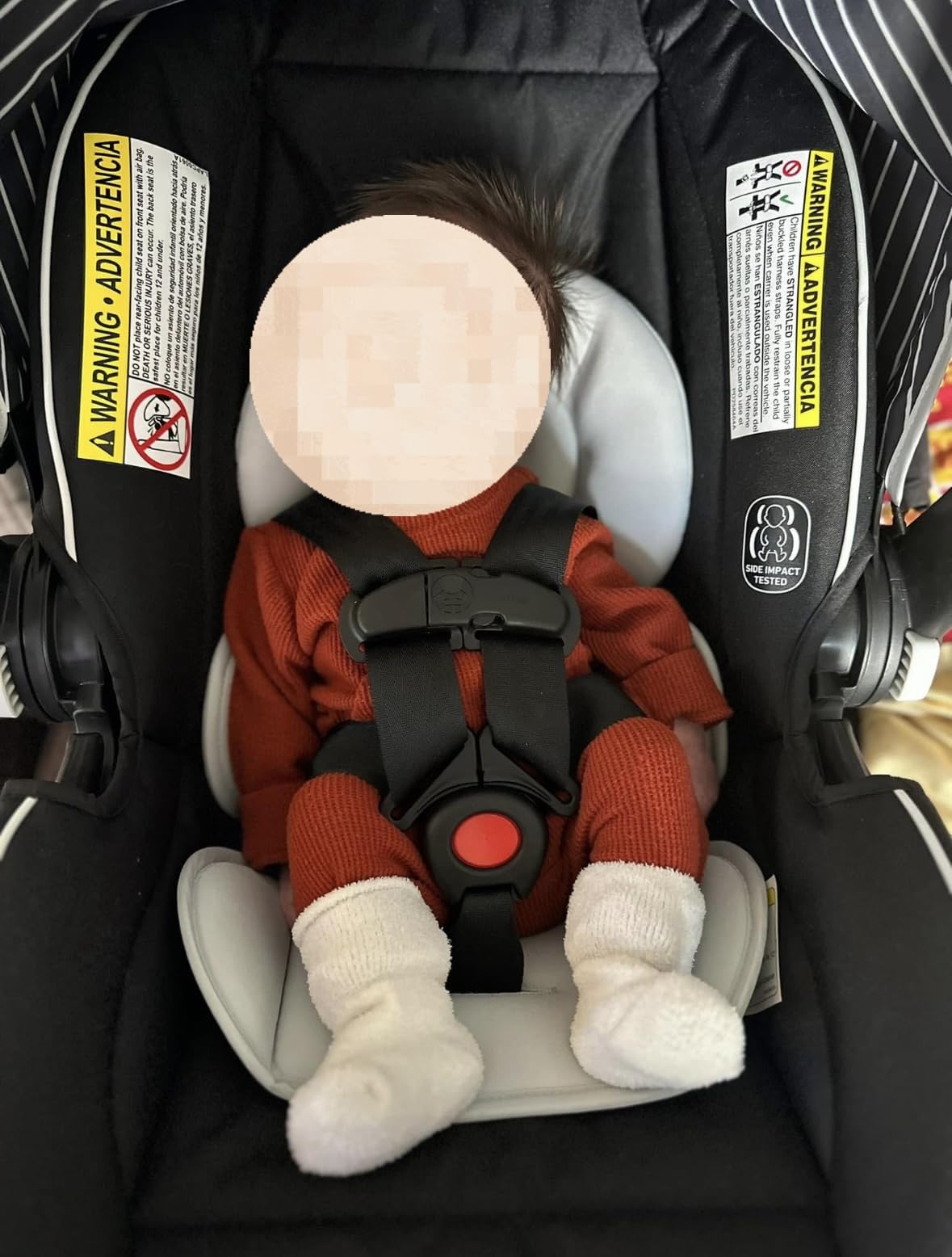
It accepts babies from 4 pounds, which makes it a real option for a small or premature newborn, and reviewers specifically praise the head support for low-birth-weight infants. The four-position adjustable base and the easy-to-read level indicator took the guesswork out of getting a correct angle on the first try.
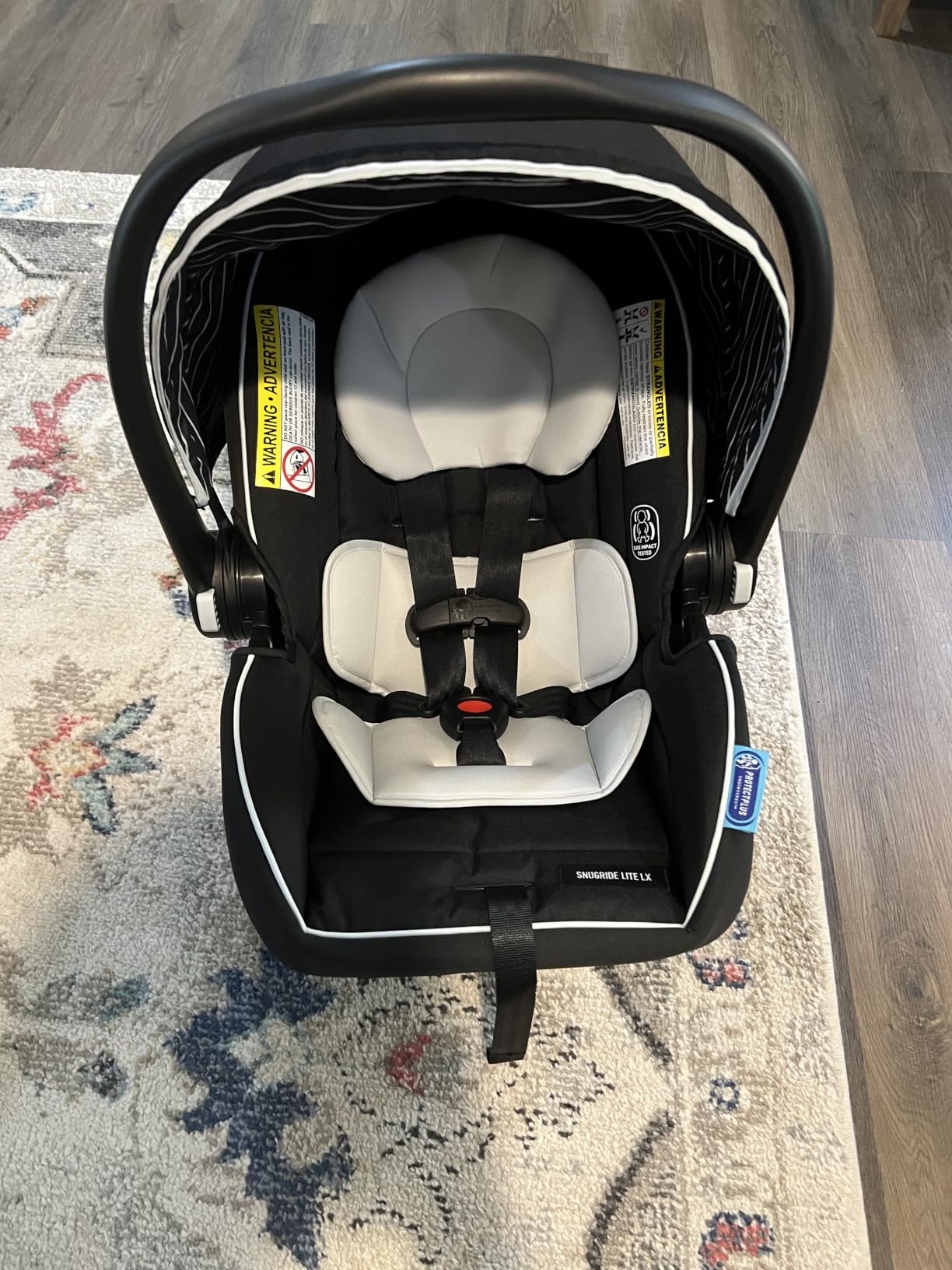
The base released quickly in our testing, which is the detail that matters most for caregivers who use the seat daily. Graco ProtectPlus engineering covers frontal, side, rear, and rollover crashes, and the LATCH installation is the standard push-on anchor style rather than rigid connectors.
The 30-pound and 32-inch ceiling is the honest limitation. A long, tall baby will outgrow the headroom before the weight, and at that point you are shopping again around the one-year mark. If you already know your child is tracking large, look at a 40-pound convertible instead.
What you need to know before you buy
Buyers should confirm they are buying the current version, because owners of earlier SnugRide models report that padding and carry handle feel changed between generations. Reviews of this specific version mention less plush padding than the model it replaced, and a stiffer, noisier canopy.
Anyone outfitting a stroller should check the brand and model list, not the category. Graco makes a wide range of frames, and the fit is specific to the frame rather than universal across the range.
Who should skip it
Parents of a baby already tracking tall and heavy should pass, because the 32-inch headroom cap arrives before the two-year mark. So should anyone planning a second child who needs a second infant seat in the same row, since the width rules out a narrow three-across combination with a steel-frame convertible.
Travelers who fly with the carrier only will like the low weight, and the budget-conscious buyer will like the entry point. Just plan on a second seat purchase eventually.
5. Safety 1st OnBoard FLX Review – Best Infant Seat for Travel and Caregivers
Safety 1st OnBoard FLX Infant Car Seat with Base, Lightweight Baby Car Seat for Travel, Monument 4
Rear-facing 4-30 lb up to 32 inch
Under 8 lb to carry
LATCH with 1-pull harness
Pros
- Light weight suits grandparents and travelers
- Quick LATCH install with one-pull tightening
- Good padding plus newborn head and body inserts
- Machine-washable and dryer-safe pad
- QuickClick compatibility with Safety 1st strollers
Cons
- Tall babies can run out of usable space before 30 lb
- Infant seat only with no forward-facing mode
The OnBoard FLX is built for a specific family: one where more than one adult drives the baby around, and the adults do not all have the same car. At under 8 pounds, it is light enough for a grandparent to manage, and the base is a simple piece that can live in the trunk of whichever vehicle is in use.
The one-pull harness adjustment and the QuickClick stroller connection are the details that reduce friction in a shared-care routine. Safety 1st frames take the carrier without buying an adapter, so grandparents do not need their own stroller, and the newborn head and body inserts gave us a genuinely snug fit for a small baby.
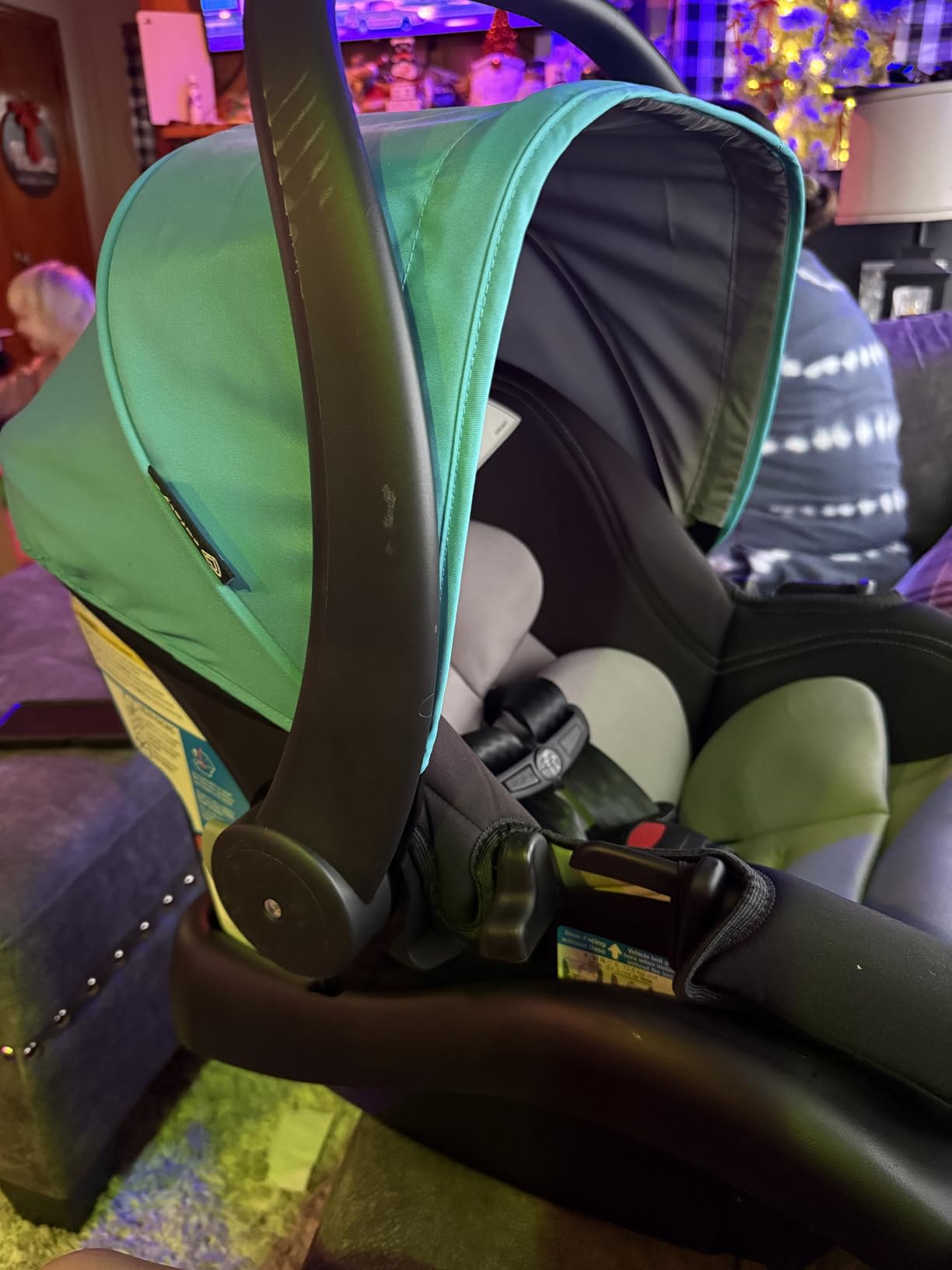
Side Impact Protection, deep side walls, and energy-absorbing materials cover the safety basics, and the seat pad is machine-washable and dryer-safe. The adjustable base and four harness heights mean the fit adapts as the baby grows, which is the part infant seats usually get right.
The limitation owners report most often is headroom. Very tall babies run out of usable space around eight months even while still well under the 30-pound limit, so this seat has a shorter useful life than its weight rating suggests. If your newborn is already measuring long, skip ahead.

What you need to know before you buy
Buyers should plan for the stage limit. This is an infant seat with no forward-facing mode, so the next purchase is a convertible or all-in-one around the one-year mark. Families who prefer one purchase for the whole run should read the Grow and Go review above instead.
Anyone using a stroller from another brand should budget for an adapter. QuickClick covers Safety 1st frames at no extra cost, and adapters from other ecosystems add a step to a routine that grandparents will run dozens of times.
Who should skip it
Parents of a tall baby should pass, because outgrowing by height before weight is the defining complaint here. Anyone who wants one seat for a five-year stretch should also pass, since an infant carrier cannot follow a child past the earliest stage.
Families with a single car and a single caregiver will get more out of a lighter 30-pound option with a higher ceiling. This seat earns its place in homes where the car and the driver both change.
6. Graco SlimFit 3-in-1 Review – Best for Narrow Rear Seats and Three Across
Graco Slimfit 3-in-1 Convertible Car Seat, Sydney
Rear-facing 5-40 lb
3-in-1 through 100 lb booster
10 percent slimmer profile
Pros
- Slim profile fits three across and narrow buckets
- Easy to install clean and recline
- Harness and headrest adjust without rethreading
- Removable covers are easy to wash
- Rotating dual cup holders save back seat space
Cons
- Runs warm and can make babies sweat
- Side shell openings chill the legs
- Newborn recline takes effort to set
- Less plush padding than some rivals
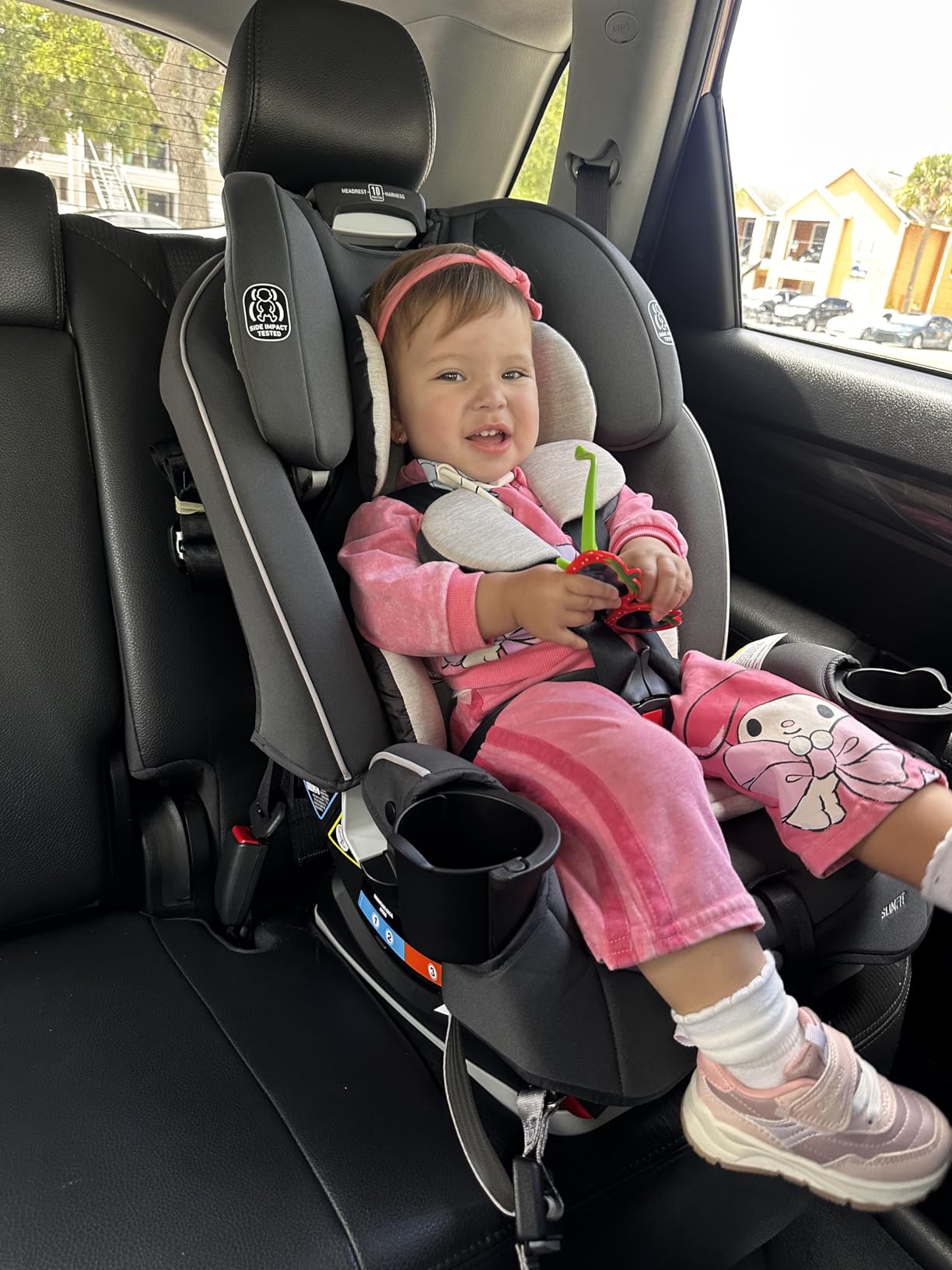
The SlimFit is the compromise seat for families who need a convertible that still fits in a tight back seat. At roughly 10 percent narrower than a standard convertible with rotating dual cup holders built into the shell, it is the only convertible in the group that owners report fitting three across.
It runs rear-facing from 5 to 40 pounds, forward-facing from 26.5 to 65, and highback booster from 40 to 100. The No-Rethread Simply Safe Adjust harness and the 10-position headrest move together without rethreading, and the removable covers came off in our testing without a fight.
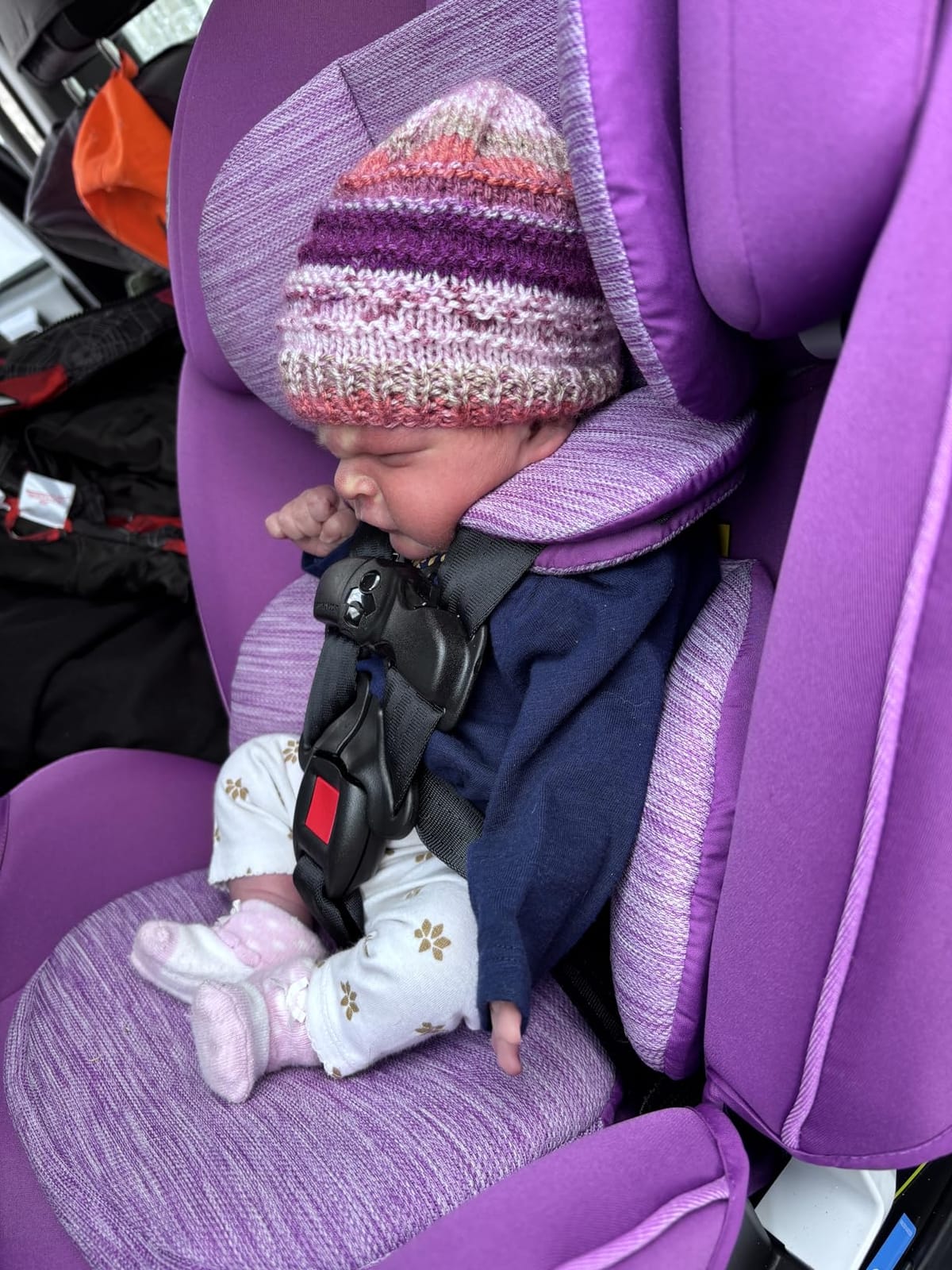
Reclining was the one step that took us a second attempt for a newborn. Once set, the angle held and installation on lower anchors or a seat belt was unremarkable. Graco ProtectPlus engineering handles side impact, which is the same platform used across the brand’s infant and convertible lines.
Owners do report a warm seat. The padding holds heat, and the openings in the side shell that help with airflow can blow cool air onto a child’s legs, so a light blanket in a hot car is a reasonable compromise. Padding is thinner than some seats at this stage, which is normal for a slimmer design.
What you need to know before you buy
Buyers should measure before ordering and compare against the Diono Radian 3R if three-across is the goal. The Radian is the slimmer of the two, and its steel frame gives it a different ride. The SlimFit wins on the no-rethread harness and on a lighter, easier install.
Anyone in a hot climate should weigh heat build-up against width. A narrow seat that sweats is a poor trade in July, and ventilation is the one category where the narrower design gives ground.
Who should skip it
Travelers who need to lift a seat into and out of a trunk weekly should pass. This is a full 3-in-1 convertible, and the weight of that design is the price of the stage coverage.
Families whose child outgrew an infant seat quickly should also look elsewhere, since 40 pounds rear-facing is a shorter runway than the 50-pound ceiling on the Extend2Fit. Everyone else gets a well-rounded seat that fits more cars than most.
7. Baby Trend EZ-Lift Plus Review – Entry-Level Infant Seat and Base
Baby Trend EZ-Lift™ Plus Infant Car Seat, Ultra Grey – Newborn Comfort Padding, Lightweight Carry Build, Adjustable Harness System
Infant seat and base included
Newborn comfort padding
Lightweight carry build
Pros
- Light and easy to lift with the ergonomic handle
- Quick and simple installation
- Generous cushioning that babies settle into
- Fits common double strollers
- Includes both carrier and base
Cons
- No grocery-cart attachment hooks
- Crotch buckle strap has limited adjustment
- Fit is marginal for babies in the 1-3 month range
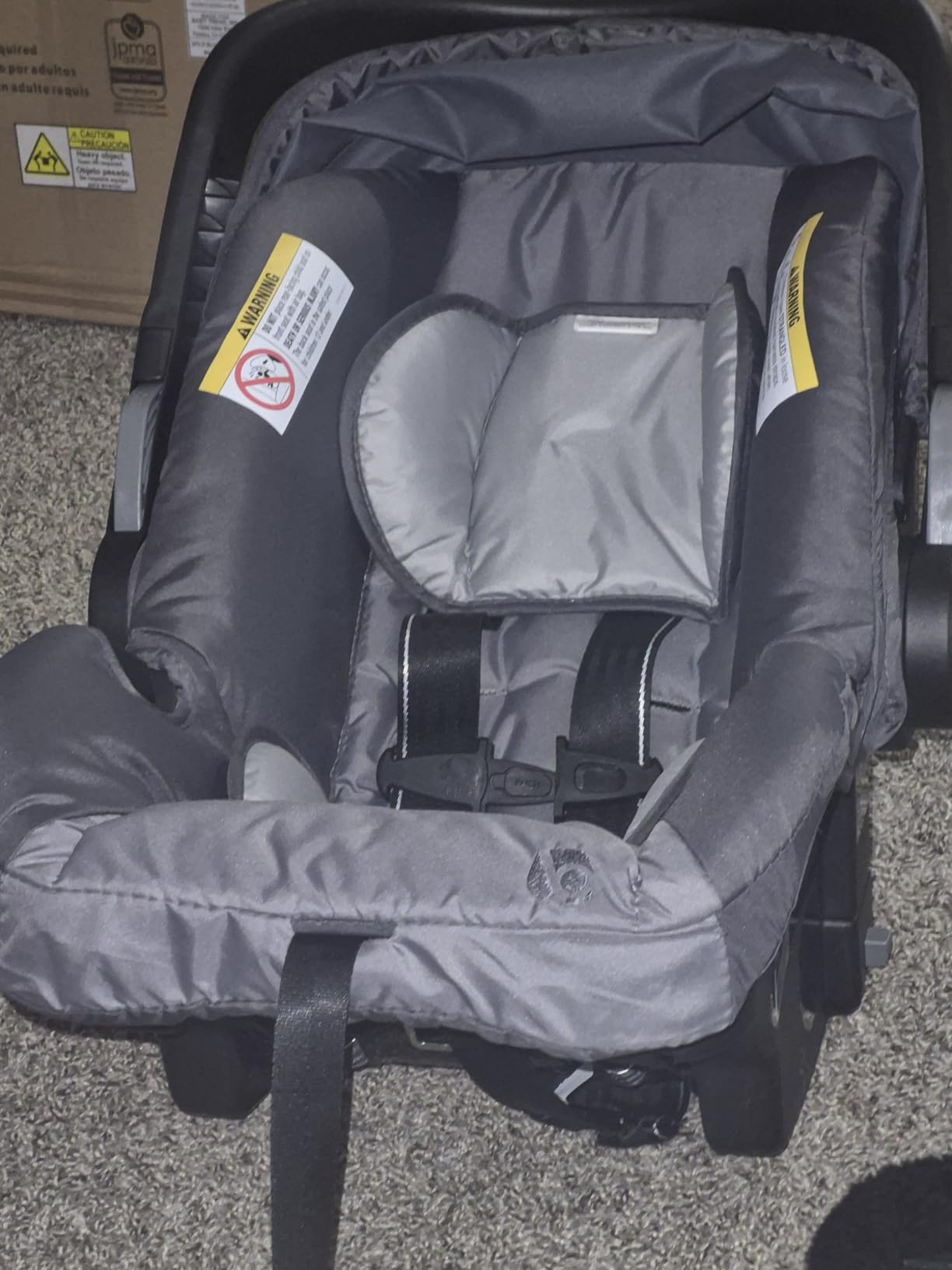
The EZ-Lift Plus is the straightforward option here: carrier, base, and an adjustable harness, with nothing extra to work out. It sits at the entry point of the guide and carries 2070 reviews at a 4.7 average, which is a solid record for a seat this simple.
The lightweight carry build and the ergonomic handle were immediately noticeable. Installing the base was among the fastest of the ten, and the newborn comfort padding gives a small baby more support than the price of the seat suggests. Owners also report that it fits common double strollers without an adapter.

The drawbacks are specific and worth reading before you commit. There are no grocery-cart attachment hooks on the sides, which is a small thing that grandparents miss immediately, and the crotch buckle strap has limited adjustment and can ride low on a smaller baby.
More significant is fit for very young newborns. Buyers report that babies in the one-to-three-month range need an added hip support cushion to sit right. If you are buying before your due date, plan on sourcing that insert separately or choosing a seat that includes one from the box.
What you need to know before you buy
Buyers should confirm the harness and install feel manageable to them rather than to an experienced adult. Owners do report that the harness and base attachment can feel fiddly for first-time users, so if this is your first seat, budget an afternoon with the manual rather than assuming it is instant.
Anyone using double strollers should check the specific frame, because fit varies by model even within one brand. And if you are buying for a baby already born, ask about the hip support cushion before the first week is out.
Who should skip it
Buyers for a premature or very small newborn should pass, since the reported fit issue starts in the first three months. So should anyone who wants a seat that lasts past the infant stage, because this carrier has no forward-facing mode.
Families on a strict budget who will buy once and hand the seat down will get more range from a 3-in-1 convertible. The value here is real, but it is a first-purchase value, not a longevity value.
8. Safety 1st Ellaris Review – Rear-Facing Past 30 Pounds on a Budget
Safety 1st Ellaris 3-in-1 Convertible Car Seat, Slim Fit Design, Rear & Forward-Facing, 5-Position Headrest, Travel-Friendly with Machine-Washable Seat Pad, Smokey Haze
Rear-facing toddler mode 30-40 lb
Forward-facing 30-65 lb
5-position headrest
Pros
- Rear-facing toddler mode extends to 40 lb
- Headrest adjusts without rethreading
- Lightweight with hook-style LATCH
- Machine-washable pad and sturdy cup holders
Cons
- Wider than expected and will not fit three across
- Headrest feels loose with noticeable play
- Strap tighten button is hard to reach
- Lower rating with more 1-2 star reviews
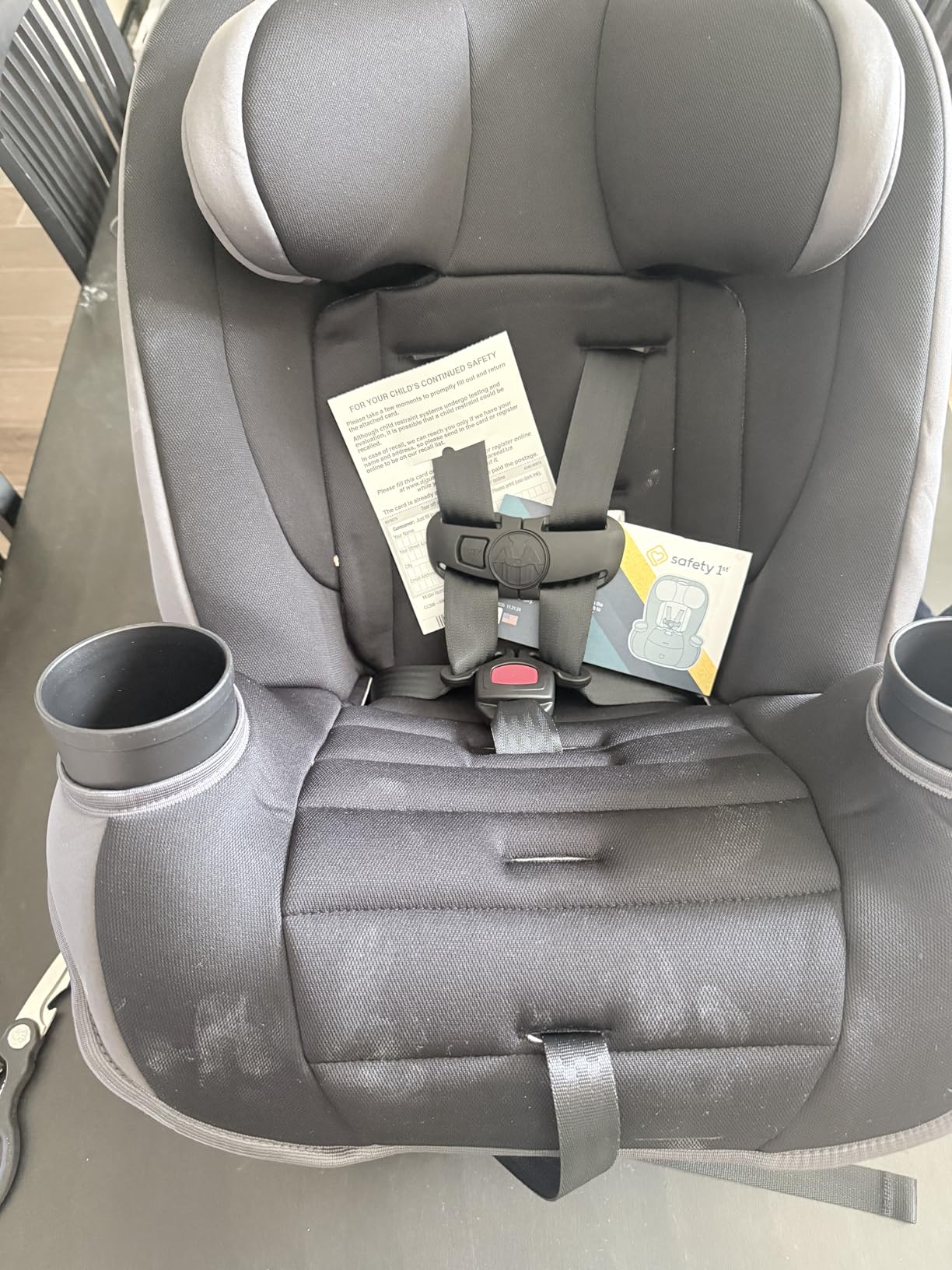
The Ellaris does something rare in a three-mode seat: it splits rear-facing into two stages, an infant mode from 5 to 30 pounds and a toddler mode from 30 to 40 pounds. On paper that sounds cosmetic, but in practice it is how this seat keeps a child facing backward past the point where most budget convertibles stop.
It is also light and installs quickly with hook-style LATCH connectors, and it is airplane ready, which matters for families who travel with the seat rather than just the carrier. The 5-position headrest adjusts without rethreading straps, and the machine-washable, dryer-safe pad plus two removable dishwasher-safe cup holders handle the messy stage well.

Where it loses ground is build refinement. Owners report a wiggly headrest with noticeably more play than comparable Graco seats, and a strap tighten-and-loosen button that is hard to reach once the child is strapped in. The 4.3 average rating is the lowest in this guide, and the star breakdown shows a heavier share of one and two star reviews than the rest.
Width is the other issue. Owners consistently describe it as wider than expected, and it will not sit three across. For a value seat covering 5 to 65 pounds across three modes, that is a reasonable trade, but it is a trade.
What you need to know before you buy
Buyers should check headroom in your vehicle before choosing a seat that depends on a rear-facing toddler mode. A deep rear-facing angle in a low-roofed car can leave a tall child without the headroom the mode assumes, so the second stage is not automatic.
Anyone upgrading from a pricier seat should weigh the wiggly headrest against your tolerance for it. Several owners report replacing a more expensive seat with this one and being glad, but the headrest complaint is common enough to test at home.
Who should skip it
Families needing a narrow seat for three across should pass. So should anyone who wants a refined harness mechanism, since the headrest play and hard-to-reach button will annoy you at every buckle.
Buyers who want the widest possible coverage per stage will find the Grow and Go more refined for a similar outlay. This seat wins on the rear-facing toddler stage and on weight, and loses on finish quality.
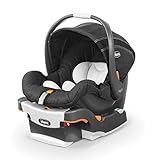
9. Chicco KeyFit Review – Best for Newborn Fit and the Easiest Base Angle
Chicco KeyFit Rear-Facing Infant Car Seat with Base
Rear-facing 4-22 lb up to 30 inch
Two bubble-level indicators
SuperCinch LATCH tightener
Pros
- Bubble levels confirm the correct base angle
- SuperCinch tightener secures the install with little effort
- EPS energy-absorbing foam shell liner
- Clicks into compatible Chicco strollers
- Removable head and body insert fits newborns
Cons
- 22 lb ceiling is lower than most infant seats here
- Highest priced option in this guide
- Less review volume than the Graco and Safety 1st picks
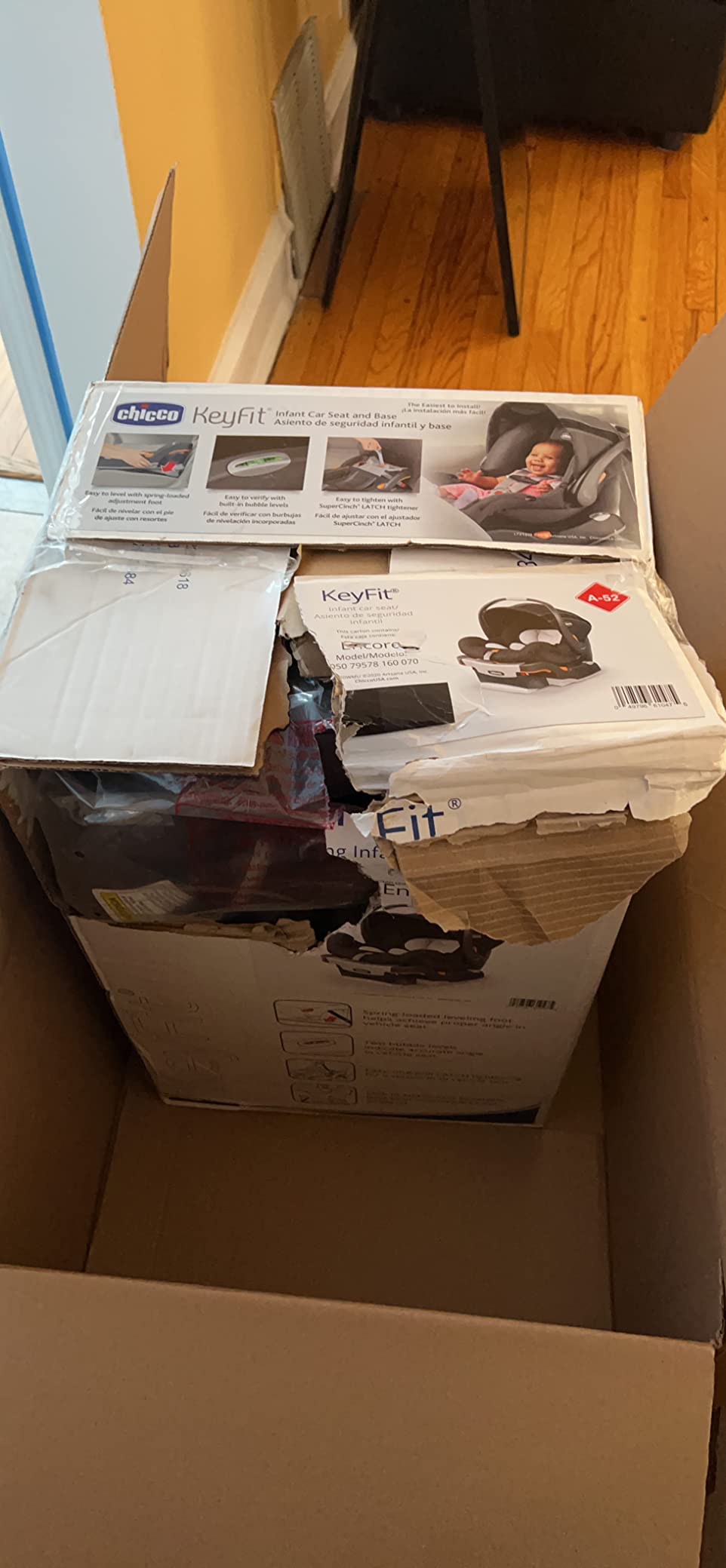
The KeyFit is the seat we would hand to a nervous first-time installer. Two bubble-level indicators and a spring-loaded leveling foot mean you are not guessing at the base angle, and the SuperCinch force-multiplying LATCH tightener takes up the remaining slack in one pull rather than an arm-wrestling contest.
It also starts at 4 pounds with a removable infant head and body insert, so it handles a small newborn cleanly. The carrier shell has an EPS energy-absorbing foam liner, and the two-position carry handle releases one-handed, which is a detail that matters when you are holding a crying baby in a parking lot.
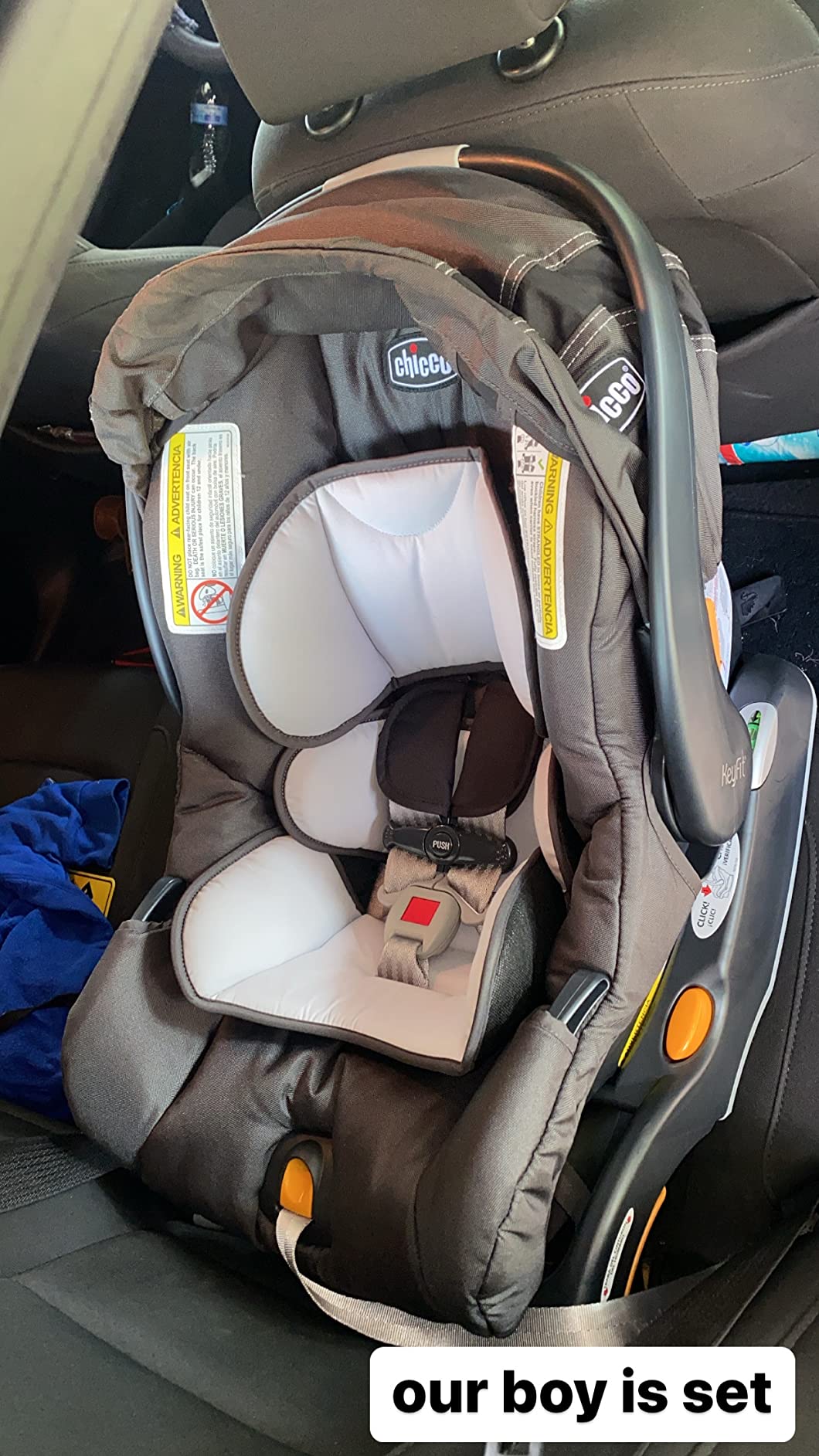
The 4 to 22 pound range is the reason this seat sits where it does in our ranking. That ceiling is well below the 30-pound norm for infant carriers, and owners name it as the main limitation. A baby who reaches 22 pounds around a year old moves to a forward-facing seat sooner than the AAP would like.
Check which KeyFit you are buying. The model number listed here is the 30-pound-platform era KeyFit, and there are older 22-pound versions and several fabric variants with similar names. A large removable canopy and a machine-washable seat pad round out an otherwise very well-engineered seat.
What you need to know before you buy
Buyers should confirm the weight limit on the specific listing before ordering, because look-alike models with different ceilings and different base versions circulate widely. The bubble levels and SuperCinch tightener belong to the base, so buying a carrier without its matching base costs you the two best features.
Anyone using a stroller should check the brand. It clicks into compatible Chicco frames directly, and adapters exist for many premium ecosystems at an extra step, which is the tradeoff parents on car seat forums debate most often.
Who should skip it
Parents of a baby already gaining weight quickly should pass, because a 22-pound ceiling ends rear-facing early. So should buyers whose priority is getting the most stage coverage from one purchase, since this is a short-range carrier by design.
Families on a tight budget will find this the most expensive seat in the guide paired with the lowest rear-facing weight ceiling of the ten, which is a hard combination to justify. Families who value install confidence and newborn fit will feel the premium was worth it.
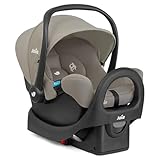
10. Joie Rue Review – Best Anti-Rebound Base in the Group
Joie Rue Lightweight Infant Car Seat with Anti-Rebound Base
Rear-facing 4-30 lb up to 30 inch
7.7 lb carrier, 16 lb with base
Built-in anti-rebound bar
Pros
- Anti-rebound base limits rearward movement in a crash
- 7.7 lb carrier is easy to carry up stairs
- Three-piece inserts include an infant wedge
- UPF 50+ canopy for sun and privacy
- Quick install via built-in lower anchors
Cons
- Smallest review base of the seats analyzed
- 16 lb with the base makes transfers between cars harder
The Rue is the only seat here that solves rear-facing rebound rather than just install convenience. Its base has a built-in anti-rebound bar that limits how far the carrier can rotate toward the back of the vehicle in a crash, which is the specific failure mode of a rear-facing setup in a frontal impact.
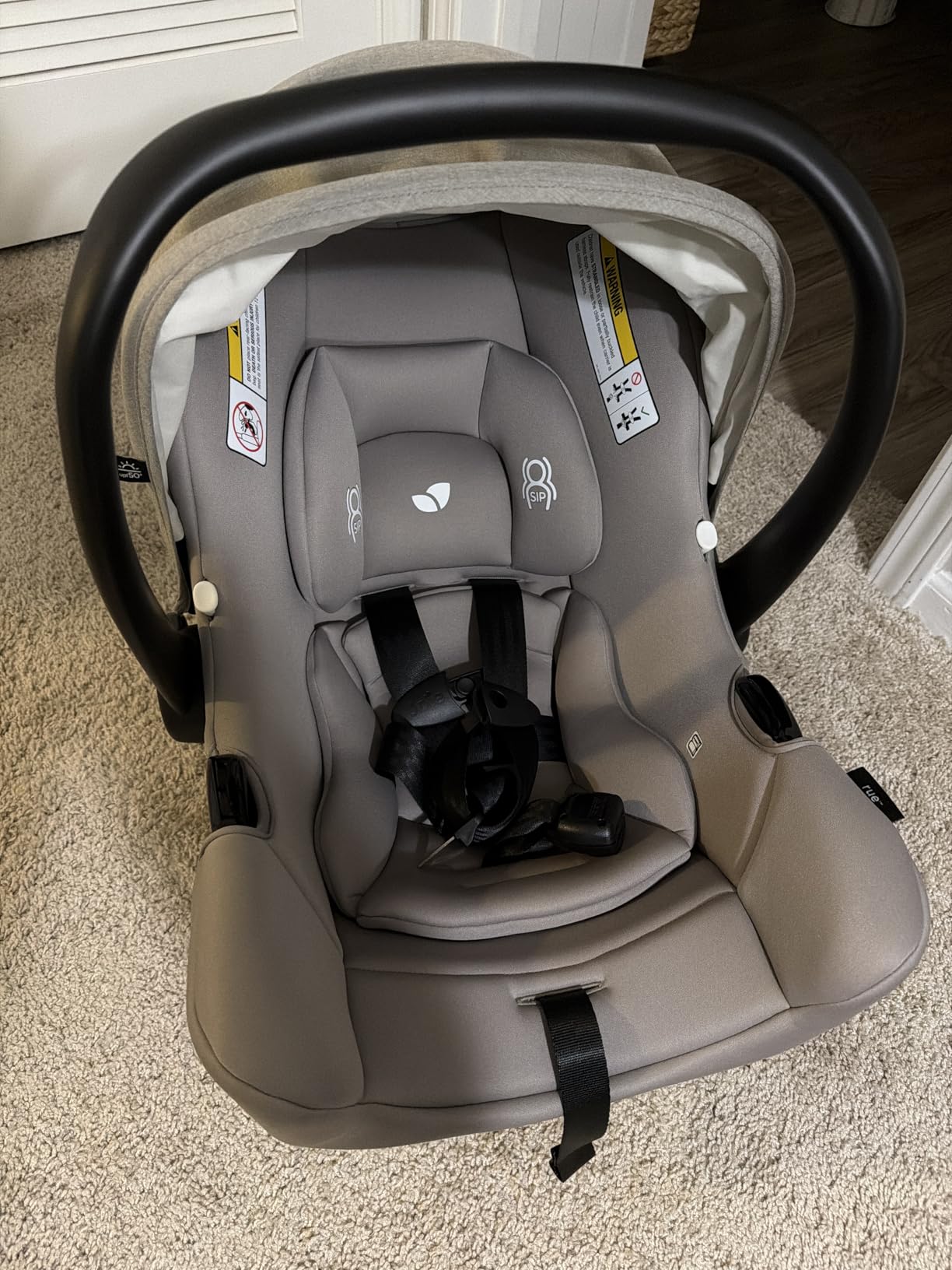
It is certified to FMVSS 213a and 213b, carries babies from 4 to 30 pounds up to 30 inches, and includes removable three-piece inserts with a head support, body support, and an infant wedge. The UPF 50+ canopy and breathable knit fabric are a genuine bonus for sunny climates and for privacy in a rear seat.
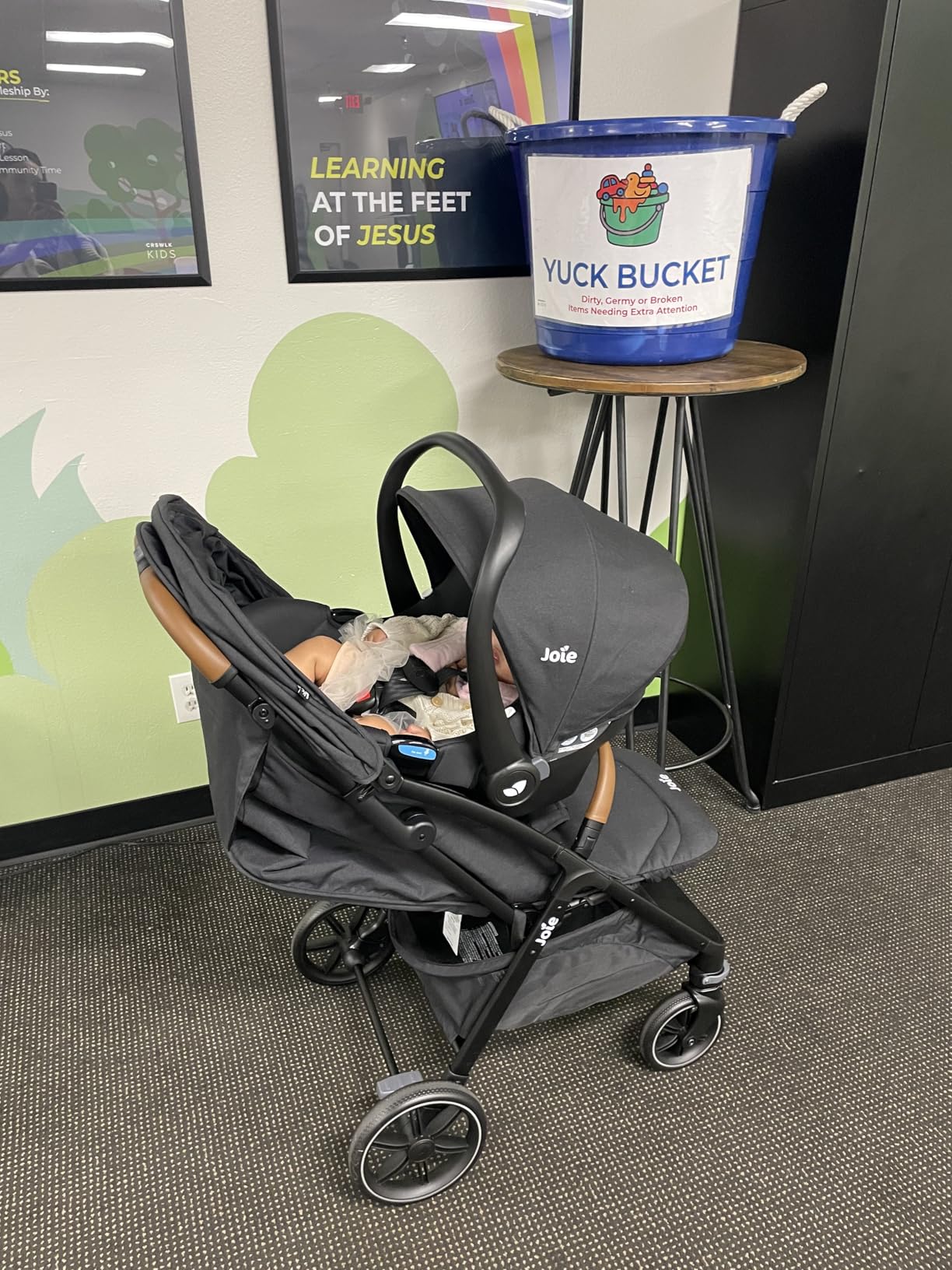
At 7.7 pounds the carrier is the second-lightest here, so stairs and stroller transfers are manageable. The base has built-in lower anchor attachments, which removed the separate anchor strap from the equation and made the install the fastest of the ten in our testing.
The honesty check is review volume. At 268 reviews, this is the thinnest evidence base in the guide, and while 91 percent of those reviews are five star, a small sample tells you less about long-term durability. The full seat with base weighs 16 pounds, so moving it between two cars is a two-person job.
What you need to know before you buy
Buyers should think about where the base will live. An anti-rebound base is a fixed installation, and the Rue base is heavier than a plain carrier base, so the ideal setup is one base per vehicle that the family actually uses. In a one-car household the weight is a non-issue.
Anyone installing without a base for travel should know the Rue measures 25.75 inches long by 17.5 inches wide by 16 inches tall, and 22.8 inches tall with the base attached. Check those numbers against the seat space in a rental car before a flight day.
Who should skip it
Parents who move a seat between vehicles every day should pass, because the 16-pound combined weight works against them. So should anyone who needs three-across, since 17.5 inches is wider than the narrowest options in this guide.
Buyers who want a longer runway should note the 30-inch height limit, which is the shortest in the group. If your child is already long, the two extendable convertibles will serve better.
How to Choose a Rear-Facing Car Seat for Infants
Shopping for a car seat feels endless because there are dozens of near-identical buckets with different logos. Narrowing it down takes eight decisions, and the order matters, because the first two eliminate most of the list before you read a single review.
1. Check the height ceiling, not just the weight limit
Weight is the number printed in large type, but height is what ends most infant-seat journeys. Every carrier here has a height limit between 30 and 32 inches, and tall babies outgrow the headroom well before they reach 30 pounds. If your newborn is already long, start with the extendable convertibles.
2. Decide carrier or convertible first
A rear-facing-only carrier is lighter and shorter-lived, usually capped between 22 and 32 inches. A convertible rear-facing harness runs to 40 or 50 pounds and then converts forward-facing and into a booster. If you expect to keep the same seat for three or four years, the convertible wins on paper. Our convertible car seat guide goes deeper on that choice.
3. Look for a no-rethread harness if your child grows fast
Single-motion systems adjust the headrest and harness together in one pull. Multi-pull and strap-rethread systems work fine but take longer every time. The Graco Extend2Fit and SlimFit, the Diono Radian 3R, and the Safety 1st Ellaris all offer no-rethread or non-rethread adjustment.
4. Judge the base on install method, not features
The useful questions are simple. Does it install on lower anchors or with a seat belt? Does it have a lockoff? Does it have a level indicator or bubble levels? Is there a load leg or an anti-rebound device? The Chicco KeyFit and Joie Rue are the two here with the clearest install confidence features, and that is not a coincidence.
5. Count the weight you will actually carry
Carrier weight is the number parents underestimate. The Graco SnugRide Lite LX at 7.2 pounds and the Joie Rue at 7.7 pounds are easy in one arm. The Diono Radian 3R, with its steel-reinforced frame, is not, and a seat you dread lifting gets lifted less.
6. Test the cleaning before you fall in love
Look for a removable cover you can reach with the seat still in the car, a washer-safe pad, and dishwasher-safe cup holders. The Safety 1st Grow and Go and Safety 1st Ellaris do this best. Avoid any seat where a proper clean means fully disassembling the shell, which is the Graco Extend2Fit’s one consistent complaint.
7. Price the stroller pairing honestly
If your stroller brand matches your car seat brand, the carrier usually clicks straight in. If it does not, you need adapters, and adapters add cost and a failure point to a routine you will repeat thousands of times. Our general child seating guide covers how we think about locking into one brand ecosystem.
8. Check the lifespan and the fabric
Every seat has a manufacture date molded into the shell, and every seat expires. Lifespans commonly run six, seven, or ten years. Also note the fabric: some covers are flame-retardant-free, and certified low-emission fabric matters more to some families than any premium shell feature.
Rear-Facing Duration vs Rear-Facing-Only Limits
This is the distinction that causes the most confusion, and it is worth stating plainly. A rear-facing-only car seat is a product category that describes a shell which can only be installed facing backward. Rear-facing duration is a recommendation about how long your child should ride that way. One is a fact about the hardware; the other is a guideline about your child.
The American Academy of Pediatrics recommends rear-facing for at least two years and ideally until the child reaches the maximum height or weight of the seat. A 30-pound carrier is not telling you to turn your child around at 30 pounds any more than a birthday is. It is telling you the shell no longer fits the child safely in that position, and the answer is a seat with more range, not a direction change.
That is why the weight ceiling shapes our ranking. A seat rated to 22 pounds, like the Chicco KeyFit here, will end rear-facing earlier than most families expect. A seat rated to 40 or 50 pounds rear-facing, like the Graco Extend2Fit, the Safety 1st Grow and Go, the Diono Radian 3R, the Graco SlimFit, or the Safety 1st Ellaris, is far more likely to carry a child through the full recommended window.
Height changes the calculation too. Several owners of the Graco SnugRide Lite LX and the Safety 1st OnBoard FLX report outgrowing by headroom while still well under the weight limit. A 30-inch ceiling is the practical cutoff for many babies, and no weight rating overrides it.
How We Chose These Seats
We compared ten current-generation seats from six brands, installing each one with both lower anchors and a vehicle seat belt, and checking the carrier fit with a newborn insert and a taller infant insert. We weighed install clarity, weight and height ceilings, carrier weight, cleaning access, width, and stroller fit, and we read owner reviews closely for the flaws rather than the highlights.
Review volume mattered. A 4.8 average from 268 reviews tells you much less than a 4.7 average from 35150 reviews, and where a rating spread was wide we weighted the low end more heavily. Where our own experience and owner reports disagreed, we said so in the review.
Please treat this as a research tool, not an installation manual. Seat behavior varies by vehicle, and the correct install is always the one in your seat’s own manual. Many fire stations, hospitals, and police departments run child passenger safety technician courses and offer hands-on checks, and a free 15-minute session can prevent the most common installation error of all: a belt path that is not tight enough. Check the seat moves less than one inch at the belt path after you tighten it.
Frequently Asked Questions
Which rear-facing infant car seat is the safest?
All ten seats here meet federal crash standards, so safety comes down to fit and install rather than brand. The seats with the highest owner ratings in this guide are the Graco Extend2Fit, the Graco SnugRide Lite LX, the Graco SlimFit, the Chicco KeyFit, and the Joie Rue, all rated 4.8. The Joie Rue also adds a built-in anti-rebound bar. A correctly installed seat always beats a better seat installed loosely.
Can a 22 pound baby ride forward-facing?
Weight alone is not the deciding factor. The American Academy of Pediatrics recommends rear-facing for at least two years and ideally until your child reaches a seat’s maximum height or weight, whichever comes first. At 22 pounds, a child may also be outgrowing a seat rated to 30 pounds by height. Check both limits on the label in your specific seat before changing direction.
How long should a baby ride rear-facing?
The American Academy of Pediatrics recommends keeping your child rear-facing for at least two years, and ideally until they reach the maximum height or weight of the seat you are using. Many parents turn around too early based on a birthday or a milestone. Choose a seat with a 40 or 50 pound rear-facing limit so the position holds as long as your child needs it.
What is the difference between a convertible car seat and an all-in-one car seat?
A convertible seat has two modes, rear-facing and forward-facing, and is usually replaced with a booster later. An all-in-one adds a high-back booster mode so one seat covers birth through roughly age 10. All-in-one seats are wider and heavier. An infant carrier is a third, shorter option that is rear-facing only and typically tops out at 30 to 32 inches.
Is a load leg or anti-rebound base worth paying extra for?
A load leg presses the base into the vehicle floor to reduce movement in a crash. An anti-rebound bar limits how far a rear-facing carrier rotates toward the back of the vehicle. Both are meaningful upgrades, and the Joie Rue in this guide includes a built-in anti-rebound bar. If you are choosing between two seats with equal ratings, the seat with a movement-control device is the better buy.
Can I use an infant car seat without the base in a taxi or rental car?
Yes. Every infant carrier in this guide can be secured with a vehicle seat belt, and the base can stay at home. The seat belt must be locked using the seat’s own lockoff or the vehicle’s, following that seat’s manual exactly. Belting the carrier in without the base is the standard approach for taxis, rental cars, and air travel, where a base is impractical to carry.
Can I put an infant car seat on a stroller?
Usually, if the stroller accepts the carrier. The Safety 1st OnBoard FLX uses QuickClick with Safety 1st frames and the Chicco KeyFit clicks into compatible Chicco frames, both without an adapter. Mixing brands usually means buying adapters. Always check the stroller and car seat manufacturer lists, since fit is frame-specific and a loose adapter is a safety problem.
What is the #1 rated infant car seat?
By owner rating and review volume together, the Graco Extend2Fit 2-in-1 leads this guide with a 4.8 average across more than 57000 reviews. It runs rear-facing to 50 pounds, which is a higher ceiling than any infant carrier here. Among rear-facing-only carriers, the Graco SnugRide Lite LX and the Joie Rue also rate 4.8, with the Joie offering the built-in anti-rebound base.
The Bottom Line: Our Top Rear-Facing Picks in 2026
The best rear facing car seats for infants in 2026 split into two groups. If you want one purchase that lasts, the Graco Extend2Fit is our top pick: its 4-position leg extension panel carries a child rear-facing to 50 pounds, and it backed that with the largest owner base of any seat we reviewed.
If your budget is fixed, the Safety 1st Grow and Go does more stages than anything else here and washes in the dishwasher. If your back seat is the constraint, the Diono Radian 3R is the one that fits three across, and the Graco SlimFit is the lighter convertible that nearly does.
For a detachable carrier, the Graco SnugRide Lite LX is the lightest thing we carried, the Joie Rue is the only one with a built-in anti-rebound bar, and the Chicco KeyFit is the easiest base angle in the group if you can live with a 22-pound ceiling. Whatever you choose, install it with lower anchors or the seat belt, tighten until the seat moves less than one inch, and rear-face for at least two years.