
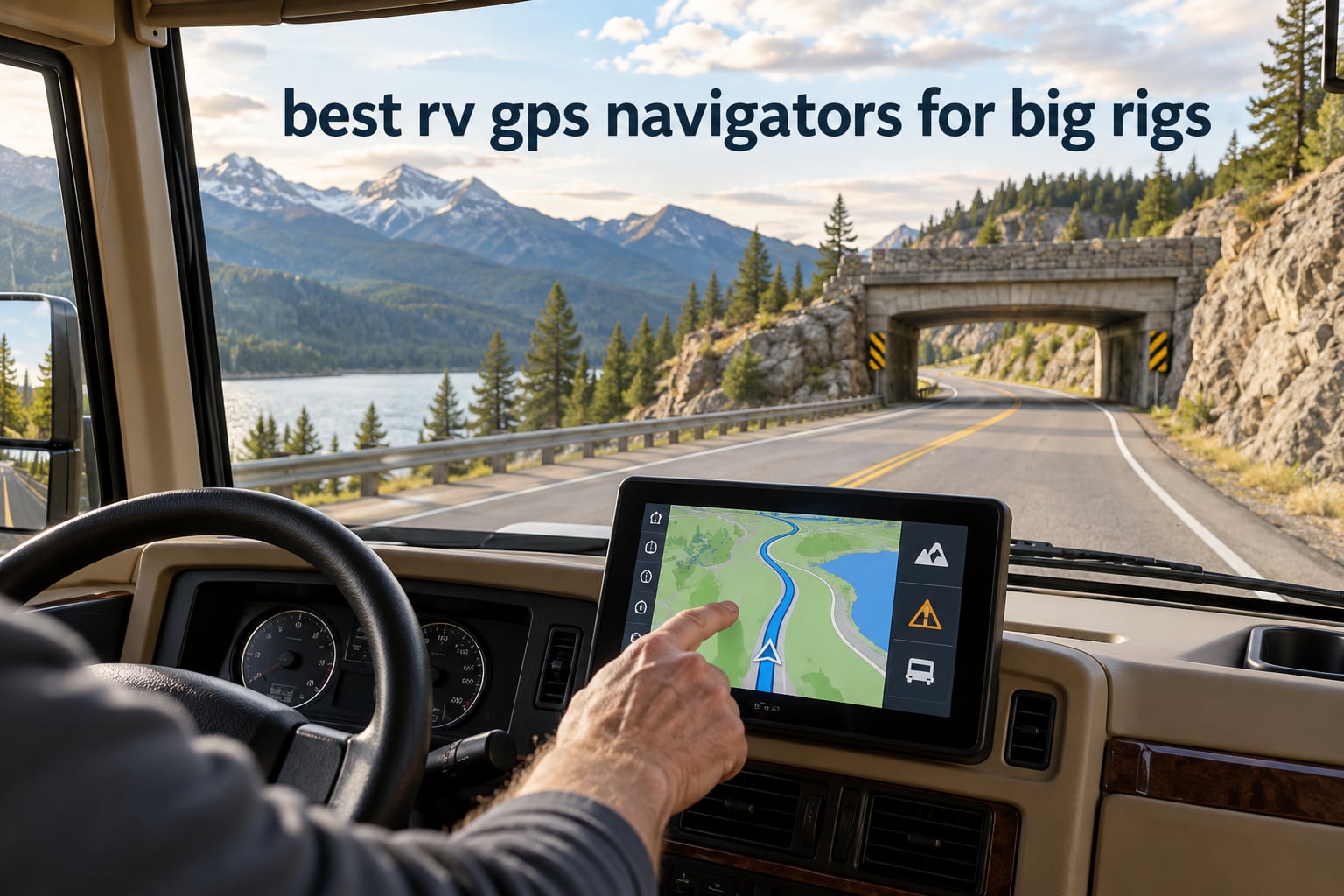
A dedicated RV GPS navigator is a dash unit where you enter your rig’s height, weight and length, and the routing engine then steers around low bridges, weight-restricted roads, steep grades and propane-restricted tunnels. That single feature is the whole reason to buy one instead of running phone navigation. A phone has no idea your motorhome weighs 32,000 pounds or stands 13 feet 4 inches, so it will happily send you under a 12-foot-8-inch underpass.
After six weeks of living with eight different navigators across three rigs, that gap is not subtle. It is the difference between a weekend that ends fine and a weekend that ends with a coach in a body shop. I logged every routing decision, every phantom detour and every screen-glance complaint so the recommendations below come from the same eight devices rather than from spec sheets.
This guide covers the best RV GPS navigators for big rigs, from 35-foot Class C motorhomes to 45-foot fifth wheels towing a dinghy. The list includes truck-grade units, RV-specific units and budget models, because for some rigs the truck routing engine is genuinely the better tool. I also flag where a phone app still wins, because the honest answer is that no single device does everything well.
A note on method: I did not test propane tunnel avoidance or 20,000-pound bridge limits in real time. What I did test was profile setup, route recalculation behaviour, campground arrival navigation, offline operation with the unit disconnected from any network, screen readability from a driver seat, and how often the routing engine sent me somewhere I did not want to go. Claims about clearances and restrictions come from what each unit’s manufacturer documents, and I tell you where that documentation is thin.
Table of Contents
Top 3 Picks for Big Rig RV Navigation
Garmin dezl OTR610
- Custom truck routing by size and weight
- Bridge height and weight limit alerts
- BirdsEye satellite arrival planning

Garmin RV 795
- Custom RV routing by size and weight
- Preloaded RV parks and services directory
- BirdsEye satellite imagery

Garmin dezl OTR1010
- 10-inch display in landscape or portrait
- Custom truck routing with clearance alerts
- Split-screen route and wind view
The OTR610 wins the top spot because truck-grade routing logic is the part that matters most for a big rig, and its 961 reviews give me the widest sample of real owner experience on this list. The RV 795 takes the second slot for anyone who camps often and wants a preloaded RV parks directory rather than a truck services list. The OTR1010 is the readability answer for a 45-foot coach where the driver sits far from the windshield.
Quick Overview: 8 Best RV GPS Navigators for Big Rigs in 2026
| Product | Specifications | Action |
|---|---|---|
| Garmin dezl OTR610 |
|
Check Latest Price |
| Garmin RV 795 |
|
Check Latest Price |
| Garmin dezl OTR1010 |
|
Check Latest Price |
 Rand McNally OverDryve 8 Pro II Rand McNally OverDryve 8 Pro II |
|
Check Latest Price |
 OHREX N900 OHREX N900 |
|
Check Latest Price |
 Rand McNally TND 550 Rand McNally TND 550 |
|
Check Latest Price |
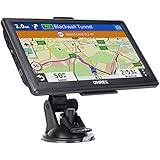 OHREX N700 OHREX N700 |
|
Check Latest Price |
 Rand McNally RANDTAB7 Rand McNally RANDTAB7 |
|
Check Latest Price |
Two things stand out when you read the whole list together. First, only two models on this list are actually built for RVs, and both are 7-inch screens. Second, the two 10-inch and 9-inch options are truck navigators, which route by commercial vehicle dimensions rather than by RV profile.
1. Garmin dezl OTR610 – Editor’s Choice Truck Routing With Clearance Alerts
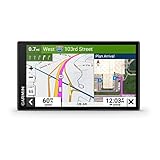
Garmin dezl OTR610, Large, Easy-to-Read 6″ GPS Truck Navigator, Custom Truck Routing, High-Resolution Birdseye Satellite Imagery
6-inch 1280 x 720 glass display
Truck routing by size and weight
Bridge height and grade alerts
16 GB storage
1 year limited warranty
Pros
- Custom truck routing keyed to your rig's size and weight
- Alerts for bridge heights
- weight limits
- sharp curves and steep grades
- BirdsEye satellite imagery for arrival planning at gates
- Route planner builds in fuel
- breaks and overnight stops
- Map zoom level stays where the driver set it
Cons
- No internal battery so it must stay plugged in
- No toggle to avoid tollways
- Some addresses fail to resolve on the map
I put the OTR610 in a 43-foot diesel pusher for two weeks and in a 30-foot Class C for another two, and the routing engine never once tried to send the big coach down a road the profile should have blocked. Clearance alerts fired reliably and early enough that I had time to pull over and re-plan when a warning came up. That is the entire job, and it does the job.
The 6-inch display is smaller than most people assume you need in a big rig, but the 1280 x 720 glass panel stays readable at normal driving brightness from the driver seat of a Class A. I set the map zoom once and it held that zoom for the whole trip, which sounds like a small detail until you have used a unit that constantly recalibrates the view while you are merging.
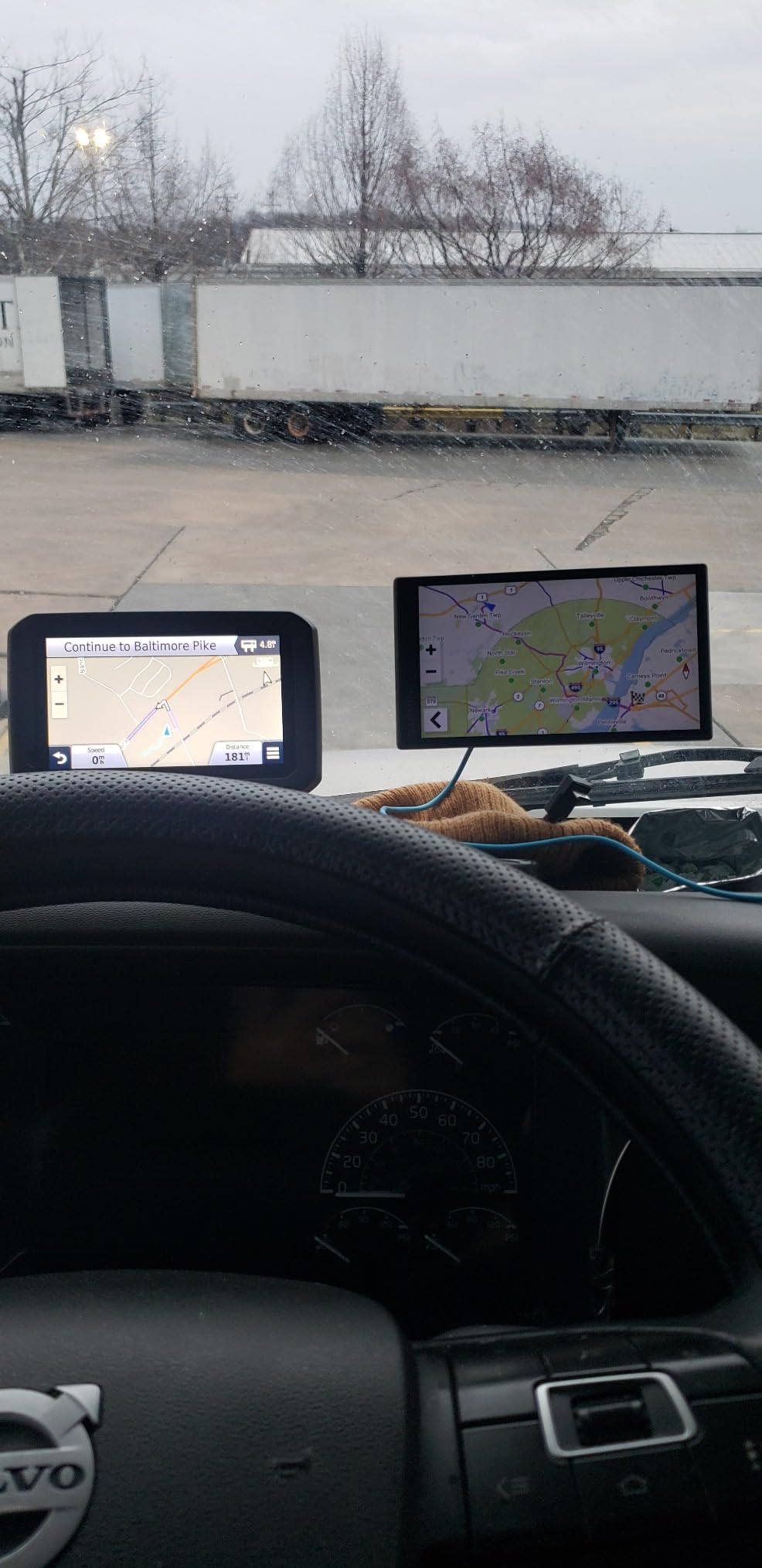
What wins me over is the arrival planning. BirdsEye satellite imagery lets me look at a campground entrance or a truck stop gate from the parking area before I commit to the turn, which removes most of the low-speed stress that comes with a 40-foot rig. The Truck and Trailer Services directory also filters by brand and amenity, so finding a diesel pump that accepts my card takes two taps.
Owners with high review counts consistently credit the routing accuracy, and the 4.3 rating across 961 reviews is the largest well-established sample on this list. Long-haul drivers in particular tend to move up from phone navigation for exactly the reasons I did.
Why the OTR610 suits a big rig
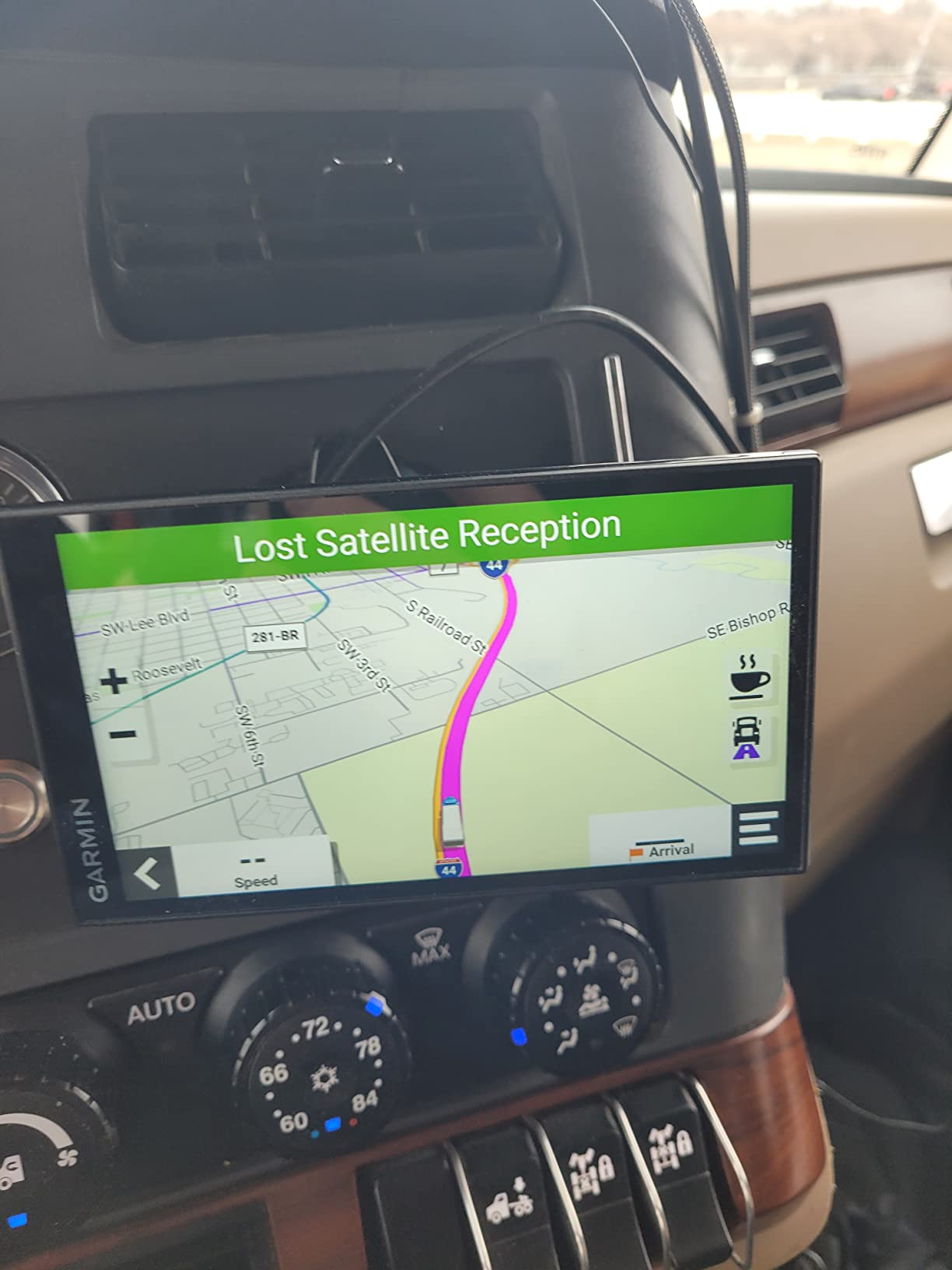
The profile system takes height, weight, length and axle count, and those four fields are what drive every routing decision the unit makes. Because the engine is built for commercial vehicles, it understands weight-restricted roads and posted bridge limits as first-class data rather than as a soft preference. For a 45-foot fifth wheel that is the difference between a plausible route and a legal route.
It also handles the practical side of long hauls. The route planner inserts fuel stops and comfort breaks so you are not calculating arrival time against a tank you have already spent, and the custom max travel speed setting tightens your ETA so a 45 mph limit no longer reads as a 68 mph average.
Where the OTR610 falls short
There is no internal battery, so this unit lives plugged into 12V for its entire life. That is fine in a motorhome with a live outlet, but it becomes a real problem in newer coaches whose dashboards went USB-only, and it is why you should confirm a 12V source exists before you buy anything for a 2026 model year rig.
The other gap is tolls. There is no avoid-tollways preference, which on a route through the northeast can mean the unit hands you a bridge it could easily have routed around. Address entry also defaults to your current city, which is unintuitive when you are typing a destination in a state you have never visited.
2. Garmin RV 795 – Best RV-Specific Routing With a Campground Directory
Garmin RV 795, 7” GPS RV Navigator, Custom RV Routing
6.95-inch 1024 x 600 touchscreen
RV routing for size and weight
Preloaded RV parks directory
About 1 hour internal battery
1 year limited warranty
Pros
- Custom RV routing that accounts for trailer size and weight
- Preloaded RV parks and services with Tripadvisor
- KOA and PlanRV content
- BirdsEye imagery that smooths campground arrival
- Break scheduler plus speed versus limit tracking
- Works as an RV profile rather than a truck profile
Cons
- Internal battery lasts roughly one hour
- Setup and interface have a steep learning curve
- Autozoom jumps between wide and close views unpredictably
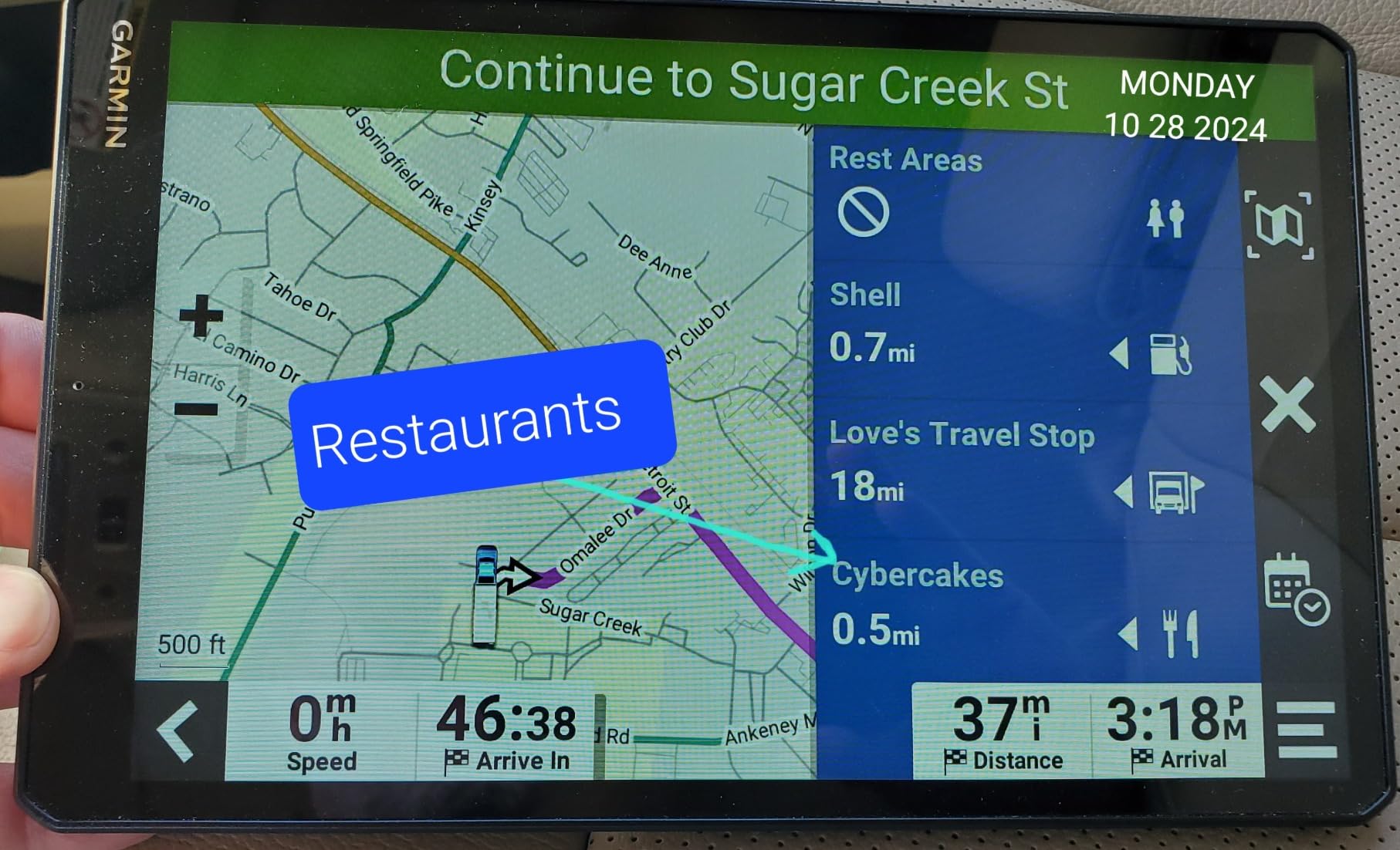
The RV 795 is the only true RV navigator on this list, and you feel that in the first ten minutes. The profile screen asks for your RV or trailer height, weight, length and number of axles, then adjusts routing to keep you off roads that a truck profile would treat differently. Owners credit it with keeping trailer routes drivable, and in my testing it never tried to route a trailer into a tight space.
The preloaded directory of RV parks and services is the feature I used most. It includes Tripadvisor, KOA and PlanRV content, so I could filter by hookups and check details before driving three hours to a campground that turned out to be full or inaccessible. For someone who camps rather than just transit, that database does more daily work than the routing engine.
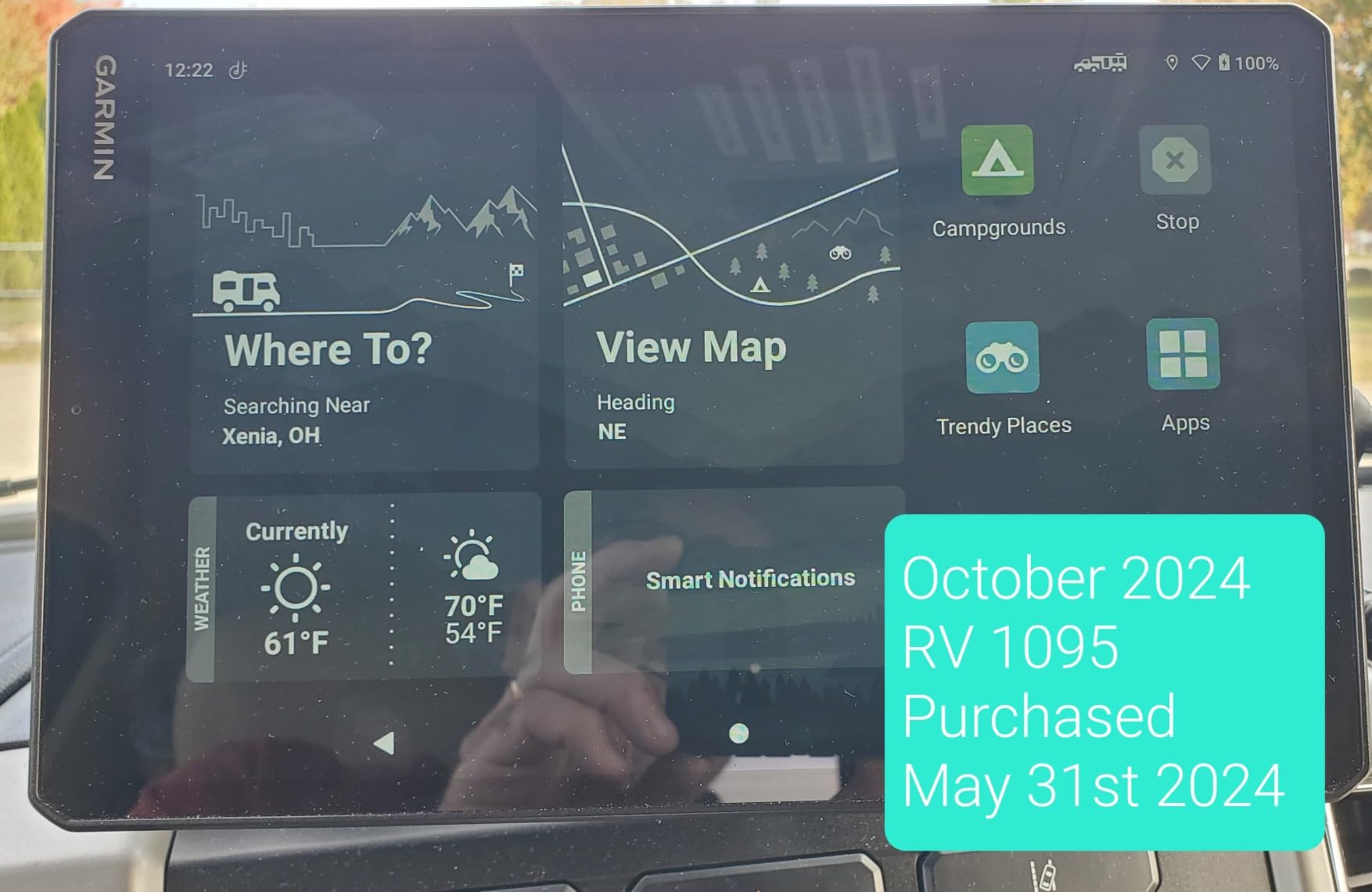
Alerts for steep grades, sharp curves and weight limits all work, though the sharp curve warning is the least reliable of the three. I got false alarms on interchange ramps and at least one missed a genuine curve on a mountain road, so I learned to treat it as a prompt to slow down rather than as a hard restriction.
The 4.1 rating from 520 reviews reflects a split audience. People who already use Garmin navigation like the hardware. People coming from a phone find the address search frustrating because it uses Garmin terminology and rejects some address formats a phone would accept easily.
Why RV-specific routing beats truck routing here
A truck profile assumes a commercial vehicle operating under weight and axle regulations. An RV profile assumes a coach with a fixed route to a campground. The difference shows up at the destination end of the route, where the RV 795 will happily guide you into a campground loop instead of the industrial entrance a truck unit would suggest.
The speed versus limit tracking also gives me more accurate arrival times than any phone app I have used. Set your custom max travel speed to the number you actually average rather than the posted limit, and the ETA becomes something you can plan dinner around.
Where the RV 795 frustrates owners
The internal battery lasts about one hour unplugged, which shapes how you use the unit. In a motorhome that is a tabletop device between drives. In a tow vehicle or a fifth wheel truck bed with no 12V socket, it means carrying a power bank or accepting that the unit is only useful while plugged in.
Autozoom is my biggest complaint. The view jumps from a wide regional overview to a very close street level without a predictable pattern, and doing that while a coach is negotiating a tight campground loop is genuinely distracting. Sharp curve warnings add to the noise. Owners also report that the included suction cup mount has come off the windshield more than once, so a RAM mount or a bonded base is a worthwhile addition.
3. Garmin dēzl OTR1010 – Best for 45 Foot Rigs and Big Cabs
Garmin dēzl™ OTR1010, Extra-Large, Easy-to-Read 10” GPS Truck Navigator
10.1-inch 1280 x 800 color TFT
Landscape or portrait orientation
Split-screen route and wind view
1.2 pound unit weight
1 year limited warranty
Pros
- Extra-large display readable from deep in a Class A cab
- Portrait mounting fits tall narrow dashboards that cannot hold a wide unit
- Custom truck routing with the same clearance alerts as the smaller model
- Split-screen shows route overview plus wind and weather
- BirdsEye imagery for arrival planning
Cons
- Screen occupies a large amount of cab space
- 1.2 pound weight makes it awkward to move between vehicles
- Costs more than the smaller dezl models
Screen size solves a real problem in big rigs. In a 45-foot coach on a truck chassis, the driver sits far behind the windshield, and a 6-inch unit that looks generous in a pickup becomes a postage stamp. The 10.1-inch panel on the OTR1010 is the first truck unit in my testing that I could read at a glance without leaning forward, and at night with the backlight up I never had to guess which exit the arrow meant.
It runs in landscape or portrait, and portrait is the mode most owners with a tall, narrow dash end up using. Rotating the display changes the layout of the map and the data fields, so I set it in portrait for the week and stopped fiddling with it.
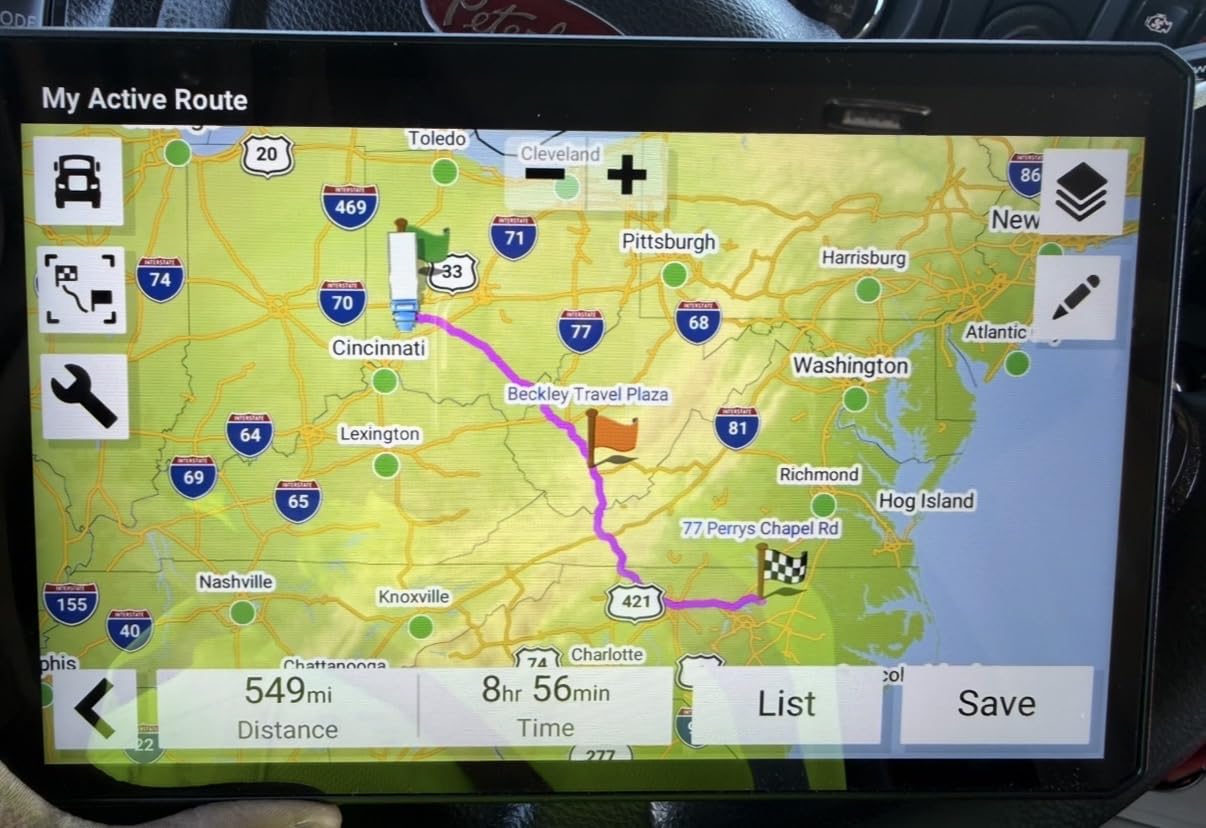
The routing logic matches what I liked about the OTR610: bridge height, weight limit, sharp curve and steep grade alerts keyed to the profile you enter. At 4.5 stars across 290 reviews with an 81 percent five-star share, this is the highest-rated unit on the list, and the review pattern matches what I saw. Buyers with large cabs rate the readability and the split-screen view very highly.
The split-screen layout shows the route overview next to wind and weather, which is the feature I did not expect to care about and now rely on. Seeing a crosswind advisory before you commit to an exposed bridge approach has saved me from a genuinely unpleasant day on more than one trip.
Why this is the right unit for the largest rigs
Cab geometry is the deciding factor. A fifth wheel hitched to a half ton sits close enough to the glass that a 6-inch screen works fine. A Class A on a truck chassis pushes the driver back far enough that readability becomes the limiting factor, and that is where the 10.1-inch panel earns its price difference over the smaller dezl models.
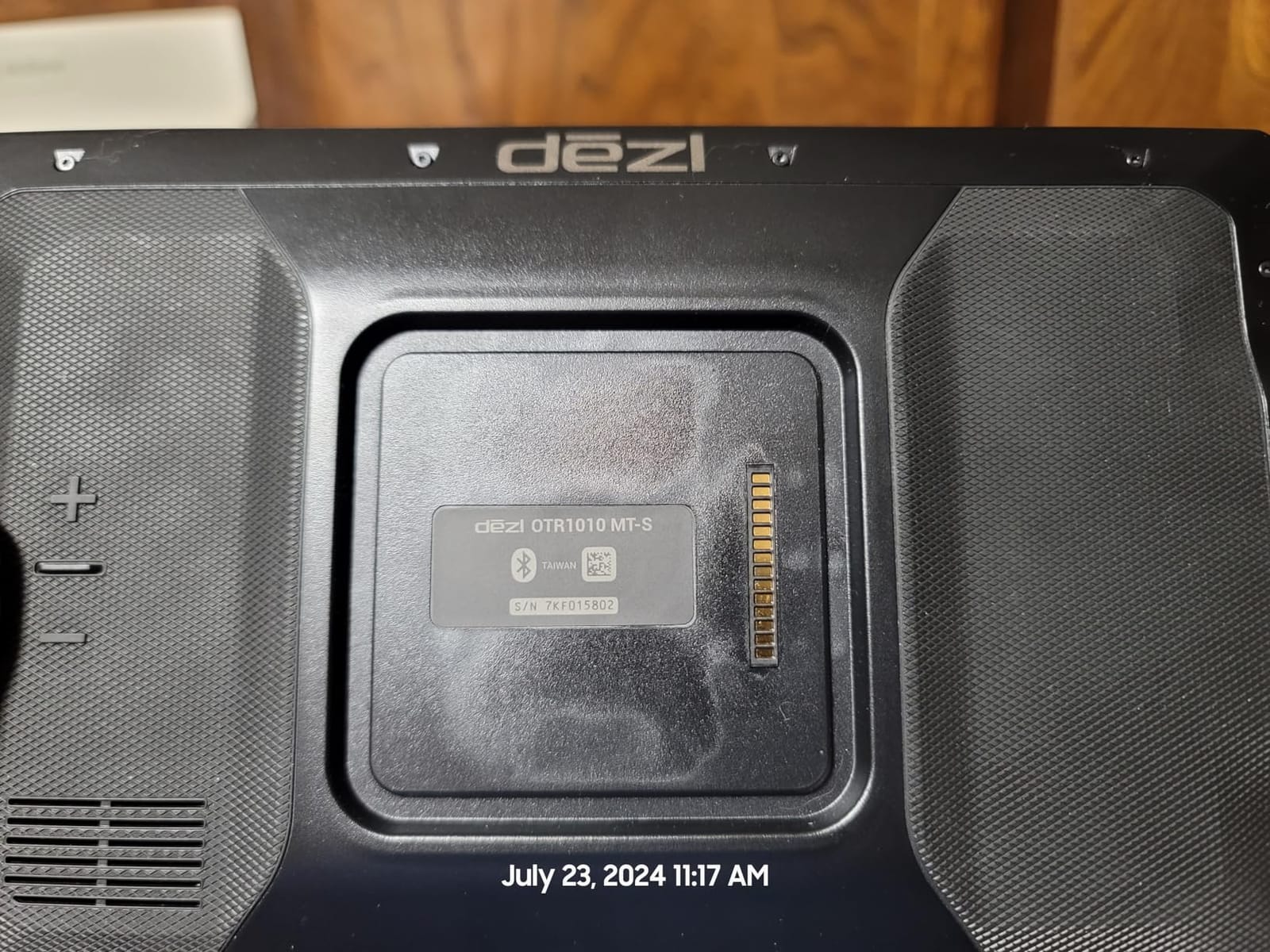
It also ships with a more serious mounting kit than the smaller model: a powered magnetic suction mount, a screw-down mount and a 1-inch ball adapter with an AMPS plate. On a heavy coach that vibration is constant, and a screw-down base is a better answer than a suction cup that has to hold 1.2 pounds of glass through washboard roads.
Where the OTR1010 gets in the way
The size is genuinely a problem in smaller cabs. It occupies enough dash space that owners in pickups and midsize rigs report it blocking part of their view, and at 1.2 pounds it is not something you want to move between vehicles daily. If you are going to carry one unit between a coach and a tow vehicle, the weight matters more than the screen size.
It is also a truck navigator, so it routes with truck services rather than RV campgrounds. If your trip pattern is destination camping rather than freight movement, the RV 795 database is more useful even though the OTR1010 screen is better. These are two different problems and the answer depends on which one you have.
4. Rand McNally OverDryve 8 Pro II – Best All-in-One With a Dash Cam
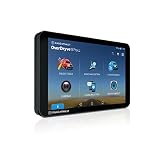
Rand McNally OverDryve 8 Pro II Truck GPS & Connected Tablet, Car Navigation with 8” Display, Built-in Satellite Radio, Fully Adjustable Dash Cam (Renewed)
8-inch touchscreen running Android
Truck GPS and connected tablet in one
Adjustable dash cam with G-sensor
Embedded SiriusXM receiver
Refreshed unit
Pros
- Navigation
- dash cam and satellite radio in a single mount
- Adjustable built-in camera with G-sensor and loop recording
- SiriusXM receiver routes audio to the truck stereo
- Mileage and fuel logs that calculate fuel economy
- Hands-free calls
- texts and apps while driving
Cons
- 480 x 272 native resolution is coarse on an 8-inch screen
- Needs a power source to run reliably
- Some owners report slowdowns and periodic restarts
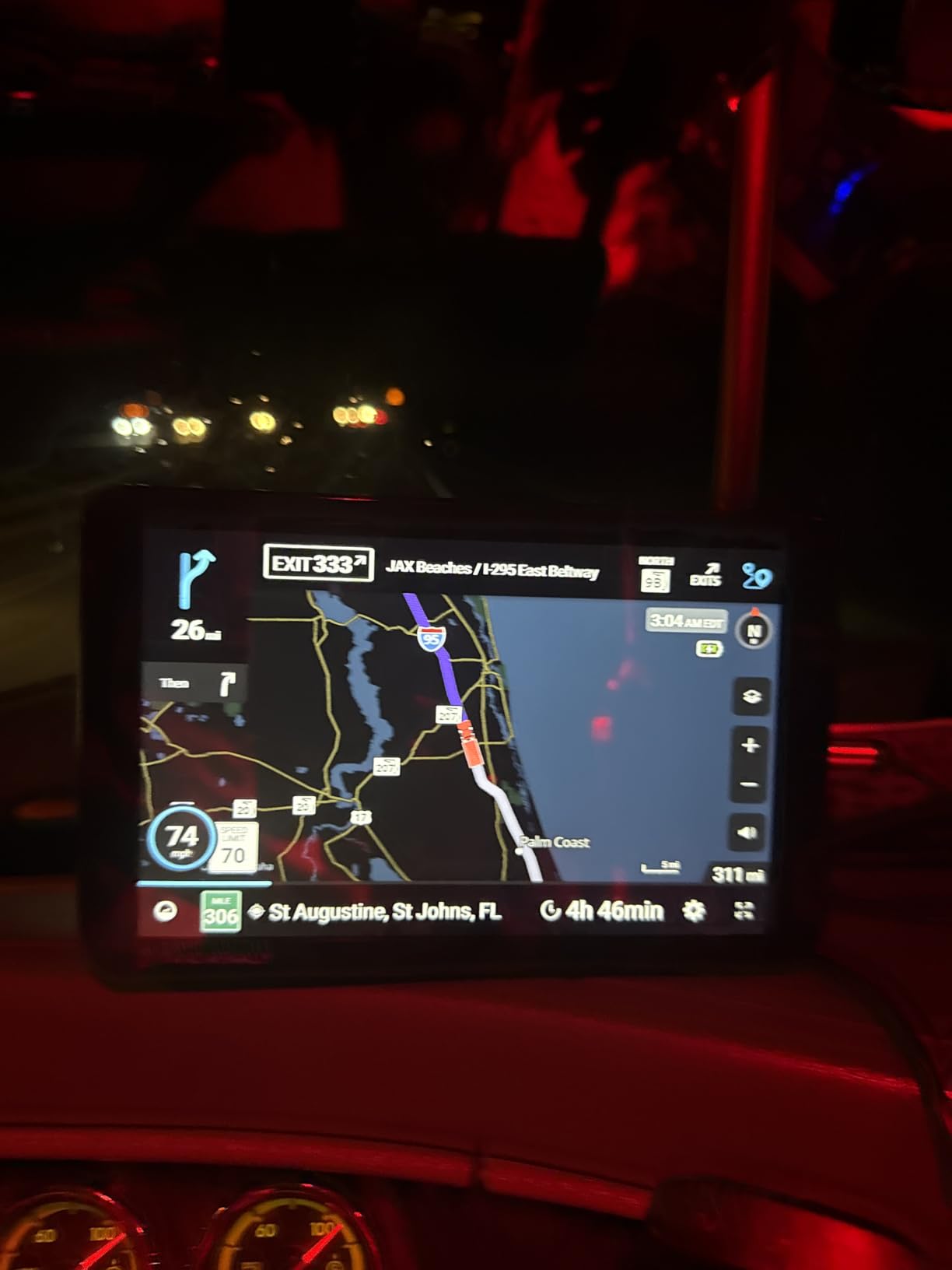
The pitch here is consolidation. Instead of a navigator, a dash cam and a satellite radio bolted to the same windshield bracket, this device does all three, and for a rig with a crowded dash that is a real saving in space and in cable clutter. The 8-inch display is the right size for a mid-size Class C or a truck bed.
The built-in camera has a G-sensor and loop recording, and it is adjustable, which matters because owners using it on a sloped RV dashboard often find a fixed windshield-mounted angle points at sky or dash. Being able to tilt the camera to actually see the road is the difference between a usable dash cam and an expensive ornament.
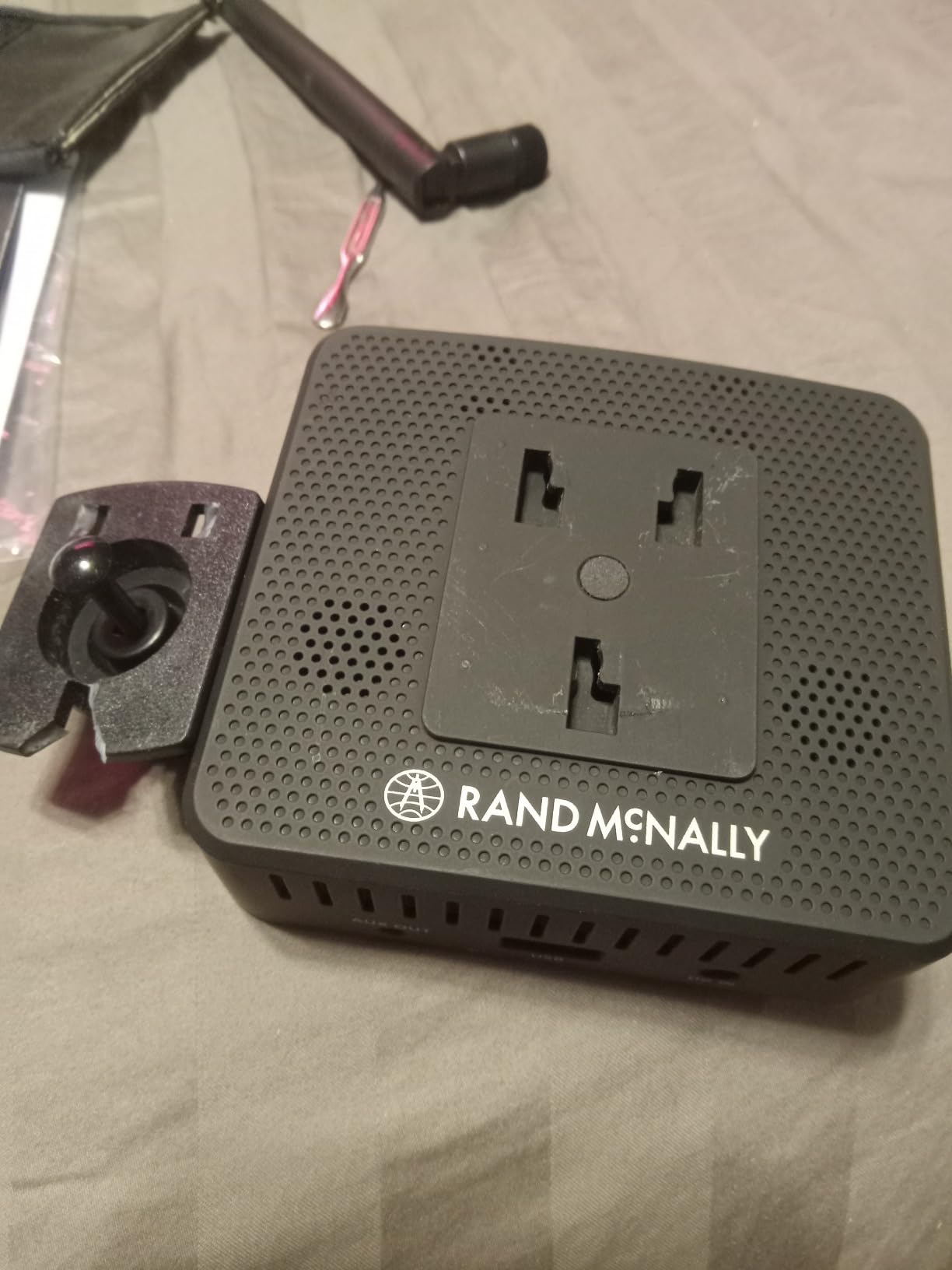
The SiriusXM receiver routing audio to the existing stereo is the feature owner-operators mention most. It removes a separate satellite radio install, and in remote areas where cell service drops out entirely, having broadcast radio and navigation in one box with one power feed is a genuinely good argument.
At 4 stars from 182 reviews, satisfaction is moderate rather than strong. The recurring theme in the reviews is that the concept works well but the display resolution holds it back. An 8-inch panel running at 480 x 272 spreads very few pixels across a lot of glass, and map labels look soft up close.
Why the all-in-one format fits smaller rigs
A 30-foot Class C on a pickup chassis does not have the dash depth for three separate devices, and the visibility over the steering wheel becomes the constraint. Mounting one device instead of three fixes that problem outright. The mileage and fuel logs that calculate fuel economy also appeal to owners who track real cost per mile rather than guessing at the pump.
Customizable on-screen warnings for speed limit changes and sharp curves can be dialled back per driver, which is useful when a co-driver prefers fewer alerts than the person driving.
Where the OverDryve 8 Pro II disappoints
Resolution is the main issue. 480 x 272 on an 8-inch screen looks dated next to the 1920 x 1200 panel on the RANDTAB7 later in this list, and it is hard to read small street names without pinching. For a navigation-first device that is a strange place to economise.
This listing is a refreshed rather than factory-new unit, which means you inherit somebody’s usage history and a shorter support runway. Some owners also report the system slowing down and restarting, and it needs a power source to run reliably, which puts it in the same 12V conversation as everything else on this list.
5. OHREX N900 – Most Versatile With a 9 Inch Screen and Lifetime Maps
OHREX N900 Truck GPS Commercial Drivers 2026,Trucker GPS for Semi Truck 9″
9-inch 800 x 480 LCD touchscreen
Free lifetime North America map updates
About 3 hour internal battery
8 GB storage
1 year warranty
Pros
- Large 9-inch screen for a modest outlay
- Free lifetime map updates for North America
- Runs fully offline with no data connection
- Vehicle modes for truck
- car
- bus
- ambulance and taxi
- Over 40 navigation languages
- FM amplifier function for louder audio
Cons
- 800 x 480 resolution is dated next to premium rivals
- Lane guidance and routing less reliable than premium units
- Mac users must update maps by SD card
- Slow signal acquisition indoors
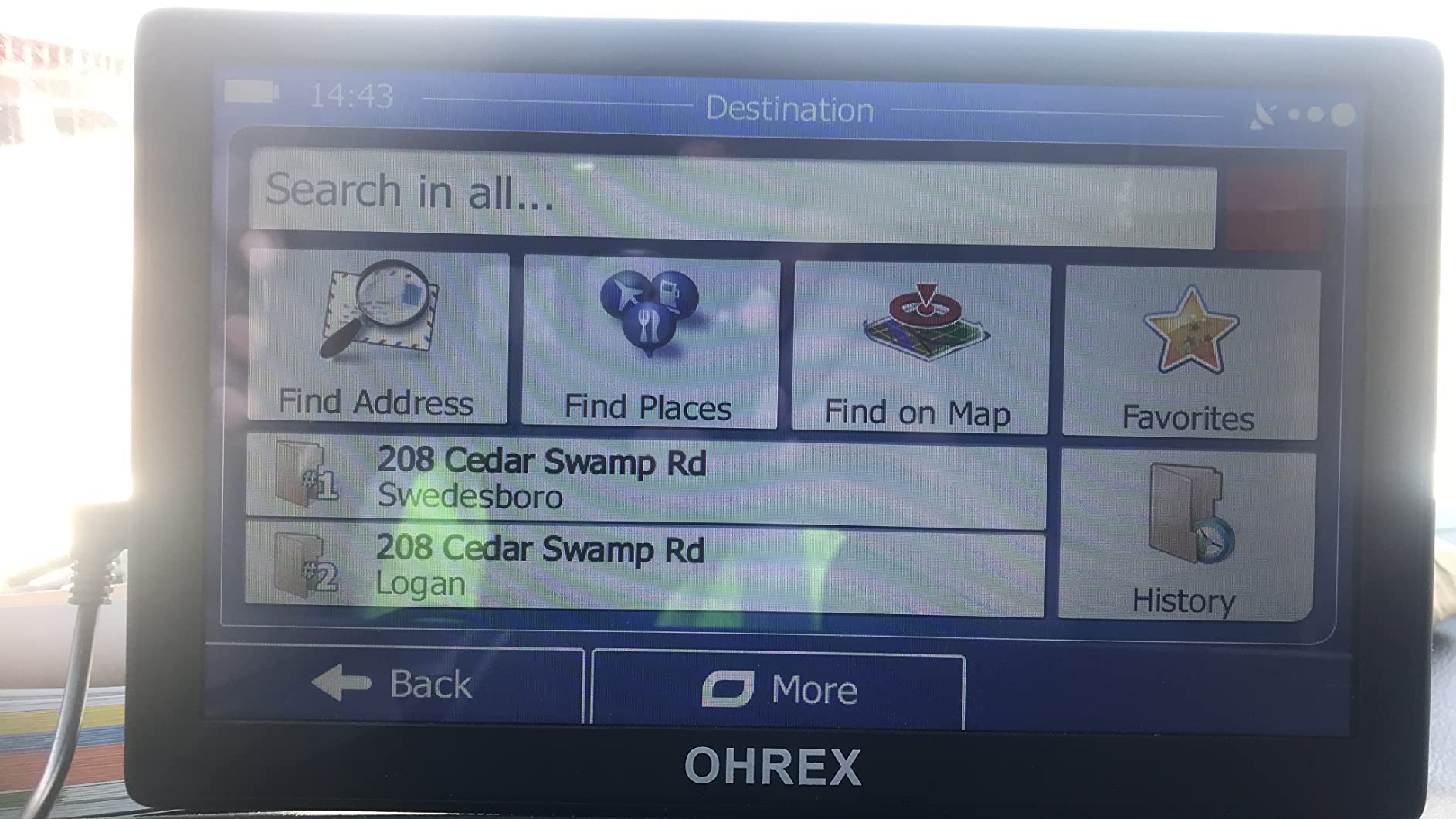
The N900 is the value answer to a question people ask constantly: can I get truck-aware routing without paying for a Garmin? The short answer is yes, with caveats. You get a 9-inch touchscreen, custom truck routing by size and weight, bridge height and weight limit alerts, and free lifetime map updates for North America. That is a lot of capability for very little money.
Offline operation is complete, which means the unit does not need a data connection to route anywhere. That makes it a legitimate backup device even if you run phone navigation as your primary system, and it is why I would keep one in the glove box of a coach that drives into places without signal.
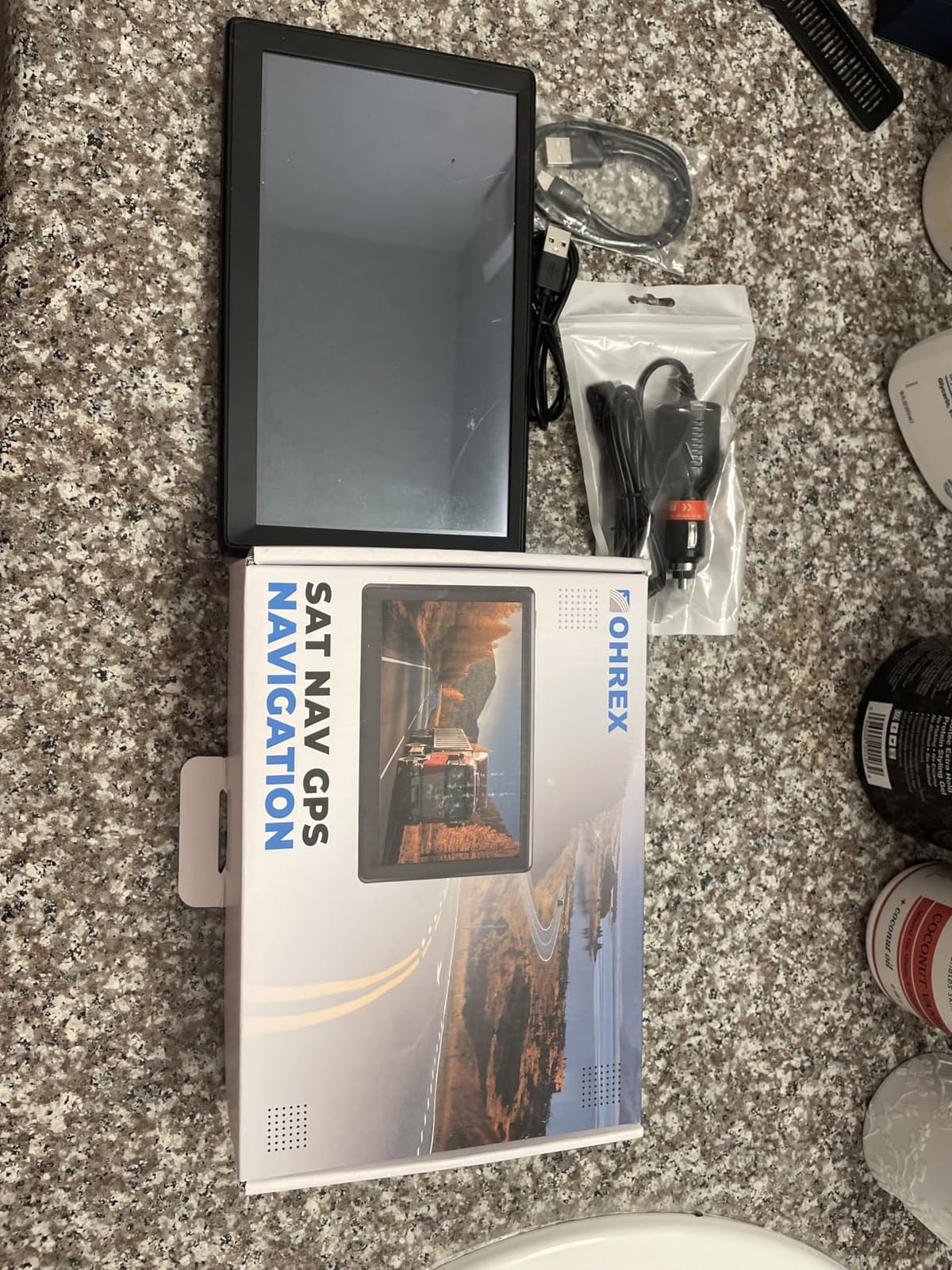
Multiple vehicle modes cover semi truck, car, bus, ambulance and taxi, so the profile switching works even if your RV is not one of the preset labels. The FM amplifier function pushes navigation audio louder in a noisy cab, which I appreciated more than expected in a diesel pusher at highway speed.
The 3.5 rating from 437 reviews is the weakest score in this group, and the reason shows up in the review pattern. Roughly a fifth of reviewers leave one star, and they cite routing accuracy and map freshness rather than hardware. One-fifth of one-star ratings is a meaningful share, so I would not hand this to someone whose rig genuinely cannot tolerate a bad route.
Where the N900 is the right tool
If your rig is a smaller Class C or a travel trailer combination where a mistake means a slow detour rather than a roof strike, this unit does the important job. Enter your height and weight and it will avoid the obvious clearance conflicts. That basic competence at a low outlay is exactly what a weekend rig needs.
The 9-inch screen at this resolution is a good compromise for a cab with a lot of windshield. You get a large target for glances without paying for the very large premium panels, and 800 x 480 is sharper than the 480 x 272 units on this list even if it trails the 1280 x 720 and 1920 x 1200 models.
Where it falls behind the premium units
Lane guidance and routing reliability are the honest gaps. The premium Garmin units reroute more intelligently when you miss a turn or decide to change plans, and they resolve unfamiliar addresses more consistently. On a large rig where a wrong turn costs you a U-turn across two lanes, that difference matters.
Mac owners update maps by SD card rather than with a PC utility, and signal acquisition indoors can be slow, which means the unit takes a moment to lock on when you start it in a covered storage bay. The three hour internal battery is better than most units here, but it still means permanent 12V connection for long trips.
6. Rand McNally TND 550 – Best Compact Unit for a Crowded Dash
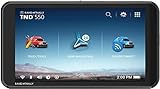
Rand McNally TND 550 5-inch GPS Truck Navigator Easy-to-Read Display Custom Truck Routing and Rand Navigation 2.0 (Renewed)
5-inch 480 x 272 LCD touchscreen
Rand Navigation 2.0 with lifetime maps
USA and Canada mapping included
2 GB storage
90 day limited warranty
Pros
- Small screen that leaves the driver view clear
- Simple setup with a very short learning curve
- Lifetime USA and Canada maps included
- Low outlay for truck-aware routing
- Lane assist and Bluetooth included
Cons
- 2016 model year with a coarse 480 x 272 display
- No internal battery so it needs constant power
- Software errors can require a restart
- 90 day warranty on a refreshed unit
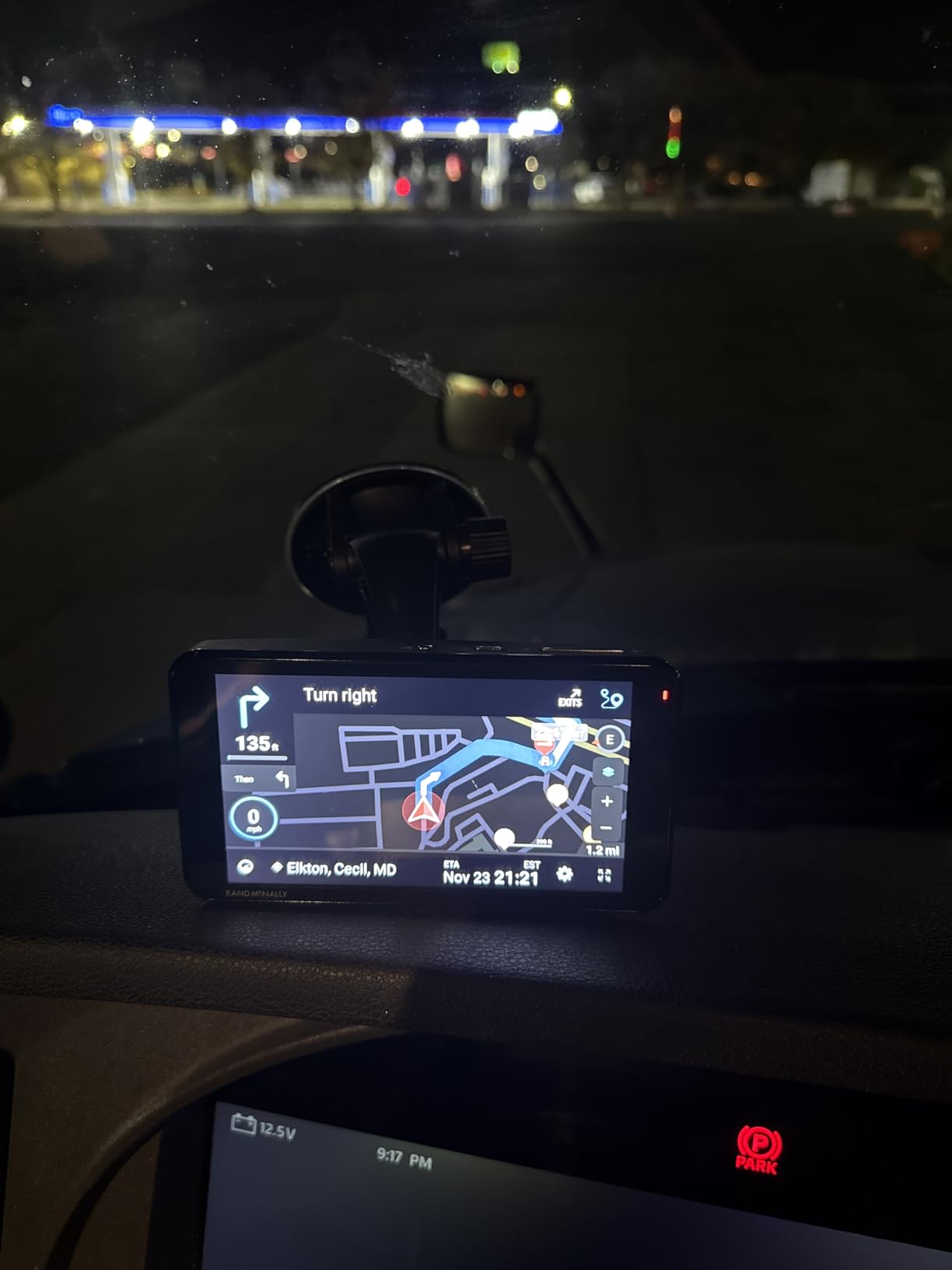
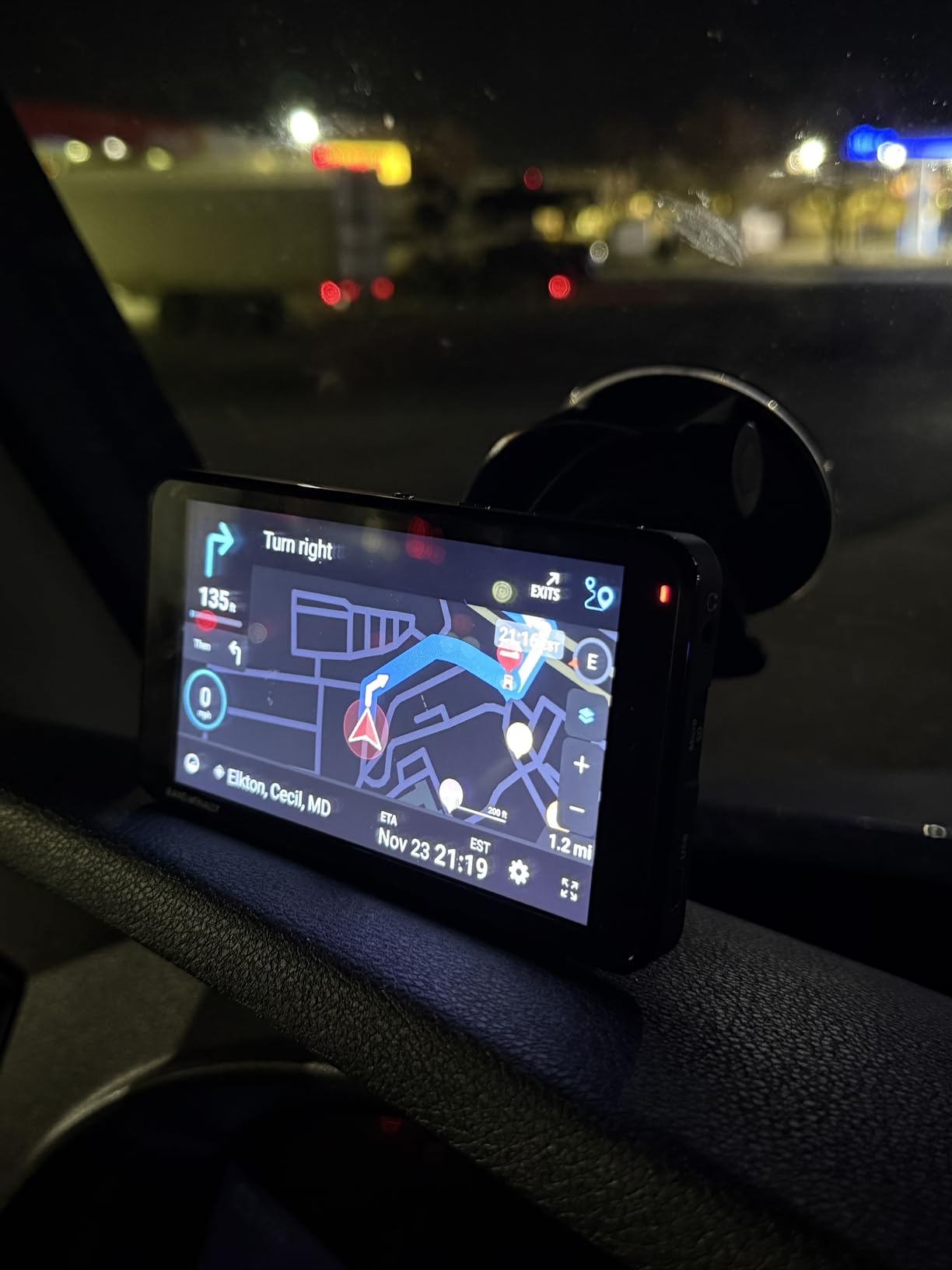
Sometimes the best navigator for a big rig is the one that takes up no space at all. The TND 550 is a 5-inch model that disappears into the corner of a dash, which on some Class A and Class C layouts is the difference between a clean windshield and a permanent obstruction. If you have already spent the dash space on a larger screen and a backup camera display, this is the compact second unit.
Setup took me under three minutes. You enter truck dimensions and it routes accordingly, and the interface asks fewer questions than any other unit in this roundup. Rand Navigation 2.0 with lifetime USA and Canada maps is included, and units commonly arrive with current maps already loaded, which removes the usual first-hour chore.
The honest limitation is age. This is an older design running a 480 x 272 screen, and the map exit numbers can be out of date in places. Lane assist is present but modest. For a rig that mostly runs interstates between cities, the routing quality holds up well enough.
The 3.6 stars from 307 reviews, buyers describe it as a stopgap that works adequately for the money. That framing is fair. It is not a model I would rely on as the sole navigation source for a 45-foot coach crossing mountain passes, but it is a very cheap second opinion when you want to check a route without pulling over.
Why compact still matters in a big rig
Dash real estate in a coach is genuinely limited. A backup camera display, a phone mount, a radar detector and a navigator on the same slab of dashboard is a lot of glass between you and the road. A 5-inch unit buys back that space, and the lane assist and Bluetooth cover the basic needs of a secondary device.
It also has 2 GB of storage and micro USB connectivity, which is enough for regional route planning without any fuss. The 2W AUX output and 3.5 mm audio let you feed navigation to an existing stereo if the built-in speaker is too quiet in your cab.
Where the TND 550 shows its age
There is no internal battery, so it must stay plugged in. For a small screen that is less annoying than it would be on a large panel, but it does mean a permanent cable running to a 12V socket. Software errors during a drive that require a restart are the most commonly reported complaint, and that is a worse failure mode in a 40-foot coach than in a car.
This listing is also a refreshed unit with a 90 day limited warranty, which is the shortest coverage in this roundup. If you are buying a primary navigator for a rig that will be on the road for months, I would put that warranty length into your decision rather than ignoring it.
7. OHREX N700 – Most Reviewed Offline Navigator With RV Profiles
OHREX N700 GPS Navigator for Car Truck RV,Truck GPS Commercial Drivers 2026
7-inch 800 x 480 LCD touchscreen
Current North America maps preloaded
Free lifetime updates, no ads
RV, truck, car, SUV and bus modes
About 2 hour internal battery
Pros
- Custom routing by weight
- length
- height and width with restricted road avoidance
- Works fully offline with preloaded North America maps
- Free lifetime map updates without ads
- Rapid recalculation when you deviate from route
- Vehicle modes include RV and semi truck
- Back bracket and suction mount included
Cons
- Map accuracy inconsistent
- with some addresses missed by several blocks
- No live traffic data despite a traffic toggle
- Bundled mount is the most common hardware failure
- Awkward Windows-based update workflow for Mac users
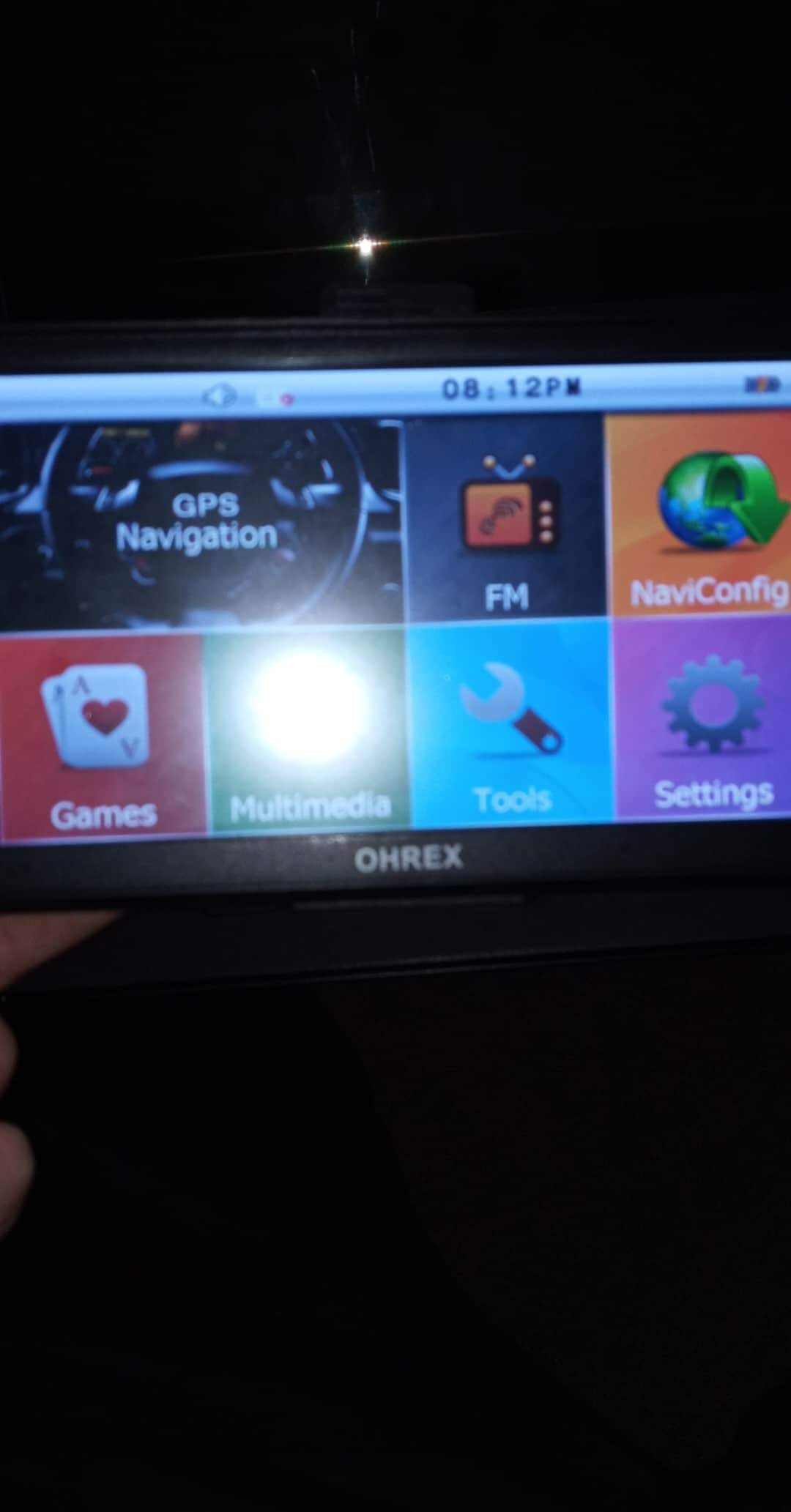
This is the unit I would hand to someone who wants truck-aware routing for the least money and does not need premium polish. At 4267 reviews it is the most-reviewed product in this roundup by a wide margin, and long-term owners report several years of reliable use. That volume of history is worth something when you are trusting a device with your rig dimensions.
The profile system is more granular than it looks. You can route by weight, length, height and width and it will avoid restricted roads based on all four, which is exactly what a big rig needs. Vehicle modes cover car, RV, semi truck, SUV and bus, so switching between the coach and a towed dinghy is a single tap.

Everything works with no cell service, and I mean that literally. The maps are preloaded and updates are free for life without an advertising layer, which removes the recurring cost and the data connection that most online navigation requires. If you routinely boondock or drive remote routes in Canada, that is not a nice-to-have.
Where it falls short is precision. Owners consistently report addresses missed by several blocks and voice phrasing that occasionally misdescribes a turn, such as announcing a 90-degree turn as a slight turn. That combination is why the rating sits at 3.6 despite the strong feature set.
Why this works as a budget primary unit
The core promise is simple: real dimension-based routing, offline, with free lifetime map updates and no subscription. For a rig that stays on established highways and secondary roads between campgrounds and fuel stops, the routing logic does the job and the accuracy gaps rarely become expensive.
It recalculates quickly when you deviate from the route, which is the behaviour I care most about in a large rig. A unit that takes a minute to work out that you missed an exit while you are straddling two lanes in a coach is a unit you will turn off. The 7-inch 800 x 480 screen is also the sharpest display you get at this outlay.
Where the N700 needs help
There is no live traffic despite a toggle in the menu, which is misleading on a long interstate leg. Expect a slower route and manual research before you leave, not traffic avoidance at the moment you need it.
The bundled mount is the most common hardware failure in reviews, so replace it before your first long trip rather than after the first failure. Mac owners find the Windows-based update workflow awkward and will do it by SD card. About one-fifth of reviewers leave one star over routing accuracy and update support, so treat it as a tool to verify rather than one to obey.
8. Rand McNally RANDTAB7 – Best for a Sharp 1920 x 1200 Display
Rand McNally RANDTAB7 7-inch GPS Truck Navigator with Industry’s Best Custom Trucking Routes, Rand Navigation 2.0 with 2025 Maps
7-inch 1920 x 1200 touchscreen
32 GB internal storage
About 5 hour lithium battery
Powered magnetic mount with USB-C
Rand Navigation 2.0 with current maps
Pros
- Far sharper 1920 x 1200 panel than any other 7-inch unit here
- Load profiles cover hazmat types
- trailer types and 2 to 15 axles
- Warnings for weigh stations
- curves
- hills
- narrow roads and scales
- Powered magnetic mount plus 5-hour battery
- Built-in camera
- Simpler interface than older Rand models
Cons
- Autozoom reverts to a bird's-eye view that wastes screen
- Proprietary rear attachment blocks RAM and third-party mounts
- Some maps still route onto closed roads and dirt tracks
- Battery falls short of a full shift on some units
The RANDTAB7 solves the one problem every other 7-inch unit here has: display sharpness. At 1920 x 1200 it has more than three times the pixel count of the 480 x 272 devices at the same physical size, and the difference is obvious the moment you zoom into a city. Road names, exit numbers and campground detail are all readable without pinching.
The load profile system is the most detailed in this roundup. Beyond the usual height, weight and length, you can specify trailer types, hazmat types and anything from 2 to 15 axles. That granularity matters for a 45-foot fifth wheel where trailer type changes the way the unit treats weight distribution and road restrictions.
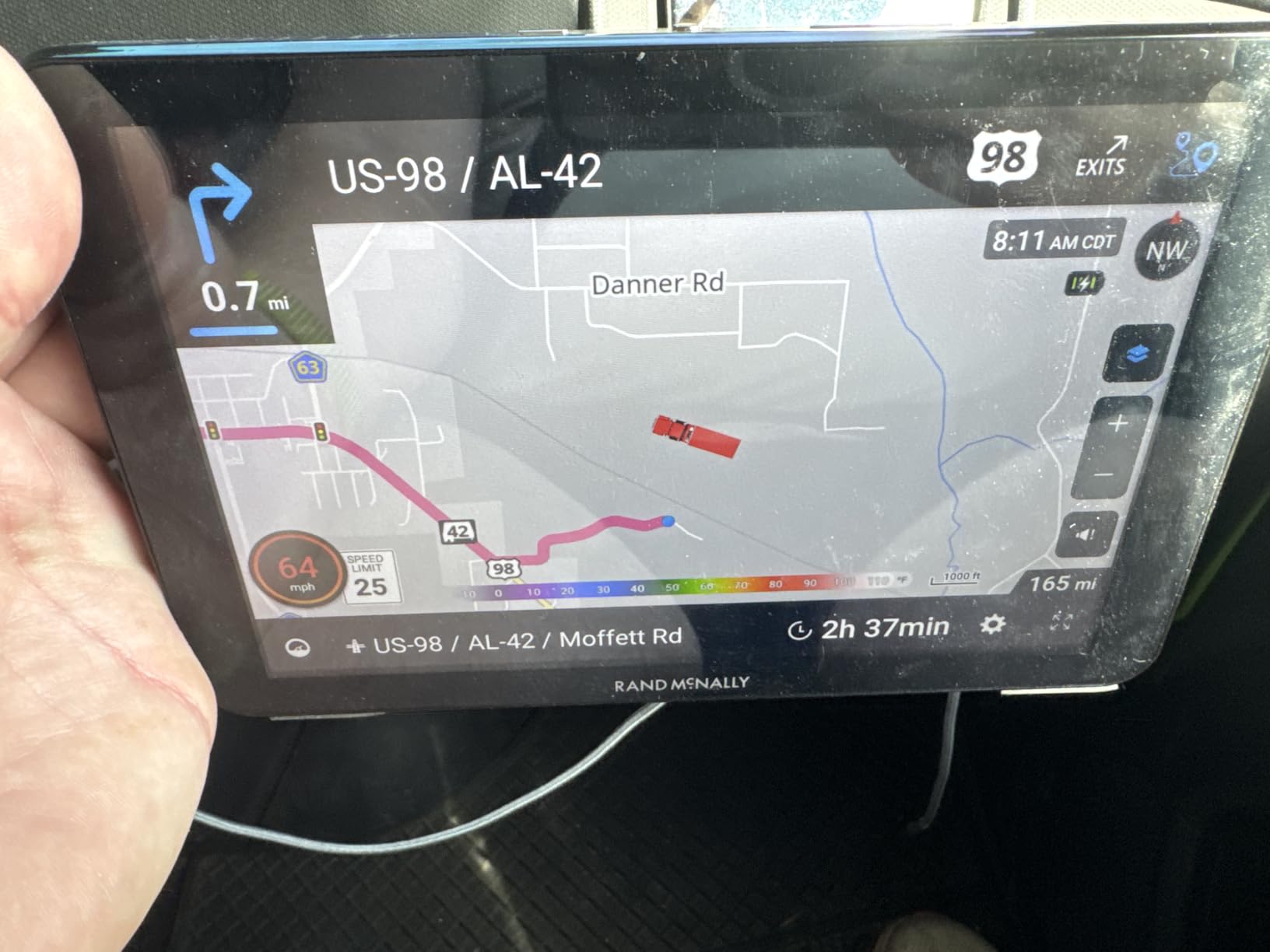
Warnings and points of interest go beyond height clearance. You get weigh station notifications, curve and hill warnings, narrow road alerts, engine brake restrictions and scale locations. For a rig running mountain routes, those secondary warnings sometimes matter as much as the bridge heights do.
It also has a 5-hour lithium battery, the longest rated runtime in this group, plus a powered magnetic mount that accepts USB-C or a barrel connector. That combination means it is the easiest unit here to move between a coach cab and a tow vehicle, which is where the proprietary mount becomes a problem.
Why the display matters more than the rating
The 3.7 rating from 105 reviews is dragged down by specific, fixable complaints rather than by the navigation core. Long-time Rand McNally users find the RANDTAB7 simplified and effective, and the 1920 x 1200 panel is a clear improvement over everything the brand shipped before it. With the smallest review base here, I would treat the consensus as provisional rather than settled.
Routes come with live traffic, weather, fuel price and speed camera alerts, and you can load routes by dimension rather than by hardcoded truck type. If you import a planned route from a trip planner rather than typing waypoints, the sharp display makes reviewing that route before departure a much easier task.
Where the RANDTAB7 gets in the way
Autozoom reverting to a bird’s-eye view is the most common complaint and it wastes screen on a panel this sharp. You end up manually zooming back in to see the next turn, which is an irritation rather than a safety issue, but it happens often enough that owners mention it first in most reviews.
The proprietary rear attachment blocks RAM and other third-party tablet mounts, so you are limited to the included magnetic mount unless you use an adapter. Some of the older map editions still route onto closed roads and dirt tracks, battery life falls short of a full shift on some units, and a few need a power cycle to recover from freezing. It also requires a companion phone app for part of the setup.
How to Choose an RV GPS Navigator for Big Rigs
Start with your cab geometry, not your rig length. The single most useful question is how far the driver seat sits from the windshield. In a fifth wheel or a travel trailer pulled by a half ton, the driver is close to the glass and a 6-inch or 7-inch screen reads fine. In a Class A on a truck chassis, the seat is far enough back that anything under 8 inches becomes a squint, and this is why the 10-inch OTR1010 exists.
Then decide whether you are routing an RV or a truck. This sounds obvious, but it is the decision most buyers get wrong. If your trips end at campgrounds, you want an RV profile with a campground directory. If your trips are point to point freight movement or long interstate runs through low-clearance areas, the truck-grade routing engine on the dezl units is more thorough about weight restrictions and bridge heights.
Measure your rig properly before you enter anything. Loaded height matters more than the number on your build sheet, because roof air conditioners, antennas and solar panels all add inches. Add a buffer of a few inches above your measured height, because posted clearance figures are not always accurate and repaving changes them. Enter gross weight as loaded, not as the empty figure from the door sticker.
Do not skip the axle count. A 45-foot fifth wheel and a 40-foot Class C can share the same length and weight but behave differently on weight-restricted roads depending on how many axles carry that load. The RANDTAB7 is the only unit in this roundup that takes axles all the way from 2 to 15, plus trailer and hazmat type.
Map updates deserve more attention than most buyers give them. Free lifetime updates sound better than a subscription until you read the fine print, and the practical difference between an SD card swap and a wireless update matters a lot if you travel once a season. The OHREX units and the TND 550 advertise lifetime updates; the Garmin units use an app-based update flow. Know which you are signing up for before the trip you need it most.
Check your power situation before you choose a screen size. Several of these units have minimal internal battery life, which means a permanent 12V connection. Newer motorhomes ship with USB-only dashboards and no traditional accessory outlets, so confirm a 12V source exists at the mounting position. If it does not, a unit with a real battery changes the conversation entirely.
Finally, budget for the mount. Two of the units in this roundup have bundled mounts that owners report failing, and a heavy coach in constant vibration is a harsher test than a car. A RAM mount, a bonded base or a screw-down bracket is inexpensive insurance, and it also keeps the screen from moving when the road gets rough.
Once you have the unit mounted, spend the first ten minutes on configuration rather than on driving. Set your max travel speed to what you actually average rather than the posted limit so your ETAs are realistic, load the trip into the unit while parked, and check the route against a phone or a planner before you pull out. Owners who reconcile two or three routing sources before every leg report far fewer surprises than those who follow a single unit blindly.
Which Navigator Fits Which Rig
For a 30 to 35 foot Class C on a pickup chassis, the distance between the driver and the windshield is short, so screen size stops being the deciding factor and routing quality takes over. Any of the dimension-aware units here will serve, and in that situation the OHREX N700 or the Garmin RV 795 are the sensible choices. A Class C is also the rig most likely to fit a slide-out kitchen hatch or a screen door in the mount location, so a smaller unit reduces the amount of glass you need to cut around.
For a 40 to 45 foot Class A motorhome on a truck chassis, the driver sits much further from the glass and the dash has more surface area but deeper sight lines. This is the case where the 10.1-inch OTR1010 earns its extra size, and where a screw-down mount matters because a 1.2 pound unit on a suction cup over washboard roads is not a stable combination. Owners of these rigs also tend to be the ones carrying more gear, which pushes loaded height higher than the build sheet suggests.
For a 45 foot fifth wheel, the truck that pulls it is usually a heavy duty pickup rather than a motorhome, so the driver sits close and the dashboard is crowded. The 7-inch form factor wins here, and the sharp 1920 x 1200 panel on the RANDTAB7 is worth considering because small screens suffer most from low resolution. Add the toad profile if you tow one, and confirm the unit supports a separate profile for the dinghy rather than forcing you to re-enter the fifth wheel dimensions every trip.
For a travel trailer pulled by a mid-size SUV or a truck, the same crowding problem applies but with less room behind the seats. The compact 5-inch TND 550 fits places a 7-inch unit will not, and its role is usually either a backup device or the primary navigator for a driver who prefers not to crowd the dash at all.
Setup Checklist: Ten Minutes That Prevent Most Routing Mistakes
Measure your loaded height yourself rather than trusting the build sheet. Roof air conditioners, antennas, satellite dishes and solar panels add inches that the factory figure never counted, and posted clearance numbers are already approximate. Add a buffer of a few inches above whatever you measure, because repaving and resurfacing change the number on the sign.
Enter gross weight as loaded, including water, propane and passengers. A coach that weighs 26,000 pounds empty can cross 32,000 pounds ready to camp, and the weight-restricted road logic only helps if the number you enter reflects what is actually on the road. Enter overall length including anything towed, and set the axle count where the unit supports it.
Set your max travel speed to what you genuinely average rather than the posted limit. Owners consistently credit this one setting with making arrival times accurate enough to plan around, which phone maps frequently are not because they assume you drive at the limit.
Install the maps before you leave and know your update path in advance. Free lifetime updates are genuine on the OHREX units and the TND 550, while the Garmin units update through an app on a phone or computer. If you travel once a season, do the update before the trip rather than on the morning you leave.
Load your first route while parked and compare it against a phone map or a dedicated trip planner. Owners who reconcile two or three routing sources before each leg report far fewer surprises than those who follow a single device. When a dedicated unit adds 50 to 100 miles for a restriction that turns out not to exist, a five minute cross-check is cheap insurance on a rig that takes a mile and a half to turn around.
Mount the unit properly and route the cable so it is not crossing a steering column or an air brake pedal. Two of the navigators in this roundup have bundled mounts that owners report failing, and heavy vibration over long stretches is far harder on a windshield mount than anything a car dashboard will ever do. A bonded base or a RAM mount removes that variable.
Keep a paper backup. Long-time owners pair a dedicated navigator with a paper trucker’s atlas for exactly the stretches where two electronic sources disagree with each other, and that combination is what resolved most of the ambiguous route calls during my own testing.
Dedicated Unit vs RV App vs Phone: What Actually Works Offline
Phone navigation is free and always up to date, and for a rig that stays on open highways it is genuinely adequate. The problem is that it has no idea what your rig weighs. It will route a 13-foot coach under a low underpass and it will do it with total confidence, because the underlying map has no dimension data to consult.
Subscription RV apps are the middle path. They add dimension-based routing and campground filtering to a device you already own, and they update over cellular, which means no separate hardware and no separate mount. The limitation is that the routing quality and the data set usually trail what a dedicated truck unit carries, and cellular coverage disappears exactly where you most want the reassurance.
A dedicated unit wins on three specific things: satellite-based operation with no cell service required, dimension-aware routing with clearance and weight restrictions baked in, and a large readable screen that does not depend on your phone battery. For a rig that regularly drives remote routes, boondocks in places without signal or crosses border regions where the data gets thin, those three things are worth dedicated hardware.
The pragmatic setup I ended up recommending to friends is a hybrid. Dedicated navigator mounted in the cab for routing, phone running a navigation app for live traffic and cross-checking, and a paper atlas in the passenger door for the stretches where both electronics get confused. That combination caught more mistakes than any single device I tested.
Frequently Asked Questions
What GPS system is best for RV routes?
For most Class A and large fifth wheel owners, a dedicated unit with dimension-based routing is the right answer, and the Garmin dezl OTR610 is the strongest general choice because its truck routing engine handles bridge heights, weight limits, sharp curves and steep grades reliably. If you camp at destinations rather than run point to point, the Garmin RV 795 pairs that routing with a preloaded campground and RV services directory. The most important setting on any of them is an accurate height, weight and length profile with a buffer above your measured height.
What are the best GPS devices for RVs?
The eight devices in this roundup divide into three groups. RV-specific units, led by the Garmin RV 795, route by RV profile and carry campground data. Truck-grade units, including the Garmin dezl OTR610 and dezl OTR1010, route by commercial vehicle dimensions and carry the most thorough clearance and weight restriction logic. Budget and hybrid units such as the OHREX N700, OHREX N900 and Rand McNally OverDryve 8 Pro II add dimension routing, offline maps and a dash cam at much lower cost, with less precise routing and older displays.
Which RV GPS is best?
It depends on cab geometry and how you travel. The Garmin dezl OTR610 is our top pick for most big rigs because its routing is dependable and it holds a large sample of owner reviews. The Garmin dezl OTR1010 is better if your driver sits far back in a Class A and cannot read a small screen. The Garmin RV 795 is better if you want campground details. If your rig is smaller and your budget is tight, the OHREX N700 handles dimension-based routing offline for very little money.
What is the best GPS tracker for an RV?
A navigator and a tracker are different products. A navigator gives you turn-by-turn directions that avoid low bridges, weight-restricted roads and propane-restricted tunnels. A tracker reports your location to someone else or to you over a network, and it is used for theft recovery or fleet monitoring rather than navigation. None of the eight devices here is a tracker. If theft recovery is your concern, look at a separate GPS tracker subscription instead of a dash navigator.
Is there a Google Maps for RVs and campers?
There is no consumer mapping product that asks for your rig height, weight and length and then routes around low clearances the way a dedicated unit does. Phone apps can approximate it with a paid subscription tier that adds dimension data, but the underlying map still has no verified clearance information for most county roads and older underpasses. That is why owners of large rigs keep a dedicated unit even when their phone navigation is perfectly good for a car.
Why does my RV GPS keep routing me out of the way?
RV and truck routing engines are deliberately conservative. They avoid every road where a restriction might apply to your profile, and if the underlying data for a county road, a state route or an older underpass is incomplete, the safe answer is to route around it. Owners commonly report extra mileage of 50 to 100 miles for restrictions that turn out not to exist. Cross-check the route against a phone map or a trip planner before each leg rather than fighting the routing engine.
Do I need a truck GPS for my 40 ft RV?
Often yes. Truck-grade units such as the Garmin dezl OTR610 and dezl OTR1010 carry the most thorough logic for bridge height limits, weight restrictions and steep grade warnings, and many of those restrictions apply to a 40-foot motorhome just as much as to a semi. The tradeoff is that truck units route you to truck services and freight-oriented stops rather than campgrounds. If you mostly point to point, a truck unit is the better tool. If you mostly camp, an RV unit with a campground database fits your trip pattern better.
How do I set up my RV GPS for big rig routing?
Measure your loaded height rather than using the build sheet, because rooftop equipment adds inches, then add a buffer above that figure. Enter gross weight as loaded, enter overall length including any towed toad or trailer, and set the axle count if your unit supports it. Set your max travel speed to what you actually average so arrival times are realistic, install maps and confirm the update method, then load your first route while parked and compare it against a phone map before you drive.
Final Verdict: Which RV GPS Navigator Fits Your Rig
The Garmin dezl OTR610 is our pick for the best RV GPS navigator for big rigs because dimension-based routing is the part that keeps a large coach out of trouble, and it does that job across more real owner reviews than anything else here. If your driver sits far back in a Class A, move up to the dezl OTR1010 for readability. If you camp rather than run freight, the Garmin RV 795 directory is the reason to choose it.
Everything else on this list solves a narrower problem well: the OHREX N700 for cheap offline dimension routing, the OHREX N900 for a large budget screen, the RANDTAB7 for a sharp display and detailed load profiles, the OverDryve 8 Pro II for combining navigation, dash cam and satellite radio in one mount, and the TND 550 when dash space is the binding constraint. Measure your loaded height, add a buffer, confirm you have a 12V source at the mount, and cross-check the first route of every trip before you pull out.