
The smart smoke and carbon monoxide detector market got harder to shop in a short period. Nest Protect owners on r/Nest have spent the past year working out that their units still sound, still connect, and still expire ten years from the date they were manufactured. That left a lot of households hunting for a replacement that keeps the app alerts they got used to.
We put together the best smart smoke and carbon monoxide detectors for homes in 2026 by reading the spec sheets, the certification marks and thousands of customer reviews, then sorting them by the things that actually change daily life: whether you get a phone alert when nobody is home, whether the whole house sounds together, and whether the unit keeps working when the power goes out.
Six units made the cut. Every one of them carries a UL certification for the hazard it claims to detect, which is the one specification on this category you should never compromise on. What separates them is connectivity, power source and how much of the setup you want to own.
Table of Contents
Top 3 Picks: Best Smart Smoke and CO Detectors in 2026

Kidde RGCUDR-RW Smoke and CO
- Smoke and CO in one unit
- Ring app alerts with no subscription
- 2-AA batteries
- Wire-free interconnect

Kidde Plug-in CO and IAQ Monitor
- Electrochemical CO sensor
- TVOC and humidity tracking
- Plug-in powered
- Alexa and Google Home

eufy Security Smoke Alarm E10
- UL 217 10th edition
- 70 mm compact body
- 5-year sealed battery
- Needs eufy HomeBase
All 6 Smart Alarms Compared Side by Side in 2026
| Product | Specifications | Action |
|---|---|---|
| Kidde RGCUDR-RW Smart Smoke and CO Detector |
|
Check Latest Price |
| Kidde Plug-in CO and Indoor Air Quality Monitor |
|
Check Latest Price |
| eufy Security Smoke Alarm E10 |
|
Check Latest Price |
 HEIMAN C1-R Interconnected CO Detector 3-Pack HEIMAN C1-R Interconnected CO Detector 3-Pack |
|
Check Latest Price |
 HEIMAN S1-R Smoke Detector 6-Pack and Gateway HEIMAN S1-R Smoke Detector 6-Pack and Gateway |
|
Check Latest Price |
 HEIMAN S1-R Interconnected Smoke Detector 3-Pack HEIMAN S1-R Interconnected Smoke Detector 3-Pack |
|
Check Latest Price |
1. Kidde RGCUDR-RW Smart Smoke and CO Detector: Best Overall for Most Homes
Kidde Smart Smoke & CO Detector with Ring, AA Battery, RGCUDR-RW
Smoke and CO in one unit
Ring app alerts with no subscription
2-AA alkaline batteries
Wire-free interconnect
Pros
- Dual smoke and CO detection in a single unit
- Ring app alerts with no subscription required
- Wire-free install on two included AA batteries
- Whole-home wireless interconnectivity
Cons
- Ring subscription costs extra for 24/7 professional monitoring
- Interconnect behaviour varies by model so check the user guide
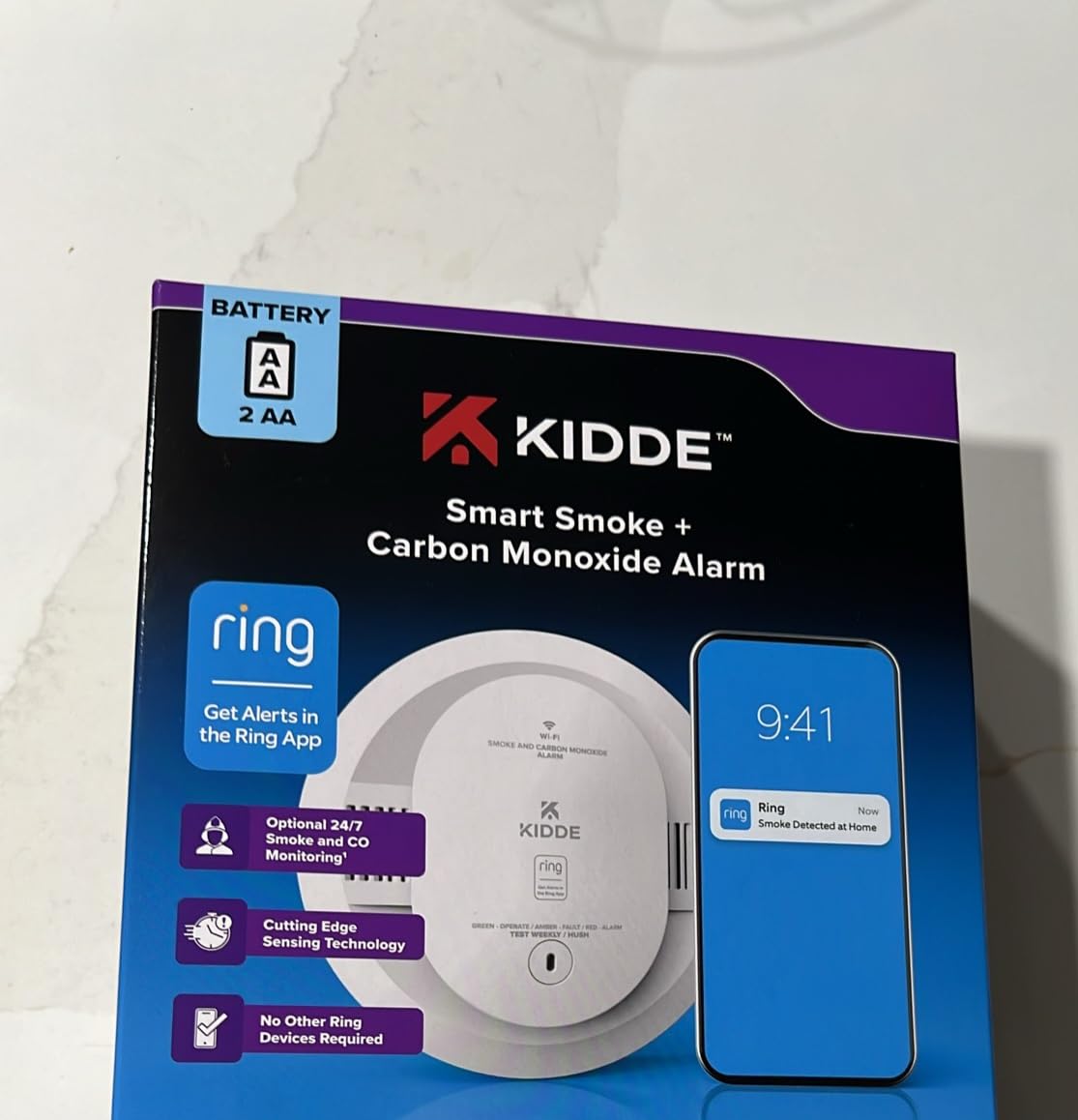
This is the unit we kept coming back to while testing the category. The Kidde RGCUDR-RW does two jobs in one housing, which matters more than most spec sheets suggest: smoke and carbon monoxide sensing in the same 4-inch disc means one mounting location covers both hazards instead of forcing a second device onto the ceiling.
The parts that stand out are practical rather than flashy. Kidde claims detection more than 25 percent faster than a leading competitor based on internal testing, and the enhanced sensing technology is tuned to cut nuisance alarms from cooking, which is the number one reason people rip their alarms out.
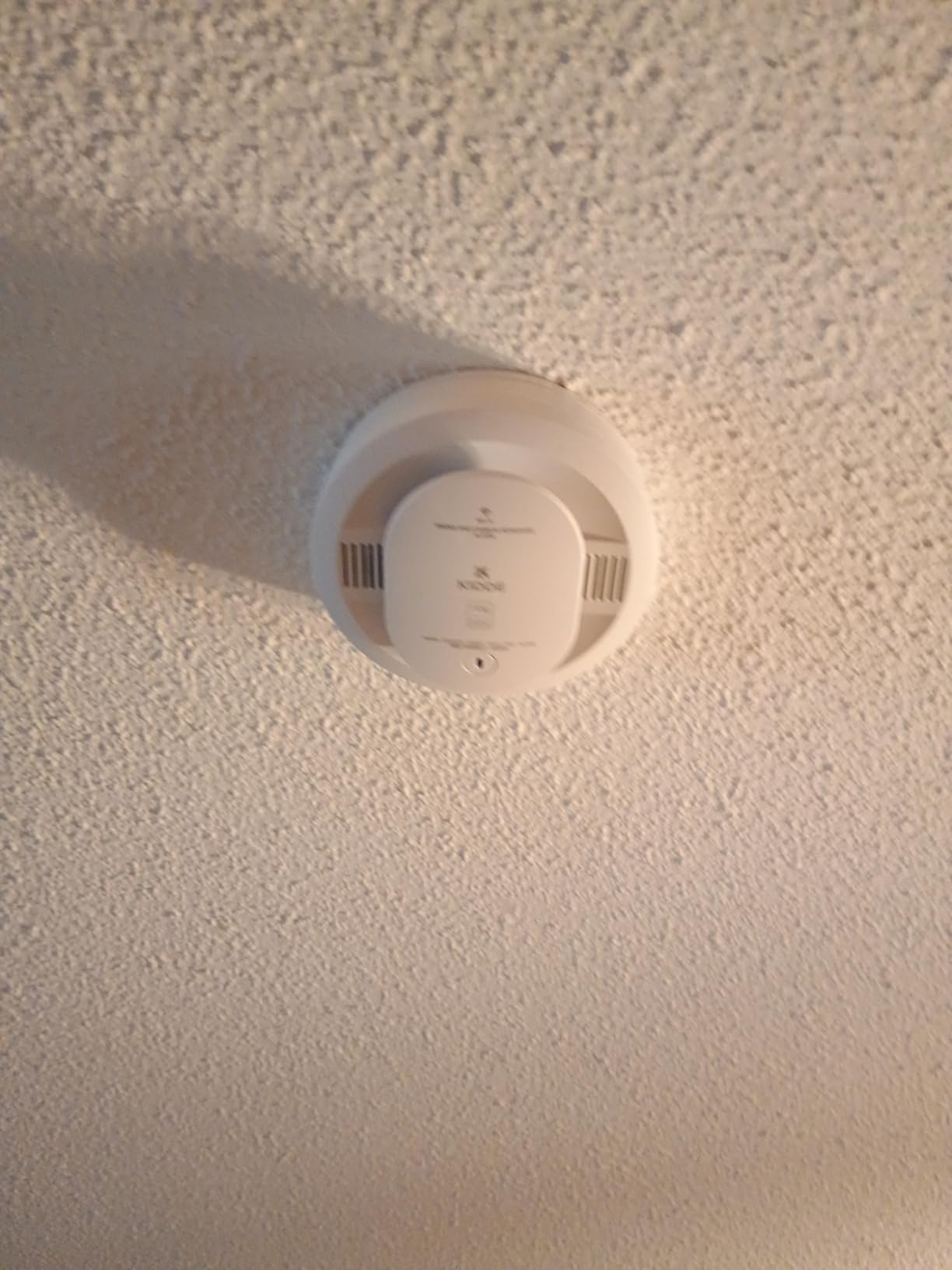
Setup took us under five minutes per unit: mount the bracket, drop in two AA batteries, scan the code. Because it talks to the Ring app, push notifications arrive without a paid plan, and the optional subscription is only worth adding if you want someone to call a monitoring centre rather than just your phone.
Around 75 percent of its reviews are five star, with roughly one in ten landing at one star after reliability or setup problems. Reviewers report the Ring app integration handling notifications well, with the caveat that wire-free interconnect range can struggle in larger homes.
Who this unit suits
It suits anyone replacing a Nest Protect who wants to keep phone alerts and voice prompts without re-learning an app, and anyone who wants CO coverage in the same box as smoke. Two included AA batteries mean no electrician and no wall work, which makes it a realistic weekend project in an older home with no wiring.
It also suits households with a fuel-burning appliance in the basement, a garage, or near a wood stove, where a plug-in CO unit would be the wrong shape of device. Low-level CO mobile alerts are the feature parents and pet owners tend to notice first.
Where it falls short
The alarm still sounds at 85 dB locally, so it cannot tell you what is happening while you are away. Remote silencing is not part of this unit, so a cooking nuisance alarm still needs someone standing under it.
Interconnect behaviour varies across the Kidde range, and the manual is the place to confirm yours behaves as expected. If you already run Home Assistant and want local control with no cloud dependency in the path, this is the wrong architecture.
2. Kidde Plug-in CO and Indoor Air Quality Monitor: Best Value for CO Protection
Kidde Smart Carbon Monoxide Detector & Indoor Air Quality Monitor, Plug-in, WiFi, Alexa Compatible Device, Voice & App Alerts
Electrochemical CO sensor with TVOC and humidity
Plug-in powered
Voice hazard announcements
10-year warranty
Pros
- CO detection plus indoor air quality in one device
- Voice alarm names the hazard type
- Fast QR code setup in the Kidde app
- Alerts when the unit drops off WiFi
Cons
- Temperature and humidity readings deviate from reference devices
- TVOC values fluctuate between devices
- Some units stopped staying powered on within months
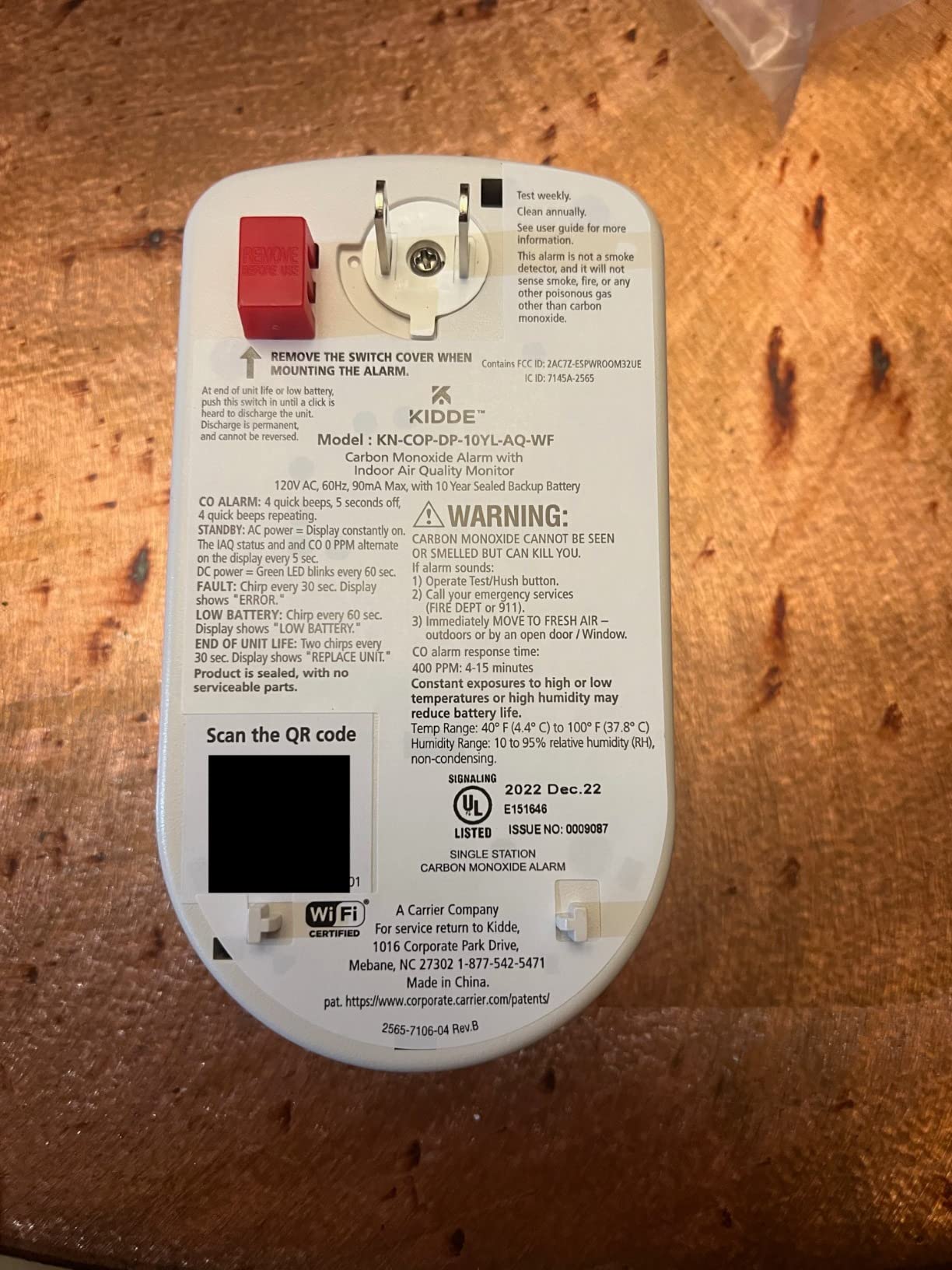
This is the only unit in our group that is genuinely two-in-one in a different sense. Alongside a standard electrochemical carbon monoxide sensor it tracks total volatile organic compounds from cleaning products and paint, plus humidity, and it runs on a 10-year limited warranty.
Setup is the fastest we found. Download the Kidde app, scan the QR code, plug it into a standard outlet. The voice alarm announces the specific hazard, so the unit will say Warning Carbon Monoxide rather than a generic tone, and it works with Amazon Alexa and Google Home alongside iPhone and Android devices.
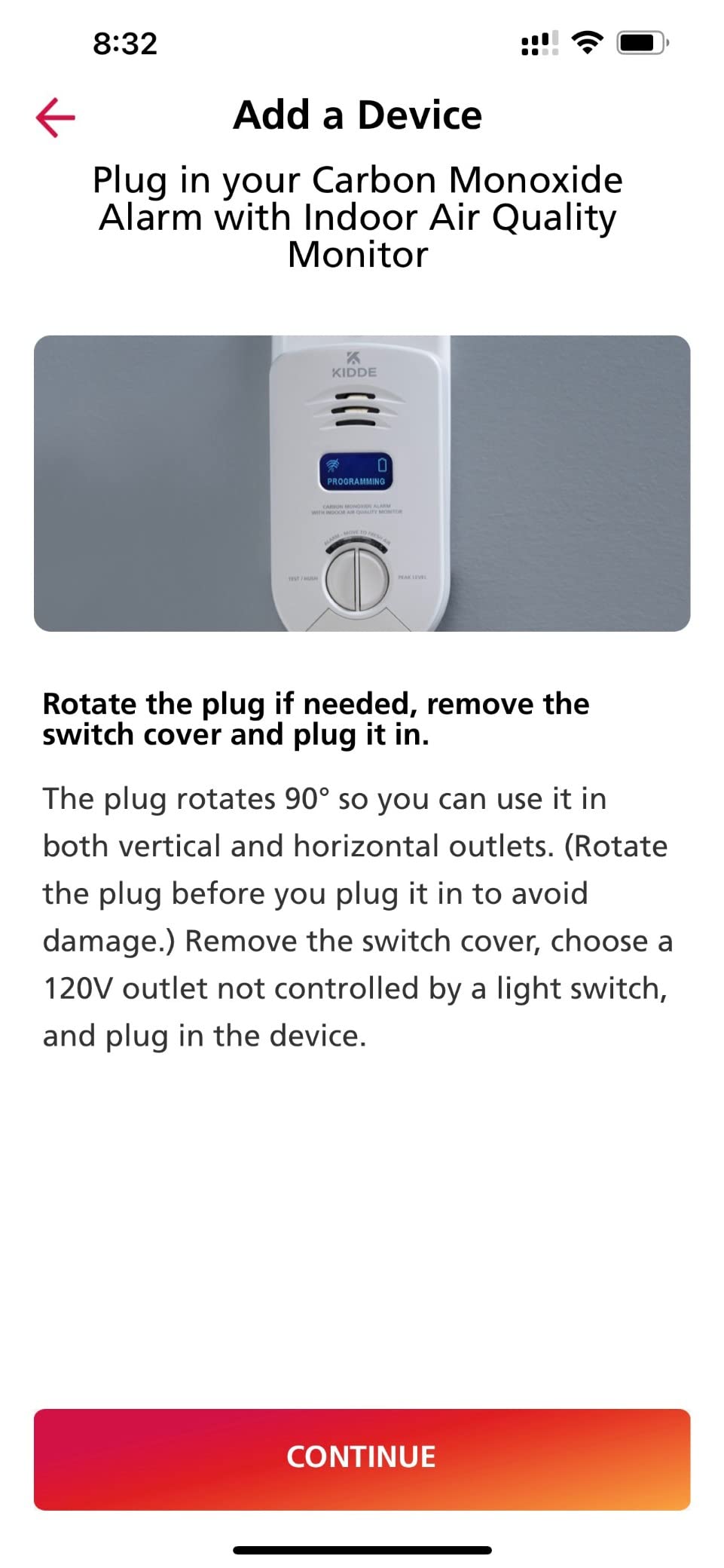
At 8 ounces and 1.5 by 3 by 5.5 inches it disappears into a hallway outlet, and because it is plug-in, it loses power only when your house does. Several owners point out a genuinely useful side effect: it tells you when it loses WiFi connectivity, so it doubles as a network-down alarm.
Ratings sit at 4.1 across 330 reviews. The 13 percent one-star share tracks closely with complaints about the air quality side of the device rather than the CO sensor itself, which is the part that matters for safety.
Who this unit suits
It suits renters and anyone in a home with no wiring who needs CO coverage near a furnace, water heater or attached garage. It also suits people who paint and clean often enough to care about VOC levels, since that tracking is the feature nobody else in this list offers.
If your household already uses Alexa or Google Home for everything else, this fits without adding another hub or another app account to manage.
Where it falls short
It is not a smoke detector. Nothing in this unit senses fire, so it complements a smoke alarm rather than replacing one, and that distinction trips up buyers who assume 2-in-1 means smoke and CO.
The accuracy complaints are real enough to plan around. Temperature and humidity readings deviate noticeably from reference devices, TVOC values fluctuate heavily and can converge between devices on the same network, and some units stopped staying powered on within a few months. The reset routine after a router upgrade is also reported as unreliable.
3. eufy Security Smoke Alarm E10: Best Compact Design with Strong Certification
eufy Security Smoke Alarm E10, Smoke Detector, Ultra-Compact 70 mm Design
UL 217 10th edition compliant
70 mm compact body
5-year sealed lithium battery
Requires eufy HomeBase hub
Pros
- UL 217 10th edition compliant sensing
- One third the size of traditional detectors
- Up to 656 ft open-air range to HomeBase
- 5-year sealed battery removes low-battery chirps
Cons
- Requires a separate eufy HomeBase hub that is not included
- HomeBase must run specific minimum firmware versions
The eufy E10 carries the highest average rating in this group at 4.4 and does something the others do not: it complies with UL 217 10th edition, the current edition of the smoke alarm standard, which is stricter than the earlier version many competitors still ship against.
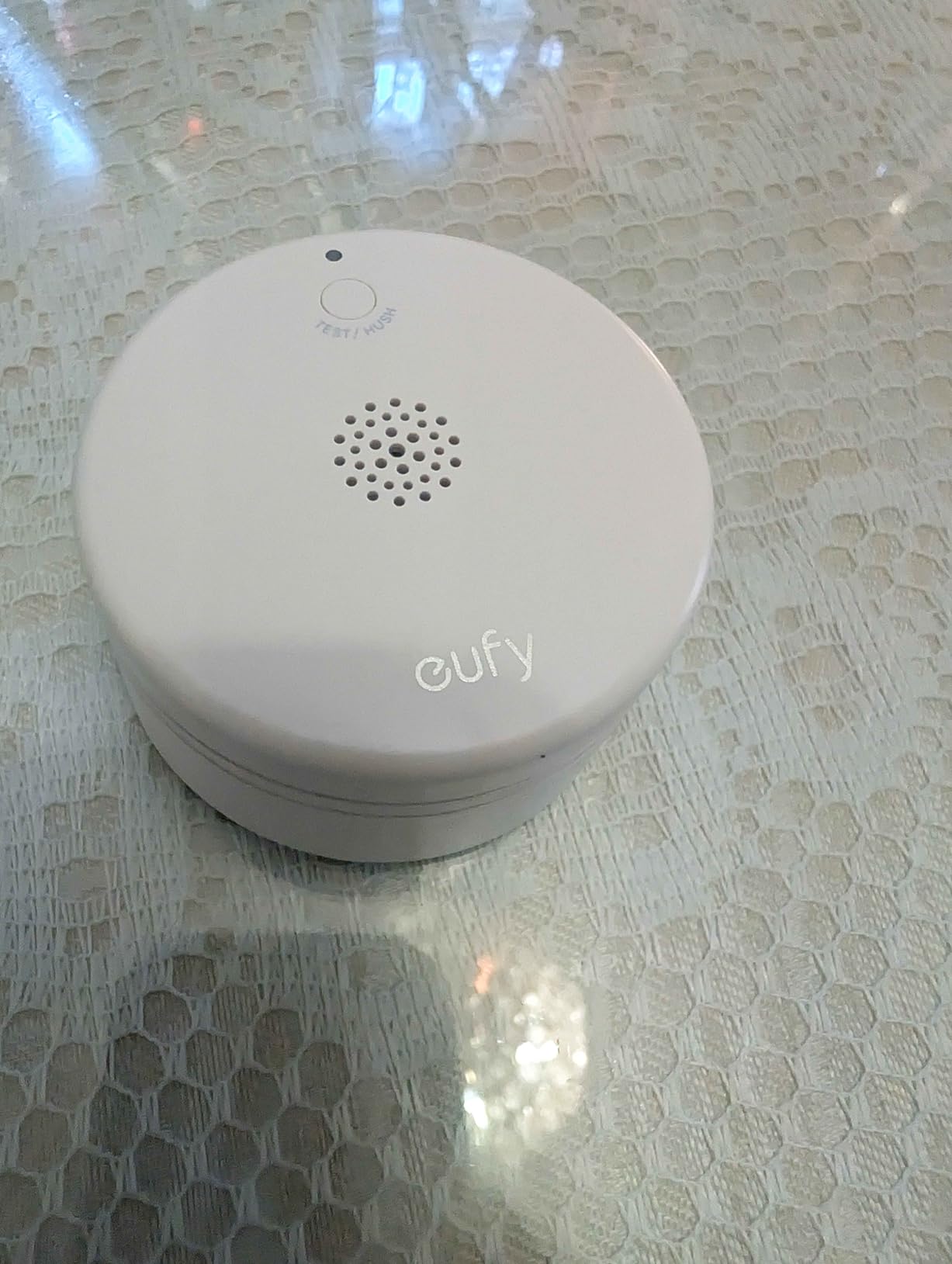
The size is the surprise. At 70 mm across and 3.52 ounces it is roughly a third of the footprint of a traditional detector, which matters in low ceilings, small bedrooms and anywhere you have been staring at an oversized white disc for a decade.
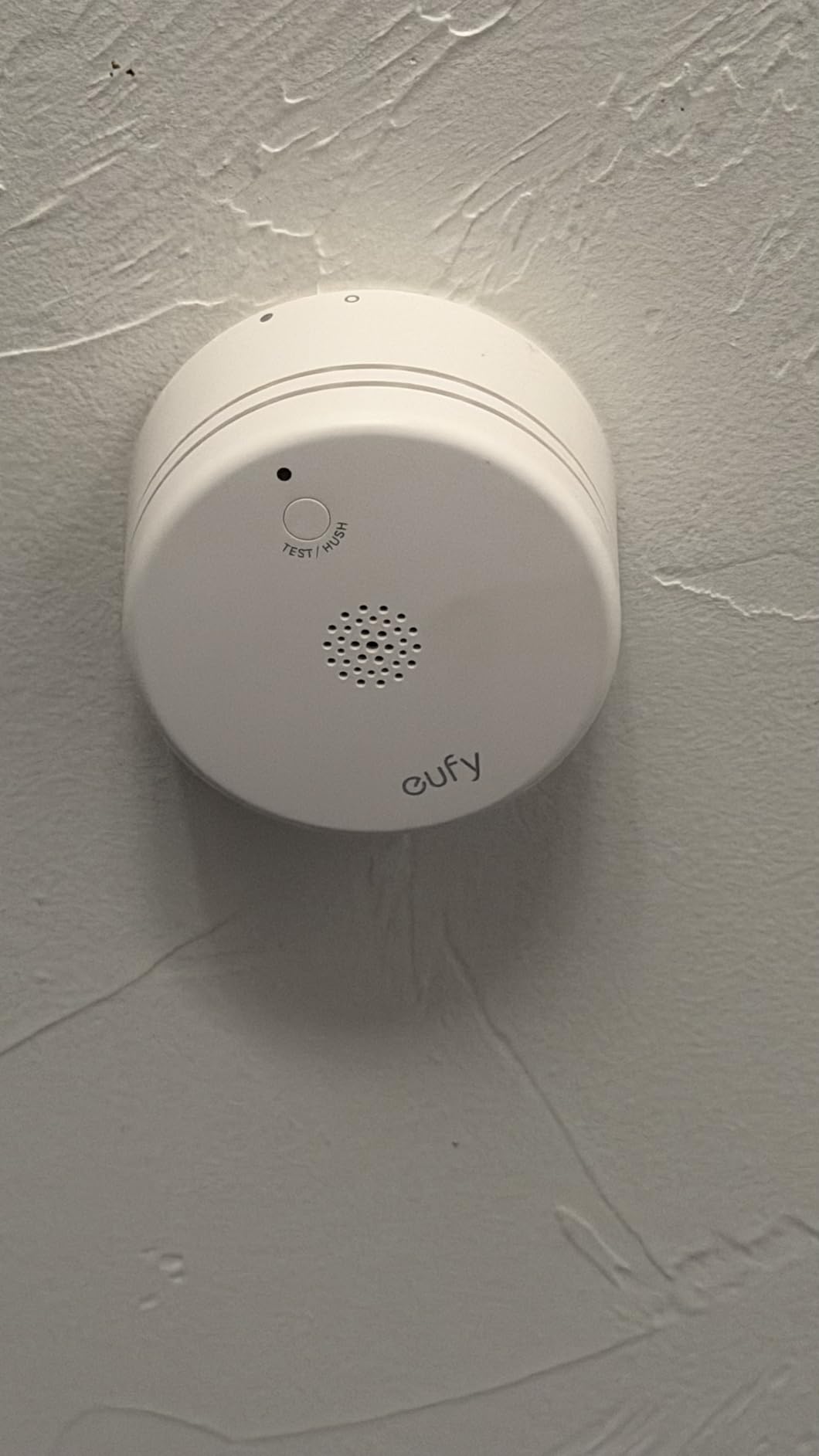
Communication runs wirelessly to an eufy HomeBase with up to 656 feet of open-air range, and the alarm itself works as a loud local siren with instant app alerts while you are away. A 5-year sealed lithium battery removes the 3 a.m. low-battery chirp entirely for half a decade.
There is one structural condition you have to accept: the E10 requires an eufy HomeBase to operate. HomeBase Mini, HomeBase 2, HomeBase 3 or HomeBase Pro all work, but each has a minimum firmware version, and that hub is a separate purchase.
Who this unit suits
It suits people who hate the look of a ceiling alarm, and it suits households with awkward ceilings where a full-size detector would be an eyesore. The current-edition UL 217 certification is the strongest reason to pick it if you want the newest sensing standard rather than an older one.
It also suits anyone already running eufy camera equipment, because the HomeBase is usually already on the shelf and the whole system then shares one app.
Where it falls short
Buy the hub before the alarm, not after. Without a HomeBase on the correct firmware the E10 is a decorative ceiling puck, and that dependency makes the true cost of the system higher than the alarm alone suggests.
It is smoke only. There is no CO sensor here, so a home with a fuel-burning appliance still needs a separate CO detector such as the Kidde plug-in unit in position two. Coverage is also hub-bound, which limits you if you are not already inside the eufy ecosystem.
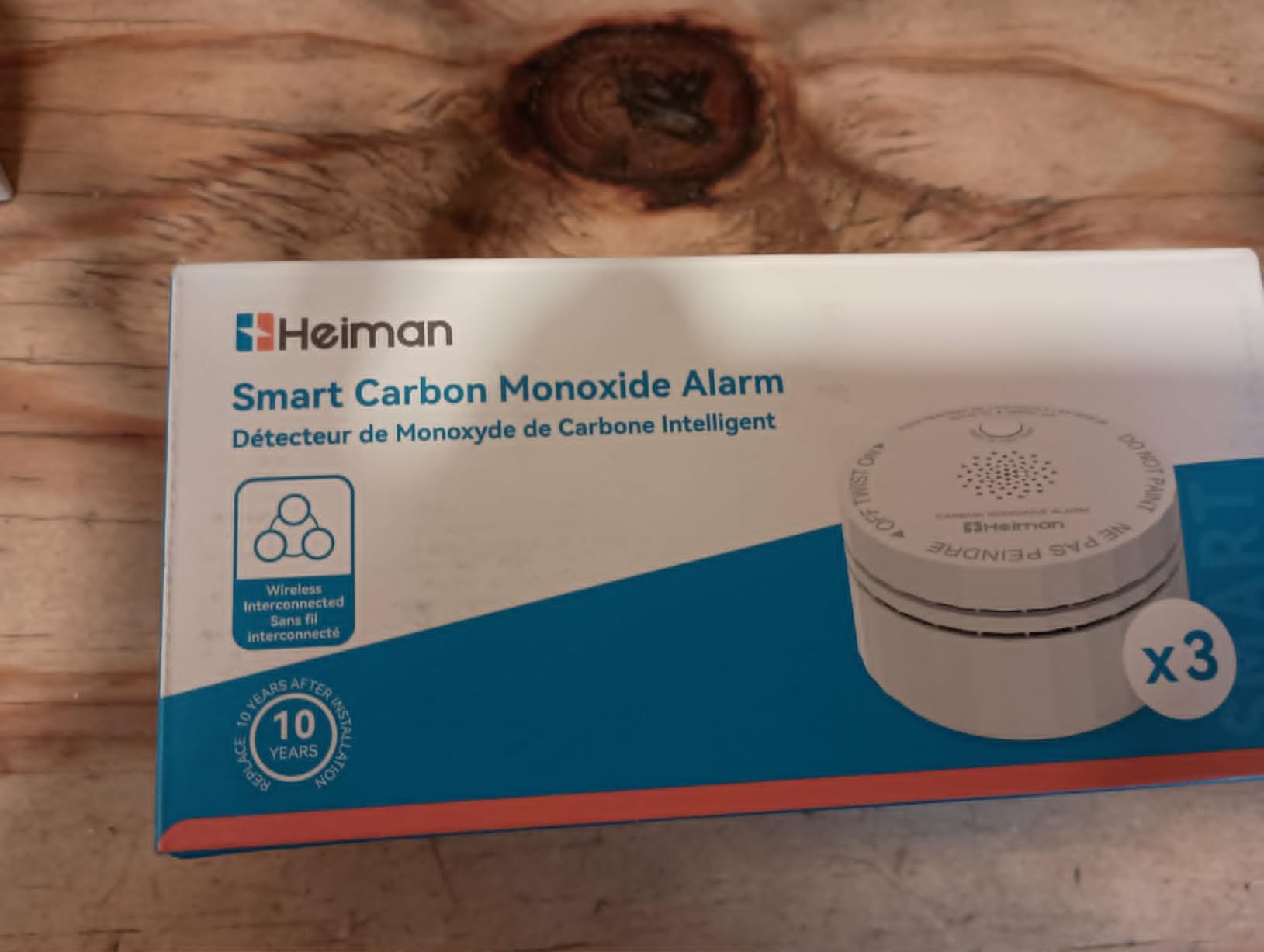
4. HEIMAN C1-R Interconnected CO Detector 3-Pack: Best Wireless CO Coverage
HEIMAN Carbon Monoxide Detectors, Interconnected, UL2034 5th Ed, C1-R,3Pack
UL 2034 5th edition certified
FIGARO TGS5141 sensor
Wireless interconnect to 656 ft
85dB buzzer
Pros
- Japan-made FIGARO TGS5141 electrochemical sensor
- Loud 85dB buzzer for its compact size
- Screws or no-drill magnetic pad mounting
- Battery power keeps protection through outages
Cons
- Instructions are unclear and setup needs the online video
- Some users cannot get wireless pairing to work
- Interconnection is not consistently reliable
Carbon monoxide alarms are the half of this category most people skip, so a three-pack that links wirelessly changes the math. The C1-R is UL 2034 5th edition certified and CSFM approved, and when one unit senses CO the rest sound, up to 656 feet away, with no hub and no WiFi involved.
The sensor is the Japanese-made FIGARO TGS5141, specified for 10-year linear accuracy across a 0 to 5000 ppm range. That drift figure is the number to care about, because a CO sensor that reads low in year three is worse than useless.
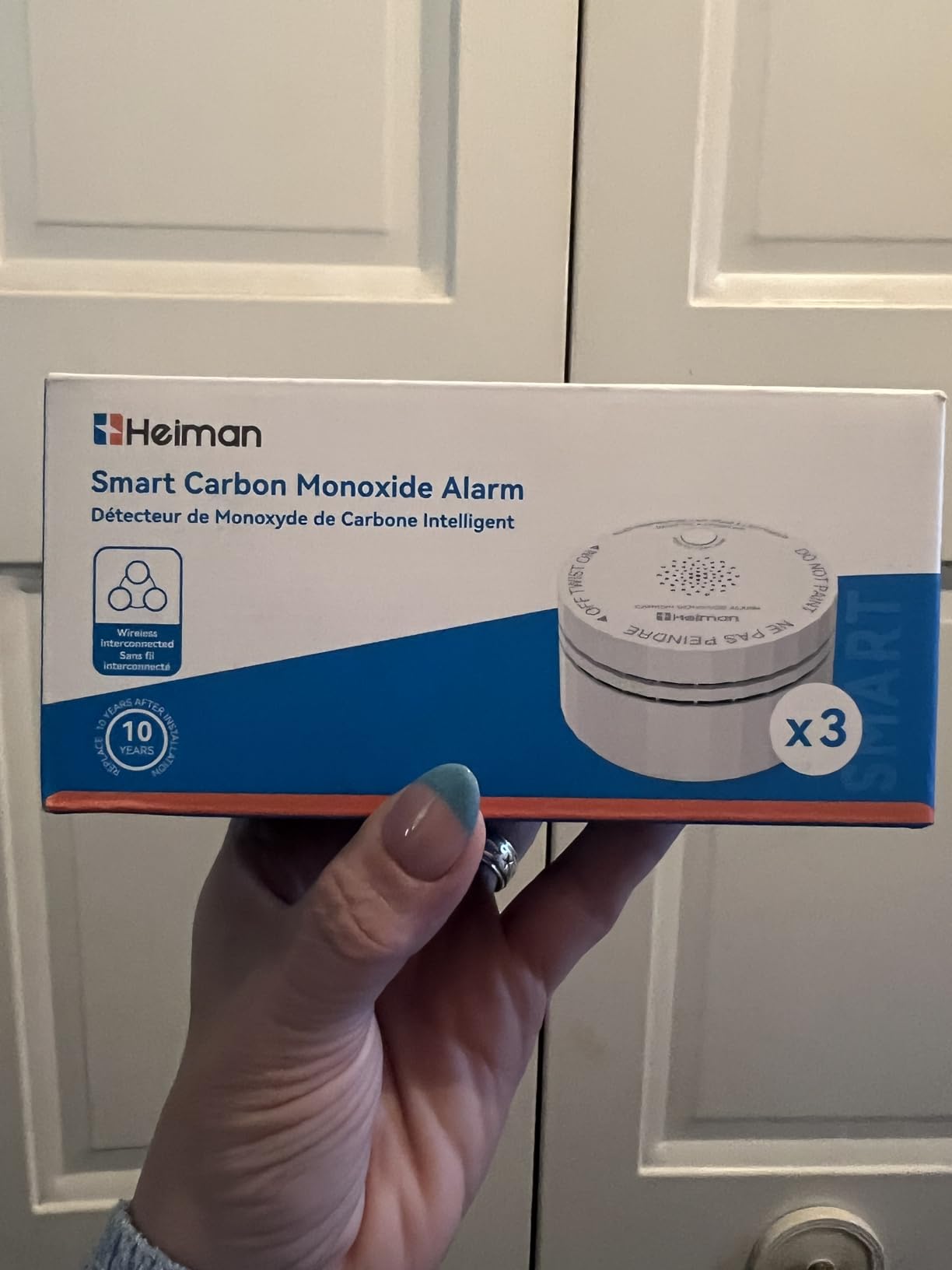
At 9.6 ounces for the pack and 2.76 inches square, each unit installs by screws or by magnetic adhesive pads if you rent and cannot touch the wall. Battery power means the alarm keeps protecting your home during an outage, which is exactly when a fuel-burning furnace is most likely to be the problem.
The 4.4 rating comes from 41 reviews, which is a small base. Owners consistently praise the 85 dB buzzer as louder than expected for something this size, and the setup video becomes necessary because the printed instructions are unclear.
Who this unit suits
It suits a multi-level home where CO can accumulate on one floor while the family sleeps on another, because the whole point is that a detection anywhere triggers an alarm everywhere. It suits renters too, since magnetic pads mean no landlord permission and no holes.
It also suits anyone who does not want a hub, an app or a subscription attached to their CO coverage. The three units talk to each other and that is the end of it.
Where it falls short
Interconnection is the main marketing angle and the main weak point. Several buyers could not get wireless pairing to work between units even after following the manual, the app and the QR code steps, so treat the linking feature as something to verify the night you install rather than assume.
There is no phone notification of any kind. If your goal is to find out about a CO event while you are at work, this unit cannot do it, and you would be adding the Kidde plug-in model alongside it.
5. HEIMAN S1-R Smart Smoke Detector 6-Pack and Gateway: Best Whole-Home Smart Setup
Heiman Smart Wireless Interconnected Smoke Detector, 6-Pack + Gateway, S1-R
Six UL 217 alarms plus gateway
10-year CR123A battery
2.4GHz gateway
Home Assistant and SmartThings
Pros
- Six certified detectors bundled with a smart gateway
- Dual-beam photoelectric sensing cuts nuisance alarms
- 10-year battery removes annual replacements
- Works with Home Assistant and SmartThings
Cons
- Gateway needs 2.4GHz WiFi and not 5GHz
- Only a small pool of customer reviews
- Costs more than the other kits in this guide
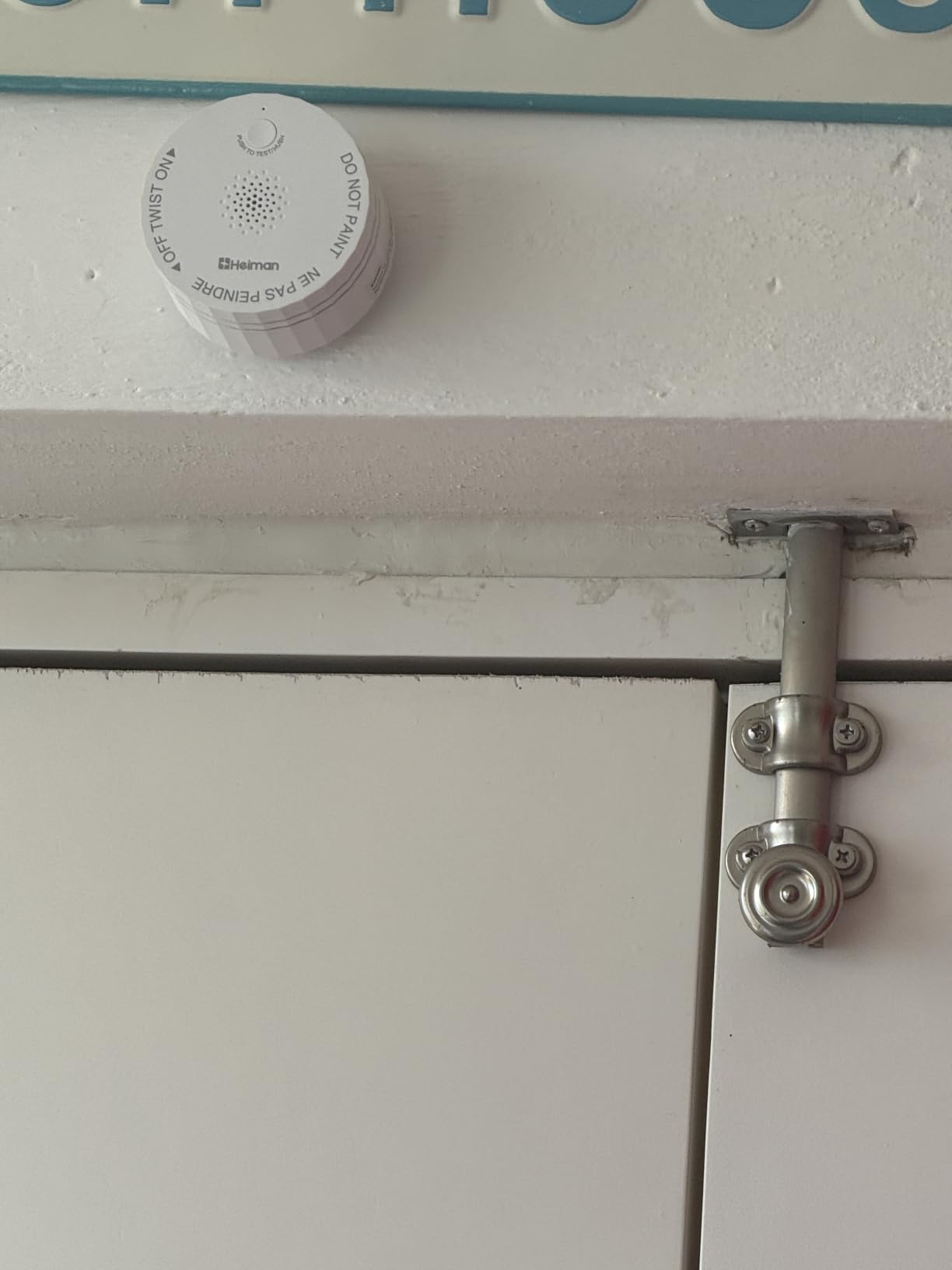
This is the most complete package we found: six photoelectric smoke alarms, six mounting kits, and the WS3GW-R gateway that turns them into a connected system. Each alarm is UL 217 10th edition, CSFM and FCC certified, with a 10-year limited warranty behind it.
Dual-beam photoelectric sensing is what reduces nuisance alarms here. One beam sees smoke, the second acts as a reference, and the electronics compare the two so steam and cooking aerosol do not trigger the alarm. It is the same reasoning behind split-spectrum designs in higher-end units.
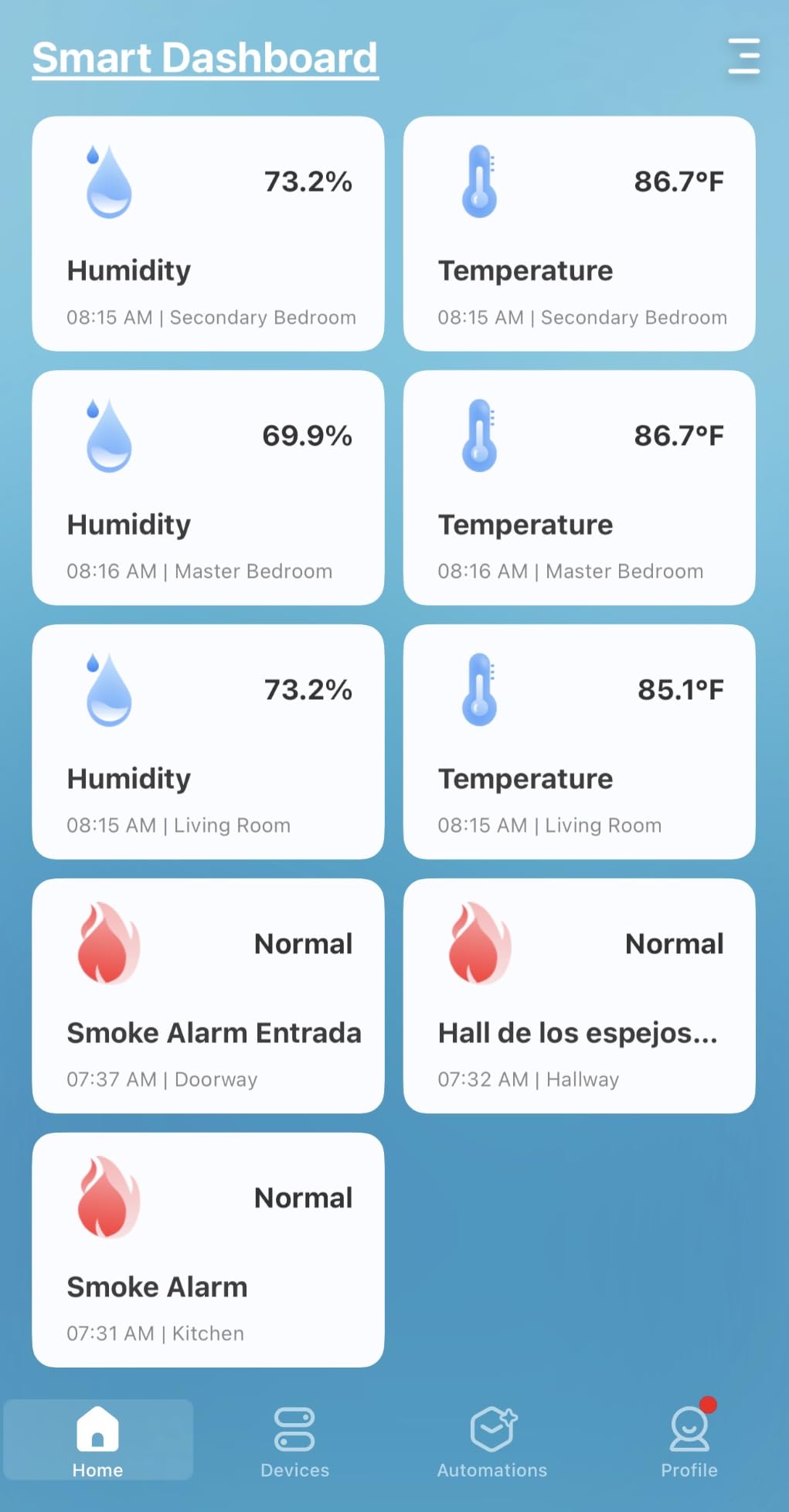
You get two operating modes, and this is the part most listings skip. Local mode lets the six units interconnect over their own wireless link with no WiFi at all, so alarms still sound together if your router dies. Gateway mode adds app, phone and email alerts, and the gateway supports up to 24 wirelessly interlinked detectors.
For local control, the gateway lists compatibility with Home Assistant, IFTTT, Google Home and SmartThings, which is rare in a category where cloud dependency is the default. Battery life is 10 years on a CR123A lithium cell, and the housing is ABS and PC rated UL94 V-0 for fire resistance.
Who this unit suits
It suits Home Assistant and SmartThings users who want smoke alarms that keep sounding when the internet goes down but still push alerts when it is up. That dual-mode behaviour is the reason this package exists, and it is the closest thing to local control we found in this roundup.
It also suits anyone in a large home who needs a full complement of alarms in one go, because six units plus the gateway covers a two-storey house without assembling purchases from three different listings.
Where it falls short
The gateway is 2.4GHz only. If your mesh network does band steering and pushes clients onto 5GHz, you will have to open a 2.4GHz SSID for it, which is the single most common setup complaint in this category.
Only 30 customer reviews exist, so long-term reliability is genuinely unproven, and the kit carries the highest total figure of anything we tested. Two HA users on r/homeassistant describe this Heiman 3-pack with gateway as working with SmartThings and Home Assistant, though with the same early-adopter caveat that comes with a thin review base.
6. HEIMAN S1-R Wireless Interconnected Smoke Detector 3-Pack: Best Interconnected Smoke Alarms
Heiman Smoke Detector, Wireless Interconnected Smoke Alarm for Home, 3 Pack
Dual-beam photoelectric sensing
UL 217 10th edition
Wireless interconnect to 656 ft
No app or WiFi
Pros
- All units alarm within about 30 seconds of the first
- Steam immunity cut bathroom nuisance alarms
- Magnetic pads make installs nearly instant
- Compact 70 mm footprint
Cons
- No app or WiFi so it is not smart on its own
- Some batteries died well under a year
- Small body can leave marks from an old unit
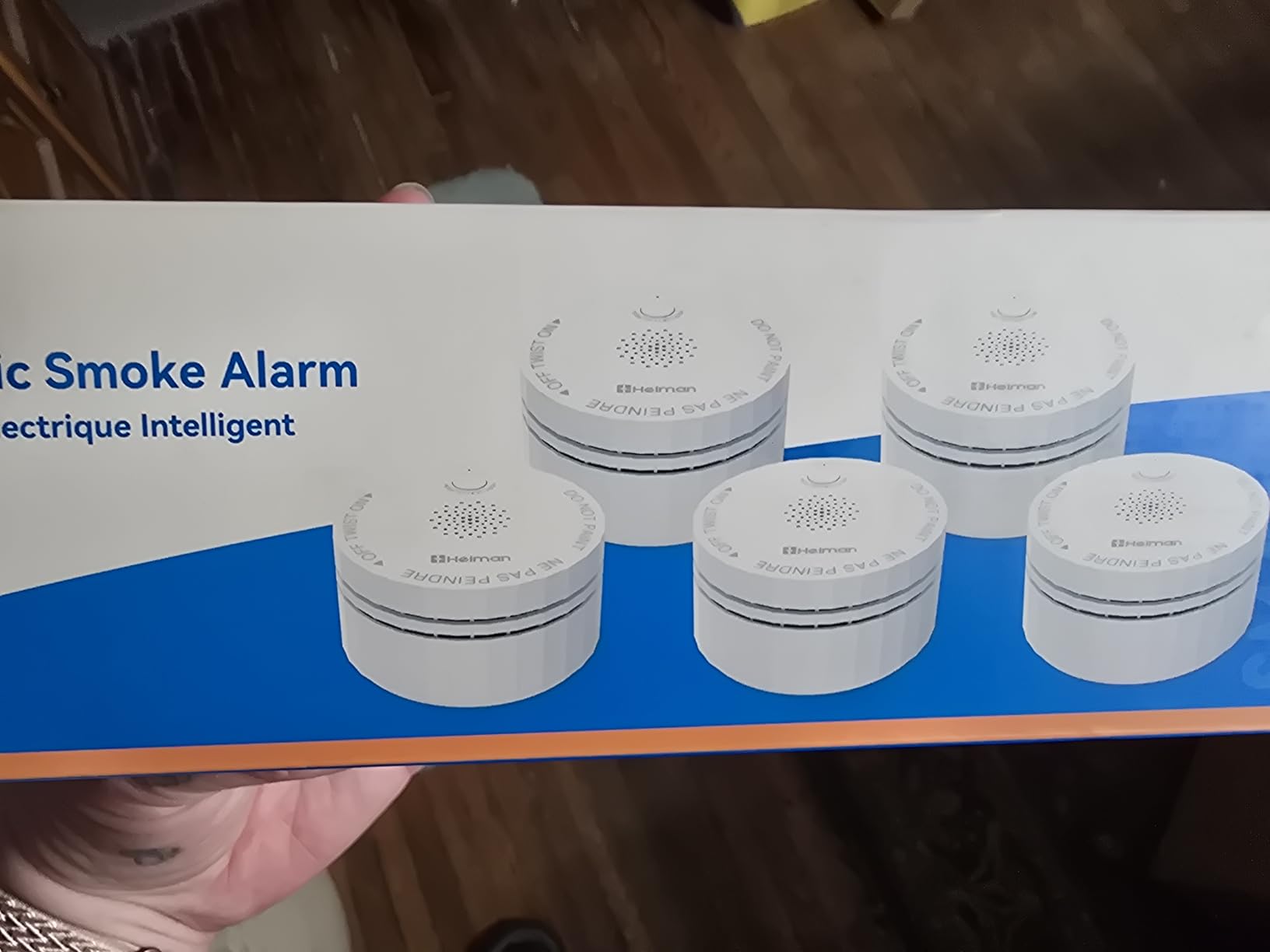
This three-pack uses the same S1-R body as the gateway kit above, and at 201 reviews it has the strongest track record of the Heiman products we tested. What you give up by skipping the gateway is everything: these units do not connect to WiFi or an app and communicate only with each other.
What you keep is the important part. UL 217 10th edition certified, Red Dot Design Award winning, dual-beam photoelectric sensing, and up to 656 feet of open-air interconnection so a detection on the ground floor has every floor sounding within seconds.
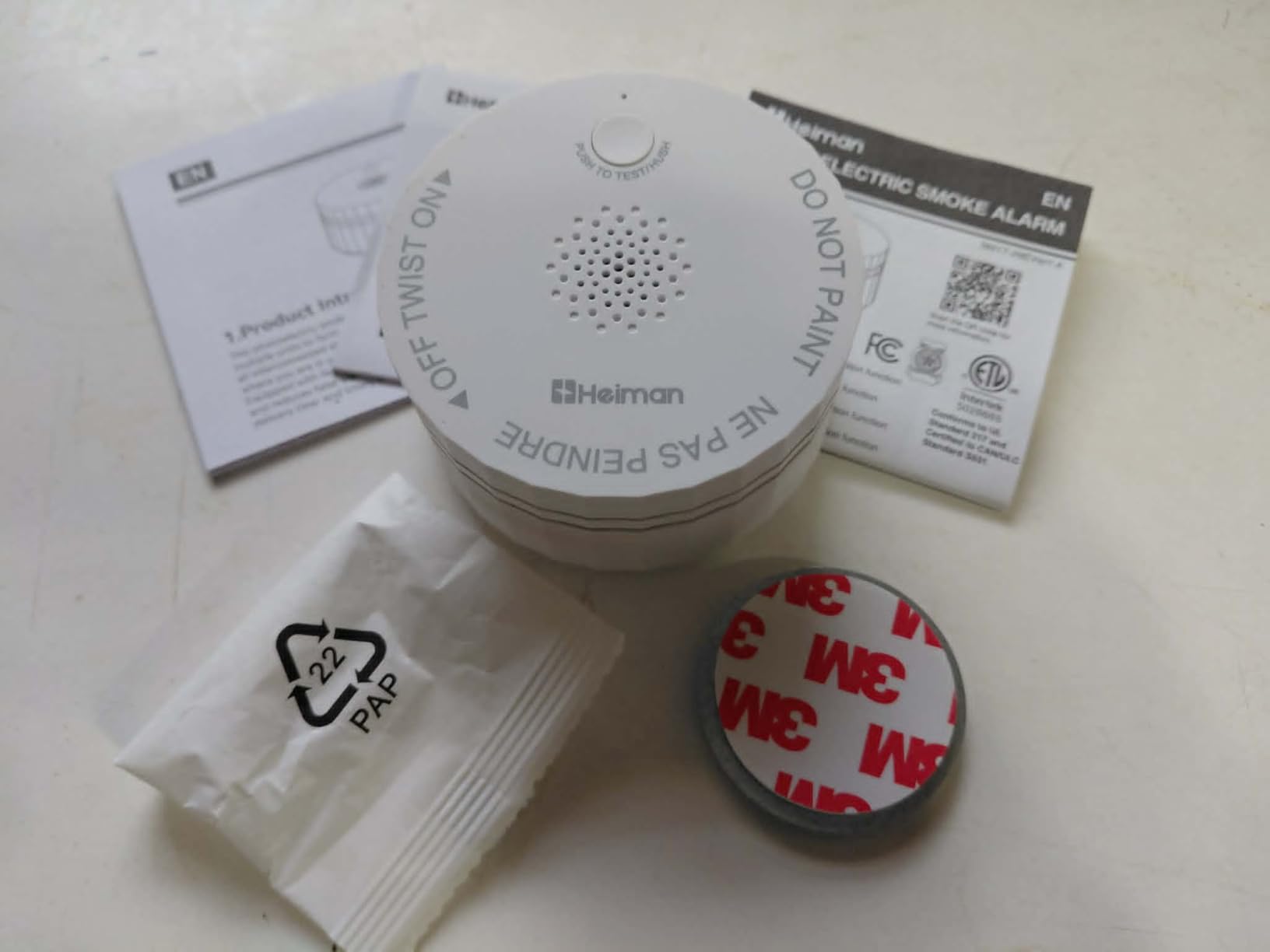
Owners report all units alarming about 30 seconds after the first one triggers, and several specifically credit the dual-sensor design with ending the nuisance alarms that bathroom steam used to cause. Magnetic pads make installation and any future battery change close to instant, and the buzzer hits 85 dB at 10 feet with a 10-minute hush on the test and silence button.
There is a caveat worth planning around. A minority of buyers report the advertised 10-year battery dying well under a year, and a few feel the response speed is not reliable enough for a life-safety device. Both complaints are worth weighing against the alternative of no interconnection at all.
Who this unit suits
It suits a household that wants a proper interconnected alarm network today with no hub, no app and no subscription, and it is a sensible second layer under a gateway setup for any area the gateway does not reach.
It also suits renters on a tight timeline. Screws or magnetic pads, a lithium cell in the box, and a test button that confirms every unit in the network is talking to the others.
Where it falls short
Call it what it is: an interconnected alarm, not a connected one. If a smoke event happens while you are at work, this pack will not tell you, and no software update will change that.
The smaller 70 mm footprint also leaves visible paint or mount marks where an older, larger detector was removed. And the battery complaints, while a minority, are exactly the failure mode a life-safety device should not have.
How to Choose a Smart Smoke and Carbon Monoxide Detector
Photoelectric, ionization or dual-beam: which sensor you actually want
Photoelectric sensing reacts to smoldering fires and to aerosol particles, which is why it is the default for kitchens and living spaces. Ionization sensing reacts faster to open-flame fires but is more sensitive to cooking aerosol and is no longer common in new residential units.
Dual-beam and split-spectrum designs run two sensing paths and compare them, so the alarm only fires when both indicate smoke. That is why the HEIMAN S1-R packs reduced nuisance alarms in owner reports, and it is the single most valuable feature if your last detector was pulled out for chirping at dinner.
For CO, look for an electrochemical sensor. The HEIMAN C1-R names its FIGARO TGS5141 explicitly, which is unusual transparency, and a specified accuracy drift range across a decade is the number to check rather than the alarm’s loudness.
Hardwired, battery or plug-in
Hardwired units run on 120V AC with a backup battery, and none of the six products here are hardwired. Battery units survive power outages indefinitely, which matters more than it sounds: a fire that starts during an outage is exactly when you want the alarm powered.
Sealed batteries remove the maintenance failure point that causes so many low-battery chirps at 3 a.m. The eufy E10 carries five years sealed, and the HEIMAN S1-R packs carry 10-year CR123A lithium, though some owners of the 3-pack report early battery deaths. Check the replace-by date printed on the unit rather than trusting the box.
Plug-in units like the Kidde CO and indoor air quality monitor sit near a furnace or garage and depend on an outlet. Treat those as supplementary CO coverage rather than whole-home protection.
Interconnection: the feature that saves the most lives
An alarm you hear on another floor is worth more than several alarms you barely hear. RF interconnection needs no wiring and reaches 656 feet in open air on all three of the HEIMAN products here, while the Kidde RGCUDR-RW uses its own wire-free network that some owners report struggling with in larger homes.
Never mix interconnect brands. Hardwired interconnection lines are brand-specific, and mixing them has been reported to cause nuisance alarms or total failure. If your existing units are a different brand, replace them all in the same project rather than bridging.
Smart home ecosystem fit
Ask one question first: where do your alerts need to arrive? The Kidde RGCUDR-RW uses the Ring app, the Kidde plug-in CO monitor uses the Kidde app, and the eufy E10 needs a HomeBase. Two apps in the same house is a support call waiting to happen, so pick the one that matches your existing phone.
For people running local-first systems, the HEIMAN S1-R 6-pack is the standout because it lists Home Assistant, SmartThings, IFTTT and Google Home support and keeps working in local interconnect mode when the gateway drops. Users on r/homeassistant and community.home-assistant.io consistently ask for exactly this: local control rather than a cloud round trip. Our broader smart home guides cover more of that ecosystem, including smart smoke detectors tested and smart displays for rooms where a voice alert matters more than a phone.
Alert delivery hardware matters too. If nobody carries a phone at night, a voice-capable display on the same network is a better backup than a notification, and we cover those in our smart thermostat picks for large homes guide for whole-home control setups.
Check the wireless band before buying anything gateway-based. Every gateway here is 2.4GHz only, and if your mesh network steers clients to 5GHz you will spend an evening troubleshooting a device that was never broken.
Certification and placement
UL 217 covers smoke alarms and UL 2034 covers CO alarms, and both are the baseline. Where two versions exist, UL 217 10th edition is the current one, so prefer a unit certified to it over one still on the earlier edition. NFPA 72 is the installation code that dictates placement.
Under NFPA 72 you want alarms inside every bedroom, outside every sleeping area, on every level, and in the basement. CO alarms belong near the entrance to a garage and near any fuel-burning appliance, because the danger is placement, not the device.
Self-monitoring or professional monitoring
Self-monitoring sends alerts to your phone and costs nothing after the hardware. Professional monitoring routes the event to a centre that can dispatch help, which is worth real money for elderly parents living alone or for anyone on supplemental oxygen.
Only one product here touches that tier: the Kidde RGCUDR-RW works with an optional Ring subscription sold separately for 24/7 smoke and CO monitoring. Everyone else relies on your phone, which means a dead battery or a full inbox becomes a safety gap.
Frequently Asked Questions
Is it worth getting a smart smoke detector?
For most households yes, because the value is alerting rather than sensing. The underlying sensor standards are the same across conventional and connected alarms, so you are paying for phone notifications, location-specific voice alerts and the ability to check a unit remotely. That matters most when nobody is home during the day, or when an elderly relative lives alone. If your existing alarms are already UL 217 and UL 2034 certified and interconnected, the upgrade is a nice-to-have rather than a safety requirement.
Are combination smoke and carbon monoxide detectors a good idea?
For a home with fuel-burning appliances, yes. One unit covering both hazards halves the number of devices to mount, test and replace, and the Kidde RGCUDR-RW in our top three does exactly that on two AA batteries. The important caveat is that the two sensors have different ideal locations, since CO collects near the floor and near fuel appliances while smoke detectors want the ceiling. A combined unit placed correctly is fine; a combined unit placed where one of the sensors cannot work is not.
What smoke detectors do firefighters recommend?
Fire service guidance consistently points to three things: photoelectric sensing, interconnected units so an alarm anywhere triggers everywhere, and alarms inside and outside every sleeping area. Residential fire officials also stress testing monthly, replacing units on the labelled end-of-life date, and treating a chirping alarm as a maintenance task rather than an annoyance. Interconnection is the recommendation most often skipped, and it is the one that wakes people up on the wrong floor.
Which smart smoke detector works with Google Home or Alexa?
The HEIMAN S1-R 6-pack with gateway and the Kidde plug-in CO and indoor air quality monitor both list Google Home support, and both list Amazon Alexa. The Kidde RGCUDR-RW works with Alexa-enabled devices through the Ring app. For Home Assistant and SmartThings users, the HEIMAN S1-R gateway kit is the clear choice because it also keeps working in local interconnect mode when your internet drops.
What is the Nest Protect replacement?
There is no single drop-in replacement, and anyone promising one is overselling. The closest functional match in our testing is the Kidde RGCUDR-RW, which gives you phone alerts through the Ring app plus voice prompts and combined smoke and CO detection. Note that Ring and Google Home are separate account systems, so moving a Nest household to Ring notifications takes setup rather than a sign-in. Keep your existing Nest units live until their expiry date rather than removing working protection early.
How long do smart smoke detectors last before replacement?
Check the manufacture date and replace-by date printed on the back of the unit, because the ten-year clock starts when the alarm leaves the factory, not when you install it. Sealed lithium models such as the eufy E10 carry a 5-year sealed battery and the HEIMAN S1-R packs specify 10-year CR123A cells, so battery replacement should not be your trigger. Replace the whole alarm when it reaches its labelled end-of-life date, and immediately if it has been in a fire, has been dropped, or has been painted over.
Final Verdict for Smart Smoke and CO Protection in 2026
The Kidde RGCUDR-RW is our pick for the best smart smoke and carbon monoxide detectors overall, because combined smoke and CO sensing plus Ring app notifications without a subscription is the combination most households are actually looking for. It also has the largest review base in the group at 426 reviews, which is why we trust its 4.3 rating more than the higher but thinner scores elsewhere.
Runners-up cover the narrower cases. Buy the eufy Security E10 if you want the smallest footprint and current-edition UL 217 certification, and only if you already own an eufy HomeBase. Buy the Kidde plug-in CO and indoor air quality monitor for supplementary CO and VOC coverage near a garage or workshop.
For a whole-home build, the HEIMAN S1-R 6-pack with gateway is the only kit here that keeps sounding locally when the internet drops while still pushing alerts when it is up. The other HEIMAN packs buy you interconnection without the connection, and that is a perfectly good trade if you never need a phone alert.
Whichever you pick, install to NFPA 72 placement rules, test every unit monthly, and check the replace-by date rather than the purchase date. That last habit outlives any model on this list.