
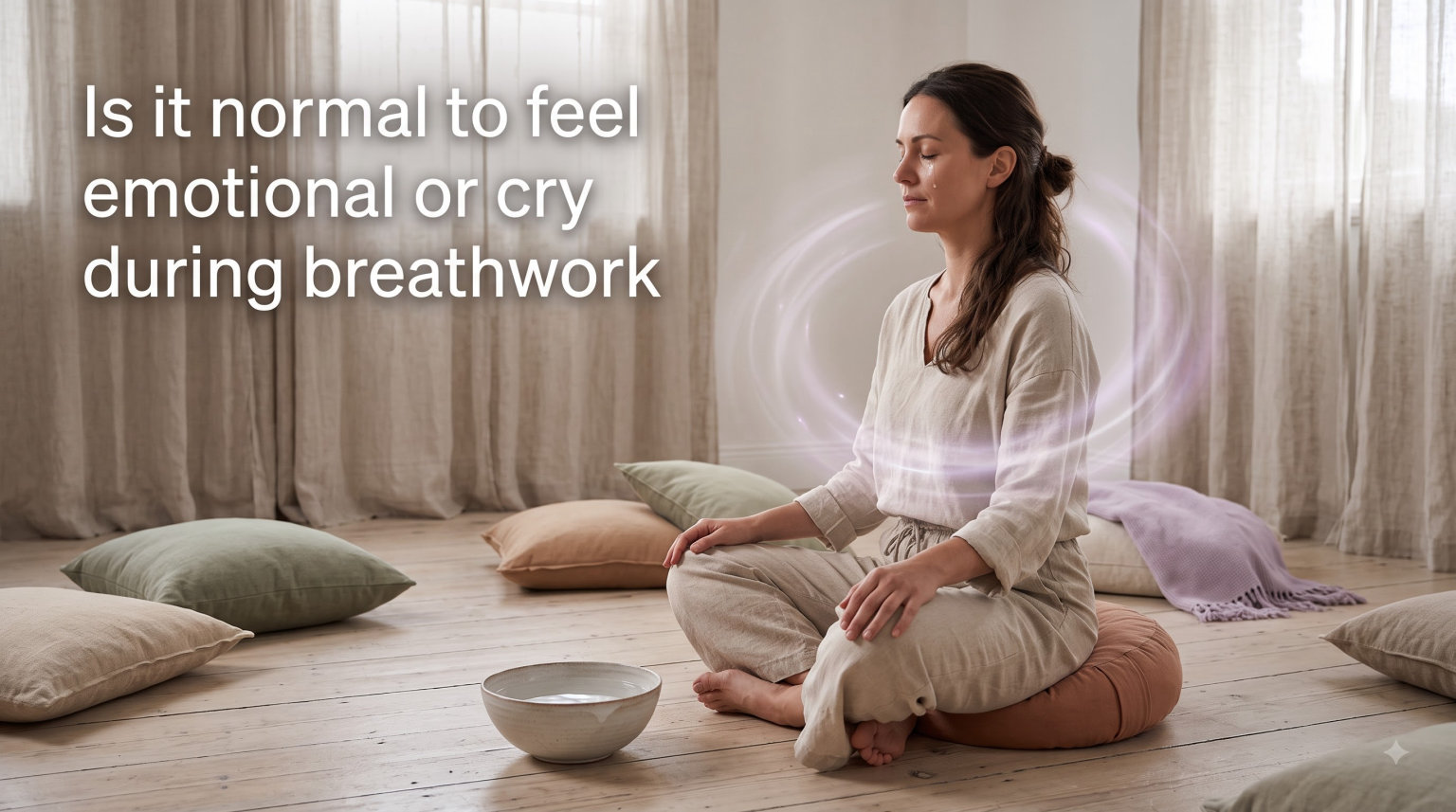
Yes, it is completely normal to feel emotional or cry during breathwork. In fact, tears during a breathing session are one of the most common and well-documented experiences practitioners report, and many facilitators consider them a sign that the practice is working exactly as intended.
If you have found yourself crying during a breathwork session without knowing why, you are not alone. People across Reddit’s breathwork and meditation communities, in wellness studios around the world, and in clinical settings all describe the same experience. The tears often come with no specific sadness attached. They simply arrive.
In this guide, I will walk you through what is actually happening in your body and nervous system when emotions surface during breathwork. You will learn why crying is a healthy release, not a problem to fix. I will also cover what to do if you cry, what to do if you do not, and how to take care of yourself after a session that moved something deep.
Whether you are preparing for your first breathwork session or you have been practicing for years and still feel surprised by the intensity of your emotions, this article will give you the context and practical tools you need. Let us start with the short answer, then dig into the science.
Table of Contents
Is It Normal to Feel Emotional or Cry During Breathwork?
Yes, feeling emotional or crying during breathwork is entirely normal and happens to the majority of people who try connected breathing techniques. Facilitators see it in nearly every group session they lead, and it is considered one of the most common responses to sustained, conscious breathing.
The tears are not a sign that something has gone wrong. They are a sign that your nervous system is doing exactly what it was designed to do: releasing tension and completing stress responses that got stuck along the way. When you breathe continuously in a safe, supported environment, your body gets permission to let go of what it has been holding, sometimes for years.
Many people describe the experience as surprising. They sit down to breathe, expecting relaxation, and suddenly find themselves sobbing. The crying often feels different from everyday sadness. People call it cleansing, releasing, or lighter afterward. Some say the tears feel old, as if they belong to something that happened long ago.
This is not weakness. It is not a breakdown. It is your body completing a process it was interrupted from finishing the first time around. If you have ever asked yourself whether it is normal to cry during breathwork, the answer from practitioners, researchers, and thousands of personal accounts is a resounding yes.
Why Breathwork Causes Emotional Release?
Breathwork causes emotional release because continuous breathing mobilizes your nervous system while you remain in a safe environment, giving your body the conditions it needs to finish a stress response that once got stuck. This is the core mechanism behind every tear, shiver, and wave of feeling that surfaces during a session.
To understand why this happens, it helps to know how emotions get stored in the body in the first place. When you experience stress, your autonomic nervous system activates a fight, flight, or freeze response. Ideally, once the threat passes, your body discharges that activation and returns to calm. But in modern life, threats rarely give us time to complete this cycle. The deadline lands, the argument ends, the bad news arrives, and you move on to the next thing without ever shaking off the charge.
That unfinished stress response does not just disappear. Somatic psychology suggests it gets stored in your tissues, your breathing patterns, and your nervous system. Over time, layers of unprocessed emotion accumulate. You might feel chronically tense, anxious, or numb without knowing why.
The Zebra Metaphor: How Animals Complete Stress Responses
Think about a zebra that escapes a lion chase. Once the danger passes, the zebra shakes violently for a few minutes, then calmly walks away and resumes grazing. That shaking is the nervous system discharging the survival energy from the chase. The zebra completes its stress response and moves on with no lingering trauma.
Humans have the same biological mechanism, but we tend to override it. We were taught to sit still, hold it together, and be strong. We suppress the shake, the cry, the natural discharge. Breathwork creates the conditions for your body to finally do what that zebra does. The continuous breathing pattern reactivates the stored survival energy, and because you are safe and supported, your nervous system can finally complete the discharge through tears, shaking, or deep emotional release.
This is why people often cry during breathwork without feeling sad about anything in particular. The tears are not about a current event. They are the body releasing old, stored activation that never got to finish.
The Science: How Breathwork Activates Your Nervous System
The reason breathwork triggers emotional release comes down to the autonomic nervous system, which controls all the involuntary processes in your body, including your stress and relaxation responses. Breathwork directly stimulates this system in ways that unlock stored emotional energy.
When you breathe continuously without pauses between the inhale and exhale, several things happen in quick succession. Your sympathetic nervous system, responsible for activation and arousal, ramps up. Your heart rate increases. Blood flow shifts. And your body enters a state that resembles a mild, controlled stress response. The key difference is that you are lying down, safe, and intentionally guiding the process.
This controlled activation is what allows stored trauma to surface. Your body essentially re-experiences the physiological state of a past stress response, but this time in a safe container where it can complete the cycle rather than suppress it.
The Vagus Nerve Connection
The vagus nerve is the longest cranial nerve in your body, and it serves as the main communication highway between your brain and your parasympathetic nervous system, the branch responsible for rest, digestion, and recovery. Deep, rhythmic breathing stimulates the vagus nerve, which is why you feel calmer after slow breathing exercises.
But during more intense forms of breathwork like connected or circular breathing, the vagus nerve does something more complex. As the sympathetic system activates, the vagus nerve helps regulate the intensity. When emotional material surfaces, vagal tone determines whether your body processes and releases it or shuts it back down. Sustained breathing keeps the system engaged, allowing the release to happen rather than getting re-stored.
Research also points to heart rate variability, or HRV, as a key marker here. Higher HRV is associated with better emotional regulation and nervous system flexibility. Regular breathwork practice has been shown to improve HRV, which means your nervous system gets better at moving between activation and calm without getting stuck in either state.
Blood pH Shifts and Carbon Dioxide Levels
Here is where the physical sensations come in. When you breathe rapidly and continuously, you exhale more carbon dioxide than usual. This lowers CO2 levels in your blood, which raises your blood pH slightly, a condition called respiratory alkalosis. This pH shift is what causes the tingling in your hands, the cramping in your fingers, and the lightheaded feeling during intense breathwork.
These sensations are temporary and reversible. They return to normal within minutes of returning to regular breathing. But while they are happening, they contribute to the altered state of consciousness that makes deep emotional release possible. Your analytical mind quiets down, and your body takes over.
Physical Sensations Explained: Tingling, Tetany, and Shaking
If you have experienced tingling hands, facial twitching, or muscle cramping during breathwork and wondered if something was wrong, you are in good company. These physical sensations are among the most common concerns that bring people to forums and facilitators with questions. The short answer is that these sensations are normal physiological responses to changed breathing patterns, not signs of danger.
Tingling, usually felt in the hands, feet, and face, is caused by the pH shift described above. As carbon dioxide levels drop, it changes the way calcium moves through your system, which affects nerve signaling. The result is that buzzing, pins-and-needles feeling. It is harmless and fades quickly once your breathing normalizes.
Tetany is the medical term for involuntary muscle contractions, and during breathwork it most commonly shows up as clawing or stiffening in the hands and fingers. It looks alarming but is directly linked to the same pH and calcium mechanism as tingling. Experienced facilitators see it regularly and know how to guide people through it. It always passes.
Shaking or trembling is a different phenomenon, and it is actually one of the most important signs that emotional release is happening. This is your nervous system discharging stored survival energy, just like the zebra after the chase. Rather than trying to stop the shaking, facilitators encourage you to let it happen. The trembling is the release itself.
Knowing the difference between normal physical sensations and warning signs matters. Tingling, tetany, and shaking are expected. Chest pain, fainting, or difficulty breathing that persists after you return to normal breathing are not. If you have cardiovascular conditions, a history of seizures, or are pregnant, talk to a healthcare provider before trying intense breathwork.
What to Do If You Do Not Cry During Breathwork?
Not crying during breathwork is just as normal as crying, and there is no hierarchy of experiences that makes one response better than another. Some people cry every session. Some people never cry. Both are valid, and neither means the practice is or is not working for you.
If you do not cry, your body may still be releasing in ways you do not immediately notice. You might feel a deep sense of peace afterward, or you might feel energized and clear-headed. Some people experience spontaneous insights or shifts in perspective. Others notice physical changes like reduced muscle tension, better sleep, or improved digestion in the days following a session.
It is also common for people to need several sessions before any emotional release surfaces. Your nervous system may need time to build trust in the process before it lets its guard down. If you feel frustrated that nothing seems to be happening, give it time. The work is cumulative, and release often arrives when you stop expecting it.
Avoid the trap of comparing your experience to others. Social media highlights the dramatic, cathartic sessions because those make for compelling content. The quiet, subtle releases are just as meaningful. Trust your own process.
What to Do When You Cry: Practical Guidance?
If you find yourself crying during a breathwork session, the best thing you can do is let it happen without trying to control, analyze, or stop it. Your body is doing important work, and interference from your analytical mind can interrupt the release. Here is a step-by-step guide to navigating emotional release during and after a session.
First, keep breathing. The instinct when tears come is often to hold the breath or switch to shallow breathing, but maintaining your breathing pattern is what allows the release to complete. If you are in a guided session, your facilitator will help you stay connected to the breath. If you are practicing alone, remind yourself to keep the inhale and exhale flowing without pauses.
Second, do not try to figure out why you are crying in the moment. There will be time for reflection later. During the session, your job is simply to feel what is moving and let it move. Trying to intellectualize the tears pulls you back into your thinking mind and can shut the process down.
Third, let your body do what it wants to do. If you need to shake, shake. If you need to sob loudly, sob. If you need to curl up, curl up. Breathwork emotional release is not a tidy process, and it is not meant to be. You are in a safe space, and every expression is welcome.
When the Crying Does Not Stop
One of the most common concerns people bring to forums is that the crying continues long after the session ends. If this happens to you, know that it is not unusual. Your nervous system has been activated deeply, and it may take time to settle. Drink water, lie down in a comfortable position, and place a hand on your chest or belly. Slow, gentle breathing with long exhales will help activate your parasympathetic system and bring you back to calm.
If you find that emotional intensity persists for more than a day or two and interferes with your daily life, that is a signal to reach out for support. A therapist who understands somatic processing can help you integrate what surfaced. This is not a failure of the breathwork. It simply means the material that came up needs more attention than a single session could provide.
Integration Tips After a Breathwork Session
Integration is the process of making sense of and absorbing what happened during your breathwork session, and it is just as important as the session itself. Without proper integration, the insights and releases can fade or feel disorienting. Here is how to care for yourself in the hours and days after emotional release.
Rest is the first priority. Your nervous system has done intense work, and it needs time to recover. Avoid scheduling demanding tasks immediately after a session. Many people feel tired, spaced out, or emotionally raw for the rest of the day. That is normal. Give yourself permission to do very little.
Hydrate well. Breathwork is physically demanding even though you are lying still, and drinking water helps your body process and flush what has been released. Warm teas, especially those with calming herbs like chamomile or ashwagandha, can support the settling process.
Journaling is one of the most powerful integration tools. Write down what you felt, saw, or thought during the session, even if it does not make logical sense. Sometimes the meaning becomes clear days or weeks later. Do not edit or judge what you write. Just capture it.
Gentle movement helps too. A slow walk, light stretching, or restorative yoga can help your body process the physical component of the release. Avoid intense exercise for at least a few hours after a session, as your system needs calm, not more activation.
Finally, give yourself space before making big decisions. Breathwork can shift your perspective dramatically, and decisions made in the immediate afterglow of a session may not hold up once you settle. Wait a few days before acting on any major insights.
When to Seek Professional Support
While breathwork can be profoundly healing, it is not a substitute for professional mental health care, and there are times when the emotions that surface indicate a need for more sustained support. Knowing when to reach out is an important part of practicing safely.
If you have a history of severe trauma, PTSD, panic disorder, or psychosis, work with a trained therapist before trying intense breathwork. Some forms of connected breathing can be too activating for people with these conditions, and a professional can help you determine whether breathwork is appropriate and which type would be safest for you.
After a session, watch for signs that what surfaced needs more support than self-integration can provide. These include persistent anxiety or depression, intrusive memories, dissociation, or feeling unable to function in your daily life for more than a few days. These responses do not mean breathwork harmed you. They mean the material that came up deserves proper attention.
Look for a therapist who is trained in somatic experiencing, EMDR, or trauma-informed care. These modalities work directly with the nervous system and complement breathwork well. The goal is not to stop doing breathwork, but to build a support system around it that keeps you safe and helps you process what arises.
Frequently Asked Questions
Why do you cry during breathwork?
You cry during breathwork because continuous breathing activates your sympathetic nervous system while you remain safe, which allows your body to release stored stress and emotional energy that was never fully discharged. The tears are your nervous system completing a stress response that got interrupted, often years earlier.
Can breathwork release emotions?
Yes, breathwork can release emotions. Sustained connected breathing shifts your blood chemistry and stimulates your autonomic nervous system, which unlocks stored emotional energy held in your body. This is why many people experience spontaneous tears, shaking, or deep feelings during and after sessions, even without a specific trigger.
Is it normal to cry during spiritual awakening?
Yes, crying during spiritual awakening is normal and common. As your awareness expands and old patterns release, emotions that were suppressed often surface. Breathwork, meditation, and other contemplative practices frequently trigger this kind of emotional release because they quiet the analytical mind and allow the body to process what the conscious self has been holding.
How should you feel after breathwork?
After breathwork, people commonly feel lighter, calmer, and more clear-headed, though some feel tired, emotional, or physically spent for the rest of the day. You might notice improved sleep, reduced tension, or new insights in the days following a session. Every person and every session is different, so there is no single correct way to feel afterward.
Conclusion
So, is it normal to feel emotional or cry during breathwork? Absolutely. It is one of the most natural, healthy, and well-understood responses to conscious breathing. Your tears are not a problem. They are proof that your nervous system is doing exactly what it was designed to do: releasing stored tension and completing stress responses that got stuck along the way.
Whether you cry every session or never cry at all, your experience is valid. The goal of breathwork is not to produce tears or dramatic moments. It is to give your body the space and safety it needs to do its own healing work, in whatever form that takes for you.
If you are new to breathwork, start with a guided session led by a trained facilitator. Go in with no expectations, breathe steadily, and let whatever arises move through you. If you are a seasoned practitioner, keep trusting the process. The body knows what it is doing, even when the mind does not understand.