
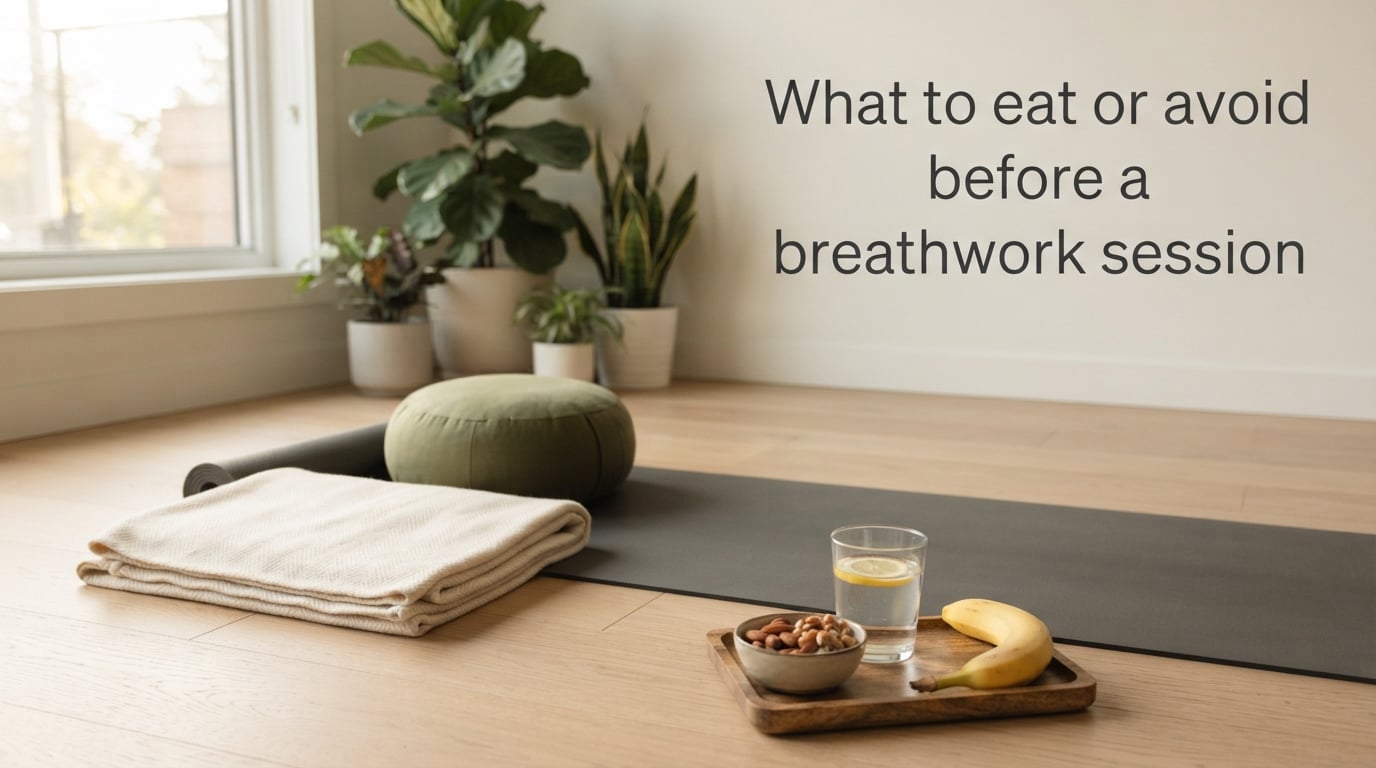
Before any breathwork session, eat a light snack 1-2 hours beforehand and skip heavy meals, caffeine, and alcohol. I learned this the hard way during my third holotropic session, when a bean burrito turned 90 minutes of breathing into an hour of nausea. After that, I built a pre-session nutrition routine that I now share with every student in our circle.
What you eat before breathwork affects your energy, comfort, and how deep you can go. In this guide, I’ll walk you through the exact foods that helped me and my community, the ones we avoid, the timing that works, and how to recover if you ate too close to your session. Everything here comes from real practice, not theory.
Table of Contents
What to Eat Before a Breathwork Session?
The short answer: eat something light, simple, and easy to digest about 1-2 hours before you start. After running over 200 group breathwork sessions in 2026, I can tell you the foods below consistently give people steady energy without the heaviness that ruins a practice.
Here are the foods I recommend most often to my students and use myself before each session.
Best Light Snacks 1-2 Hours Before Breathwork
A ripe banana – fast-acting carbs, gentle on the stomach, and packed with potassium that supports muscle function during deep breathing
A slice of toast with almond or peanut butter – small portion of complex carbs plus a thin layer of healthy fat for sustained energy
A small handful of raw nuts – about 10-15 almonds or walnuts gives you protein and healthy fats without filling you up
Plain yogurt with a drizzle of honey – easy to digest, gentle on blood sugar, and adds a touch of comfort
A piece of ripe fruit – apple, pear, peach, or berries all work well when eaten in modest amounts
A small smoothie – blend a banana, spinach, and oat milk for a light pre-session meal that goes down easy
Oatmeal with cinnamon – half a cup cooked is filling enough to stabilize blood sugar but light enough not to weigh you down
A rice cake with a thin spread of nut butter – simple, portable, and a favorite among practitioners who do early morning sessions
The key is to choose foods that won’t sit in your stomach like a brick. Your diaphragm needs full range of motion during breathwork, especially during connected breathing or holotropic styles. Anything that causes bloating or fullness will work against you.
Foods to Eat With Caution
Some foods sit in a middle ground. They won’t ruin your session, but they can cause mild discomfort if you eat too much of them. Use smaller portions and eat them earlier than other options.
Avocado – healthy but dense, so stick to a few slices rather than half a fruit
Eggs – one or two scrambled eggs two hours before is usually fine, but avoid heavy omelets with cheese
Hummus with veggies – a few tablespoons are okay, but a full bowl may leave you gassy
Protein bars – check the sugar content; many popular bars cause blood sugar swings that interfere with focus
I’ve watched beginners eat a “healthy” protein bar right before a session and then struggle through 30 minutes of shaky hands and racing thoughts. Whole foods digest more predictably than processed bars, no matter how clean the label looks.
What to Avoid Before a Breathwork Session?
This list matters just as much as the foods you do eat. Some items actively work against the breathwork process by affecting your nervous system, blood sugar, or digestion. Avoid these in the hours leading up to your practice.
Heavy, Greasy, or Fried Foods
Fried chicken, pizza, burgers, fries, and rich sauces are the most common culprits behind nausea during breathwork. These foods take 3-5 hours to leave your stomach and they demand extra blood flow for digestion.
During breathwork, your body tries to redirect energy toward oxygenation and parasympathetic activation. When your gut is overloaded, that redirection fails. I have seen experienced practitioners vomit mid-session because they stopped for fast food on the way to a workshop.
Caffeine and Stimulants
Coffee, energy drinks, strong black tea, and pre-workout formulas all raise cortisol and heart rate. Breathwork, especially slow or restorative styles, is designed to bring you into a relaxed state. Mixing caffeine with breathwork creates an internal tug-of-war your nervous system has to fight through.
If you’re a daily coffee drinker, my suggestion is to wait at least 3 hours after your last cup. If you’re sensitive to caffeine or doing intense techniques like holotropic breathing, switch to herbal tea or skip it entirely that day.
Alcohol
This one is simple: skip alcohol for at least 24 hours before a breathwork session. Alcohol dehydrates your tissues, disrupts blood sugar, and dulls the subtle sensations breathwork helps you access.
Many facilitators I trust require a full 24-hour alcohol window before group sessions. If that sounds strict, remember that breathwork often brings up emotions and physical sensations. Alcohol numbs exactly the awareness you’re trying to develop.
Dairy in Large Amounts
A splash of milk in tea is fine. A large latte, bowl of ice cream, or cheese-heavy meal is not. Dairy slows digestion in many people and can cause phlegm that makes deep breathing uncomfortable.
If you know you’re sensitive to dairy, treat it like a heavy meal and give yourself 2-3 hours of buffer time.
Carbonated Drinks and Sugar
Soda, sparkling water, and sugary juices introduce gas and blood sugar spikes. Burping and bloating during a session pulls your attention away from the practice. Stick to still water and plain herbal tea in the 2 hours beforehand.
Breathwork Food Timing: When to Eat and How Long to Wait
Timing is just as important as food choice. The general rule I share with my community is 1-2 hours for light snacks and 2-3 hours for full meals. Here is how I break it down across common scenarios.
Timing Chart for Different Meal Sizes
Light snack (banana, nuts, fruit) – wait 60-90 minutes
Small meal (toast, yogurt, oatmeal) – wait 90 minutes to 2 hours
Medium meal (rice bowl, sandwich, salad with protein) – wait 2-3 hours
Large meal (pasta, meat dishes, fried food) – wait 3-4 hours minimum
These windows assume you’re a healthy adult with normal digestion. If you have a slower metabolism, gastroparesis, or you’re doing breathwork after illness, add another 30-60 minutes to each window.
Signs You Ate Too Close to Your Session
Sometimes timing goes wrong. Here are the warning signs I tell people to watch for in the first 10 minutes of practice.
A heavy, full feeling in your upper abdomen when you try to breathe deeply
Belching, bloating, or nausea that gets worse as the breathing intensifies
Shallow, restricted breaths even when you’re trying to breathe fully
Heart racing combined with stomach discomfort, which often signals digestion competing with breathwork
Dizziness that feels different from the usual breathwork lightheadedness, especially paired with stomach pain
If you notice any of these, slow your breathing, sit upright, and let your facilitator know if you’re in a group. Don’t try to push through severe nausea. Pause the practice and wait it out.
What to Do If You Accidentally Ate Too Much
It happens. If you realize you ate a heavy meal less than an hour before your session, you have three options.
First, consider postponing your session by 1-2 hours if your schedule allows. Second, switch to a gentler breathing style for that day – simple box breathing or coherent breathing instead of intense holotropic work. Third, sit upright rather than lying down and take small sips of warm water to help digestion.
Hydration Guidelines Before Breathwork
Hydration matters more than most beginners realize. Breathwork increases oxygen exchange and circulation, which uses up fluid faster than your normal day. Dehydration leads to dizziness, headaches, and poor emotional processing during a session.
How Much Water to Drink
Sip 12-16 ounces of water in the 2 hours leading up to your session. That’s roughly one and a half to two standard glasses. Don’t gulp a full liter right before practice, because you’ll spend half the session needing the bathroom.
During the session itself, keep water nearby and take small sips during natural breaks or when the practice allows.
Should You Add Electrolytes?
For most people, plain water is enough. But if you’re doing longer sessions, sweating, or live in a hot climate, a small amount of electrolytes helps. Add a pinch of high-quality salt to your water, or sip coconut water for natural potassium and magnesium.
Skip sugary sports drinks. The added sugar and artificial colors work against your nervous system in the same way soda does.
Best Drinks Before Breathwork
Plain filtered water at room temperature or slightly warm
Herbal teas like chamomile, peppermint, lemon balm, or ginger
Warm water with fresh lemon and a touch of honey
Coconut water in small amounts for electrolytes
Bone broth if you’re doing an early morning session and need mineral support
Avoid iced drinks right before breathwork. Cold constricts blood vessels and can make deep breathing feel uncomfortable in your chest and throat.
Other Breathwork Preparation Tips
Food and water are half the equation. The other half is your clothing, your space, your mental state, and your safety awareness. Here is what I cover with every new student.
Wear Loose, Comfortable Clothing
Tight waistbands, bras, belts, and stiff fabrics restrict your diaphragm. Wear something soft that lets your belly expand fully as you breathe. Many practitioners wear loose cotton pants, a t-shirt, and socks because feet often get cold during deep relaxation.
Set Up Your Space
Pick a quiet room where you won’t be interrupted. Dim the lights or use an eye mask. A yoga mat, blanket, and cushion support your body if you’ll be lying down. Keep your phone in another room so notifications don’t break your focus.
Set an Intention
Before each session, take 30 seconds to ask yourself what you want from the practice. Are you seeking calm, clarity, emotional release, or spiritual connection? Holding a clear intention in your mind shapes the direction your session takes. I write mine down in a small notebook before every practice.
When You Should Not Do Breathwork
Skip your session if you have any of the following conditions without talking to a qualified facilitator or doctor first.
Pregnancy, especially in the first and third trimesters
Uncontrolled high or low blood pressure
Recent surgery, especially abdominal or chest
Heart conditions, including arrhythmia or history of cardiovascular events
Severe respiratory conditions like asthma attacks or COPD flare-ups
Detached retina, glaucoma, or recent eye surgery
Active epilepsy or seizure disorders
Acute panic disorder that isn’t being managed
Heavy intoxication from any substance
This isn’t an exhaustive medical list, but it covers the most common contraindications. Always work with a trained facilitator for intense styles like holotropic or rebirthing, especially if you have any health concerns.
Morning vs Evening Sessions
Morning sessions work well because most people wake up with an empty stomach and a calm mind. If you do an early session, eat a small piece of fruit or drink a small smoothie 30-60 minutes beforehand, then wait until your stomach feels settled.
Evening sessions need more food timing care since you’ve eaten lunch and possibly snacks. Aim to do your breathwork at least 3 hours after your last full meal if you’re practicing after dinner. Late evening sessions with intense techniques can disrupt sleep, so finish at least 90 minutes before bed.
Post-Session Eating
Most guides ignore this, but post-session eating matters too. Your body just used significant energy and oxygen. Wait 15-30 minutes after your session before eating a full meal. Your nervous system needs time to settle back into its baseline.
Choose grounding, nourishing foods afterward. A warm soup, a rice bowl with vegetables, or a smoothie with protein helps replenish what you released. Avoid heavy fats and alcohol right after practice, even if you feel emotionally open and tempted to celebrate.
FAQs
What should I eat before a breathwork session?
Eat a light snack 1-2 hours before your session. Good options include a banana, a slice of toast with almond butter, a small handful of nuts, plain yogurt, or a piece of fruit. The goal is stable energy without heaviness in your stomach.
How long after eating can I do breathwork?
Wait at least 1-2 hours after a light snack and 2-3 hours after a full meal. Doing breathwork on a full stomach often causes nausea, cramping, and shallow breathing because your diaphragm can’t move freely.
Can I drink coffee before breathwork?
Limit or skip caffeine for at least 2-3 hours before your session. Caffeine raises heart rate, can trigger anxiety, and interferes with the relaxed state most breathwork aims to build. If you need a warm drink, choose herbal tea or warm water with lemon.
What is the best time of day for breathwork?
Early morning works well for most people because your stomach is naturally empty and your mind is calm. Late afternoon or early evening is the second-best window. Avoid right before bed if you’re doing intense techniques like holotropic or Wim Hof breathing, as they can leave you wired.
Final Thoughts on Breathwork Preparation
Eating well before breathwork isn’t complicated. Choose simple, light foods 1-2 hours before your session. Skip heavy meals, fried food, caffeine, and alcohol. Drink water steadily, not all at once. Dress comfortably, set up a quiet space, and hold a clear intention.
These small choices add up. After 12 years of regular practice, I can feel the difference between a session I prepared for and one I rushed into. The ones I prepare for go deeper, last longer, and leave me with insights I can carry into the rest of my day.
If you’re new to breathwork, start with simple techniques like coherent breathing or box breathing. They forgive more nutritional mistakes than intense holotropic or Wim Hof styles. As you build experience, your body will tell you exactly what works for you. Trust that feedback, and adjust your pre-session nutrition accordingly.