
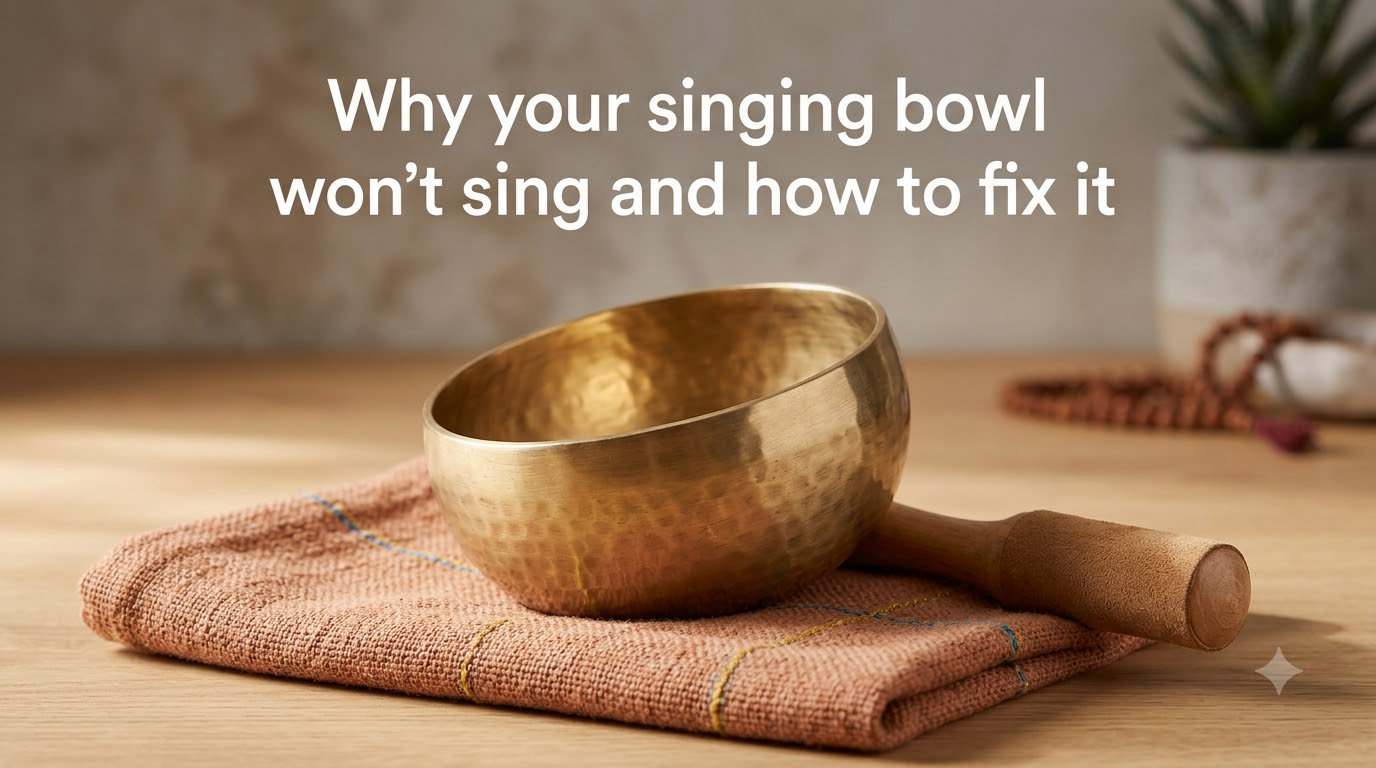
There are few things more frustrating than bringing home a beautiful singing bowl, running the mallet around the rim, and hearing nothing but a dull scrape. If you are wondering why your singing bowl won’t sing, you are not alone. This is one of the most common issues beginners face, and the good news is that the fix is usually simple.
Our team has spent years working with Tibetan and crystal singing bowls in meditation and sound healing practice. In that time, we have diagnosed just about every reason a bowl goes silent. The cause almost always comes down to technique, equipment, or physical condition, not some mystery defect in the bowl itself.
In this guide, we will walk you through every common reason a singing bowl refuses to produce sound and show you exactly how to fix each one. We will also cover content that most troubleshooting guides skip entirely, including the differences between crystal and metal bowls, how to break in a new bowl, and how environmental factors like humidity can affect resonance.
Whether you just unboxed your first bowl or your trusted companion suddenly stopped singing, you will find the answer here. Let us get that bowl singing again.
Table of Contents
Quick Troubleshooting Checklist
Before we dig into each issue in detail, run through this quick checklist. These are the most frequent culprits, in order of how often we see them:
Check for visible cracks, dents, or hairline fractures on the bowl surface
Wipe the rim clean of finger oils, dust, and residue
Try a different mallet, especially a smaller or softer one for small bowls
Slow down your rim-playing speed and apply steady, firm pressure
Relax your hand, arm, and shoulder tension before playing
Place the bowl on a cushion or hold it flat on your open palm
Move to a quieter room and listen closely for faint vibrations
If your bowl passed every item on this list and still will not sing, keep reading. The sections below cover each problem in depth with specific solutions you can try right now.
Common Reasons Why Your Singing Bowl Won’t Sing
Singing bowls produce sound through a principle called resonance. When you strike the bowl or rub the rim with a mallet, the metal or crystal vibrates, and those vibrations create the sustained tones you hear. Anything that interrupts those vibrations, whether physical damage, dirt, or poor technique, will stop the bowl from singing.
Through our own practice and from helping countless meditation students troubleshoot their bowls, we have identified seven core reasons a singing bowl goes silent. Most bowls suffer from more than one of these issues at the same time, which is why addressing them in combination works best.
Cracked or Damaged Bowl
A cracked or dented singing bowl is the most serious cause of sound failure, and unfortunately the hardest to fix. Even a hairline crack disrupts the uniform vibrations the bowl needs to produce a clean, sustained tone. You may hear a buzzing, rattling, or dissonant sound instead of a clear note.
To check for damage, hold the bowl up to a light source and rotate it slowly. Look for thin dark lines, especially around the rim and base where stress concentrates. Tap the bowl gently with a wooden mallet and listen. A healthy bowl produces a clear, bell-like tone. A cracked bowl sounds dull, buzzy, or split into two competing pitches.
Small dents can sometimes dampen resonance without silencing the bowl completely. If the bowl still sings but sounds muted on one side, a dent may be the cause. Unfortunately, physical cracks in metal bowls rarely respond to repair. If your bowl is cracked through, it is time to consider a replacement.
Surface Contaminants and Dirt Buildup
Finger oils, dust, and residue are silent killers of singing bowl resonance. Every time you handle the bowl by its rim, you transfer natural skin oils that create a thin barrier between the mallet and the metal. Over weeks and months, this buildup reduces friction and the mallet skids instead of gripping the surface.
The fix is simple. Wipe the rim and outer surface with a soft, lint-free cloth dampened slightly with warm water. For stubborn residue, add a drop of mild dish soap. Dry the bowl thoroughly before playing. Some practitioners use a small amount of rubbing alcohol on a cloth for a deeper clean, especially on older bowls that have been in storage.
We recommend cleaning your bowl every few weeks if you play daily, or before each session if multiple people handle it. A clean rim makes a noticeable difference in how quickly the bowl begins to sing.
Incorrect Striking Technique
There are two ways to play a singing bowl, and beginners often confuse them. Striking means tapping the bowl with the mallet to produce a single, bell-like tone. Rim playing means running the mallet around the outer edge to build a sustained, singing sound. Many people expect the bowl to sing when they strike it, but that sustained tone only comes from rim playing.
When striking, use a firm but controlled tap on the side of the bowl, about one-third of the way down from the rim. Strike at a 45-degree angle with the padded part of the mallet, not the tip. A common mistake is striking too hard, which produces a harsh clang rather than a resonant tone.
For rim playing, press the mallet against the outer rim and move it in a steady circle around the bowl’s edge. The sound builds gradually over several rotations. If you are only striking and wondering why the bowl does not sing, the answer is technique, not the bowl.
Inadequate or Excessive Pressure
Pressure is the single most important variable in rim playing, and it trips up more beginners than anything else. Too little pressure and the mallet skids along the rim without generating enough friction to start the vibrations. Too much pressure and you choke the vibrations before they can build.
The sweet spot feels like pressing firmly but not forcing the mallet into the metal. Imagine pressing a pencil against paper hard enough to draw a visible line, but not so hard that you tear through. Start with moderate pressure and adjust based on what you hear.
If the mallet squeaks or skips, you need more pressure. If the sound dies partway through a rotation, you may be pressing too hard and dampening the vibrations. Every bowl has a slightly different pressure range, so experiment until you find the point where the tone blooms naturally.
Moving the Mallet Too Fast
Speed kills resonance. We see this constantly with new practitioners who whip the mallet around the rim expecting instant results. Fast movements prevent the vibrations from building up. The sound needs time to accumulate with each pass of the mallet, layering harmonic on top of harmonic.
Aim for a slow, deliberate circular motion. One full rotation should take roughly two to three seconds. Keep the speed consistent rather than accelerating when you do not hear sound right away. The tone often appears after four or five patient rotations, arriving almost as a surprise.
Think of it like pushing a child on a swing. Each small, well-timed push adds energy to the system. Rush the pushes and you disrupt the rhythm. The same principle applies to singing bowls, where steady, even strokes build the resonance to its full volume.
Wrong Mallet or Striker
Not all mallets work with all bowls. The size, material, and tip hardness of your mallet must match the bowl you are playing. A mallet that is too large for a small bowl will not make proper contact with the rim. A mallet with a tip that is too hard will produce harsh, scratchy sounds instead of clean tones.
Most singing bowls come with a mallet, and that is usually a good starting point. But if your bowl refuses to sing, try a different one. Smaller bowls generally need thinner mallets with softer tips, often made of wood with a felt or leather covering. Larger bowls can handle thicker wooden strikers.
We keep three or four different mallets on hand for this exact reason. If a bowl is not singing, switching mallets is one of the fastest diagnostic tools available. A mismatched mallet is the culprit far more often than people realize.
How to Make Your Singing Bowl Sing Again?
Now that we have covered what goes wrong, let us focus on the solutions. The techniques below address the most common technique and setup issues that prevent bowls from singing. Try them in order, testing the bowl after each change.
Proper Hand Placement and Relaxation
Tension is the enemy of singing bowl resonance, and it affects both the player and the instrument. When your hand, wrist, arm, or shoulder is tight, that tension travels through the mallet into the bowl and chokes the vibrations. Many beginners grip the mallet like a hammer, which transmits rigidity straight into the rim.
Start by holding the mallet like a pencil, with a relaxed but secure grip. Your wrist should be loose enough to rotate freely. Take a few breaths before playing and consciously relax your shoulders. If you feel tension building as you play, pause, shake out your hands, and begin again.
If you hold the bowl in your hand rather than placing it on a surface, keep your fingers flat against the bottom or cradle it lightly in your palm. Do not grip the sides of the bowl. Your fingers touching the rim will dampen vibrations instantly. An open, relaxed palm supports the bowl without restricting its movement.
Finding the Right Surface and Placement
Where and how you place the bowl matters more than most people think. A hard, rigid surface like a glass table reflects sound but can also create rattling vibrations that interfere with the bowl’s tone. A soft surface absorbs too much energy and muffles the resonance.
The ideal setup is a singing bowl cushion or a small folded cloth placed on a stable wooden surface. The cushion prevents the bowl from sliding while allowing it to vibrate freely. If you do not have a cushion, try placing the bowl on a yoga mat or a thick fabric placemat.
If you prefer to hold the bowl, rest it flat on your open palm with fingers extended. Avoid cupping the bowl or touching the rim. Some practitioners prefer to place the bowl on their fingertips for maximum vibration transfer into the hand, which works well for smaller bowls.
Crystal vs Metal Singing Bowl Troubleshooting
One thing almost no troubleshooting guide covers is the difference between crystal and metal singing bowls. They fail for different reasons and need different fixes, so knowing which type you have matters.
Metal bowls, including traditional Tibetan and Himalayan bowls, are more forgiving. They tolerate a wider range of mallet types and pressure levels. When they stop singing, the cause is usually technique, dirt, or physical damage. Metal bowls can also develop a patina over time that actually improves their tonal quality.
Crystal singing bowls are more fragile and more demanding. They require suede or rubber-tipped mallets, never bare wood. Crystal bowls are extremely sensitive to temperature changes and can crack if exposed to sudden heat or cold. They also need a rubber ring or mat underneath for stability. If your crystal bowl will not sing, check first that you are using the right mallet material and that the temperature in the room is stable.
Breaking In a New Singing Bowl
Here is something we have never seen another guide mention: new singing bowls often need to be broken in. When a bowl is freshly made, the metal or crystal has not yet settled into its optimal resonant state. The molecules are still adjusting from the manufacturing process, and the bowl may sound tight, muted, or inconsistent.
We noticed this pattern after working with several new bowls that barely whispered on day one but sang beautifully after a few weeks of regular use. The breaking-in process is simple. Play the bowl for ten to fifteen minutes daily for the first two to three weeks. Strike it gently and practice rim playing even if the sound is faint.
The vibrations from regular playing help the material settle and open up. You will likely notice the tone becoming richer and more sustained over time. This is especially true for hand-hammered Tibetan bowls, where each one has a unique character that develops with use. Do not judge a new bowl by its first sound. Give it time to find its voice.
Singing Bowl Maintenance and Care
Proper maintenance prevents most of the problems we have discussed. A well-cared-for singing bowl will sing reliably for decades, even generations. The key is consistency and a few simple habits.
Always handle the bowl by its base, not the rim, to minimize oil transfer. Clean the rim and outer surface every two to three weeks with a soft cloth. Store the bowl on its cushion in a dry, temperate location away from direct sunlight and extreme temperature changes. If you stack bowls for storage, place a soft cloth between each one to prevent scratches and dents.
For metal bowls, you can occasionally use a small amount of metal polish designed for brass or bronze to restore shine and remove oxidation. Avoid harsh chemicals or abrasive cleaners, which can damage the surface and alter the tone. Crystal bowls need gentler care. Use only water and mild soap, and never expose them to sudden temperature shifts.
Keep your mallets in good condition too. A worn or flattened mallet tip will not grip the rim properly. Replace felt or suede coverings when they become smooth and shiny. A fresh mallet tip can make an old bowl sound like new.
Environmental Factors That Affect Resonance
The environment you play in has a real effect on how your singing bowl performs. Humidity, temperature, and even altitude can change the way vibrations travel through the air and through the bowl material itself.
High humidity dampens sound. On rainy or humid days, you may notice your bowl sounds slightly muted or takes longer to reach full volume. This is normal and not a sign of damage. Dry, stable conditions produce the clearest tones. If you live in a humid climate, a dehumidifier in your practice space can help.
Cold temperatures make metal bowls ring at slightly lower pitches and can make the material more brittle. Crystal bowls are especially sensitive and should never be played when the bowl itself feels cold to the touch. Let your bowl reach room temperature before playing if it has been stored in a cool room or shipped during winter.
The acoustic properties of your room matter as well. Hard surfaces like tile floors and bare walls reflect sound and can create an unpleasant echoing effect. Rugs, curtains, and fabric furniture absorb excess reflections and help the bowl’s natural tone come through clearly.
When to Replace Your Singing Bowl?
Most singing bowl problems are fixable, but there comes a point where replacement is the right call. If your bowl has a crack that runs through the metal or crystal, it will never sing properly again. If the tone sounds permanently dull and lifeless even after cleaning and technique adjustments, the bowl may have internal damage that is not visible.
Quality also plays a role. Mass-produced bowls with inconsistent wall thickness may never produce a strong, sustained tone regardless of technique. Hand-hammered bowls cost more but offer superior resonance and a richer harmonic profile. If you have been fighting with a cheap bowl for months, investing in a higher-quality instrument may solve your problems instantly.
Size is another factor. Very small bowls under four inches are inherently harder to play because the rim offers less surface area for the mallet to grip. If you are a beginner struggling with a tiny bowl, try a medium-sized bowl around six to eight inches. The larger rim makes it much easier to develop proper technique.
FAQs
Why can’t I make my singing bowl sing?
The most common reasons are incorrect technique, inadequate pressure, a dirty rim, or a mismatched mallet. Most beginners press too lightly or move too fast when playing the rim. Clean the bowl, slow down your mallet speed, apply firm steady pressure, and try a different mallet. Tension in your hand and arm also chokes vibrations, so relax before playing.
How do I get a singing bowl to sing for the first time?
Place the bowl on a cushion or hold it flat on your open palm. Press the mallet against the outer rim and move it in slow, steady circles at a speed of about one rotation every two to three seconds. Apply firm but not crushing pressure. The sound builds gradually over four to five rotations. Be patient and keep your hand relaxed.
How do you restore a singing bowl that stopped working?
Clean the rim with a soft cloth and warm water to remove finger oils and dust. Check for cracks or dents by holding the bowl up to light. Try a different mallet, especially a softer or smaller one. Relax your grip and slow your speed. If the bowl is new, play it daily for two to three weeks to break it in, as new bowls often sound muted at first.
What happens if you put water in a singing bowl?
Adding a small amount of water to a singing bowl changes its pitch and creates visible wave patterns on the surface as the water vibrates. The tone drops lower and takes on a deeper, more resonant quality. Too much water can dampen the vibrations significantly. Never put water in a crystal singing bowl, as it can seep into micro-fractures and cause cracking.
Conclusion
Understanding why your singing bowl won’t sing comes down to checking a handful of common causes: technique, pressure, mallet compatibility, surface cleanliness, and physical condition. Almost every silent bowl can be coaxed back to life with patience and the right approach.
The most frequent fix we recommend is simply slowing down and applying steadier pressure while keeping your hands relaxed. Technique matters far more than the bowl itself, especially for beginners. If your bowl is new, give it time to break in over a few weeks of regular play.
Singing bowls are partners in your meditation practice, not machines that perform on demand. They respond to patience, consistency, and a calm approach. Trust that the song is in there, and with the right touch, it will come out. Keep practicing, stay relaxed, and your bowl will reward you with beautiful, sustained tones for years to come.