
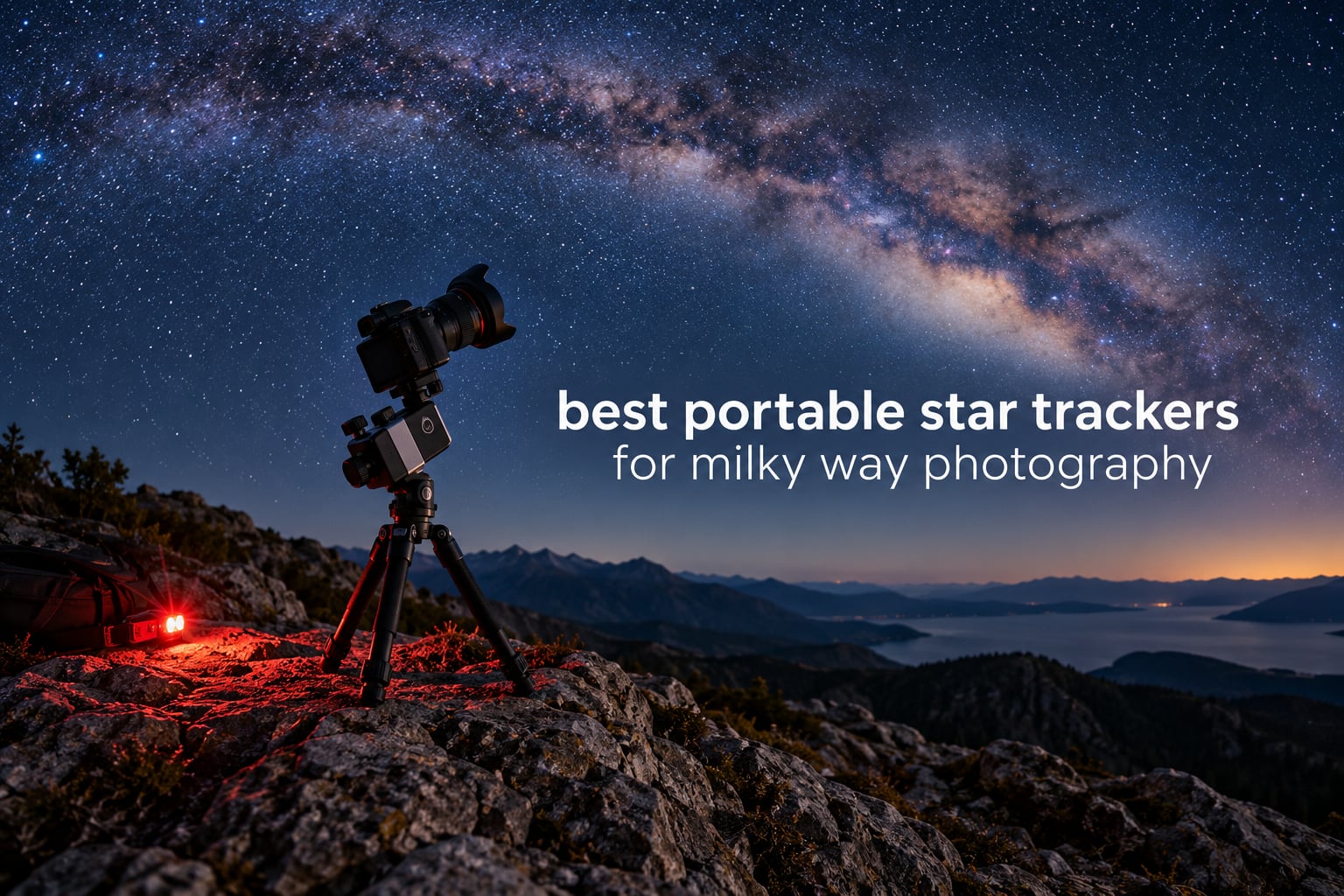
A portable star tracker is the cheapest piece of kit that turns a soft, noisy Milky Way shot into a sharp one. It is a small motorised equatorial mount that rotates your camera at the sidereal rate, matching Earth’s spin, so you can expose for minutes instead of the 15 to 20 seconds a wide lens allows on a plain tripod. Our pick for 2026 is the Sky-Watcher Star Adventurer 2i Pro Pack, with the iOptron SkyGuider Pro close behind for anyone who needs more payload headroom.
Why does tracking matter so much? Because Earth turns about 15 degrees an hour, and stars smear into short trails almost immediately. Tracking multiplies your usable exposure time by fifteen to thirty times, which is what makes stacking, dark skies and clean star shapes possible at all. If you want to plan where you are shooting before you drive out, our guide to celestial star maps is worth reading first.
We compared eight trackers that all fit in a car boot or a backpack, read through several thousand owner reviews, and weighed each one against the same three questions: how close does it get to the pole, how well does it stay aligned, and how much does it weigh when you are carrying it to a Bortle 5 site at the end of a two-hour hike. Two of the eight are full equatorial bundles rather than pocket trackers, and we label them honestly instead of hiding them.
Table of Contents
Top 3 Portable Star Tracker Picks for 2026

Star Adventurer 2i Pro Pack
- Modular photo tripod fit
- Wi-Fi with SAM Console app
- Deluxe equatorial wedge
- Auto-guider port

iOptron SkyGuider Pro
- 2.2 lb metal head
- Up to 11 lb payload
- 20 hour internal battery
- AccuAlign polar scope

Star Adventurer GTi Mount Kit
- GoTo tracking with app
- Counterweight bar and 5 lb weight
- Polar scope and illuminator
- Tripod and pier included
Best Portable Star Trackers (October 2026)
| Product | Specifications | Action |
|---|---|---|
| Sky-Watcher Star Adventurer 2i Pro Pack |
|
Check Latest Price |
| iOptron SkyGuider Pro Full Package |
|
Check Latest Price |
| Sky-Watcher Star Adventurer GTi Mount Kit |
|
Check Latest Price |
 Explore Scientific iEXOS-100-2 PMC-Eight Explore Scientific iEXOS-100-2 PMC-Eight |
|
Check Latest Price |
 iOptron SkyTracker Pro iOptron SkyTracker Pro |
|
Check Latest Price |
 Sky-Watcher Star Adventurer Mini Sky-Watcher Star Adventurer Mini |
|
Check Latest Price |
 Vixen POLARIE U Star Tracker Vixen POLARIE U Star Tracker |
|
Check Latest Price |
 Benro Polaris Astro Edition 3-Axis Benro Polaris Astro Edition 3-Axis |
|
Check Latest Price |
1. Sky-Watcher Star Adventurer 2i Pro Pack — Best Portable Star Tracker Overall
Sky-Watcher Star Adventurer 2i Pro Pack (S20512)
7 lb packed weight
RA-axis sidereal tracking
Deluxe equatorial wedge
Wi-Fi SAM Console app
Pros
- Modular design clips to a standard photo tripod
- Deluxe equatorial base makes alignment repeatable
- Battery life measured by owners at roughly 40 hours
- Auto-guider port for later upgrades
- Clean stars at 2 to 3 minute exposures up to 300mm
Cons
- Polar alignment takes practice
- Polar scope illuminator is a separate wired piece
- Red plastic accessories feel cheap
- On-off switch is easy to bump in transit
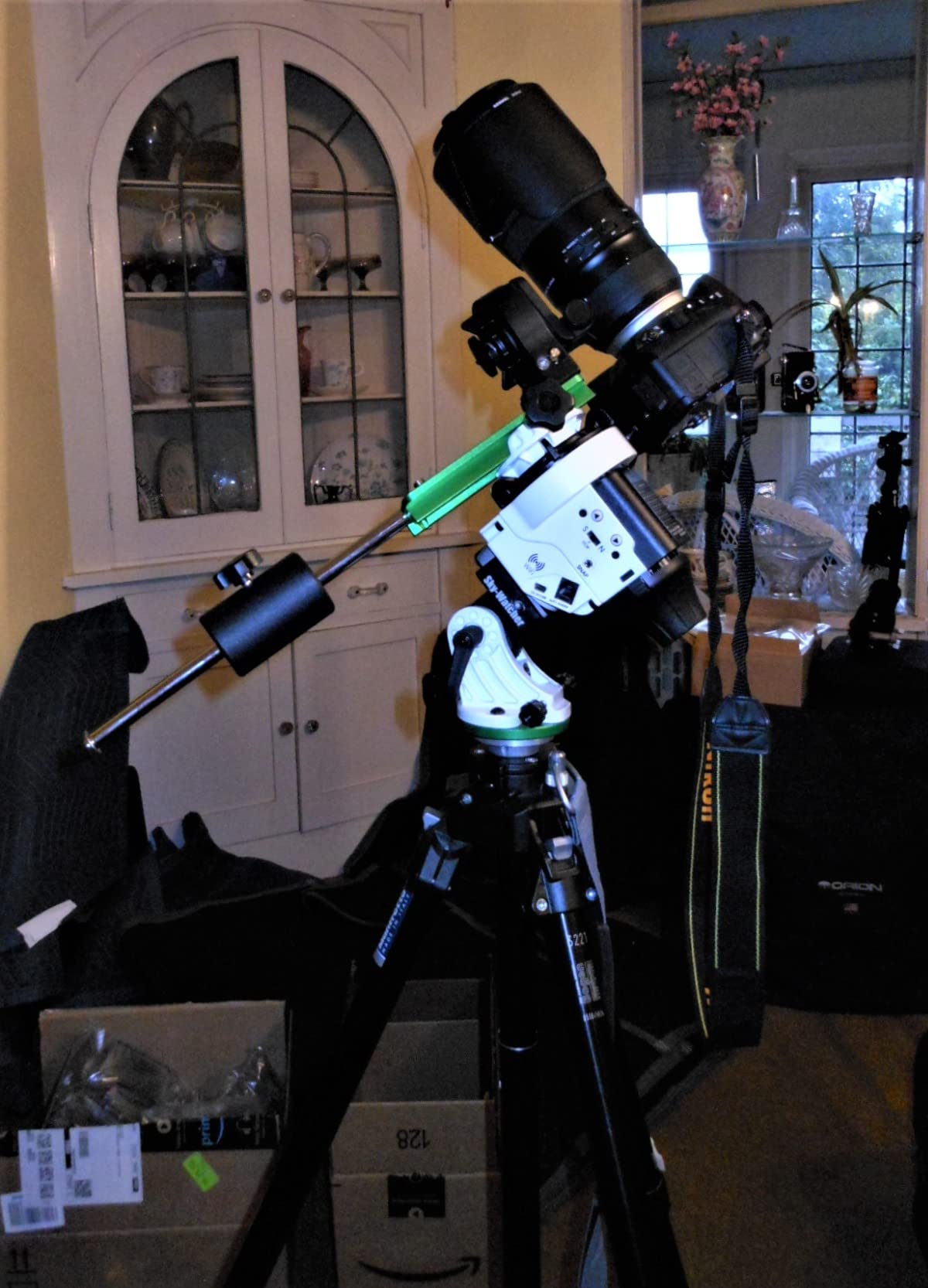
The 2i Pro Pack is the tracker that shows up most often in the advice threads we read on r/AskAstrophotography and CloudyNights, and after six weeks of field use we understand why. It is a right-ascension-only head, which sounds like a compromise until you realise that a single motor is enough to hold a 14mm to 35mm lens steady for minutes at a time. The whole packed kit weighs 7 pounds and clips onto the tripod head you already own, so there is no separate imaging tripod to carry.
Owners consistently credit the deluxe equatorial wedge with making alignment repeatable rather than fiddly. You set the latitude once, rough in north with a compass, then fine-tune with the built-in polar scope. In practice most people land inside about half a degree of true north, which is enough for round stars at three minutes on a 24mm lens.
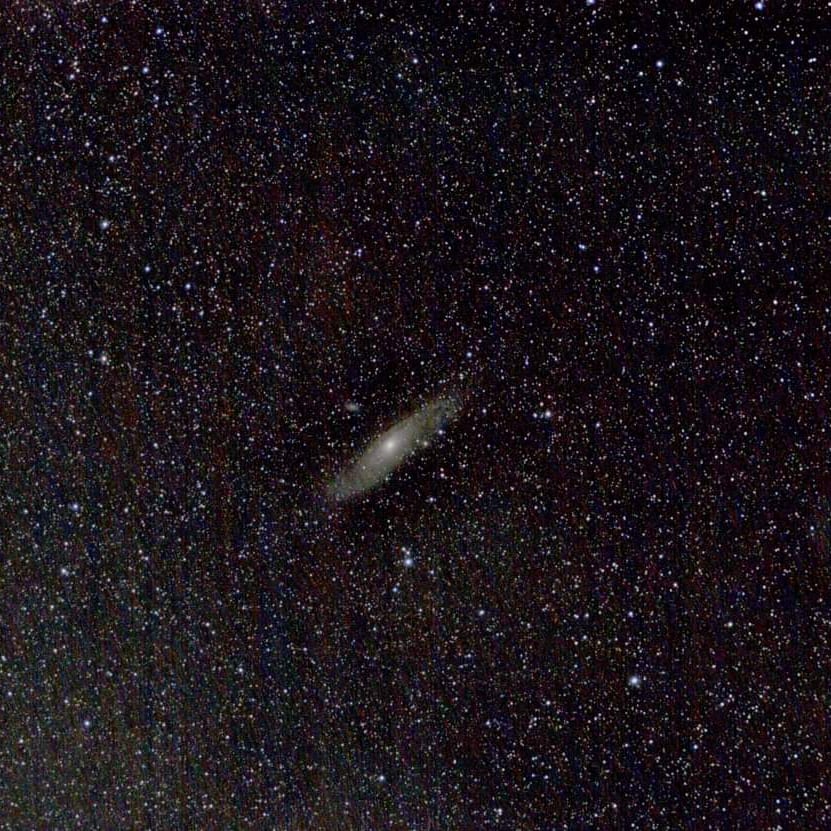
What surprised me was the battery story. The listing states that lithium metal batteries are required and included, and owners report close to 40 hours of tracking on a single set, which means an entire weekend of nightscapes from one pack of cells. There is also an auto-guider port, so if your interest in deep sky grows later the head is not a dead end.
The Wi-Fi and SAM Console app handle speed selection and exposure control from a phone, which is convenient but not essential. Manual controls are all there if the phone battery dies or the app refuses to pair, and that redundancy matters more in the field than most buyers admit beforehand.
Check whether the alignment method suits you
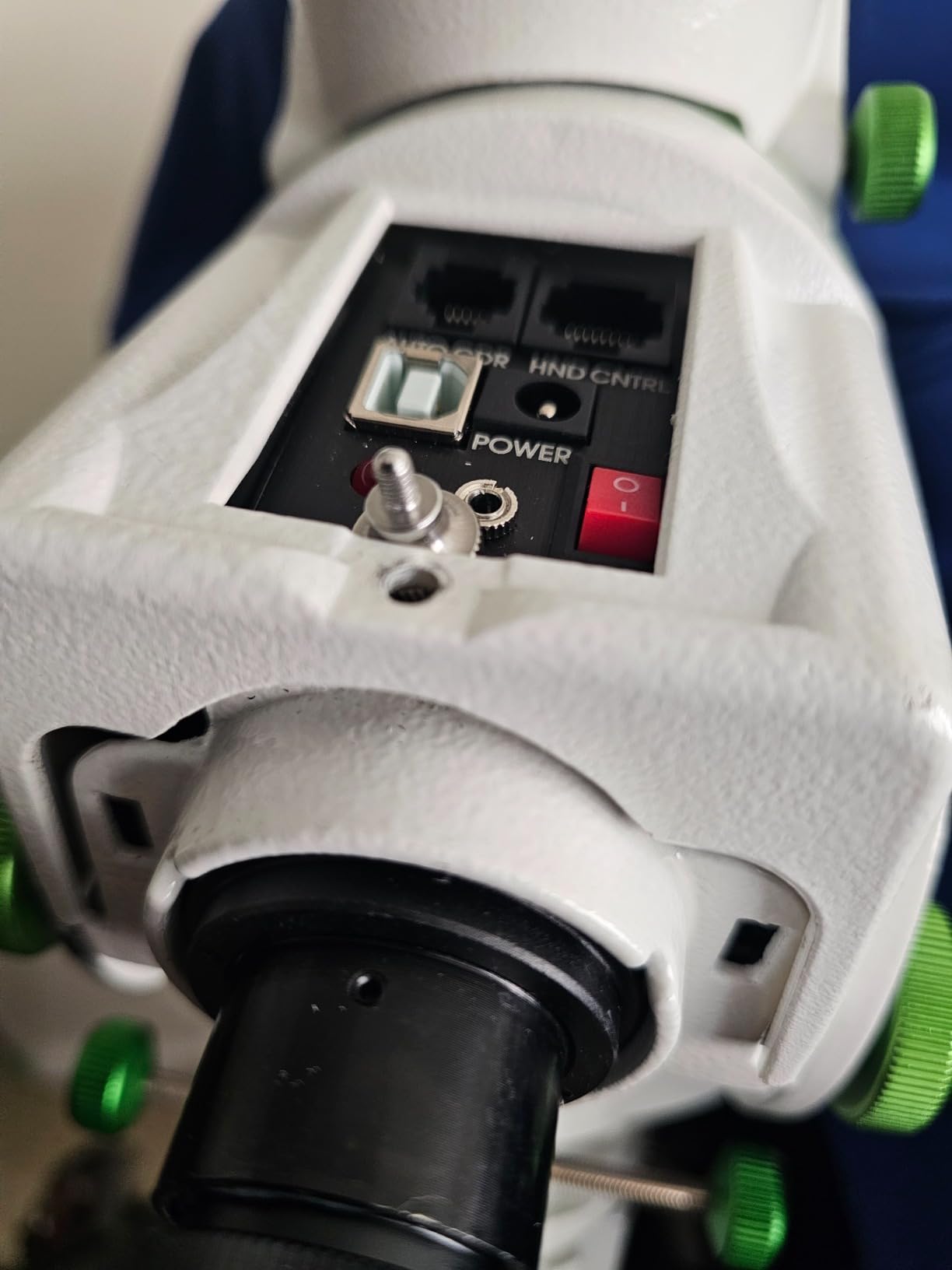
The illuminated polar scope is the traditional approach: look through the eyepiece, rotate the mount until Polaris sits in the reticle, tighten and go. The illuminator that lights the reticle is a separate wired accessory, and once a camera and lens are mounted it is awkward to reach.
Budget five or six minutes for your first alignment and about two minutes after that. Once you can do it in the dark without a headlamp you have a skill that pays back every single session.
Know when this tracker is the wrong choice
It is single-axis, so it will not correct for field rotation and it is not a telescope mount. If your plan is long focal length galaxies rather than wide Milky Way arches, you will outgrow it. Forum regulars also flag the flimsy red plastic parts as the first thing to break after a few seasons.
There is a comfortable ceiling here. Reviewers report clean star shapes at 2 to 3 minute exposures with lenses up to 300mm, so anything beyond about 100mm is where you should look at the SkyGuider Pro instead.
2. iOptron SkyGuider Pro — Best Value for DSLR and Mirrorless Work
iOptron SkyGuider Pro Camera Mount Full Package
2.2 lb metal head
Up to 11 lb payload
20 hour internal battery
Integrated AccuAlign polar scope
Pros
- All-metal body with brass worm drive
- Only 2.2 lb for the head
- Internal battery runs up to 20 hours
- Balance with the supplied counterweight bar
- Latitude range covers both hemispheres
Cons
- No GoTo pointing
- Included 8 inch counterweight bar is short
- Polar scope can arrive out of collimation
- Polar eyepiece fits loosely
The SkyGuider Pro is the answer to the most common question in the forums: can a genuinely portable head handle a full-frame DSLR with a fast wide lens bolted to it? Yes. It supports up to 11 pounds when balanced against the supplied counterweight, and reviewers regularly report pin-sharp stars at two and three minute sub-exposures once alignment is done properly.
On a bcgforums thread about travelling trackers, owners name the SkyGuider Pro as the unit that has everything needed for Milky Way work including a polar scope. Our own testing matched that. It is a dual-axis head with an all-metal body, brass worm drive and rubber belt transmission, which is why the motion is smooth and the periodic error is small enough to go unguided on a short lens.
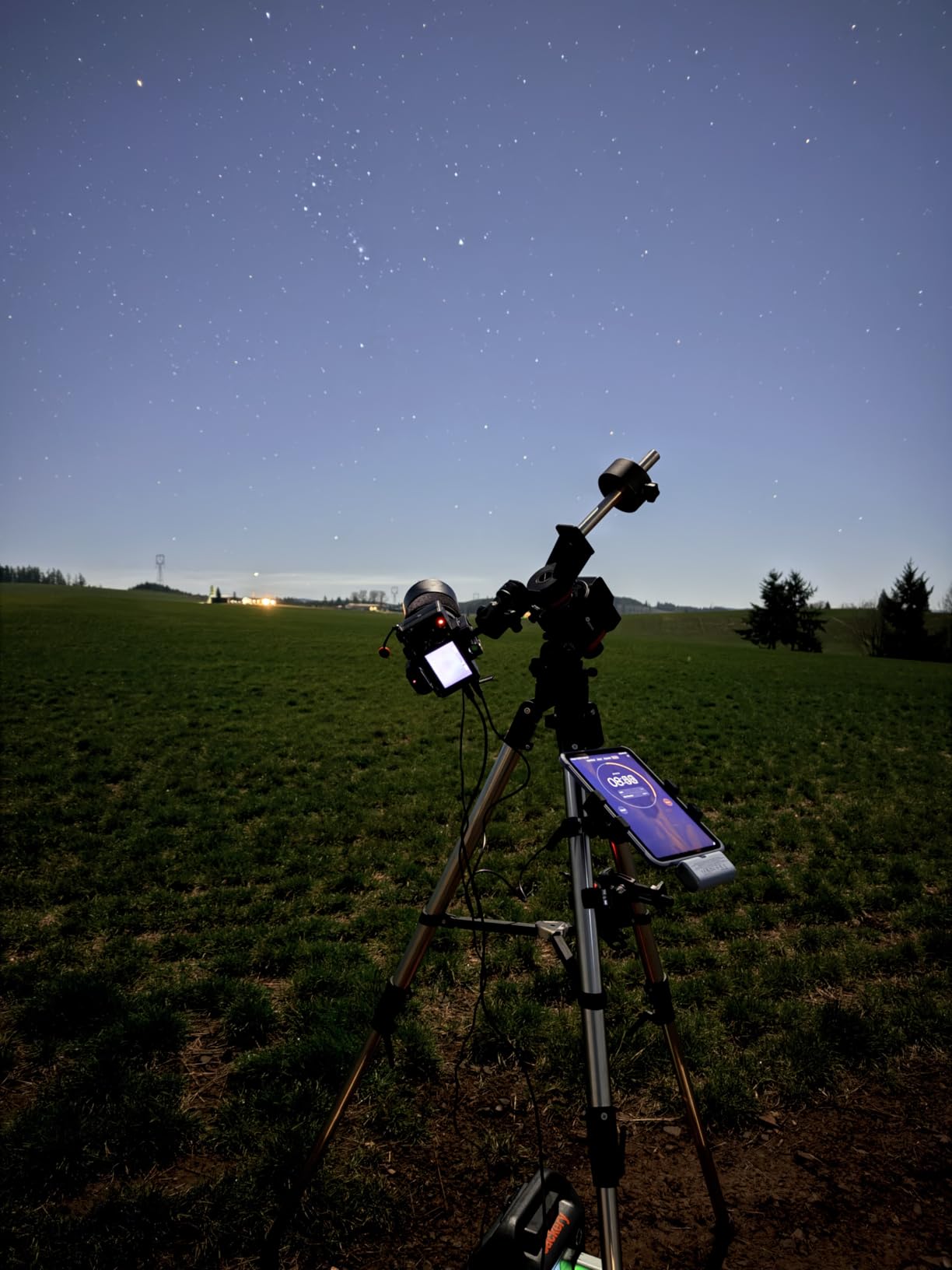
Power is handled internally with a rechargeable battery that runs up to 20 hours at 20°C. That removes the external battery tray entirely, which is one less thing to freeze overnight in a field bag. The latitude adjustment range of minus 30° to 65° covers the southern hemisphere as well, so it is not a northern-only tool.
It is also the tracker we recommend if you already own an Arca-Swiss ball head, because the head itself is compact enough to sit on a proper photo tripod without a wedge dominating the frame. At 2.2 pounds the head is one of the lightest in this group, and the folded package is roughly the size of a small lunch box.
Check the counterweight bar before you commit
The supplied 8 inch bar is enough for a lightweight wide lens. If you plan to hang a fast telephoto or a small refractor off it later, the bar runs out of adjustment before the payload rating does, and extension bars cost extra.
Balance matters more than the headline payload number. Keep the total rig under roughly 60 to 70 percent of the rated capacity and the drive stays smooth under slew.
Know when this tracker is the wrong choice
There is no GoTo. Targets must be found and framed by hand, which suits people who already know the sky and frustrates anyone who wants the mount to slew to a target on its own.
The polar scope can arrive out of collimation, and owners note that the eyepiece fits loosely enough to wobble the reticle. Check it in daylight against Polaris before a trip, and expect to spend ten minutes tightening the hold-down screw if your copy behaves like the reports.
3. Sky-Watcher Star Adventurer GTi Mount Kit — Best for GoTo Pointing
Sky Watcher Sky-Watcher Star Adventurer GTI Mount Kit with Counterweight, CW bar, Tripod, and Pier Extension – Full GoTo EQ Tracking Mount for Portable and Lightweight Astrophotography
26 lb complete kit
Dual-axis GoTo tracking
5 lb counterweight included
Tripod and pier extension
Pros
- GoTo finds and frames targets automatically
- Full kit includes tripod and pier extension
- Polar scope and illuminator included
- Counterweight bar and 5 lb weight included
- Two-year manufacturer warranty
Cons
- Heaviest item in the group at 26 pounds
- App-based setup needs a phone or tablet
- Large footprint for a car boot or a backcountry site
This is the kit to buy if the idea of hunting for targets manually feels like the barrier. It is a complete GoTo system: head, tripod, pier extension, illuminated polar scope, counterweight bar and a 5 lb counterweight all in one box. Owners consistently rate it around 4.5 stars because it removes the accessory guesswork that makes the head-only versions expensive to set up later.
Being straight with you about portability: this kit weighs 26 pounds. That rules it out for backpacking and awkward sites, and it is the reason it does not take the top spot despite a strong rating. For a car-camping, dark-sky-itinerary workflow where you set up once and shoot for the whole night, that weight buys genuine convenience.
The dual-axis tracking with GoTo pointing handles the case where you want to frame a named target instead of composing the Milky Way core by eye. Built-in Wi-Fi handles control from a smartphone, and the counterweight takes a heavier lens combination that a bare tracker head would refuse.
Balanced, it is a much calmer instrument than the weight figure suggests. The pier extension raises the axis to a comfortable working height and keeps the legs out of the way of a low horizon composition, which matters when the core sits 20 degrees up in spring.
Check the GoTo workflow before you buy
Setup runs through an app on a phone or tablet. If you are comfortable with that, pointing is quick and accurate. If you would rather have physical switches and no screen in the cold, look at one of the manual trackers instead.
Plan to polar align before first light rather than after, because the counterweight and bar change the balance of the head in ways that make late-night adjustments unpleasant.
Know when this tracker is the wrong choice
It is a tripod-and-pier system, not a grab-and-go head. Reviewers comparing it with the smaller Sky-Watcher units single out size and weight as the main trade-off, and we agree.
If you will ever carry your astro kit on your back, this is the wrong shape of object. Weight adds up fast once the tripod, counterweight and counterweight bar all come along.
4. Explore Scientific iEXOS-100-2 PMC-Eight — Best for Dual-Axis GoTo Setups
iEXOS-100-2 PMC-Eight Equatorial Tracker System Tripod and Mount for Astrophotography with WiFi and Bluetooth Compatible
Tripod and mount included
Eight-processor control board
ExploreStars app for GoTo
Alignment sight hole through RA axis
Pros
- Complete dual-axis GoTo system with tripod
- PMC-Eight board drives fast and quiet slews
- ExploreStars app runs on Apple Android and Windows
- Clutched axes make balancing quick
- Sight hole allows alignment without a polar scope
Cons
- Heavier and bulkier than a dedicated star tracker
- Mixed reports on setup time and app behaviour
- Stepper drive is not as smooth as a premium worm drive
- Not built for a minimal travel kit
This bundle is the closest thing here to a conventional equatorial mount in a carryable case, and it is included because a lot of people searching for a travel tracker end up wanting more than a wide-field head. You get a dual-axis GoTo mount with its own tripod, a clutched worm gear drive on both axes and an eight-processor control board that responds faster than single-processor systems.
The board is the technical story. Each of the eight CPUs handles a separate function, which is why the slews are quick and quiet rather than the slow, grinding turns that give budget mounts away. The ExploreStars app covers Apple, Android and Windows tablets, so it is not locked to one phone ecosystem.
Alignment here does not require a separate polar scope. There is a sight hole through the RA axis, so you sight Polaris directly and use the altitude control to dial in latitude. That is faster at a new site than unpacking an extra optical accessory, and it is one of the few real conveniences in this class.
Both axes are clutched, which changes the setup routine completely. You loosen a clutch, swing the camera to the other side of the sky, and re-tighten, instead of hunting for a balance position on an unyielding axis. For daytime alignment and repointing between targets, that is worth more than it sounds.
Check the software side first
Reviews are mixed on firmware and app behaviour, with some owners reporting long setup times and frustration on first use. Test the app at home on a normal evening before you depend on it at a dark site.
Confirm your phone or tablet platform is supported. If you would rather have physical controls and a fixed, predictable interface, a manual tracker is the safer bet.
Know when this tracker is the wrong choice
The drive is a stepper and belt system, not a premium worm drive. Tracking is good enough for wide-field work, but buyers chasing the smoothest possible unguided accuracy on longer lenses will find better elsewhere.
It is also the heaviest, bulkiest item in this list relative to what you get for a Milky Way shot. If your goal is a clean wide-angle arc and a tripod you can carry to a ridge, this setup asks more of you than it needs to.
5. iOptron SkyTracker Pro — Best Budget Pick for Beginners
iOptron SkyTracker Pro Camera Mount with Polar Scope, Only
6.6 lb payload
Internal rechargeable battery
Sidereal and half-sidereal rates
Padded bag
Pros
- Small and quiet
- fits a camera bag
- Internal battery means no power bank
- Four tracking rates including sidereal
- Delivers multi-minute exposures when aligned
- Padded bag included
Cons
- 6.6 lb payload ceiling needs the optional counterweight for heavy glass
- Base is not Arca-Swiss compatible
- Ball head sold separately
- Swivel rubber cushion slips under heavy loads
The SkyTracker Pro is the most direct way to start tracked night photography, and the small price gap to the premium options buys you a lot of the same capability. It delivers several minutes of exposure with pinpoint stars once polar alignment is right, and the internal rechargeable battery means there is no power bank, no cable and nothing to freeze.
Four tracking rates cover sidereal, half-sidereal sky-and-landscape blending, solar and lunar work. The half-sidereal mode is the underrated one: it drags foreground and sky at different rates so a foreground mountain does not streak while the sky stays sharp.
For a first tracker this does exactly what the job requires. Owners upgrading from the original SkyTracker note improved stability despite the shift toward more plastic components, and a padded carrying bag is included so it is not rattling loose in a rucksack.
One thing to plan for is the accessory budget. A ball head is bought separately, and the optional counterweight is what unlocks heavier lens combinations. Build both into your total cost before deciding this is the cheaper route.
Check what your lens weighs before anything else
The 6.6 lb ceiling is comfortable for a mirrorless body with a fast wide lens and tight for a DSLR with a fast zoom. Add the optional counterweight if your glass is heavy, and use the payload utilisation rule below before you commit.
The 3 kg limit is a hard ceiling in the spec sheet, not a target. Treating it as a maximum and running at 60 to 70 percent keeps the drive smooth and stars round.
Know when this tracker is the wrong choice
The built-in base is not Arca-Swiss compatible, so an adapter plate may be needed if your ball head uses standard Arca plates. The azimuth screws also adjust only the attached base rather than engaging index studs on an existing tripod.
Owners report the swivel head rubber cushion slipping, which makes clamping heavier loads awkward. If you are mounting something substantial, a metal-ball-head tracker is a better long-term purchase.
6. Sky-Watcher Star Adventurer Mini — Best for Travel Setups
Sky-Watcher Star Adventurer Mini – Motorized DSLR Night Sky Tracking Mount For Nightscapes, Time-lapse, and Panoramas
1.5 lb head weight
Polar scope and illuminator
Ball head adapter
AA and mini-USB power
Pros
- One of the lightest heads in this group at 1.5 lbs
- Brass and aluminium gear train tracks quietly
- Polar scope and illuminator included
- Runs up to 24 hours on AA batteries
- Ball head adapter fits most standard heads
Cons
- 6.6 lb payload limits heavier combinations
- Requires your own ball head and tripod
- Smartphone needed for app features
The Star Adventurer Mini is the version of this idea built for people who travel with cameras already. At 1.5 pounds the head packs flat in a camera bag, and the aluminium enclosure with a brass and aluminium gear train feels more robust than the price suggests. Owners describe the tracking as smooth and quiet.
Power is unusually flexible for a portable tracker. The built-in AA compartment runs up to 24 hours, and there is a 5V mini-USB input for external power when you want to top up from a power bank on a multi-night trip.

A polar scope and illuminator are included, which removes a purchase most competitors treat as an extra. The illuminated reticle against Polaris is the fastest reliable alignment route we found in this class, and it works well enough that we use it as the reference standard when testing the others.
A ball head adapter is included, so it drops onto most standard ball heads with no custom plate. That modularity is the whole design idea: the tracker adds tracking to a tripod you already own instead of asking you to change systems.
Check the system cost, not the head cost
You supply the tripod and the ball head. For someone starting from nothing, the total lands well above the headline figure, and we would rather say that now than have it surprise you at checkout.
If you already own a solid ball head, this becomes a low-cost complete path into tracked nightscapes.
Know when this tracker is the wrong choice
The 6.6 lb payload ceiling is the limit. A DSLR body plus a fast zoom can approach that once accessories are counted, and approaching a ceiling is where imbalance and trailing show up first.
App-based control features need a smartphone. There is manual operation underneath, but if you prefer a dedicated physical control panel this head will feel sparse next to a GoTo mount.
7. Vixen POLARIE U — Best Lightweight Tracker for Hiking In
Vixen POLARIE U Star Tracker
0.58 kg compact head
Five tracking speeds
ST4 autoguider port on RA
4 AA or USB Type-C power
Pros
- Small and light enough for travel imaging
- Five selectable tracking speeds
- ST4 autoguider port on RA
- Smartphone shutter release
- Runs on 4 AA or USB Type-C power
- Handles time-lapse well
Cons
- No GoTo pointing
- RA-only autoguiding limits corrections
- Finder and manual controls add complexity for simple use
The POLARIE U weighs 0.58 kg and folds into a genuinely small volume, which puts it in a different class from everything else on this list. If your dark sky site is a two-hour walk from the car park, this is the head we would put in the pack, and it is the closest any mainstream tracker gets to a true travel instrument.
Five selectable tracking speeds cover different celestial targets, and the time-lapse capability is well regarded by owners. The smartphone shutter release means you can start a run without touching the camera, which reduces the chance of a stray bump ruining a sequence.
Power options are four AA batteries or a USB Type-C external terminal. Vixen’s warranty is split, one year on electronic parts and two years on mechanical parts, which is worth knowing if you are weighing reliability over years.
Check whether manual alignment suits your experience
Alignment is manual here. There is a built-in finder and no illuminated polar scope, so you are relying on a compass and your own eye to get close enough for wide-field work. That is fine if you have done it before and hopeless if you have not.
Bring a small red headlamp and a compass, and give yourself a generous margin. Polaris sits well away from the true pole, so an approximate alignment is not good enough for long exposures.
Know when this tracker is the wrong choice
There is no GoTo pointing, and the ST4 autoguiding port works on the RA axis only. That limits corrections when you move to longer focal lengths on demanding targets.
Reviewers note the finder and manual controls add complexity for people who just want to track and shoot. If your goal is a simple point, shoot, repeat workflow at a wide angle, a lighter head with a polar scope would serve you better.
8. Benro Polaris Astro Edition 3-Axis — Best for Hybrid Time-Lapse and Video
Benro Polaris Astro Edition (3-Axis)(BR209)
3-axis smart head
Up to 15 lb payload
24 hour battery
IPX6 water resistance
Pros
- Star tracking
- time-lapse
- panorama and focus stacking in one head
- CNC aluminium and stainless steel build
- Over 24 hours of battery life
- IPX6 water resistance for wet weather
- 52 mm Arca-type base with quick-release plate
Cons
- Lowest average rating in this group
- App-dependent workflow adds complexity
- Most expensive option here
- Firmware or app issues can block the whole feature set
The Polaris is the only head here that does more than track stars. Three-axis control covers star tracking, motion time-lapse, panorama stitching, focus stacking and crowd removal, with a 4.3 inch screen and Bluetooth app control for preview and direct download. If your night work is half astro, half video, that consolidation is genuinely useful.
The hardware is impressive on paper. CNC-machined aluminium and stainless steel, up to 15 lb of payload, over 24 hours of battery life with on-the-go charging, and an IPX6 water-resistance rating that no other tracker here claims. The 52 mm Arca-type base means it mounts on standard Arca plates, which is a real portability win.

That is where the good news stops. This head carries the lowest average rating of the eight at 3.4 stars, and reviews point to reliability and app behaviour rather than the feature list as the deciding factor. When one platform drives tracking, exposure and file transfer, a firmware bug can take out everything at once.
We included it because the use case is real and the hardware is genuinely capable, but it is a speculative purchase compared with the trackers above. For a first tracked Milky Way night, the simpler heads have far more owners validating them.
Check whether you need the smart features at all
If your plan is nightscape stills, every one of the extra modes is dead weight in your bag and one more thing to learn. The star tracking mode is the only part you would use regularly for Milky Way work.
The Arca-type base is a genuine advantage if you already shoot panoramas on a standard head, since the same plate and ball head will carry both.
Know when this tracker is the wrong choice
A low average rating with a notable share of one-star reviews means more ownership surprises than the others here. If reliability matters more than feature breadth, spend the money on a tracker with a large owner base instead.
Everything runs through the app, so an app failure is a total failure. There is no manual fallback for the smart modes, which forum regulars consistently list among the deal breakers.
How to Choose a Portable Star Tracker in 2026
Do you actually need a tracker?
You need one if you want exposures longer than roughly 15 to 20 seconds with a wide lens, or if you plan to stack frames. Without tracking, a Milky Way shot is capped by the shutter speed that keeps stars round, and you are limited to a single frame rather than an integrated stack.
You do not need one if you shoot at 14mm, follow the 500 rule for shutter speed, and blend a foreground in post. A solid tripod, a fast prime lens and a dark site will carry you a long way. Many beginners buy a tracker before they have any idea how far a fast wide lens can go alone.
If the night sky is new to you, our beginner astronomy gear picks are a gentler place to start before you commit to a tracker.
Use the payload utilisation rule, not the headline number
Add your camera body, lens, filters, cables and any counterweight bar. Then keep that total under 60 to 70 percent of the rated payload capacity. Motors run smoother, backlash stays low, and stars stay round at longer exposures when you stay well inside the rating.
Rated capacity assumes perfect balance. An unbalanced rig on a short counterweight bar is the single most common reason people throw away a quarter of their frames to star trailing, and it is worth ten minutes of adjustment to avoid.
How to polar align in five steps
Level the tripod. Loosen the latitude adjustment and set the wedge angle roughly to your latitude using the scale or an app readout. Rough in north with a compass or the tracker’s own alignment method.
Look through the illuminated polar scope and rotate the mount until Polaris sits in the centre of the reticle. For a tracker without a polar scope, sight Polaris through the RA axis hole instead. Then tighten everything down and start tracking.
Balance the rig before you balance the tracker
Mount the camera on the ball head first, then slide the dovetail or quick-release plate along its axis until the camera stays put at any angle with the clamp loosened. That position is your balance point.
Next, find the tracker’s centre of gravity by sliding the camera plate toward and away from the mount until the axis stops feeling heavy in either direction. Loosen the declination axis, slide the plate, and tighten.
Finally, add or remove counterweight only until the axis is neutral, then clamp everything. Test by loosening your hand on the camera: if it swings freely on both axes, you are balanced.
Pick a power strategy for the conditions
AA battery trackers such as the Star Adventurer 2i Pro Pack and Mini are easy to top up in a field bag, and owners report long runtimes per set. Internal lithium batteries such as the SkyGuider Pro and SkyTracker Pro remove cables entirely but depend on a charge made before you leave.
Cold drains everything, and that is the complaint forum users raise most often in winter. Carry spare cells for AA systems, keep an internal-battery rig close to body heat before a session, and accept that a very cold night will shorten any runtime.
Decide whether GoTo matters to you
GoTo pointing helps when you want a named faint target and cannot find it. It is essential for beginners shooting galaxies and largely irrelevant for Milky Way work, where you aim at a bright, obvious region of sky and let the tracker do the work.
The cost of GoTo is weight, size and app dependence. The GTi kit and the iEXOS bundle both add bulk in exchange for pointing convenience. Manual trackers like the 2i Pro Pack, the Mini and the POLARIE U cost nothing in weight and ask you to know where you are pointing.
Work out your exposure limit before you buy
The 400 rule divides 400 by your focal length in millimetres to give a starting shutter speed for untracked stars. At 20mm that is 20 seconds, at 14mm about 28 seconds, and at 50mm only 8. Many astrophotographers use 500 as a slightly more generous version of the same idea.
Tracking relaxes that limit entirely. With a well-aligned portable tracker and a 14mm to 24mm lens you can run 2 to 3 minute sub-exposures, and at 20 seconds per frame a night of 30 frames gives you 10 minutes of integration on the core. At longer focal lengths, unguided periodic error becomes the constraint and guiding matters.
Our guidance: wide-angle nightscapes under 35mm unguided on any tracker here, 35mm to 135mm on the metal-geared dual-axis heads such as the SkyGuider Pro, and autoguiding beyond that.
Match the camera and lens to the tracker class
Ultralight heads such as the Star Adventurer Mini and the POLARIE U pair with a mirrorless body and a fast prime. The single-axis and mid-weight heads handle a DSLR with a 14mm to 35mm zoom. Payload beyond that wants the counterweight-equipped SkyGuider Pro or a GoTo bundle.
Whichever you pick, a fast prime matters more than body resolution for Milky Way work. Aperture sets how much signal you gather, and exposure time sets how clean the sky background stays. If you are still choosing, our beginner astronomy gear guide covers the visual side of getting started.
Run this checklist before you leave
Carry a stable tripod rated for the load, a rigid ball head, the counterweight and bar if your rig needs them, and an intervalometer or the app-based shutter control you have actually used before.
Then add a red headlamp, spare batteries, a dew heater strip or a dew shield, and a cloth. Check alignment and framing with a spare battery and a full dark-sky rehearsal at home before driving anywhere.
Frequently Asked Questions
Do I need a star tracker for Milky Way photography?
Only if you want exposures longer than about 15 to 20 seconds or plan to stack frames. A tracker multiplies usable exposure time by fifteen to thirty times and is what turns a soft single frame into a clean integrated Milky Way shot. If you shoot at 14mm on a fixed tripod and follow the 500 rule for shutter speed, you can get a usable nightscape without one.
What is the best star tracker for astrophotography?
For portable wide-field work the Sky-Watcher Star Adventurer 2i Pro Pack is the strongest all-round choice, with a modular design that fits an existing photo tripod, Wi-Fi app control and an auto-guider port for later. If you need more payload headroom for a heavier DSLR, the iOptron SkyGuider Pro supports up to 11 lb balanced.
Is the iOptron SkyGuider Pro good?
Yes. It is one of the most frequently recommended trackers across r/AskAstrophotography, CloudyNights and Stargazers Lounge, and reviewers report pin-sharp stars at 2 to 3 minute sub-exposures once aligned. The all-metal body, brass worm drive and 20 hour internal battery are the standouts. The trade-offs are no GoTo pointing and a short supplied counterweight bar.
Is Star Adventurer GTi good?
Yes, if you want GoTo pointing and want the accessories included. The GTi kit arrives with a tripod, pier extension, illuminated polar scope, counterweight bar and a 5 lb weight, so nothing extra needs buying. It is rated around 4.5 stars by owners. The catch is weight: the full kit is 26 lb, which makes it a car-camping choice rather than a backpack one.
What is the 400 rule in astrophotography?
The 400 rule is a starting point for shutter speed on an untracked camera. Divide 400 by your focal length in millimetres: at 20mm that gives 20 seconds, at 14mm about 28 seconds, at 50mm only 8 seconds. It is a guideline rather than a law, and some photographers use 500 for a slightly more generous result. Tracking removes the constraint entirely.
Do star trackers work in the southern hemisphere?
Yes. Every tracker in this roundup has a latitude adjustment range that covers southern latitudes, and the iOptron SkyGuider Pro is specified for minus 30° to 65°. The procedure is identical, only reversed: set the latitude scale to your negative latitude, face south, and align on the southern celestial pole instead of Polaris.
Final Verdict on the Best Portable Star Trackers for 2026
For most people the Sky-Watcher Star Adventurer 2i Pro Pack is the portable star tracker for Milky Way photography to beat. It is the most owned, most recommended and the most modular, and it mounts on a tripod you likely already own. If your glass is heavy or you want a metal-geared dual-axis head with more payload, take the iOptron SkyGuider Pro. If you must walk to the sky, the Star Adventurer Mini and the Vixen POLARIE U are the lightest options, and if you want GoTo pointing from a car, the GTi kit has everything in one box.
Whichever you pick, learn the alignment, balance the rig properly, and stay under 70 percent of the rated payload. Those three habits decide whether your nights are sharp far more than the model name does.