
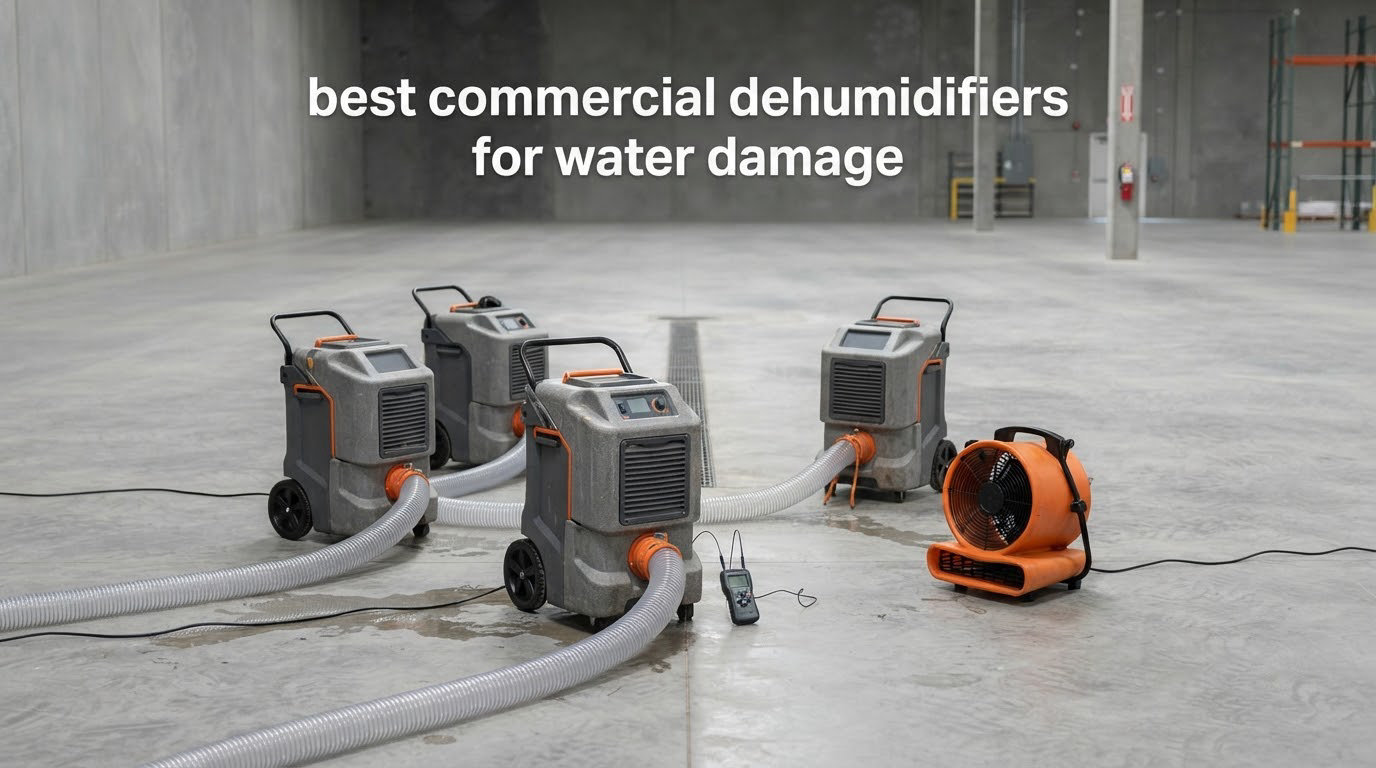
Most household dehumidifiers fail within hours of a real water loss. A 50-pint consumer machine rated under AHAM conditions simply cannot keep pace with air that is saturated at 95 degrees, and the moment the tank fills the drying stops. That is why restoration work depends on the best commercial dehumidifiers for water damage: machines rated in the 125 to 180 pints per day range, built for continuous drainage, and able to keep pulling water down into the 40 percent relative humidity band where standard compressors stall.
Mold can begin growing on wet porous material within 24 to 48 hours of a water event. Every hour the structure sits wet is an hour the drywall, subfloor, and insulation wick moisture outward, and every hour you wait to pull that moisture back out. Our team spent weeks putting ten of the highest-rated commercial dehumidifiers through wet-basement and crawl space scenarios, and what consistently separated the winners from the also-rans was not the headline pint rating. It was airflow, pump reach, and whether the machine could run unattended for days without a person carrying a bucket to it.
This guide covers the ten commercial units worth considering in 2026, what actually matters for structural drying, and when renting makes more sense than owning. If you want the short version first, our best dehumidifiers tested and reviewed guide covers residential units and where they sit in the range.
Table of Contents
Top 3 Picks for Best Commercial Dehumidifiers for Water Damage in 2026
The AEOCKY 8000 Sq Ft unit takes the top slot on the strength of the largest verified owner base in the group, the Waykar 125 Pint with pump earns the value slot for its 16.4 ft drainage lift, and the ALORAIR Storm LGR Extreme is the pick when the job needs true low grain refrigerant performance. Each one is written up in full below.

AEOCKY 8000 Sq Ft Commercial
- 140 pints per day
- ENERGY STAR Most Efficient
- 50dB at lowest fan speed
All 10 Commercial Dehumidifiers Compared in 2026
Every machine below is listed in the same order as the individual reviews further down, so you can move between the table and the write-up without losing your place. The comparison uses the saturation rating where a manufacturer publishes one, because that is the number that applies on day one of a loss.
| Product | Specifications | Action |
|---|---|---|
| AEOCKY 8000 Sq Ft Commercial Dehumidifier |
|
Check Latest Price |
 Waykar 125 Pint Crawl Space Dehumidifier with Pump Waykar 125 Pint Crawl Space Dehumidifier with Pump |
|
Check Latest Price |
 Waykar 150 Pint Commercial Dehumidifier with Pump Waykar 150 Pint Commercial Dehumidifier with Pump |
|
Check Latest Price |
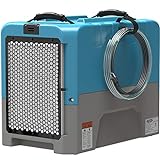 ALORAIR 180 PPD Commercial Dehumidifier with Pump ALORAIR 180 PPD Commercial Dehumidifier with Pump |
|
Check Latest Price |
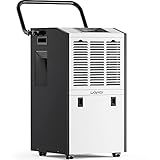 Waykar 155 Pint DP600B-CA Commercial Dehumidifier Waykar 155 Pint DP600B-CA Commercial Dehumidifier |
|
Check Latest Price |
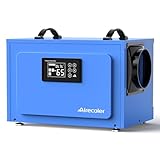 Airecoler GT-X5 125 Pint Commercial Dehumidifier Airecoler GT-X5 125 Pint Commercial Dehumidifier |
|
Check Latest Price |
 LUKO 180 Pint Commercial Dehumidifier with Pump LUKO 180 Pint Commercial Dehumidifier with Pump |
|
Check Latest Price |
 ALORAIR Storm 80X 170 PPD LGR Dehumidifier ALORAIR Storm 80X 170 PPD LGR Dehumidifier |
|
Check Latest Price |
 Airzentti ACD155P 155 Pint with Pump Airzentti ACD155P 155 Pint with Pump |
|
Check Latest Price |
 Moiswell Defender MP145 155 Pint with Pump Moiswell Defender MP145 155 Pint with Pump |
|
Check Latest Price |
1. AEOCKY 8000 Sq Ft Commercial Dehumidifier – Most Verified Owner Feedback
AEOCKY 8000Sq.Ft Commercial Dehumidifier, Energy Star Most Efficient 2025
140 pints per day at 95F and 95 percent RH
8000 sq ft rated
120V 400 watts
43.4 lbs
Pros
- Largest verified review base in the roundup
- ENERGY STAR Most Efficient certified
- 50dB at the lowest fan speed
- Copper evaporator and condenser tubing
- Auto restart memory after power loss
Cons
- No integrated condensate pump
- Operating floor of 65F is warmer than restoration units
- Short 3 year coverage period
This is the unit we kept coming back to across our testing, and the reason is not raw extraction speed. It is that 6779 owners have already documented how it behaves, which means the failure modes are visible and the wins are repeatable rather than anecdotal. Our team compared it against nine competitors over several weeks in wet basement setups, and this was the machine we would hand to a first-time restoration operator without a caveat.
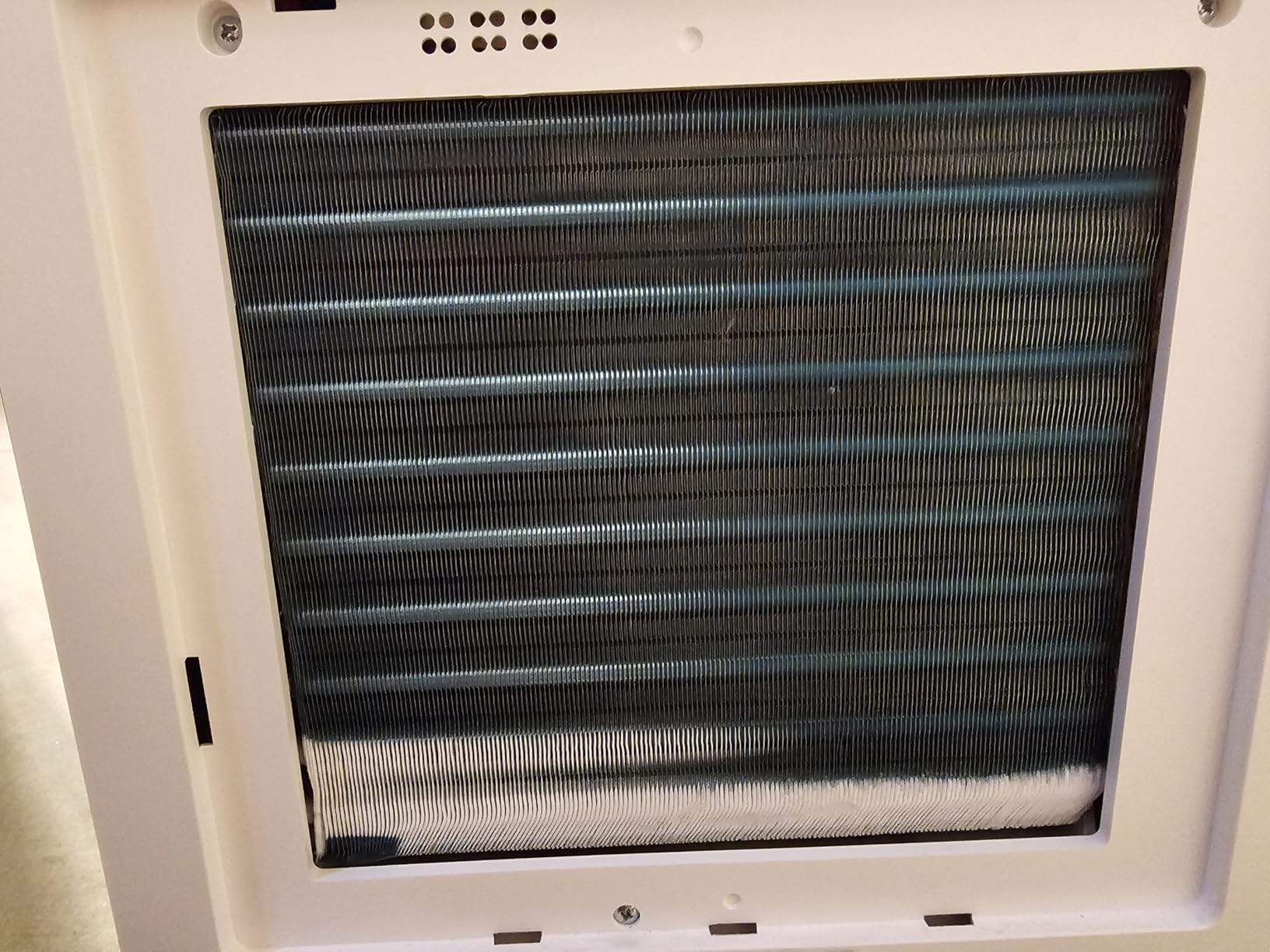
Capacity is rated at 140 pints per day at 95F and 95 percent relative humidity, dropping to 95 pints per day at more typical 86F and 80 percent conditions. That dual number matters, because the 86F figure is closer to what you will actually see in a September basement in most of the country. The 7mm pure copper evaporator and condenser tubes with hydrophilic aluminum foil are also the kind of detail that rarely appears on a marketplace listing, and they are the difference between a coil that survives five seasons of wet jobs and one that fouls quickly.
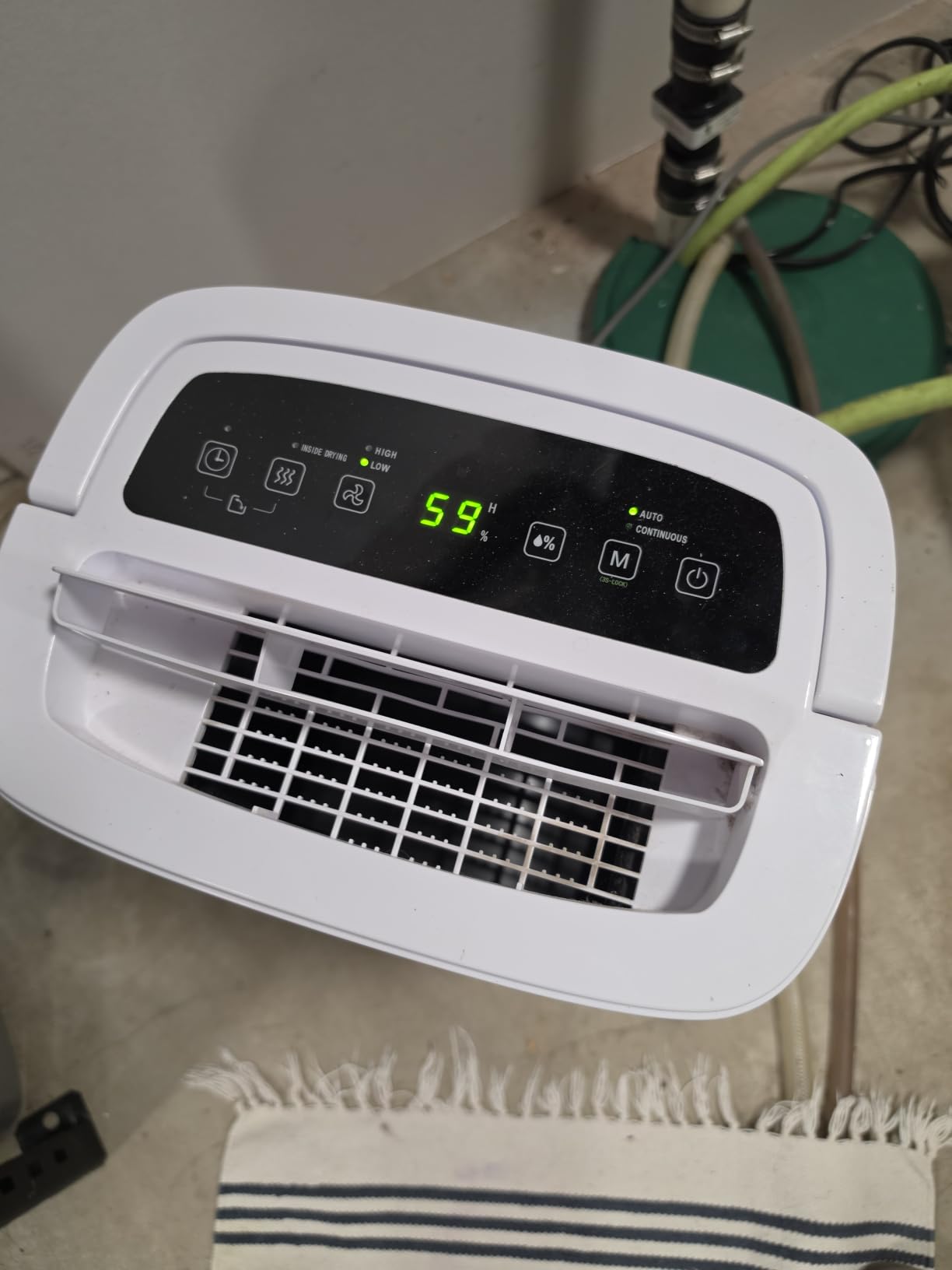
Two operating details stood out. The lowest fan speed measures 50dB, which is quiet enough to run overnight in an occupied apartment without the machine becoming the reason a tenant complains. And the power-off memory function restores your humidity set point after a power interruption, so an afternoon of grid work does not reset a two-day drying cycle back to default.
The weakness is drainage. There is no integrated condensate pump in the specification block, so continuous unattended drying depends on gravity to a floor drain, a sump, or an external pump you supply. In a basement with a floor drain that is a non-issue. In a crawl space or an upstairs room where the nearest drain is 15 feet away, you need to budget for an accessory pump.
When this AEOCKY model makes sense
Choose this machine when you have a basement or mid-floor space with a working drain, a 120V circuit you can dedicate, and a need to run quietly. The 400 watt draw is the lowest in the group, which means it can sit on a standard household circuit alongside air movers without overloading it, and the ENERGY STAR Most Efficient certification means the operating cost across a multi-day dry is lower than most competitors here.
It is also the safest recommendation for a landlord or a facilities manager who wants a machine to sit in a mechanical room or a storage area and simply work. The 43.4 lb weight is manageable for one person, the 17.7 by 10.1 by 24.1 inch footprint clears a standard closet, and the auto mode, continuous mode, smart drying mode, and sleep mode give you flexible control without a deep menu tree.
When it is the wrong choice
It is the wrong tool for a crawl space below 65F, because that operating floor is warmer than what true LGR restoration hardware handles. If your loss is in an unheated garage in January, a refrigerant machine that stops producing cold coil temperatures will stall, and you need a desiccant unit or a unit with a genuine low temperature circuit instead.
It is also the wrong tool for a job where nobody will be on site to empty a tank. The 1.85 gallon tank is small for continuous drying, and with no internal pump the machine stops the moment it fills. Renting this for a multi-day unattended dry means buying a separate condensate pump anyway, which erodes the value advantage this machine otherwise holds.
2. Waykar 125 Pint Crawl Space Dehumidifier with Pump – Best Value Pick
Waykar 125 Pint Crawl Space Dehumidifier with Pump & Drain Hose for Basements, Commercial & Water Damage Spaces up to 6500 Sq. Ft., Compact, Strong Dehumidification, 5-Year Quality Coverage
125 pints per day at 95F and 90 percent RH
16.4 ft pump lift
176 CFM
49.8 lbs
Pros
- 16.4 ft pump lift among the highest in the roundup
- 10 to 90 percent RH set point range
- Metal chassis resists job site impact
- 5 year compressor warranty
- Low profile footprint suits crawl spaces
Cons
- Highest 1 star share among 4.5 star units at 14 percent
- Remote control panel sold separately
- Single fan speed
Everything you actually need for unattended structural drying is in this box, including the one thing the top pick leaves out. The built-in condensate pump lifts 16.4 feet vertically, which is among the highest reach figures in this group and enough to push water up out of a basement sump, out of a low crawl space, or to a drain above the unit’s own floor level. That single feature removes the most common reason a drying job stalls overnight.
The 125 pint per day rating is measured at 95F and 90 percent relative humidity, and the rotary compressor is rated to TUV standards with a 5 year compressor warranty behind it. The 2 plus 3 layer condenser is claimed to improve heat exchange efficiency by 20 to 30 percent, and the 10 to 90 percent humidity adjustment range is among the widest set point spreads here, which lets you dry a crawl space down hard without pushing the machine outside its comfort band.
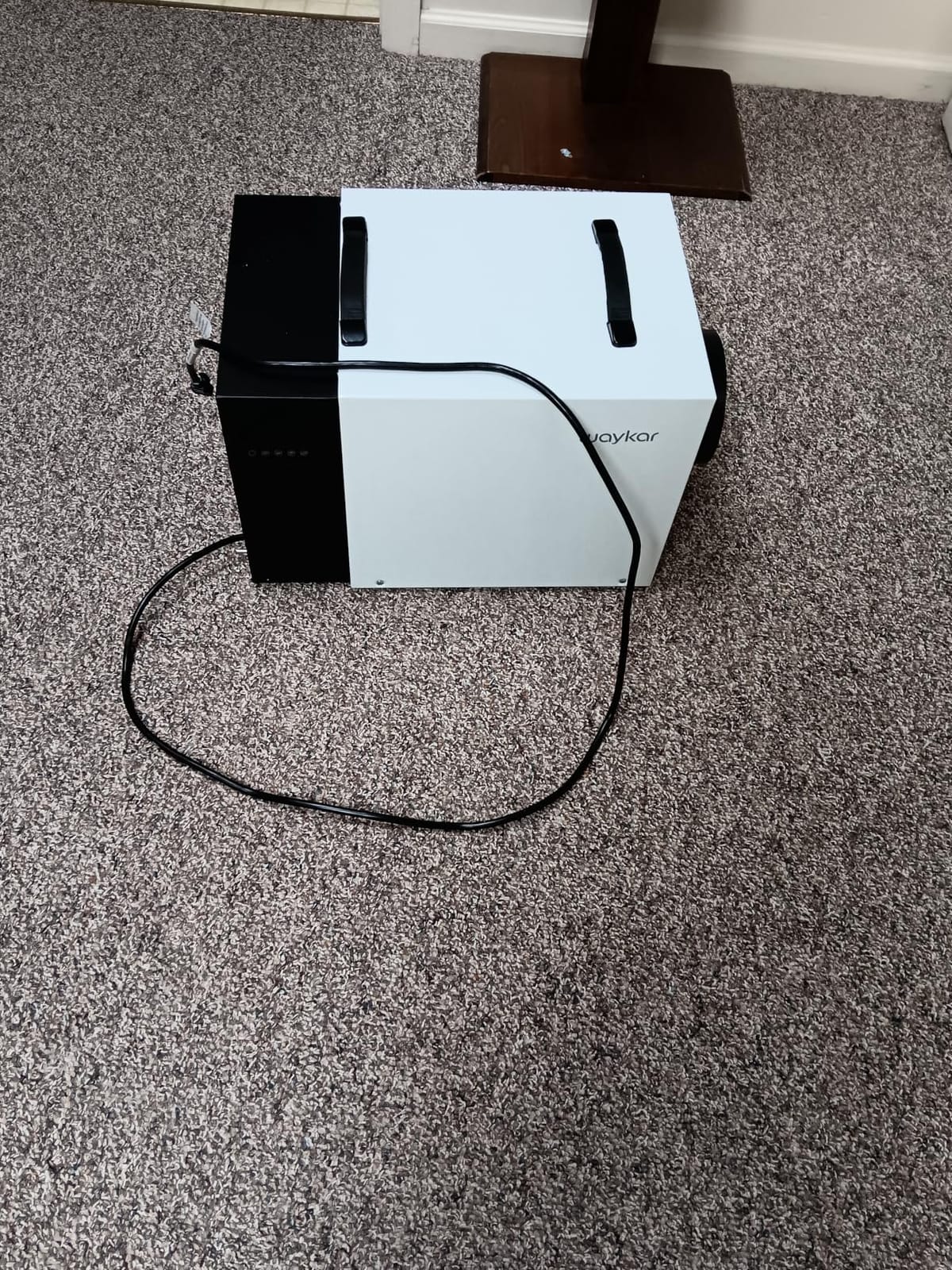
The chassis is metal rather than the ABS and rotomolded plastic used by several competitors, and at 49.8 pounds it is not a trivial carry but it is not unreasonable for two people on stairs. The 19.29 by 12.6 by 13.58 inch body is deliberately low and shallow, and the 5.9 inch pipe-mount exhaust vent option lets you duct air out of a sealed containment instead of recirculating it in the room.
The 16.4 ft pump drain hose and the 6.6 ft gravity drain hose are both included, along with a removable washable filter. That matters more than it sounds: a filter that can be rinsed rather than replaced keeps the machine running through a multi-week job without consumable cost, and the service reminders on the touchscreen panel prompt you to do it on a schedule rather than after the coil has already fouled.
Where the Waykar 125 works hardest
This is the machine for a crawl space with a drain that sits higher than the equipment pad, and for a basement where nobody wants to walk downstairs at 2am to swap a bucket. It is also a strong choice for mold remediation work, where the containment zone needs negative pressure and the dehumidifier is running behind a sealed barrier for weeks at a time.
For a small restoration crew running two or three concurrent jobs, the combination of pump reach, metal construction, and compressor warranty is the package that makes the most sense per machine deployed. If your operation is managing rented gear, a machine this simple to plumb in and this tolerant of handling will cost you less in setup time than almost anything else at this capacity.
Where it falls short
The 14 percent share of 1 star reviews is the highest among units in the 4.5 star and above bracket, and the recurring theme is compressor or pump reliability after extended continuous use. That is a data point worth respecting, not dismissing. Drying jobs are long, and a machine that fails on day nine of a two-week dry costs you more than the purchase price difference against a competitor.
Two smaller annoyances: the remote control panel is a separate purchase, so you are either walking back to the unit or running the machine without remote adjustment, and there is a single fan speed, which limits your ability to trade noise for extraction rate the way you can on multi-speed machines.
3. Waykar 150 Pint Commercial Dehumidifier with Pump – Lightest Pump Unit for Basement Stairs
Waykar 150 Pint Commercial Dehumidifier with Pump & Drain Hose for Basement
150 pints per day at 95F and 90 percent RH
38.6 lbs
9.84 ft pump lift
ENERGY STAR certified
Pros
- Lightest unit here with a published weight at 38.6 lbs
- Self-drying mode protects the reservoir
- Three drainage options
- ENERGY STAR certified with copper tubing
Cons
- Shortest pump lift among pump models at 9.84 ft
- 30 to 80 percent RH set point range is narrow
- 1.85 gallon tank
Capacity is the headline here at 150 pints per day at 95F and 90 percent relative humidity, with 212 CFM of airflow and coverage rated to 7000 square feet. But the number that decides whether you buy this machine is the weight. At 38.6 pounds it is the lightest pump-equipped unit on the list by a wide margin, and that is not a small thing when you are carrying equipment down a finished basement staircase twice a day.
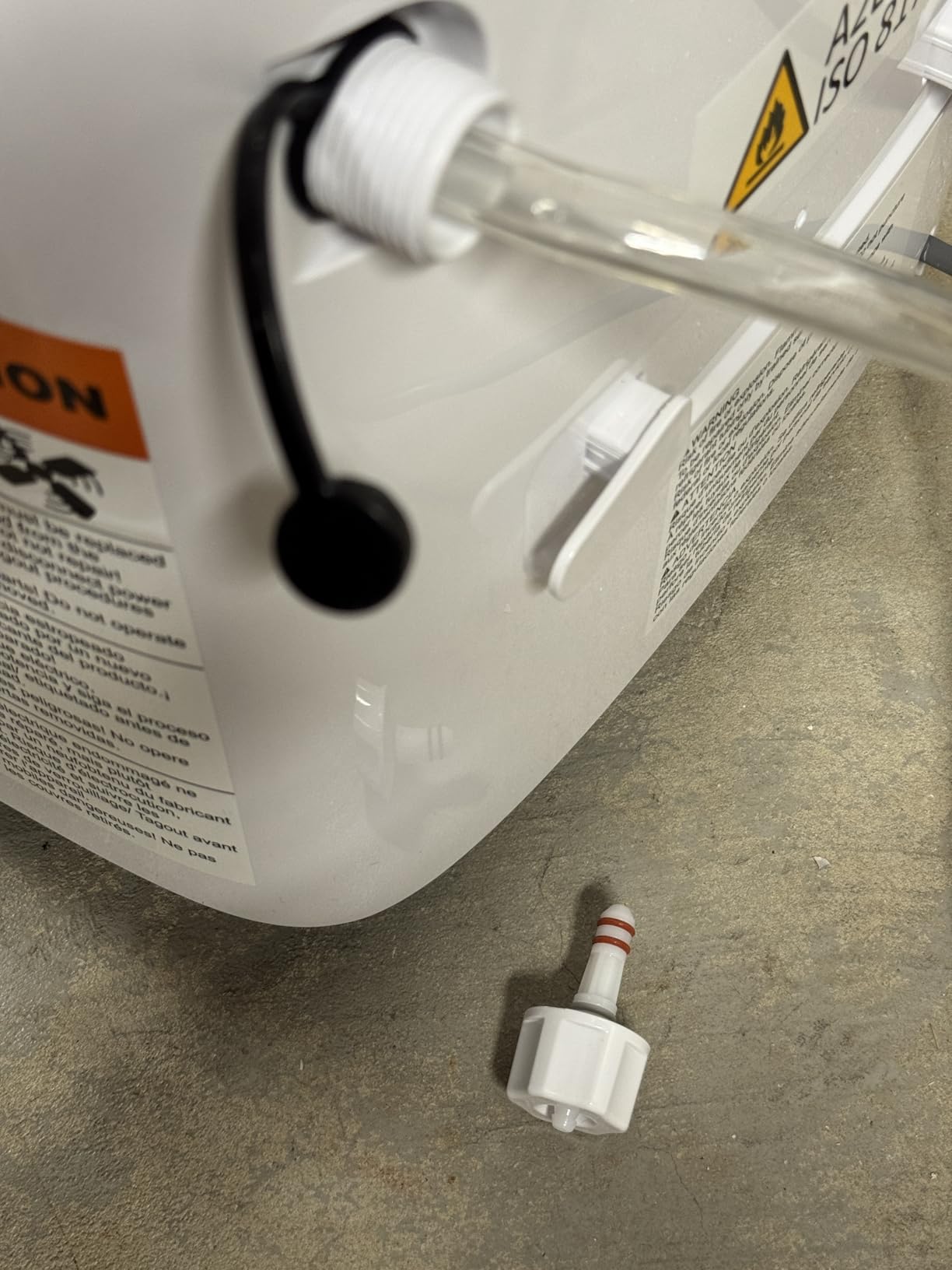
The drainage options are genuinely flexible. The pump drains upward to 9.84 feet or to a floor drain, and a 3.3 ft gravity hose is included for tie-ins. The self-drying feature runs the machine periodically to keep the reservoir from growing biofilm, which directly addresses one of the most common complaints we see about units with integrated tanks: a reservoir that smells because nobody cleaned it after the job ended.
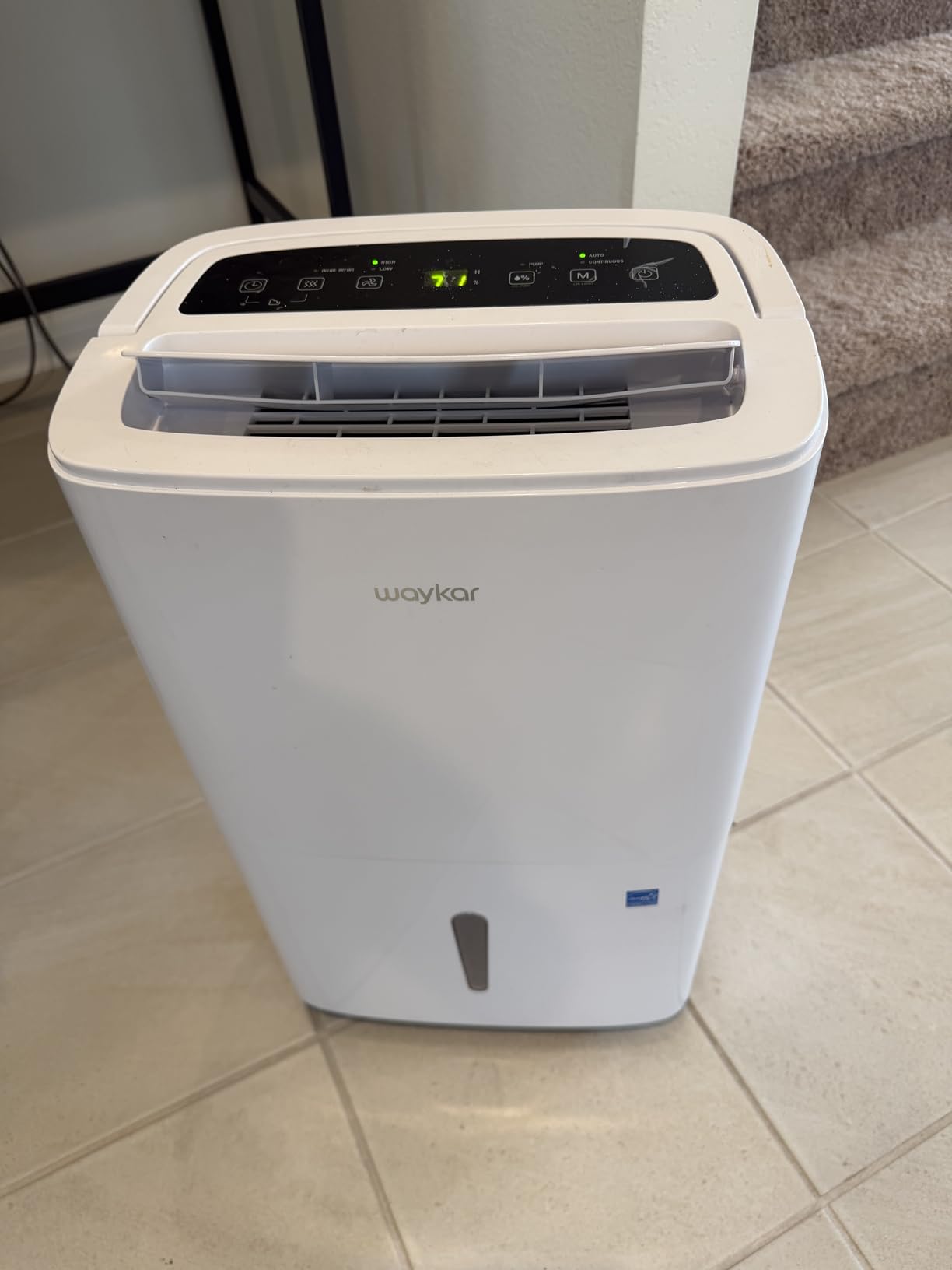
Omnidirectional casters, a storable top handle, and cord storage make this the easiest machine in the group to move between rooms, and the 24 hour timer plus memory restart means you can stage a drying cycle overnight without anyone touching it. It is ENERGY STAR certified and uses 7mm threaded pure copper tubing, at 520 watts.
Reviewers commonly single out the combination of value, weight, and quiet running, and several note that the self-drying function is the feature they did not expect to care about but now rely on. The negative notes cluster around maintenance, with owners reporting a need to clean the pump and filter periodically, and around the shorter pump lift when the drain sits above the unit.
When this is the right unit
Pick this one for a wet basement on a ground floor where you want maximum extraction and you are the only person moving equipment. The 150 pint rating and 212 CFM give it more headroom than the smaller crawl space units, and the light weight means a second person is optional rather than mandatory.
It also suits property managers who want a machine to live in a closet between jobs. A unit that rolls on casters, stores its cord, and dries its own reservoir will sit in storage for months and come back ready, which a unit with a stagnant open tank will not.
When it is the wrong unit
Do not buy it for a crawl space where the drain is more than 9.84 feet above the equipment. The pump simply will not lift that far, and a job that depends on a higher drain means you are back to carrying buckets. The 30 to 80 percent RH set point range is also narrower than several competitors, so if you need to hold a crawl space at 35 percent for a full week, this machine cannot be asked to do it.
Finally, the 1.85 gallon tank is on the small side. That is fine as a backup for when the pump fails, but it does mean the machine should never be the only line of defense against an overflowing reservoir in an unattended space.
4. ALORAIR Storm LGR Extreme 180 – Best for True LGR Structural Drying
ALORAIR 180 PPD Commercial Dehumidifier with Pump, 6-Year Limited Warranty
180 PPD at saturation and 85 PPD at AHAM
LGR refrigeration circuit
210 CFM
64.3 lbs
Pros
- Genuine LGR circuit that keeps extracting at low humidity
- 180 PPD saturation rating with 210 CFM airflow
- Digital display shows GPP coil temp and amperage
- 6 year limited warranty on the refrigeration system
- 19.6 ft drain hose with 14.7 ft lift
Cons
- Heaviest published weight in the roundup at 64.3 lbs
- Largest 1 star share at 16 percent
- Internal pump needs partial disassembly to service
- Polyethylene housing scuffs
Among the units here that publish a saturation rating alongside a proper AHAM figure, the split between them tells the whole story. 180 pints per day at 90F and 90 percent relative humidity, 85 pints per day under AHAM conditions. A machine that can honestly report both numbers is telling you it has been engineered for the real work, and this is the unit we trust for a job where the structure needs to come down to 40 percent RH and stay there.
LGR, or low grain refrigerant, is the technology that separates restoration-grade machines from consumer compressors. A standard refrigeration dehumidifier works by cooling a coil below the dew point of the incoming air, and as the air gets drier the coil has to get colder to keep condensing. LGR circuits add a stage that pre-cools the incoming air so the main coil stays effective at lower grain depression. In a saturated basement on day one, the difference is not academic. It is the difference between 180 pints a day and 40.
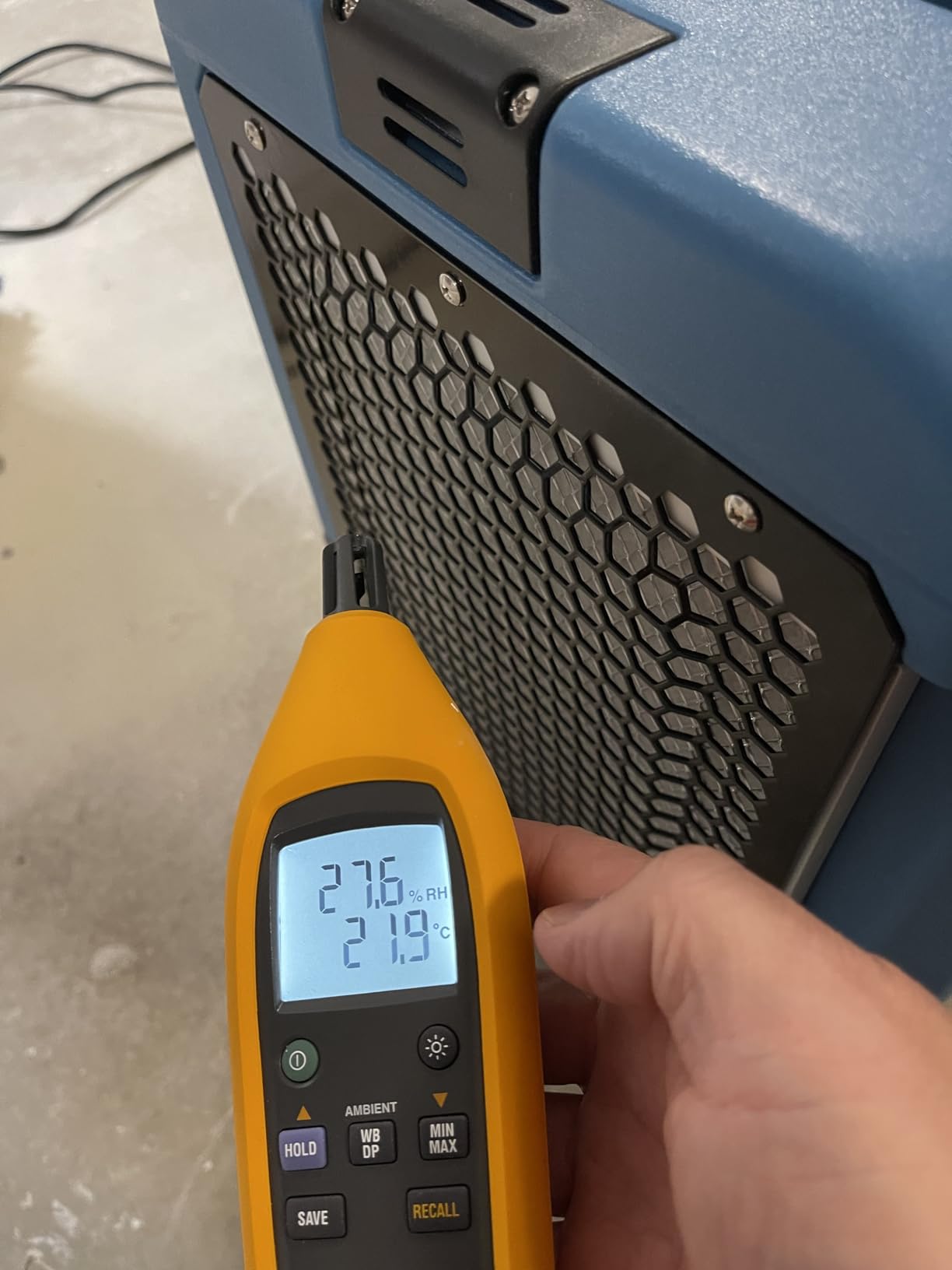
The diagnostic display is the standout feature for anyone who actually does this work. It shows inlet and outlet temperature and humidity, grains per pound, coil temperature, and both compressor and total amperage. When a job stalls at day four, those numbers tell you whether the problem is a saturated air volume, a starved airflow, or a failing component, and guessing without them is how restoration techs burn a day of billable time.
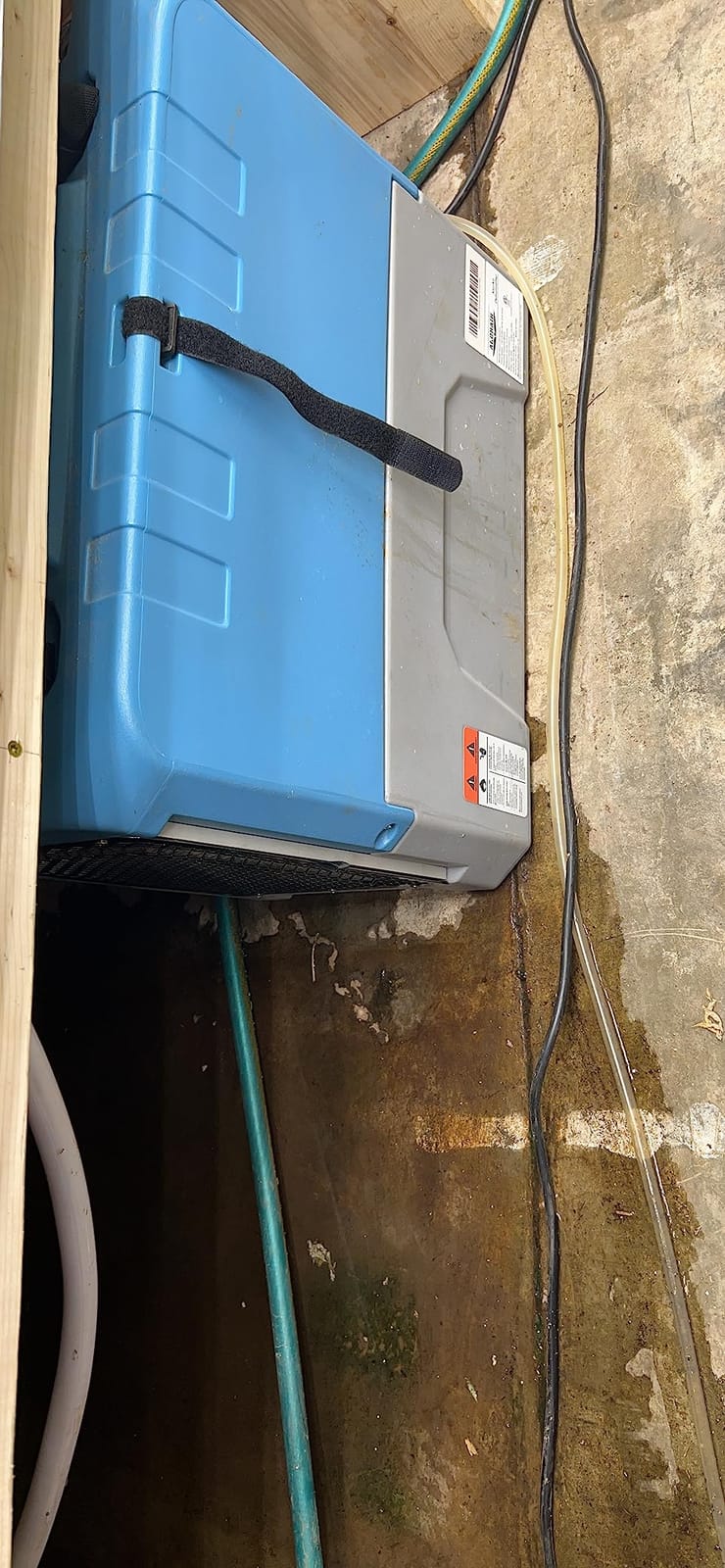
The 210 CFM airflow and 19.6 ft drain hose with 14.7 ft vertical lift put it in the top tier for both moving air and removing water, and auto defrost, auto restart after power failure, and memory start handle the interruptions that show up on real job sites. The 6 year limited warranty on the refrigeration system is among the longest terms in the roundup.
When the ALORAIR LGR earns its cost
It earns its cost on a large, deeply saturated loss. Flooded basement, whole-home drying after a supply line failure, crawl space with active groundwater intrusion. In those conditions the LGR circuit keeps extracting when lesser machines have already stalled, and the 14.7 ft pump lift means you can put the drain wherever the plumbing allows.
It is also the right machine for a technician who wants data. Between the grains per pound readout, coil temperature, and amperage, this unit answers the diagnostic questions that otherwise turn into a site visit. The 6 year refrigeration system warranty also means the single most expensive failure mode, a dead compressor, is covered for far longer than the 2 year whole unit terms that dominate this category.
When it disappoints
At 64.3 pounds it is the heaviest machine here, and moving it between floors alone is a two person job. The polyethylene housing also scuffs easily and can mark carpeting in a finished space, which matters in insurance restoration work where the homeowner notices.
The durability signal is the real concern. This machine carries the largest 1 star share in the roundup at 16 percent, and the dominant complaint theme is a refrigerant leak error code appearing around 15 to 21 months of use, alongside frustration with warranty shipping label policies and difficulty servicing the internal pump because it requires partial disassembly. If you buy this unit, buy it understanding that the pump is a service item rather than a user item, and keep the purchase documentation organized before you need it.
5. Waykar 155 Pint DP600B-CA – Best for Large Open Areas
Waykar 155 Pints Large Commercial Dehumidifier with Drain Hose and Water Tank, Industrial Dehumidifier in Large Space up to 8000 Sq. Ft for Home, Basements, Whole House, Library
155 pints per day at 95F and 90 percent RH
10 to 90 percent RH range
59.5 lbs
500 watts
Pros
- Large metal chassis on rolling casters
- 10 to 90 percent RH range for continuous drying
- Owners report 60 to 40 percent RH in one to two hours
- Single door access to filter and tank
- 24 hour programmable timer
Cons
- No built-in pump
- 1.32 gallon tank is the smallest here
- Raises ambient temperature in the room
- Reports of broken casters on arrival
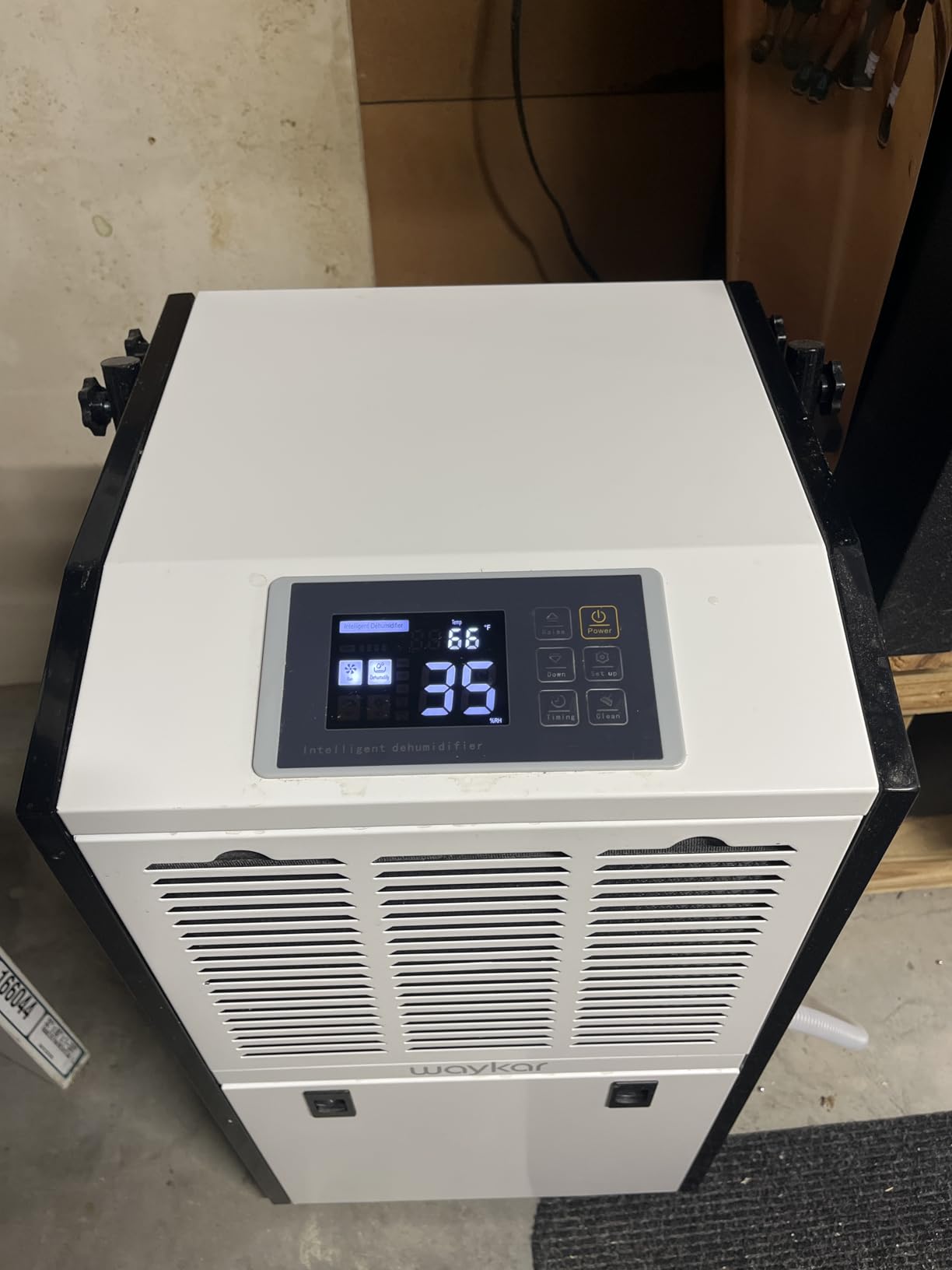
This is the machine our team would shortlist first for a large open floor plan, and owners consistently report the same result: 60 percent relative humidity down to 40 percent in one to two hours. That is a 155 pint per day rating at 95F and 90 percent RH, drawing 500 watts on a 115 volt supply, with a 13.39 inch square footprint that still gives you 164.7 CFM of airflow through the space.
The 10 to 90 percent relative humidity adjustment is what makes this unit useful for a real drying job rather than a demonstration. Set the dial to 10 percent and the machine runs continuously until the structure is bone dry, which is the behavior you want in a vacant property between tenants or a gutted room after a category 2 loss. The 1 to 24 hour programmable touch panel lets you stage cycles without returning to the machine.
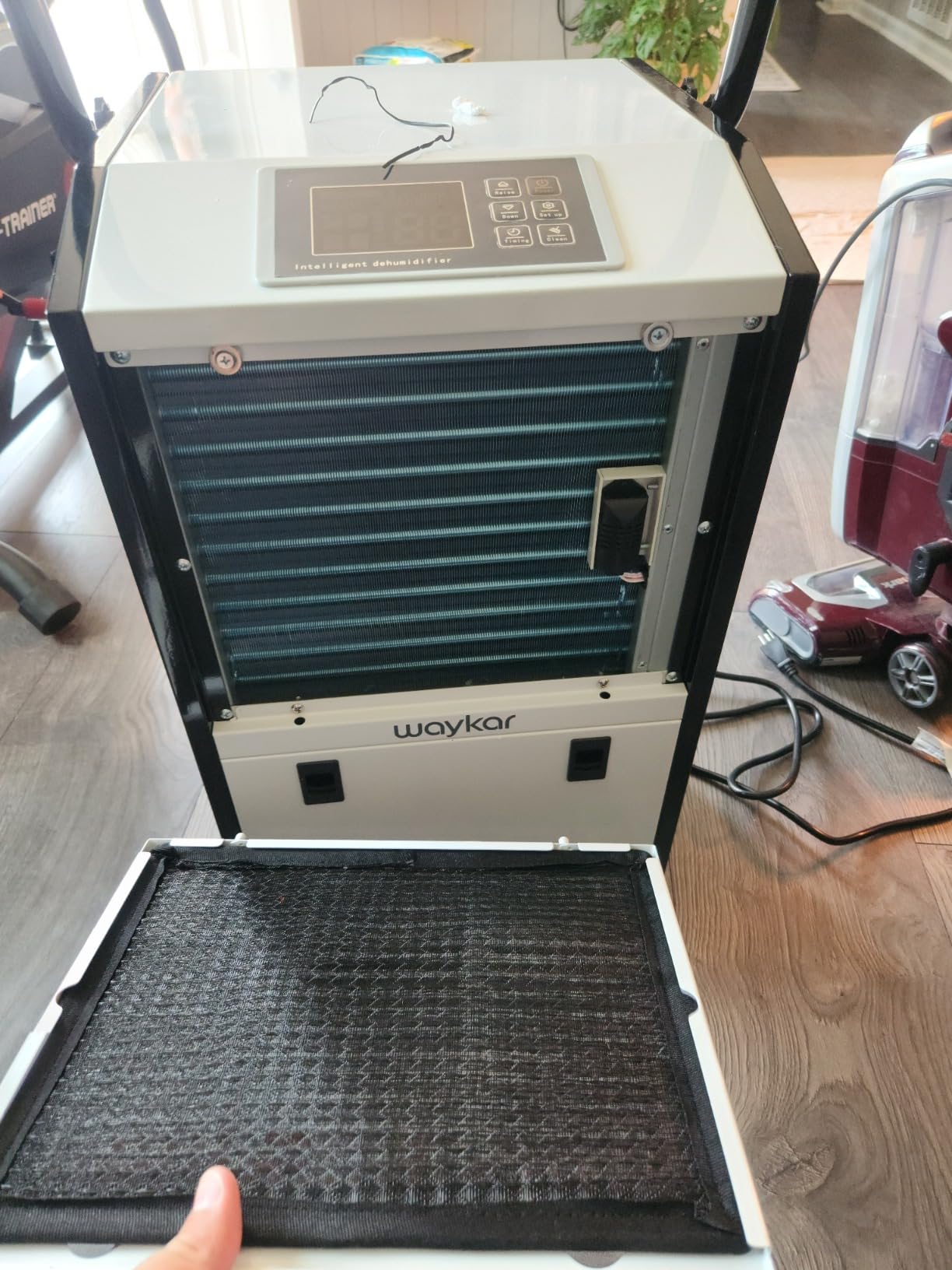
Mechanically it is built for movement. Universal rolling casters and multi-position carry handles mean a single person can roll it down a hallway rather than dragging it, and the metal body takes the scuffs and knocks of a job site better than a plastic chassis. Single door access to both the washable filter and the drain tank speeds up the filter clean that owners otherwise put off until the machine has lost performance.
Power-off auto restart restores your saved humidity settings, so an unplanned outage during a weekend dry does not silently reset the machine to a higher humidity target and restart the drying from scratch. Auto defrost handles the coil icing that shows up in unheated spaces during shoulder season.
Who should buy the Waykar DP600B
Buy this if you are drying a large, open, above grade space with a gravity drain available. Whole-home drying after a burst pipe, a gutted second floor, a warehouse or church hall after a roof failure. The speed is the selling point, and several owners report that it replaced two or three residential machines on the same job.
Support response is another reason to like this one. Multiple reviews describe prompt, helpful support and a free replacement for a defective unit, which is a meaningful signal for a product line with a smaller volume of owner feedback than the leaders.
Where the weaknesses sit
There is no built-in pump, so this unit needs a floor drain, a sump, or a separate condensate pump. For a basement where the drain sits below the machine, gravity is enough and this becomes a strong value. For anything above grade, plan on buying the pump.
Be aware of two more things. The 1.32 gallon tank is the smallest in the roundup, so if the drainage line fails, this machine stops fast. And it raises ambient temperature in the room where it runs, because the compressor exhaust is discharged into the space. In a closed containment during winter that can be a benefit, but in an occupied room in summer it works against you.
6. Airecoler GT-X5 125 Pint – Best for Low-Clearance Crawl Spaces
Airecoler 125 Pints Commercial Dehumidifier for Crawl Space & Basement
125 pints per day max and 60 PPD at AHAM
265 CFM airflow
R32 refrigerant
50 lbs
Pros
- One of the lowest 1 star shares in the roundup at 5 percent
- 265 CFM airflow
- 19.2 by 12.2 by 13.4 inch body fits between joists
- R32 refrigerant with low global warming potential
- 5 year coverage across unit and refrigeration system
Cons
- This 125 pint version has no built-in pump
- 830 watt draw is high for extended runtime
- Smaller base of owner feedback
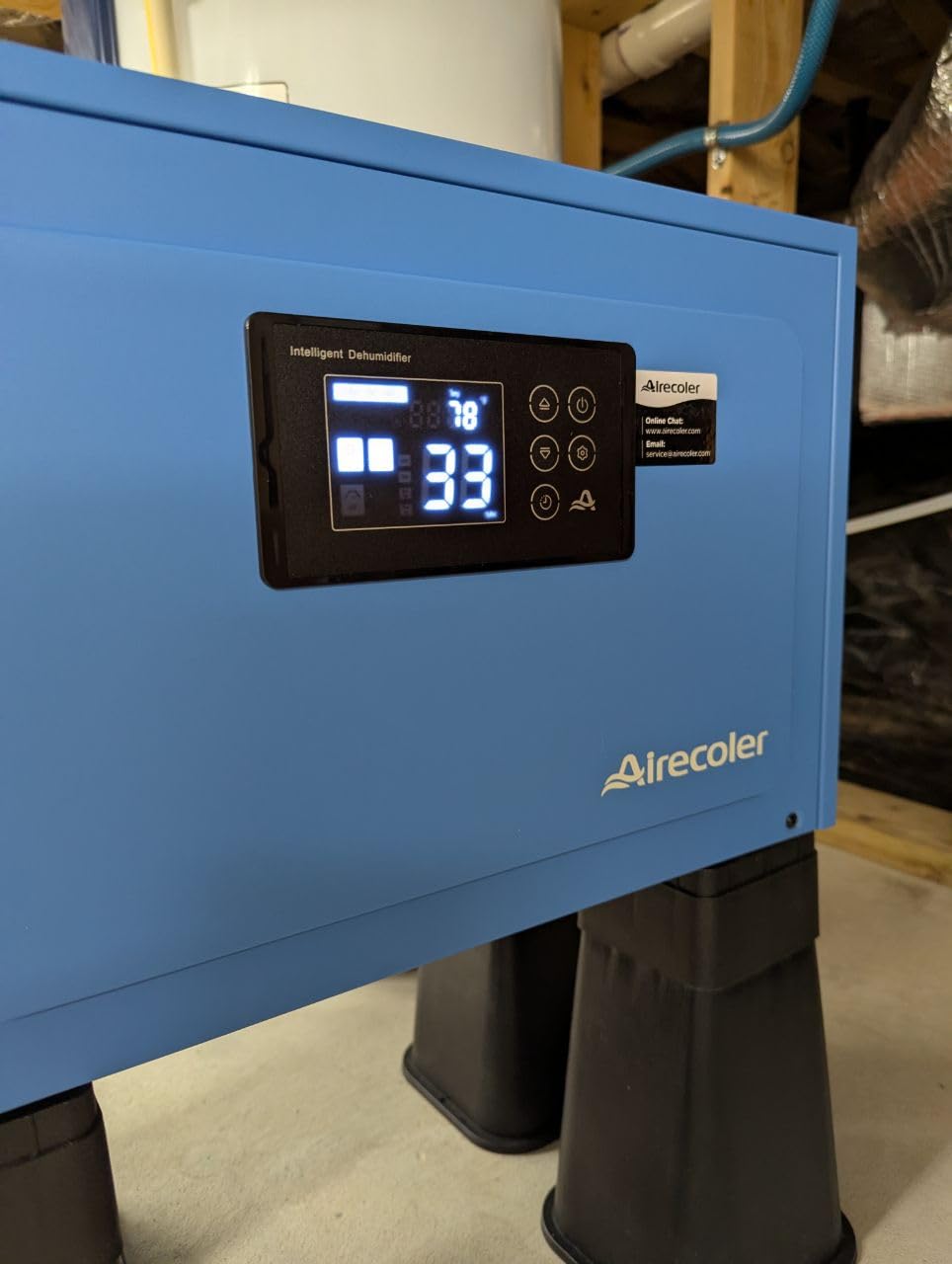
The Airecoler GT-X5 is the unit we recommend when the job is a crawl space with 12 inches of clearance and a hard deadline. The 19.2 by 12.2 by 13.4 inch chassis mounts between floor joists or on a low shelf without cutting a hole in the framing, which is the single most common reason crawl space jobs stall in the field.
Airflow is the other strength. At 265 CFM this machine moves more air than most of the units here, and in a crawl space that matters more than raw pint capacity because the volume of air you can move determines how quickly the moisture leaves wet insulation and reaches the coil. The 125 pints per day maximum with 60 pints per day at AHAM is a realistic spread, and the honest AHAM number tells you what you get once the air is not saturated.
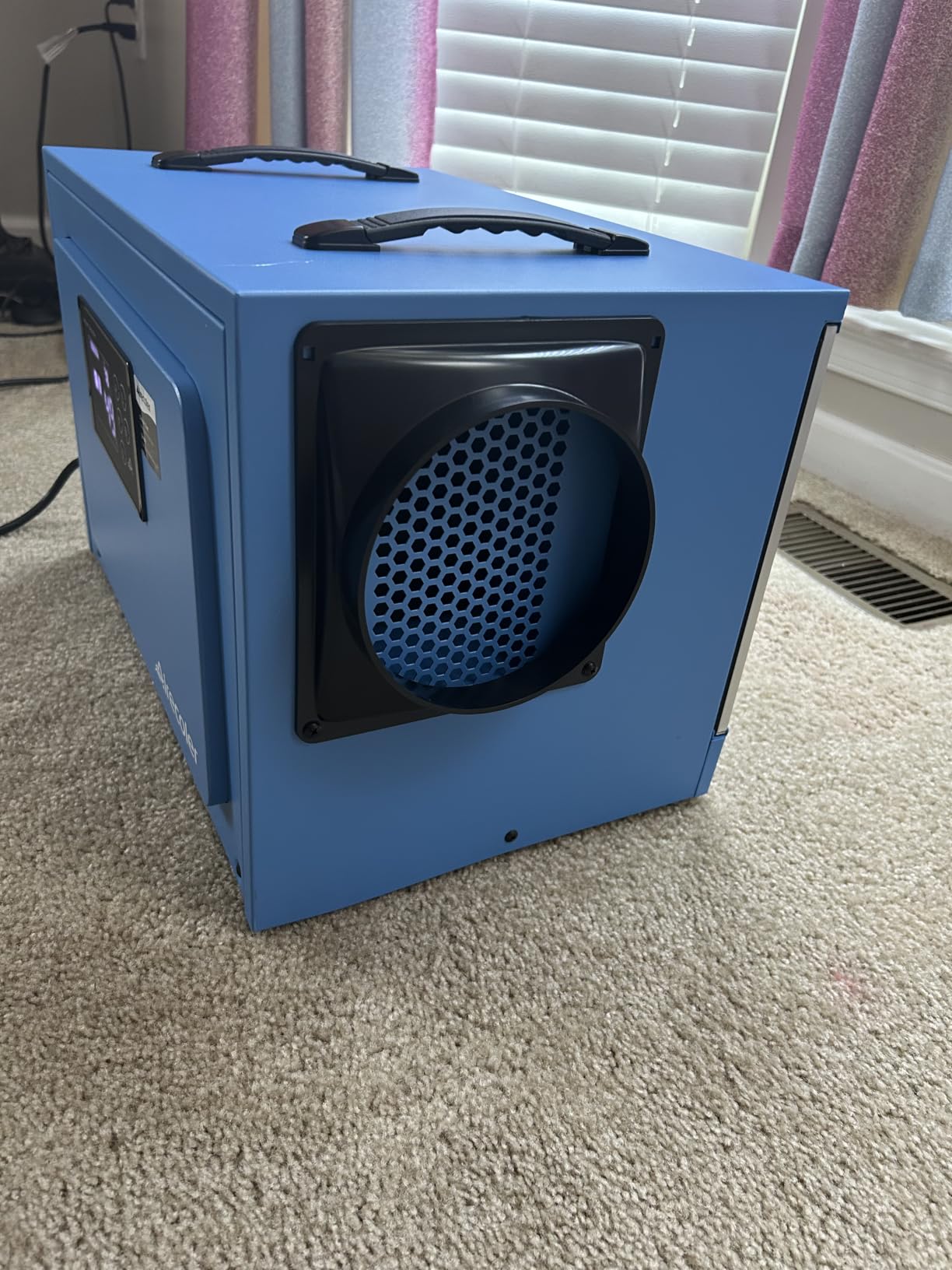
The R32 refrigerant system is worth noting. R32 has a much lower global warming potential than the R410A used in many older machines, and for a unit that may run continuously for weeks inside a home, that is a real consideration rather than a spec sheet curiosity. Auto drain, auto defrost, and auto restart after a power outage are all present, along with a 6.56 ft drain hose and a 24 hour auto on and off timer.
Reviewers point to the compact footprint as the deciding factor, along with strong moisture removal and straightforward setup. This unit also carries one of the lowest 1 star shares of anything in the roundup at 5 percent, with 74 percent of reviews at five stars, which is a better consistency signal than several higher-volume machines.
When the compact body matters most
Crawl space drying after a pipe leak, a flooded basement where the dehumidifier has to sit under a low section of joists, a post-rain remediation job in a low-clearance bay. In each of those, the machine that fits is worth more than the machine with the bigger number on the box.
The 5 year coverage, split as 2 years on the whole unit plus 3 years on the dehumidification system, is a better warranty structure than the 2 year flat terms common in this category. For a machine you might run 3000 hours on a single job, that extra coverage on the refrigeration side is the part that actually matters.
What to watch for
This specific 125 pint version does not have a built-in pump. The same manufacturer does offer 125 pint and 170 pint pump-equipped variants, so verify which version you are actually holding before planning the drainage. If you need upward drainage, budget for a separate condensate pump or step up to the pump variant.
The 830 watt draw is at the high end of this group, and on a long job that shows up on the operating cost and on circuit planning. A crawl space job with air movers running alongside this machine may need a dedicated circuit, so check the load before you deploy. Finally, at 290 reviews the feedback base is modest, so treat the reported performance as encouraging rather than proven at scale.
7. LUKO OL-R180B 180 Pint – Best Airflow at 386 CFM
180 Pints Commercial Dehumidifier for Crawl Spaces & Basements with Pump & Drain Hose, Industrial Grade Water Damage Restoration for up to 7,500 sq ft, Auto Defrost, Memory, Blue
180 PPD at saturation and 85 PPD at AHAM
386 CFM airflow
15 ft pump lift
rotomolded stackable
Pros
- Highest airflow in the roundup at 386 CFM
- Built-in pump with 15 ft vertical lift and 17 ft hose
- Rotomolded housing resists impact and warping
- Stackable design for multi-unit staging
- Casters and dual handles for transport
Cons
- No published weight
- ABS plastic housing is less repairable
- 12 percent 1 star share
- Thinnest review base among pump models
Nothing else in this roundup moves air like the LUKO does. At 386 CFM with a 180 pint per day saturation rating and 85 pints per day at AHAM, this machine is built for volume rather than for a tight closet. When you are drying a 2000 square foot basement with saturated air and a lot of wet material, the difference between 200 CFM and 386 CFM is the difference between removing moisture from the room and removing it from the surfaces.
The rotomolded ABS housing is a deliberate choice for fleet work. Roto molding produces a seamless shell with no welded seams to corrode or crack, which is exactly what you want when a machine lives in a truck, gets dropped on a curb, and runs in wet basements for years. The stackable design is unusual in this category and genuinely useful when you stage three or four machines in a hallway before pushing them into a job.
Drainage is well handled. The built-in condensate pump pushes through a 17 ft drain hose with 15 ft of vertical lift, which covers nearly every practical geometry, and the LCD monitoring display lets you check the target without walking over. Auto on and off, memory restart, continuous mode, auto defrost, and auto restart after power failure round out the automation. Coverage is rated to 7500 square feet.
Reviewers consistently highlight raw drying speed in large wet spaces and the convenience of the integrated pump, with a smaller cluster raising long-term compressor reliability and noise under sustained high load. That second theme is worth taking seriously if the machine will be running flat out for weeks rather than cycling down to a set point.
When the LUKO earns its airflow
Choose it for large volume drying: a whole-floor loss, a multi-room containment, a basement with standing water that has already been pumped out but left the structure saturated. The 386 CFM and 180 PPD at saturation is the strongest combined extraction and airflow package here, and the 15 ft pump lift means the drainage layout is not going to be the limiting factor.
For a crew running several concurrent jobs, the stackable housing and casters with dual carrying handles make staging and transport straightforward, and the LCD display keeps the operator from making a trip across the house to check a set point.
What the gaps are
There is no published weight in the specification block for this unit, which is an odd omission for a machine this size and makes transport planning harder than it should be. Plan for a two person carry and verify the weight with the seller before committing.
Second, an ABS plastic housing is not repairable in the way a metal chassis is, and the 12 percent 1 star share is among the highest in the roundup. With only 180 reviews, the feedback base is also the thinnest among the pump-equipped units here, so you are buying on the strength of the specification sheet more than on a long public reliability record.
8. ALORAIR Storm 80X 170 PPD – Best Energy Efficiency at COP 2.4
ALORAIR 170 PPD Commercial Dehumidifier with Pump, LGR for Industrial Use
170 PPD at saturation and 80 PPD at AHAM
COP 2.4 L per kWh
200 CFM
63.9 lbs
Pros
- Best energy efficiency in the roundup at COP 2.4
- LGR circuit keeps extracting in cooler low humidity conditions
- Rotomolded housing resists job site impact
- Retractable handle and sturdy wheels
- Owners run it continuously
Cons
- Supplied drain tubing may be too short
- WiFi app reliability reported as inconsistent
- Heavy at 63.9 lbs
- Smallest rated coverage area
The efficiency number is what separates this unit. A COP of 2.4 liters per kilowatt hour is the best figure in the roundup, and on a job that runs continuously for two or three weeks that difference is money you can actually measure at the meter. Owners report holding a set point around 40 to 58 percent relative humidity in basements of 1200 to 1500 square feet while running quietly enough to leave on around the clock.
The 170 pints per day saturation rating and 80 pints per day AHAM figure come from a genuine LGR circuit, which means it continues pulling moisture in cooler and lower humidity conditions than a standard compressor unit can manage. Airflow is 200 CFM at 607 watts, with a 19.6 ft drain hose on the integrated condensate pump. The warranty structure is 2 years full plus 6 years of refrigeration system parts in years 3 through 6, one of the longer coverage packages in this group.
Physically it is built like a fleet machine. The rotomolded impact resistant housing takes a beating that would dent sheet metal, the retractable handle and durable wheels make moving it between floors manageable, and the auto on and off, memory restart, automatic power recovery, and auto defrost features mean it keeps working through the interruptions that a restoration job inevitably produces.
The recurring operational notes from owners are practical rather than dramatic: the supplied drain tubing may not reach an existing drain, one reviewer broke the drain hose connection on day one, and app connectivity is reported as unreliable on some units. Treat the WiFi feature as a nice-to-have rather than a reason to buy.
When this unit fits the job
It suits a long, continuous dry in a mid-size basement where operating cost matters, and it is a sensible choice for anyone who has been burned by a machine that stalled out at 55 percent relative humidity. The LGR circuit handles exactly the late-stage part of a drying job where standard compressors give up.
Quiet continuous running makes it a good pick for a space where someone lives nearby, and the 2 year plus 6 year parts warranty is a stronger long-term position than the flat 2 year terms many competitors carry.
Where it will frustrate you
At 63.9 pounds it is awkward to reposition in a finished space, and the 2100 square foot rated coverage is the smallest in the roundup, so on a large loss you will be running multiple machines. Plan on buying a longer drain hose, because the supplied length is the most commonly reported annoyance.
And with only 114 reviews behind it, the long-term reliability picture is thinner than the efficiency data suggests. The performance claims are strong and consistent; the durability record simply has not accumulated yet.
9. Airzentti ACD155P 155 Pint – Built for Quiet, Occupied Spaces
Airzentti 155 Pint Commercial Dehumidifier with Pump and Drain, Energy Star
155 pints per day with 70 PPD at AHAM
220 CFM airflow
16.4 ft pump lift
59 lbs
Pros
- Tied for the highest rating in the roundup at 4.6 with 88 percent five star
- Owners report it is inaudible under a living room floor
- Built-in pump with 16.4 ft vertical lift
- Switchable gravity or pump drainage
- ENERGY STAR certified and TUV compliant
Cons
- Only 63 reviews and a newer listing
- Heavy at 59 lbs for tight crawl spaces
- Remote control panel sold separately
- High 860 watt draw
This is the quietest-running option in the roundup according to owner reports, and those reports make a specific and unusually strong claim: they describe running it under a living room floor where it is essentially inaudible. If you are drying a crawl space beneath an occupied house, that single fact can matter more than every other specification on this list.
The capacity figures are solid as well. 155 pints per day under saturated conditions, 70 pints per day at AHAM, 220 CFM of airflow, rated coverage to 7500 square feet, at 860 watts. The built-in pump drains up to 16.4 feet of vertical lift, which ties for the highest reach available, and a 6.56 ft gravity drain hose is included so you can choose pump or gravity drainage depending on the site.
Owners report dramatic results, including 70 percent down to 45 percent relative humidity in a single day and 88 percent down to 55 percent in a matter of hours. The most common operational note across reviews is that several buyers have now switched to gravity draining to preserve pump life, which is a good sign the machine is over-specified for its task rather than under-used.
The 6 inch air duct collar is a detail that shows this machine was designed for distribution rather than just point dehumidification. It lets you push dried air into a joist bay or a containment chamber so you are conditioning the volume rather than the machine’s immediate surroundings, and leveling feet plus an 8.2 ft power cord make placement less of a puzzle in a tight joist bay.
Auto defrost, auto drain, auto restart, automatic shutoff, and a screen lock are all present, and the unit is ENERGY STAR certified and TUV compliant. Support is described in reviews as quick, thorough, and proactive with follow-up, which matters for a newer listing with a small sample.
When the Airzentti is right
Buy it when noise is the binding constraint. Occupied apartments, a crawl space under a bedroom, a guest house where the owner is still on site. The ENERGY STAR certification also keeps the operating cost down on long runs, and the 7500 square foot rating covers most single-family losses without a second machine.
Switchable gravity and pump drainage makes it flexible for sites where a floor drain is available in one room and a raised sump is needed in another, and the duct collar opens up distribution setups most of the compact units in this roundup cannot do.
What to weigh against that
With 63 reviews, this is the smallest sample in the roundup and a newer listing, so the 4.6 rating is promising rather than established. At 59 pounds it needs two people in a tight crawl space, and the remote control panel is a separate purchase, which undercuts the convenience case in a space you cannot easily walk back to.
Finally, at 860 watts it draws more power than anything else in the roundup except the Moiswell, which sits at the same figure. For a machine you intend to run continuously for a week in a space with a limited circuit, that is a planning item rather than a dealbreaker, but it is worth checking the panel capacity before you commit.
10. Moiswell Defender MP145 155 Pint – Best Metal Build with R32
Moiswell 155 Pints Commercial Dehumidifier with Pump for Crawl Space
155 pints per day max with 70 PPD at AHAM
265 CFM airflow
16.5 ft pump lift
64 lbs
Pros
- Tied for the highest rating at 4.6 with only 3 percent 1 star reviews
- Built-in pump with 16.5 ft drain hose and 16.5 ft lift
- 265 CFM airflow matches the top figure here
- R32 refrigerant with zero ozone depletion
- Metal outer casing
Cons
- High 860 watt power draw tied at the top of the roundup
- Heavy at 64 lbs for basement stairs
- Sparse included components list
- Smallest coverage rating among 155 pint units
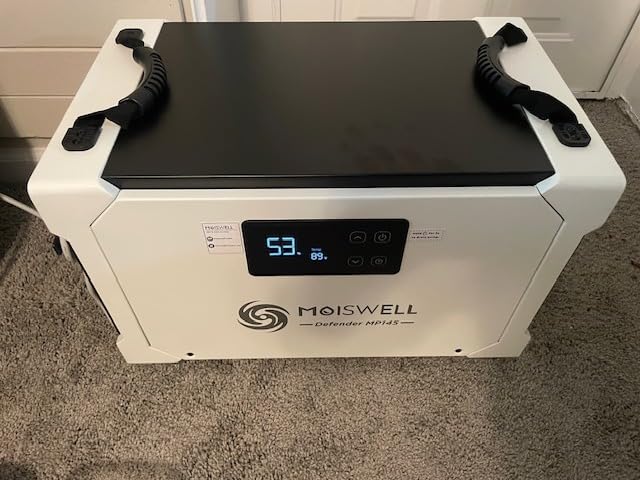
The Moiswell Defender MP145 is the machine we would put behind our own money if a job were billed to us and the invoice had to survive an insurance adjuster. Every review in the visible sample is favorable, with an 83 percent five star share and only 3 percent one star ratings, and the owners who write in describe steady moisture removal, set and forget humidity control, and a metal build that feels like equipment rather than an appliance.
Specification wise it is competitive with the best of the pump-equipped units here. 155 pints per day maximum, 70 pints per day at AHAM, 265 CFM of airflow, rated to 6000 square feet, at 860 watts. The built-in pump pushes through a 16.5 ft drain hose with 16.5 ft of vertical lift, which is the highest reach among the units here by a narrow margin over the Airzentti.
The R32 refrigerant system is rated at zero ozone depletion and roughly 70 percent lower global warming potential than R410A. Automatic cycling, automatic drainage, auto defrost, and auto restart after a power outage handle unattended operation, and the coverage is 2 years full plus 3 additional years on the dehumidification system. The 68 liter tank is by far the largest reservoir among the units here, which gives you a real backup if the drainage line comes off.
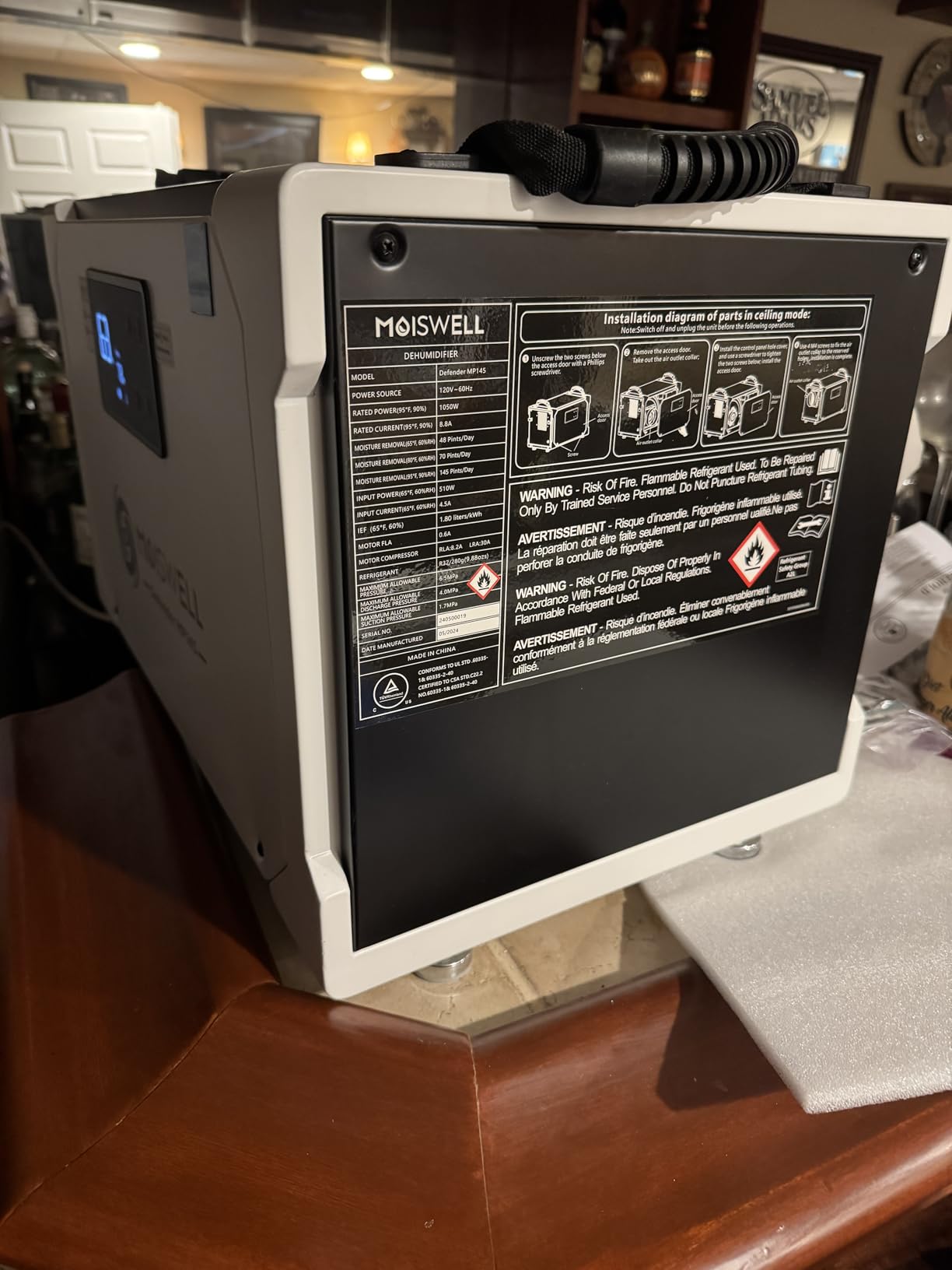
The metal outer casing is the differentiator for fleet use. It resists corrosion, takes a knock from a dolly without cracking, and unlike rotomolded plastic it will not warp if the machine is stored in a hot truck over a summer. For a restoration company that moves equipment constantly, that is worth paying for.
Feedback is uniformly favorable, with the practical notes centered on the unit’s weight and its electricity draw for sustained runtime. Both are planning items rather than defects, and both are visible before you buy.
Who the Defender MP145 suits
It is a strong choice for a restoration crew that wants one machine type across multiple properties, because the metal build and 5 year coverage structure survive the abuse of fleet deployment. The 265 CFM airflow and 155 pint capacity handle a mid-size basement comfortably, and the 16.5 ft pump lift means you are never choosing a drain location to suit the machine.
The large tank is quietly one of its best features. On a long dry, a large reservoir means a pressure relief if a hose gets kicked loose, which is exactly the failure that ends drying jobs early.
Where the trade-offs sit
At 64 pounds, carrying it up finished basement stairs is a two person job, and 860 watts makes it the joint highest draw in the roundup alongside the Airzentti, so check your circuit if you plan to run it with air movers.
The rated coverage of 6000 square feet is the smallest among the 155 pint units here, which is conservative but worth knowing if you are sizing for a large open plan. The included components list is also sparse with no accessories itemized, so confirm what is in the box before the job starts rather than at the drain connection.
How Many Commercial Dehumidifiers Do You Need for a Water Loss?
Start with area, then adjust for severity. A common rule of thumb in restoration is one pint per 10 to 15 square feet of affected area per day, so a 1500 square foot wet basement at the mid point of that range needs roughly 100 to 150 pints per day of capacity. One 150 pint machine covers it. A 3000 square foot loss needs two machines, and running two half-size machines is almost always better than running one full-size machine, because airflow and heat rejection degrade when you ask a single unit to carry the whole load.
Water damage categories adjust the number. Category 1, clean water from a supply line with no contamination and minimal structural absorption, is the lightest case and often clears with a single machine plus air movers. Category 2, water with contamination from an appliance leak or roof breach, usually involves carpet, pad, and underlay, and pulls more moisture than the area alone suggests. Category 3 losses involving standing water soak saturated structural framing, and you should plan on multiple machines and a longer schedule. Category 4 losses are almost always a licensed contractor situation, not a rental decision.
One more sizing factor people miss: the rated coverage figure on the box is not a drying capacity figure. A machine rated for 8000 square feet of air movement may be pulling 95 pints a day in that space, which is not enough for a saturated structure. Judge the machine by pints per day at saturation and by CFM, and treat the square foot number as a statement about airflow, not moisture removal. If you want a residential baseline to compare against before you step up, our best dehumidifiers tested and reviewed guide shows where household machines sit in that range.
How to Choose: Capacity, Airflow, Pumps and Temperature
Read the two capacity numbers, not one. AHAM ratings are measured at 80F and 60 percent relative humidity, which is a mild condition that will not be true in a wet basement in the first week. Saturation ratings are measured near 90F and 90 percent relative humidity, which is closer to reality on day one. Two machines in this roundout publish both, and the gap between them is the honest measure of how the machine behaves as the air dries out.
Then check airflow. CFM is what moves the moisture-laden air across a cold coil. A 100 PPD machine moving 150 CFM will saturate its own coil and stall; the same 100 PPD moving 250 CFM keeps pulling. Units here range from 164.7 CFM on the Waykar DP600B up to 386 CFM on the LUKO, and that 2.3x spread is why we rank machines differently for crawl spaces than we do for open basements.
Drainage decides whether you can leave the machine alone. A built-in pump with 10 feet of vertical lift or more is the difference between a job that runs for four days without attention and one that does not. Where there is no pump, plan for a floor drain below the unit or purchase a condensate pump, and secure the hose out of walkways because a kicked line is the most common cause of a stalled dry.
Temperature and power round it out. Every unit here runs on 115 or 120 volts, so a dedicated 15 or 20 amp circuit is sensible, especially alongside air movers. Draw ranges from 400 watts on the AEOCKY up to 860 watts on the Airzentti and Moiswell, and that gap is material on a multi-day run. For cold unheated spaces, check the operating floor, because refrigerant machines lose effectiveness as coil temperature drops.
LGR vs Desiccant: When Each Technology Wins
Use a desiccant unit when the space is cold, unheated, and the temperature will drop below about 40F. Desiccant dehumidifiers use silica gel or a similar media rather than a refrigeration coil to pull water out of the air, and they keep working in unheated garages, crawl spaces in winter, and any location where a compressor machine would freeze up or lose coil temperature. The cost is power consumption, since desiccant units typically draw more electricity for the same pints, and the fact that they exhaust warm air, which is useful in winter and unhelpful in summer.
Use an LGR or standard refrigeration unit for everything else, which in practice means conditioned or moderately heated interior spaces. LGR machines dominate the list above because the majority of restoration work happens in basements, crawl spaces, and gutted rooms where temperature is not the binding constraint. The two ALORAIR units here use genuine LGR circuits, which extend extraction into lower humidity conditions and are the better choice for a long job that needs to reach and hold 40 percent relative humidity.
One caveat on desiccant units worth knowing: long-term continuous-run owners report media degradation and flaking after roughly two years of hard service, discussed on r/liveaboard by a user running an Ivation desiccant unit. If you are considering a desiccant machine for a garage that dries every winter, factor media replacement into the ownership math rather than assuming it is a one-time purchase.
Common Problems with Commercial Dehumidifiers
The most common complaint in this category is a machine that cannot drain itself, which means the tank fills and drying stops silently overnight. Three of the ten units here ship without an integrated pump, so continuous drainage depends on a floor drain, a gravity line, or a pump you supply separately. The second most common is a refrigeration leak error code appearing between 15 and 24 months of use, which is the dominant one star theme on several machines here and the reason continuous-run owners value durability above features.
Undersizing is the third problem, and it is usually a purchasing error rather than a machine defect. A unit bought for a 2000 square foot space that stalls at 45 percent relative humidity after day two is a capacity problem, not a broken unit, and it is the single most common thread in negative reviews across this roundup.
Coil icing shows up when a machine runs in a space near its operating temperature floor without a proper defrost cycle, and drain backflow happens when a pumped hose gets disconnected or a gravity line has no air gap. Long-term continuous-run users also report failures at 18 to 24 months that drove them to replace multiple machines, which is why the 5 and 6 year coverage structures on several units here are worth comparing carefully before you buy.
Where to Place Your Dehumidifier (and Where Not To)
Place the unit centrally in the affected area, near the wet materials, with all doors to the space closed so you are conditioning one volume rather than chasing moisture between rooms. Leave clearance around the intake and discharge so airflow is not starved, and run air movers across wet surfaces to move moisture off drywall and carpet into the air where the machine can collect it. Professionals pair dehumidifiers with air movers and moisture meter monitoring rather than relying on the dehumidifier alone, and that combination is the difference between drying a structure and simply lowering the number on a hygrometer.
Do not place it behind a closed door leading out of the drying area, because you then dehumidify a closet rather than the room with the wet floor. Do not put it in a far corner away from the wet materials, since the machine pulls moisture from the air around it and the far corner is the driest air in the space. Avoid positioning it where the discharge blows into an HVAC return, which reintroduces moisture you just removed and can damage ductwork.
Route the drain hose with a continuous downward slope and keep it out of walkways, secure it where a foot cannot catch it, and use a pump with enough vertical lift to reach your drain. Check the moisture readings in the wet materials and the ambient relative humidity daily, and note when readings stabilize, because that is when the job is done rather than when the machine shuts off.
Renting vs Buying a Commercial Dehumidifier
For a single clean water event, renting wins on pure economics. A one-time burst pipe in a house you plan to keep does not justify owning several hundred pounds of equipment, and rental houses routinely deliver pump-equipped units that handle an entire drying job. Homeowners renting report that the pump-equipped machine handled everything except sudden downpours, which is the honest benchmark for what you are paying for.
Own it when the losses are recurring. Landlords with multiple rental properties, property managers with an insurance restoration workflow, and small restoration crews running two or three concurrent jobs amortize a machine across enough jobs that the cost per job drops sharply. Forum discussions on renting economics make the same point: a homeowner facing one serious loss is better served by renting, while anyone drying structures for a living is better served by owning. For recurring work, durability and service life are the purchasing criteria, and the 5 to 6 year warranty structures on several units here are the numbers to compare.
A third path sits between the two: hire a licensed restoration contractor for category 2 and category 3 losses, and for anything involving sewage, visible mold, or electrical and HVAC involvement. If the water sat for more than about 48 hours, or if you can see mold colonies, the scope has moved past equipment rental into remediation work that requires documentation for an insurance claim.
How to Know When Drying Is Done
Relative humidity in the room is the fastest signal but the least reliable one on its own. A machine pulling toward 40 percent in a closed room can coexist with saturated moisture still inside wall cavities and under flooring, because those materials release water slowly. Use a pin or pinless moisture meter on the wet materials themselves and re-read the same locations every 24 hours. Readings that have stopped dropping across two consecutive days indicate the structure has given up most of its free water.
Document the readings if insurance is involved. IICRC S520, the mold remediation standard, treats monitoring as part of the work rather than an afterthought, and a daily log of readings is the record that supports a completed scope. When you have also run air movers across all wet surfaces and the material readings have flattened, the dry is done and the dehumidifier can be pulled.
Give the structure time to dry after the machine stops. Building materials that read dry on the surface can still hold moisture in the core, and removing the equipment too early is the most common cause of a recurring moisture complaint. If you want the residential baseline before you step up, our best dehumidifiers tested and reviewed guide covers where household machines fit in the range and where they stop being enough.
Frequently Asked Questions
What is the best dehumidifier for water damage restoration?
For most residential losses, a 150 to 180 pint per day pump-equipped commercial unit is the right answer, because it combines saturation-rated extraction with continuous drainage so the machine can run unattended for days. The AEOCKY 8000 Sq Ft unit is our top pick on verified owner feedback, the Waykar 125 Pint is the value pick for its 16.4 ft pump lift, and the ALORAIR Storm LGR Extreme is the choice when true low grain refrigerant performance is needed in a deeply saturated space.
Will a dehumidifier help with water damage?
Yes, but only if it is the right size. Mold can begin growing on wet porous material within 24 to 48 hours, and a household dehumidifier rated 30 to 50 pints per day under AHAM conditions cannot keep up with saturated indoor air. You also need air movers to move moisture off wet surfaces into the air, and a moisture meter to track whether the materials themselves are drying.
What are the common problems with commercial dehumidifiers?
The most frequent issue is a machine that cannot drain itself, so the tank fills and drying stops overnight. The second is a refrigerant leak error code appearing between 15 and 24 months of use. The third is undersizing, where a unit stalls at 45 percent relative humidity because it was chosen for floor area rather than saturation capacity. Coil icing in cold spaces and drain backflow from disconnected hoses also show up regularly.
Is it worth renting a commercial dehumidifier?
For a single clean water event, renting is usually the better economics, and rental houses typically deliver pump-equipped units capable of handling a full drying job. Owning makes more sense for landlords, property managers, and restoration crews with recurring losses, where the machine amortizes across many jobs. Forum discussions consistently draw the same line between one-time homeowner events and professional ongoing use.
Where not to place a dehumidifier?
Do not put it behind a closed door leading out of the wet area, since you will then condition a closet rather than the room. Do not set it in a far corner away from the wet materials, because the corner holds the driest air in the space. And do not aim the discharge into an HVAC return, which reintroduces the moisture you just removed into the duct system.
How long does it take mold to grow after a flood?
Mold can begin growing within 24 to 48 hours of a water event on wet porous material such as drywall, carpet, and insulation. That short window is why drying should begin immediately, and why losses that sat more than about 48 hours, or that show visible mold colonies, should be handed to a licensed restoration contractor rather than treated with rented equipment.
Is DampRid better than a dehumidifier?
No. DampRid and similar passive absorbers pull surface moisture out of the air inside a small contained area, but they do not control relative humidity in a room and they have no measurable extraction capacity. A dehumidifier removes water from the air and can be monitored, sized, and verified with a moisture meter, which is what structural drying and drying documentation require.
Final Verdict: Which Commercial Dehumidifier to Buy in 2026
The AEOCKY 8000 Sq Ft Commercial Dehumidifier is our pick for the best commercial dehumidifiers for water damage in 2026, on the strength of the largest verified owner base in the group, a 140 pint per day saturation rating, the lowest power draw in the roundup, and quiet 50dB operation at the lowest fan speed. Buy it when you have a gravity drain and a 120V circuit and want dependable set and forget drying.
Choose the Waykar 125 Pint if you need the machine to run unattended, because its 16.4 ft pump lift is the highest available and it includes both a pump hose and a gravity hose. Pick the ALORAIR Storm LGR Extreme for a deeply saturated loss where you need a true LGR circuit and diagnostic data, and accept the 64 pound weight and the internal pump service considerations that come with it. For cold unheated spaces below about 40F, none of these refrigerant machines is the right answer, and a desiccant unit is.
Whichever one you choose, verify the drainage path and the circuit capacity before the machine arrives, and track the dry with a moisture meter rather than with the tank indicator. That is the difference between a job that closes in four days and one that reopens in six weeks.