
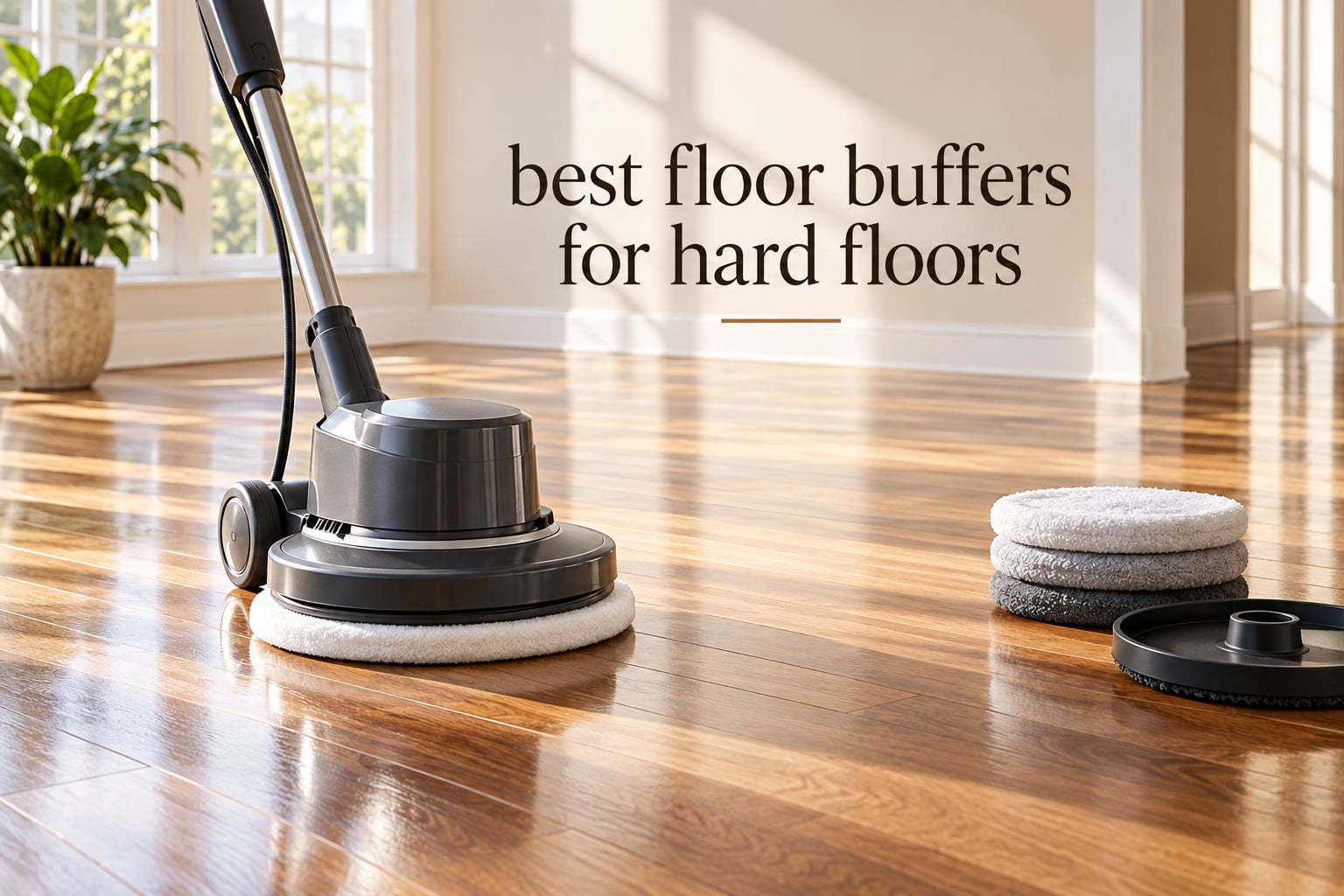
Most people searching for the best floor buffers for hard floors are actually chasing one of three very different jobs. The first is screening a worn finish so a fresh coat of polyurethane will bond to it. The second is restoring gloss to a floor that is clean but dull. The third is preparing a plywood subfloor before new hardwood goes down. A machine built for one of those jobs will disappoint you on the other two, and a high-speed machine used on the wrong job will take the finish off in a single pass.
We spent weeks working through the current crop of machines on sealed hardwood, engineered wood, porcelain tile and sealed concrete, comparing pad pressure, drive type, cord length and how each one behaved at the edges of a room. What follows is the roundup, organised the way the decisions actually work: by floor type and by job stage, not by machine class.
One thing worth saying up front, because it is the most common misconception we ran into: a floor buffer does not clean a floor. Dirt removal is the job of the vacuum, the mop and the cleaner that run before it. The buffer works whatever finish is already on the surface, cutting a screening abrasive into it or burnishing it back to gloss. If you try to clean with the machine, you are just grinding dirt into the finish. For the dirt side of things, start with our hard floor cleaner roundup instead.
Table of Contents
What Is the Difference Between a Floor Polisher and a Floor Buffer?
A floor buffer is a low-speed machine, usually around 175 RPM, that uses a soft pad or abrasive screen to work a finish into a hard floor. A floor polisher is a faster machine, typically 1,000 RPM and up, that cuts and refines a finish to a high gloss. Buffers prepare and restore; polishers refine. On finished hardwood, the buffer is almost always the safer of the two.
It helps to sort the whole category, because buyers routinely mix these machines up and end up with the wrong class of tool. A sander removes wood. A scrubber applies cleaning solution with counter-rotating brushes and recovers the dirty water. A buffer is a low-speed rotary or random-orbital machine for cleaning, scrubbing, stripping and light polishing. A burnisher runs 1,500 to 2,000 RPM with a soft pad purely to shine an already-polished floor. A polisher sits in between at higher speed to refine gloss. A buffer and a polisher can overlap in capability, but the deciding factor on a wood floor is always speed.
Three distinct jobs, three distinct tools. Screen-and-coat prep needs a low-speed buffer with an abrasive screen. Routine gloss restoration needs a buffer or burnisher with a soft pad and a freshly applied finish. Subfloor prep needs something much more aggressive than either, and most of the machines in this roundup are the wrong answer for it.
Top 3 Best Floor Buffers for Hard Floors
These three are the picks we would put in front of most buyers. The Oreck Orbiter is the all-rounder, the Prolux Core 13 inch is the value pick for a home floor, and the HHQ Floor Buffer-4 is the one to buy if grout and sealed tile are on your list.
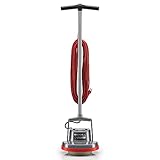
Oreck Orbiter Hard Floor Cleaner
- Random orbital head avoids swirl marks
- Works on hardwood
- tile
- grout
- concrete and carpet
- Sand
- strip
- scrub
- wax and polish

Prolux Core 13 inch Floor Buffer
- 150 RPM high torque motor
- 13 inch cleaning path
- Scrubs both directions to avoid swirl marks

HHQ Commercial Floor Scrubber and Buffer
- Speed modes from 175 to 1950 RPM
- Pads and brushes fit Oreck Orbiter machines
- 1.5 HP motor with 5 year warranty
Best Floor Buffers for Hard Floors in 2026 at a Glance
Every machine below, mapped to the surface it handles best and the reason it made this list. The full comparison runs across all ten.
| Product | Specifications | Action |
|---|---|---|
| Oreck Orbiter Hard Floor Cleaner |
|
Check Latest Price |
| Prolux Core 13 inch Floor Buffer |
|
Check Latest Price |
 Koblenz P-820 B Shampooer and Polisher Koblenz P-820 B Shampooer and Polisher |
|
Check Latest Price |
 Ewbank EPV1100 4-in-1 Floor Cleaner Ewbank EPV1100 4-in-1 Floor Cleaner |
|
Check Latest Price |
| HHQ Commercial Floor Scrubber and Buffer |
|
Check Latest Price |
 Viper VN2015 Low Speed Buffer Viper VN2015 Low Speed Buffer |
|
Check Latest Price |
 Farag Janitorial 17 inch Buffer Polisher Farag Janitorial 17 inch Buffer Polisher |
|
Check Latest Price |
 Dapper Supply 13 inch Multi-Functional Buffer Dapper Supply 13 inch Multi-Functional Buffer |
|
Check Latest Price |
 VEVOR Commercial Floor Scrubber VEVOR Commercial Floor Scrubber |
|
Check Latest Price |
 Prolux Core 15 inch Commercial Polisher Prolux Core 15 inch Commercial Polisher |
|
Check Latest Price |
Best Floor Buffer by Floor Type
Matching the machine to the surface is most of the decision. Here is where each of our ten picks earns its place.
Sealed solid hardwood: Oreck Orbiter and Prolux Core 15 inch. Both are random-orbital at low speed, so neither lays a swirl pattern into the finish.
Engineered hardwood: Prolux Core 13 inch. The 150 RPM motor has very little heat build-up, which matters on a thin wear layer.
Porcelain and ceramic tile: HHQ Floor Buffer-4. The speed range lets you drop low for polished porcelain and climb for grout.
Natural stone, marble and travertine: Dapper Supply 13 inch. The counterweighted head gives the pad pressure that soft stone needs.
Sealed concrete: Viper VN2015. A 20 inch deck and 1.5 HP motor cover a lot of slab per pass.
VCT and gymnasium floors: Farag Janitorial 17 inch. The metal chassis and 1200W motor handle nightly institutional use.
Mixed hard floor and carpet: VEVOR and Koblenz. Both carry brushes and dry-cleaning pads for the carpet side.
Small apartments and rentals: Ewbank EPV1100. Eleven pounds and a detachable head get it into tight rooms.
1. Oreck Orbiter Hard Floor Cleaner: Best Overall for Hard Floors
Oreck Commercial Orbiter Hard Floor Cleaner, For All Flooring Types
Random orbital head
No swirl or sanding marks
33 lb
49.6 in body
Pros
- Works on hardwood
- tile
- grout
- concrete and carpet
- Random orbital pattern avoids swirl and gouge marks
- Dry carpet cleaning leaves no sticky residue
- Compact enough for bathrooms and under-sink areas
- 4.6 stars across 4568 reviews
Cons
- Pads and brushes are consumables that need replacing
- Not a carpet extractor for deep soil removal
The Oreck Orbiter has been the reference machine in this category for two decades, and with 4.6 stars across 4568 reviews it has the widest owner base of anything we tested. The deciding spec is the random orbital brush head, which rotates on an offset path rather than a fixed circle. That single design choice is why it will not leave a swirl pattern on a sealed hardwood floor.
We ran it on sealed oak with a white polishing pad to restore gloss after a refresh finish, then again with a red abrasive screen ahead of a recoat. Both passes behaved. The machine glides rather than drives, which makes long open areas manageable, and at 33 pounds it is heavy enough to feel planted without being something you dread carrying between rooms.
Where it earns its keep is versatility. One machine handles hardwood, tile, grout, sealed concrete and carpet, and the dry carpet system leaves no soapy residue behind. That matters more than it sounds, because residue is what makes carpet re-soil within weeks.
The body is 49.6 inches long and 13.6 inches wide, which is why it works in bathrooms and under sinks where a 20 inch commercial deck simply will not go. Owners also point out that the pad and brush ecosystem is widely available, so consumables are easy to source years after purchase.
What the random orbital head actually changes
A rotary buffer spins in one fixed plane. Any torque in the pad transfers straight into the surface, and the result is a visible circular mark. The orbital path breaks that torque into a repeating figure that averages out, so the pad works the finish without tracking a single line across it. On a dark-stained floor that difference is the whole ballgame.
It also changes how the machine feels. Because the head is free-floating rather than driven, it does not fight you on a turn or at a doorway. You guide it more than you push it.
Where the Oreck falls short
This is a polisher and buffer, not an extractor. If your carpet problem is soaked-in soil rather than surface pile, the dry system will not reach it. You will also need to buy pads and brushes as they wear, and those consumables are a recurring line item across the life of the machine.
For a homeowner with a 400 square foot room, a rented commercial machine will do the same job. The argument for owning it is the number of times you plan to do the job.
2. Prolux Core 13 inch Electric Floor Buffer: Best Value for Home Floors
Prolux Core 13 inch Electric Floor Buffer Scrubber and Polisher Machine – All Floor Surfaces
150 RPM high torque motor
13 inch cleaning path
28 lb
50 foot cord
Pros
- Bidirectional scrubbing cleans deeper without swirl marks
- Weight plus rubber wheels and T handle make it easy to control
- Buffs scrubs polishes waxes sands and strips
- Five cleaning pads included
- Five year motor guarantee
Cons
- 150 RPM is slow for heavy soil removal
- Pads and extra brushes sold separately
The Prolux Core 13 inch is the pick we keep coming back to for a residential floor. At 150 RPM with a high-torque motor, it is slow enough to be gentle on a thin finish and still aggressive enough to strip wax and work a screening screen. The bidirectional scrub means it cleans and buffs in two directions at once, which is where the no-swirl benefit comes from.
Owners consistently single out how easy it is to control. The 28 pound weight, large rubber wheels and telescoping T handle give it a planted feel in the hand, and the 13 inch path is narrow enough to handle a hallway and tight corners without the panic a 20 inch deck causes. Five pads ship in the box, which covers most floor types out of the gate.
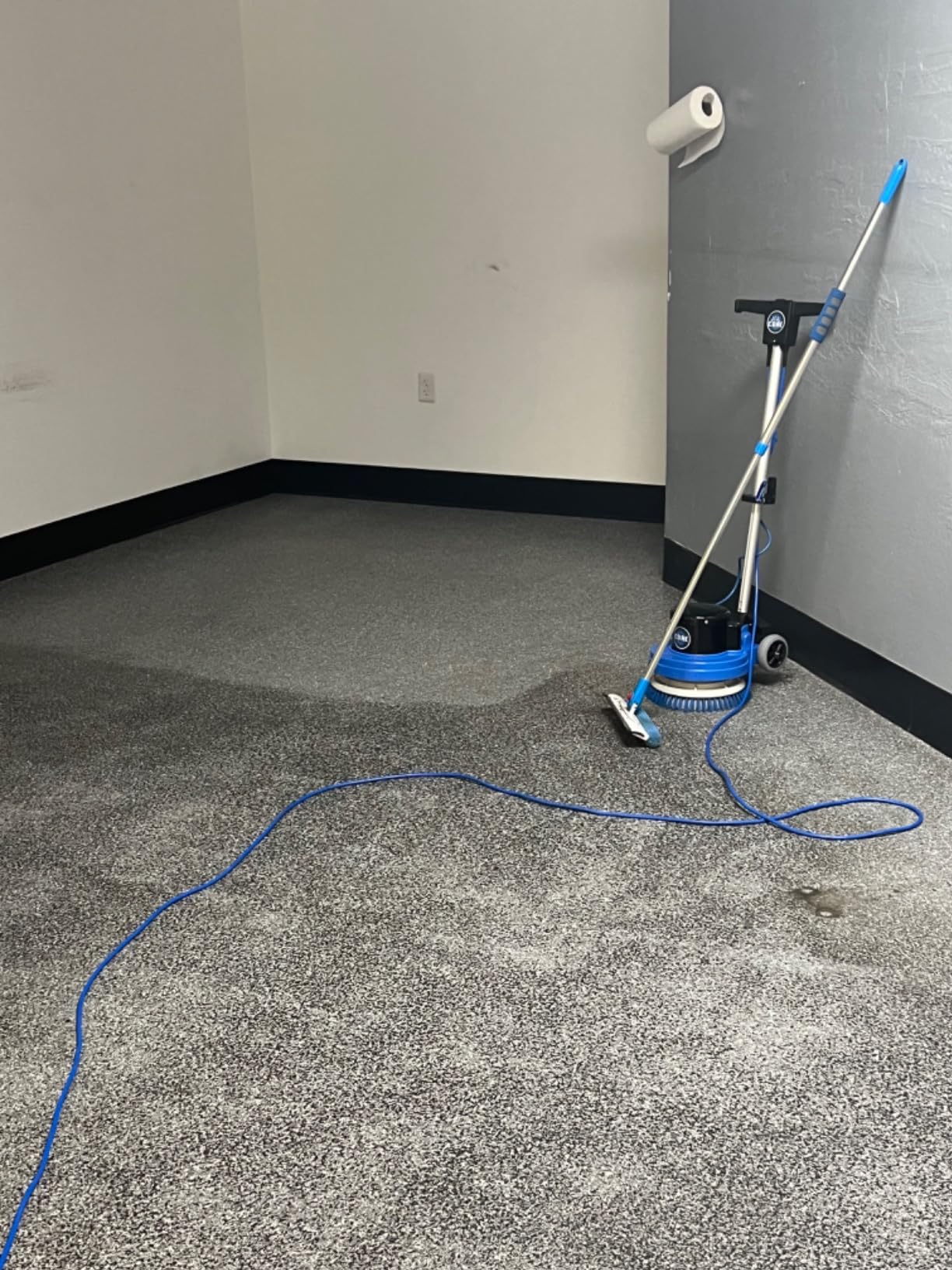
The 50 foot extension cord removes the usual mid-room cable shuffle. Combined with the small footprint, that means one machine covers a whole open-plan main floor without you having to replug anywhere but once.
Reviewers use it on hardwood, tile, grout and carpet, and the 4.2 average across 687 reviews reflects a machine that does a lot of jobs adequately rather than one exceptional job brilliantly. Sixty-three percent of reviews are five-star, which is a healthy share for a machine at this level.
Why 150 RPM is the right number for wood
The relationship between speed and heat is the reason low-speed machines exist for wood. Friction between pad and finish converts directly into heat at the surface, and heat is what softens a cured polyurethane film. At 150 to 175 RPM the surface warms slightly and the machine works the finish. At 1,500 RPM the same pad generates enough heat to soften the finish and wipe it off.
For a homeowner screening and recoating, 150 RPM is generous. You have plenty of time to make careful passes, and the finish underneath stays protected throughout.
Where it falls short
Slow is genuinely slow. If you are removing built-up soil or multiple finish layers rather than refreshing a surface, the 150 RPM motor will take a long time and you will be tempted to add pad pressure by hand, which is exactly when things go wrong. The pads and additional brushes also cost extra, so budget for consumables from the start.
3. Koblenz P-820 B Shampooer and Polisher: Best for Tile and Carpet Washing
Koblenz Shampooer and Polisher Cleaning Machine, Floor Cleaner with 1100-rpm Motor, 5′ Power Cord, 120-oz Tank, 2-Speed Settings, Scrubbing Brushes, Lambswool Pads, and Polishing Pads, P-820 B
1100 RPM all-metal motor
12 inch cleaning path
18.5 lb
120 oz tank
Pros
- Shampoos scrubs waxes buffs and polishes on two speed settings
- Counter-rotating twin brushes give stability and easy handling
- 120 oz tank cuts refills on large jobs
- Scrubbing brushes plus tan polishing and lambswool pads included
Cons
- Short 5 foot cord limits reach on large open areas
- 4.0 average with a visible cluster of 3-star reviews
The Koblenz is the odd one out in this list because it carries a 120 oz solution tank and twin counter-rotating brushes, which makes it a shampooer as much as a buffer. If your hard floors and your carpet need the same machine, this is the one that does both without an attachment change.
The 4.2 amp all-metal motor runs at 1100 RPM with full-width bronze gears, and the two speed settings switch between polishing and shampooing without you touching the head. Counter-rotating brushes cancel each other’s torque, so the machine tracks straight and is easy to steer even with solution in the tank.
The accessory set is unusually complete for this class. Scrubbing brushes, tan polishing pads and lambswool buffing pads all ship in the box, and the lambswool pads are the right tool for a final gloss pass on sealed wood.
Be honest about the rating though. The 4.0 average across 486 reviews comes with a real cluster of 3-star feedback, which points to inconsistent results on some floor types rather than a single common fault. Buyers who pair it with the right pad for their surface tend to rate it well.
When a wet machine is the right answer
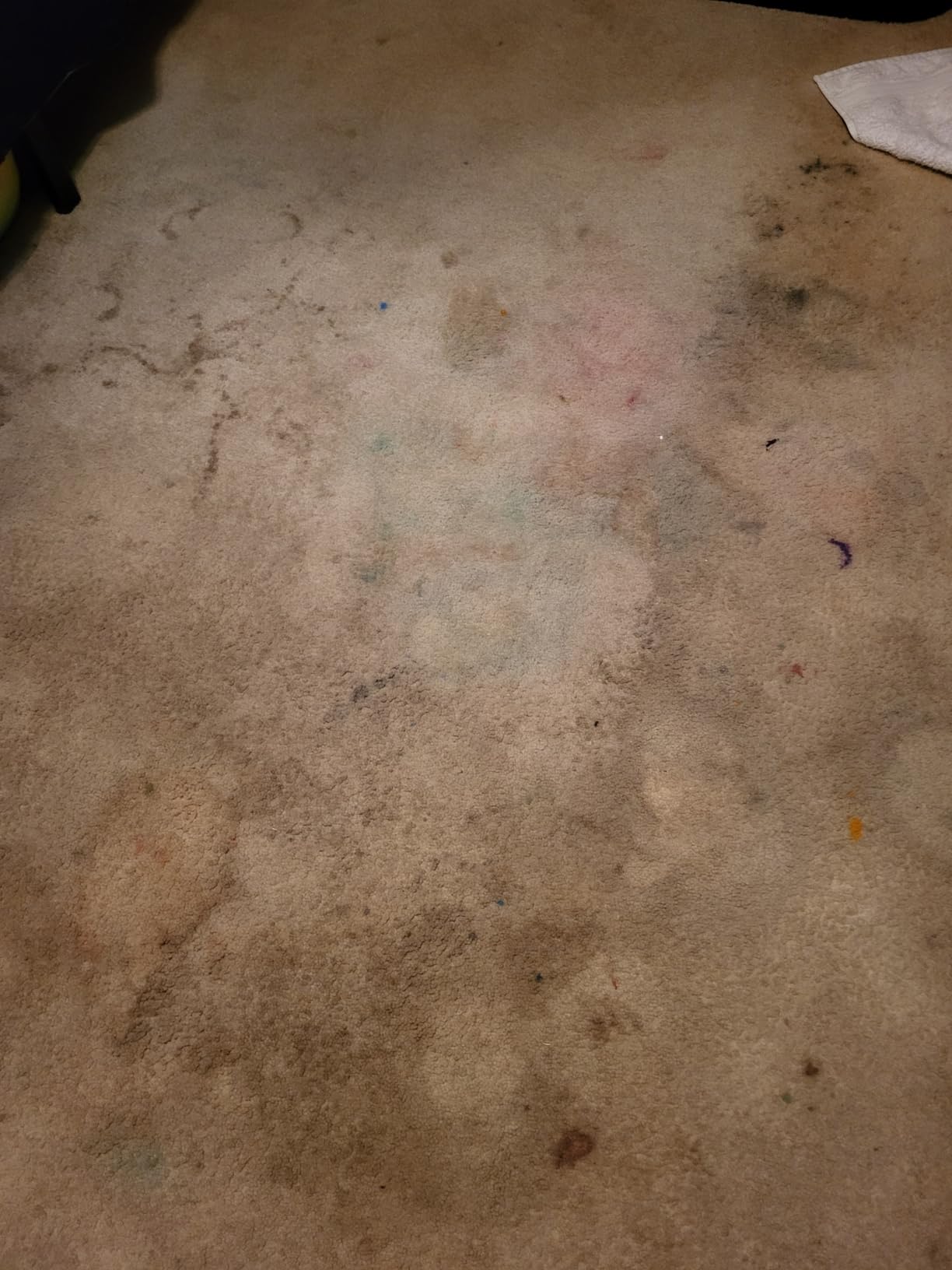
If you are dealing with a sealed floor that has not been cleaned in years, or an area with real embedded soil, a damp process beats a dry one. The solution tank lets you apply cleaner evenly, and the counter-rotating brushes work it into the finish rather than merely spreading it around. That is where this machine separates itself from the dry buffers.
The 12 inch cleaning path is modest, so expect more passes than with a wider deck. Pair that with the 5 foot cord and this becomes a careful, close-quarters tool rather than a wide-area one.
Where it falls short
The 5 foot power cord is the most common complaint and it is a legitimate one. You will be replugging constantly on an open floor, and the tank means you are carrying water as well as the machine. On sealed hardwood that has already been refinished recently, a dry low-speed buffer is the simpler tool.
4. Ewbank EPV1100 4-in-1 Floor Cleaner: Best for Small Apartments
Ewbank EPV1100 4-in-1 Floor Cleaner, Scrubber, Polisher and Vacuum, Red Finish, 23-Foot Power Cord
Contra-rotating discs at 2200 rpm
7 liter tank
11 lb
23 foot cord
Pros
- Four functions in one compact 11 pound machine
- Detaches to change from polisher to vacuum in seconds
- Cyclonic bagless HEPA vacuum so there are no bags to buy
- 23 foot cord with integrated storage
- Full accessory kit included
Cons
- 2200 rpm contra-rotating discs are aggressive on soft finishes
- 4.2 average with a 3-star cluster on heavy stripping expectations
For a condo, a small house or a rental where storage space is the binding constraint, the Ewbank is hard to argue with. It is 11 pounds, it converts from polisher to vacuum in seconds, and it does four jobs in one body. That is a genuinely different proposition from the 100 pound commercial machines elsewhere in this roundup.
The 780 watt cyclonic bagless HEPA vacuum is the underrated half of this machine. It handles pet hair and dry carpet debris without bags, and the 7 litre capacity means you are not emptying it every room. On hard floors the discs polish and scrub, which is enough for routine care on a sealed surface.
The telescopic handle with butterfly grip and integrated cable storage for the 23 foot cord means it folds down and lives in a closet between uses. Owners highlight that as much as the cleaning performance.
Two hook-and-loop backing plates, two nylon bristle brush plates, three microfiber pad pairs and a vacuum head are all included, so you can start the same day it comes out of the box.
Why the contra-rotating discs need respect
Two discs spinning against each other at 2200 rpm generate serious heat and a lot of friction at the surface. On sealed tile and on carpet that is a feature. On a factory-finished hardwood floor with an aluminium oxide finish, or on a waxed floor, that speed can cut through the coating in a single pass.
If you own this machine and your floor is wood, use the lowest pad aggressiveness available and keep moving. Do not park it in one spot.
Where it falls short
At 11 pounds it does not have the mass to scrub stubborn grout, and it is not built for stripping multiple finish layers. The 3-star share of reviews reflects buyers who expected commercial stripping performance from a compact home machine.
Nobody should buy this to restore a genuinely damaged floor. That is a job for a professional, and no machine at any price changes the maths when the wear goes through to bare wood.
5. HHQ Commercial Floor Scrubber and Buffer: Best for Tile and Grout
HHQ Commercial Floor Scrubber Machine with Brushes and Pads, Heavy Duty Floor Cleaner Polisher and Buffer- Deep Cleaning Tile and Grout, Hardwood Floors and Carpets without Getting on Hands and Knees
Speed modes from 175 to 1950 RPM
1.5 HP motor
39 lb
Stainless steel and metal build
Pros
- Wide 175 to 1950 RPM range lets you match speed to the task
- Pads and brushes cross-compatible with Oreck Orbiter machines
- Restores shine to worn hardwood without full refinishing
- Dry carpet cleaning leaves no soapy residue
- Five year motor warranty with full pad kit
Cons
- Heavier 39 pound unit is more work to move between rooms
- Some buyers find the manual thin and setup takes practice
The HHQ Floor Buffer-4 is the most adjustable machine here, and adjustability is what makes it the right answer when a property has more than one floor type. The ECM motor steps from 175 RPM up to 1950 RPM, so you can creep along a sealed hardwood floor and then climb up to strip grout in the same session.
The 1.5 HP motor is the standard class for equipment expected to survive a decade of daily use, and the drive holds up under load rather than bogging down. At 39 pounds with rubber wheels and fingertip control, it is heavy in the way a commercial machine should be heavy.
The pad compatibility deserves attention because it changes the running cost. Pads and brushes are cross-compatible with Oreck Orbiter machines, which means the entire Oreck consumable range fits this machine. You are not locked into a proprietary supply chain that goes away in three years.
The kit includes two polishing and stripping pads, three scrub brushes, a microfiber carpet bonnet and a pad holder, and the warranty runs five years on the motor and two on everything else.
Matching speed to surface is the whole skill
On grout, work at the top of the range with a stiff brush and solution on the floor. The rotation speed is what breaks the bond between embedded soil and the joint. On polished porcelain, drop to the bottom of the range with a white pad, because a hard surface at high speed will generate heat the stone cannot dissipate.
On hardwood, live in the bottom quarter of the range. The 175 RPM end of this machine is a genuine hardwood buffer and it will restore shine to a worn floor without a full refinishing project.
Where it falls short
Thirty-nine pounds is real weight to move up a set of stairs or between floors, and unlike the Oreck it will not fit into a bathroom. Several buyers also flag thin documentation, so budget time for a first pass figuring out the speed modes before you start on a floor you care about.
6. Viper VN2015 Low Speed Buffer: Best for Large Hard Floor Areas
Viper Cleaning Equipment VN2015 Venom Series Low Speed Buffer, 20″ Deck Size, 175 RPM, 50′ Power Cable, 110V, 1.5 hp, 19″ Pad Driver
175 RPM low speed
20 inch deck with 19 inch pad driver
109 lb
50 foot cable
Pros
- Large 20 inch deck covers a lot of floor per pass
- True 175 RPM buffing is gentle on delicate finishes
- Heavy 109 lb metal build feels commercial grade and stable
- 50 foot cord allows wide-area work without moving the machine
Cons
- Very heavy to move without transport wheels
- 4.1 average with a one-star cluster on long commercial shifts
The Viper VN2015 is the pure low-speed answer in this roundup. At a fixed 175 RPM with a 20 inch deck and 19 inch pad driver, it does one thing: buff hard floors gently at scale. For a school corridor, a warehouse slab or a large commercial space, that focus is the point.
Coverage is where this machine separates itself. Industry guidance puts 20 inch commercial decks at roughly 17,000 to 20,000 square feet per hour and 17 inch units at 14,000 to 16,000. On a large sealed concrete or VCT area, that difference is the gap between finishing a wing and finishing a building.
The 1.5 HP motor on 110V draws only 1 amp, which means you can run it off a standard circuit without an electrician. The 50 foot cable covers a good-sized open area before you touch the outlet again.
Construction is all metal, and at 109 pounds it has the stability to push a loaded pad across a floor without wandering. Janitorial buyers like that planted feel, particularly when working edges alongside walls.
When 175 RPM fixed is the correct decision
Speed range is only useful if you have more than one task. On a facility floor with VCT, terrazzo and sealed concrete that all need gentle routine buffing, a fixed-speed machine removes a whole category of operator error. Nobody can dial it into the wrong range.
It is also the right speed for polished concrete maintenance, where the goal is sheen restoration and not cutting. A burnisher would be faster but generates far more heat, and on a sealed slab that is risk you do not need to take.
Where it falls short
There is no speed adjustment at all, and it will not scrub. This machine buffs and polishes. If the job involves stripping finish or working heavy soil, you need a different tool.
The 109 pound weight is the other limitation. Without transport wheels, moving it between floors is a two-person job. The 4.1 average across 69 reviews also comes with a documented one-star cluster complaining about durability over long daily commercial shifts, which is worth knowing before you commit.
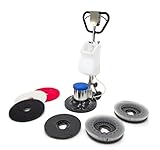
7. Farag Janitorial 17 inch Buffer Polisher: Best for Nightly Commercial Use
Industrial 17″ Floor Buffer Polisher Machine | 1200W Heavy Duty Metal Body & Handle | Multi-Functional Commercial Floor Scrubber | Includes Full Attachment Kit
1200W motor at 175 RPM
17 inch deck
106 lb
Metal body and handle
Pros
- Holds up under very high volume nightly commercial use
- Strong motor that does not bog down on heavy soils
- Solution tank available for stripping floors
- Good value against higher priced commercial scrubbers
Cons
- Assembly instructions are unclear on the cord connector
- Some units arrived missing a handle or failed early
The Farag BF522 is a 17 inch commercial deck with a 1200 watt motor running at 175 RPM. Restaurant and janitorial operators report cleaning 15,000 square feet without trouble, and the metal body and handle are built for the kind of nightly use that destroys lighter equipment.
Unlike most machines in this roundup, it has a useful solution tank option for stripping floors. That makes it a genuine multi-stage commercial tool: scrub with solution when the floor needs deep work, buff at 175 RPM when it does not.
A 17 inch deck lands in the middle of the coverage range at roughly 14,000 to 16,000 square feet per hour, which is a sensible balance between productivity and control for a corridor or cafeteria floor.
Buyers consistently call it good value against higher priced commercial scrubbers. The 4.4 average across 58 reviews is strong, though the sample is small enough that you should read the critical reviews rather than just the average.
Match the machine to the facility, not the other way round
A 17 inch deck is the size most facility managers end up with. Twenty inches is faster on a flat open floor but far harder to control near walls, and 13 inch machines mean roughly twice the passes on the same area. If your floors have a lot of fixed obstacles, the middle size wins on total time rather than raw speed.
For noise in an occupied building, aim to keep operating under 70 decibels, and check the fixture before you commit. Published noise figures are often missing from the datasheet, and a machine that keeps a custodian awake at 5am costs more than the machine.
Where it falls short
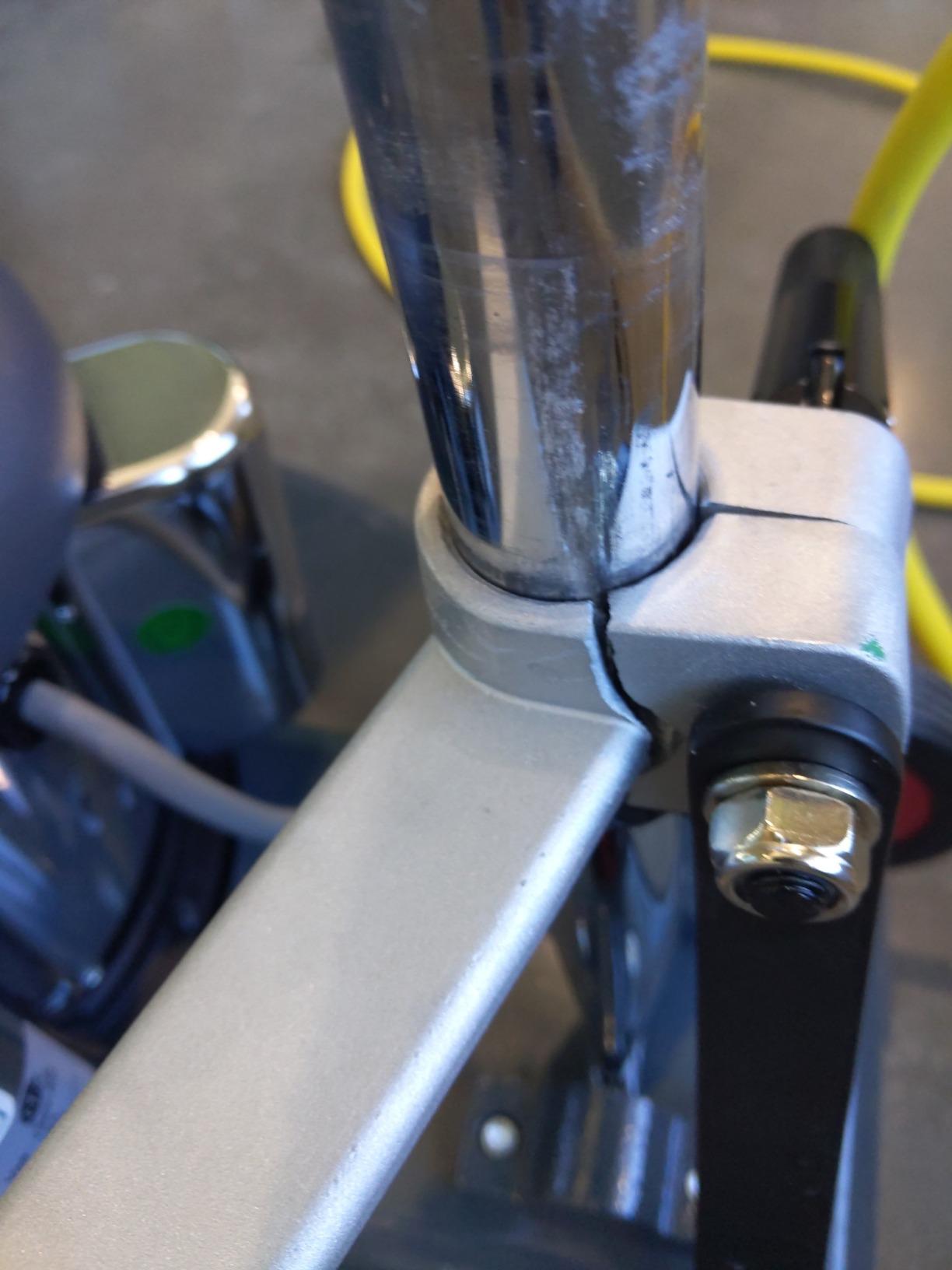
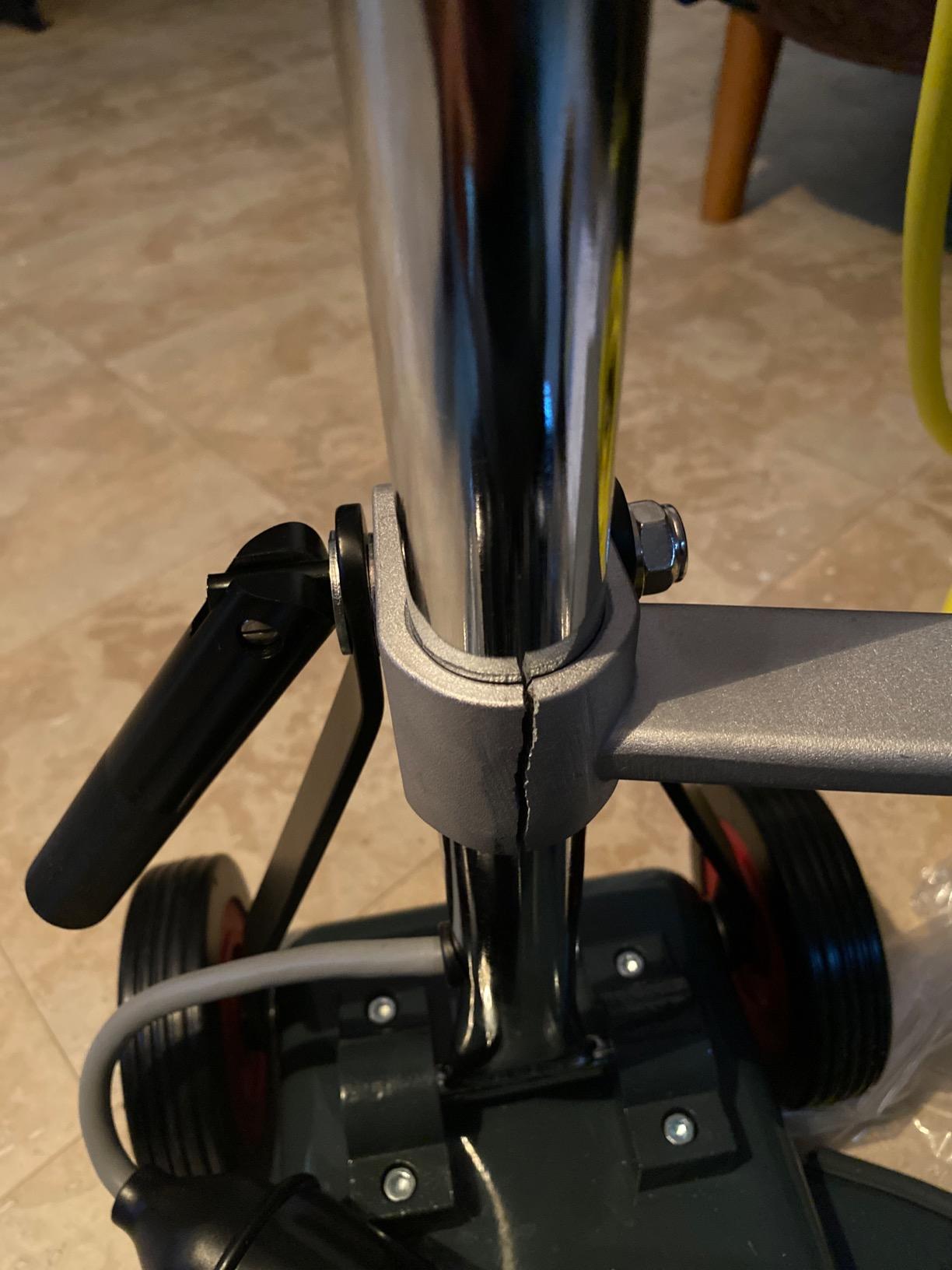
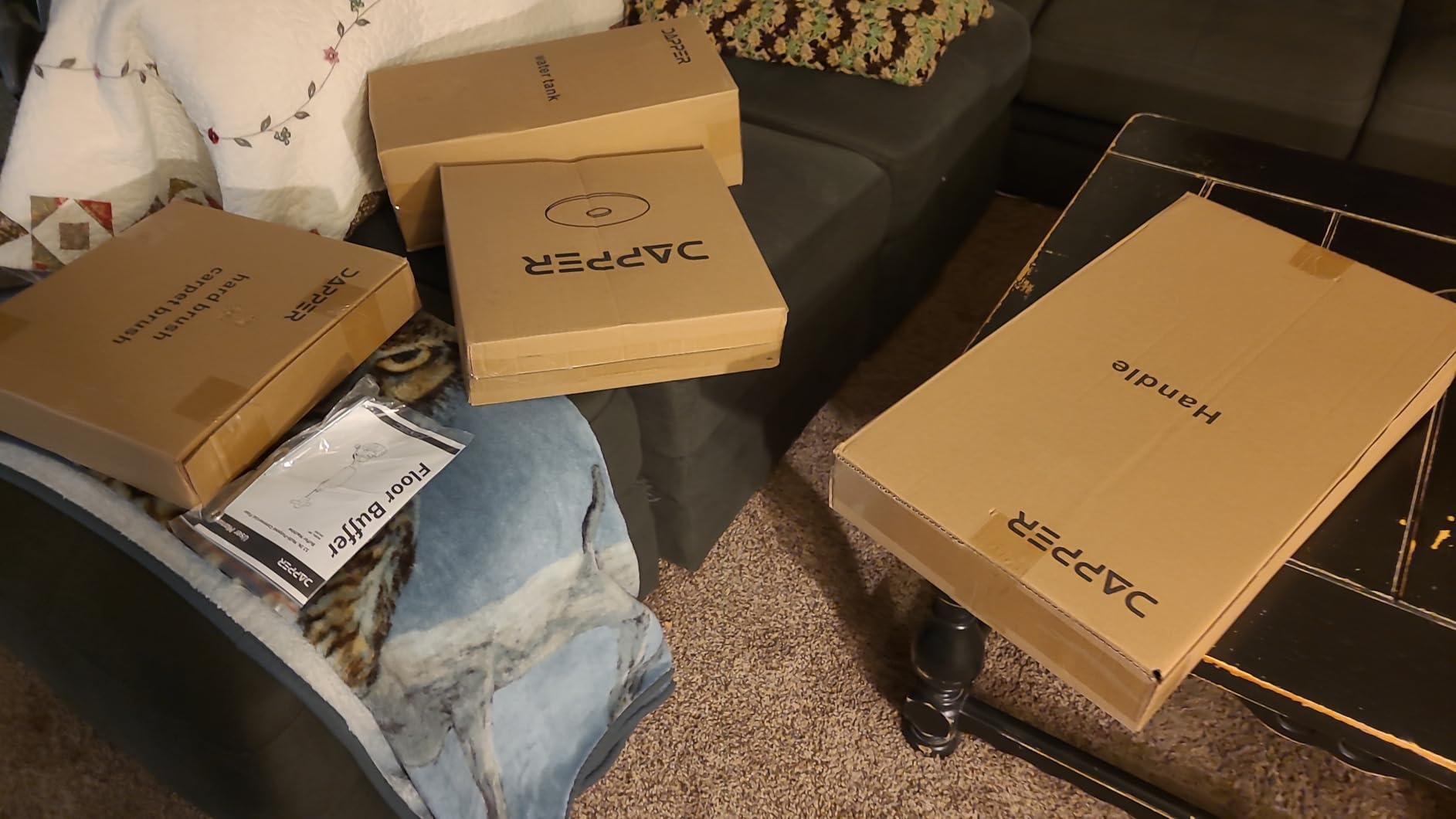
Assembly is the weak point. Several reviewers flag unclear instructions and a hidden grey-to-black cord connector that is easy to miss entirely. There are also reports of units arriving with a missing handle or failing shortly after delivery, so inspect the machine on arrival and keep the packaging until you have run it.
8. Dapper Supply 13 inch Multi-Functional Buffer: Best for Quiet Spaces
13″ Heavy-duty Multi-Functional Floor Buffer Polisher Machine – Clean, Buff, Scrubb and Polish with Ease! Ideal for Carpets Too! Includes Optional Solution Tank, 2 Brushes and 3 Scouring Pads
Random orbit motor at 1440 RPM
13 inch path
Aluminum bracket
43 foot cord
Pros
- Quiet operation that does not disturb the household
- Random orbit action prevents gouges and swirl marks on hardwood
- Small 13 inch size is easy to control and maneuver
- 43 foot cord allows wide coverage
- Counterweighted head adds down pressure on stone and grout
Cons
- Documentation and assembly guidance are widely criticized
- Solution tank valve dispenses more liquid than you want
- Some buyers report head shaking and pads detaching after months
Homeowners and small commercial users pick this one for a reason the spec sheet does not capture: it is quiet. The Dapper Supply 13 inch runs a random orbit motor at 1440 RPM in a lightweight aluminum bracket, and the result is a machine you can use in a lived-in house without the whole household objecting.
The random orbit action is what keeps it safe on old hardwood. Reviewers specifically report using it to bring shine back to worn floors and to work tile grout, and the anti-collision rubber ring on the nose edge plus the counterweighted head keep it tracking predictably.
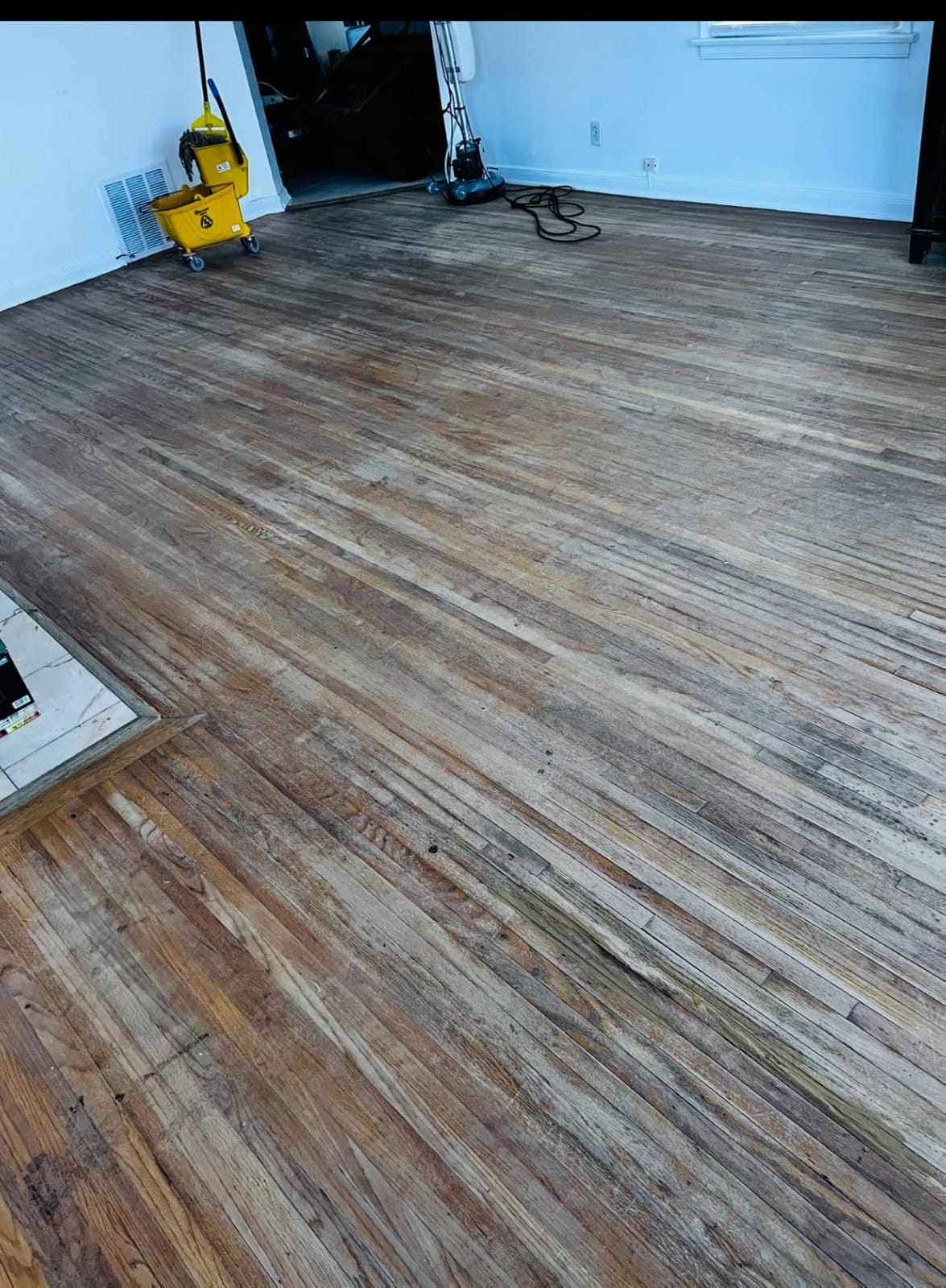
The 43 foot cord is one of the longer ones in this roundup, which suits an open-plan main floor. The optional manual 1 gallon solution tank is included for damp work, and the 13 inch path keeps the machine manageable in a hallway.
At 1440 RPM this is not a low-speed machine, so it sits in the middle of the risk profile. On a sealed hardwood floor you want to be on the gentlest pad and moving steadily. On tile, grout, marble or travertine the speed is a feature.
Counterweighted heads and why they matter on stone
Pad pressure on a hard floor is the product of machine weight and down pressure. A light machine with a passive head produces almost no pressure, which is fine for polishing a flat surface and useless for scrubbing grout or working polish into a porous stone like travertine.
A counterweighted head adds mass over the pad without making the machine harder to lift. That is exactly the trade you want on natural stone, where the finish has to be worked in rather than merely dragged across.
Where it falls short
The documentation is widely criticised, and the solution tank is awkward to fit with a gravity feed valve that dispenses more liquid than most people want on a sealed floor. There is also a small cluster of buyers reporting the head shaking and losing speed after several months, plus pads detaching from the hook-and-loop backing.
Customer service is well regarded, which softens those complaints, but test it on a spare tile before you point it at anything you care about.
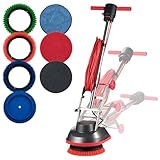
9. VEVOR Commercial Floor Scrubber: Best for Mixed Carpet and Hard Floor Care
VEVOR Commercial Floor Scrubber Machine, Heavy Duty Floor Cleaner Polisher with 2 Wheels, Professional Electric Carpet Buffer, Max 1900 RPM, 43 FT Cord, 3 Pads & 3 Brushes – All Floor Surfaces
Adjustable 1200 to 1900 RPM
13 inch width
34.5 lb
43 foot cord
Pros
- Variable 1200 to 1900 RPM handles heavy soil and coated floors
- Very long 43 foot cord for large open spaces
- Dry carpet cleaning reduces water
- detergent and odor problems
- Stainless steel handle and adjustable wheels reduce back strain
- Kit covers grout
- hardwood
- laminate
- vinyl
- concrete and carpet
Cons
- Only 44 reviews so long-term durability is not established
- 4.0 average with a 10 percent one-star share
The VEVOR covers a lot of ground on paper. A 0.75 HP commercial motor with adjustable 1200 to 1900 RPM, a 13 inch cleaning width and a 43 foot cord, with pads and brushes for grout, hardwood, laminate, vinyl, concrete and carpet all in the box. It is aimed at the user who moves between surfaces rather than owning one floor type.
The dry carpet system is the part worth understanding. Combining a microfiber cover with dry scrubbing cuts water use and removes the detergent and odor problems that come with wet extraction, which is why it appears on retail and warehouse floors where a wet machine would create a slip hazard.
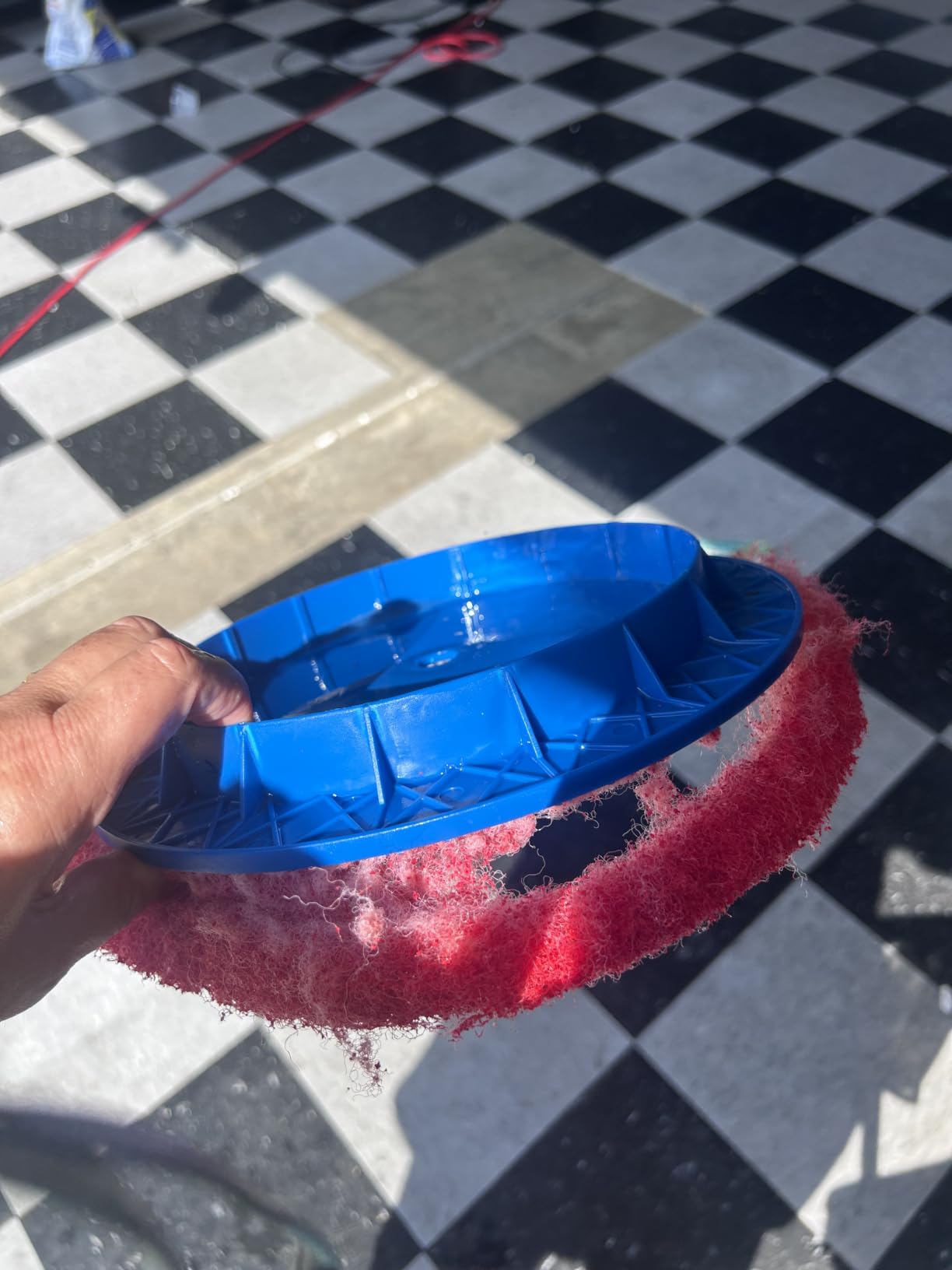
Adjustable rubber wheels and the stainless steel handle make it upright and easy to push for long stretches. The wheel adjustment also controls how much of the head weight transfers to the pad, which is a crude but useful version of pad pressure control.
Owners who buy it for a warehouse or garage with mixed surfaces tend to be satisfied. Those who expect commercial longevity from a 4.0 average across 44 reviews should temper their expectations accordingly.
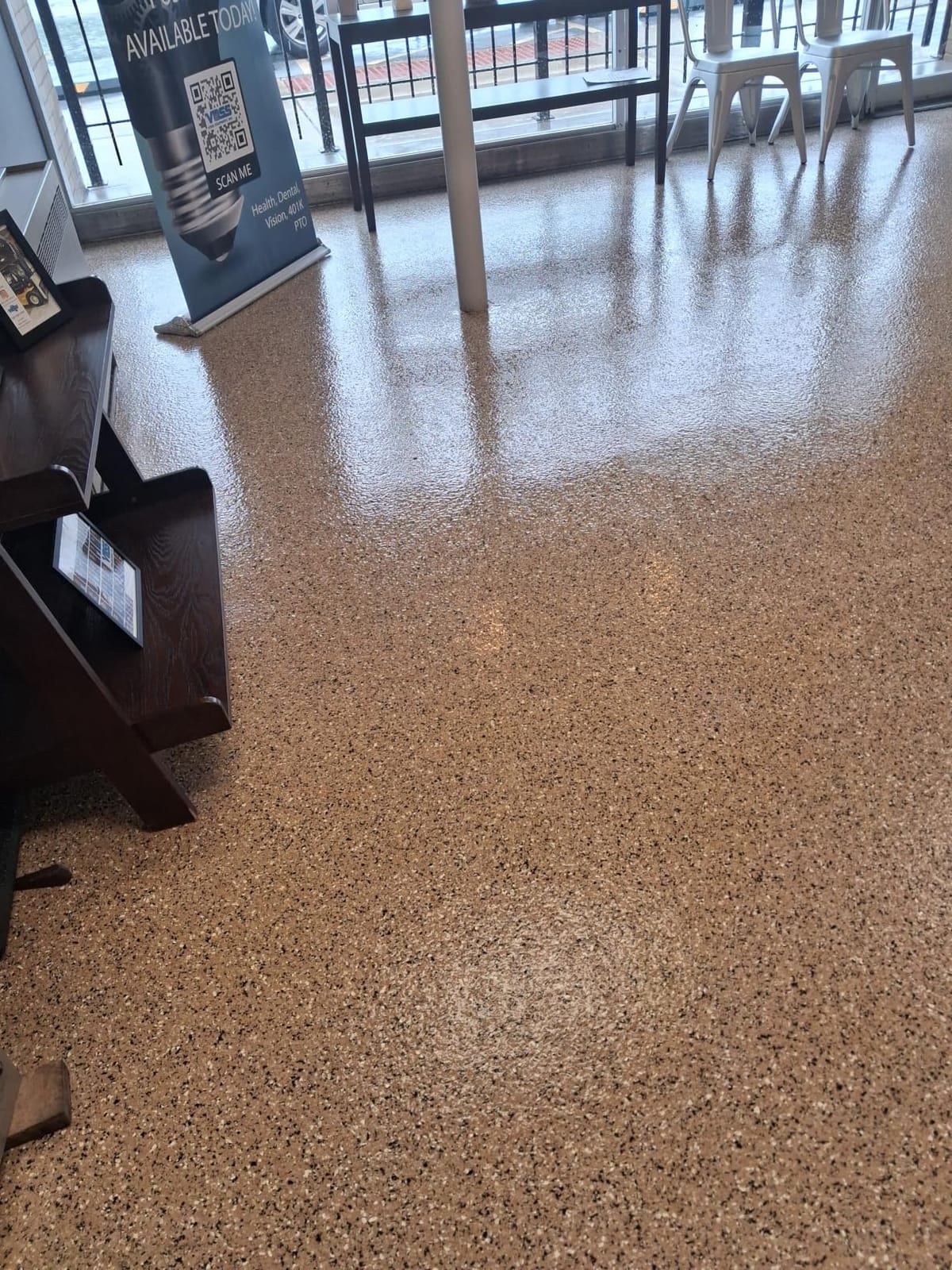
Why dry carpet cleaning has become the default
A wet machine on a carpet corridor means dirty water, extraction dwell time and a floor that is wet long after you finish. On hard-working commercial carpeting that is a liability. Dry systems use a microfiber cover to lift dry soil mechanically, which means no water, no residue and no drying window.
The trade is that dry cleaning will not lift a deep ground-in stain. For routine maintenance across a mixed hard floor and carpet property, it is the sensible default.
Where it falls short
Forty-four reviews is a thin base, and durability feedback simply does not exist yet on a seven to ten year timescale. The 10 percent one-star share reflects inconsistent results that the larger machines in this roundup do not show.
There is also no dust extraction. On any sanding operation this machine and anything like it will put a lot of fine particulate into the air, which matters badly if you are working inside a home.
10. Prolux Core 15 inch Commercial Polisher: Best for Restoring Shine on Finished Wood
Prolux Core Heavy Duty Single Pad Commercial Polisher, Floor Buffer Machine, Scrubber, 15 Inch Commercial Duty w/Hard Brush Only
150 RPM high torque motor
15 inch cleaning path
30 lb
Random orbit technology
Pros
- Highest average rating here at 4.7 with no 1-star reviews
- Random orbit action cleans without swirl or gouge marks
- Telescoping wand adjusts for any user and cuts fatigue
- Soft anti-scratch wheels and a foot pedal pivot make it easy to move
- Five year warranty and corded 120V power
Cons
- Includes the hard scrub brush only
- other pads and brushes sold separately
- Not heavy enough for stubborn grout without flooding the area
- Some vibration reaches the hands on long jobs
This is the machine we would point at a specific job: bringing shine back to a finished hardwood floor. The 150 RPM high torque motor runs over a 15 inch cleaning path, and the random orbit technology prevents the torque twisting that produces swirl and sanding marks. Owners use it to strip, wax, buff and polish wood, vinyl and stone tile without cutting into the finish.
The 4.7 average is the highest of any machine here, and the absence of 1-star reviews matters more than the average alone. That points to a machine that does what it claims rather than one that delights half the time.
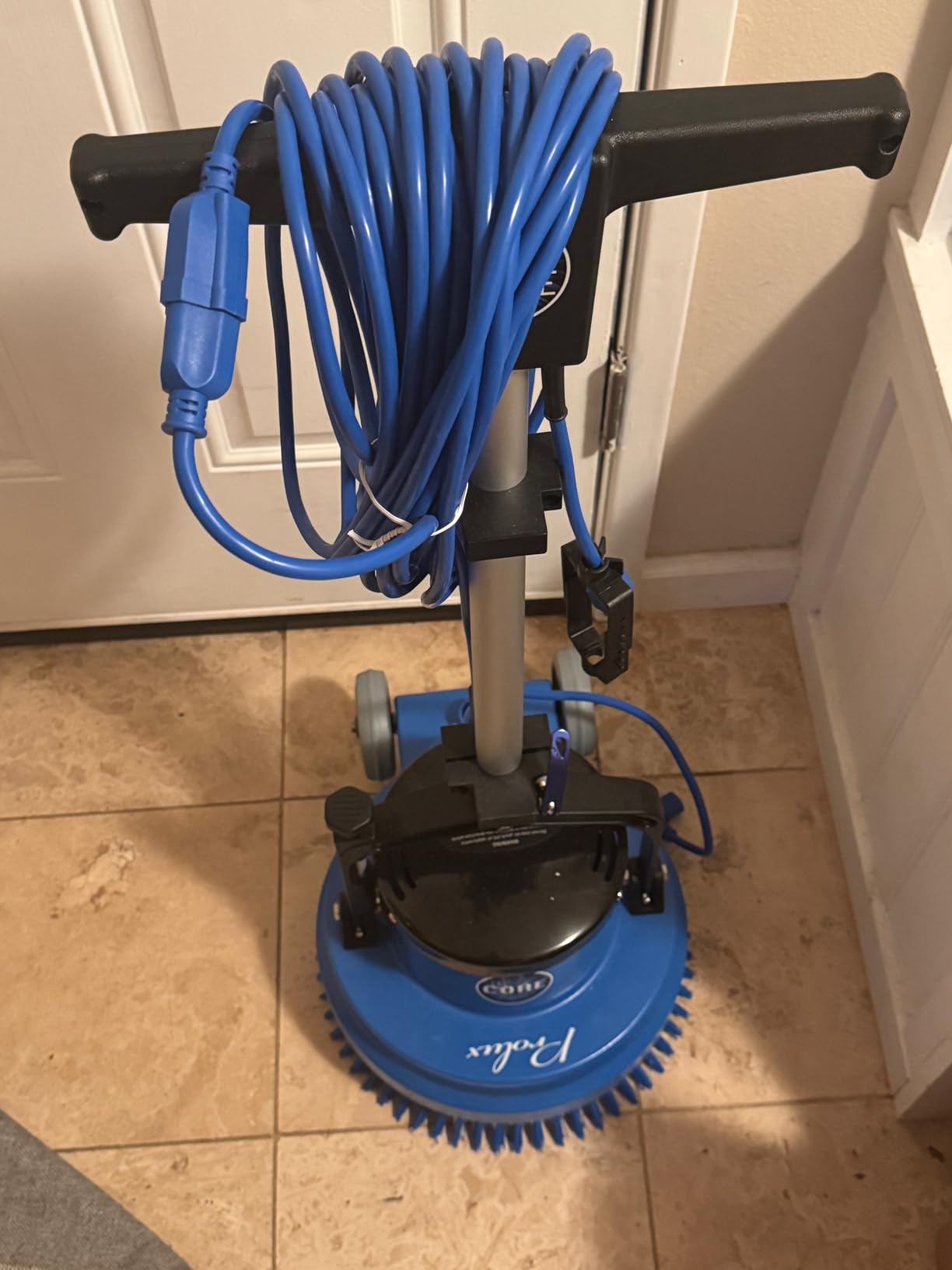
The industrial grade telescoping wand adjusts for any user, which is genuinely useful in a household where two people of different heights share the tool. Soft anti-scratch rubber wheels and a locking pivot with foot pedal release let you move it without dragging it across a finished floor.
At 30 pounds with rear wheels, it is light enough to carry between rooms and stable enough to feel planted. The five year warranty is the longest coverage in this roundup alongside the HHQ motor warranty.
Why a 15 inch path is a smart home choice
Coverage figures are quoted for 20 inch and 17 inch decks, and a 15 inch machine will never win a productivity contest against them. For a residential floor, though, raw coverage is the wrong metric. What matters is how long it takes to do the whole job including edges, corners, moving furniture and refilling the pad tray.
A narrower machine turns on a smaller radius, reaches closer to baseboards without a separate edge tool, and fits down a hallway without feeling like you are steering a car. For a 500 square foot open-plan space, the 15 inch path usually finishes first.
Where it falls short
It comes with the hard scrub brush only. Every other pad and brush is a separate purchase, and on a hardwood job that is exactly the wrong default to start with. Order a soft polishing pad before you run it on wood.
At 30 pounds it is not heavy enough to scrub stubborn grout without adding solution to the area, and some owners report vibration reaching their hands during long jobs. Neither is a serious problem for home use, but both would matter on a full commercial shift.
Which Buffing Speeds Are Safe on Hardwood Floors?
Keep any machine you use on a finished hardwood floor under 200 RPM. That is the single most important rule in this article, and it is the one most often broken. Low-speed rotary buffers run at roughly 175 RPM, random orbital machines in the 150 to 200 RPM band are safe, and anything above that is a burnisher built for a different floor entirely.
A high-speed burnisher at 1,500 to 2,000 RPM generates enough heat at the surface to soften a cured polyurethane film in a single pass. People buy one of these machines for a shiny floor and discover it has stripped the finish back to bare wood. The failure is fast and it is not reversible without a resand.
Two other risks deserve naming. Over-sanding is the first: repeated passes with an abrasive screen cut through a thin finish faster than most people expect, especially along traffic lanes that already have less finish left. Exposed nail heads are the second. Once you cut through, every nail head in the board stands proud, and the scratch that appears there is a permanent gouge that a buffer cannot fix.
If your floor is deeply worn, water stained or cupped, no buffer is the right tool. That is a professional refinishing job with a floor sander, and the machine in front of you will not change the outcome. Same goes for a floor where the wear already goes through to bare wood in the traffic lanes.
Random Orbital vs Rotary Buffers: Swirl Marks Explained
A rotary buffer spins its pad in a single fixed plane, so pad torque transfers directly into the surface and leaves a circular mark. A random orbital machine spins and oscillates on an offset path simultaneously, which breaks that torque into a repeating figure that averages out across the finish.
On dark stained hardwood that difference is visible from across the room. On a light floor it may never show. Either way, if you care about the look of the floor, an orbital head is the safer buy at the same speed. Four of the ten machines here use that design, including both Prolux models and the Oreck Orbiter.
There is a second, quieter benefit. An orbital head does not fight the operator on a turn or at a doorway, because the pad is free-floating rather than driven. For a first-time buffer operator working alone in a house, that is worth more than any spec on the datasheet.
Buffing by Floor Finish: Oil, Wax, Poly and Aluminum Oxide
Finish type matters more than floor type, because it decides how much heat and how much abrasion the surface can absorb. Get this wrong and no machine on this list saves you.
Factory aluminium oxide: The hardest of the common hard floor finishes and the least forgiving. Treat it like tile. Use the gentlest pad, keep the machine moving, and do not park it. Any speed above the low band is a real risk here.
Polyurethane and polycrylic: The most common residential finish and the most forgiving of a film finish. A 150 to 200 RPM machine with a white pad will restore gloss after a cleaning and a fresh coat, and an abrasive screen is appropriate ahead of a recoat.
Penetrating oil: No film to cut, so abrasion is unnecessary and undesirable. Buff with a white or tan pad to distribute the oil evenly and cut the dry time. Never use a screen on an oiled floor.
Wax: Buff with a lambswool or tan pad to bring up the sheen. A strip of old wax is removed with a hard pad at low speed, not with heat.
Sealed concrete, porcelain and natural stone: These handle the full speed range, but they still need the pad matched to the task. Stone is porous, so work the polish in with pressure rather than speed.
When in doubt, read the finish manufacturer’s instructions before you start. That guidance is specific to your floor and it overrides anything in this article.
Pads, Grits and Screen-and-Coat on Hardwood
Pad colour is a code, and once you know it you can walk into any janitorial closet and pick the right one. White is for polishing and light gloss restoration. Tan is for general buffing and slightly more aggressive work. Red is for scrubbing and light stripping. Black is for stripping and heavy scrubbing. Green is for aggressive scrubbing on tile and grout, never on wood.
For a screen-and-coat on solid hardwood, the grit progression matters more than most people expect. Start around 60 grit to cut the old finish back and give the new coat something to bite, move through 100 and 120 to level the scratch pattern, then finish at 150 to 180 for the buff that goes under the coat. Do not jump straight to a fine screen, because you will polish the scratches around rather than remove them.
One practical note from the DIY community that changes how you work: a screen on a buffer generally sands finer than the same grit done by hand. That is the main reason to use a machine on a large floor at all, but it also means the screen needs changing more often than you expect. Keep spares on hand.
Consumable cost is the number people forget. Pads and screens are a recurring expense across the life of any of these machines, and pad availability is a real dealbreaker. Check that the machine uses standard hook-and-loop pads or a widely stocked brush before you commit, and treat a proprietary pad system as a warning sign. If you also want to automate the cleaning step that happens before buffing, our hardwood floor vacuum guide is the natural companion read.
How to Buff a Hardwood Floor Without Damaging It
Work through these steps in order and the risk of damaging a sealed floor drops to near zero.
Confirm the floor and the finish. Know whether it is solid or engineered, and whether the coating is oil, wax or film. Stop if you cannot tell, and find out first.
Clean the floor thoroughly. Vacuum every speck of grit, then mop with a cleaner appropriate for the finish and let it dry fully. The buffer works the finish. It does not remove dirt, and grinding grit into a finish is how you create deep scratches.
Work along the grain, not across it. Always, with the machine and by hand. This is the single rule that separates a good screen-and-coat job from a visible swirl pattern.
Set the machine to the lowest speed. Under 200 RPM for finished hardwood. Add a ballast only if the manufacturer allows it, and never on engineered wood.
Choose the pad before the grit. White or tan for a gloss pass after applying finish. A red abrasive screen only ahead of a recoat, and green never.
Make slow, overlapping passes. Keep the machine moving constantly. Never stop and spin in one spot, and never park it on the floor with the pad down.
Handle edges and corners separately. A 20 inch deck cannot get within several inches of a baseboard. Use the machine’s edge mode if it has one, or finish with a hand block and a pad, again with the grain.
Apply the finish evenly and let it cure fully. Follow the coating manufacturer’s cure time before any further machine work. Buffing a coat that has not cured will haze it permanently.
Burnish after cure, not before. The final gloss pass comes after the finish has hardened, using a clean white pad or lambswool at low speed.
If you are doing this for the first time on a floor you cannot replace, practice on a closet floor or a section hidden behind furniture before you touch the centre of the room.
Renting vs Buying a Floor Buffer
Renting wins almost every time for a single project, and it is worth being blunt about why. A rental house will typically deliver a commercial machine you could not justify owning, and the cost of a few days of hire is a small fraction of the purchase outlay. The friction is logistics: transport, a deposit, a scheduled return window and the machine being unavailable on the day you actually free up the floor.
Buying wins when the work is recurring. A facility manager maintaining corridors and cafeterias every week pays for the machine many times over. So does a small contractor doing screen-and-coat work regularly. And a homeowner who plans to maintain their own floor every couple of years gets value from owning, because the consumables and pad knowledge transfer with the machine.
The practical middle path is to rent first. If the job goes well and you find yourself wanting the machine again within a year, buy then, with a clear sense of what you are buying into. If it was a one-off, hand the machine back and keep the money.
Do consider transport logistics before you decide. A 106 or 109 pound commercial machine with a 20 inch deck is not going up your stairs in a hatchback, and if the rental house delivers and collects, that service is part of what you are paying for.
Buying Guide: What to Look for by Buyer Type
If you are a homeowner with a sealed hard floor: Speed range matters less than you think, because you should be at the bottom of it anyway. Look for a random orbital head, a pad size you can handle at the edges, and a machine under 35 pounds. Avoid anything that only runs above 1,000 RPM. If you have a small apartment and limited storage, the lightest convertible machine on the list will serve you better than a commercial deck you cannot move.
If you are a small contractor: The decisive criteria are consumable availability and pad cost per hour, not purchase price. A machine with widely stocked hook-and-loop pads and cross-compatible brushes will cost less over five years than a cheaper unit with proprietary refills. Warranty length is the second indicator of build quality, and anything under two years on a machine you plan to run daily is a warning.
If you are a facility manager: Evaluate on total cost of ownership over a 7 to 10 year life, not on what the machine cost. That figure includes pads, screens, brushes, cables, bearings and parts. Also weigh deck size against floor layout: 20 inch machines cover roughly 17,000 to 20,000 square feet per hour and 17 inch machines about 14,000 to 16,000, but only on unobstructed floors. Consider noise for occupied buildings and HEPA filtration where allergies or asthma matter on site.
Who should not buy any of these: Renters who cannot alter the floor and should not need to. People with an apartment under about 500 square feet, where a rented machine is cheaper than owning one. And anyone whose floor is damaged through to bare wood, where the correct answer is a professional refinisher rather than a buffer. Our robot vacuum guide for hardwood covers routine floor care that does not need a machine at all.
For anyone working directly on concrete, appropriate protective gear matters as much as the machine. Our work boots for concrete floors guide covers that side of the job.
Frequently Asked Questions
What is the difference between a floor polisher and a floor buffer?
A floor buffer is a low-speed machine, usually around 175 RPM, that uses a soft pad or abrasive screen to work a finish into a hard floor. A floor polisher runs at 1,000 RPM and up to cut and refine a finish to a high gloss. Buffers prepare and restore, polishers refine. On finished hardwood the buffer is the safer of the two.
What is the best floor buffer for home use?
For most home floors the Oreck Orbiter is the best all-rounder, and the Prolux Core 13 inch is the best value option. Both run low speed and use a random orbital or bidirectional action, so neither lays swirl marks into a sealed hardwood floor. Both weigh under 35 pounds and handle edges and doorways without a fight.
What is the best floor polisher for hardwood floors?
The Prolux Core 15 inch is our pick for restoring shine to finished wood. Its 150 RPM motor and random orbit head work a finish without cutting into it, and the 4.7 average rating with no one-star reviews reflects consistent behaviour. Keep any machine on finished hardwood under 200 RPM.
What is the best way to buff hardwood floors?
Vacuum and mop the floor first and let it dry completely, then run the buffer along the direction of the grain at under 200 RPM with a white or tan pad. Keep the machine moving and never stop and spin in one spot. Finish edges and corners by hand with the grain. Buff for gloss only after any new finish has fully cured.
Can you use a floor buffer on hardwood floors?
Yes, but only a low-speed machine under 200 RPM, and only to work a finish that is already clean. A buffer does not clean a floor, it works the finish, so dirt removal happens first with a vacuum and a mop. Anything above 1,000 RPM can soften and strip a cured polyurethane film in a single pass.
Should I rent or buy a floor buffer?
Rent for a single project, because the hire cost is a fraction of buying and the rental house will supply a commercial machine you could not justify owning. Buy when the work recurs, such as weekly facility maintenance or regular contractor screen-and-coat jobs. Many people rent first and only buy after a second job comes up.
Final Verdict
The best floor buffers for hard floors in 2026 come down to floor type. For sealed solid hardwood, the Oreck Orbiter is the one we would buy, because the random orbital head will not put a swirl pattern into a dark finish and 4568 owners have already proven it works across hardwood, tile, concrete and carpet. For a home floor on a tighter budget, the Prolux Core 13 inch does the same job with a bidirectional action and a 150 RPM motor. For restoring shine to finished wood specifically, the Prolux Core 15 inch has the highest rating in this group and no one-star reviews at all.
Tile and grout point at the HHQ Floor Buffer-4, because its 175 to 1950 RPM range lets you work a floor that has both surfaces on it. Large sealed areas point at the Viper VN2015 for coverage. And if the finish on your floor is already gone in the traffic lanes, none of these machines is the right answer.
Whichever you choose, stay under 200 RPM on wood, clean before you buff, and work with the grain. Getting those three things right protects a floor far more than the machine you picked.