
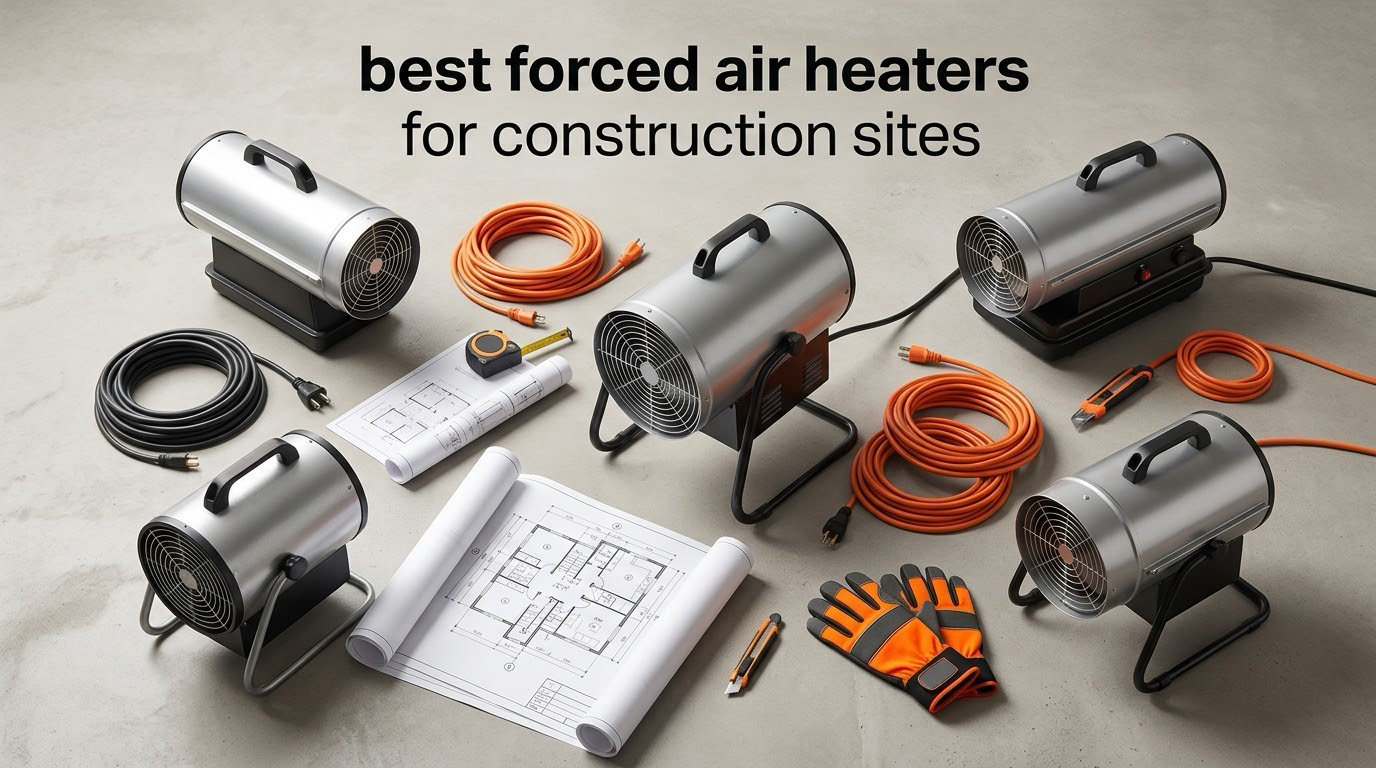
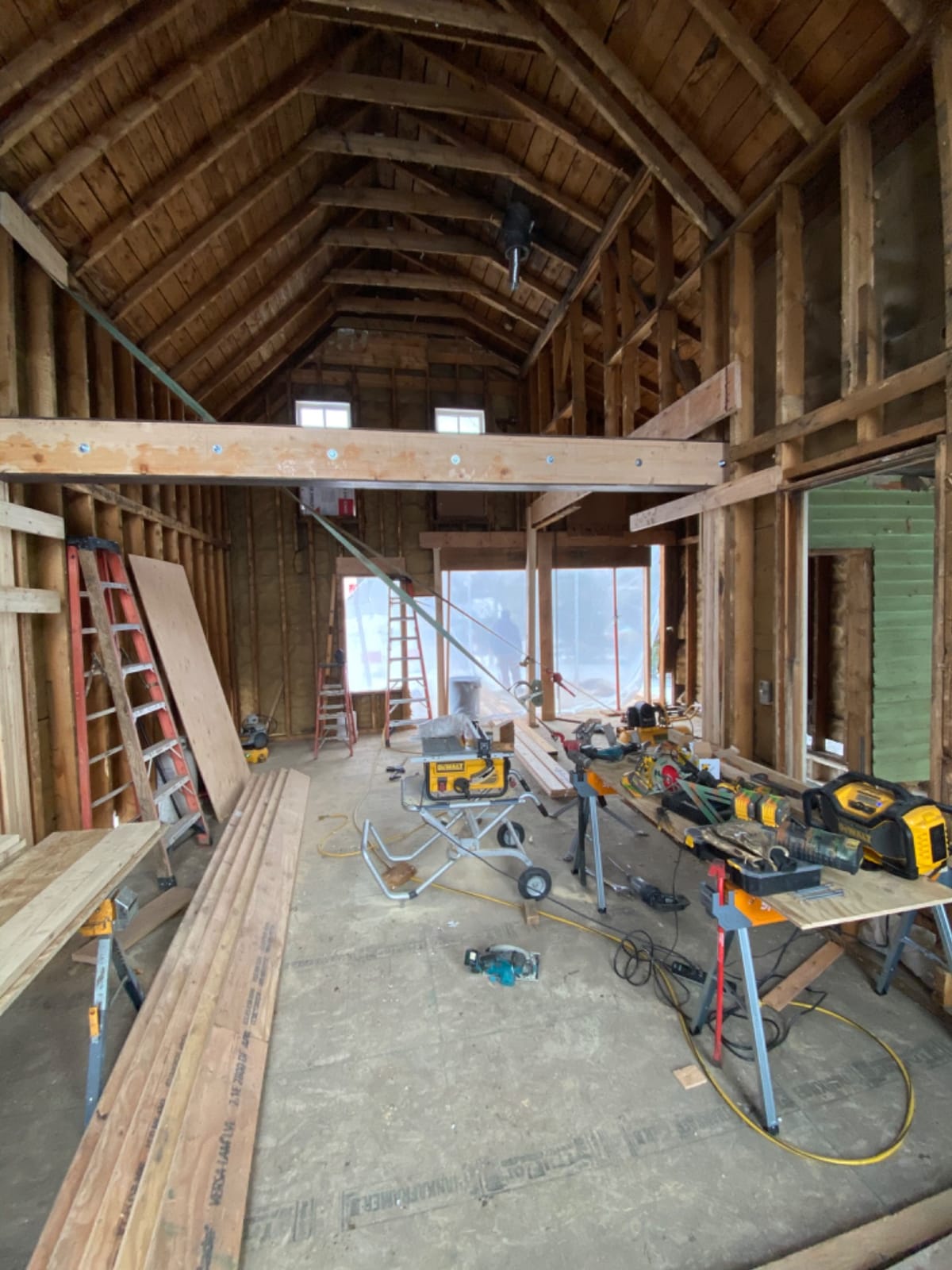
Cold does not slow a construction schedule on its own. It makes every task on that schedule harder: hands lose dexterity, adhesives and drywall mud stop curing properly, concrete work gets pushed a day, and hydraulic fluids in parked equipment thicken up overnight. The single tool that reverses most of that is a portable fan-forced heater pointed at the work area, and the best forced air heaters for construction sites in 2026 are the models that survive being dragged across gravel, switched on before dawn and refueled between crews.
The best forced air heater for a construction site is not the biggest model you can find. It is the one sized to your space, matched to what power and fuel you have on site, and equipped with a thermostat or variable output so you are not burning fuel at full blast on a space that is already warm. For most crews that means a 125,000 BTU propane heater; for partially enclosed steel frames, a 68,000 to 70,000 BTU model with a battery option; and for enclosed interiors, a 240V electric heater instead of any combustion appliance.
Below we break down eight heaters that cover the fuel types and output tiers a real site actually needs, from 60,000 BTU garage units to 125,000 BTU propane workhorses and a 5,600W electric cabinet. Every specification quoted here comes from the manufacturer listing for that model, and every con comes from what owners actually report back rather than from marketing copy.
Table of Contents
Top 3 Forced Air Heater Picks for Construction Sites
These three cover the three situations most crews run into: an open or semi-enclosed site that needs a lot of heat, a site where noise is the deciding factor, and an enclosed interior where an electric appliance is the only sensible answer.

GASLAND Flame Jet 125,000 BTU
- Adjustable 75000 to 125000 BTU output
- Covers up to 3100 sq ft
- CSA certified with overheat protection
- 13 pound steel cabinet

Mr. Heater 125,000 BTU Quiet Burner
- 125000 BTU forced air output
- Covers 3125 sq ft
- Quiet Burner Technology
- High and low heat settings

Dr. Infrared DR-988 5600W Electric
- 5600W element on 240V 30A power
- Thermostat from 37 to 113 degrees
- UL and C-UL listed
- Floor wall or ceiling mount
Best Forced Air Heaters for Construction Sites in 2026
All eight heaters below burn fuel or electricity to move air rather than relying on radiant heat alone, so each one can warm a work area through moving air instead of heating only the crew standing in front of it. The table is the fast way to narrow the field; the individual reviews that follow explain where each one earns its place.
| Product | Specifications | Action |
|---|---|---|
| GASLAND Flame Jet 125,000 BTU Propane Heater |
|
Check Latest Price |
| Mr. Heater 125,000 BTU Quiet Burner Propane Heater |
|
Check Latest Price |
| Dr. Infrared DR-988 5600W Electric Heater |
|
Check Latest Price |
 Mr. Heater 75,000 BTU Kerosene Forced Air Heater Mr. Heater 75,000 BTU Kerosene Forced Air Heater |
|
Check Latest Price |
 DeWalt 68,000 BTU Hybrid Forced Air Heater DeWalt 68,000 BTU Hybrid Forced Air Heater |
|
Check Latest Price |
 Flame King 60,000 BTU Propane Forced Air Heater Flame King 60,000 BTU Propane Forced Air Heater |
|
Check Latest Price |
 Remington 60,000 BTU Propane Forced Air Heater Remington 60,000 BTU Propane Forced Air Heater |
|
Check Latest Price |
 DeWalt 70,000 BTU Quiet Burner Forced Air Heater DeWalt 70,000 BTU Quiet Burner Forced Air Heater |
|
Check Latest Price |
1. GASLAND Flame Jet 125,000 BTU Propane Heater — Best Overall Jobsite Heater
GASLAND 125,000 BTU Propane Force Air Heater for Garage, Heat Up 3100 Sq.Ft
125000 BTU adjustable to 75000
Covers up to 3100 sq ft
CSA certified
13 lb steel cabinet
Pros
- Wide 75000 to 125000 BTU adjustment range
- Covers up to 3100 sq ft
- Adjustable heat angle aims the air stream
- CSA certified with overheat detection
- Includes 10 ft hose and regulator
Cons
- Listed for indoor use only
- Single-speed fan with no airflow control
- Small share of owners report ignition or durability complaints
This is the heater I keep coming back to when a site is open on two sides and the crew is framing in the cold. The headline figure is 125000 BTU, but the more useful number is the adjustment range: the same burner can be pulled back to 75000 BTU, which is exactly what you want once the space is up to temperature and you are trying to stop burning through a cylinder on full output.
Owners consistently describe fast warm-up and even heat across a large open area, and the adjustable heat angle lets you point the stream at the wall you are working rather than at the doorway where it escapes. Temperature settings run from 40 to 140 degrees, and the safety package includes continuous electronic ignition, overheat detection and a thermo-electric safety valve. The listing also carries a CSA certification, which should be a hard filter on any jobsite purchase.
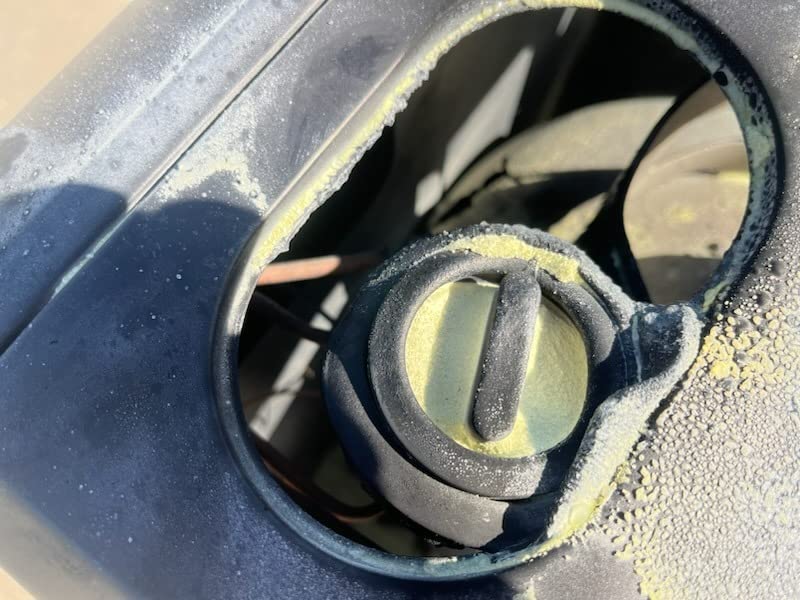
The steel cabinet is compact at 20 by 15 by 8 inches and weighs 13 pounds, so one person can reposition it without a fight. A 10 foot propane hose and regulator are included in the box, which removes the most common first-day problem of hunting for a compatible connector. Run time is about 5 hours on a standard 20 lb tank on the low setting, and a 1-year warranty covers manufacturing defects.
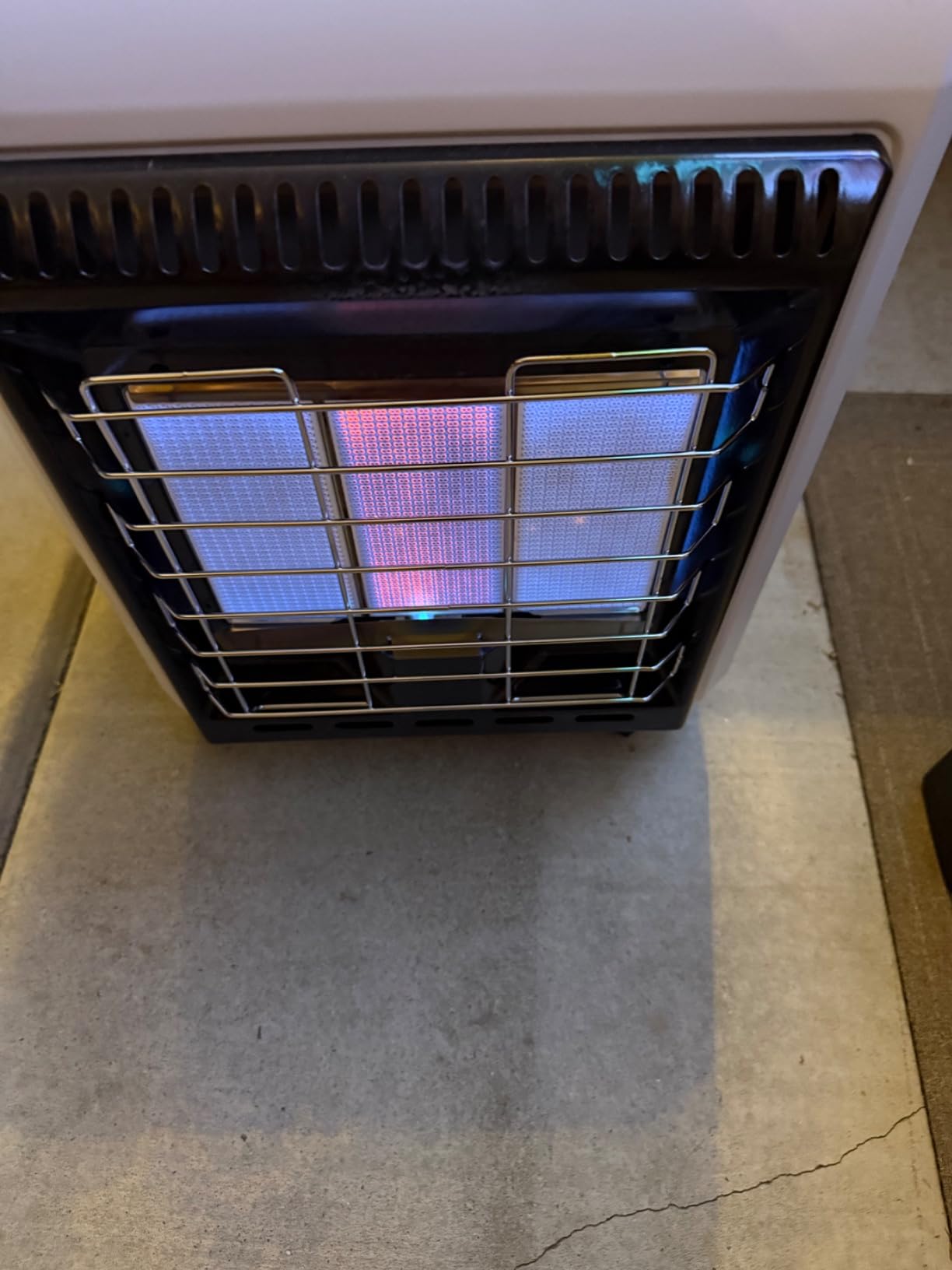
What gives me pause is the indoor-use listing. On a genuinely open steel frame this is not an issue, but in a semi-enclosed space you need to know your code requirements and your ventilation before running any combustion appliance. The fan also runs at a single speed with no user control, so the only lever you have over the air stream is the burner setting and the unit’s angle.
Where this heater fits a real site
Open steel frames, pole barns, warehouses and large garage bays where the air is moving and you want to bring a space up quickly. The 3100 sq ft coverage figure assumes reasonable containment; a fully open structure needs far more.
It also works well as a spot heater for the crew working nearest the nozzle, rather than as an attempt to heat an entire floor plate.
What to check before you commit
Confirm your local code and site conditions permit a combustion heater in the space you are heating, because the listing is written for indoor use. Bring your own hose if you run a setup where 10 feet will not reach the cylinder.
Expect a small minority of owners to report ignition or durability complaints, and plan on a backup ignition plan for sub-zero mornings.
2. Mr. Heater 125,000 BTU Quiet Burner — Best When Noise Decides the Job
Mr. Heater 125,000 BTU Quiet Burner Technology Forced Air Propane Heater
125000 BTU forced air
Covers 3125 sq ft
Quiet Burner Technology
17.3 lb torpedo form
Pros
- Quiet Burner Technology runs about 50 percent quieter
- 125000 BTU warms large shops quickly
- Split barrel design eases field maintenance
- Heavy-duty handle and steel build
- Includes 10 ft hose and regulator
Cons
- Needs a power source for the fan as well as propane
- Only high and low heat settings
- Propane odor is noticeable in enclosed spaces
Output here is identical to the leader at 125000 BTU with a coverage figure of 3125 sq ft, so this is not a heat-class upgrade. What separates it is acoustic: the Quiet Burner burner design runs roughly 50 percent quieter than a standard propane heater of this size, and owners with 1070 reviews at 4.6 stars repeatedly single out being able to hold a conversation while it runs.
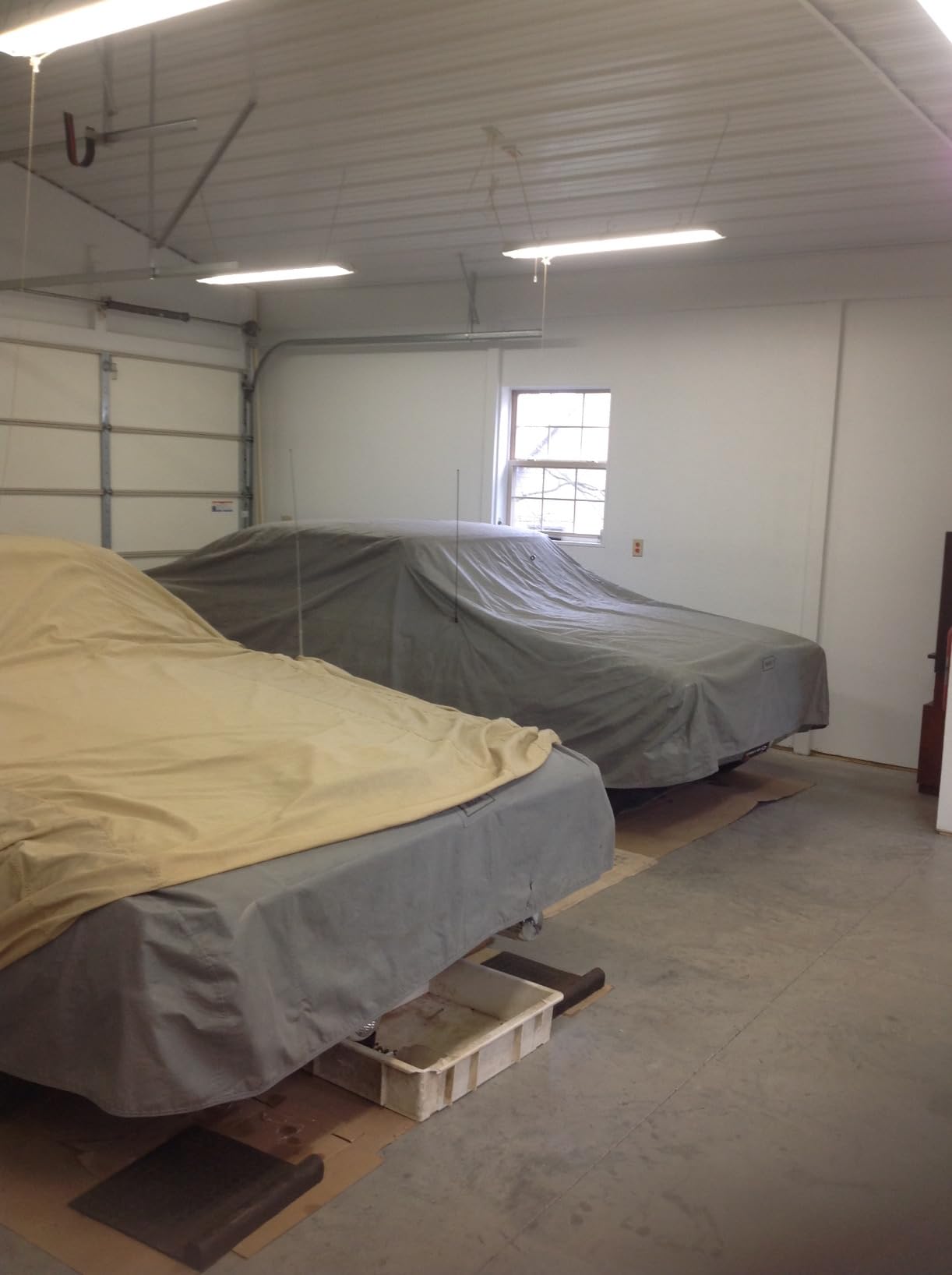
That matters more than it sounds on a framing crew, where two people are talking through layout while a heater roars behind them. A common report from owners is a garage moving from 40 degrees to 60 degrees in about 20 minutes, which is the kind of result that gets a heater moved from the trailer to the middle of the floor.
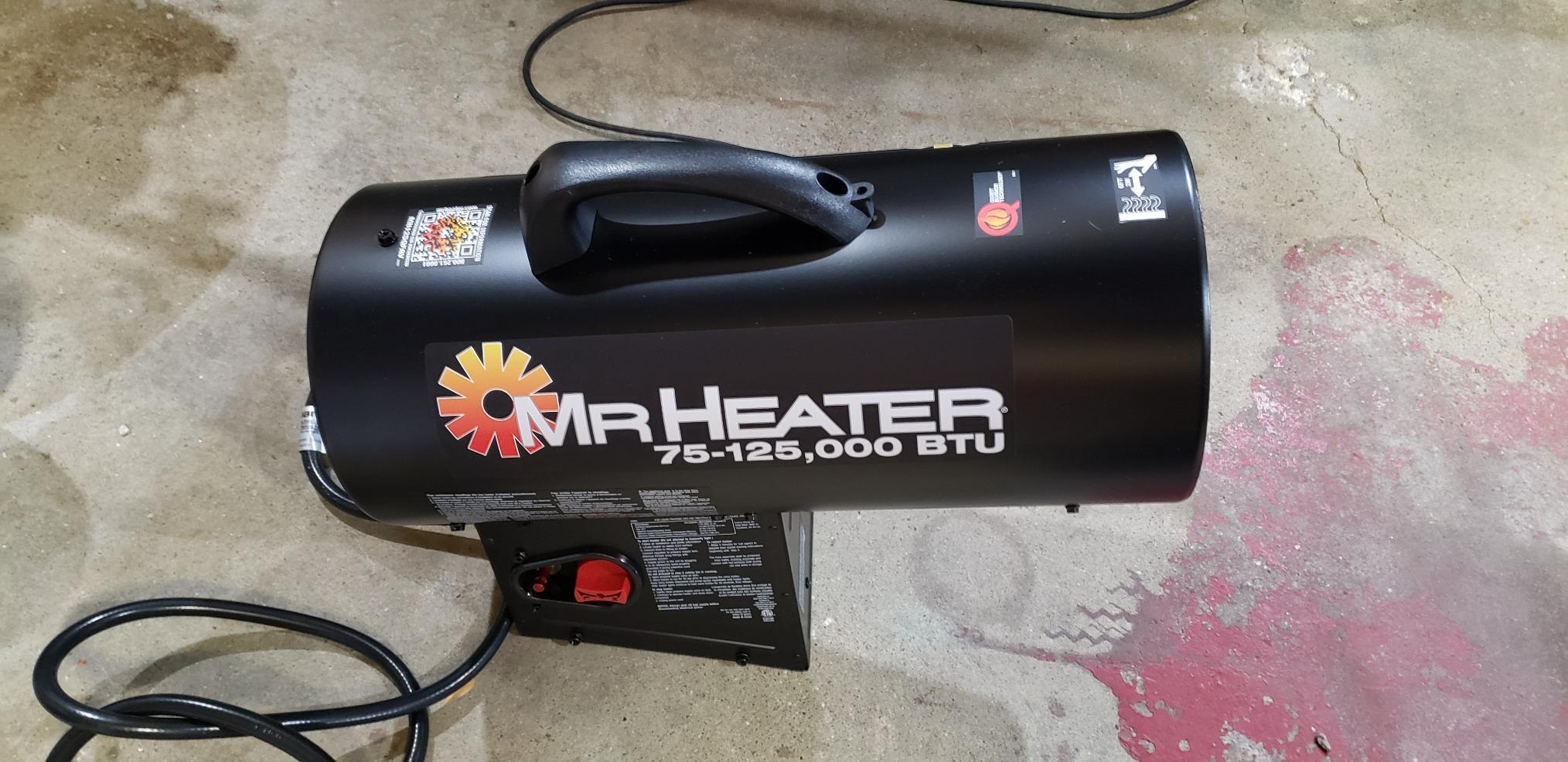
The form factor is a floor-mounted torpedo shape, 21.5 by 12 by 16.75 inches and 17.3 pounds, with a protective cage around the element and a 10 foot hose and regulator included. A high-temperature limit switch and safety shut-off valve handle the basics, and a 1-year limited warranty applies. The split barrel design also means cleaning the fan and element is a matter of opening the housing rather than dismantling the appliance.
Two constraints stand out. The fan needs a 120V source, so you are running a cord as well as a propane line, which limits where you can put it. And there is no modulating thermostat, only high and low, so temperature control means turning the burner down rather than letting a controller cycle it for you.
Where this heater fits a real site
Framing and layout work in garages, shops and enclosed-in-brief structures where crew communication matters. It is also the sensible pick for a shop that gets used year-round, since the quieter burn is less annoying in a space that is not a temporary site.
Owners report easy cold-weather starting, which matters on a January morning before the sun is up.
What to check before you commit
Plan the power. The factory lead is short, and extension cords across a work area are a trip hazard worth routing properly.
If propane odor is a problem in your space, this heater will not solve it. The odor is inherent to the fuel, not to this model, and ventilation is the fix.
3. Dr. Infrared DR-988 5,600W Electric Heater — Best for Enclosed Interiors
DR. INFRARED HEATER DR-988 240V Electric Industrial Garage, Workshop, Warehouse, Construction Heater, 5600W, Thermostat 37-113 °F, Portable, Wall Ceiling Mount
5600W element
240V 30A circuit
Thermostat 37 to 113 degrees
UL and C-UL listed
Pros
- No combustion and no carbon monoxide
- Steady temperature holding reported in sub-zero weather
- Mounts on the floor wall or ceiling
- Thermostat from 37 to 113 degrees
- Largest review base in this roundup
Cons
- Needs a dedicated 30A double-pole breaker
- Highest running cost per hour of anything here
- Internal thermostat is less accurate when mounted high
- Cord and plug may need replacing
This is the only electric heater in the roundup, and it is the right answer for the part of a construction site no combustion appliance should reach: a dried-in interior where drywall, flooring, paint or adhesive are going on. A 5600W element delivers around 19000 BTU of heat with zero combustion, which means no flame, no carbon monoxide and no fuel to store on a finished floor.
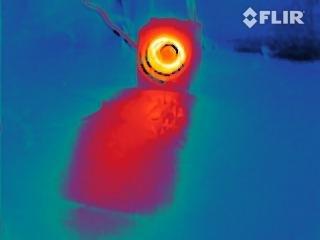
With 4159 reviews at 4.3 stars, this is by far the most examined model here. Owners with insulated shops praise the powerful, well-mixed airflow, the accurate thermostat and the easy wall or ceiling mounting, and several report steady temperature holding in sub-zero weather. It also comes with built-in cord storage, so it can go up on a wall and free floor space for material.
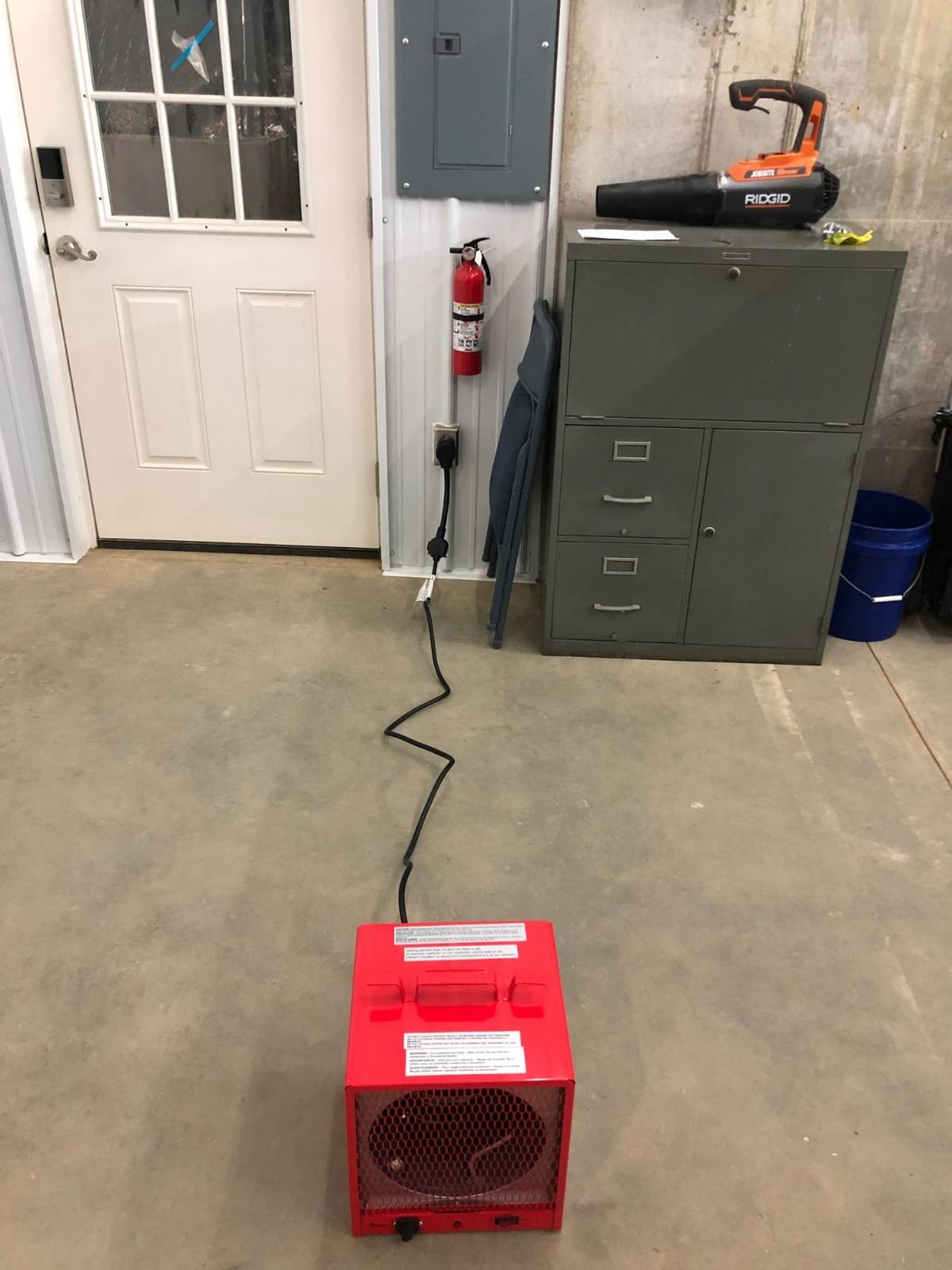
The installation requirement is the part people underestimate. It draws 30 amps at 240 volts with a NEMA 6-30P plug, so it needs a dedicated NEMA 6-30R receptacle on a 30A double-pole breaker. That is a real cost and a real delay on a site without temporary power, and it is the single strongest reason crews reach for a propane model instead.
It is also UL and C-UL listed with automatic overheat cut-off, mounted in an all-metal housing with a steel safety grille and aluminum fan blades. The 1-year limited components warranty is shorter than the two-year parts coverage on the DeWalt propane models, which is worth factoring in for a buy-once tool.
Where this heater fits a real site
Dried-in interiors during drywall, taping, flooring and paint work, plus any enclosed garage or shop that already has a 240V circuit. Cold-sensitive finishing materials need stable temperature more than they need raw heat volume.
A good companion to a garage heater for shoulder-season work, where full propane output is wasteful.
What to check before you commit
Confirm the electrical service before the delivery date, not after. If there is no 30A circuit on site, this is the wrong heater regardless of how good it is.
Mounting high on a wall tends to make the internal thermostat read differently from actual space temperature, so owners who care about accuracy add an external thermostat.
4. Mr. Heater 75,000 BTU Kerosene Forced Air Heater — Best for Kerosene-Storage Crews
Mr. Heater 75,000 BTU Forced Air Kerosene Heater
75000 BTU output
Covers 1750 sq ft
About 11 hours per tank
37.9 lb steel cabinet
Pros
- Roughly 11 hours of run time per full tank
- Built-in thermostat with fuel gauge
- Six-function LED diagnostics
- Rugged steel cabinet for commercial workspaces
Cons
- Fixed output with a thermostat ceiling of 75 degrees
- Heavy at 37.9 pounds and bulky to move
- Kerosene needs separate handling and storage
If your operation already stores kerosene, this is the heater to buy. Output is fixed at 75000 BTU with a coverage figure of 1750 sq ft, and the model runs approximately 11 hours on a full tank, which comfortably covers a standard shift without a refuel stop. At 4.6 stars across 373 reviews, the sentiment is unusually consistent for a unit at this weight class.
Owners highlight the practical details rather than marketing language: the built-in thermostat, the lighted on and off switch, the fuel gauge that tells you how much is left, and the six-function LED diagnostics that identify a fault without a service call. That combination is genuinely useful on an active site where troubleshooting means getting back to work quickly.
The tradeoff is fixed output. There is no variable burner, and the thermostat tops out at 75 degrees, so you cannot use this appliance to bring a space well above 70 degrees or to modulate output downward as a space comes up to temperature. On a cold January morning that ceiling is not a problem; in shoulder seasons it is.
It is also the heaviest model here at 37.9 pounds, with a cabinet measuring 32.68 by 17.32 by 14.02 inches. Two people can move it comfortably, one person will not, and if your site changes daily that is a real operational cost. A 1-year limited warranty applies.
Where this heater fits a real site
Shops, barns, garages and small commercial workspaces where kerosene is already the stored fuel and refuelling is a truck stop rather than a cylinder exchange. The 11-hour run time is the headline advantage here.
Barns and agricultural buildings that need sustained low-level heat overnight for freeze protection on plumbing lines.
What to check before you commit
Use 1K kerosene only. Lower-grade fuel produces the strong sulfur smell that drives returns, and owners who switched away from kerosene cite odour more than any other complaint about the fuel.
Check your plan for the fuel itself: storage, pump and container separation from gasoline, and winter storage of an appliance that has been running.
5. DeWalt 68,000 BTU Hybrid Forced Air Heater — Best for Sites With No Power
DEWALT 68000 BTU/H 1700 SQ FT Forced AIR Propane Heater
68000 BTU covering 1700 sq ft
20V MAX battery or 120V
13.2 pounds
Indoor and outdoor rated
Pros
- Runs on a battery or on 120V line power
- Covers up to 1700 sq ft
- Owners report little or no propane odor
- Only 13.2 pounds with a carry handle
- 2 year limited parts warranty
Cons
- No built-in thermostat
- Hard to start in very cold weather
- About 4 hours of high output on battery
- Louder than smaller heaters on high
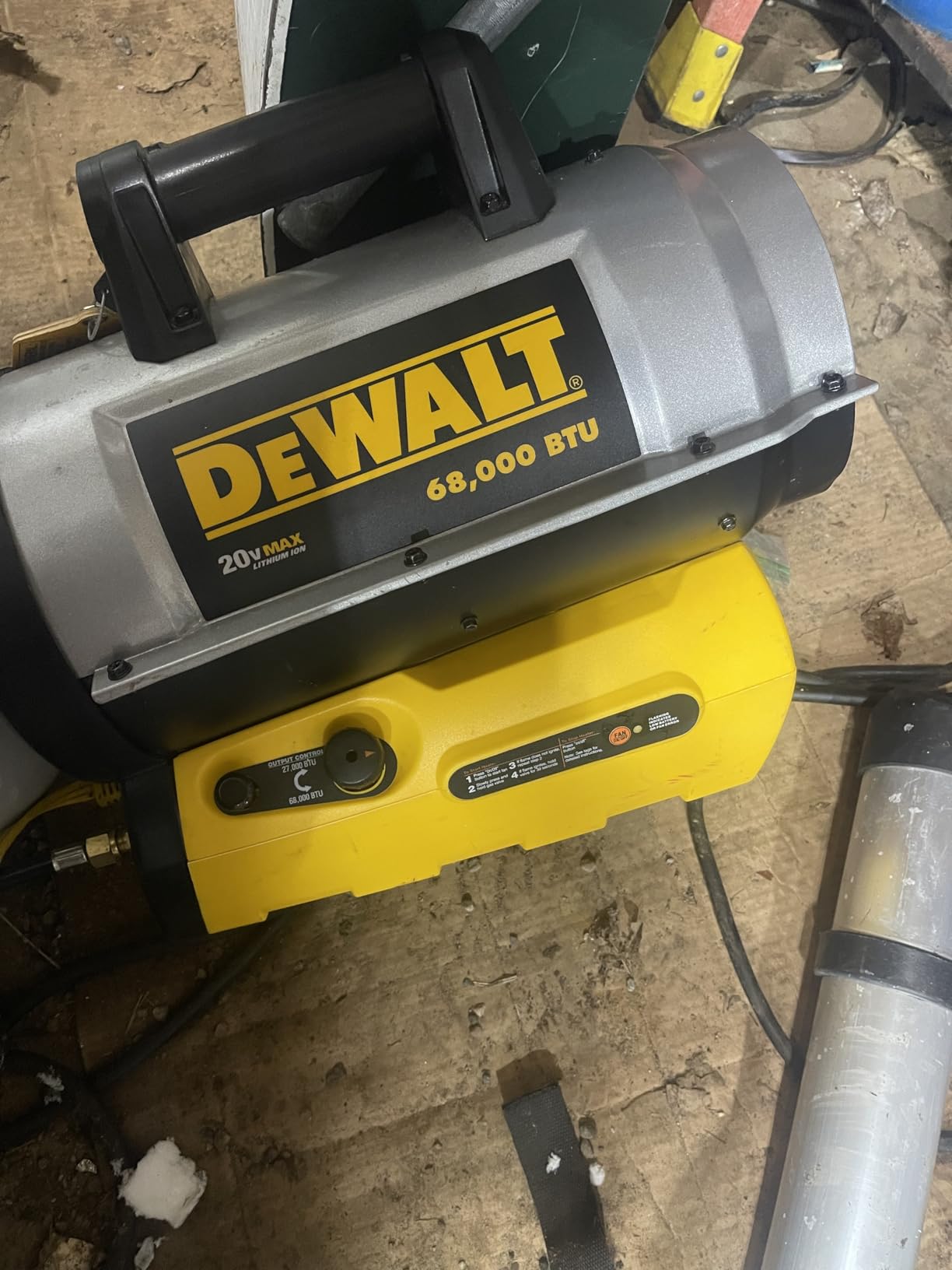
This is the model that solves a problem the others cannot: a site with no generator, no temporary power and a structure with power a long extension cord away. It produces 68000 BTU across up to 1700 sq ft and runs either on a DeWalt 20V MAX battery or on 120V AC, so you choose the power based on where the crew is working that hour.
Owners rate it 4.6 stars across 276 reviews, and the battery-plus-corded hybrid power is the standout feature in nearly every write-up. People highlight the clean burn and low fuel use, and several note there is little or no propane odor, which makes it far more practical in a semienclosed space than the bigger appliances. At 13.2 pounds with a carry handle, it moves between a job trailer, a basement and a garage without ceremony.
There is no built-in thermostat, so heat is managed by choosing the setting and cycling the appliance, which is fine when you are also stepping away to work. An 8Ah battery lasts most of a workday on moderate output; on high, expect closer to 4 hours. The listing is rated for both indoor and outdoor use, and a 10 foot hose, regulator, handle and owner’s manual are included.
Cold starts are the recurring complaint. Reviewers report that ignition can be difficult in very cold weather and sometimes requires running the low-heat mode first to warm the appliance. That is worth knowing before a 6 a.m. start in January, and it is the same failure mode owners describe with battery-powered igniters generally.
Where this heater fits a real site
Remote sites, renovation work in a structure with no temporary power, and job trailers that need warming through the week. Cordless operation is the reason to buy this over a comparable 60,000 BTU corded model.
Small to medium interiors and semienclosed areas where minimizing odor and power requirements matters more than maximum output.
What to check before you commit
Batteries and chargers are a separate purchase if you do not own the platform already, so factor the platform cost into the decision before committing to this rather than a corded-only model.
Keep fresh batteries in the igniter path, and warm the appliance on low for a few minutes before the first start of a freezing morning.
6. Flame King 60,000 BTU Propane Forced Air Heater — Best for Open Patios and Small Garages
Flame King 60,000 BTU Portable Propane Forced Air Heater Outdoor Great for Jobsite, Construction, Garage, Patio, Stainless Steel
60000 BTU covering 1500 sq ft
Up to 8 hours per 20 lb bottle
CSA certified
Stainless steel body
Pros
- Quiet for a 60000 BTU forced air heater
- Warms a 24x24 garage 20 to 30 degrees in 15 minutes
- Up to 8 hours per 20 lb propane bottle
- Stainless steel body with fire detection and tilt shutoff
Cons
- 60000 BTU is modest for larger spaces
- Piezo igniter can be finicky and needs the gas button held
- Some owners needed a separate regulator or adapter
- About 10 percent of reviews report early shutoff
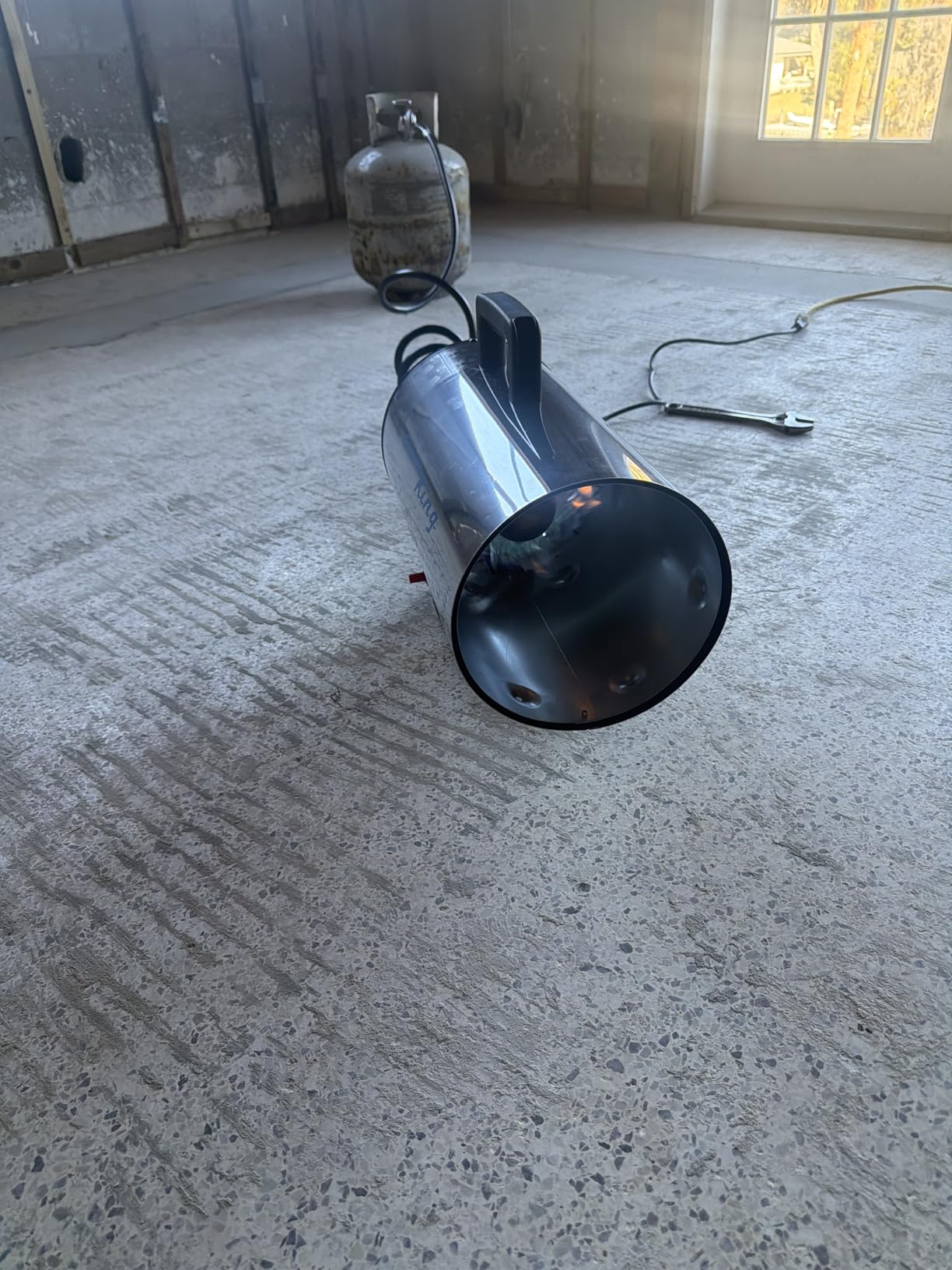
The Flame King is the pick when the work area is small, half-enclosed or outdoors, and a 60000 BTU heater is genuinely enough. Owners describe a 24×24 garage gaining 20 to 30 degrees in 15 minutes, which is a fast result for this output class and the reason this model keeps showing up on small jobsite lists.
The two things reviewers praise most are quiet running relative to other heaters at this output and the ability to run up to 8 hours on a single 20 lb propane bottle at rated output. The safety package is solid for the category: fuel shutoff, a fire detection system and a safety tilt shutoff, all on a CSA-certified stainless steel body rated for open, well-ventilated areas, patios and garages.
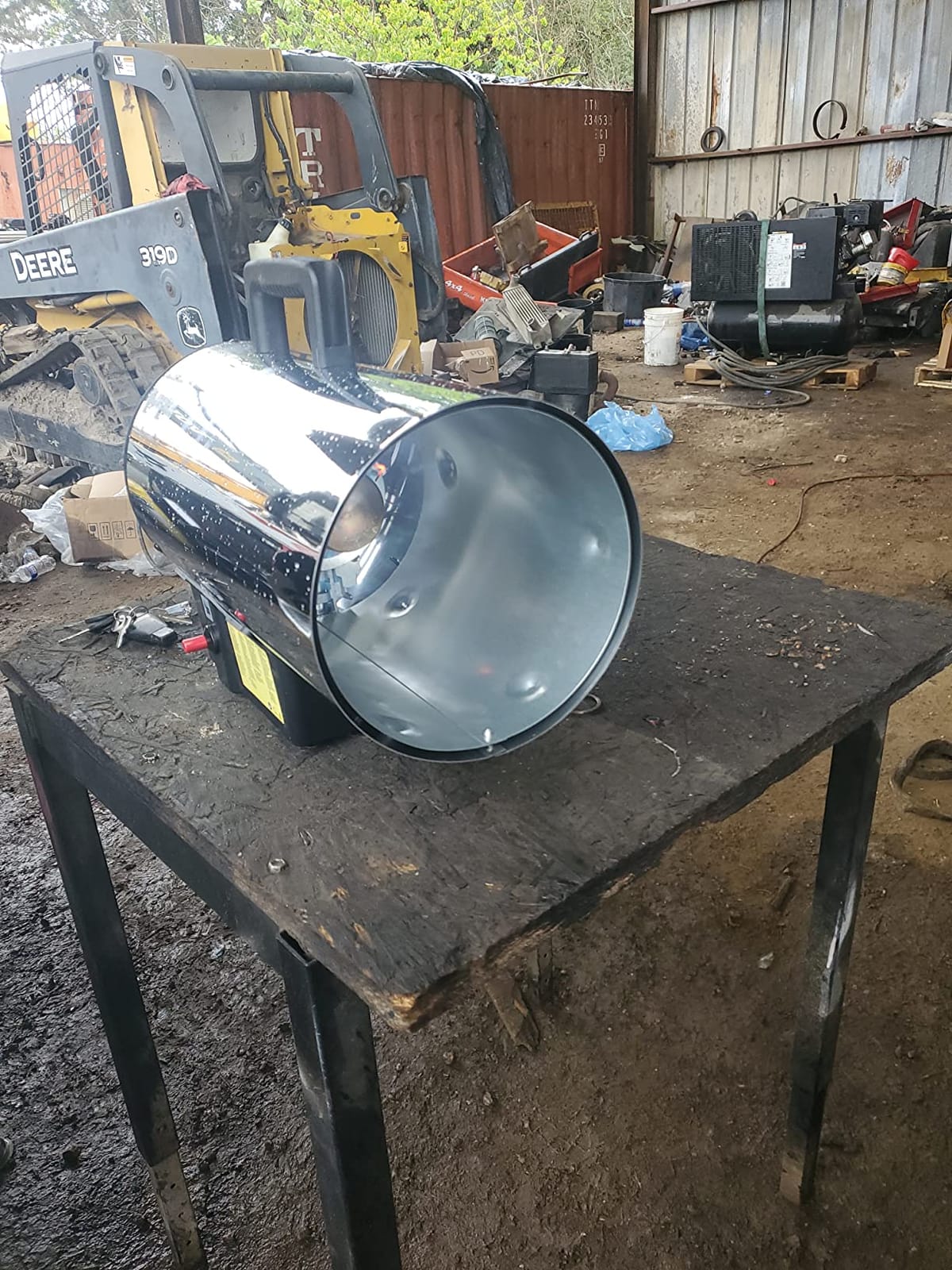
The honest limitation is output. If you are trying to heat an uninsulated space beyond about 1500 sq ft, owners looking for faster warm-up are pushed toward higher-BTU models, and that is the right call. About 10 percent of reviews are one-star, and a portion of those report units shutting off after a few days of use, so warranty service matters on a purchase like this.
The piezo igniter is the other recurring note. It can be finicky, and some owners find the gas control button has to be held down to keep the appliance lit. A few also needed a separate regulator or adapter to fit a standard 20 lb propane tank, so check the connection before the first cold morning.
Where this heater fits a real site
Patios, porches, open framing, small garages and covered work areas where air is moving and 60000 BTU is the right size. The stainless body suits damp or exposed positions that would worry a painted cabinet.
Spot heating a single crew working near a door or a deck rather than heating a whole structure.
What to check before you commit
Confirm your regulator and fitting fit the cylinder you already own before you rely on the unit in the cold.
If the site is enclosed on more than two sides, step up to a 68000 or 70000 BTU model rather than stretching this one beyond its coverage figure.
7. Remington 60,000 BTU Propane Forced Air Heater — Best for Moving Between Jobs
Remington LP Forced Air Heater, Portable 60,000 BTU Space Heater for up to 1500 Square Feet – Liquid Propane Gas Powered, Tank Not Included
60000 BTU covering 1500 sq ft
Only 11 pounds
Variable heat and adjustable height
10 ft hose and regulator
Pros
- Only 11 pounds so one person can carry it
- Variable heat settings plus adjustable height
- Warm up to 1500 sq ft with fast 10 to 20 minute warm-up
- Continuous electronic ignition with flame-out fuel cut-off
- Includes 10 ft LP cylinder hose and regulator
Cons
- Loud blower and some returns over noise
- Power cord is very short
- Type 1 fitting can need extra force to connect
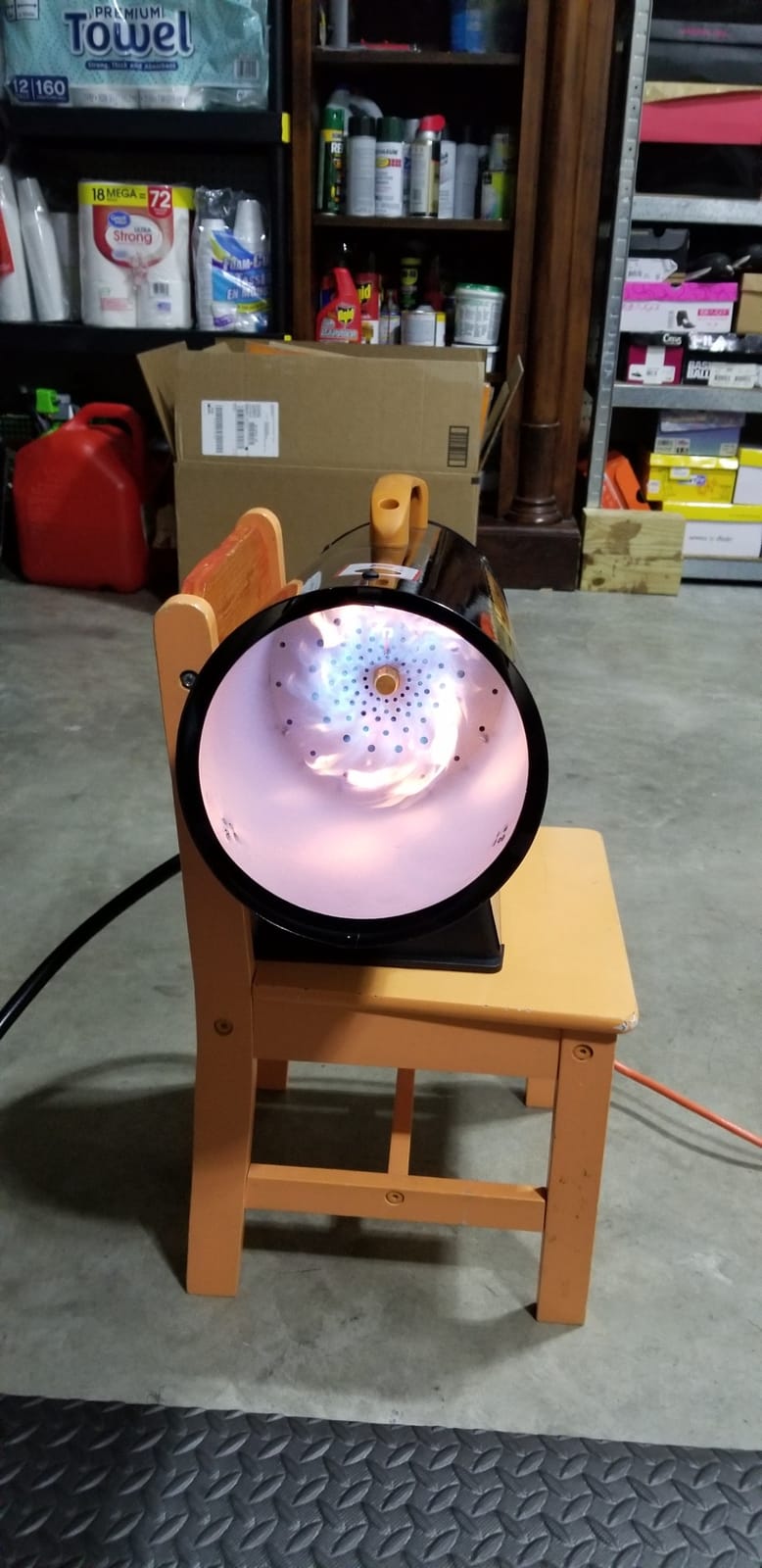
At 11 pounds, this is the heater you load into a truck every morning without thinking about it. It delivers 60000 BTU across up to 1500 sq ft, and owners report garages becoming comfortable in 10 to 20 minutes with even heat distribution across a large open area. With 736 reviews at 4.5 stars, it is a well-worn, well-documented appliance rather than a new release.
The control set is the part that makes it work on site. Variable heat settings let you turn the burner down as the space comes up, and the adjustable height tilts the warm air toward whatever you are working on. Safety is handled by a thermocouple, a high-temperature limit shut-off and a flame-out fuel cut-off, with continuous electronic ignition, and a 10 ft LP cylinder hose plus regulator are included in the box.
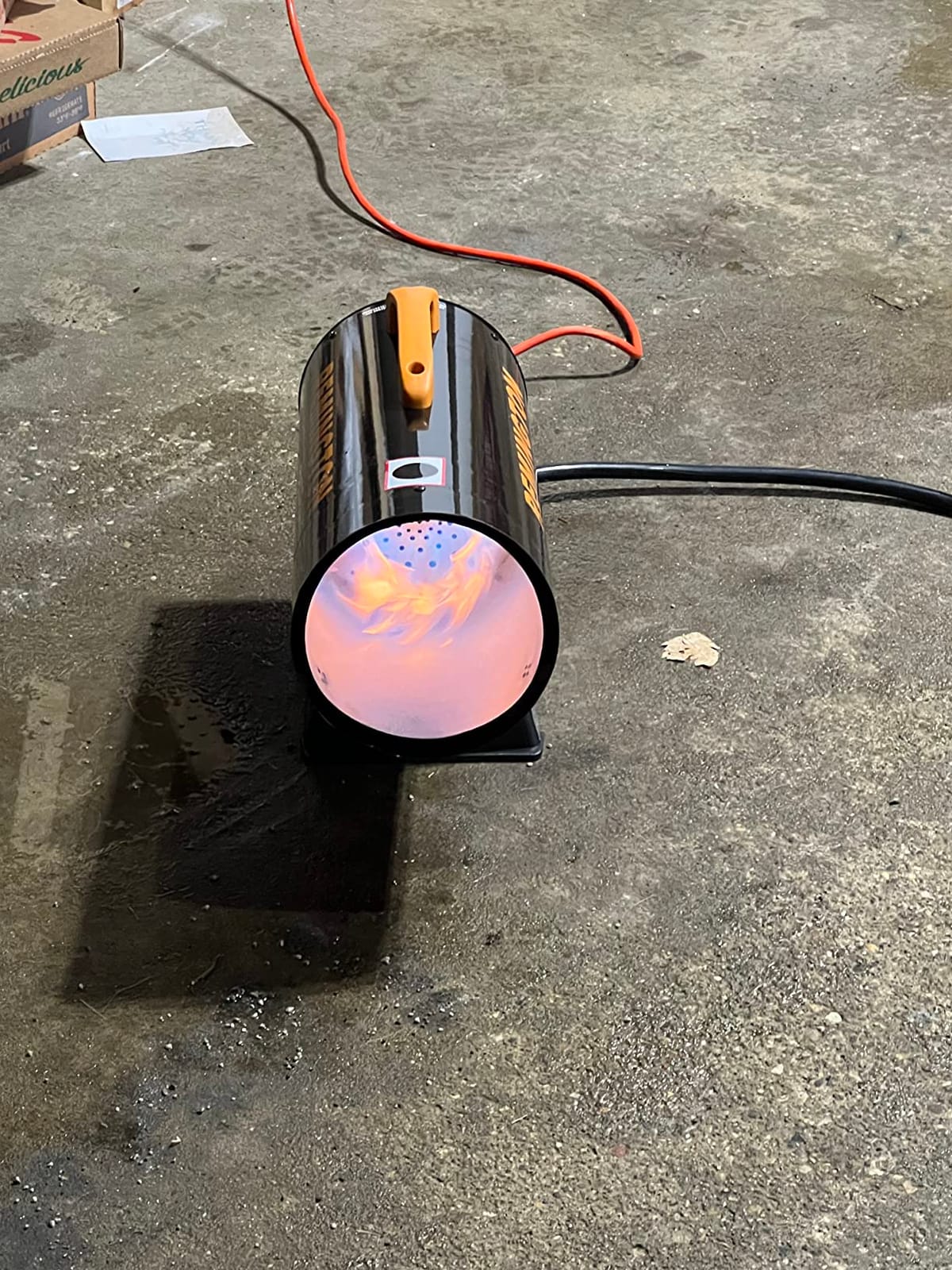
Noise is the dominant complaint. Owners describe a loud blower, and a number of buyers returned appliances because the noise was unsuitable for occupied spaces. If your crew works in a space where conversation matters, read that carefully before buying this over the Flame King.
Two smaller details catch people out. The included power cord is under a foot long, so plan where the outlet will be. And the LP connection is a Type 1 fitting that can take extra force to attach to a typical grill tank, which is a thirty-second annoyance that has generated a surprising number of complaints for a well-regarded appliance.
Where this heater fits a real site
Multi-site contractors and small crews who move the heater daily, plus garages and sheds where one person handles setup alone. The variable settings and adjustable height make it easy to aim at a specific task rather than a whole room.
Drywall and finish work in a ventilated space where fast warm-up between visits matters more than sustained bulk heat.
What to check before you commit
Confirm the noise level is acceptable for your crew. This is a fan-forced burner and it does not pretend otherwise.
Verify the Type 1 fitting mates with your cylinder, and bring a longer cord or a proper cord reel rather than stretching one that short.
8. DeWalt 70,000 BTU Quiet Burner Forced Air Heater — Best for Basements and Enclosed Trailers
DEWALT 70000-BTU Outdoor Portable Forced Air Propane Heater
70000 BTU covering 1750 sq ft
Corded or 20V MAX battery
Up to 6 hours cordless
Low-oxygen shutoff
Pros
- Runs on 110V or a 20V MAX battery for up to 6 hours
- Quiet Burner Technology allows normal conversation
- Reaches about 70 degrees in a basement in 10 minutes from 25 degrees
- Lightweight at 14.3 pounds with an ergonomic handle
- Low-oxygen shutoff and overheat protection
Cons
- Fan does not run to cool the burner after shutdown
- Noisy on the high setting
- Battery and charger sold separately
This is the newest model in the roundup, and the 94 reviews at 4.5 stars are recent enough to be useful. It produces 70000 BTU across up to 1750 sq ft and runs either on 110V line power or a DeWalt 20V MAX battery for up to 6 hours, which gives you a cordless option no fixed-power propane heater offers.
Owners report clean, quiet heat with no odor, easy lighting and good portability between a garage, a basement and an enclosed trailer. One frequently cited result is a basement reaching about 70 degrees in 10 minutes when the outside temperature was 25 degrees. Quiet Burner Technology keeps noise low enough to talk normally at low and moderate settings, and the ergonomic handle plus 14.3 pound weight makes repositioning simple.
Safety features include a low-oxygen shutoff and overheat protection, with the exterior staying cool to the touch away from the burner end. A 10 foot propane hose and regulator are included, there are three speed settings, and the model carries a 2-year limited warranty. This is also the post-recall upgraded version replacing the earlier DXH70CFAVX, which is worth knowing if you have seen the older model listed.
The one consistent negative is the shutdown sequence. The fan does not continue running after shutdown to cool the burner, so the appliance needs to stay where it is until the burner cools rather than being grabbed and moved immediately. On a busy site that changes how you plan breaks and moves.
Also expect noise on the high setting, which is normal for a forced air burner of this size, and remember that the battery and charger are sold separately if you do not already own the platform.
Where this heater fits a real site
Basements, crawlspaces, enclosed trailers and semienclosed rooms where odor would be a problem and a 70000 BTU output is the right size. The low-oxygen shutoff is the feature owners treat as a confidence signal, and it is the right thing to have in a partly enclosed space.
Anywhere the crew needs to talk, work or hear a saw while the heat runs.
What to check before you commit
Confirm the battery and charger situation first, since cordless run time is the main reason to choose this appliance over a comparable corded model.
Plan around the shutdown behaviour: give it time to cool in place before moving it, particularly in an enclosed trailer where you will want it back on quickly.
How Many BTUs Do You Need on a Construction Site?
Headline BTU is the least useful number on a heater listing, because it assumes perfect conditions you will never have on a site. A 125000 BTU propane heater that flatters 3100 sq ft in a listing may barely hold a smaller, wide-open steel frame on a windy January day. Size by volume and by heat loss, not by the marketing number.
The standard calculation is straightforward: multiply the space’s cubic feet by the temperature difference you need, then multiply by 0.133. For a 20 by 20 by 8 room, that is 3200 cubic feet; a 40 degree temperature rise works out to roughly 17000 BTU before any allowance for drafts, door openings or an uninsulated shell.
Then apply the reality multiplier. A roughly insulated, largely closed space needs little more than the calculated figure. A half-enclosed structure with poly sheeting and a wind break can need two to three times that. A fully open steel frame under wind can need more again, and in that case no single appliance holds the whole space; you position heaters at the work face and accept the rest as a comfort problem rather than a heating problem.
20 by 20 garage, insulated — 400 sq ft, 3200 cubic feet at 8 ft ceilings. A 40 degree rise calculates to roughly 17000 BTU, which puts a 60000 BTU propane heater well ahead of the load with room to spare.
24 by 24 garage, uninsulated — 576 sq ft, 4608 cubic feet. Plan on a 68000 to 70000 BTU appliance, and add wind protection before you add BTU.
1000 sq ft semi-enclosed jobsite — 8000 cubic feet at 8 ft. This is where 125000 BTU heaters earn their place, especially with a wind break in place.
Enclosed interior with temporary power — a 5600W electric heater delivers about 19000 BTU and is the only category here safe to run in a dried-in space.
One more sizing rule that gets overlooked: a small heater paired with a large tank beats a large heater paired with a small one. Long run time beats short run time on a cold site, because an appliance that keeps burning all shift holds temperature while one that refuels twice loses ground every stop.
Propane vs Kerosene vs Electric: Fuel Choice Decides Where It Can Go
The most important decision is not output. It is fuel, because fuel determines where the appliance is allowed to run. Combustion heaters produce carbon monoxide and heat, so they belong outdoors, in open structures, or in spaces with adequate ventilation. An electric heater belongs indoors without qualification.
Propane is the default for most sites. Cylinders exchange in minutes, there is no liquid fuel to store, and the 60000 to 125000 BTU range covers everything from a garage to a warehouse bay. The drawbacks are propane odor in enclosed spaces, the need to keep cylinders on site, and the fact that every combustion heater also needs a power source for its fan and igniter.
Kerosene suits crews that already store liquid fuel and want an all-day run without a cylinder exchange; the heater here runs roughly 11 hours per full tank. The tradeoffs are weight, fuel handling, and the odour complaint that owners who switch away from kerosene mention more than any other. Only 1K kerosene belongs in these appliances, and it needs its own storage away from gasoline pumps and containers.
Electric wins wherever there is a 240V circuit and no ventilation. It produces no carbon monoxide, no odor and no combustion heat, and it holds temperature steadily in insulated spaces even in sub-zero weather. The costs are the dedicated 30A circuit, the higher hourly running cost of any appliance here, and the fact that output drops in large, poorly insulated volumes because you are moving a fixed amount of electricity-fed heat.
Diesel belongs on a different tier entirely: trailer-mounted commercial appliances for very large open sites and rental fleets. None of the eight models here are in that class, and crews who need one are usually better served by renting than by buying.
On running cost, the honest lever is fuel burn per hour, which scales with output. The operating pattern experienced owners use is to run a burner at full output for 10 to 15 minutes to bring a space up, then throttle down to roughly a third of the flame to hold it. That single habit, plus variable output or a thermostat, does more for a fuel bill than choosing a nominally cheaper fuel.
Jobsite Safety: Certification, Clearances and Carbon Monoxide
Combustion heating is a safety category, and the cheapest risk reduction available is refusing to buy an uncertified appliance. Look for CSA certification on every fuel heater you consider; the Flame King and GASLAND models here carry it, and the Dr. Infrared electric heater is UL and C-UL listed. Treat anything without a mark as unsuitable for a work site.
Check certification. CSA for fuel-fired appliances, UL or C-UL for electric. No mark, no purchase.
Read the clearance requirements in the manual. Maintain the specified distance from combustible materials, which matters when a heater is parked beside stacked lumber, drywall or a tarp wall.
Run combustion heaters outdoors or in well-ventilated areas. For an enclosed interior, use an electric heater or a ducted arrangement with the burner outside.
Install working carbon monoxide detectors. Place them inside the occupied space, not next to the appliance, where the reading means nothing.
Keep the safety systems active. Tip-over, overheat, flame-failure and oxygen-depletion shutoffs exist because of documented failures; do not bypass or tape a switch down.
Separate fuels. Kerosene and gasoline do not share pumps or containers, and cross-contamination is both a safety and a maintenance problem.
Route cords and hoses deliberately. A short lead across a work area is a trip hazard, and propane hoses get chewed by foot traffic faster than they fail from age.
The oxygen-depletion sensor is the feature owners of commercial forced air equipment point to as their reason for trusting an appliance, and it is a good proxy for overall build quality. If a model in this category has no low-oxygen or flame-failure protection, choose a different model regardless of how good the output number looks.
Heat Retention Is the Cheapest Fuel You Can Buy
Before buying a bigger heater, close the building. On an uninsulated site, wind and infiltration account for more heat loss than most crews account for, and no BTU rating compensates for a wind blowing straight through the frame. In practice, retention work pays back faster than any upgrade in this roundup.
Hang poly sheeting or insulated curtain on the windward side, build a wind break on the open face of the structure, and plug the gaps at the roof line and floor edge where air moves fastest. Seal the door, or accept that every trip outside dumps your heat and plan the schedule around closing it behind you.
Once the space is contained, position the heater in the coldest corner facing the centre of the work area, angled so the warm stream travels across the crew rather than at the opening. If the work area is a tent or an enclosed room you cannot heat directly, a warm air duct run from a heater outside is the correct technique; the burner and its combustion products stay where the air is already moving.
If you are heating a garage or workshop between jobs rather than a jobsite, our guides to oscillating tower space heaters and space heaters for bedrooms cover the residential end of the category, where the sizing rules are simpler and the fuel questions do not apply.
Layering matters too. Cold-weather work clothing rated for the conditions you actually face will keep a crew productive at a lower set point than the same crew in summer layers, and a lower set point is where the fuel savings come from. Pairing the heater with the right footwear is covered in our guide to waterproof work boots for construction.
Frequently Asked Questions
What is the best heater for a construction site?
The best heater for a construction site is a fan-forced heater sized to the volume of the space rather than the biggest model available. A 125,000 BTU propane heater suits open and semi-enclosed structures, 68,000 to 70,000 BTU models fit partially enclosed work areas, and enclosed interiors should use a 240V electric heater because combustion heat and carbon monoxide are not acceptable in a dried-in space.
Who makes the best forced air heater?
Several manufacturers build credible jobsite forced air heaters. GASLAND and Mr. Heater cover the 125,000 BTU propane class, DeWalt builds both corded and 20V MAX battery models in the 68,000 to 70,000 BTU range, and Remington, Flame King and Dr. Infrared cover the 60,000 BTU propane and electric ends of the market. The right brand depends more on fuel availability and site power than on the badge.
What is the best electric construction heater?
The Dr. Infrared DR-988 is the strongest electric option in this roundup, with a 5,600W element, an adjustable thermostat from 37 to 113 degrees and a 4,159-review history. It is UL and C-UL listed with automatic overheat cut-off, and it mounts on the floor, a wall or a ceiling. It requires a dedicated 240V 30A circuit, which is the deciding factor on many sites.
Is it better to run diesel or kerosene in a heater?
Kerosene for a floor-mounted forced air heater and diesel for trailer-mounted commercial appliances. A 75,000 BTU kerosene heater like the Mr. Heater model here runs roughly 11 hours on a full tank, which suits crews that already store liquid fuel. Diesel appliances belong to a different size class, are usually trailer-mounted and are frequently rented rather than owned.
Which is more efficient for a torpedo heater, propane or kerosene?
Neither fuel is automatically more efficient. What determines fuel use is output, insulation and operating habit. Run a burner at full output for 10 to 15 minutes to bring a space up, then throttle to roughly a third of the flame to hold it. A thermostat or variable output control makes that easier, and a small tank paired with a large output wastes fuel through cycling.
Can I use a propane heater indoors on a construction site?
A propane heater produces carbon monoxide, so it belongs outdoors, in an open structure, or in a space with adequate ventilation. For a dried-in interior, use a 240V electric heater instead, or place the propane heater outside and run a warm air duct into the work area. Whichever you choose, install a working carbon monoxide detector inside the occupied space.
Conclusion: The Best Forced Air Heaters for Construction Sites in 2026
The best forced air heaters for construction sites are not one appliance but three decisions made in order: pick a fuel your site can support, size the output to the volume of the space, and buy only certified equipment. Get those three right and any competent heater will warm the work area; get one of them wrong and you will spend the winter refuelling a model that was never the right tool.
For most crews, the GASLAND Flame Jet 125,000 BTU is the strongest all-round choice on this list, with the widest output adjustment and the highest review count among the propane models. Buy the Mr. Heater 125,000 BTU Quiet Burner instead if the crew cannot work around the noise, the Mr. Heater 75,000 BTU kerosene heater if you already store liquid fuel, and the Dr. Infrared DR-988 if the work is inside a dried-in shell with a 240V circuit available.
Whatever you choose, contain the space before you commission it. Poly, a wind break and a closed door will do more for a cold site than any upgrade in this roundup.