
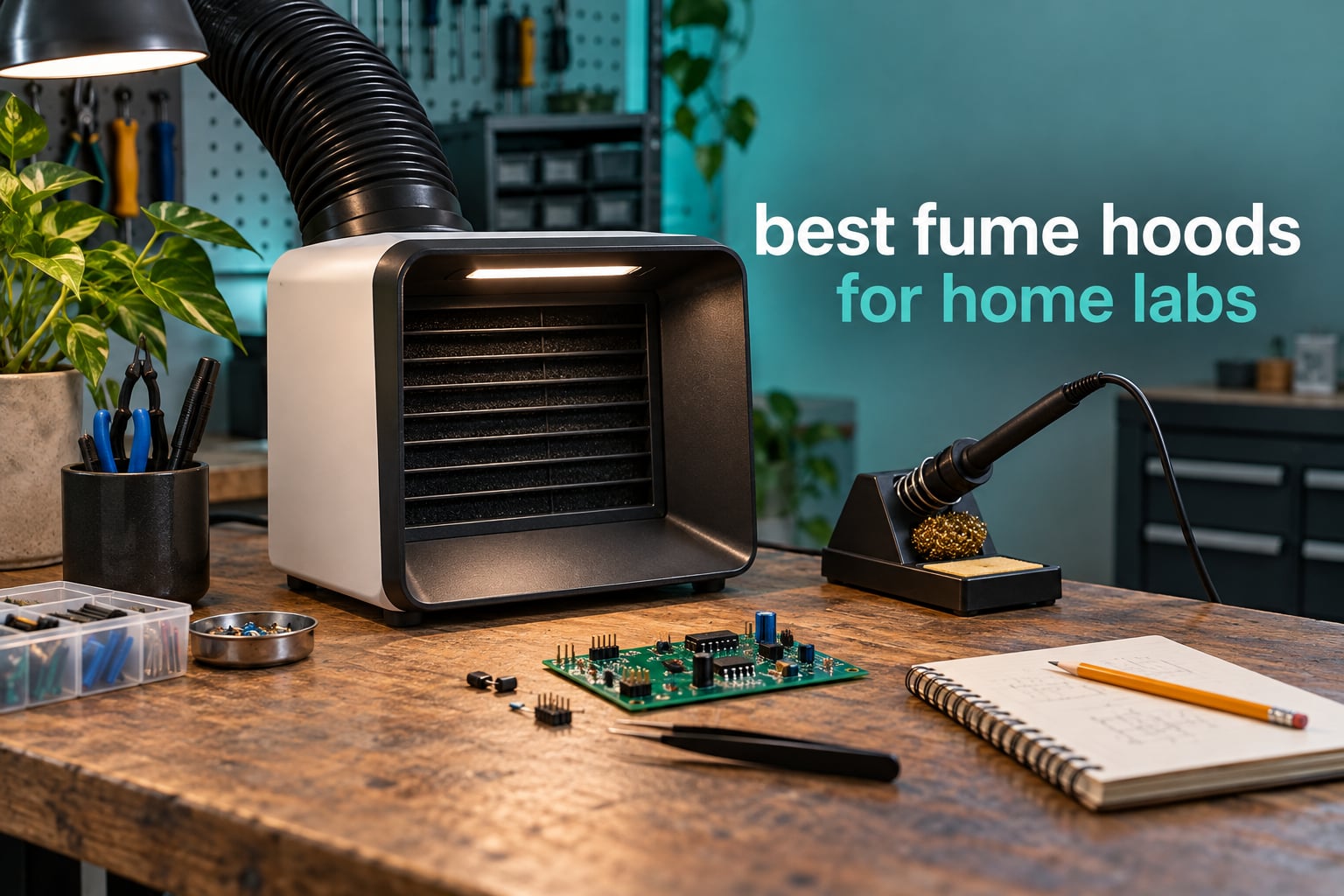
There is a specific moment every home lab hits. You solder a joint, or you heat a small beaker of something that smells sharp, and the realisation lands that the only thing between your lungs and that vapour is an open window and a fan pointed the wrong way. Finding the best fume hoods for home labs means accepting one hard truth first: almost nothing sold at home-lab prices is a chemical fume hood in the institutional sense. It is a filtered benchtop extractor that pulls air across your work and pushes it through carbon, HEPA, or both before returning it to the room.
That distinction is not a warning to skip the category. For soldering flux fumes, resin printing, powder handling, engraving dust, paint and solvent cleanup, and light chemical work, a good filtered extractor is genuinely useful, and most of the units in this roundup do the job better than the improvised window-and-fan setups that dominate home forums. What they cannot do is exhaust a solvent-heavy reaction out of the building, and pretending otherwise is how people end up with a headache and a ruined weekend.
We spent weeks reading specs, review patterns and forum threads to work out which of these units actually earn a place on a home bench. Our team focused on airflow figures rather than marketing adjectives, because airflow in cubic metres per hour or cubic feet per minute is the only number that tells you whether capture happens at the source. We also weighed filter media life, since replacement cartridges quietly cost more over three years than the unit itself, and we noted noise for anyone working in a shared home or an apartment.
The short version before we get into the picks: the KOTTO Solder Smoke Absorber is the one most home labs should buy, the FumeClear FC-2001A is the strongest premium option, and the YIHUA 948DQ-I is the cheapest unit here that still handles a hobby bench properly. None of them replace a ducted cabinet, and we explain below exactly when that matters.
Table of Contents
Top 3 Best Fume Hoods for Home Labs (September 2026)
KOTTO Solder Smoke Absorber
- 0.4 inch activated carbon filter
- 3000 RPM suction fan
- Captures fumes 5-6 inches away

FumeClear FC-2001A
- H13 HEPA plus activated carbon
- 120-180 m3/h brushless airflow
- 15 cm working range

YIHUA 948DQ-I
- Dual front and rear filtration
- 30 degree tiltable stand
- 8 spare adsorbers included
All 12 Home Lab Fume Hoods Compared in 2026
| Product | Specifications | Action |
|---|---|---|
| KOTTO Solder Smoke Absorber |
|
Check Latest Price |
 KOTTO 24-Inch Hose Extractor KOTTO 24-Inch Hose Extractor |
|
Check Latest Price |
| YIHUA 948DQ-I |
|
Check Latest Price |
 M-T MT308 80W Triple Filtration M-T MT308 80W Triple Filtration |
|
Check Latest Price |
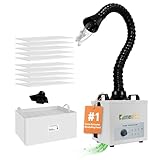 FumeClear FC-100A FumeClear FC-100A |
|
Check Latest Price |
| FumeClear FC-2001A |
|
Check Latest Price |
 KQZ W1 Compact Extractor KQZ W1 Compact Extractor |
|
Check Latest Price |
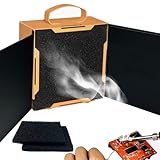 ToolBud Magnetic-Flap Extractor ToolBud Magnetic-Flap Extractor |
|
Check Latest Price |
 VEVOR FL250 Workshop Extractor VEVOR FL250 Workshop Extractor |
|
Check Latest Price |
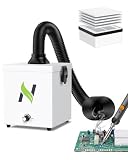 NEETOP NT-M1 Compact Unit NEETOP NT-M1 Compact Unit |
|
Check Latest Price |
 BlueDate BD-30 HEPA Unit BlueDate BD-30 HEPA Unit |
|
Check Latest Price |
 Allegro 9910-D Supplied Air Hood Allegro 9910-D Supplied Air Hood |
|
Check Latest Price |
1. KOTTO Solder Smoke Absorber – Best Overall Filtered Extractor for a Home Bench
KOTTO Solder Smoke Absorber Remover Fume Extractor Soldering Filter
0.4 inch activated carbon filter
3000 RPM fan
30W draw
2.2 pounds
Pros
- Highest rating in the roundup at 4.7 stars across 2454 reviews
- Thick carbon media rated for solder and flux fumes
- Compact 2.2 pound body with carrying handle
- Replacement filter included in the box
Cons
- 30W motor limits heavy fume workloads
- Fixed intake with no flexible arm or hose
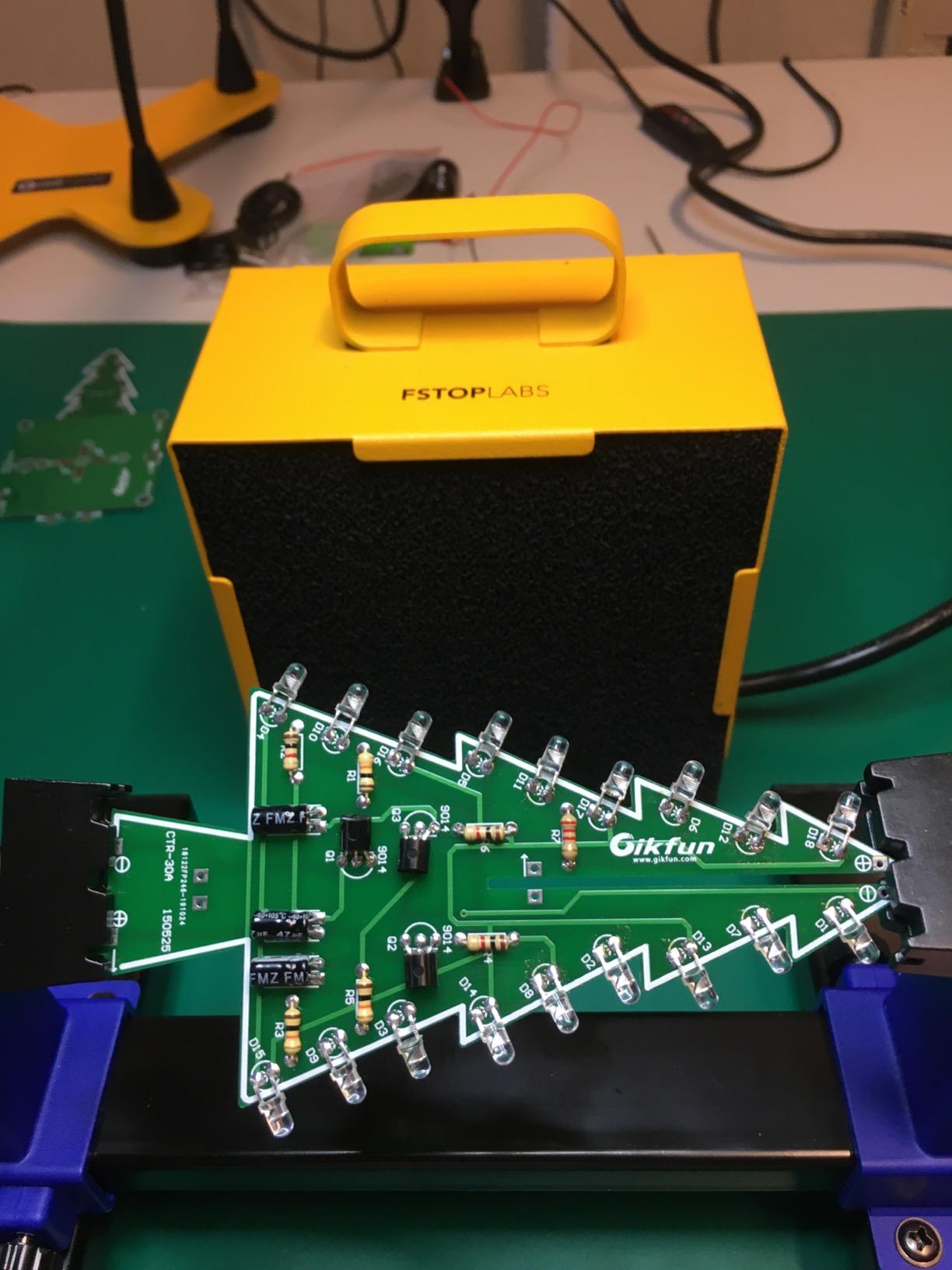
This is the unit we keep coming back to, because it does one job extremely well and refuses to pretend it does more. The 0.4 inch activated carbon bed sits directly in the path of the fan, and reviewers consistently report that the difference in air quality at the bench is obvious within the first few minutes of a soldering session. Our team found its stated capture distance of 5 to 6 inches matches what actual users describe, which is closer than most competing specifications admit.
The build is simple in the way good tools are simple. Four non-slip rubber feet anchor it, the body weighs 2.2 pounds, and a carrying handle means it moves between the soldering bench and the electronics corner without ceremony. Filter changes take seconds and one replacement is already in the box, which matters more than it sounds when your hobby is spread across two rooms.
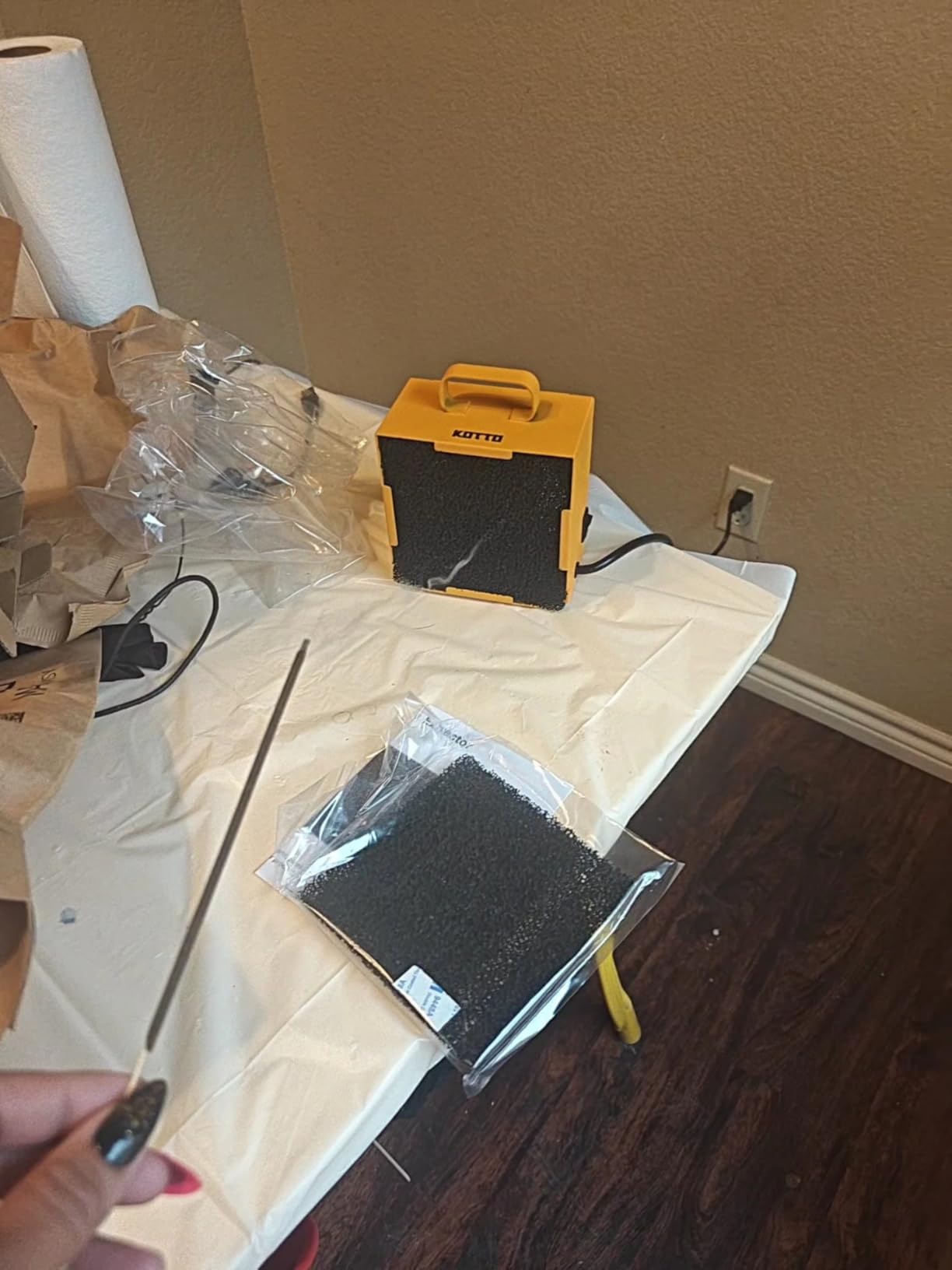
Where it sits in the category is worth being precise about. The 3000 RPM motor and 30W draw put it firmly in small bench-scale extraction, which covers soldering, light wood burning, and small quantities of volatile material. It is not a chemical hood and it does not have a sash, a baffle system, or a face velocity figure, because the intake is a simple grille rather than a controlled opening.
That said, 81 percent of its reviews are five star, which is the strongest consensus in this set, and the complaints that exist are about limits rather than failures. Buy it for the job it is built for and it will be the most-used piece of equipment in the lab.
Who this extractor is for
It is for the electronics hobbyist who solders daily, the maker doing occasional pyrography, and the home lab that needs one reliable answer to flux and rosin fumes without a big footprint. A 4.7 rating across more than 2400 reviews gives you a large sample of real benches, and that sample is consistently positive about capture and quiet running.
If your bench space is tight or you work across multiple stations, the 2.2 pound body and integrated handle make this the easiest unit here to reposition. It also works as a second extractor in a two-bench lab rather than a single shared machine.
Where it falls short
Anyone working with true solvent vapours or chemical reactions should skip it. Carbon filtration here is sized for fumes, not for a beaker of evaporating solvent, and no amount of marketing language changes that.
The fixed intake is the other limitation. There is no hose, so you bring the work to the unit rather than the unit to the work, and the 30W motor has no headroom for the dense fume loads that heavy continuous soldering or any hot chemical process produces.
2. FumeClear FC-2001A – Best Premium HEPA and Activated Carbon Unit
FumeClear FC-2001A Solder Fume Extractor, 2-in-1 H13 HEPA Activated Carbon
H13 HEPA plus activated carbon
Brushless motor, 120-180 m3/h
15 cm working range
9.03 pounds
Pros
- All-metal housing with a hose that holds position
- Longer 15 cm working range than compact units
- Lowest setting still filters solder smoke effectively
- Large-dust-holding filters last much longer
Cons
- Hose included is shorter than described
- Measured sound levels exceed the stated claim
- Bottom exhaust can recirculate toward the work
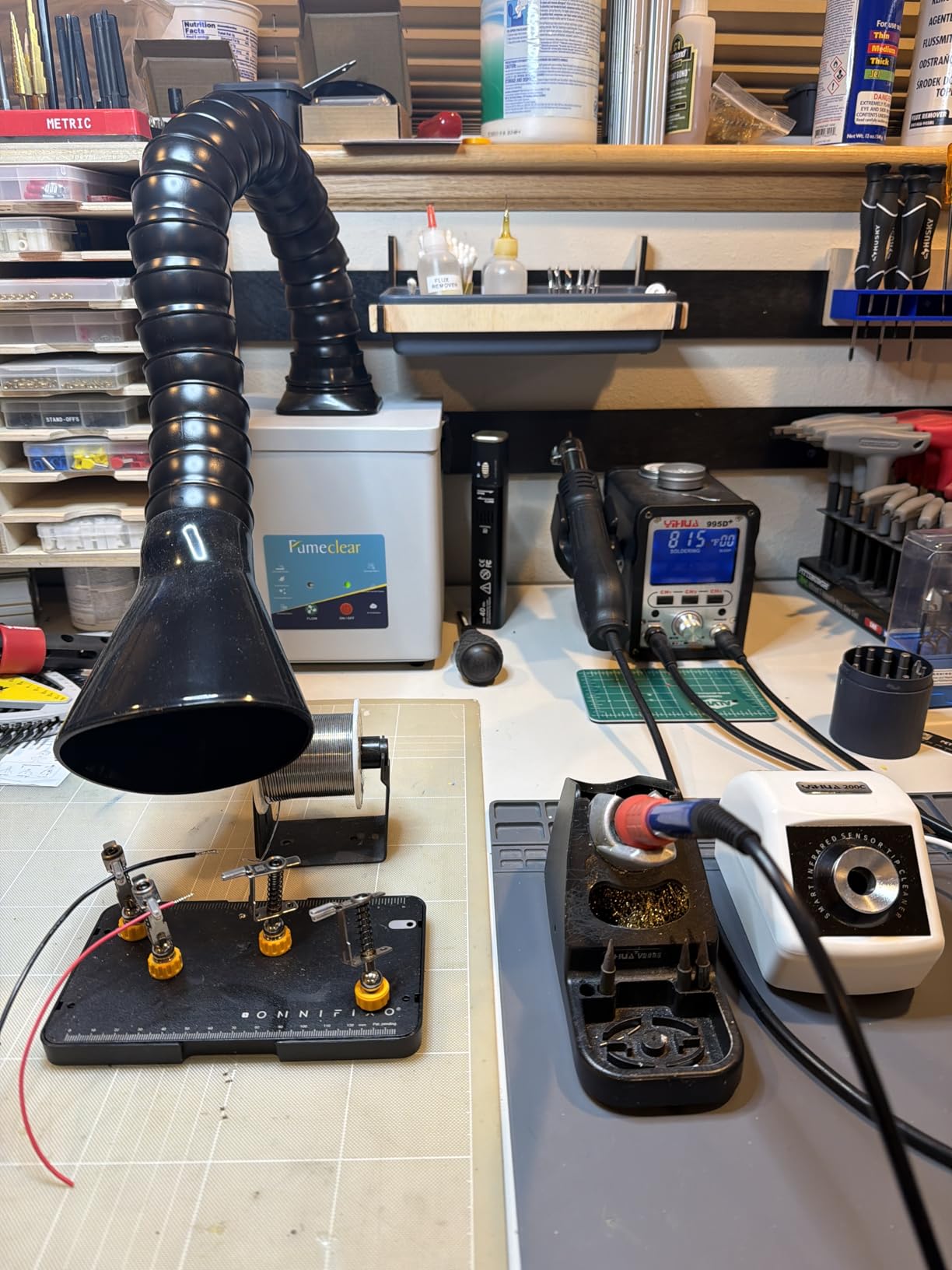
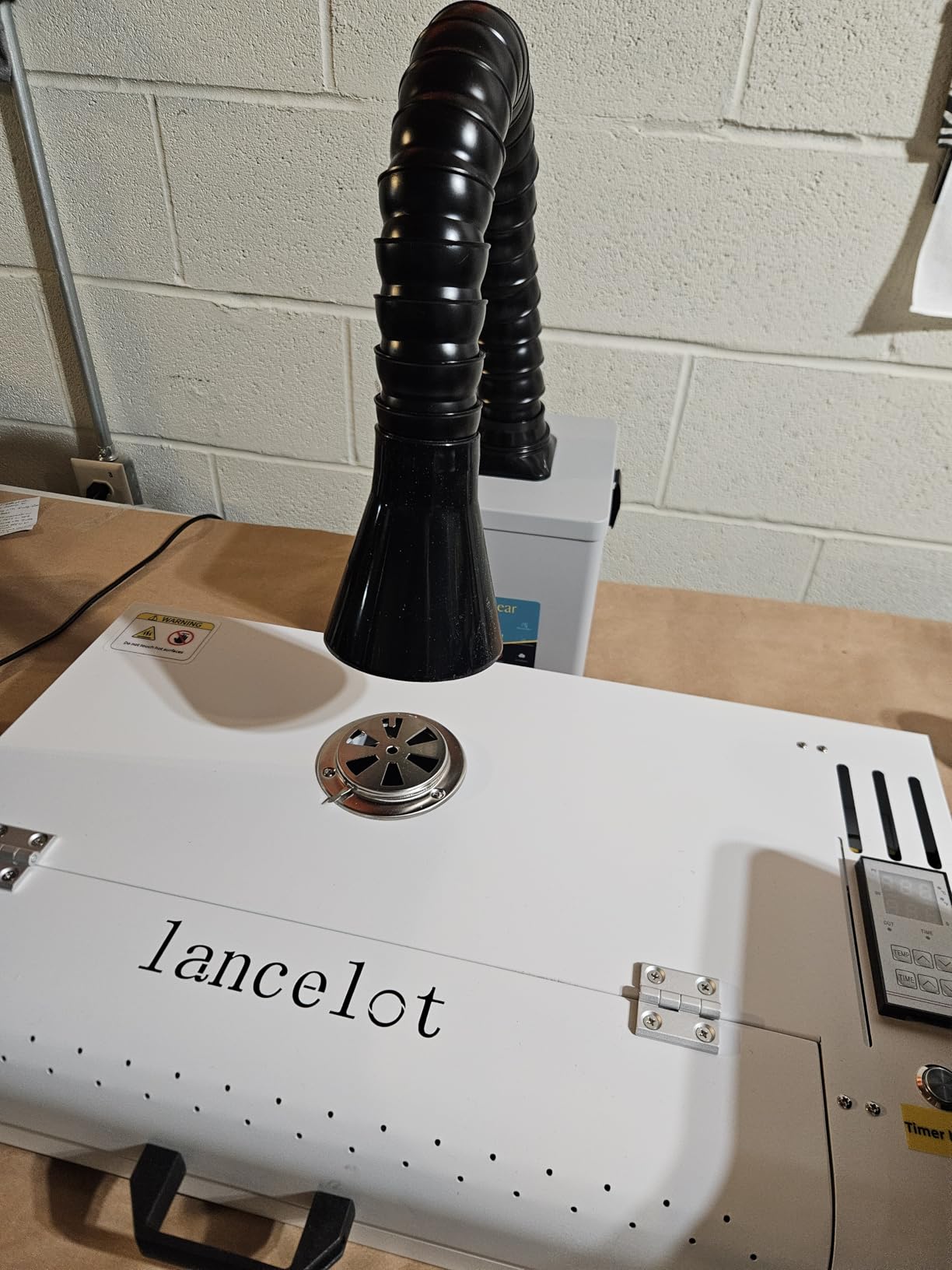
The FC-2001A is the most serious filtration stack we found in this price band, and that is why it earns the premium slot. True H13 HEPA paired with activated carbon rated between 600 and 800 mg/g iodine value is a meaningful upgrade over carbon-only units, and the brushless motor delivers 120 to 180 m3/h depending on speed. Solderers, DTF printer operators, and engravers report the same result: visible haze disappears quickly at the bench.
Two design details matter more than the spec sheet. The hose holds its position without constant adjustment, which removes the single most irritating behaviour of cheaper extractors, and the 15 cm working range means the intake can sit further from the work than a desk unit allows. That extra distance is what lets you keep your hands out of the airflow.
The three-speed control is where the real trade-off lives. On the lowest setting buyers describe it as quiet enough for a home office while still doing its job on solder smoke. Push it to the top and the noise becomes the dominant feature of the room, so treat the top speed as a short-term tool rather than a default.
Wide voltage support through inverter technology means the same unit works on 110V and 220V, which removes one of the quiet frustrations of buying direct into a home lab in different regions. The 9.03 pound metal body is heavier than a plastic desktop unit and correspondingly more stable, which you notice when the hose gets tugged.
Who this unit is for
It suits the home lab doing more than one kind of work, where soldering smoke, fine engraving dust, and general chemical odour all show up in the same week. The HEPA layer handles particulates that carbon alone would pass, and the carbon layer handles the vapour component.
It is also the better choice if you have a dedicated bench rather than a shared desk. The metal body and positional hose reward a fixed setup, and the extended working range makes it practical for tasks that would not fit a 10 cm capture zone.
Where it falls short
It is not a ducted hood and it recirculates everything it captures, so solvent-heavy chemistry remains out of scope regardless of the filtration quality. The manufacturer does not claim otherwise, and that honesty is worth something.
Two documented issues: the hose in the box can be shorter than the product description suggests, and independent measurements indicate sound levels above the sub-50 dB figure claimed. If your space is very quiet-sensitive, buy expecting to run it on low.
3. YIHUA 948DQ-I – Best Value for Hobby Bench Work
YIHUA 948DQ-I Solder Fume Extractor Fan Solder Smoke Absorber Remover Tiltable Angle with 8 Extra Fan Filters for Soldering Wood Burning and more
Dual front and rear adsorbers
30 degree tiltable stand
5W draw
2.35 pounds
Pros
- Eight spare filtration adsorbers included in the box
- 30 degree tilt and side fenders improve capture angle
- Very low 5W power draw
- Backed by 12 months of manufacturer coverage
Cons
- Effective capture limited to about 10 cm
- Small 5W fan is unsuited to continuous or heavy work
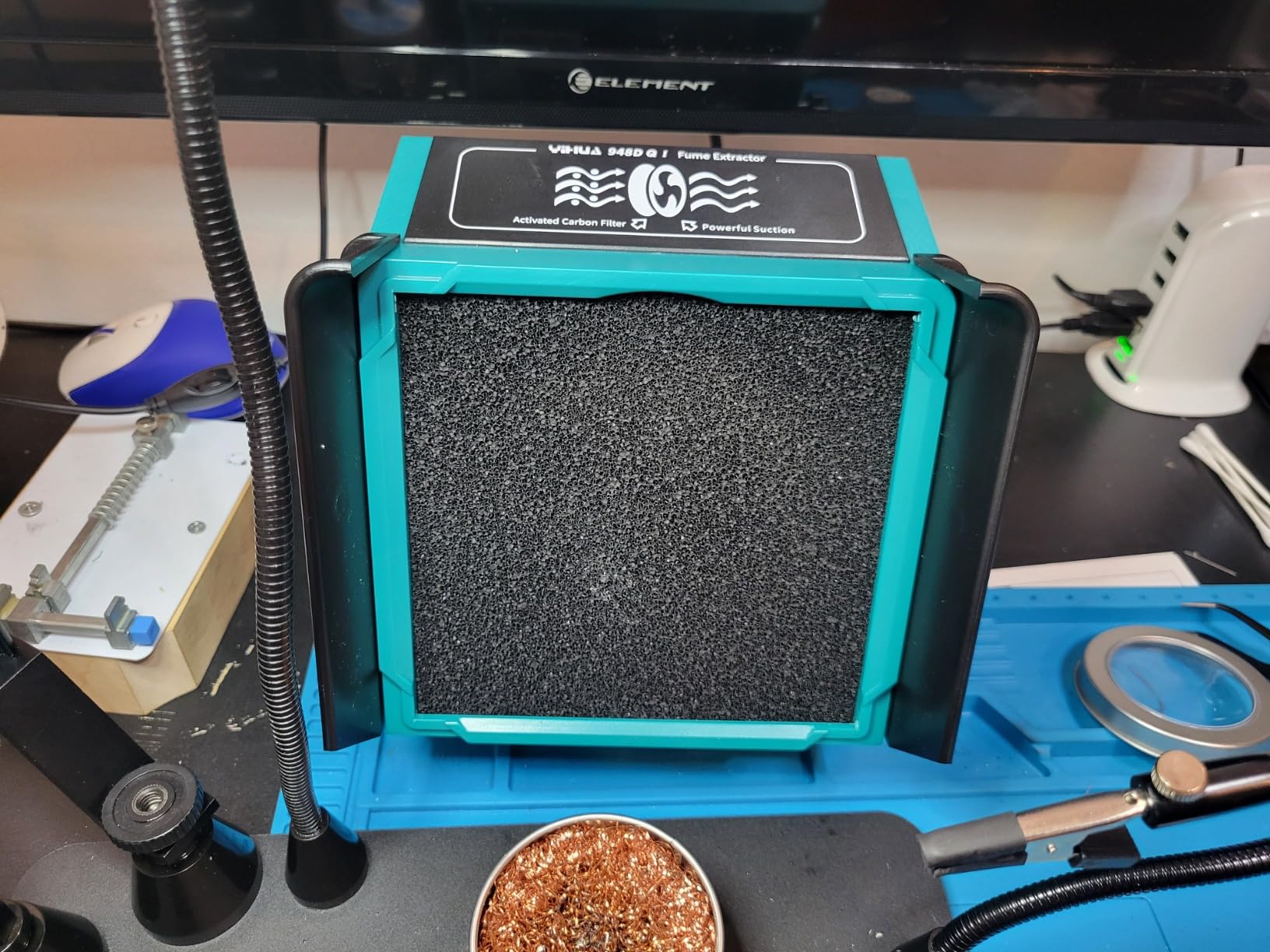
The YIHUA is the reason this roundup is worth reading for people working to a tight budget. Eight spare filtration adsorbers come in the box, which effectively removes filter cost from the equation for a year or more of hobby use. Nothing else in this set supplies that much consumable media up front.
The physical design is more considered than the low power rating suggests. A 30 degree tiltable stand lets you angle the intake toward the joint, and the side fenders cut the turbulent airflow that otherwise pushes solder smoke away from the grille before it can be drawn in. Reviewers single out the tilt stand as the feature that makes the difference in practice.
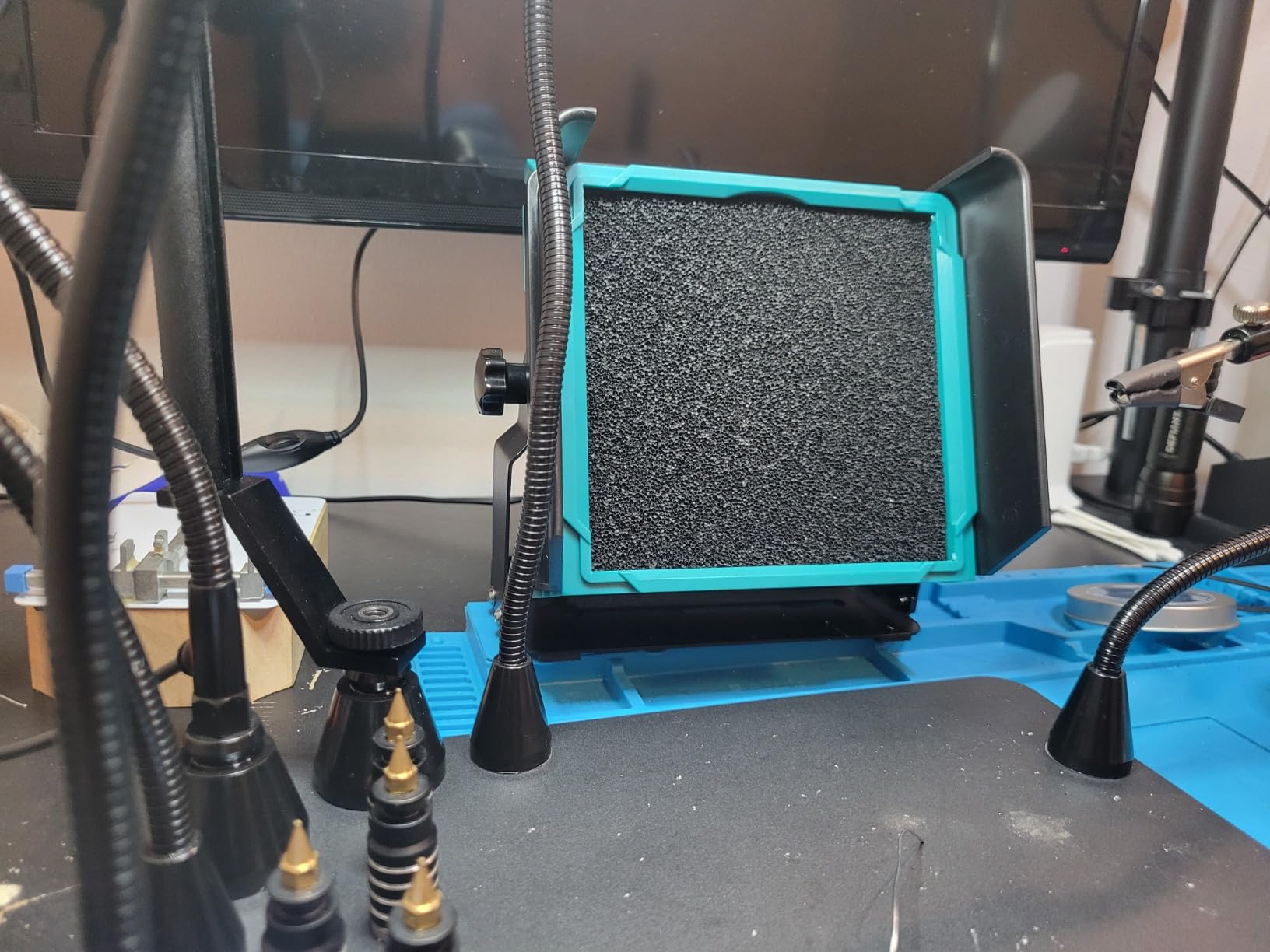
At 5 watts and 2.35 pounds, it draws almost nothing and moves to wherever the work is. It also handles wood burning, which makes it useful outside pure electronics work if you do pyrography or light craft work that produces smoke.
The specification to hold in mind is the 10 cm capture distance. That is a genuinely short working envelope, and it means the unit lives next to the work rather than being pointed at it from across the bench. Once you accept that, it performs consistently for its class.
Who this extractor is for
It is built for a beginner, a student, or anyone who wants a working fume extractor on the least possible commitment. The included spares alone justify the purchase for occasional users, and the tiltable stand means a beginner can get decent capture without learning techniques.
It also makes sense as a second unit in a room with a solder station and a separate craft bench. The 5W draw means you can run it continuously without thinking about the power bill.
Where it falls short
The 5-blade fan is the constraint. Continuous or high-volume fume work will outrun it, and the 10 cm capture window is unforgiving if you work with large components that heat slowly.
Carbons-only style media means it is a particle and light-odour device, not a solvent vapour solution. Buyers expecting chemical containment should treat this as a soldering tool and nothing more.
4. KOTTO 24-Inch Hose Model – Best for Flexible Reach Across a Large Bench
KOTTO Strong Suction Smoke Absorber for Soldering,Welding,3D Printing
24 inch flexible hose
6000 RPM fan, 52 CFM
55 dB
3.87 pounds
Pros
- Flexible 24 inch tube reaches the work area
- Adjustable 6000 RPM suction handles soldering and welding
- Works continuously on a 120V supply
- Replacement filter included
Cons
- 55 dB noise limits quiet-room use
- Small 4.7 inch footprint with mixed capture results
This KOTTO model solves the reach problem better than most of the compact units here. A 24 inch flexible tube with an adjustable hood means the intake goes where the smoke is instead of demanding you bring every board to the grille. Users working on large chassis or vehicle wiring harnesses report this is the deciding feature.
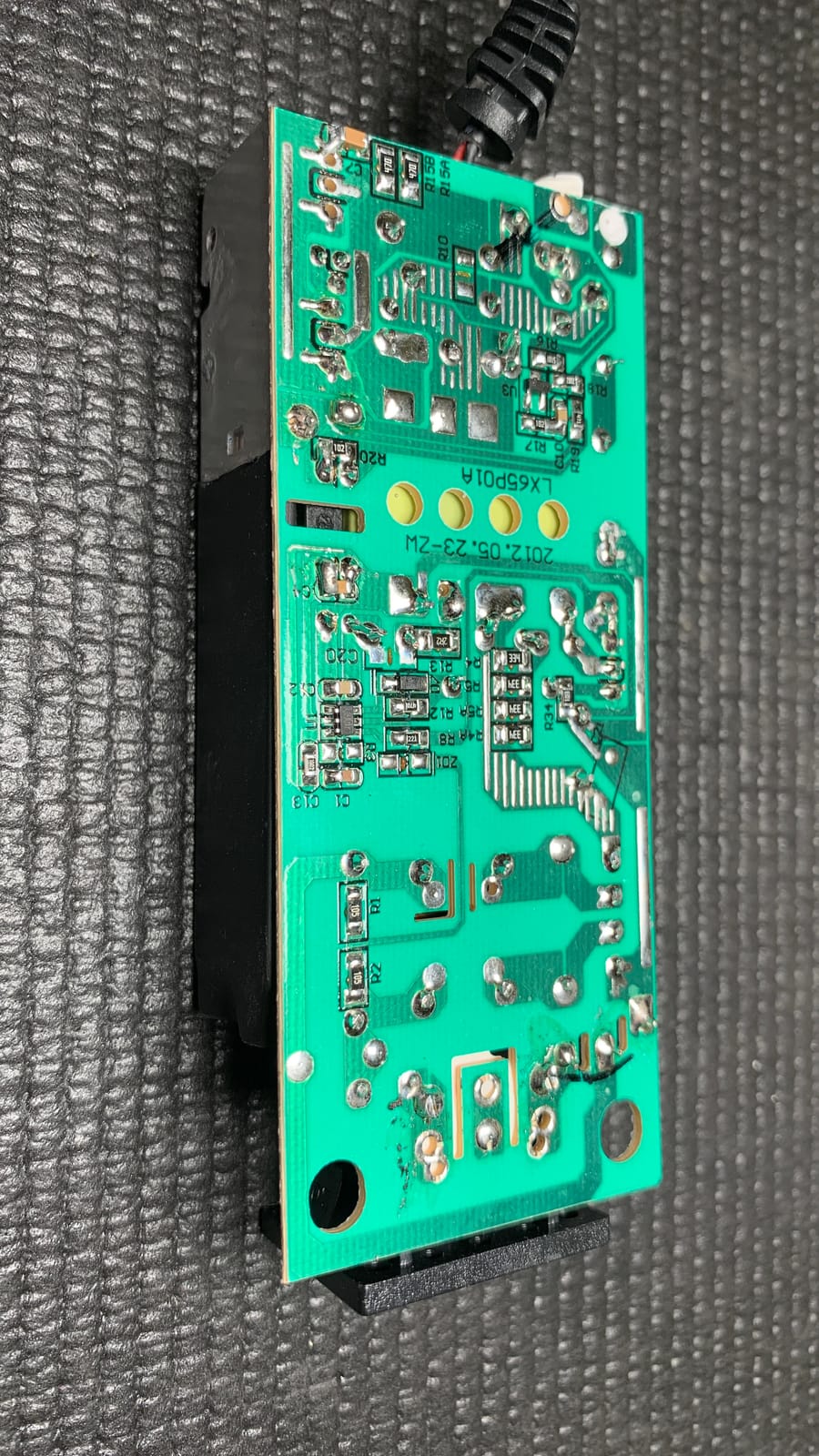
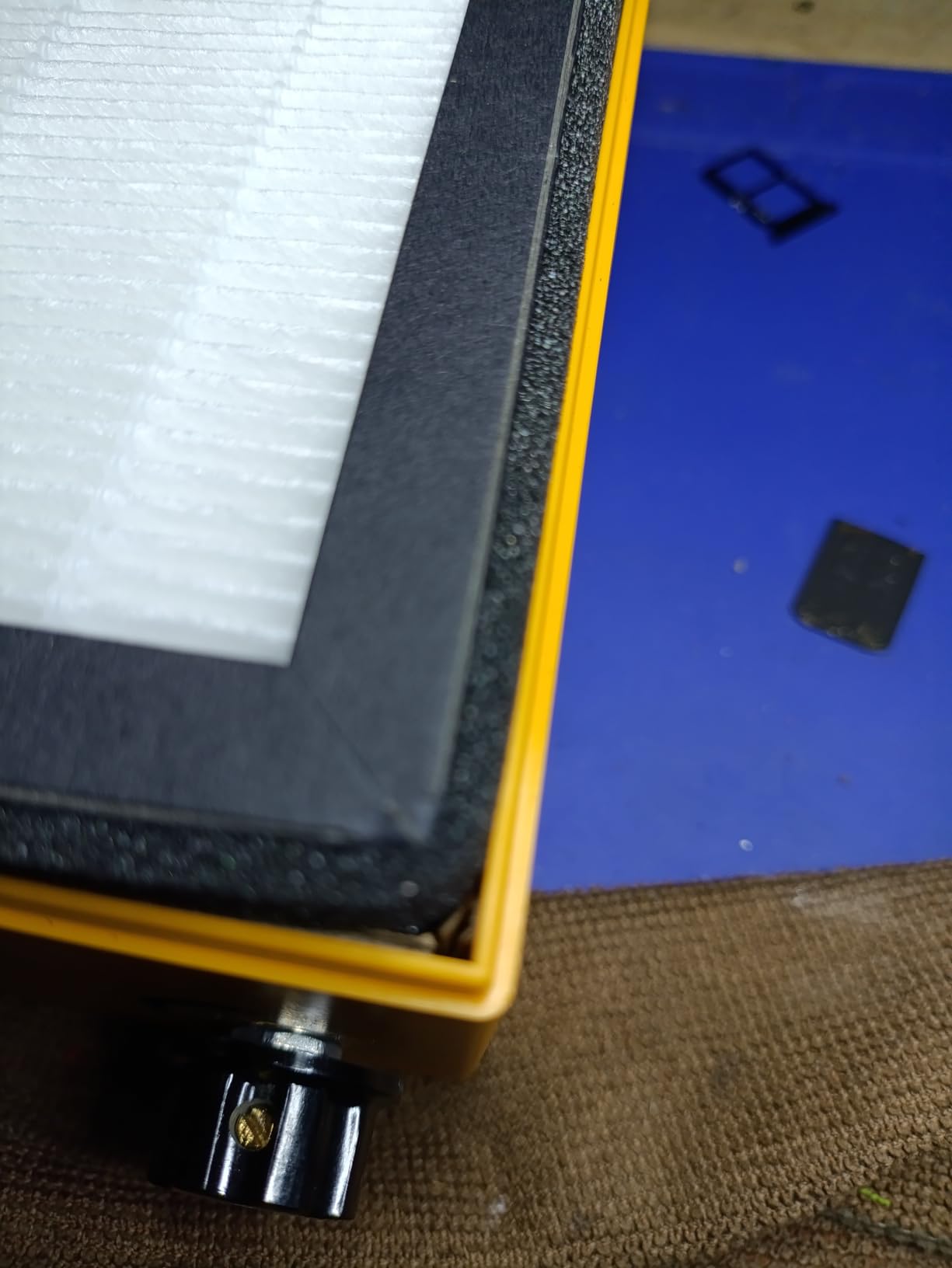
The fan is adjustable to 6000 RPM and moves 52 CFM, with a stated 125 mmH2O static pressure figure and a 50,000 hour rated motor life. That static pressure number is the interesting one, because it is the spec that tells you whether the unit can still move air through a restrictive filter stack as that filter loads up over time.
It is also used beyond soldering. Buyers mention welding, small 3D printing, and general workshop smoke, and the 40W draw is modest enough to leave on for a long session without thinking about it. Static pressure of that kind also means it holds up better behind a dense filter than lighter units.
The 4.2 average is the lowest among the well-reviewed units here, and the reasons are consistent: noise at 55 dB, and a capture performance that is strong at close range but less certain when the hood is extended to full length.
Who this model is for
It suits the bench where the work moves. If you solder one board in the morning, a vehicle harness in the afternoon, and a resin print in the evening, the flexible tube removes the constant rearranging that fixed-intake units force on you.
It also makes sense for hobby welding and light fabrication, where the fume source is large and awkward and pointing a small grille at it is not practical.
Where it falls short
Noise is the deal-breaker for shared spaces. At 55 dB it is noticeable in a quiet room, and it is not the unit to run while recording, on a call, or in a bedroom-adjacent workspace.
At full hose extension, capture drops, and the 4.7 inch body limits how much intake area you can position. If your work is delicate and small, a shorter-tubed unit with a wider intake is the better fit.
5. FumeClear FC-100A – Best for High Suction and Long Filter Life
FumeClear FC-100A Fume Extractor Low-Noise & High Iodine 3-Stage Filtration
100W power, up to 200 m3/h
3-layer 99.97 percent filtration
High-iodine carbon filter
19.51 pounds
Pros
- Noticeably stronger suction than small desk units
- Carbon filter rated for roughly 3000 hours of service
- Quiet enough for salon and office use
- Ten pre-filters included
Cons
- Heaviest unit in the roundup at 19.51 pounds
- Underpowered for large laser engravers
- Audible background noise at high settings
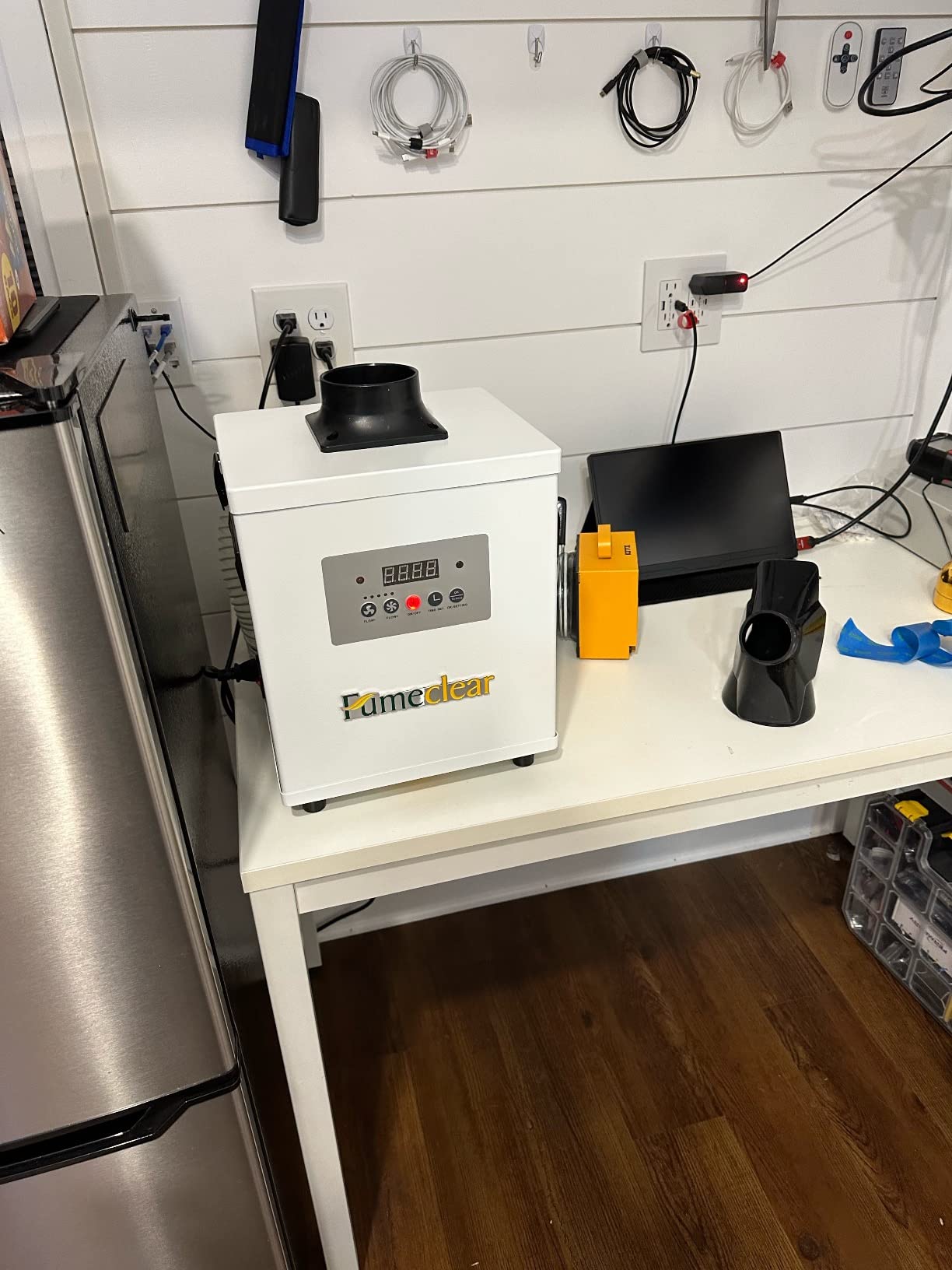
The FC-100A is the suction leader in this group. At 100W maximum no-load power and up to 200 m3/h, it moves noticeably more air than any compact model, and that difference is obvious the moment you move a heat gun or a curing lamp under it. If your home lab work is a step heavier than hobby soldering, this is the unit that keeps up.
The other reason people keep this one is the carbon filter life. The high-iodine-value media is rated at around 3000 hours of service, and the manufacturer recommends the larger FC-2002, FC-2003, or FC-2004 series for big laser engravers rather than overloading it. That kind of honest sizing guidance is rare in this category.
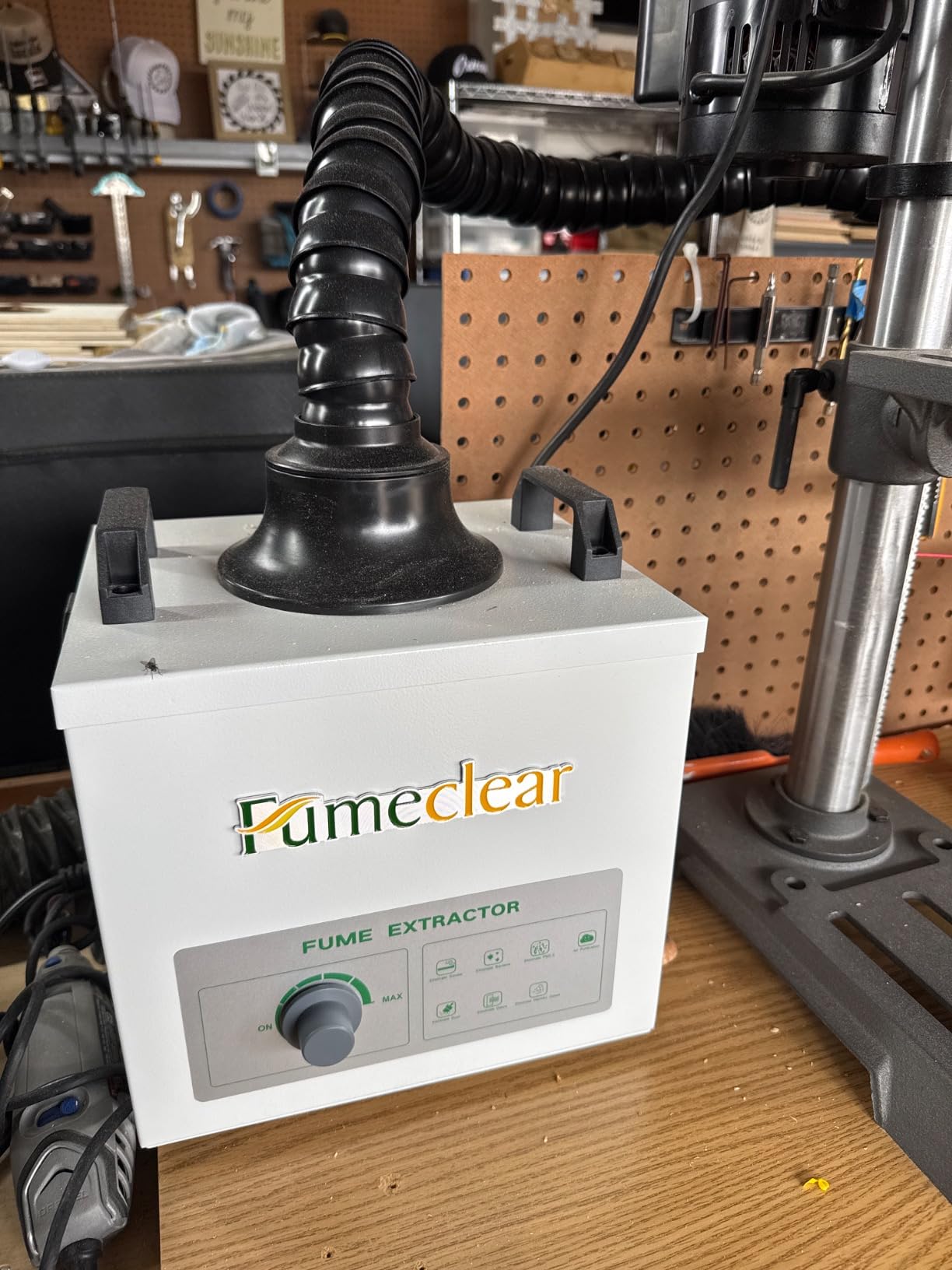
Buyers in nail salons and small craft businesses report it as quiet enough for a customer-facing room, and the three-layer filtration claims 99.97 percent capture of particles below 0.3 microns. Ten pre-filters for coarse dust are included, which protects the expensive carbon layer from the bulk particulate that would otherwise load it up quickly.
It is also one of the few units here with a metal body at this size, and at 19.51 pounds it stays planted on the bench rather than wandering when a hose is pulled. CE and FCC certification is stated for anyone who needs it for commercial work.
Who this unit is for
It suits home labs doing resin curing, DTF and DTG printing, heat-shrink and hot-air work, or light engraving where the air needs moving faster than a desk unit manages. Salon and small-studio operators gravitate here for the same reason.
The 3000 hour filter rating is the deciding factor for anyone who dreads consumable costs. Spread over that life, the ongoing spend is far lower per hour of use than a unit needing fresh carbon every few weeks.
Where it falls short
It is the heaviest unit in the roundup, and that matters in a small apartment lab where you would rather carry a 3 pound extractor between rooms than reposition 19.5 pounds.
It is also the priciest of the compact units and it still recirculates. If your work is chemical rather than particulate or fume-based, the money is better directed at exhaust rather than at a bigger filter stack.
6. M-T MT308 Solder Fume Extractor – Best for Triple Filtration and Adjustable Power
M-T Solder Fume Extractor, 80W 168m³/h Strong Suction Smoke Absorber with Carbon or HEPA Filter, 3-speed Adjustment for Soldering, Welding, 3D Printing
80W motor, 168 m3/h
H13 HEPA plus carbon layers
3-speed control
3.72 pounds
Pros
- Strong directional airflow users notice immediately
- Broadest filtration stack in this band with H13 HEPA
- 3-speed control balances noise against capture
- Metal body with 3-year warranty
Cons
- Loud on maximum speed
- Hose connection is cross-threaded and hard to seat
- Bottom exhaust can blow back toward the user
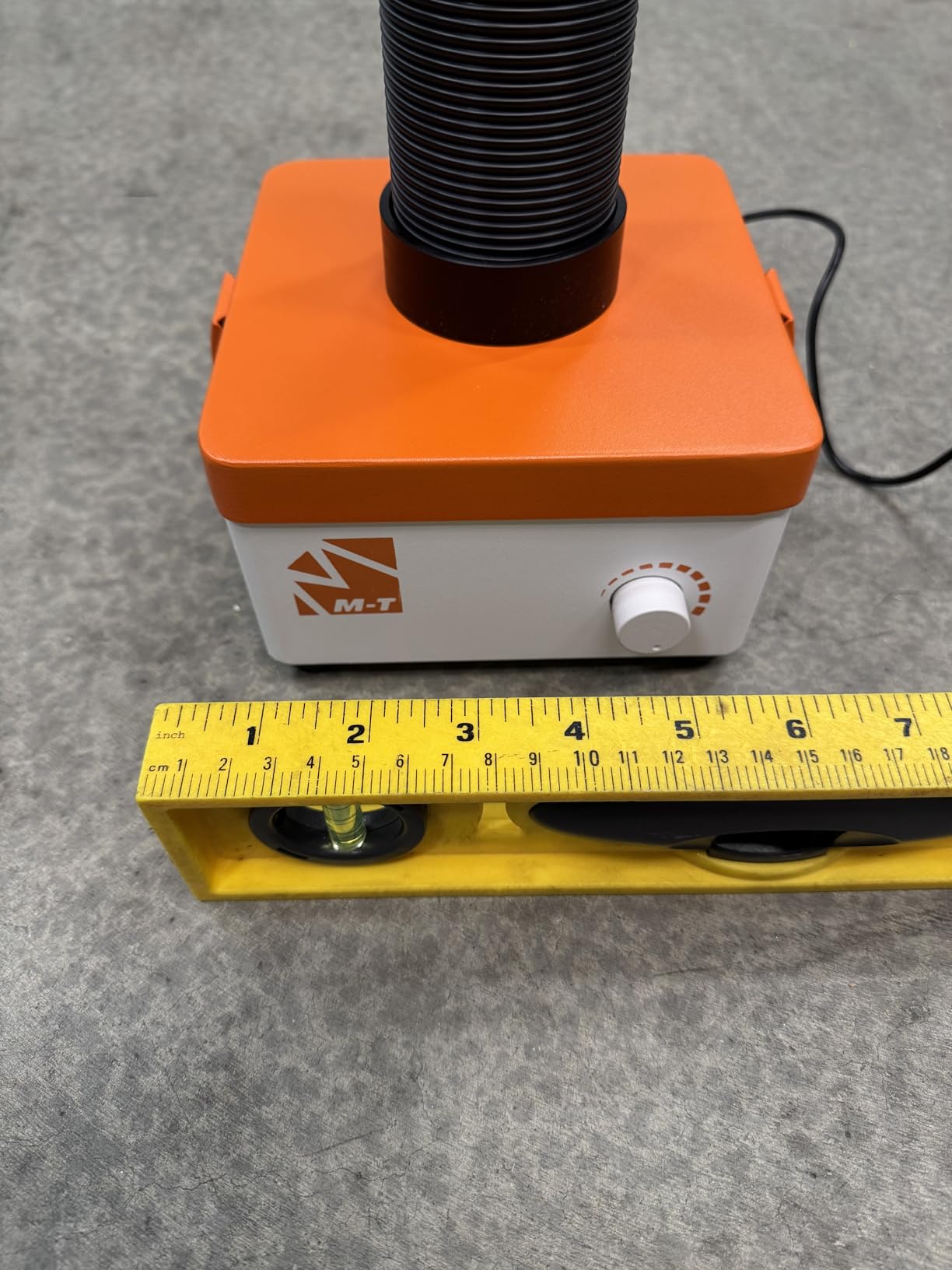
The MT308 stacks high-density fibre, carbon cotton, H13 HEPA, and activated carbon into one housing, and at 80W with 168 m3/h of airflow it has more filtration depth than units costing meaningfully more. Reviewers confirm it clears soldering and engraving smoke in a way small desk fans cannot, and the three-speed control lets you find the balance point.
Two details stand out for a home lab. The 360-degree adjustable hose spans 7 to 25 inches, so it works on a cramped corner bench and a wide workbench equally well, and a universal 100-240V adapter with surge and voltage spike protection is genuinely useful protection for a device that will sit near a bench power supply.
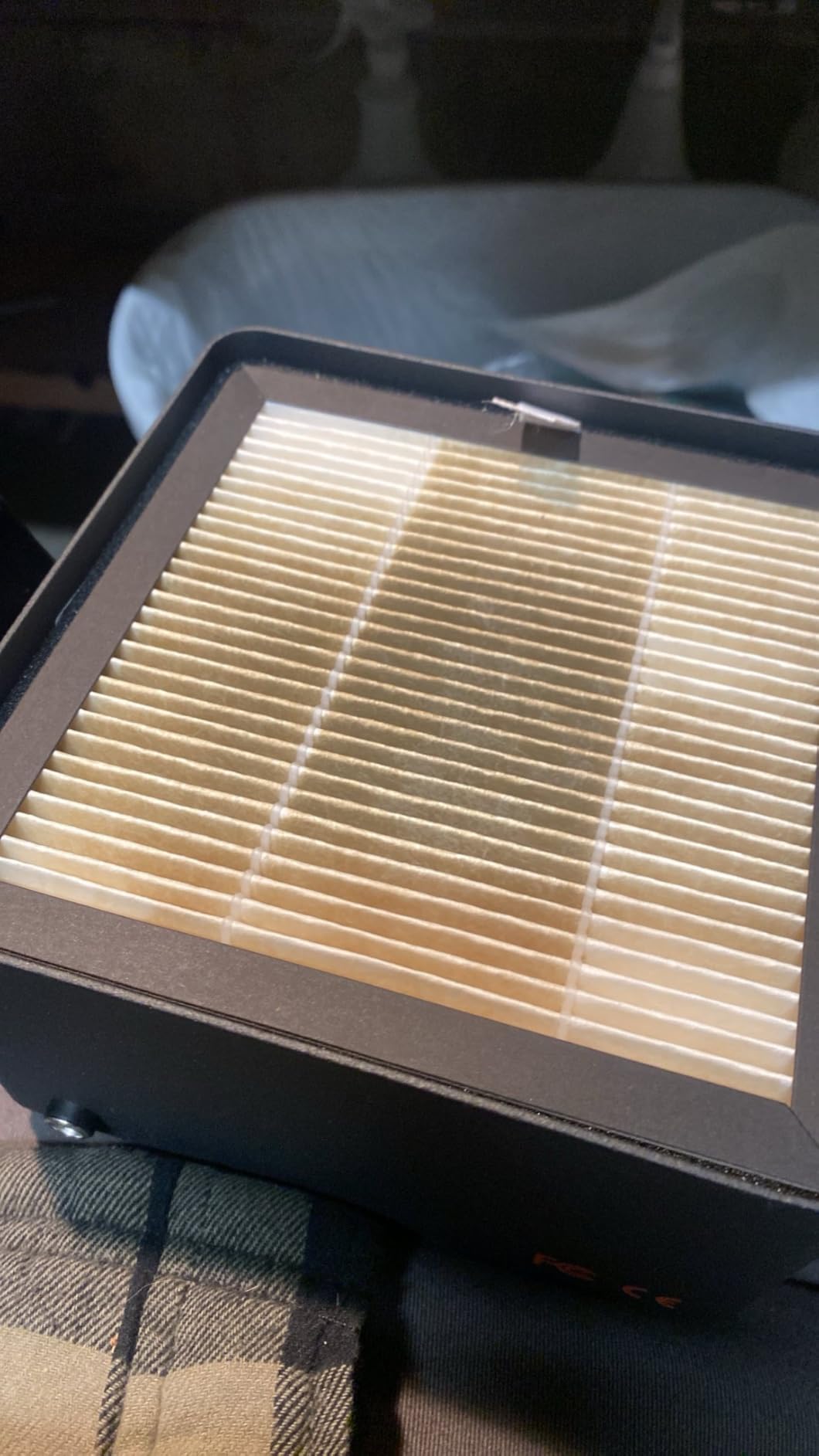
The 3-year warranty is longer than anything else in this roundup, which matters when replacement filters are hard to source. The 15,000 RPM motor keeps effective capture within about 5 inches according to the specification, so this is a close-range tool rather than a room-scale one.
At 3.72 pounds it is portable without being delicate, and the metal shell survives a bench better than the plastic units at this price. Filter changes are the main ongoing cost, and reviewers report consuming them faster than expected on heavy dust work.
Who this extractor is for
It fits the mixed-work home lab: electronics, engraving, and general dusty bench tasks in the same week, where a single carbon-only unit would saturate quickly. The four-layer stack is the reason to choose it over a cheaper two-layer model.
Speed control is the other reason. Being able to drop to a lower setting for quiet tasks and full power for messy ones makes it usable in a shared room in a way a single-speed unit is not.
Where it falls short
On maximum speed it gets loud, and buyers who work in shared space tend to run it on the middle setting permanently, which reduces the airflow advantage that justified the purchase.
The hose-to-housing connection is cross-threaded and awkward to seat, and exhaust exits from the bottom, so a badly positioned unit can blow air back toward the work surface. Ask about replacement filter availability before committing to heavy use.
7. KQZ W1 Solder Fume Extractor – Best for a Tight Bench Where Space Is the Constraint
KQZ W1 Solder Fume Extractor 168m³/h Smoke Absorber with H13 HEPA
168 m3/h centrifugal airflow
H13 HEPA carbon cartridge
66 mm gooseneck hose
4.2 pounds
Pros
- Small metal body that fits a crowded workbench
- Gooseneck hose aims the hood precisely at the source
- Wide voltage design works on 110V and 220V
- Complete kit with 5 pre-filters and hood
Cons
- Single-speed one-touch control with no fine adjustment
- Noise and suction cannot be balanced
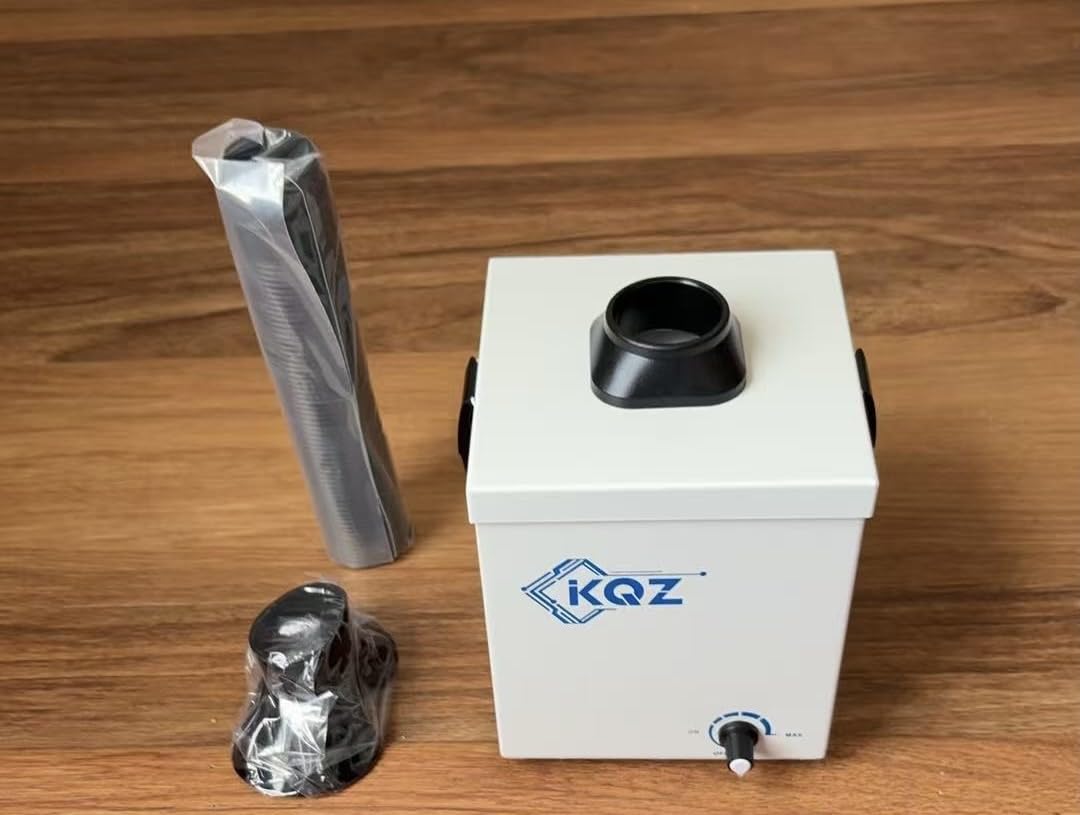
The KQZ W1 answers a problem the bigger units ignore: how to get real airflow out of a bench that is already crowded. At 4.2 pounds and roughly 9 by 8.5 inches, it disappears into a corner where a 26 pound cabinet extractor simply cannot go, while still moving 168 m3/h through a 9mm pre-filter and an H13 HEPA carbon cartridge.
The 66 mm gooseneck is the feature that earns its place on a cramped bench. A rigid short intake forces you to move the unit; a gooseneck lets you reach over the clutter and put the hood exactly at the source without relocating anything, and users describe the aiming as precise.
Filtration claims here are aggressive, including adsorption of heavy metals such as lead, mercury, and arsenic, alongside 0.3 micron particle capture. Treat those as manufacturer figures, but the two-stage pre-filter and HEPA carbon cartridge is a credible pairing for electronics and light chemical work.
Wide voltage support across 110V and 220V means it works without a converter in most of the world, and the package includes five pre-filters, the hood, the tube, and a manual. Support is listed as 24/7, which is a small but real difference when a part is missing.
Who this unit is for
It is for the home lab working on a shared desk, a small apartment bench, or a garage table where every square inch counts. Comparable airflow to units twice the size, in a body that a hand can reposition, is the whole argument.
It also suits anyone who values a metal housing over plastic at a similar price, and anyone travelling between locations who wants to carry one device rather than two.
Where it falls short
The single-speed one-touch control is a real limitation. You either have full suction and full noise, or nothing, and there is no middle ground to tune a soldering session down for a quiet evening.
Because there is no speed range, this is less comfortable in shared rooms than the three-speed or stepless units in this roundup, and the 63 percent five-star share reflects that split.
8. ToolBud Magnetic-Flap Extractor – Best Metal Build on a Tight Budget
Upgraded ToolBud Solder Fume Extractor with Removable Magnetic Flaps
3000 RPM motor
Magnetic capture flaps
Detachable carbon filters
2.23 pounds
Pros
- Solid metal body that feels durable
- Suction reaches 6 to 10 inches from the source
- Magnetic flaps guide airflow toward the intake
- Lightweight and compact enough to store away
Cons
- Audible white-noise fan
- Weak magnetic flaps are hard to pose
- Carbon-only media is basic
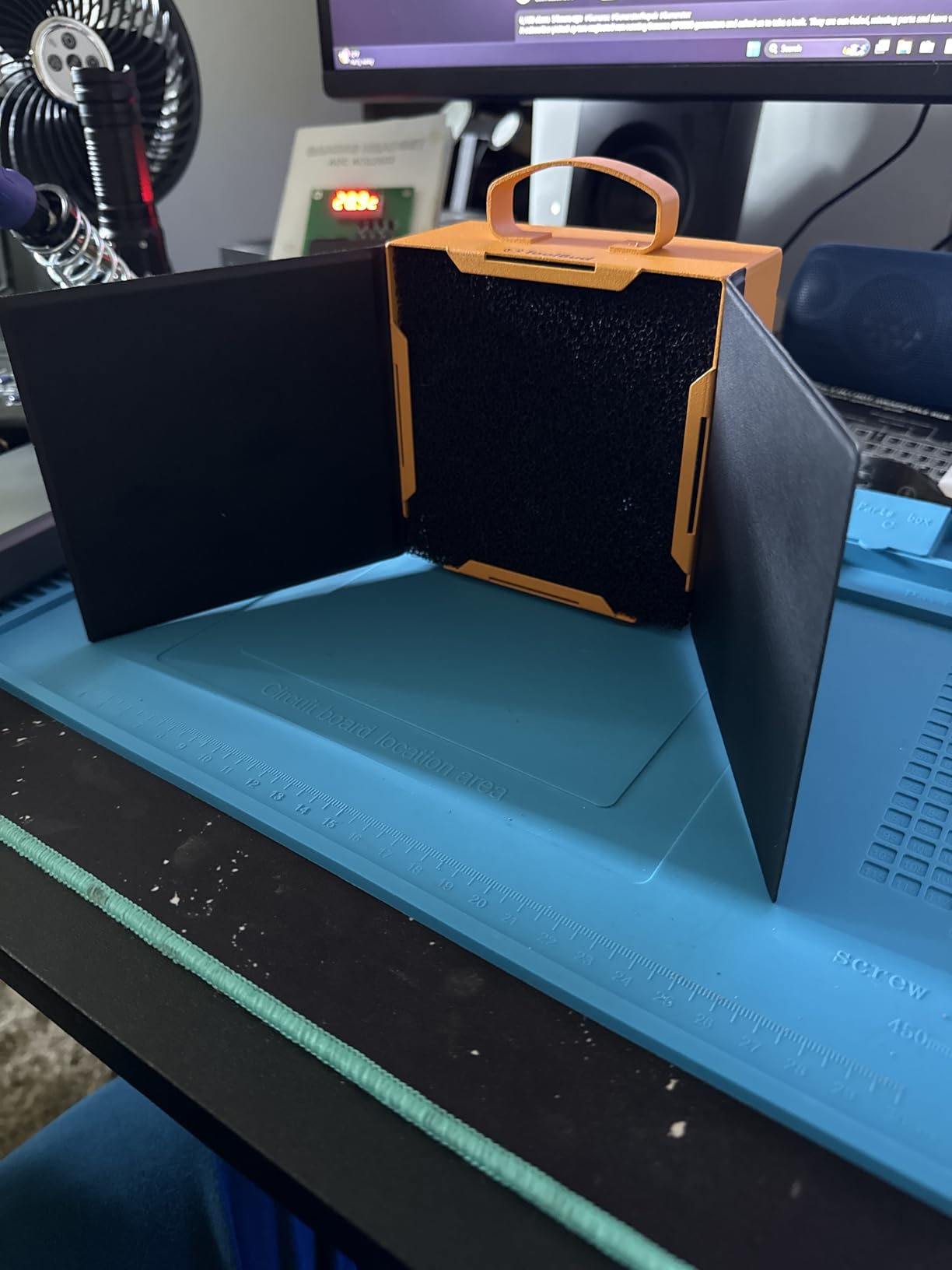
The ToolBud is one of the highest-rated units in the roundup relative to what you spend on it, holding a 4.6 average across 108 reviews. The metal body is the first thing owners mention, because plastic housings crack and yellow at a solder bench and this one does not. At 2.23 pounds it also moves between benches without effort.
Its two detachable magnetic wings widen the capture area, and users report that they measurably help pull fumes toward the intake rather than letting them drift past the grille. That is a small design idea doing real work, and it costs nothing extra.
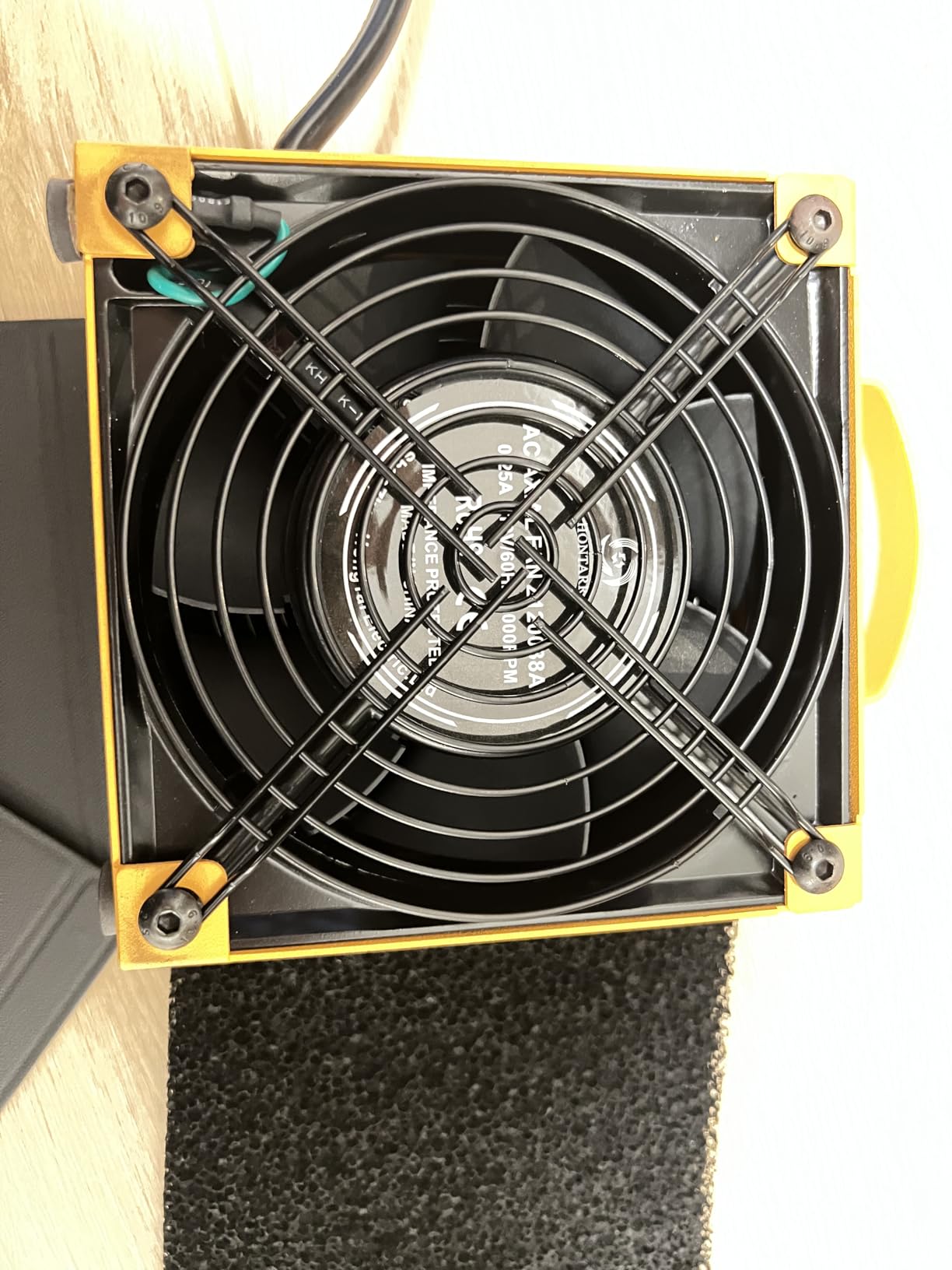
Suction is reported to pull from 6 to 10 inches or more, which puts it ahead of the 10 cm units in the same bracket and behind the hose models. The 3000 RPM motor and 0.25 amp draw at 110V keep power use modest and the footprint small.
Two carbon filters come with the detachable filter system, extra rubber feet are included, and the whole unit is easy to store when the hobby goes quiet for a month. For intermittent users, that storage profile matters as much as the extraction numbers.
Who this extractor is for
It suits a first-time buyer, a student, or anyone who wants a metal-bodied extractor for occasional soldering without committing to a larger machine. The 4.6 rating means a small buyer pool has already tested it and mostly approved.
It is also a good second unit for a two-bench lab, particularly one where a plastic unit would be damaged by flux spatter or heat. Compact storage makes it practical for renters.
Where it falls short
The fan produces audible white noise. It is not a quiet-room device, and anyone working late or sharing space will notice it immediately.
The magnetic flaps are weak and hard to hold at an angle, so the feature that looks best in photos is the one you will adjust most. The media is carbon-only, and the unit is 110V only, which rules it out in 220V regions without a converter.
9. VEVOR FL250 – Best Airflow Volume for a Garage Workshop
VEVOR Solder Fume Extractor, 150W 165CFM Soldering Smoke Extractor with 3-Stage Filters, 3 Speed Adjustable Smoke Absorber and Purifier for Soldering, Engraving, DIY Welding, Salon
150W motor, 165 CFM
Pleated 2.1 square metre filter
3 speed settings
26.2 pounds
Pros
- Works on the lowest of three speed settings
- Interlocking ball-joint hoses hold position in mid-air
- Large accessible filters are easy to change
- Lockable casters and quiet enough for a basement
Cons
- Replacement filters are hard to source and costly
- Controls sit at the base and force you to bend down
- No carry handle on a 26.2 pound body
The FL250 is the only cabinet-style unit in this roundup and the only one that moves 165 CFM, which is a different order of magnitude from the desk models. The 150W brushless motor, 4500 RPM maximum, and lockable casters mean it can sit in the corner of a garage and stay there while you work on a fibre laser, an engraver, or a welding bench.
The pleated filter expanding to 2.1 square metres of area is the quiet hero of the design. More area means lower face loading, which means more airflow for longer between changes, and that is why buyers report it doing real work on particle-heavy laser and engraving jobs where desk units struggle.
Two interlocking ball-joint intake arms hold their position in mid-air, so you can aim two hoods at one work area and leave them there. Three speed settings let you trade noise for suction, and users report the lowest setting is still effective.
Noise is stated below 63 dB, and owners working in basements describe it as tolerable for a home workshop. The three-stage stack runs a cotton pre-filter, HEPA, then activated carbon, and the manufacturer claims a 99.91 percent smoke purification rate.
At 26.2 pounds and 10.43 by 10.43 by 16.9 inches, this is a floor-standing unit, not a bench accessory. That size is the trade: you get genuine workshop airflow in exchange for floor space and a body you cannot lift with one hand.
Who this extractor is for
It is for the garage lab that outgrew a desk extractor, particularly anyone running a laser engraver, a small CNC, or repetitive welding where particulate volume overwhelms a 168 m3/h unit. A salvaged institutional hood is a real option at this stage, but at this performance-per-pound it is worth comparing first.
It also suits anyone who works standing up, because the intake arms can be positioned at head height rather than reaching down to a bench.
Where it falls short
Replacement filters are difficult to source and cost more relative to the unit than any other option here, which is the most common complaint from owners. Budget for the consumable before you buy the machine.
Controls sit at the base of the cabinet, so every speed change means bending down, and there is no carry handle on a body this heavy. Reviewers also report the rigid intake tubes are awkward to maneuver and do not handle odour well, so treat it as a particle machine first.
10. NEETOP NT-M1 Solder Fume Extractor – Best for Apartment and Balcony Labs
NT-M1 Desktop Solder Fume Extractor, 168m³/h Adjustable Suction H13 HEPA
5.1 inch square desktop body
168 m3/h centrifugal suction
25.6 inch hose
3.61 pounds
Pros
- Compact body suited to apartments and small benches
- Shape-retaining hose places the intake at the source
- Stepless knob balances suction against noise
- All-metal body cleans up room odour effectively
Cons
- High speed carries a noticeable whine
- Hose loses its shape at full extension
- Needs close placement to work
The NT-M1 is the newest unit in this group, listed from May 2026, and it is built around a constraint the others ignore: apartments. A 5.1 by 5.1 by 6.3 inch all-metal body at about 3 pounds takes up almost no bench space, and a shape-retaining flexible hose extending up to 25.6 inches lets you place the intake where the vapour is generated rather than on the work surface.
The stepless rotary knob is unusual at this size and genuinely useful in a shared home. Most compact units give you three fixed speeds; this one lets you find the exact point where airflow is sufficient and noise is acceptable, which is the negotiation every apartment lab has to make.
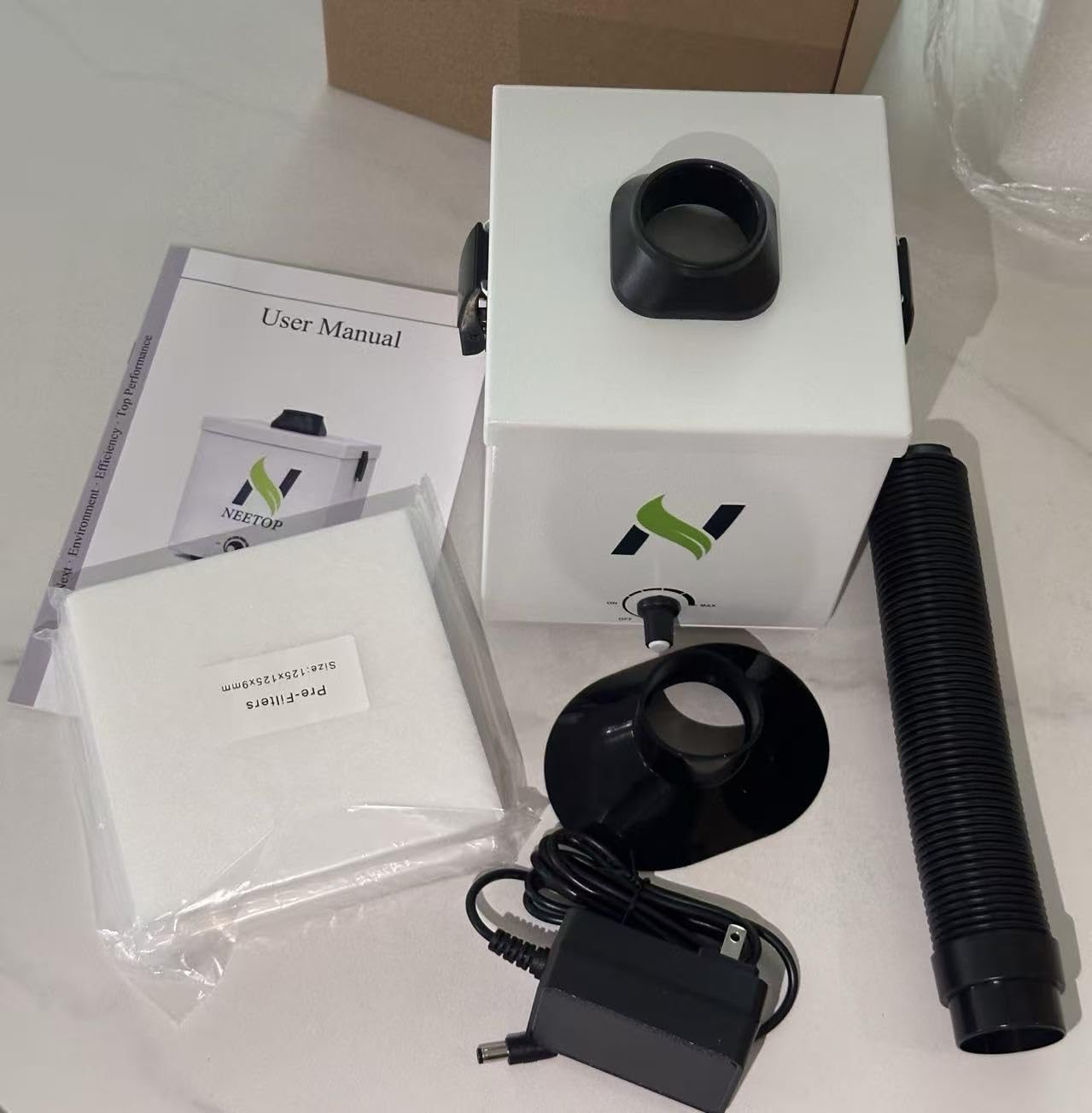
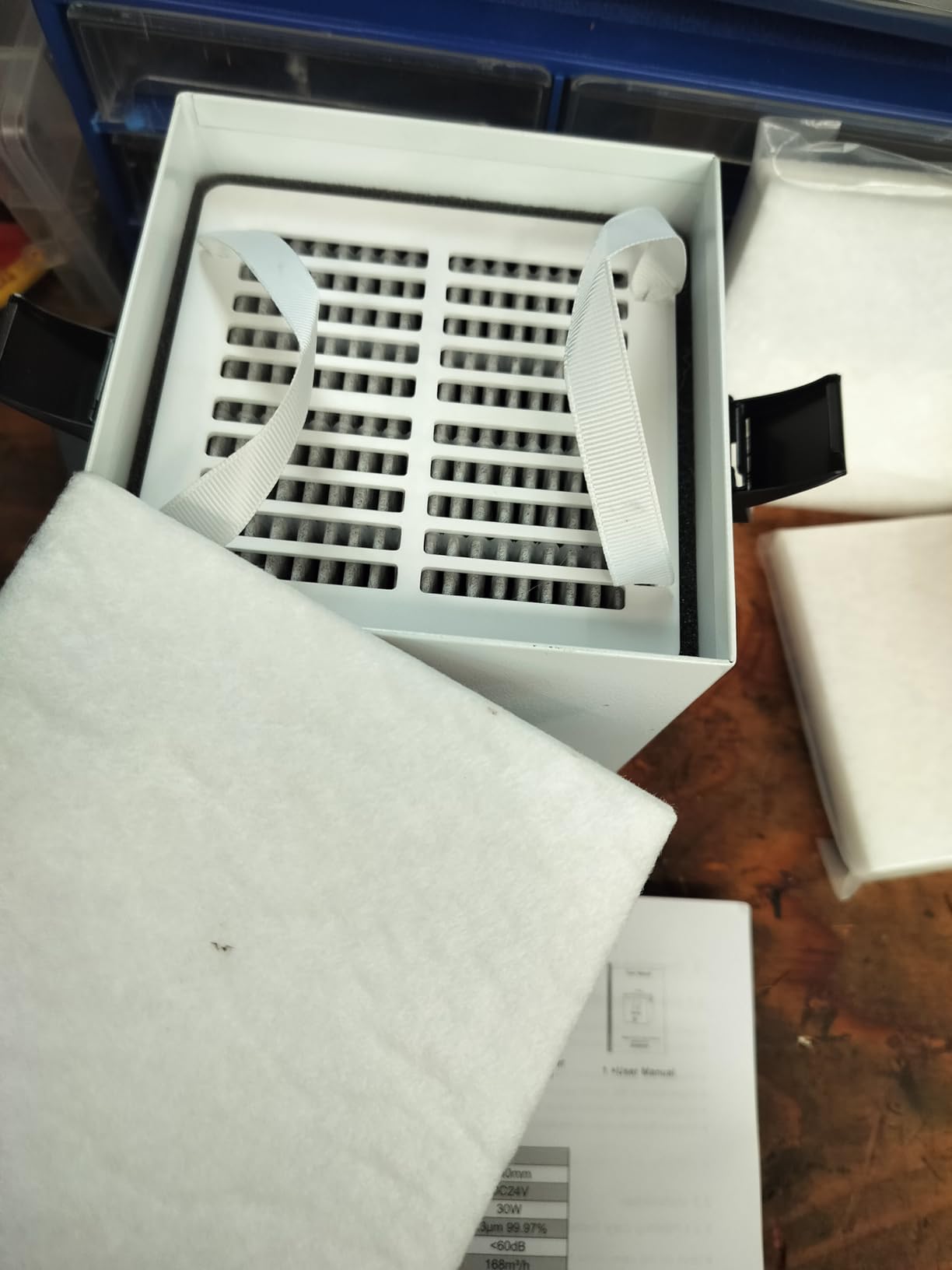
Filtration is a 10mm high-density pre-filter, an H13 HEPA layer, and carbon powder, with the hose, main filter, and five pre-filters included. Owners on electronics repair report it clears soldering odour effectively, and the metal body is a real improvement over the plastic shells at this price.
Because it recirculates, the correct expectation matters. Reviewers note that suction only performs when the intake sits close to the work, and that it is not a substitute for respiratory protection during heavy or prolonged work. Treat it as a bench tool, not a safety device.
Who this unit is for
It suits renters and apartment dwellers doing electronics repair, light hobby chemistry, or resin work where venting outdoors is not an option and odour complaints are a genuine risk. The small metal footprint is the whole point in that setting.
It is also a good first unit for a small home office bench, and the hose reach makes it usable on a shared table where the work moves around more than one spot.
Where it falls short
At high speed the motor develops a noticeable whine, which is a real consideration in a small room. The hose also loses its shape when fully extended, so the advertised reach is not always usable reach.
With only 30 reviews the long-term reliability picture is unproven, and reviewers are clear that it needs close placement to perform. Solvent work is out of scope despite the carbon layer.
11. BlueDate BD-30 – Best for Light Duty Desk Work
BlueDate HEPA Solder Fume Extractor Fan Solder Smoke Absorber DIY Work Fan for Soldering Station, Hand Engraving, Jewelry Soldering Use with HEPA Filter
H13 HEPA plus activated carbon
Stepless speed control
12V, 5.8W
1.8 pounds
Pros
- H13 HEPA and carbon double filter at a small size
- Stepless speed regulation
- Brushless DC motor runs quiet and efficient
- 1.8 pound body with two sets of filters included
Cons
- Limited to 12V and 5.8W
- Small footprint limits coverage on a large workstation
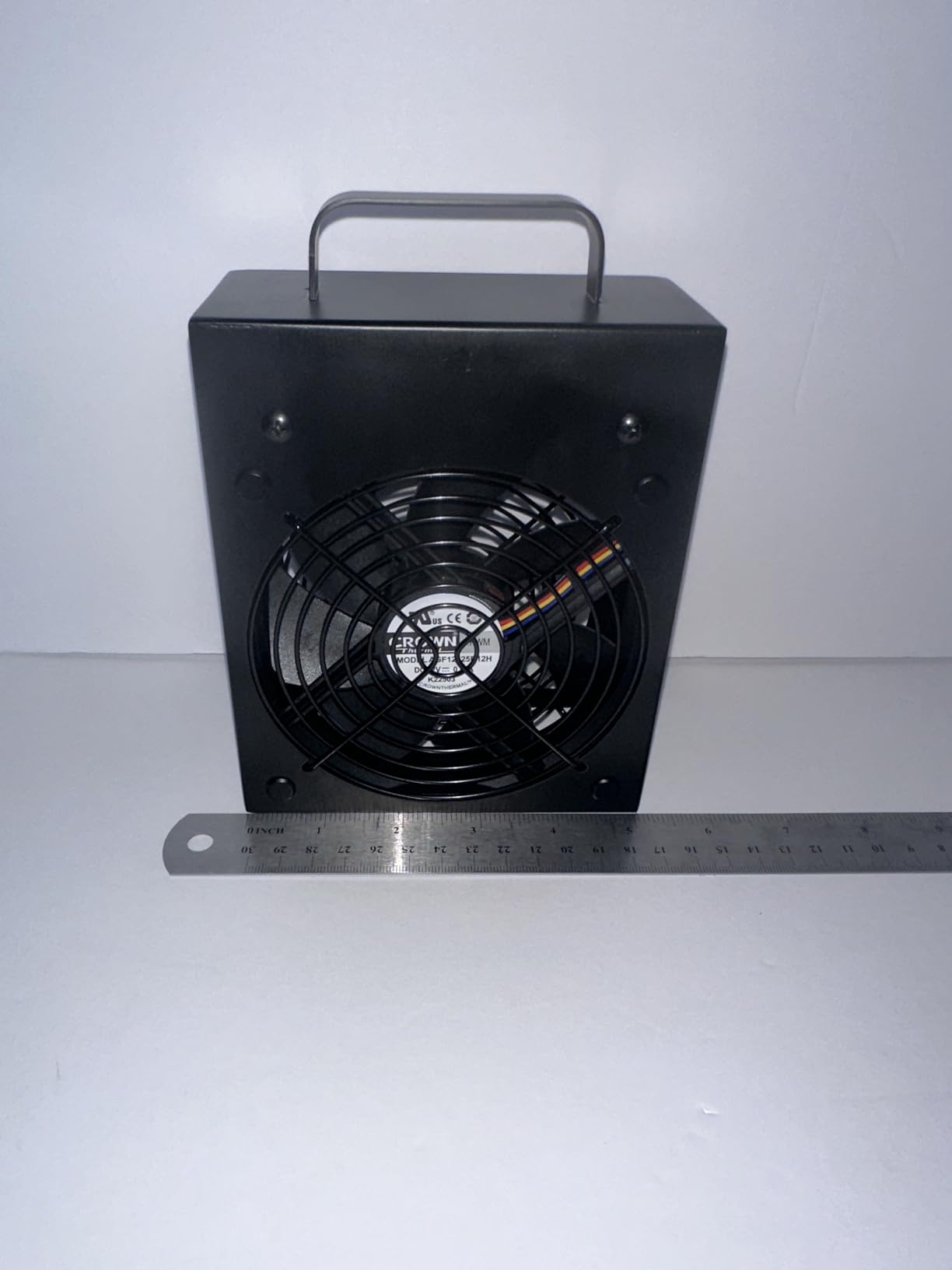
The BD-30 is the smallest and lightest unit in the roundup at 1.8 pounds, and it is aimed squarely at jewellery soldering and light hand engraving rather than general lab work. The H13 HEPA and activated carbon cotton double filter is a credible pairing for solder smoke and 0.3 micron pollutants, and the stepless speed regulation gives finer control than most units at twice the size.
A brushless DC motor keeps both noise and power low, and the box includes two sets of filters, a power supply, and the unit itself. Buyers generally describe it as effective for the volume of work a hobbyist actually generates in a session.
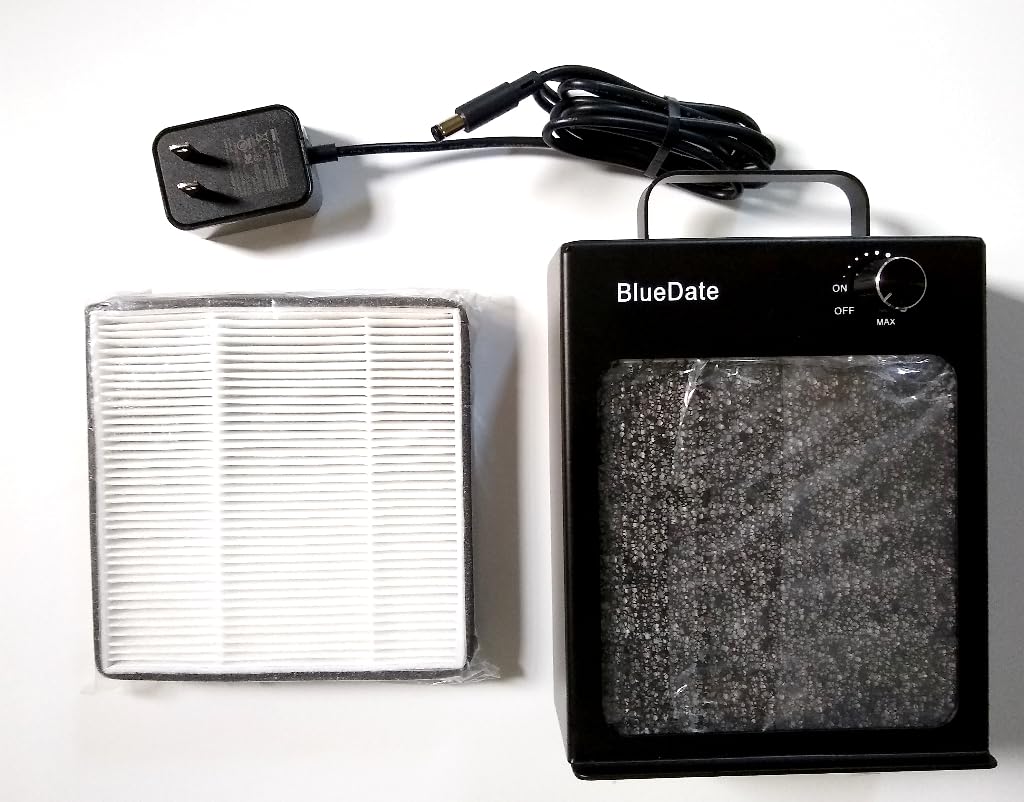
What you give up is capacity. At 12 volts and 5.8 watts, it is built for light to moderate soldering, and anyone who outgrows that will find it underpowered quickly. The 2.76 by 5.12 by 7.49 inch body is compact enough to sit beside a small parts tray rather than occupying bench space.
The one-year warranty is the shortest offered here, and replacement media is the ongoing cost to plan for. For intermittent users doing a few joints a week, it is a perfectly proportioned tool.
Who this extractor is for
It is for jewellery soldering, light hand engraving, and small electronics work at a kitchen or desk-scale station. At 1.8 pounds it moves between stations easily and stores in a drawer when unused. Picking gear for a shared kitchen bench follows the same footprint-first logic as choosing a countertop appliance, which is the angle our best smoothie blenders for home roundup covers if you are planning the same counter space.
It also works as a supplementary unit in a larger lab, handling small tasks so a bigger machine stays free for heavy work.
Where it falls short
The 5.8W motor has no headroom. Continuous sessions, hot-air rework, or any task producing a dense fume column will overwhelm it, and reviewers are consistent on this point.
Coverage area is limited by the small intake, so on a larger workstation you are relying on placement rather than volume. The 4.0 average reflects that ceiling clearly.
12. Allegro 9910-D Supplied Air Hood – Best for Sandblasting and Dust Control
Allegro Industries 9910-D, Maintenance-Free Tyvek Supplied Air Hood
NIOSH approved supplied air hood
Disposable Tyvek construction
1.4 pounds
Sound-dampened downtube
Pros
- NIOSH approved for respiratory protection
- Disposable design needs no cleaning or parts
- Works with facial hair and goggles
- Large anti-fog viewing window
- Lightweight at 1.4 pounds
Cons
- Non-standard external air connector and lens cover
- Hose material can collapse under low pressure
- Foam in the supply tube may restrict airflow
This is the odd one out in the roundup, and it earns its place for a specific job. The Allegro 9910-D is a NIOSH approved continuous flow supplied air respirator hood, not a filtered extractor, which means it protects the wearer rather than cleaning the room. For sandblasting, grinding, and heavy particulate work, that distinction is the whole point.
The maintenance-free design is a genuine advantage in a dusty shop. It is a one-piece disposable assembly, so there is nothing to clean, no cartridge to replace, and no filter cost over its life. At 1.4 pounds of poly-coated DuPont Tyvek, it is light enough for a long session and flexible enough to work around a helmet or goggles.
Two details set it apart from improvised masks. The patented integrated downtube, breathing tube, and suspension means there is no separate hose to route awkwardly, and the multi-layer foam downtube is dampened to meet NIOSH sound requirements. The large anti-fog viewing window keeps the work visible, which matters when you are inspecting a surface rather than looking at a screen.
It also accommodates workers with facial hair, which many disposable masks do not, and it can be worn over additional PPE. That makes it a practical choice for a garage or workshop where you also need eye protection and hearing protection.
Who this unit is for
It is for sandblasting, surface prep, grinding, and any dusty task where a filtered extractor would be recirculating the very particulate you are trying to remove. It is also useful for one-off tasks where hiring a full respirator programme is not warranted.
Makers who cannot wear a tight-fitting respirator due to facial hair or glasses get a workable alternative here, and the disposable format suits occasional or contract work.
Where it falls short
This is not a fume hood, and it does not capture vapours or clean a room. If your work is chemical, it is the wrong category entirely and you should look at the filtered extractors above.
Several practical issues are reported: the external air connector and lens cover are non-standard, so compatibility with some supplied-air setups is limited, the hose is made from the same material as the hood and can collapse under low pressure, and foam in the supply tube can restrict airflow. Durability concerns about the screen and hose appear repeatedly in reviews.
How to Size a Fume Hood for a Home Bench
Most home lab buying mistakes come from reading airflow numbers as marketing rather than measurement. Two figures matter: face velocity, the speed of air moving through the front opening in feet per minute, and total airflow in CFM or cubic metres per hour. Every unit in this roundup publishes the second and essentially none publish the first, because they are open extractors without a defined opening to measure across.
Face velocity is the number that matters
Face velocity is the speed of air at the hood opening, and for a conventional chemical fume hood the working target is generally 80 to 120 FPM. Below roughly 60 FPM, containment degrades badly because air stops following the flow into the hood and begins to swirl out toward the operator. Above about 150 FPM you get turbulence at the opening that also reduces containment while making the hood noisy and wasteful.
Since none of the filtered extractors here publishes face velocity, use airflow as a proxy and treat capture distance as the practical figure. The units that work report 5 to 15 cm or 5 to 10 inches of effective range, and reviewers repeatedly confirm those numbers in practice.
CFM math for a 24 to 36 inch bench
A 24 inch work surface is 4 square feet, a 30 inch one is about 6.25 square feet, and a 36 inch one is 9 square feet. To hold 100 FPM across the full opening, a 4 square foot opening needs 400 CFM, a 6.25 square foot opening needs 625 CFM, and a 9 square foot opening needs 900 CFM. This is why a real 30 inch chemical fume hood moves so much more air than any desktop extractor, and why forum builders are wary of quoted CFM figures measured at the wrong point.
For context within this roundup: 168 m3/h converts to about 99 CFM, and 200 m3/h is about 118 CFM. Those are respectable extraction figures, but they are roughly a quarter of what a genuine 24 to 36 inch chemical hood needs. Plan the chemical work accordingly.
One rule from experienced builders is worth repeating: never attach a scrubber or activated carbon filter to the exhaust outlet of a ducted hood. Doing so severely restricts airflow and defeats the containment the hood was built to provide. If you want scrubbing, it belongs inside a recirculating design, not bolted onto an exhaust.
Room air changes and makeup air
A hood cannot move more air than the room can supply. Without a low-level or louvred makeup air inlet, a strong extractor pulls from the doorway, depressurises the room, and drags fumes back toward you. In a garage with a leaky door this is usually fine; in a sealed apartment it is the reason odour escapes.
Running the numbers on the room matters too. A 200 m3/h extractor in a small room is a high air change rate, which is why basement and garage installs need a path for replacement air and why winter exhaust from a cold space can produce a visible plume at the vent. Forum builders consistently treat the makeup air inlet as a design requirement, not a refinement.
Ducted vs Ductless: What a Home Lab Actually Needs
This is the decision that separates a useful bench tool from a real containment device, and it comes down to one question: can you get contaminated air out of the building? A ducted hood exhausts everything to the outdoors. A ductless hood filters and returns air to the room, and everything the filter does not trap stays with you.
When a ductless unit is the right call
Choose a recirculating extractor when your work is particulate and light-vapour: soldering flux, engraving and laser dust, powder handling, resin printing, and paint or solvent cleanup where the vapour load is small and intermittent. This is the majority of home lab activity, which is why every unit in this roundup falls into that category.
Choose a ducted hood when you are working with solvents, acids, or anything that produces a heavy vapour column. That is a different product class with different cost and a different installation, and a filtered desk unit is not a substitute.
Chemical compatibility limits
Carbon filters adsorb organic vapours well until they saturate, and then they stop working while continuing to smell acceptable, which is the most dangerous failure mode in this category. HEPA filters capture particles and do essentially nothing for vapours. A combination unit handles both, but neither replaces exhaust for a chemical reaction.
Materials matter too. Acids and alkalis corrode aluminium, chlorides pit and stress-crack stainless steel, and a hood left unepoxied deteriorates quickly. For DIY builds, experienced forum members use galvanized steel with epoxy-painted cement backer board and a stainless catch pan on the floor, specifically to avoid the corrosion problem. The same chemistry concerns apply to any plastic interior parts in a recirculating unit near an open vessel.
What a used institutional hood changes
A used institutional chemical fume hood does give you true containment, and that is a real option worth researching for a serious home lab. The trade-offs are size, weight, and the fact that a 1960s or 1970s steel cabinet may need its interior re-coated, its airflow re-certified, and its sash repaired before it performs to spec. Ask any seller for measured airflow at the sash, not the fan horsepower, and confirm whether the sash and airfoil are intact.
Vendors such as Labconco, Hemco, and Thermo Fisher have established resale channels, and enthusiast marketplaces carry these units regularly. For a home lab that has outgrown recirculating extraction, that route is often more sensible than another desktop unit, provided the airflow has been measured rather than assumed.
Installation Reality Check for Garage and Basement Labs
Residential constraints decide more purchases here than specifications do. A garage wall penetration for an exhaust duct is a straightforward afternoon with the right materials, and it is the cleanest possible answer because contaminated air leaves the building entirely. The cost is the wall work and, in a basement, the distance the duct has to run before it exits.
If you cannot penetrate an exterior wall, a window exhaust is the usual fallback. Cold air exhausting outdoors in winter produces a visible fog plume that draws complaints from neighbours, and building codes in some areas restrict where a mechanical exhaust can terminate. Check your local rules before you plan around a window.
Noise is the quiet constraint. Units in this roundup measure between roughly 50 dB for the smallest desk models and 63 dB for the workshop cabinet. In an open-plan home, anything above 60 dB is a conversation-stopper, and running one continuously for a resin cure will be noticed by the rest of the house. Sound dampening on the duct run helps more than most buyers expect.
Two final checks. Verify the electrical circuit can carry the load, particularly for the 100W and 150W units, and confirm the bench has clearance behind it for intake, because a unit backed against a wall performs worse than its specification suggests.
Filtration, Filter Costs and What Never Goes In a Hood
Filter cost is where home lab budgets get surprised. Units with carbon-only media need replacement based on hours of use, and the ones rated longest, such as the FumeClear FC-100A at roughly 3000 hours, change that arithmetic completely. Before buying anything, check whether replacement media is sold as a standard part or a proprietary bundle, because the second is where the real cost hides.
Some units in this roundup carry no spare media at all, and reviewers report filters being consumed faster than expected on heavy dust work. Others ship with eight replacement adsorbers, which effectively defers the first filter purchase by a year. Treat included spares as part of the value, not a bonus.
What never goes in a fume hood, in any circumstance, is the single most useful safety rule on this page. Never store chemicals in a fume hood. Never use one for perchloric acid work, which requires a dedicated washed-down stainless steel hood. Never use a recirculating unit as storage, never heat large volumes of solvent in a filtered desk extractor, and never treat a hood as a substitute for a biosafety cabinet when handling biological material.
One forum failure mode is worth repeating because it recurs: a distillation apparatus removes far more hazard than boiling solvents off in an open hood. If you can capture the vapour at the source with a proper setup, you have solved the problem rather than diluted it. And if you ever find yourself working in a room with no extraction and no plan for one, the honest answer is to stop and build something, because the improvised plastic-tote approach that shows up in photos carries the hazard straight to the operator.
For broader home-lab planning, the same logic that governs equipment choices applies to how a space is laid out, and you will get better results thinking about room setup and circulation the way you would think about home fitness equipment layout or a home theatre setup: measure the space, then pick the machine that fits the measurement.
Frequently Asked Questions
Which brand of fume hood is considered the best?
For a home lab, the most consistently well-reviewed brand in the filtered extractor category is KOTTO, whose solder smoke absorber holds a 4.7 rating across more than 2400 reviews. In the premium tier, FumeClear builds the strongest filtration stacks, combining H13 HEPA with high-iodine activated carbon. Institutional chemical fume hoods from Labconco, Hemco, and Thermo Fisher remain the benchmark for true containment, but they are priced and sized for commercial laboratories.
What are the OSHA requirements for fume hoods in laboratories?
OSHA 29 CFR 1910.1450 requires laboratories to evaluate hazards and use engineering controls such as fume hoods when they are feasible. Related standards include ANSI Z9.5 for laboratory ventilation and ASHRAE 110 for testing hood performance, typically targeting 80 to 120 feet per minute at the face. These requirements apply to employers and employees in the workplace. A home lab is not inspected under these rules, which does not make the exposure safe.
What are the CFM requirements for a lab fume hood?
A conventional fume hood needs enough airflow to hold 80 to 120 feet per minute across its face opening. A 24 inch opening of 4 square feet needs roughly 400 CFM, a 30 inch opening needs about 625 CFM, and a 36 inch opening needs about 900 CFM. Desktop filtered extractors deliver roughly 60 to 120 CFM, which suits soldering and particulate work but not solvent chemistry. Always confirm airflow is measured at the open sash, not at the fan.
What should never be done in a fume hood?
Never store chemicals in a fume hood, since a lowered sash over stored containers wastes airflow that should be protecting the operator. Never use a standard hood for perchloric acid, which requires a dedicated washed-down stainless steel design. Never use a recirculating filtered unit for heavy solvent work, and never rely on one as a substitute for a biosafety cabinet when handling biological material.
Can I use a ductless fume hood with solvents?
Only for light, intermittent solvent work, and with clear limits. Activated carbon adsorbs organic vapours until it saturates, then stops working while still smelling acceptable, which is the most dangerous failure mode in this category. HEPA filters capture particles and do almost nothing for vapours. For anything generating a heavy vapour column, you need a ducted hood that exhausts outdoors, not a recirculating unit.
How do I vent a fume hood out of a garage?
Run a rigid or flexible exhaust duct from the hood through an exterior wall or through a window, terminate it outdoors away from air intakes and doors, and seal every joint so the duct does not leak. Provide a makeup air inlet low on the wall so the room can supply replacement air instead of pulling from the doorway. Insulate or dampen the duct run, since airflow noise transmits directly into the house through the ductwork.
The Best Fume Hoods for Home Labs: Final Verdict
For most home labs, the best fume hoods for home labs come down to airflow, footprint, and honest expectations. The KOTTO Solder Smoke Absorber is the default answer for anyone whose work is electronics or light craft, because a 4.7 rating across more than 2400 reviews is the strongest consensus available and the carbon bed does its job within its stated 5 to 6 inch range. The FumeClear FC-2001A is the step up when you want HEPA and carbon in the same housing, a hose that holds position, and a 15 cm working envelope. The YIHUA 948DQ-I covers the budget case with eight spare adsorbers in the box.
Beyond those three, match the unit to the work: the KQZ W1 when bench space is the binding constraint, the NEETOP NT-M1 when you are in an apartment and need to balance suction against noise, the FumeClear FC-100A when you need real suction and a long filter life, and the VEVOR FL250 when a garage workshop needs airflow volume more than it needs a compact footprint. The Allegro 9910-D is a different tool entirely, protecting you from dust rather than cleaning your room.
And if your chemistry moves beyond soldering, engraving, and powder handling, stop shopping this category. Invest in ducted exhaust instead, sized with the face velocity math above, and your home lab will be safer than any filtered desk unit can make it. Check the latest model options for the picks above, and measure your bench before you order anything.