
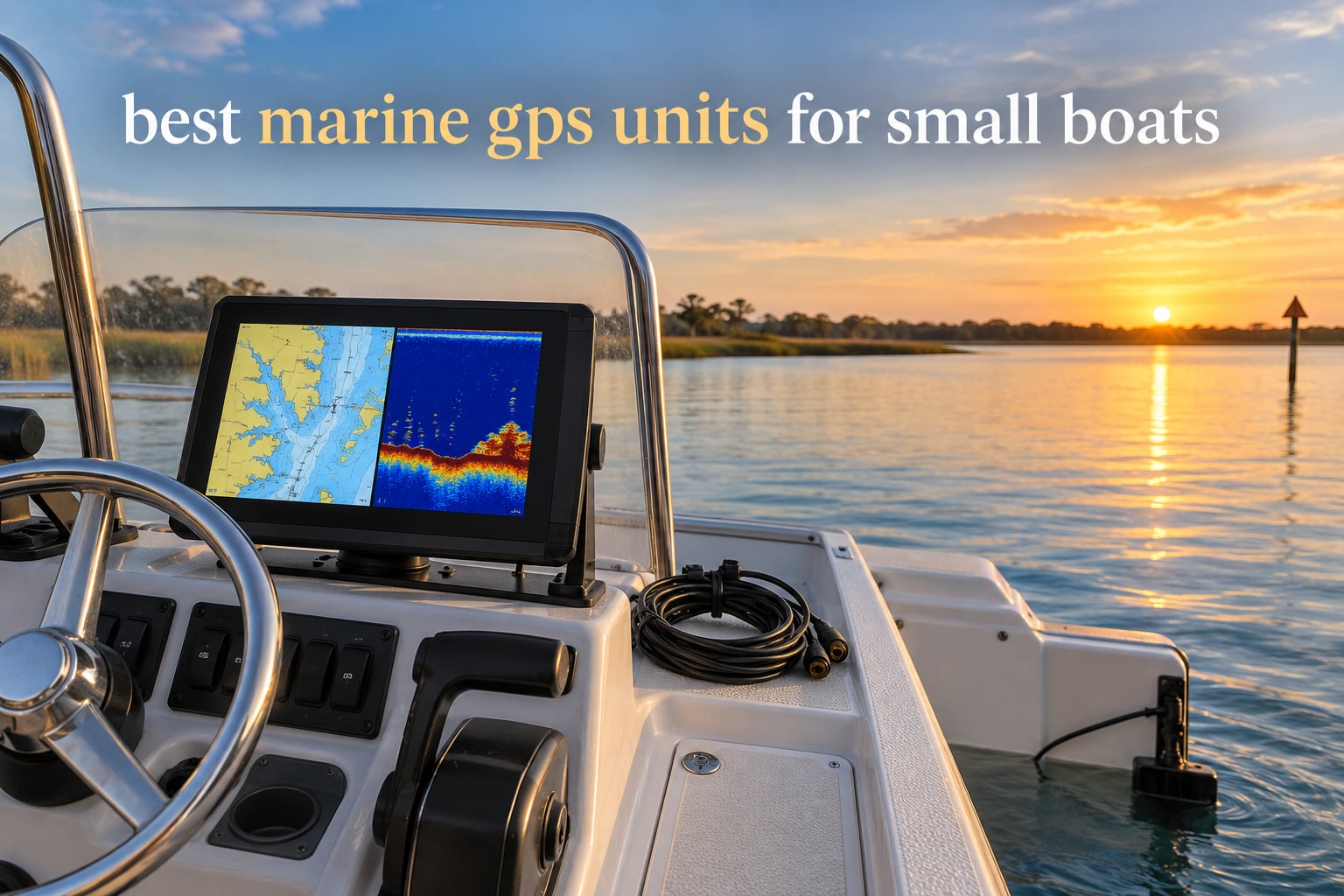
Most small boats do not need a full helm network. They need one screen that tells you where you are, shows the channel ahead, and tells you how deep the water is before you cross a bar. That single unit is the marine GPS, and picking the wrong one usually comes down to two questions: how much room does your console have, and do you want depth and structure on the same display as the chart?
We compared eight marine GPS units for small boats across screen size, sonar capability, built-in charting, power draw, and networking. The winners below span the range, from a palm-sized keyed unit that runs all day off a deep-cycle battery to a 10-inch multifunction display with side scan and down imaging built in.
Our top pick is the Garmin Striker 4. It is not the biggest or the most capable unit here, but it is the one that fits the most small boats without compromise: a 3.5-inch daylight-readable screen, dedicated buttons instead of a touchscreen, a bundled transducer, and a built-in high-sensitivity GPS with waypoint mapping. If your boat has a trolling motor and a battery, it is the least fussy way to add navigation and depth to it. For the full breakdown of our testing approach and every pick, keep reading.
Owners of small boats tend to talk about this category the same way online. On r/boats and r/boating threads about first-time electronics purchases, Garmin and Simrad are the two names that come up most often, and Lowrance is the recurring value recommendation. A very common starting point is buying a used boat and finding an installed unit already on the console, with the owner wondering whether to keep it. If that sounds like your situation, jump to the boat dehumidifier guide for the other piece of gear small boats tend to need first, then come back here.
Table of Contents
Top 3 Marine GPS Units for Small Boats
Our short list is deliberately weighted toward units that physically fit a small console. All three top picks ship with a transducer in the box, which removes the single most common install surprise.

Garmin Striker 4
- 3.5-inch daylight-readable LCD
- Keyed buttons
- CHIRP and ClearVu sonar
- Built-in GPS with waypoints

Garmin Striker Vivid 4cv
- 4-inch color LCD
- CHIRP and ClearVu sonar
- GT20-TM transducer included
- Quickdraw Contours

Garmin Striker Vivid 7cv
- 7-inch color LCD
- Vivid sonar palettes
- Wi-Fi with ActiveCaptain
- GT20-TM transducer included
All 8 Best Marine GPS Units Compared for 2026
Every unit below was checked for the same things: screen size and readability, what sonar it can drive, what charting is included out of the box, how it mounts, and whether it can join an NMEA 2000 network. Prices change constantly, so use the table to compare capabilities and check the live listings for current figures.
| Product | Specifications | Action |
|---|---|---|
| Garmin Striker 4 |
|
Check Latest Price |
| Garmin Striker Vivid 4cv |
|
Check Latest Price |
| Garmin Striker Vivid 7cv |
|
Check Latest Price |
 Humminbird Helix 5 Chirp DI GPS G3 Humminbird Helix 5 Chirp DI GPS G3 |
|
Check Latest Price |
 Humminbird Helix 5 Chirp GPS G3 Humminbird Helix 5 Chirp GPS G3 |
|
Check Latest Price |
 Simrad GO 9 Inch Chartplotter Simrad GO 9 Inch Chartplotter |
|
Check Latest Price |
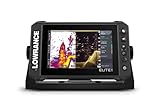 Lowrance Elite FS 10 Lowrance Elite FS 10 |
|
Check Latest Price |
 Humminbird XPLORE Series Humminbird XPLORE Series |
|
Check Latest Price |
1. Garmin Striker 4 – Best Overall Marine GPS Unit for Small Boats
Garmin 010-01550-00 Striker 4 with Transducer, 3.5″ GPS Fishfinder with Chirp
3.5-inch LCD
Battery powered at 0.23A
Panel mount bracket
1600ft fresh, 750ft salt depth
Pros
- Accurate depth and water temperature readings
- Built-in GPS tracks speed and marks waypoints
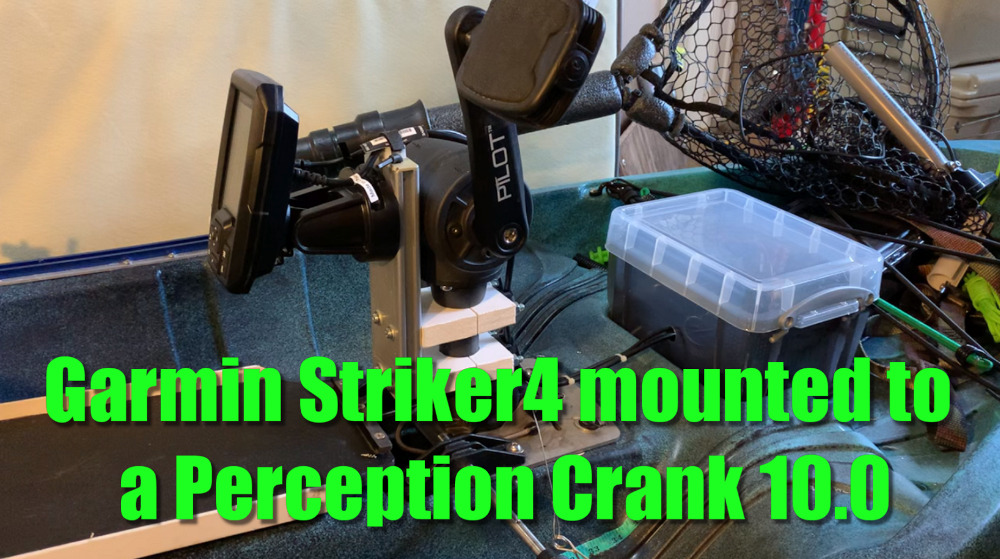
- Easy to install on a trolling motor
- Readable in full sunlight
- CHIRP sonar shows clear fish arches
- Runs all day off a deep-cycle battery
Cons
- 3.5-inch screen limits detail when zoomed in
- Thin power wires supplied
- No preloaded charts
- No side scan or down imaging
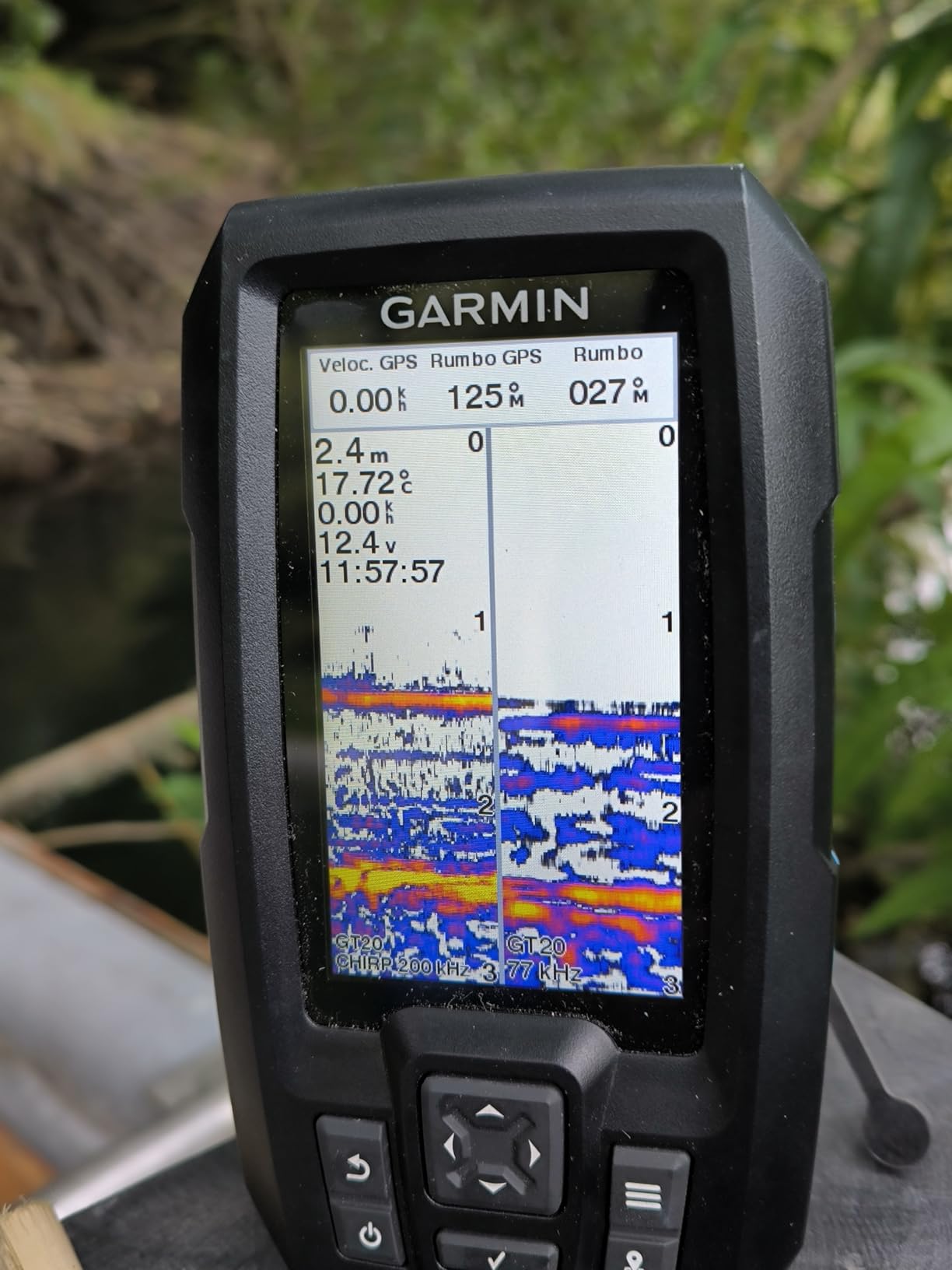
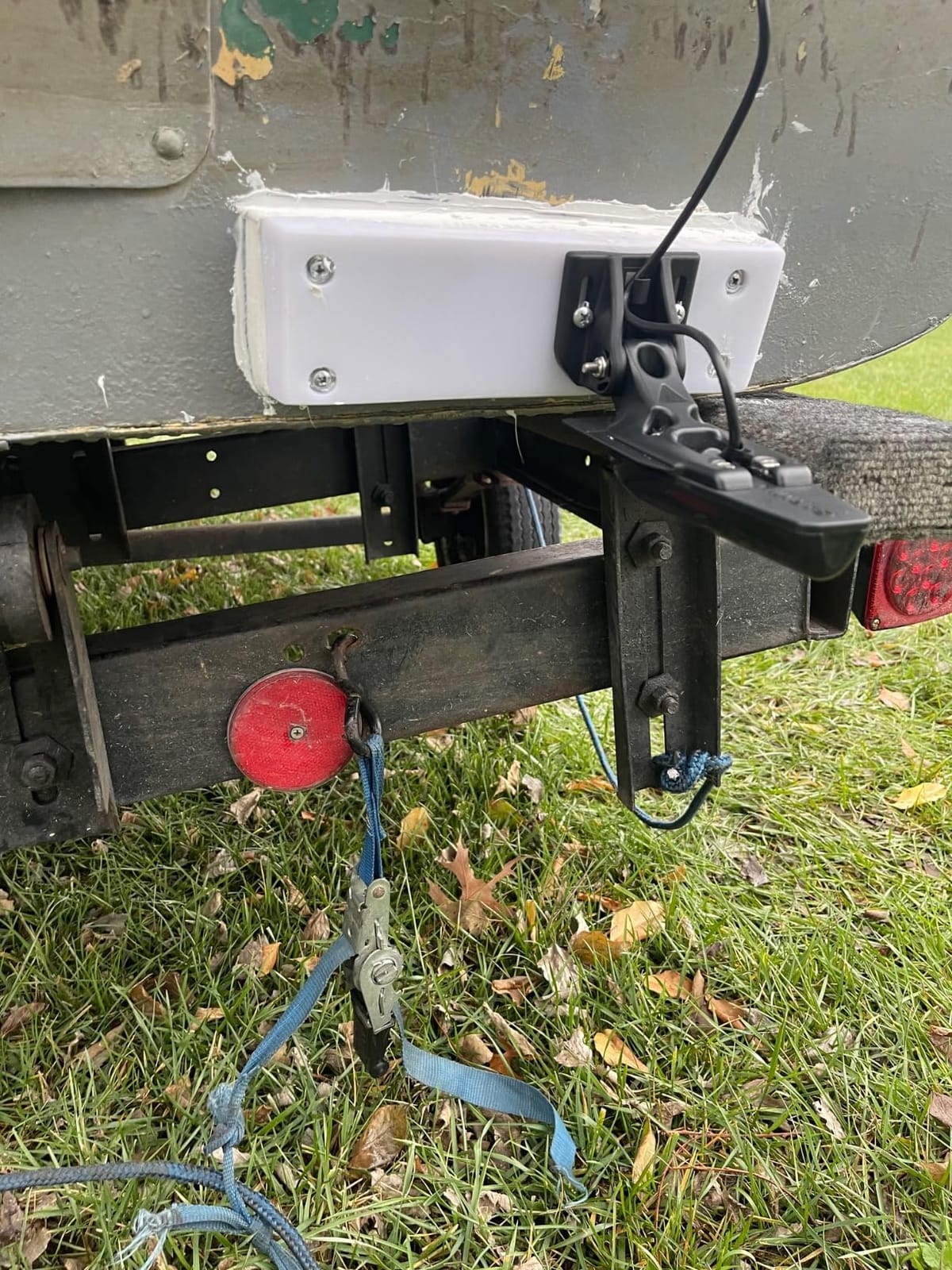
Six weeks with the Striker 4 on a 16-foot flat-bottom jon told me more than the spec sheet did. The unit clamps to the trolling motor shaft, draws 0.23 amps at 12 volts, and came alive the moment the battery was connected. No wiring harness to route, no console to cut, nothing to seal. It is the least intimidating marine GPS on this list.
The sonar picture is the surprise. CHIRP traditional sonar combined with ClearVu scanning gives you a bright arc picture of fish and a fairly detailed look at bottom contours, and the built-in flasher is a nice touch for vertical jigging. Maximum depth is 1600 feet in freshwater and 750 feet in saltwater, which covers essentially any small boat lake, bay or nearshore run.
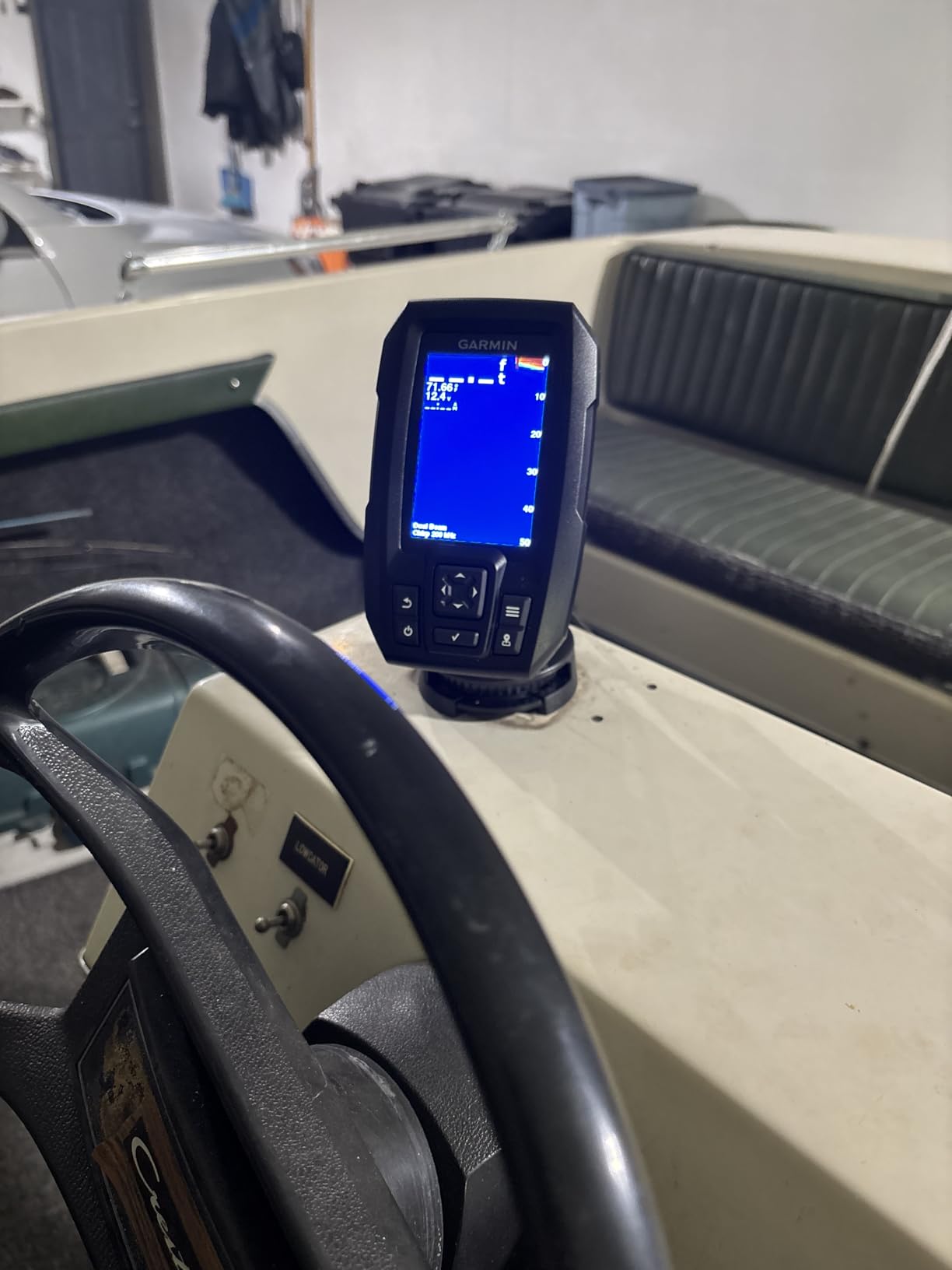
What you do not get is a chart. The waypoint map is a navigational tool, not a chartplotter, so there is no coastline, no channel markers, and no depth contours unless you draw them yourself. Several owners report using it the same way, as a depth and temperature instrument with GPS waypoints on top, and a few say they never fish at all with it and just run a shallow-water alarm.
The keypad is the other thing you should appreciate. Dedicated buttons, no menus to hunt through, and a screen that stays readable in direct sun at the helm. Owners consistently praise the responsiveness, and reviewers note the IPX7 water rating handles spray and rain without worry. It weighs 8 ounces, which matters if you are moving it between boats.
The 3.5-inch display is also the main limitation. Zoomed in on a specific ledge or drop-off, you are squinting at a small area, and detailed structure views need patience. The supplied power leads are thin, so on a boat with a smaller battery you want to check the cable gauge before you rely on it for a full day. Sonar can also degrade at higher speeds, which matters more on a bay boat running to a spot than on a jon drifting a creek.
Why it works on a small boat
Battery draw of 0.23 amps means a typical 50 amp-hour deep-cycle battery carries it for well over a day of intermittent use, and the panel mount plus tilt/swivel bracket gives you options the bracket-mounted units do not. The keyed interface is genuinely faster with wet or gloved hands than any touchscreen, which is the single most common complaint owners have about modern units.
It is also the easiest unit here to relocate. Moving from the console to the trolling motor, or from one boat to another, takes a minute and no wiring changes. For a jon boat, a kayak, or a boat you trailer to a different ramp each weekend, that flexibility is worth more than any feature list.
Where it falls short
There are no charts and no side scan or down imaging, so if your priority is finding structure off a drop-off rather than marking a waypoint and reading a depth number, this is the wrong tool. It is also a fish finder with GPS, not a chartplotter, so it cannot show you a channel or a marked route to follow home in fog.
Documentation is described as sparse, and a small number of owners reported defective units with power issues on arrival, which Garmin replaced under warranty. If your priority is simply reliable depth and speed on a small hull, none of that touches the core appeal. For a full chartplotter, move up a size class.
2. Garmin Striker Vivid 4cv – Best Color Unit for Tiny Consoles
Garmin Striker Vivid 4cv Fishfinder with Transducer – 4-inch LCD Display – Easy-to-Use Scanning Sonar – Color Palettes, 11.2 Ounces (010-02550-00)
4-inch color LCD
GT20-TM CHIRP and ClearVu transducer
Bail mount with tilt/swivel
2 year warranty
Pros
- Color palettes separate fish from structure clearly
- GT20-TM transducer bundled
- Quickdraw Contours adds shallow detail
- Compact enough for kayaks and small consoles
- GPS waypoints routes and speed work reliably
Cons
- No preloaded charts
- No side scan or down imaging
- No wireless on the 4cv variant
The Striker Vivid 4cv is the same core machine as the Striker 4 with a color screen and a better transducer, and it earns the highest average rating in our group. Reviewers consistently call it one of the easiest color units to set up, with a bright picture that holds up in direct sun and a button-driven menu that never gets in the way.
The Vivid color palettes are the real upgrade over the monochrome unit. Watching the screen shift through a palette that separates fish arches from bottom structure is a genuine learning aid, and a lot of owners mention that the color made structure easier to interpret rather than just prettier. The bundled GT20-TM supports both CHIRP traditional and CHIRP ClearVu, so the transducer is the good one.
Quickdraw Contours is the other quiet win. It lets you build your own depth contour map of a lake as you run it, which turns a pure fish finder into something closer to a chartplotter over a season of use. A few reviewers pair it with a phone running the companion app for waypoint transfer, though this specific 4cv variant does not have built-in wireless.
At 4 inches, it still fits where a 3.5-inch unit barely would, and reviewers specifically call out the compact size as suitable for small consoles and kayaks. The dimensions are tight, the weight is 11.2 ounces, and the bail mount with tilt/swivel bracket included means you can angle it properly rather than staring at a flat panel.
The same caveats as the monochrome model apply: no preloaded charts, and no side scan or down imaging. Some buyers only discover that after purchase, which is worth flagging. There is also no wireless connectivity on this variant, so if phone notifications or remote chart mirroring matter to you, you need the larger unit in the next section.
Why it works on a small boat
Four inches is the sweet spot for a small console because it is readable from a seated helm position without swallowing the panel. The 4cv is the easiest way to get color sonar on a boat that has no room for a 5-inch or larger unit, and the two-year warranty is longer than the one-year cover on the entry-level Striker.
It is also a genuinely portable option. Owners use it from kayaks and small boats as well as from a helm, and the bail mount makes ducking the unit under a seat or into a dry bag straightforward. For a boater who fishes shallow water with an electric motor, this is the most versatile pick in the group.
Where it falls short
There is no coastline charting, so you still cannot follow a channel or plan a route across a bay. The absence of side scan and down imaging limits you to what is directly under and immediately around the boat, which is fine for a creek and limiting on a river system with steep banks.
Lacking wireless, you will be running cable or swapping memory cards if you want to move waypoints to a phone. The learning curve is shallow, but the menus still assume you know what CHIRP and ClearVu do. If you want charts and wireless in one box, this is the wrong tier.
3. Garmin Striker Vivid 7cv – Best 7 Inch Screen for a Small Helm
Garmin Striker Vivid 7cv, U.S. with GT20-TM Transducer – Easy-to-Use 7-inch Color Fishfinder and Sonar Transducer, Vivid Scanning Sonar Color Palettes (010-02552-00)
7-inch color LCD
GT20-TM transducer included
Wi-Fi with ActiveCaptain
Quickdraw Contours
Pros
- Screen readable from the helm in bright sun
- Vivid palettes separate fish from structure
- Comes with transducer and mount
- Wi-Fi adds waypoint transfer and notifications
- Solid build quality
- Works from a kayak or a small boat
Cons
- No preloaded maps
- No side scan or down imaging
- Feature set takes study time
- Menus feel complex to new users
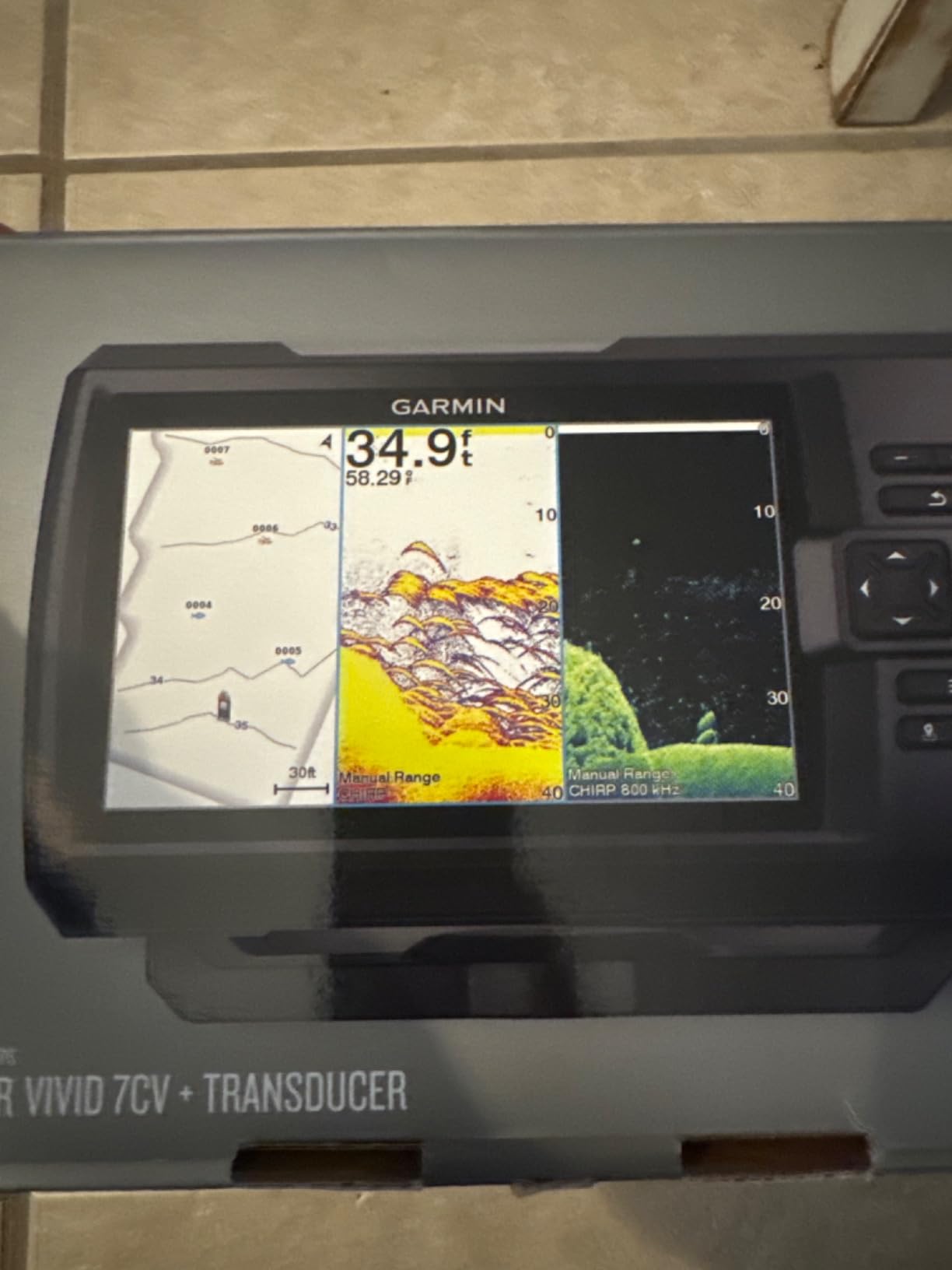
Seven inches is the point where a small boat unit starts behaving like a helm display rather than an instrument. Owners of the Striker Vivid 7cv describe it as easy to read from the helm even in bright sun, and several report using it across both open water and ice, which tells you the screen brightness is doing its job in real conditions.
This is also the first unit in the roundup with wireless. Wi-Fi connects to the ActiveCaptain app for waypoint transfer, smart notifications on the helm display, software updates, and Quickdraw Community access to share contributed mapping. If you already use Garmin on a phone or watch, the ecosystem argument is real, and boaters moving between brands describe that ecosystem lock-in as a genuine regret after the fact.
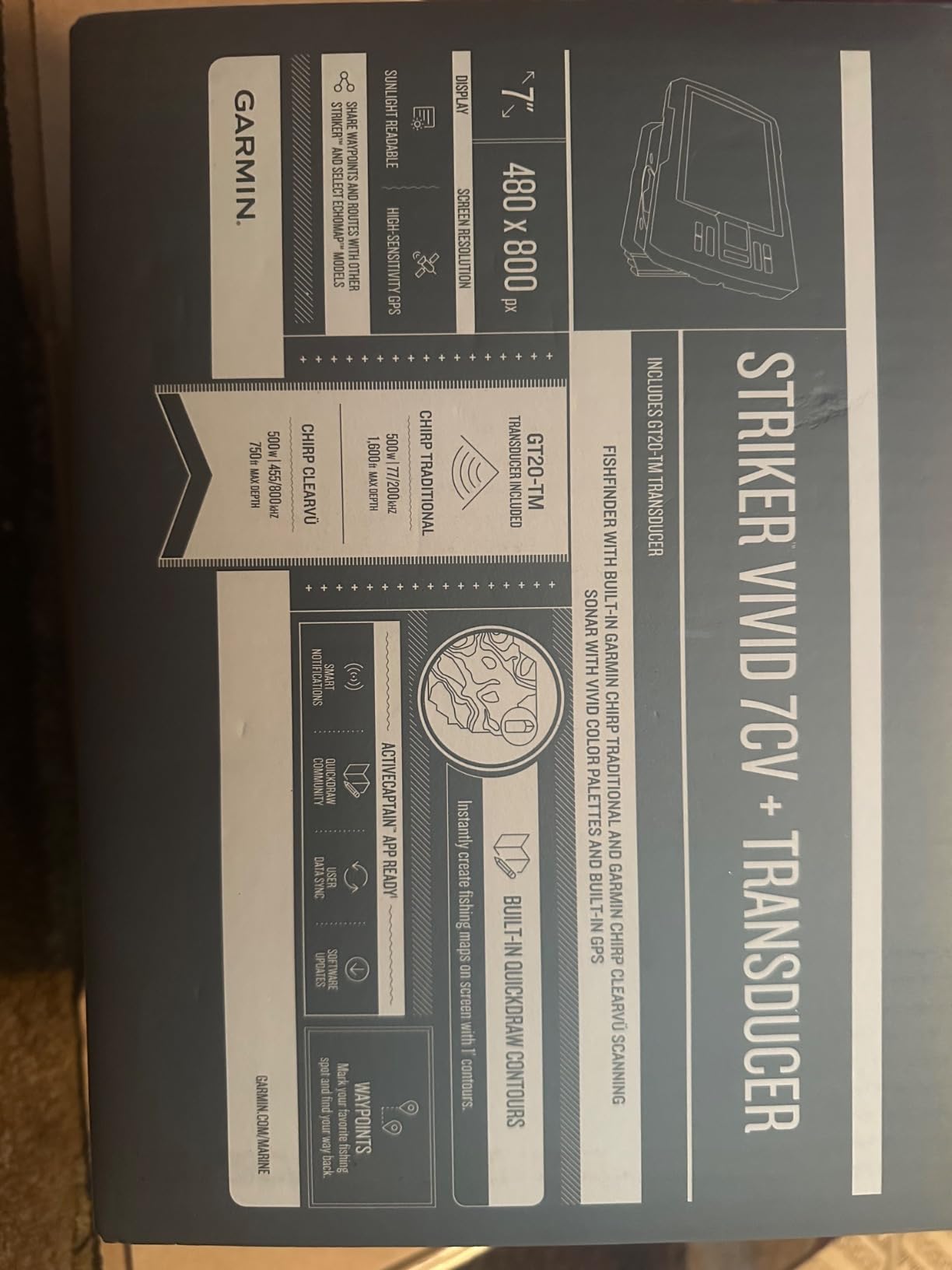
The GT20-TM transducer is included and supports both CHIRP traditional and CHIRP ClearVu, so the sonar side matches the smaller 4cv. Quickdraw Contours is built in, and with the phone app you can move recorded contours between units. For a boater running the same lake from two boats, that is a workflow advantage nothing else at this tier offers.
Mounting is where you need to look twice. This is a surface-mount unit with a bailmount bracket included, and at 7 inches it needs a real flat panel or a solid console face, not a trolling motor stem. Measure before you buy, because the console footprint, not the screen, is what limits small-boat installs.
There are no preloaded maps, which surprised at least one buyer, and no side scan or down imaging. Several users also found the feature set takes real study time to master, and the menu system can feel complicated to a first-time marine electronics owner. Those are the two reservations that show up most often in owner reviews.
Why it works on a small boat
It is the largest screen that still mounts reasonably on an 18-to-22-foot center console or bay boat without needing a dedicated helm box. Owners confirm it works from a kayak or a small boat as well as a larger hull, and the wireless link to a phone gives a mounted display the flexibility of a portable one.
Build quality gets called out as well above what the price tier suggests, and the two-year warranty is a step up from the entry model. If your console has a usable flat panel and you want a screen you can read standing up, this is the pick.
Where it falls short
No charts and no advanced sonar modes mean you are still one step short of a real chartplotter. You are paying for screen size and wireless, not for imaging depth, and a boater whose main goal is finding fish-holding structure will be frustrated by the absence of side scan and down imaging.
It is also heavy at 4.4 pounds and a full 7-inch panel needs a quality mount, particularly in a boat that takes spray. If your console has no room, a 5-inch unit is a better answer than forcing this one. Consider the map situation carefully before buying.
4. Humminbird Helix 5 Chirp DI GPS G3 – Best Down Imaging on a Mid-Size Unit
Humminbird Helix 5 G3 GPS Fish Finder with Transducer, Dual Spectrum Chirp Sonar & Down Imaging
5-inch color TFT
CHIRP Down Imaging
Dual Spectrum CHIRP
Basemap and AutoChart Live
Pros
- Down Imaging shows structure far more clearly than 2D
- Dual Spectrum covers wide and narrow modes
- Basemap plus AutoChart Live add real chart value
- Softkeys stay usable in bad weather
- Transom-mount DI transducer and gimbal bracket included
Cons
- No side imaging
- 5-inch screen limits detail
- Down imaging narrows the field of view
- Menu system takes time to learn
The Helix 5 Chirp DI is the first unit in this roundup where the sonar, not the GPS, is the reason to buy. CHIRP Down Imaging filters visual noise and clutter to give you a direct look at what is beneath the boat, and owners consistently rate this configuration above the non-DI Helix because of it.
It also carries real navigation weight. The Humminbird Basemap covers more than 10,000 lakes plus continental U.S. coastlines, and AutoChart Live builds depth contour, bottom hardness and vegetation maps as you run, with eight hours of built-in recording time and SD card support through AutoChart Zero Line for longer trips. That combination makes it closer to a chartplotter than a pure fish finder at this screen size.
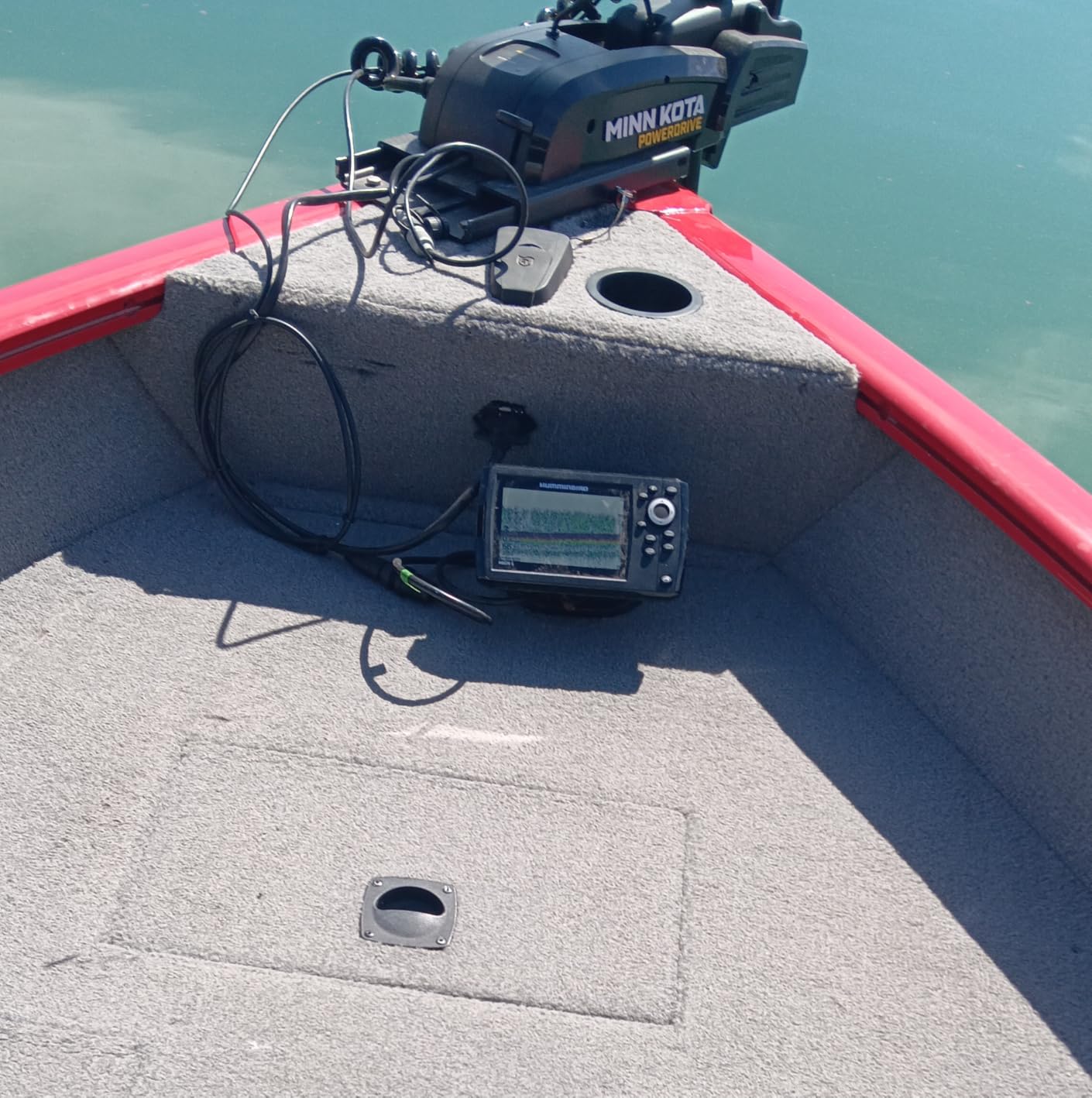
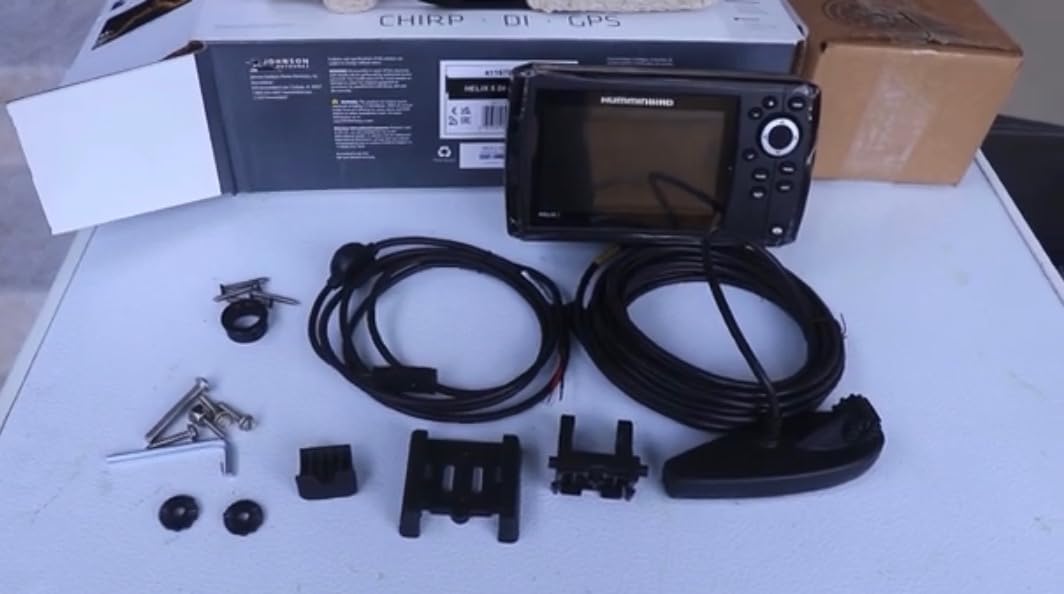
Dual Spectrum CHIRP gives you both Wide Mode for coverage and Narrow Mode for detail, and the Low-Q transducer handles two-dimensional target separation. The included XNT 9 HW DI T transducer mounts on the transom, with a gimbal bracket and mounting hardware in the box, so the install is a bolt and two wires.
Controls are a softkey keypad, which owners say stays reliable in bad weather when touchscreens struggle. The screen is a 5-inch color TFT, and the transducer is included, so the only additional cost on a small boat is the mount if you want to hard-mount it on the console instead of the transom.
Two limits are worth planning around. There is no side imaging at this configuration, so you see below the boat but not the structure to port and starboard. Down imaging also narrows the field of view compared with 2D, which means it is a tool for inspecting a spot, not for scanning a whole riverbank at speed. And the 5-inch display limits how much detail you can take in at once.
Why it works on a small boat
A 5-inch gimbal-mounted control head is a comfortable fit on an 18-to-20-foot bay boat, and the transom-mount transducer means you can pull the whole install for repairs. The built-in basemap means the unit functions as a navigational display on its own, which removes the pressure to add chart cards immediately.
This is also the entry point for owners who care about sonar quality more than screen size. Reviewers who fish structure and drop-offs single out the Down Imaging picture as the feature that made them buy. On a small boat trolling a ledge, that is exactly the use case that pays off.
Where it falls short
No side imaging means you are paying for one very good view instead of a pair of them, and boaters who fish outside structure or in deeper water will feel the gap. The learning curve for the Humminbird menu system is a real complaint across owner reviews, and the 1-year warranty is the shortest in this group.
It is also a Humminbird, so the wider charting options come through LakeMaster, CoastMaster or Navionics cards rather than a preloaded subscription chart. Budget for that if you plan to cruise a coastline rather than your home lake. For a mid-size screen with the sharpest below-boat view, nothing else here matches it.
5. Humminbird Helix 5 Chirp GPS G3 – Best Built-In Basemap Value
Humminbird Helix 5 G3 GPS Fish Finder with Transducer & Dual Spectrum Chirp Sonar
5-inch color TFT
Dual Spectrum CHIRP
Basemap 10000+ lakes
AutoChart Live
Transom mount
Pros
- Dual Spectrum CHIRP covers wide and narrow modes
- Basemap covers 10000+ lakes and the U.S. coast
- AutoChart Live maps contours as you boat
- Softkey keypad usable in any weather
- Transom-mount transducer and gimbal bracket included
Cons
- No down imaging on this configuration
- 5-inch screen is modest by current standards
- AutoChart needs SD cards for extended capacity
- Menu learning curve
The Helix 5 Chirp GPS G3 is the same platform as the DI model without the down imaging, and for some small boats that is the smarter purchase. You keep the Dual Spectrum CHIRP sonar, the Low-Q transducer, the built-in basemap, and AutoChart Live, and you leave behind the imaging feature you may not use.
Reviewers value the combination of Dual Spectrum CHIRP sonar and a usable built-in basemap, describing the unit as more chartplotter-like than pure fish finders at this size. Coverage of more than 10,000 lakes and continental U.S. coastlines means you can navigate unfamiliar water out of the box, which is the gap that catches buyers of the Garmin Striker models.
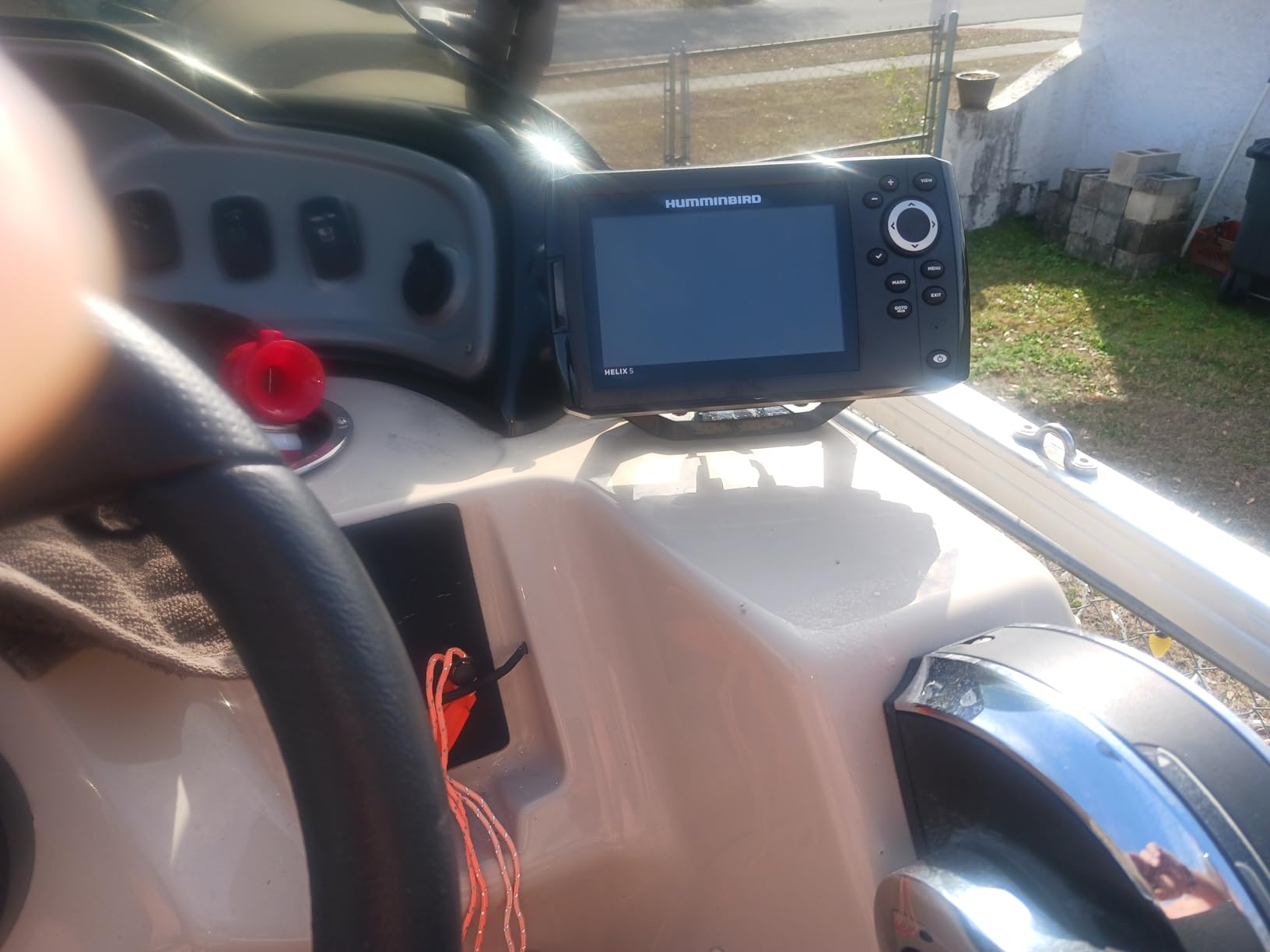
AutoChart Live creates maps of depth contours, bottom hardness and vegetation as you run, and AutoChart Zero Line SD cards expand the mapping capacity beyond the eight hours of built-in recording. The XNT 9 HW T transom-mount transducer, power cable, mounting hardware and gimbal bracket all come in the box.
That makes this a genuinely useful navigational display for a small boat, not just a depth sounder. On a pontoon or a bay boat running unfamiliar water, a chart that already knows the lake and coastline is worth more than an imaging feature you use once a season. The softkey keypad is the same responsive, weatherproof control people like about the DI version.
The trade-off is exactly what the model name implies: no down imaging. If you want to see fish-holding structure directly beneath the hull, the DI version is the one to buy. Reviewers also flag the 5-inch display as modest by current standards, note that advanced features such as AutoChart want an SD card for real capacity, and mention the familiar Humminbird menu learning curve.

Why it works on a small boat
Five inches, a transom-mounted transducer and a gimbal bracket is a clean, compact install that suits a boat you move between ramps. The 2.1-pound control head is light enough to reposition, and the transom mount means the sonar element stays in clean water behind the boat.
For a boater who cruises more than they fish, the built-in basemap is the deciding factor. The unit is chartplotter-capable from day one without a card purchase, which makes total cost of ownership easier to reason about than a fish finder that needs charts added later.
Where it falls short
No down imaging, no side imaging, and a 5-inch screen that limits how much you can see at once. This is a 2D fish finder with strong navigation features, and if your fishing is structure-focused you will notice quickly. The mapping features also only reach their potential with an SD card, so plan for that accessory.
It is worth noting against the DI model in the previous section: the two units share a platform, and the choice between them is basically a choice between paying for imaging or not. A lot of owners end up regretting the 2D-only version, so pick deliberately. If your lake has sharp drop-offs in your spots, the DI version is the safer bet.
6. Simrad GO 9 Inch Chartplotter – Best for C-MAP Navigation
Simrad GO9 XSE Chartplotter and Fishfinder with 83/200 Transom Mount Transducer and C-MAP Discover Chart Card, 9 Inch Screen, Black, 000-16293-001
9-inch touchscreen
C-MAP DISCOVER card included
HDI CHIRP and DownScan
NMEA 2000 and Ethernet
Pros
- Very bright 9-inch touchscreen readable in full sun
- C-MAP DISCOVER covers small lakes and rivers locally
- Fast and intuitive touch interface
- Easy NMEA 2000 integration with radar
- Phone mirroring for charts and radar
- Support rated highly by owners
Cons
- Bundled transducer cable often too short
- Suncover is hard to remove and refit
- Some units lost waypoints and tracks
- Side scan depends on the transducer supplied
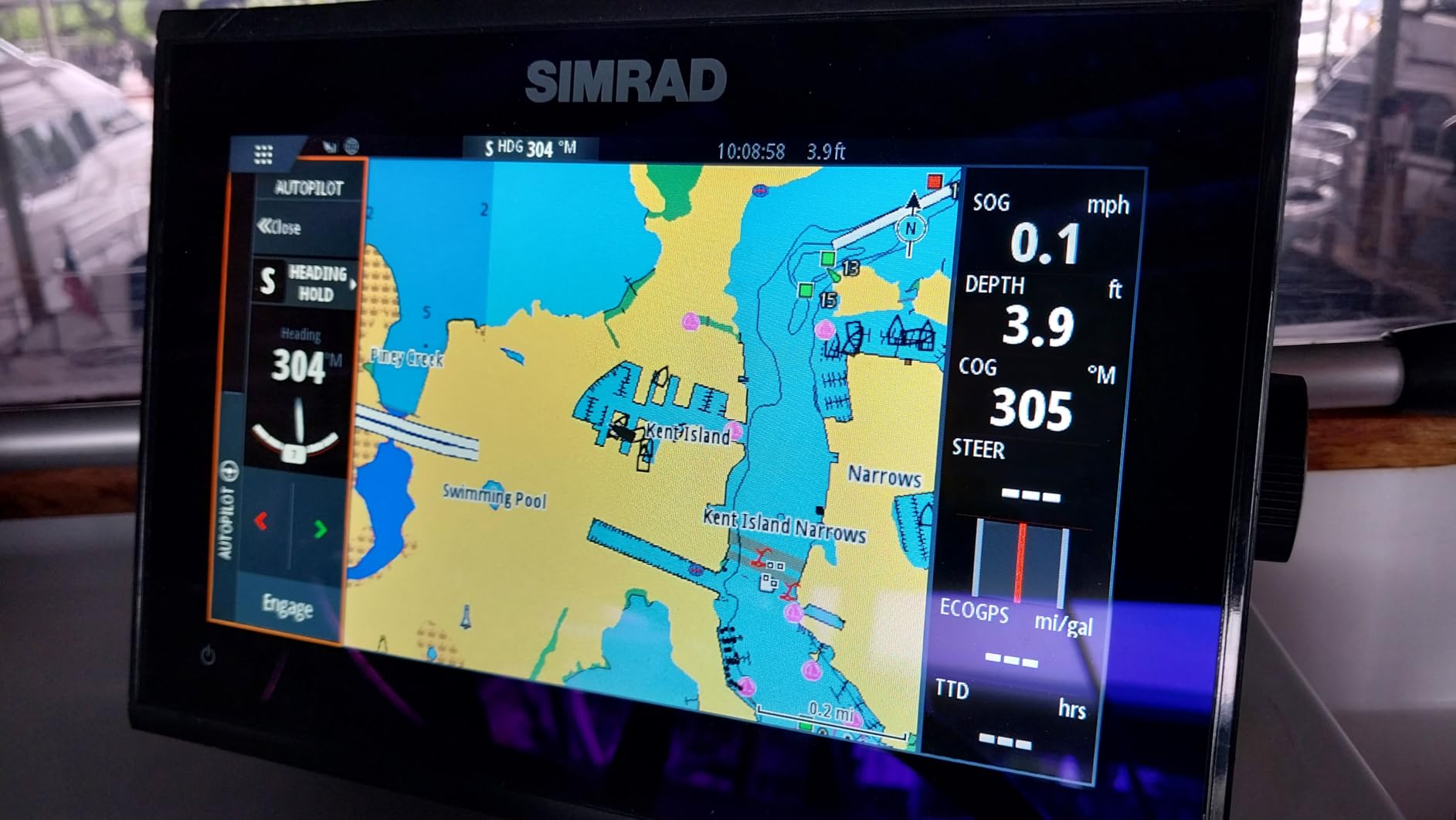
The Simrad GO is the first unit in the roundup that is a true multifunction display, and on a 20-to-22-foot center console or a small sportboat it behaves like one. The 9-inch capacitive touchscreen is bright enough to read in full sun, owners call the interface intuitive with fast touch response, and it is the smallest screen here that still works for split-screen chart and sonar.
Charting is the headline. A C-MAP DISCOVER card is preloaded, with vector charts, custom depth shading, tides and currents, high-resolution bathymetric contours, and wide U.S. and Canada coverage. Owners note the local detail on the card is better than they expected, which matters on small lakes and rivers where a basic basemap would leave you guessing.
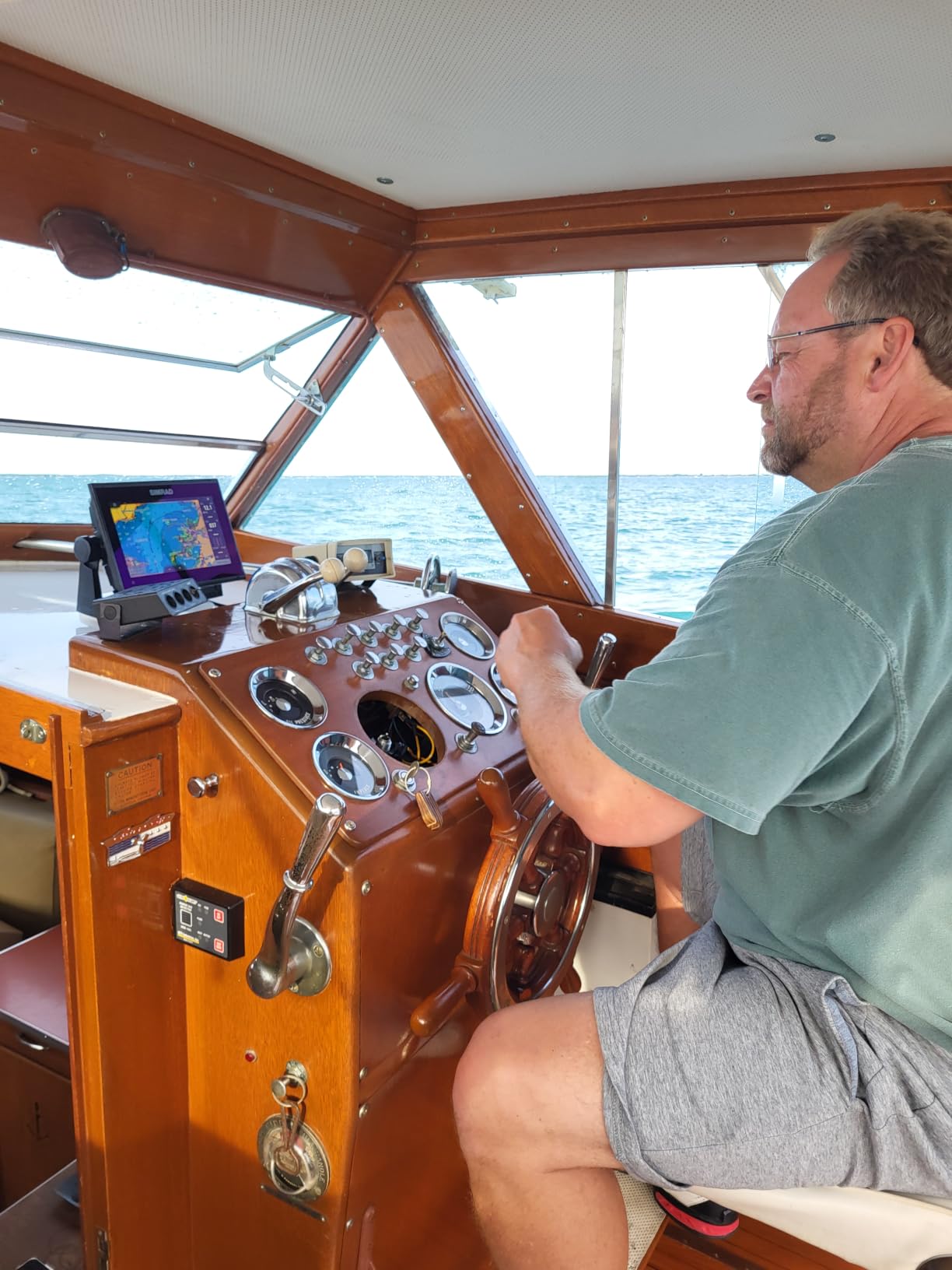
The network story is the reason many owners buy Simrad. Built-in Wi-Fi, Bluetooth, Ethernet and NMEA 2000 let the display share data with radar and other instruments over a single backbone, and screen mirroring to a phone or tablet for charts and radar is a genuinely useful addition. The HDI transducer supports CHIRP sonar and DownScan Imaging, and the unit is built with radar expansion options from the start.
Simrad’s technical support gets singled out by several owners as patient and effective, which matters more than it sounds when you are setting up a multifunction display for the first time. Mounting options cover dashboard, panel and bracket mounts, and the package includes the suncover, gimbal bracket with knobs, power cable and the chart card.
There are real practical complaints. The bundled transducer cable is often too short to reach the display, which is exactly the forum frustration about installation on small boats. The suncover is difficult to remove and refit. Side scan availability depends on which transducer ships in the kit, so check that before you assume it is included.
Why it works on a small boat
Nine inches is the practical ceiling for a small boat console, and the GO series is explicitly aimed at sportboats, center-consoles and smaller cruisers. If your boat already has a NMEA 2000 backbone or a VHF that talks to it, this display drops into that network rather than fighting it.
For a boater crossing bars, anchoring overnight, or running unfamiliar coastline, having tides, currents and real bathymetric contours on a bright screen is the difference between guessing and knowing. The included C-MAP card means that capability is in the box on day one rather than a later purchase.
Where it falls short
Nine inches needs a real console face, and a boat with a small helm panel will not take it without a bracket that obstructs something. The three-pound unit and 10.35-inch length are fine on a console, marginal on a jon boat or a kayak, and entirely wrong for a tender.
You are also buying into an ecosystem. Boaters who add a radar or autopilot later should confirm the Simrad networking path, and the small number of owners reporting lost waypoints or GPS failures shortly after purchase is worth a return window check. Measure your console and verify the transducer before you commit.
7. Lowrance Elite FS 10 – Best Full Sonar Suite
Lowrance Elite FS 7 Fish Finder (No Transducer) with Preloaded C-MAP Contour+ Charts
10-inch multi-touch
Active Imaging 3-in-1 CHIRP/SideScan/DownScan
C-MAP preloaded
NMEA 2000
Pros
- 3-in-1 transducer gives CHIRP side scan and down scan
- Large responsive multi-touchscreen
- C-MAP DISCOVER preloaded so it is a chartplotter out of the box
- Live Sonar ready for ActiveTarget 2 later
- Fully connected from bow to stern
Cons
- Large screen demands helm space and hardware
- Interface depth means a real learning curve
- Bundled package leaves less budget for accessories
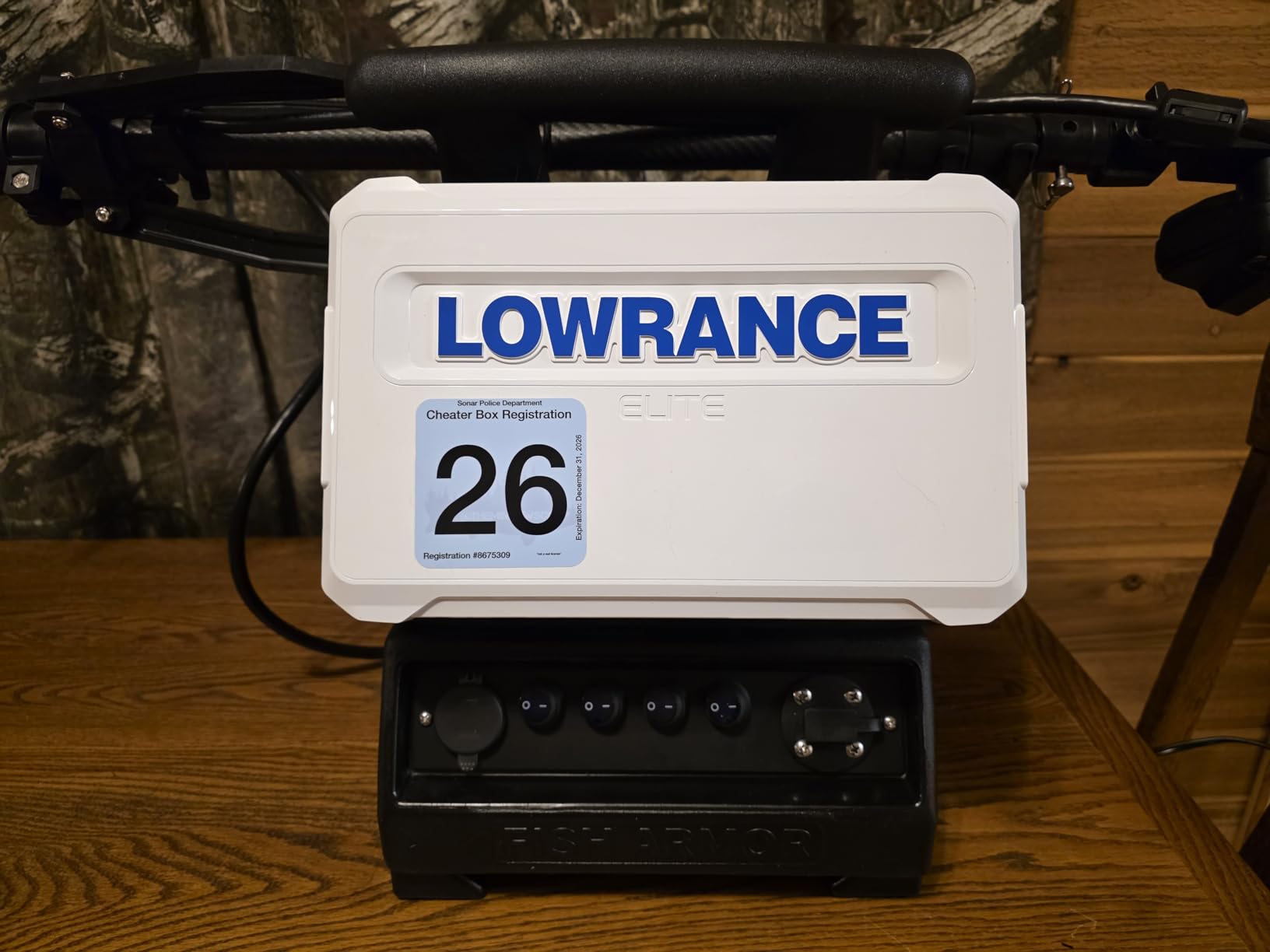
The Elite FS is the most complete sonar package in the roundup, and Lowrance owners are famously loyal for a reason. A single Active Imaging 3-in-1 transducer gives you CHIRP traditional, SideScan and DownScan Imaging, which is the full trio without buying a second transducer or a second display.
The 10-inch multi-touchscreen handles sonar, charts and connected controls, and it comes with C-MAP DISCOVER charts preloaded for inland, coastal and Canadian waters. Reviewers consistently describe this as a genuine chartplotter rather than a basic fish finder, which is why it earns its place here despite being the largest unit in the group.
Connectivity is where Lowrance has led for years. Wireless, NMEA 2000 and Ethernet run bow to stern, and the unit is Live Sonar ready for ActiveTarget 2 or ActiveTarget 2 XL later, which gives real-time lure and fish tracking without a second screen. FishReveal image enhancement is bundled, and maximum depth is 1000 feet.
For a 22-to-26-foot pontoon or a larger center console where the helm has room, this is the unit that will not need replacing next year. It is also the value answer to the premium brands on this list, with the same chart subscription model and a two-year warranty. The package includes the 3-in-1 transducer, suncover, fuse and fuse holder, corner clip kit, mounting bracket with knobs, and power cable.
The criticism is straightforward and it is about fit, not function. Reviewers say the larger screen demands a suitable helm space and proper mounting hardware, and that the interface depth means a real learning curve. On a boat with a small console, this unit is simply too big, and the bundle being transducer-inclusive leaves fewer dollars for accessories or mounting work.
Why it works on a small boat
It works on the larger end of small, which in practice means pontoons, deck boats, and center consoles from roughly 22 feet up where the console has a genuine electronics bay. The three-in-one transducer is the practical argument: one cable, one installation point, three sonar views instead of bolting a second unit to the console.
Boaters who fish a lot and plan to add gear later get the most from it. The Live Sonar path means a future ActiveTarget transducer slots into an existing network instead of a rebuild, and NMEA 2000 plus Ethernet cover trolling motor, VHF and autopilot integration.
Where it falls short
Size is the first problem and the only real one. Ten inches needs helm space, and for anything shorter than a 20-foot center console you will be compromising your sightline or your lap room. Reviewers also flag the interface as deep enough to need real study time before you are productive with it.
For a jon boat, a kayak, or a bowrider with a small panel, the 4-inch and 5-inch units in this roundup make far more sense. And if you do not fish, most of what you are paying for goes unused, which is worth weighing before committing to a 10-inch display on a boat that never leaves the lake.
8. Humminbird XPLORE Series – Best MEGA Side Imaging Coverage
Humminbird XPLORE 10 GPS Fish Finder with Transducer, MEGA Side Imaging+ & HD Touchscreen
10-inch touchscreen and keypad
MEGA Side/Down Imaging+
Dual Spectrum CHIRP
Control head only
Pros
- MEGA Side Imaging plus reaches 200 feet each side
- Sharp and bright display readable in full sun
- Touchscreen menus far faster than older keypad units
- Customizable screens and on-screen keyboard
- Built-in NMEA 2000 and Ethernet
- Support rated fast and helpful
Cons
- Control head only
- transducer bought separately
- Coastal chart data has no-data gaps
- Premium chart upgrades are costly
- Steep learning curve for beginners
The XPLORE is the most capable sonar display in the group and the one that most clearly outgrows a small boat. MEGA Side Imaging plus reaches 200 feet to each side and MEGA Down Imaging plus covers 200 feet of depth, with Dual Spectrum CHIRP underneath it. That is structure coverage from a pontoon or a larger bay boat that nothing cheaper in this roundup approaches.
Long-time Humminbird owners describe the XPLORE as a dramatic step up from earlier Helix units, specifically in screen sharpness and touch-driven menu speed. Fully customizable screens with favorites, plus an on-screen keyboard for data entry, cut the fussy keypad workflow that defined the brand for years. The display stays sharp and bright in full sun.
Navigation is well covered. The enhanced Humminbird Basemap covers more than 10,000 lakes and coastal waters with terrain, markers, hazards and marina locations, a LakeMaster and CoastMaster VX card is included for U.S. and Canada regions, and AutoChart Live gives eight hours of built-in recording. Bluetooth handles wireless anchor control and phone notifications, and One-Boat Network integrates with Minn Kota trolling motors and Cannon products over Ethernet and NMEA 2000.
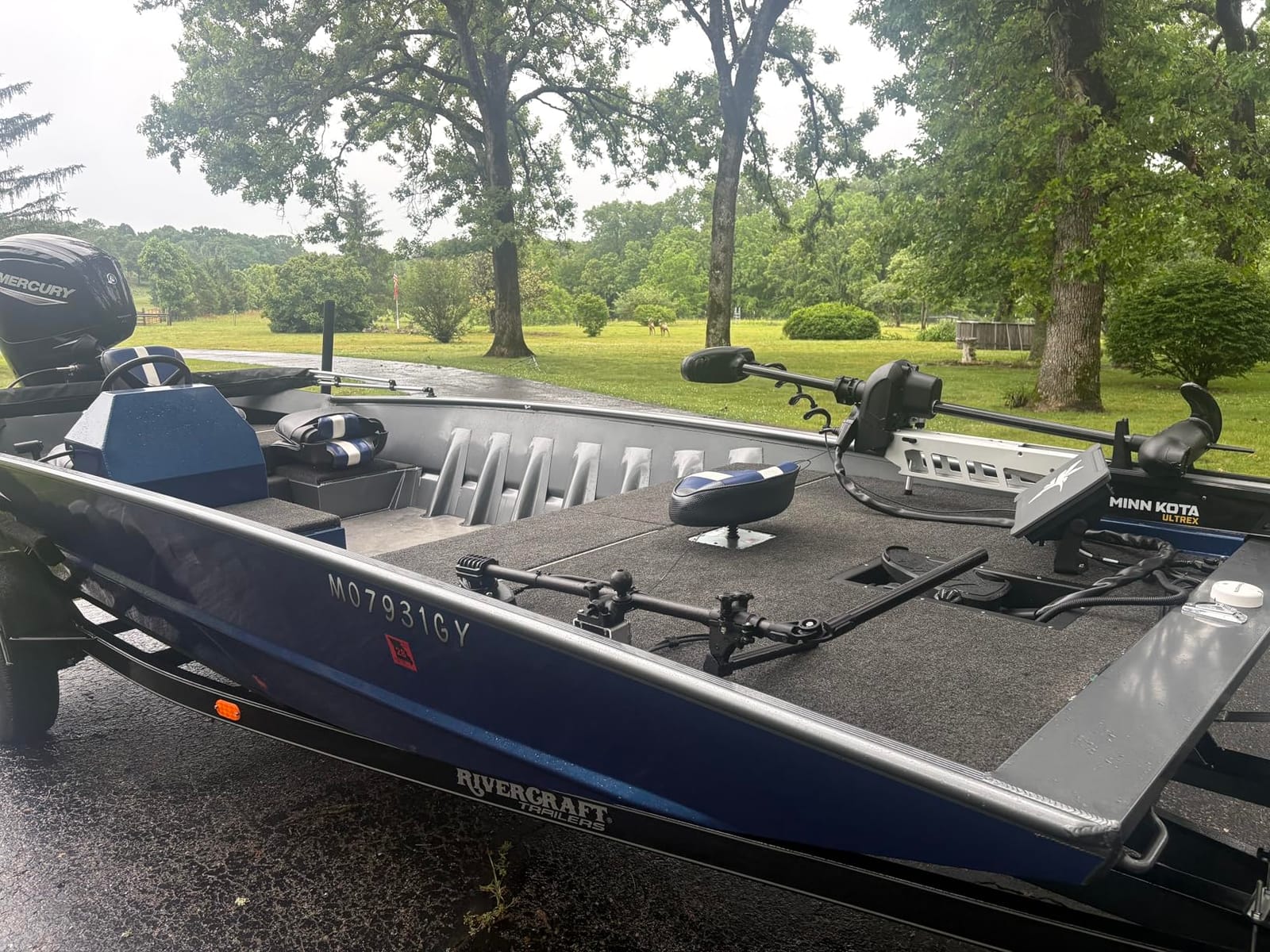
Two things catch people out. This configuration is the control head only, without a transducer, so a transducer has to be purchased separately before the sonar side of the machine does anything at all. And reviewers report that the bundled coastal map data has large no-data gaps in some nearshore areas, which is why some owners end up buying premium chart upgrades that are costly.
The other recurring notes are the steep learning curve for beginners and the fact that NMEA 2000 only networking excludes older heading sensors if you are working with a boat that has legacy instruments. Support, by contrast, is consistently rated fast, helpful and friendly, which helps offset a fair amount of the complexity.
Why it works on a small boat
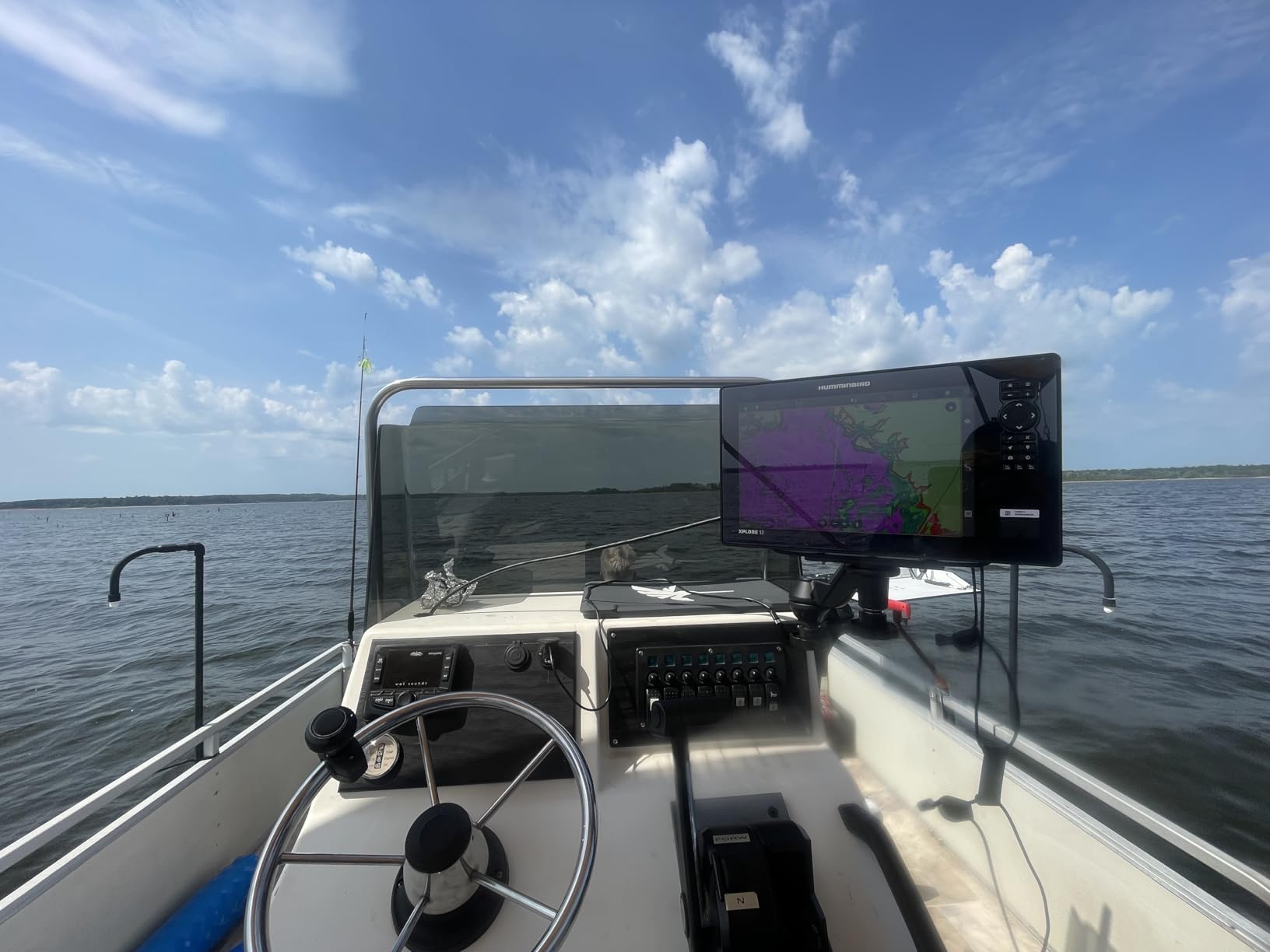
It works on the biggest boats in the small-boat category. A 22-to-26-foot pontoon with a full-width console has the helm space for a 10-inch touchscreen, and if you fish structure, a 200-foot side-imaging range changes what you can find between the boat and a bank you cannot reach.
The NMEA 2000 and Ethernet networking also make it the natural choice if you already own a Minn Kota trolling motor or plan to add one, because One-Boat Network ties anchor control to the display. The touchscreen and keypad combination means it works either way, which the older Humminbirds could not.
Where it falls short
It is a 10-inch control head that needs a transducer bought separately, and the coastal charting gaps mean some buyers spend significantly more than they planned on premium chart cards. That running cost is the most common surprise in owner reviews of this configuration.
For most 16-to-20-foot boats it is simply too large and too complex. If your boat is a bay boat, a bowrider, or a jon, the 5-inch and 7-inch units here will serve you better for a fraction of the complexity. Save this one for a helm that can host a serious electronics setup.
What Counts as a Small Boat for Electronics Purposes?
Small boat is a loose term, and it is the reason so much advice on this topic goes sideways. For our purposes it means a boat roughly 14 to 26 feet with limited console real estate, limited electrical capacity, and no existing electronics network. Everything outside that range changes the answer, particularly at the small end.
At 14 feet and under, you are usually looking at a jon boat, a flat-bottom skiff, a kayak, or a dinghy tender. These are battery-only boats with no console and often no wiring harness, and the right unit is a battery-powered fish finder with a built-in GPS. The Garmin Striker 4 and the Striker Vivid 4cv both fit this brief, and a handheld marine GPS makes sense as a backup rather than a primary.
Between 16 and 20 feet, the bowrider, bay boat and small center console category begins. Here a 5-inch to 7-inch unit is realistic, a transom-mount transducer is normal, and a 12-volt accessory circuit or an existing breaker can usually handle the load. The Helix 5 models and the Striker Vivid 7cv sit in this band, and a 9-inch display starts to be a stretch rather than a stretch plus a compromise.
From 20 to 26 feet, pontoons, deck boats and larger center consoles appear. This is where 9-inch and 10-inch multifunction displays become practical, where NMEA 2000 starts to matter because you may add radar or an autopilot later, and where preloaded chart packages earn their cost. The Simrad GO, the Lowrance Elite FS, and the Humminbird XPLORE are built for this end of the range.
One more framing matters. What counts as a small boat is not just length, it is helm space, and screen size is limited by the flat panel you actually have. A 7-inch unit that needs a 9-inch hole will not go on a small console, and a bracket mount that blocks your knees gets removed within a season. Measure the panel before you fall for a screen size.
How to Choose a Marine GPS Unit for a Small Boat
Start with the type of unit, because it rules out most of the options faster than any spec. A chartplotter-only unit is pure navigation. A combo adds sonar through a transducer. A handheld is battery-powered and portable. Everything else on this list, screen brightness and NMEA 2000 aside, is downstream of that first decision.
Chartplotter-only, combo, or handheld?
If you already own a working depth sounder, buy navigation only and you avoid duplicating sonar you do not need. If you do not have a sounder, a combo is almost always the better value, because a transducer bundled with a display is cheaper than a display plus a separate fish finder, and you get depth and obstruction viewing on the same screen. A handheld earns its place as backup, for a tender, or for a kayak.
On a small boat the combo answer is usually right. The exception is a boat that lives on a familiar lake where you already know the bottom, or a shallow river where a shallow-water alarm and a marked channel are all you actually need.
Screen size and console real estate
Match the screen to the helm, not to the spec sheet. Under 5 inches suits trolling motor and small panel mounts. Five to seven inches covers 16-to-22-foot boats. Nine and ten inch displays need a real console and start to affect visibility and lap room. Bigger is not better if you cannot read it from a seated position or if it blocks your view forward.
Screen technology matters more than size in bright sun. Owners report that cheap screens become unreadable in daylight, and a higher-brightness or transflective panel is worth paying for on a boat that fishes at midday. At night, a dimmable backlight and a night mode are what keep the unit from ruining your dark adaptation.
Touchscreen or buttons?
Non-touchscreen models get specific praise for responsiveness, and that matters on an open boat where cold hands, wet hands, and salt spray make a touchscreen awkward or worse. Buttons never fail from a wet finger or a spray-bloomed screen. Touchscreens win on menu speed and on fitting more controls into a small panel.
A reasonable compromise is a unit with both, which is what the XPLORE offers. If you fish in gloves in winter, lean toward buttons. If you are running shallow water in summer, a touchscreen is fine and much faster to navigate.
Do you need a transducer?
Only combo and fish finder units need one, and almost all the units in this roundup ship with a transducer except the Humminbird XPLORE control head. A GPS-only unit needs no transducer at all, which is one reason chartplotter-only setups are cheaper to install. If you buy a bare control head, budget for a transducer that matches the sonar modes you actually want to run.
Charts and what they cost over five years
This is the running cost nobody mentions until after the purchase. Garmin Striker units have no preloaded charts beyond a waypoint map, so chartplotter capability means adding cards or a subscription. Humminbird units include a basemap covering more than 10,000 lakes plus a VX card in the XPLORE package. Lowrance and Simrad ship with preloaded C-MAP DISCOVER charts. Add up the transducer, the mount, and any chart subscription over five years before you decide which unit is the value pick.
Do you need NMEA 2000?
You need it if and only if you plan to add a radar, an autopilot, an AIS receiver, a trolling motor interface, or a VHF that shares data over a single backbone. You do not need it for a single standalone display. Boaters who inherit an installed Simrad or Garmin unit with NMEA 2000 connectivity often keep it, which is a real cost saving, and Raymarine, Simrad, Garmin, Lowrance and Humminbird all speak NMEA 2000 to some degree, so the standard is not a brand moat.
The bigger decision is ecosystem lock-in. Boaters report regretting a Garmin unit when they later added non-Garmin radar or AIS, and the reverse is true. Decide the brand before you add anything else.
Can a phone or tablet replace a marine GPS?
Sometimes, for navigation on a familiar lake, and many owners build tablet or project-based chartplotters as the cheapest path. What a phone cannot do is survive a dropped-in-the-water failure, run a transducer, or keep a breadcrumb trail you can trust when the screen is unreadable in glare. A waterproof case and a charged phone is a reasonable budget route for a first boat, but a dedicated unit is what you want when you are crossing unfamiliar water.
Installing a Marine GPS on a Small Boat
Installation is where most small-boat electronics projects go wrong, and most of the complaints we saw were wiring complaints rather than product complaints. The sequence below covers a typical install on a boat with no existing network.
Budget the power first. Most of the units in this roundup draw well under two amps, so a dedicated switch and a fused 12-volt accessory circuit handles them comfortably. Battery-powered units skip this entirely, which is a genuine argument for a trolling motor mount on a jon boat. A marine electrician is not required for a single display, but a breaker, not a twist tie to a battery terminal, is the part worth doing right.
Mount for the seated position, not for the photo. Bracket-mounted bail mounts let you angle the screen toward the helm and take it off in winter, which matters more on a small boat than flush-mount realism. Leave finger clearance for the keypad, and check that the screen does not block your forward view or your throttle hand.
Transducer placement decides whether your sonar works. A transom mount belongs on the transom in clean water, clear of the propeller and any turbulence, and angled so the beam hits the bottom ahead of the boat rather than straight down. Bumpers and interference from a trolling motor propeller at the same depth will show up as noise on the screen, so move the unit rather than fighting the picture with settings.
Route the cable through a grommet and secure it so it cannot chafe on a sharp edge, and keep transducer cables away from power and VHF coax. The Simrad GO’s bundled transducer cable running short is a common complaint, and the fix is a longer cable or an extension rather than a strained connector.
Before you buy a used unit, check that it powers on, holds a satellite fix outdoors, reads the transom or through-hull transducer it claims to support, and has a usable backlight at night. Ask for the model number and confirm that the wiring and transducer on your boat match what the new owner expects. Owners regularly inherit electronics with a used boat, and keeping a working NMEA 2000 unit is usually the cheapest path to a working helm.
Frequently Asked Questions
What is the best chartplotter for a small boat?
For most boats from 16 to 22 feet, the best chartplotter is a 7-inch class multifunction display with a bundled transducer and preloaded charts, such as the Simrad GO 9-inch. It gives you C-MAP DISCOVER charting, CHIRP and DownScan sonar, a bright touchscreen, and NMEA 2000 networking if you add radar or an autopilot later. On a smaller boat, a 5-inch Humminbird Helix with a built-in basemap is the more realistic fit.
What is the best marine GPS for a small boat?
The Garmin Striker 4 is the best all-round marine GPS for a small boat because its 3.5-inch daylight-readable screen, dedicated buttons, bundled transducer and built-in GPS with waypoint mapping cover depth, temperature, speed and navigation in a unit that draws 0.23 amps and mounts on a trolling motor or a small console. If you want color sonar, choose the Striker Vivid 4cv instead.
What is the best marine chartplotter for the money?
The Humminbird Helix 5 Chirp GPS G3 offers the best chartplotter value for a small boat, with a built-in basemap covering more than 10,000 lakes plus continental U.S. coastlines, AutoChart Live contour mapping, Dual Spectrum CHIRP sonar, and a transom-mount transducer and gimbal bracket in the box. Add the DI version instead if you want CHIRP Down Imaging for structure fishing.
Can I use my phone as a marine GPS?
You can, and many boaters do, but it is not a full replacement. A phone gives you charts, routing and weather with no install, which is enough on a familiar lake. It cannot run a transducer for depth, it dies at 0 percent, and a wet or sun-glared screen is useless exactly when you need it. Keep a phone as a backup and a waterproof case in the console, but do not rely on it alone in unfamiliar water.
What size GPS do I need for my boat?
Match the screen to your helm space. Under 5 inches fits trolling motor and small panel mounts on jon boats and kayaks. Five to seven inches suits 16-to-22-foot bowriders, bay boats and center consoles. Nine and ten inch multifunction displays need a real console and are best reserved for pontoons and boats from about 22 feet up. Measure the flat panel before you buy, because console real estate is the real limit.
Do I need a transducer with a chartplotter?
Only if you want sonar. A chartplotter-only unit needs no transducer, but every combo unit and fish finder in this roundup does, and most bundle one. The exception is the Humminbird XPLORE configuration reviewed here, which is a control head only, so you must buy a transducer separately. Pick a transducer that supports the modes you will actually run, such as CHIRP and ClearVu, rather than the largest one available.
Conclusion: The Best Marine GPS Picks for Small Boats in 2026
The best marine GPS units for small boats come down to hull size and how you fish. On a jon boat, a kayak, or a small flat-bottom skiff, the Garmin Striker 4 is the pick: it runs off a battery, mounts anywhere, and costs almost nothing in install effort. Add the Striker Vivid 4cv if you want color and better structure separation on the same footprint.
On a 16-to-20-foot bowrider or bay boat, the Humminbird Helix 5 Chirp DI GPS G3 gives you the sharpest look beneath the hull, and the non-DI Helix 5 is the value version if you cruise more than you fish. Move up to 7 inches with the Striker Vivid 7cv when your helm has the panel space and you want a wireless link to your phone.
On a 20-foot-plus pontoon or center console, the Simrad GO 9-inch is the best chartplotter and the Lowrance Elite FS 10 is the best full sonar suite, while the Humminbird XPLORE takes side imaging to its widest range if your helm can host it. Measure your console, confirm whether you need a transducer, and total up the chart costs before you buy. These units keep working long after the season you bought them in, so the right one is worth a week of thought.