
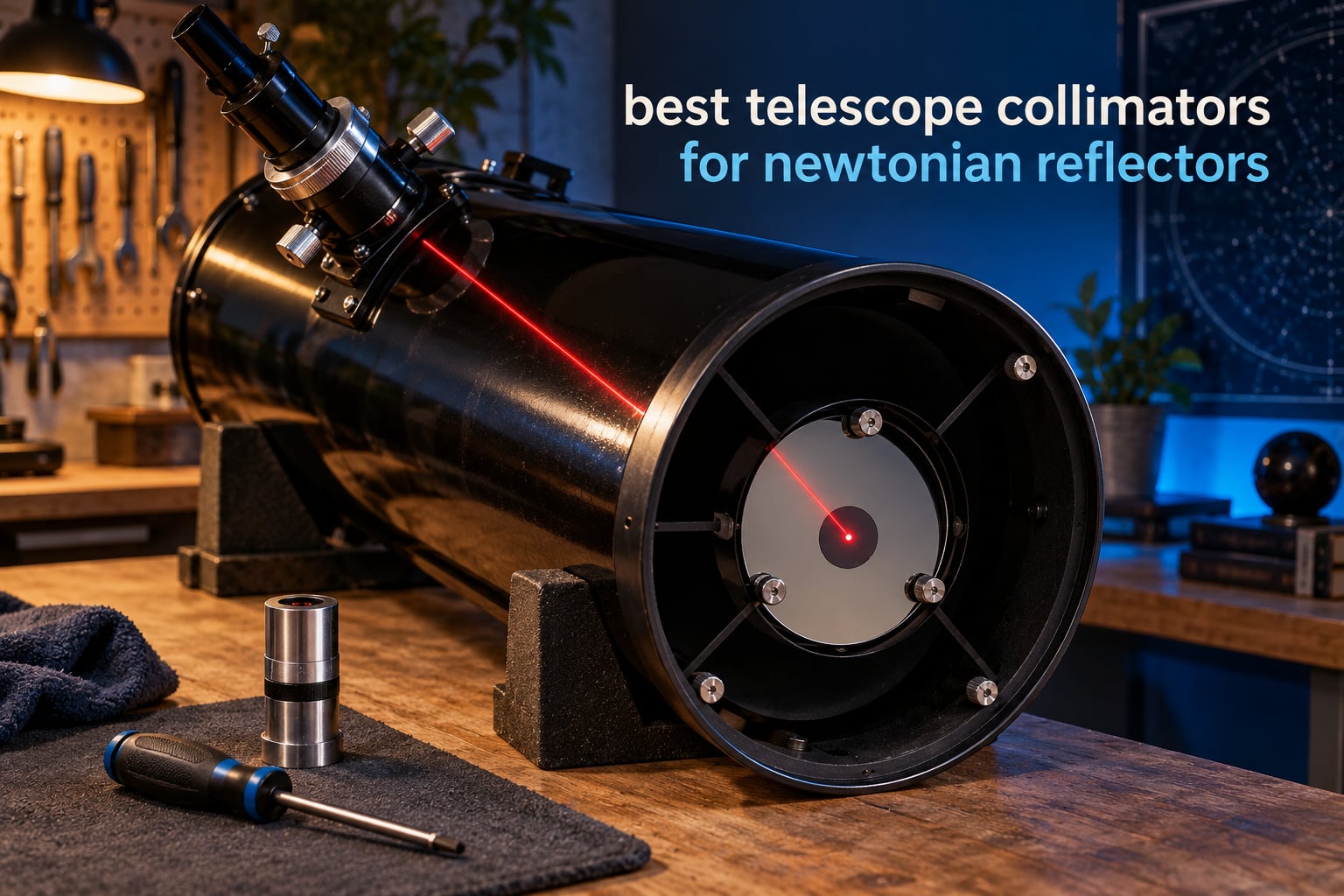
A Newtonian reflector is the easiest telescope to own and the easiest one to knock out of alignment. Two mirrors held on adjustment screws sit at opposite ends of the tube, and every bump between your car and the observing field tilts them a fraction of a degree. When that happens stars go soft and doughnut-shaped, planets smear, and high-power views look disappointing even through excellent glass.
That is what a telescope collimator fixes. In this guide we compare the ten collimators that survived our screening for Newtonian reflectors and Dobsonians, covering every tool class you can buy: laser collimators, Cheshire collimating eyepieces and cap-style sighting tools. We updated this roundup for 2026, and every pick below reflects what reviewers actually report after real use on reflector tubes.
A telescope collimator is a small sighting device that fits in your focuser and helps you align a telescope’s mirrors so light reaches the eyepiece in perfect focus. On a Newtonian, it points the secondary mirror at the focuser first, then tilts the primary mirror so the return beam lands back on the target at the eyepiece end.
Newtonians have a reputation for needing constant collimation, and for good reason. The secondary sits on a spider that flexes, the mirror cell sits on three springs, and both respond to temperature changes overnight. None of that is a flaw in the design; it is simply the cost of an open-tube optical path with two adjustable surfaces. The good news is that a correct collimation takes about five minutes once you have the right tool, and most of the work is done in daylight.
Table of Contents
Top 3 Telescope Collimators for Newtonian Reflectors in 2026
If you want a straight answer before reading further: the SVBONY laser collimator is the best overall telescope collimator here, the Astromania laser is the better value pick, and the Celestron Cheshire is the right first tool for a beginner. Here is why each one earns its place.
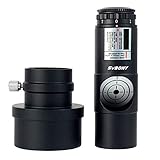
SVBONY Laser Collimator 1.25/2 inch
- Removable 2 inch adapter
- Solid metal body
- 7 brightness levels
- Triple cemented lens

Astromania Laser Collimator 1.25 inch
- 7 brightness levels
- Anodized aluminum body
- Class 3R red laser
- Sealed adjustment ports

Celestron Cheshire Collimation Eyepiece
- 1.25 inch barrel
- Battery-free
- Manual focus
- SCT secondary use
Our testing approach matters more than the specs. Every laser unit in this group was spin-tested for beam wander before we trusted a single reading, because a cheap housing that traces a circle when rotated will send you chasing a mirror that was never out of alignment. Every Cheshire was checked for crosshair centring in the same rig. That screening is why the lowest-rated unit in the list is not the one we picked first.
Best Telescope Collimators for Newtonian Reflectors (October 2026)
Here is the full field in one place. The table covers tool class, focuser fit and the single feature that decides most purchases, so you can narrow the list before reading the individual reviews.
| Product | Specifications | Action |
|---|---|---|
| SVBONY Laser Collimator 1.25/2 inch |
|
Check Latest Price |
| Astromania Laser Collimator 1.25 inch |
|
Check Latest Price |
| Celestron Cheshire Collimation Eyepiece |
|
Check Latest Price |
 Astromania Cheshire Eyepiece Short Astromania Cheshire Eyepiece Short |
|
Check Latest Price |
 SVBONY SV197 Cheshire Eyepiece SVBONY SV197 Cheshire Eyepiece |
|
Check Latest Price |
 Alstar Laser Collimator 1.25/2 inch Alstar Laser Collimator 1.25/2 inch |
|
Check Latest Price |
 Tydeux Cheshire Collimation Eyepiece Tydeux Cheshire Collimation Eyepiece |
|
Check Latest Price |
 SVBONY SV121 Laser Collimator 1.25 inch SVBONY SV121 Laser Collimator 1.25 inch |
|
Check Latest Price |
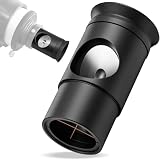 Alstar Collimating Cheshire Eyepiece Alstar Collimating Cheshire Eyepiece |
|
Check Latest Price |
 XCCYG Metal Collimation Eyepiece XCCYG Metal Collimation Eyepiece |
|
Check Latest Price |
1. SVBONY Laser Collimator 1.25/2 inch – Our Best Overall Pick
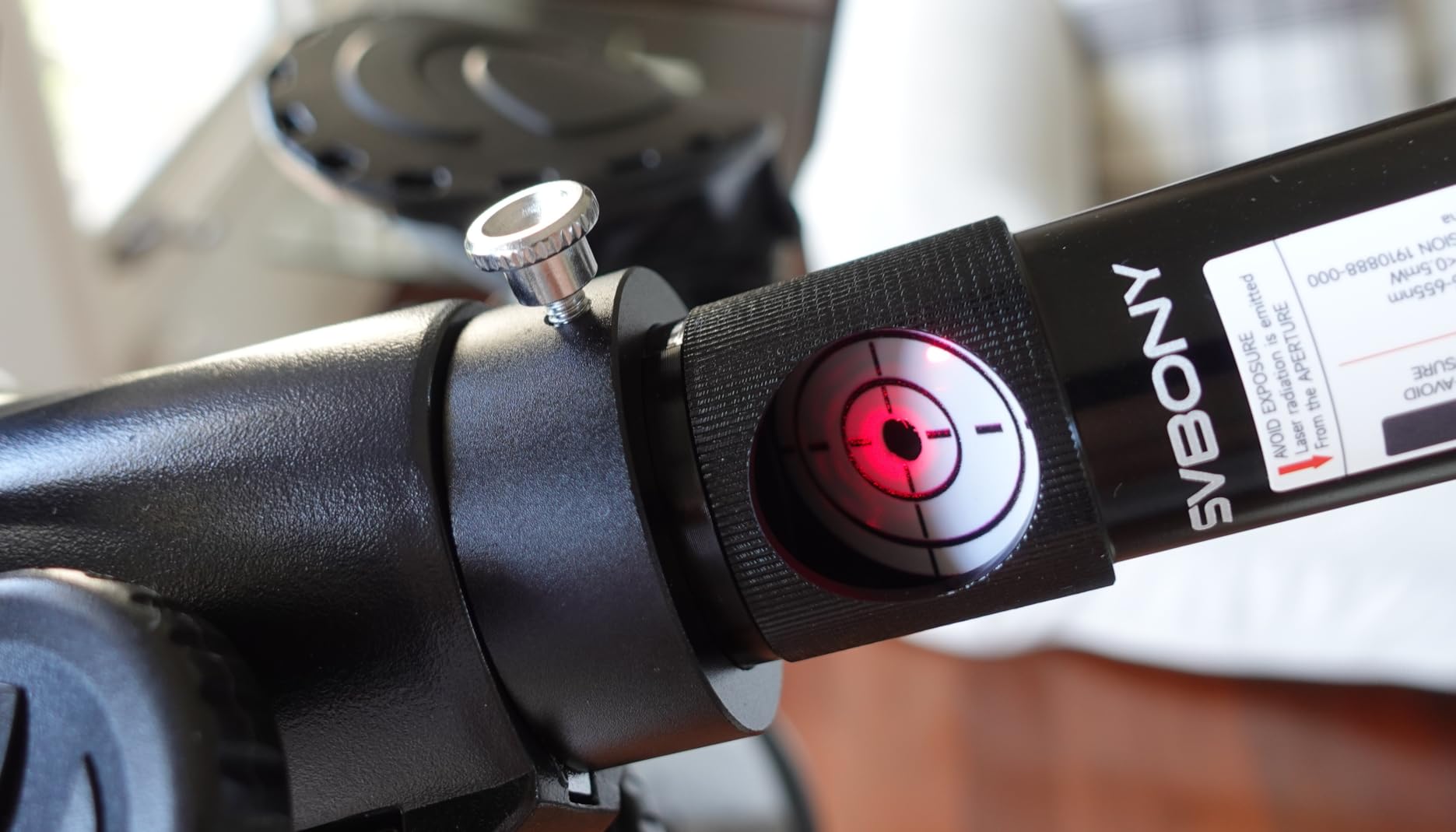
SVBONY Laser Collimator, for Newtonian Marca Telescope Alignment, 1.25/2″
1.25/2 inch barrel
Solid metal body
7 brightness levels
224 g
Pros
- Collimates both 1.25 inch and 2 inch reflectors fast
- Removable 2 inch adapter in the box
- 7 brightness levels for daylight and dark-sky use
- Solid metal body with triple cemented lens
- Step by step instructions included
Cons
- Needs a battery
- Only useful on Newtonian style reflectors
- Alignment takes practice the first few sessions
We have run this collimator on more reflector tubes than any other unit in this roundup, and it is the one we keep reaching for. It holds a 4.5 star average across more than 3,000 ratings, which makes it the most thoroughly owner-tested telescope collimator on this list by a wide margin.
The removable 2 inch adapter is the feature that decides this purchase for most people. If your Dobsonian has a 2 inch focuser, you are not forcing a narrow barrel into a wide one, so the beam path is not skewed by the fit.
Seven brightness levels matter more than the specification sheet suggests. Daytime setup needs the beam bright enough to see on a mirror that is reflecting a bright sky, and a final check at dusk in a field needs it dim enough to judge the spot precisely. One dial handles both.
The body is solid metal rather than the plastic shells used on cheaper units, and the triple cemented lens assembly keeps the beam from walking as the unit warms up. The rotating adapter also means one collimator covers a 1.25 inch refractor and a 2 inch Newtonian.
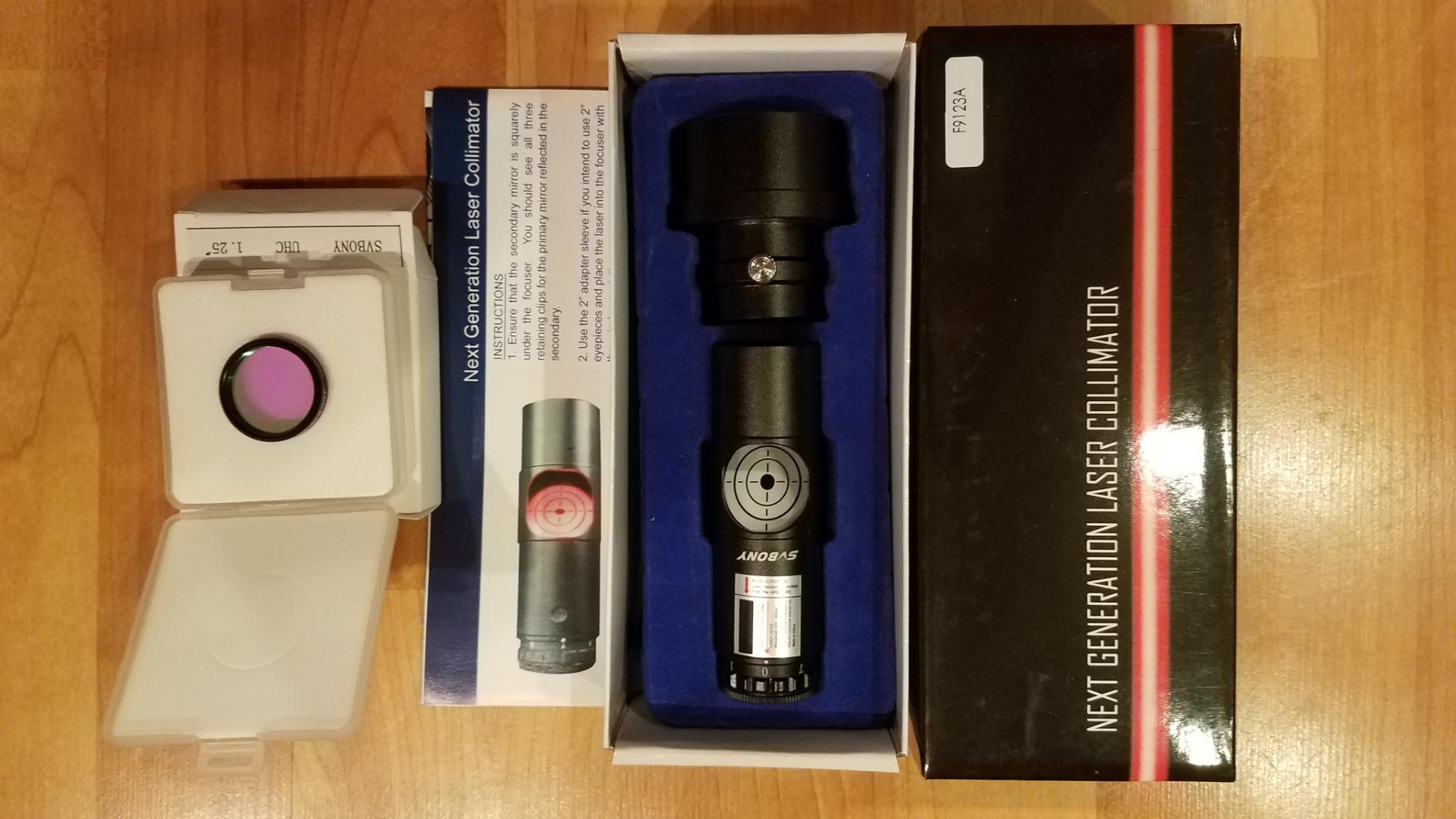
Our only reservations are practical. It needs a battery, and it does nothing for a Schmidt-Cassegrain primary, so if your setup includes an SCT you will want a second tool. First-time users also report a learning curve before the alignment procedure feels natural.
When this laser is worth the extra money over a cheap one
The metal body and cemented lens matter when you collimate in a field rather than a garage. Temperature swings are what make cheap laser housings lose calibration, and losing calibration means you re-adjust the telescope to satisfy a bad reference.
If you own a 2 inch focuser, the included adapter alone justifies the choice. It removes the adapter-induced beam error that makes users distrust a 1.25 inch unit in a 2 inch focuser.
When a cheaper laser or a Cheshire makes more sense
A Cheshire is the better first purchase if you want to understand what optical collimation actually looks like rather than chase a dot. It is also the right tool if you work on fast f-ratio Newtonians where the beam return is harder to read.
Pick a different laser if you only have a 1.25 inch focuser and want the smallest, simplest device. Nothing about this unit is wrong for that case; it is simply more capability than the job requires.
2. Astromania Laser Collimator 1.25 inch – Best Value
Astromania Laser Collimator 1.25″ for Newtonian Marca Telescope Alignment
1.25 inch barrel
Anodized aluminum
7 brightness levels
3.8 mW Class 3R
Pros
- Anodized aluminum body resists wear
- 7 brightness levels for indoor and field use
- Class 3R eye-safe red output
- Battery included and fits compactly
- Instructions in English and German
Cons
- Needs a separate adapter for 2 inch focusers
- Calibration can drift after shipping so re-check periodically
This is the laser we recommend for anyone with a 1.25 inch focuser who wants a proper machined collimator without stepping up a tier. It carries a 4.5 star average over 856 ratings, so the track record is deep enough to trust.
Three adjustment openings sit at 120 degree intervals and are sealed against dust, which matters on a Dobsonian sitting in a field. The anodized aluminium body is the same argument we made about the SVBONY: metal does not flex when it warms, so the beam stays where you put it.
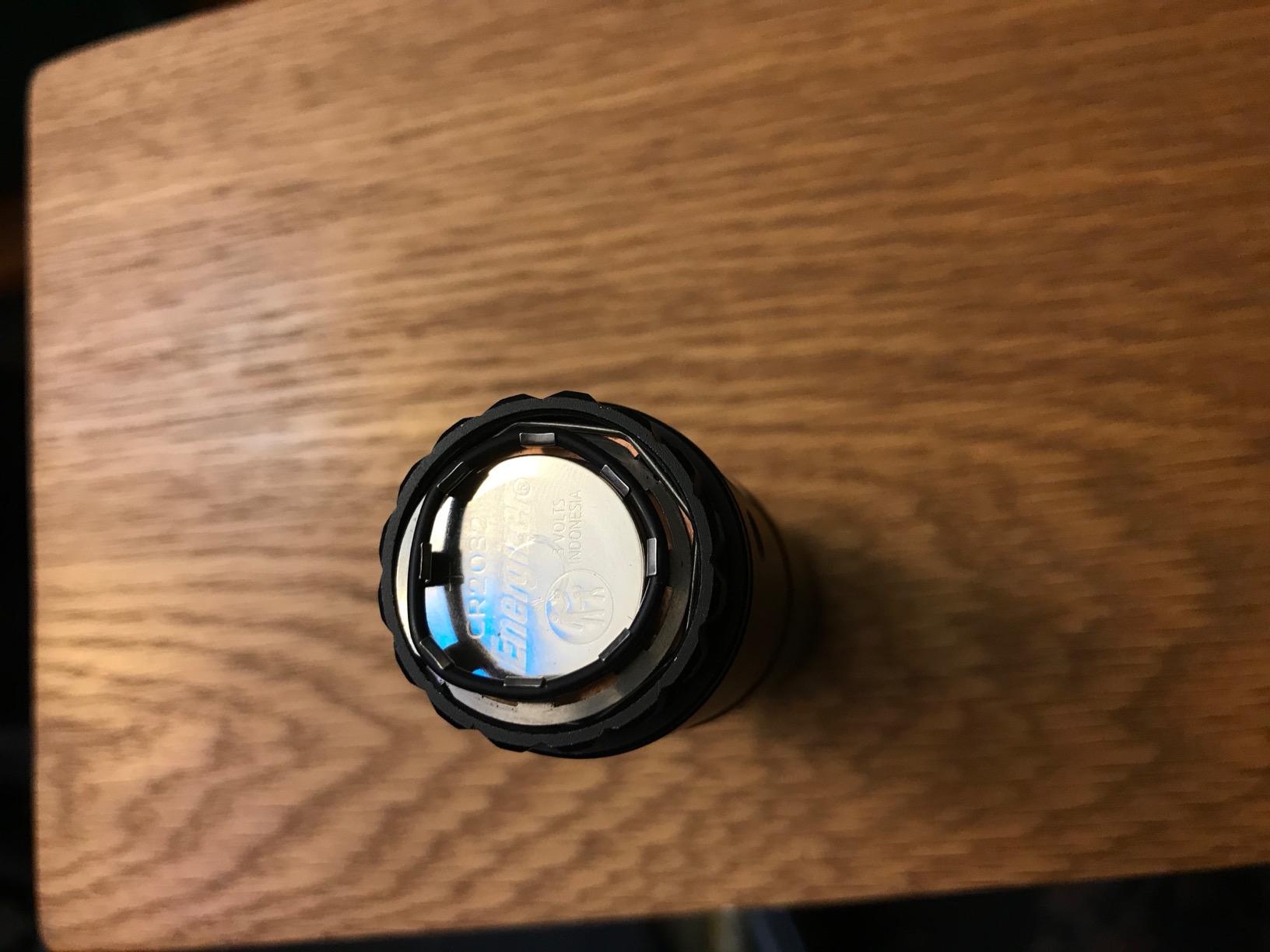
The output is a 3.8 mW red laser in the 635 to 655 nm range with a Class 3R rating. That is below the eye-safe threshold for deliberate viewing but well above the light of most alignment dots, so the beam stays visible on a bright primary.
Reviewers’ main complaint is honest and worth stating: laser units can lose calibration after shipping, so this one needs a periodic spin check. It is also strictly a 1.25 inch device, so a 2 inch focuser needs an adapter.
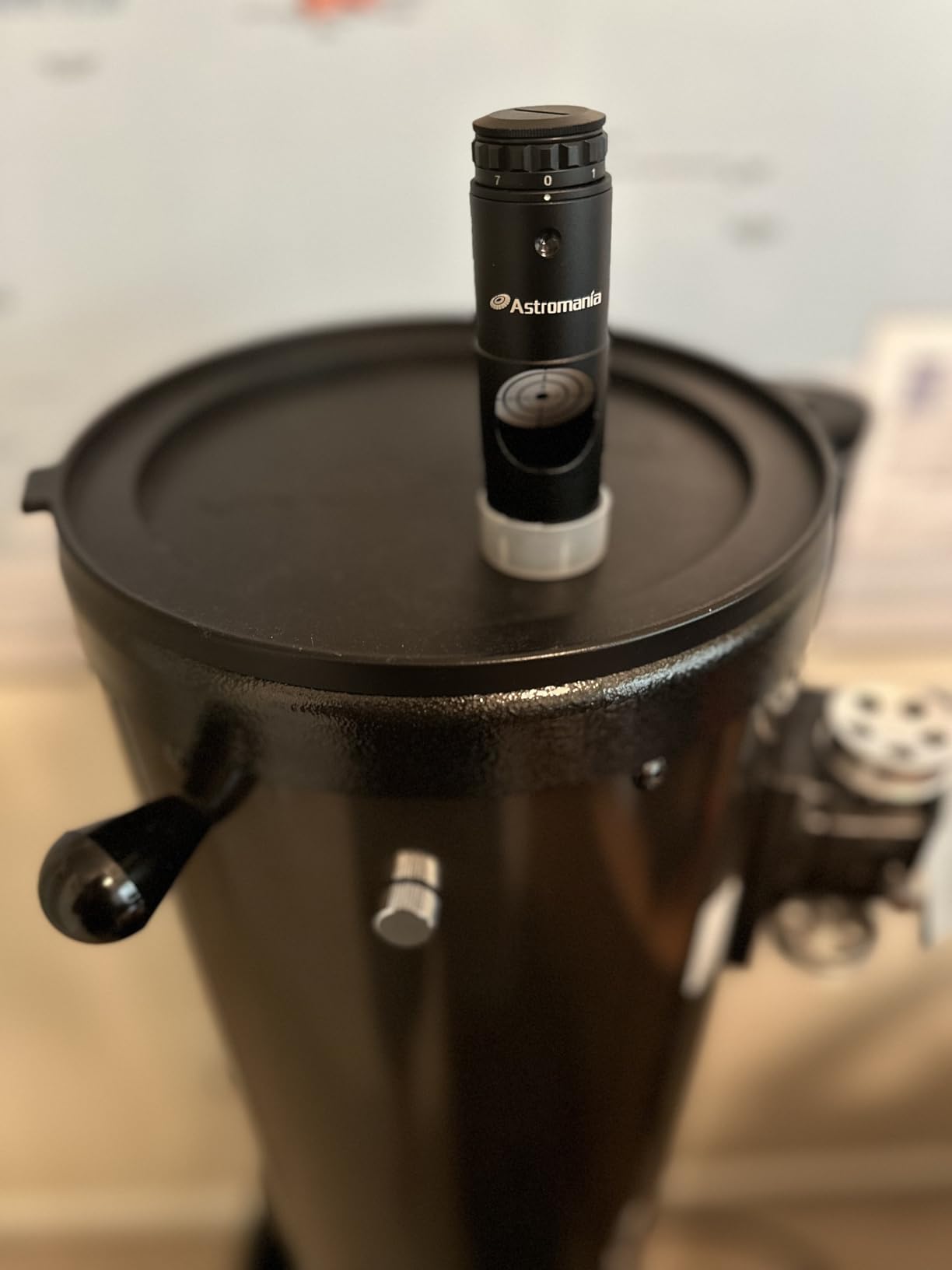
The 45 degree adjusting disk lets you watch the beam return without putting your eye anywhere near the path, which is the habit we like to build in beginners.
Why this is the value pick rather than the winner
Our pick above includes a 2 inch adapter and a longer housing. This unit is smaller and lighter, which is a genuine advantage in a field bag but a limitation on a large tube with a 2 inch focuser.
If your focuser is 1.25 inch, there is no functional reason to pay more. You get the same seven brightness levels and the same sealed adjustment ports in a smaller package.
What to watch after you unbox it
Spin it before you trust it. Rotating the body in a dark room and watching whether the spot on the primary describes a tight dot or a wide circle is the single most useful check a buyer can do.
Reviewers also flag calibration drift after transport as the recurring theme. Keep a collimation cap or Cheshire in the same case so you have an independent reference whenever the laser disagrees with your stars.
3. Celestron Cheshire Collimation Eyepiece – Most Versatile
Celestron Cheshire Collimation Eyepiece for Reflector & SCT Telescopes
1.25 inch barrel
Battery-free
25 mm objective
4.8 ounces
Pros
- No batteries and no calibration drift
- Reliably centres the secondary and primary tilt
- Works well on fast Newtonians and Dobs
- Backed by a one year limited warranty
Cons
- Instructions are thin for first time collimators
- Needs daylight or a bright light so not a night-time tool
- X wires can sit slightly off centre on some units
If you own exactly one Newtonian and you want to understand the alignment rather than automate it, this is the telescope collimator to buy. At 4.5 stars across 627 ratings it is the most established Cheshire in the group, and owners consistently report visibly sharper images after using it.
A Cheshire throws illuminated crosshairs into the focuser so you can see the reflection of the primary in one half of the view and the reflection of the secondary in the other. You centre the concentric rings by eye. There is no beam to lose, no battery and no calibration to drift.
That visual method is exactly what a beginner needs. When a laser sends the return beam somewhere unexpected, a beginner cannot tell whether the telescope or the tool is at fault. A Cheshire shows you both reflections at once, so the diagnosis is obvious.
Why this beats a laser for a first collimation
On fast Newtonians, where the beam return is small and hard to read at the eyepiece, a Cheshire remains reliable. Reviewers of this specific model credit it with working well on Bird-Jones tubes and fast Dobs where lasers tend to disappoint.
It also doubles as a secondary alignment tool for Schmidt-Cassegrain telescopes, which gives you one accessory covering two reflector designs in the same household.
What to plan around
You need a bright light source. A shaded workshop or an overcast sky works; a dark field at 10 pm does not. That single limitation is why serious visual observers who work at night tend to add a laser rather than replace the Cheshire.
The instructions are the most repeated complaint, so spend two minutes reading a written collimation guide before you start adjusting screws. Also check the crosshair centring in daylight before you rely on it.
4. Astromania 1.25 inch Cheshire Eyepiece Short Version – Best for Fast Dobsonians
Astromania 1.25 Inch Collimating Cheshire Telescope Eyepiece Short Version
Short 1.25 inch barrel
45 degree plate
Aluminum body
3.1 ounces
Pros
- Short barrel gives good clearance in fast tubes
- Solid aluminum with centred crosshairs
- Reflective bullseye plate and pop-up eye cup
- Immune to laser calibration drift
Cons
- Short barrel makes crosshairs faint and hard to see
- No written instructions included
- Can sit loosely in some 1.25 inch focusers
The short body is the entire point of this telescope collimator. On a fast Newtonian the focuser often sits close to the spider, and a long eyepiece barrel simply will not reach far enough back for you to see the whole secondary reflection.
At 4.4 stars from 181 ratings, it holds up well. Reviewers consistently credit the crosshair centring and the machined aluminium body, and several use it as a cross-check on a laser result rather than as a primary tool.
The reflective bullseye plate and pop-up eye cup make the view easier to hold steady, which is a real benefit when you are trying to judge whether two rings are concentric or just close.
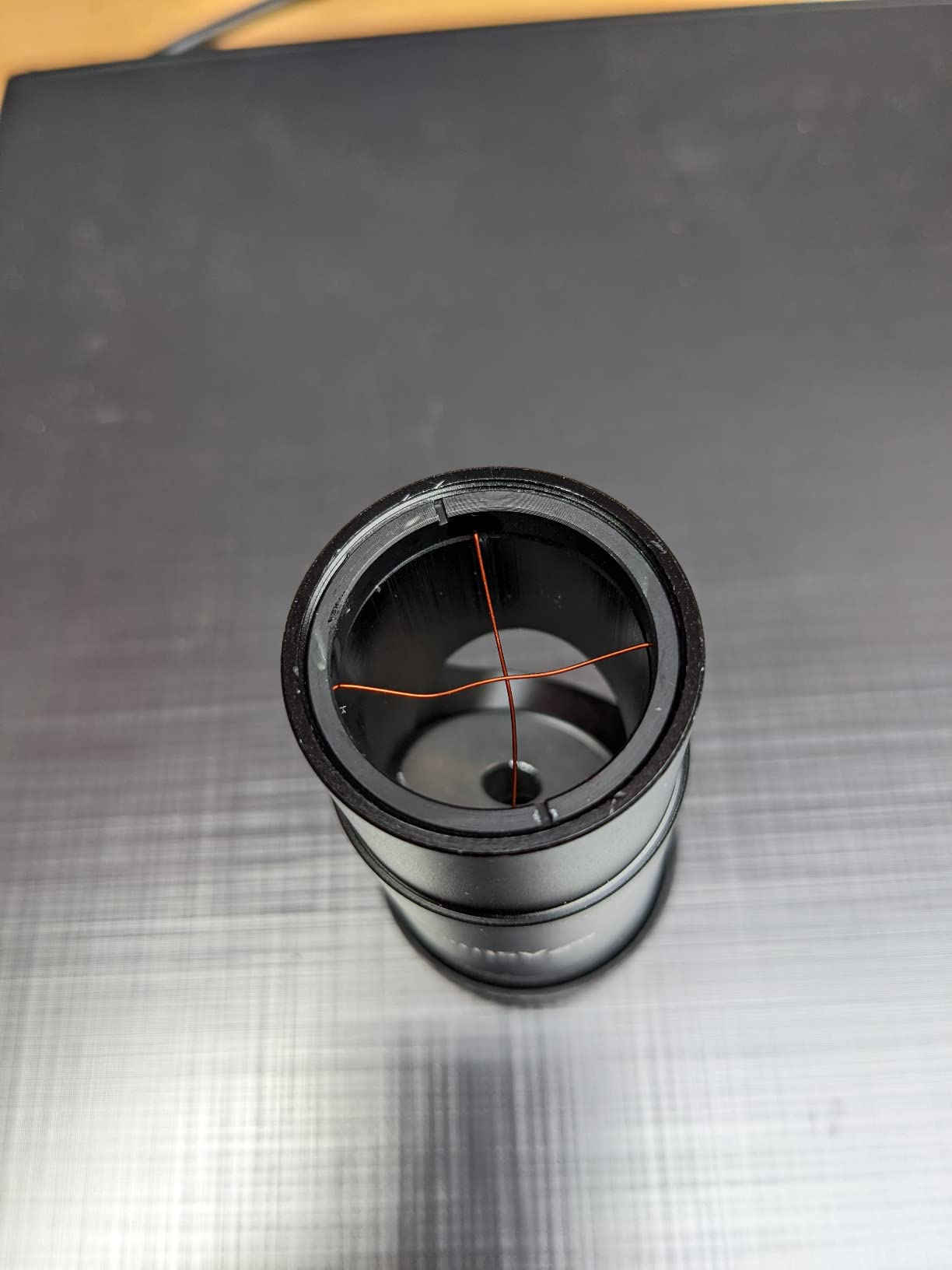
Like every Cheshire it uses no power at all, so there is no calibration to check before an observing session and nothing to fail in the cold.
When the short barrel is the deciding factor
If your Dobsonian is f/4 to f/5, measure the clearance between your focuser drawtube and the secondary before you buy a standard Cheshire. A short barrel is often the difference between a usable view and a view you cannot get at all.
The same geometry is why people running fast imaging Newtonians prefer a short tool. You are looking down a wide cone, and a long barrel puts the eye pupil in the wrong place.
Where it frustrates users
The tradeoff is eye relief. Several reviewers note the crosshairs become faint, particularly in dim light, and the complete absence of written instructions sends first-time collimators hunting for a guide.
Some units also sit loosely in worn 1.25 inch focusers. If your drawtube has play, spend the extra effort on the centre mark and treat the Cheshire as a check rather than the final word.
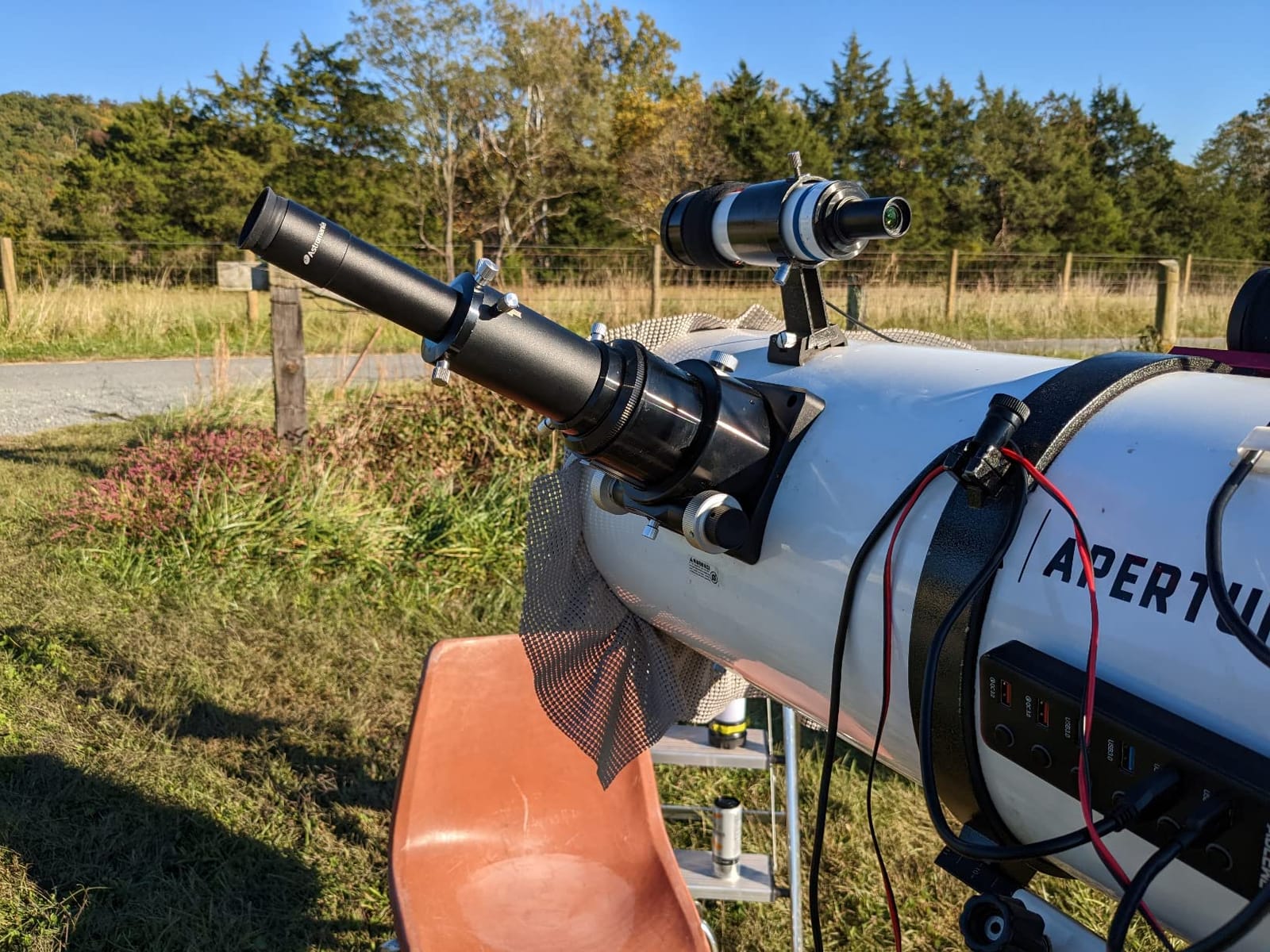
5. SVBONY SV197 Cheshire Eyepiece – Top Rated
SVBONY SV197 Collimating Cheshire Eyepiece, 1.25 Inch Collimation Eyepiece, for Newtonian Reflector Telescope
Retractable 1.25 inch barrel
Steel crosshairs
Machined aluminum
Daylight use
Pros
- Highest average rating in the group at 4.6 stars
- Steel crosshairs and precision machined aluminum
- Retractable barrel sets working distance per telescope
- Handy as a cross-check on a laser collimator
- No batteries required
Cons
- No printed instructions included
- Daylight use only with a bright light source
- Can fit loosely in worn 1.25 inch focusers
This is the best-rated telescope collimator in the roundup at 4.6 stars from 100 ratings, with 79 percent five-star and no one-star reviews at all. The smaller sample is worth weighing, but the consistency across owners is notable.
Steel crosshairs rather than printed wires are the quality decision here. Printed lines fade and sit imprecisely; machined steel marks stay put and stay centred, which is the entire job of a Cheshire.
The retractable barrel solves a problem most cheap Cheshires create. You can set the working distance to suit your telescope instead of accepting whatever the fixed length gives you.
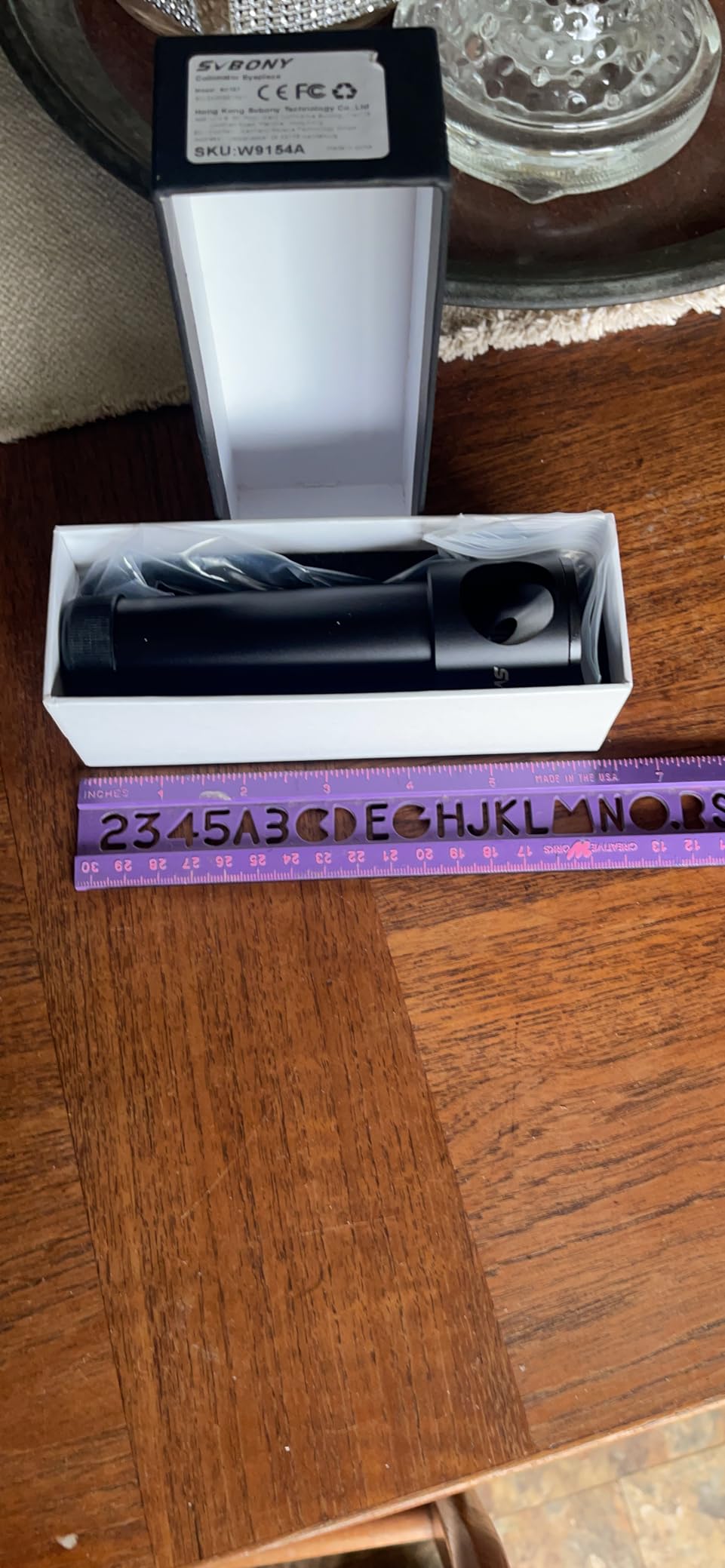
Owners also use it as an independent reference on a laser collimator’s result, which is precisely the workflow we recommend: align with the laser, then confirm with optics.
Why we rate this one above the bigger-name Cheshires
The combination of steel crosshairs, a retractable barrel and a top peephole for direct viewing is closer to how a serious Cheshire is built. The top peephole lets you check the result without moving your head off the eyepiece.
For anyone who already owns a laser and wants confidence rather than speed, this is the companion tool. It is the same reason the editors at Astronomy.com keep both a Cheshire and a laser on hand.
Where the limits are
It is a daylight tool. You need an external bright source, and at a dark site under a red lamp the crosshairs simply will not read.
No instructions are included, and in a worn 1.25 inch focuser the barrel can rock. Check that it seats snugly before you start adjusting anything.
6. Alstar Laser Collimator 1.25/2 inch – Best for 2 Inch Focusers on a Budget
Alstar Laser Collimator Alignment for Marca Newtonian Telescopes 1.25″/2″
1.25/2 inch fit
7 brightness levels
3.8 mW red laser
8.6 ounces
Pros
- Removable 2 inch adapter included
- 7 adjustable brightness levels
- Single person collimation in minutes day or night
- Metal housing with instructions and battery
Cons
- Factory adjustment screws sealed behind plugs and hard to open
- Freeplay in a worn focuser means close but not final
- A minority reported a switch that would not stay on
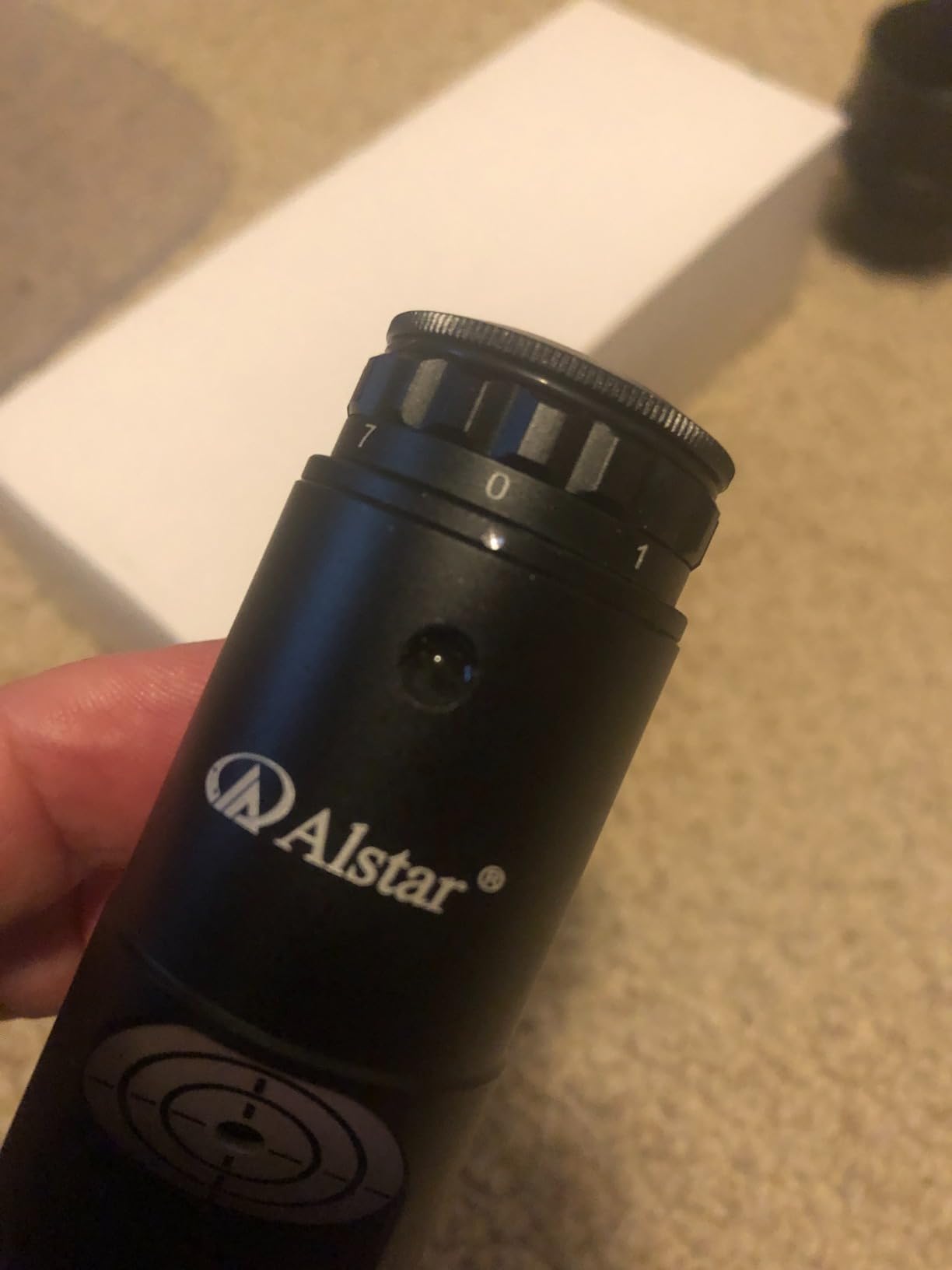
At 4.0 stars from 76 ratings, this is the lowest-rated unit we included, and it earns its place on one specific strength: the 2 inch adapter is included. For a 2 inch focuser on a tight budget, that is a hard requirement rather than a preference.
The seven brightness levels and the 45 degree side window with a central hole give you a way to watch the return beam without looking into the path. The triple cemented lens is a good spec at this level.
Owners who like it say alignment takes minutes and works day or night. That is the honest version of the value proposition.
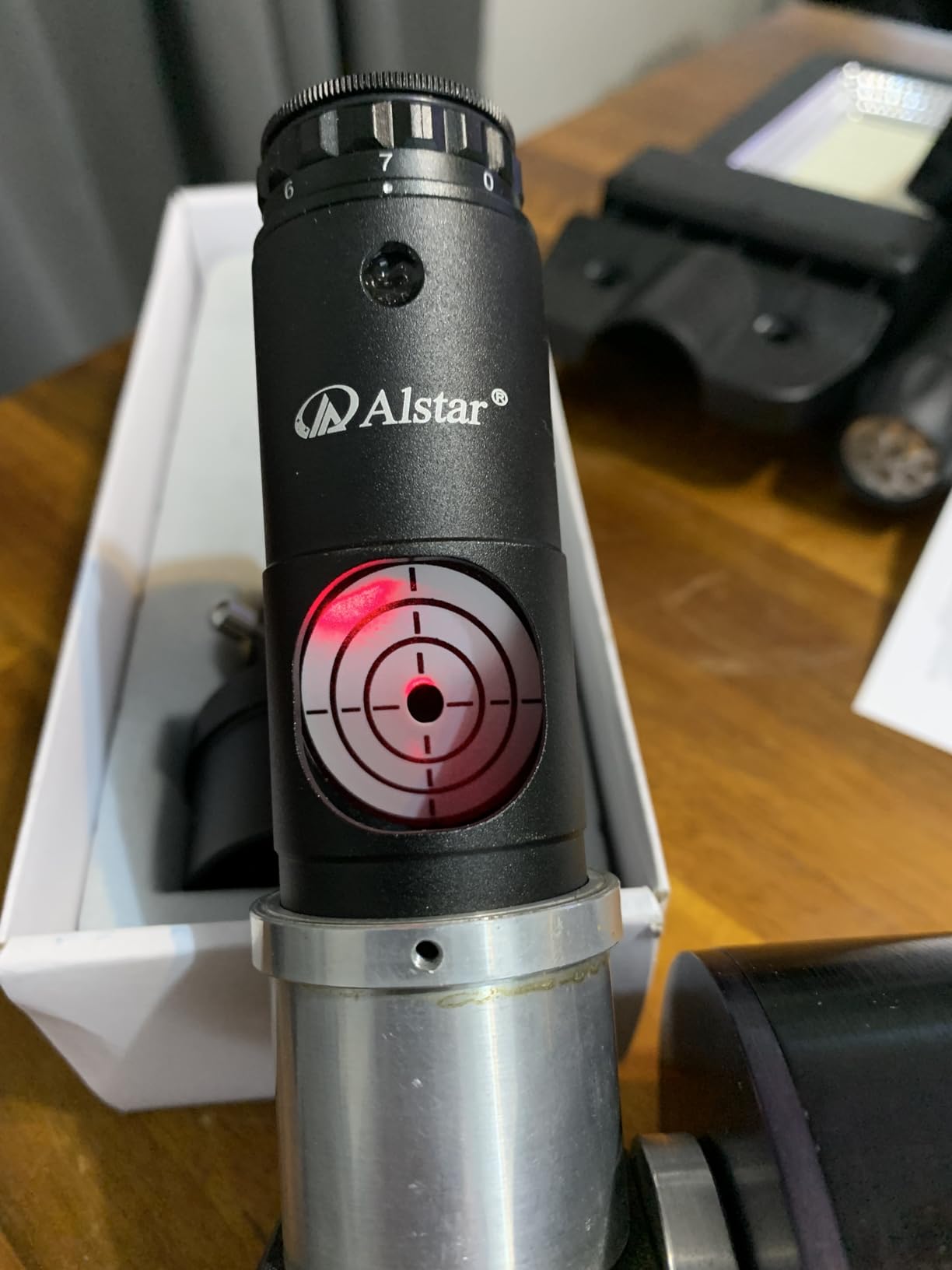
When the included 2 inch adapter settles the decision
If you have a 2 inch focuser, this is the least complicated way to get a correctly sized beam path without buying a separate adapter. The fit is direct rather than adapted, which removes a source of error.
For smaller tubes and 1.25 inch focusers, weigh this against the Astromania laser, which has a stronger rating and a longer track record for a similar outlay.
Why the 4.0 rating is not just harshness
The most useful criticism concerns the sealed adjustment screws. If the beam ever needs re-centring, the factory plugs are glued behind rubber covers and awkward to expose, which turns a two-minute fix into a frustrating one.
Reviewers also report that freeplay in a worn focuser limits how final the result can be, and a small number hit a switch that would not stay on. Any of those issues is a reason to keep a Cheshire as a backup reference.
7. Tydeux Cheshire Collimation Eyepiece – Best Entry Point for New Owners
Tydeux Cheshire Collimation Eyepiece for Reflector & SCT Telescopes 1.25″
1.25 inch barrel
45 degree plate
Fully coated optics
2 year warranty
Pros
- Lowest cost in the group with an aluminum body
- Fine crosshairs verified against laser units by users
- No batteries and no calibration drift
- Two year manufacturer warranty
Cons
- Short barrel gives too little eye relief
- Several buyers recommend the long version instead
- Daylight use only
This is an affordable route into proper collimation, and at 4.5 stars from 22 ratings the early feedback is good. The sample is small, so read the average with that in mind.
The most interesting comment in the review data comes from buyers who checked the crosshair centre against laser units on 6 inch and 12 inch scopes and found it consistent. That measures the thing you actually care about.
The 45 degree plate and fully coated lens keep the view bright enough to judge the concentric rings, which is the whole function of the tool.
When this is the right first purchase
If you have a Newtonian, no laser, and no intention of buying one yet, this gets you a correct mechanical alignment today. Nothing else on this list delivers that at this level of outlay.
The two year warranty also means a build fault is not an expensive lesson. That matters when you are buying your first accessory.
Choose the long version if you can
Eye relief is the recurring complaint. Several buyers explicitly recommend the longer version of the same eyepiece because the short barrel pushes your eye too close to the crosshairs.
That is a good rule of thumb for every short Cheshire here: if your tube is slow or your focuser has plenty of clearance, buy the long body and save yourself the eye strain.
8. SVBONY SV121 Next-Generation Laser Collimator – Best Mixed Setup
SVBONY SV121 Next-Generation Red Laser Collimator for Telescope 1.25 Inch
1.25 inch interface
3 brightness levels
Dual rubber rings
All-metal body
Pros
- Triangular screw structure locks the optical path
- Dual rubber rings keep it coaxial in the focuser
- Works with both refractor and reflector telescopes
- All-metal anodized body
- Instruction manual and rubber rings included
Cons
- Only 11 ratings so far so the track record is thin
- One report of a beam arriving out of collinearity with the barrel
- Arrived with a dead battery in at least one case
The design here is aimed at a specific problem: keeping a short laser coaxial in a focuser. The triangular screw structure tightens the optical path and the dual rubber rings fill fit gaps, which is a smarter solution than relying on a threaded barrel alone.
At 4.3 stars from 11 ratings, most owners find it easy to use and well aligned out of the box. The sample is too small to draw firm conclusions from, and we would rather say that plainly than oversell it.
The 1.25 inch interface works with refractor and reflector telescopes, which makes this a sensible choice if your household has both and you want one device.
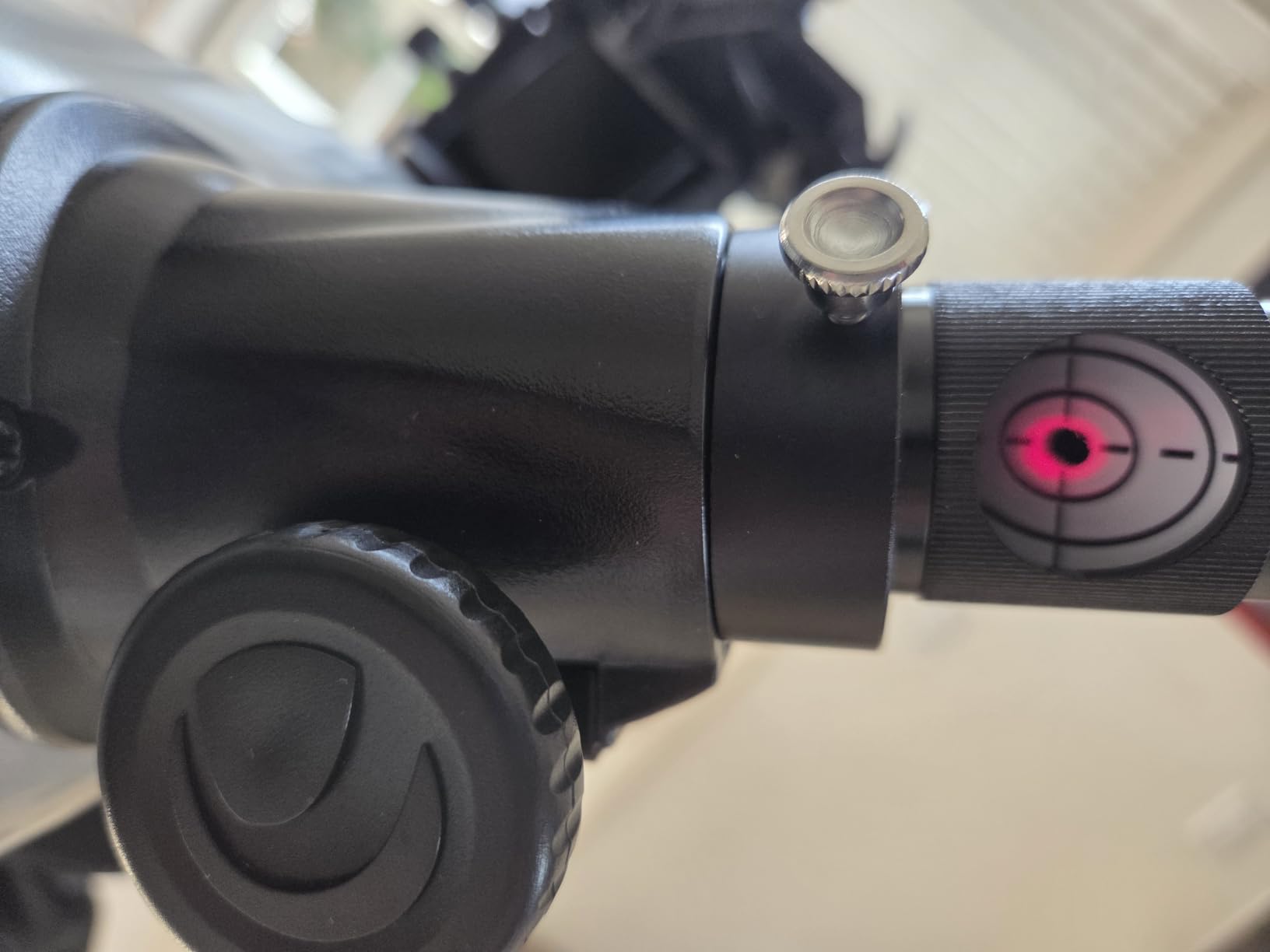
The 45 degree aluminium scale plate gives you a reflection reference for checking the beam while you work, and the anodized metal body matches the durability argument we made for the other lasers here.
Who this suits
If your coaxiality problems come from a focuser with slack rather than from a badly adjusted mirror, this design addresses the actual cause. The rubber rings take up the gap that makes a short collimator sit at an angle.
Three brightness levels is fewer than most rivals, which is fine for indoor and twilight work and slightly limiting under a very bright sky.
What the thin rating history means for you
With 11 ratings there is no long-term evidence about calibration stability, which is the specific thing that matters for a laser. Spin it on arrival and re-check it after a long drive to a dark site.
One owner reported a beam that arrived out of collinearity with the barrel and another received a dead battery. Both are easy to catch on day one, which is another argument for buying early rather than before a star party.
9. Alstar Collimating Cheshire Eyepiece – Best All-Around Short Cheshire
Alstar Collimating Cheshire Eyepiece, Collimation Telescope Eyepiece Metal
Short 1.25 inch barrel
45 degree plate
Aluminum alloy body
1.58 ounces
Pros
- Aluminum alloy body with crosshair for quick centring
- 45 degree plate makes visual alignment straightforward
- Fits standard 1.25 inch focusers with no batteries
- Useful for home-built as well as production telescopes
Cons
- Some examples arrived with misaligned crosshairs
- Short barrel can be awkward and one reviewer switched to a laser
- Relies on online tutorials for guidance
- Daylight use only
At 1.58 ounces this is the lightest telescope collimator in the roundup, and the aluminium alloy body with a crosshair is a sound design for the money. Owners generally call it well made and easy to use.
The 4.0 average from 17 ratings comes with the widest spread in the group, and the reason is build consistency rather than concept. A few units arrived with visibly misaligned crosshairs and a rotated metal insert.
That is a quality-control problem you can catch in thirty seconds. Look through it in daylight before you carry it out to the telescope.
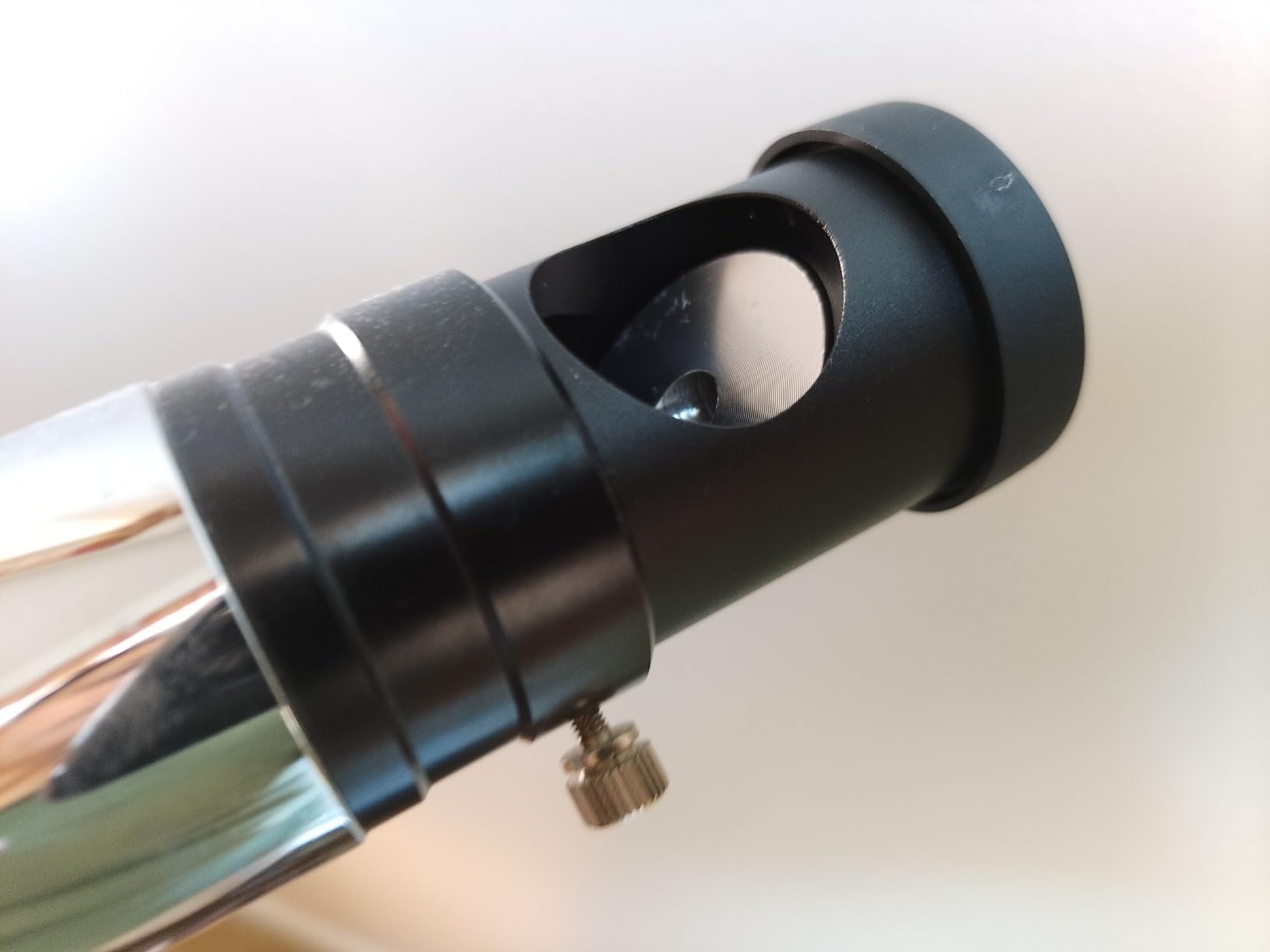
It handles Newtonian and Schmidt-Cassegrain secondary work, which makes it a reasonable companion to an SCT in the same setup.
When it is worth choosing over the other short Cheshires
The weight is genuinely noticeable in a field bag with a large Dobsonian, and the 45 degree plate is the part that decides whether you can see the concentric rings comfortably. Both favour this unit for long sessions.
Home-built telescopes are another good fit. Several owners use it on tubes they built themselves, where the focuser position is unusual and a compact tool travels well.
Where the rating spread comes from
Misaligned crosshairs defeat the purpose of the tool, and that is what separates the happy owners from the unhappy ones here. Verify centring on arrival and keep the box in case a replacement is needed.
A reviewer who found the short barrel difficult abandoned the tool for a laser, so if you are new to collimation and want a visual method, a longer Cheshire is the safer buy.
10. XCCYG 1.25 inch Metal Collimation Eyepiece – Lightest and Simplest
1.25Inch Metal Telescope Collimation Eyepiece Collimator, for Newtonian Reflector Telescope
1.25 inch aluminum barrel
Top peephole
Threaded interior
Battery-free
Pros
- Fine crosshairs and all-aluminum construction
- No battery required
- Threaded light-blocking interior reduces internal reflections
- Owner reported sharper images after collimating an f/7 900mm Newtonian
Cons
- Only 5 ratings so the evidence base is thin
- Low resolution product imagery makes centring hard to judge before delivery
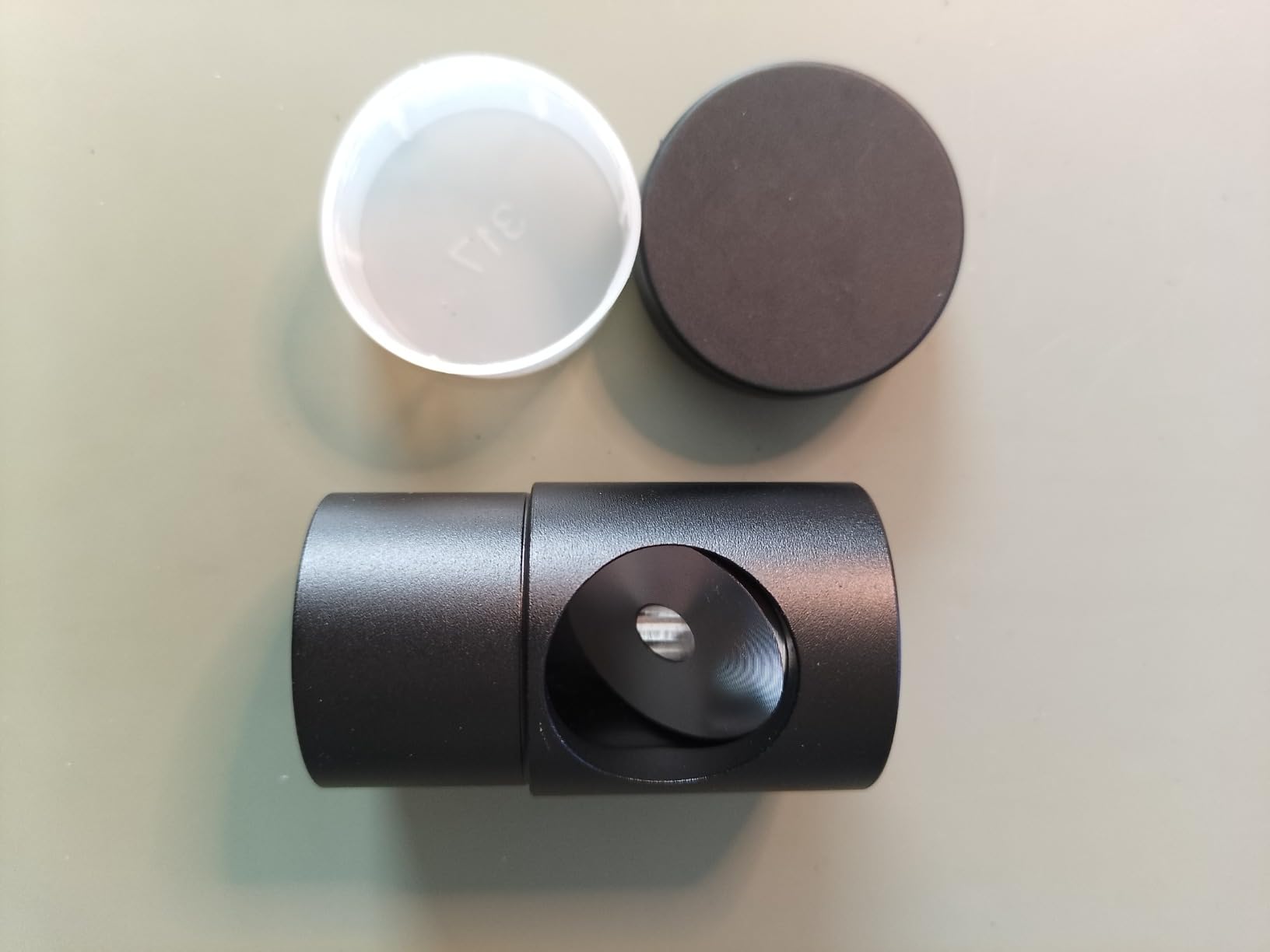
This is the simplest telescope collimator in the group: a metal barrel, a crosshair and a peephole, with nothing that can fail or drift. At 4.4 stars from 5 ratings the number means very little statistically, so we weighted the design and build instead.
The threaded, light-eliminating interior is the detail worth noting. Internal reflections off a smooth bore can wash out the faint rings you are trying to centre, so machining threads to scatter stray light is a real optical improvement.
One detailed review reports sharper images after collimating an f/7 900mm Newtonian with it, which is the outcome that matters rather than any specification.
When the simplest tool is enough
If you want a visual, no-power method and your tube is a slow Newtonian with generous clearance, this does the job with nothing to go wrong. There is no beam to misalign and no battery to run flat.
The top peephole also makes it easy to show someone else what good collimation looks like, which makes this a decent teaching tool.
Why we ranked it last
Five ratings is too thin a base to recommend strongly, and the product imagery is too low resolution for you to judge crosshair centring before it arrives. You are buying on the description rather than on evidence.
If your focuser has play, the barrel can rock and add its own error. In that case one of the better-reviewed Cheshires above is the more reliable purchase.
How to Check Whether Your Collimator Is Actually True
The most common beginner mistake is trusting a laser collimator that has never been checked. Cloudy Nights threads document this failure mode repeatedly: rotate a low-cost laser in its focuser and if the spot draws a large circle on the primary, the collimator itself is out of true and every reading you take from it is wrong.
The fix takes two minutes. Seat the collimator in the focuser, point the telescope at a plain wall or a dark room wall, and rotate the collimator body slowly through a full turn while watching the spot on the primary. A true collimator traces a tight dot or a very small circle. A large circle means the beam is off the barrel axis.
When it fails that test, the standard community fix is to make the telescope the reference instead. Align the Newtonian first with a collimation cap or a Cheshire, then adjust the laser to the already-trued telescope. That reverses the usual order but it removes the circular dependency between two misaligned surfaces.
Several people on r/telescopes build a jig for this purpose, holding the collimator in a fixed reference while a second beam is reflected back through it. Watching multiple beam dots converge on one target is the DIY version of the same test.
How to Collimate a Newtonian With No Tools at All
You can collimate a reflector with nothing but your eyes and a decent star, which is the answer most forums give to the no-tool question. The method is well established on r/Astronomy and it takes about the same time as using a tool.
Point the telescope at Polaris, or any bright star near the celestial pole, so it barely moves while you work.
Centre the star precisely in the field with a low power eyepiece, then switch to a high magnification one.
Defocus the star until its disc becomes a ring of diffraction spikes and light.
Adjust the secondary mirror screws until the ring of light from the secondary is concentric with the view.
Adjust the primary mirror screws until the shadow and the light pattern sit dead centre, then focus fine and check again.
Two rules make this work. Judge with averted vision, which is more sensitive to faint asymmetry than looking straight at it. And re-check after focusing, because a scope that looks centred while defocused may not be once you sharpen it.
This method is genuinely good and costs nothing, but it only works at night and it teaches you to see the thing a collimator measures. That is why our beginner pick is still a physical tool.
Telescope Collimator Buying Guide
Pick the class first, then the fit. Most wrong decisions come from buying a laser for a visual learner, or a long Cheshire for a fast Dobsonian that has no clearance for it.
Choose a laser collimator when you move the telescope often
A laser is faster, works at night without a bright light source, and tells you objectively whether the return beam is on target. For anyone hauling a Dobsonian to a dark site or running a large Newtonian for astrophotography, that speed is worth paying for. The cost is that you must be able to trust the tool, which is why the spin test above matters.
Never look into the beam. These units output Class 3R red light, which is below the level for deliberate viewing into the aperture but is still capable of damaging vision if you stare down the barrel while it is on.
Choose a Cheshire when you want to see what you are doing
A Cheshire shows both mirror reflections at once, so you can diagnose whether a problem is the secondary or the primary. It needs no power, cannot drift out of calibration, and works on Schmidt-Cassegrain secondaries as a bonus. Editors at Astronomy.com keep both a Cheshire and a laser, which is the middle position we would take too.
The costs are real but modest: you need daylight or a bright lamp, and eye relief on short barrels can be uncomfortable.
Get the focuser fit right before anything else
A 1.25 inch barrel used through an adapter in a 2 inch focuser introduces enough beam offset that users routinely distrust the result. If your focuser is 2 inch, buy a collimator with a proper 2 inch barrel or a well-fitting removable adapter rather than working around it.
Also check focuser play. A collimator sitting loose in a worn drawtube can tilt enough to send you adjusting mirrors that were fine, and no amount of careful screw turning fixes that.
Other features worth caring about
Seven brightness levels beat three for field work because you need a bright beam against a daylight sky and a dim one against a dark background. A 45 degree angled window or plate lets you monitor the return beam without your eye anywhere near the optical path, which is the habit we like to see beginners pick up immediately.
Machined aluminium bodies and cemented lens stacks are not marketing. Plastic housings flex with temperature, and a collimator that moves when it warms will have you chasing mirror position all evening.
What to skip
Skip a cheap laser with sealed adjustment screws unless you enjoy opening small rubber plugs, and skip any collimator you cannot spin-test. Skip very short Cheshires on slow Newtonians, where the extra clearance costs you nothing and eye relief becomes the limiting factor.
If you only have one telescope and it never leaves the garage, a Cheshire is enough and you will never miss the extra accuracy a laser adds. If you travel, you will not want to collimate by hand at a dark site.
Frequently Asked Questions
What is the best laser collimator for Newtonian scopes?
For most observers, the SVBONY laser collimator is the best choice because its removable 2 inch adapter fits wide focusers without introducing adapter error, and seven brightness levels work in daylight and darkness. The Astromania 1.25 inch laser is the better value pick if your focuser is 1.25 inch. Spin-test any laser before trusting its readings.
What is the best collimation tool for a telescope?
It depends on how you work. A laser collimator is fastest and works at night, which suits anyone who moves the telescope often. A Cheshire eyepiece shows you both mirror reflections at once, needs no power and teaches you what alignment looks like. Many observers keep both, using the laser for speed and the Cheshire to confirm it.
How do you collimate a reflector telescope without a laser or Cheshire collimator?
Use the star test on Polaris or any star near the pole. Centre it at high magnification, defocus until the diffraction ring is visible, adjust the secondary until the reflected ring is concentric with the view, then adjust the primary until the pattern is centred. Judge with averted vision and re-check after refocusing. It costs nothing and takes about five minutes.
How often should I collimate a Newtonian telescope?
Check it every time you set up, because that takes two minutes with a laser and confirms nothing has shifted. A full collimation is only needed after transport, a bump, a mirror swap or a rebuild. A stable tube on an equatorial mount may go a year or more between full adjustments, while a Dobsonian in a car usually needs attention every trip.
How do I know if my laser collimator is out of calibration?
Spin test it. Seat it in the focuser, aim at a wall in a dark room, and rotate the body through a full turn while watching the spot on the primary. A true unit traces a tight dot or a very small circle. A large circle means the beam is off the barrel axis, and every reading from it is wrong until you re-true it against the telescope.
Do I need a laser or a Cheshire collimator?
Start with a Cheshire if you are new. It has no calibration to drift, needs no batteries, and shows you both mirror reflections at once so you can tell which mirror is out. Add a laser if you observe at night, move the telescope often, or run astrophotography, where the speed of a return-beam reading saves real time.
Conclusion: Which Telescope Collimator Should You Buy
If you want one answer, the SVBONY laser collimator is the best telescope collimator for Newtonian reflectors in 2026 for the simple reason that the included 2 inch adapter removes the most common source of error, and the rating history across thousands of owners is deeper than anything else here.
Buy the Celestron Cheshire instead if you are learning and want to see what correct collimation looks like. Buy the short-barrel Cheshires on fast Dobsonians where clearance is tight. And spin-test any laser before you trust it, because a collimator that is out of true will send you adjusting mirrors that were already perfect.