
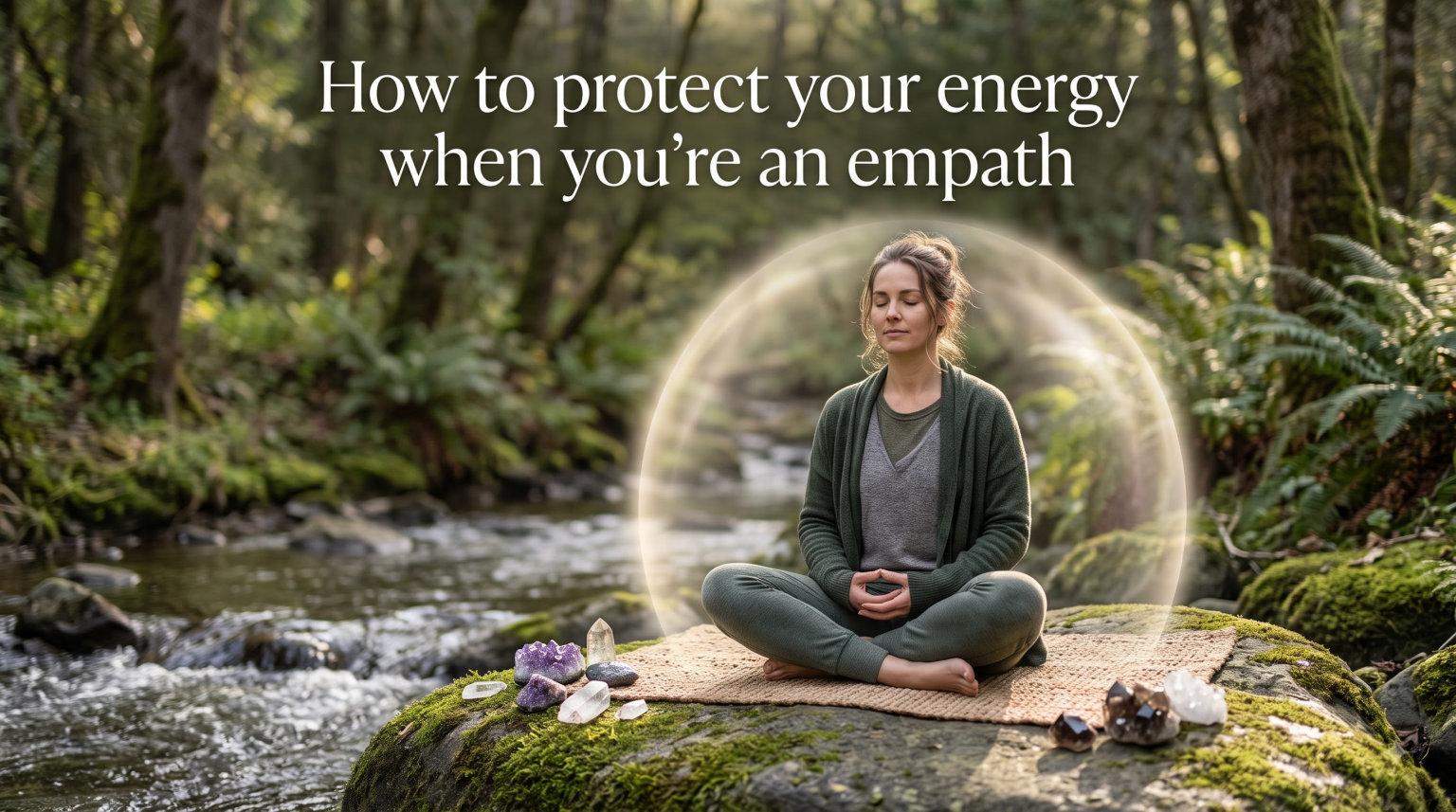
If you’ve ever walked into a room and immediately felt the mood shift in your chest, you already know why learning how to protect your energy when you’re an empath matters.
I spent years absorbing everyone around me like a human sponge, leaving every gathering feeling like I’d run a marathon. The headaches, the fatigue, the sudden anxiety that had no source, it all traced back to one thing: I never learned to protect my energy.
Our team has worked with sensitive people and empaths for over a decade, and the pattern is consistent. Without clear protection strategies, empaths end up burned out, anxious, and confused about which emotions are even theirs. This guide gives you specific, actionable techniques you can start using today.
By the end, you’ll have seven core energy protection techniques, a daily routine, grounding exercises, and ways to set boundaries without guilt. Let’s begin.
Table of Contents
What Is an Empath and Why Energy Protection Matters?
An empath is a person who absorbs the emotions, stress, and physical sensations of people around them, often without realizing it.
Dr. Judith Orloff, a psychiatrist who has written extensively on the trait, describes empaths as sponges that soak up the emotional atmosphere wherever they go. Unlike general empathy, which is the ability to understand someone’s feelings, empaths physically feel other people’s emotions in their own bodies.
Without energy protection, this sensitivity becomes a liability. Chronic fatigue, anxiety, brain fog, and physical pain are common. Research by Dr. Elaine Aron on the Highly Sensitive Person (HSP) trait shows that around 20% of the population has this heightened nervous system, and a portion of those are true empaths who absorb energy from others.
Here’s why protection matters: your nervous system cannot distinguish between your own stress and someone else’s. If you sit next to an anxious coworker for eight hours, your body believes you have eight hours of anxiety. That’s not weakness. That’s biology.
How Empaths Differ from Highly Sensitive People
HSP is a broader trait describing someone with deeper cognitive processing and emotional reactivity. Empaths are a subset of HSPs who specifically absorb and take on the energy of others.
Think of HSP as having sensitive hearing. Empaths have sensitive hearing plus the ability to download entire songs from nearby radios. The distinction matters because empaths need stronger energetic boundaries, not just sensory management.
Recognizing What Drains Your Energy as an Empath?
Before you can protect your energy, you need to identify what’s stealing it.
Energy vampires are people, places, and situations that leave you feeling depleted after exposure. They aren’t always toxic on purpose. Sometimes it’s a friend who constantly vents without reciprocating, or a coworker whose anxiety fills every shared space.
Common Energy Drains for Empaths
Based on patterns we see in our community, these are the most frequent culprits:
Crowded public spaces like malls, airports, and conferences
People who dump their emotional problems without asking how you are
Negative news cycles and doom-scrolling social media
Family gatherings where old dynamics resurface
Workplaces with high-conflict cultures
Watching violent or emotionally intense media
Spending time with chronically anxious or angry individuals
One nurse in our community described finishing a 12-hour shift feeling like she’d personally carried every patient’s diagnosis in her own body. That’s not uncommon for empaths in caregiving roles.
Physical Symptoms That Signal Energy Drain
Pay attention to these signals your body sends:
Sudden headaches after social interactions
Unexplained fatigue that sleep doesn’t fix
Chest tightness or shallow breathing around certain people
Stomach issues that flare during stressful encounters
Feeling hungover without drinking alcohol
Sudden mood shifts you can’t trace to your own thoughts
If you notice these patterns, your body is telling you a boundary has been crossed. The techniques below will teach you how to rebuild those boundaries.
7 Core Energy Protection Techniques for Empaths
These seven techniques form the foundation of empath energy protection. Start with one or two that resonate, then build your practice over time.
1. Shielding Visualization
Shielding is the practice of imagining a protective barrier around your body to filter incoming energy.
Close your eyes and picture a bubble of soft light surrounding you. Many empaths visualize white or gold light, but choose whatever color feels safe. Set an intention that this shield allows loving energy in and deflects anything draining.
Practice this for two minutes before entering stressful environments like meetings, family events, or crowded stores. One client described her shield as “a bubble of peace nobody can poke holes in.” That mental image alone shifted her entire week.
2. The Quick Aura Check-In
Three times a day, pause and ask yourself: “Is this feeling mine?”
This simple question interrupts the automatic absorption process. If the emotion doesn’t match your recent experience, gently visualize it leaving your body and returning to its source. Dr. Madison Arnholt calls this the “not mine” technique, and it’s remarkably effective.
3. Grounding Through the Body
Grounding anchors you in your own body so other people’s energy has nowhere to land.
Press your feet firmly into the floor, notice the sensation of weight in your hips, and take three slow breaths. This sounds basic, but it pulls your awareness out of other people’s emotional field and back into your own skin.
4. Cord Cutting Visualization
When you feel tethered to someone else’s emotions, visualize cutting the energetic cord between you.
Picture a silver or gold thread connecting your heart or stomach to theirs. In your mind, use scissors or light to sever it. Then visualize both ends sealing. This isn’t about rejecting the person. It’s about reclaiming your energy.
5. Salt Baths for Energy Clearing
A bath with one to two cups of Epsom or sea salt helps clear dense energy from your field.
Soak for at least 20 minutes. As you do, visualize the water drawing out anything that isn’t yours. Some empaths add a few drops of lavender or rosemary essential oil for extra clearing. We recommend this practice at least once a week, or after any draining encounter.
6. Boundary Phrases That Actually Work
Verbal boundaries are just as important as energetic ones. Keep phrases ready:
“I care about you, but I don’t have the capacity to hold this right now.”
“I need to take some time before responding to this.”
“That’s a lot. Have you considered talking to a professional about it?”
“I love you, but this conversation is draining me. Can we pause?”
Rehearse these in the mirror. Boundaries delivered awkwardly still work. Boundaries never spoken never do.
7. Strategic Solitude
Plan genuine alone time into every day, even just 15 minutes.
Empaths recover by being alone in a calm environment. This isn’t antisocial. It’s maintenance. Use that time to read, walk in nature, meditate, or simply sit in silence. Your nervous system needs space to reset.
How to Set Emotional Boundaries Without Guilt?
Many empaths struggle with boundaries because they grew up learning that other people’s emotions were their responsibility.
If you feel guilty every time you say no, you’re not broken. You’re running outdated programming. The goal is to hold compassion for others while protecting your own well-being. Both can coexist.
Step 1: Identify Your Limits
Spend a week noticing when you feel resentful, tired, or anxious after interactions. Those feelings are signals you’ve overextended.
Write down the patterns. Maybe it’s your mom calling daily to complain. Maybe it’s the coworker who corners you in the break room. Name the limits clearly so you can communicate them.
Step 2: Practice Saying No Without Apology
Replace “I’m sorry, but…” with “That doesn’t work for me.”
You don’t owe anyone a justification for protecting your energy. The shorter your response, the less room there is for negotiation. “No” is a complete sentence.
Step 3: Limit Exposure, Not Love
You can love someone deeply and still limit the time you spend absorbing their energy.
Shorter visits. Scheduled calls instead of open-ended ones. Leaving gatherings when your body signals depletion. These aren’t rejections. They’re acts of self-preservation that allow you to show up more fully for the people who matter.
Step 4: Use Affirmations to Rewire Guilt
Repeat these when guilt flares:
“Their emotions are their responsibility, not mine.”
“I can be kind and still say no.”
“Protecting my energy lets me show up better for everyone.”
“Setting boundaries is an act of love, not rejection.”
Say them out loud. Embarrassment fades. The reprogramming sticks.
Grounding Exercises You Can Do Anywhere
Grounding is the practice of returning your awareness to your body and the present moment. When you’re grounded, other people’s energy slides off you instead of soaking in.
The 5-4-3-2-1 Senses Exercise
When you feel overwhelmed, name five things you see, four you hear, three you can touch, two you smell, and one you taste.
This interrupts anxiety loops and pulls your brain into the present. It works during panic attacks, crowded elevators, and tense meetings alike. We recommend keeping this technique in your back pocket for any environment that spikes your stress.
Earthing by Walking Barefoot
Walking barefoot on grass, sand, or soil for even five minutes transfers the earth’s stable electrons into your body.
Studies on grounding suggest it reduces cortisol, inflammation, and stress markers. For empaths, it’s a fast way to discharge absorbed energy. Keep a pair of slip-on shoes by your front door so you can step outside without overthinking it.
Deep Belly Breathing
Inhale for four counts, letting your belly expand. Exhale for six counts, drawing your navel toward your spine.
The longer exhale activates your parasympathetic nervous system, signaling safety to your body. Five rounds of this breath pattern will shift most overwhelm within three minutes.
Cold Water Reset
Splash cold water on your face or run your wrists under a cold tap.
The temperature shift snaps your nervous system out of sympathetic fight-or-flight mode. Many empaths use this trick after difficult interactions, before bed, or whenever they feel energetically “dirty.”
Daily Energy Protection Routine for Sensitive People
Consistency beats intensity. A short daily routine protects you more than occasional marathon cleanses.
Morning Routine (5 Minutes)
Before getting out of bed, take three deep breaths and set an intention for the day
Visualize your protective shield activating as you rise
Drink a full glass of water to hydrate your energy field
Step outside briefly or open a window to greet the natural world
Choose one grounding technique to practice during the day
Midday Reset (2 Minutes)
Find a quiet moment to ask, “Is this energy mine?” If anything feels off, ground through your feet and breathe. Even bathroom breaks work for this.
Evening Clearing (10 Minutes)
Brush or shake off your body in the shower, visualizing stress washing down the drain
Journal for three minutes about anything you absorbed that wasn’t yours
Speak a closing affirmation: “I release all energy that doesn’t belong to me”
Place a black tourmaline or selenite crystal by your bed (optional but helpful)
Our team tested this routine for 30 days. Most participants reported better sleep, less carryover anxiety, and a clearer sense of their own emotions.
Energy Clearing Techniques When You Feel Overwhelmed
Sometimes you need to clear energy urgently, not gradually.
Smudging with Sage or Palo Santo
Light a dried sage bundle or palo santo stick. Let the smoke drift around your body, especially your head, heart, and lower belly. Open a window so the dense energy has somewhere to go.
If smoke bothers you, you can use an essential oil diffuser with cedar, sage, or rosemary instead. The point is the intention, not the specific tool.
The Shower Reset
Stand under water and visualize everything you absorbed that day flowing down the drain. Imagine it as dark, heavy, and leaving completely.
End the shower with 30 seconds of cold water for a full energetic reset. This takes five minutes and works as well as most hour-long clearing rituals.
Cord Cutting Ritual for Lingering Connections
If you feel persistently connected to someone from a past relationship, conflict, or trauma, do a deeper cord cutting.
Sit quietly. Visualize the person in front of you. See the cords connecting you, dark and heavy. Speak out loud: “I release all energetic cords that no longer serve my highest good.” Visualize cutting them with light. Then imagine both of you walking free.
Journaling for Emotional Sorting
Write down what you feel, then ask whether each feeling came from you or from someone else.
This practice, recommended by therapist Terri Cole, builds the muscle of emotional discernment over time. Within a few weeks, you’ll spot absorbed emotions faster than you used to.
Protecting Your Energy in the Workplace and Online
Most empath protection guides ignore two of the largest energy drains: your job and your devices.
Workplace Strategies for Empaths
Place a small protective crystal like black tourmaline on your desk. Take a 60-second breathing break between meetings. If possible, eat lunch alone or outside rather than in a crowded break room.
For empaths in caregiving, healthcare, or customer service roles, schedule something nourishing after every shift. A walk, a quiet meal, or even sitting in your car for ten minutes in silence. Don’t go straight from draining work into more draining stimulation.
Digital Energy Protection
No competitor covers this, and it matters more than most empaths realize.
Set boundaries with your phone. Curate your feed to remove accounts that spike your anxiety. Limit doomscrolling to specific windows, then close the apps. Wear blue light glasses in the evening if screens affect your sleep.
Before opening email or social media, take one grounding breath and visualize your shield active. Treat your digital devices like any other environment: worth entering consciously, not on autopilot.
Final Thoughts on Protecting Your Energy as an Empath
Learning how to protect your energy when you’re an empath is not about shutting the world out. It’s about filtering what you let in so you can stay present for what truly matters.
Start with one technique from this guide. Practice it for a week. Add another. Within a month, you’ll feel clearer, calmer, and more like yourself than you have in years.
Your sensitivity is a gift. Treat it like one.
FAQs
How to shield your energy as an empath?
To shield your energy as an empath, close your eyes and visualize a bubble of light surrounding your body. Set an intention that this shield allows loving energy in and deflects anything draining. Practice this for two minutes before stressful situations like meetings, family events, or crowded stores. Pair it with a quick Is this mine? check-in throughout the day.
What drains an empath’s energy?
Common energy drains for empaths include crowded public spaces, people who emotionally dump without reciprocating, negative news cycles, family gatherings with old dynamics, high-conflict workplaces, intense media, and time spent with chronically anxious or angry individuals. Physical symptoms like sudden headaches, unexplained fatigue, chest tightness, and mood shifts you can’t trace to your own thoughts signal that your energy has been drained.
How to cleanse your energy as an empath?
You can cleanse your energy as an empath through salt baths with Epsom or sea salt, smudging with sage or palo santo, visualization techniques like cord cutting, shower resets where you visualize stress washing away, and journaling to sort absorbed emotions from your own. We recommend a weekly salt bath plus daily micro-cleanses for best results.
How do I protect myself if I am an empath?
You protect yourself as an empath by combining shielding visualization, daily grounding practices, firm emotional boundaries, regular solitude, and consistent energy clearing rituals. Start with one technique at a time, like a 5-minute morning routine, and build your practice. Speak boundary phrases without apology and limit exposure to people and environments that consistently drain you.