
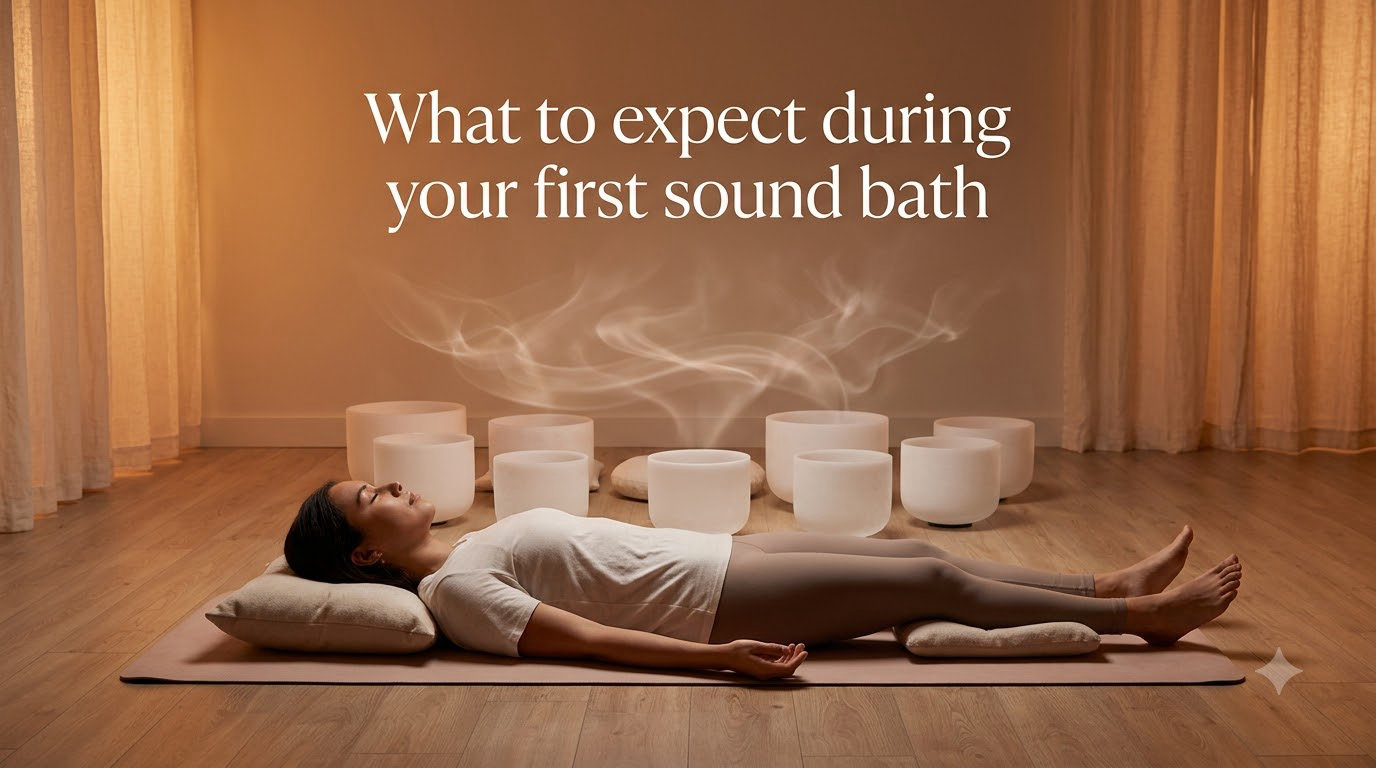
A sound bath is a guided meditation where you lie down comfortably and let waves of sound from singing bowls, gongs, and other instruments wash over you for deep relaxation. You do not need any experience, you do not need to do anything, and you will not get wet. If you are wondering what to expect during your first sound bath, the short answer is this: you arrive, get comfortable, and simply listen while a practitioner plays instruments that help your body and mind settle into a deeply calm state.
I remember how nervous I felt before my first session. I had no idea whether I was supposed to sit perfectly still, whether I would feel strange, or whether I was “doing it right.” After attending dozens of sessions since then, I can tell you that almost every first-timer walks in with the same questions. This guide covers everything you need to know so you can walk in feeling prepared instead of anxious.
The beauty of a sound bath is its simplicity. You are not being tested. You are not performing. You are just lying there, receiving sound, and letting your nervous system do what it naturally does when given the right conditions to relax.
Table of Contents
What Is a Sound Bath?
A sound bath is a meditative experience where a practitioner plays acoustic instruments like Tibetan singing bowls, crystal bowls, gongs, tuning forks, chimes, and sometimes rain sticks or voice, while participants rest in a comfortable position. The sounds are continuous and layered, creating an immersive “bath” of vibrations that fills the room. There is no water involved, despite the name.
The goal is not to entertain you with music in the traditional sense. Instead, the sustained tones and frequencies help guide your brain and body into a state of deep rest. Many people describe it as feeling like a cross between meditation, a nap, and a massage for your nervous system, all without anyone touching you.
Sessions typically last between 45 and 90 minutes. Some are held in yoga studios, wellness centers, or outdoor spaces. Others take place in dedicated sound healing studios. The setting is usually dimly lit, quiet, and designed to help you feel safe enough to fully let go.
How Sound Baths Work: The Science in Plain Terms
The core principle behind sound baths is a phenomenon called entrainment. This is your brain’s natural tendency to sync up with rhythmic external stimuli. When you hear sustained, low-frequency tones, your brainwaves begin to slow down and match those frequencies.
During everyday waking life, your brain operates mostly in beta waves, which are fast and associated with active thinking, problem-solving, and stress. As the sound washes over you, your brainwaves shift into alpha and theta states. Alpha is linked to relaxed alertness, the feeling you get during a daydream. Theta is even deeper, associated with the edge of sleep, deep meditation, and creativity.
This shift activates your parasympathetic nervous system, often called the “rest and digest” mode. Heart rate slows, breathing deepens, and cortisol levels can drop. Your body gets a chance to do what it cannot easily do during a busy, stressed day: repair, reset, and regulate itself.
How to Prepare for Your First Sound Bath?
Good preparation makes a huge difference in how you experience your first sound bath. Here is everything you need to know before you walk through the door.
What to Wear
Wear loose, comfortable clothing that you could easily fall asleep in. Think yoga pants, sweatpants, a soft t-shirt or sweater, and warm socks. You will be lying still for up to 90 minutes, and your body temperature can drop when you relax, so layers are your friend.
Avoid tight waistbands, stiff jeans, or anything with zippers and buttons that dig into your back when you lie down. Comfort is the only dress code that matters here.
What to Bring
Most studios provide the essentials, but it is worth checking ahead. Here is a checklist of what to bring or confirm:
A yoga mat or pad to lie on (check if the studio provides one)
A blanket or two, since your body cools down as you relax
A small pillow or bolster for your head and possibly under your knees
An eye mask or scarf to cover your eyes if you are sensitive to light
A water bottle for after the session
If your studio does not provide props, bring the softest, coziest setup you can carry. The more comfortable your body is, the deeper you can relax.
Food and Drink
Eat lightly beforehand. A heavy meal right before lying flat for an hour can make you uncomfortable and bloated. A small snack 60 to 90 minutes before is fine and can keep you from feeling lightheaded. Avoid caffeine for a few hours before the session, since it works against the calming effect you are there to experience.
Drink water before and after. Hydration helps your body process the physical and emotional shifts that can happen during a session.
Setting an Intention
Many practitioners invite you to set an intention at the start of the session. This is not a requirement, and you do not need to say anything out loud. It can be as simple as silently thinking, “I am here to rest,” or “I give myself permission to relax.”
If setting an intention feels too abstract, that is completely fine. You can just show up with no agenda at all. The sound does the work regardless.
How to Communicate Anxiety to the Facilitator
This is something most guides skip, and it is one of the top questions I see in forums. If you feel anxious beforehand, tell the facilitator when you arrive. You can simply say, “This is my first sound bath and I am feeling a bit nervous.” Every facilitator I have met welcomes this and will help you feel more comfortable.
They might suggest a spot near the door so you feel less trapped, offer earplugs if the sounds get intense, or check in with you during the session. Speaking up takes 10 seconds and can transform your entire experience.
What to say at the start of a sound bath if you are asked to share: keep it brief. Your name and “this is my first time” is plenty. You are not expected to give a speech.
What to Expect During Your First Sound Bath: A Step-by-Step Walkthrough
Knowing the flow of a session removes the mystery and helps you relax before you even arrive. Here is exactly what to expect during your first sound bath, from walking in to walking out.
Step 1: Arrival and Settling In
You will arrive 10 to 15 minutes before the start time to find your spot and get comfortable. The facilitator usually has mats or cushions set out in a circle or rows. Pick a spot, lay out your blanket and pillow, and settle onto your back or in whatever position feels best.
Most people lie flat on their backs, known as savasana. But sitting up in a chair or against a wall is perfectly acceptable if lying down is uncomfortable. There is no wrong position.
The room will be quiet and dimly lit. This settling period is part of the experience, so take your time getting comfortable.
Step 2: Grounding and Breathwork
The facilitator typically begins with a short grounding exercise. This might be a few rounds of guided breathing, a body scan where you mentally relax each part of your body, or a moment of silence to transition from the outside world into the session.
Some facilitators invite you to set an intention here. Others simply begin playing. Either way, this opening phase usually lasts 5 to 10 minutes and helps your nervous system start to downshift.
Step 3: The Sound Immersion
This is the main event, and it usually lasts 30 to 60 minutes. The facilitator moves through the room playing various instruments: Tibetan and crystal singing bowls, gongs, tuning forks, chimes, drums, rain sticks, or their own voice. You just lie there and receive the sound.
You do not need to focus, concentrate, or “try” to meditate. The sounds fill the space and wash over you. Some people stay fully awake and aware. Others drift into a twilight state between waking and sleeping. Some fall asleep completely. All of these are normal.
The facilitator may walk around the room and play instruments near different participants. They might place a bowl near your body or use a tuning fork close to you. This is not anything to worry about. It is a normal part of the experience.
Step 4: The Closing and Return
The session does not end abruptly. The facilitator gradually reduces the intensity of the sounds, transitioning to softer, gentler tones. This signals your body to slowly begin returning to a normal waking state.
Many facilitators use a bell, chime, or gentle verbal cue to let you know the session is ending. You will be given a few minutes to slowly wake up, stretch, and sit up at your own pace. Nobody rushes you.
There is often a brief period where the facilitator invites anyone who wants to share their experience to do so. Participation is completely optional. You can stay quiet, and most people do.
Physical Sensations You Might Experience
One of the most common forum questions I see is, “Is what I felt normal?” The answer is almost always yes. Here is what you might physically experience during a sound bath.
Tingling in your hands, feet, or scalp is very common. This is often described as a pleasant buzzing or prickling sensation. It happens as blood flow increases and your nervous system relaxes.
Many people feel a sense of heaviness, as if their body is sinking into the floor, or a feeling of lightness and floating. Warmth spreading through the body is also frequently reported. None of these sensations are cause for concern.
You might fall asleep, and that is completely fine. Some people experience a state that resembles sleep paralysis, where they feel aware but their body is deeply relaxed and heavy. This can feel strange if you are not expecting it, but it is harmless and passes as the session winds down.
If any sensation ever feels genuinely uncomfortable, you can open your eyes, shift your position, sit up, or step out of the room. You are always in control. Many studios offer earplugs for anyone who finds certain sounds too intense.
Emotional Responses: Is It Normal to Cry?
Yes, it is completely normal to cry during a sound bath. In fact, emotional release is one of the most commonly reported experiences, and facilitators see it regularly.
When your nervous system finally gets permission to deeply relax, emotions that you have been holding onto can surface. The sound frequencies can unlock stored tension in the body. Tears, unexpected laughter, a sense of deep peace, or even old memories coming up are all ways your system releases what it no longer needs to carry.
This does not mean you are “broken” or that something is wrong. It means your body is doing exactly what it is designed to do when given a safe, supported space. Most people feel lighter and clearer afterward, even if the release felt intense in the moment.
There is no wrong way to experience a sound bath. Whether you cry, sleep, feel nothing special, or have a profound experience, all of it is valid. Your only job is to show up and let the sound do its work.
Who Should Avoid Sound Baths: Safety and Contraindications
Sound baths are generally safe and accessible, but there are a few situations where you should take extra precautions or consult a doctor before attending.
If you have a pacemaker, epilepsy, or a history of seizures, talk to your doctor first. The low frequencies and vibrations can potentially interact with these conditions. This is not a reason to panic, just a reason to check.
If you are in the first trimester of pregnancy, some practitioners recommend waiting or sitting near the back of the room away from the loudest instruments like gongs. Many pregnant people attend sound baths safely in later stages, but it is worth mentioning your pregnancy to the facilitator.
People with severe sound sensitivity, tinnitus, or recent concussions should inform the facilitator and consider using earplugs or sitting farther from the instruments. Some studios offer trauma-informed sessions specifically designed for people with PTSD or a history of trauma. If that applies to you, look for a facilitator trained in trauma-sensitive approaches.
None of these are hard rules that ban you from participating. They are simply reasons to have a quick conversation with your doctor or facilitator so you can enjoy the session safely.
After Your Sound Bath: What to Do and What to Avoid
The way you treat yourself after a sound bath can shape how you feel for the rest of the day. Many people feel deeply peaceful, a little spacey, or unusually emotional for a few hours afterward. This is normal and temporary.
What not to do after a sound bath: do not rush straight into a stressful task, a big meeting, or loud environments. Give yourself at least 20 to 30 minutes to transition. Avoid heavy alcohol or stimulants right after, since your body is in a sensitive, open state and these can blunt the benefits.
Do drink plenty of water. The relaxation response can release tension and toxins stored in muscles, and hydration helps your body clear them. Eating a light, nourishing meal helps ground you.
Why you might feel weird after a sound bath: your nervous system has just shifted from a stressed state into deep rest and back again. That transition can leave you feeling floaty, tired, or emotionally raw. This is your body processing the experience. A short walk, gentle movement, or simply resting can help you integrate.
If strong emotions come up later that day or even the next day, journal about them or talk to someone you trust. This is part of the integration process and usually passes within 24 to 48 hours.
FAQs
What to know before your first sound bath?
Before your first sound bath, know that you will be lying down comfortably for 45 to 90 minutes while a practitioner plays singing bowls, gongs, and other instruments. Wear loose comfortable clothing, bring a blanket and pillow, eat lightly beforehand, and arrive 10 to 15 minutes early. You do not need any meditation experience, and there is nothing you have to do except relax and listen.
What not to do after a sound bath?
After a sound bath, avoid rushing into stressful tasks, loud environments, or intense workouts. Do not drink heavy alcohol or stimulants immediately after, since your body is in a sensitive, open state. Instead, drink water, eat a light meal, and give yourself 20 to 30 minutes to gently transition back into your day.
How should you feel during a sound bath?
During a sound bath, you might feel deeply relaxed, tingling in your hands or scalp, a sense of heaviness or floating, warmth, or even fall asleep. Some people stay fully aware while others drift into a dreamlike state. Emotional responses like tears or laughter are also common. All of these are completely normal and there is no wrong way to experience it.
Why do I feel weird after a sound bath?
Feeling weird, spacey, tired, or emotionally raw after a sound bath is normal. Your nervous system has shifted from a stressed state into deep relaxation and back again, which can leave you feeling floaty or sensitive. This usually passes within 24 to 48 hours. Drink water, rest, and give yourself time to integrate the experience.
Who should not do sound bath?
People with pacemakers, epilepsy, or a history of seizures should consult a doctor before attending. Those in their first trimester of pregnancy, people with severe sound sensitivity or tinnitus, and anyone with recent head trauma should inform the facilitator and may benefit from earplugs or sitting farther from the instruments. Trauma-informed sessions are available for those with PTSD.
Final Thoughts on Your First Sound Bath
Knowing what to expect during your first sound bath takes most of the anxiety out of the experience. You arrive in comfortable clothes, lie down, and let the sound of singing bowls and gongs guide your body into deep rest. You do not need experience, beliefs, or any special skills. You just need to show up.
The most important thing I can tell you from my own experience is this: there is no wrong way to have a sound bath. Whether you sleep through the whole thing, cry the entire time, or feel nothing in particular, your nervous system still benefits. Be gentle with yourself, communicate with the facilitator if you feel nervous, and let the sound do the rest.
Your next step is simple. Find a local sound bath session, grab a cozy blanket, and go experience it for yourself. The only way to truly understand a sound bath is to lie down and let the sound wash over you.