
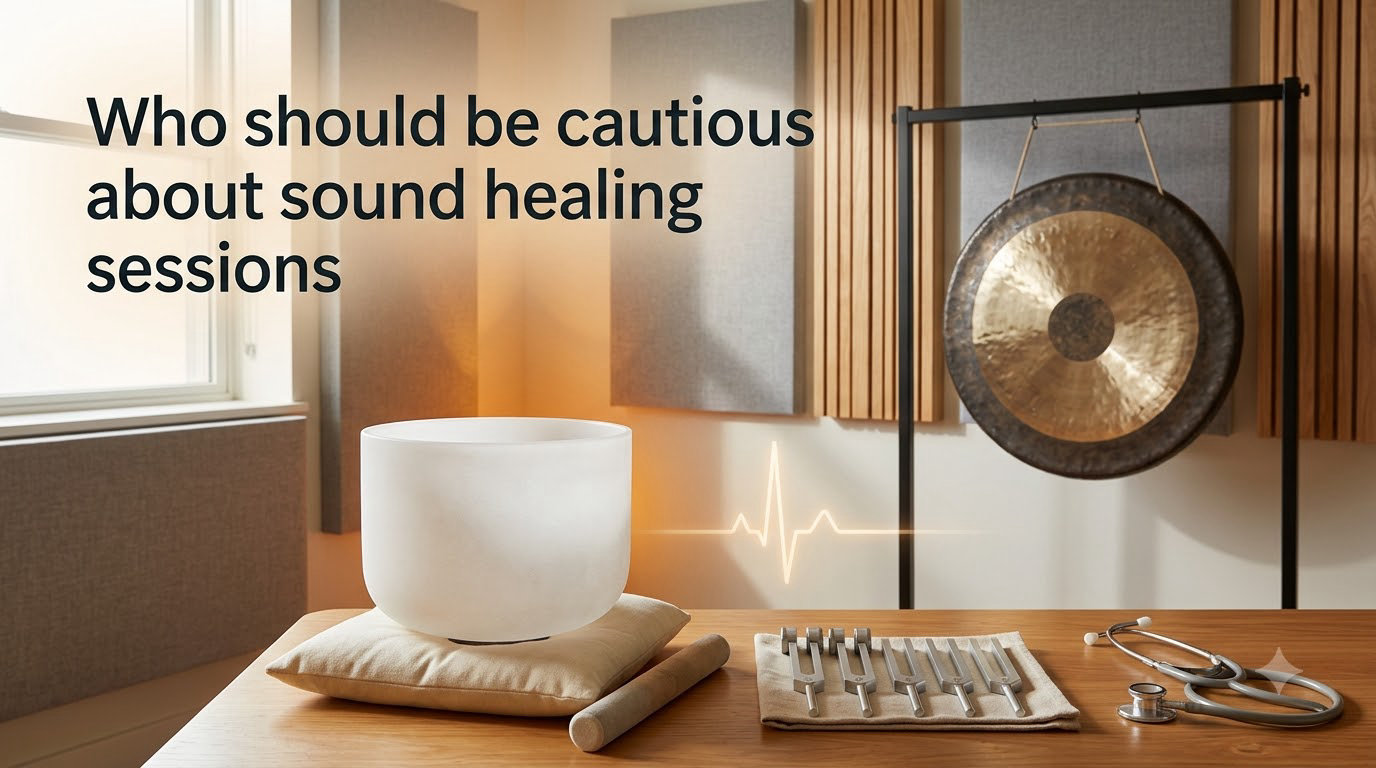
I have spent the last two years researching and writing about energy practices, and one question keeps coming up from our readers: who should be cautious about sound healing sessions?
Sound healing has exploded into the mainstream. Group sound baths fill yoga studios, meditation retreats add Tibetan singing bowls to their programs, and wellness influencers on social media swear by tuning forks. Most people walk away from a session feeling calm, grounded, and sometimes emotionally lighter. But here is the thing. Sound is vibration, and vibration interacts with your nervous system, your brain, and even medical hardware in ways that are not safe for everyone.
Our team has reviewed clinical research, consulted with certified sound therapists, and read hundreds of forum threads from people who had unexpected reactions during sessions. This guide gives you the complete picture of who needs to be cautious before booking a sound bath or private session. You will learn the medical conditions that require clearance, the common side effects that catch first-timers off guard, and a self-assessment checklist to help you decide.
Table of Contents
Who Should Be Cautious About Sound Healing Sessions?
Several specific groups should be cautious about sound healing sessions. These include people with epilepsy or seizure disorders, those in the first trimester of pregnancy, anyone with a pacemaker or implanted electronic device, individuals with a VP shunt for hydrocephalus, people living with severe PTSD or anxiety disorders, and anyone with significant tinnitus or Meniere’s disease.
The reason these groups need caution is straightforward: sound is vibration, and vibration interacts with your nervous system, your brain, and implanted medical hardware in ways that can cause harm rather than help. Below we explain each group, why the risk exists, and what to do about it.
What “Sound Healing Contraindications” Means
A contraindication is a medical term for a specific reason to avoid a treatment. In sound healing, contraindications are health conditions where vibrational therapy can cause harm rather than benefit. Reputable practitioners screen for these conditions before every session.
Sound waves are physical vibrations that move through your body, your skull, your inner ear, and your cerebrospinal fluid. For most healthy adults this is gentle and soothing. For people with seizure disorders, certain implants, or unstable mental health conditions, those same vibrations can trigger a serious reaction.
Epilepsy and Seizure Disorders: The Highest-Risk Group
People with epilepsy sit at the top of every contraindication list because certain frequencies can trigger a seizure, even in people whose seizures are usually well controlled.
The specific risk is called an audiogenic seizure, a seizure triggered by sound. It happens in a small percentage of people with epilepsy, but the consequences are severe. Flashing lights at concerts are a more famous trigger, but specific sound frequencies and rapid pulses can do the same thing.
Sound-Induced Epilepsy Explained
Sound-induced epilepsy is a reflex epilepsy where seizures are reliably triggered by particular sounds. Common triggers include sudden loud noises, specific musical patterns, and certain frequencies produced by gongs or drums. If you have any history of reflex seizures, sound healing carries real risk.
I spoke with one certified sound therapist who told me she turns away anyone who discloses epilepsy, even when they bring a medical clearance letter. The risk of a session triggering a seizure is high enough that she will not accept the liability. That matches the position of the Academy of Sound Healing and most professional training bodies.
Instruments That Carry Higher Risk
Not every instrument carries the same level of risk. Gongs, large Tibetan singing bowls, and frame drums produce louder, more complex vibrations and are more likely to provoke a reaction. Tuning forks and high-pitched crystal bowls are gentler but still carry some risk for sensitive individuals.
If you have a history of seizures and still want to explore sound work, talk to your neurologist first. Some people with well-controlled epilepsy tolerate private, low-volume sessions without incident. The key is disclosure, medical clearance, and a practitioner who knows how to adjust.
Pregnancy: First Trimester Requires Special Caution
Pregnant people in the first trimester should approach sound healing with caution, and many practitioners decline first-trimester bookings altogether.
The concern is not that sound waves harm a developing fetus. The actual risks are more practical. Lying on your back for 60 to 90 minutes during a session can reduce blood flow in late pregnancy. Strong vibrations can trigger nausea during morning sickness. And intense emotional releases can spike stress hormones at a vulnerable developmental stage.
What Changes in the Second and Third Trimester
Many sound therapists welcome pregnant clients after the first trimester, especially for private sessions where positioning can be adjusted. Side-lying or propped-up positions remove the back-pressure concern. Lower volume and shorter sessions reduce nausea risk.
Always tell your practitioner how far along you are, and clear the session with your midwife or OB if you have any complications. Our team spoke with two prenatal-focused sound therapists who said most of their pregnant clients describe the sessions as “the deepest rest they got during pregnancy.” But they also screen carefully and decline high-risk pregnancies.
Pacemakers, Defibrillators, and Metal Implants
Anyone with a pacemaker, implantable defibrillator, or other electronic medical device needs to be cautious about sound healing, especially sessions that place instruments directly on the body.
The concern is vibrational interference. Strong low-frequency vibrations, the kind produced when a singing bowl is placed on or near the chest, can potentially disrupt the function of pacemakers and implanted defibrillators. There is limited clinical research on this specific interaction, but the theoretical risk is enough that both medical device manufacturers and trained sound therapists recommend caution.
Metal Plates, Screws, and Joint Replacements
Metal implants from orthopedic surgery, dental work, or fracture repairs do not carry the same electronic risk. However, some people report feeling localized discomfort or vibration sensation in areas with metal hardware during sound baths. This is usually mild and not dangerous.
If you have any implanted electronic device, the safest approach is to keep instruments off your body, attend sessions at lower volume, and confirm with your cardiologist that the specific frequencies used are safe for your device model.
Mental Health Conditions: PTSD, Severe Anxiety, and Bipolar Disorder
People with PTSD, severe anxiety, panic disorder, or bipolar disorder should be cautious about sound healing, particularly deep immersion sessions.
The mechanism here is emotional. Sound baths intentionally slow brainwave activity and quiet the rational mind. For most people this produces calm. For someone with unprocessed trauma, the same quieting effect can open a door to flashbacks, panic attacks, or overwhelming emotion.
What Forum Users Report
Across meditation and energy work forums, the most common negative experience people describe is unexpected emotional flooding. One user wrote about having a “mental break” during a sound bath, an intense PTSD trigger that left them disoriented for days. Others describe sudden waves of unexplained sadness, fear, or grief that felt unmanageable in a public setting.
I want to be clear: this does not mean sound healing is bad for trauma survivors. It means unscreened sound healing is risky. Trauma-informed practitioners screen for mental health history, offer private sessions, give you permission to leave at any time, and stay available afterward to ground you.
Bipolar Disorder and Manic Episodes
People with bipolar disorder face a different concern. The deep meditative states induced by sound can occasionally trigger mania in people who are sensitive to altered states. This is not common, but it has been reported. Anyone with a bipolar diagnosis should talk to their psychiatrist before attending, especially if they have a history of manic episodes triggered by meditation or breathwork.
Tinnitus and Meniere’s Disease: Hearing-Related Caution
People with tinnitus or Meniere’s disease should approach sound healing with caution, not because the practice is dangerous, but because the wrong session can worsen symptoms.
Tinnitus is the perception of sound when no external sound is present. Loud or high-pitched sound baths can temporarily intensify tinnitus symptoms, leaving people with ringing, buzzing, or pressure that lasts hours or days after a session.
Working with a Practitioner Who Understands Tinnitus
If you have tinnitus and want to try sound work, find a practitioner who specifically asks about hearing conditions. They can use lower-volume instruments, avoid high-frequency crystal bowls, and position you away from the loudest instruments in a group setting.
Meniere’s disease, which involves fluid buildup in the inner ear, adds another layer. Strong vibrations can trigger vertigo episodes in some people with Meniere’s. Private sessions with controlled volume are usually safer than large group sound baths.
VP Shunts and Hydrocephalus: A Rare but Important Warning
People with a ventriculoperitoneal (VP) shunt, a device used to treat hydrocephalus, are often advised to avoid sound healing entirely.
The risk is vibrational interference with the shunt’s pressure-regulating function. There is limited published research on this specific interaction, but hydrocephalus advocacy groups and some clinical practitioners have flagged it. The conservative recommendation is to avoid placing instruments on the body and to keep overall session volume moderate.
If you have a VP shunt or any other implanted shunt for hydrocephalus, talk to your neurosurgeon before attending. This is one warning most general wellness articles miss.
Common Side Effects Even for Healthy Individuals
Even healthy people with no medical conditions can experience temporary side effects after a sound healing session. Knowing these in advance prevents unnecessary alarm.
The most commonly reported side effects include headaches, dizziness, fatigue, and emotional release. These are usually mild and resolve within 24 to 48 hours. They happen because sound vibration moves energy through the body, and that movement can stir up tension, emotion, or physical residue.
Headaches and Dizziness
Headaches and dizziness typically show up within an hour after a session. They are more common after your first sound bath, after sessions using high-volume gongs, and after sessions where you lie close to the instruments. Hydration before and after a session reduces the likelihood.
Emotional Release: Crying, Sadness, or Sudden Calm
Crying during sound baths is common and considered normal in most traditions. So is a sudden wave of unexplained sadness or a flood of old memories. These reactions happen because vibration can unlock stored emotion.
If you experience emotional release, give yourself permission to feel it. Stay hydrated, rest, and avoid major decisions for a few hours. Most practitioners will tell you this is part of the process, not a sign something went wrong.
Fatigue and Digestive Discomfort
Some people feel deeply tired after a session, the kind of tired that comes from releasing tension you didn’t know you were holding. Others report mild digestive gurgling or queasiness, especially after sessions that focused on the lower abdomen.
Both are temporary. Rest, water, and a light meal usually resolve them within a day.
Self-Assessment Checklist: Should You Attend?
Before booking a sound healing session, run through this checklist. If you answer yes to any of these, talk to a healthcare provider first or seek a modified private session.
- Do you have epilepsy or any seizure disorder?
- Are you in the first 12 weeks of pregnancy?
- Do you have a pacemaker, defibrillator, or implanted electronic device?
- Do you have a VP shunt or any implanted shunt?
- Do you have a diagnosis of PTSD, severe anxiety, panic disorder, or bipolar disorder?
- Do you have tinnitus, Meniere’s disease, or any hearing condition?
- Have you had surgery in the last 6 weeks?
- Are you currently in an acute mental health crisis?
- Have you had an adverse reaction to sound therapy, meditation, or breathwork before?
If you answered yes to one or more items, you do not necessarily have to skip sound healing. You may just need medical clearance, a different format (private instead of group), or a more experienced practitioner.
5 Questions to Ask Your Sound Healing Practitioner
How a practitioner responds to these questions tells you almost everything you need to know about whether they are safe to work with.
- Do you screen for medical conditions before sessions? A clear yes is the baseline. Practitioners who say “we don’t need to know your medical history” are skipping a critical safety step.
- What training and certification do you hold? Look for programs accredited by bodies like the International Sound Therapy Association or the Sound Healing Academy. Weekend workshop certificates are not the same as 200+ hour training programs.
- Can I leave the room if I feel uncomfortable? The answer must be an unqualified yes, with no awkwardness or judgment.
- Do you offer modified sessions for sensitive clients? Lower volume, shorter duration, and private settings are all signs of a trauma-informed practitioner.
- Have you worked with clients who have my specific condition? Experience with epilepsy, pregnancy, or PTSD specifically is more valuable than general experience.
When to Consult a Doctor Before Attending
If you have any of the conditions listed in the self-assessment above, or if you take medications that affect your nervous system, talk to your doctor before booking. This is especially important for anyone on anticonvulsants, antidepressants, or anti-anxiety medication.
The goal is not to get permission to attend. The goal is to make sure your doctor is aware, can flag any drug interactions, and can support you if you have an unexpected reaction. Bring a list of the instruments the practitioner plans to use and ask if there are any concerns.
Frequently Asked Questions
Who should avoid sound healing?
People who should avoid sound healing include anyone with epilepsy or a seizure disorder, individuals in the first trimester of pregnancy, people with pacemakers or implanted electronic devices, those with a VP shunt for hydrocephalus, and individuals in an active mental health crisis. People with severe PTSD, bipolar disorder, or tinnitus should consult a healthcare provider before attending.
What are the side effects of sound healing?
Common side effects of sound healing include headaches, dizziness, fatigue, emotional release (crying or sudden sadness), and mild digestive discomfort. These effects are usually temporary and resolve within 24 to 48 hours. Drinking water before and after a session reduces the likelihood of physical side effects.
Is there any truth to sound healing?
Research on sound healing shows measurable effects on relaxation, heart rate variability, and perceived stress. Studies on specific healing claims are limited, but the relaxation and nervous system regulation benefits are well documented. Sound healing should be viewed as a complementary practice, not a replacement for medical treatment.
Who should not use singing bowls?
People who should not use singing bowls include those with epilepsy, pacemakers, VP shunts, first-trimester pregnancy, severe PTSD or anxiety disorders, and tinnitus that worsens with vibration. Singing bowls placed directly on the body carry higher risk for people with implanted devices or shunts.
What are the contraindications of sound healing?
The main contraindications of sound healing are epilepsy and seizure disorders, first-trimester pregnancy, pacemakers and implanted electronic devices, VP shunts, severe mental health conditions including PTSD and bipolar disorder, and tinnitus or Meniere’s disease. A qualified practitioner will screen for these conditions before any session.
Final Thoughts on Sound Healing Safety
If you remember nothing else from this guide, remember this: who should be cautious about sound healing sessions includes anyone with epilepsy, first-trimester pregnancy, implanted electronic devices, VP shunts, severe mental health conditions, or significant hearing disorders. Everyone else can usually attend safely with a qualified practitioner.
Sound healing is a beautiful practice when done with care. It can support deep rest, ease anxiety, and help people process emotion in a way that talk therapy sometimes cannot. The key is matching the right session to the right person. Run the self-assessment, ask the practitioner questions, and clear it with your doctor if you have any condition on the caution list.
If you are healthy and curious, go. Bring water, give yourself the day to rest afterward, and tell the practitioner about anything you notice. Sound work has helped millions of people feel more at home in their own bodies. The warnings above exist to make sure it helps you too.