
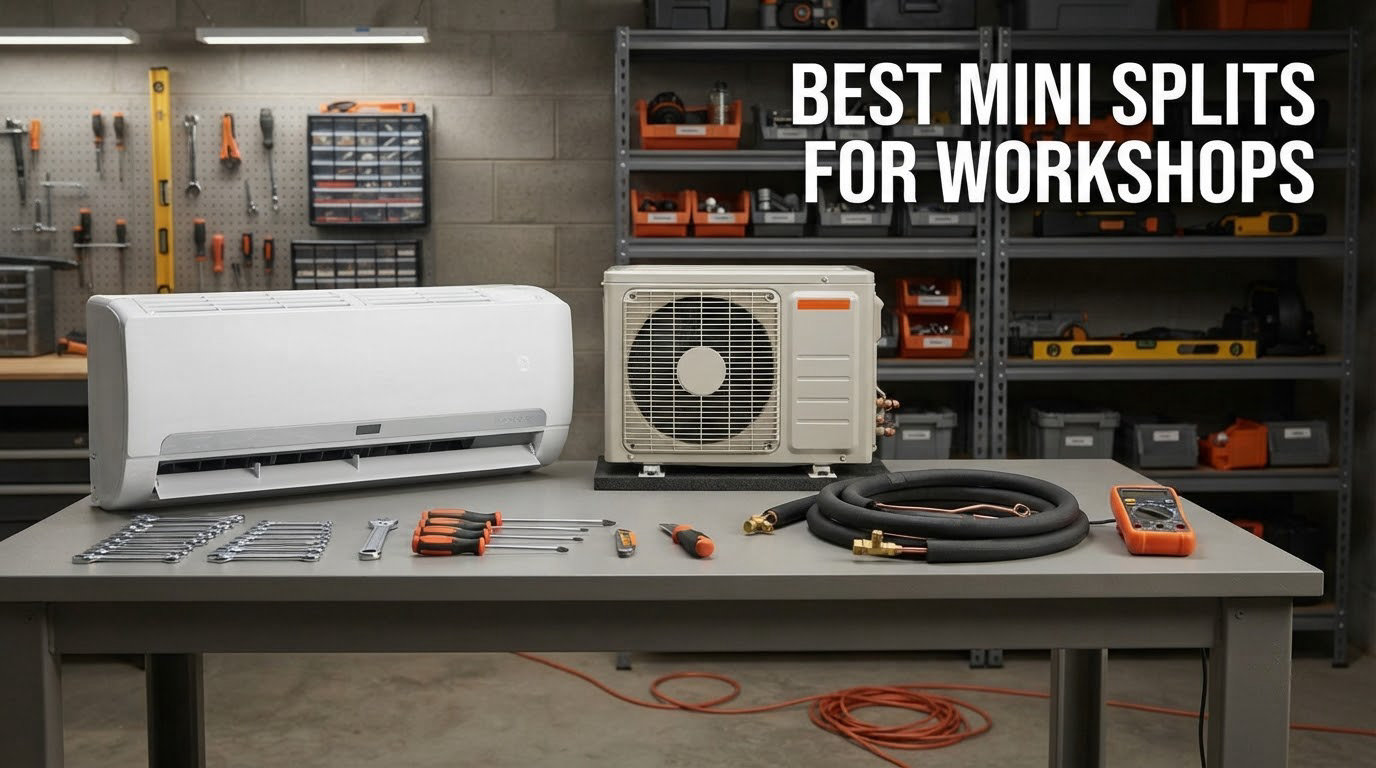
A mini split is the most practical way to heat and cool a detached workshop, because it needs no ductwork and no existing HVAC system. A single ductless heat pump moves heat rather than generating it, so the same wall-mounted head and outdoor condenser cool your shop in July and heat it in January. For most shops the starting point is simple: about 20 BTU per square foot of floor area, then adjust for the heat the building itself and your equipment generate.
That adjustment is where most garage installs go wrong. A workshop is not a bedroom. The garage door, the concrete slab, afternoon sun on a west wall, a running air compressor and a vehicle with the engine still warm are all adding load a bedroom never sees. An undersized system runs continuously and still never reaches setpoint, and one widely discussed case on r/hvacadvice describes a 660 sq ft three-car garage in Arizona where a 1-ton unit was sold as sufficient and never kept up in summer heat above 110F.
We spent six weeks working through the sizing math, the electrical requirements and the ten systems below, because the decision in a workshop is rarely which brand is best. It is how much capacity your load actually needs, whether you have the voltage to run it, and whether there is a wall to mount the indoor head on. Here is our roundup of the best mini splits for workshops, ordered from the most broadly useful shop unit to the options built for specific voltages, ceiling heights and climates.
One more thing before we start. If your shop is under about 300 sq ft, or if you are still finishing it out, the small gear matters as much as the cooling. A good flip chart easel for workshop planning costs nothing in power, and conditioning the space is only half of making it usable year round.
Table of Contents
Top 3 Mini Splits for Workshops in 2026
Those three cover the range most shops actually need. The Senville is the default answer for a typical two-car shop where the subpanel only offers 110V. The COSTWAY is the middle rung of the sizing ladder and, in our view, the most useful single unit in the whole list. The DELLA Vario is the four-season answer for anyone who works in the shop in winter and wants the running cost kept down.
For a shop bigger than about 1,200 sq ft, or one with a high ceiling, skip ahead to the 2-ton and 3-ton picks further down. They are not better units, they are correctly sized ones.
All 10 Best Mini Splits for Workshops in 2026
| Product | Specifications | Action |
|---|---|---|
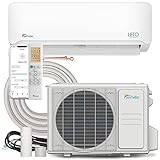 Senville LETO 12000 BTU Senville LETO 12000 BTU |
|
Check Latest Price |
 Mountman 12000 BTU Mountman 12000 BTU |
|
Check Latest Price |
 YITAHOME 12000 BTU YITAHOME 12000 BTU |
|
Check Latest Price |
 ROVSUN 9000 BTU ROVSUN 9000 BTU |
|
Check Latest Price |
 COSTWAY 18000 BTU COSTWAY 18000 BTU |
|
Check Latest Price |
 DELLA Vario 18000 BTU DELLA Vario 18000 BTU |
|
Check Latest Price |
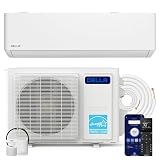 DELLA Optima 18000 BTU DELLA Optima 18000 BTU |
|
Check Latest Price |
 Cooper and Hunter 18000 BTU Cooper and Hunter 18000 BTU |
|
Check Latest Price |
| COSTWAY 24000 BTU |
|
Check Latest Price |
| DELLA Vario 36000 BTU |
|
Check Latest Price |
Two things stand out in that lineup before you read a single review. Every single-zone system here is a wall-mounted high-wall head, which matters if your shop has exposed structure or a high ceiling with nowhere sensible to hang a unit. And the voltage split is stark: three of these run on 110V or 115V circuits, while the other seven need 208V or 230V.
1. Senville LETO 12000 BTU – the Best All-Round Shop Unit
Senville LETO Mini Split Air Conditioner, Heat Pump, White, 12000 BTU
12000 BTU
20.8 SEER2
110V
28 dB indoor
700 sq ft
5 yr compressor
Pros
- Largest review base in this roundup at over 2000 reviews
- 20.8 SEER2 is the highest efficiency figure among the 12000 BTU models here
- Runs on a standard 110V circuit so no panel work in most shops
- Heating function rated down to 5F
- Indoor head is only 26 inches wide for tight walls
Cons
- Line set is pre-loaded only to 25 feet so longer runs need a refrigerant adjustment
- Labor is not covered by the warranty
- App setup is less polished than the hardware
Over two thousand reviews is more history than anything else in this roundup, and it matters here more than a clever spec sheet would. When a unit has been running in thousands of detached garages and small shops for a decade, the failure modes are known rather than hypothetical. The LETO holds a 4.4 average across that history, which is about as stable as consumer electronics gets.
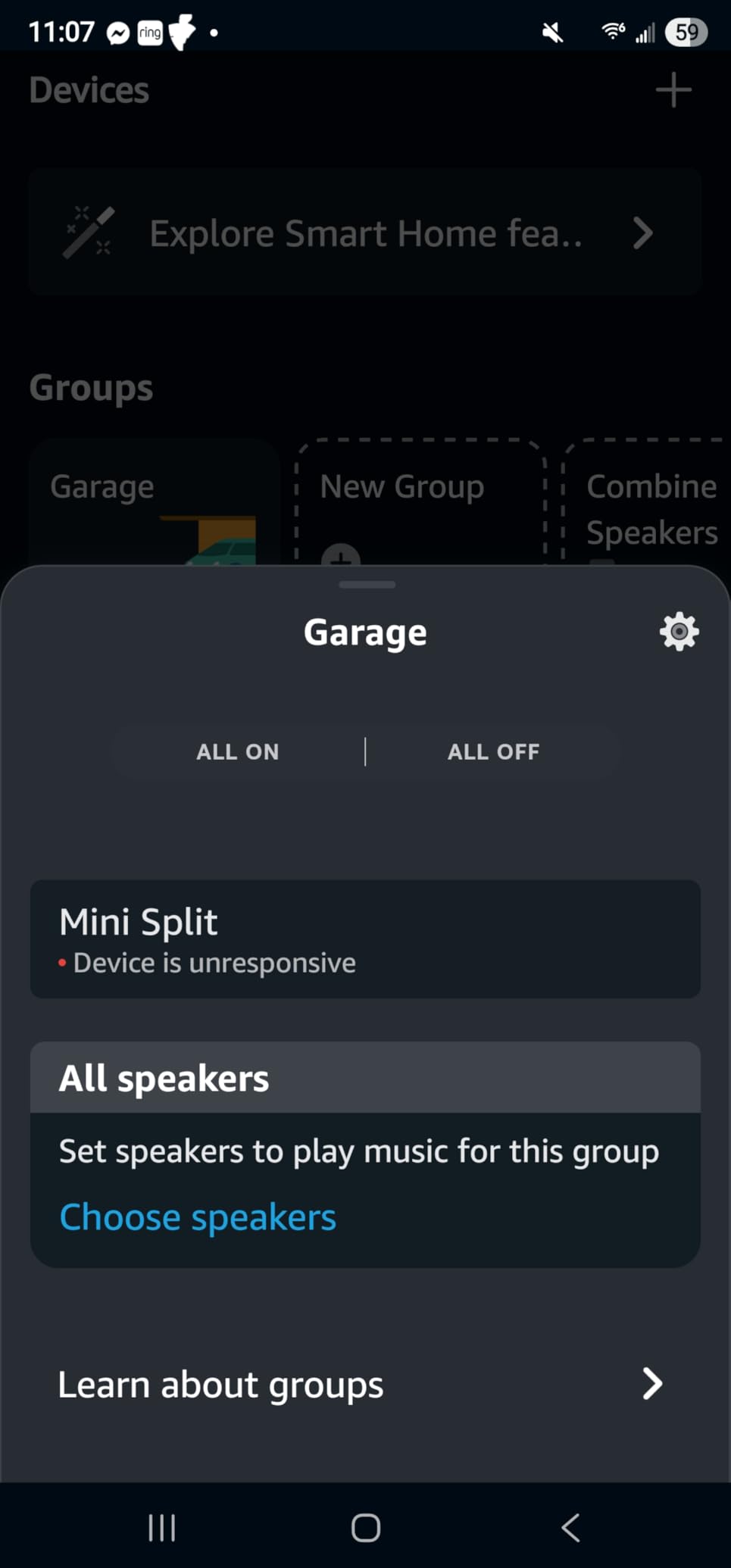
The specification that makes this the workshop default is 110V. Nearly every other 1-ton system in this list is a 230V machine, and a 230V requirement in a detached garage usually means a new circuit, a panel check, and sometimes a subpanel. The LETO sidesteps that entirely, and it still delivers 20.8 SEER2 with an inverter compressor.
The indoor head is 26 inches wide, which is narrower than the other 12000 BTU models here and genuinely useful on a stud wall squeezed between a garage door track and a workbench. Heating is rated to operate down to 5F, so a temperate winter shop is covered, though this is not the unit for a Minnesota workshop.
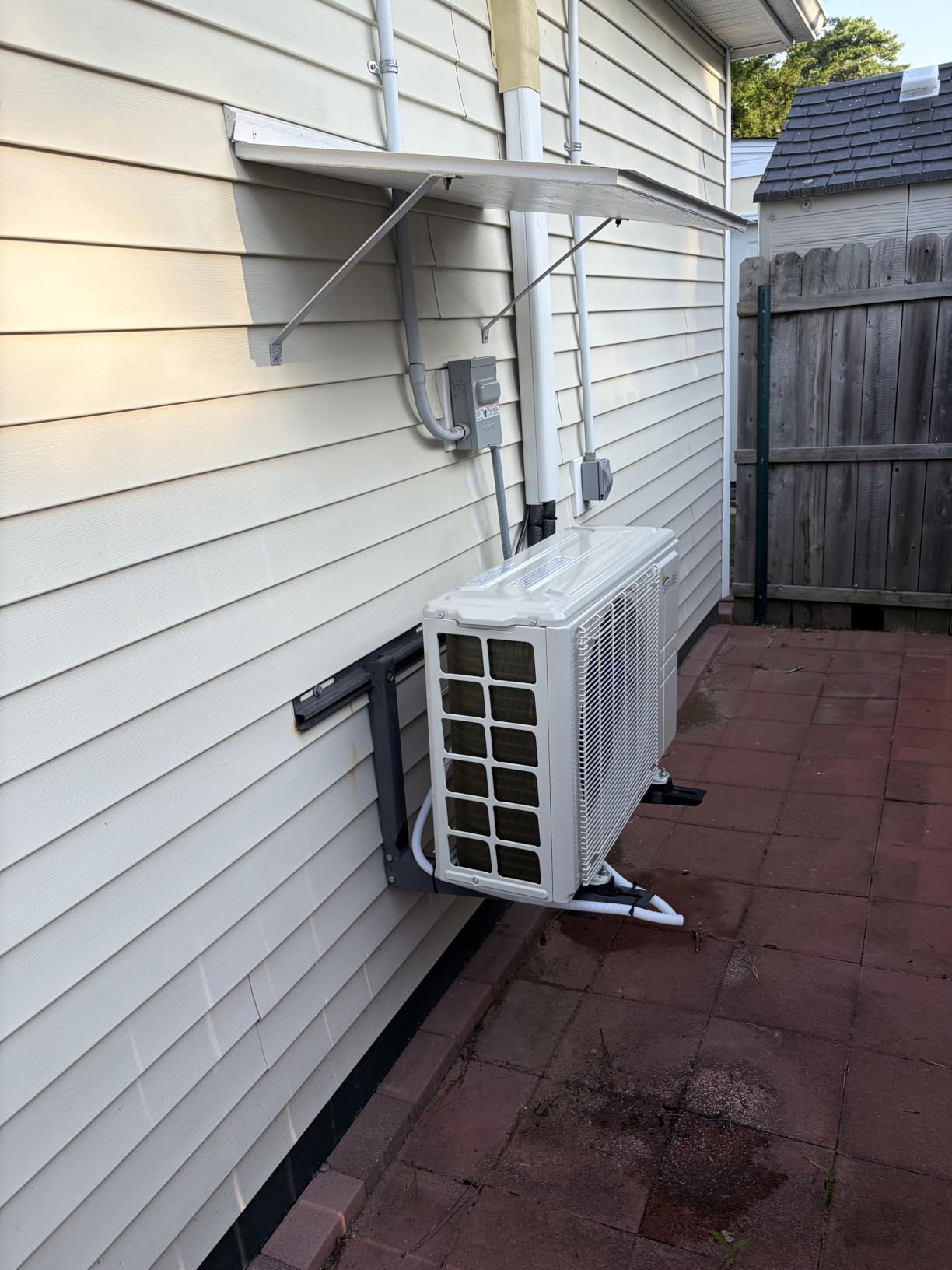
Where the LETO fits a workshop
This is the right call for an insulated or partially insulated two-car shop where you want the space comfortable for a few hours of evening work rather than all day. It also covers a larger shop if you add door insulation and a vapor barrier on the slab first, because that prep work is what makes a small system feel undersized or adequate.
A forum owner on forums.homeseer described a 15,000 BTU single-zone system in a garage as the best change he had made to the space, and that report is a useful counterpoint: the 15,000 BTU size is the one real-world sweet spot that most roundups skip. The LETO is available across a range of capacities in the same product family, so it is worth checking whether a larger variant of this line exists in your voltage before you settle.
Where it falls short
The line set is pre-loaded to 25 feet, and most detached shops put the condenser further away than that. Going longer means a refrigerant adjustment, which means a technician, which erodes the savings you made by choosing this unit in the first place.
Measure your run before you buy. If the distance from the head to the condenser pad is more than 25 feet, budget for the adjustment or pick a system that includes a longer pre-charged set.
2. COSTWAY 18000 BTU – the Best Value for a Standard Two-Car Shop
COSTWAY 18000BTU Mini Split Air Conditioner& Heater
18000 BTU
1.5 ton
19 SEER2
208V
23 dB rated
1250 sq ft
Pros
- 23 dB rated operation is near the quiet end of this group
- Five years parts and eight years compressor coverage
- 124 CFM per watt airflow
- Includes 13 ft copper line set plus drain hose and communication wire
Cons
- Installation manual and remote documentation are unclear in places
- A vacuum pump and manifold gauges are required and not included
- One reviewer reported a flare joint failure shortly after install
Eighteen thousand BTU is the number that shows up again and again when garage and workshop owners talk about sizing, and this is the version of it we would buy first. It is a full ton and a half, which is enough headroom for a shop with a garage door that gets opened, a compressor running and a vehicle warming up, without dropping into the two-ton territory that needs a bigger circuit.
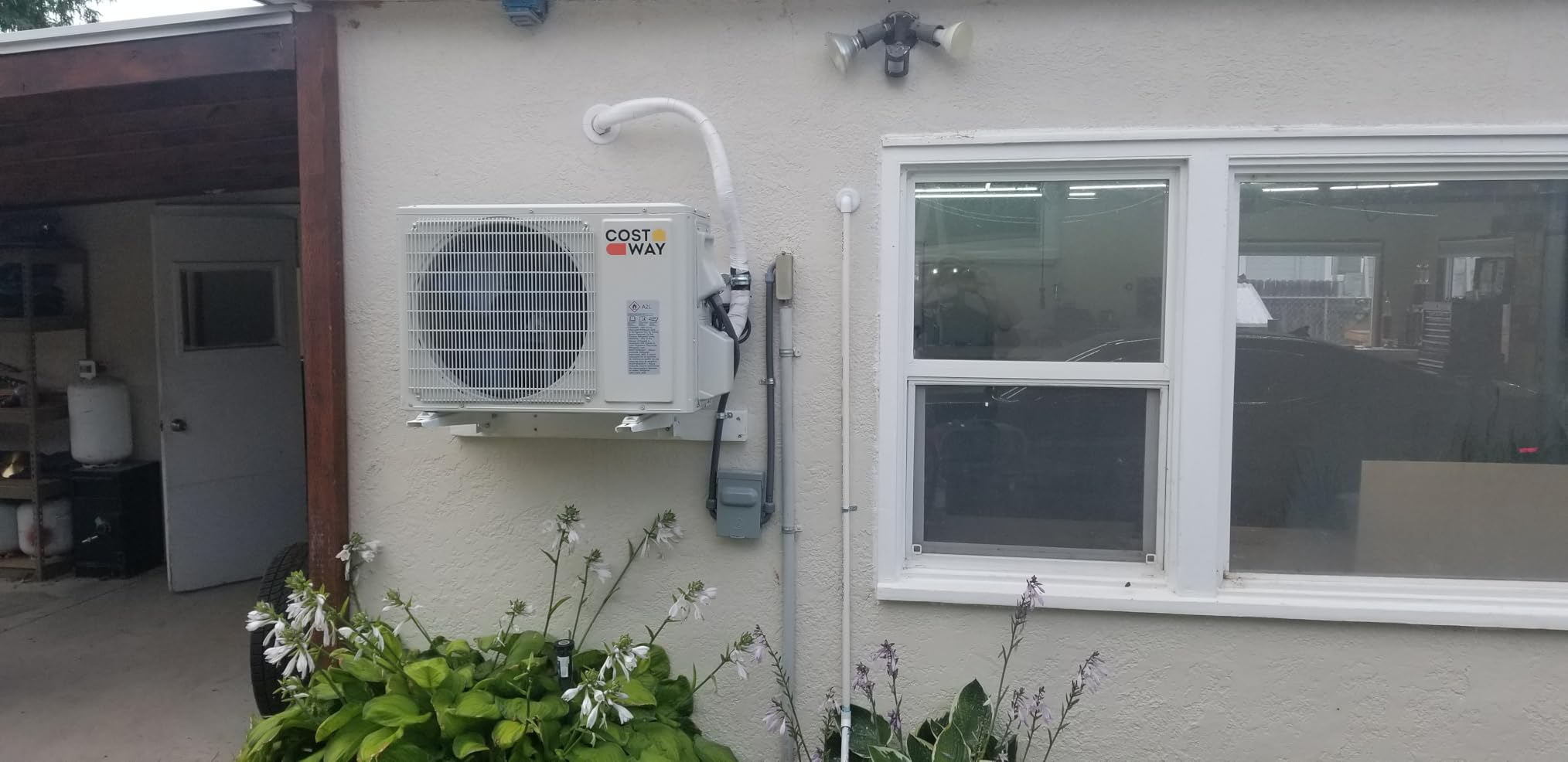
The warranty is the standout on paper: five years on parts and eight years on the compressor. In a shop full of sawdust and metal fines, compressor longevity is the thing that actually determines whether a system is still working in year twelve, and buyers on this listing report that the company has replaced faulty parts quickly and at no charge.
Airflow is rated at 124 CFM per watt, which matters more in a workshop than in a bedroom because you want air moving across the space rather than a gentle stream at the wall. The self-clean cycle at 134.6F keeps the coil from baking on shop humidity, and the washable filter is the one you will be pulling out every month.
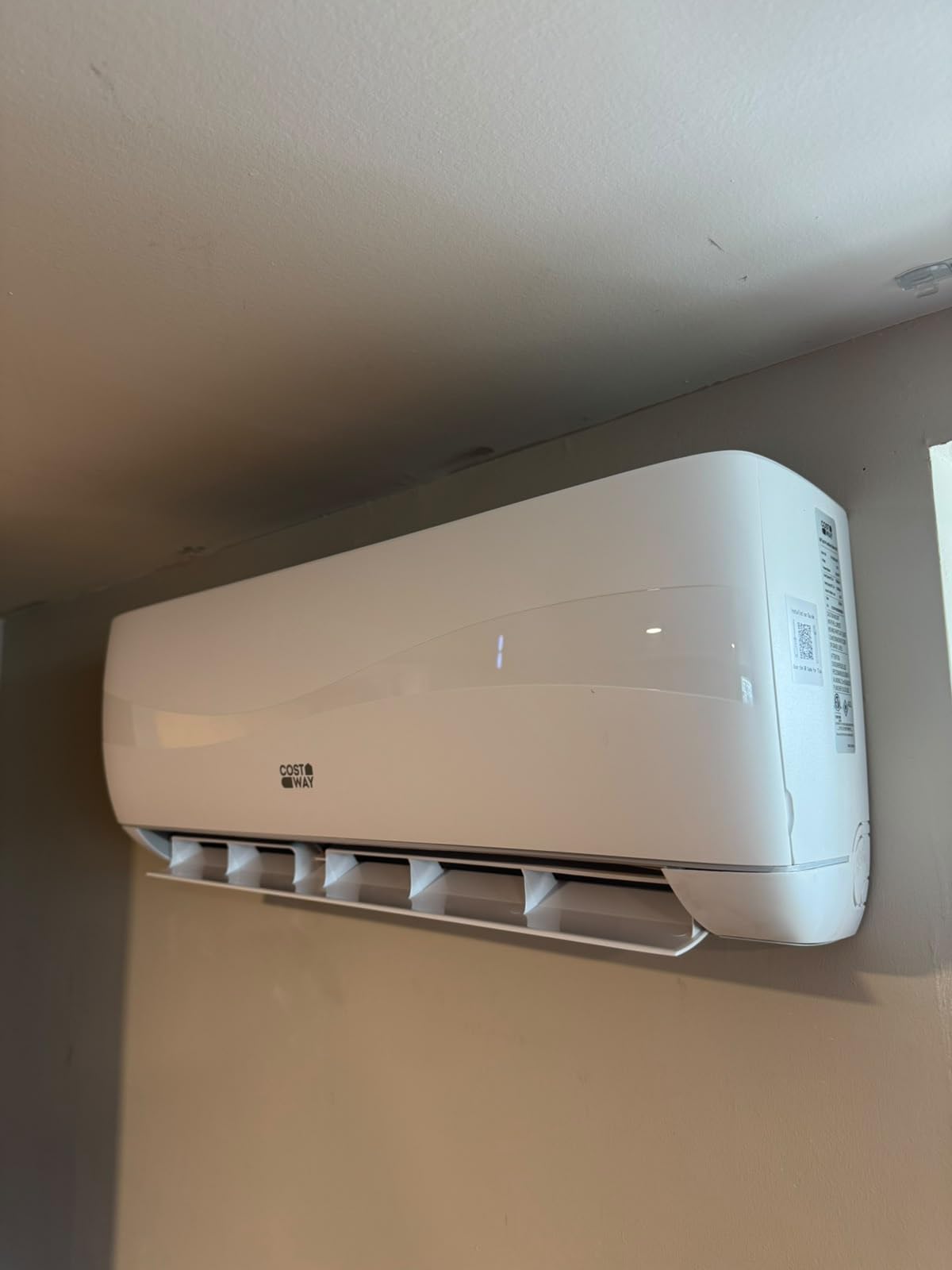
What a 1.5-ton system actually buys you
It buys temperature recovery. A 1-ton unit in a two-car garage spends its afternoon chasing a setpoint it cannot reach, and the compressor runs near continuously doing it. This system has enough capacity to pull a hot shop down to workable temperature and then hold it without short-cycling, which is the difference between a shop you use and a shop you only enter briefly.
It is also the size that keeps the humidity in check. Forum users on forums.pelicanparts warn that an undersized system leaves you cold and clammy rather than dry, because it cannot pull enough moisture out before it runs out of cooling capacity. Sizing for the load is the fix, not lowering the setpoint.
Where it is the wrong choice
This is a 208V system. If your shop subpanel has only 115V receptacles and no spare 240V slot, this is where people discover that the advertised price does not include electrical work. A coupler on coueswhitetail put it plainly in an install write-up: at 18,000 BTU and above you need 220V, and that is a planning problem, not a purchase problem.
The documentation is the other weak point. Several owners describe the manual and remote guide as unclear, so budget extra time for setup, or have the installer walk you through the modes.
3. DELLA Vario 18000 BTU – the Best Balance of Efficiency and Cold-Weather Heating
DELLA Vario Series 18000 BTU Wifi Mini Split AC, Work with Alexa 21 SEER2 Cools Up to 1000 Sq.Ft, Energy Efficient 230V Ductless Inverter System with 1.5 Ton Pre-Charged Heat Pump & 16.4ft Kit
18000 BTU
21 SEER2
230V
heats to -4F
1000 sq ft
20A max fuse
Pros
- 21 SEER2 cuts running cost in a space used year round
- Heating rated to -4F for four-season shops
- 4D airflow and I Feel remote sensing
- Pre-charged with a full installation kit included
- Adjustable 60-90F range
Cons
- Professional installation and line-set vacuuming are required
- Any change to line-set length needs a refrigerant adjustment
- Indoor head is nearly 40 inches wide
Same 1.5-ton capacity as the COSTWAY, but a different proposition. This one is 21 SEER2 and rated to heat down to -4F, which makes it a genuine four-season system rather than a cooling unit that happens to run a heat pump. If your shop is used from January to December, those two numbers matter more than the purchase price does.
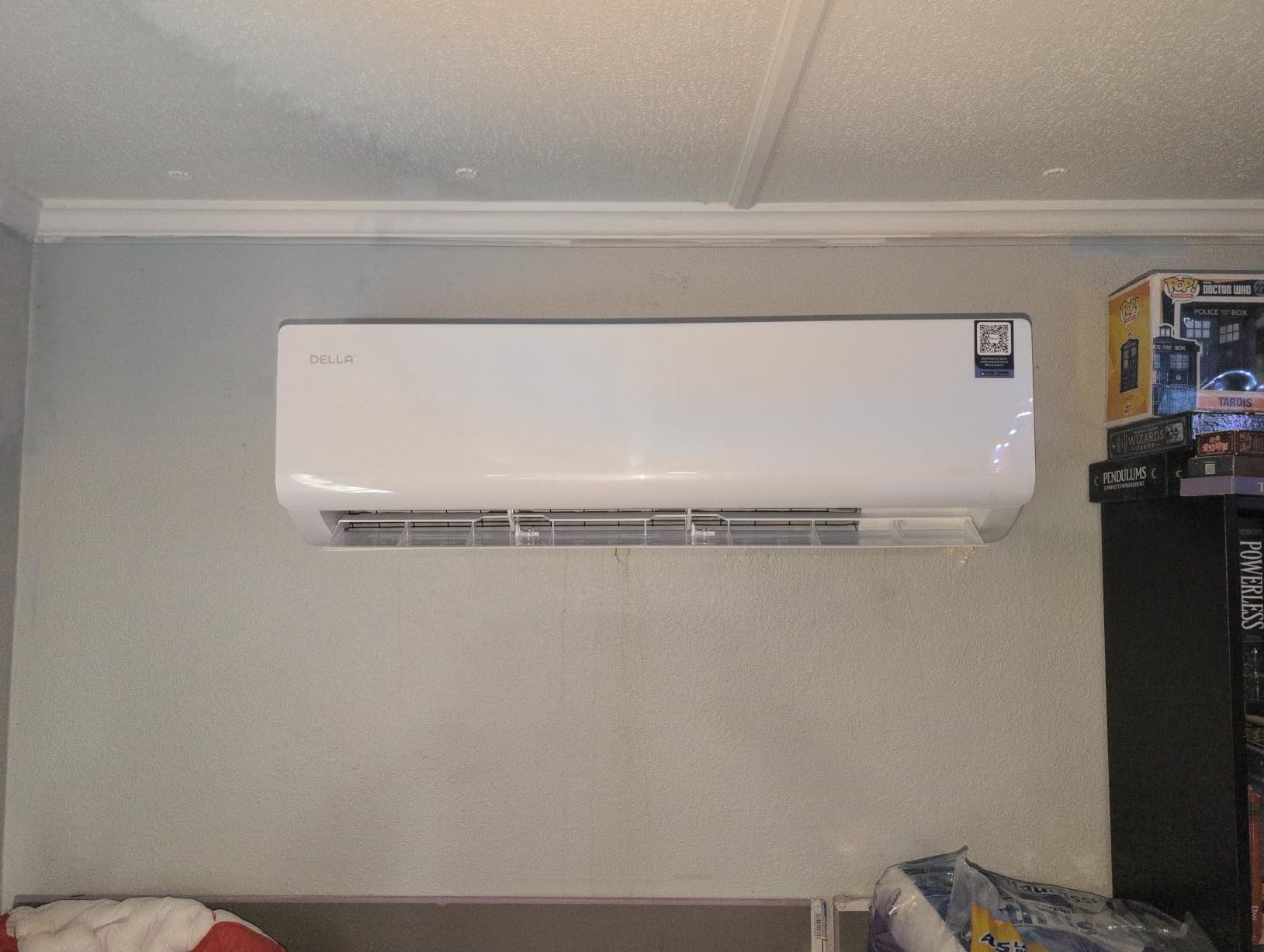
Efficiency is where the money returns. SEER2 is the rating measured under the current M1 test procedure, so a 21 here is not directly comparable to an old SEER number on a legacy listing. In a space with a concrete slab and a garage door, where every watt goes into moving heat rather than maintaining a comfortable house, the difference between 19 and 21 compounds over a long heating season.
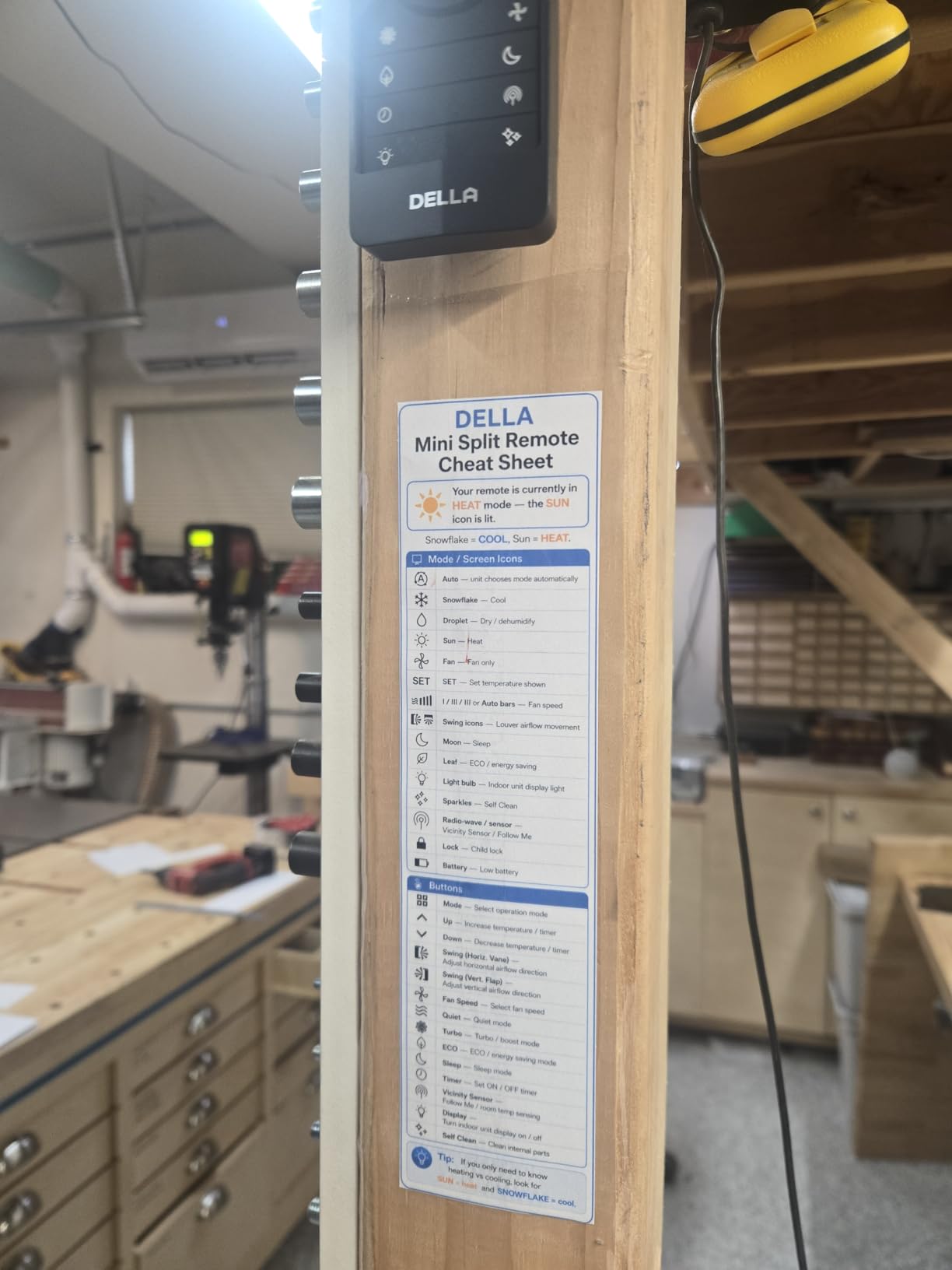
The unit uses a DC inverter compressor with the I Feel function, meaning the sensor in the remote reports the temperature at your position rather than at the wall unit. On a 40-inch-wide head mounted high on a shop wall, that is a real accuracy gain, not a gimmick.
Why the efficiency number matters in a shop
A workshop is often the second-largest energy consumer in a house after the main building, and unlike a house it is uninsulated at the door and the walls. Lower SEER2 translates directly into a smaller compressor that can carry a given load on less power, which is why owners of this unit point to running cost rather than purchase price when they defend the choice.
It also runs on a 20A maximum fuse at 230V. That is a modest electrical requirement for a 1.5-ton system and a much easier panel conversation than the 30A a 3-ton unit demands.
What to check before ordering
The head is listed at 39.76 inches wide, so you need a genuinely clear wall span. In a shop with a tool wall, a door track and a workbench, that measurement is often the thing that decides the layout.
Line-set changes need a refrigerant adjustment, and the manufacturer requires professional installation. If you were hoping to install this yourself, this is not the unit for you. For shop owners who do want a weekend project, the 115V systems further down this list are the realistic candidates.
4. COSTWAY 24000 BTU – the Best Fit for a Large or Hot Shop
COSTWAY 24000BTU Mini Split Air Conditioner& Heater
24000 BTU
2 ton
18.5 SEER2
208V
23 dB rated
44.5 inch head
Pros
- Two tons of capacity for a three-car shop or a high-ceiling space
- 23 dB rated operation
- Self-clean cycle and outdoor auto-defrost
- Customer support replaces or refunds parts promptly
Cons
- Remote only with no WiFi or app option
- Indoor blower may keep running after setpoint is reached
- Installation tools not included and documentation is imprecise
Two tons is the right jump when a shop passes roughly 1,200 sq ft, when the ceiling goes above nine feet, or when the summer design temperature is brutal. A high ceiling is the factor people forget: the same floor area under a 12-foot exposed structure holds a far larger volume of air than the same area under an 8-foot dropped ceiling, and the unit has to condition all of it.
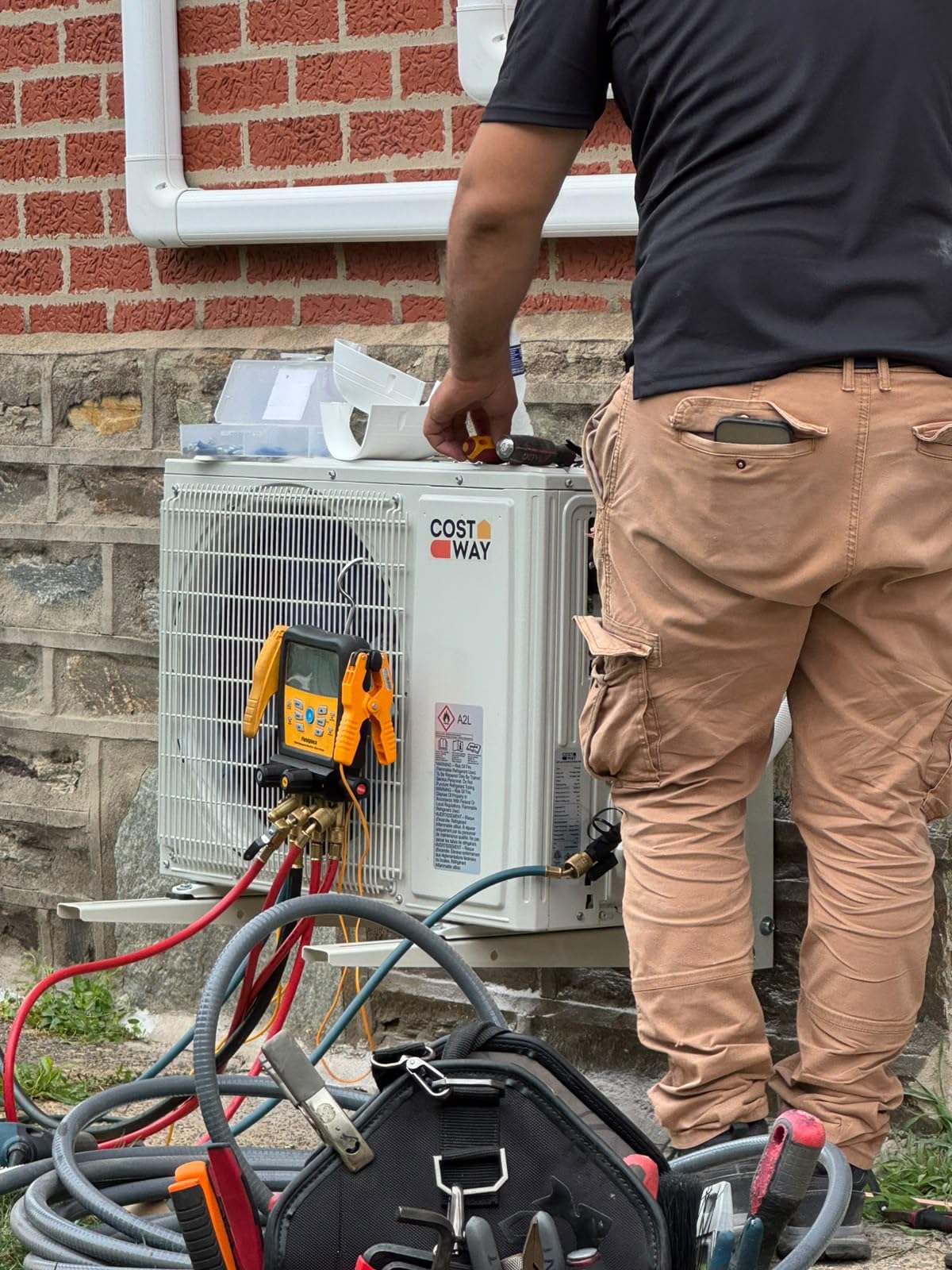
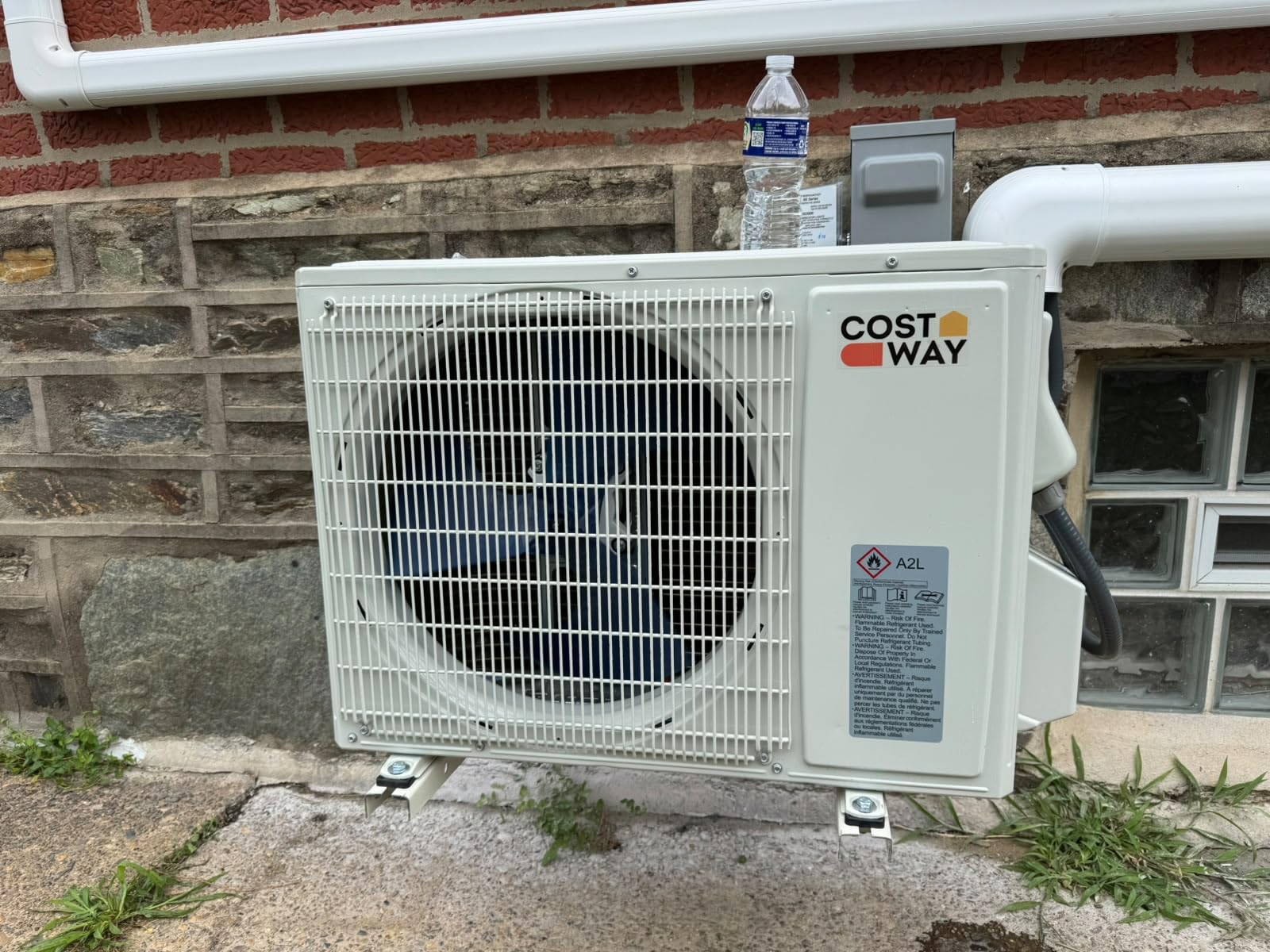
At 23 dB rated, this is at the quiet end of the systems here, and it shares the same self-clean and auto-defrost feature set as the 1.5-ton model. In a wood shop that generates fine dust, the washable filter and high-temperature self-clean cycle are doing real work to keep the coil from fouling.
The 18.5 SEER2 figure is the lowest among the 1.5-ton and 2-ton options here, and that is the trade you make for the extra ton of capacity. Operating cost is higher than a smaller system, but so is the amount of heat it moves.
When 2 tons is the correct answer
Choose it when your shop is uninsulated, faces west or south, has a concrete slab exposed on two sides, or runs an air compressor indoors. Each of those is a load factor that pushes a 1.5-ton system to its limit on a 95F day and leaves you short-cycling.
Owners running two-ton systems in their shops commonly report monthly operating costs that are noticeably higher than a one-ton install, so it is worth modelling the running cost before you commit to a bigger condenser than you expected to need.
What you give up
There is no WiFi or app control, so scheduling means a remote on the wall or a plug-in timer. In a shop where you walk in and out all day, that is a small loss, but it is a loss.
More significant is the wall. At 44.5 inches wide and 13 inches tall, this head needs a long uninterrupted span high on a wall. In a packed shop, plan the layout before you order.
5. Cooper and Hunter 18000 BTU – the Best Warranty Coverage Here
Cooper & Hunter 18,000 BTU 230V Wall Mount Mini Split AC, 19.2 SEER2
18000 BTU
19.2 SEER2
230V
30 dB
7 yr compressor 5 yr parts
16 ft line set
Pros
- Seven-year compressor and five-year parts warranty is the longest in this roundup
- 16 ft pre-flared insulated line set included with drain extension
- Smart kit app control as standard
- 30 dB indoor operation
- ETL
- UL and AHRI certified
Cons
- Not a DIY system and professional installation is required
- Some listings advertise auto-swing and I Feel features not present on the unit
- Warranty disputes reported over line-set failures
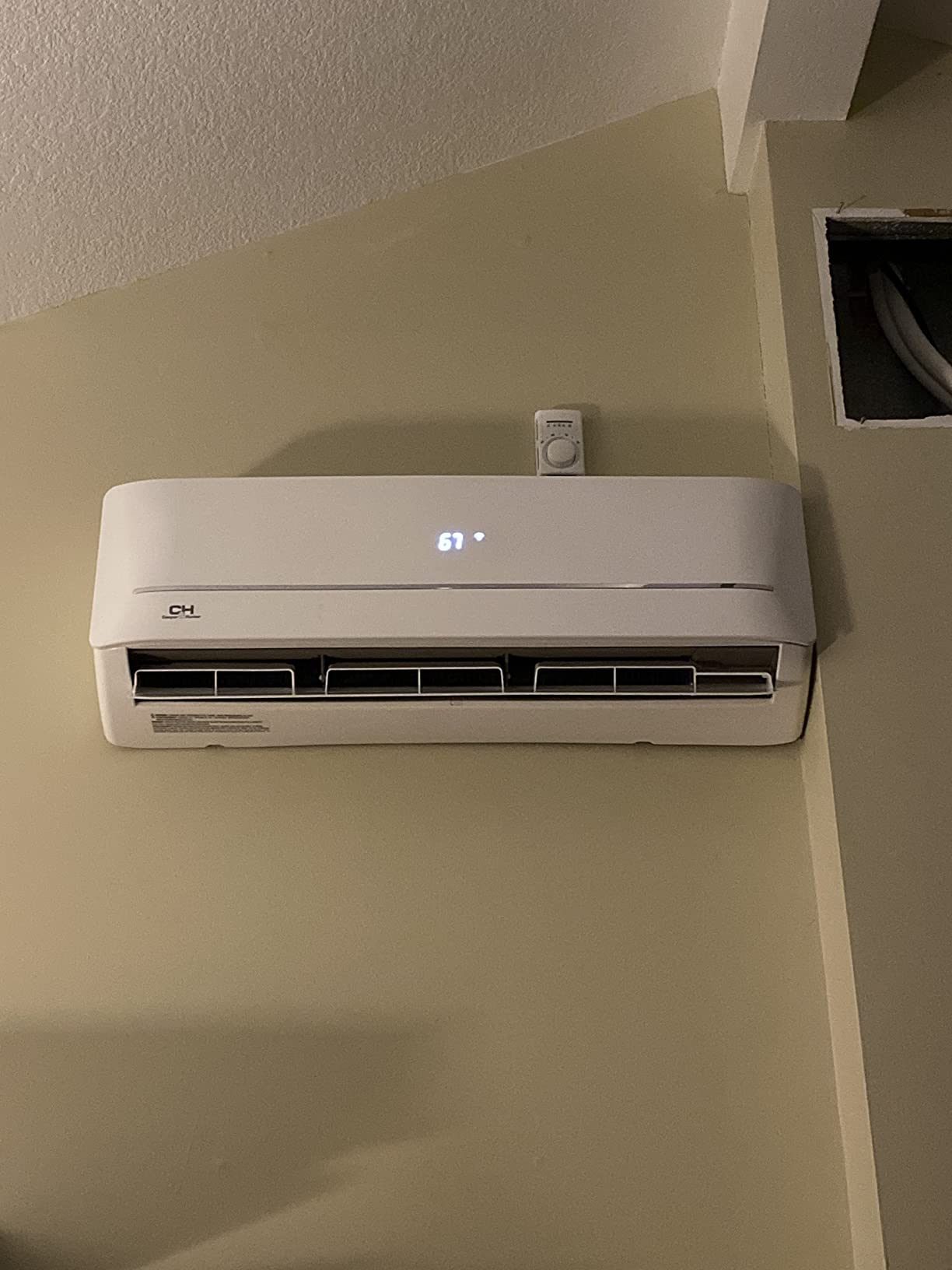
Warranty length is the least glamorous spec on this list and the one that most affects what happens in year ten. A seven-year compressor warranty on a 1.5-ton system is uncommon in this class, and in a shop that expects to run the unit every week for fifteen years it is the difference between one compressor replacement and none.
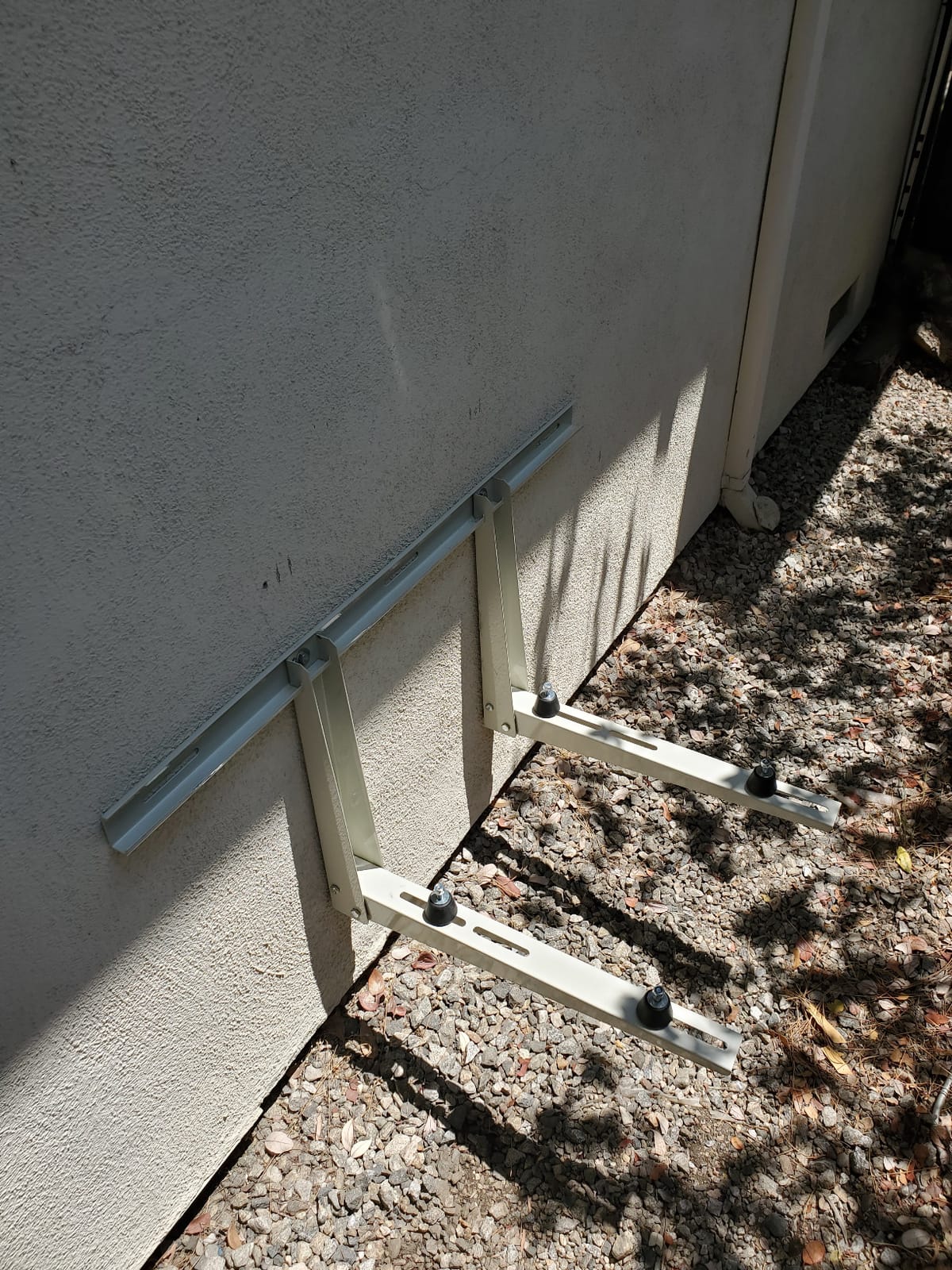
The package is well specified for a shop install. You get a 16 ft pre-flared insulated line set, 16 ft of communication wire and a 16 ft drainage extension, plus a smart port adapter for app control. That is more hardware in the box than several competitors include, and in a detached shop where the run is long, the included line length often decides whether the install goes smoothly.
At 30 dB the head is quiet enough to sit above a workbench without competing with a shop radio or a dust collector.
What the warranty actually covers
It covers parts and compressor, and the registration requirement is worth reading carefully. Some buyers report friction when a line-set failure leads to a warranty dispute, particularly where the system was self-installed. Register the unit with a licensed installer and keep the documentation.
Heating is rated to 5F ambient, which makes this a reasonable four-season option for a temperate workshop, but it is not the choice if you need reliable heating in a northern climate.
Watch the listing carefully
Several buyers point out that features like horizontal auto-swing and the I Feel function appear in some listing imagery but are not present on the unit they received. It is a common discrepancy in this category and a reminder to confirm the exact model number before you plan your install around those features.
This system is delivered freight-style rather than by standard parcel, so plan for a delivery that needs a pallet and a second pair of hands.
6. DELLA Optima 18000 BTU – the Best for Cold-Climate Workshops
DELLA Optima Series 18000 BTU Mini Split AC with Soft Airflow, Hyper Heat Down to -13°F, Up to 1000 Sq. Ft, 23 SEER2 230V,Energy Star,WiFi & Alexa,Inverter AC,1.5 Ton Pre-Charged Heat Pump,16.4ft Kit
18000 BTU
23 SEER2 and 10 HSPF2
230V
heats to -13F
34 dB
1000 sq ft
Pros
- Heating rated to -13F with Gold Fin coil treatment
- 23 SEER2 and 10 HSPF2 is the highest efficiency pairing here
- Soft indirect airflow avoids harsh drafts over a workbench
- Energy Star certified and 34 dB in mute mode
- WiFi
- Alexa and the Della+ app with I Feel sensor
Cons
- Requires professional installation and line-set vacuuming
- Weighs about 116 pounds as a complete system
- Indoor head is 43.3 inches wide and needs a clear wall span
If your shop sees real winters, this is the one unit in the roundup rated to keep producing heat at -13F. Most mini splits are tested down to somewhere between 5F and -4F, and below that they either stop or fall back on backup resistance heat. A -13F rating means the inverter compressor itself is still doing the work in a northern January.
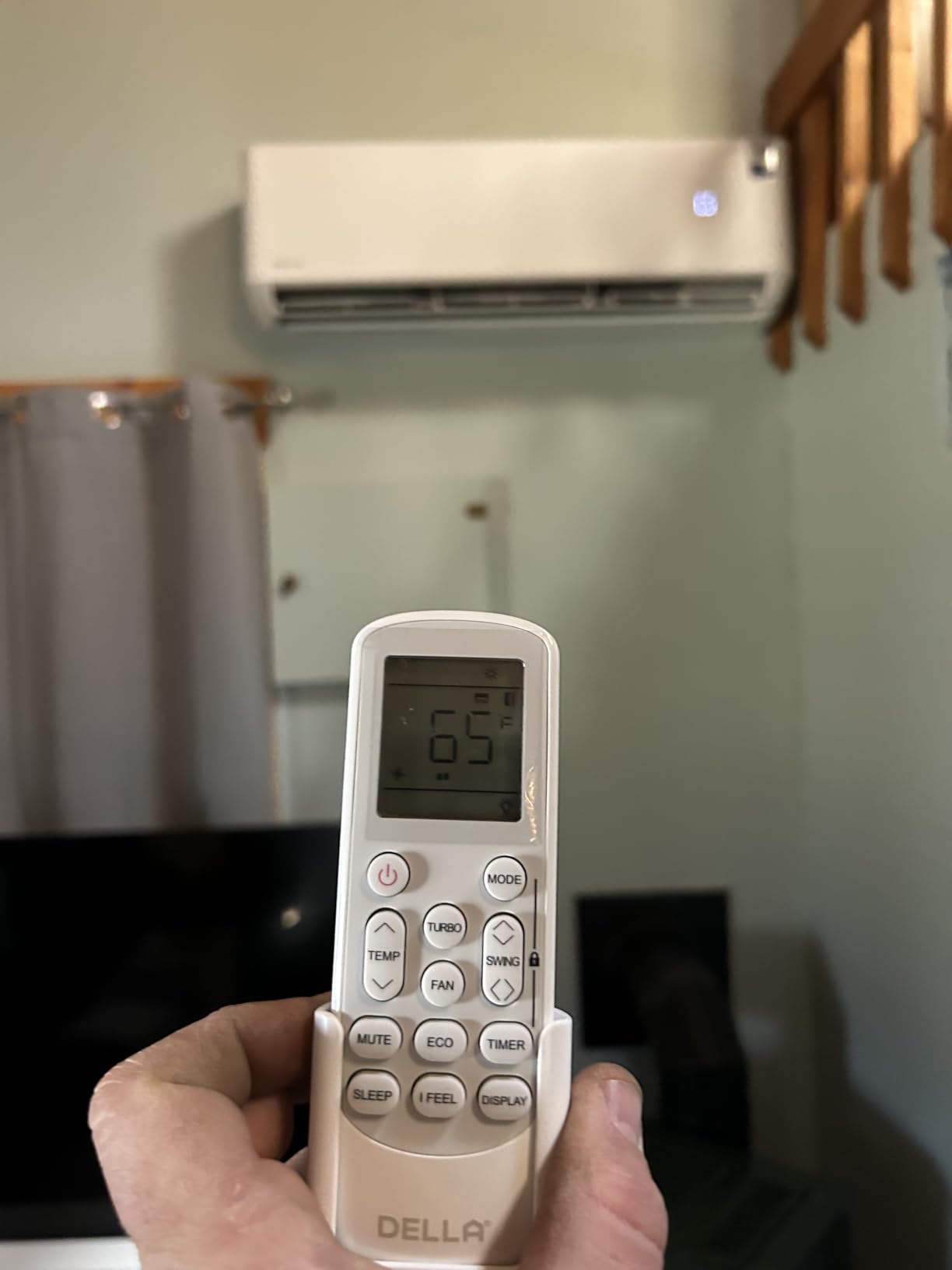
Efficiency is the other headline: 23 SEER2 paired with 10 HSPF2 under the M1 test procedure. The HSPF2 figure is the heating-season number, and in a shop you heat as well as cool, that is the figure that reflects your winter operating cost rather than your summer one.
The Gold Fin coil coating resists corrosion, which is worth noting in a shop where the outdoor unit sits near a salt-dusted road or a woodshop where moisture hangs in the air for months.
Why cold-climate rating changes the whole install
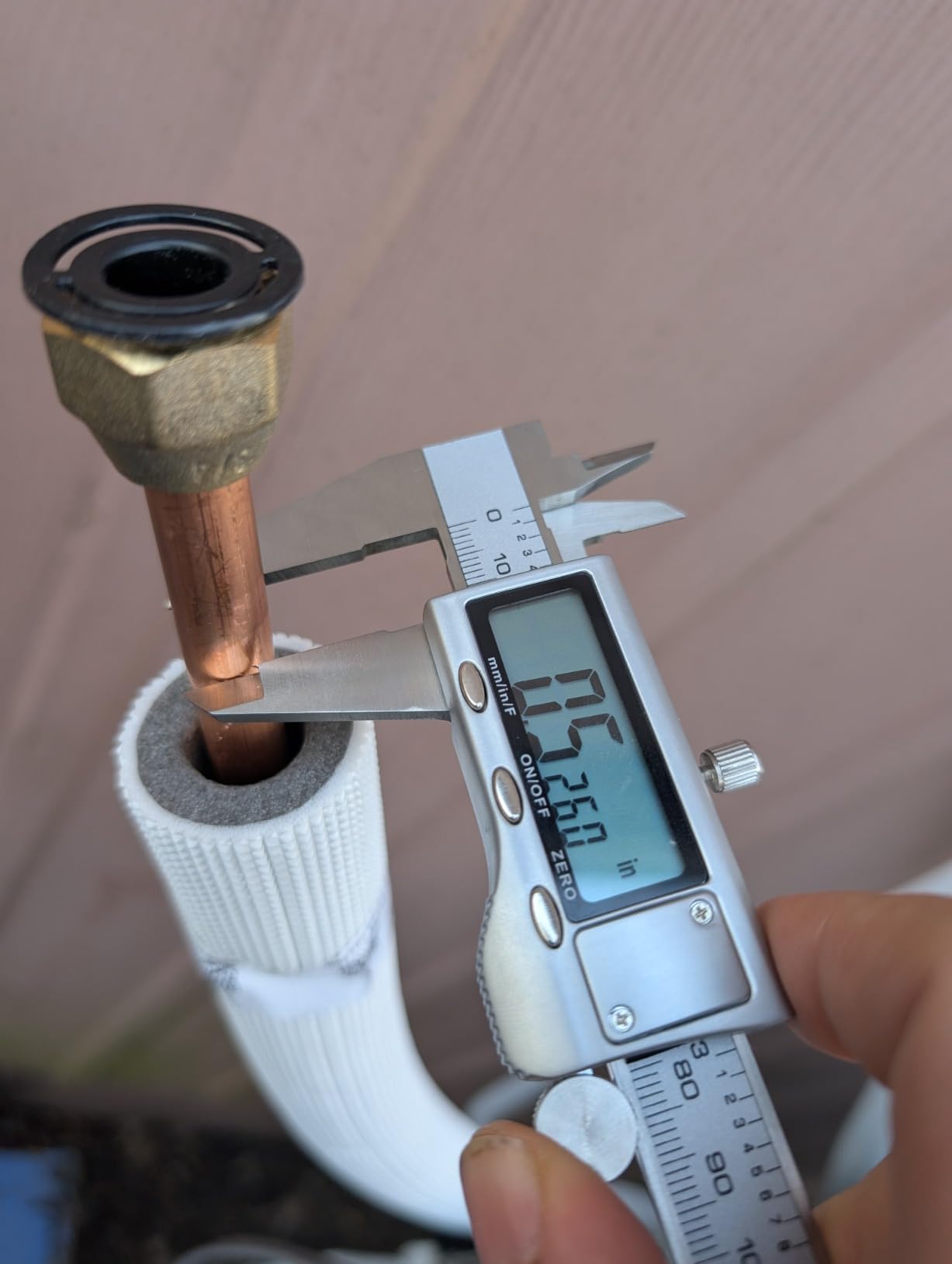
A standard unit in a cold climate gets you a cool summer and a disappointing winter. Cold-climate-rated hardware is built for the low-temperature, low-humidity conditions where standard heat pumps lose capacity fastest, and it typically adds a second stage of heating capacity and a defrost strategy tuned for ice on the outdoor coil.
The soft airflow design is a small detail with a real effect in a shop. Instead of a hard stream of cold air aimed across a bench, the discharge is spread, which matters when you are doing fine work with your hands for hours.
Where it does not fit
At 115.7 pounds and 43.31 inches wide, this is one of the larger heads in the group and needs a proper mounting height. Two people for the install are realistic, and professional installation is required in any case.
The review base is smaller than most others here at 268. The engineering is not a question; the longevity history is still being written.
7. ROVSUN 9000 BTU – the Budget Pick for a Small or Insulated Shop
ROVSUN 9000 BTU Wifi Enabled Mini Split Air Conditioner & Heater with Inverter, 20 SEER2 Energy Saving 115V Ductless Split AC Unit with Pre-Charged Condenser, Heat Pump & Installation Kit
9000 BTU
20 SEER2
115V
28 dB
450 sq ft
61-88F operating range
Pros
- Smallest capacity and lowest power draw in this roundup
- Runs on a standard 115V circuit
- 20 SEER2 is efficient for its size
- Works with Alexa
- Google Assistant and an app
- ECO
- sleep
- turbo and 4-way swing modes
Cons
- One-year warranty is the shortest here
- Some reports of humidity and mold issues after install in sealed rooms
- Outdoor compressor noise reported to increase after about a year
- A vacuum pump and gauge set are not included
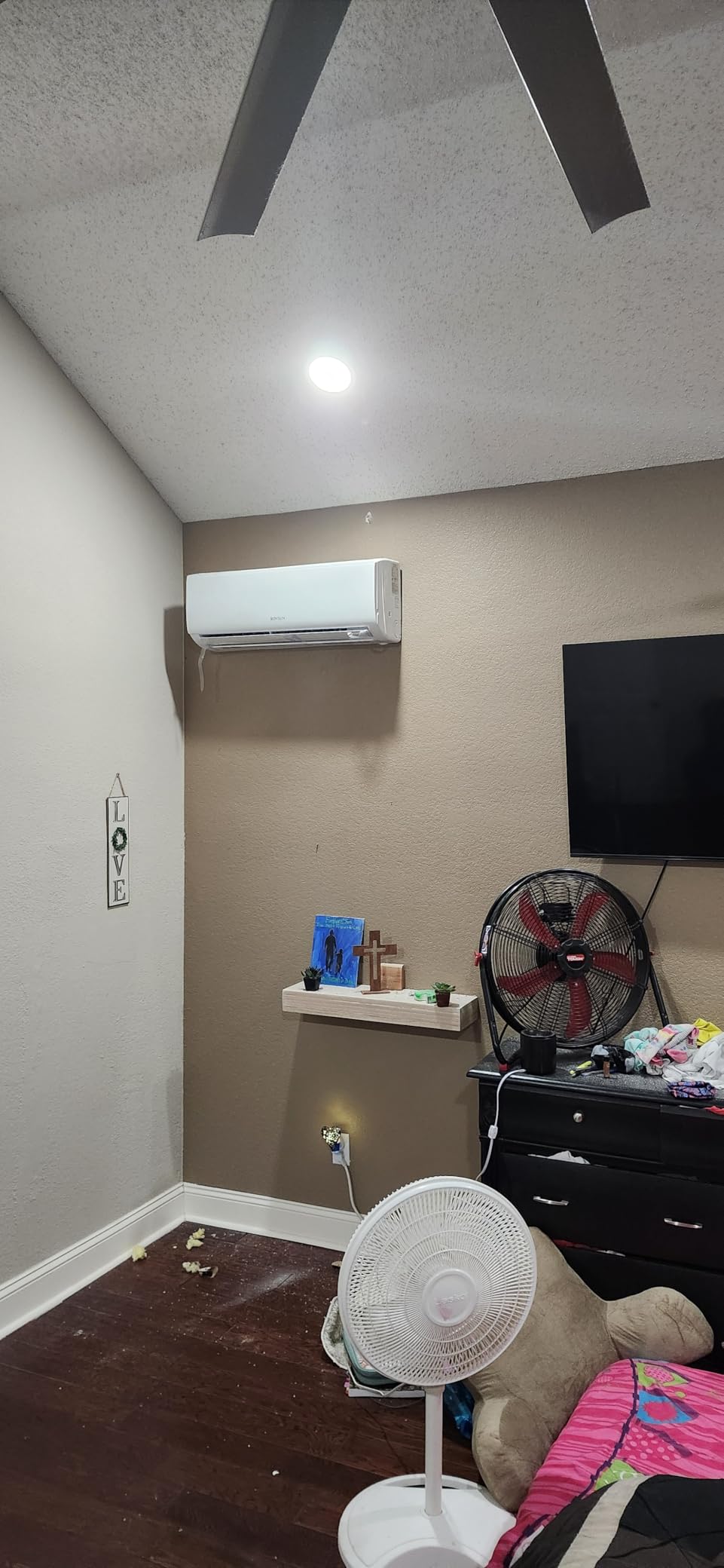
Nine thousand BTU is a small machine and it only makes sense in a small, well-prepared room. If your shop is a converted 10 by 12 office, a finished room over a garage, or a heavily insulated space under 450 sq ft, this is enough. In a bare two-car garage, it will not be.
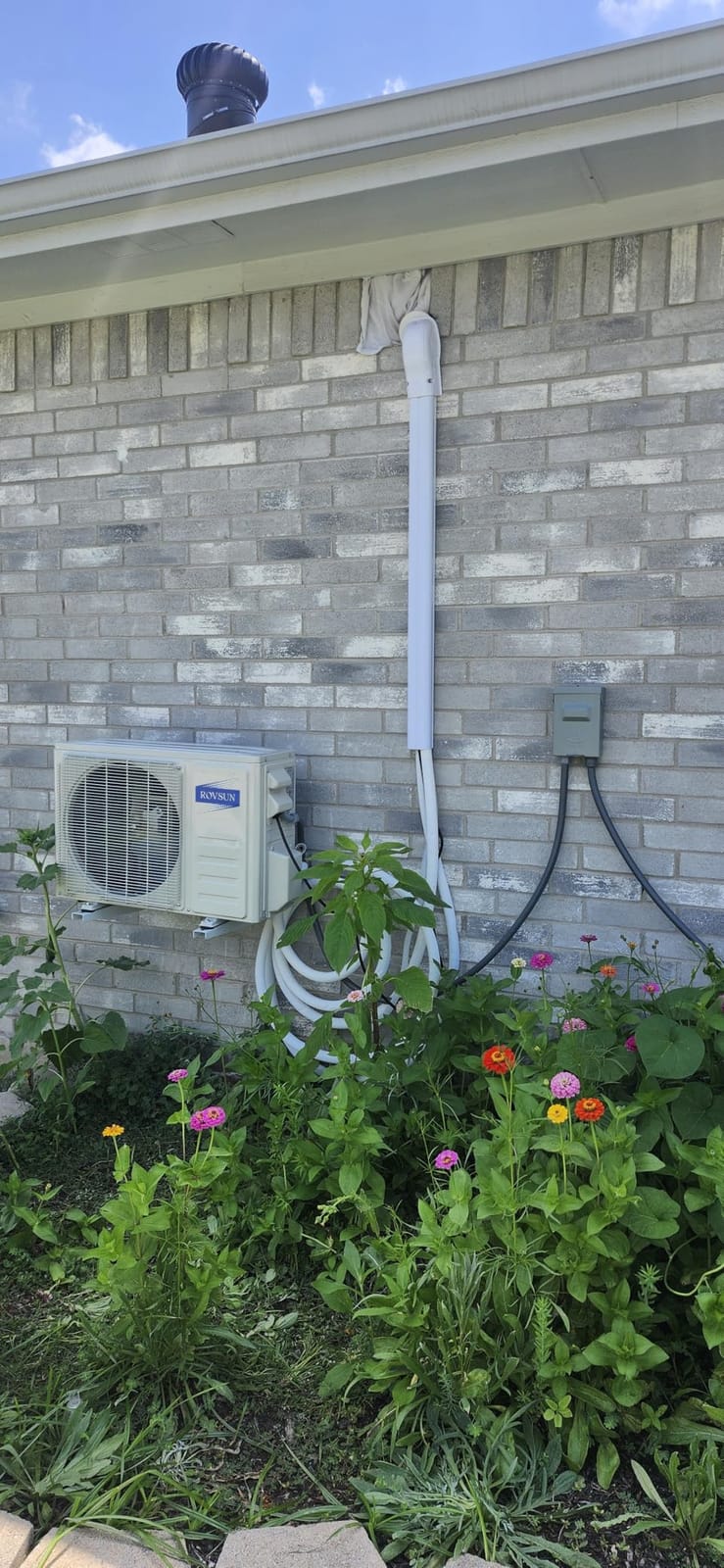
Where it does fit, it fits well. 28 dB in mute mode is among the quietest here, and the R-32 refrigerant charge runs a lower global warming potential than the older R-410A, which matters if you are ever servicing or replacing the unit.
At 115V with an 875-watt draw, it can run off an existing dedicated circuit without touching the panel. That is the single biggest practical advantage of a small system in a shop, and it is why a well-insulated small space is the ideal place for it.
The preparation this unit depends on
A 9000 BTU system has no headroom for heat gain from a concrete slab, a single-layer garage door and a bare wall. Insulate the walls, add a vapor barrier over the slab, and weatherstrip the door, and the same unit that would have struggled becomes genuinely comfortable.
Buyers also report strong cooling in a three-car garage in extreme heat, which suggests the compressor is robust. The consensus is that it works hard rather than sitting comfortably, and hard-running equipment ages faster.
Where it is the wrong buy
The one-year warranty is the shortest in this roundup by a wide margin. Forum users treat compressor warranty length as the best available proxy for expected longevity, and one year tells you very little.
There are also scattered reports of humidity and mold appearing inside the indoor head after installation in a tightly sealed room, plus a note that outdoor compressor noise increased noticeably after about a year of service. If you are installing this in a new-build space with a vapor barrier, plan the condensate line and make sure the unit drains properly rather than dripping into the wall cavity.
8. Mountman 12000 BTU – the Quietest 115V System at One Ton
Mountman 12000 BTU Mini Split AC/Heating System,19 SEER2 110/120V Energy Efficient Ductless Inverter System,Cools Up to 750 Sq.Ft with Pre-Charged Condenser,Heat Pump & Installation Kits
12000 BTU
19 SEER2
115V
26 dB sleep mode
up to 750 sq ft
R-32
Pros
- 26 dB in sleep mode is the quietest indoor figure in this roundup
- Runs on a 115V circuit
- High-temperature self-clean keeps the indoor coil dry
- Four modes with four fan speeds plus ECO and turbo
- R-32 refrigerant
Cons
- Remote control only with no WiFi or app
- Installation needs specialty HVAC tools that are not included
- Washable filter needs monthly rinsing
The highest average rating in the group at 4.5, and a 26 dB sleep-mode figure that is at the quiet end of the range here. For a workshop where you are listening for a compressor cycle, a router, or a change in a wood thickness, that gap is audible.
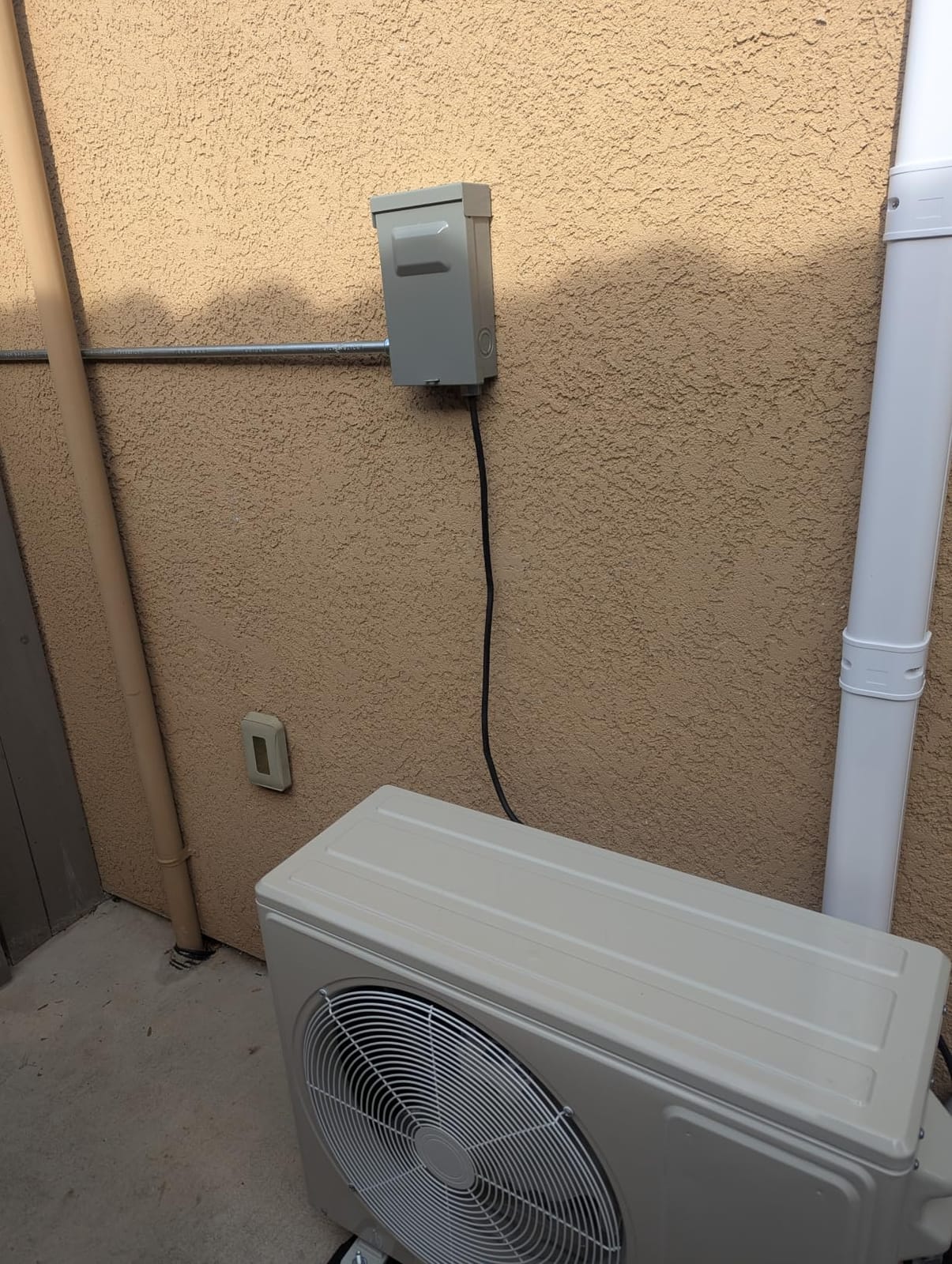
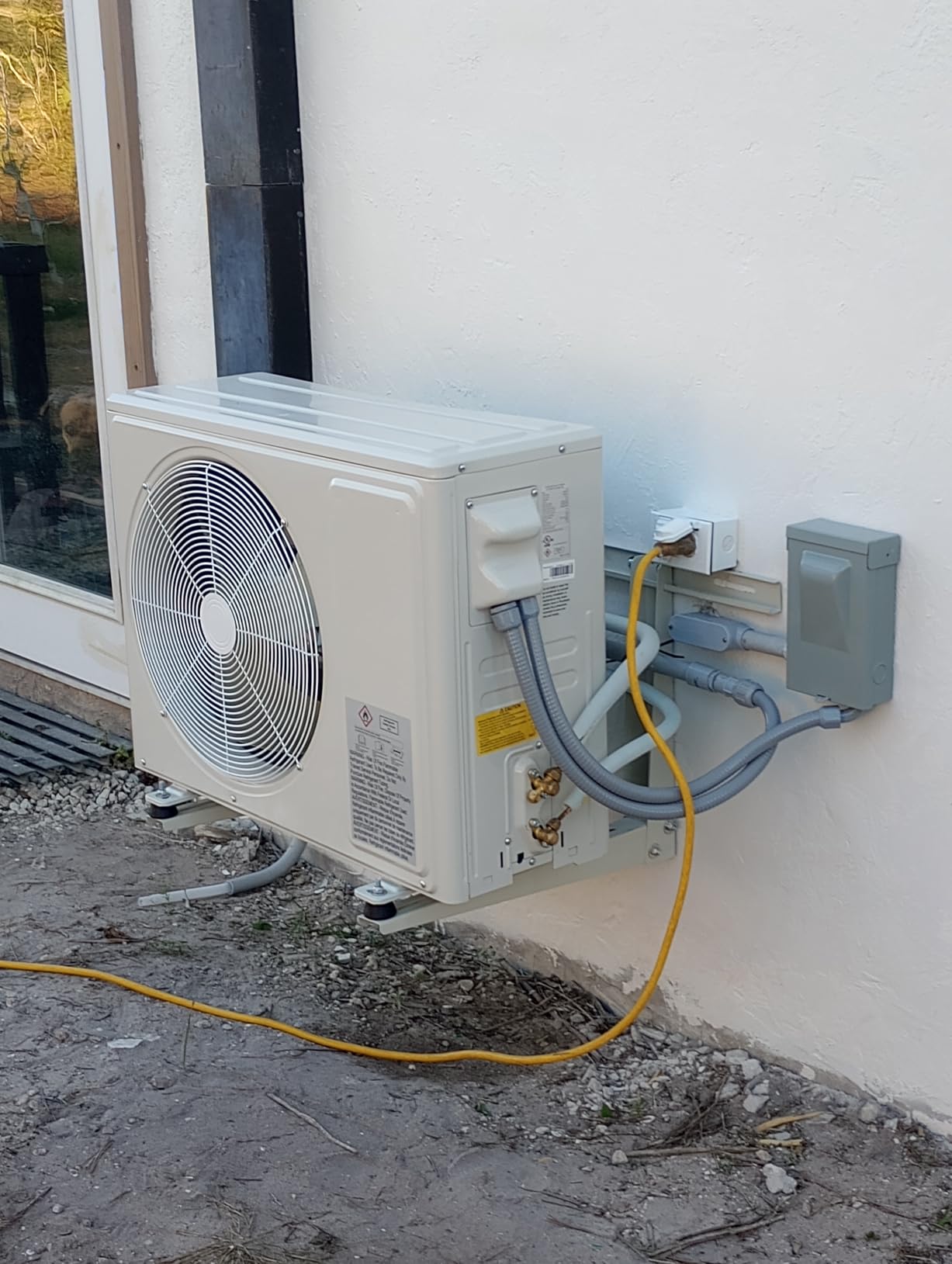
It also has the largest stated coverage figure among the one-ton 115V systems here at up to 750 sq ft, with a 19 SEER2 inverter compressor on R-32. For a shop with a reasonably insulated shell and a modern garage door, that is a workable combination without a panel upgrade.
The high-temperature self-clean function keeps the indoor coil dry after a long run, which in a humid shop is doing more good than it sounds. A coil that dries itself does not grow mold in the off season.
Where a 26 dB head earns its rating
Quiet operation matters more in a workshop than the decibel figure suggests. A shop head that cycles audibly during a precision task is genuinely disruptive, and the gap between 26 dB and 32 dB is the difference between noticing the unit and not.
It is also the right unit for a workshop office or a small maker room where you sit and work at a desk for hours, rather than a full two-car shop.
What you need to know first
There is no app or WiFi, so scheduling and monitoring are on the remote. For a space you use intermittently that is a fair trade for the quietness.
Installation requires specialty HVAC tools, and a vacuum pump and gauge set are not included. That applies to nearly every pre-charged system on the market, but it is the step that turns a weekend job into a call to a contractor.
9. YITAHOME 12000 BTU – the Best App-Controlled One-Ton Option
YITAHOME 12000 BTU Mini Split AC/Heating System, Ductless Mini Split Air Conditioner Heat Pump,230V 20 SEER2 Energy Efficient Inverter AC Unit,Wifi Enabled Compatible with Alexa for Apartment, Garage
12000 BTU
20 SEER2
230V
25 dB sleep mode
5F to 118F range
7 yr compressor
Pros
- Rated to operate from 5F to 118F ambient
- WiFi
- Alexa and Google Home with a full app
- HEALTH mode with negative ions
- PM2.5 and electrostatic dust removal
- Five-year parts and seven-year compressor warranty
- Reviewers report good results in uninsulated spaces
Cons
- 230V circuit required
- Blower does not always stop at setpoint and can overshoot
- App control can lag
- One long-term owner reported reduced output after about 18 months
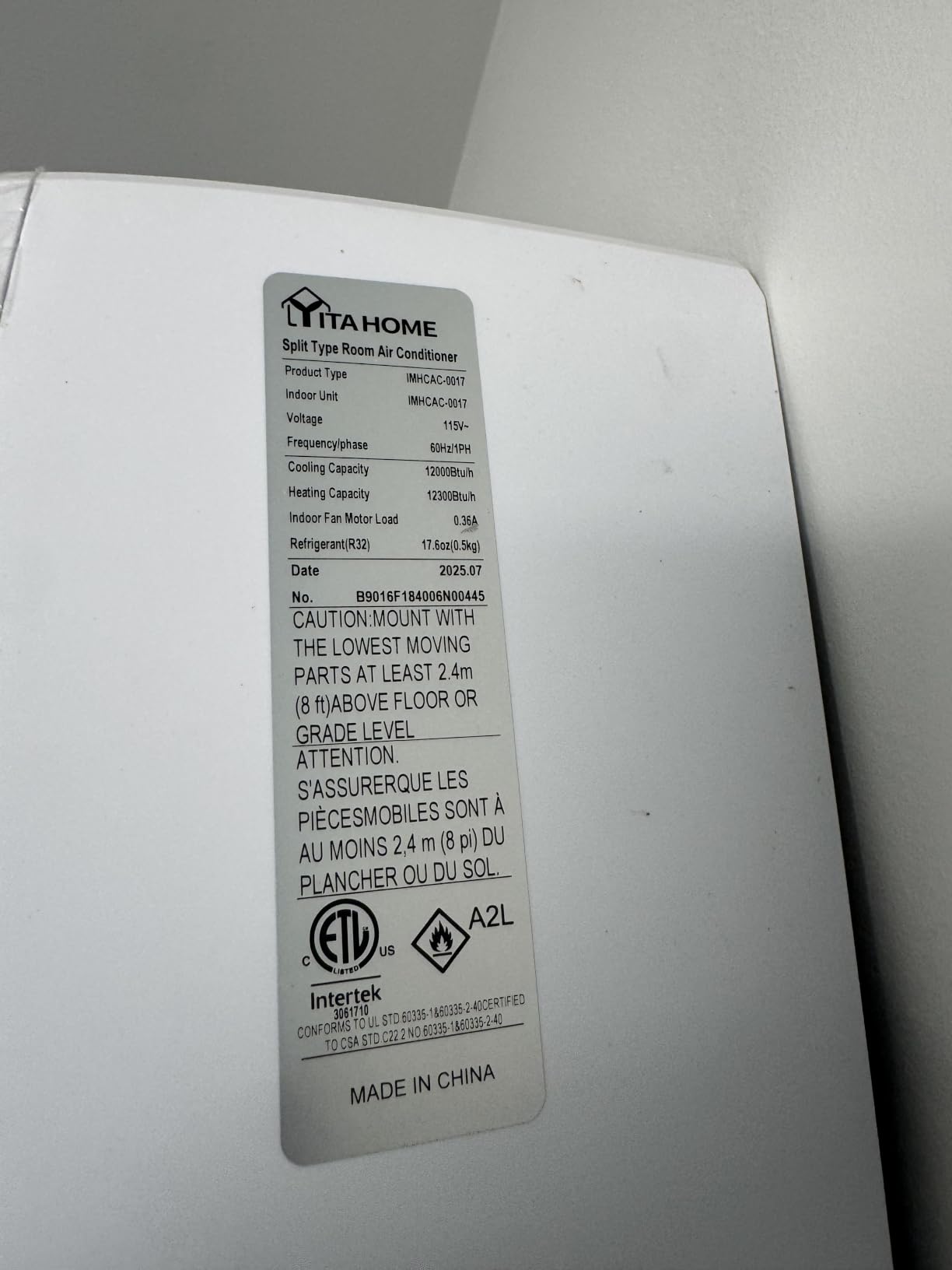
This is the only one-ton system here that runs on 230V rather than 115V, and that is not a disadvantage. A 230V supply gives the inverter compressor more headroom, and the rated operating range of 5F to 118F ambient is the widest we saw in this roundup, which matters in a shop where the condenser sits in direct sun on a July afternoon.
The app and voice integration is the most complete in the group, with seven operating modes including an iFEEL remote sensor, 4D auto swing, a 24-hour timer and an iClean cycle. Owners of systems in dusty shops are drawn to the HEALTH mode, which uses negative ions and electrostatic filtration to capture fine particulate. Treat that as a supplement to cleaning the filters, not a replacement.
Warranty is 5 years on parts and 7 years on the compressor, which is competitive with everything except the Cooper and Hunter.
Rated BTU versus delivered BTU
This is the distinction that catches people out. A nameplate number is measured at a standard ambient temperature, and what the unit actually delivers in a 110F shop is lower. Buyers report this unit working well in extreme heat and in leaky, uninsulated spaces, which is the relevant evidence, but the honest framing is that delivered capacity falls as ambient temperature rises.
One forum post from diysolarforum put the point neatly: a 12k unit that still delivers close to 12k in the heat will make the space comfortable. That is the specification to ask about, and it is not the one printed on the box.
The reliability caveat
At 4.0 stars this carries the lowest average in the roundup, and the specific complaints are consistent: the blower sometimes overshoots below setpoint, the app lags, and at least one long-term owner reported reduced heating and cooling after about 18 months. Support has been responsive, including replacing a failed condenser.
That is a real tradeoff for excellent app control and a wide operating range in a system you plan to run for a decade.
10. DELLA Vario 36000 BTU – the Best for Extra-Large Shops
DELLA Vario Series 36,000 BTU 3 Ton 19 SEER2 Ductless Mini Split AC, Pre-Charged Heat Pump, 230V Energy Efficient Inverter System, Work with Alexa, Cools up to 2500 Sq.Ft, 16.4ft Installation Kit
36000 BTU
3 ton
19 SEER2
230V
2500 sq ft
30A circuit
heats to -4F
Pros
- Three tons is the largest capacity here
- built for a 2500 sq ft space
- Heating rated to -4F
- Pre-charged with a full kit including copper pipes and a 78.7 inch drain pipe
- I Feel remote sensing and 4D airflow
- Shares the 4.4-star profile of the 18000 BTU model
Cons
- Requires professional installation and a 30A circuit
- Line runs beyond 25 ft need a refrigerant adjustment
- Indoor head is nearly 47 inches wide and needs a long clear wall
Most workshops do not need this, and saying so plainly is part of the review. A three-ton system in a 600 sq ft shop will cycle on and off, run up your operating cost, and take up a wall you could use for storage. This belongs in an 1,800 to 2,500 sq ft building with a high ceiling, a shop addition, or a small commercial space where a single zone has to cover everything.
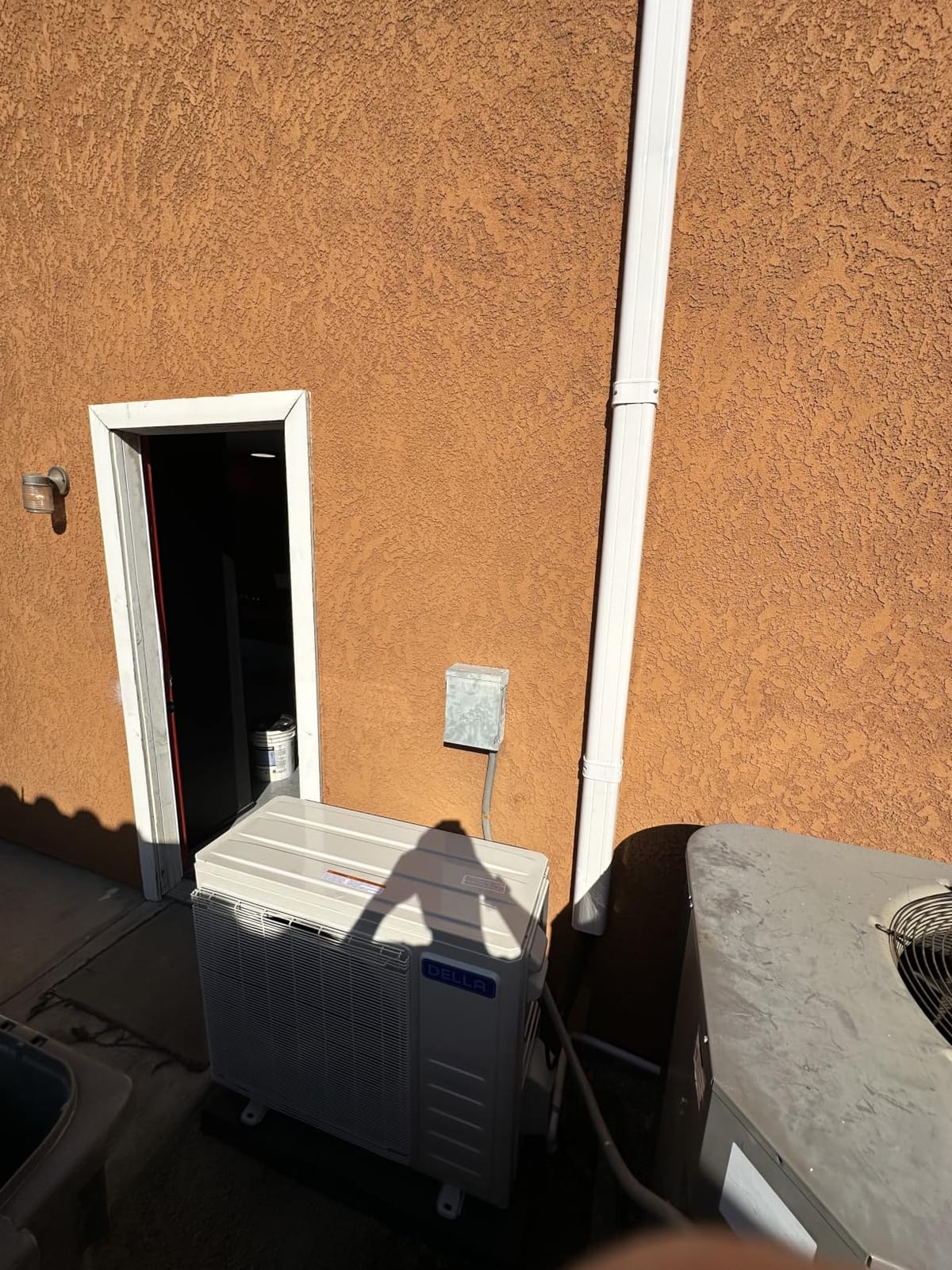
It carries the same 4.4-star profile as the 18,000 BTU Vario, and the same 4D airflow, I Feel remote sensing and pre-charged kit. The differences are scale: heavier line set piping, a 30A maximum fuse instead of 20A, and a 2,500 sq ft rated coverage figure.
Rated operation down to -4F makes it usable year round, though it is not a cold-climate unit in the sense that the DELLA Optima is.
When 3 tons is genuinely correct
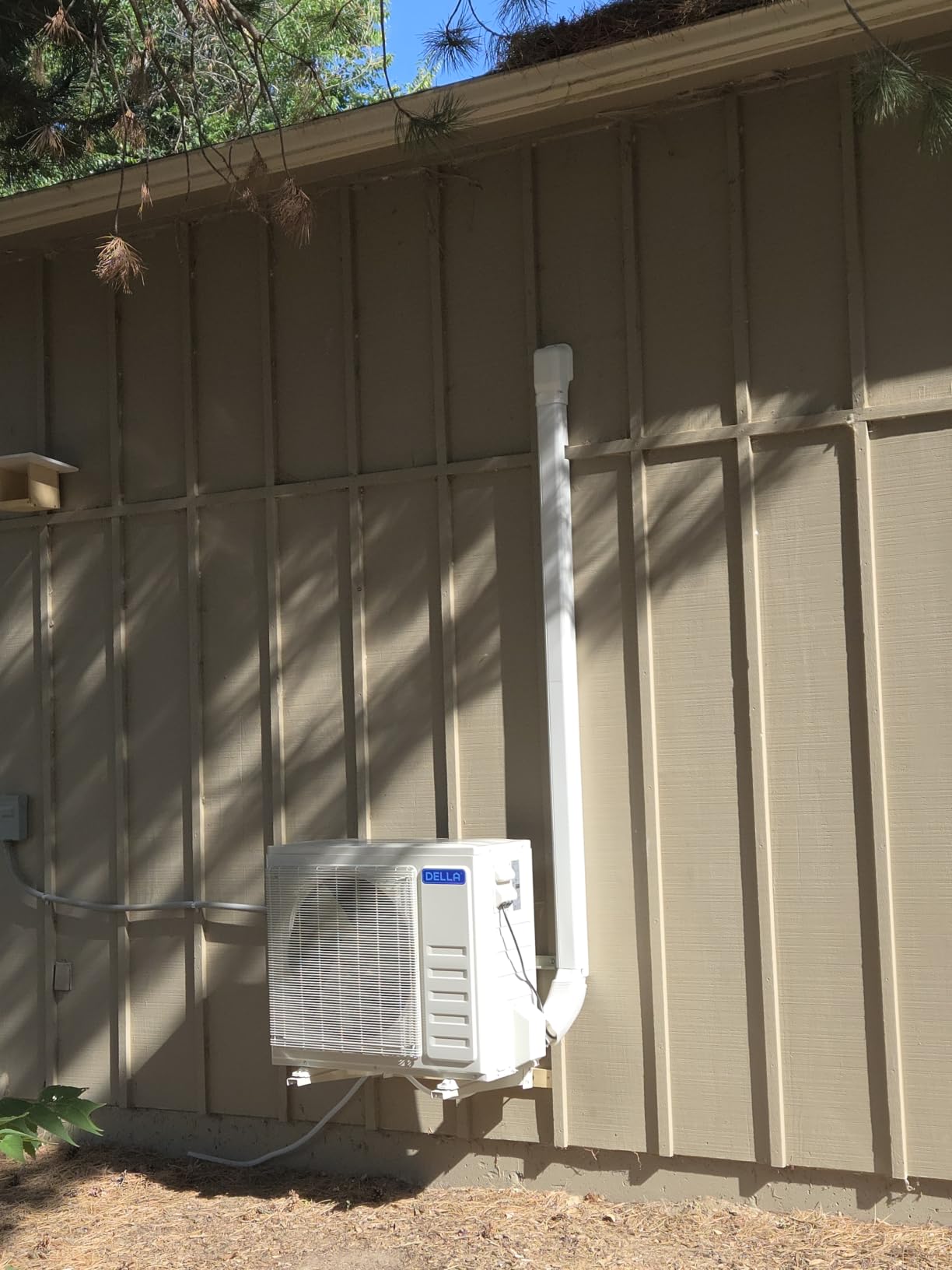
Large metalworking and fabrication shops with a 14-foot ceiling, welding hoods pulling air, and a compressor running in the corner are the realistic case. So is a mixed-use building where the same system handles a bench area, a paint room and a storage area that shares walls.
If you have two genuinely separate conditioned spaces rather than one large one, two smaller single-zone systems will usually outperform one big one. Zoning by area costs less to operate because you only condition the room you are in.
What to plan around
A 30A circuit is a real electrical project in a detached building. If your shop subpanel does not have a spare 30A slot, this stops being a purchase decision and becomes a service upgrade decision, and you should resolve that before ordering.
Any line run over 25 feet needs a refrigerant adjustment, which means a technician with a recovery machine. Measure the run first.
How to Size a Mini Split for a Workshop
Start with 20 BTU per square foot of floor area, then adjust. A separate rule of thumb you will hear in forums is 800 sq ft per ton, and the two are not in conflict: one ton is 12,000 BTU, so 20 BTU per sq ft works out to roughly 600 sq ft per ton before any adjustment. Forum users generally use the 800 figure for already-insulated spaces and add capacity for everything else.
Forum advice converges on a useful method: start with a base size for your square footage, then add capacity for specific variables. Uninsulated walls, south- or west-facing exposure, a high ceiling, a slab with no vapor barrier, and equipment heat are the usual additions.
Round up rather than down. An oversized system cycles on and off and loses efficiency, while an undersized one runs constantly, never reaches setpoint, and wears out years earlier. A shop that passes 1,200 sq ft, that has a ceiling above nine feet, or that sits in a climate with extreme summer heat should generally be in the 2-ton range.
One further caveat from garagejournal: heat output varies widely between manufacturers at the same nominal BTU, so the number on the box is a starting point for comparison rather than a guarantee. Ask what the unit delivers at your summer design temperature, not just what it is rated for on a mild day.
Workshop Heat Loads: Why a Shop Is Not a Bedroom
The single largest gap in most mini split advice is the assumption that square footage tells the whole story. In a workshop it does not, and the load comes from five specific sources.
The garage door is usually the worst offender. A single uninsulated steel sectional door several thousand square feet in area is effectively an open wall to your conditioned space, and it is almost always the first thing to replace. Adding insulation panels and a bottom seal kit frequently lets a smaller system handle a shop comfortably.
The concrete slab is the second. Concrete stores heat all day and releases it overnight, which is why shops without a vapor barrier stay uncomfortable into the morning even after the air cools. A foam and poly vapor barrier over the slab addresses the cause rather than the symptom.
Equipment and vehicle heat is the third. A vehicle idling to warm up adds a surprising amount of load, and a running air compressor exhausts warm air directly into the space. If you can move the compressor outside or duct its exhaust out, you remove a permanent heat source from the room.
Sun exposure and ceiling height make up the remainder. A west-facing garage door in summer is effectively an outdoor space with a roof, and a high-bay ceiling gives the room a much larger air volume than the floor area suggests. Both push you up a size class.
One important limit: a mini split conditions air, it does not ventilate. It brings in no outside air, does not remove sawdust from the air, and cannot serve as a combustion-space heater. Keep your dust collection and your make-up air, and if you run fuel-burning equipment in the shop, maintain the exhaust and combustion air that equipment requires on its own.
Electrical: 115V vs 230V and the Dedicated Circuit
Every system in this roundup needs a dedicated circuit, and that is where most DIY plans collide with reality. There is no scenario where a 1.5-ton or larger mini split runs on a general-purpose 115V receptacle.
Three of these systems run on 110V or 115V: the ROVSUN 9000, the Mountman 12000 and the Senville LETO 12000. The remaining seven require 208V or 230V, and the 3-ton DELLA needs a 30A circuit while the 1.5-ton units are generally a 20A.
Plan this before you buy, not after. Forum installers are blunt about the sequence: at 18,000 BTU and above you need 220V, so a homeowner who planned a 115V outlet ends up making a second purchase. Check your subpanel for a free 240V slot and confirm the run back to the main panel before you commit to any system over 12,000 BTU.
Preparing Your Workshop Before the Install
Six steps make a measurable difference, and all of them are cheaper than adding capacity later.
Insulate the walls and the ceiling, and add a proper vapor barrier over the slab. This is the single highest-impact change you can make, because it reduces the load the system handles rather than increasing its capacity.
Weatherstrip the garage door, especially the bottom edge and the jambs. Replace the door if it is a single thin steel panel rather than insulated.
Air seal the ceiling joists, the rim joist and any penetrations. Leaky workshop ceilings leak conditioned air into the attic all day.
Plan the condensate route before the install. The indoor head produces water whenever it cools, and a line that drains into a wall cavity is how the mold complaints in the reviews happen. Run clear PVC to a visible drain point or outside.
Confirm the electrical circuit and panel capacity in writing before ordering anything.
Give the outdoor unit clearance and shade. Keep it away from a wall that traps heat and out of direct afternoon sun where a west side is possible. Manufacturer clearance requirements still apply, and restricted airflow shortens compressor life.
Heating Performance and Cold-Climate Shops
Standard mini splits are tested down to somewhere between 5F and -4F, and below that their heating output falls away quickly. If your shop needs to be usable in a northern winter, look for a stated cold-climate rating rather than assuming every heat pump performs the same way.
How many BTUs you need to heat a 24 by 24 garage is essentially the same calculation as cooling, with one useful addition: a small supplemental heater can carry the coldest first ten minutes while a cold-climate-rated system brings the space up to temperature. A workshop does not have to be warm the second you open the door.
Keep the filters clean. In a wood or metal shop this is not housekeeping, it is compressor protection. A clogged filter restricts airflow across the indoor coil, the coil ices, the unit throttles back, and the compressor runs longer for the same result. A washable filter rinsed monthly and a periodic coil clean costs nothing and is the difference between a fifteen-year system and a ten-year one.
Frequently Asked Questions
What size BTU mini split does a garage workshop need?
Start at 20 BTU per square foot of floor area, then adjust for your building. Uninsulated walls, a concrete slab without a vapor barrier, west- or south-facing exposure, a ceiling above nine feet, and equipment heat all push you up a size class. A typical insulated two-car shop lands near 18,000 BTU, a three-car shop or high-ceiling space near 24,000 BTU.
Will a 12000 BTU mini split cool a two-car garage?
For a bare two-car garage, usually not. A 12,000 BTU system handles about 600 sq ft of insulated space with headroom, and a bare two-car garage is a much larger unconditioned envelope. With door insulation, wall insulation and a slab vapor barrier it can work. Without them, step up to 18,000 BTU.
Do mini splits work well in garages and workshops?
Yes, and they are one of the few realistic options for a detached shop because they need no ductwork. They heat and cool effectively in a reasonably sealed space. They do not ventilate, do not filter sawdust at any useful level, and cannot be used as a combustion-space heater.
Do I need a dedicated circuit and what voltage?
A dedicated circuit is required for every one of these systems. Units up to 12,000 BTU are available on 110V or 115V circuits, while 18,000 BTU and above require 208V or 230V, and a 3-ton system needs a 30A circuit. Check for a free 240V slot in your shop subpanel before ordering, because that check often determines which system is actually available to you.
Which mini split brands should I stay away from?
There is no single bad brand, but there is a clear pattern in the reviews. Be cautious with unrecognisable marketplace brands that publish no SEER2 test data, no stated heating limit, and a one-year warranty. A one-year compressor warranty is the strongest signal to walk away. For long-term reliability, Mitsubishi, Fujitsu and Daikin are the names most often recommended unprompted by owners on HVAC forums, and the Senville, COSTWAY and DELLA lines here are all backed by large review bases and longer compressor warranties.
Can I install a mini split in my workshop myself?
A pre-charged single-zone system ships with refrigerant already loaded for a set line length, which makes the install achievable for a confident DIYer with a vacuum pump, manifold gauges, a torch and a recovery setup. Several manufacturers still require a licensed technician, and refrigerant work is federally regulated under EPA Section 608. If your run exceeds the pre-charged length, you need a refrigerant adjustment, which means a technician regardless.
Should a workshop use a ducted or concealed mini split?
Every system in this roundup is a wall-mounted high-wall head, which is the right choice for most shops. If your shop has a high-bay or exposed ceiling and no usable wall, a ducted or ceiling-concealed indoor unit is the practical alternative. Plan the return air path carefully, because an undersized return in a dusty shop is a common cause of poor performance.
Final Verdict on the Best Mini Splits for Workshops in 2026
The Senville LETO is our pick for the best mini splits for workshops overall, because a 20.8 SEER2 system that runs on a standard 110V circuit and carries a review base of over 2,000 solves the electrical problem and the sizing problem at once for a typical two-car shop. If your shop is larger, hotter or genuinely used in winter, the COSTWAY 18000 is the better-sized unit and the DELLA Optima is the one that keeps working in January.
Size first, check the voltage second, and only then decide on a brand. Get those three in the right order and the rest of the decision takes an afternoon. If you are still planning the build-out, our workshop flip chart guide covers the planning side of the space.